[ < Back to quizzes ]

Which Gun Should I Buy?

Six plain-language questions, scored against real, in-production pistols, rifles, and shotguns from our catalog. Watch the lineup re-rank with every answer, then get one clear pick, two backups, and links to buy and accessorize it.
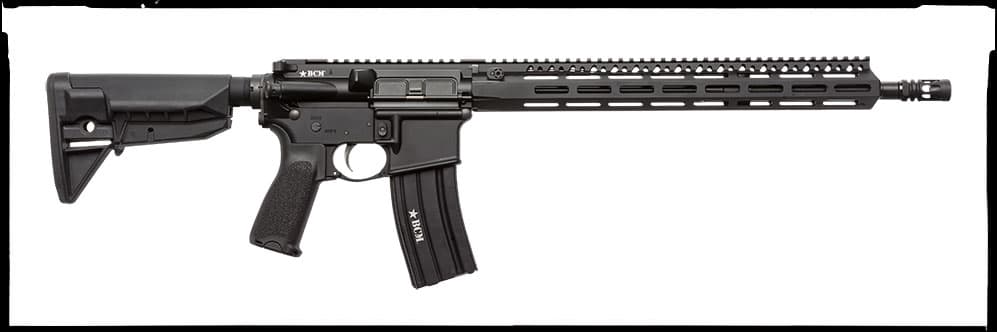
BCM RECCE-16 MCMR

Find the gun that fits you

Six quick questions. Every answer re-ranks 60 in-production guns, from carry pistols to AR-15s and hunting rifles, down to one pick and two backups.

About a minute. For a first gun or your next one.

How the quiz picks your gun

The right gun depends on what it is for, how much you have shot, what you plan to mount on it, what you can spend, how much recoil you want to practice with, and what your state allows. Every recommendation is a real firearm from our catalog, scored with the same capability data that powers our builder: 0-10 ratings for close quarters, reliability, carry mobility, distance, and modularity, plus each gun's intended uses and current price.

A home-defense answer weights close-quarters and reliability scores, a carry answer weights size and weight, and budget caps the price. First-time shooters are steered toward soft-shooting, simple-to-run guns, while owners adding to a collection are steered toward platforms with deep aftermarket support, since they will build on them. Planning a red dot, light, or suppressor favors guns that ship with an optic cut, an accessory rail, or a threaded barrel. Pick your state on the results and its rules apply: California buyers only see handguns with a roster-listed version, assault-weapon states leave out standard AR-15 configurations, and SBR-restricted states leave out short-barreled rifles, with links to the state law details.

The quiz covers buying decisions, not skills. Once you own the gun, build fundamentals with our drill library and test what you know with the firearms knowledge quiz. The long-form breakdowns in Best First Gun for Beginners and Best Handgun for Women cover the same ground pick by pick.

Frequently Asked Questions

▶What gun should I buy first?
For most first-time buyers, a compact 9mm pistol like the Glock 19 Gen5 ($647) is the default answer: it covers home defense, concealed carry, and range training with one purchase, and it has the largest holster and accessory ecosystem of any handgun. If your only goal is learning to shoot, start cheaper and softer with a .22 LR like the Ruger 10/22 carbine ($359) or Taurus TX22 pistol ($322). If the gun will only ever guard your home, a shotgun like the Mossberg Maverick 88 Security ($290) or a 9mm carbine like the Ruger PC Carbine are easier to shoot well under stress than any pistol. The quiz on this page weighs those tradeoffs against your answers and names one pick.
▶Should my first gun be a pistol, rifle, or shotgun?
Pick a pistol if you want to carry it or want one gun that does everything; pick a rifle or shotgun if it will live at home. Pistols are the hardest category to shoot accurately, which is why new shooters who never plan to carry are usually better served by a long gun. A 9mm carbine such as the Ruger PC Carbine has roughly half the felt recoil of a 5.56 AR-15 and is far more forgiving than a pistol at home-defense distances, while a 12 gauge shotgun offers the most effect per shot at the cost of noticeably more recoil.
▶How much should I spend on a first gun?
Plan on $300 to $700 for the gun, then reserve $300 to $500 more for ammunition, eye and ear protection, secure storage, and at least one lesson in your first year. Reliable first guns exist at the bottom of that range: the Mossberg Maverick 88 Security is $290 and the Taurus TX22 is $322. The $500 to $900 band buys the most proven do-everything pistols, including the Glock 19 Gen5 and SIG P365. Spending more than $1,000 on a first gun only makes sense for a dedicated competition pistol or a duty-grade rifle or shotgun.
▶Is a .22 a good first gun?
Yes, a .22 LR is the best pure learning gun you can buy. Ammunition costs a fraction of 9mm, and the near-zero recoil lets you build grip, sight picture, and trigger control without developing a flinch. The Ruger 10/22 carbine ($359) and the S&W M&P 15-22 Sport are the standard first rifles, and the Ruger Mark IV 22/45 Tactical ($669) is the classic first pistol trainer. The tradeoff: .22 LR is not a defensive caliber, so if the same gun must protect your home, step up to a 9mm or a shotgun.
▶Should I rent a gun before buying it?
Yes. Rent or borrow your top pick before you buy whenever possible. Grip fit, recoil feel, and sight picture vary between shooters, and an hour with a rental costs $20 to $40 against a $500-plus purchase you might regret. Take our quiz result to a range with a rental counter, shoot 50 rounds through the primary pick and one alternate, and buy the one you shot better. Most indoor ranges stock the common recommendations: Glock 19, SIG P365, Shield Plus, and a 10/22 are on nearly every rental wall.
▶What is the easiest gun for a new shooter to handle?
The easiest defensive pistols to operate are the S&W M&P 380 Shield EZ ($399) and 9mm Shield EZ, designed around light slide-racking effort and soft recoil, followed by the Ruger Security-380. The easiest guns to shoot accurately are .22 LR trainers like the Ruger 10/22 and Taurus TX22. Among long guns, a 9mm carbine is the softest defensive option; 12 gauge pump shotguns are effective but have the sharpest recoil of common home-defense choices, so recoil-averse shooters should favor a gas-operated semi-auto like the Beretta A300 Ultima Patrol or the smaller-bore options.