Toolbox
Interactive calculators, video analyzers, and compatibility checkers for the bench, the range, and the build sheet.
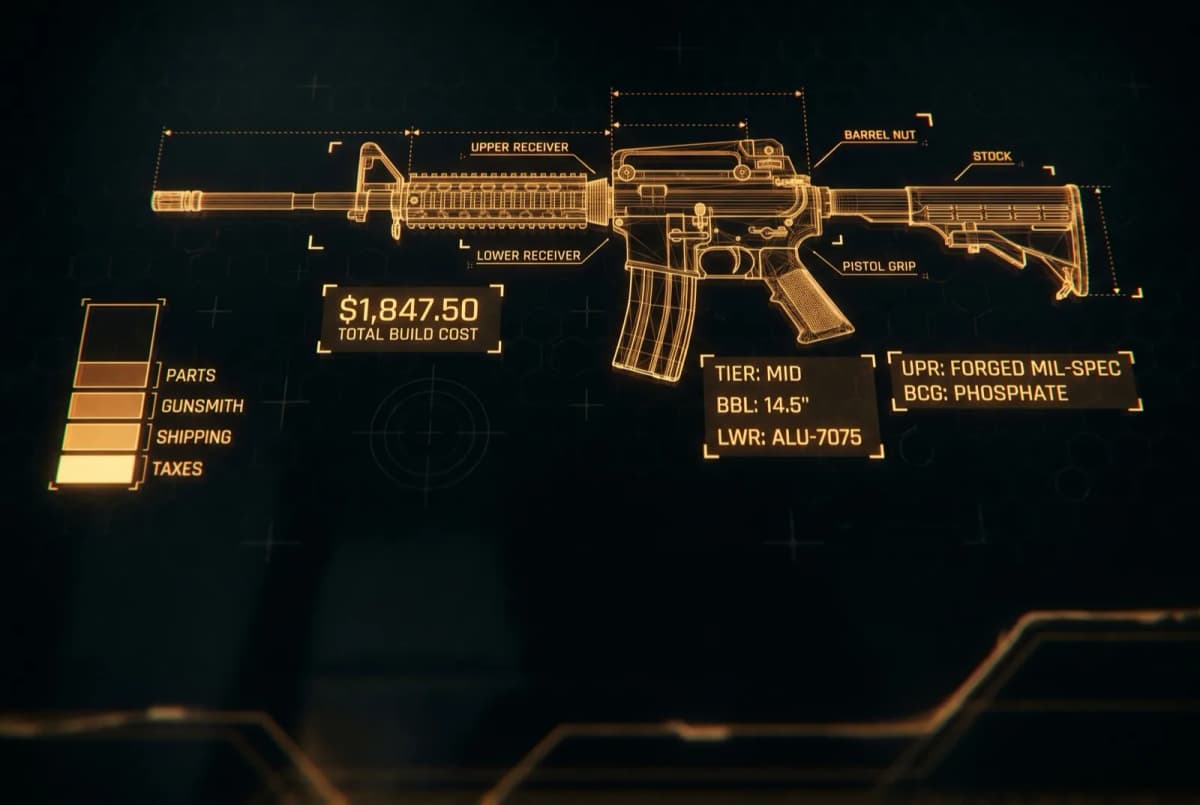
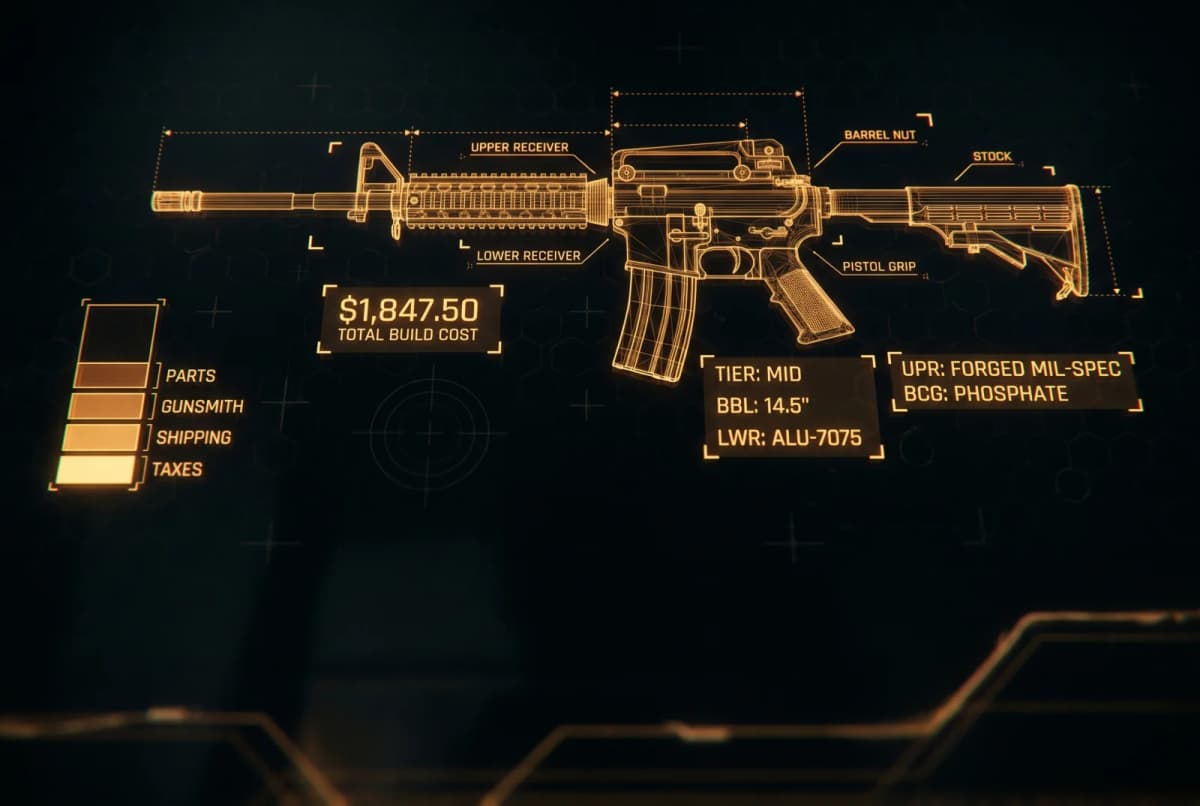
Build Cost Calculator
Start with a useful range, replace each category with an exact product, and track what is left to spend.
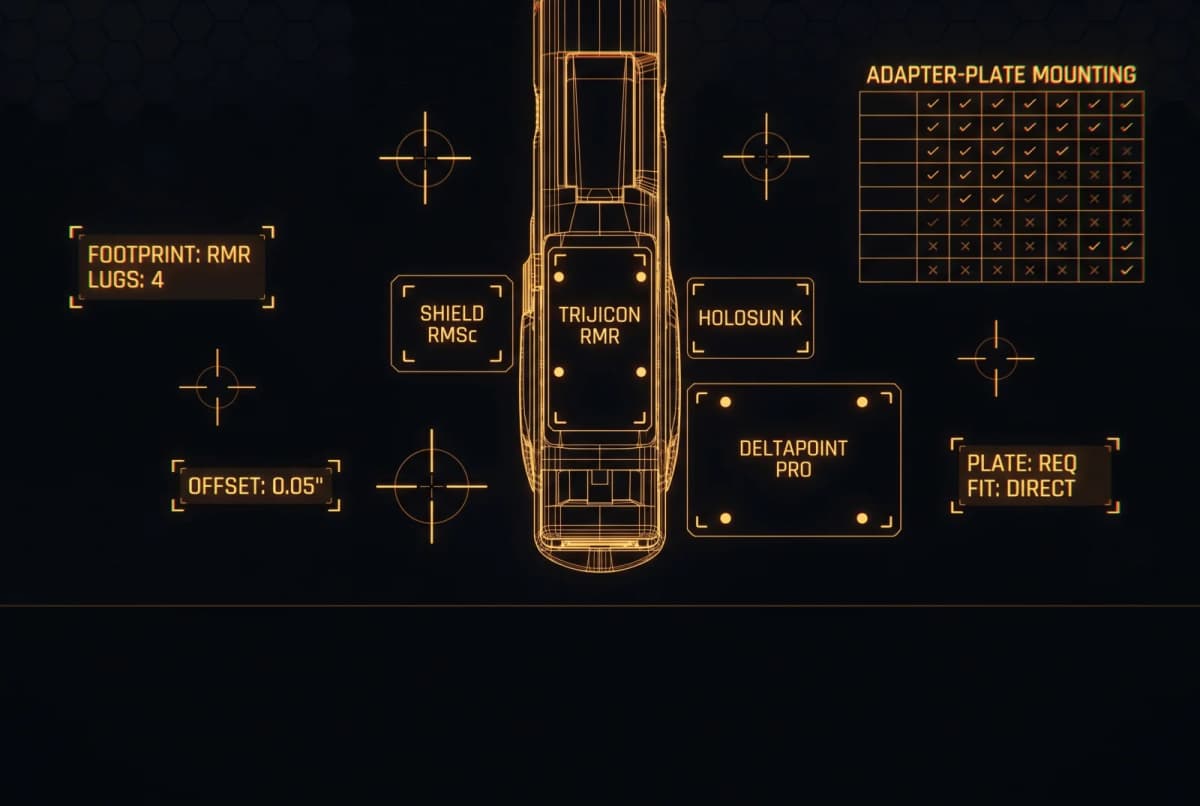
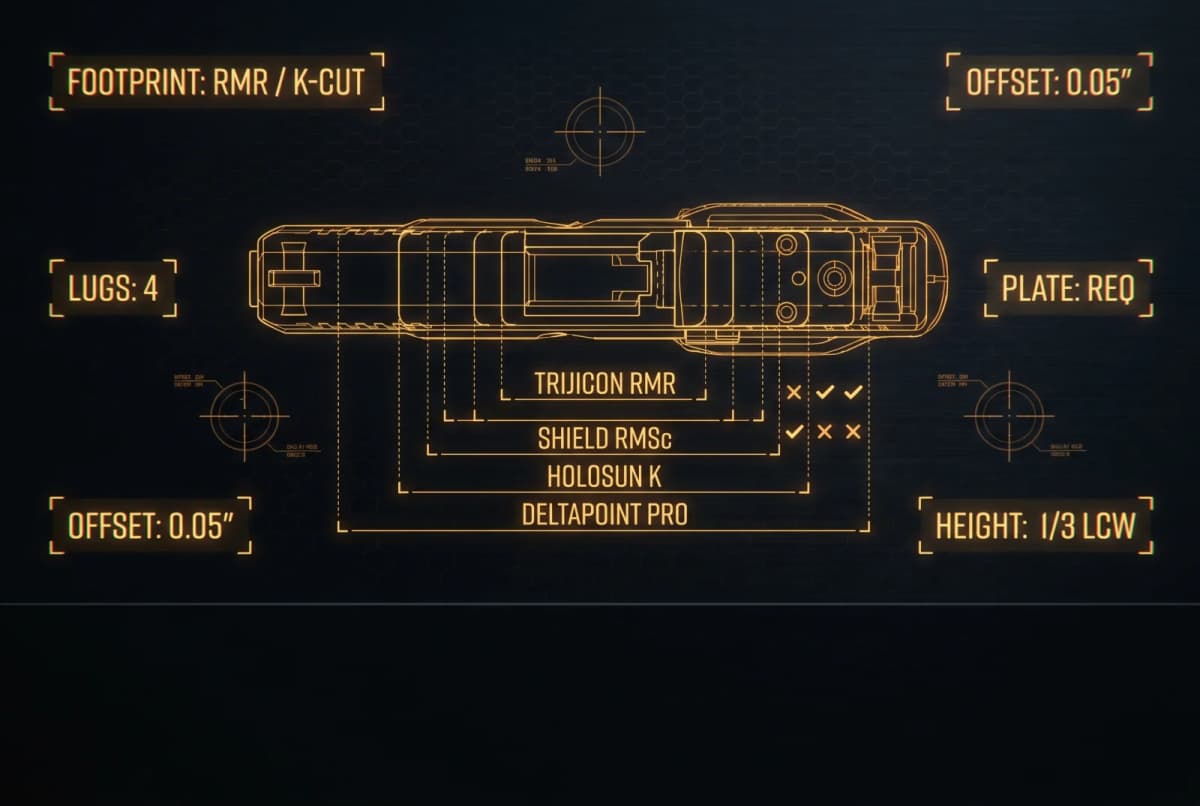
Pistol Red Dot Fit Checker
Select an optic-ready handgun and see compatible red dots from the catalog, including direct-mount, footprint, and adapter-plate matches.
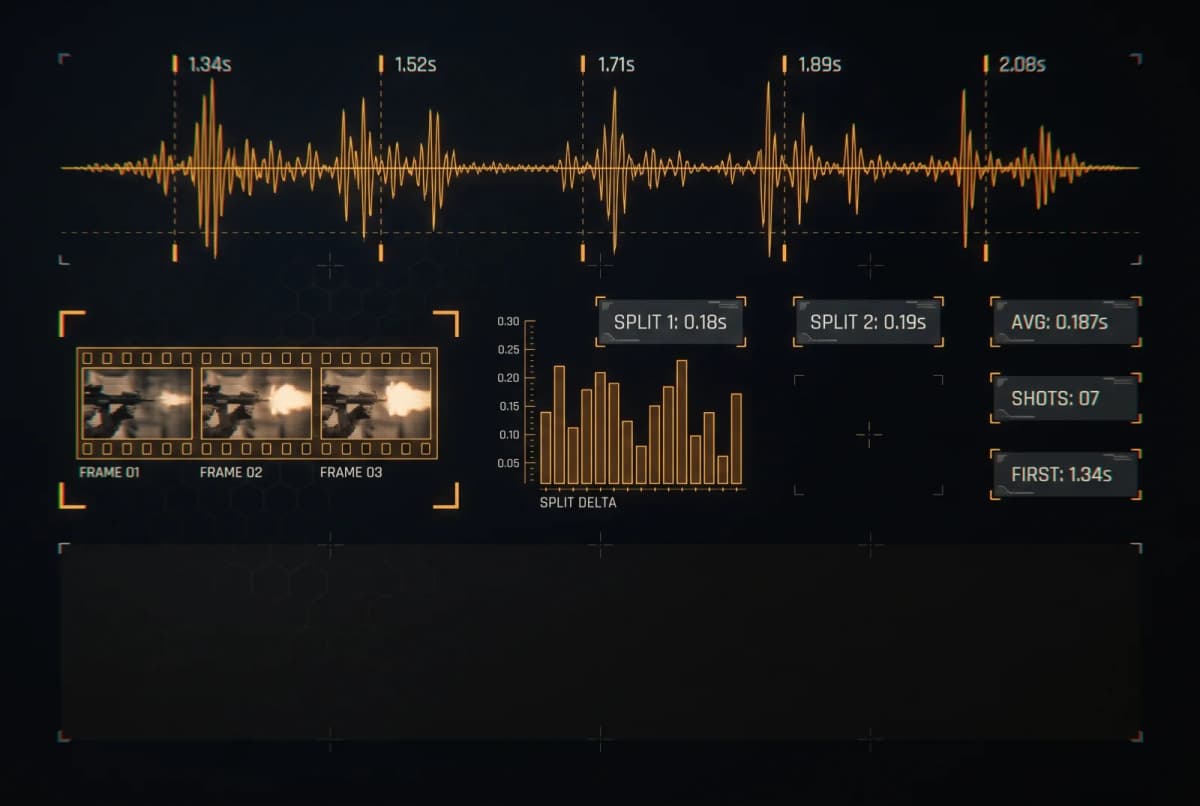
Shot Timer Video Annotator
Upload a shooting video, detect shot times locally from the audio track, correct markers, and export synced split-time overlays.
All Tools
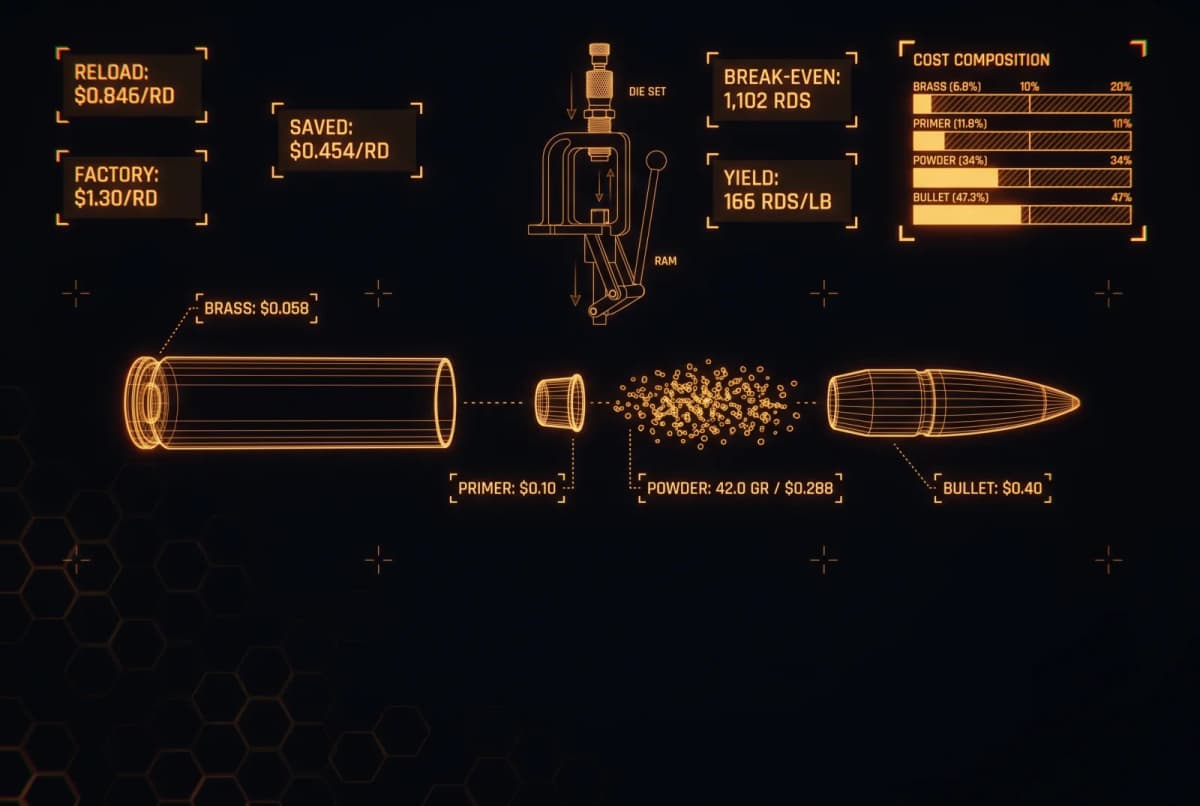
Reloading Cost Calculator
Calculate true cost per round for handloads: brass reuse, primers, powder charge, and bullets, with savings vs factory ammo and equipment break-even round counts.
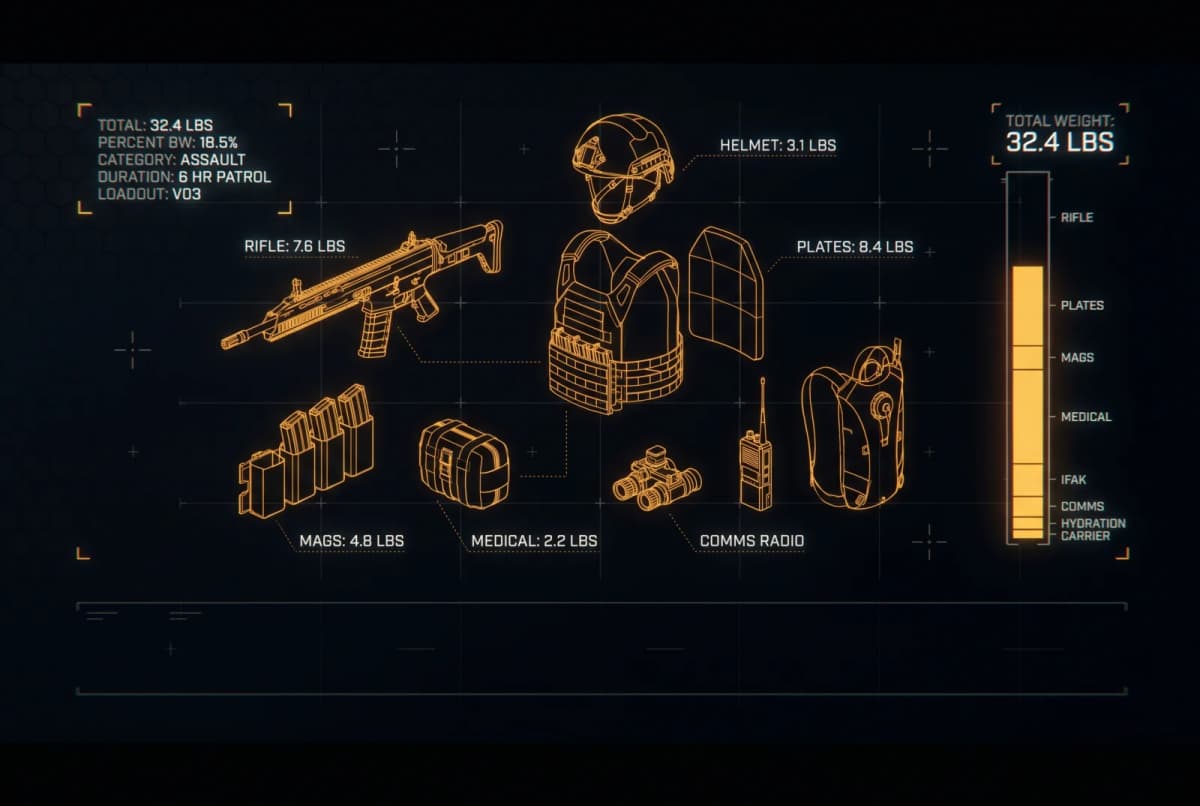
Loadout Weight Calculator
Calculate carried weight across rifle, magazines, plates, helmet, comms, night vision, medical, bags, tools, and every catalog gear category.
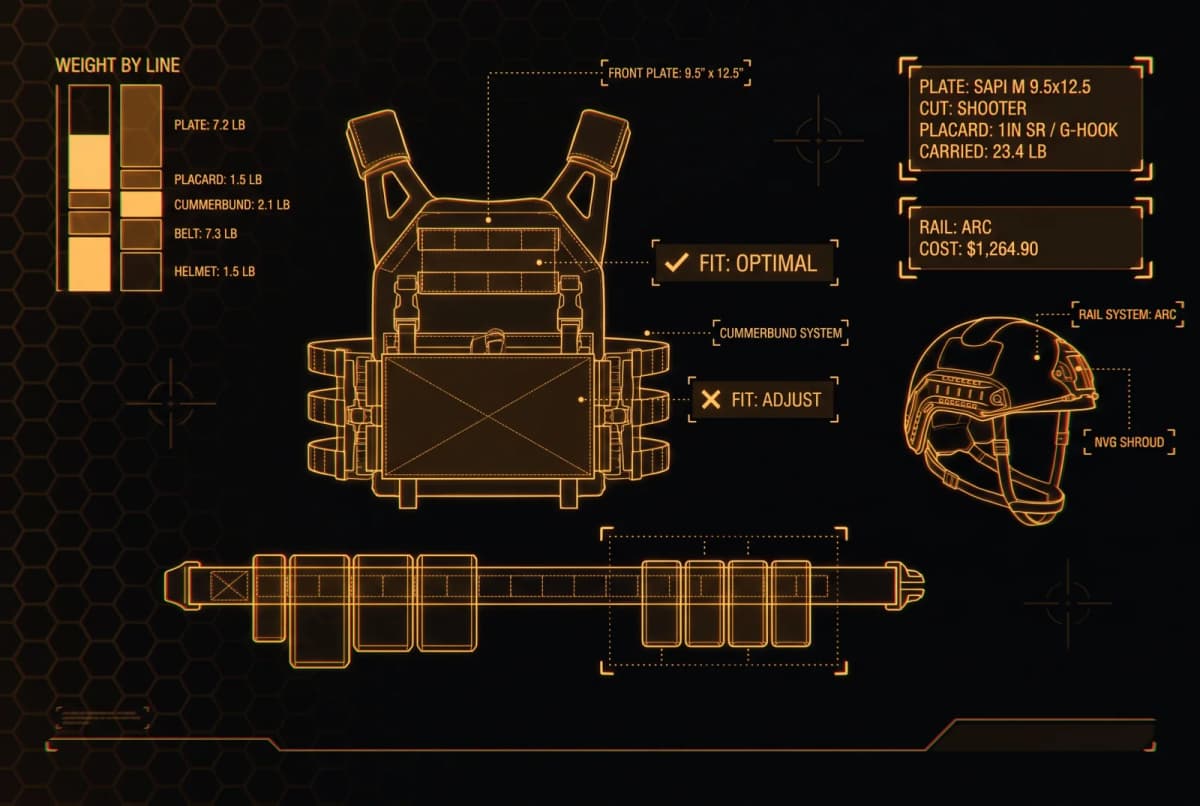
Kit Builder
Set up a plate carrier or chest rig, belt, and helmet zone by zone with catalog gear, maker-stated fit checks, total weight and cost, and a share link.
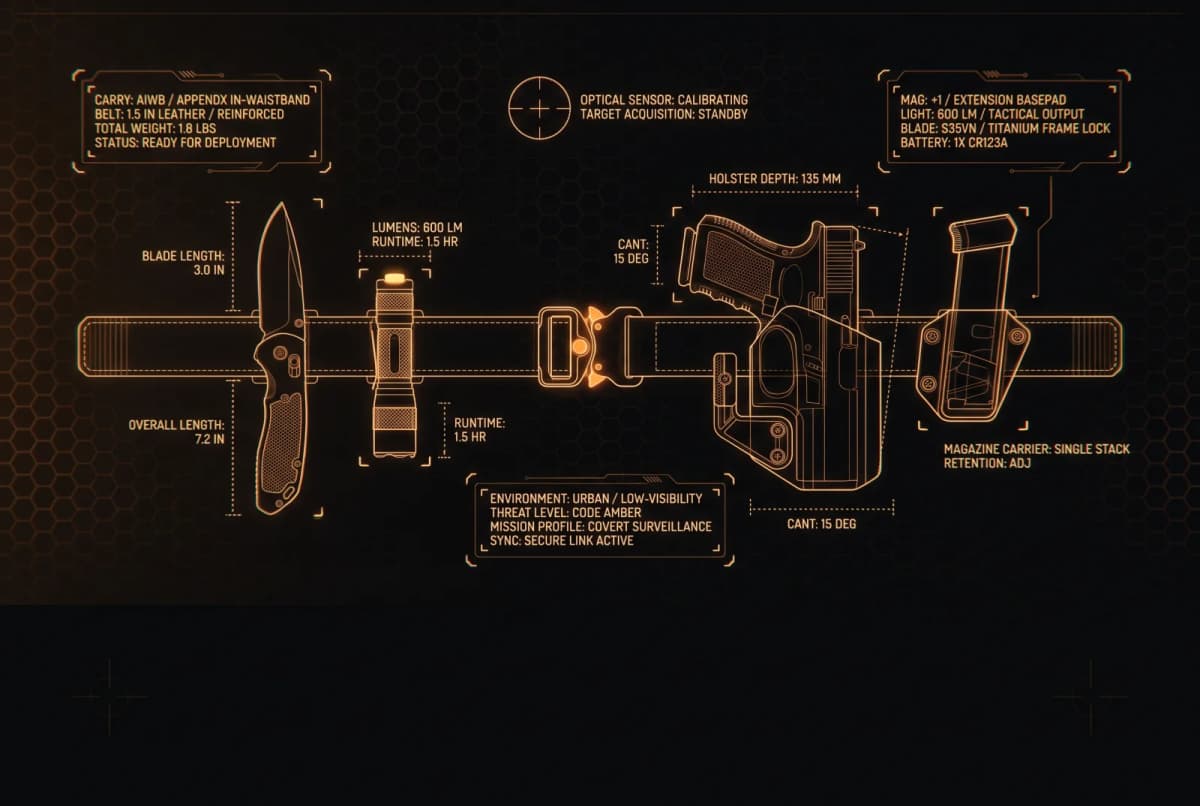
EDC Builder
Set up an everyday carry belt and pockets zone by zone: concealment holster, spare mag carrier, knife, handheld light, and pocket medical, with maker-stated fit checks, weight, cost, and a share link.
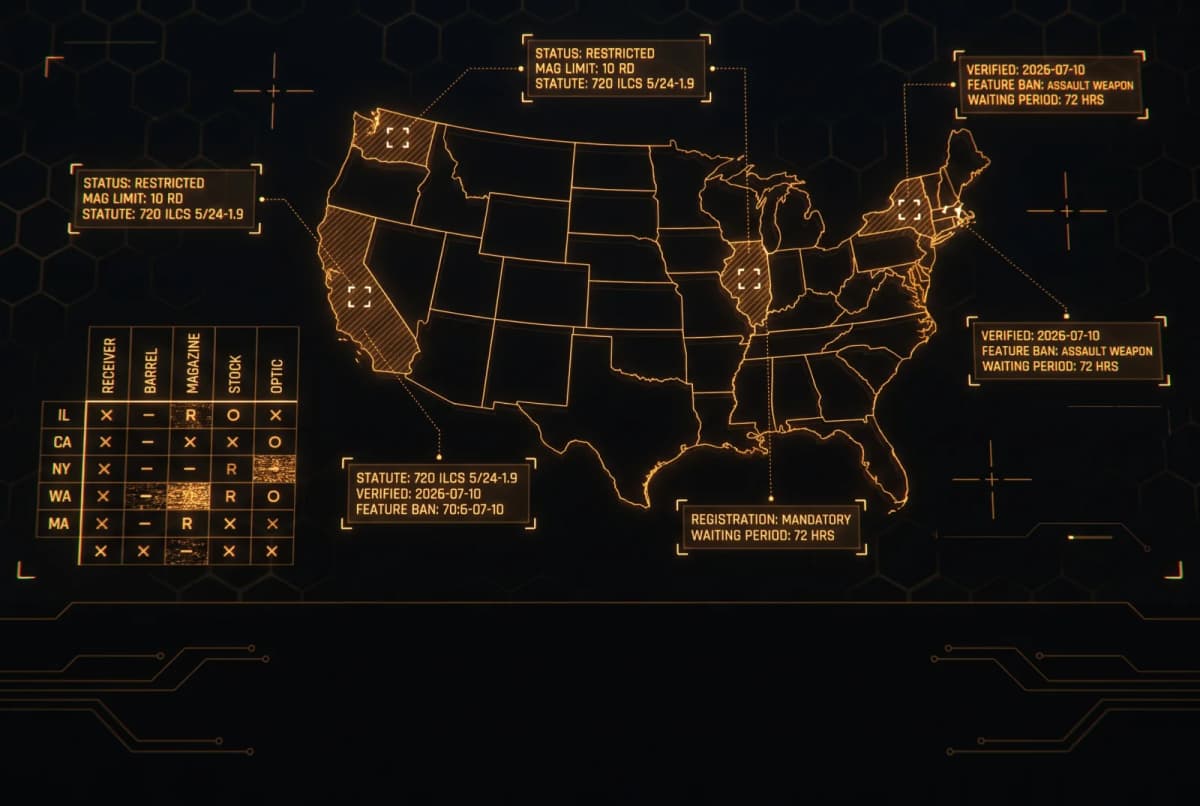
State Legality Matrix
Official-source resident concealed-carry permit modes plus statute-cited legality of FRTs, binary triggers, suppressors, SBRs, pistol braces, magazine limits, and assault-weapon feature rules in all 50 states plus DC.
California Handgun Roster
Search every California DOJ-certified handgun configuration by exact model, manufacturer, caliber, and type, with roster expiration dates, recent additions, and purchase options tied to the listed configuration.
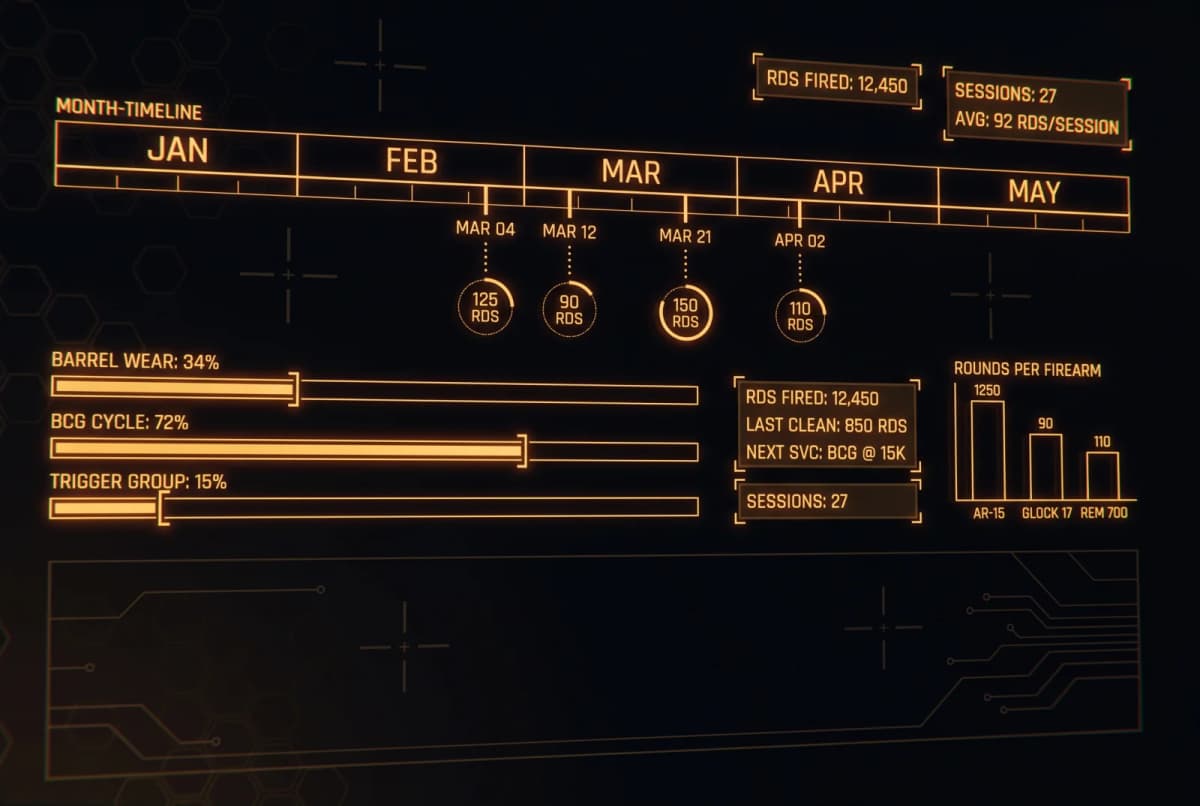
Shooting Logbook
Log range sessions, drill results, and maintenance events. Round counts tally automatically per firearm so service intervals never sneak up on you.
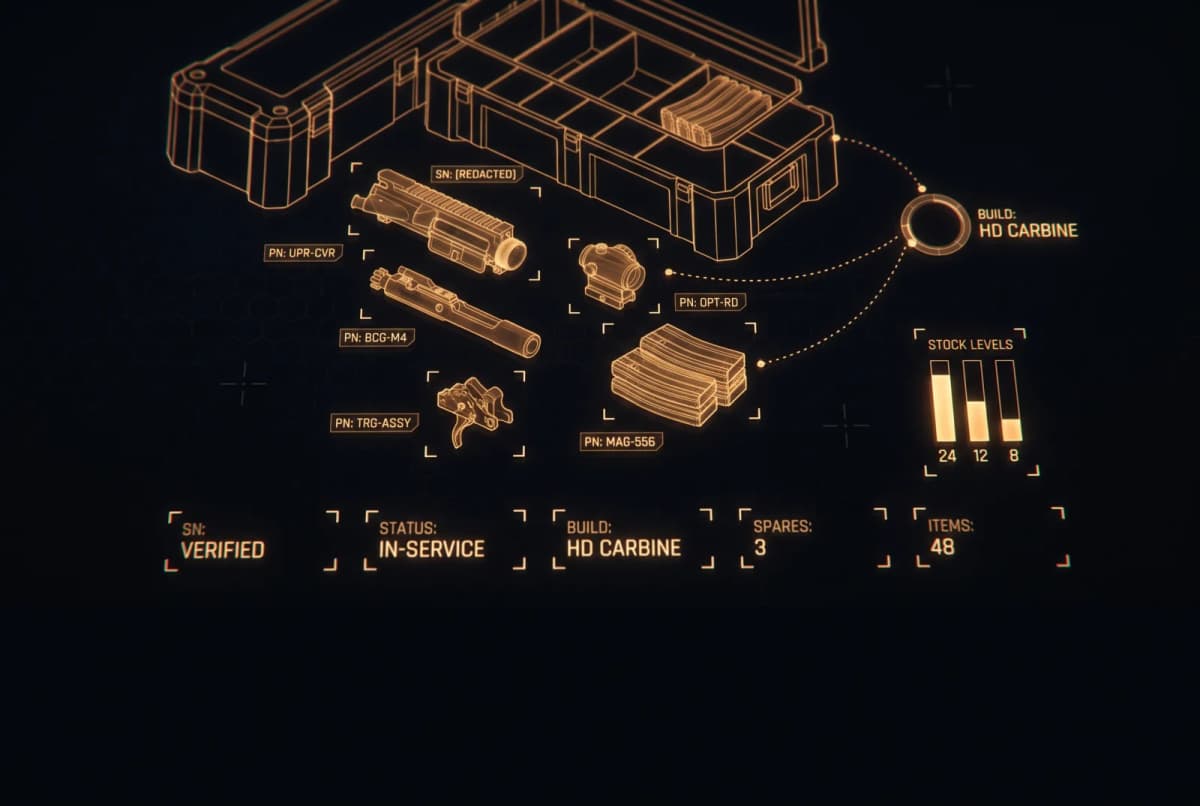
Parts Inventory
Track serialized parts, tie them to builds, and keep round counts and maintenance intervals aligned with the logbook. Syncs across devices when signed in.
Holster Compatibility Picker
Select your handgun, weapon light, and optic to rank holsters for your setup and see what still needs confirmation.
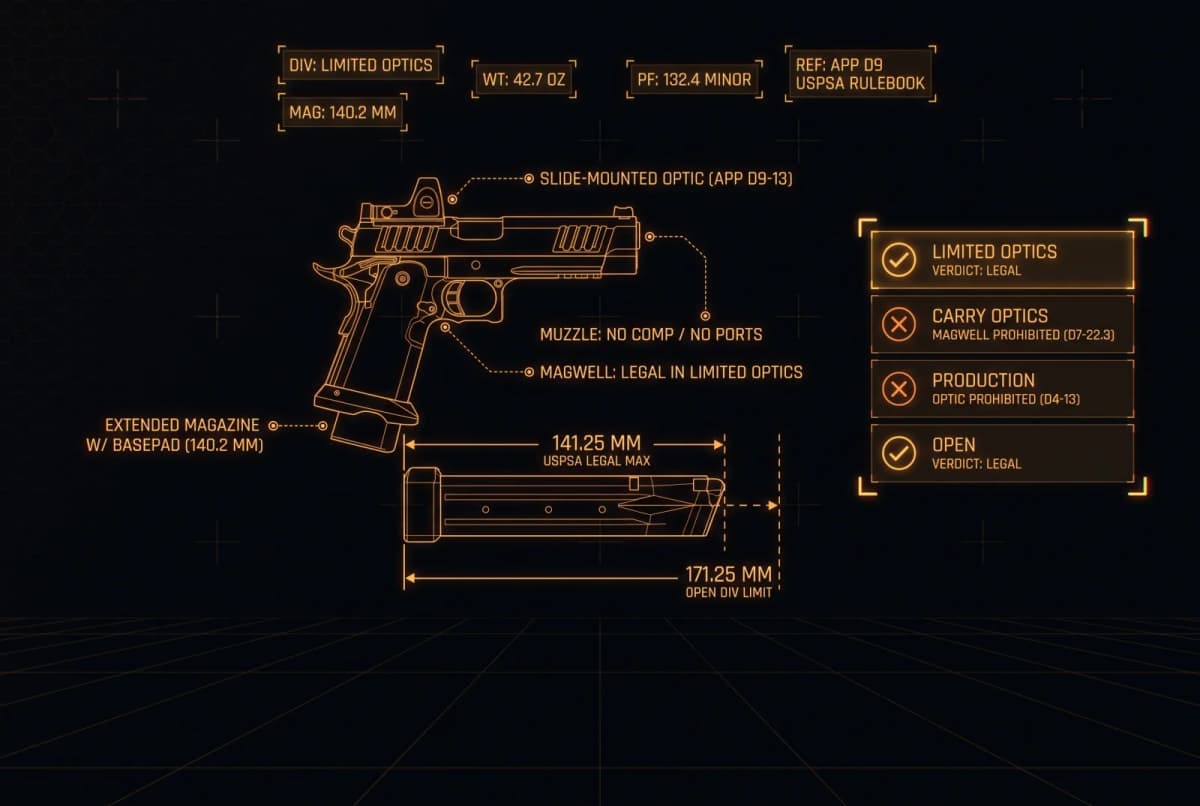
USPSA Division Checker
Describe your handgun or PCC and get its USPSA division placement: per-division legal verdicts for all nine divisions, each failure cited to the March 2026 rulebook line.
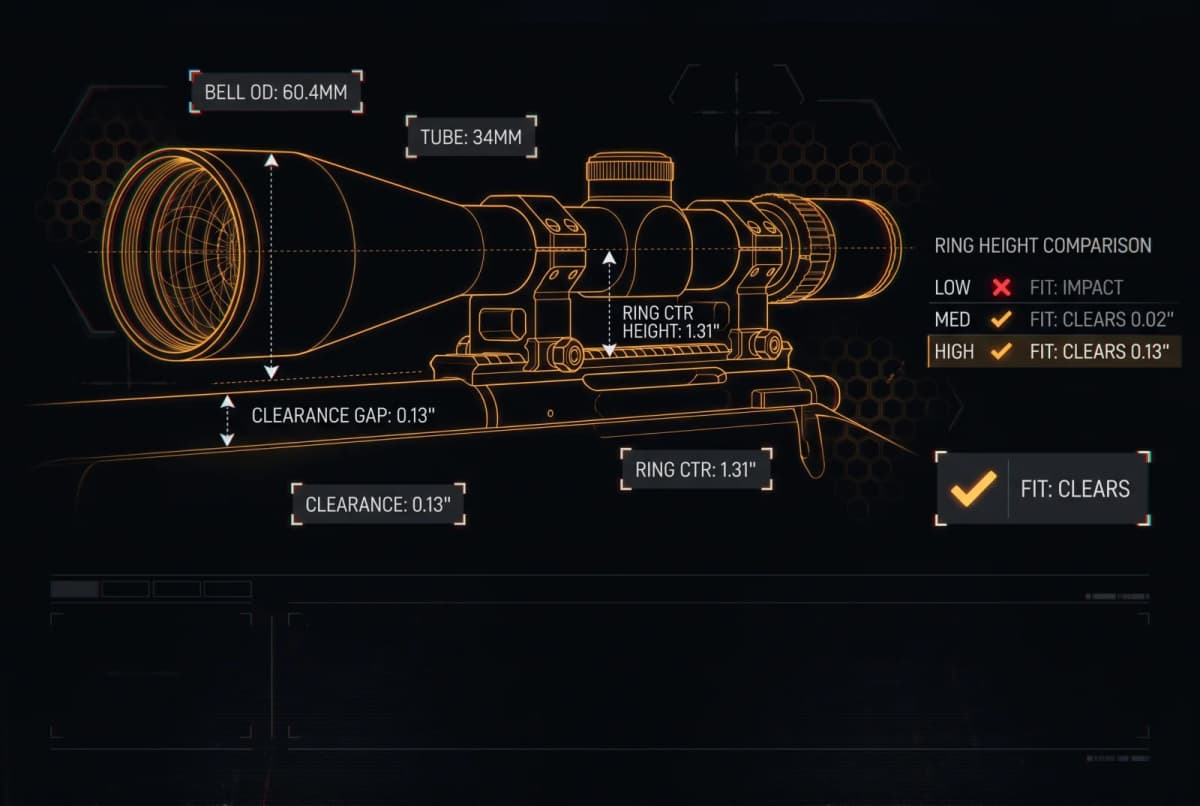
Scope Ring Height Calculator
Enter objective size and tube diameter to get the minimum ring height that clears the barrel, with verified center heights from Vortex, Seekins, Leupold, Burris, and Warne.
FRT Compatibility Picker
Pick your host and see every forced reset trigger, forced reset selector, and enabling part that fits it, with the buffer, bolt carrier, and recoil spring figures the makers publish.
Barrel & Overall Length Visualizer
Draw an AR-15 with a 10.3 to 20 inch barrel, a pinned muzzle device, or a suppressor, stock collapsed or extended, and see where it lands against the 16 inch barrel and 26 inch overall length lines, measured the way ATF measures.
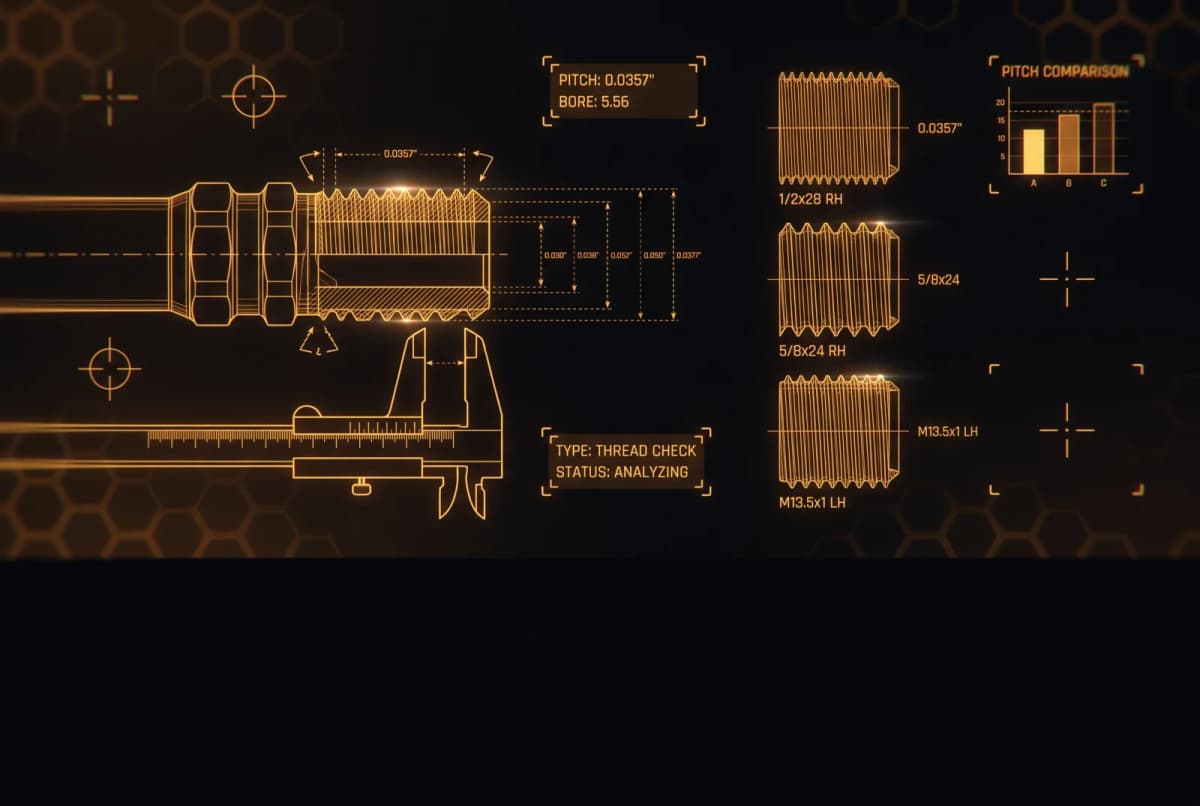
Muzzle Thread Checker
Pick a caliber or platform to get its standard muzzle thread pitch (1/2x28, 5/8x24, M13.5x1 LH, M14x1 LH) plus every catalog muzzle device, suppressor, and piston that matches both thread and bore.
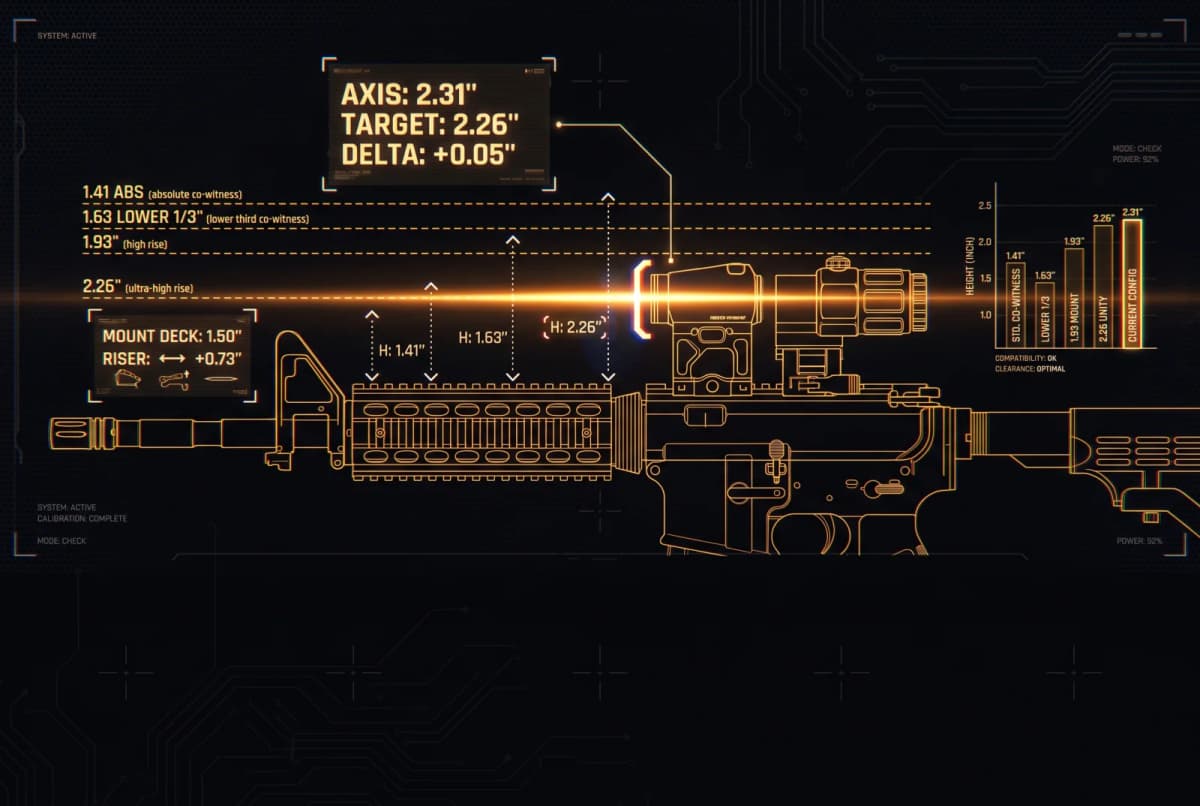
Rifle Red Dot Height Checker
Compute your red dot's optical axis height, match it to co-witness standards (1.41, lower 1/3, 1.93, 2.26), line up a magnifier, and find the riser that closes a gap.
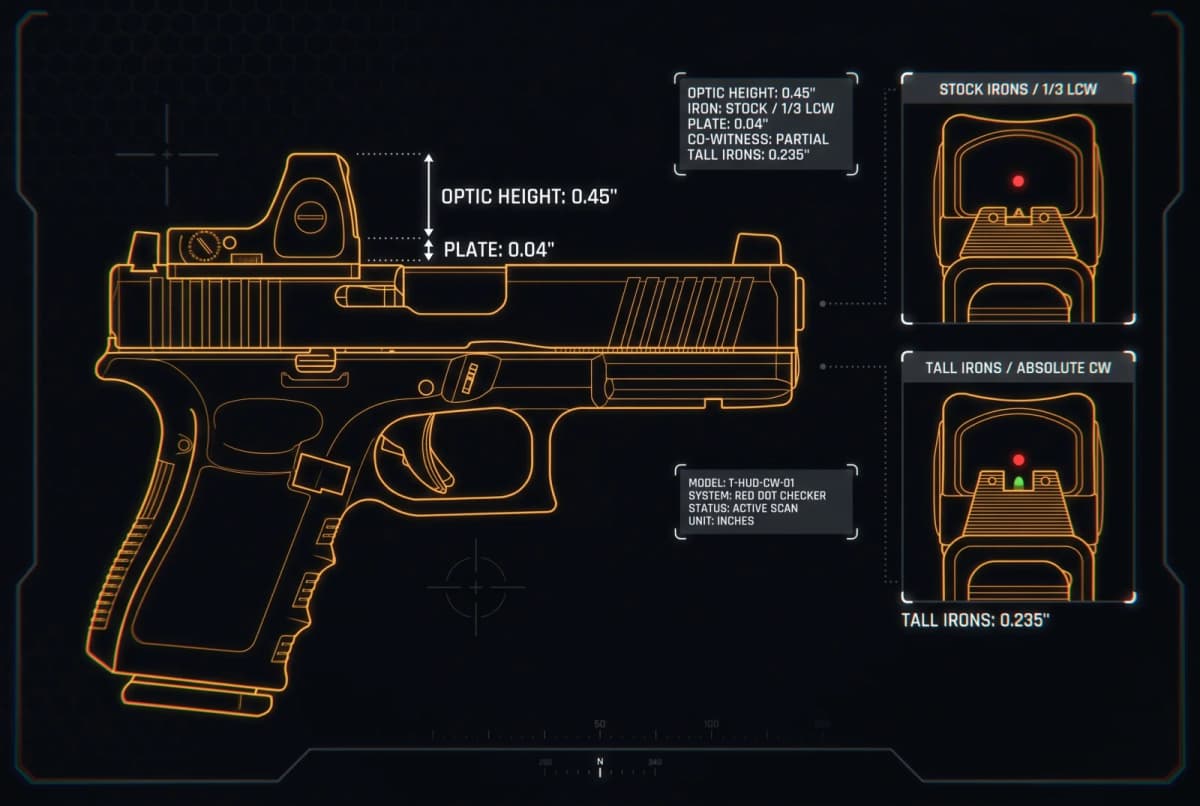
Pistol Red Dot Height Checker
Pick a pistol, optic, and plate to see stock-sight co-witness, recommend optic-height irons, and preview the ADS sight picture.
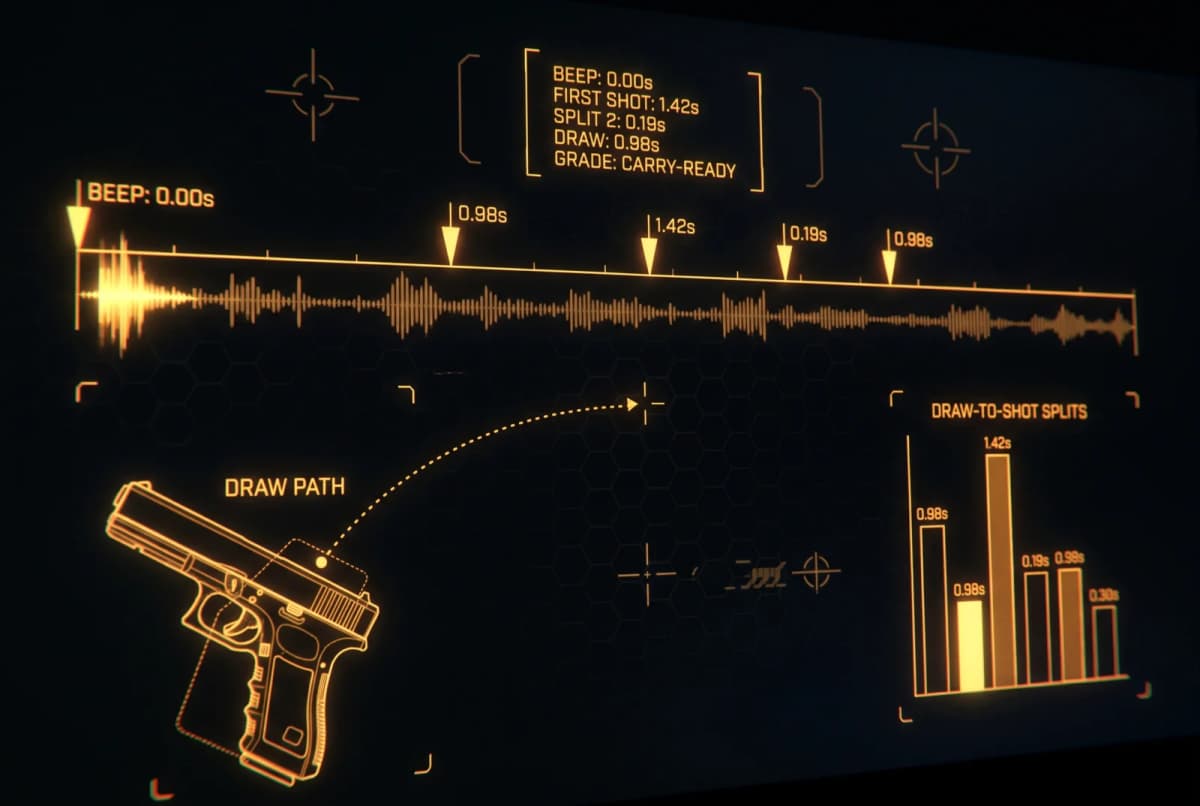
Draw Speed Video Analyzer
Upload a draw drill video, auto-detect the timer beep and each shot, and get draw-to-first-shot time, splits, and a skill-level grade against carry and competition standards.
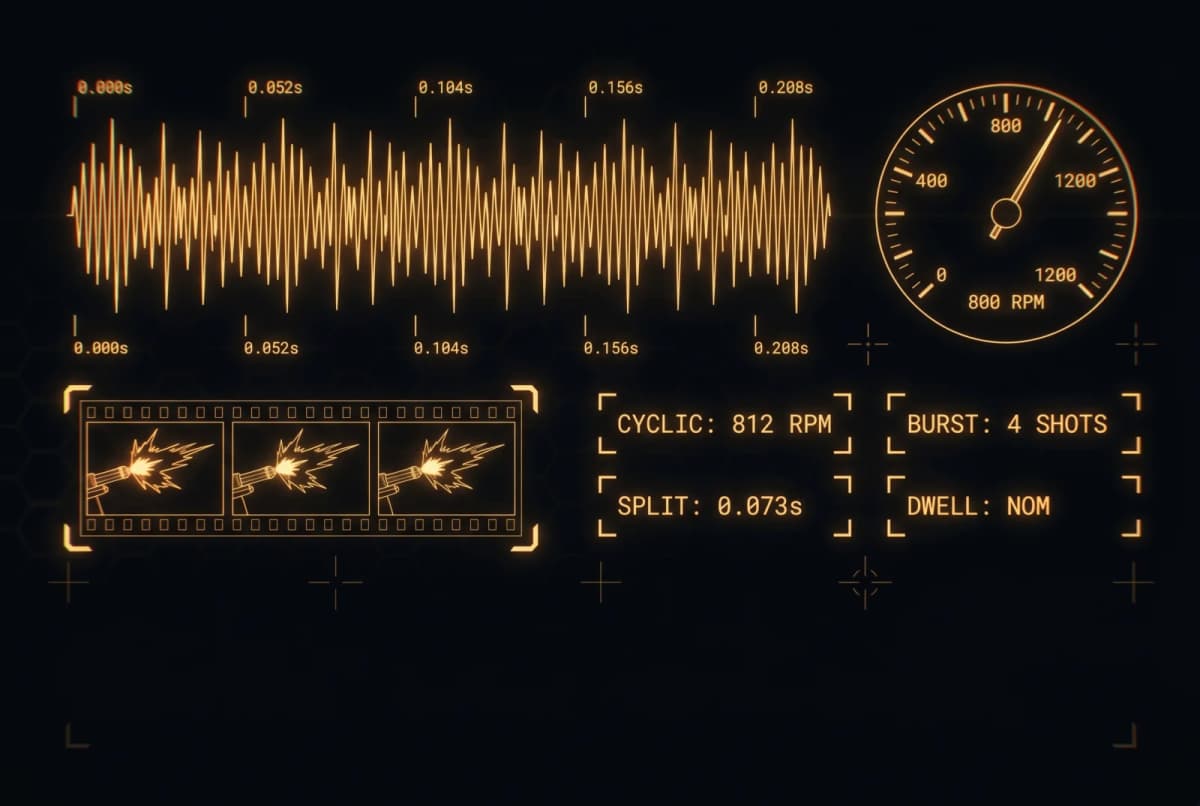
Rate of Fire Video Overlay
Detect shot peaks from a range video, correct markers, calculate burst RPM, and export a clip with a synced rate-of-fire HUD.
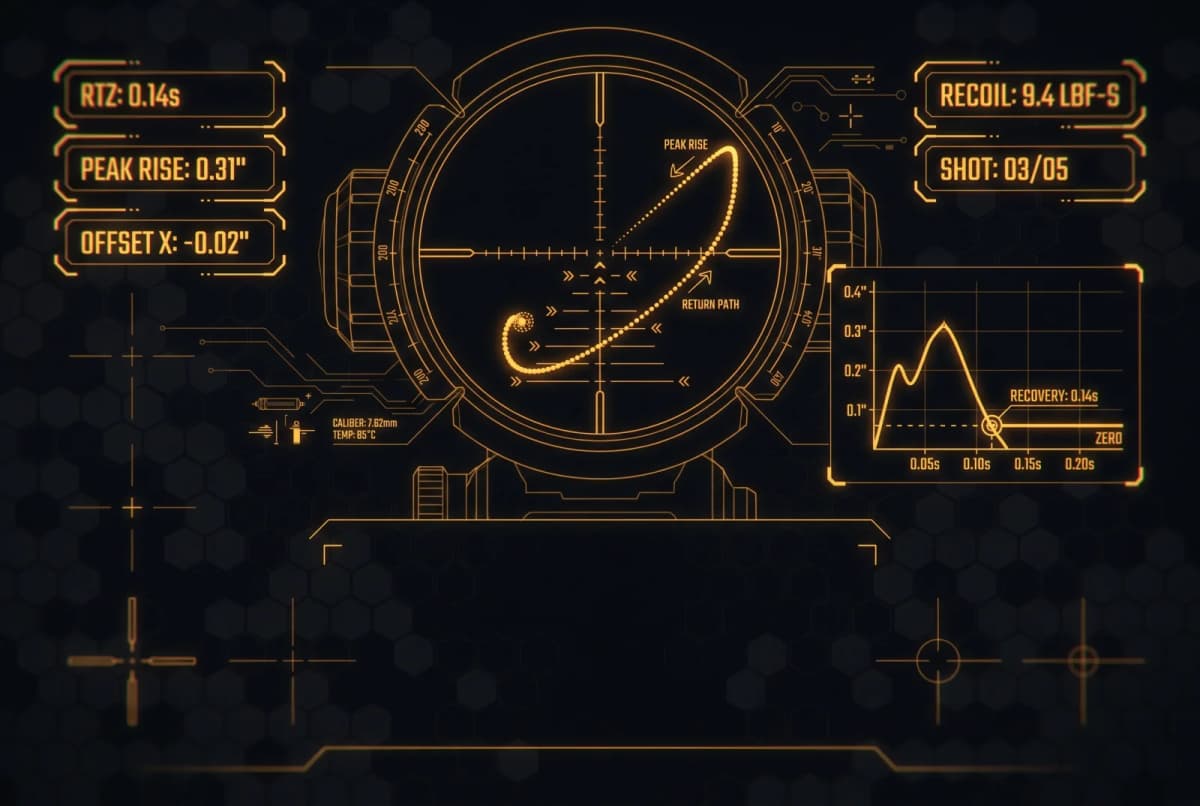
Recoil / Return-To-Zero Analyzer
Upload side-view or first-person video, track muzzle or optic movement, measure recovery time, and compare two setup changes.
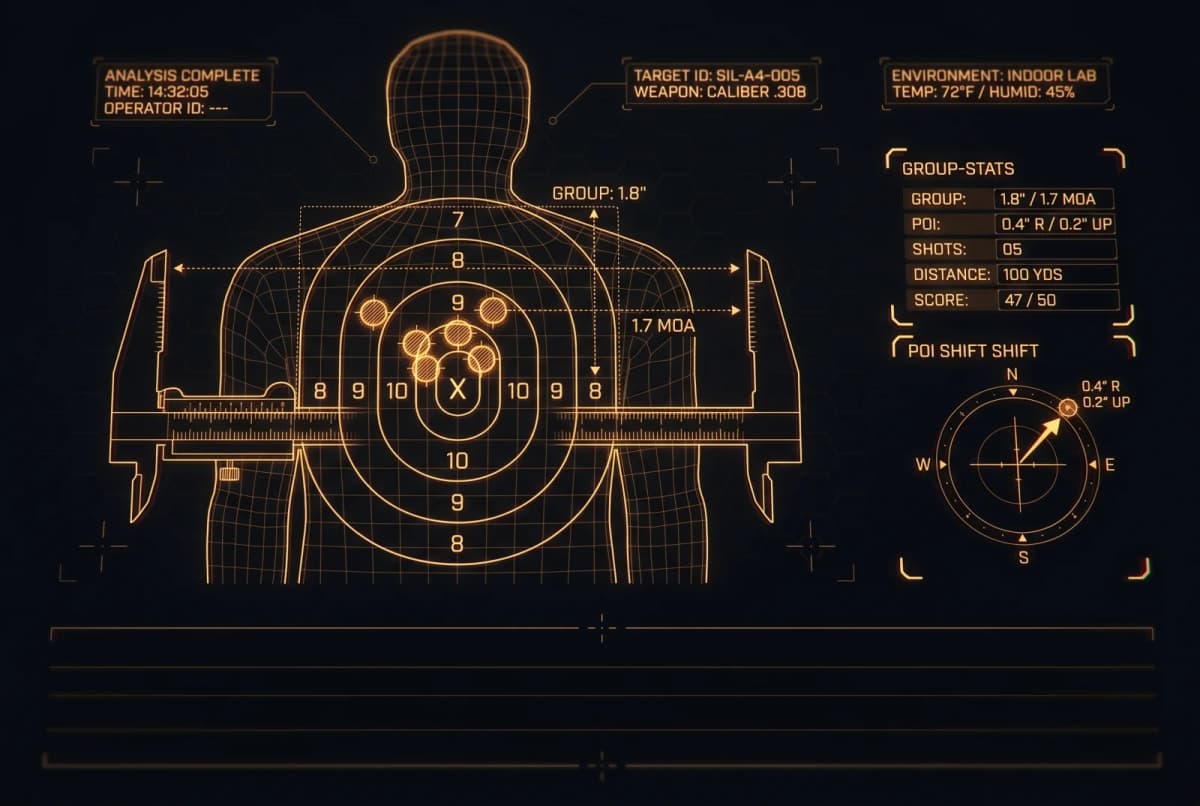
Target Photo Scorer
Upload a target photo, auto-detect scale and impacts, correct markers, then measure group size, POI shift, MOA/MIL, and score rings.
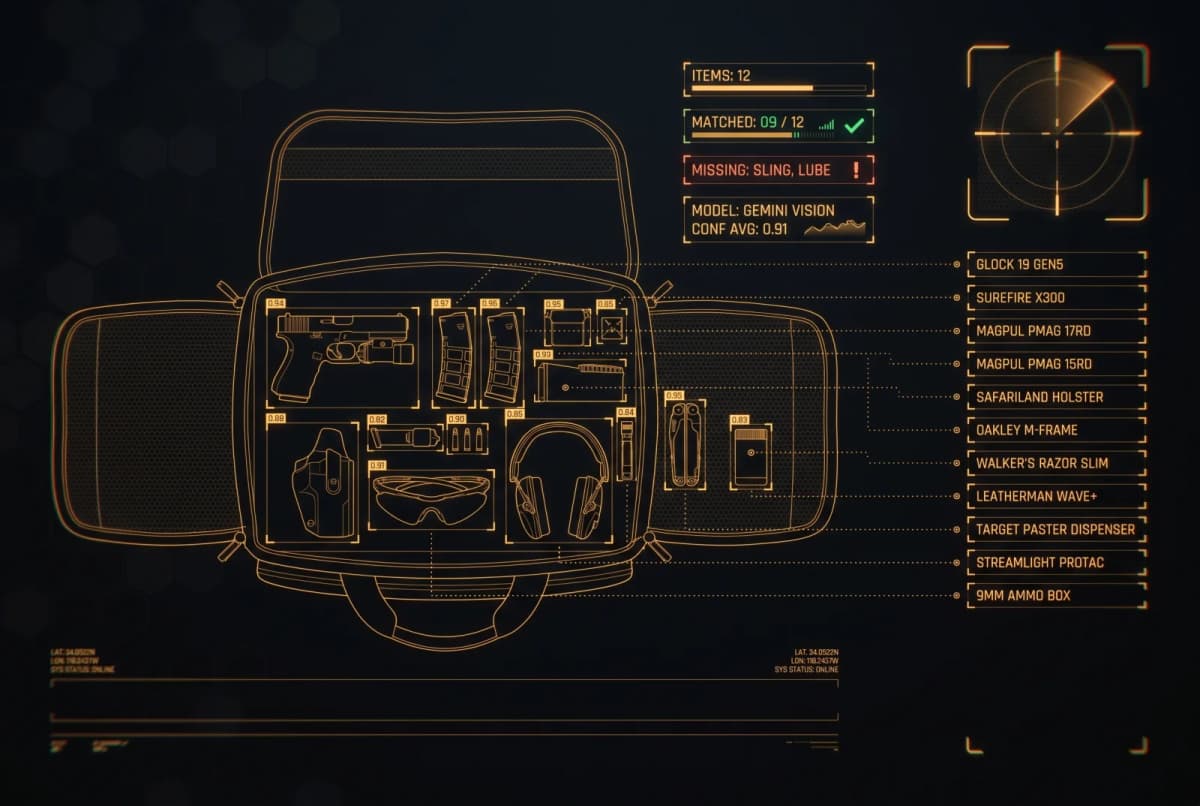
Photo-to-Loadout Cataloger
Upload a range-bag photo, auto-identify each visible item, link catalog matches, and flag missing support gear like medical and ear pro.
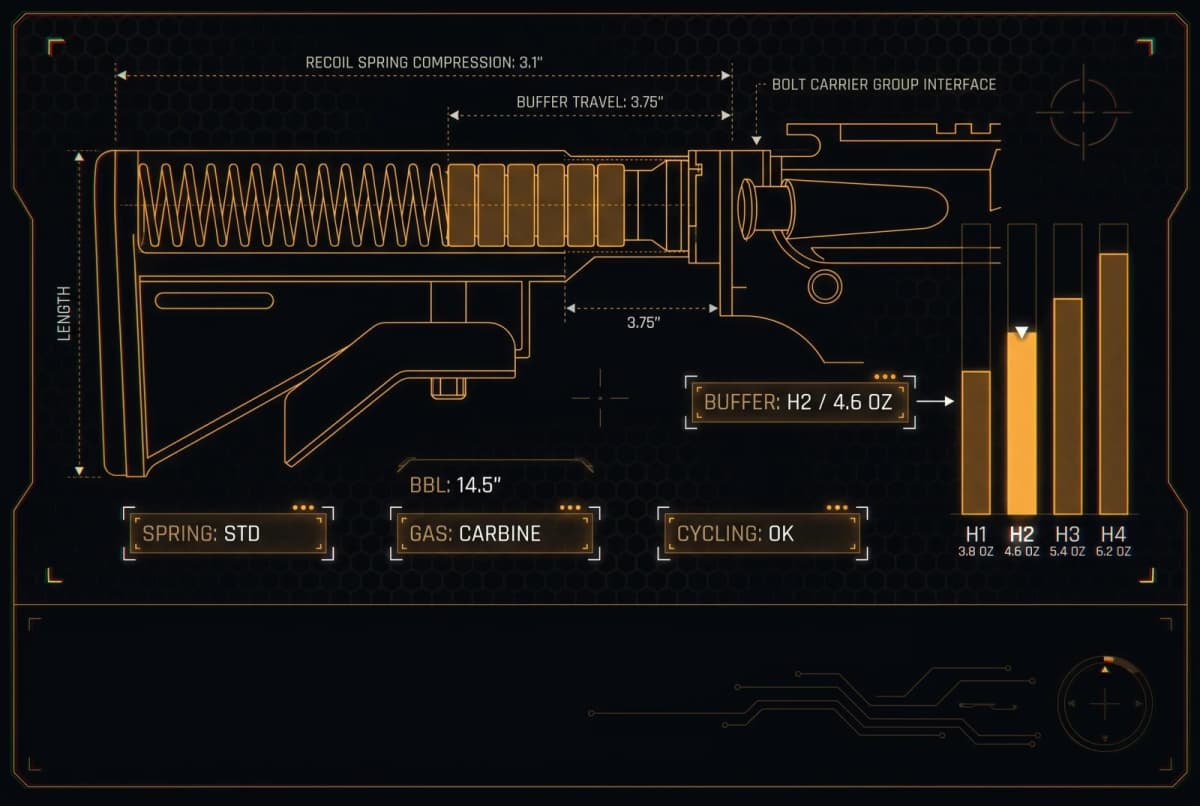
Buffer Weight Calculator
Input your barrel length, gas system, and ammo type to get the exact buffer weight recommendation for reliable cycling.
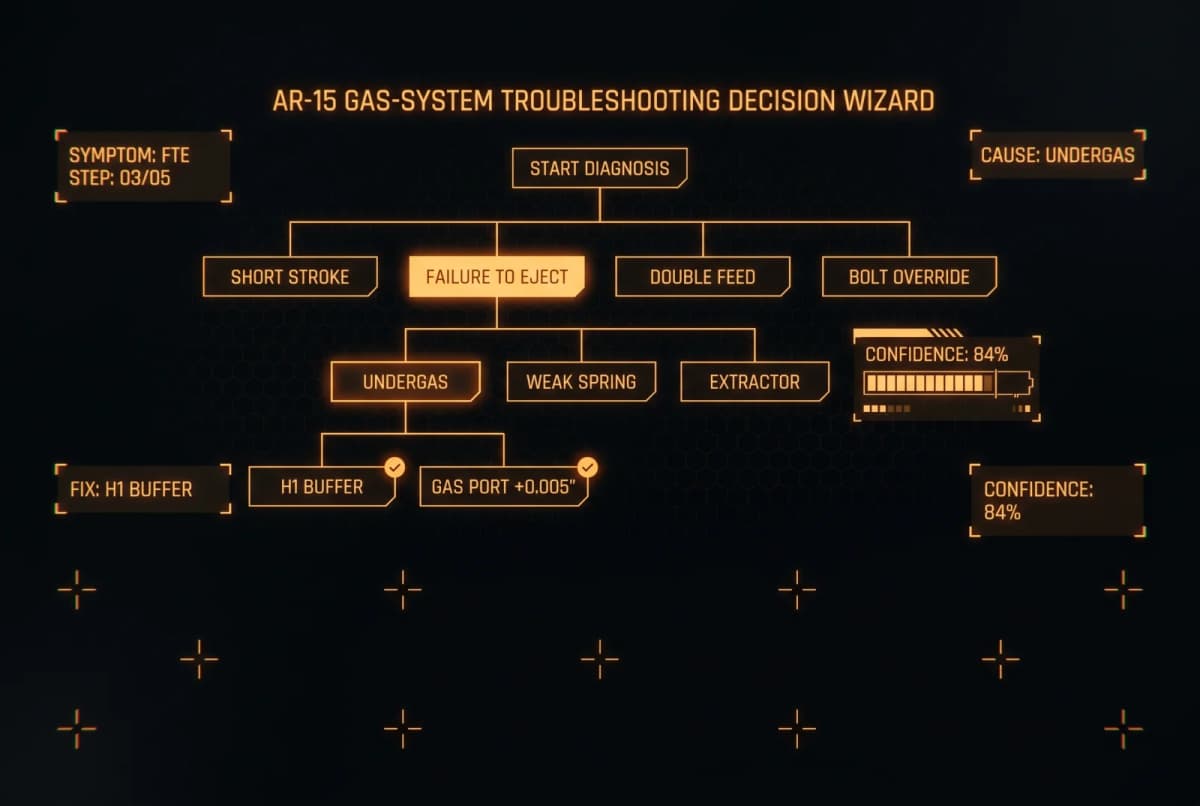
Gas System Troubleshooter
Step-by-step diagnostic wizard to identify and fix cycling issues, failures to eject, double feeds, and other gas-related problems.
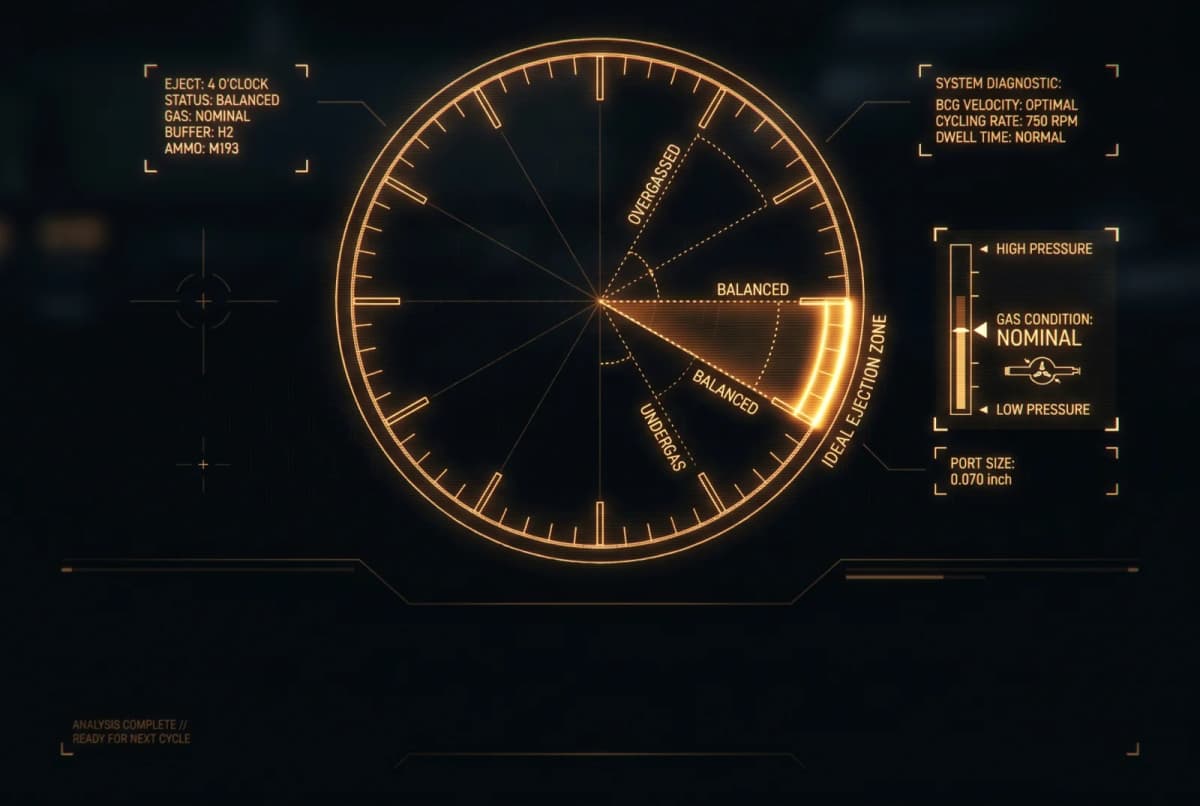
Ejection Pattern Analyzer
Diagnose overgassing or undergassing by matching brass ejection to the classic clock-face chart.
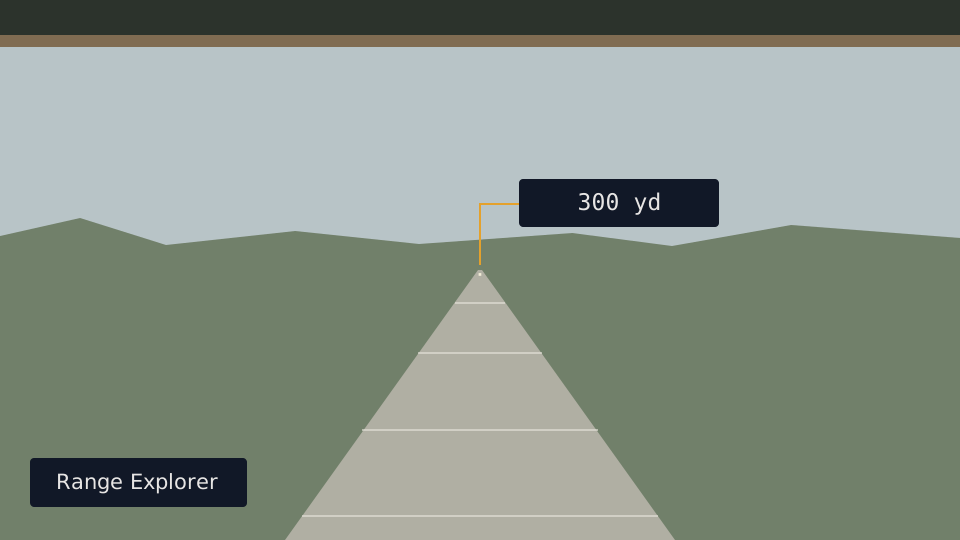
Range Simulator
Shoot a 3D range: pick a load, barrel length, zero and optic, fire at USPSA, IPSC, steel or paper targets, and watch drop, drift, velocity and the transonic transition through the reticle, from the side, overhead, or at the rifle. Sourced BDC reticles are checked against your load.
Holdover Trainer
Practice reticle holds against the real trajectory: pick a scope with a published BDC, MIL or MOA reticle, a load, barrel and zero, then tap the mark you would hold on a target at a random distance and fire. Ten scored shots with the correct mark, the error in angle and inches, and a replay link.
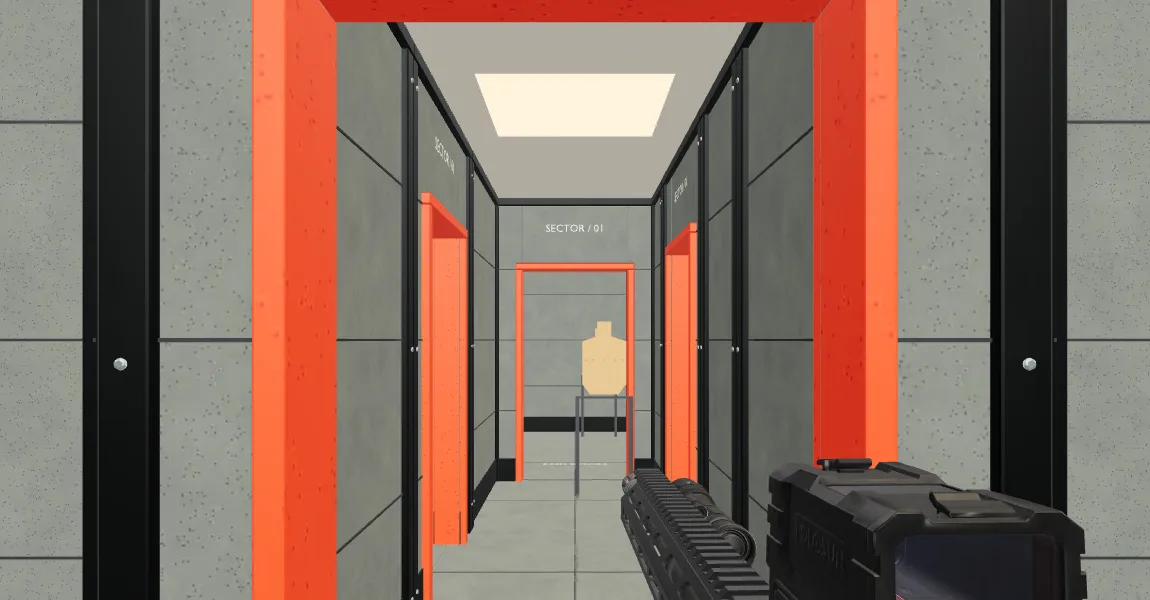
Combat Course Simulator
Clear a concrete-panel shoot house in first person, or run the carbine course with steel from 25 to 300 yards, with the red dot, holographic sight or LPVO you are shopping for. Pick the sight, its reticle pattern and emitter color, run it in daylight, under indoor lights or in the dark with a weapon light, and every hit lands where your zero, height-over-bore and the wind put it.
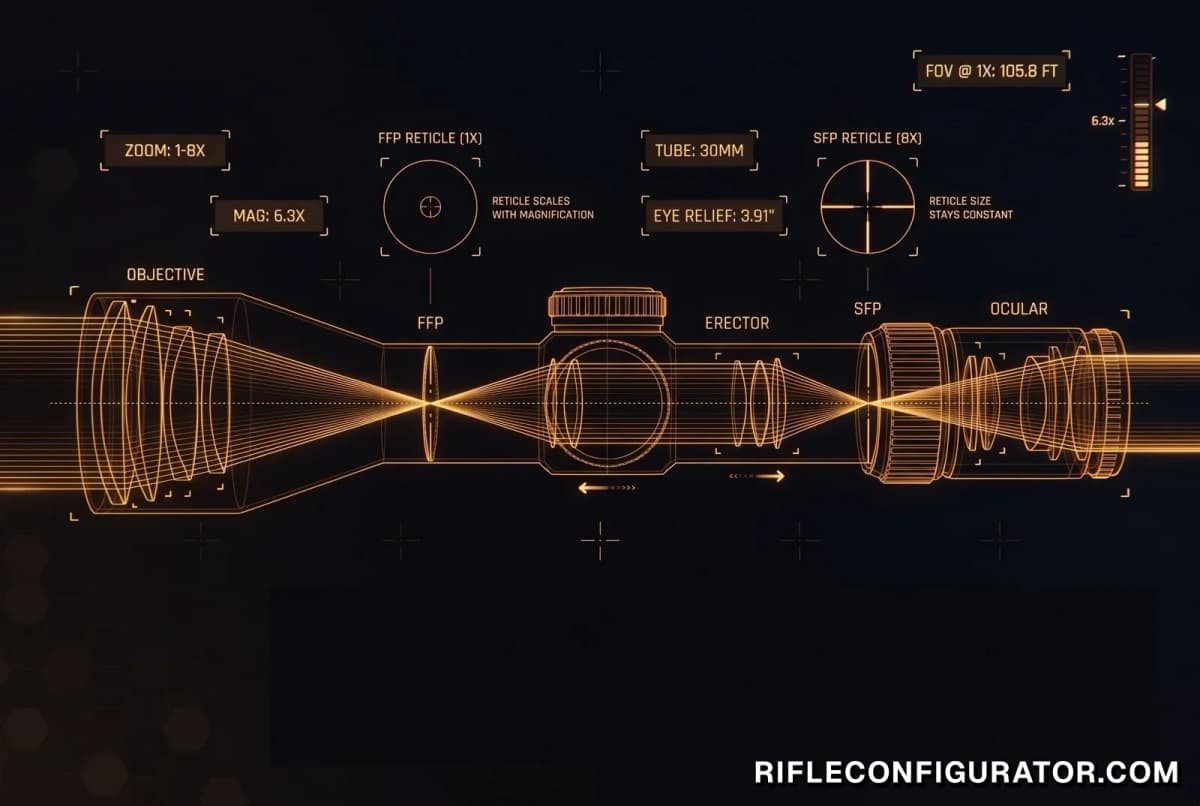
How a Scope Works: FFP vs SFP
A 3D cutaway of a 1-8x LPVO with the light path traced from the objective to your eye. Turn the magnification ring to watch the erector zoom, put the reticle in the first or second focal plane, dial the elevation turret to tilt the erector, and compare FFP and SFP eyepiece views of the same target at any power. Switch to a Trijicon ACOG TA31 to watch a roof prism fold the light and turn the image upright, or to a red dot with a flip-to-side 3x magnifier behind it.
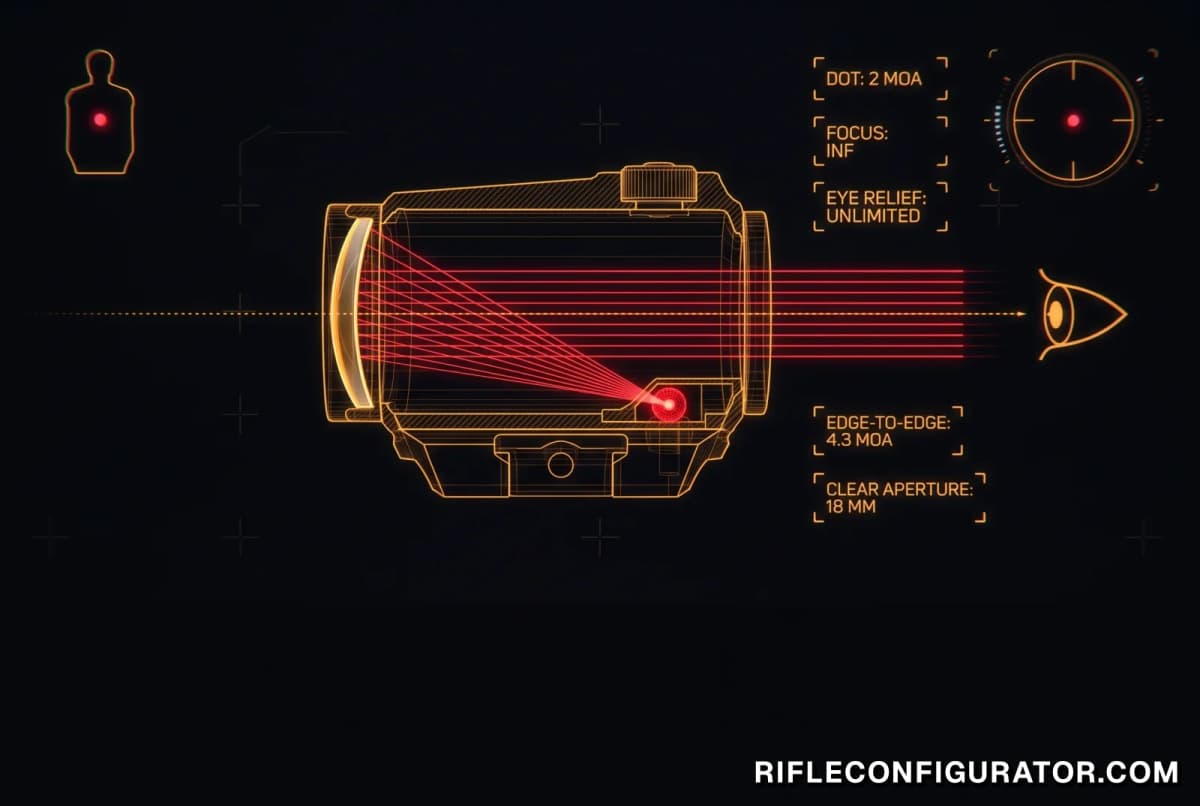
How a Red Dot Works: Parallax in 3D
A 3D cutaway of an Aimpoint Micro T-2 and a Trijicon RMR Type 2 with the dot's light traced from the LED to your eye. Move your head across the beam to see parallax, knock the emitter out of focus, slide your eye back to test eye relief, and look through the sight at 25, 50 or 100 yards with a 1 to 6 MOA dot.
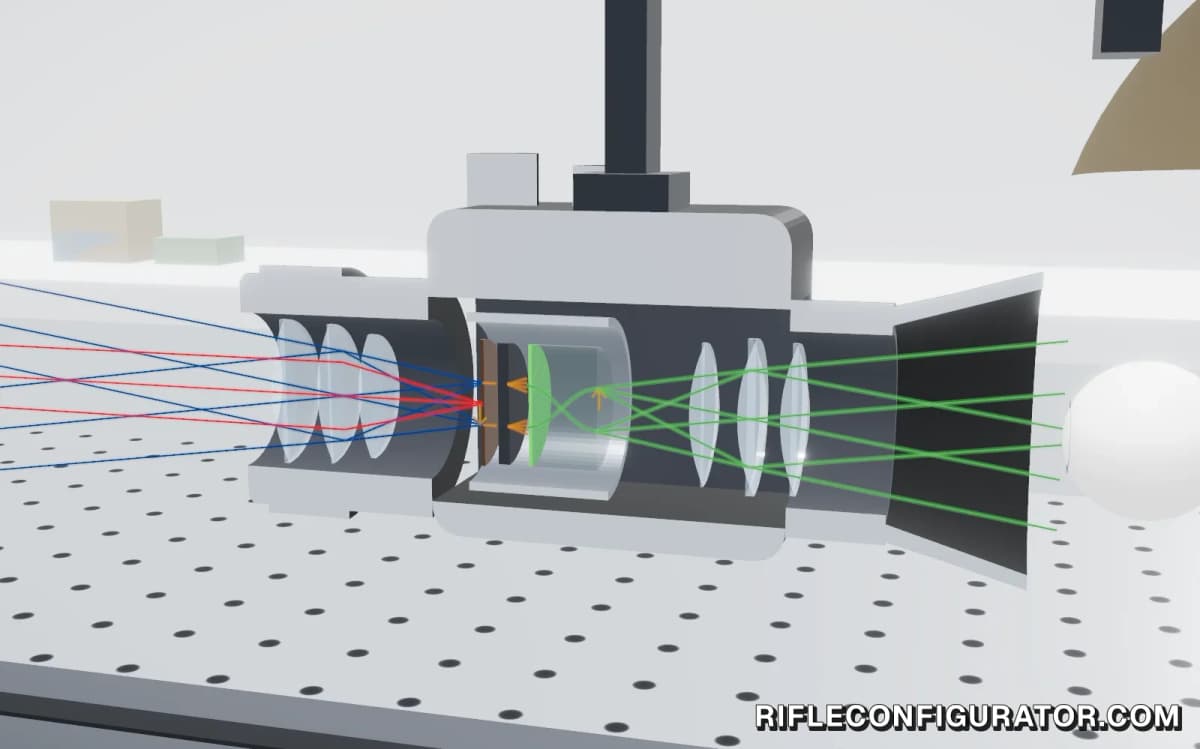
How Night Vision Works: Inside a PVS-14 in 3D
A 3D cutaway of a PVS-14 night vision monocular on a helmet mount behind an Aimpoint Micro T-2. Dim the sky from a full moon to overcast starlight, follow the light from the photocathode through the microchannel plate to a green or white phosphor screen, and see an IR laser, a bright light's halo and a too-bright red dot through the tube.
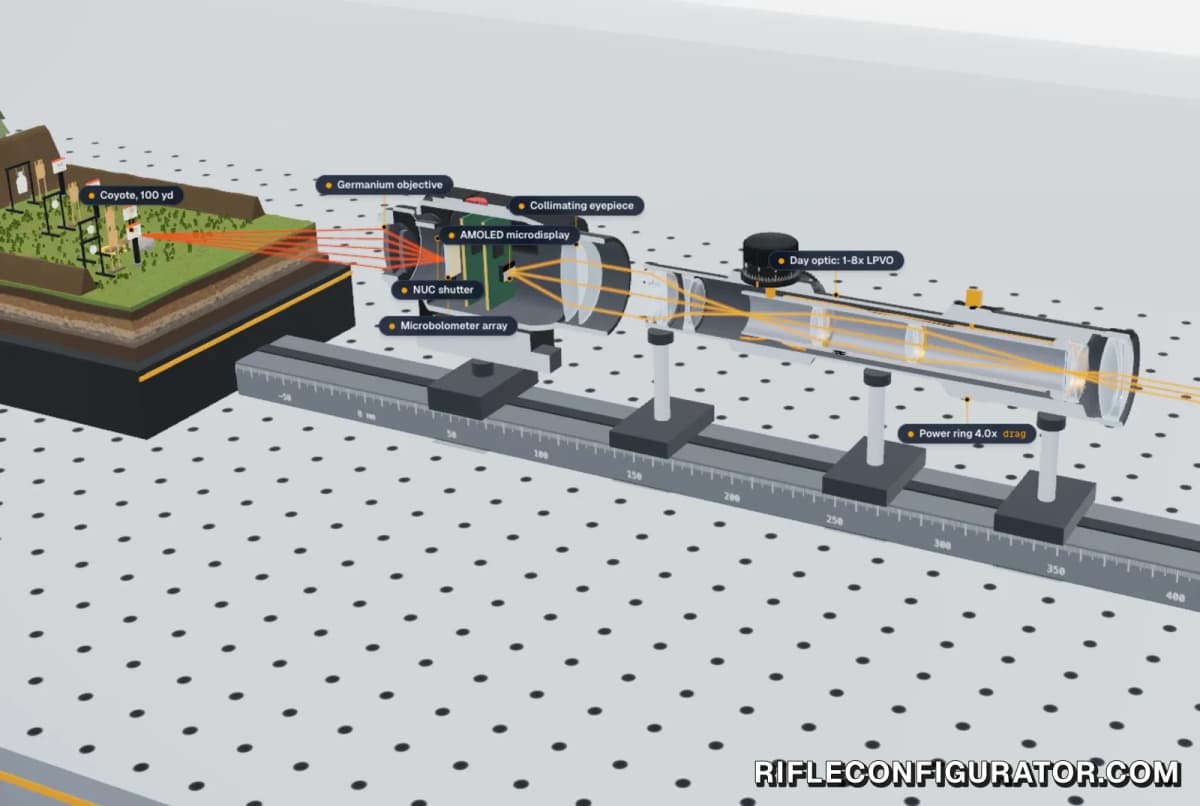
How a Thermal Scope Works: Heat to Pixels in 3D
A 3D cutaway of a SIG Sauer ECHO CV25 thermal clip-on in front of a 1-8x LPVO, with a coyote's heat traced through the germanium lens to the microbolometer. Switch palettes, compare a cold night with thermal crossover, run a NUC, and turn the LPVO's power ring to watch the thermal pixels grow in your eye.
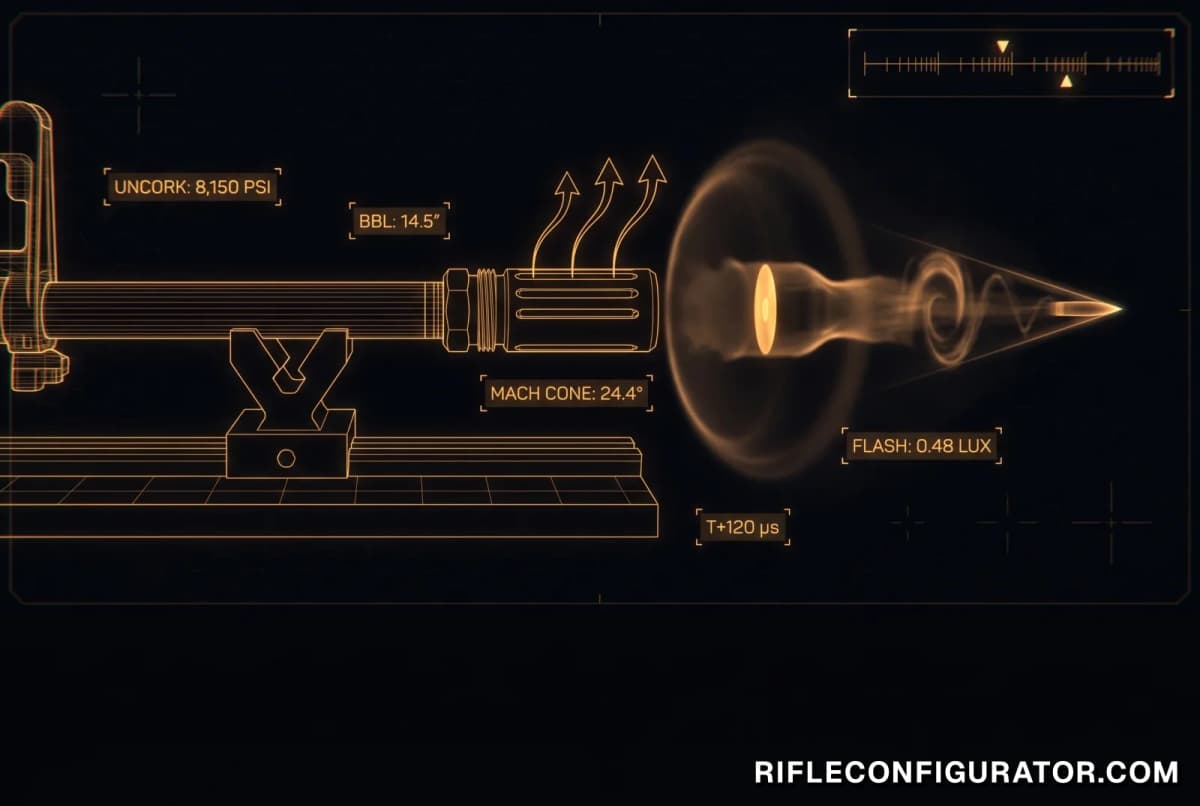
How Muzzle Devices Work: Flash Hiders, Brakes and Suppressors
Watch the muzzle blast in slow motion on a 3D bench. Scrub from the precursor blast through the shock bottle to secondary flash, then put an A2 flash hider, a SureFire WARCOMP, a Precision Armament M4-72 brake or a SureFire SOCOM556-MINI2 suppressor on a 14.5 or 10.5 inch barrel to see where each one sends the gas.
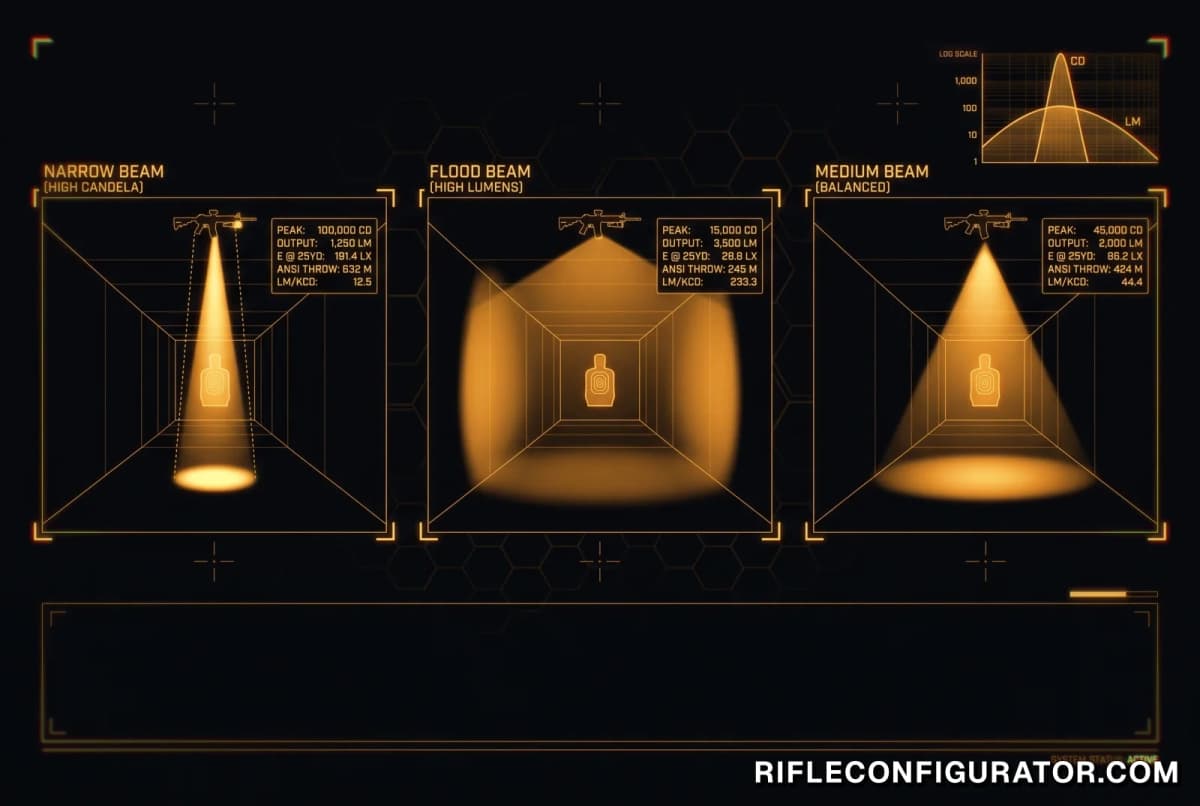
Lumens vs Candela: Weapon Light Beam Comparison
Put two or three real weapon lights side by side in a dark hallway and a bermed yard, with targets from 3 to 50 yards. Every pane is the same scene and the same exposure, lit by one light at its published candela, with the lux each one lands on the target and its ANSI beam distance.
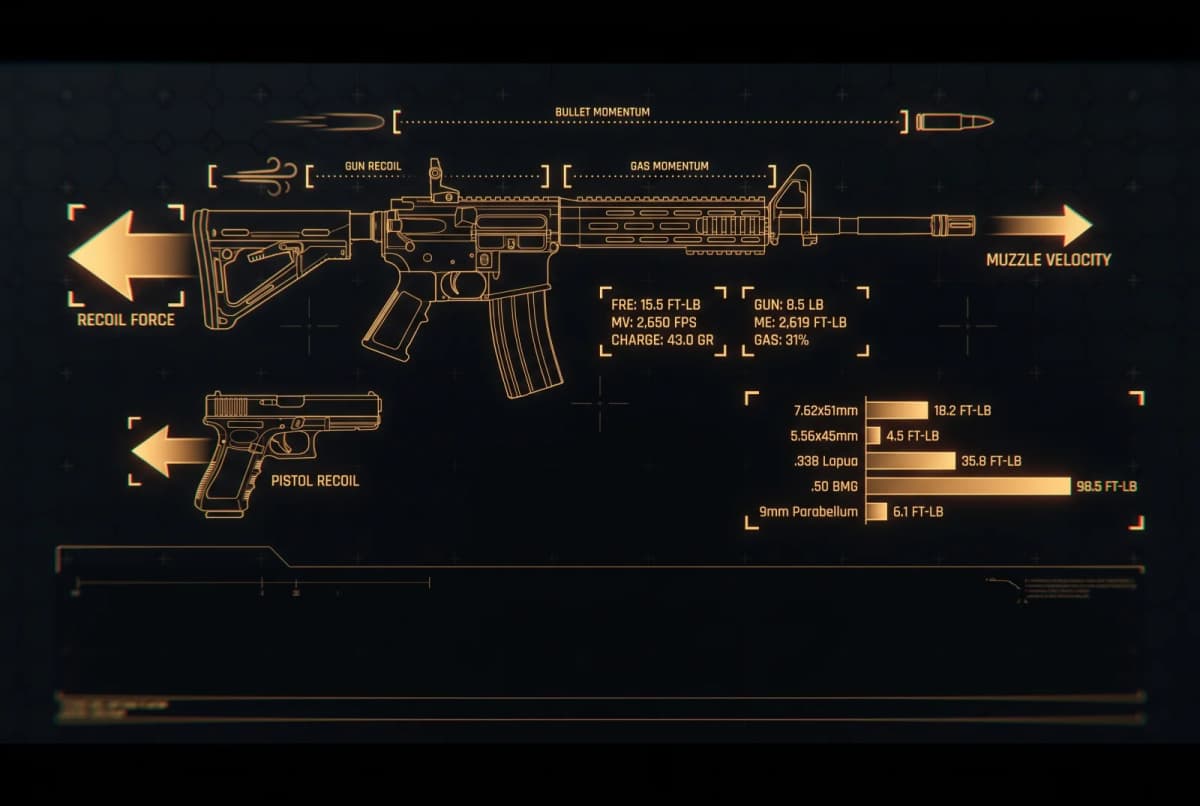
Recoil & Muzzle Energy Calculator
Free recoil energy, recoil velocity, and muzzle energy for any load via the SAAMI formulae. Compare two loads side by side, from .22 LR to .338 Lapua and 12 gauge slugs.
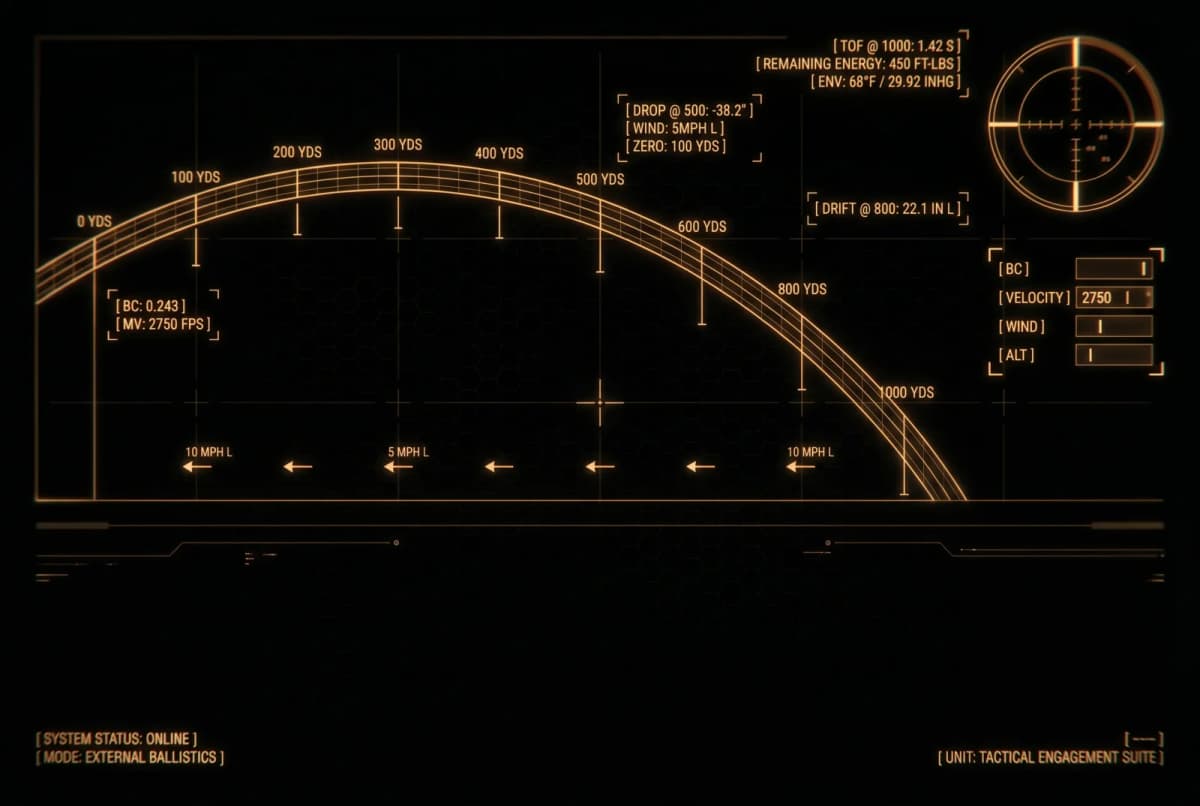
Ballistics Calculator
Chart bullet drop, wind drift, velocity, and energy to 1,000 yards with standard G1/G7 drag models. Barrel-length velocity adjustment, point blank range, and copyable DOPE cards.
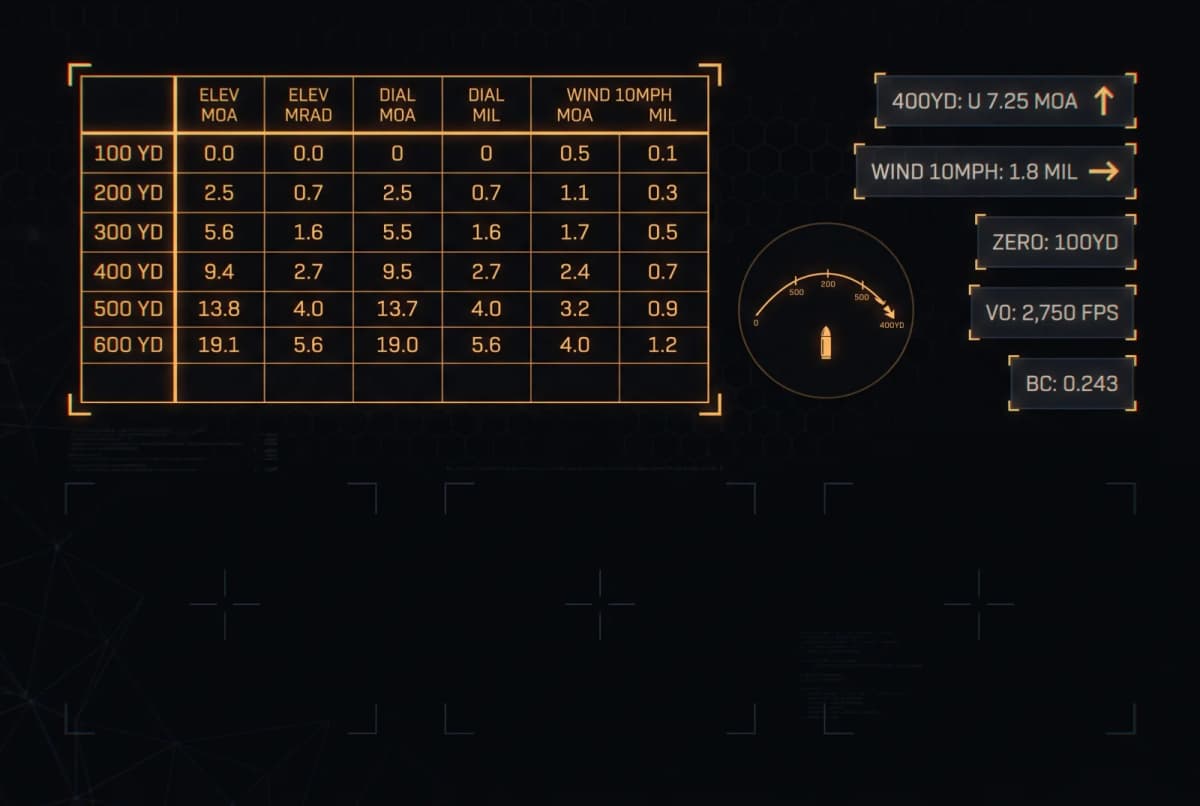
DOPE Card Generator
Generate a printable 4x6 range card for your load and zero: drop in inches, MOA, and MRAD, turret dial values rounded to your click value, 10 mph wind holds, velocity, energy, and transonic marking. CSV export included.
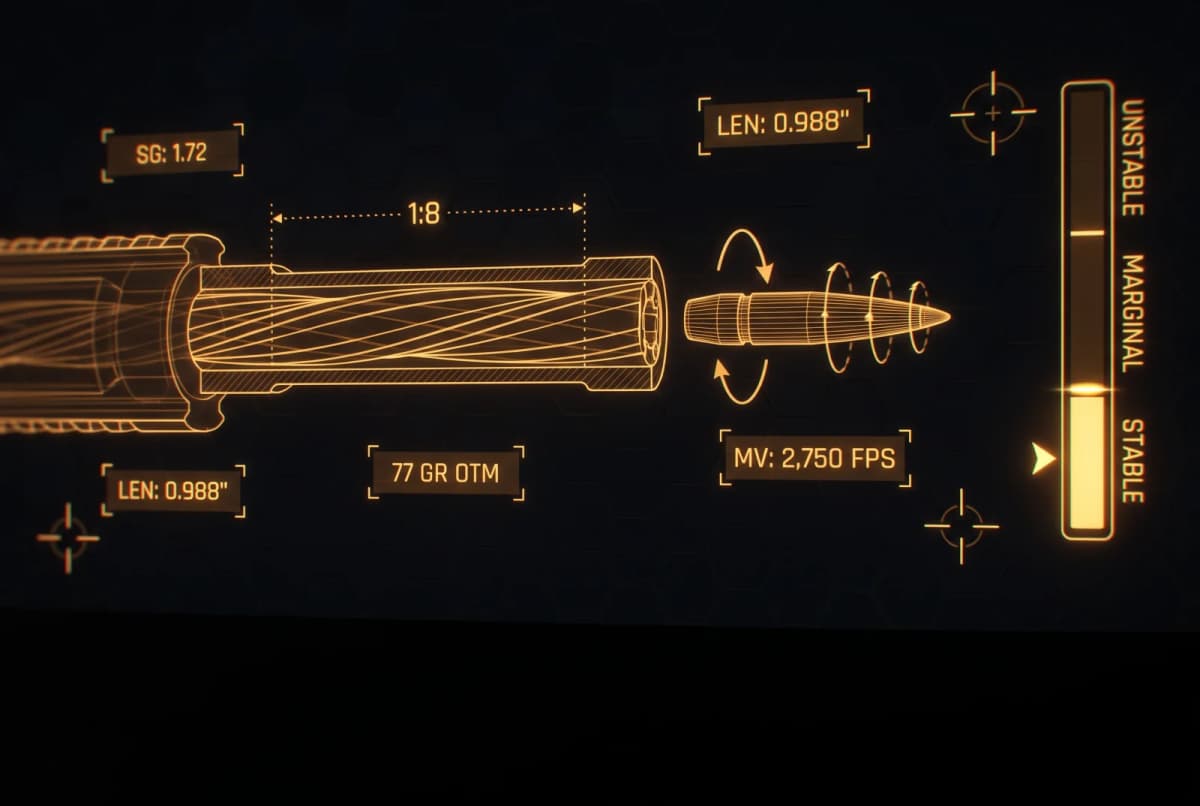
Twist Rate Stability Calculator
Compute the Miller gyroscopic stability factor (SG) for any bullet and barrel twist. Preset match loads or custom bullet dimensions, with velocity and altitude corrections and a minimum-twist recommendation.
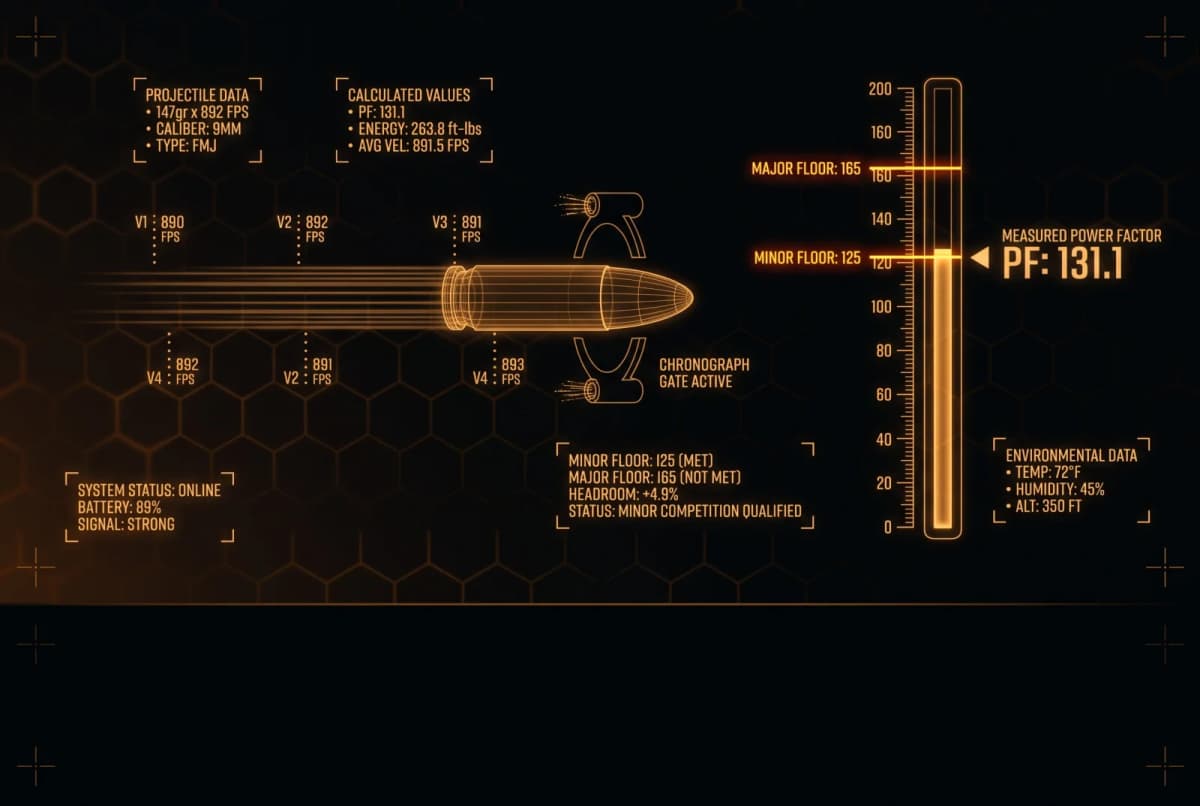
Power Factor Calculator
Bullet weight x velocity / 1000, averaged across your chrono readings, checked against current 2026 USPSA, IDPA, and Multigun division floors with a velocity headroom readout.
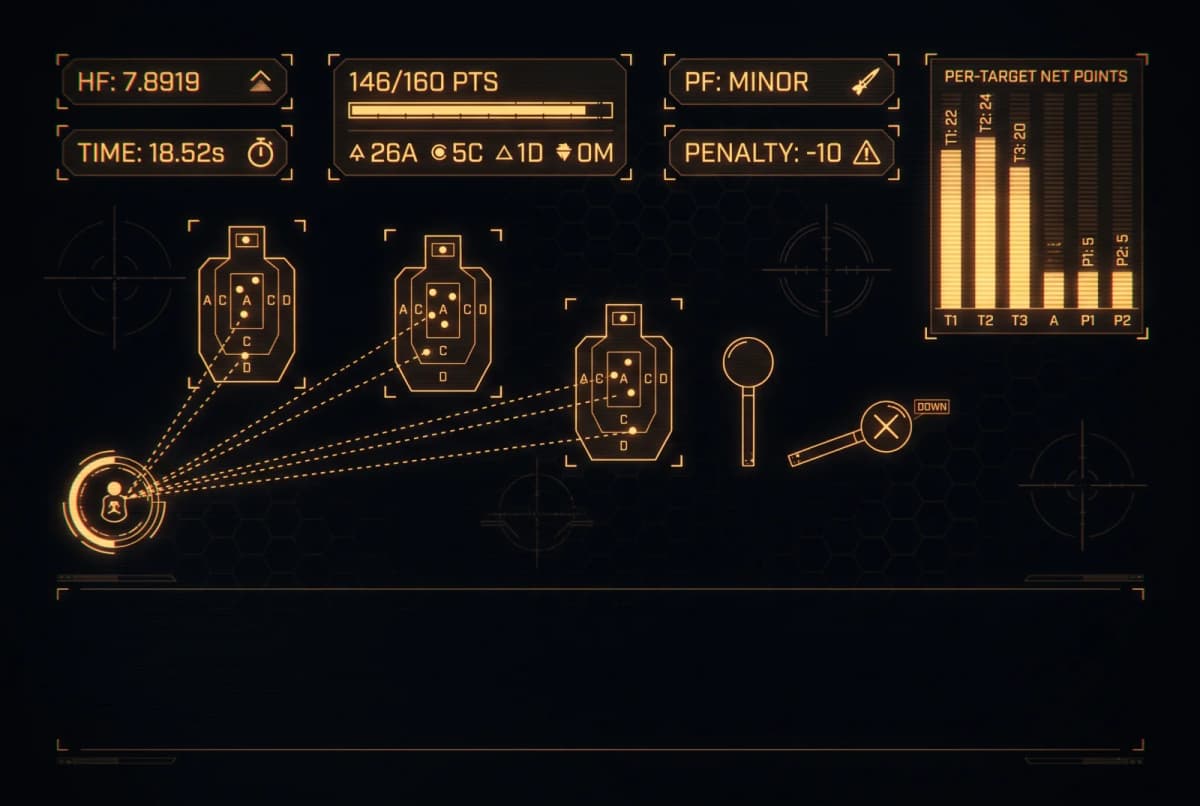
USPSA Stage Scorer
Score a practical shooting stage: tap in hits per paper target, mark steel down or standing, add penalties and your timer's final time, and get stage points, points percentage, and hit factor under 2026 Comstock rules.
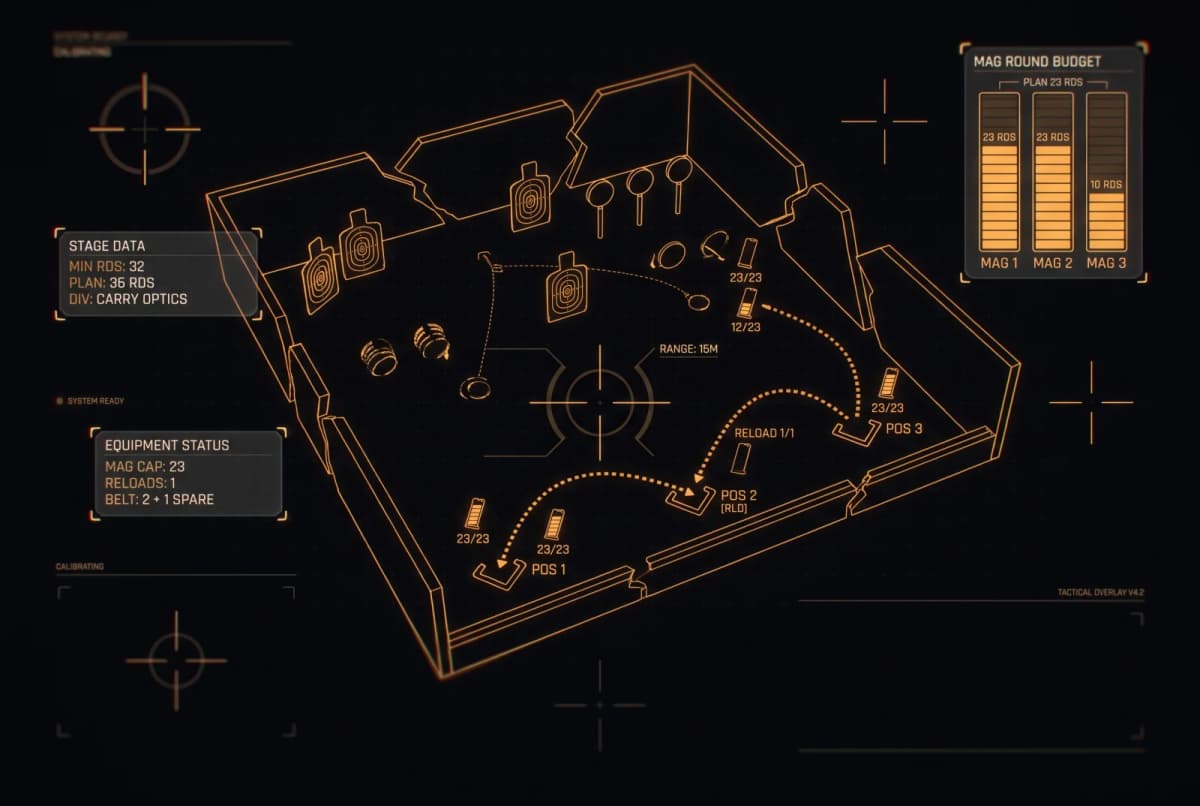
Stage Reload Planner
Plan a USPSA stage: paper and steel counts, division, and mag capacity in; total rounds with makeup margin, reload count, mags on the belt, and a per-mag round budget out.
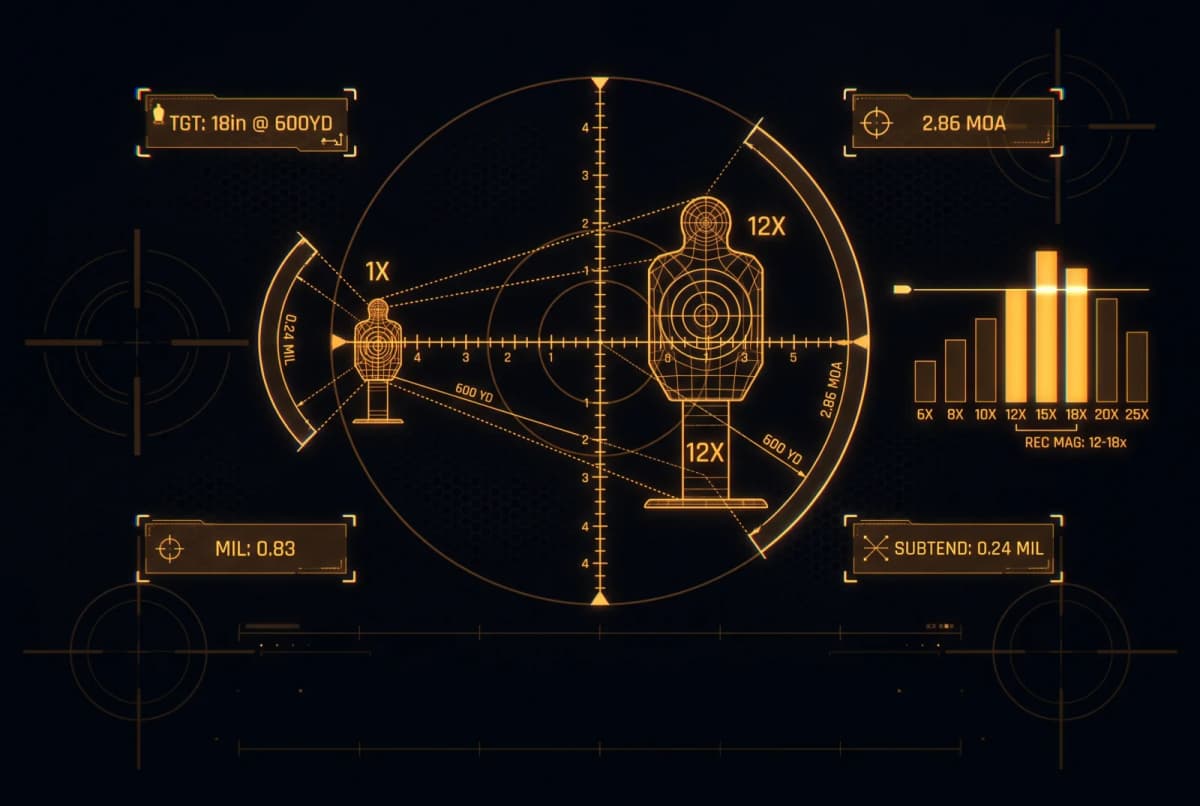
Scope Magnification Calculator
Enter target size and distance to get angular size in MOA/MRAD, a recommended magnification range for identifying vs precisely engaging, and what the target looks like at 1x vs Nx.
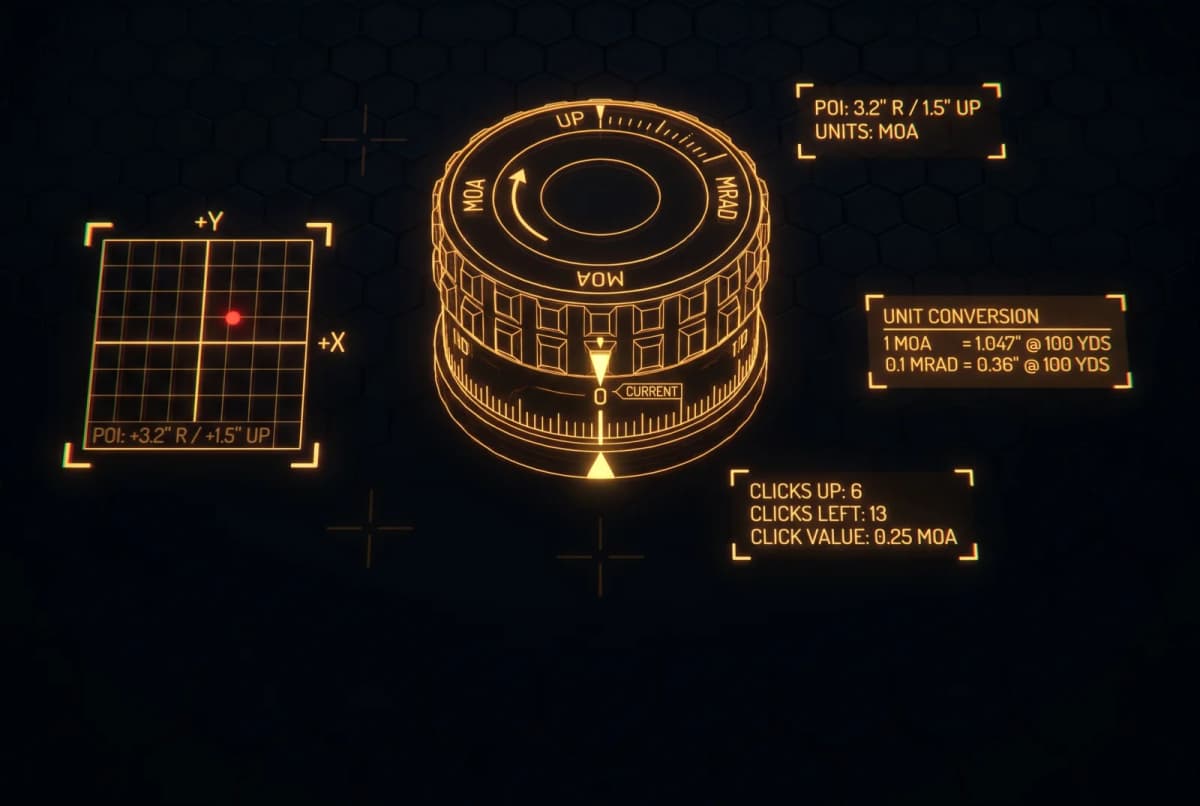
Optic Zeroing Simulator
Say or type where your shots landed and get a knob-by-knob walkthrough, or look through a 3D red dot, holographic sight, prism, or scope, dial the exact elevation and windage correction, watch the sight line and bore line converge, and practice zeroing a hidden offset.
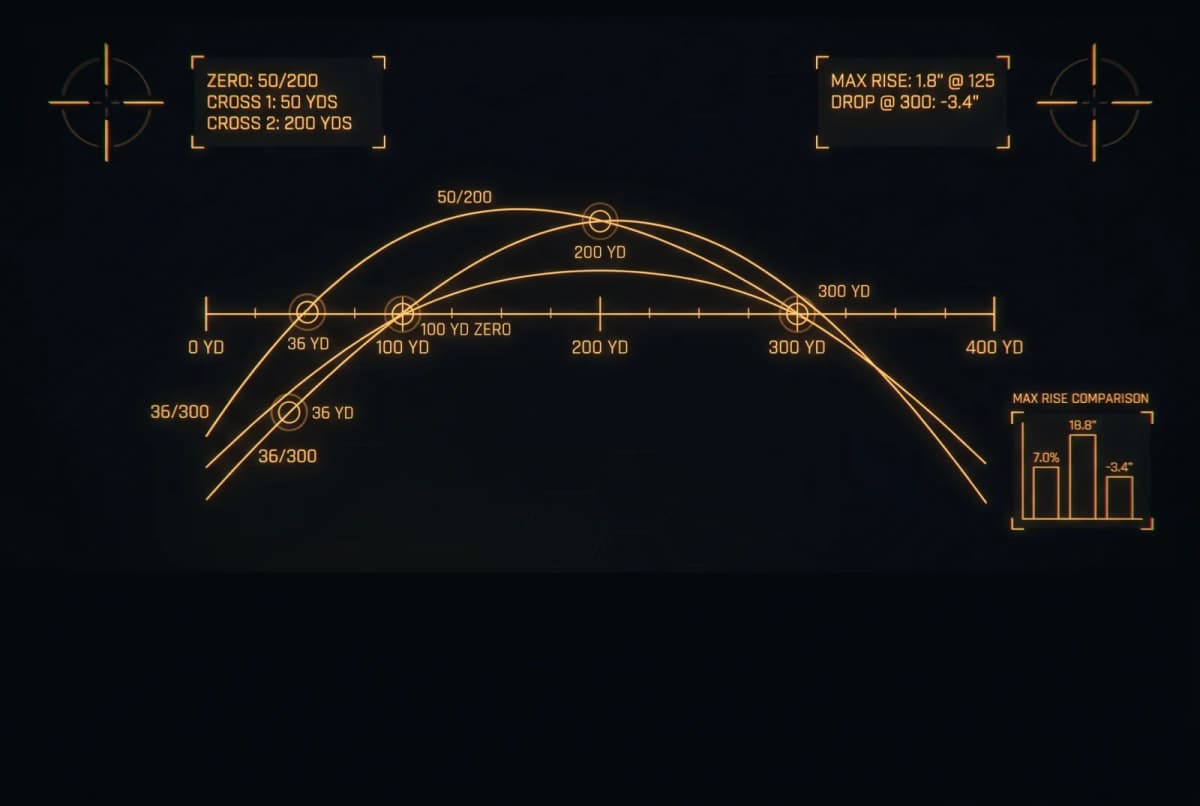
Zero Distance Visualizer
Switch a carbine between 36, 50, and 100 yard zeros and watch the bullet path cross the line of sight in the side profile, with the hold and the clicks to center read out at any distance.
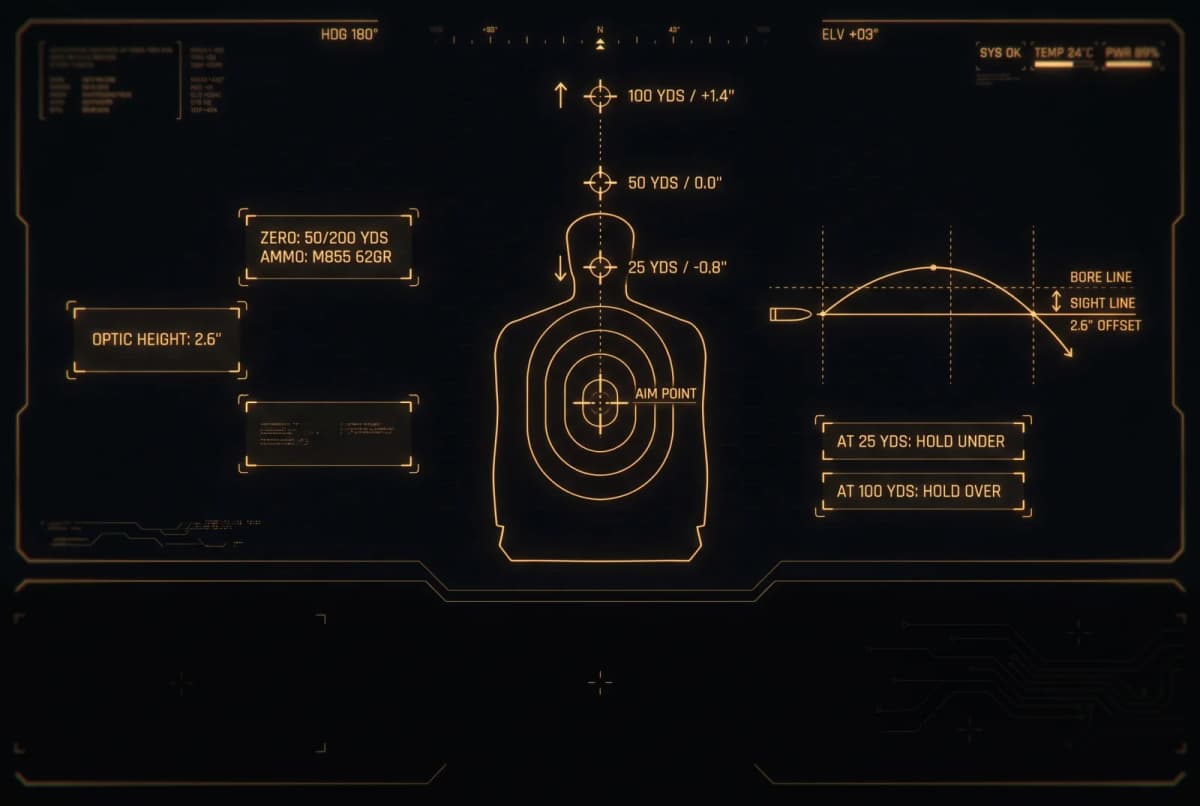
Zero Chart and Offset Table
Read the point of impact and the hold for a 36, 50, or 100 yard zero at every distance from 5 to 300 yards, including the close-range mechanical offset.
MOA Calculator
Convert MOA, MRAD, inches, and centimeters at any distance, read the 25 to 1,000 yard chart, and turn a miss into whole turret clicks using the click value of 150+ real scopes and red dots.
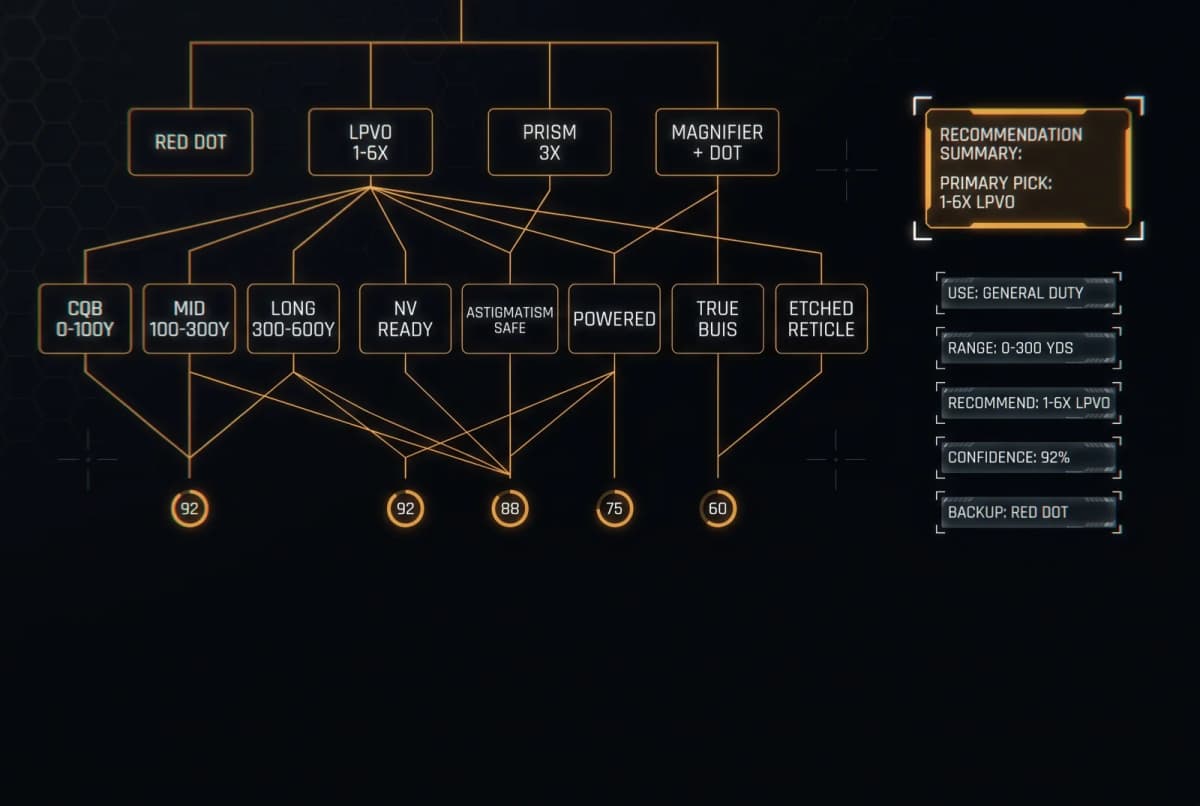
Optic Selection Wizard
Answer questions about your engagement range, astigmatism, and night vision needs to get a personalized optic recommendation.
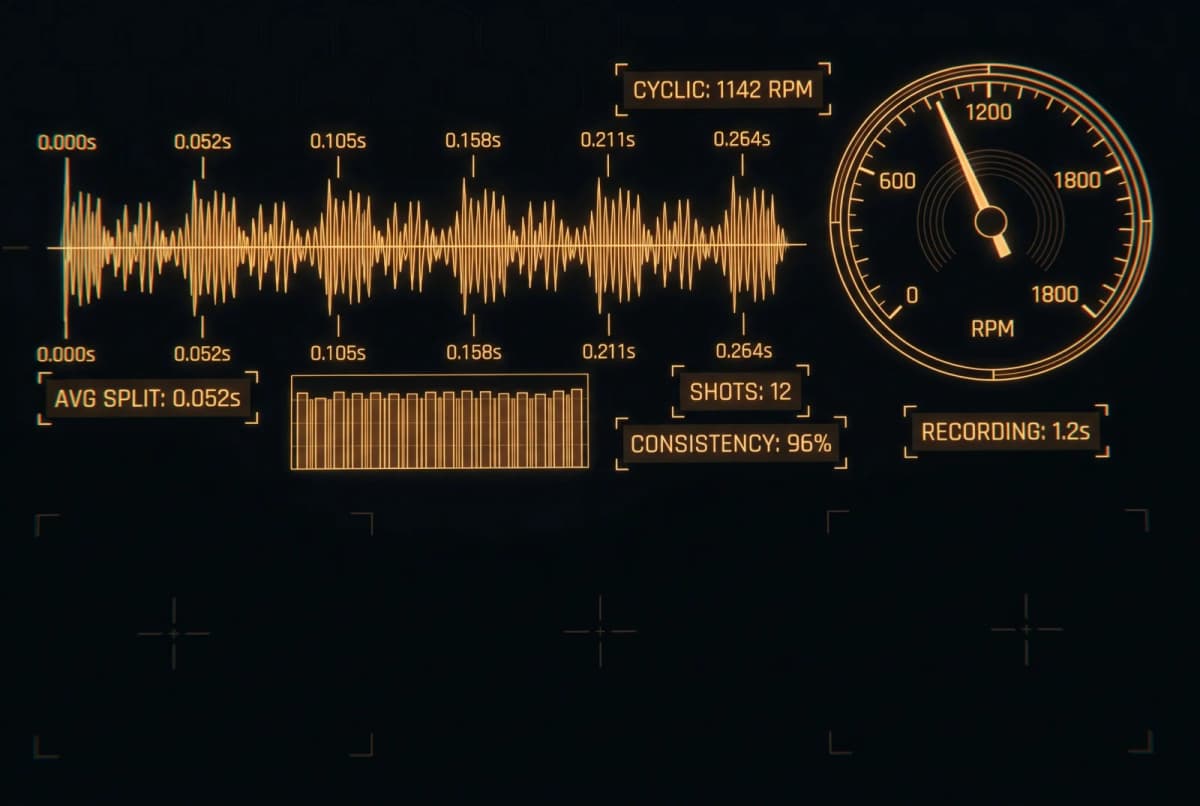
Rate of Fire (ROF) Calculator
Analyze burst RPM, shot spacing, and timing from audio clips. Great for measuring your rifle's performance or comparing buffer setups.
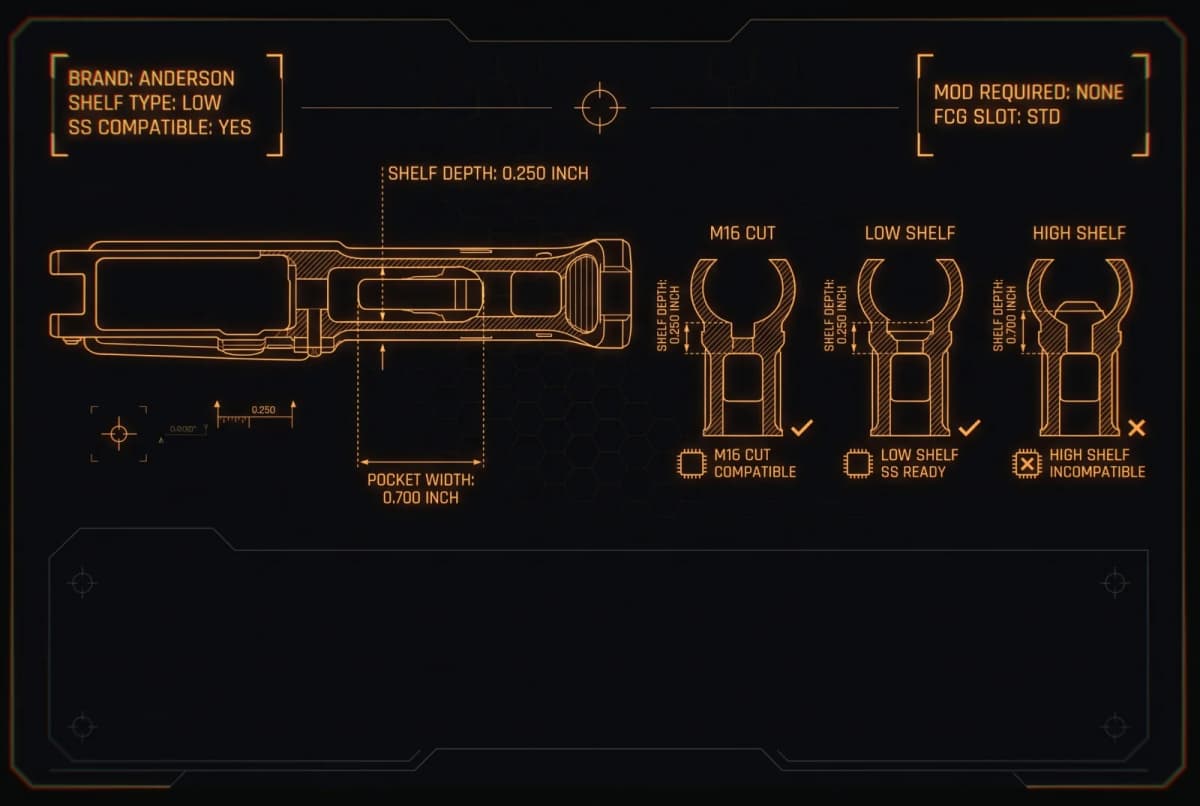
Lower Receiver Compatibility Checker
Search 45+ manufacturers to see if your lower receiver's fire control pocket is compatible with Super Safeties (M16 vs Low Shelf vs High Shelf).
Test Your AR-15 Knowledge
Thirty questions across ballistics, gas systems, optics, and build theory. Personalized guide recommendations from your results.
Need A Full Build Plan?
Start a new build in the Configurator for a complete compatibility check and parts list scoped to your mission.