Staccato HD C4X: Tactical Handgun vs ZEV, Sig Legion, P211 GTO
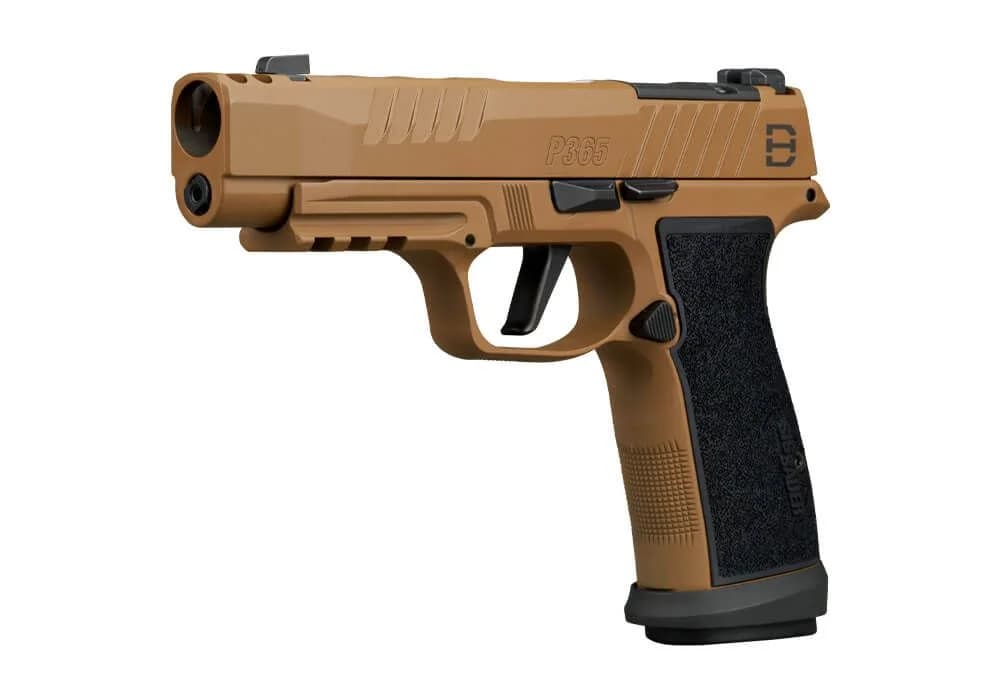
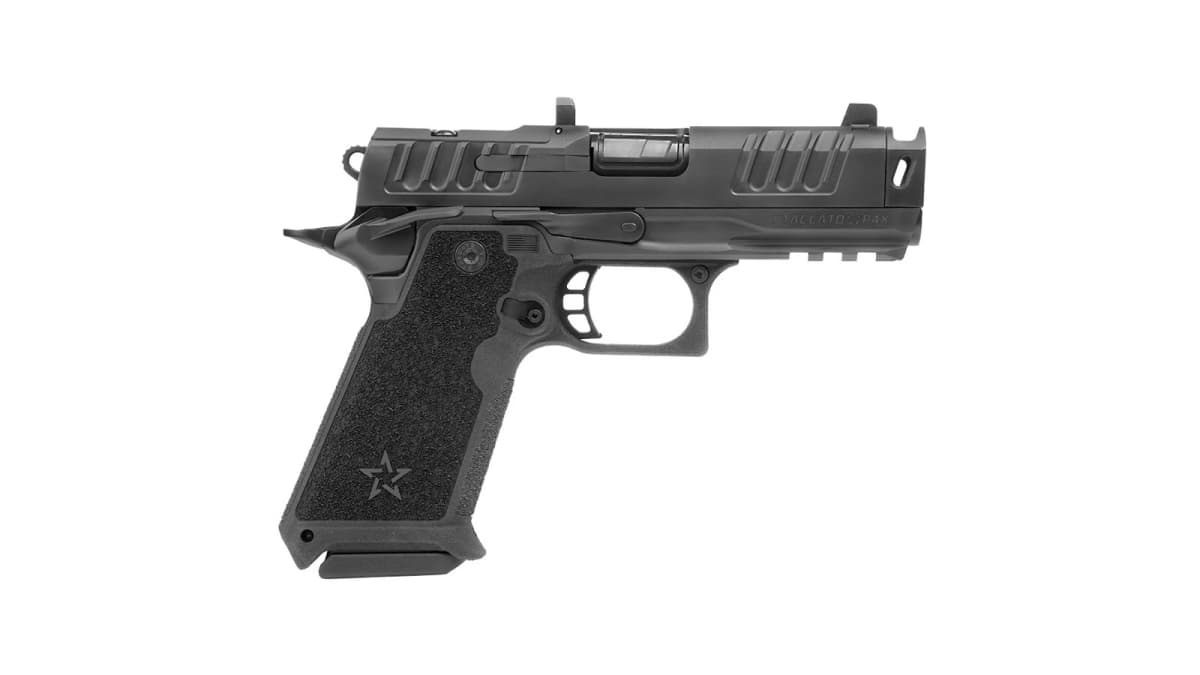
Staccato unveils the HD C4X at SHOT Show 2026, a compensated, compact tactical pistol starting at $3,499. That's nearly double a ZEV OZ9 Hyper Comp and $1,100 more than Sig's new P211 GTO. Even in the premium tactical segment, this pricing is excessive.
The Bottom Line
- →Price: $3,499–$3,899 depending on package, premium pricing for a purpose-built tactical platform
- →Features: Integrated compensator, Glock-pattern mags, ambidextrous controls, HOST optic system, Series 80 drop-safe trigger
- →Competition: ZEV OZ9 Hyper Comp (~$1,800), Sig P226 Legion (~$1,800), Sig P211 GTO ($2,399), all premium tactical alternatives
- →Verdict: $3,500 is excessive even for a tactical pistol. The $1,100–$1,700 premium over ZEV and Sig alternatives is hard to justify. Competitors need to keep stepping up to bring Staccato back to reality
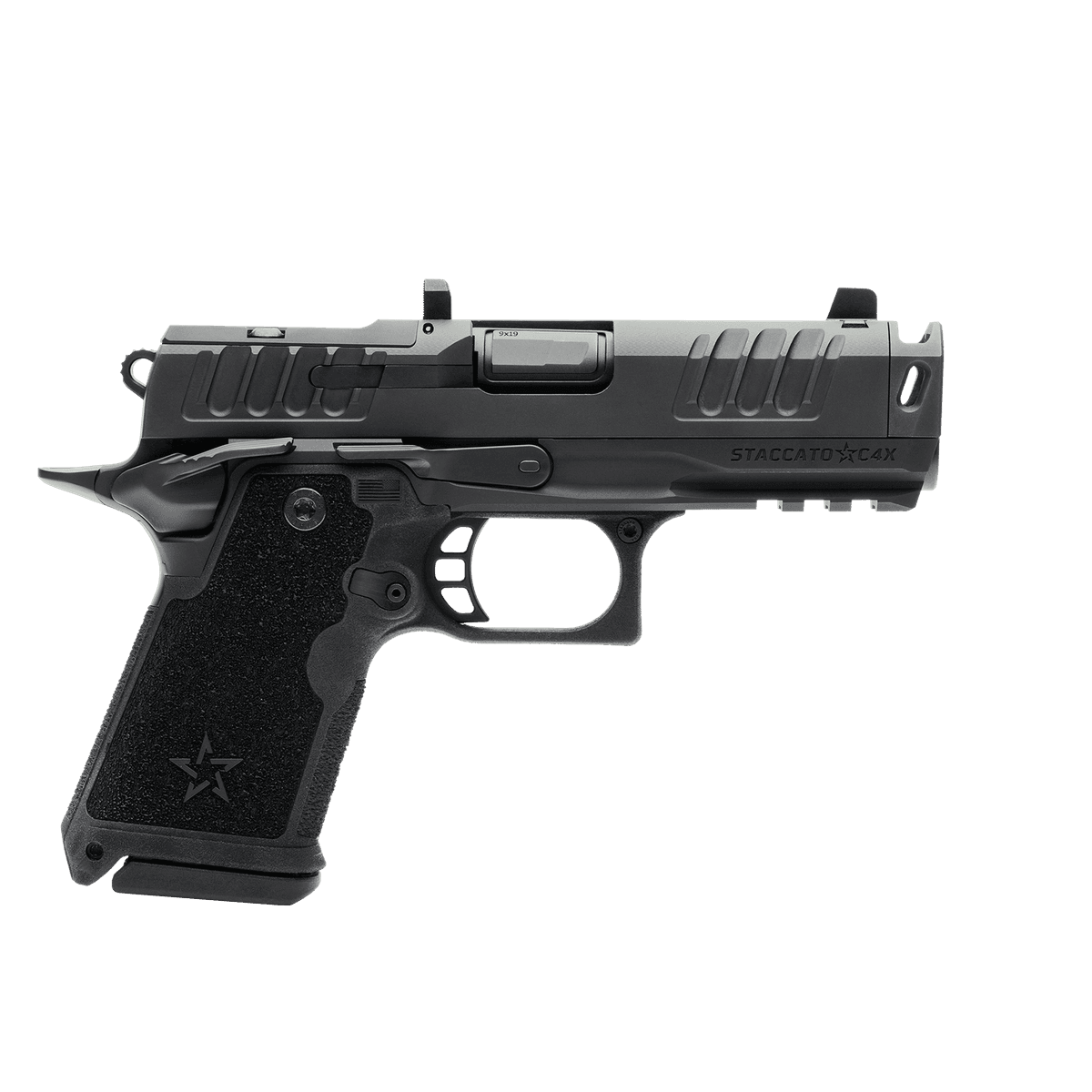
Staccato HD C4X
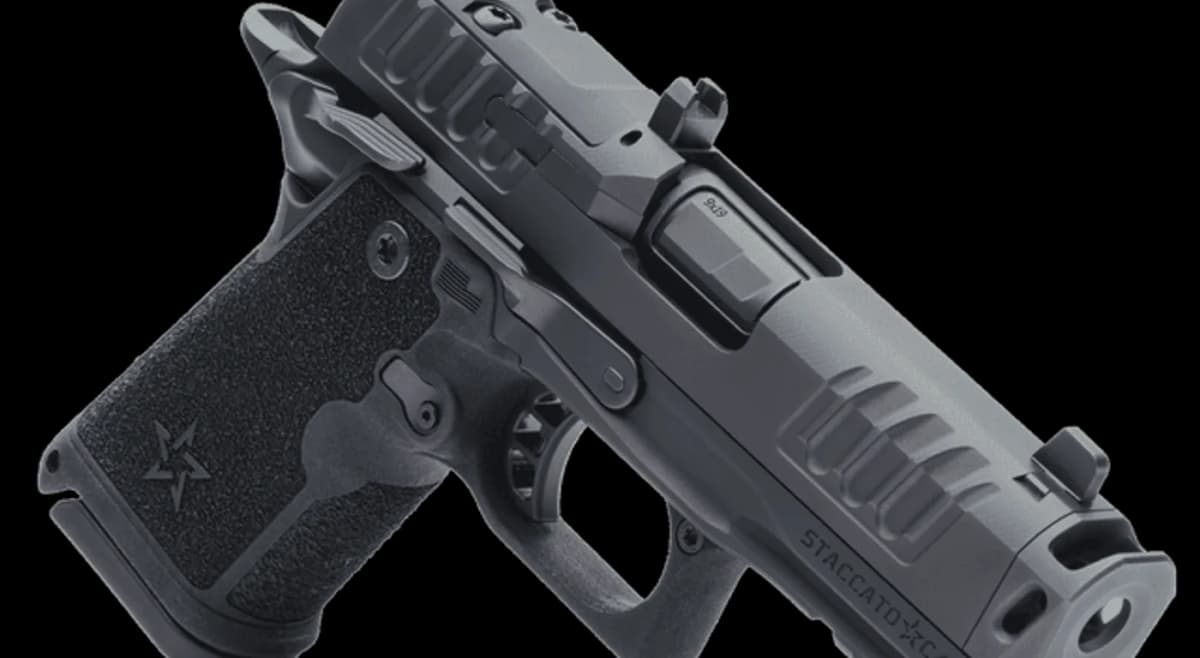
Compact 2011 carry pistol with integrated compensator
Carry-size HD with integrated compensator, Glock magazine compatibility, and 24.5 oz weight
- +First Staccato HD sized for concealed carry
- +Integrated compensator without added overall length
- +24.5 oz unloaded is competitive with striker-fired carry guns
- −$3,499 entry price; Premium package runs $3,899
- −60 to 90 day backorder window typical for new HD releases
- −1.6" width still wider than most striker-fired carry pistols
Affiliate links (?)
What Staccato Announced
The Staccato HD C4X is the newest addition to Staccato's HD line of duty-focused pistols. Developed in collaboration with what Staccato describes as "an elite metropolitan tactical surveillance unit," the C4X brings an integrated compensator to a compact 4-inch barrel format.
This matters because the HD line represents a philosophical shift for Staccato. While traditional 2011s are finicky race guns that demand frequent cleaning and careful maintenance, the HD was designed from the ground up for duty reliability: with a Series 80 drop-safe trigger, Glock-pattern magazine compatibility, and endurance testing that mirrors service pistol standards.
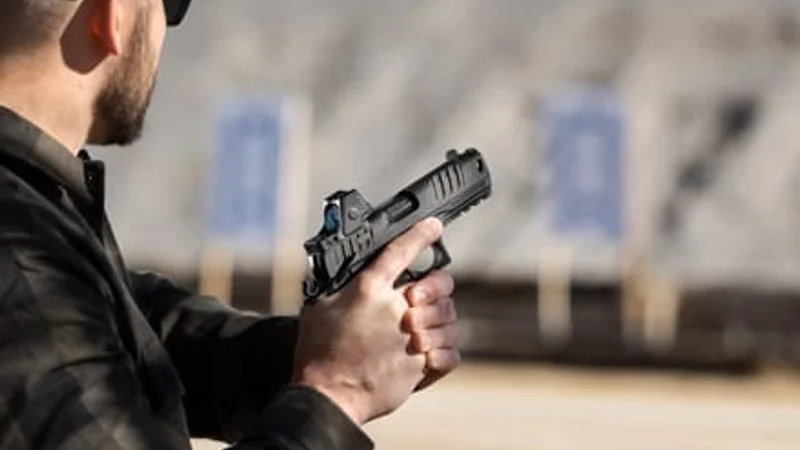
Available starting February 16, 2026, the C4X ships in three configurations: Standard ($3,499), Preferred ($3,699), and Premium ($3,899). The price differences come down to sights, magazine count, and serration pattern.
Specifications
HD C4X Technical Specs
- Caliber9x19mm
- Capacity15+1
- Barrel4" DLC Comp Barrel
- Trigger Pull4–4.5 lbs
- Weight24.5 oz (empty)
- Frame7075 Aluminum (Billet)
- Dimensions7.6" x 1.6" x 4.84"
- MagazinesGlock-pattern (steel)
- ControlsFull ambi
- MSRP$3,499–$3,899
Package Breakdown
All three packages share the same core pistol. The differences are incremental upgrades that most shooters would add anyway, making the "Standard" package feel like a deliberate upsell trap.
Standard – $3,499
- • 4" DLC Comp Barrel
- • Standard Serrations
- • Curved Aluminum Trigger
- • Ameriglo Blacked Out Front
- • 2 magazines
Preferred – $3,699
- • 4" DLC Comp Barrel
- • Standard Serrations
- • Curved Aluminum Trigger
- • Trijicon Tritium Front Sight
- • HD Compact Magwell
- • 3 magazines
Premium – $3,899
- • 4" DLC Comp Barrel
- • X-Serrations
- • Curved Aluminum Trigger
- • Trijicon Tritium Front Sight
- • HD Compact Magwell
- • 4 magazines
The $400 jump from Standard to Premium buys you: upgraded serrations, tritium front sight, a magwell, and 2 extra magazines. These are things that should be standard on a $3,500 pistol.
Why Not Just Buy a Budget 2011?
The obvious question: why not just buy a Springfield Prodigy for $1,099 or a Bul Armory for $1,400? The answer is that most 2011s are designed for competition, not duty use, and that distinction matters.
Traditional 2011s inherit decades of competition DNA. They run tight tolerances, light trigger springs, and proprietary magazines that demand careful attention. They're fantastic when cleaned regularly and fed quality ammo in controlled environments. They're less fantastic when dusty, wet, or running marginal ammo.
The 2011 Reliability Problem
For years, elite military units experimented with 2011s and found them unsuitable for field conditions. The magazines are the weak point, prone to issues when exposed to sand, dust, or debris. This isn't a fault of any particular manufacturer; it's an inherent characteristic of the competition-focused 2011 design.
The Staccato HD addresses this by using Glock-pattern magazines, the most abuse-tolerant design in widespread service use. Combined with looser duty-appropriate tolerances and a Series 80 drop-safe mechanism, the HD is designed for reliability in conditions where traditional 2011s struggle.
The Real Competition
Comparing the HD C4X to budget 2011s misses the point. Its actual competitors are premium tactical handguns designed for duty and defensive use: pistols that prioritize reliability and shootability over competition precision.
Premium Tactical Handgun Comparison
- ZEV OZ9 Hyper CompStriker-fired, no manual safety, Glock mags~$1,800
- Sig P226 Legion SAOHammer-fired, thumb safety, legendary reliability~$1,800
- Sig P211 GTOSig's new 2011-style, P320 mags, compensated~$2,399
- Staccato HD C4XHammer-fired, ambi controls, Glock mags, HOST optics$3,499
This reframing changes the conversation. The HD C4X isn't 3x more expensive than a Prodigy: it's roughly $1,100–$1,700 more than premium tactical alternatives from ZEV and Sig. But even that premium is hard to swallow. You're paying nearly double what a ZEV or P226 Legion costs, and $1,100 more than Sig's new 2011-style entry. For what?
Better Value Alternatives
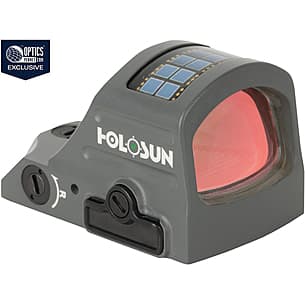
Holosun 507C X2
- Multi-reticle system (2 MOA + 32 MOA)
- Solar failsafe extends battery to years
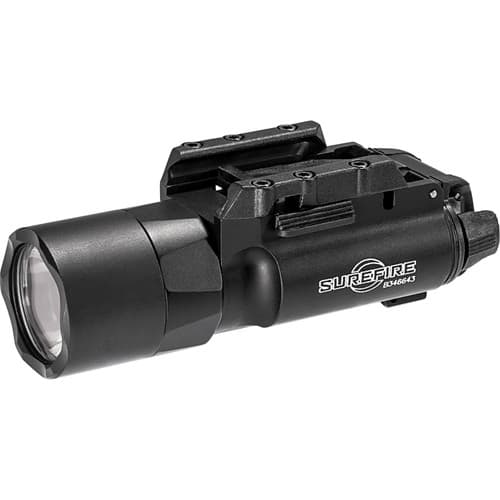
SureFire X300U-A Ultra
- 1,000 lumens - law enforcement standard
- Fits all pistols with accessory rail
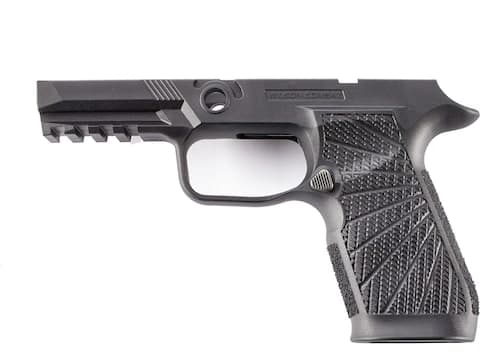
WCP320 Grip Module
- Enhanced ergonomics over factory grip
- Aggressive texturing for positive control
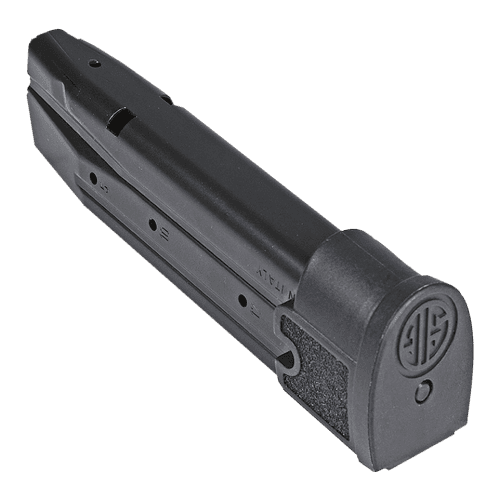
SIG P320 Extended 21-Round Magazine
- 21-round extended capacity
- M17/M18 military proven
Affiliate links (?)
How They Stack Up
Each competitor brings different strengths to the table. The choice depends on what you value most.
ZEV OZ9 Hyper Comp
ZEV's flagship combines a steel receiver with Glock-pattern compatibility, delivering exceptional flatness under rapid fire. The integrated compensator uses four vertical ports to vent gas upward, producing muzzle behavior that reviewers describe as "night and day" compared to standard Glocks.
The OZ9's advantage is familiarity. If you train with Glocks, the OZ9 slots right into your ecosystem: same mags, same holsters (mostly), same manual of arms. No manual safety means one less thing to train around.
Sig P226 Legion SAO
The P226 Legion represents decades of proven service pistol reliability. It's the gun that agencies used before Glocks dominated, and it still earns devotees for its exceptional ergonomics and accuracy. At around $1,800, it's a known quantity with a massive support infrastructure.
The trade-off is capacity (15+1 vs the HD's Glock-mag compatibility) and optics mounting (aftermarket vs the HD's integrated HOST system).
Sig P211 GTO
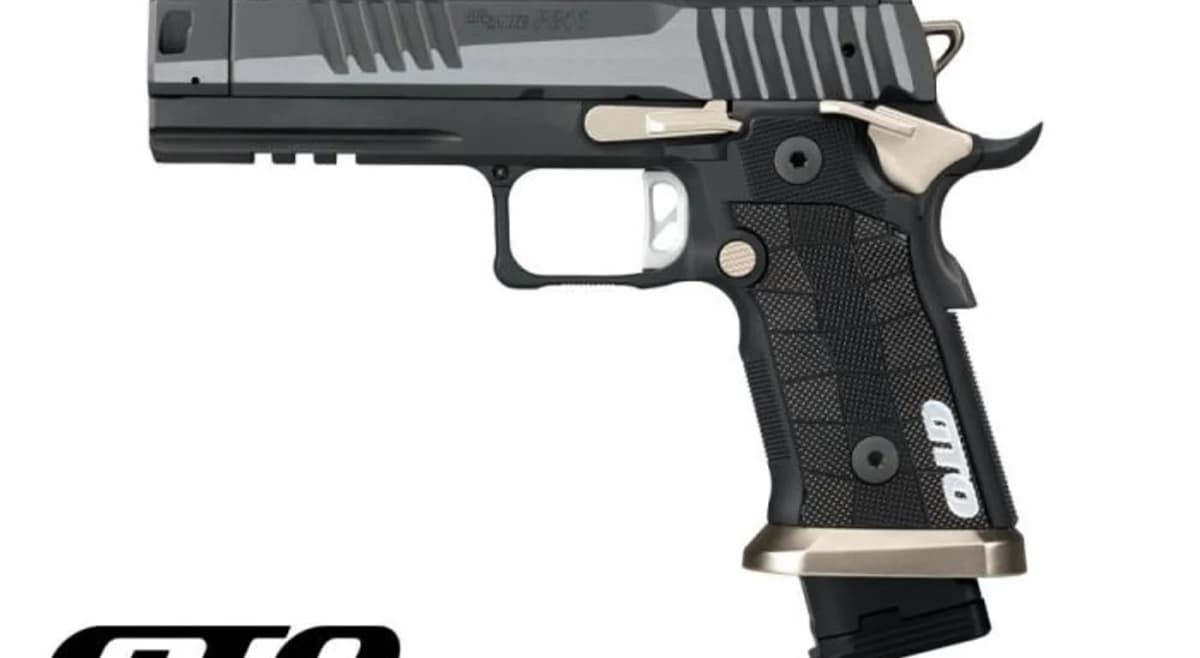
Sig's new 2011-style pistol at $2,399 is the most direct competitor. It uses P320 magazines (21–23 round capacity), features an innovative 3D-printed Mach3D compensator, and offers Sig's SIG-LOC PRO optics mounting. Testing showed 30% recoil reduction versus competitors.
The P211 GTO represents Sig's answer to the same question Staccato is trying to solve: how do you build a reliable, duty-ready 2011-style pistol? At $1,100 less than the HD C4X, it's a compelling alternative.
Is the Premium Justified?
Staccato's advantages: HOST optic system, proven agency adoption (1,800+ departments), established training infrastructure. But is that worth $1,100–$1,700 more? Sig has institutional credibility, ZEV has Glock ecosystem compatibility, and both have proven reliability. The gap is narrowing, and Staccato's pricing looks increasingly out of touch.
The Premium Tactical Market
The premium tactical handgun segment is heating up. For years, if you wanted something better than a factory Glock but more duty-reliable than a competition 2011, your options were limited. That's changed.
In 2025 alone, we've seen:
- •Sig P211 GTO, Sig's first 2011-style entry, bringing their manufacturing scale to the segment
- •ZEV OZ9 V2 refinements, continuous improvement of their steel-frame Glock alternative
- •Staccato HD line expansion, now spanning the P4, P4.5, C4X, and the full-size steel-frame HD P4X with Glock mag compatibility
This competition is critical. Without it, Staccato would have zero incentive to moderate pricing. The more ZEV, Sig, and others step up with legitimate tactical alternatives, the harder it becomes for Staccato to justify charging $3,500+ for what's ultimately still a 9mm handgun.
The Reality Check Staccato Needs
Staccato pioneered the tactical 2011-style category, but they're pricing like they still own it. They don't. Sig brings manufacturing scale, ZEV brings Glock ecosystem integration, and both are closing the capability gap fast. If Sig executes on the P211 GTO and ZEV keeps refining the OZ9, Staccato's premium becomes indefensible. That's exactly what the market needs.
What $3,699 Actually Buys
Interactive opportunity cost calculator. Select items to build your alternative loadout.
Who Should Actually Buy This?
The HD C4X serves specific use cases better than its competitors:
HD C4X Makes Sense For
- • LE officers whose departments approve 2011s
- • Shooters who prefer manual safeties
- • Those who switch optics frequently (HOST system)
- • Users who value proven agency validation
- • Glock-ecosystem shooters wanting a 1911 trigger
Consider Alternatives If
- • You prefer striker-fired (ZEV OZ9)
- • You want established DA/SA lineage (P226 Legion)
- • You're already in the P320 magazine ecosystem (P211 GTO)
- • $1,100+ savings matters to your budget
- • You value Sig's warranty/support infrastructure
If you're coming from striker-fired platforms and want to try hammer-fired, the P226 Legion or P211 GTO offer lower-risk entry points. If you're committed to the 2011-style platform and can afford the premium, the HD C4X's agency validation and feature set justify consideration.
Final Thoughts
The Staccato HD C4X is a purpose-built tactical handgun that happens to use 2011 ergonomics. That distinction matters. It's not competing with budget 2011s designed for USPSA matches: it's competing with premium duty-grade pistols like the ZEV OZ9 and Sig Legion family.
But even in that context, $3,499–$3,899 is ridiculous. You're paying nearly double what a ZEV or P226 Legion costs, and $1,100 more than Sig's P211 GTO. For what? Agency validation? A slightly better optic mounting system? That premium is getting harder to defend every day.
The arrival of the Sig P211 GTO at $2,399 is exactly what the market needs. Sig brings manufacturing scale, service pistol credibility, and the willingness to compete on price. If the P211 delivers on its promise, it puts Staccato in an uncomfortable position: justify the $1,100 premium, or admit you've been overcharging.
The HD C4X is a capable pistol. No one disputes that. But at $3,500, it's a step too far, even for a tactical handgun. The competitors need to keep stepping up, keep the pressure on, and force Staccato to either deliver significantly more value or bring their pricing back to reality. Until that happens, most shooters are better served by saving $1,100+ and buying the Sig.
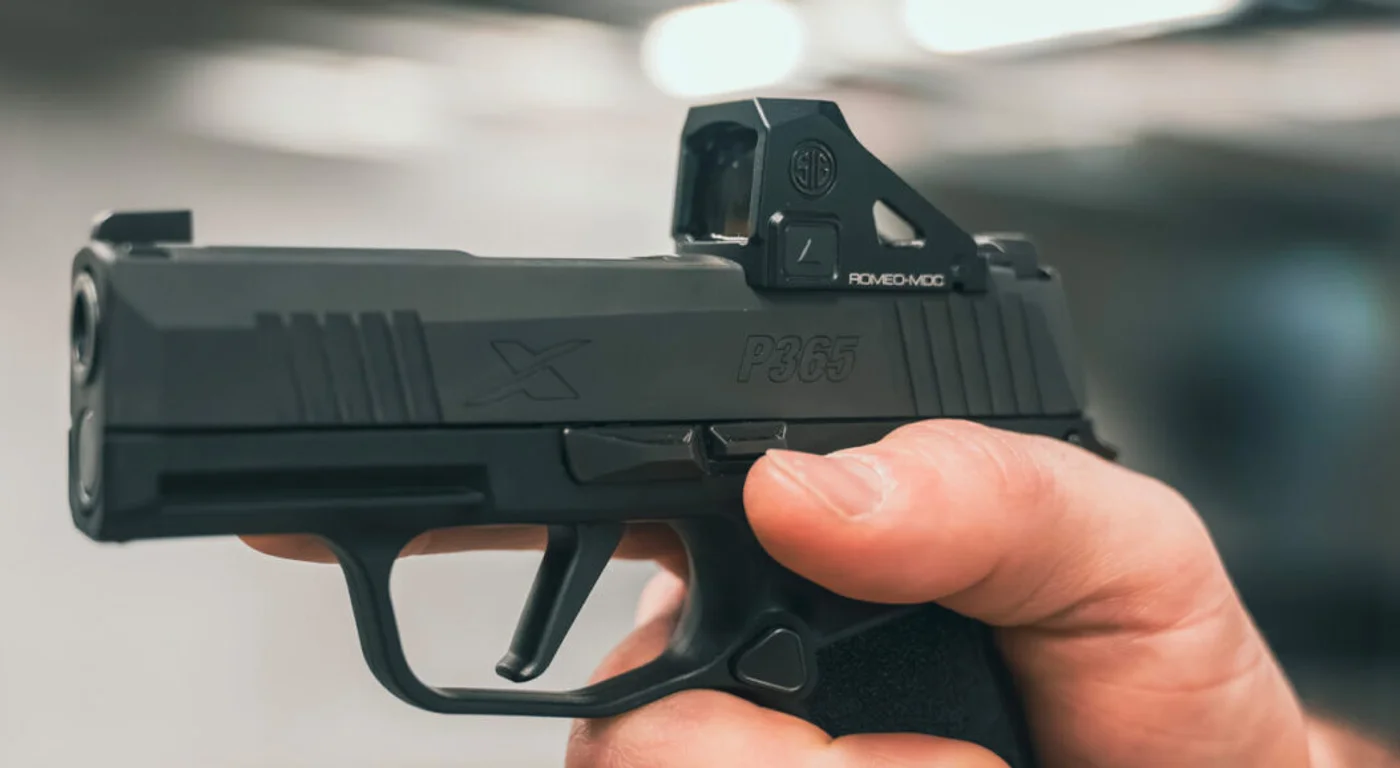
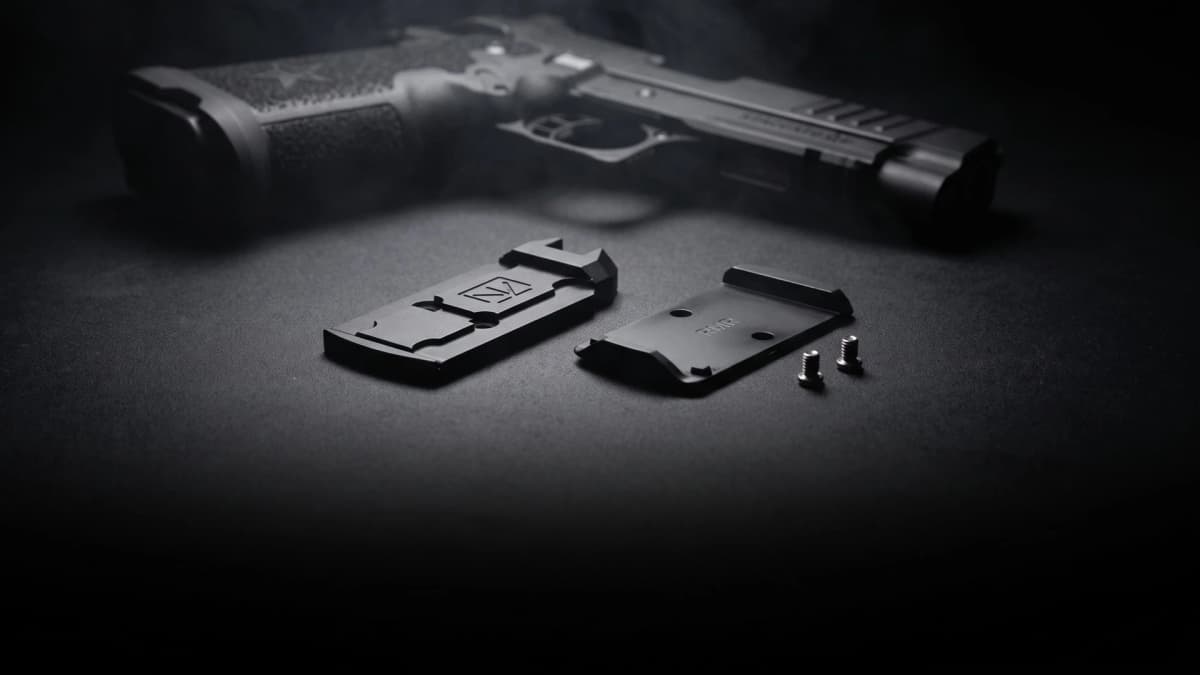
For a model-by-model breakdown of how the C4X stacks against the entire SIG P211 family (GT4, GT5, GTO Combat) and the rest of the Staccato HD line (P4, P4.5, C3.6) by role, see our SIG P211 vs Staccato HD 2026 comparison. Our 2011 pistol guide supplies the broader category context. DOE has also named the smaller C3.6 Preferred Package and a Trijicon RMR mounting kit in its planned executive-protection pistol system. That sole-source notice is not an awarded contract. For the premium ported alternative from Wilson Combat, see our coverage of the Division 77 Project 1 Final Edition, the 500-unit closeout of Wilson's EDC X9-based competition build. For the rest of the compensated and optic-ready carry pistols announced this year, see our SHOT Show 2026 concealed carry pistol roundup, which covers the HD C4X alongside the FN 309 MRD, H&K duo, and SIG P365-DH3.
Stay Updated on Staccato and the 2011 Segment
Get notified when Staccato HD pricing, dealer allocations, or competitor releases shift. We also cover SIG P211 updates, Wilson Combat launches, and premium double-stack 9mm reviews.