Key Takeaways
- →Launched July 15, 2026 at $135: Ships in 1-3 weeks. Right-handed models first, left-handed after. The price undercuts the optic-cut Safariland 6354DO and includes a Titan Optic Hood.
- →300+ fits on day one: Glock, SIG, S&W, Shadow Systems, Staccato, Walther, CZ, FN, Springfield, PSA, and Ruger, across TLR-1, TLR-7, X300, and XC3 lights, in 45 color combinations each.
- →Fail-open Level II design: A thumb-actuated hood over passive retention, engineered so a destroyed active lock drops it to Level 1 passive rather than trapping the gun in a broken shell.
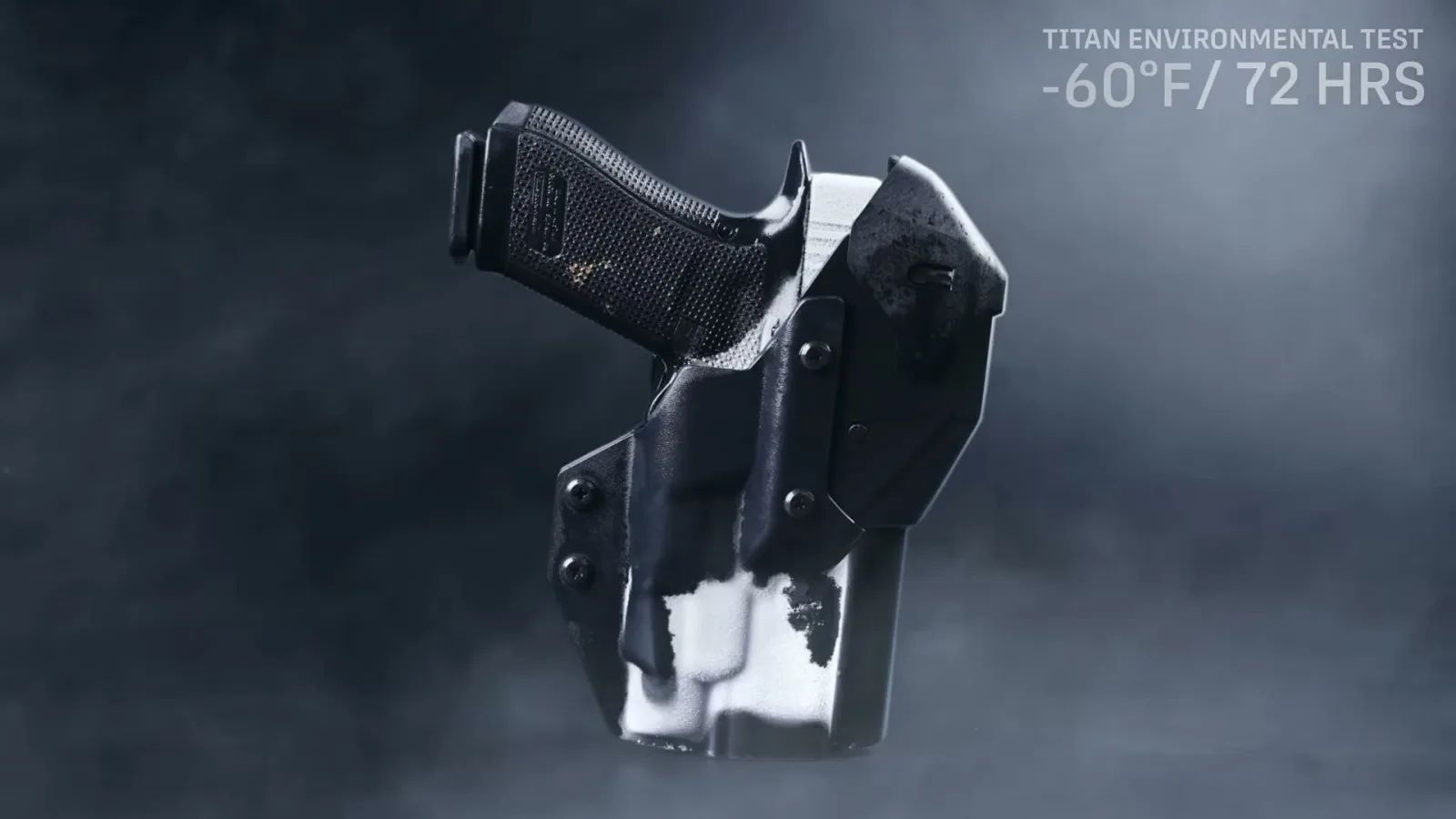
- →Tested to -60F for 72 hours: T.REX drew the pistol from a Titan encrusted in ice after the cold soak.
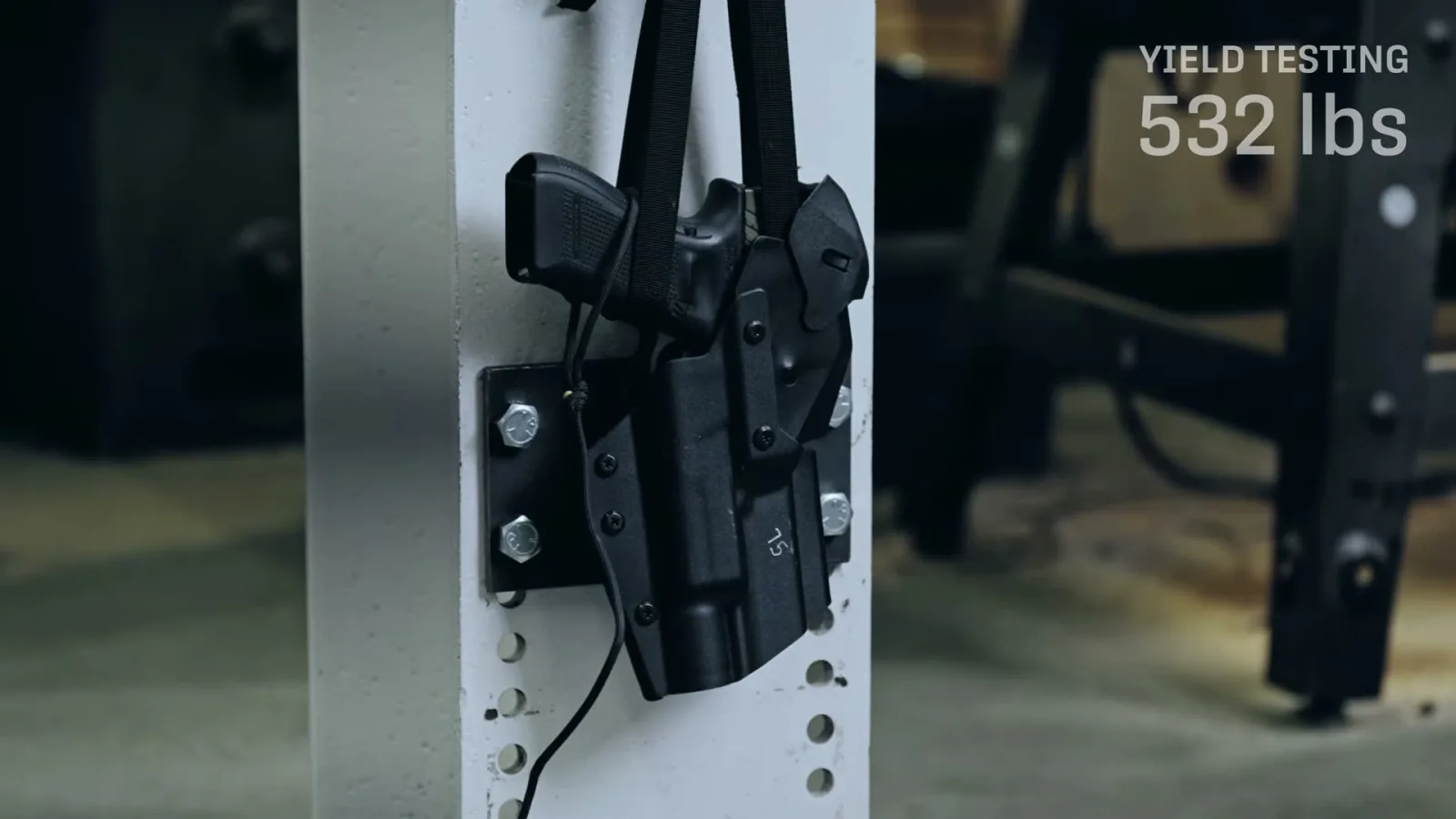
- →500K cycles, 532+ lb retention: Half a million retention cycles on pneumatic rigs; some yield pulls passed 600 lbs and broke the steel test cable before the holster gave.
What T.REX Just Announced
The Titan is a Level II active retention holster, and it went on sale July 15, 2026 at a $135 MSRP with a 1-to-3-week ship time. T.REX ARMS calls it “the new default choice for a level 2 holster,” which is a direct shot at Safariland, the company that has owned duty retention for twenty years.
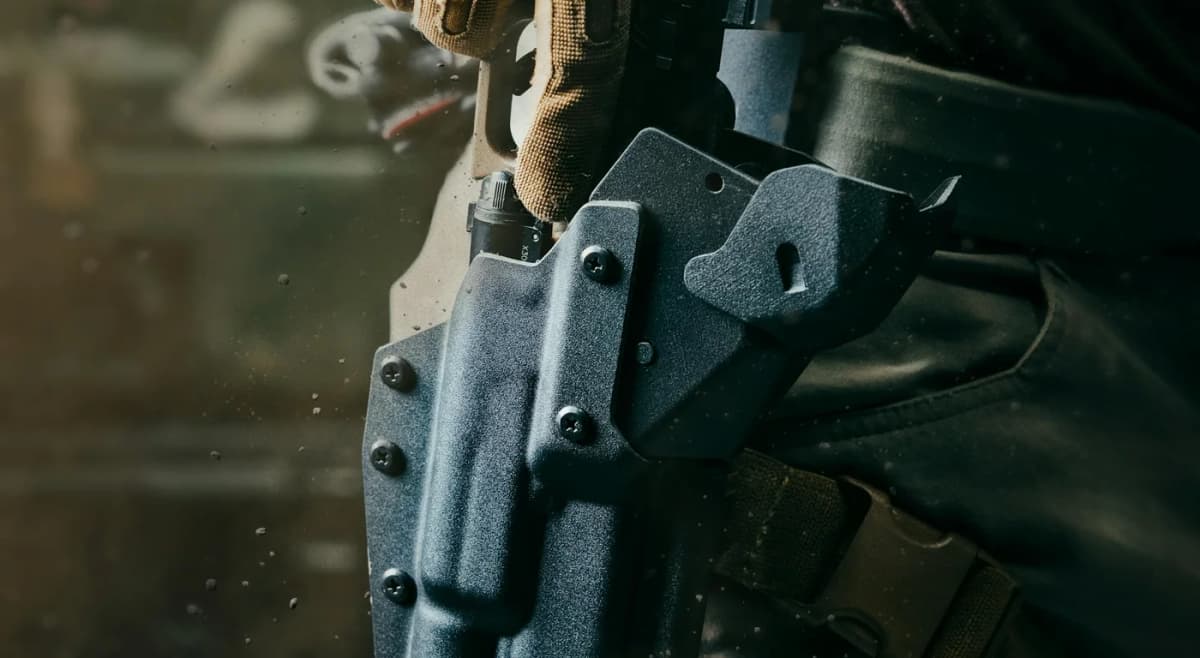
A retention level counts how many mechanical locks you have to defeat on purpose to get the gun out; passive friction alone carries no rating. The Titan pairs an active piece, a hood that pivots over the rear of the slide and falls under the thumb on a firing grip, with passive friction retention underneath. Product designer Barry Hall built the release to be nearly impossible to miss under stress: “If you’re carrying a gun, you do not want it to come out unless you want it to come out.”
The more interesting engineering choice is that the Titan fails open. If the active lock is damaged badly enough to stop working, the holster drops to Level 1 passive retention instead of seizing the gun inside a broken shell. Hall’s reasoning is that a jammed holster is more dangerous than a degraded one: “We would rather leave it in the hands of the owner of the weapon to use it, rather than being locked into a broken holster.” That is the correct failure mode for a life-safety product, and it is the opposite of how a hard-locking duty holster usually breaks.
What T.REX spells out is that passive retention rides underneath the active lock, giving “no rattle and wide pistol support.” Rattle is the practical complaint with hard-locking duty holsters: the gun wobbles in an oversized shell until the lock catches it. Molding friction into each gun-and-light configuration fixes that and is what lets the Titan cover a wider spread of pistols. Four-time Tactical Games national champion Jacob Heppner, whose discipline beats on a holster with climbing, crawling, and loaded carries, put the intuitiveness case bluntly: “As soon as I put that pistol in that holster, I know it’s not going anywhere.”
The launch scope is the real headline. The Titan ships with more than 300 model and light combinations on day one, covering Glock (Gen 1-4, Gen 5, Gen V, and Gen 6), SIG Sauer, Smith & Wesson, Shadow Systems, Staccato, Walther, CZ, FN, Springfield, PSA, and Ruger. Weapon light support spans the Streamlight TLR-1 HL, TLR-1 HL-X, TLR-1 HP, TLR-1 HP-X, TLR-7 HL-X, and TLR-7/A/X, plus the SureFire X300T/U/V and XC3, with a no-light option. Each fit comes in 45 color combinations. Most holster companies launch a retention design with Glock and a promise; T.REX is launching with the whole duty market covered.
The Testing T.REX Published
R&D lead Josiah Courter ran the retention mechanism through 500,000 actuations on pneumatic test rigs that cycled for more than five days straight, well past the point where “good enough” designs start dropping units: “we wanted to clear that by a long shot.” T.REX also soaked the Titan for 72 hours at -60F and then drew a Glock out of it while the shell was still locked in ice, and hung a pistol in a locked Titan from a load cell and pulled until the readout passed 532 lbs with the gun still in place.
Environmental engineer Isaac Rodriguez frames the logic plainly: “We’re not going to know what this holster can or can’t do unless we push it to that level.” That is the correct way to read these numbers. Nobody carries a duty gun through a quarter ton of upward force, and almost nobody works at -60F. These are margin tests, not use cases. What they tell you is that the retention mechanism does not become brittle or seize in extreme cold, which is the actual failure mode that matters for anyone carrying in Alaska, the upper Midwest, or a mountain winter.
The yield test is the more interesting of the two. A retention holster is only as good as the weakest link between the lock and the belt, and pulling a pistol against the mechanism until something gives is how you find that link. Environmental engineer Isaac Rodriguez says the mechanism regularly cleared 600 lbs, and on some pulls “the cable we were using broke before the holster broke.” A failure point that far past anything a human can generate in a grab attempt is the entire point of the test.
Titan vs. Safariland: What Actually Changes
Safariland’s ALS is a single automatic lock that catches the ejection port and releases under the thumb on a firing grip, which makes the 6354DO and 7378 7TS Level I holsters: one device, one motion. The Titan adds a second mechanism underneath the active lock. If T.REX is right that the passive layer costs nothing on the draw, the Titan gives you a retention level up for free, and that is the entire pitch.
Safariland still owns two things the Titan cannot claim on launch day. The first is duty mileage: the ALS has been on patrol belts since the mid-2000s, and no amount of lab testing substitutes for two decades of officers ripping guns out of them under stress. The second is availability, both in fits and in stock on a shelf today. The Titan closes the fits gap immediately with 300+ combinations, which is unusual, but the mileage gap only closes with time.
The honest read: at $135 the Titan is priced right into the fight. It costs more than the entry Safariland 7378 7TS (about $97) but undercuts the optic-and-light 6354DO (about $172), which is its real comparison since the Titan ships with an optic hood and light fits. If you need a duty holster on your belt today, buy the Safariland off the shelf; if you can wait the 1-to-3-week ship, the Titan gives you a retention level up and a broader color and fit matrix for less than the comparable Safariland. Both are OWB duty rigs, and neither is a concealment answer, which is a separate problem covered in our concealed carry holster rankings.
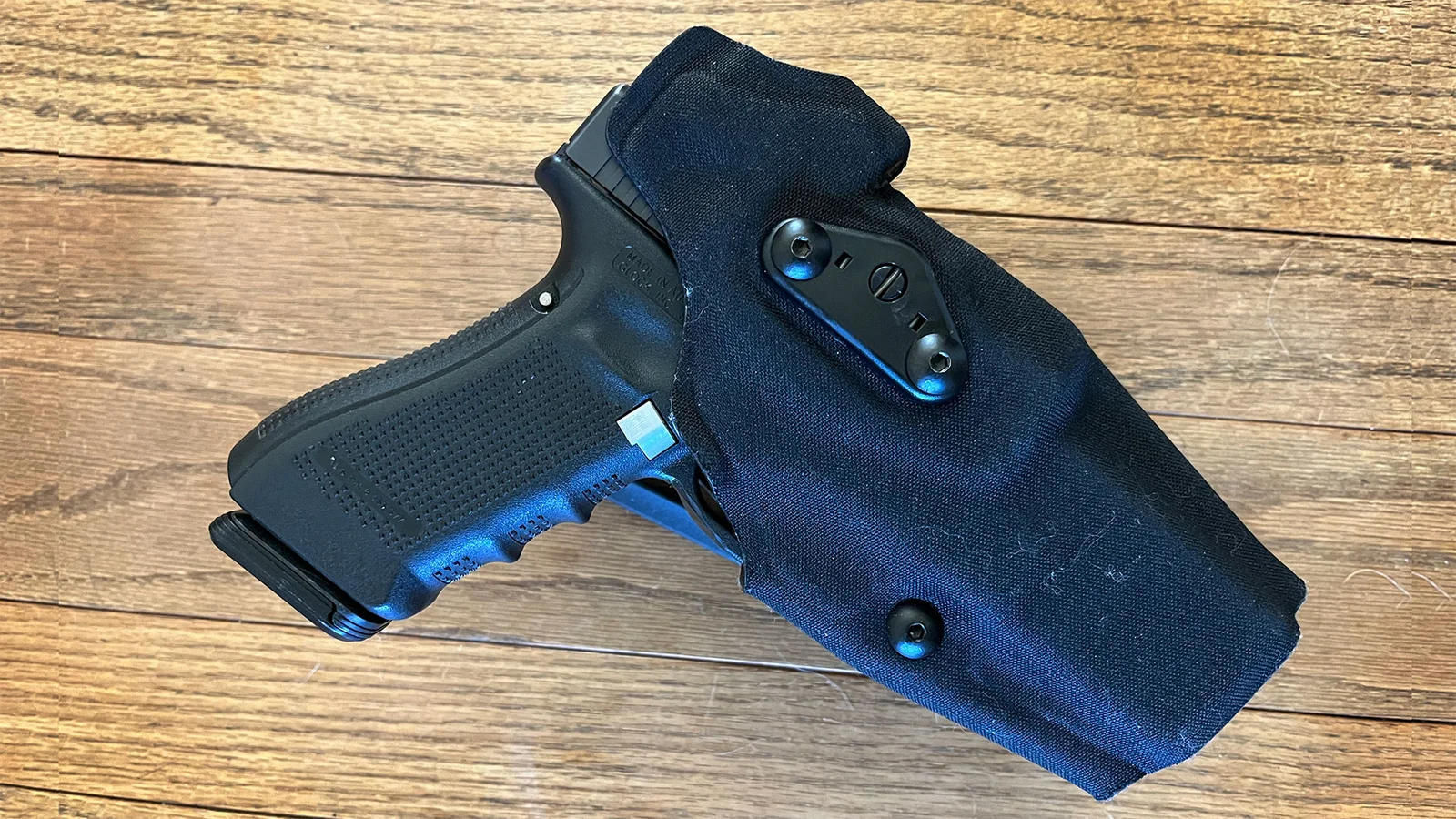
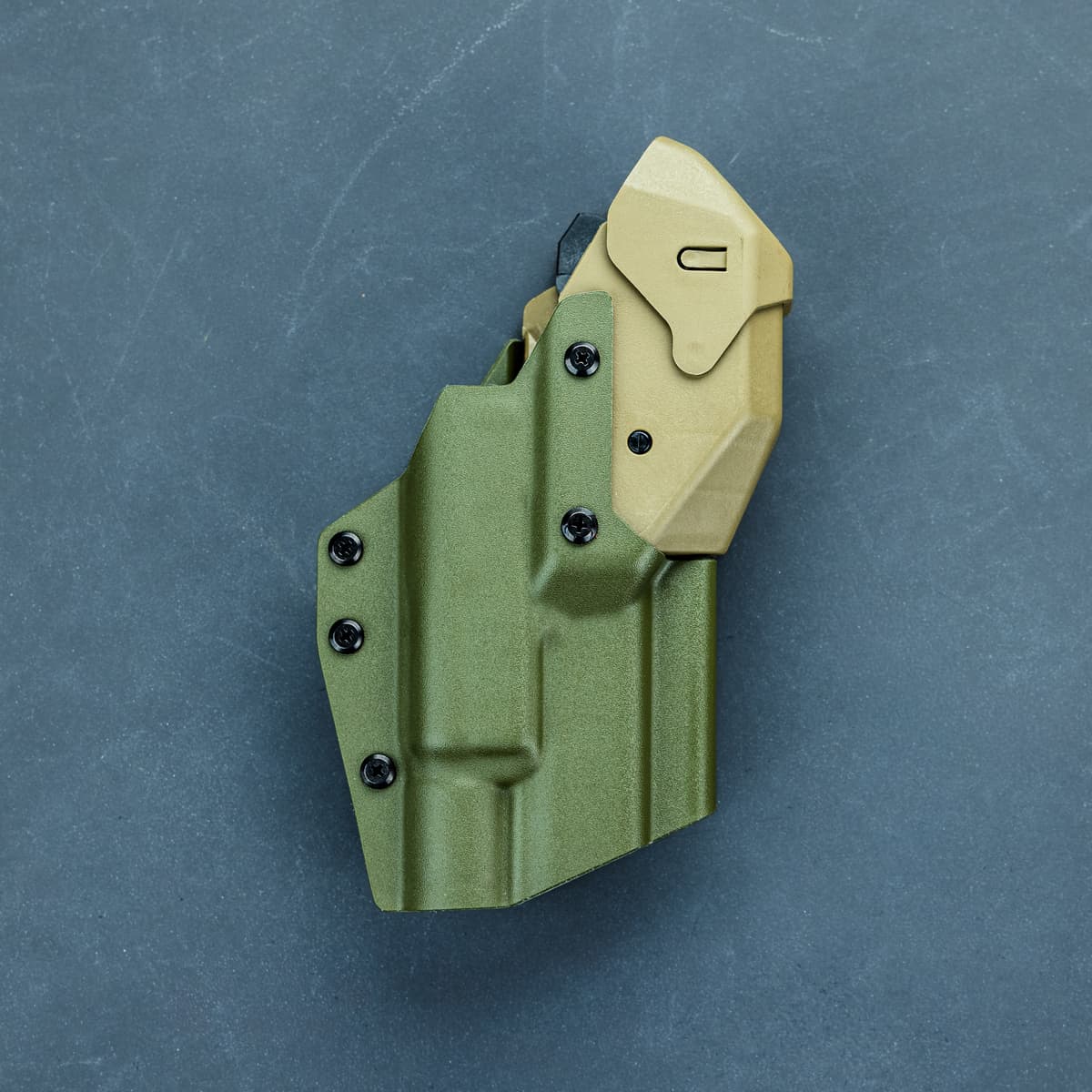
T.REX ARMS Titan
The new Level II fail-open duty rig: 300+ fits, optic hood included, $135
OWB Level 2 active retention duty holster with a thumb-actuated hood over passive friction retention and a fail-open design that reverts to passive if the active lock is damaged.
- +Level 2 active + passive retention at a $135 direct price
- +Fail-open design keeps the pistol drawable if the lock is damaged
- +Thumb hood releases naturally on a firing grip
- −OWB duty rig, not a concealment holster
- −Right-hand only at launch; left-hand ships later
- −New design without the Safariland ALS's two decades of duty mileage
Affiliate links (?)
Safariland 7378 7TS ALS
The Level I ALS duty and OWB concealment benchmark, available now
Active retention OWB concealment holster with ALS thumb release and paddle/belt loop combo.
- +ALS active retention secures weapon automatically
- +Natural draw with thumb release as you grip
- +SafariSeven material is weather and temperature resistant
- −OWB requires cover garment for concealment
- −Bulkier than IWB options
- −ALS release requires practice to become instinctive
Affiliate links (?)
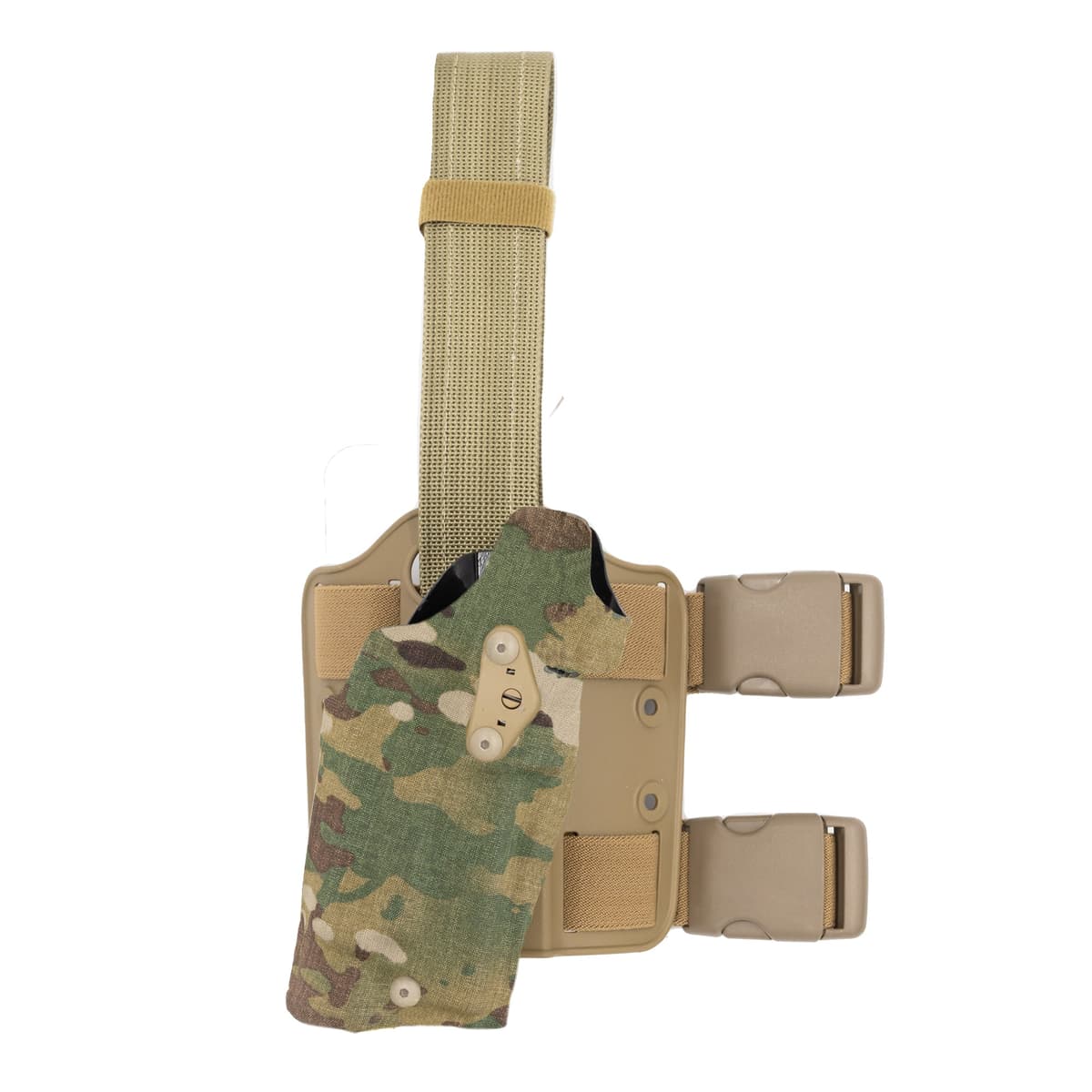
Safariland 6354DO ALS Optic Tactical
Optic and light duty rig with ALS retention and a QLS 3-hole mount
Red-dot-ready ALS leg/QLS tactical holster built for an optic plus a weapon light, the standard rig for duty and competition crossover.
- +Cut for a slide red dot plus an X300-class light out of the box
- +ALS auto-lock retention with a clean straight-up draw
- +QLS 3-hole pattern mounts on a leg rig or belt
- −Level I retention only; no SLS hood like the 6360
- −Optimized for a light-and-optic gun, overkill for a bare pistol
Affiliate links (?)
A Four-Year Project, Not a Line Extension
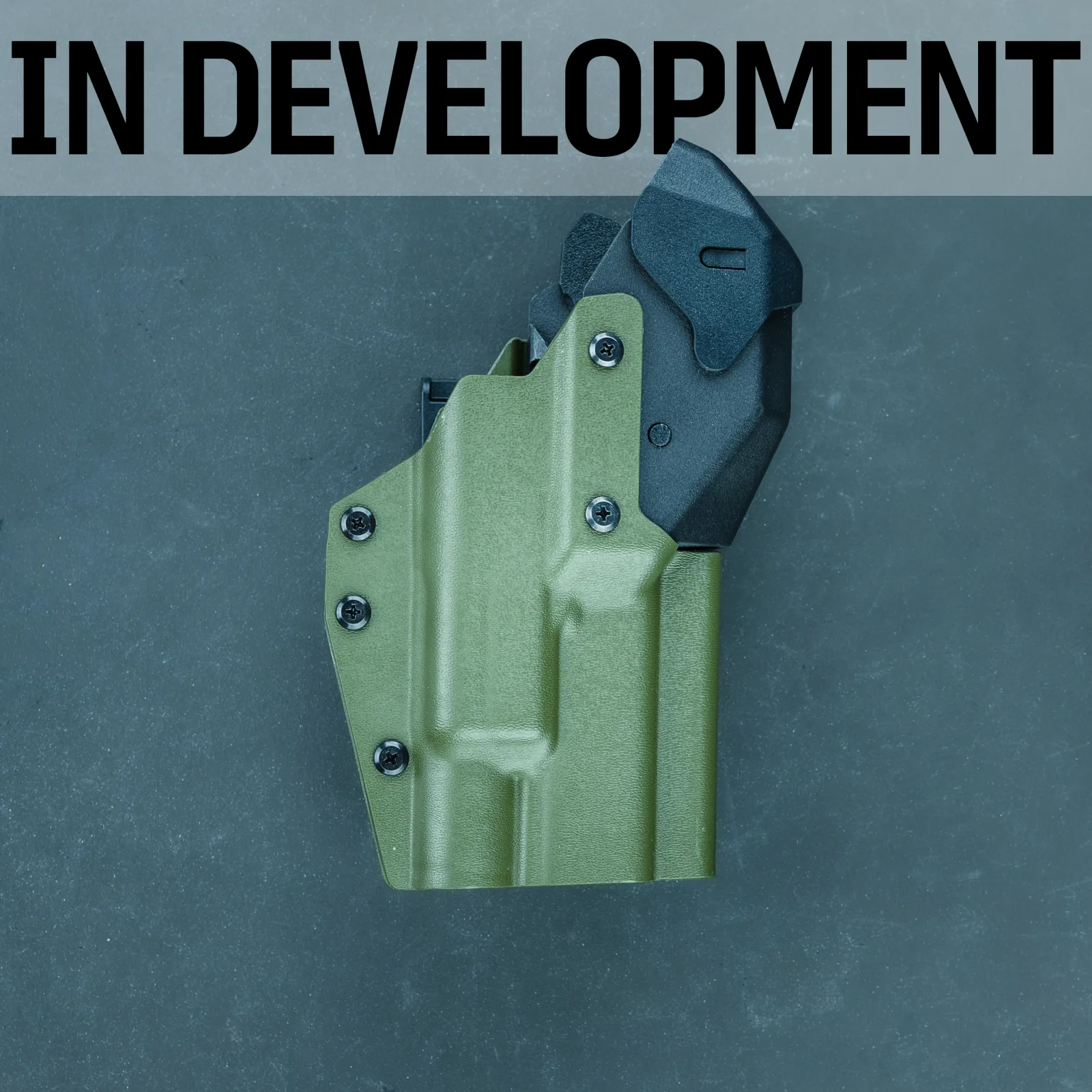
Product designer Barry Hall says the Titan outgrew its original scope: “I had no idea that it would turn into a project this large.” T.REX posted development images of the holster in January 2026, six months before launch, showing an early shell with the hood geometry already in place.
That timeline matters because retention holsters are the one category where a company cannot iterate in public. A concealment holster that prints badly is an annoyance; a retention lock that fails under a grab is a fatality. The long development cycle, the environmental chamber, and the load cell all point the same direction: T.REX treated this as a life-safety product rather than another Kydex SKU.
T.REX Titan Specifications
| Type | OWB active retention holster |
| Retention Level | Level II, fail-open design |
| MSRP | $135 (ships in 1-3 weeks) |
| Launch Date | July 15, 2026 |
| Material | .125" Kydex + injection-molded Nylon 6/6 |
| In the Box | Titan holster + Titan Optic Hood |
| Pistol + Light Fits | 300+ combinations at launch |
| Supported Makes | Glock, SIG, S&W, Shadow Systems, Staccato, Walther, CZ, FN, Springfield, PSA, Ruger |
| Supported Lights | TLR-1 HL / HL-X / HP / HP-X, TLR-7 HL-X, TLR-7/A/X, X300T/U/V, XC3, or no light |
| Colors | 45 combinations per model |
| Handedness | Right-hand at launch, left-hand to follow |
| Durability Testing | 500,000 retention cycles on pneumatic rigs |
| Cold Testing | 72 hours at -60F, drawn while iced |
| Retention Yield Test | Held past 532 lbs; 600+ lbs in some pulls |
| Warranty | Lifetime, 60-day returns |
Retention and Duty Holsters Available Now
T40 Light-Bearing Holster (Universal OWB)
- OWB
- Impact-resistant polymer
ProDraw OWB
- OWB
- Kydex
T41 Universal Holster (OWB)
- OWB
- Impact-resistant polymer
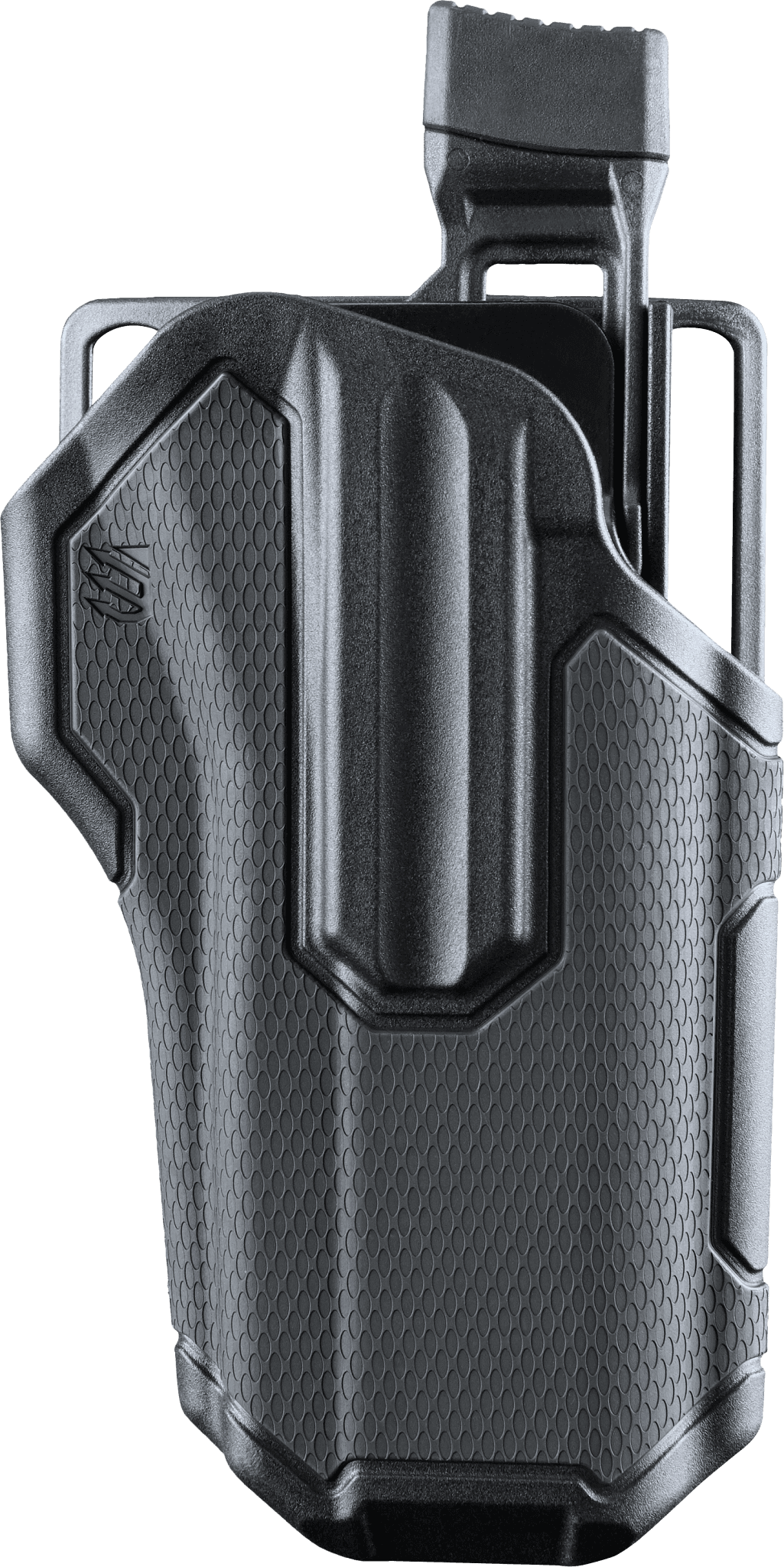
Omnivore MultiFit Holster
- OWB
- Polymer
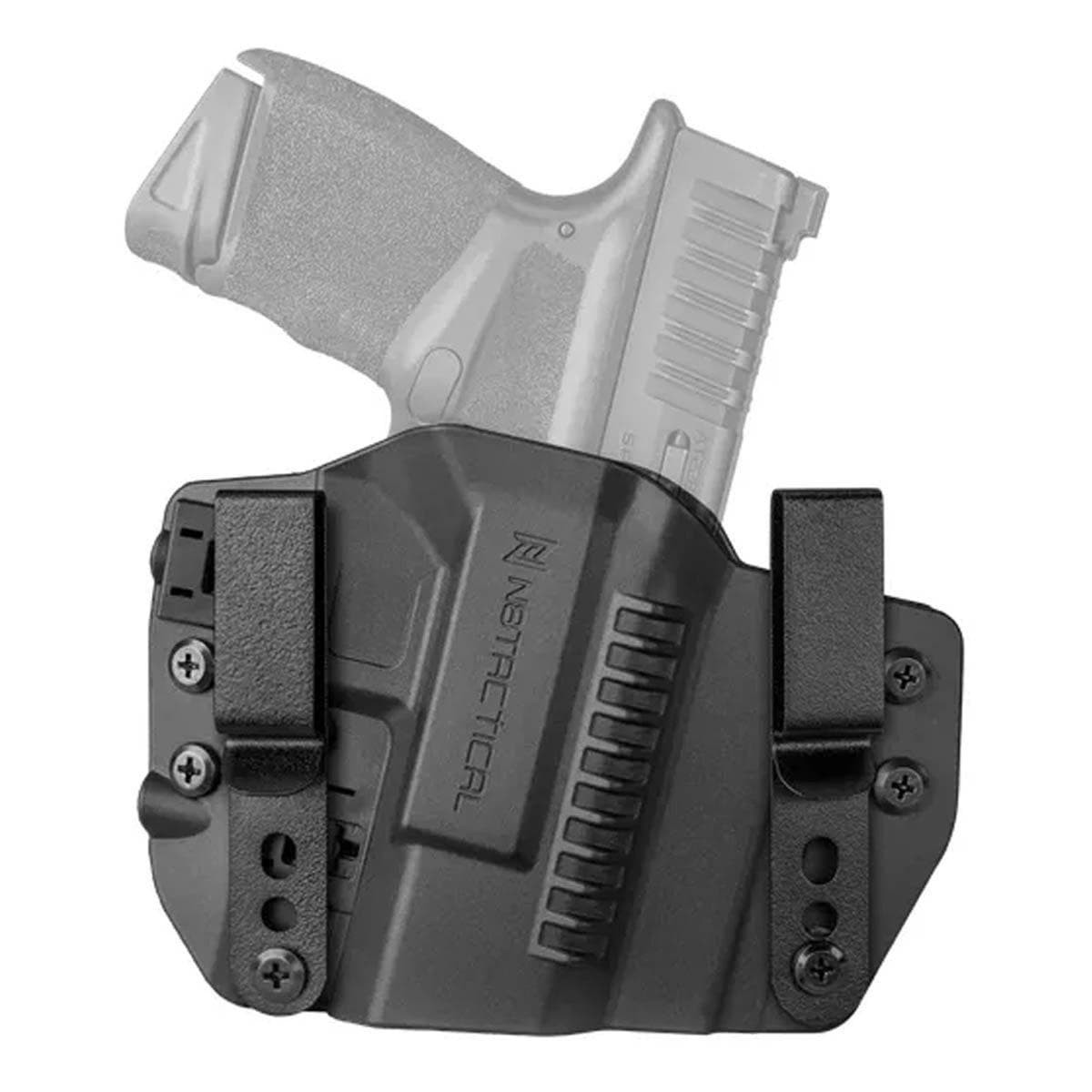
MultiFlex IWB/OWB Holster (by N8 Tactical)
- IWB/OWB convertible
- Polypropylene
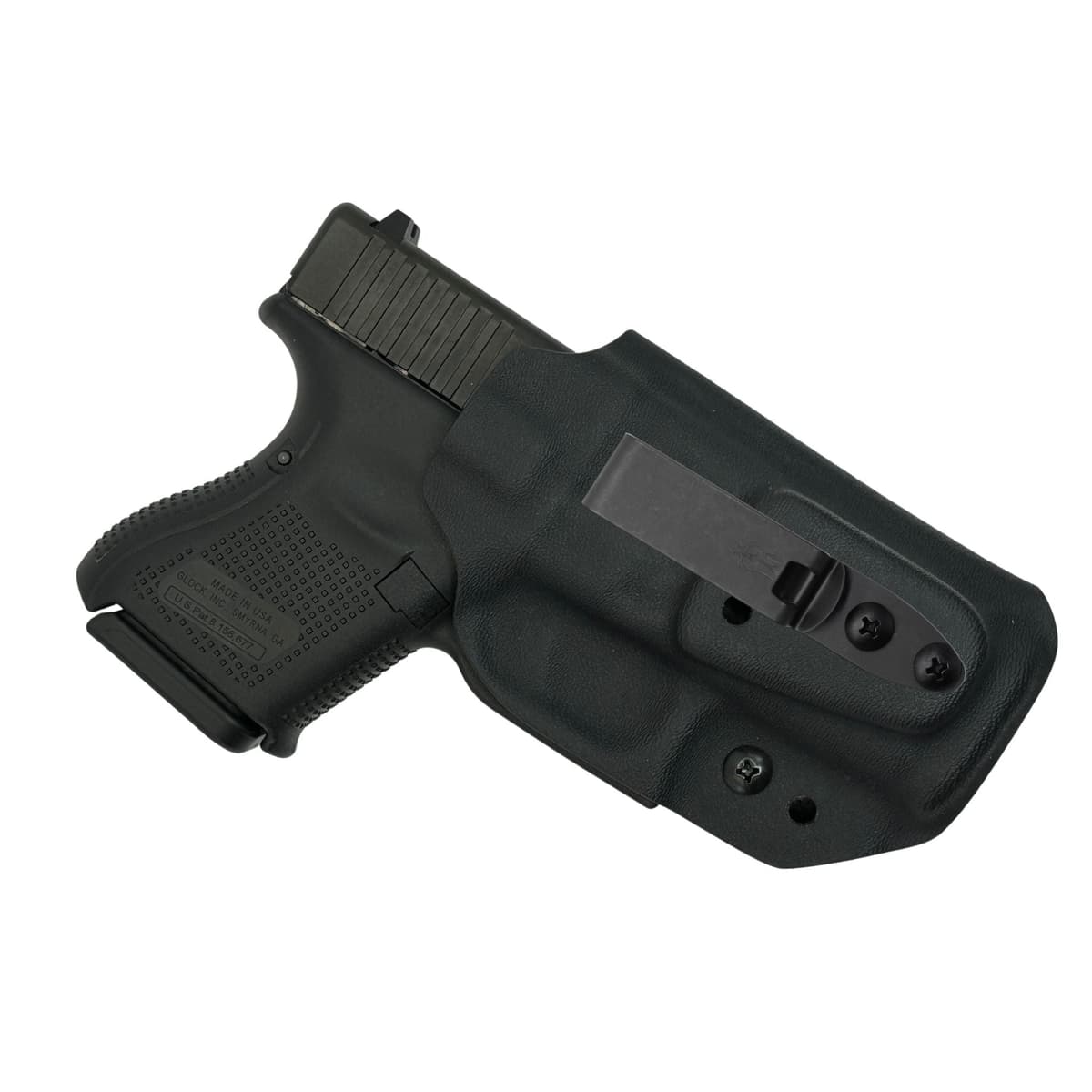
Betty 2.0 IWB Holster
- IWB
- Molded shell
Affiliate links (?)
Who Should Actually Buy This
The Titan is for people who carry a pistol openly: uniformed officers, armed security, competition shooters running an OWB duty rig, and anyone doing carbine work where the pistol needs to stay put through movement. If your gun lives under a shirt, retention hardware is dead weight; passive friction and a cover garment already solve the problem, and the extra draw step is a liability you will never cash in.
T.REX’s own concealment answer stays the Sidecar 2.0 at $105, an appendix rig with a Spine System hinge and no active lock. That is the right tool for daily concealed carry, and it is the one to buy if the Titan announcement pulled you toward the brand but you carry inside the waistband. Our universal holster guide covers the multi-fit options if you rotate pistols, and you can browse the full holster catalog to compare shells, retention types, and light fits side by side.
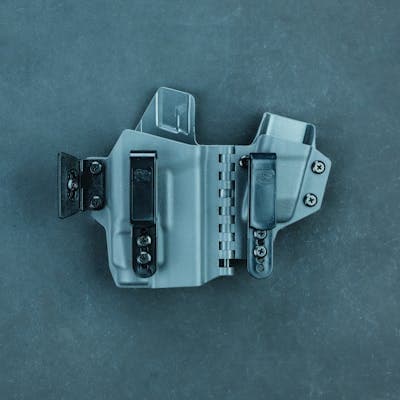
T.REX ARMS Sidecar 2.0
T.REX's concealment answer: appendix carry, passive retention, no active lock
Slim, modular appendix sidecar with Spine System hinge for single-axis flex and maximum concealment.
- +Spine System hinge flexes on single axis for stable concealment
- +Slimmest sidecar profile in class
- +Full ambidextrous support
- −Less flex range than shock-cord designs
- −Limited color options compared to competitors
- −Spine hinge adds slight rigidity over bungee systems
Affiliate links (?)
Stay Updated on the T.REX Titan
We will send the Titan's MSRP and fit availability as soon as T.REX publishes them on launch day, along with holster and duty gear coverage as it drops.
Frequently Asked Questions
▶What is Level 2 holster retention?
▶How much does the T.REX Titan holster cost?
▶What pistols does the T.REX Titan fit?
▶Do police use Level 2 or Level 3 holsters?
▶How does the Titan compare to a Safariland ALS holster?
▶How tough is the T.REX Titan holster?
Bottom Line
The Titan is the most credible challenge Safariland’s ALS has faced in a decade, and the reason is the launch matrix rather than the engineering. Plenty of companies build a good retention lock; almost none of them ship 300+ gun and light combinations on day one, which is the only way to actually displace an incumbent that a department has already standardized on.
The open question was price, and it landed at $135. The Safariland 7378 7TS sits at $97 while the optic-and-light 6354DO runs $172.40. The Titan slots between them, and against the optic-cut 6354DO it is the cheaper rig despite the added retention layer and the included optic hood. That makes it an easy recommendation for anyone buying a new duty rig who can wait the 1-to-3-week ship. The fail-open engineering, the 500,000-cycle testing, and 300+ fits at launch back the price up rather than inflating it. Right-handed shooters can order now; left-handed shooters wait longer.