Holosun 507C X2
- ✓2 MOA dot + 32 MOA circle
- ✓Solar + battery power

Eight Glock chassis systems ranked, from the budget CAA MCK to the bullpup Meta Tactical Apex, with clear brace-vs-stock legal guidance and what each Glock model actually fits.
Affiliate links (?)
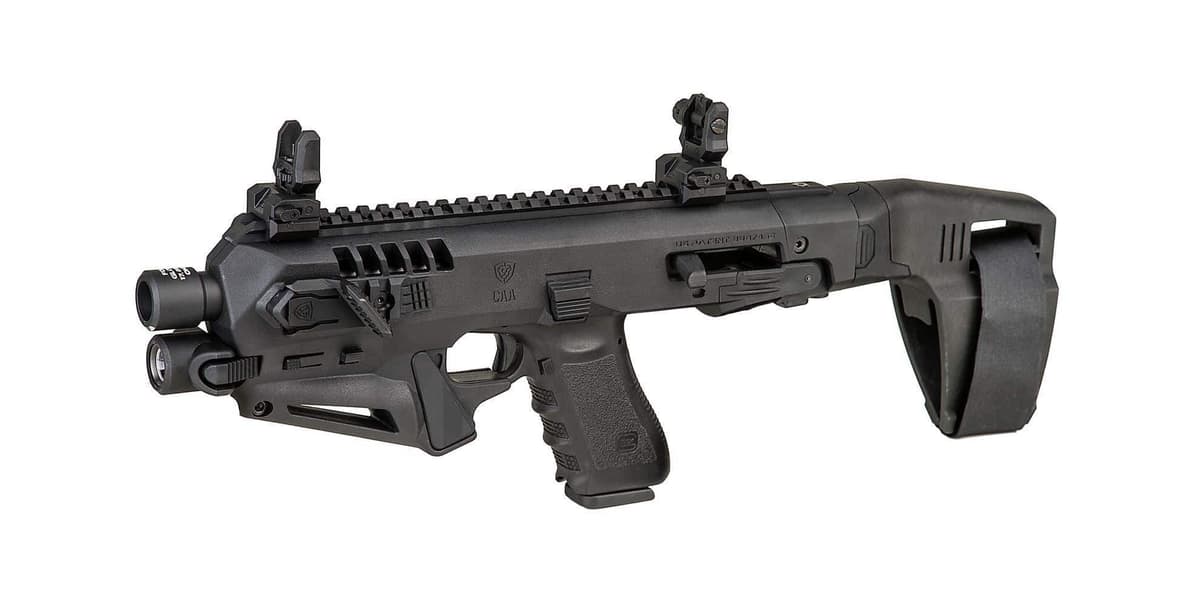
A Glock chassis turns a pistol you already own into a stable, carbine-style shooter for a fraction of the cost of a dedicated PCC. The best Glock chassis system for most buyers is the CAA MCK at around $295, but the right pick depends on whether you want a brace, a registered SBR, or a true 16-inch carbine. We ranked eight Glock conversion kits by fitment, build quality, and value, and spelled out exactly what is legal before you bolt anything to the back of your slide.
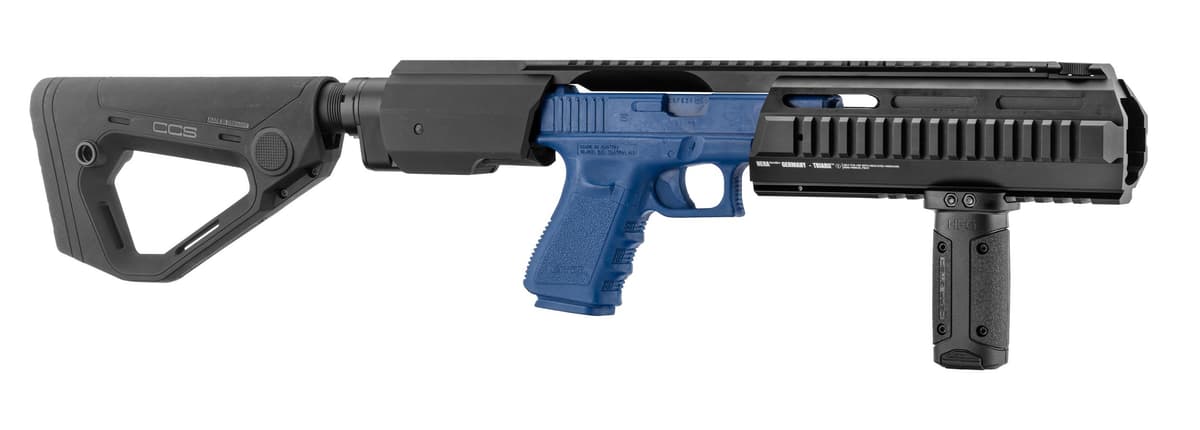
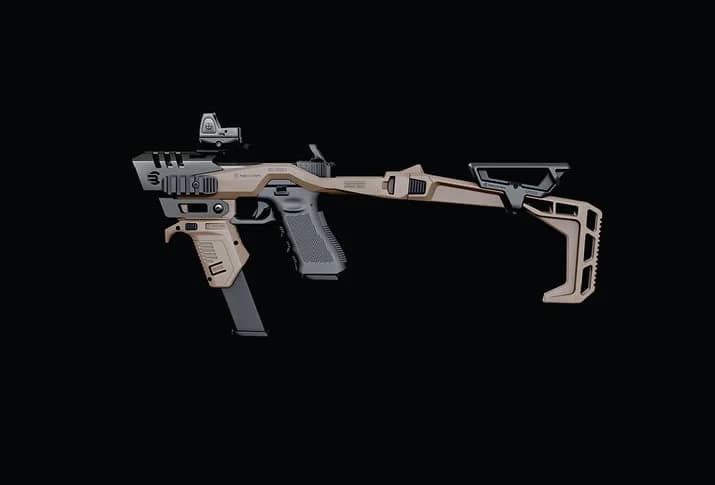
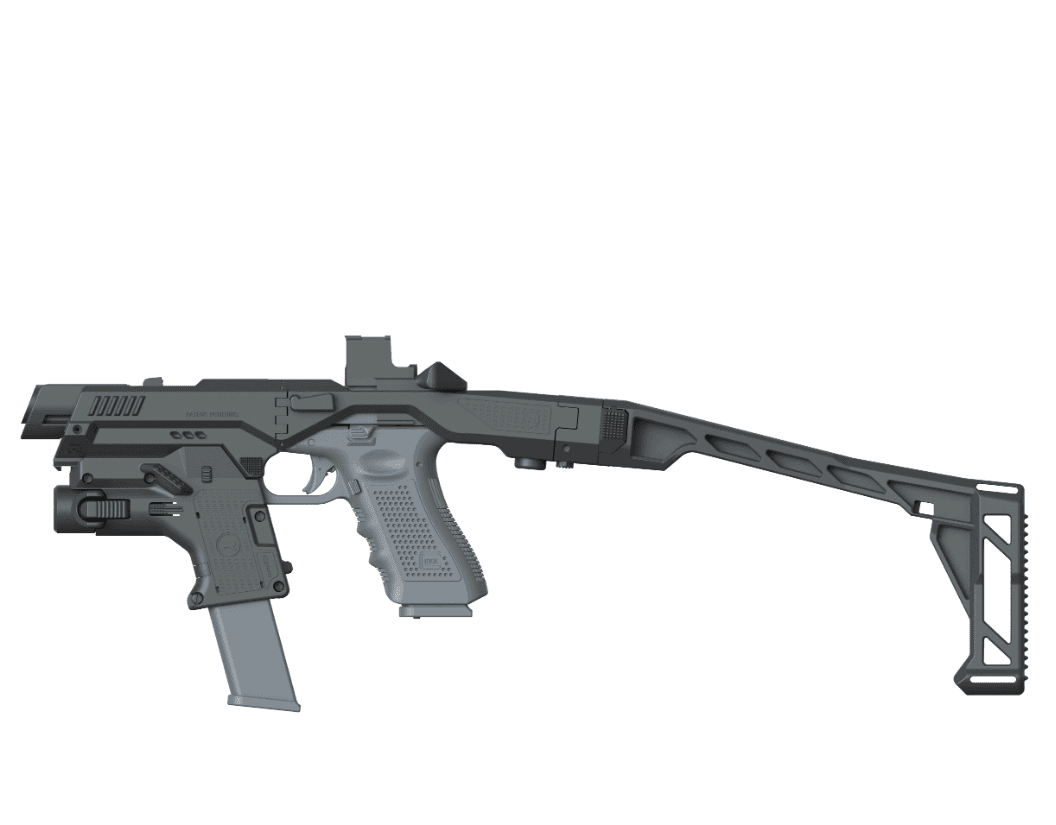
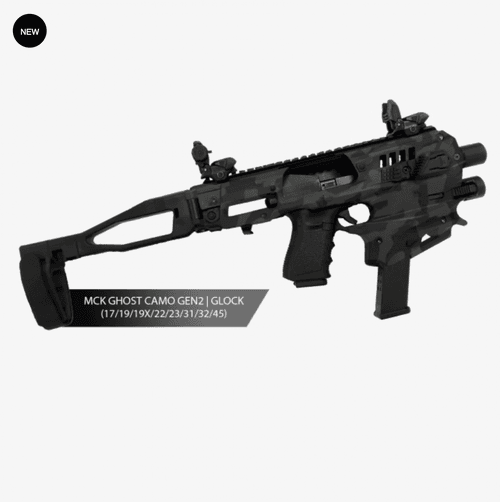
A Glock chassis system is a clamshell or conversion kit that clamps around an unmodified Glock and adds a stock or brace, an extended Picatinny rail, and usually a foregrip. The pistol does the firing; the chassis adds a second point of contact and a longer sight radius, which is what makes a converted Glock far easier to shoot accurately than the bare gun. Nothing is permanently modified, and most designs let you pull the Glock back out in seconds.
Three things separate a good Glock conversion kit from a bad one: fitment (does it fit your exact model and generation), the stock-or-brace path (which decides your federal paperwork), and build quality. A budget polymer clamshell like the CAA MCK does the job for under $300 and clamps around the same Glock 19 most owners already run; an aluminum hybrid or a full bullpup carbine costs more but buys durability or a 16-inch barrel. A braced chassis Glock makes a natural grab-and-go truck gun; see how the concept compares against the braced PDWs and folding PCCs in our best truck gun roundup.
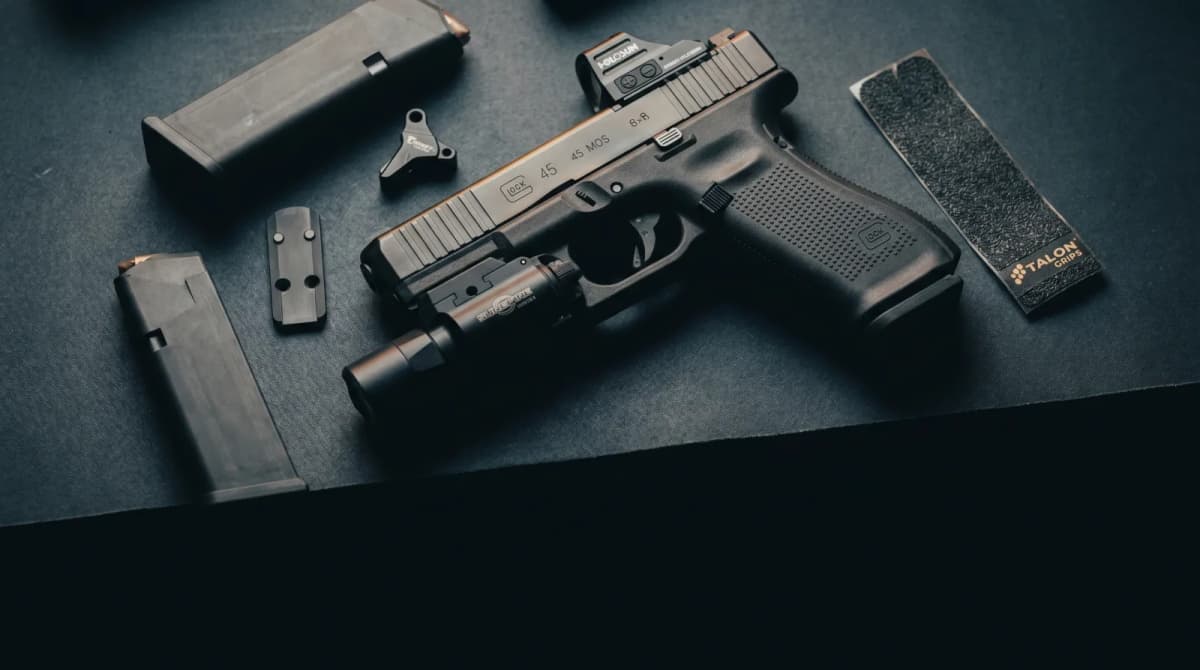
Weapon light, red dot, spare mag, and trigger, the upgrades most pistol owners add first.
Affiliate links (?)
Ranked by Glock fitment, build quality, and value. The CAA MCK wins on breadth and price; the Meta Tactical Apex is the only true 16-inch carbine in the group; the Recover Tactical P-IX is the pick if you want AR controls and to run your own AR stock or brace.
Best overall value
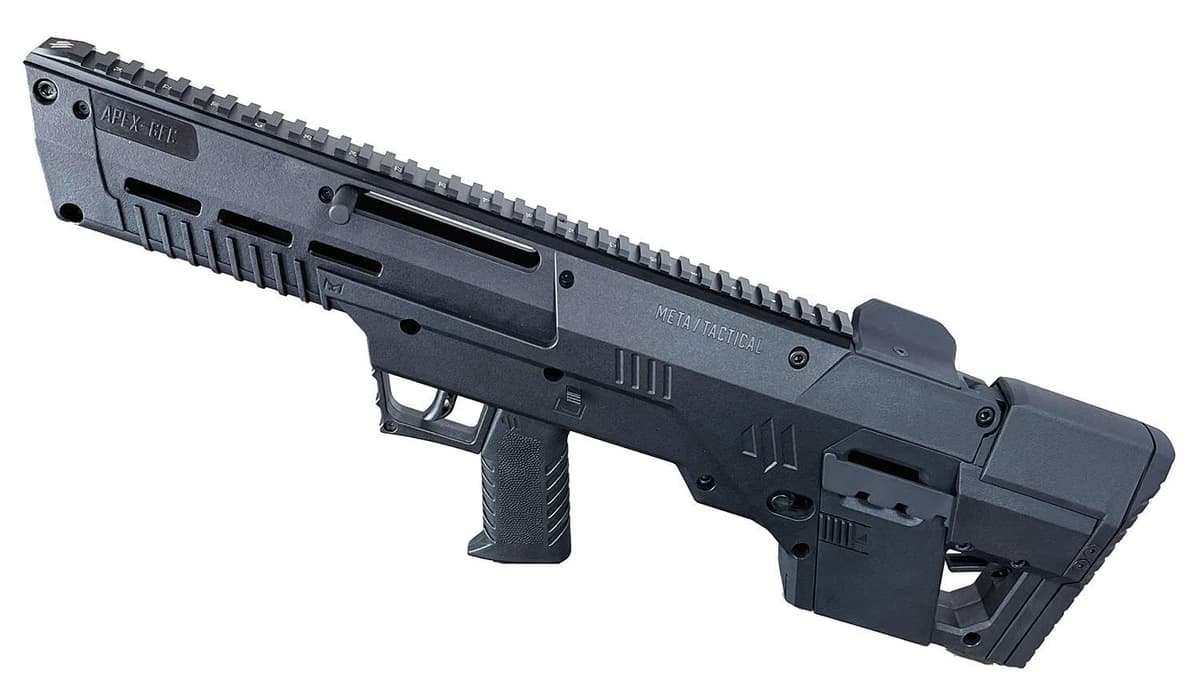
Best true carbine (bullpup)
Most modular
Best build quality
Best compact PDW brace
Best premium stock conversion
Lightest minimalist build
Best budget pick
Verify brace and SBR legality in your state, and confirm exact Glock model and generation fitment, before purchasing.
Affiliate links - purchases support this site at no extra cost to you. (?)
The chassis itself is not what the ATF cares about. Your federal classification comes down to the barrel length and what you put against your shoulder. There are three legal paths, and every chassis in this guide lands you in one of them.
Brace (pistol): A Glock with its short barrel inside a chassis fitted with a stabilizing brace is still a pistol. No registration, no Form 1. The 2023 ATF brace rule was vacated by the 5th Circuit and is not being enforced. The Micro RONI and Nano RONI ship as brace stabilizers that keep you here, and the Recover 20/20N is sold in both brace and stock versions, so order the brace to stay in the pistol lane. One accessory gotcha in this lane: a vertical foregrip on a sub-26-inch pistol turns it into an Any Other Weapon under the NFA, so run an angled foregrip on a braced Glock and save the vertical grip for a registered SBR or the 26-inch Apex.
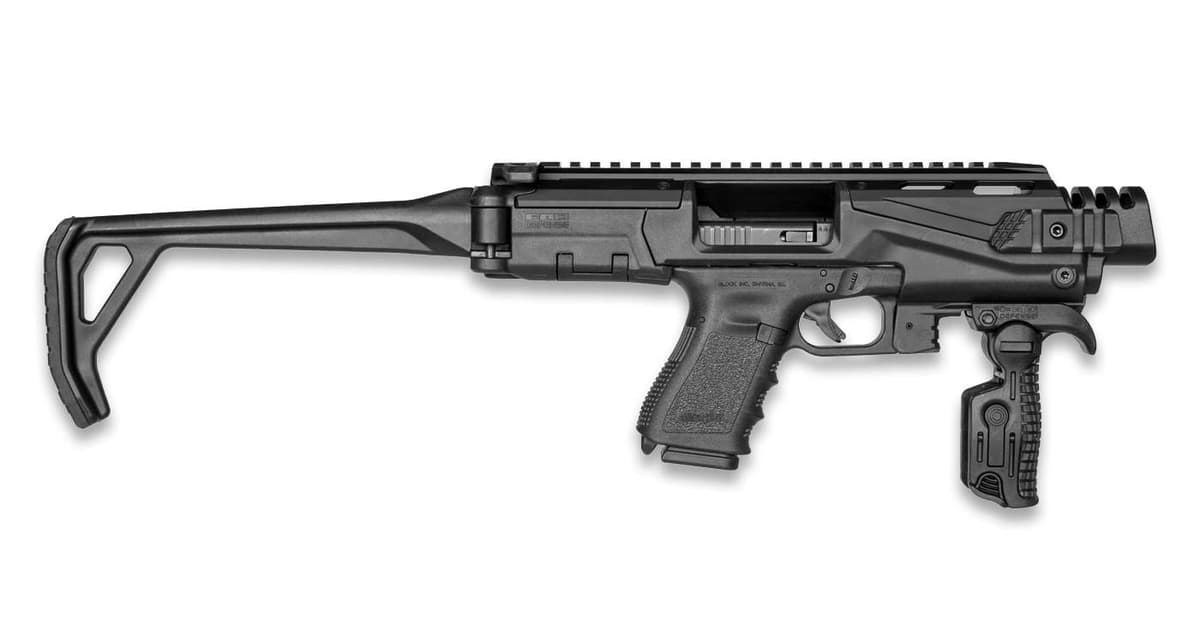
Shoulder stock (SBR): Bolt a true shoulder stock onto a short-barreled Glock and you have built a short-barreled rifle. That is legal, but it requires an ATF Form 1, fingerprints, and NFA registration before you assemble it. Several kits here open this path: the CAA MCK and HERA Arms Triarii ship stock configurations, the Recover P-IX and FAB KPOS take an AR stock or a separate stock arm, and the Recover 20/20N is sold in a stock version too. Choosing the stock on any of them means choosing the NFA path. The good news for 2026: the federal making tax is $0 under the One Big Beautiful Bill Act, and eForm 1 approvals are running days to a couple of weeks, not months.
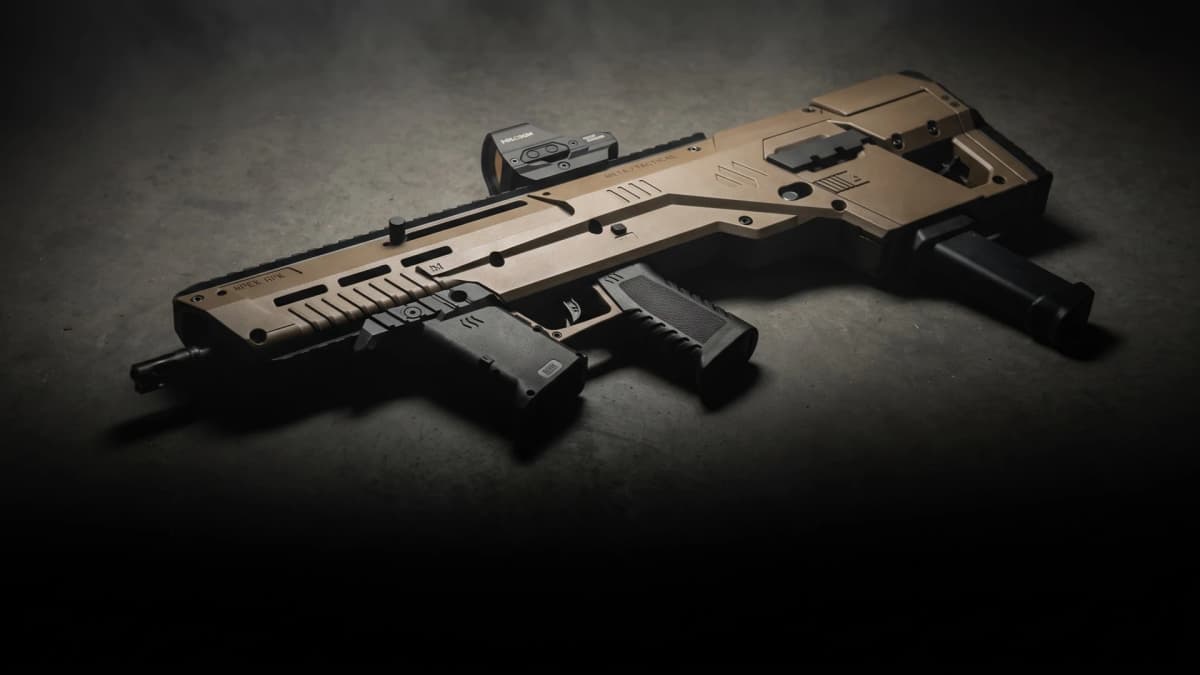
16-inch carbine (Title I): The Meta Tactical Apex wraps the Glock in a bullpup shell with a 16-inch barrel and a 26-inch overall length measured with the stock extended (23.4 inches collapsed), per Meta Tactical's spec. That clears both Title I minimums, a 16-inch-or-longer barrel and a 26-inch-or-longer overall length, which makes it a standard Title I long gun. No stamp, no registration, full shoulder stock. It is the only conversion here that gives you a real carbine with zero paperwork. The 16-inch barrel alone is not enough: a stocked rifle that measures under 26 inches with the stock extended is a short-barreled rifle and goes back into the NFA process.
Two decisions cut the field in half before price or build quality enter the picture: whether the kit fits your exact Glock model and generation, and which legal path you want (brace, SBR stock, or 16-inch carbine). Settle those two, then weigh build quality against weight.
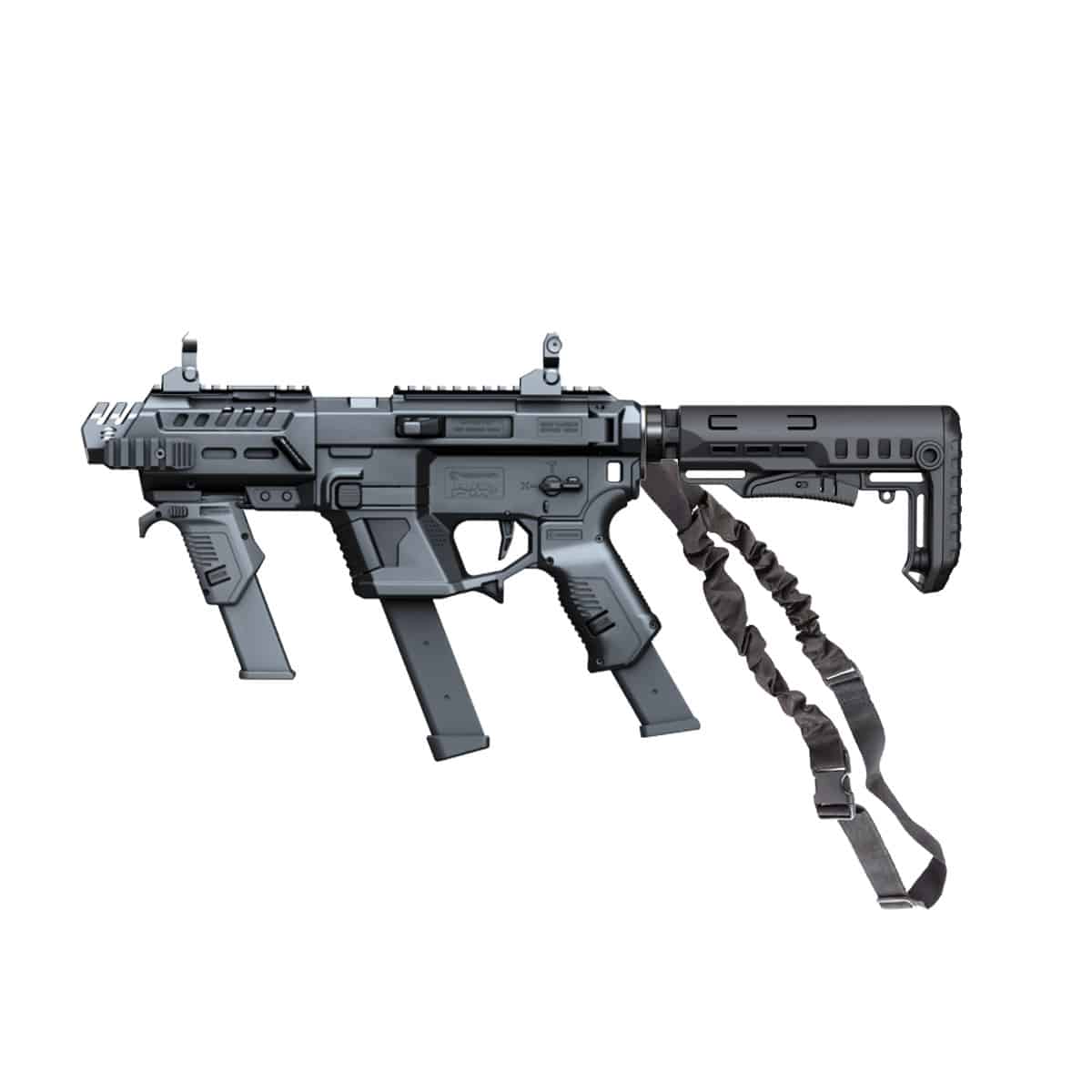
Fitment is the gate. The CAA MCK and Recover Tactical P-IX cover the widest Glock lineups across generations; the Micro RONI and Nano RONI stick to the common G17/19 frames; the Meta Tactical Apex is sold per-model. Confirm your slide and generation before anything else, because the wrong-frame kit will not lock up.
If you want zero paperwork and maximum concealability, stay in the brace lane with the Micro RONI or Nano RONI, or the featherweight Recover 20/20N in its brace version. If you are willing to file a Form 1 for a real cheek weld, the stock-capable kits (CAA MCK, HERA Triarii, Recover P-IX, and FAB KPOS) are the move. If you want a true rifle and no stamp at all, the Meta Tactical Apex carbine is the answer.
All-polymer clamshells like the CAA MCK keep the price under $300 but add bulk. The FAB Defense KPOS Scout runs a rigid aluminum upper over a polymer lower for a more durable feel at about the same weight as the polymer MCK (both around 24 oz). At the other end, the Recover 20/20N strips the system down to roughly 16 ounces, the pick for a truck gun or pack build where every ounce counts and you accept a little less stability than a full clamshell.
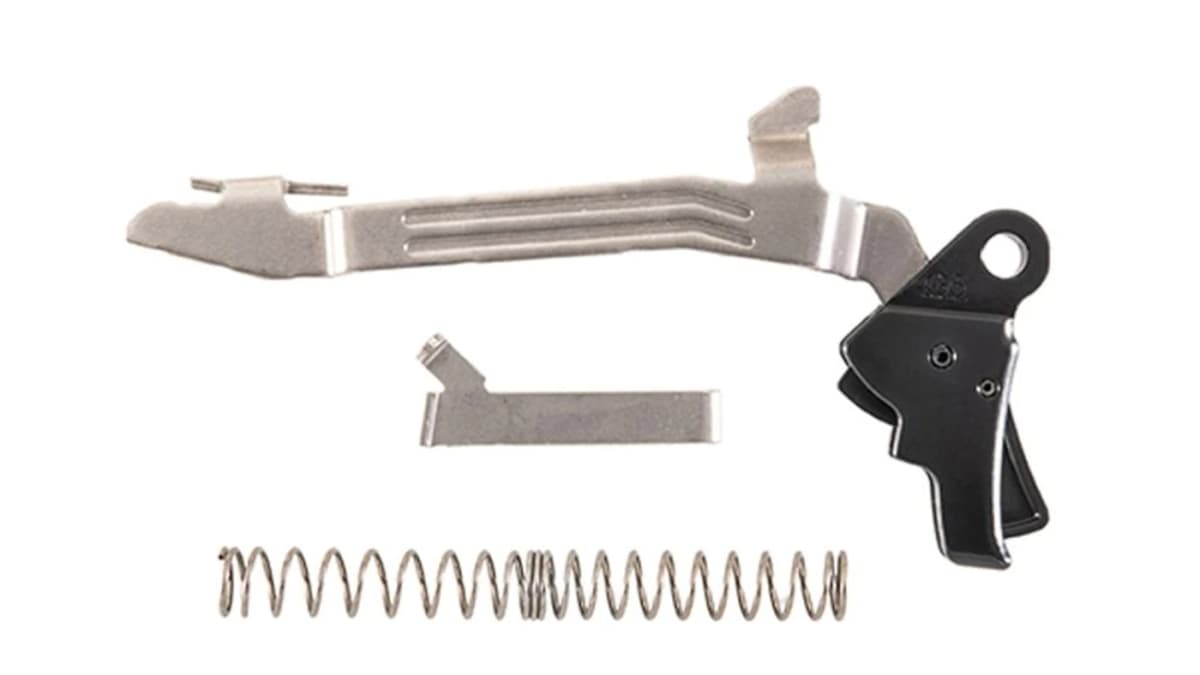
The extended top rail is half the reason to run a chassis, so budget for a pistol red dot and a weapon light at the same time. A cleaner trigger also pays off once you have a stock to stabilize the gun; see our best Glock triggers guide, and if a faster cadence is the goal, the Glock forced reset trigger landscape pairs naturally with a braced chassis build. Use the rifle builder to spec the optic and light around your host before you order.
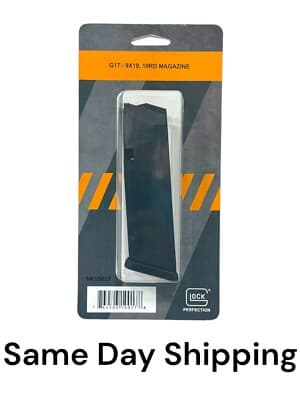
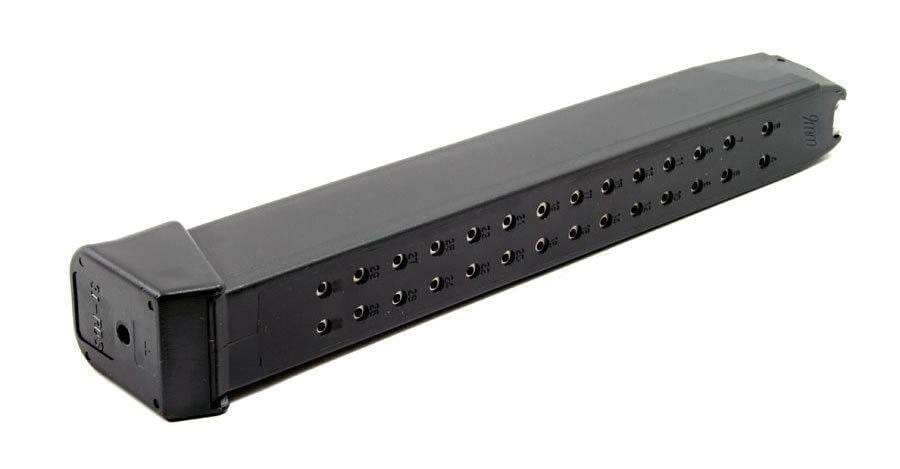
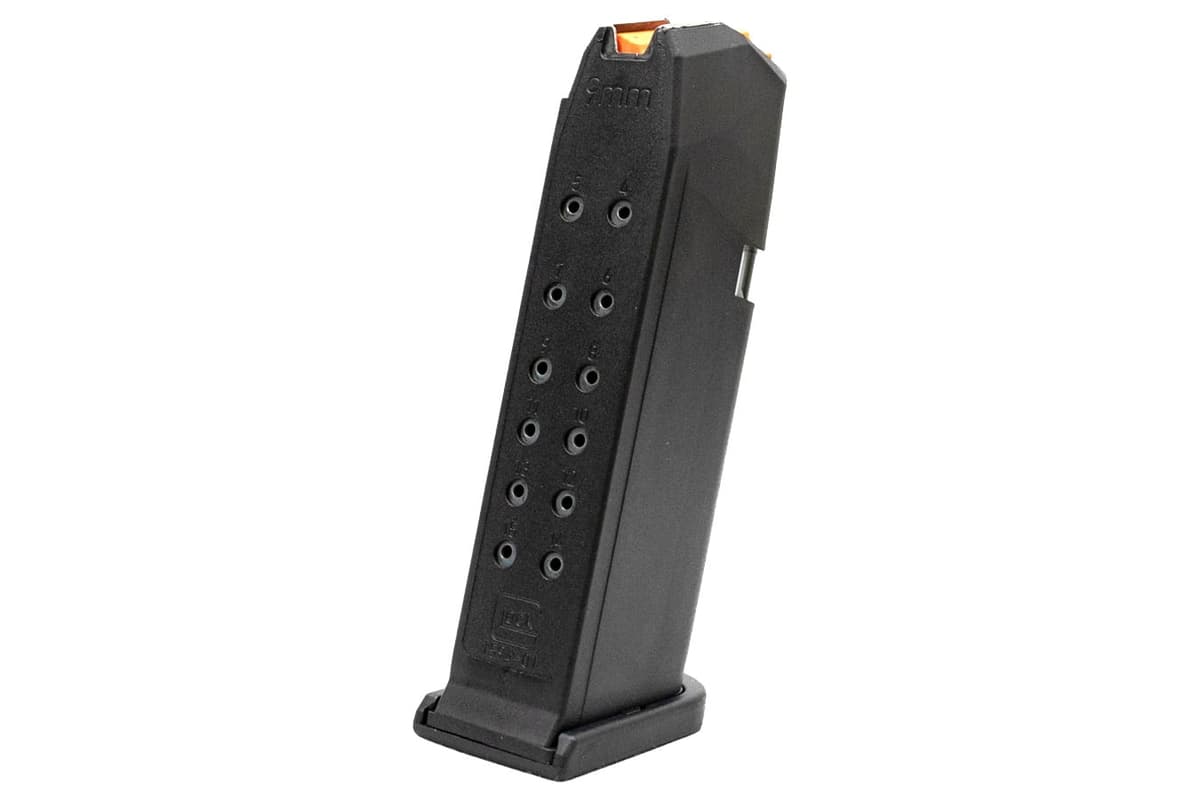
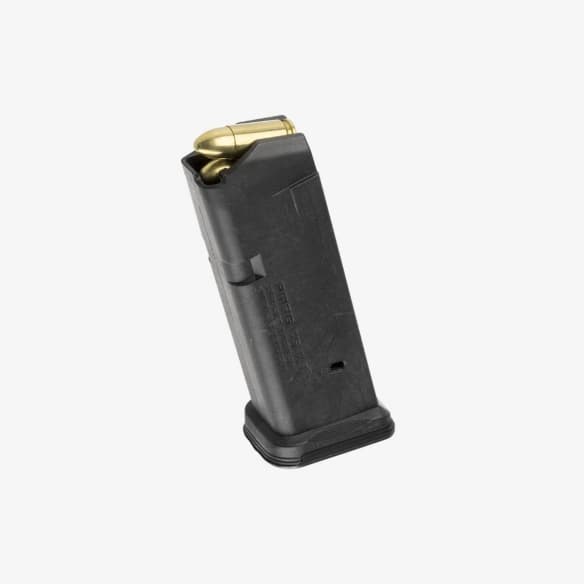
A chassis exists to run your Glock harder, and the whole point of a carbine-style platform is feeding it from longer magazines. The cheapest, highest-priority purchase before any optic is a stack of reliable Glock mags. Buy 3 for a defensive setup, 6 to 8 for range and training days, and more if you are running drills or stages, since a converted Glock burns through ammo faster than the pistol ever did.
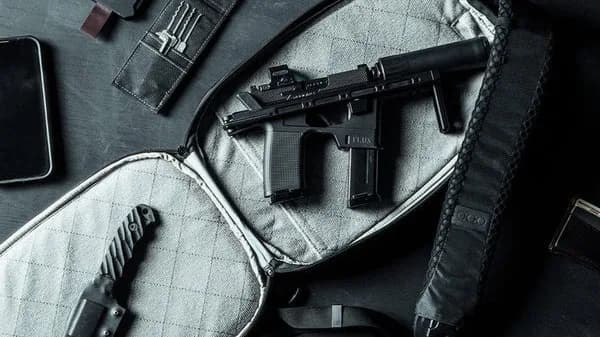
Every chassis here accepts factory and extended double-stack Glock magazines, and a 31- or 33-round stick magazine looks right at home hanging out of a Micro RONI or MCK. Standard Glock 17 and 19 double-stack mags drop in; subcompact single-stacks are the wrong choice for a chassis build.
Affiliate links (?)
The Verdict
Buy the CAA MCK for the best mix of fitment, brace-or-stock flexibility, and price. Step up to the Meta Tactical Apex if you want a real 16-inch carbine with no stamp.
Most buyers are best served by the CAA MCK: it fits the widest Glock lineup, costs under $300, and lets you run a brace today and a Form 1 stock later. If a true carbine is the goal, the Meta Tactical Apex bullpup is the only no-paperwork 16-inch option in the group. For AR shooters who want familiar controls, the Recover Tactical P-IX takes your own AR stock or brace. Once the chassis is set, drop in a cleaner trigger from our Glock trigger guide and sort carry and transport with our chassis carry and sling-bag guide.

Avid shooter with 10+ years of experience including competition shooting, and an associate member of the Professional Outdoor Media Association (POMA). Built 10+ AR-pattern rifles and several handgun platforms for home defense, competition, and suppressed night shooting.
This page contains affiliate links. Purchases through these links support the site at no extra cost to you. Read the affiliate disclosure
Continue exploring with these related resources

Complete guide to carrying pistol chassis systems (Flux Raider, CAA MCK) in sling bags. Compare the Eberlestock Fade Sling, Vertx options, and learn deployment strategies.

The pistol is one layer of nine. A complete everyday carry setup also needs a holster, a real gun belt, a spare magazine, defensive ammo, a handheld light, a knife, a trauma kit, and a less-lethal option. Here is how to budget across all nine, from an ~$800 beginner kit to an ~$1,900 premium loadout.

Best Ruger Mark IV accessories ranked for 2026: Volquartsen Accurizing Kit, TANDEMKROSS Ultimate Trigger Kit and Eagle's Talon Extractor, factory 10-round magazines, Eagle Eye fiber-optic sights, Holosun ARO and AEMS Picatinny red dots, and Rugged Oculus / Dead Air Mask 22 LR suppressors. Covers every Mark IV variant including the 22/45 Tactical, 22/45 Lite, Target, Hunter, and Competition.
Related articles and industry updates

Oil infrastructure attacks, AI-driven semiconductor demand, and geopolitical instability are creating supply chain pressure on ammunition, optics, and emergency gear. Prioritized buying checklist: ammunition, magazines, optics, spare parts, and general emergency preparedness.

KelTec unveils the KP50 with a redesigned bottom-insert, drop-free magazine system, 50-round standard capacity, and multiple launch variants ranging from $899 to $1,399 MSRP.

Colt Optics enters the red dot market with the MRS-1 enclosed-emitter pistol sight, CSQ-1 full-size square red dot, and C3X-1 3x magnifier, all designed, engineered, and assembled in Michigan.