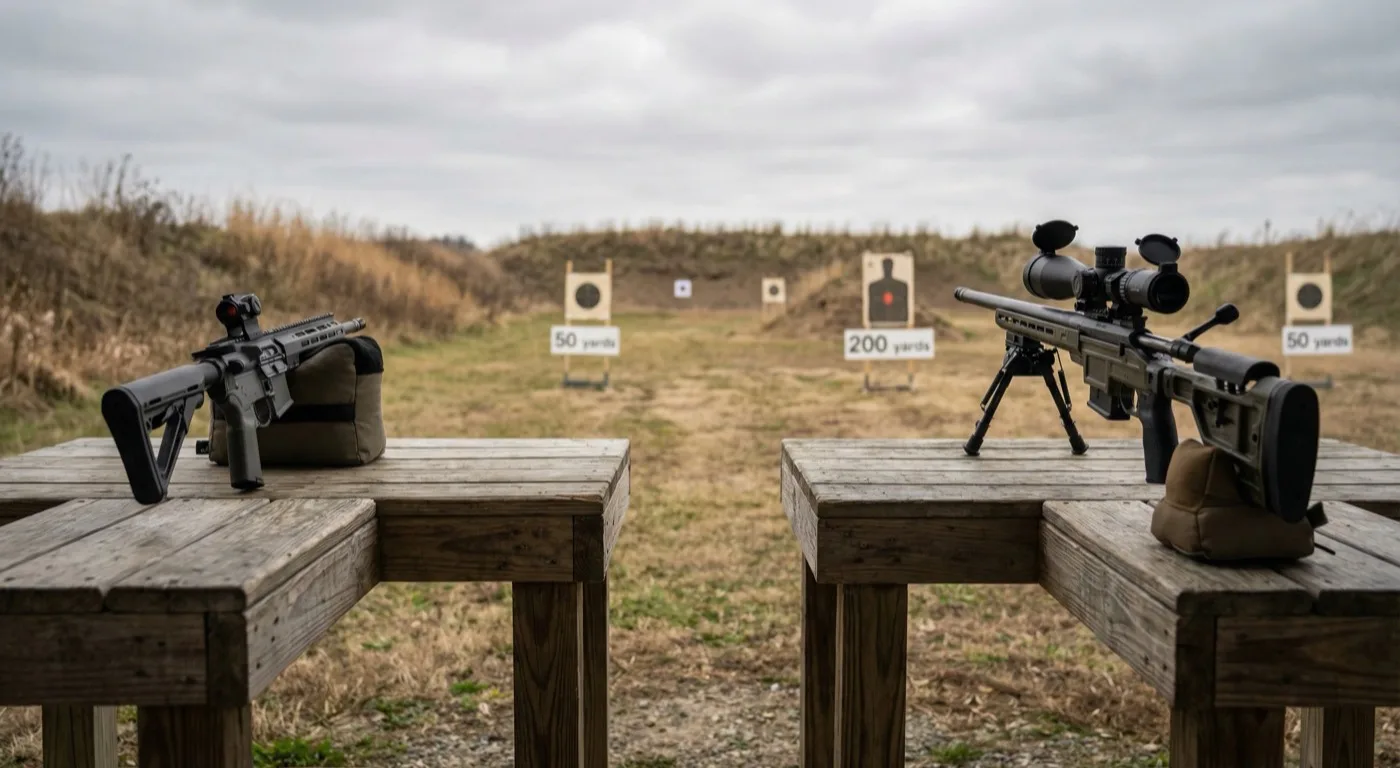
AR-15 vs AR-10 2026: Beginner Guide to Choosing 5.56 or .308-Class Platforms header image
[ < Back to guides ]
AR-15AR-10BeginnerComparison

AR-15 vs AR-10 2026: Beginner Guide to Choosing 5.56 or .308-Class Platforms

If you are picking your first rifle platform, this decision usually comes down to how much recoil, weight, and ammo cost you are willing to carry in exchange for more downrange energy. This guide gives you a fast way to choose.

By AB|Last reviewed February 2026

Key Takeaways

  • AR-15 is the better first platform for most people: lighter recoil, lower ammo cost, and easier skill building.
  • AR-10 exists for a different mission: .308-class performance, stronger retained energy, and better fit for precision-heavy needs.
  • Budget matters more than internet arguments: your total cost includes optics, ammo, magazines, and training, not just rifle MSRP.

AR-15 vs AR-10: Quick Comparison

Factor
AR-15
AR-10
Typical cartridge class
5.56 NATO / .223 Rem
.308 Win / 7.62x51 NATO
Recoil impulse
Low, easy to track
Noticeably higher
Rifle weight (typical)
~6.0-7.2 lb
~8.0-10.0 lb
Ammo cost (typical range ammo)
Lower per round
Higher per round
Shooting role sweet spot
General purpose, training volume
Energy at range, precision-heavy roles
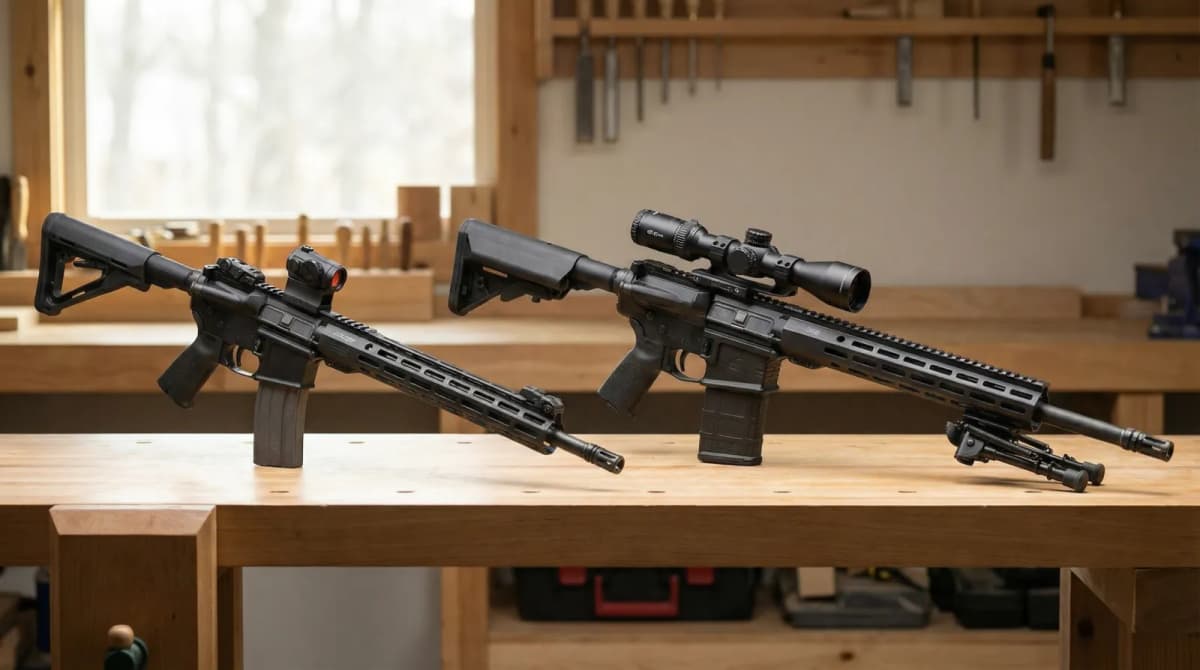
Visual comparison bars representing recoil, rifle weight, and ammo cost differences
Visual summary: AR-15 tends to be lighter shooting and lower cost to train with.

Where AR-15 Wins

AR-15 is easier to shoot well at speed. Lower recoil means faster follow-up shots, better target tracking, and less fatigue over long range sessions.

The support ecosystem is also deeper for first-time owners: more training resources, more parts compatibility, and a broader spread of proven options at every budget tier.

For most home defense, training, and general-purpose setups, AR-15 gives the best performance-per-dollar and the lowest friction learning path.

Where AR-10 Wins

AR-10 platforms carry more cartridge energy and generally hold that energy better at distance than 5.56. If your use case is precision-oriented or medium game, this is the core reason to move up to the larger frame.

The tradeoff is non-trivial: more recoil, more rifle weight, higher ammo cost, and usually a more expensive optic/support setup to fully use the capability.

In short: AR-10 is a purpose-driven choice, not automatically a better choice. It is best when your mission needs justify the extra cost and handling demands.

Real-World Cost and Training Reality

  • Ammo drives long-term ownership cost. If you shoot often, the caliber decision can matter more than the rifle sticker price.
  • Recoil affects learning speed. Lower recoil usually means better repetition quality for newer shooters.
  • Accessory budget is not optional. Plan for optic, sling, light, magazines, and confirmation ammo no matter which platform you pick.

Beginner Decision Framework

  1. If this is your first rifle and you plan to train regularly, default to AR-15.
  2. If you need .308-class terminal performance for your specific use case, step to AR-10.
  3. If you are unsure, buy AR-15 first and build fundamentals before adding a larger-frame rifle.
  4. Put the saved money into ammunition and structured range time. Skill beats hardware speculation.
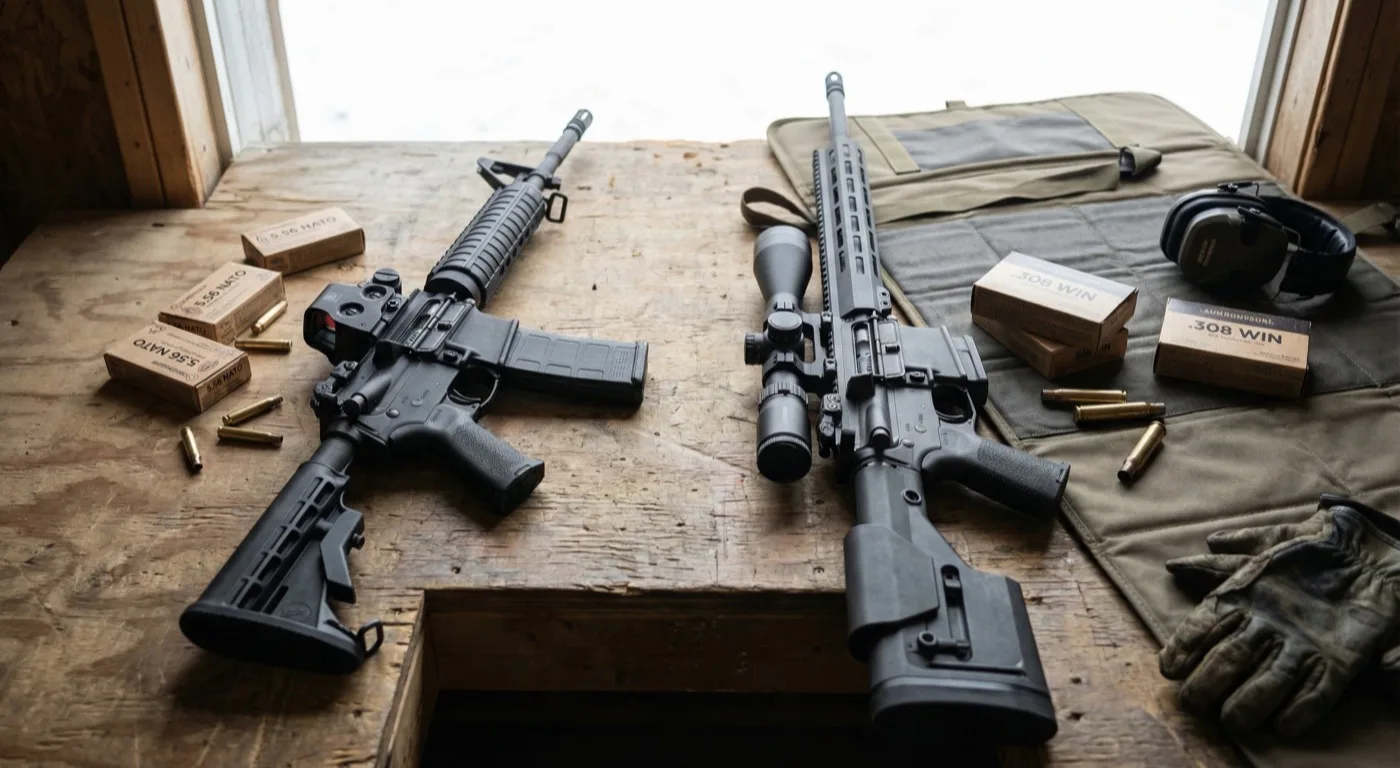
Beginner decision-flow visual contrasting lightweight training path and precision power path
Use-case driven choice beats platform hype.

Frequently Asked Questions

Is an AR-10 better than an AR-15 for beginners?
Not usually. Most beginners are better served by an AR-15 because recoil is lighter, ammunition is cheaper, and training volume can be higher for the same budget. AR-10 platforms make more sense when your primary goal is .308-class terminal performance or longer-range shooting.
What is the biggest difference between AR-15 and AR-10?
Scale and cartridge class. AR-15s are smaller, lighter rifles typically chambered in 5.56/.223. AR-10s are larger, heavier rifles built around full-power cartridges like .308/7.62x51. That change drives recoil, weight, cost, and effective mission envelope.
Is .308 too much recoil for a new shooter?
It is manageable, but it is a meaningful jump from 5.56. Newer shooters generally learn fundamentals faster with lower recoil, then transition to .308 once they can consistently manage sight picture, follow-through, and positional stability.
Can an AR-15 do what an AR-10 does?
Partially. AR-15s excel in lighter recoil, faster handling, and lower operating cost. AR-10 platforms generally retain more energy at distance and offer better performance on medium game and barrier-rich environments. They overlap in some roles, but they are not interchangeable.
What should I buy first if I only want one rifle?
For most first-time owners: AR-15 in 5.56. It gives the widest training and support ecosystem, lower total ownership cost, and easier handling. Move to an AR-10 class setup when your specific use case clearly requires .308-class ballistics.

Related guides

Continue exploring with these related resources

View all guides →