Best Buckshot & Slug Ammo 2026: Home Defense & Hunting header image
Ballistics
June 21, 2026
Best Buckshot & Slug Ammo 2026: Home Defense & Hunting

Best 12-gauge buckshot and slug ammo ranked for 2026. Federal FLITECONTROL 00 buck (#1 home defense), Hornady Critical Defense, Winchester PDX1, #1 buck for max wound channels, plus Foster and sabot slugs for hunting. Pattern density, penetration, and barrel-fit guidance.

Best Buckshot & Slug Ammo 2026: Home Defense & Hunting

The best buckshot for home defense is Federal FLITECONTROL 00 buck, and the best hunting slug is whichever pattern matches your barrel: a sabot slug for a rifled barrel, a Foster slug for a smoothbore. Those two facts settle most of the buying decision. This guide ranks nine 12-gauge loads across both jobs, explains buckshot sizes and the penetration standard that separates a defensive load from a marginal one, and tells you exactly which slug your gun can shoot. Every figure here comes from manufacturer data and established wound-ballistics testing.

By AB|Last reviewed June 2026

Best Buckshot & Slug Ammo (2026 Rankings)

Ranked by pattern density, terminal penetration, barrel fit, and value. We cover defensive 00 and #1 buck, reduced-recoil and training loads, plus Foster and sabot slugs for hunting.

1

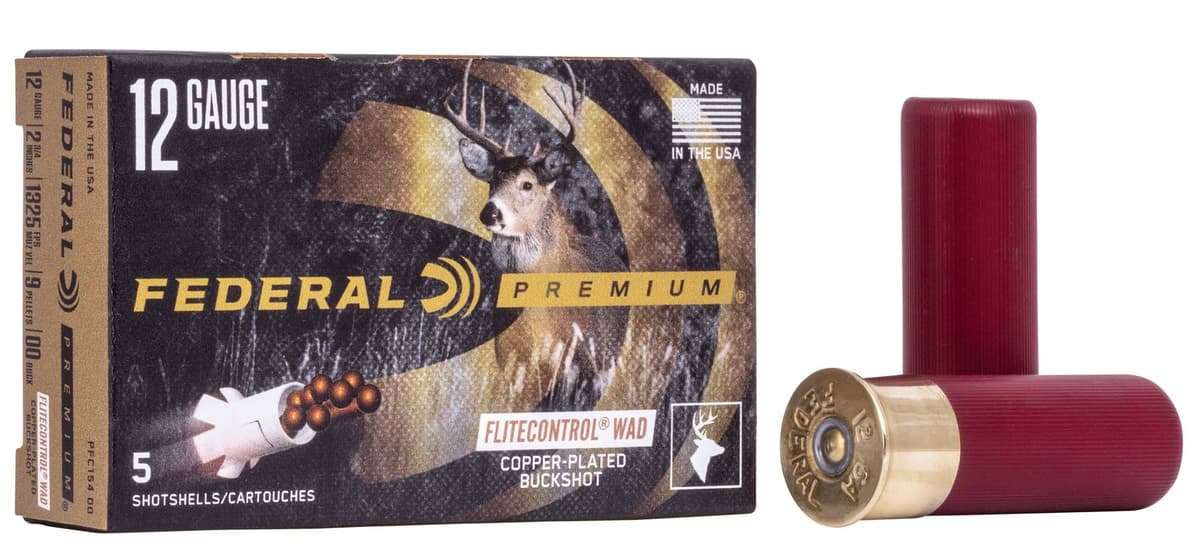
Federal FLITECONTROL 00 Buck (PFC154 00)

Best Overall Home Defense - Full-power FLITECONTROL 00

$14
Shop at Brownells
  • +Tightest patterns of any widely available buckshot load
  • +Full-power nine-pellet 00 buck for reliable penetration
  • +Reduces stray-pellet liability at interior distances
  • Full-power recoil is stout in lightweight pump guns
  • Costs more per round than bulk field buckshot
  • Tight patterns demand precise aim at close range
2

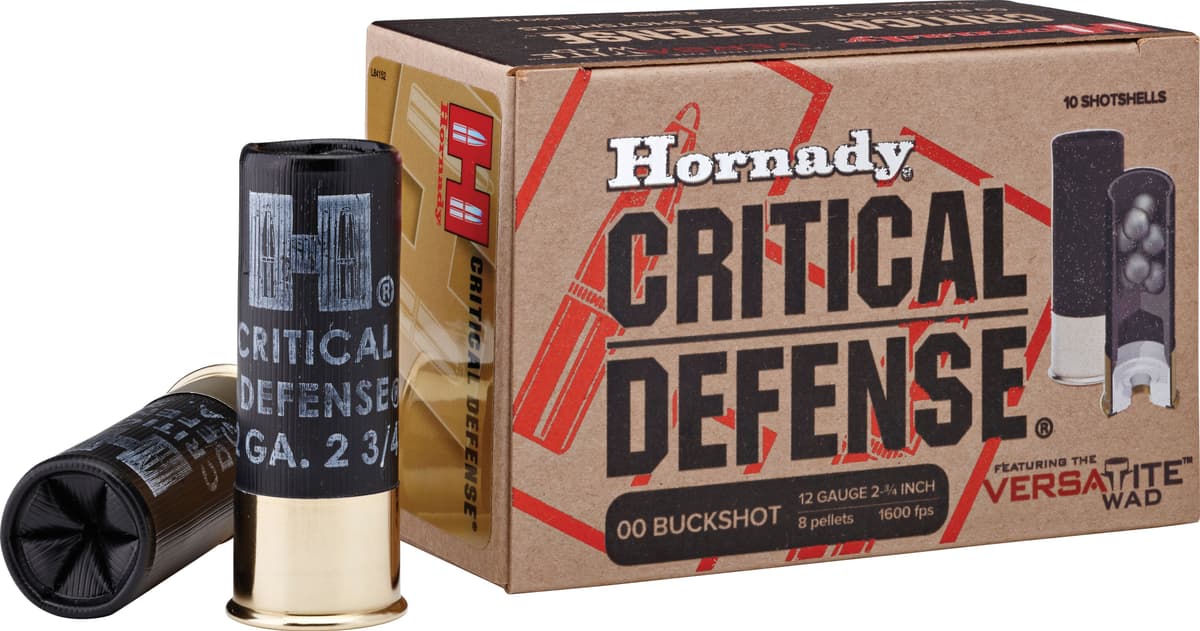
Hornady Critical Defense 00 Buckshot (Versatite)

Best FLITECONTROL Alternative - Versatite tight pattern

$18
Shop at Brownells
  • +Patterns competitively with FLITECONTROL at defensive ranges
  • +Versatite wad keeps eight 00 pellets tight off the muzzle
  • +Strong full-power penetration
  • Box-stated 1,600 fps overstates real-barrel velocity (~1,400 fps from 18-20 inch)
  • Full-power recoil in lightweight guns
  • Eight pellets versus nine in some 00 loads
3

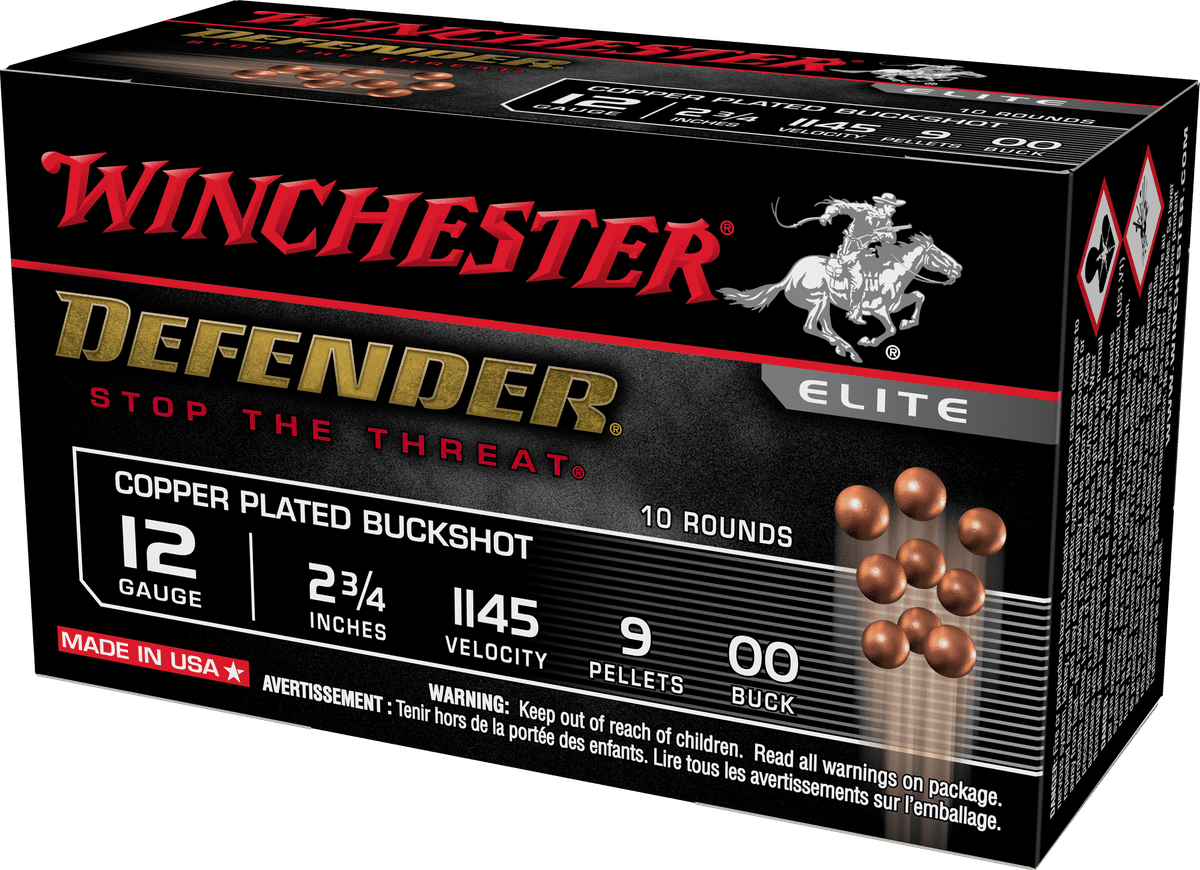
Winchester Defender 00 Buck (SB1200PD)

Best Value Defensive 00 - Plated and buffered

$20
Shop at Brownells
  • +Copper plating and buffering produce consistent patterns
  • +Controllable reduced-recoil-class velocity (~1,145 fps)
  • +Nine full 00 pellets
  • Patterns wider than FLITECONTROL or Versatite wad loads
  • Lower velocity than full-power 00 loads
  • Easy to confuse with the slug-plus-buck combo sold as PDX1
4

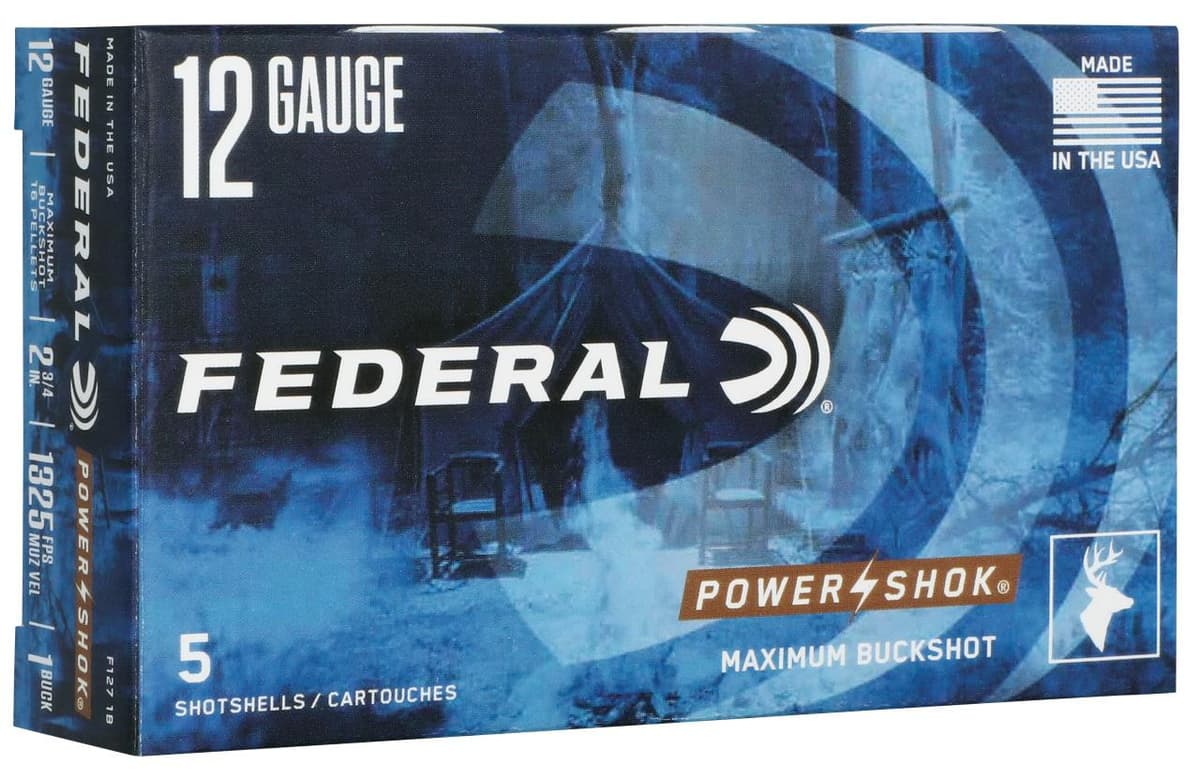
Federal Power-Shok #1 Buck (16 Pellet)

Best #1 Buck - Most wound channels that still penetrate 12 inches

$11
Shop at Brownells
  • +Sixteen .30-caliber pellets deliver more potential wound channels than 00
  • +Smallest buck size that reliably meets the 12-inch gel penetration standard
  • +Higher total pellet cross-section than 9-pellet 00 loads
  • Conventional wad patterns wider than FLITECONTROL loads
  • Dedicated tactical #1 buck loads are scarce
  • Requires careful patterning to control the spread
5

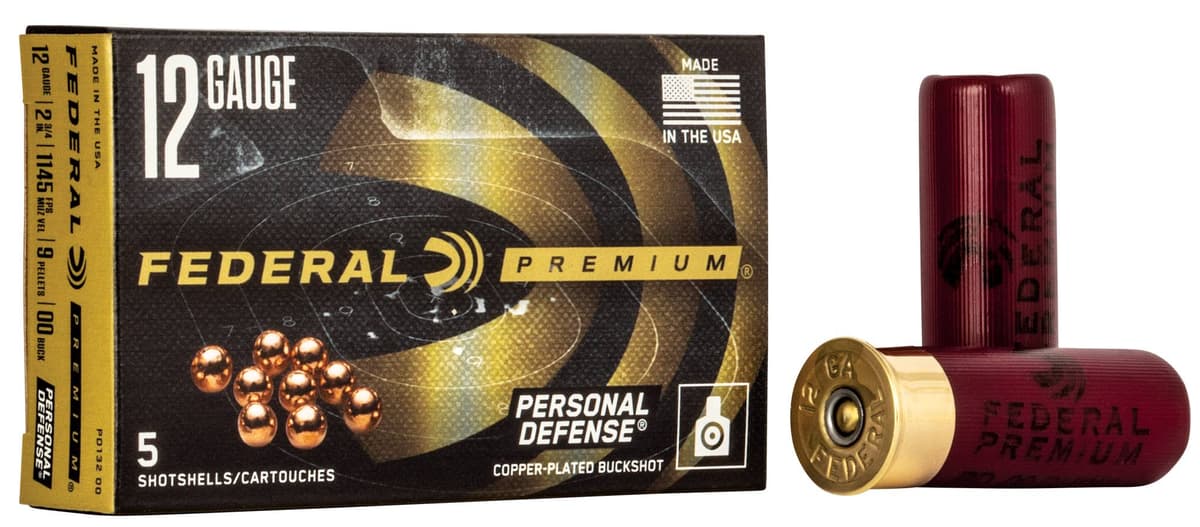
Federal Personal Defense FLITECONTROL Reduced Recoil 00 (PD132 00)

Best Reduced Recoil - FLITECONTROL patterning, softer kick

$15
Shop at Brownells
  • +Significantly softer recoil than full-power 00 buck
  • +Retains FLITECONTROL tight-pattern performance
  • +Faster, more controllable follow-up shots
  • Lower velocity means less penetration than full-power 00
  • Premium price versus bulk buckshot
  • Some semi-autos may need full-power loads to cycle reliably
6

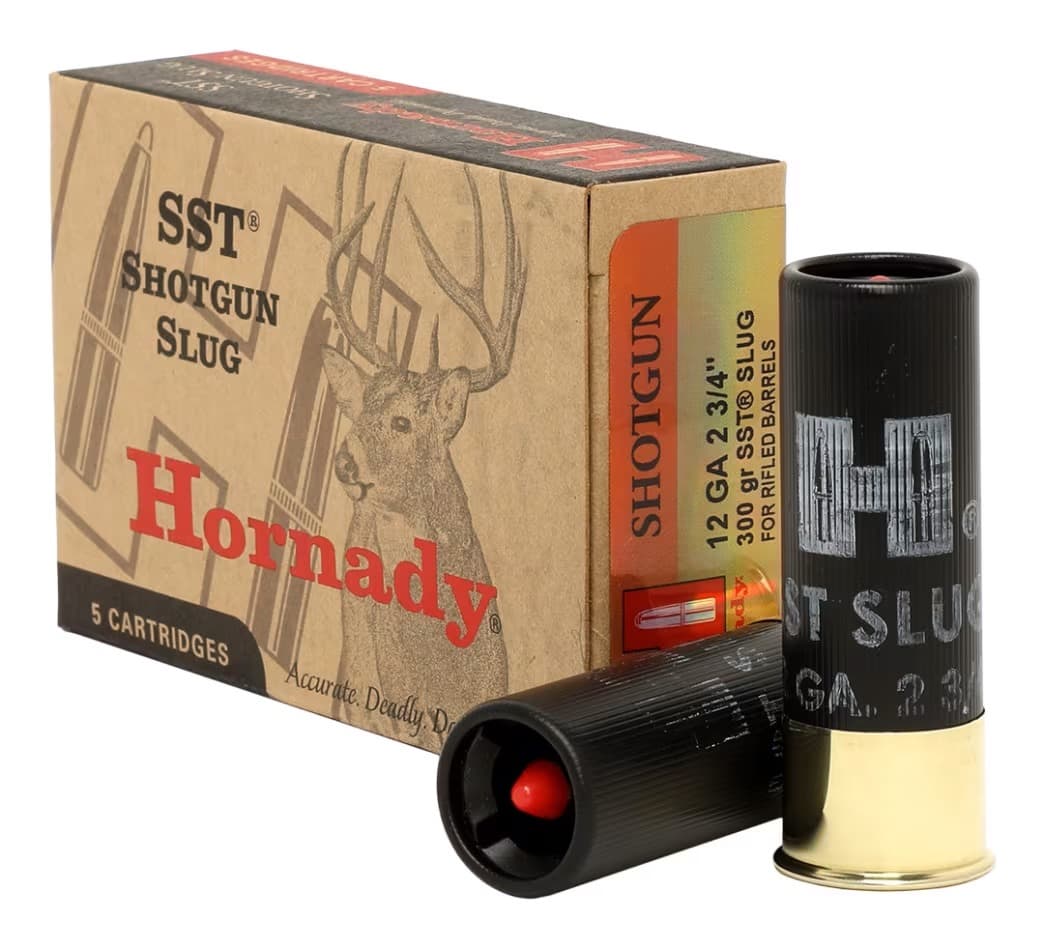
Hornady SST Sabot Slug 300gr FTX

Best Hunting Slug (Rifled Barrel) - Sub-2-inch groups at 100 yards

$17
Shop at Brownells
  • +Best accuracy of any slug here from a rifled barrel
  • +Flat trajectory and energy retention extend range to ~200 yards
  • +Flex Tip drives reliable expansion on game
  • Requires a rifled barrel; will not stabilize in a smoothbore
  • Premium price per round
  • Heavy recoil from the high-velocity 300gr load
7

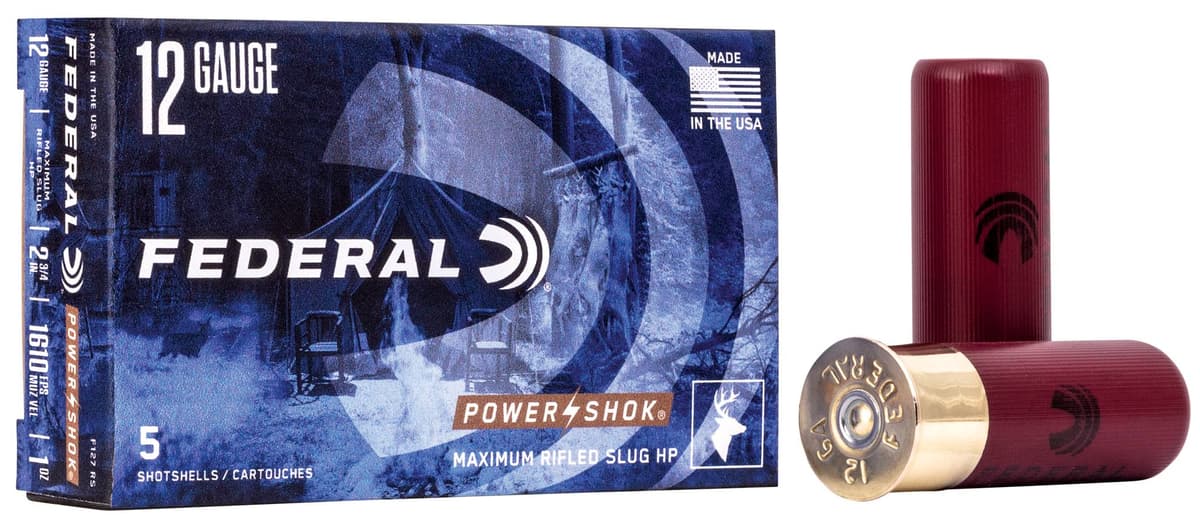
Federal Power-Shok Rifled Slug (F127RS)

Best Foster Slug (Smoothbore) - 1 oz at 1,610 fps

$7
Shop at Brownells
  • +Excellent accuracy from smoothbore barrels
  • +Heavy 1 oz payload with strong terminal energy (2,518 ft-lbs)
  • +Works in the smoothbore barrels most shotguns wear
  • Trajectory drops off steeply past 100 yards
  • Less accurate than sabot slugs from rifled barrels
  • Heavy recoil from a full-power 1 oz slug
8

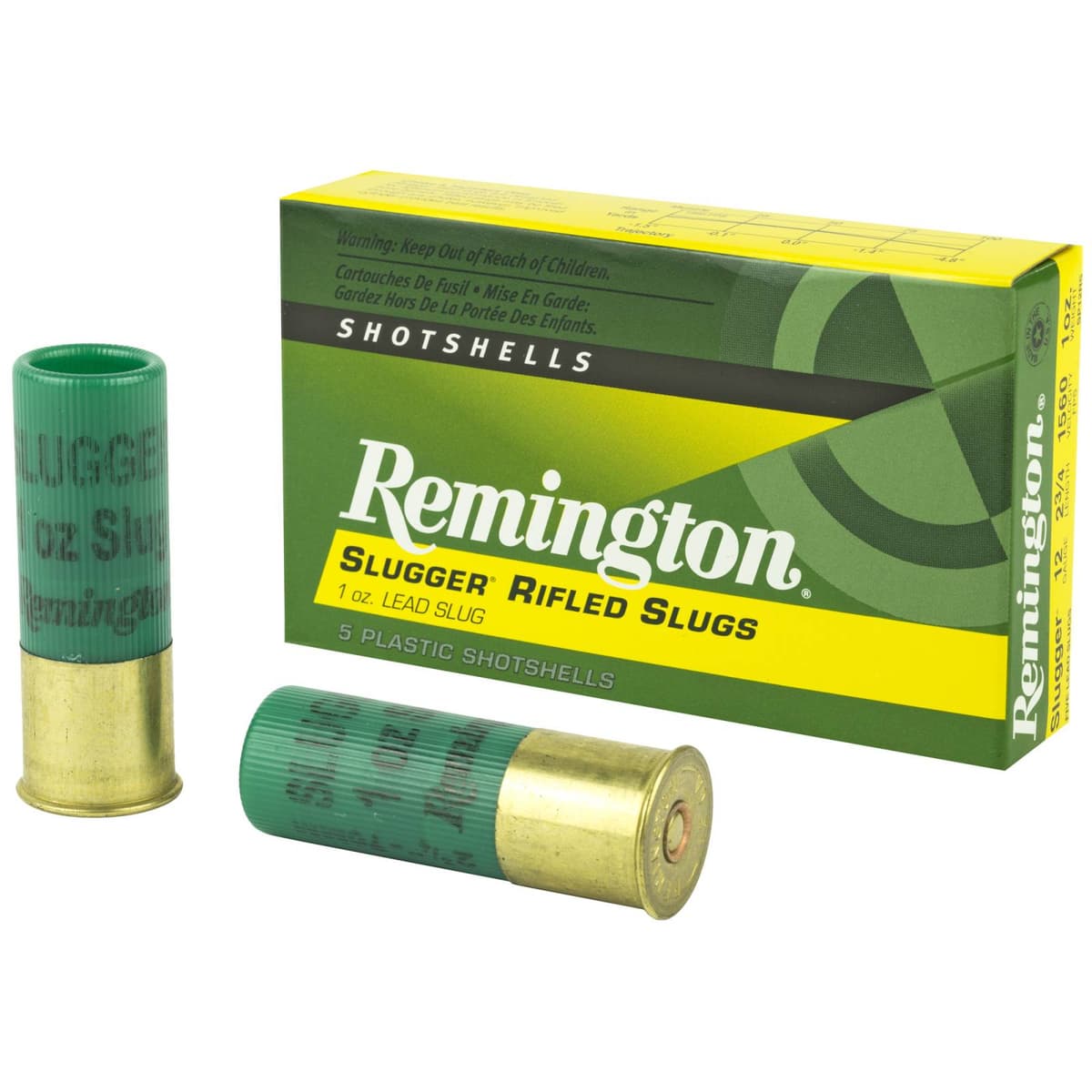
Remington Slugger Rifled Slug (SP12RS)

Best Budget Slug - Cheapest path to a working smoothbore slug setup

$6
Shop at Brownells
  • +Most affordable quality Foster slug
  • +Adequate accuracy and energy on deer inside 100 yards
  • +Works in standard smoothbore barrels
  • Less accurate and flatter-shooting than sabot loads
  • Velocity and energy trail the Federal Power-Shok slug
  • Hard recoil makes extended practice unpleasant
9

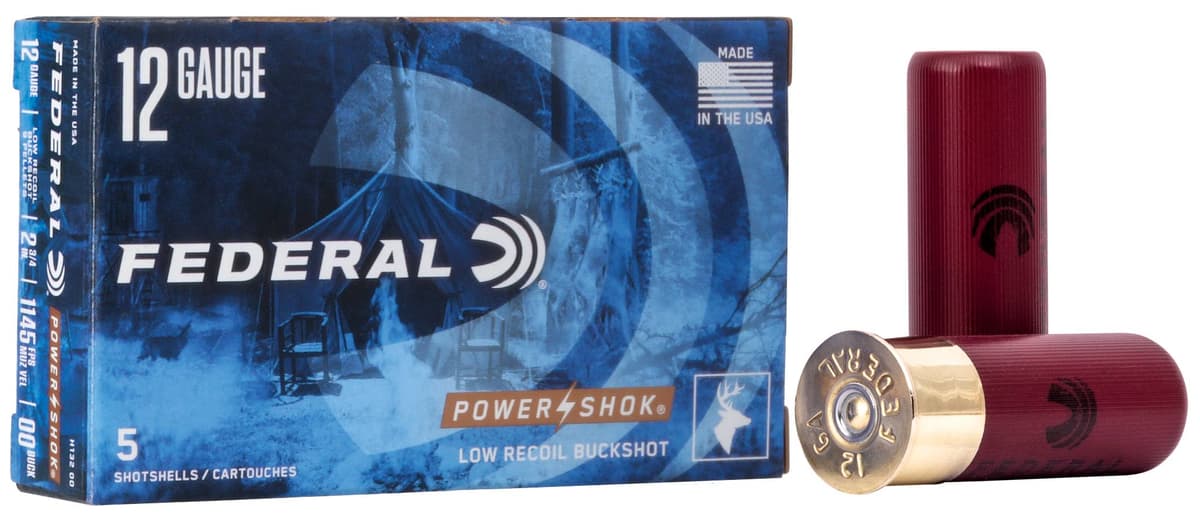
Federal Power-Shok Low Recoil 00 Buck (H132 00)

Best Training/Patterning Buckshot - Affordable reduced recoil

$8
Shop at Brownells
  • +Affordable enough for volume training
  • +Reduced recoil supports long practice sessions
  • +Buffered shot for consistent practice patterns
  • Conventional wad patterns wider than FLITECONTROL
  • Lower velocity and penetration than full-power loads
  • Better as a training load than a primary defensive load

Rankings are based on manufacturer specifications, published ballistic data, and established wound-ballistics standards. Pattern and penetration performance vary by barrel length, choke, and individual gun; pattern your shotgun before trusting any load.

Affiliate links - purchases support this site at no extra cost to you. (?)

Buckshot or Slug? Two Jobs, Two Loads

Buckshot and slugs solve different problems. Buckshot fires a payload of lead pellets that spread into a pattern, which is what makes it the dominant home-defense and close-range load: multiple wound channels per trigger pull and a forgiving hit at across-the-room distances. A slug fires a single heavy projectile that turns the shotgun into a short-range rifle, which is what you want for deer, hogs, and anything past 40 yards where a pattern has opened too far to be reliable.

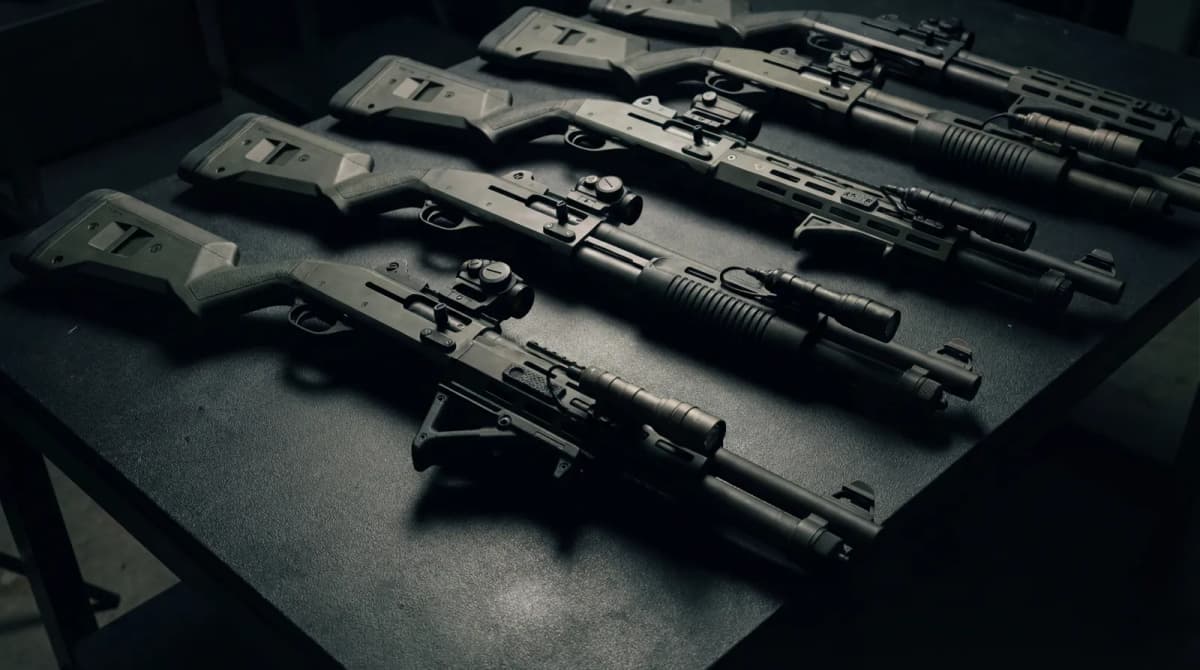
Most defensive shotgun owners load 00 or #1 buck and keep a few slugs on the side-saddle for distance. The guns these loads run in are covered in our best home-defense shotgun guide; if you are deciding between a pump and a semi-auto, the best pump shotgun guide and the best tactical semi-auto shotgun guide both cover how each action handles full-power versus reduced-recoil ammo.

Buckshot Sizes Explained: Why 00 and #1 Win

Buckshot size is the single most misunderstood part of shotgun ammo selection. Smaller numbers mean larger pellets: 000 buck is bigger than 00, which is bigger than #1, which is bigger than #4. The penetration threshold that matters for defense is the FBI 12-inch minimum in ballistic gel, the depth required to reliably reach vital structures through an arm, heavy clothing, or an intermediate barrier. The International Wound Ballistics Association identifies #1 buck (.30-caliber pellets) as the smallest size that reliably clears that bar. Anything smaller, including the popular #4 buck, frequently falls short.

000 buck
8 pellets
Pellet Dia..36 in
Defensive VerdictDeepest penetration, fewest pellets; over-penetration risk
00 buck
9 pellets
Pellet Dia..33 in
Defensive VerdictThe standard. Best balance of penetration and pellet count
#1 buck
16 pellets
Pellet Dia..30 in
Defensive VerdictMore wound channels and still clears 12 inches; underrated
#4 buck
27 pellets
Pellet Dia..24 in
Defensive VerdictMost pellets, but often fails the 12-inch standard; marginal

This is why the ranking leans on 00 and #1. The Federal FLITECONTROL 00 buck is the default defensive load because its nine .33-caliber pellets penetrate deep and its wad keeps them tight. The Federal Power-Shok #1 buck is the connoisseur's pick: sixteen .30-caliber pellets put more holes in the threat than 00 while still clearing the 12-inch standard, the best of both worlds when you can find purpose-built #1 loads. If 000 is the only thing on the shelf it works, but you trade pellet count and add over-penetration risk for marginal extra depth.

A note on 20 gauge: the same logic applies. A 20-gauge #3 buck or 00 buck load is a legitimate home-defense choice, especially for recoil-sensitive shooters, and 20-gauge slugs are effective on deer inside 75 yards. The loads ranked here are 12 gauge because that is what most defensive and slug-gun shotguns chamber, but if you run a 20, prioritize the same pellet-size and barrel-fit rules.

Best Buckshot for Home Defense: Pattern Is Everything

For home defense, pattern tightness matters as much as pellet size. A wide pattern throws flyers off the point of aim, and every stray pellet is a round you are responsible for. The Federal FLITECONTROL wad and Hornady's Versatite wad both stay attached to the shot column longer than a conventional wad, then peel away cleanly, so pellets fly as a coherent group. The practical result is a fist-sized pattern to roughly 15 yards from an 18-inch cylinder bore, far tighter than a standard load.

Defensive 00 Buck Snapshot: FLITECONTROL PFC154
Pellets
900 buck.33 cal lead
Velocity
1,325fpsFull power
Pattern
~15ydFist-sized, 18" cyl bore

When FLITECONTROL is sold out, the Hornady Critical Defense 00 with the Versatite wad patterns competitively and ships in convenient 10-round boxes. Ignore the box-stated 1,600 fps; that figure comes from a long test barrel and runs closer to 1,400 fps from an 18-to-20-inch defensive gun. The Winchester Defender 00 (SB1200PD) is the value pick: copper-plated, buffered, and loaded to a controllable reduced-recoil-class velocity, it patterns wider than the wad-controlled loads but costs less and is easy to find. Do not confuse it with the slug-plus-buck combo Winchester sells as PDX1 (S12PDX1), which is a different round.

Reduced-Recoil and Training Buckshot

The Federal Personal Defense FLITECONTROL Reduced Recoil 00 (PD132) is the smartest primary defensive load for households where multiple people of different sizes share one shotgun. It drops velocity to 1,145 fps while keeping the same tight-patterning wad, so a smaller-statured shooter or anyone running a lightweight pump can stay on target and run the gun without flinching. Recoil is the enemy of fast, accurate follow-up shots, and at 1,145 fps this load still penetrates well past the FBI 12-inch minimum, so the recoil cut does not cost you stopping power at indoor distances.

For volume practice, the Federal Power-Shok Low Recoil 00 (H132) is the training answer: a full nine-pellet 00 payload with a buffered wad at 1,140 fps, priced cheaply enough to actually shoot. Buckshot recoil is something you build tolerance to through reps, and you cannot do reps with $3-per-round duty ammo. Pattern your defensive load, then run your drills on the cheaper reduced-recoil buck so the gun and the recoil impulse stay familiar. For a structured break-in and zero plan, the shotgun red dot guide covers sighting in both buckshot patterns and slug point-of-impact on the same optic.

Slug Ammo: Foster vs Sabot, and Why Your Barrel Decides

The first slug question is not “which brand,” it is “what barrel do I have.” A sabot slug rides in a plastic sleeve that grips a rifled barrel's grooves to spin-stabilize the projectile; fired from a smoothbore it tumbles and misses. A Foster slug is a soft-lead projectile with hollow base that stabilizes nose-forward; the angled cuts on its sides are for choke clearance, not spin, so it shoots accurately from the smoothbore barrels most shotguns wear. Match the slug to the barrel and you get rifle-like accuracy; mix them up and you get fliers.

Slug Type Spec Sheet

Foster (Smoothbore)

Sabot (Rifled)

Barrel Required
Smoothbore
Rifled
Stabilization
Nose-heavy
Spin (rifling)
100-yd Accuracy
3-4 in
Sub-2 in (advantage)
Effective Range
~100 yd
~200 yd (advantage)
Cost per Round
$1.40-1.60 (advantage)
$3.60
Use the slug your barrel is built for. A rifled barrel does not make Foster slugs better, and a sabot in a smoothbore is a guaranteed miss.

If you have a dedicated rifled slug barrel, the Hornady SST 300gr FTX sabot slug is the best hunting slug in this guide. Its Flex Tip drives reliable expansion, it groups sub-2 inches at 100 yards, and with 2,664 ft-lbs of muzzle energy and a flat trajectory it stays effective to roughly 200 yards. That is genuine deer-rifle performance from a shotgun.

For the smoothbore barrel most shotguns actually wear, the Federal Power-Shok Rifled Slug (F127RS) is the pick: a 1-ounce Foster slug at 1,610 fps with 2,518 ft-lbs of energy and excellent smoothbore accuracy on deer inside 100 yards. When budget is the priority, the Remington Slugger (SP12RS) is the cheapest quality Foster slug, accurate and powerful enough on deer inside 100 yards and cheap enough to actually practice with. Both are 1-ounce Foster slugs, so they recoil hard; do your sight-in in short sessions.

Hunting Slug Energy: Rifled vs Smoothbore
Hornady SST Sabot
2,664ft-lbs300gr @ 2,000 fps, rifled
Federal Power-Shok
2,518ft-lbs1 oz @ 1,610 fps, smoothbore

Over-Penetration: Apartments and Shared Walls

Buckshot is not magic; 00 pellets that fail to hit the threat will punch through interior drywall. This is why pattern control matters most in dense housing: a tight FLITECONTROL or Versatite pattern keeps stray pellets to a minimum, and #1 buck spreads the energy across more, smaller pellets that shed velocity faster in barriers than a single 000 ball. For apartment dwellers, the lower velocity of a reduced-recoil 00 load also helps. None of these loads will stop in a single wall, so stage the gun where its likeliest firing angle points at an exterior wall rather than a neighbor's unit or an occupied bedroom, a point the best home-defense gun for apartments guide covers in depth.

How Much Buckshot and Slug Ammo to Keep on Hand

Shotgun ammo is heavy and bulky, so people under-buy it. Plan around three buckets. For the defensive gun, keep at least one to two boxes of your patterned primary load staged and rotated, plus a handful of slugs on a side-saddle for distance. For training, a 25-round value box of reduced-recoil buck per range trip builds recoil tolerance without burning duty ammo. For the hunter, buy a box of your sighted-in slug per season plus extra to confirm zero, because slug lots can shift point of impact.

Buy when you see it. Purpose-built tactical loads like FLITECONTROL and #1 buck go in and out of stock, and the reduced-recoil training buck disappears fastest. When the load you patterned is available, grab several boxes; switching loads means re-patterning the gun. For a deeper ammunition strategy across all your calibers, our 5.56 ammo selection guide applies the same buy-and-rotate logic to rifle ammo, and you can spec a complete defensive shotgun in the firearm builder.

The Verdict

Load Federal FLITECONTROL 00 buck for defense, keep #1 buck if you can find it, and match your slug to your barrel: Hornady SST for rifled, Federal Power-Shok for smoothbore.

Everything else is refinement. Reduced-recoil FLITECONTROL or the copper-plated Winchester Defender trade a little penetration for control and value; cheap Federal or Remington Foster slugs keep your smoothbore gun fed for practice. Whatever you choose, pattern the defensive load and confirm slug zero before you trust either. For the gun itself, start with the best home-defense shotgun guide and sight it in with help from the shotgun red dot guide.

Frequently Asked Questions

What is the best buckshot for home defense?
Federal FLITECONTROL 00 buck (PFC154 00) is the best home-defense buckshot for most people. Its rear-braking FLITECONTROL wad keeps nine 00 pellets in a fist-sized pattern out to roughly 15 yards from an 18-inch cylinder bore, far tighter than conventional buckshot, which keeps energy on target and reduces stray-pellet liability indoors. Hornady Critical Defense (Versatite wad) is an equally tight alternative.
Will 00 buckshot stop an intruder?
Yes. A single 12-gauge 00 buck shell delivers nine .33-caliber lead pellets, and full-power loads push them past the FBI 12-inch penetration standard in ballistic gel. At across-the-room home-defense distances, 00 buck is one of the most effective defensive loads available. The main caveat is over-penetration, which is why tight-patterning loads like Federal FLITECONTROL and #1 buck are worth considering.
Is #4 buckshot good for home defense?
#4 buckshot is marginal for home defense. Its small .24-caliber pellets often fail to reach the FBI 12-inch penetration minimum through clothing and intermediate barriers. #1 buck (.30 caliber) is the smallest buckshot size the International Wound Ballistics Association confirms reliably penetrates past 12 inches of ordnance gel, which is why #1 and 00 are the standard defensive choices, not #4.
What is the difference between Foster slugs and sabot slugs?
Foster (rifled) slugs are soft-lead projectiles designed for smoothbore barrels; the angled cuts on their sides are for choke clearance, not spin, and they stabilize by being nose-heavy. Sabot slugs ride in a plastic sleeve that grips a rifled barrel's grooves to spin-stabilize the slug. Use Foster slugs (Federal Power-Shok, Remington Slugger) in smoothbore barrels to about 100 yards; use sabot slugs (Hornady SST) only in rifled barrels, where they group sub-2 inches at 100 yards and reach 200.
Should I use reduced-recoil buckshot for home defense?
Reduced-recoil 00 buck, like Federal Personal Defense FLITECONTROL (PD132 00) at 1,145 fps, is an excellent choice, especially in lightweight pumps or for smaller-statured shooters. It still penetrates past the FBI 12-inch minimum while cutting felt recoil enough to deliver noticeably faster, more controllable follow-up shots. The performance gap versus full-power loads is minor at indoor distances, while the controllability gain is real.
What slug should I use for deer hunting with a shotgun?
Match the slug to your barrel. If you have a rifled slug barrel, the Hornady SST 300gr FTX sabot slug is the top pick, with sub-2-inch 100-yard groups and usable range to 200 yards. If you have a standard smoothbore barrel, use a Foster slug like the Federal Power-Shok F127RS (1 oz, 1,610 fps), which is effective on deer inside 100 yards. Never fire a sabot slug from a smoothbore; it will tumble and miss.