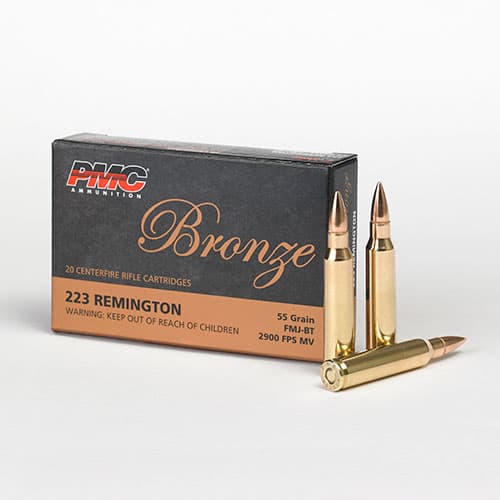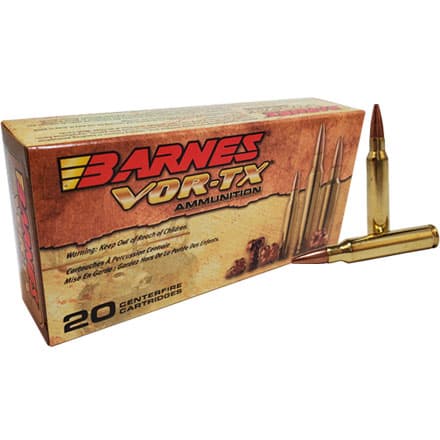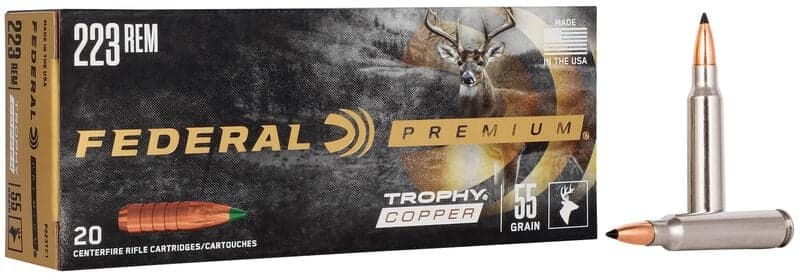
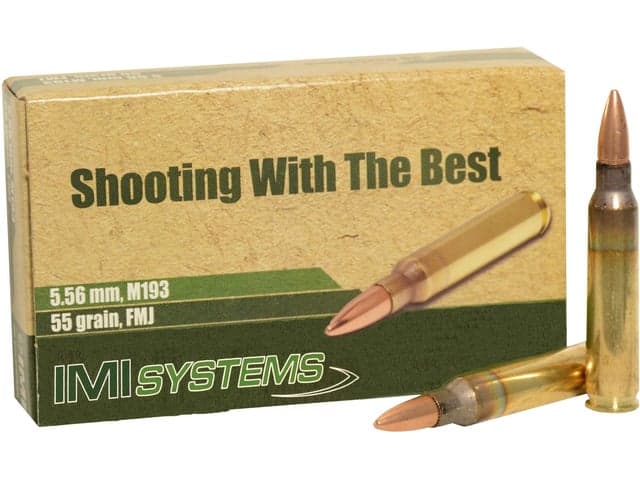
PMC Bronze .223 Rem 55gr FMJ
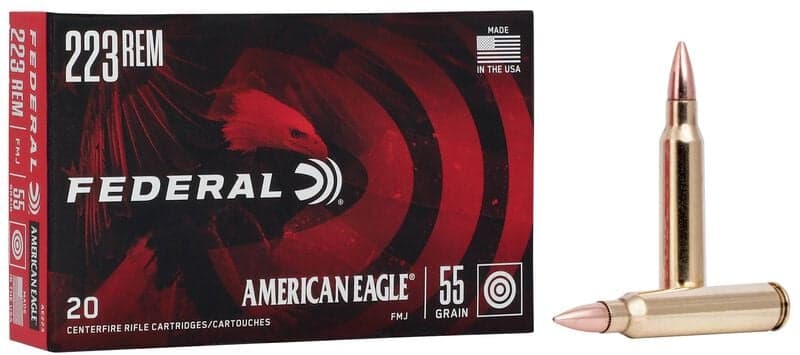
A common baseline for range volume. Great for confirming reliability and zero without paying match pricing.
- ✓Good baseline for reliability testing
- ✓Easy to find across retailers

| Use case | Typical projectile types | Typical bullet weights | Notes |
|---|---|---|---|
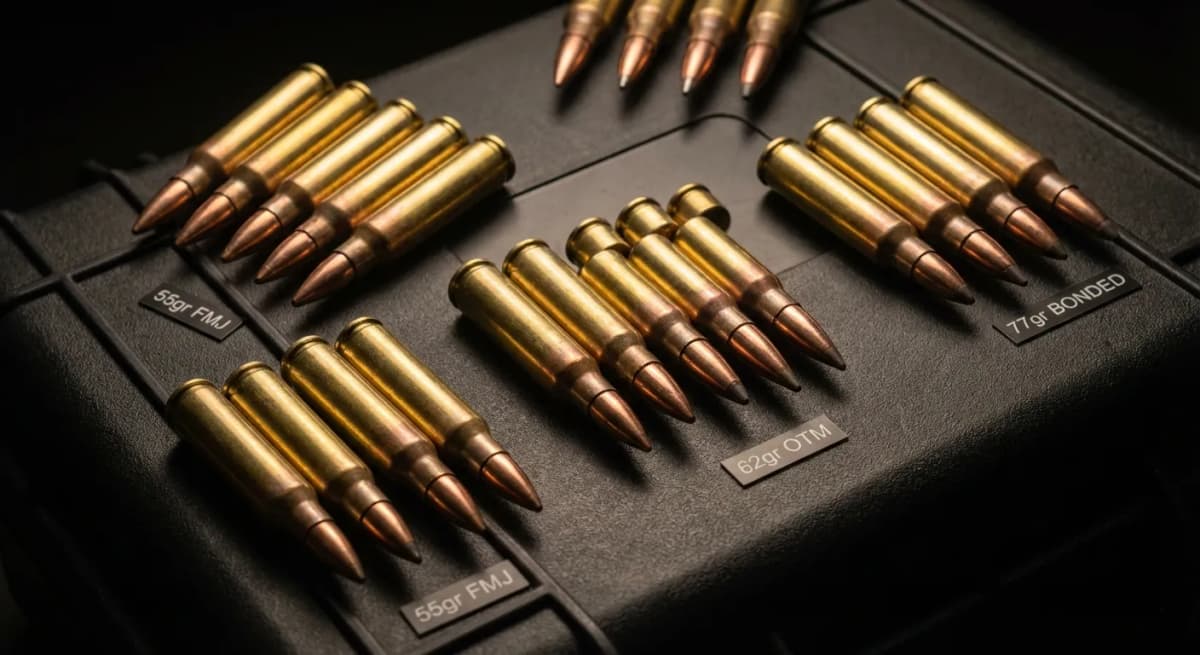
| Training / range | FMJ, bulk | 55–62gr | Prioritize reliability + price; confirm your rifle runs the brand you buy in bulk. |
| Competition / precision | OTM / match | 69–77gr | Heavier match bullets usually prefer faster twists (1:7–1:8). |
| Varmint | Varmint hollow point, polymer-tip | 50–60gr | Often explosive on small game; check local legality and backstop considerations. |
| Defense | Bonded soft point, barrier-blind | 62–75gr | Pick a load designed for consistency through common barriers; verify function in your magazines. |
| Hunting (where legal) | Bonded soft point, solid copper | 62–77gr | Follow local regs and minimum energy rules; prioritize bullets designed to expand reliably. |
Use this guide to match ammo to your rifle setup and mission without getting lost in internet lore. Start with safety (chamber markings), then pick a bullet type and weight that your barrel twist can stabilize.
This guide assumes familiarity with these topics:
Pick your mission and rifle details to get a simple, safe starting point for what to buy and test.
Affordable, consistent, and reliable in your magazines.
Training / range default
Results update automatically as you adjust settings above
Affiliate links are below. Confirm legality and compatibility before ordering.
Treat the chamber marking on your barrel as the rule. A rifle marked 5.56 NATO or .223 Wylde is generally compatible with both 5.56 and .223. A rifle marked .223 Rem may not be rated for higher-pressure 5.56 NATO loads.
If you're unsure, confirm the marking on the barrel itself (not just the receiver) and follow the barrel manufacturer's guidance.
Best for training volume. Buy consistency: the same lot, the same brand, and enough to confirm reliability in your magazines.
Best for accuracy and wind performance. Common in 69–77gr bullets; these usually prefer faster twist rates.
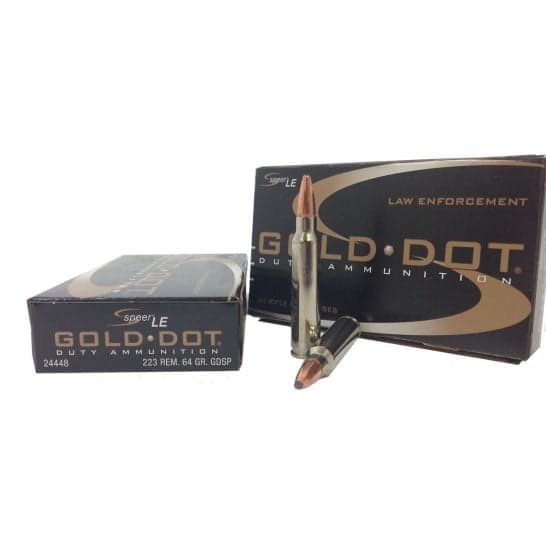
Best when you want consistent performance through common barriers. Prioritize reputable duty-style loads and test feeding in your magazines.
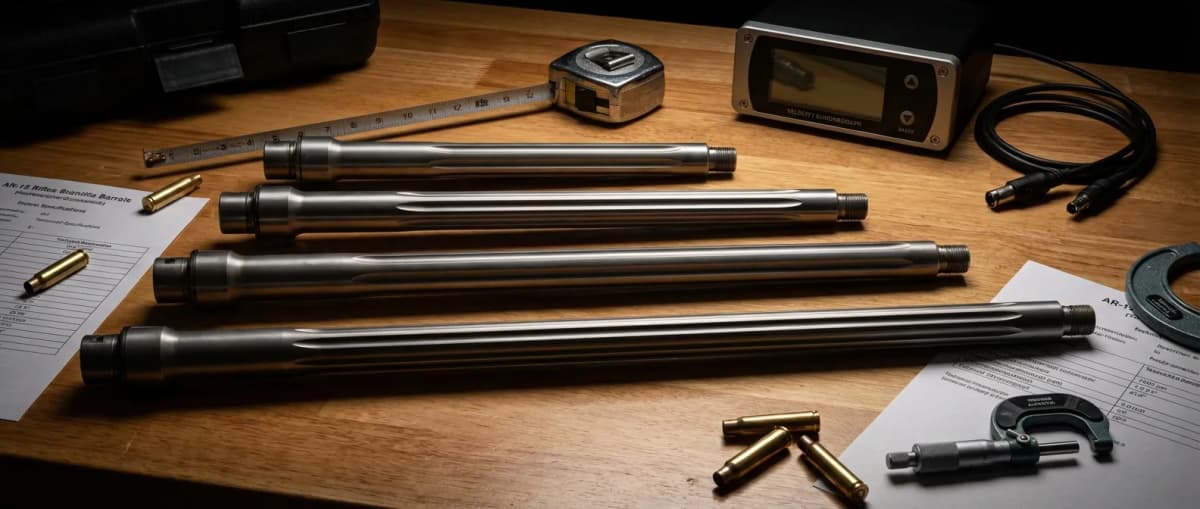
Best when lead-free is required. Copper bullets can be longer for weight, so twist rateTwist Rate[Barrel]How many inches it takes the rifling to complete one rotation (e.g., 1:7 means one twist every 7 inches). Faster twists (lower numbers) stabilize heavier bullets better. stability matters.
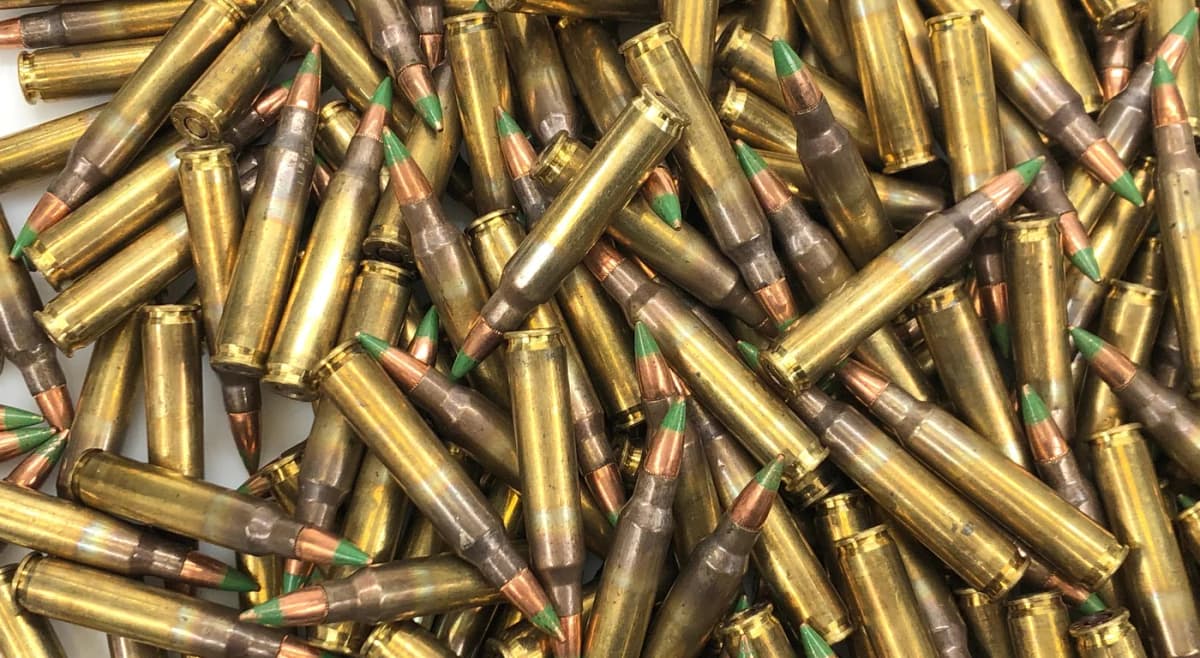
Reliable, commonly available training ammo. Confirm function in your specific rifle and magazines before buying by the case.
A common baseline for range volume. Great for confirming reliability and zero without paying match pricing.
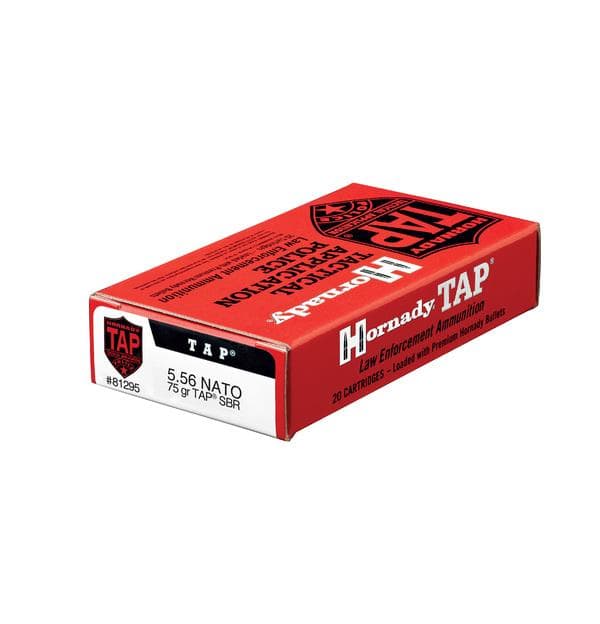
A straightforward M193-style load that’s often consistent lot-to-lot. Confirm chamber marking before buying 5.56 pressure ammo.
A known-brand training staple that’s widely used for practice and classes. Expect solid consistency for the price.
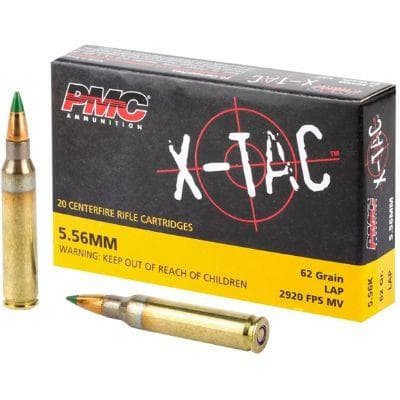
A 62gr training reference load. Check range rules—some indoor ranges restrict “green tip” style ammo.
Purchasing through these links may generate a commission at no extra cost to you. Always follow local laws and age requirements, and verify shipping restrictions for your area.
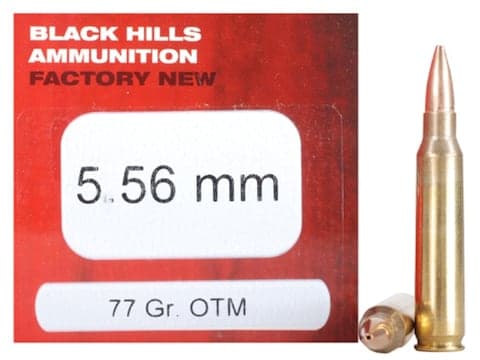
Heavier OTM and match loads for tighter groups and better wind performance. Twist rate matters—test what your barrel likes.
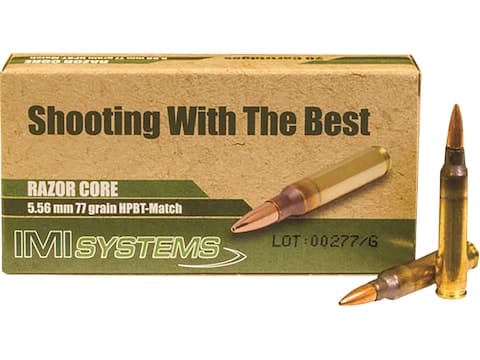
A popular 77gr OTM option that often shoots well in 1:7–1:8 barrels. A solid “try this first” match reference load.
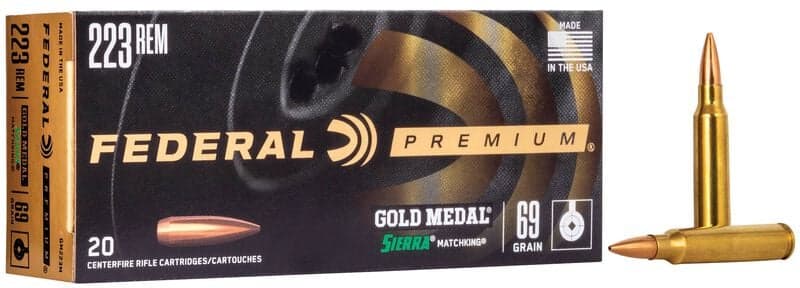
A premium match load with an excellent accuracy reputation. If you’re chasing group size, this is a known quantity.
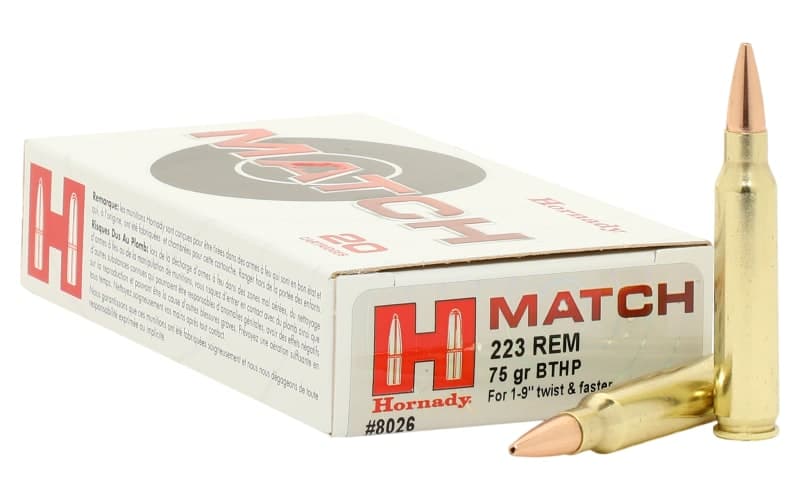
A great option for 1:9 twist barrels or rifles that don’t love 77gr. Often a sweet spot between price and performance.
A classic heavy .223 match bullet. Many rifles group well with 75gr if they have enough twist to stabilize it.
Purchasing through these links may generate a commission at no extra cost to you. Always confirm chamber markings and manufacturer guidance before firing 5.56 NATO loads.
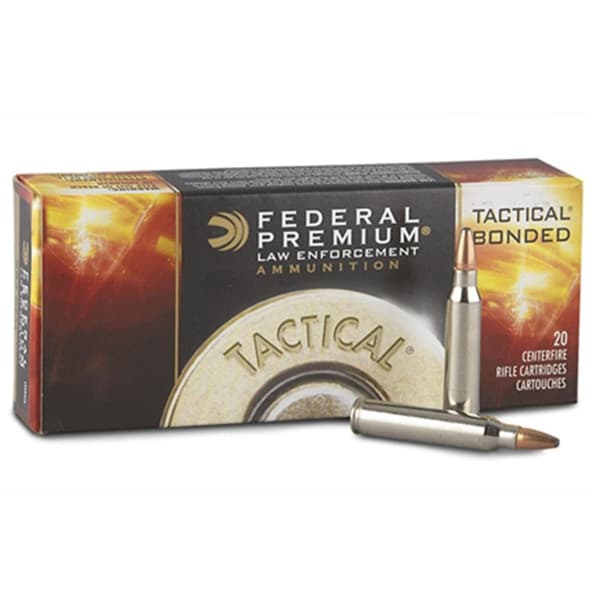
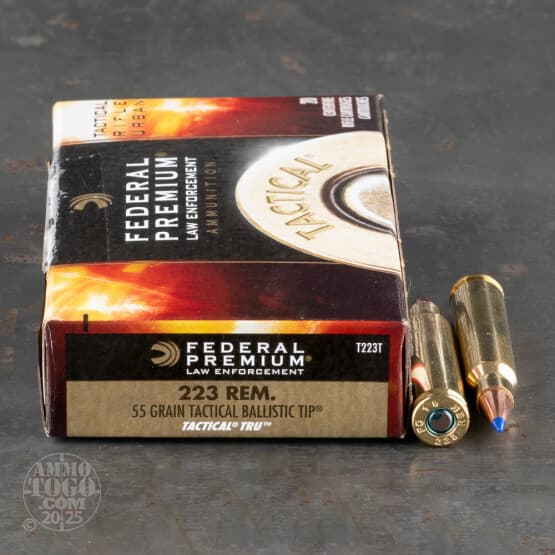
Loads designed for consistent performance through common intermediate barriers. Test feeding and point-of-impact in your rifle.
A widely referenced bonded soft point load. Built for consistency and reliable feeding in AR-pattern rifles.
Designed for consistent performance and barrier handling. A strong option when you want a reputable bonded load in the 62gr range.
A heavier duty-style option commonly chosen for accuracy and consistency. Confirm stabilization in your barrel and verify function.
Purchasing through these links may generate a commission at no extra cost to you. This section is informational only—follow local laws and get training appropriate to your needs.
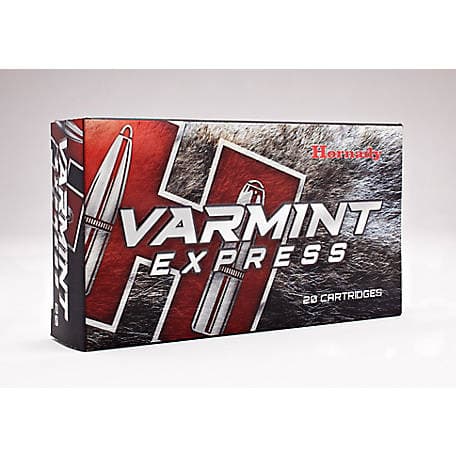
Light, fast varmint loads for small game. Verify local legality and always use safe backstops.
A classic varmint bullet designed for rapid fragmentation on small game. Great for prairie dog / varmint use where legal.
A proven varmint-style bullet. Expect good accuracy and rapid upset on small game targets where legal.
Purchasing through these links may generate a commission at no extra cost to you. Follow hunting regulations and safe range practices.
For areas that require lead-free hunting ammo. Copper bullets can be longer for weight—confirm twist rate compatibility and accuracy.
Barnes-style copper bullets are a common standard for lead-free compliance. Confirm expansion expectations at your barrel length and distances.
A lead-free hunting line built around copper projectiles. A good option when you want mainstream availability and a known brand.
Purchasing through these links may generate a commission at no extra cost to you. Follow local hunting regulations and confirm your rifle’s chamber markings before use.
Ready to continue? Here's the recommended next guide:
AR-15 maintenance and armorer schedule with round-count checkpoints. Inspect bolts, gas rings, springs, extractors, and barrels with printable service log templates for fleet readiness.
Or explore a related topic:
AR-15 Caliber Selection Guide 2025->Continue exploring with these related resources
Complete AR-15 5.56 barrel length comparison from 10.5" to 20". Compare muzzle velocity, effective range, overall length, dwell time, and gas system compatibility to match your mission.
Direct Impingement vs. Piston AR-15s: A no-nonsense comparison covering weight balance, OTB capability, flow-through suppressors, and reliability records of SIG, LWRC, and LMT.
Step-by-step first AR-15 build guide: choose a stripped lower via FFL, install quality lower parts kit and trigger, add grip and stock, then pair with vetted complete upper from PSA, Aero, BCM, or Geissele by budget.
Was this helpful?
Quick feedback helps us prioritize guide updates.
Feedback is anonymous. Comments help us decide what to update next.