Best Red Dot for USPSA 2026: 8 Carry Optics & Limited Picks header image
Gear
May 20, 2026
Best Red Dot for USPSA 2026: 8 Carry Optics & Limited Picks

The Trijicon SRO is the USPSA Carry Optics benchmark, but the Holosun 507COMP wins on value and window size, and the Aimpoint ACRO P-2 wins on debris-proof reliability. Ranked picks across open and enclosed emitters with the division rules that matter.

Best Red Dot for USPSA 2026: 8 Carry Optics & Limited Picks

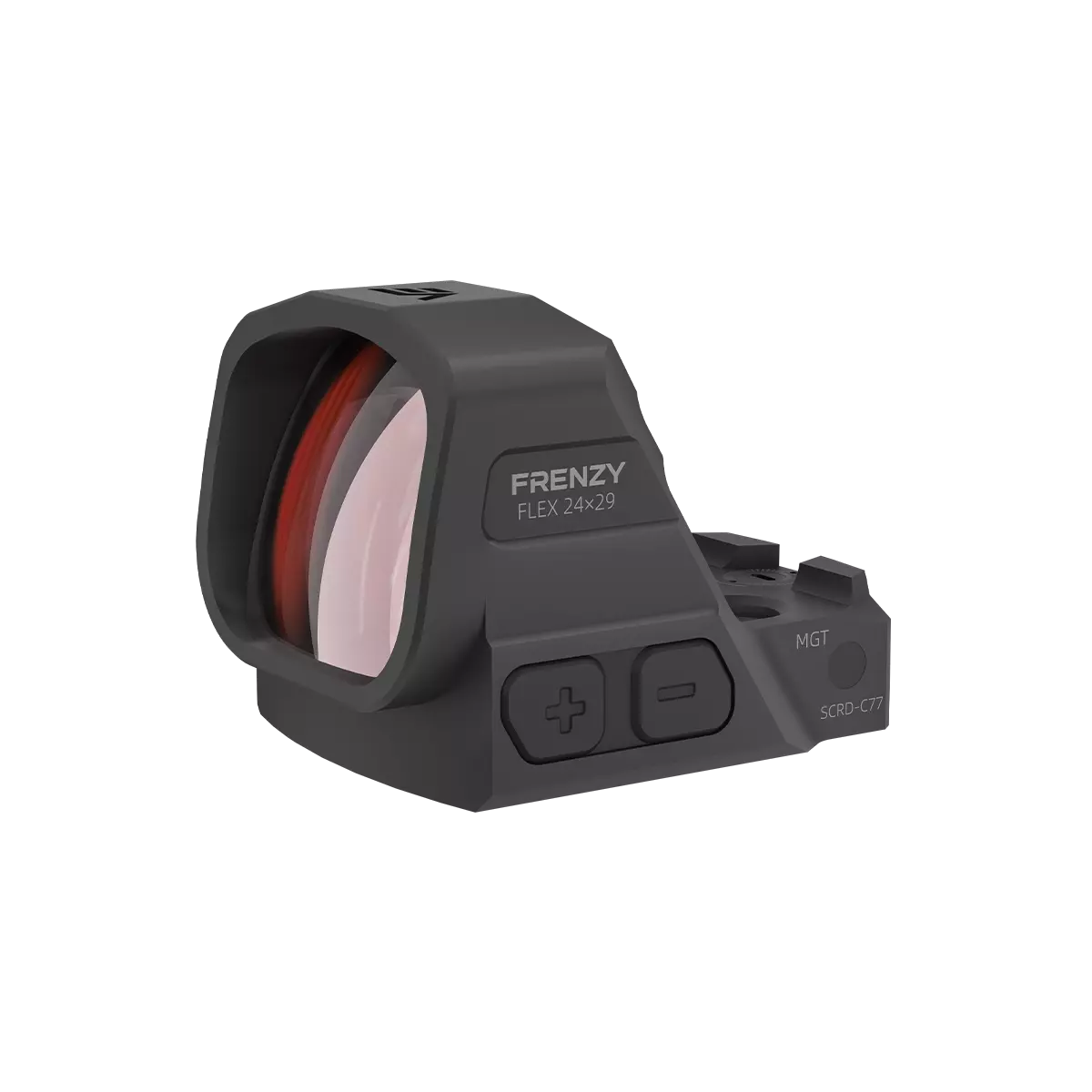
The Trijicon SRO ($549) is the USPSA Carry Optics benchmark in 2026. The Holosun 507COMP ($369) is the value pick with the largest sub-$400 window and a multi-reticle system, and the Aimpoint ACRO P-2 ($599) is the debris-proof enclosed-emitter choice for outdoor matches. We ranked eight dots that mount on Carry Optics striker guns (Glock 34, CZ Shadow 2, Walther Q5, SIG X-Five) and on Limited Optics 2011s (Staccato P, Springfield Prodigy), covering open and enclosed emitters, RMR, ACRO, and DPP footprints, and the 2 to 6 MOA dot range competition shooters actually run.

By AB|Last reviewed May 2026
1

Trijicon SRO

Best overall for USPSA Carry Optics, the division benchmark

$584.99
View at OpticsPlanet
2.5 MOARMR Footprint
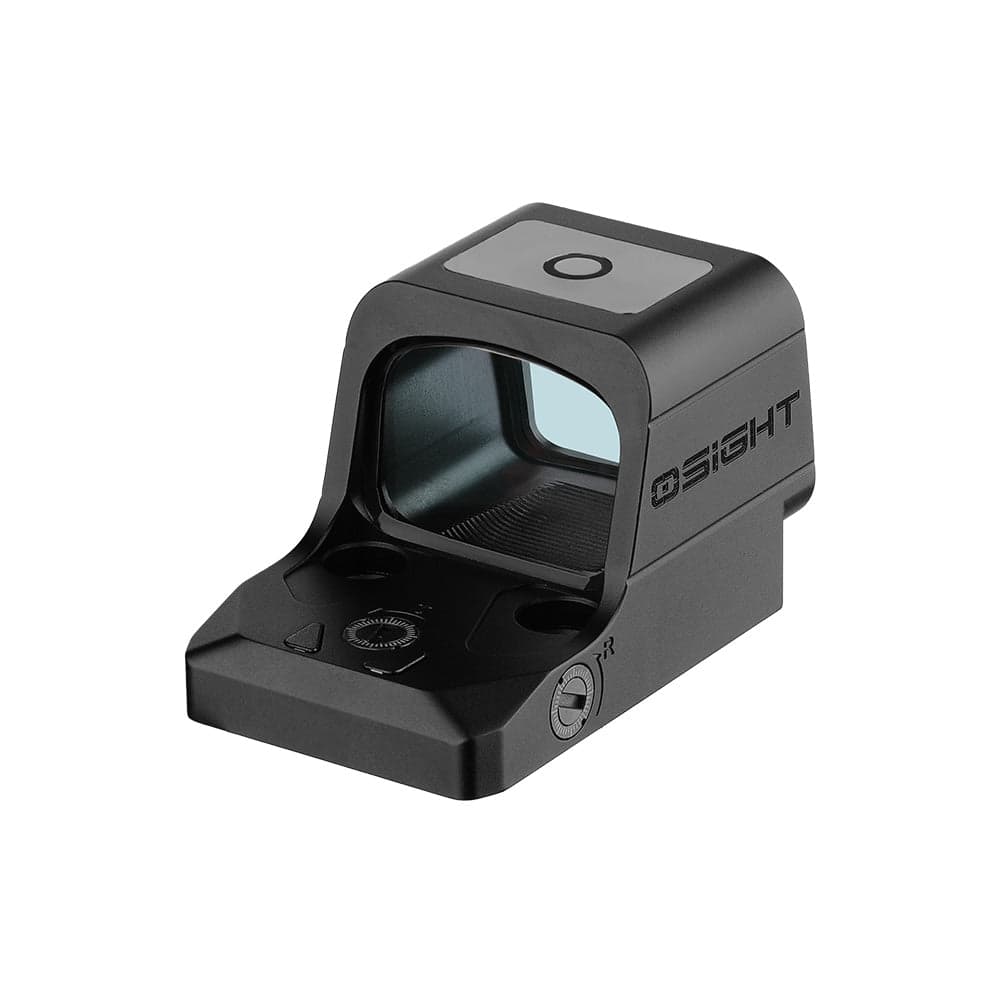
  • +Largest sight picture in the RMR-footprint class for fast dot acquisition on transitions
  • +RMR-footprint compatible with every Glock MOS plate and aftermarket slide cut
  • +Top-loading CR2032 preserves zero through battery changes
  • 1 meter waterproof rating vs the RMR's 20 meters
  • Open emitter is vulnerable to debris on dusty outdoor stages
  • No shake-awake, battery runs continuously
Reticle: 2.5 MOAFootprint: RMRWeight: 1.6 ozEmitter: Open
2

Holosun 507COMP

Best value, largest window in the sub-$400 tier with multi-reticle flexibility

$369
View at OpticsPlanet
2 MOA / 8 / 20 / 32 MOARMR Footprint
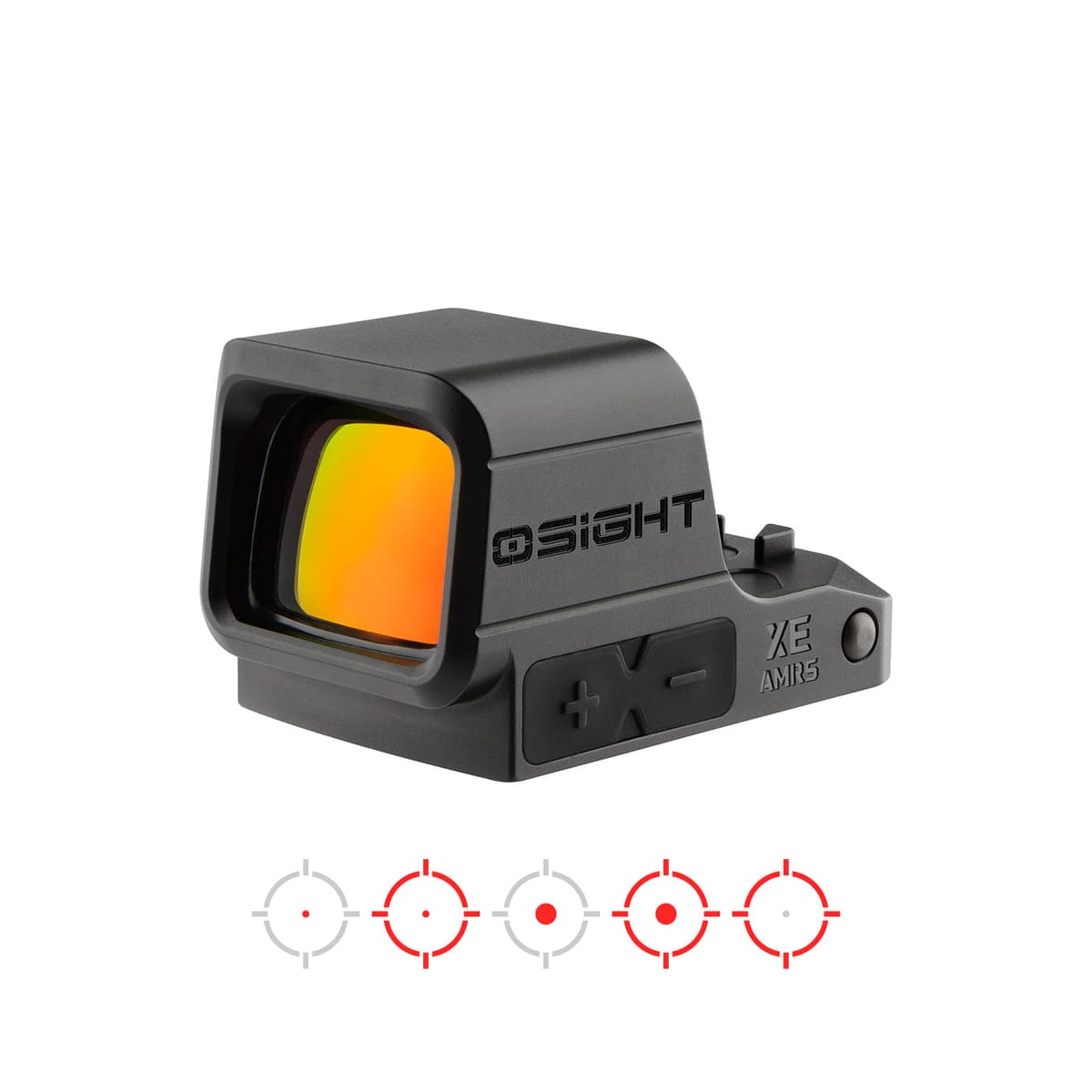
  • +Largest competition window of any sub-$400 pistol-class optic
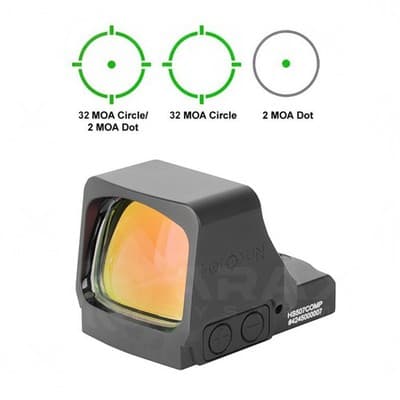
  • +Competition Reticle System cycles through 2 MOA dot and 8, 20, 32 MOA ring options or dot plus ring combos
  • +Shake Awake plus 50,000 hour battery on dot mode
  • Open emitter shares the SRO's dust and debris exposure
  • Slight green tint on the lens versus the clearer Trijicon glass
  • Reticle button can be cycled accidentally during reholstering
Reticle: 2 MOA dot, 8/20/32 MOA rings, or combosFootprint: RMRBattery: Side-load CR1632, 50,000 hrEmitter: Open
3

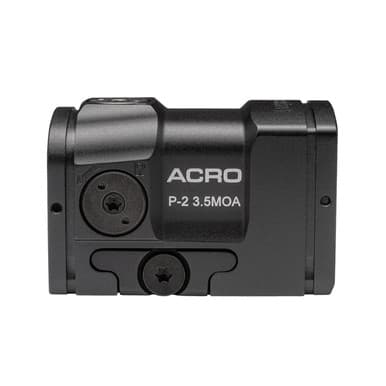
Aimpoint ACRO P-2

Best enclosed emitter, debris-proof for outdoor matches and bad weather

$617.00
View at OpticsPlanet
3.5 MOAEnclosed Emitter
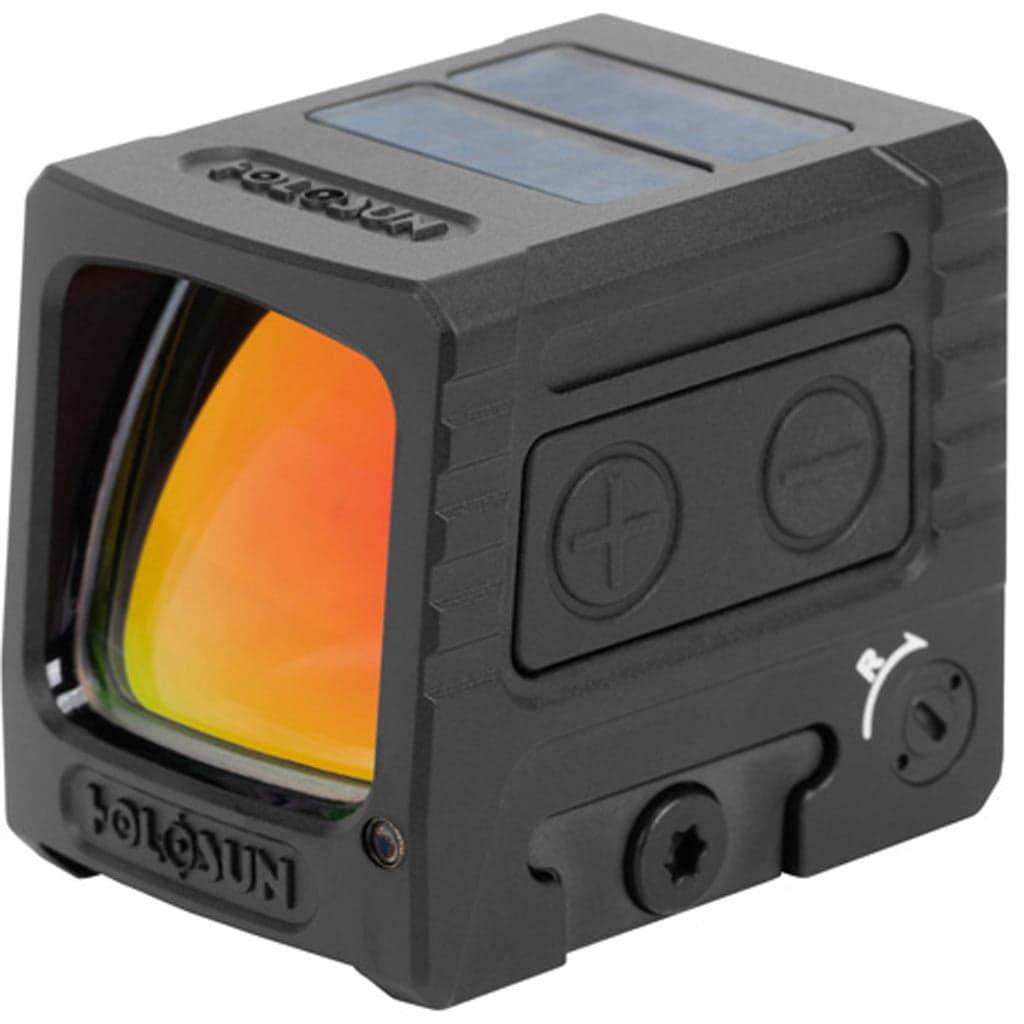
  • +Closed emitter eliminates the lint-blocking-the-dot failure on dusty or wet outdoor stages
  • +50,000 hour battery life on a single CR2032 with constant brightness as the cell drains
  • +Submersible to 35 meters and Aimpoint-grade drop testing
  • ACRO footprint requires an ACRO-cut slide or adapter plate
  • 2.1 oz weight versus 1.0 to 1.6 oz on open-emitter alternatives
  • Smaller window than the SRO or 507COMP, less forgiving on rough draws
Reticle: 3.5 MOAFootprint: ACROBattery: CR2032, 50,000 hrEmitter: Enclosed
4

Trijicon RMR HD

Best dual-mode reticle, ring for fast pickup and dot for precision at distance

$649
View at OpticsPlanet
55 MOA ring + 3.25 MOA dotRMR Footprint
  • +55 MOA ring plus 3.25 MOA dot toggles between speed and precision without changing optics
  • +Inherits the RMR's forged 7075-T6 housing and 20 meter waterproof rating
  • +RMR footprint mounts on the broadest plate and slide-cut ecosystem
  • Most expensive pick in the lineup at $649
  • Ring reticle adds visual noise for shooters who prefer dot-only
  • Open emitter shares the SRO and 507COMP dust exposure
Reticle: 55 MOA ring + 3.25 MOA dot, switchableFootprint: RMRWaterproof: 20 mEmitter: Open
5

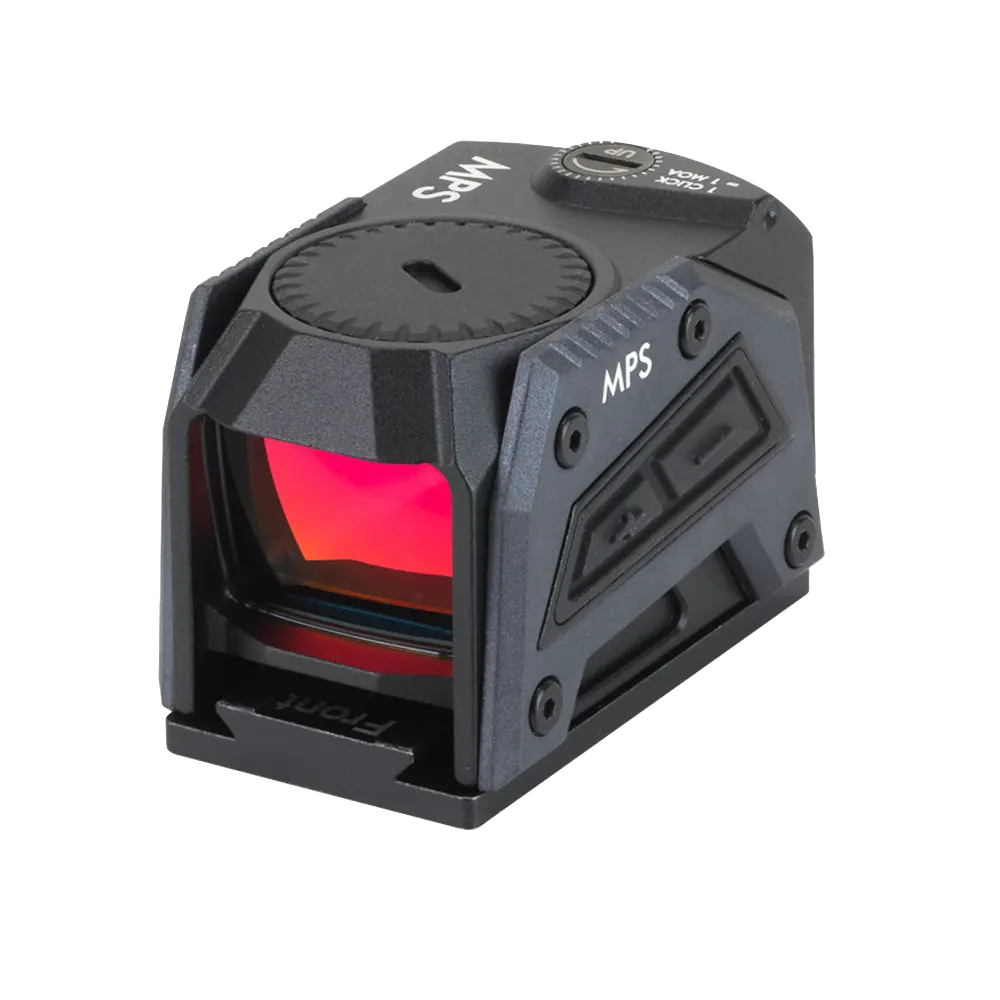
Steiner MPS

Best enclosed emitter value, the ACRO P-2 alternative at a lower price

$399.00
View at OpticsPlanet
3.3 MOAEnclosed Emitter
  • +Closed emitter on the ACRO footprint at $150 less than the Aimpoint
  • +Side-loading CR1632 tray versus the ACRO P-2's top-load battery
  • +Made in Germany with a five-year warranty
  • 13,000 hour battery life versus the ACRO P-2's 50,000
  • Smaller window than the SRO or 507COMP class
  • ACRO plates add height and bulk over RMR-pattern setups
Reticle: 3.3 MOAFootprint: ACROBattery: Side-load CR1632, 13,000 hrEmitter: Enclosed
6

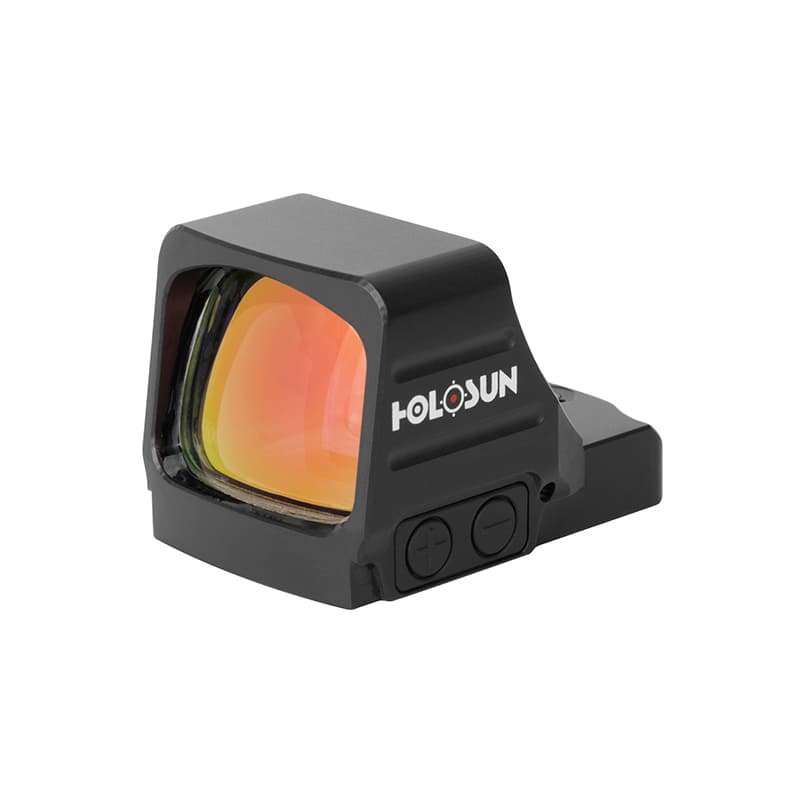
Holosun 407COMP

Best budget Carry Optics dot with a simplified 6 MOA pickup

$279.99
View at OpticsPlanet
6 MOARMR Footprint
  • +Same oversized competition window as the 507COMP at a lower price
  • +6 MOA dot is faster to find under recoil than 2 to 3 MOA dots on close arrays
  • +Side-load CR1632 battery, IP67 rating, 5,000G shock spec
  • Single 6 MOA dot, no multi-reticle option like the 507COMP
  • 6 MOA covers too much of a 25-yard partial for precision shots
  • Open emitter and lower-tier lens coating versus premium options
Reticle: 6 MOA dotFootprint: RMRWindow: 1.1 x 0.87 inWeight: 1.0 oz
7

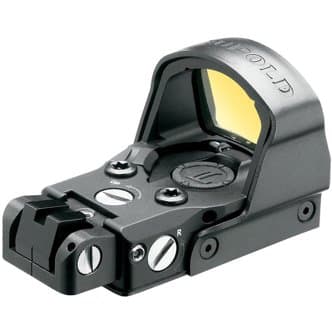
Leupold DeltaPoint Pro

Best American-made glass clarity on the DPP footprint

$449.99
View at OpticsPlanet
2.5 MOA or 6 MOADPP Footprint
  • +Made in Oregon with Leupold's lifetime warranty
  • +DiamondCoat lens is more scratch-resistant than competitors
  • +Motion sensor wakes the optic on movement and sleeps it to preserve battery
  • DPP footprint is less common than RMR or ACRO; verify slide cut or plate availability first
  • 300 to 1,600 hour battery life is much shorter than Holosun or Aimpoint
  • Top-load battery requires unmounting on most setups
Reticle: 2.5 MOA or 6 MOAFootprint: DeltaPoint ProWeight: 1.95 ozEmitter: Open
8

Vortex Defender-XL

Best large-window DPP-footprint pick with the Vortex VIP lifetime warranty

$339.49
View at OpticsPlanet
5 or 8 MOADPP Footprint
  • +Largest window in the sub-$400 DPP-footprint tier
  • +5 or 8 MOA dot options pair well with the large window for fast Carry Optics splits
  • +Top-load CR2032 with 25,000 hour battery life
  • DPP footprint shares the DeltaPoint Pro's slide-cut limitation
  • 1.93 oz weight is heavier than the standard Defender
  • Made overseas, not US-manufactured like the Leupold
Reticle: 2, 5, or 8 MOA dot, or 3 MOA greenFootprint: DeltaPoint ProBattery: CR2032, 25,000 hrWeight: 1.93 oz

Affiliate links - purchases support this site at no extra cost to you. (?)

USPSA Carry Optics vs Limited Optics: What the Rules Require

Both divisions require a slide-mounted red dot positioned between the ejection port and the rear of the slide, with no frame mounts allowed. There is no size, weight, or window restriction on the optic itself. Both divisions shoot Minor power factor with a 9mm minimum and cap magazine overall length at 141.25mm, with no round count limit. The optic you pick is identical between the two divisions; only the pistol under it changes.

Carry Optics
Eligible PistolsStriker-fired and DA/SA duty pistols (Glock 17/19/34 MOS, CZ Shadow 2 OR, Walther Q5, SIG P320 X-Five). SAO 1911/2011 excluded.
MagwellNot permitted
ScoringMinor, 9mm min, 141.25mm OAL mags
Limited Optics
Eligible PistolsAdds single-action-only platforms (Staccato P, Springfield Prodigy, SIG P211, Kimber KDS9c) on top of the Carry Optics list.
MagwellPermitted
ScoringMinor, 9mm min, 141.25mm OAL mags

For shooters still picking the host gun, our best USPSA Carry Optics pistol guide ranks the eight division-legal hosts (Shadow 2 OR, Q5 Match SF Pro, Glock 34 MOS, Canik Rival-S, and more) with the SAO-action exclusion explained for 2011 shoppers. The umbrella best competition pistol guide covers Open, Production, and Steel Challenge picks in one place. For the Limited Optics side, our best 2011 pistols guide breaks down the Staccato HD, SIG P211, Prodigy, and Tisas B9R DS by price and feature set. The best full-size 9mm pistols guide covers the broader Carry Optics-eligible field.

Open vs Enclosed Emitter for USPSA: Which Wins on Outdoor Stages

Open emitters win Carry Optics most weekends because their larger windows make recoil tracking faster. Enclosed emitters (Aimpoint ACRO P-2, Steiner MPS) win outdoors in dust, lint, or rain because debris can block an open LED at exactly the worst moment. Top USPSA competitors still run open emitters because the speed advantage of the SRO and 507COMP window outweighs the debris risk on a typical match day, but enclosed is the safer pick if you shoot a heavy outdoor schedule or sand-belt geography.

Open Emitter

  • +Largest windows in the class (SRO, 507COMP, RMR HD)
  • +Lightest weight at 1.0 to 1.6 oz
  • +RMR footprint compatibility on most Carry Optics guns
  • -Lint, dust, and rain can block the LED

Best for: Indoor matches, weekend Carry Optics, dry climates

Enclosed Emitter

  • +Sealed LED survives dust, lint, and rain
  • +Submersible ratings (ACRO P-2 to 35m)
  • +Longer constant-brightness battery life (ACRO P-2 50K hr)
  • -Smaller window than SRO and 507COMP class
  • -ACRO footprint requires ACRO-cut slide or plate

Best for: Outdoor majors, wet or dusty climates, multi-day matches

The two-optic playbook is common at the top of the field: run the SRO or 507COMP for everyday match practice and a backup ACRO P-2 or Steiner MPS milled for the same slide cut for outdoor majors. Our broader pistol red dot guide covers the enclosed-emitter EDC and duty picks that share parts of this lineup.

Window Size and Dot MOA for Competition

Window size matters more than any other spec for competition, because a larger window keeps the dot visible through recoil and aggressive transitions. The Trijicon SRO, Holosun 507COMP, Holosun 407COMP, and Vortex Defender-XL have the widest glass in this lineup; the ACRO P-2 and Steiner MPS trade window for debris protection. Match-grade Carry Optics shooters consistently report faster splits on the SRO and 507COMP for this reason.

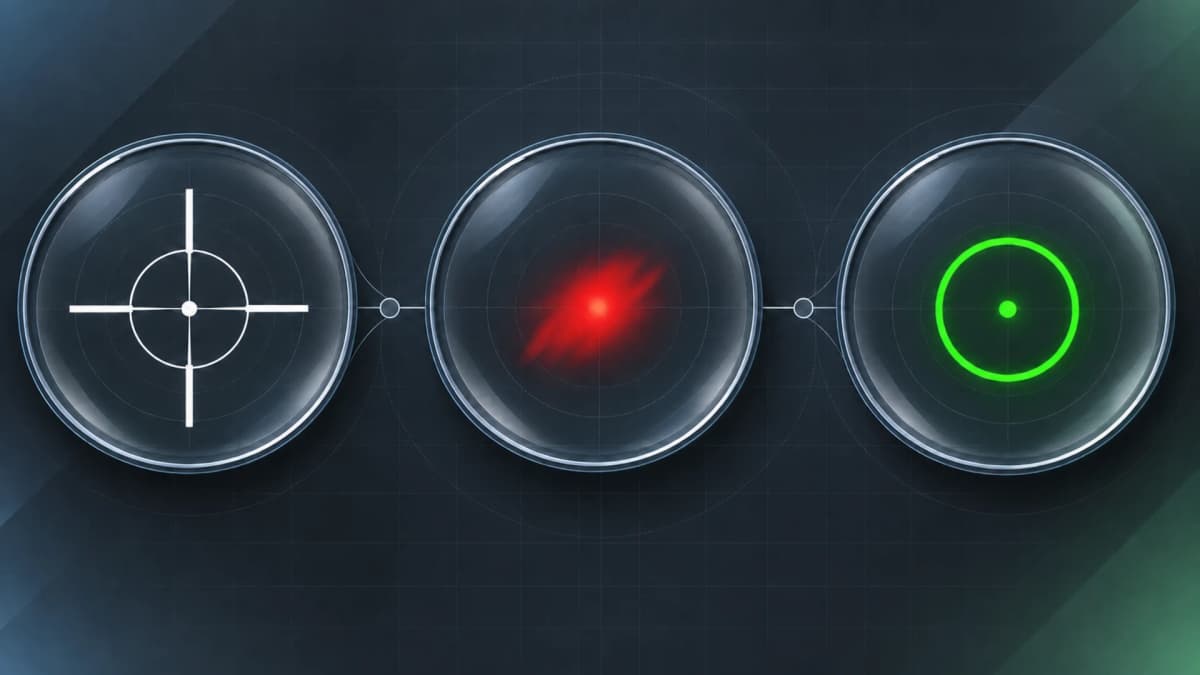
Dot MOA is the second-order decision. 2 to 3 MOA is the competition default because it stays precise on 25-yard partials and steel poppers while still picking up on close arrays. 5 to 6 MOA is faster under recoil but covers too much of a partial target at distance. Most top Carry Optics shooters run 2.5 to 3.25 MOA; the 407COMP's 6 MOA is the exception for shooters who prioritize close-array speed and shoot mostly under 25 yards. For shooters with astigmatism, the 407COMP gold dot variant is the cleanest option in this lineup.

Trijicon SRO
$549
Dot MOA2.5 MOA
FootprintRMR
EmitterOpen
BatteryCR2032, top-load
Holosun 507COMP
$369
Dot MOA2 MOA + 8/20/32 MOA rings
FootprintRMR
EmitterOpen
BatteryCR1632, 50K hr
Aimpoint ACRO P-2
$599
Dot MOA3.5 MOA
FootprintACRO
EmitterEnclosed
BatteryCR2032, 50K hr
Trijicon RMR HD
$649
Dot MOA55 MOA ring + 3.25 MOA dot
FootprintRMR
EmitterOpen
BatteryCR2032, ~3 yr
Steiner MPS
$449
Dot MOA3.3 MOA
FootprintACRO
EmitterEnclosed
BatteryCR1632, 13K hr
Holosun 407COMP
$329
Dot MOA6 MOA
FootprintRMR
EmitterOpen
BatteryCR1632, 50K hr
Leupold DeltaPoint Pro
$449
Dot MOA2.5 or 6 MOA
FootprintDPP
EmitterOpen
BatteryCR2032, 1.6K hr
Vortex Defender-XL
$379
Dot MOA2, 5, or 8 MOA (or 3 MOA green)
FootprintDPP
EmitterOpen
BatteryCR2032, 25K hr

Use our comparison tool to put any two of these dots head-to-head on the specs that matter for your division.

Matching Red Dots to USPSA Host Pistols

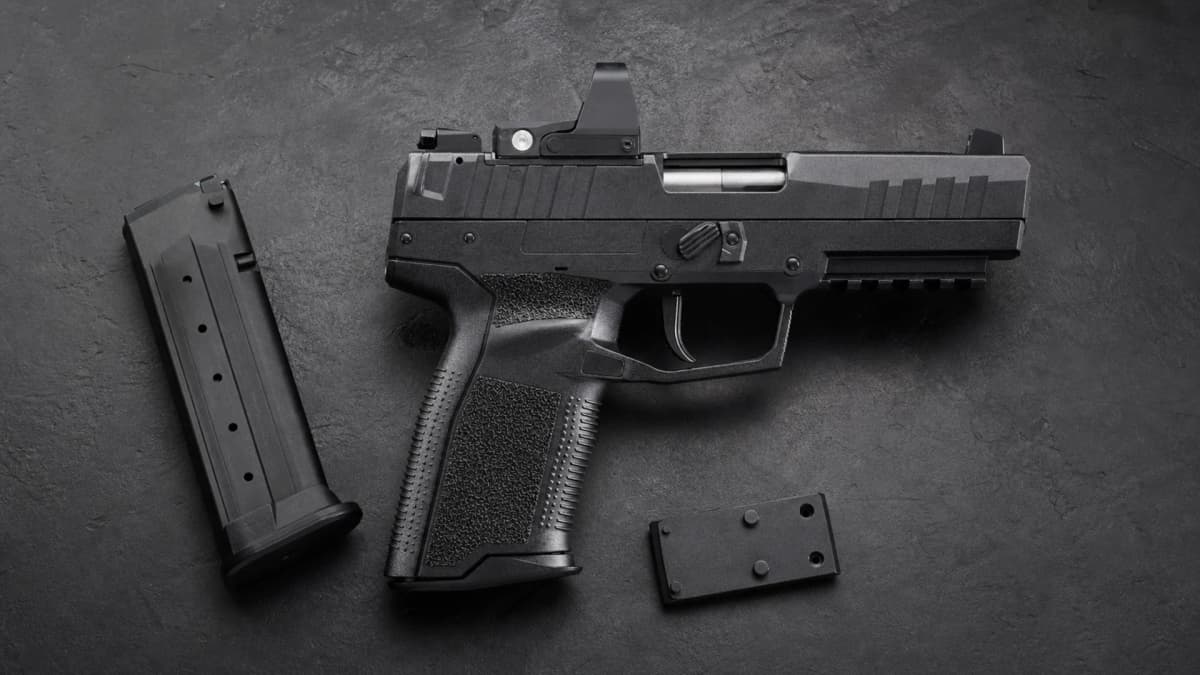
The optic decision starts with the slide cut on the host pistol. RMR-cut slides accept the SRO, 507COMP, 407COMP, and RMR HD directly. ACRO-cut slides accept the ACRO P-2 and Steiner MPS. DPP-cut slides accept the DeltaPoint Pro and Defender-XL. Adapter plates work but add height, which Carry Optics shooters generally avoid because it raises the dot above the slide and slows the natural index.

Glock 34 Gen5 MOS
DivisionCarry Optics
Optic Cut / PlateMOS RMR plate (RMR footprint)
Best PicksSRO, 507COMP, 407COMP, RMR HD
CZ Shadow 2 OR
DivisionCarry Optics
Optic Cut / PlateOR plate system (RMR, DPP, 507K)
Best PicksSRO, 507COMP, DeltaPoint Pro
SIG P320 X-Five
DivisionCarry Optics
Optic Cut / PlatePro-Cut (DPP-based footprint)
Best PicksDeltaPoint Pro, Defender-XL, RMR via adapter
Walther Q5 Match SF
DivisionCarry Optics
Optic Cut / PlateQ5 universal plate (RMR, DPP, ACRO)
Best PicksSRO, 507COMP, ACRO P-2
Staccato P / HD
DivisionLimited Optics
Optic Cut / PlateHOST plate (RMR, DPP, ACRO, RMSc)
Best PicksSRO, RMR HD, ACRO P-2
Springfield Prodigy AOS
DivisionLimited Optics
Optic Cut / PlateAOS plates (RMR, 507C, ACRO, DPP, RMSc)
Best PicksSRO, 507COMP, ACRO P-2

For Glock 34 shooters, the Glock 34 upgrades guide covers the full Carry Optics build path: dot, trigger, basepads, magwell, and optic-height sights. For Shadow 2 shooters, the CZ Shadow 2 accessories guide walks through the OR plate options and competition basepads.

Battery Life and Mounting Discipline

Holosun and Aimpoint dominate battery life at 50,000 hours, with the Holosun side-load tray letting you swap CR1632s without pulling the optic off the slide. The Trijicon SRO and DeltaPoint Pro use top-load batteries that require removing the optic, then re-torquing to factory spec, typically 15 in-lb for Trijicon and 12 in-lb for Leupold; a calibrated torque driver is non-negotiable here. Run a fresh battery before any major and a backup CR2032 or CR1632 in your range bag.

Use blue Loctite 242 on the optic screws and the factory torque spec for your specific cut. Loctite plus correct torque keeps the dot from walking through 1,000-round match weekends. Whatever optic and host pistol you settle on, run the picks through our pistol builder to confirm footprint compatibility and stack the rest of the Carry Optics or Limited Optics setup (mags, holster, belt) in one place.

Frequently Asked Questions

Which red dot is best for USPSA?
The Trijicon SRO ($549) is the USPSA Carry Optics benchmark with a 2.5 MOA dot, panoramic window, and RMR-footprint compatibility. For a larger window at lower cost, the Holosun 507COMP ($369) is the value pick with multi-reticle flexibility. For enclosed-emitter reliability on outdoor matches, the Aimpoint ACRO P-2 ($599) is the choice. All three are slide-mount legal in Carry Optics and Limited Optics divisions.
How many mags do you need for USPSA Carry Optics?
USPSA Carry Optics shooters run 4 to 6 magazines for a typical match: one in the gun, three to four on the belt, and one or two spares in the range bag. Carry Optics permits 141.25mm overall length magazines with no round count restriction, so most shooters use factory-length 17-round Glock mags or 21-round CZ Shadow 2 mags. Bring more than you think you need; stages can require 25+ rounds and reloads are common.
What guns are Carry Optics approved for USPSA?
USPSA Carry Optics allows striker-fired and DA/SA duty pistols with a slide-mounted red dot. Common picks are the Glock 17/19/34 MOS, CZ Shadow 2 OR, Walther Q5 Match, SIG P320 X-Five, and SIG P226 X-Five. Single-action-only pistols (1911 and 2011 platforms like the Staccato P) are not allowed in Carry Optics; those go to Limited Optics. The optic must mount directly to the slide, not the frame, and sit between the ejection port and the rear of the slide.
Which is better for USPSA, 3 MOA or 6 MOA?
For USPSA Carry Optics, a 3 MOA dot is the better all-around choice. It is precise enough for partial targets and steel poppers at 25 to 35 yards while still picking up fast on close arrays. A 6 MOA dot is faster to find under recoil but covers too much of a 25-yard partial target. Most top Carry Optics competitors run 2.5 to 3.25 MOA; the Holosun 407COMP's 6 MOA dot is the exception for shooters who prioritize speed over precision.
What is the difference between USPSA Carry Optics and Limited Optics?
USPSA Carry Optics and Limited Optics both require a slide-mounted red dot and shoot Minor power factor with 141.25mm magazines. The difference is the pistol: Carry Optics is for striker-fired and DA/SA duty pistols (Glock, CZ, SIG, Walther). Limited Optics allows single-action-only 1911 and 2011 platforms like the Staccato P, plus permits magwells and race-cut holsters that Carry Optics bans. The optics themselves are identical between divisions; only the gun under them changes.
What red dot do USPSA pros use?
Top USPSA pros in 2026 run the Trijicon SRO, Holosun 507COMP, Aimpoint ACRO P-2, or Trijicon RMR HD. The SRO and 507COMP dominate Carry Optics because their oversized windows make recoil tracking fastest. Staccato-shooting Limited Optics competitors lean toward the SRO and ACRO P-2. Top shooters cycle between these four depending on sponsor relationships, but the underlying picks are the same across the leaderboard.