Best Tactical Belt 2026: Top Battle Belts Ranked (Blue Alpha, Kore, 5.11, T.REX)
If you are searching for the best tactical belt setup, most bad outcomes come from one problem: carrying too much gear in the wrong order. This guide breaks down how to choose between a tactical belt, battle belt, gun belt, and duty belt, then build a practical loadout you can actually run. The goal is simple: consistent access, low bulk, and clean movement under stress.
Top 7 Tactical and Battle Belts
Ranked by stability under load, adjustability, modularity, and all-day usability across training and duty-style workflows.
Blue Alpha 1.75" Battle Belt Lite
Best Overall - top balance of rigidity, comfort, and modularity
- +Rigid Tegris core keeps holster and mags stable
- +Two-piece system with usable inner belt
- +Lightweight platform for long training days
- −Premium pricing
- −Less convenient than one-piece EDC belts
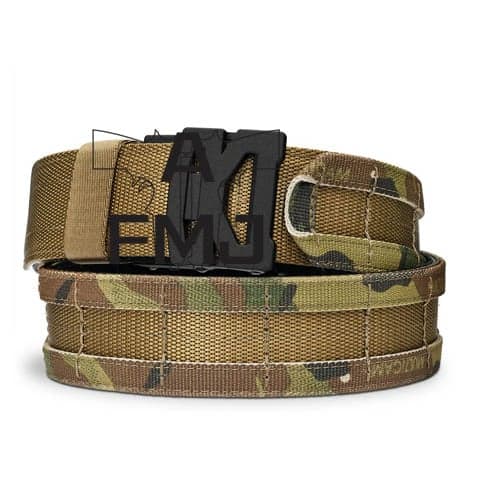
Kore B2 MOLLE Battle Belt Complete Kit
Best Value - complete kit plus micro-adjust fit system
- +20+ micro-adjust positions in quarter-inch steps
- +Complete kit simplifies first-time setup
- +Strong support for heavier belt loads
- −Thicker and heavier than minimalist belts
- −Proprietary track system
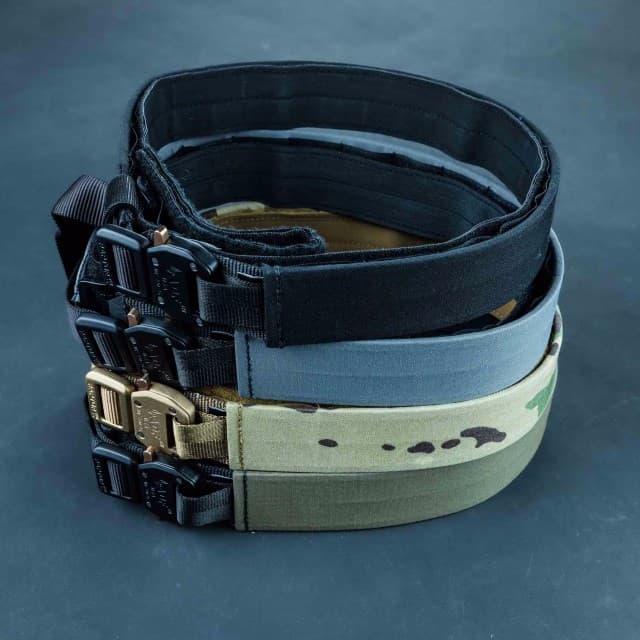
T.REX ARMS Speed Belt Outer
Best for Classes - low-profile, stable setup for movement work
- +Internal pass-through layout keeps pouches tight
- +Excellent rigidity-to-thickness ratio
- +Slim profile helps reduce belt bulk
- −Sold separately from the matching Speed Belt Inner
- −Sizing requires direct beltline measurement
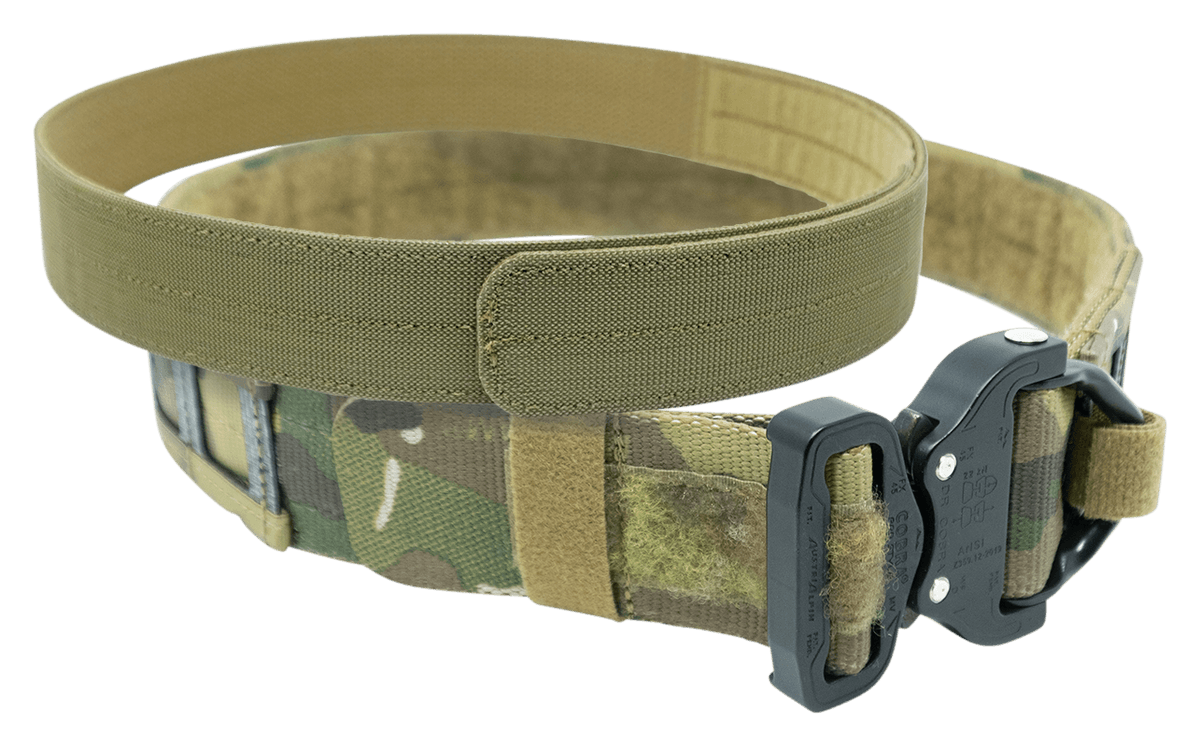
GBRS Group Assaulter Belt System V3
Best for Duty Loads - stiffest core and a rated buckle
- +12-layer Tegris core holds a loaded holster and mags where you put them
- +Load-rated AustriAlpin Cobra buckle will not open while under tension
- +Integrated D-ring is a rated attachment point, not a decorative loop
- −The most expensive belt in this guide
- −Sized S to XL by measured waist, so a bad measurement means an exchange
- −The rigidity that carries the load is uncomfortable on long drives
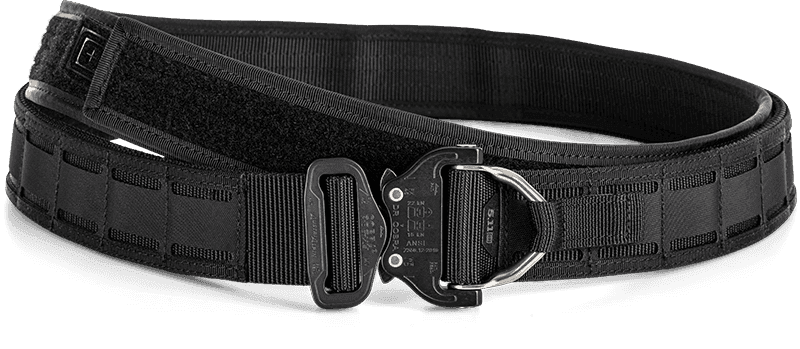
5.11 Maverick Battle Belt
Best Mainstream Option - modular two-piece setup with strong hardware
- +Two-piece architecture for repeatable setup
- +Laser-cut MOLLE for modular pouch layout
- +AustriAlpin COBRA buckle hardware
- −Bulkier than minimalist outer belts
- −More setup complexity than single-piece belts
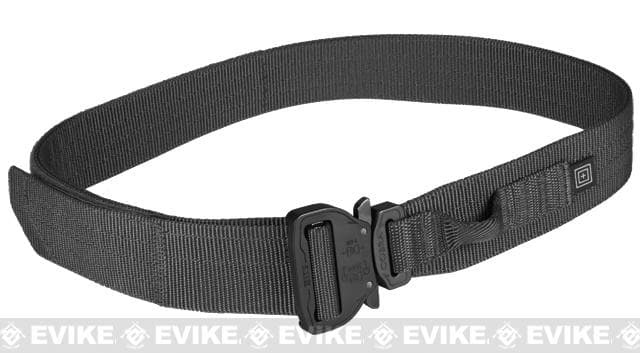
5.11 Maverick Assaulters Belt
Best Standalone Tactical Belt - simple setup with premium buckle hardware
- +Pre-curved profile improves wear comfort
- +Strong hardware for repeated on/off use
- +Lower complexity than two-piece systems
- −Less modular than full battle-belt systems
- −Sizing often runs small
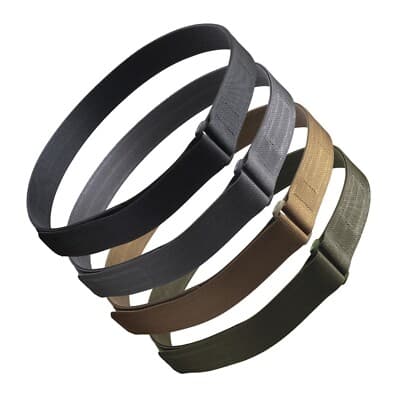
Blue Alpha Low Profile EDC Belt
Best Budget EDC Belt - daily concealed carry with low profile
- +Low-profile buckle helps reduce printing
- +Comfortable for all-day concealed carry
- +Affordable entry point
- −Not intended for heavier MOLLE loadouts
- −Lower rigidity than dedicated battle belts
Affiliate links - purchases support this site at no extra cost to you. (?)
Featured T.REX ARMS Belt Systems
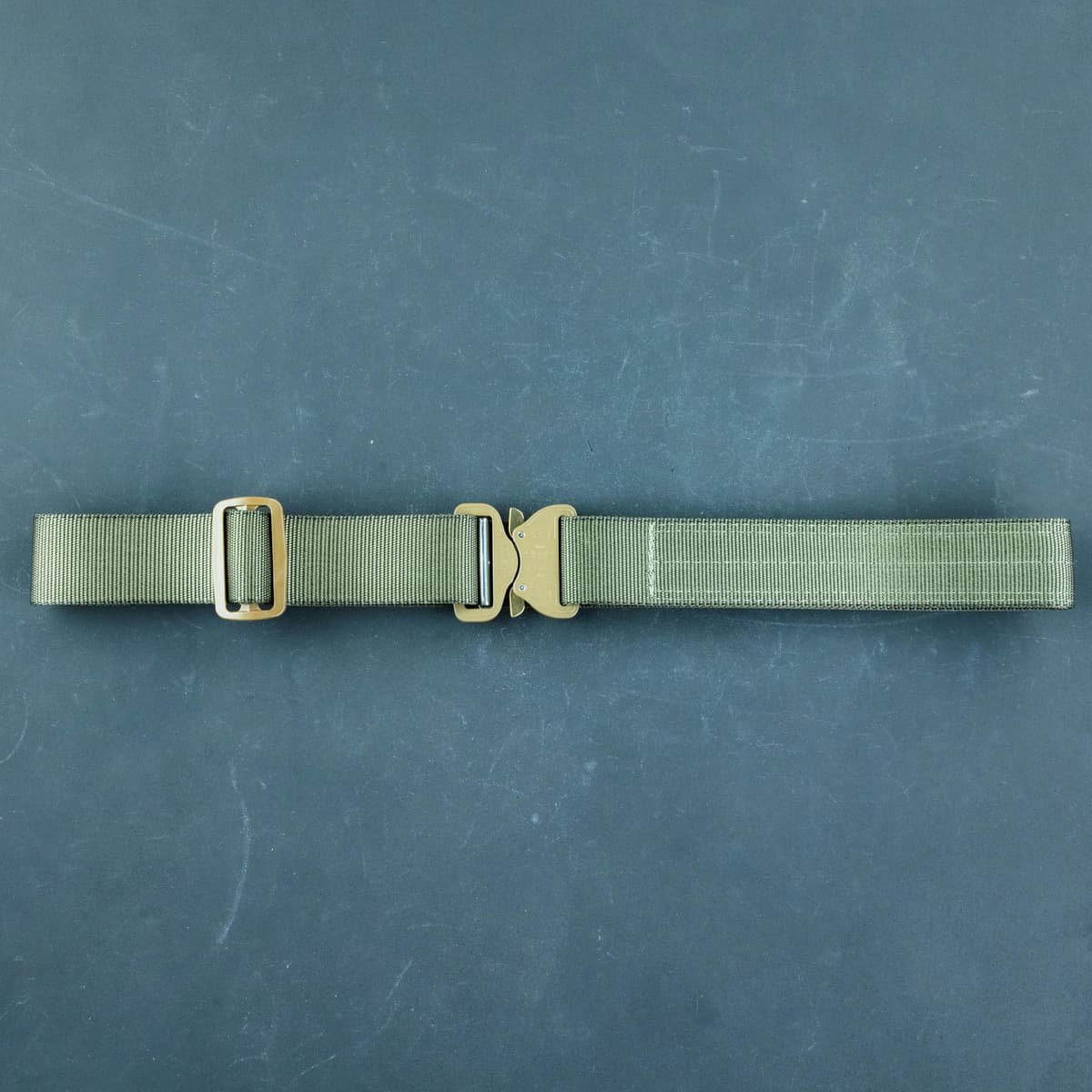
Orion Inner Belt
- Inner belt
- Orion interface
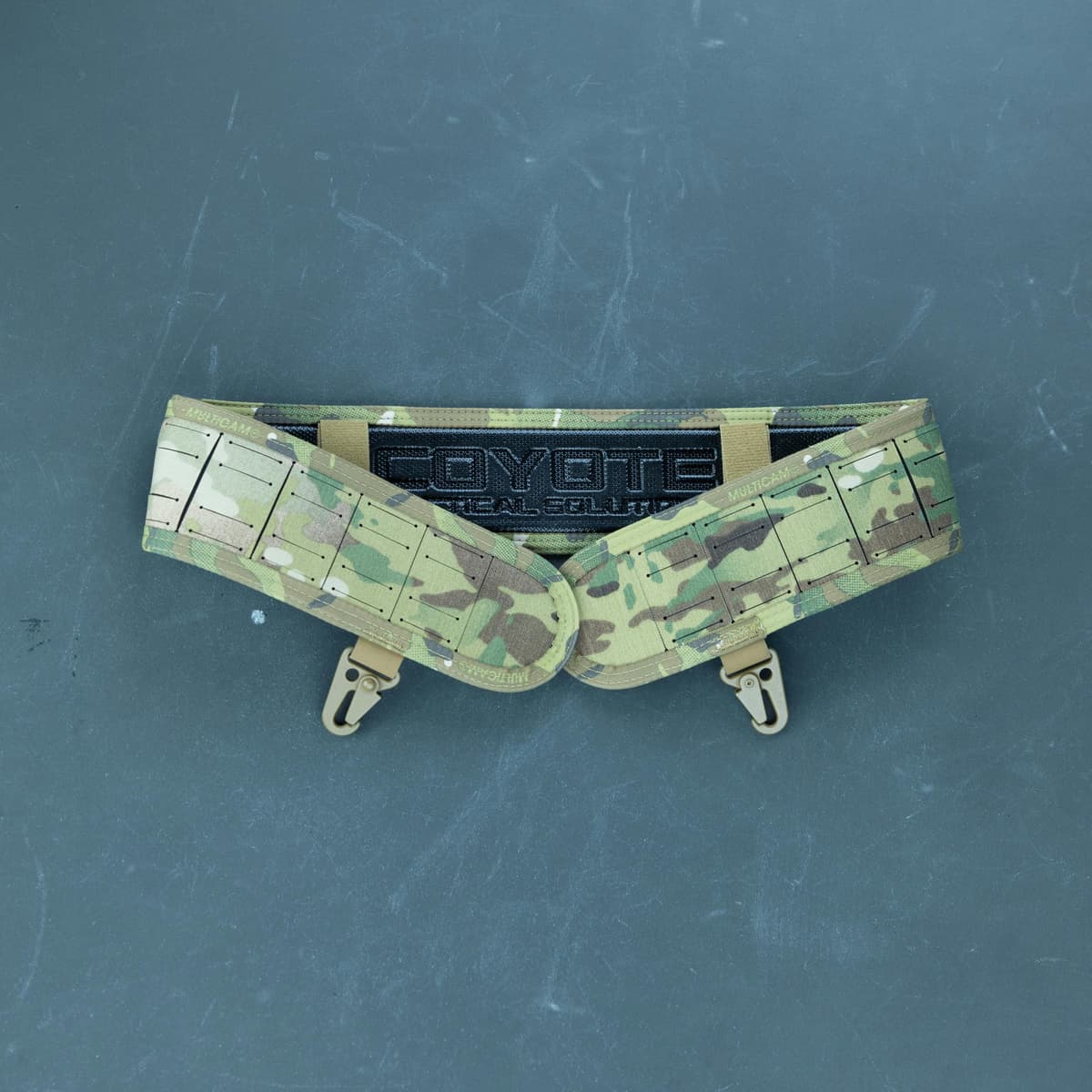
Orion Outer Belt
- Padded outer belt
- Load carriage
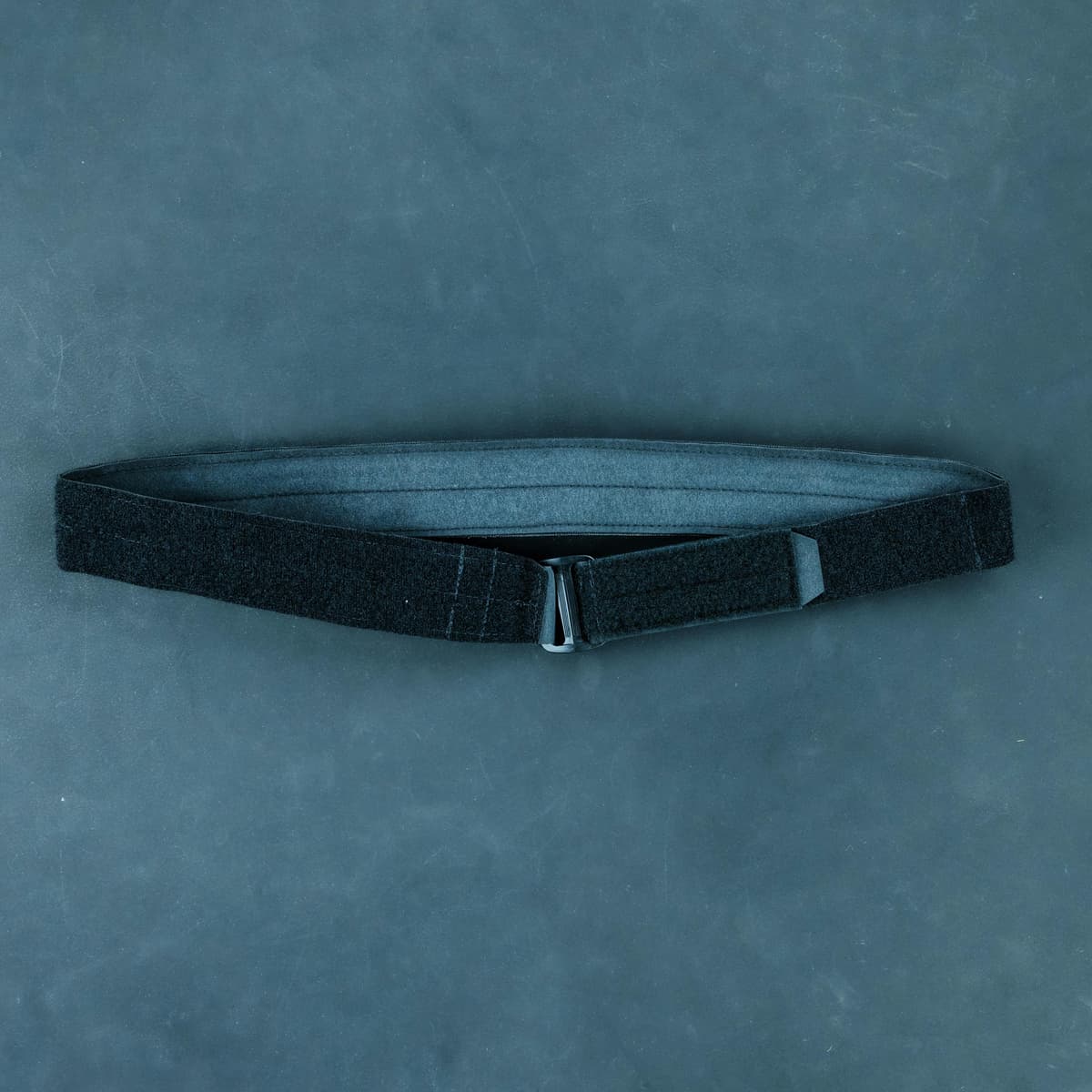
Speed Belt Inner
- Inner belt
- Hook-and-loop interface
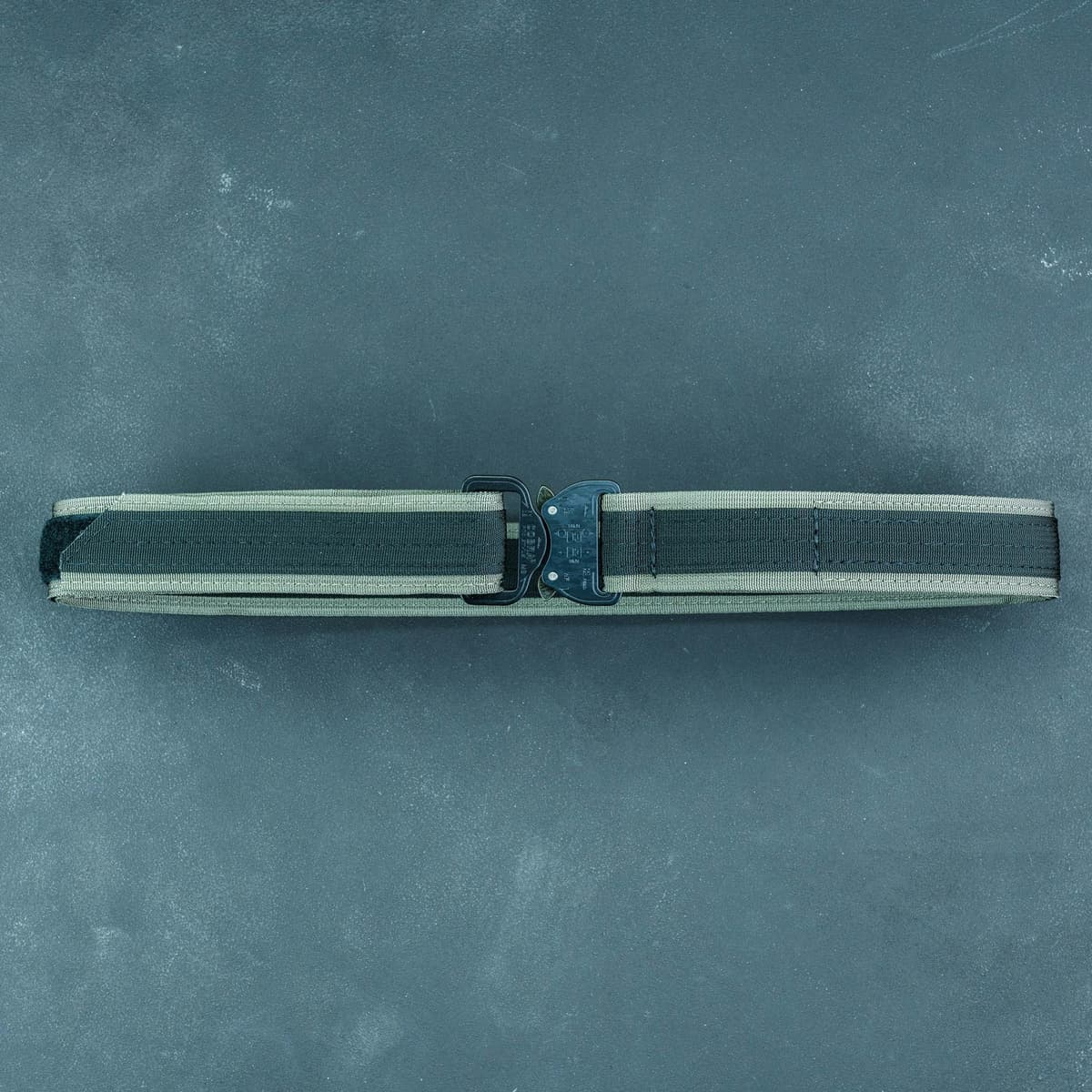
NOVA Belt
- EDC belt
- Concealed-carry support
Affiliate links (?)
Tactical Belt vs Battle Belt vs Gun Belt
The keyword tactical belt is broad. In practice, you are usually choosing between three systems:
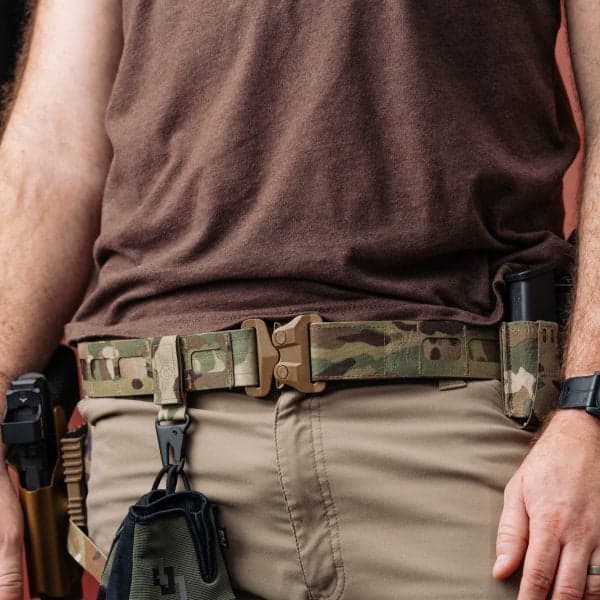
- Gun belt: Everyday support for concealed carry. Low profile and comfortable for long wear.
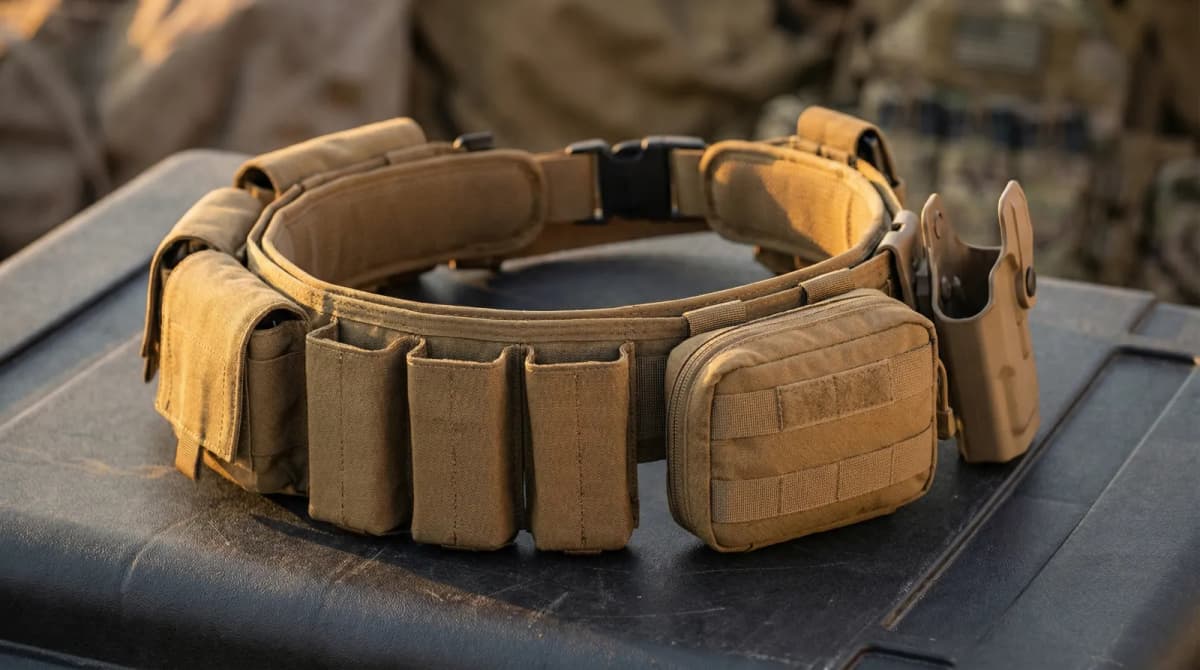
- Battle belt: Dedicated outer belt for training, rifle work, and higher-load setups.
- Duty belt: Professional law-enforcement style loadouts, typically heavier and more standardized.
For most readers, a two-piece battle belt is the best training platform, while a stiff gun belt is the best daily solution. If your current setup does both poorly, split the mission and run separate belts.
Padded Belt Systems: When a Rigger Belt Is Not Enough
Every belt ranked above puts nylon webbing straight against your hip. That is fine at four or five pounds. Load a holster, three rifle magazines, a med pouch and a dump pouch onto the same belt and the webbing starts cutting in at the iliac crest, and the outer belt starts rotating when you draw. A padded outer belt over a separate inner belt solves both: the pad spreads the load over a taller footprint, and the grip surface between the two belts stops the rotation.
The detail that separates a good padded belt from a stiff one is whether the stiffener comes out. HSGI puts a removable HDPE sheet in the Sure-Grip, so the same belt runs rigid on the range and flexes in a vehicle seat. The Slim-Grip trades a little of that height for slotted PALS platforms, which is the only clean way to run a belt-loop holster and MOLLE pouches on one belt. Both are sold as the outer belt alone, so budget for the inner belt in the same order. If the inner belt also has to be the belt you wear to work, the Better Inner Belt uses a Fidlock magnetic buckle low enough to thread through normal pant loops.
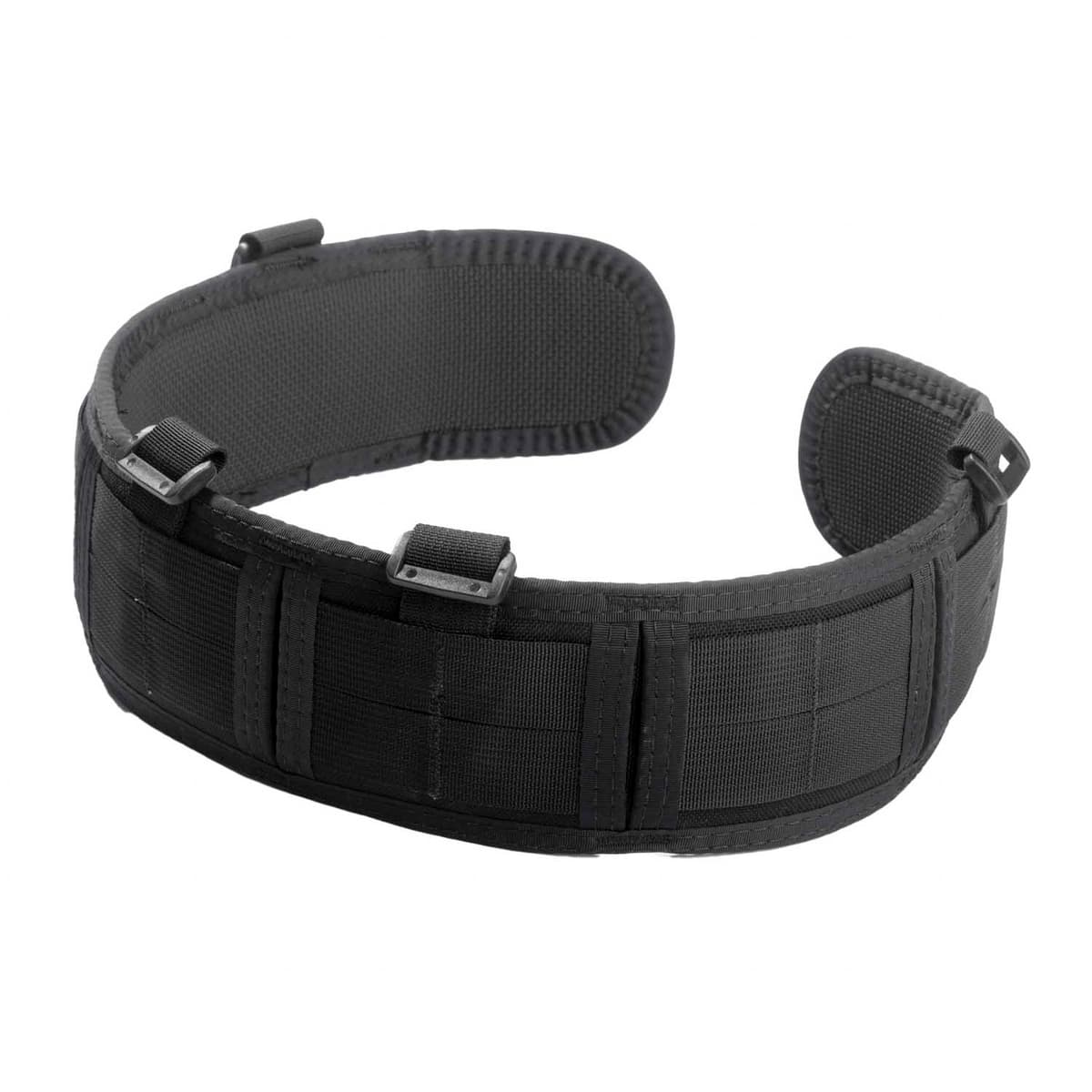
High Speed Gear HSGI Sure-Grip Padded Belt
- Removable HDPE stiffener switches the belt between rigid and flexible
- Neoprene padding grips the inner belt and resists rotation on the draw
- Three continuous rows of PALS across the whole belt
- Access ports at 3, 6 and 9 o'clock clamp a holster to the inner belt
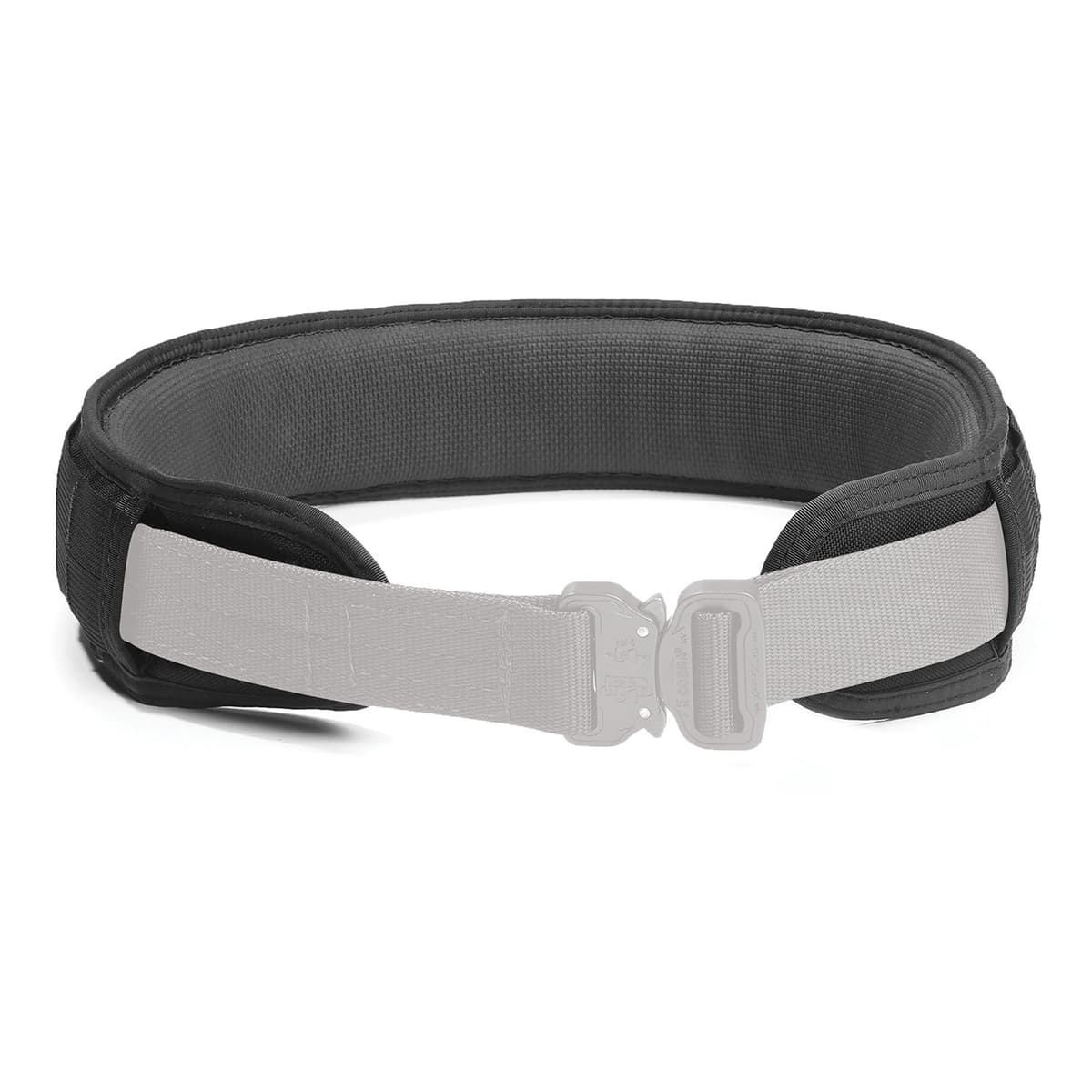
High Speed Gear HSGI Slim-Grip Padded Belt
- Individual slotted PALS platforms let the inner belt weave inside or outside
- Runs a belt-loop holster and MOLLE pouches on the same belt
- Extra laser-cut MOLLE row on the wide back panel
- Thinner and lighter than the Sure-Grip with the same neoprene padding
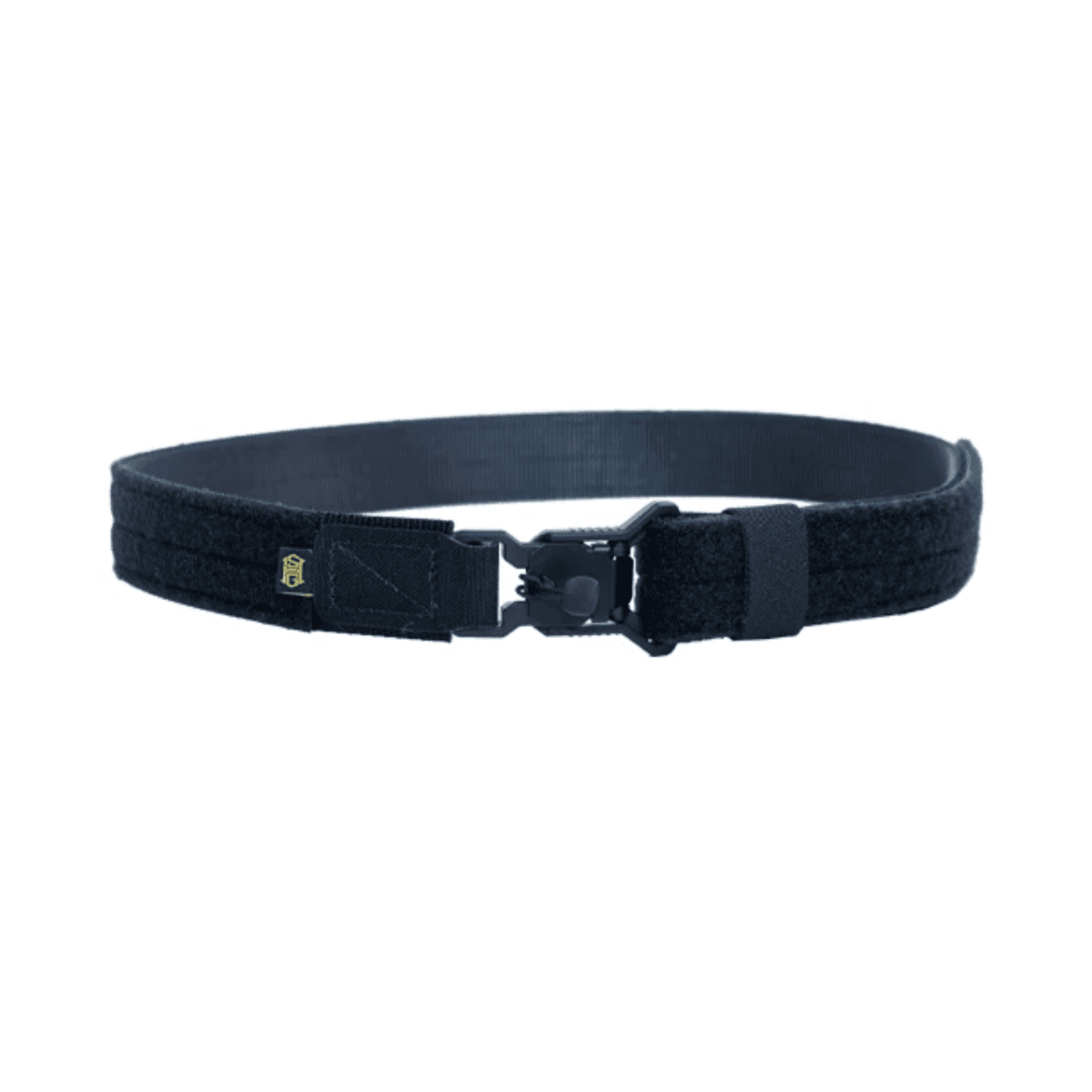
High Speed Gear HSGI Better Inner Belt
- Fidlock V-Buckle is low enough to pass through most pant belt loops
- Wears as a daily belt and as the anchor for a padded outer belt
- Order loop or hook facing to match the outer belt
- Six sizes from 28-32 in to 48-52 in
Affiliate links - purchases support this site at no extra cost to you. (?)
Sizing and Fit That Actually Works
Belt sizing is where most setup guides fail. Use your real waist measurement with the pants and inner belt you train in, not your jean tag size. Then confirm fit with movement:
- Sprint 20-30 yards without belt rotation.
- Kneel and stand repeatedly without pinch points.
- Go prone and verify pouches do not block breathing or reload access.
- Draw and re-index gear with both hands under timer pressure.
If a belt only works when standing still, it is not configured yet. Your setup should survive transitions, awkward positions, and real movement.
Get Battle Belt Reviews and Loadout Setup Guides
Pouch placement priorities, two-piece belt reviews, and kit that performs under real movement.
Battle Belt Setup: First 5 Items
- Medical first: Place your IFAK where either hand can reach it.
- Pistol magazine pouch: Keep indexing clean and repeatable.
- Rifle magazine pouch: Start with one, then scale only if needed. See our best AR-15 mag pouches guide for KYWI, elastic, and hard-retention picks.
- Holster support: Use a stable attachment system that does not flop.
- Tourniquet position: External and immediately accessible.
Keep admin items off your first iteration. Most range users get more performance from cleaner placement than from adding more pouches.
Common Mistakes That Kill Belt Performance
- Running too many pouches before validating reload speed.
- Copying social media loadouts without matching your use case.
- Skipping dry practice and trying to solve problems with new gear.
- Ignoring compatibility between belt, holster, and attachment hardware.
- Using one overloaded setup for EDC, home defense, and classes.
If you need a lightweight rifle setup to pair with a belt, start with our lightweight AR-15 guide. For sling integration and transitions, use the rifle sling guide. For the medical kit that mounts on the belt, see our best tourniquets and IFAK setup guide. And for the boots that ground the whole loadout, see our best tactical boots guide. For the duty and field pants the belt threads through, see our best tactical pants guide. For the torso layer that sits over the belt under load, see our best body armor guide, ranked rifle plates and concealable soft armor for 2026. For the second-line load that sits above the belt, see our best chest rigs guide, the chest rig is the load-bearing complement to a battle belt.