Staccato vs Springfield Prodigy 2026: P & C2 Compared
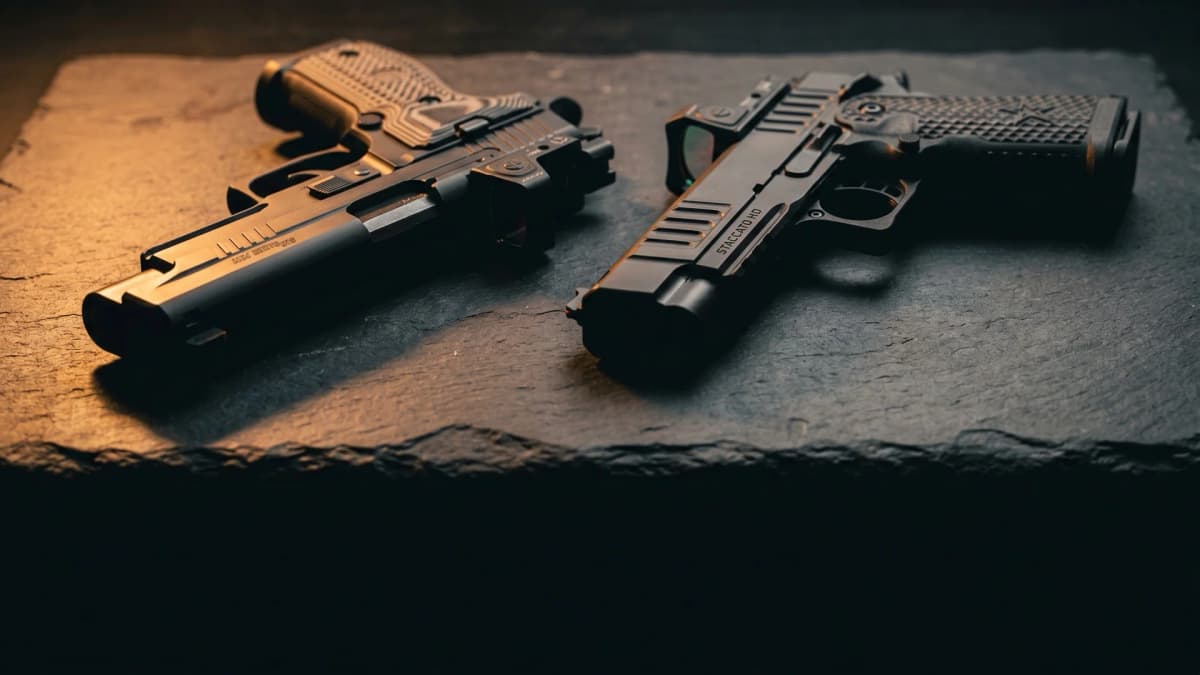
The Staccato P and compact C2 cost roughly twice the Springfield Prodigy for the same caliber and capacity class. This guide settles whether that premium is worth it by matching like-for- like size classes: the full-size Staccato P against the Prodigy 5-inch, and the compact Staccato C2 against the Prodigy 4.25- inch. Price, 2011 magazine compatibility, optic mounting, frame material, and real-world reliability all factor in. The short version: the Prodigy captures most of the 2011 experience for half the money, and the Staccato premium buys a proven duty record, a lighter factory trigger, and tighter fit and finish.
Staccato vs Prodigy: The Verdict
Buy the Springfield Prodigy unless you specifically need what the Staccato premium adds. At about $1,459 street the Prodigy delivers 17+1 capacity, the AOS optic system, and 2011-pattern magazine compatibility for roughly half the cost of a Staccato P. The Staccato earns its price for buyers who want the proven duty record, the lighter and cleaner factory trigger, and the tighter fit and finish, and who can absorb the 2x cost. The compact Staccato C2 is the pick only when you want the lighter aluminum-frame Staccato build over a 4.25-inch Prodigy in the concealed-carry role.
The matchups that matter are like-for-like by size class: the full-size Staccato P against the Prodigy 5-inch, and the compact Staccato C2 against the Prodigy 4.25-inch. Both Prodigy barrel lengths share one frame and one magazine pattern, so a single Prodigy answers both Staccato sizes. For the broader field of 2011s including the SIG P211 and Kimber, see our best 2011 pistols 2026 ranking. For double-stack 1911s in the budget class, start with the best budget 2011 pistols guide.
Staccato vs Prodigy: The Verdict
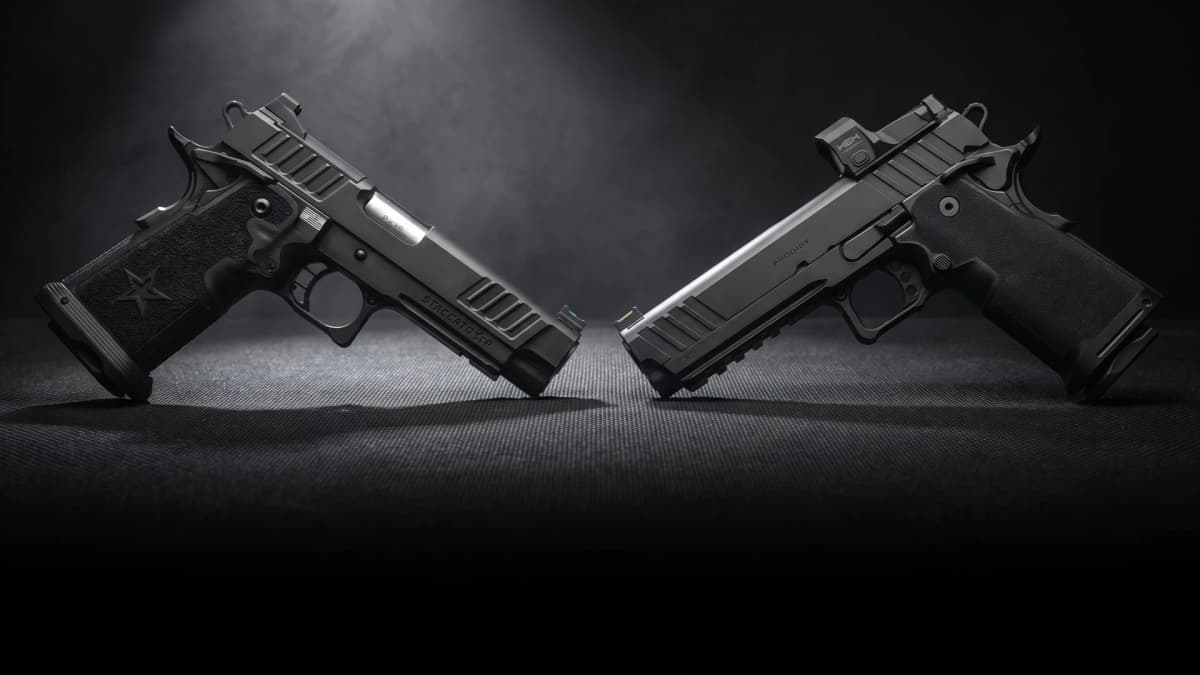
The full-size Staccato P, the value-leading Springfield Prodigy, and the compact Staccato C2 ranked for the buyer deciding whether the Staccato premium is worth roughly double the Prodigy price.
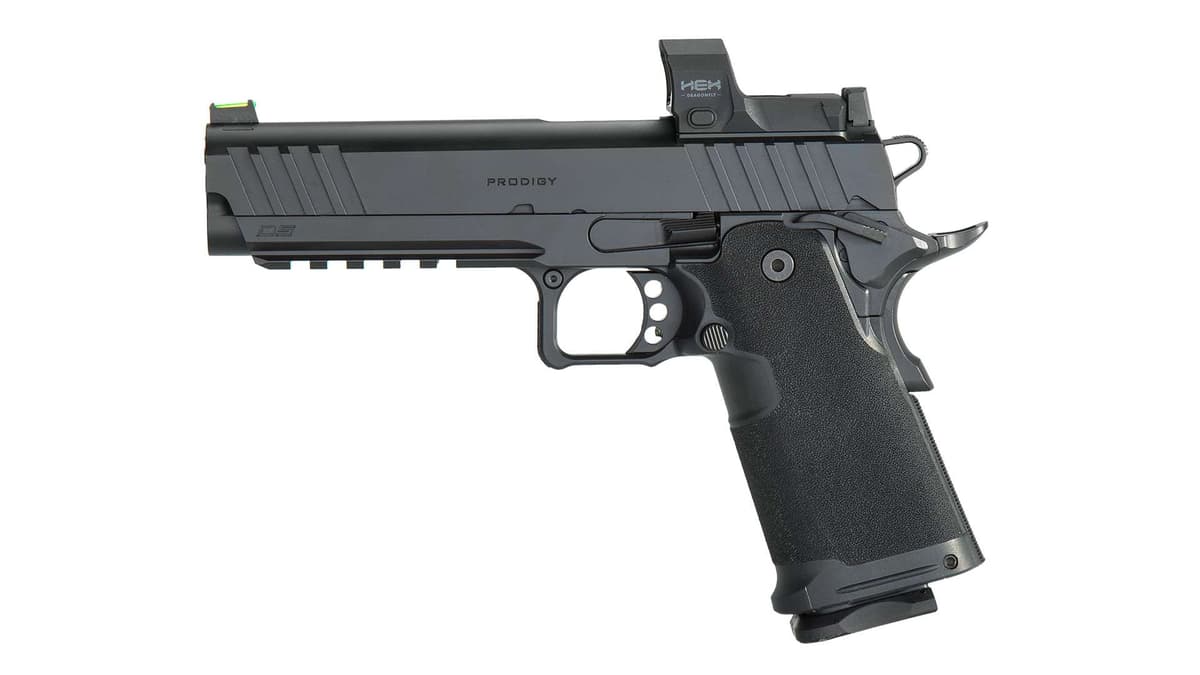
Springfield 1911 DS Prodigy AOS
Best value 2011, roughly half the price of a Staccato P
- +$1,530 MSRP / ~$1,459 street is well under half the price of a Staccato P
- +AOS plate system supports RMR, 507C, ACRO, DPP, and RMSc footprints
- +17+1 flush / 20+1 extended capacity standard
- −Older production runs had extractor and feeding issues Springfield has since addressed
- −Factory trigger heavier than the Staccato baseline (4.5 to 5 lb vs 4 lb)
- −Slide-to-frame fit and finish is not as hand-tuned as the Staccato build
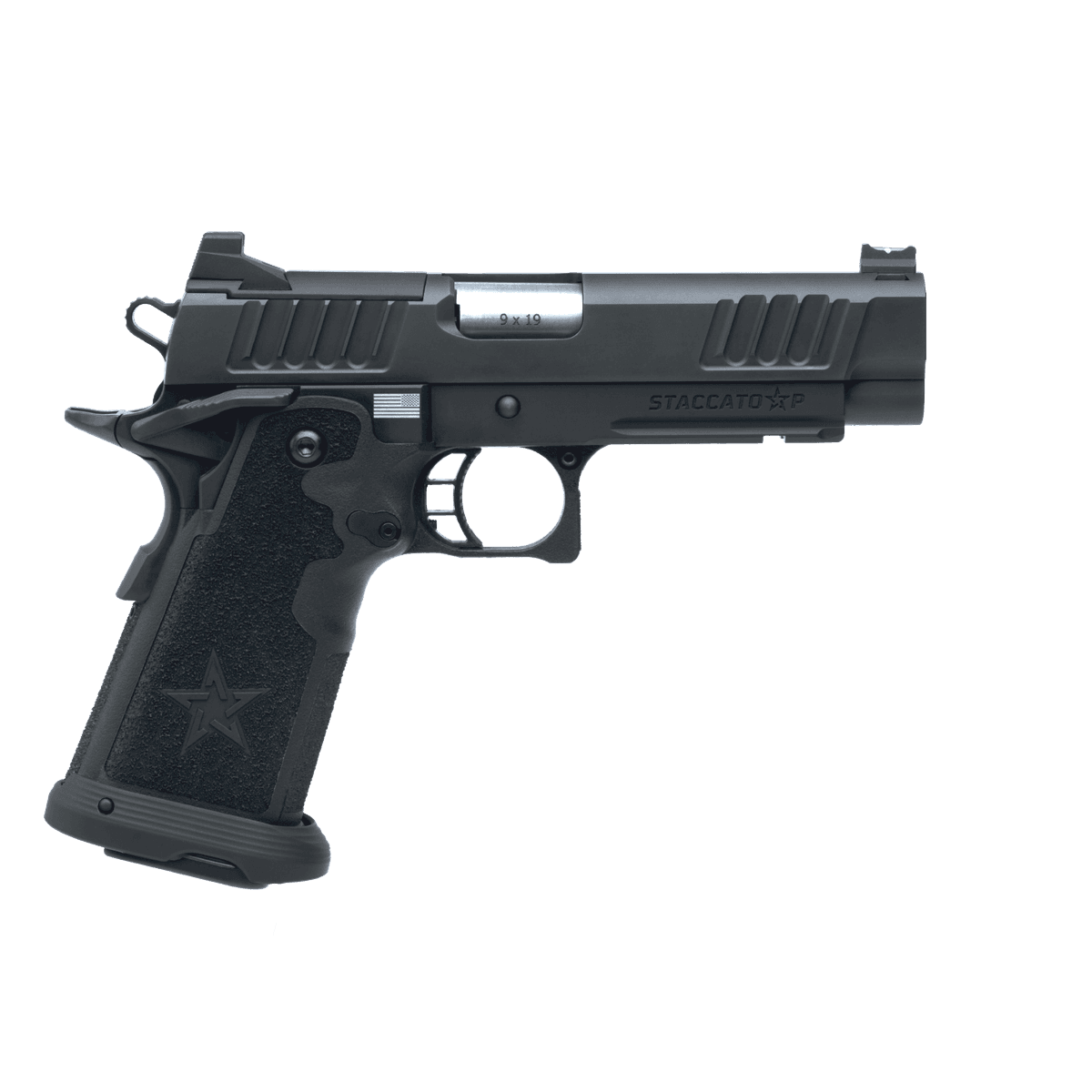
Staccato P
Best full-size Staccato, the canonical Staccato P vs Prodigy matchup
- +Duty-approved by 1,600+ US law enforcement agencies, one of the most widely adopted 2011s in service
- +4 to 4.5 lb single-action trigger clean out of the box
- +Multi-footprint optic mounting kit (RMR, SRO, RMRHD, DPP, 507C, 508T)
- −$2,499 MSRP is roughly $1,000 over a Prodigy for the same caliber and capacity class
- −Staccato 2011 magazines run ~$70 each, no Glock or P320 cross-compatibility
- −1.5" overall width is wide for concealment
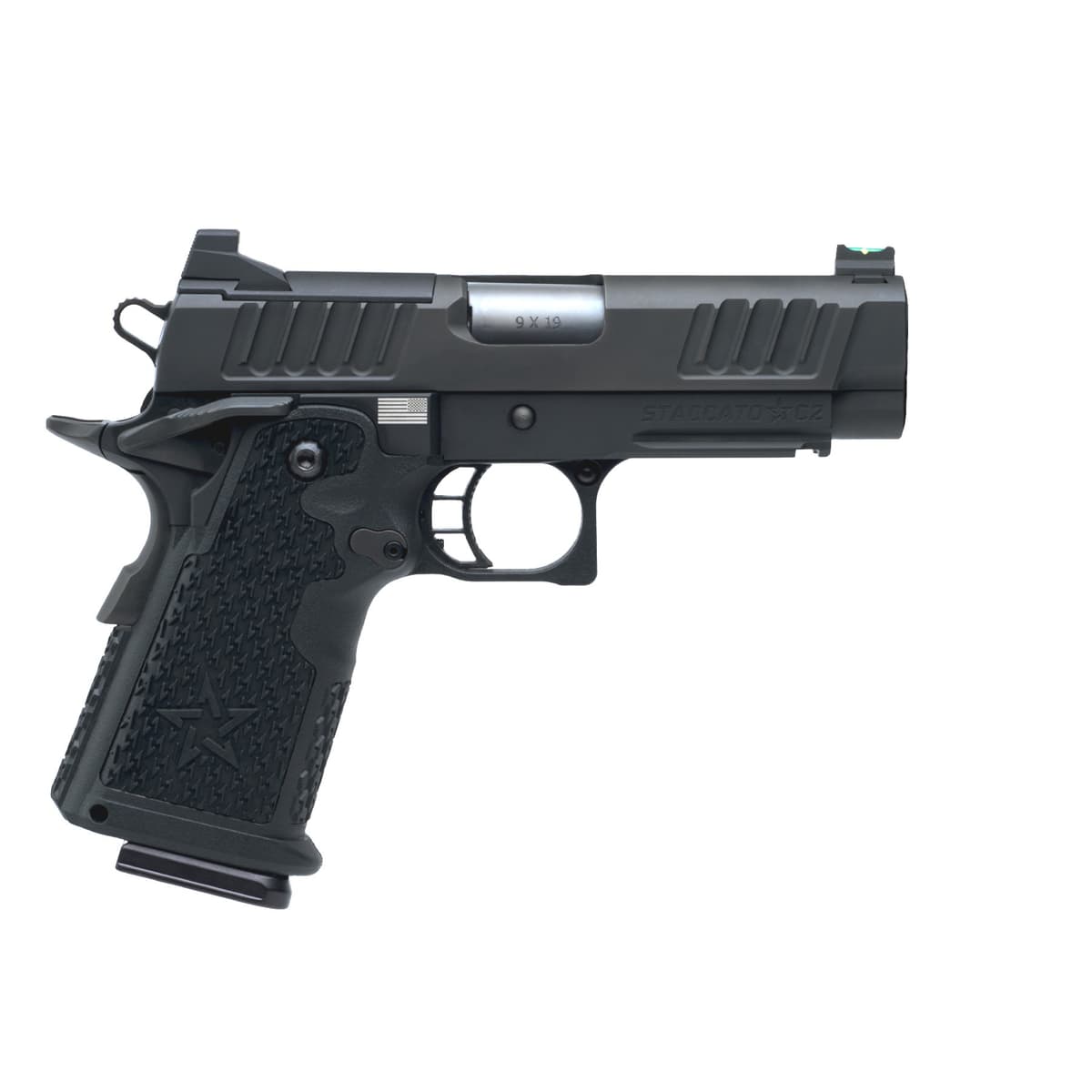
Staccato C2
Best compact Staccato vs the Prodigy 4.25", the like-for-like compact matchup
- +3.9" bull barrel and 7075 billet aluminum frame keep it to 25 oz for daily carry
- +16+1 capacity with two included 16-round 2011 magazines
- +4 to 4.5 lb single-action trigger matches the full-size P
- −$2,299 MSRP / ~$2,648 street is well over a 4.25" Prodigy for the compact class
- −Railless dust cover, so no frame-mounted weapon light
- −Lighter 25 oz aluminum frame transmits more felt recoil than the steel-frame P or Prodigy
Affiliate links - purchases support this site at no extra cost to you. (?)
Full-Size: Staccato P vs Springfield Prodigy 5"
The Prodigy 5-inch wins the full-size matchup on value; the Staccato P earns its roughly $1,000 premium on trigger, duty record, and finish, not on capacity or barrel. Both are steel-frame, 17+1, optic-ready 9mm 2011s with a single-action trigger and a railed dust cover, so the spec sheets nearly mirror each other. The Staccato P answers the price gap with a 4 to 4.5 lb trigger that ships cleaner than the Prodigy's 4.5 to 5 lb pull, a duty record across more than 1,600 agencies, and the fit-and-finish polish of a more hand-tuned platform.
The Staccato P uses a 4.4-inch bull barrel against the Prodigy's 5-inch, so the Prodigy carries a slightly longer sight radius and a longer slide to settle recoil, while the P stays a hair more holster-friendly. Both land at 33 oz, so weight is not a meaningful carry advantage either way; both are duty-weight guns. The honest read is that the Prodigy gives a first-time 2011 buyer most of the platform's actual benefits, and the P is what you step up to when the trigger, the track record, and the finish are worth the spread.
Full-Size Spec Sheet
Staccato P
Prodigy 5"
- Barrel
- 4.4" bull
- 5.0" bull
- Capacity
- 17+1 / 20+1
- 17+1 / 20+1
- Weight
- 33 oz
- 33 oz
- Frame
- Steel
- Forged steel
- Trigger
- 4-4.5 lb SAO (advantage)
- 4.5-5 lb SAO
- Optic mount
- DUO plates
- AOS plates
- Magazines
- 2011 ~$70
- 2011 ~$60 (advantage)
- Price
- $2,499
- ~$1,459 (advantage)
Compact: Staccato C2 vs Springfield Prodigy 4.25"
The Prodigy 4.25-inch is the value pick in the compact class; the Staccato C2 is worth its roughly $1,200 premium only if you want the lightest genuine Staccato you can conceal. The C2 separates itself on weight, not capacity: it rides at 25 oz on a 7075 billet aluminum frame, roughly seven ounces lighter than the 32.5 oz steel-frame Prodigy 4.25-inch, which is the difference you feel after a full day in an appendix holster. The Prodigy 4.25-inch counters with one more round (17+1 flush vs the C2's 16+1), a true accessory rail for a weapon light, and a price about $1,200 lower.
The C2's railless dust cover is the real carry trade: there is no frame rail, so a frame-mounted light is off the table on the Staccato, while the Prodigy 4.25-inch keeps its rail and runs a compact light. The C2 ships with the same 4 to 4.5 lb trigger as the full-size P, ahead of the Prodigy's factory pull. If your priority is the lightest genuine Staccato you can conceal, the C2 is the answer. If you want a railed, higher-capacity compact 2011 for far less, the Prodigy 4.25-inch wins on value the same way the 5-inch does up top.
Springfield has since gone shorter still. The Prodigy 3.5" AOS drops an aluminum frame and a 3.5-inch slide under the full-length grip module for 18+1 at 29.3 oz, which undercuts the C2 on both price and capacity while giving up the C2's four-ounce weight advantage only in part.
Compact Spec Sheet
Staccato C2
Prodigy 4.25"
- Barrel
- 3.9" bull
- 4.25" bull
- Capacity
- 16+1
- 17+1 (advantage)
- Weight
- 25 oz (advantage)
- 32.5 oz
- Frame
- 7075 aluminum
- Forged steel
- Rail
- None
- Yes (advantage)
- Trigger
- 4-4.5 lb SAO (advantage)
- 4.5-5 lb SAO
- Price
- ~$2,648
- ~$1,459 (advantage)
Magazines: Do They Interchange?
Yes, the Springfield Prodigy and the Staccato P and C2 all run 2011-pattern magazines, and they cross-feed. Springfield states its 1911 DS magazines are cross-compatible with Staccato 2011 platforms, with Staccato mags running in the Prodigy in turn, and Check-Mate makes 2011-pattern mags that fit both. That shared envelope is one of the strongest arguments for the Prodigy: you are buying into the same magazine standard the boutique guns use, not a dead-end proprietary tube.
The one thing both miss is striker-pistol magazine compatibility. Neither the classic Staccato P/C2 nor the Prodigy takes Glock or P320 magazines; only the newer Staccato HD line accepts Glock mags. So the practical magazine cost is the same on both sides of this comparison: 2011-pattern spares run roughly $60 to $70 each depending on brand and capacity, which is the standing tax of the platform regardless of which gun you buy. A reliable, low-cost way to stack spares for either pistol is the Check-Mate magazine, a 2011-pattern mag that fits both, covered in the magazines section below.
Optic Mounting: AOS vs Staccato DUO
Both pistols mount a red dot through an adapter-plate system, and both cover the footprints that matter, so neither has a real advantage for the common optics. The Springfield Prodigy uses the AOS (Agency Optic System) plates, with adapters for the RMR, 507C, ACRO, DPP, and RMSc footprints. The classic Staccato P and C2 use Staccato's multi-footprint optic kit, the DUO adapter system, covering the RMR, 507C, and DPP footprints.
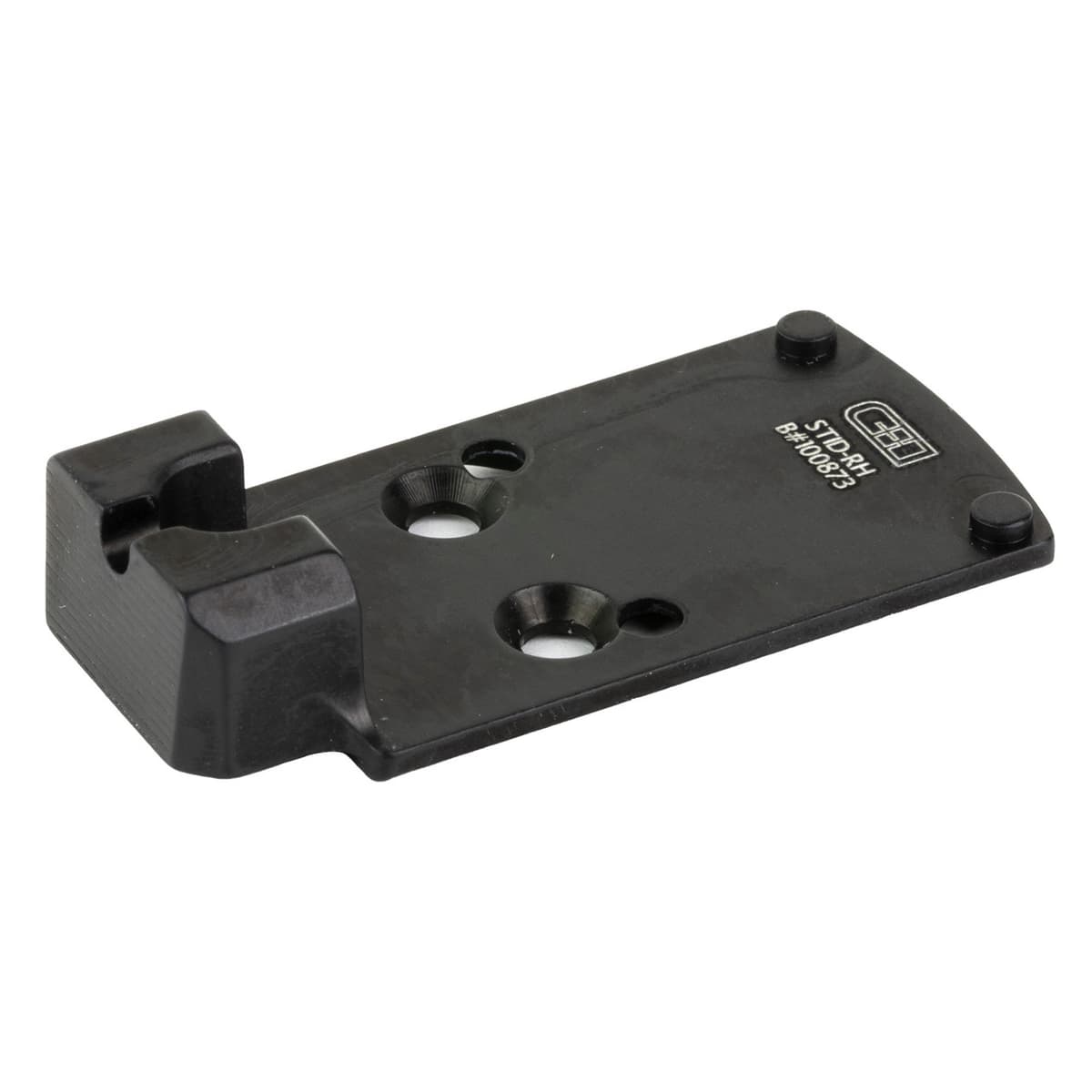
In practice the most common pistol red dot, the Holosun 507C, drops onto either gun with the correct plate, so an optic you already own is unlikely to lock you to one platform. The plate is the gating part: the Prodigy needs a C&H Precision AOS plate for an RMR or 507C cut, and the Staccato takes a C&H DUO RMR plate. Both plates and the Holosun are covered in the accessories section below. For a deeper breakdown of footprints and which dot to buy, our Staccato upgrades guide ranks the optic, mag, and magwell picks for the P and C2.
Reliability and Duty Track Record
The Staccato has the longer and more proven reliability record, and that gap is the clearest thing the premium pays for. Staccato lists the P as duty-approved by more than 1,600 US law enforcement agencies, one of the most widely adopted 2011 platforms in service, which is a level of institutional vetting the Prodigy does not have. For a duty or defensive gun where the track record is the product, that history matters.
The Prodigy is reliable with quality factory 9mm across published reviews, but it earned its reputation the hard way: early production runs had extractor and feeding issues that Springfield has since addressed. A current-production Prodigy is a sound gun, and the value it delivers is real, but it is a newer platform without the agency-issue history behind it. As a 2011-pattern design, either pistol is more parts-intensive and more sensitive to magazine and ammunition choice than a striker-fired duty gun, so both reward quality mags and quality ammo. The conservative duty buyer leans Staccato for the record; the value buyer takes a current-production Prodigy and runs proven magazines.
Price and Value
The Prodigy wins outright on value, and it is not close on the spreadsheet. At $1,530 MSRP and about $1,459 street it undercuts the $2,499 Staccato P by roughly $1,000 for the same caliber, capacity, and steel-frame full-size format. The compact gap is wider: the Staccato C2 runs about $2,648 street against a Prodigy 4.25-inch near $1,459, so the C2 carries more than a $1,100 premium for a lighter aluminum frame and one fewer round.
What the Staccato premium actually buys is concentrated in three places: a 4 to 4.5 lb factory trigger that ships cleaner than the Prodigy's, the duty track record, and tighter fit and finish. None of those show up in a barrel-length or capacity column, which is why the spec table below favors the Prodigy on the numbers while the buying decision can still go either way. Sort it on price and the value story is obvious; the question is whether the trigger and the track record are worth doubling the ticket.
- Springfield 1911 DS Prodigy AOSBarrel5.0 or 4.25 inchesCapacity17+1 flush / 20+1 extendedWeight32.8 ozPrice$1,530
- Staccato PBarrel4.4 inchesCapacity17+1 standard, 20+1 extendedWeight33 ozPrice$2,499
- Staccato C2Barrel3.9 inchesCapacity16+1, two 16-round magazines includedWeight25 ozPrice$2,648
| Product | Buy | ||||
|---|---|---|---|---|---|
| Springfield 1911 DS Prodigy AOS | 5.0 or 4.25 inches | 17+1 flush / 20+1 extended | 32.8 oz | $1,530 | Buy |
| Staccato P | 4.4 inches | 17+1 standard, 20+1 extended | 33 oz | $2,499 | Buy |
| Staccato C2 | 3.9 inches | 16+1, two 16-round magazines included | 25 oz | $2,648 | Buy |
Affiliate links - purchases support this site at no extra cost to you. (?)
Stock Up on 2011 Magazines
Magazines are the highest-return, do-it-first purchase for either pistol, and because both run the 2011 pattern, the same mags feed the Staccato P, the C2, and the Springfield Prodigy. A 9mm double-stack 2011 mag holds 16 to 20 rounds, so spares pay off fast for anyone training, competing, or carrying.
Plan your stack by use case: three mags is the floor for everyday carry, six to eight for serious range and training days, and eight to ten for a competition season where you are loading on the clock between stages. Rotate carry magazines so the springs are not compressed under a full load indefinitely. The Check-Mate magazine runs in the Prodigy and cross-fits the Staccato P and C2, so it is the do-it-first buy for either gun.
Recommended 2011 Magazines
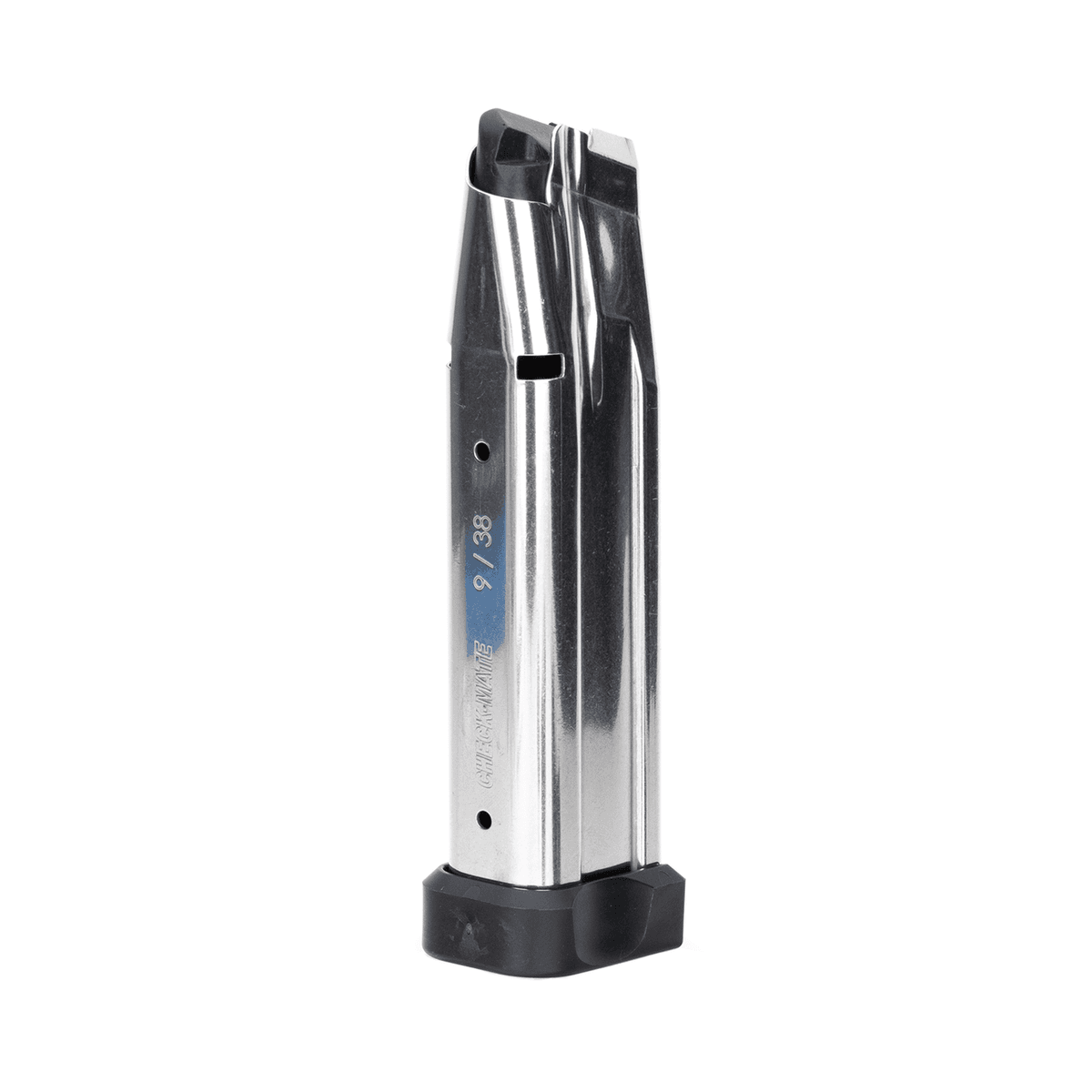
Check-Mate 2011 / Prodigy 9mm Magazine
- 17-round 9mm (20 and 26 round options)
- American milled stainless steel body
Affiliate links (?)
Get Staccato and Prodigy Comparisons and 2011 Build Guides
When Staccato or Prodigy pricing shifts, new T.O.R.O. plate options land, or the comparison changes, this guide updates and we send a note.
Accessories Both Platforms Need
Whichever 2011 you choose, the same short list of upgrades makes it run better: the plate that mounts your optic, the red dot itself, a magwell to speed reloads, and a holster that fits the gun and your light. The C&H Precision plates handle optic mounting on each platform, the Holosun 507C is the dot most buyers run on top, the Dawson Precision magwell funnels Prodigy reloads and closes part of the fit-and-finish gap to Staccato, and the Orpaz light-bearing holster carries the railed Staccato P. For the full upgrade path on the budget side, the Springfield Prodigy upgrades guide covers triggers and sights beyond this short list.
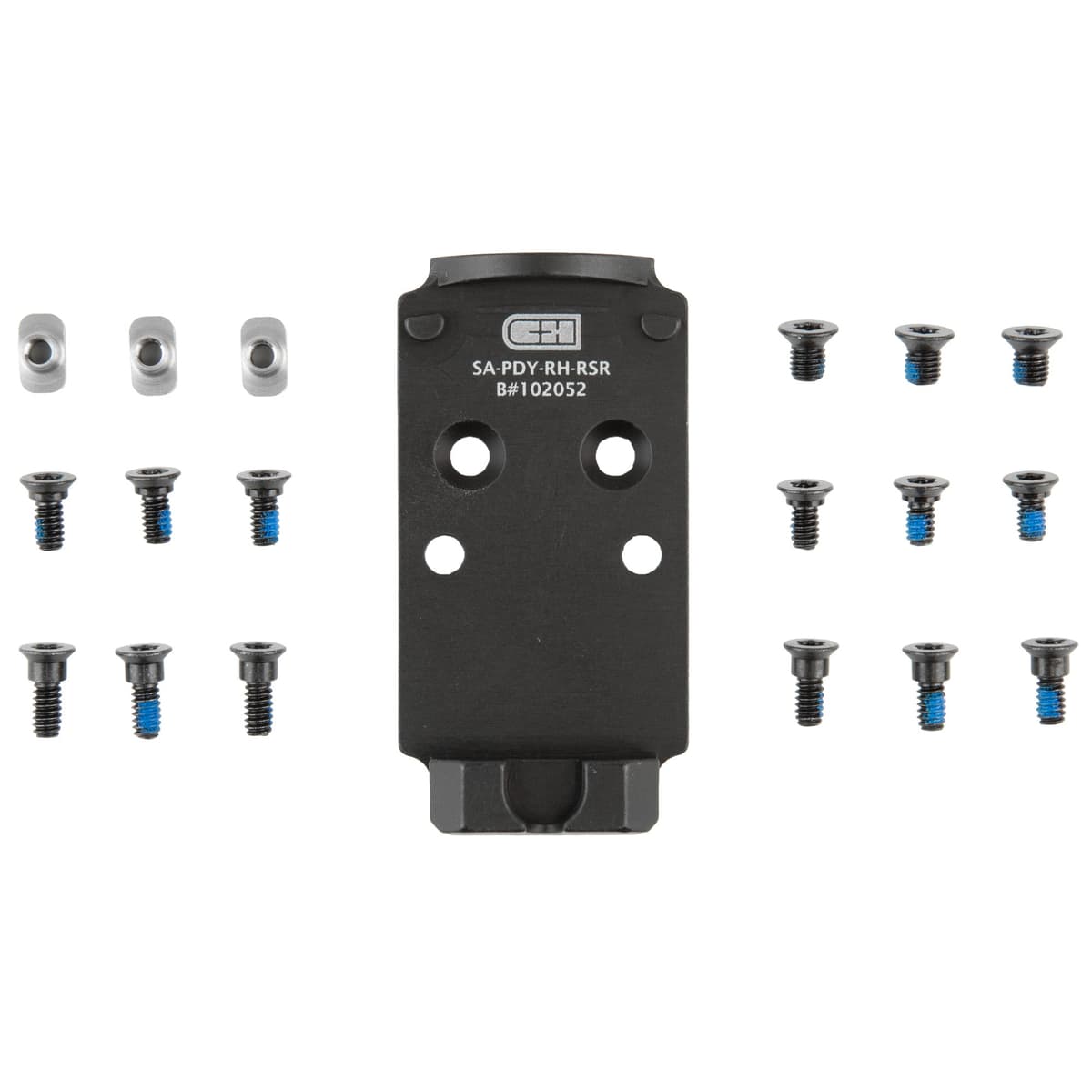
C&H Precision V4 AOS Plate (Prodigy to RMR/507C)
C&H Precision Staccato DUO RMR Plate
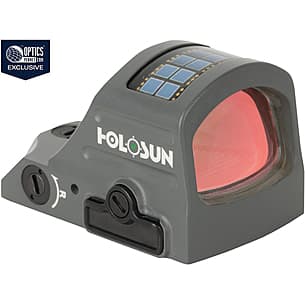
Holosun 507C X2
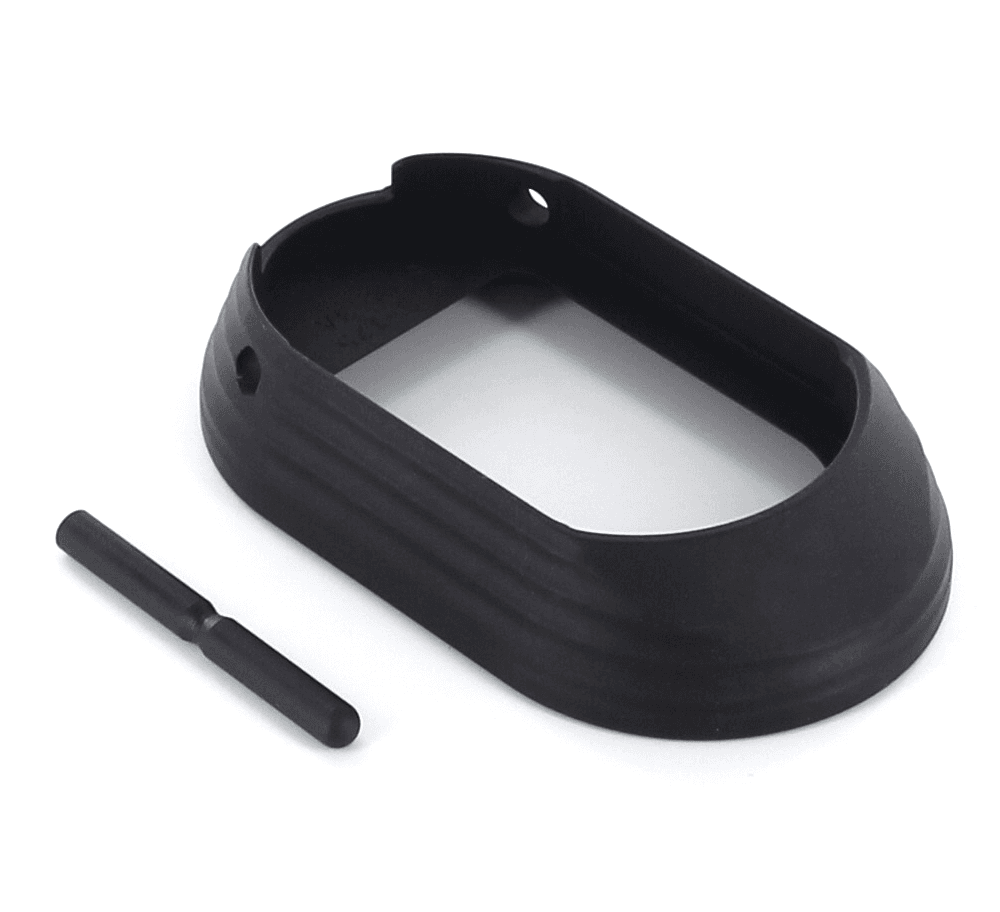
Dawson Precision Practical Advantage Magwell (Prodigy)
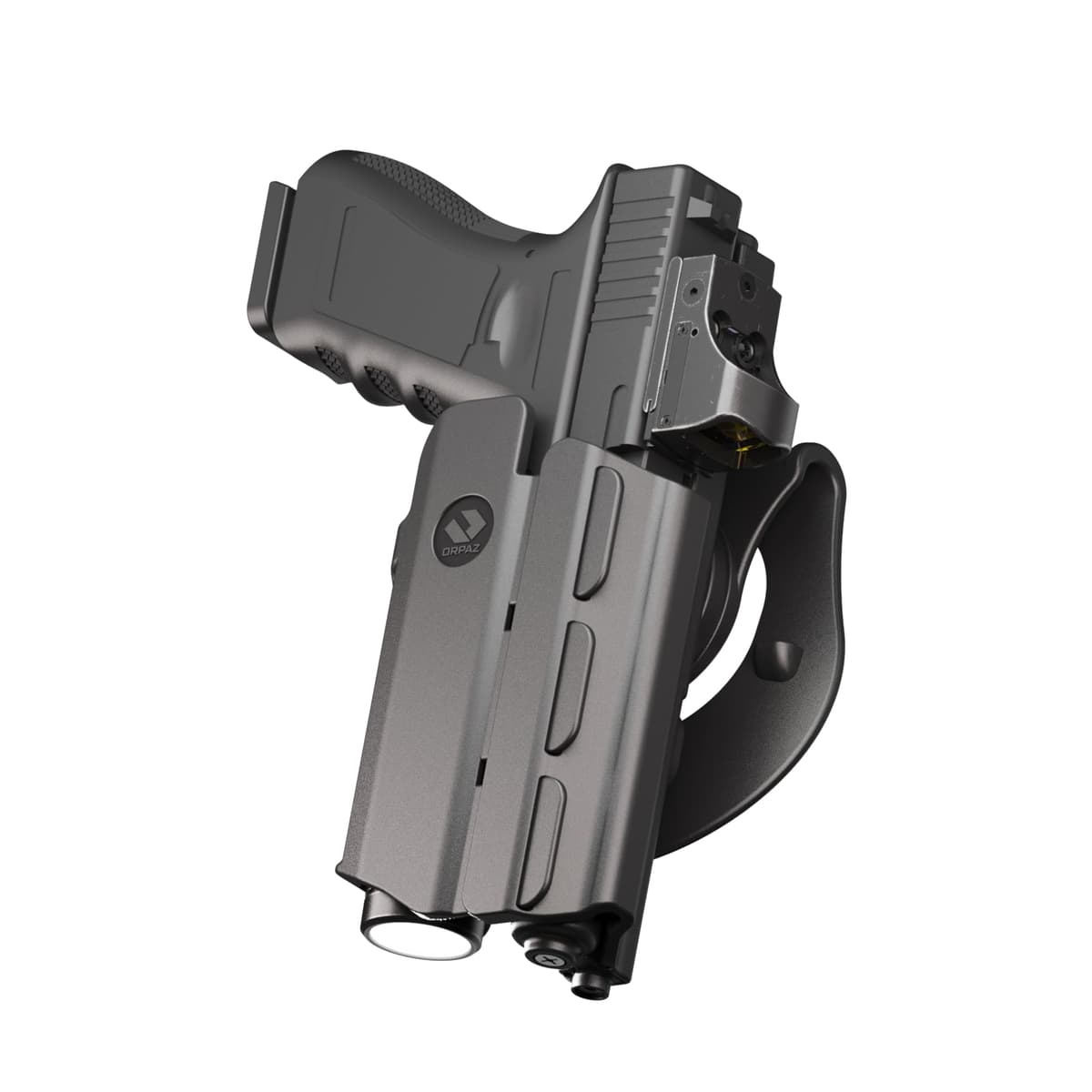
Orpaz T40 Light-Bearing Holster (Universal OWB)
Affiliate links - purchases support this site at no extra cost to you. (?)
Spec Your 2011 With the Right Optic, Light, and Holster
Both the Staccato and the Prodigy are loaded in the builder so you can stack a verified-compatible optic, light, and holster against each before you spend $1,500 or $2,500. If you are still cross-shopping the wider 2011 field, the SIG P211 vs Staccato HD comparison covers the Glock-mag and P320-mag 2011s that sit above this matchup.
Frequently Asked Questions
▶Does the Prodigy take Staccato mags?
▶Is the Springfield Prodigy worth the money?
▶What gun is comparable to a Staccato?
▶Is a Staccato as reliable as a Glock?
▶Do any police departments use Staccato?
▶Is the Springfield Prodigy a good pistol?
The Verdict
Buy the Springfield Prodigy for the value; step up to the Staccato only when the trigger, the duty record, and the finish are worth roughly double the ticket.
The Prodigy 5-inch and 4.25-inch capture most of the 2011 experience for about half the Staccato price, run the same 2011 magazines, and take the same optics. The Staccato P earns its premium on trigger, track record, and fit; the C2 earns it only if you want the lightest genuine Staccato you can conceal. Compare your shortlist in the best 2011 pistols ranking, check the traditional single-stack .45 alternative in our best 1911 pistols guide, or build either one out in the builder.