SIG Sauer P226: Complete History from XM9 Trials to Legion X5
From a Swiss-German engineering partnership to the sidearm that Navy SEALs trusted for 26 years, the P226 has defined what a combat handgun should be. On 226 Day, we trace its complete arc, from the 1984 XM9 trials to the 2025 X Legion.
Key Takeaways
- Born from the P220: SIG re-engineered the single-stack P220 with a double-stack magazine for the 1984 US military trials, creating the 15+1 capacity P226.
- Won on merit, lost on price: The P226 outperformed the Beretta 92F in reliability testing but lost the M9 contract because Beretta's total package cost was lower.
- 26 years with the SEALs: Navy SEALs adopted the P226 in 1989 after Beretta M9 slide failures injured operators. It served as MK24/MK25 through both Gulf Wars until the Glock 19 transition around 2015-2016.
- Still evolving at 42: The 2025 P226-X Legion and XCarry Legion prove the platform remains competitive, with features like the AX3 adjustable trigger and slide-integrated expansion chamber.
- 226 Day: SIG Sauer officially declared February 26 as P226 Day in 2024, marking the pistol's 40th anniversary.
Swiss Precision Meets American Ambition
The P226 exists because Swiss export law forced a partnership. In the early 1970s, Schweizerische Industrie Gesellschaft (SIG) of Neuhausen am Rheinfall needed a manufacturing partner to sell firearms abroad. Swiss regulations restricted direct arms exports, so SIG acquired a controlling interest in J.P. Sauer & Sohn of Eckernforde, Germany. The SIG Sauer name was officially established in 1976.
Their first major collaboration was the SIG Sauer P220, released in 1975 as a replacement for the legendary SIG P210. The Swiss Army adopted it as the Pistole 75 (P75), and it was initially sold in the US through Browning as the "BDA" (Browning Double Action). The P220 introduced the DA/SA trigger with a decocking lever that would become a SIG signature, but it had one critical limitation for military consideration: a single-stack magazine holding just 9 rounds of 9mm.
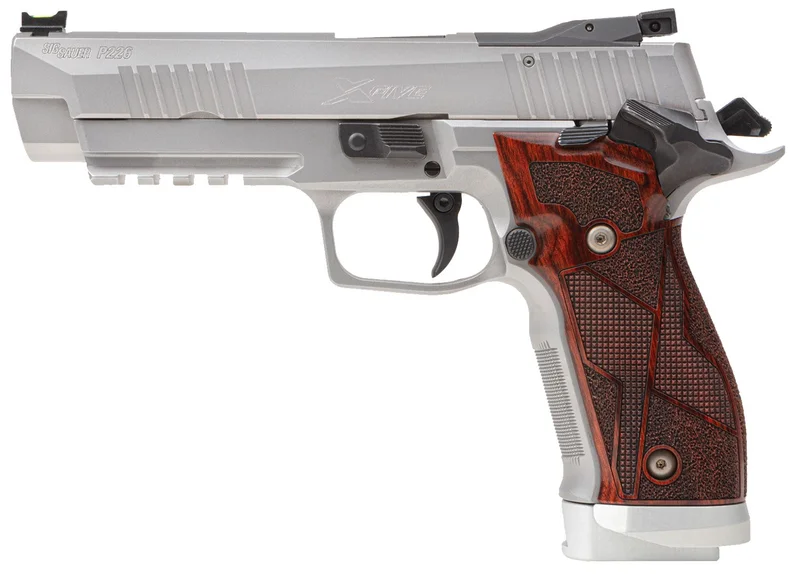
When the US military announced the XM9 Service Pistol Trials to replace the M1911A1, SIG saw an opportunity. They re-engineered the P220 with a wider grip to accept a double-stack magazine, boosting capacity to 15 rounds of 9mm. The P226 was born, purpose-built for the biggest military pistol contract in decades.
The XM9 Trials: Better Gun, Wrong Price
The Joint Service Small Arms Program (JSSAP) kicked off the XM9 trials in early 1984. NATO standardization on 9mm Parabellum meant the M1911A1's .45 ACP had to go. Eight manufacturers submitted pistols: Beretta, SIG Sauer, Smith & Wesson, Heckler & Koch (P7M8 and P7M13), Walther (P88), Steyr (GB), FN, and Colt.
The field narrowed fast. Steyr was eliminated in May for reliability issues. FN and Colt withdrew voluntarily. Walther, H&K, and Smith & Wesson were all terminated in September. By fall 1984, only two pistols remained: the Beretta 92SB-F and the SIG Sauer P226.
The P226 struggled in the dry mud test, scoring 79% while the Beretta passed near-perfectly. But in overall reliability testing, the numbers told a different story: the P226 recorded 12 total stoppages with only 1 requiring an armorer. The Beretta logged 20 stoppages, 9 of which required an armorer. On raw mechanical reliability, the SIG was the superior pistol.
Beretta won anyway. Per the GAO report, the M9 contract was awarded on lowest total package price. The individual P226 actually cost less than the Beretta 92F, but SIG's total bid (including magazines and spare parts) came in higher. The decision was purely financial, generating controversy that persists to this day.
When Beretta Broke: How the SEALs Found Their Sidearm
The story that cemented the P226's reputation happened three years after it lost the contract. In 1987, three Navy SEALs were injured when M9 slides cracked and broke during training, sending the rear portion of the slide into operators' faces. Injuries included lacerations requiring stitches, a broken tooth, and chest bruising. Eventually 14 slide failures were documented: 3 in the field, 11 in laboratory testing.
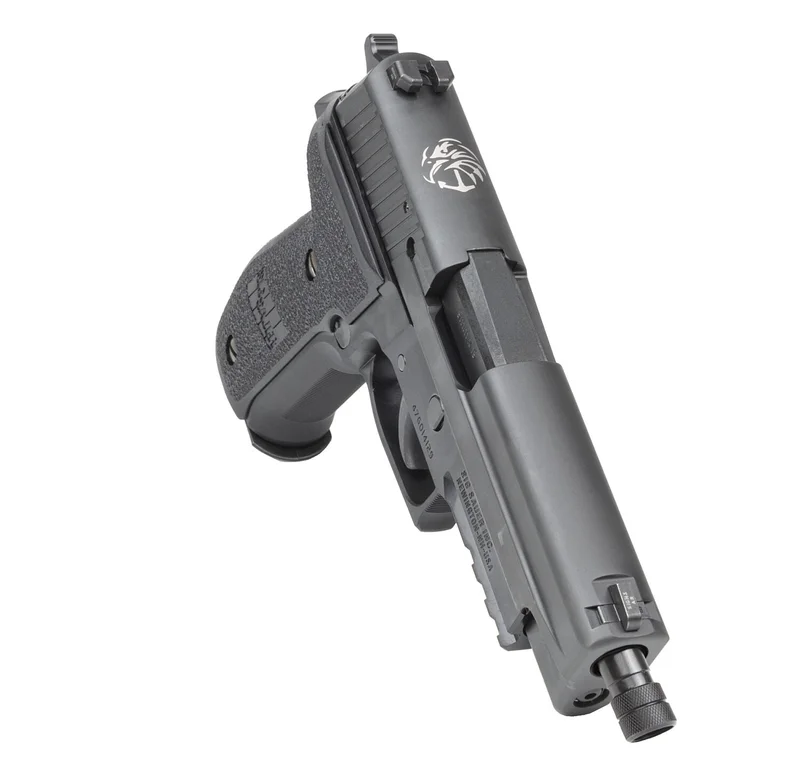
Investigation traced the failures to Italian-made slides with substandard metal toughness. Beretta modified the slide design, reinforced the frame, and moved production to their Maryland factory. No further breakages occurred. But the damage was done.
In 1989, the Navy SEALs dropped the Beretta and adopted the SIG Sauer P226. They never went back.
The SEAL P226 evolved through two military designations. The MK24 arrived in the late 1990s with a solid stainless steel slide, chrome-lined barrel, phosphate-coated internals for saltwater corrosion resistance, and SIG's proprietary rounded accessory rail. The anchor engraving on the slide became a symbol of Naval Special Warfare. The MK25 followed, swapping the SIG rail for a standard MIL-STD-1913 Picatinny rail. SEALs carried the P226 through both Gulf Wars, the War on Terror, and countless classified operations before transitioning to the Glock 19 (MK27) around 2015-2016.
In 2004, SIG released the first civilian Navy variant (P226-9-NAVY) with NSW commemorative serial numbers, raising over $100,000 for the Special Operations Warrior Foundation. The civilian MK25 followed in 2011 and remains in production today.
Worldwide Service
The P226's adoption spread far beyond Naval Special Warfare. The FBI selected it for field SWAT teams around 1988, while the US Secret Service, Federal Air Marshals, Texas Rangers, and Coast Guard all adopted variants. The Coast Guard began wide-scale deployment of the P226 DAK (double-action-only) in 2004.
The British military designated the P226 as the L105A1 (standard) and L105A2 (railed P226R). From 2007 onward, every infantry soldier deployed to Afghanistan received an L105A2 as a sidearm. The SAS adopted it as their standard issue pistol. The UK replaced the P226 with the Glock 17 (L131A1) for general military use in 2013, though Special Forces retained it longer.
The P226 is confirmed in service across more than 30 countries, including Australia, Canada, Finland, Germany, Japan, Singapore, and the United Arab Emirates. German Kampfschwimmer (combat swimmers) tested the P226 in the 1980s, and their positive results directly influenced the US Navy SEAL adoption. For a deeper look at other service pistol histories, see our best 9mm pistols guide.
Four Decades of Evolution
The P226 has never been a static design. SIG continuously refined the platform across manufacturing, trigger systems, and purpose-built variants. Here is the major evolution timeline.
Manufacturing Shifts
- 1984-1996Stamped sheet metal slide, German production (Eckernforde)
- 1996-presentCNC-machined stainless steel slide, US production (Exeter, NH)
The transition from stamped to machined slides was driven by the need to safely chamber .40 S&W and .357 SIG, both higher-pressure cartridges than the original 9mm.
Trigger Systems
- Original DA/SA~10 lb DA first shot, ~4.5 lb SA subsequent
- DAK (~2003)DAO with intermediate reset (~6.5 lb), designed by Harald Kellermann
- SRT (~2008)Short Reset Trigger, 60% shorter reset distance
- SAOSingle-action only with manual safety, ~4.5 lb flat trigger
- AX3 (2023)Three-way adjustable: pull weight, over-travel, length of pull
Notable Variants
- P226 Navy (2004)First civilian NSW variant, anchor-engraved slide, phosphate internals
- P226 DAK (2003)LE-focused DAO, adopted by US Coast Guard and DHS
- P226 X-Five (~2005)German Mastershop competition model, 5" barrel, stainless frame
- P226 SAS (~2007)Custom Shop carry melt, flush sights, all edges rounded
- P226 E2 (2010)Enhanced Ergonomics, reduced-reach grip, thinner profile
- P226 MK25 (2011)Civilian Navy SEAL spec with Picatinny rail, still in production
- P226 Legion (2015)Premium tier, Legion Gray Cerakote, G-10 grips, SRT, X-RAY3 sights
- P226 XFIVE (2022)US-made revival of competition X-Five, adjustable trigger
- XFIVE Legion (2023)Slide expansion chamber, AX3 trigger, TXG grips, optic-ready
- P226-X Legion (2025)4.4" bull barrel, 18-round flush-fit mags, adjustable trigger
The Legion Era and Current Lineup
SIG Sauer launched the Legion series on October 6, 2015, with the P226 and P229 as the inaugural models. The Legion concept was straightforward: take the P226 platform, apply every premium upgrade SIG offers, finish it in a distinctive gray Cerakote Elite coating, and grant buyers membership in an exclusive community with custom shop access. The Legion Gray Cerakote finish became instantly recognizable.
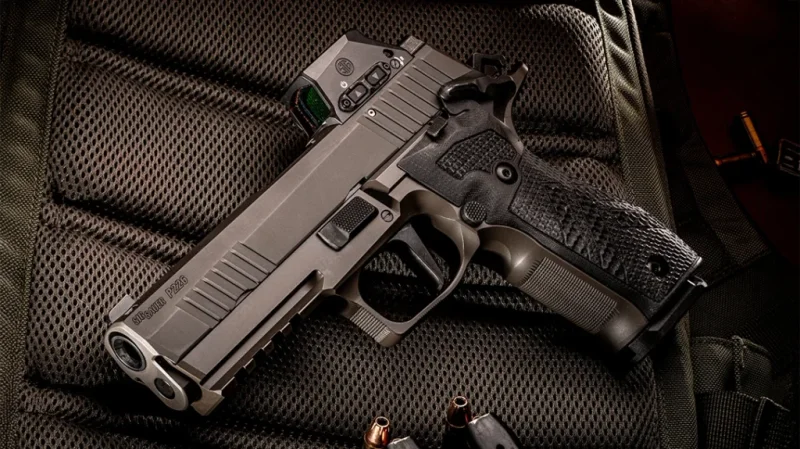
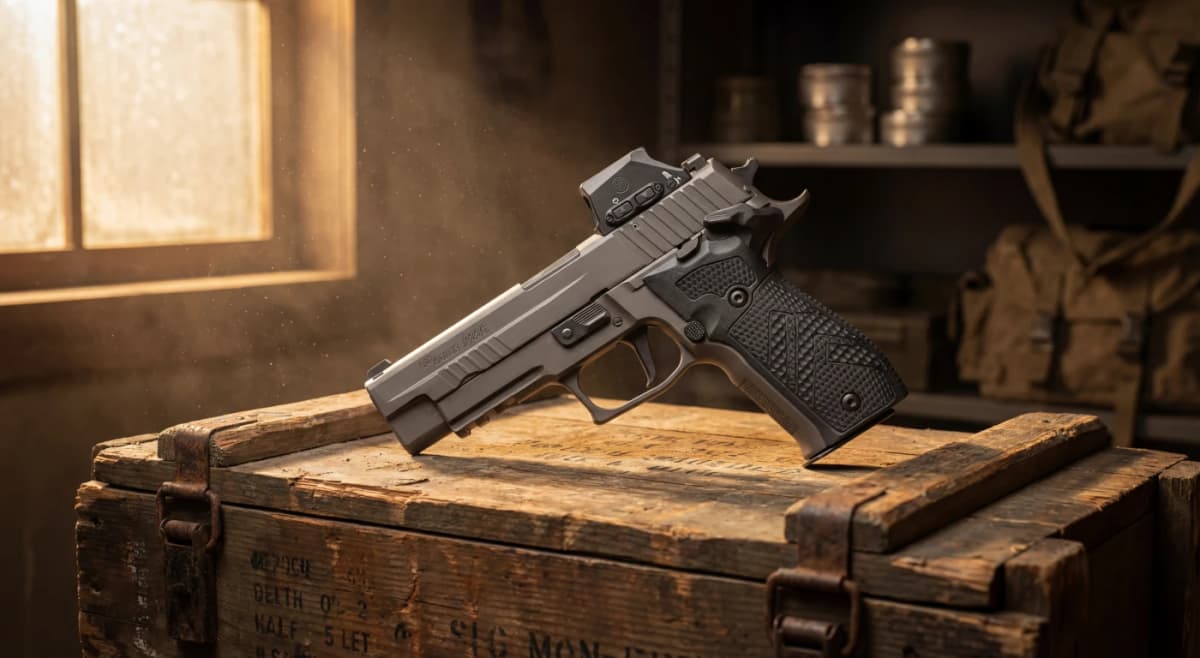
The Legion P226 includes the Short Reset Trigger, custom G-10 grips with an embedded Legion medallion, X-RAY3 day/night sights, an enhanced beavertail, aggressive checkering, and front cocking serrations. The SAO variant adds a flat-faced trigger and manual thumb safety, targeting shooters who want 1911-like control with P226 capacity. For how SIG's modern competition pistols compare to rivals, see our coverage of the SIG P211 GT4 and GT5.
The competition tier pushed even further. SIG's Custom Works revived the XFIVE name in 2022 with an American-made 5-inch bull barrel model featuring a fully adjustable trigger. The XFIVE Legion (late 2023) added a slide-integrated expansion chamber for recoil reduction and the AX3 three-way adjustable trigger system. It ships with tungsten-infused TXG grips and an optic-ready slide. SIG has since stretched the line further with the optic-ready P226-XFIVE Extreme and Nightmare, two full-size 9mm builds on the Nitron XSeries SIG-LOC slide. The current competition ecosystem also includes the Cascade P226X magwell and 23-round basepad system for the US-made X-Five frames.
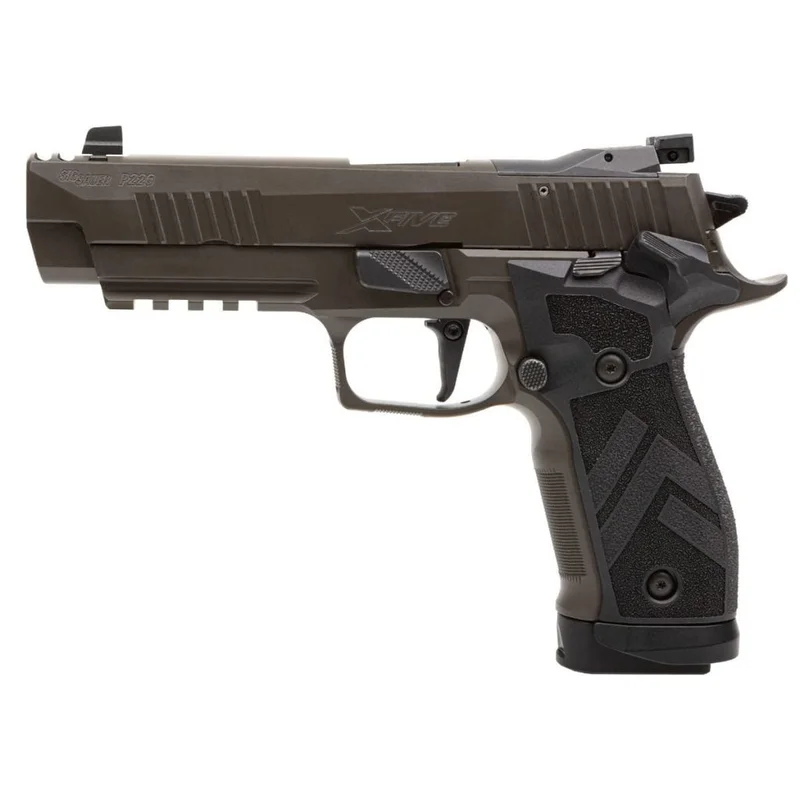
At SIG NEXT 2025, two new models debuted: the P226-X Legion (4.4-inch match-grade bull barrel, 18-round flush-fit magazines) and the P226-XCarry Legion (compact 3.8-inch barrel for carry). Both feature enhanced ergonomics, optic-ready slides, and the Legion finish. SIG currently produces nine P226 configurations, from the heritage MK25 to the XFIVE Legion flagship.
Pistol Optics for Optics-Ready P226 Models
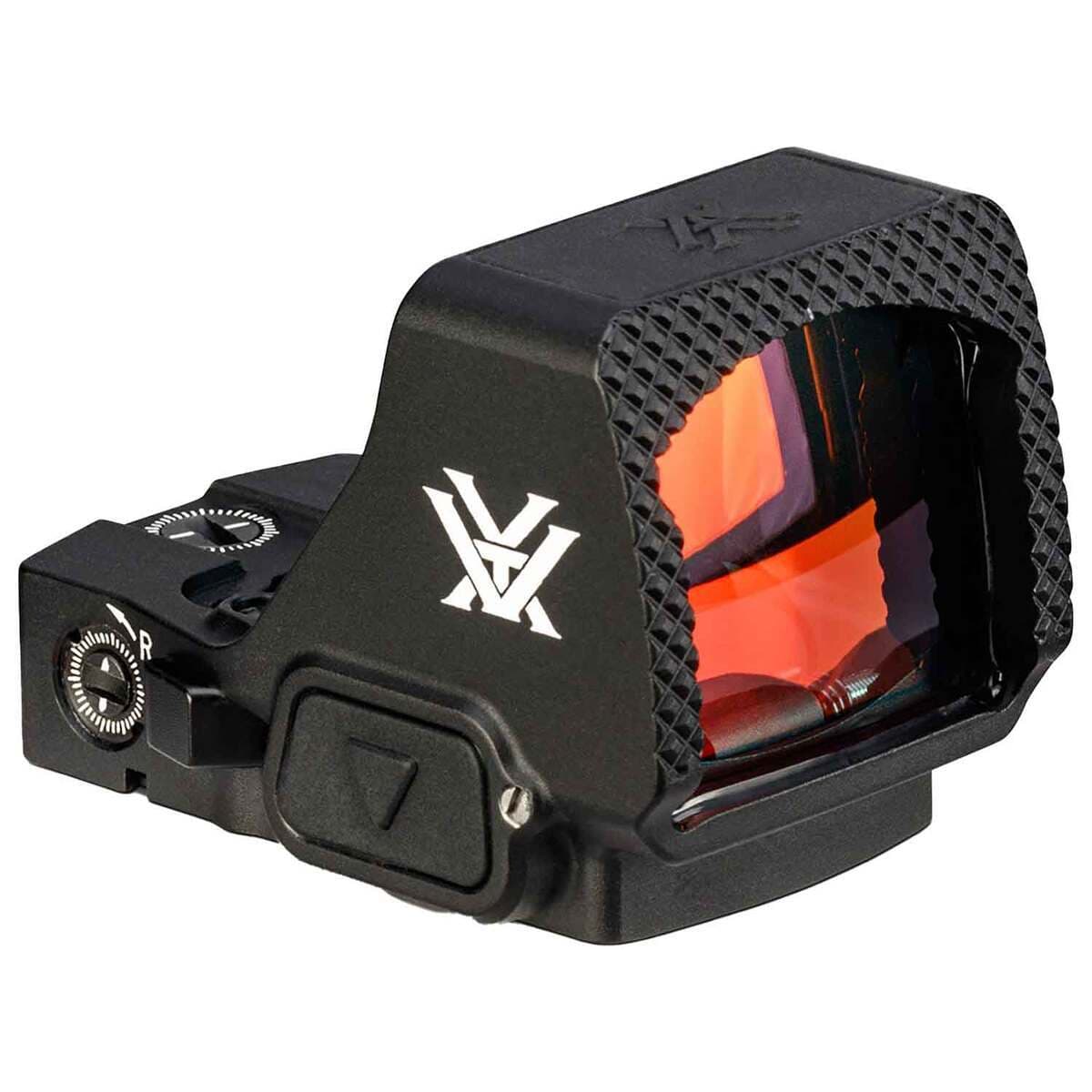
Vortex Defender-XL Micro Red Dot
- 2/5/8 MOA red dot
- DeltaPoint Pro footprint
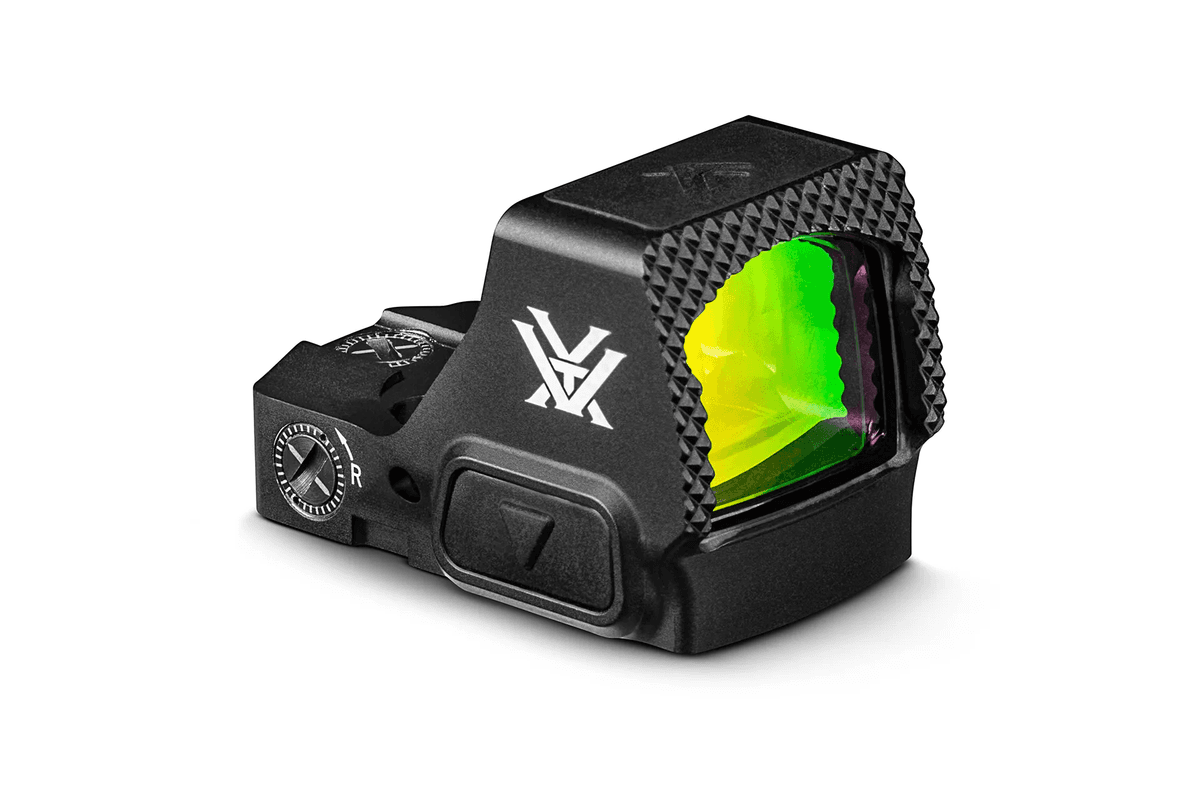
Vortex Defender-ST Micro Red Dot
- 3 or 6 MOA red dot
- DeltaPoint Pro footprint
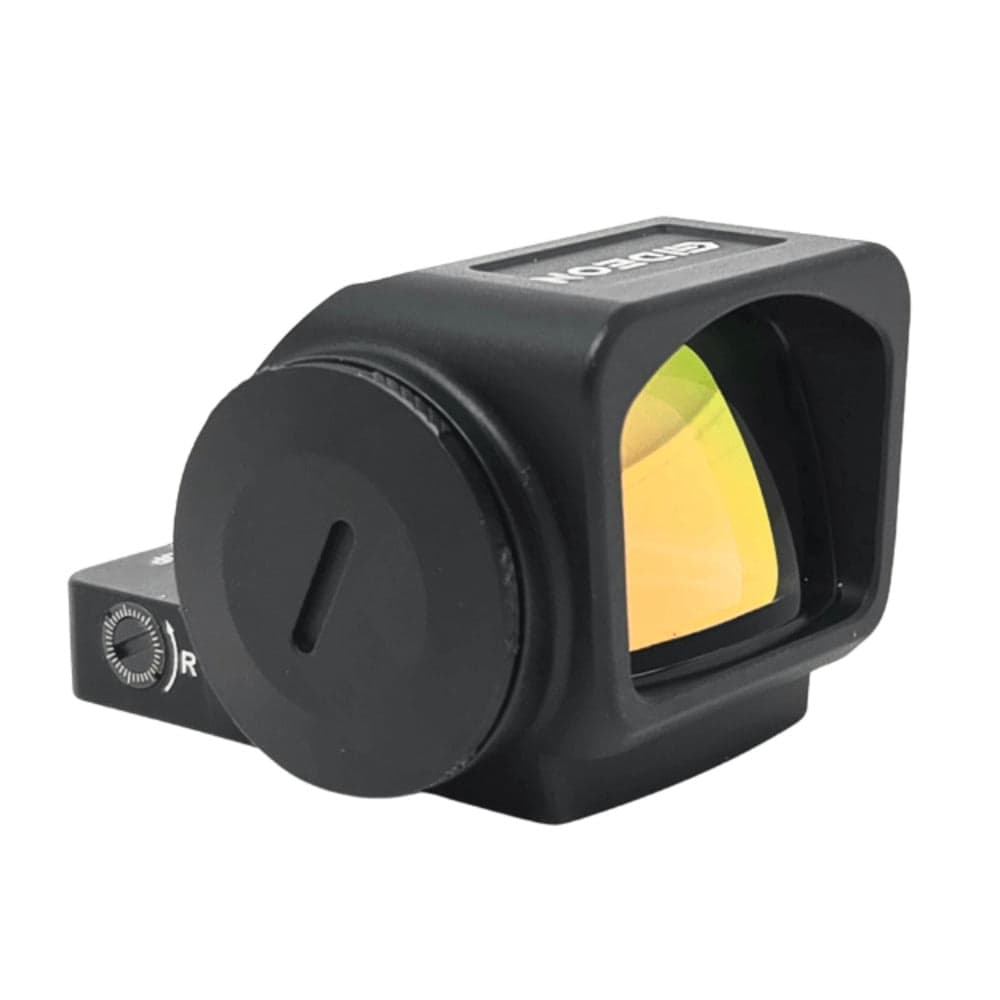
Gideon Optics Granite Competition RMR
- 6 MOA red or green dot
- RMR-compatible footprint
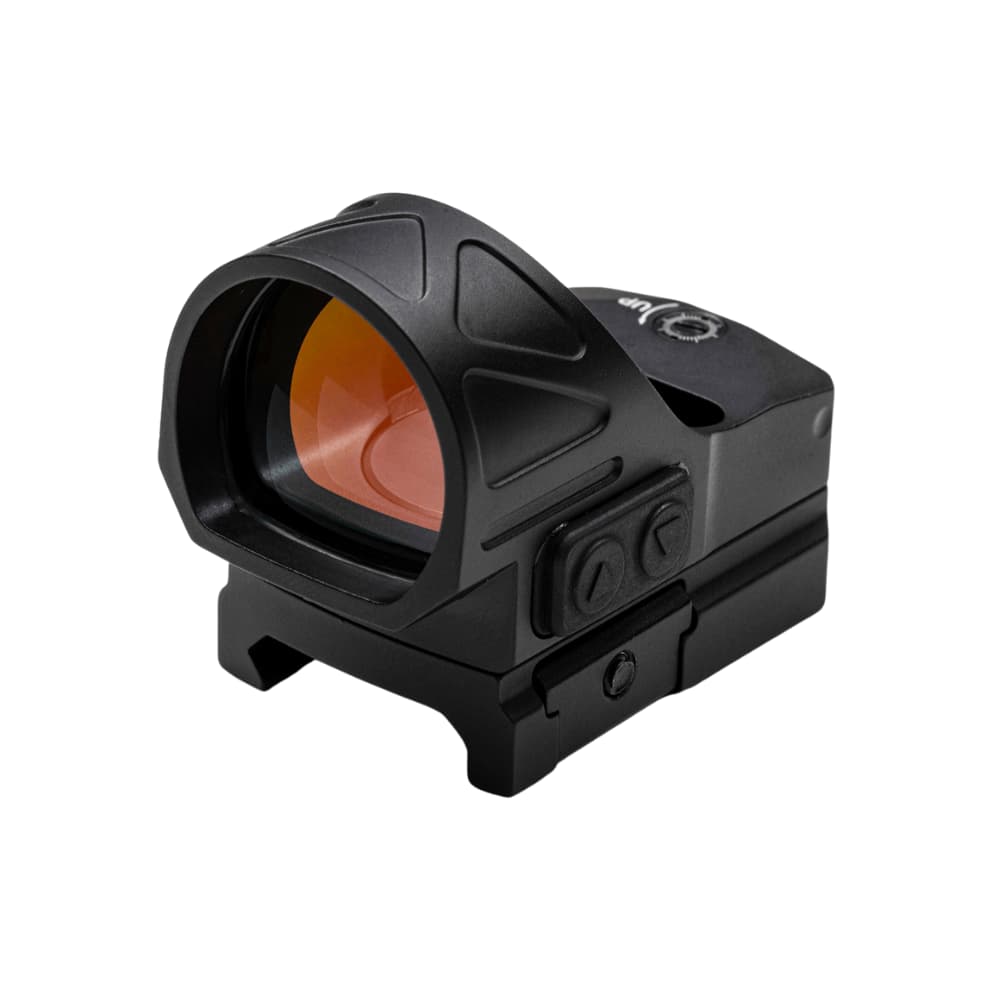
Gideon Optics Omega
- 3 MOA dot or 45 MOA circle-dot
- RMR footprint
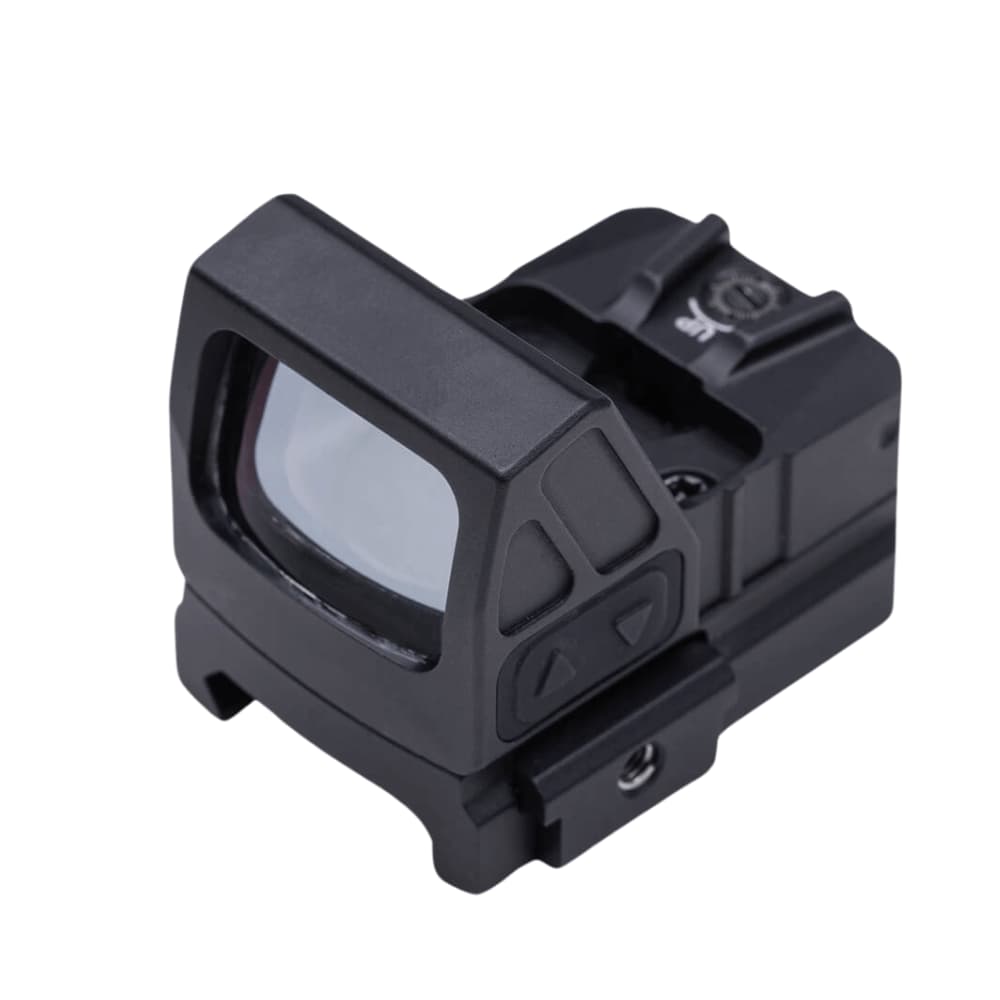
Gideon Optics Rock
- 3 MOA dot or 45 MOA circle-dot
- RMR footprint
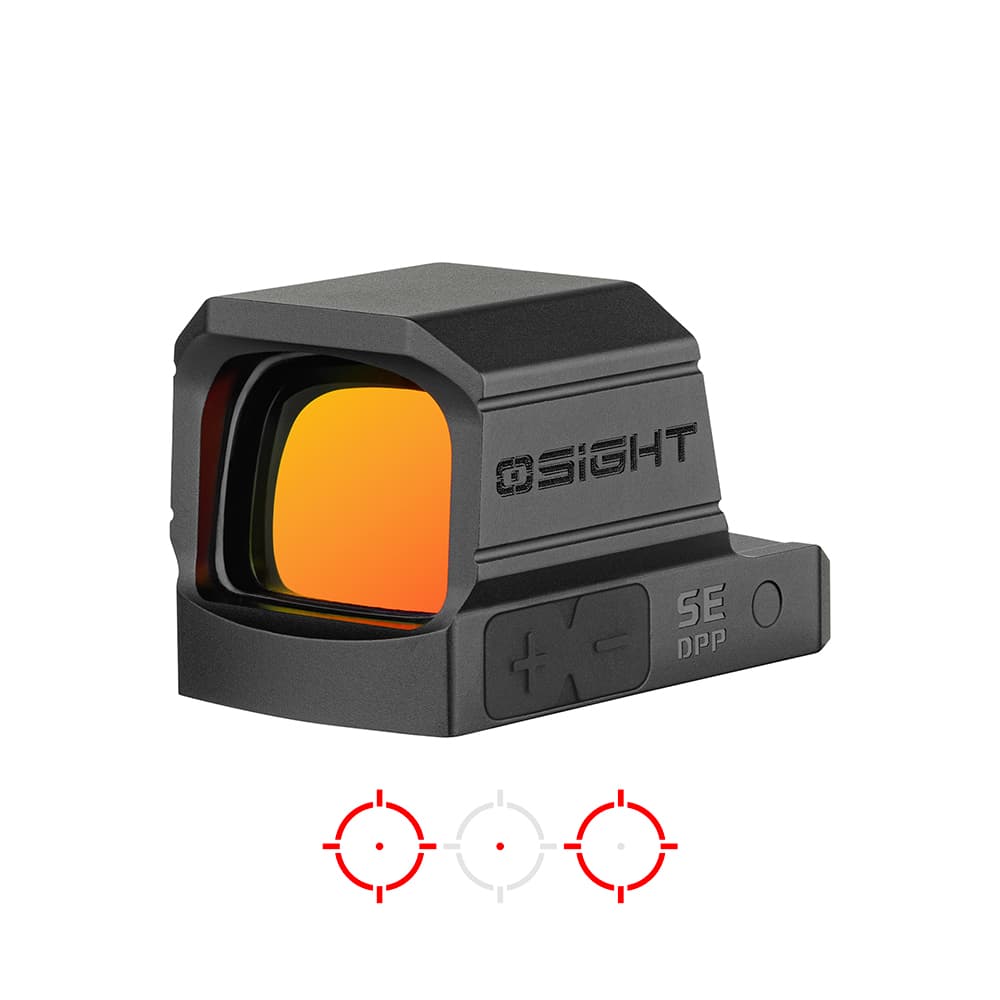
Osight SE DPP Enclosed Red Dot
- 2 MOA dot + 32 MOA circle MRS
- Enclosed emitter, DeltaPoint Pro footprint
Affiliate links (?)
Cultural Icon
The P226 has appeared in over 100 films. John Travolta carried a two-tone P226 as Castor Troy in Face/Off (1997), one of the most iconic prop guns in cinema history. Daniel Craig's James Bond used one across Quantum of Solace (2008), SPECTRE (2015), and No Time to Die (2021). Kiefer Sutherland carried a two-tone P226 as Jack Bauer in early seasons of 24.
In gaming, the P226 MK25 is the default sidearm for all SAS operators in Rainbow Six Siege (Sledge, Smoke, Thatcher, Mute), and appears across the Call of Duty, Battlefield, and Metal Gear Solid franchises. Our Tomb Raider gun history shows how another long-running series borrowed recognizable pistol features without keeping one licensed model across every era.
But the P226's real cultural weight comes from one phrase: "the Navy SEAL gun." Despite the SEALs transitioning to the Glock 19 around 2015-2016, the MK25 with its anchor-engraved slide remains synonymous with Naval Special Warfare. SIG has leaned into this association with every marketing campaign, and the civilian MK25 remains one of their most recognizable products. For owners looking to set up a pistol optic on their railed P226, check our best pistol red dot guide.
Stay Updated on SIG Sauer
Get notified when SIG releases new P226 variants, Legion models, and limited editions. We also cover hands-on reviews, new product launches, and industry developments.
Frequently Asked Questions
▶Why did the Navy SEALs choose the SIG P226 over the Beretta M9?
▶What is 226 Day and when is it celebrated?
▶What is the difference between the SIG P226 MK24 and MK25?
▶What SIG P226 models are currently in production?
▶Did the SIG P226 win the XM9 military trials?
42 Years and Counting
The P226 was designed for one specific purpose: winning a US military contract. It failed at that goal and then proceeded to build one of the most storied service records of any combat handgun in history. Navy SEALs, the British SAS, the FBI, the Secret Service, and military and police forces across 30+ countries chose the P226 on its merits, not because a procurement committee selected the cheapest bid. SIG would eventually win the U.S. military sidearm contract decades later with the P320-based M17, which became the official Army sidearm in 2017.
At 42 years old, the platform keeps finding new relevance. The 2025 X Legion and XCarry Legion prove SIG has no intention of letting the P226 become a legacy product. Whether you carry an MK25 because of its SEAL heritage, run an XFIVE Legion in USPSA, or just appreciate the feel of the DA/SA trigger that started it all, the P226 has earned its day.
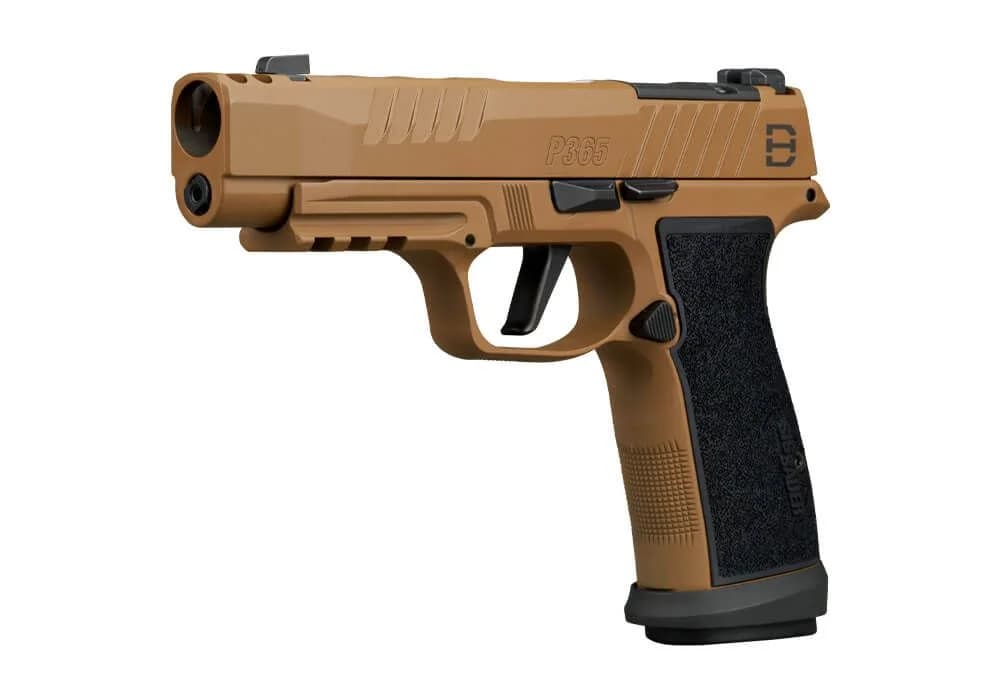
Happy 226 Day. For the best P226 accessories, visit our friends over at Cascade Range Systems. Check out our platform catalog for SIG Sauer rifle configurations, or use the interactive builder to spec out a SIG MCX or M400 build. For more SIG coverage, see our SIG Spear LT 3,000-round review and the P365-DH3 Daniel Horner edition. The hammer-fired P226 also remains a clean buy in states tightening the screws on striker-fired pistols, including Connecticut, whose Public Act 26-41 exempts hammer-fired pistols from its convertible-pistol definition. A September 30, 2026 preliminary injunction now blocks that law's sales restriction, allowing Glock sales to continue as well. If you already own a P226 or P229, our SIG P226 & P229 upgrade guide ranks the Grayguns trigger work, grips, sights, and optic-ready slide that tune the legacy DA/SA P-Series.