SIG P365-FLUX TACKIT Review: $1,720 Pocket-PDW Tested
Three-hundred-plus rounds through the factory SIG P365-FLUX TACKIT package. It is snappy, the brace jabs you in the shoulder, and the slide reciprocates inches from your face. None of that matters. The dot does not move, splits stay tight, and rifle-class hits come out of a footprint that fits in an appendix holster.
Key Takeaways
- →Complete factory package: the TACKIT ships with a ROMEO-X Compact red dot pre-installed via SIG-LOC, FOXTROT 1X weapon light, three 17-round mags, one 25-round mag, and a Flux Gen 2 holster. No assembly, no separate optic plate, no separate light purchase.
- →Recoil is genuinely unpleasant: snappy impulse from a light gun, the spring-deployed brace pushes back into your shoulder and slaps the side of your face on every shot, your trigger finger gets pinched between the trigger and the trigger guard on every press, and the slide cycles close to your face. After 100 rounds you feel it. After 200 you stop wanting to.
- →The hits are not negotiable: dot stays on target through fast strings, rapid follow-up shots are effortless, and 25-yard hits feel like 15-yard pistol hits. Recoil feels snappy but the muzzle does not actually jump.
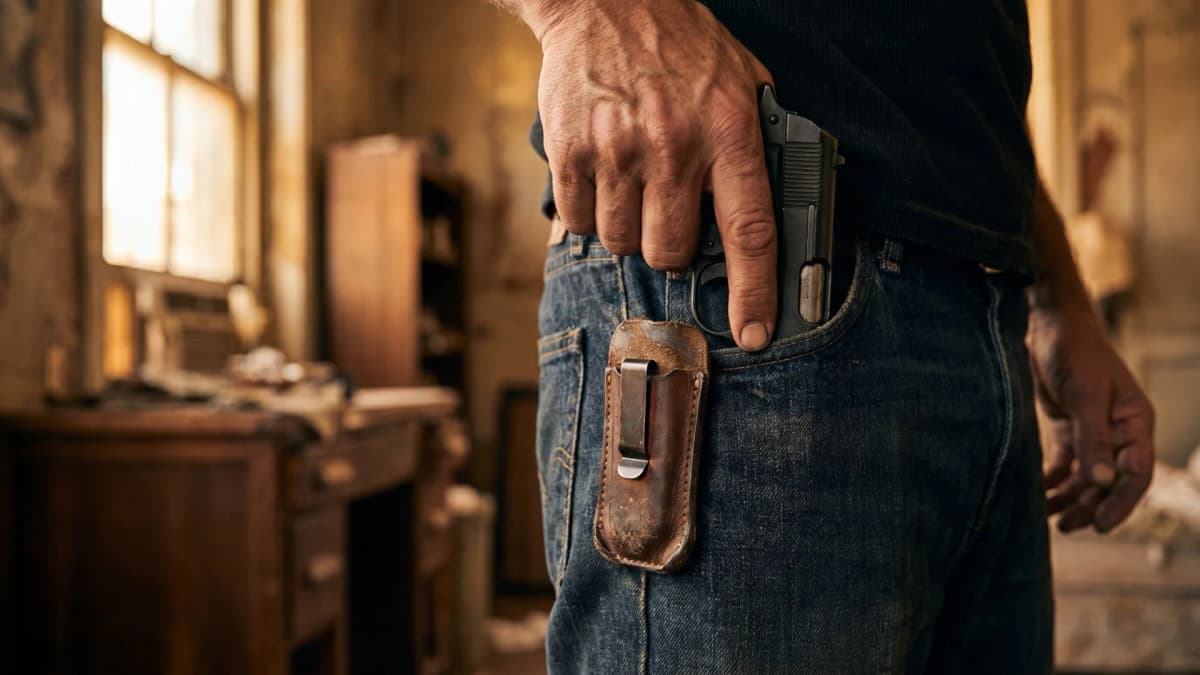
- →Holster-sized footprint: folded, the FLUX is genuinely not much larger than a P365 with a light and optic. Appendix IWB carry is a real option for those willing to tolerate the bulk. Easier roles are bag gun, truck gun, or short-deployment PDW, especially paired with a P365 X-Macro CCW that shares magazines.
- →Nothing else in the segment is close:comparable Roni/MCK setups need a separate firearm, separate optic, and separate light. The FLUX ships as one serialized package and shoots better than any of them.
SIG P365-FLUX TACKIT
A complete factory nano-PDW with optic, light, magazines, and holster
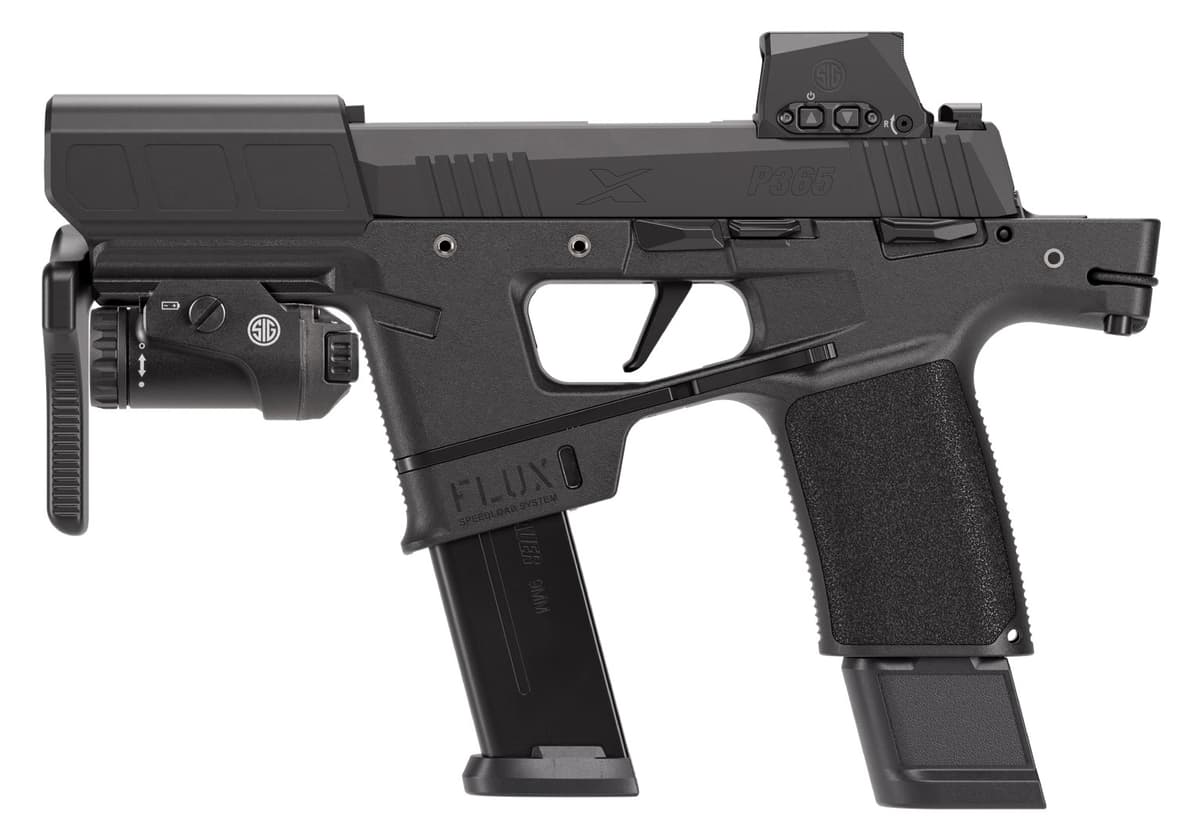
Complete factory P365-FLUX package: 6-inch barrel, ROMEO-X Compact red dot, XRAY3 sights, FOXTROT 1X light, three 17-round mags, one 25-round mag, and Flux Gen 2 holster. SKU 365FLUX-9-BXR3-RXSL-TACKIT.
- +Complete factory turnkey package (optic, light, mags, holster)
- +Rifle-class hits from a holster-sized footprint
- +6-inch barrel gains meaningful velocity over base P365
- −Barrel is not threaded from the factory (no direct suppressor mounting)
- −Snappy, uncomfortable recoil impulse
- −Slide reciprocates close to the face
Affiliate links (?)
What the TACKIT Package Actually Buys You
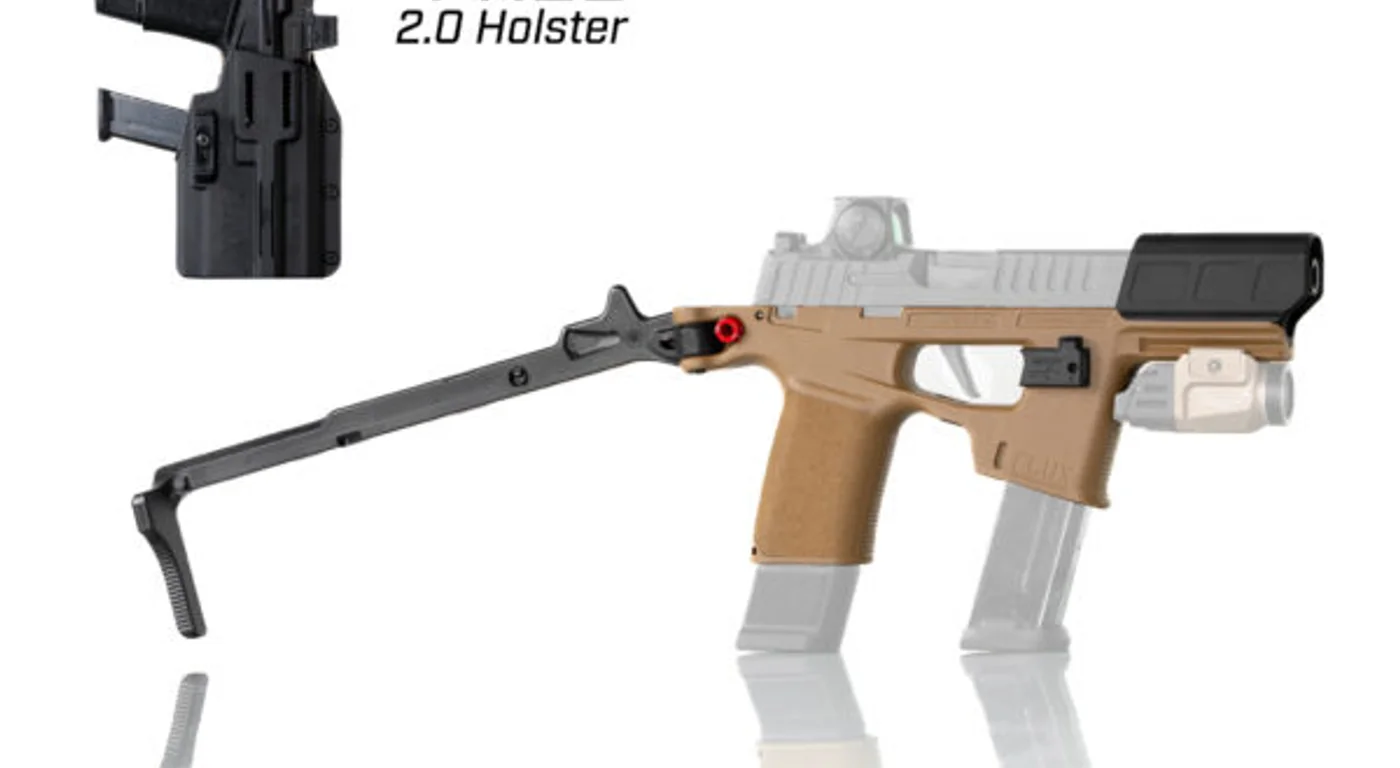
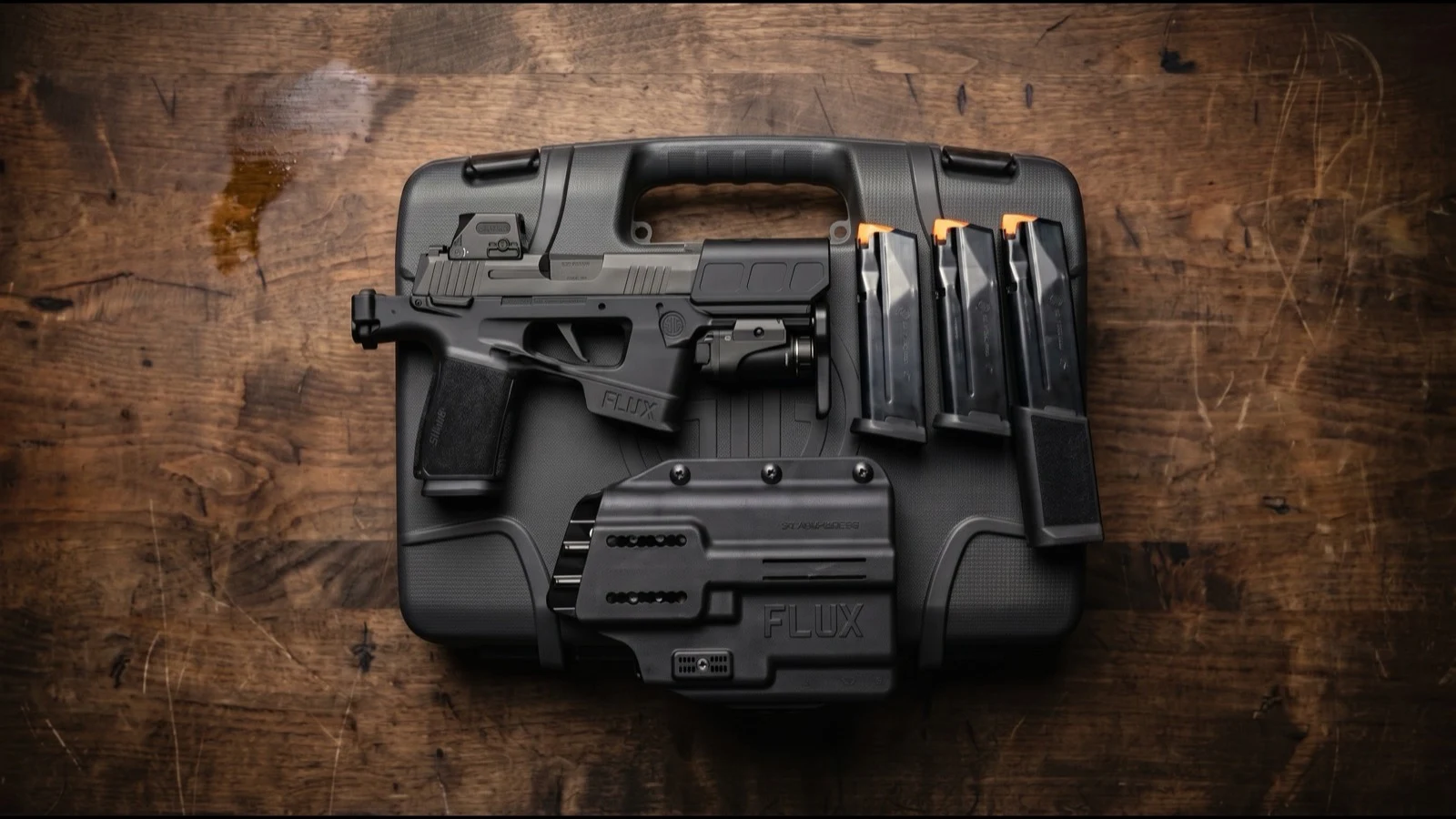
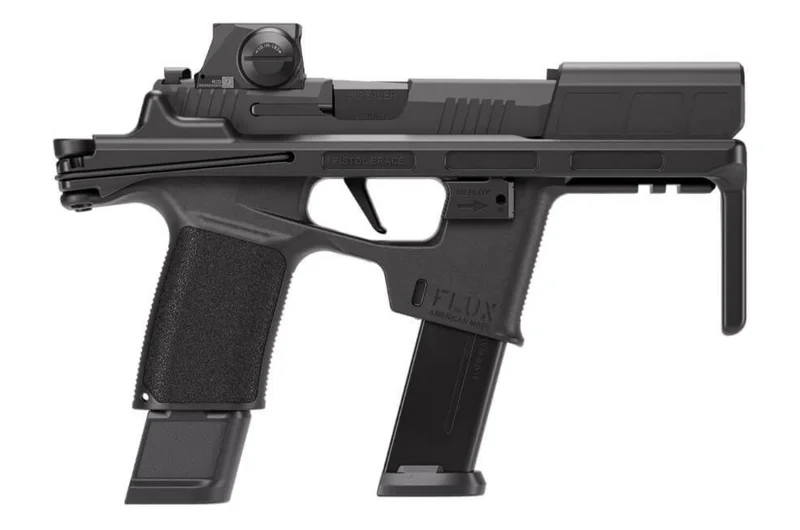
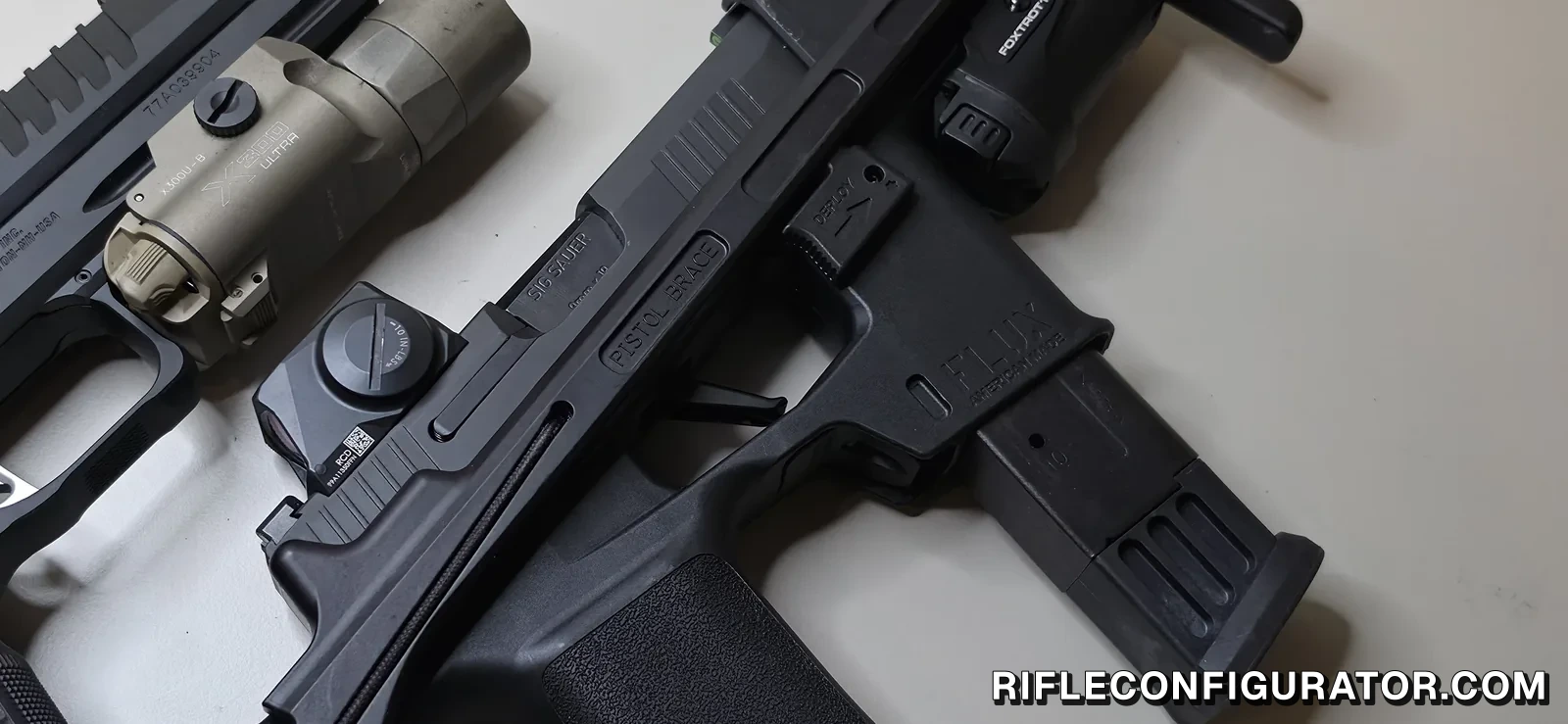
The TACKIT is the complete-package SKU. SIG and Flux Defense co-developed the firearm, and SIG sells it as one serialized unit. The box contains the P365-FLUX pistol with SIG P365 X-Macro internals housed in the Flux Raider chassis, a 6-inch barrel, a SIG-LOC-mounted ROMEO-X Compact red dot with a circle-dot reticle, XRAY3 day/night iron sights co-witnessed underneath, a SIG FOXTROT 1X weapon light, three 17-round steel magazines, one 25-round steel magazine, and a Flux Gen 2 quick-deploy holster sized for the full package.
That last detail matters. The Flux Gen 2 holster clamshells around the folded chassis and offers an optional auto-deploy feature: rigged correctly, the spring-loaded brace pops to full extension as the gun clears the holster, so it lands on target already shouldered. Auto-deploy is opt-in, not mandatory. If you would rather not rely on the holster mechanism, the chassis has a manual deployment button you can hit thumb-on with either hand once the gun is out. You do not get a comparable complete-package experience anywhere else in the pistol-chassis market. A Roni, MCK, or chassis-only Flux Raider needs a donor pistol, an optic, a light, and a holster sourced separately. The TACKIT eliminates the assembly project.
How It Shoots
The FLUX is unpleasant to shoot. The recoil impulse is snappy and quick because the system is light, the bore axis sits high relative to the support hand, and the spring-loaded brace transmits the impulse straight into your shoulder pocket. The brace also swings into the side of your face on every shot, so by the end of a magazine you have a hot spot on your cheekbone whether you wanted one or not. The slide reciprocates a few inches from your face, which feels exactly as bad as it sounds the first time a piece of unburned powder grazes your eye protection. The trigger guard adds its own tax: with a stocked shooting grip, your trigger finger gets pinched between the trigger and the trigger guard on every press, and a long range session leaves the pad of your index finger bruised.
And it does not matter. Every shot lands where the dot was when you pressed. The muzzle does not actually rise, even though the impulse feels violent. Rapid follow-up shots are effortless: the dot returns to center on its own, the support hand holds the chassis flat against the brace tension, and you can run the trigger as fast as you can process the dot. Splits stay in the 0.15-0.20 second range with no conscious recovery work between shots. 25-yard hits feel like 15-yard pistol hits. The Miculek family has demonstrated the platform outpacing traditional pistol-caliber carbines on USPSA-style stages, and after spending a range session with the gun, that is not a stretch. It shoots like a stocked weapon because mechanically it is one, just compressed into a footprint a third of the size.
The chassis adds a manual safety the base P365 does not have. It is functional but stiff: it takes a deliberate press to flip off, and the lever does not have the broken-in break of a 1911 or a Beretta 92. Worth knowing if you plan to run the FLUX from the holster under stress, because it is one extra deliberate motion in the draw stroke. You can carry it off-safe and rely on the trigger guard like a striker pistol, or you can train the safety into the draw and accept the time cost.
You pay for the capability in physical wear. We ran 300+ rounds of mixed 115- and 124-grain 9mm through the gun and the wear is real: a hundred-round session with the FLUX leaves you more beat up than a two-hundred-round session with a base P365. The shoulder bruising, the brace repeatedly slapping your cheek, the trigger guard pinching your trigger finger on every press, the support-hand pressure required to keep the brace from walking, and the proximity of the slide to your face all add up. If your shooting standard is comfort, this is the wrong gun. If your shooting standard is hits per second from concealed draw, almost nothing else in the segment competes.
P365-FLUX Video Reviews
Hands-On at the Range
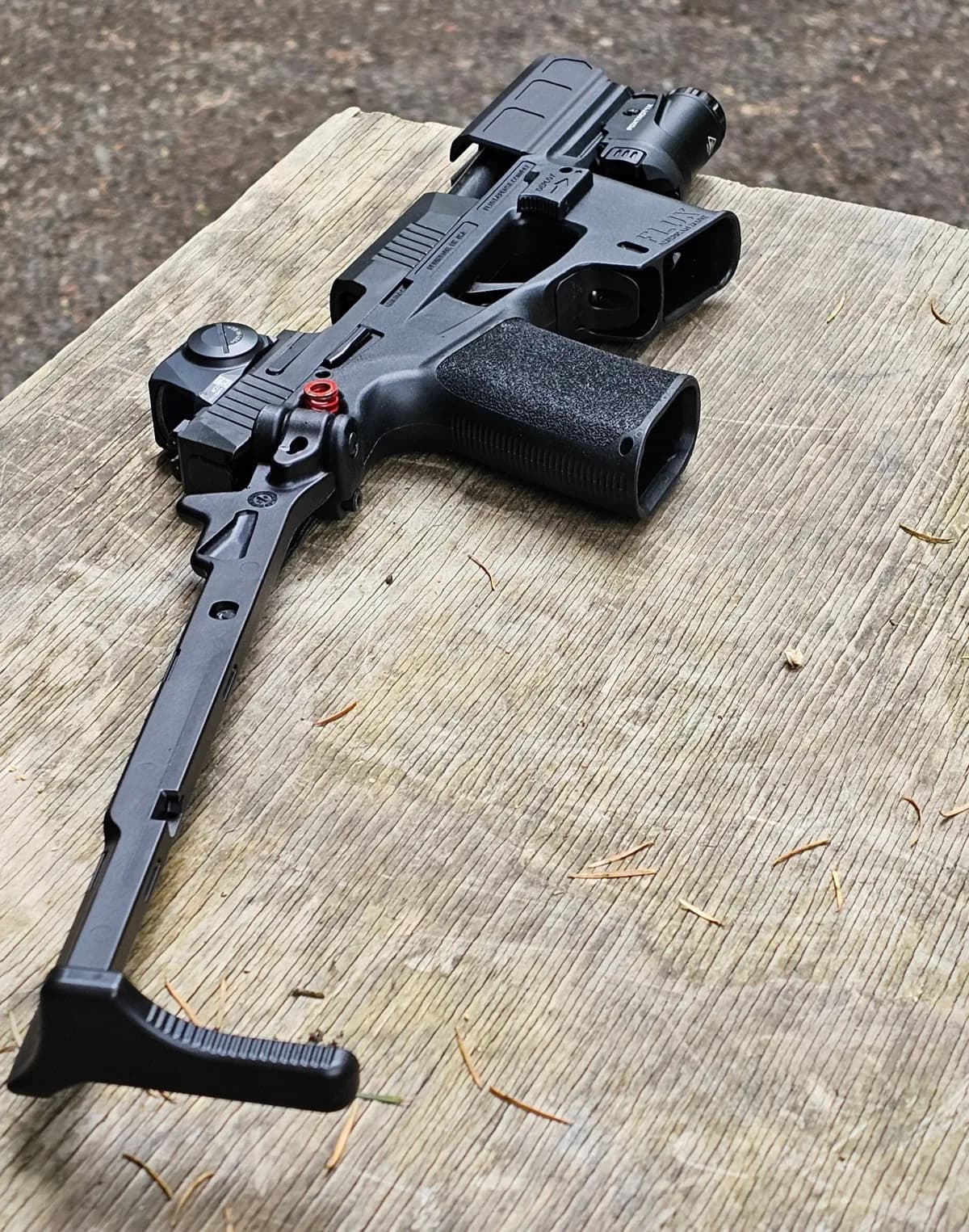
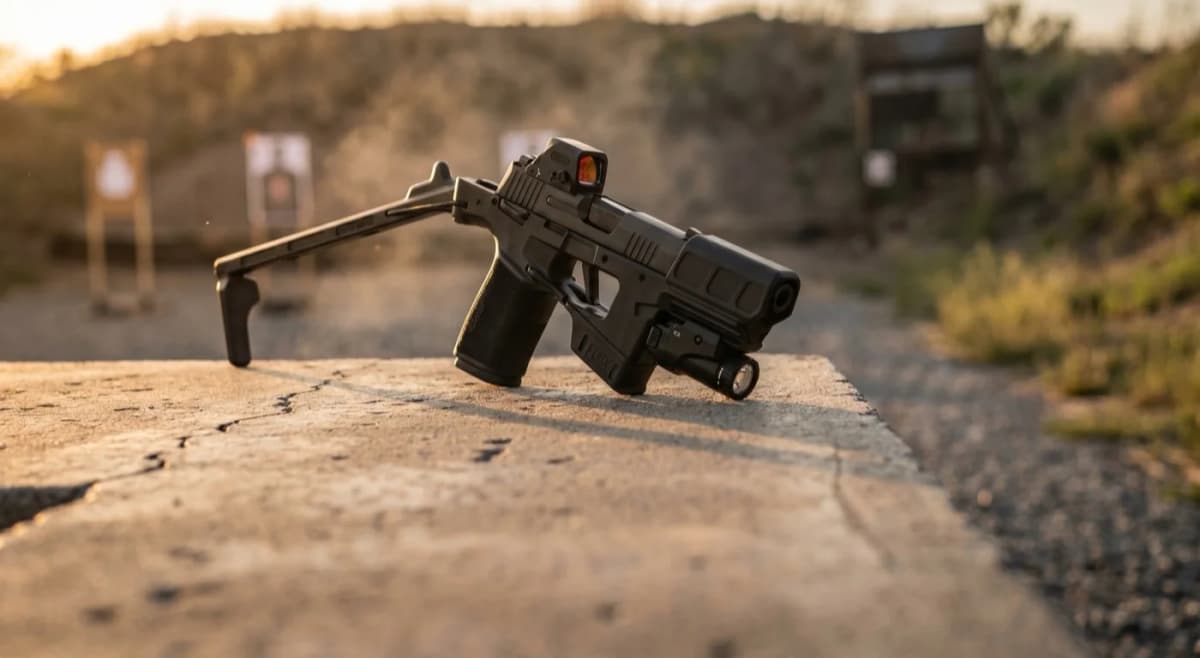
P365-FLUX TACKIT with the brace deployed: ROMEO-X Compact, FOXTROT 1X light, manual safety, full chassis extended.
Concealment and the Folded Footprint
Folded, the P365-FLUX is genuinely handgun-sized. The brace collapses tight against the chassis, and the entire package fits inside the Flux Gen 2 holster at roughly the footprint of a full-size service pistol with a short red dot. Honestly it is not much larger than a P365 with a weapon light and a slide-mounted optic. Appendix IWB carry is a real option if you are willing to commit to it. The chassis is wider than a base P365, the holster is bulkier, and printing under a t-shirt requires more attention than EDC of a Macro, but for shooters who want a stocked weapon under their shirt and accept the comfort tax, the FLUX works.
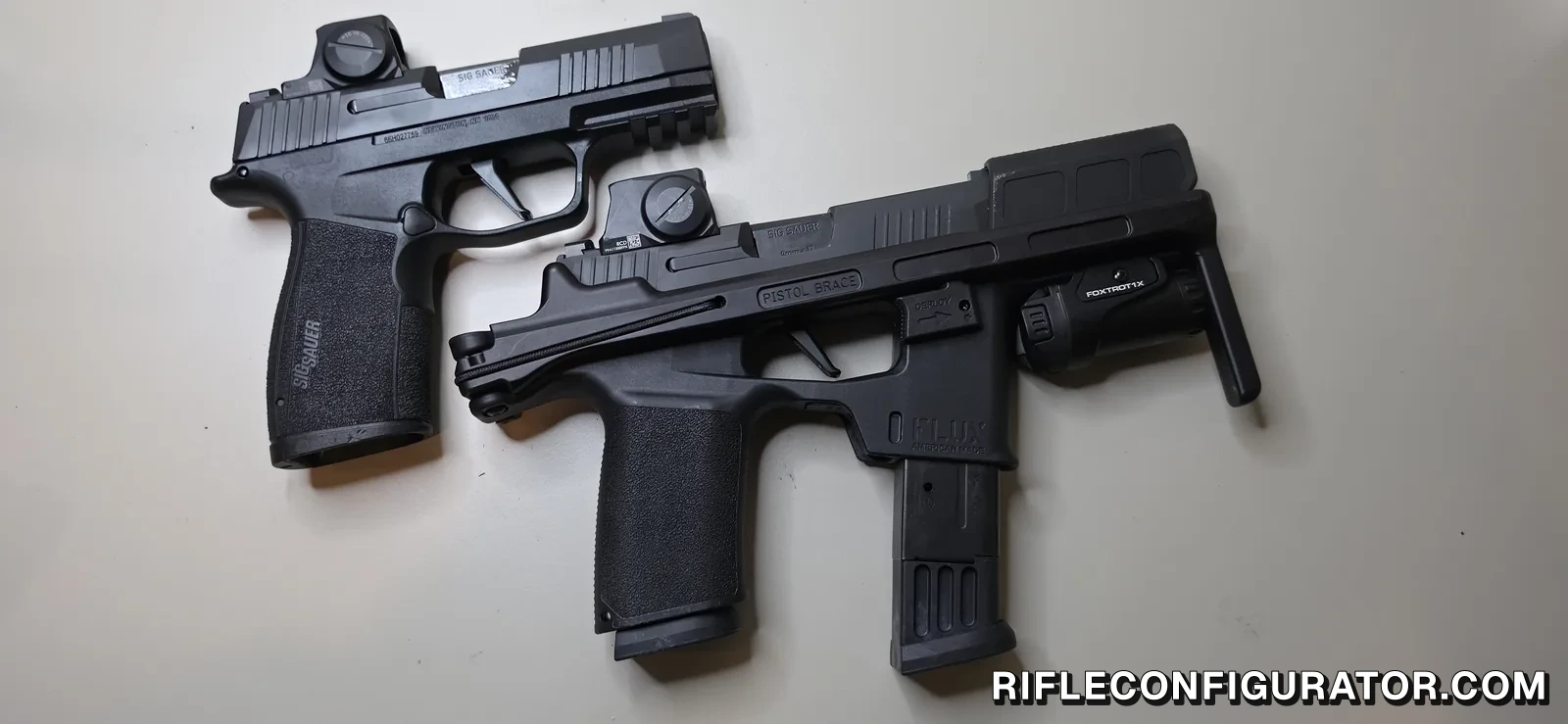
It is, however, nowhere near as comfortable as just carrying a base P365 or P365 X-Macro. Most owners will land on the FLUX as a bag-gun, truck-gun, or short-deployment PDW. Sling bag, backpack, vehicle console, nightstand: anywhere you have a few extra cubic inches and you want significantly more capability than a base pistol. The pairing that makes the most sense is a P365 X-Macro on your hip for daily concealment and a FLUX in the bag, because the magazines are interchangeable. It is still its own gun: different grip, different manipulations because of the chassis and brace, and a manual safety the base P365 does not have. But you carry one set of mags across both platforms, and you get a hand-pistol-to-nano-PDW capability ladder that scales with the situation. For a deeper read on chassis-pistol carry strategies including the FLUX-in-a-sling-bag setup, see our pistol chassis sling bag carry guide. For straight-up concealment alternatives, the best CCW pistol guide ranks the actually-carryable options.
P365-Pattern Optics and Mounts
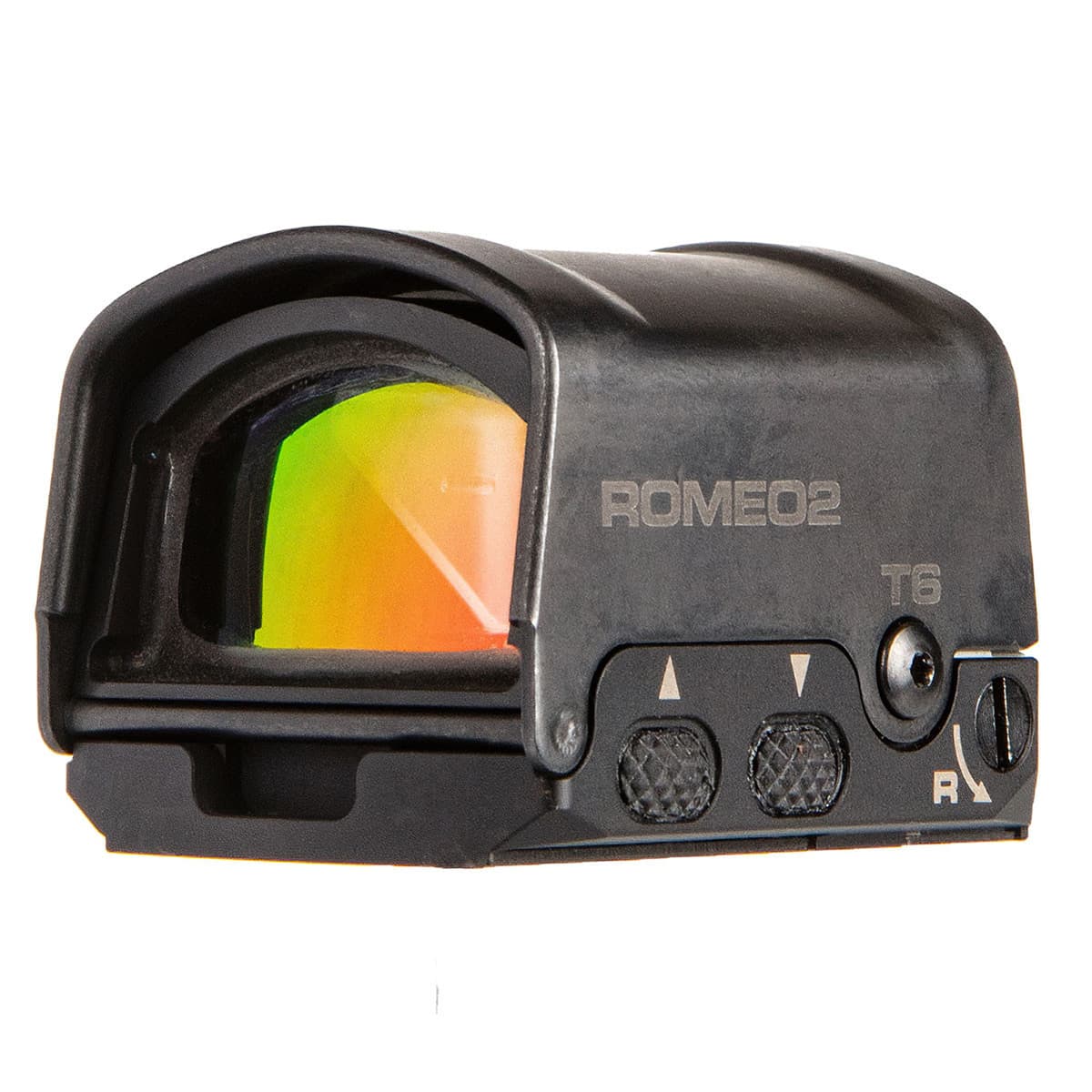
SIG SAUER ROMEO2 Circle/Dot (SOR21000)
- Circle/Dot reticle
- Full enclosure included
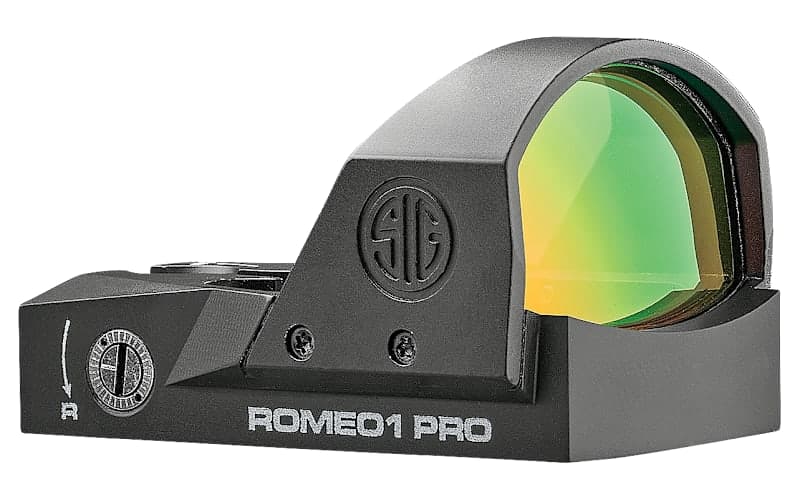
SIG Romeo1 Pro
- 3 MOA or 6 MOA dot
- Steel shroud
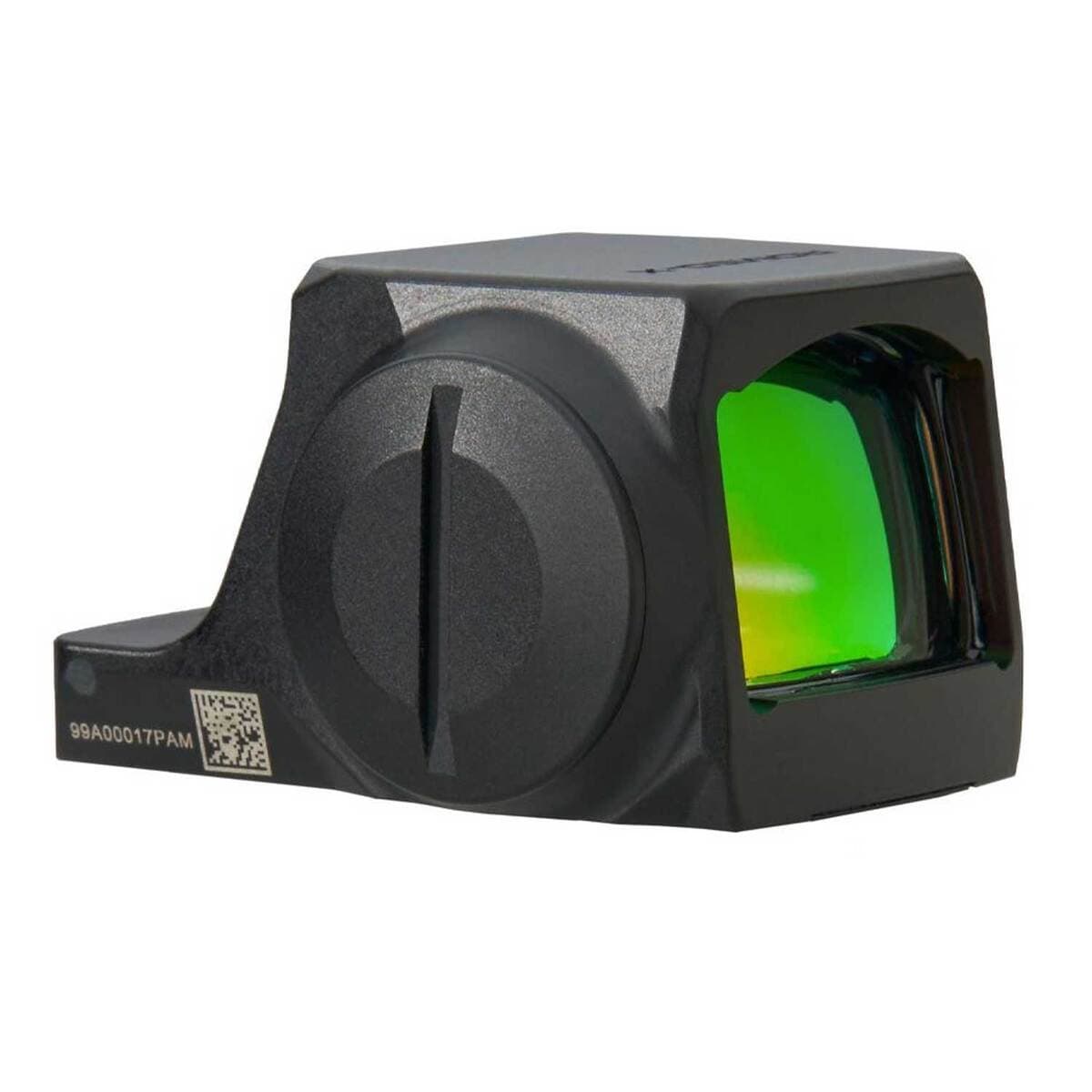
SIG ROMEO-X Compact Enclosed
- 3 MOA / 6 MOA / Circle Dot
- Enclosed emitter
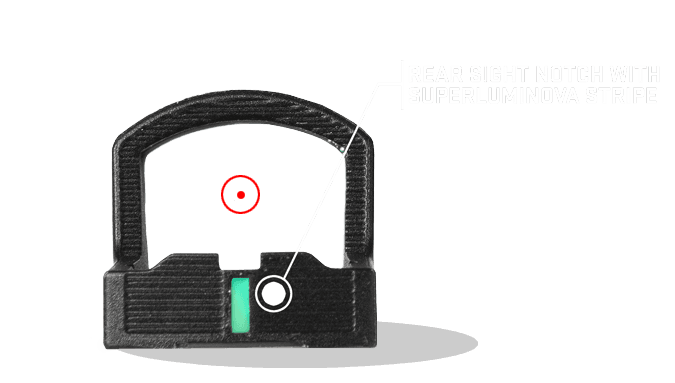
SIG Romeo Zero Elite
- 3 MOA dot
- Shield RMSc footprint
Affiliate links (?)
SIG P365-FLUX TACKIT Specifications
- Caliber9x19mm
- Fire Control UnitSIG P365 X-Macro
- Barrel Length6 in (non-threaded)
- Overall Length (deployed)19.1 in
- Height7.75 in
- Width (folded / deployed)1.52 / 1.34 in
- Weight49.2 oz (unloaded)
- OpticROMEO-X Compact (SIG-LOC mount, factory installed)
- Iron SightsXRAY3 day/night (co-witness)
- Weapon LightSIG FOXTROT 1X
- Magazines3x 17-rd steel + 1x 25-rd steel
- HolsterFlux Gen 2 quick-deploy
- Accessory Rail1913 Picatinny (forward)
- ControlsAmbi mag release, slide stop, manual safety
- MSRP$1,849.99 (TACKIT), SIG July 2025 price sheet
- SKU365FLUX-9-BXR3-RXSL-TACKIT
Two Things to Know Before You Buy
First: the factory 6-inch barrel is not threaded, so the TACKIT does not run a suppressor out of the box. If you want to suppress it you are looking at an aftermarket threaded barrel, and you need a can designed for the tilting-barrel pressure curve. Boosterless suppressors have a documented history of destroying Flux 365 barrels within a few hundred rounds because the compressed cyclic rate and chamber pressure punish anything without a Nielsen device. Plan the suppressor path before you start swapping barrels, not after.
Second: the holster auto-deploy mechanism is the most failure-prone part of the system, and it is also optional. Reviewers report the auto-deploy hardware binding with dirt or wear, and left-handed shooters in particular have to work around the right-side release geometry. The Gen 2 rig is better than the original. If reliability concerns you, skip auto-deploy entirely: the chassis has a manual brace deployment button you can hit with a thumb once the gun is clear of the holster. The draw is a beat slower, but you remove the one moving part most likely to give you trouble. For bag-gun carry where the gun lives in a sling or pack without a holster, manual deployment is the default anyway.
Compact Pistol Lights
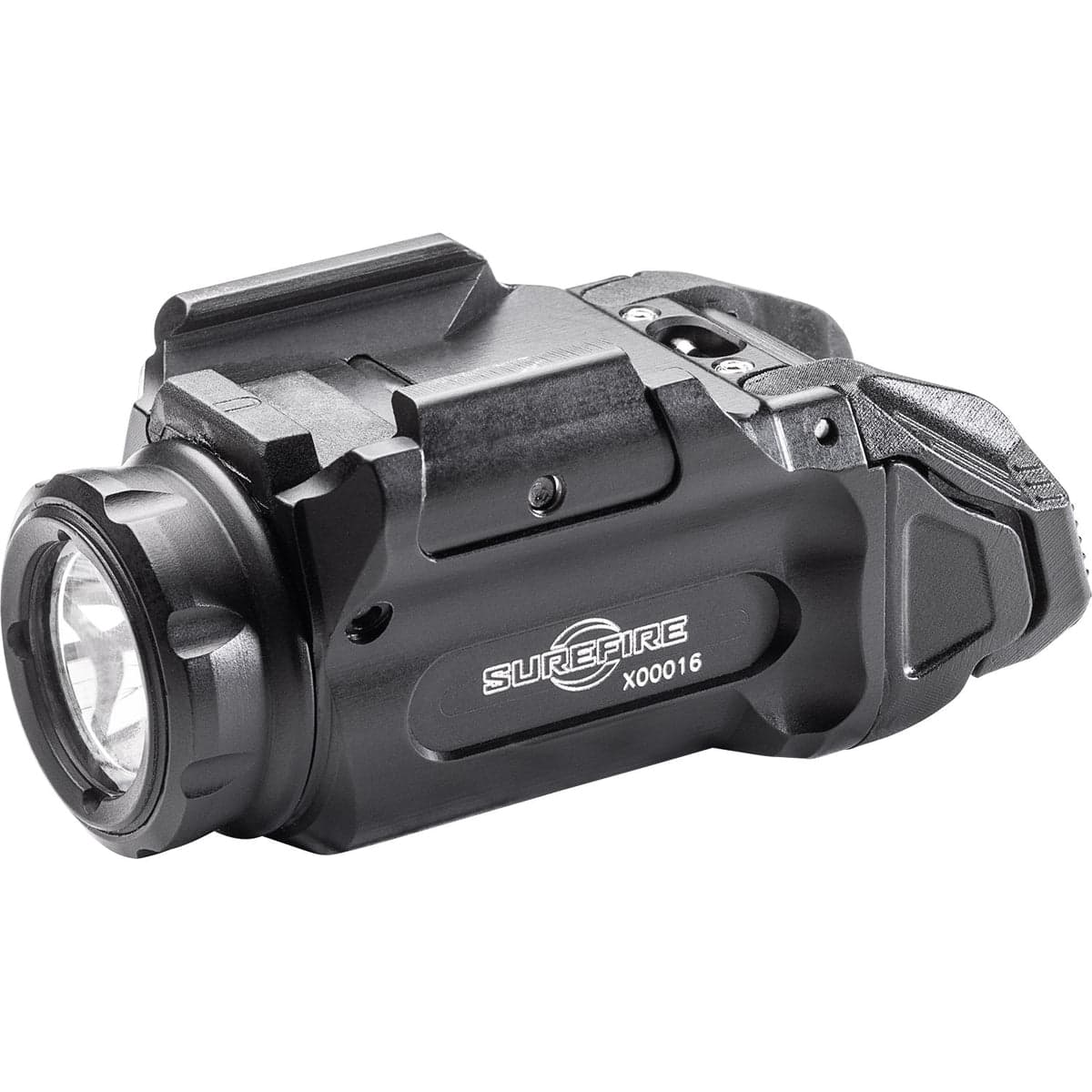
SureFire XC3-B WeaponLight
- 1,000 lumens / 13,000 candela rechargeable
- 550 lumens / 7,200 candela on a CR123A
Streamlight TLR-7 X Sub
- 725 lumens
- 7,700 candela
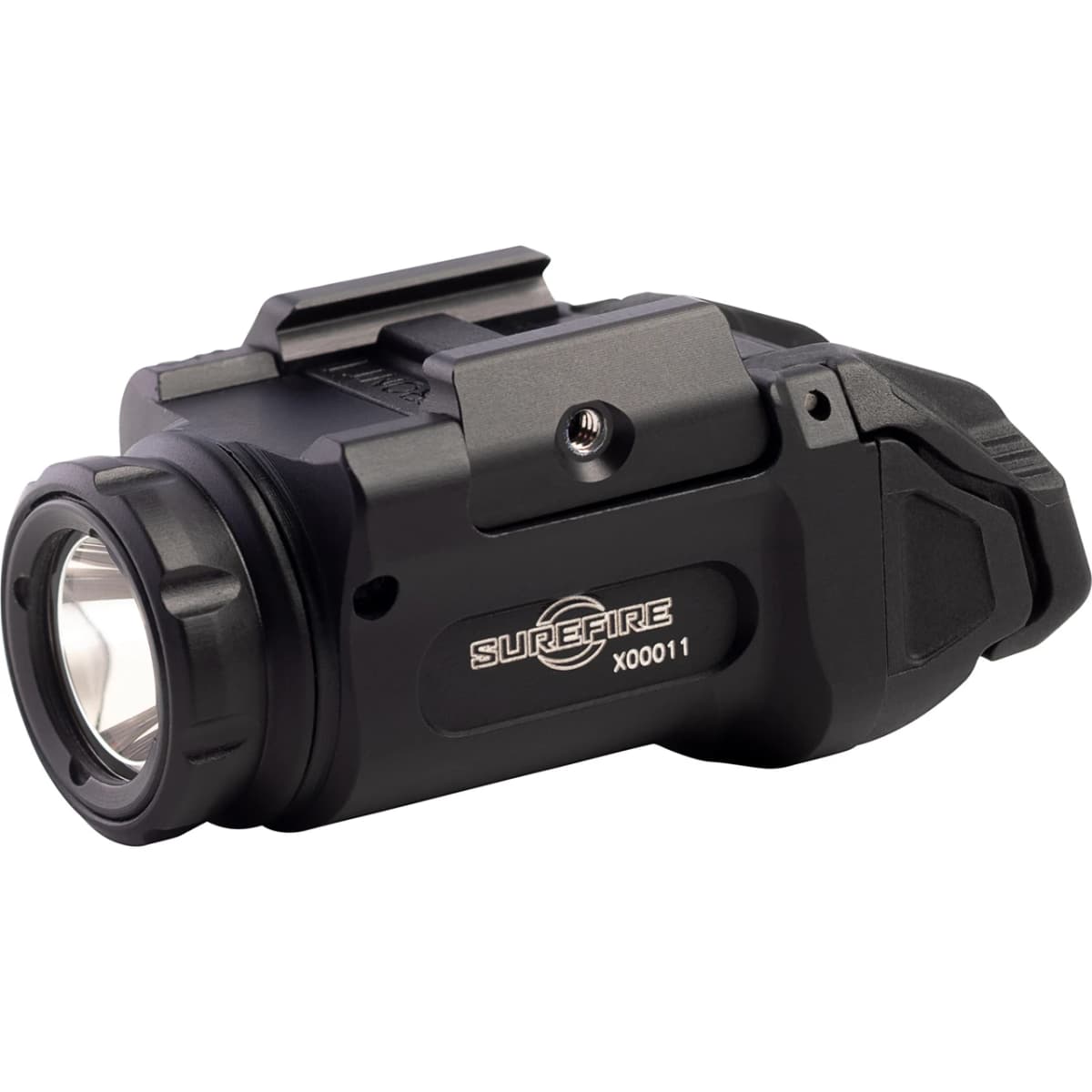
SureFire XC3 Sub WeaponLight
- 1,000 lumens / 13,000 candela rechargeable
- 550 lumens / 7,200 candela on a CR123A
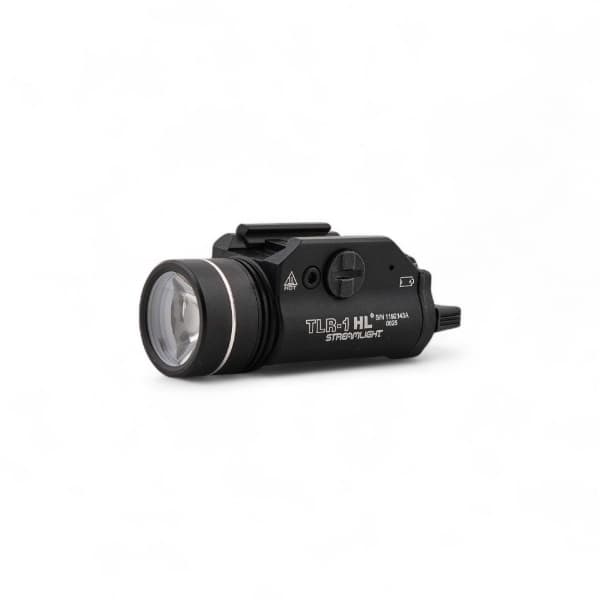
Streamlight TLR-1 HL
- 1,000 lumens
- 20,000 candela
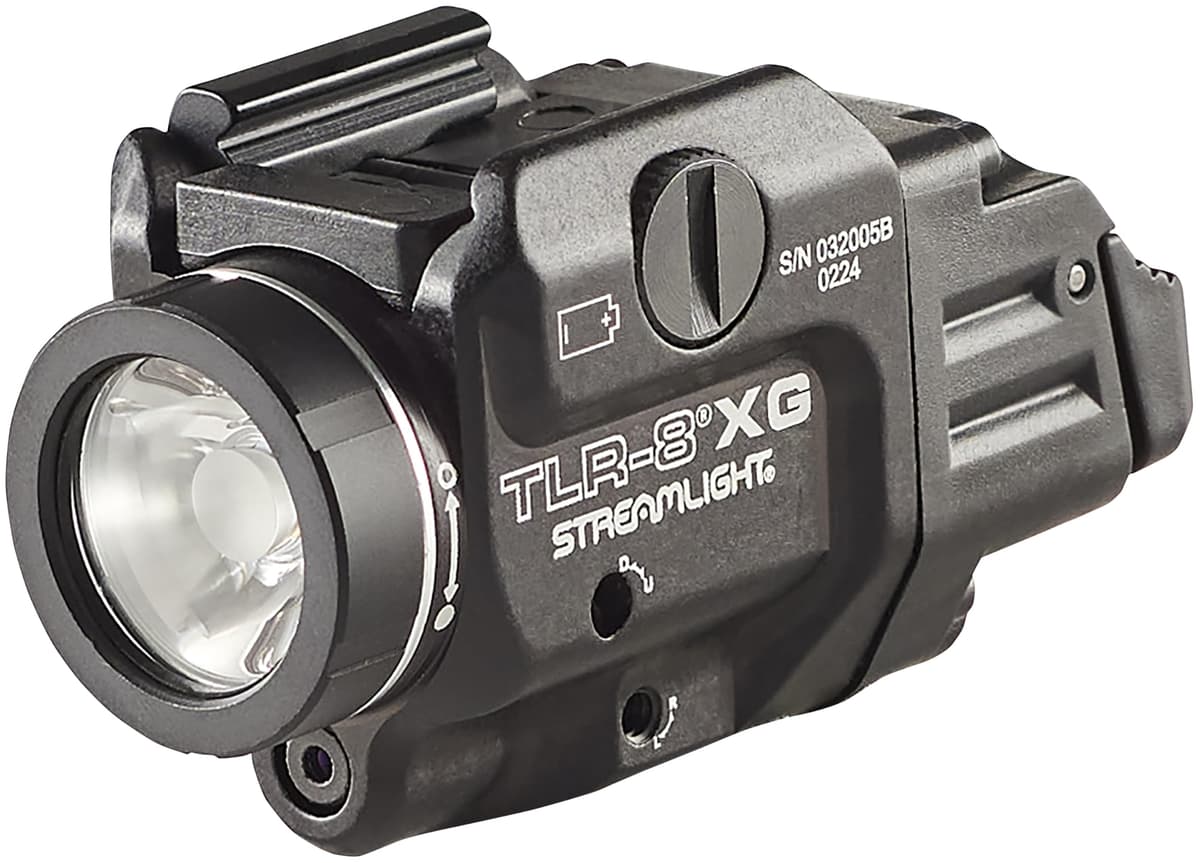
Streamlight TLR-8A G Flex
- 500 lumens / 5,000 candela
- Green Class 3R laser
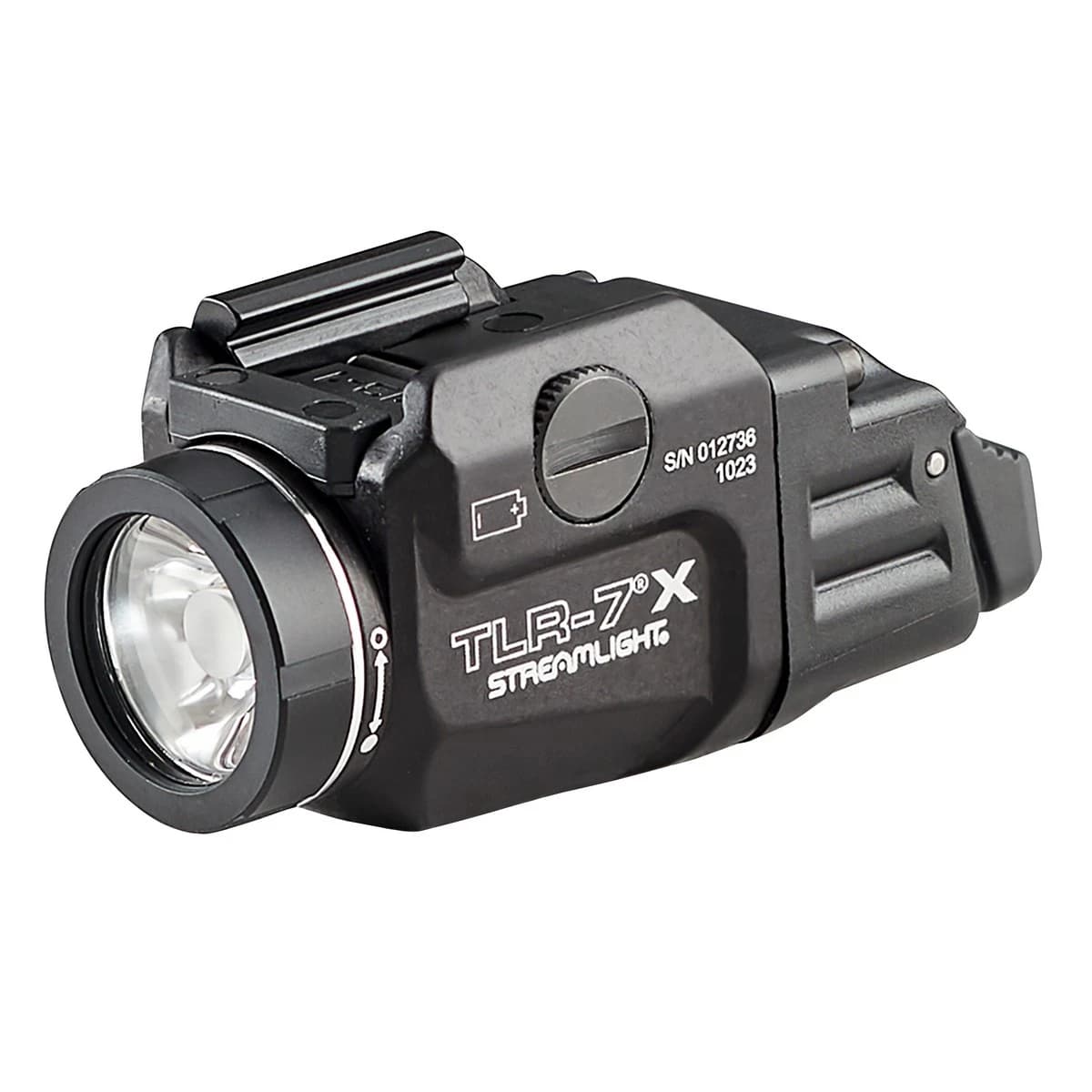
Streamlight TLR-7 X USB
- 725 lumens
- 9,500 candela
Affiliate links (?)
Stay Updated on Nano PDWs and P365 Builds
Hands-on reviews, P365 upgrade coverage, and Flux Defense product launches. We send the same content we ship on the site, no fluff.
Frequently Asked Questions
▶What comes in the SIG P365-FLUX TACKIT package?
▶How much does the SIG P365-FLUX TACKIT cost?
▶Is the P365-FLUX pleasant to shoot?
▶Can you actually conceal carry the P365-FLUX?
▶Does the P365-FLUX TACKIT come with a red dot from the factory?
▶What is the difference between the P365-FLUX TACKIT and the Flux Raider 365 chassis?
Bottom Line
Buy it if you understand what it is. Do not buy it expecting a comfortable range gun.
The SIG P365-FLUX TACKIT is the first nano-PDW platform that ships as a finished product. ROMEO-X Compact red dot installed, FOXTROT 1X light mounted, four magazines, Flux holster, all serialized as one SKU. Comparable capability from a Roni, MCK, or chassis-only Flux Raider build adds up to roughly the same money once you source a donor pistol, optic, light, and holster, and the result is not as polished.
It is also unpleasant to shoot, and that is not a knock you can engineer away. The brace will jab your shoulder and clap the side of your face, the trigger guard will pinch your trigger finger between the trigger and the guard on every press, the slide will cycle close to your face, and a long range session will leave you sore. You are buying capability in a capability-per-cubic-inch sense, not a comfort sense. If you already shoot a P365 and want a serious upgrade path, start with our P365 upgrades guide before committing to a chassis. For the announcement that prompted SIG to start selling the complete package directly, including the new polymer Ultralight chassis, see our Flux Raider 365 Ultralight SHOT Show coverage. If you want to model how a FLUX-class setup compares against a base concealed-carry P365 on the rest of your kit, use our rifle builder to spec the supporting gear.
The buy case is broader than the obvious bag-gun role. Short-deployment PDW out of a bag, vehicle, or nightstand is the easy answer. But appendix IWB carry is also on the table if you are willing to tolerate the bulk: folded, the FLUX is not much bigger than a P365 with a light and optic, just less comfortable. The strongest pairing is a P365 X-Macro as your daily concealed carry and a FLUX as your bag gun, because the magazines are shared, so you carry one set of mags across a hand-pistol-to-stocked-weapon ladder. The FLUX is still its own gun with its own manipulations, including a manual safety the base P365 does not have, but the logistics overlap is real. Nothing else in the segment ships a comparable complete package, and the factory integration is what justifies the price.