Walther P14: German Special Forces Duty Pistol with Factory Compensator at Enforce Tac 2026
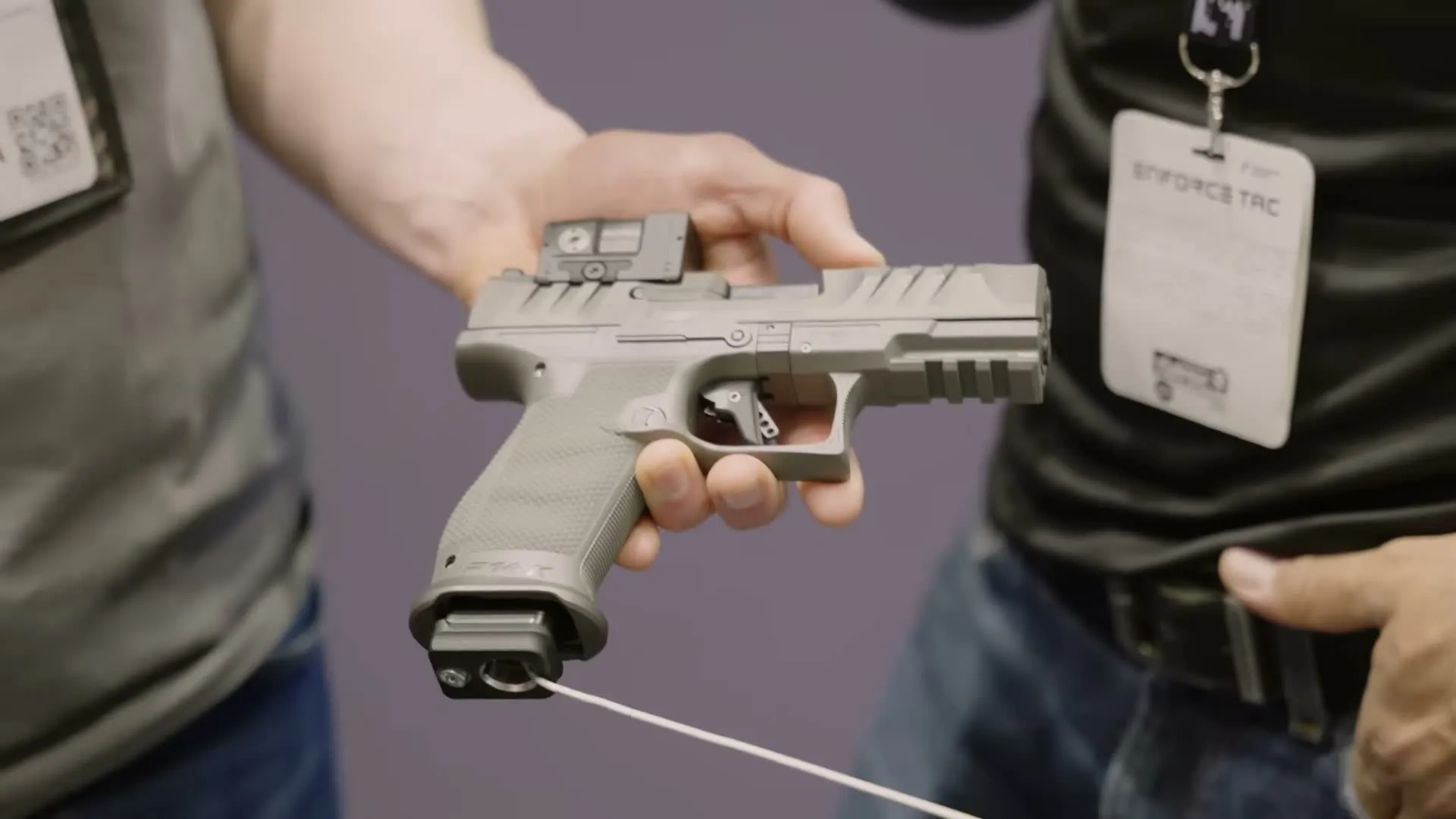
Walther debuts the P14 and P14K at Enforce Tac 2026 in Nuremberg. Built specifically for German KSK and KSM special forces, the P14 pairs an integrated compensator with a direct-milled Aimpoint ACRO P-2 mount on a modified PDP platform tested in arctic cold, Saharan sand, and saltwater submersion.
Key Takeaways
- Purpose-built for German KSK and KSM special forces, with 3,200 P14 and 3,300 P14K units on order
- Factory-integrated compensator for flat shooting with high-pressure 9mm ammunition
- Aimpoint ACRO P-2 direct slide mount with suppressor-height iron sights in lower-third co-witness
- Tested in extreme cold, desert sand, and maritime conditions including full submersion
- Civilian version expected later in 2026 after military deliveries are fulfilled
From PDP to P14: What Walther Changed
The Walther P14 is a PDP at its core, but the modifications go well beyond cosmetics. The German Bundeswehr's procurement specification for its "Special Forces Pistol System" demanded features that no standard duty pistol offered: a factory compensator, direct optic integration, and certified function in environments from -40C arctic conditions to Saharan sand storms.
Walther's David Muller, speaking at the Enforce Tac booth, called the P14 "the best duty pistol on the market today," citing its ability to function under conditions that would stop most service pistols. The modifications span every major subsystem: slide, barrel, trigger, magazine, and frame.
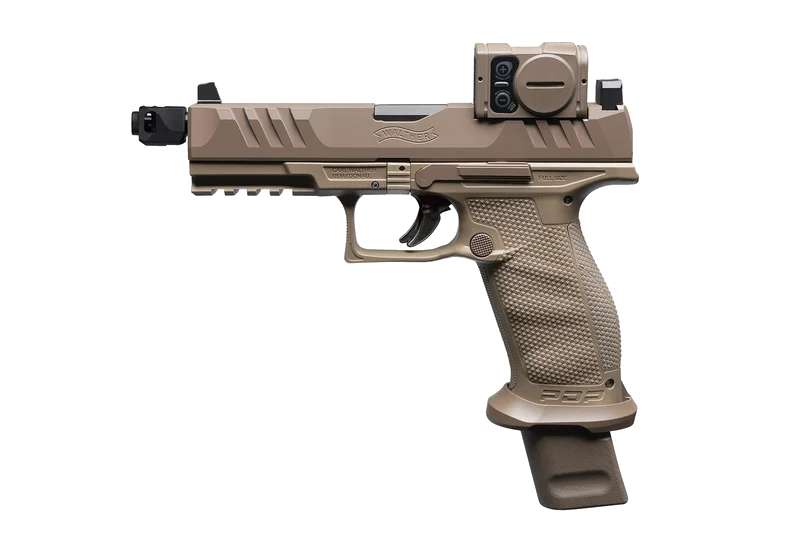
P14 and P14K Specifications
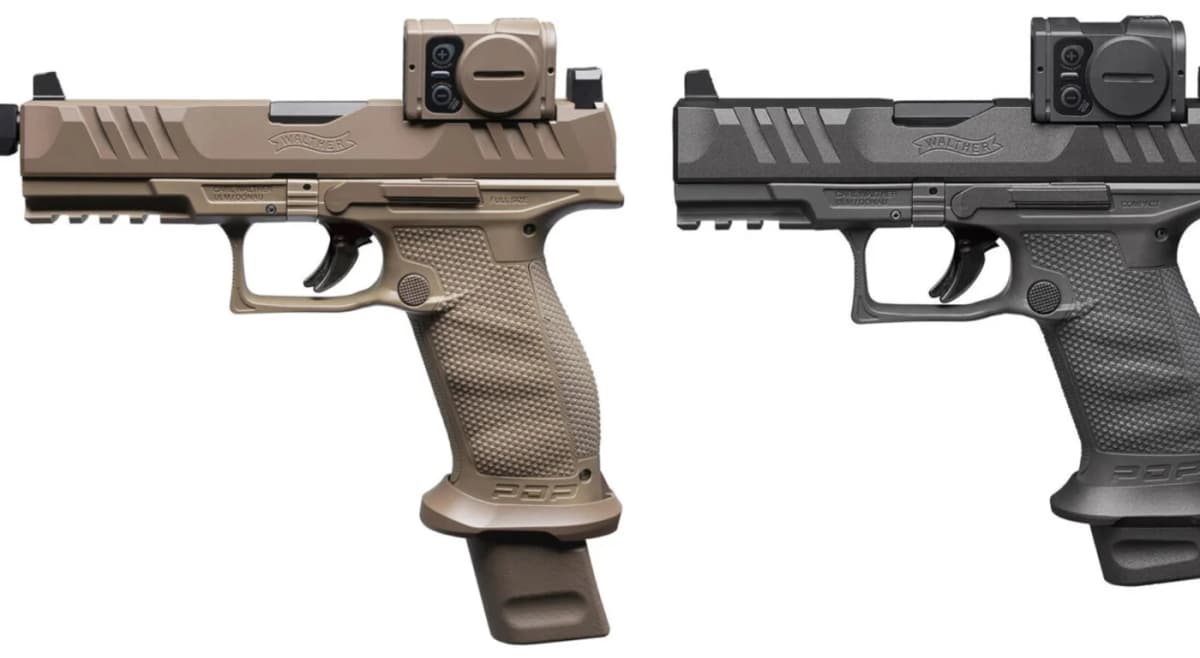
The P14 system ships in two configurations. The full-size P14 runs a 4.5-inch barrel and full-length grip in Flat Dark Earth. The P14K compact cuts the barrel to 4 inches and shortens the grip, finished in a grey tone suited to concealed operations. Both are chambered in 9x19mm.
| Spec | P14 (Full-Size) | P14K (Compact) |
|---|---|---|
| Caliber | 9x19mm | 9x19mm |
| Barrel Length | 4.5" | 4.0" |
| Action | Striker-fired | Striker-fired |
| Trigger | PDT, 2,200g (~4.85 lbs) | PDT, 2,200g (~4.85 lbs) |
| Optic | Aimpoint ACRO P-2 (direct mill) | Aimpoint ACRO P-2 (direct mill) |
| Sights | Suppressor-height, lower-third co-witness | Suppressor-height, lower-third co-witness |
| Compensator | Integrated | Integrated |
| Suppressor | B&T Impuls-XM | B&T Impuls-XM |
| Frame | Polymer, interchangeable backstraps | Polymer, shortened grip |
| Finish | Flat Dark Earth (FDE) | Grey |
| Magazines | Proprietary (extended basepad) | Proprietary (extended basepad) |
Integrated Compensator and Optic Mount
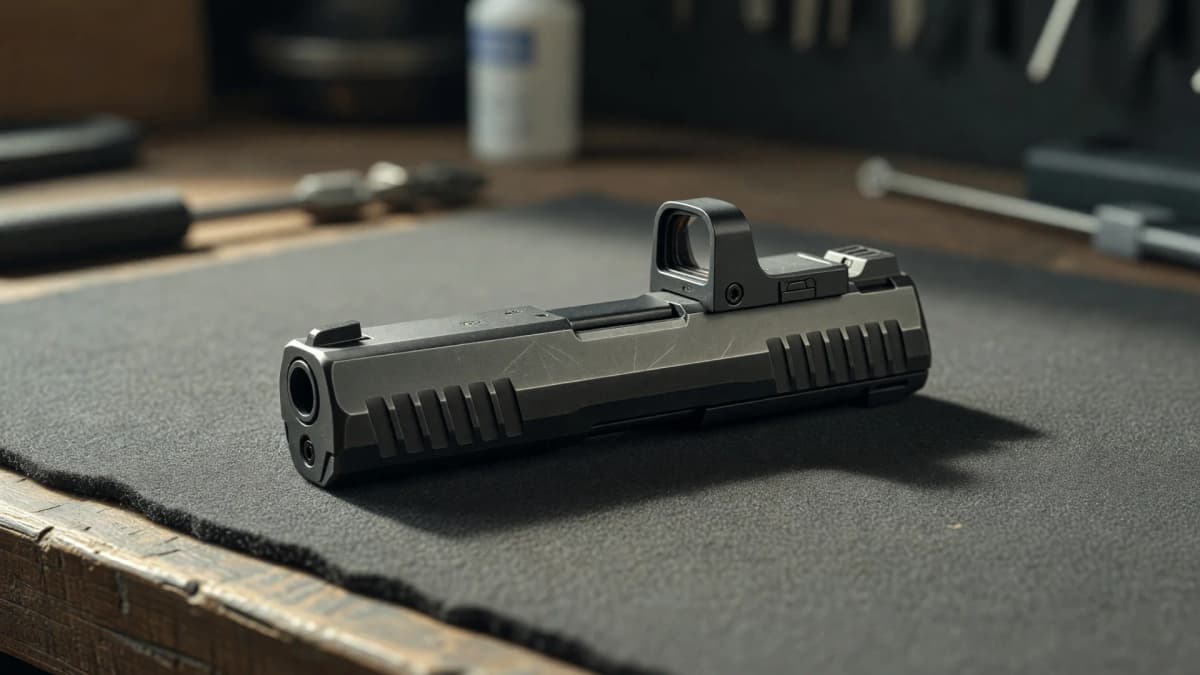
The P14's integrated compensator is designed specifically for high-pressure 9mm ammunition used by German special forces. The comp redirects propellant gas upward through ports near the muzzle, reducing muzzle rise for faster follow-up shots. Factory compensators on duty pistols are still rare; the Bundeswehr specification explicitly required one, borrowing a concept that has been standard in competition shooting for years but essentially absent from military sidearms.
The Aimpoint ACRO P-2 mounts directly into a milled slide cut with no adapter plate. This is the same enclosed emitter red dot that has become the standard for duty pistol optics, offering sealed construction that keeps the emitter protected from debris and water. The suppressor-height iron sights provide a lower-third co-witness through the optic window, ensuring backup aiming capability if the electronic sight fails. For a deeper look at how the best pistol red dots compare, including the ACRO P-2, see our ranking guide.
Performance Duty Trigger
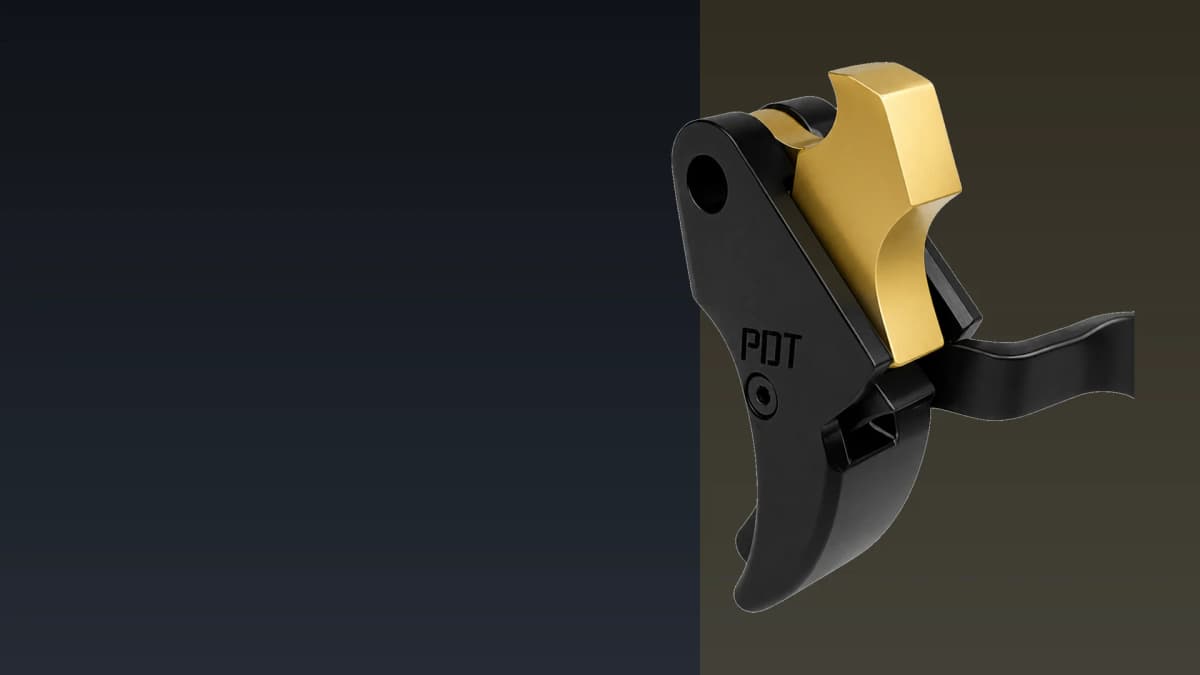
The P14 runs a modified version of Walther's Performance Duty Trigger (PDT), which breaks at 2,200 grams (approximately 4.85 pounds). The trigger shoe is a durable polymer designed to maintain consistent feel across temperature extremes. Walther specifically tuned the pull weight slightly heavier than a standard PDP trigger to accommodate cold fingers and gloved operation while preserving a clean break and tactile reset.
Walther tested the striker-fired mechanism in laboratory conditions and real-world cold environments to confirm the striker does not freeze. The partially preloaded firing pin lock is standard across PDP variants but was validated under the Bundeswehr's expanded environmental testing protocol.
Extreme Environment Certification
The P14 passed the Bundeswehr's full environmental testing suite, which goes beyond standard NATO trials. This includes operation at temperatures well below freezing, function after sand and dust exposure in Saharan conditions, and "over the beach" testing involving saltwater submersion followed by sand exposure.
Sand and debris resistance comes from two design choices. First, tighter tolerances in critical areas prevent particles from jamming the action. Second, the proprietary magazines feature a design that allows dirt to wash out rather than accumulate. Standard PDP magazines are not compatible with the P14, a deliberate tradeoff for the debris-shedding capability. The frame also features special internal corrosion protection coatings for maritime operations conducted by KSM combat divers.
Pistol Red Dot Sights
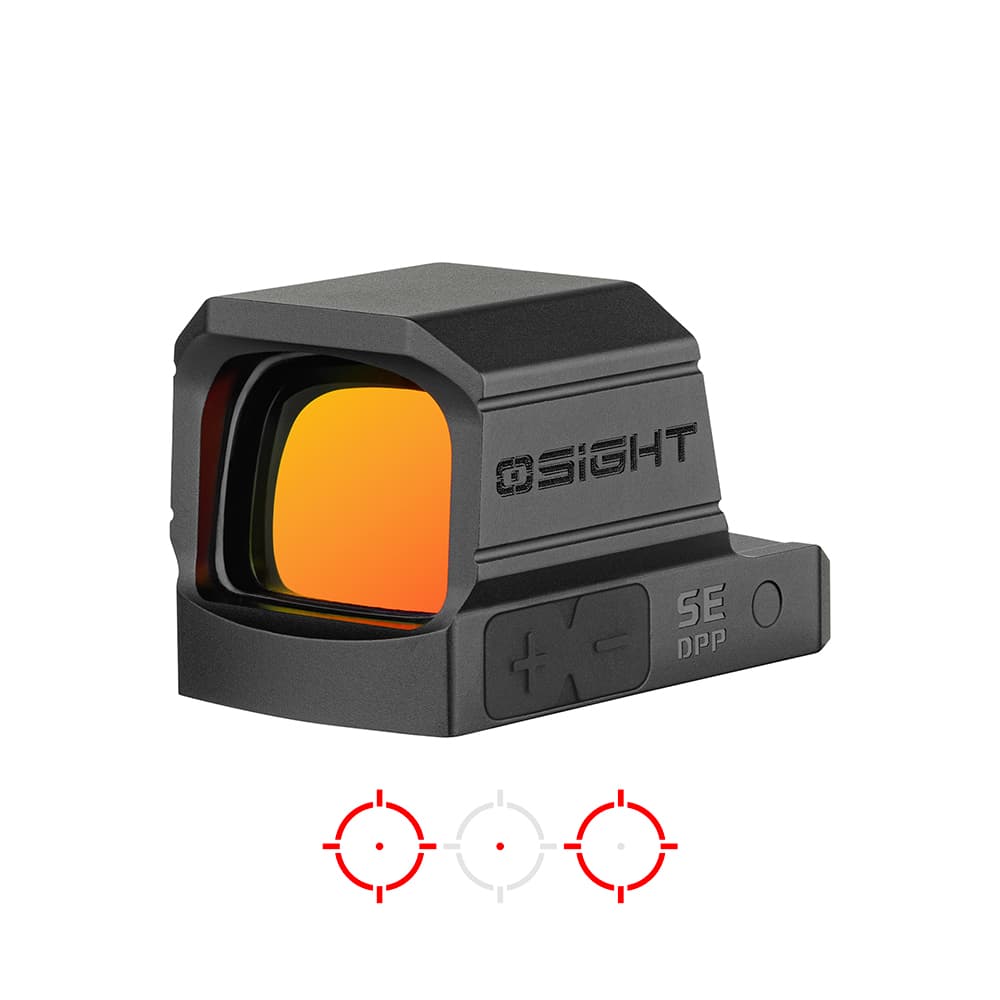
Osight SE DPP Enclosed Red Dot
- 2 MOA dot + 32 MOA circle MRS
- Enclosed emitter, DeltaPoint Pro footprint
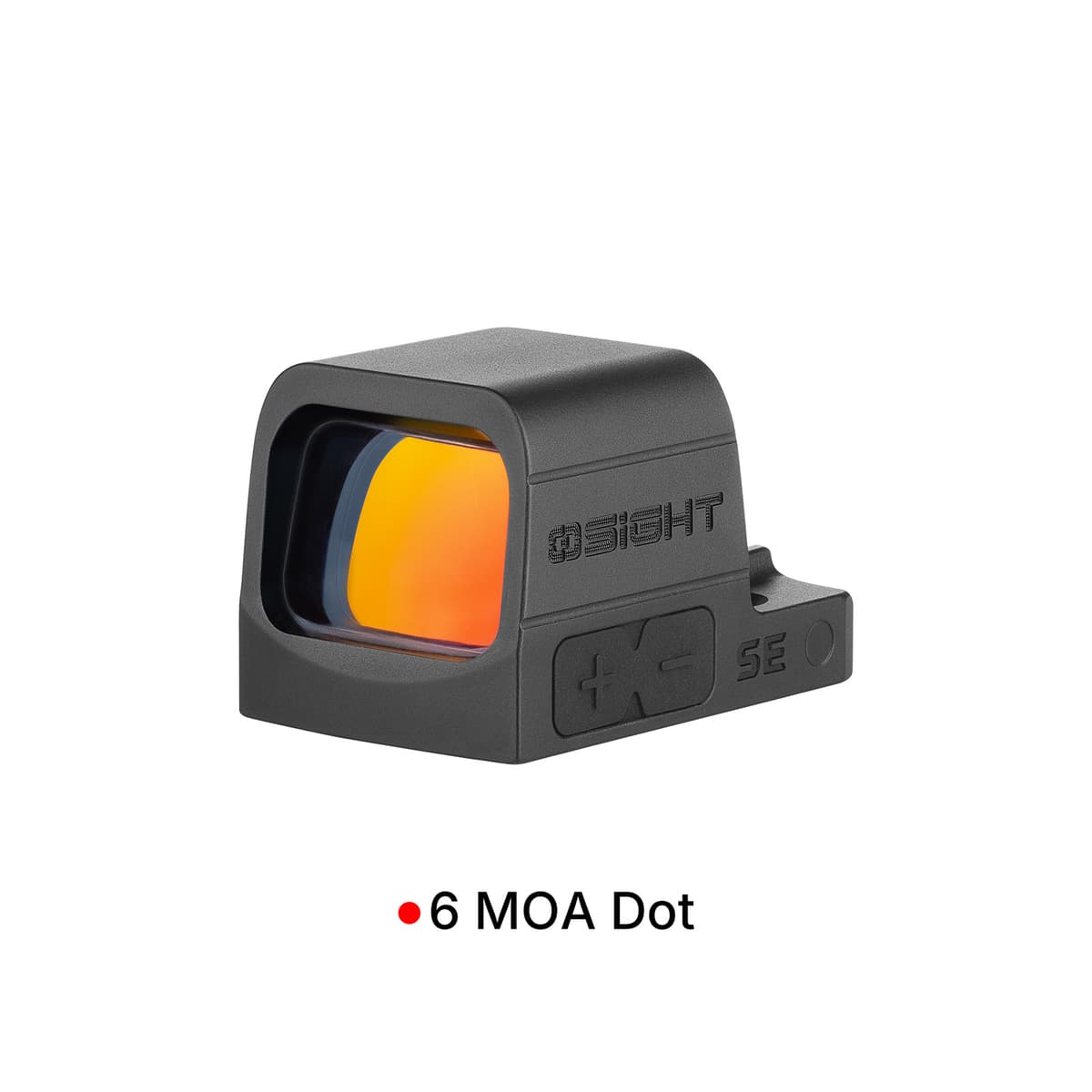
Osight SE Enclosed (6 MOA Red)
- 6 MOA red dot
- Enclosed emitter, RMSc footprint
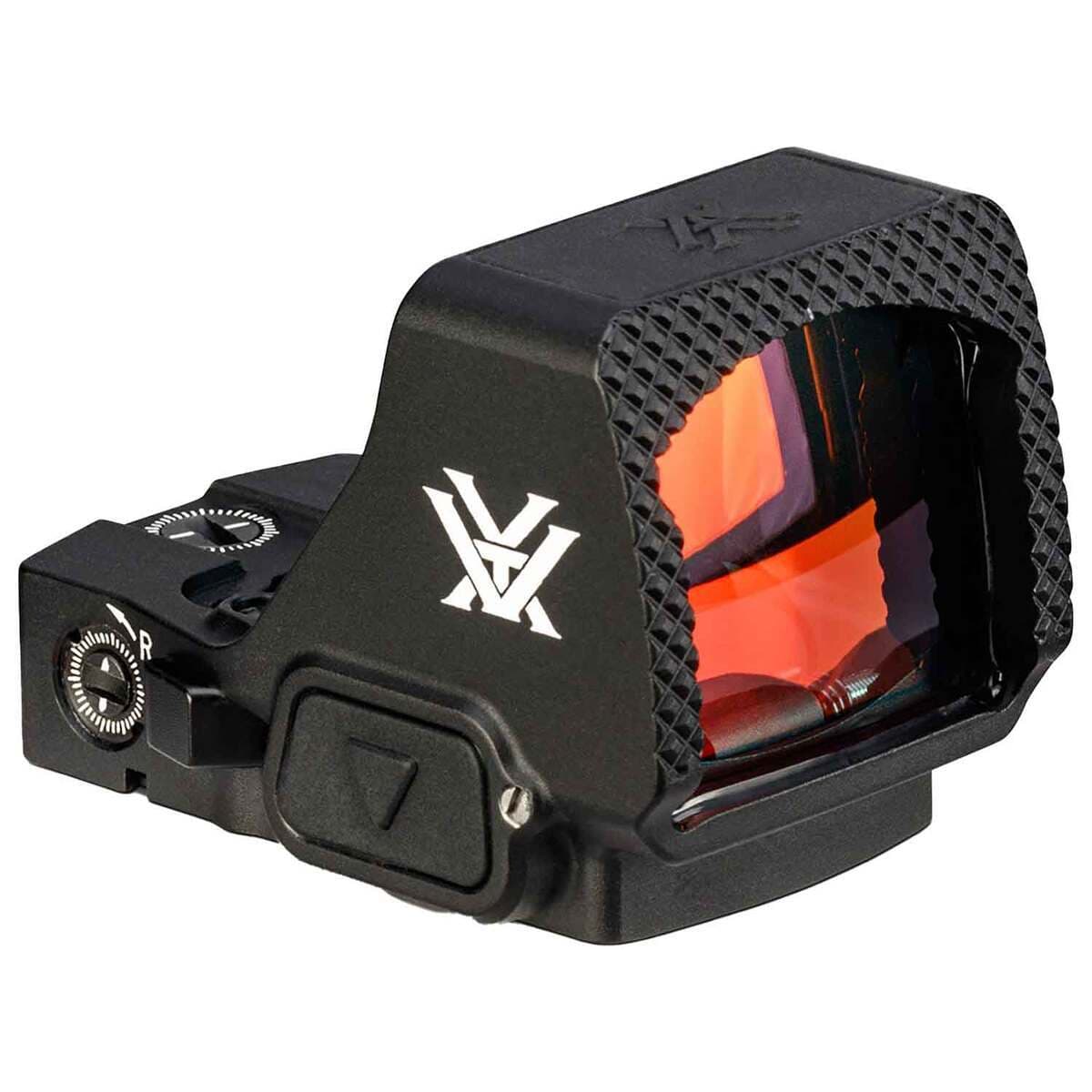
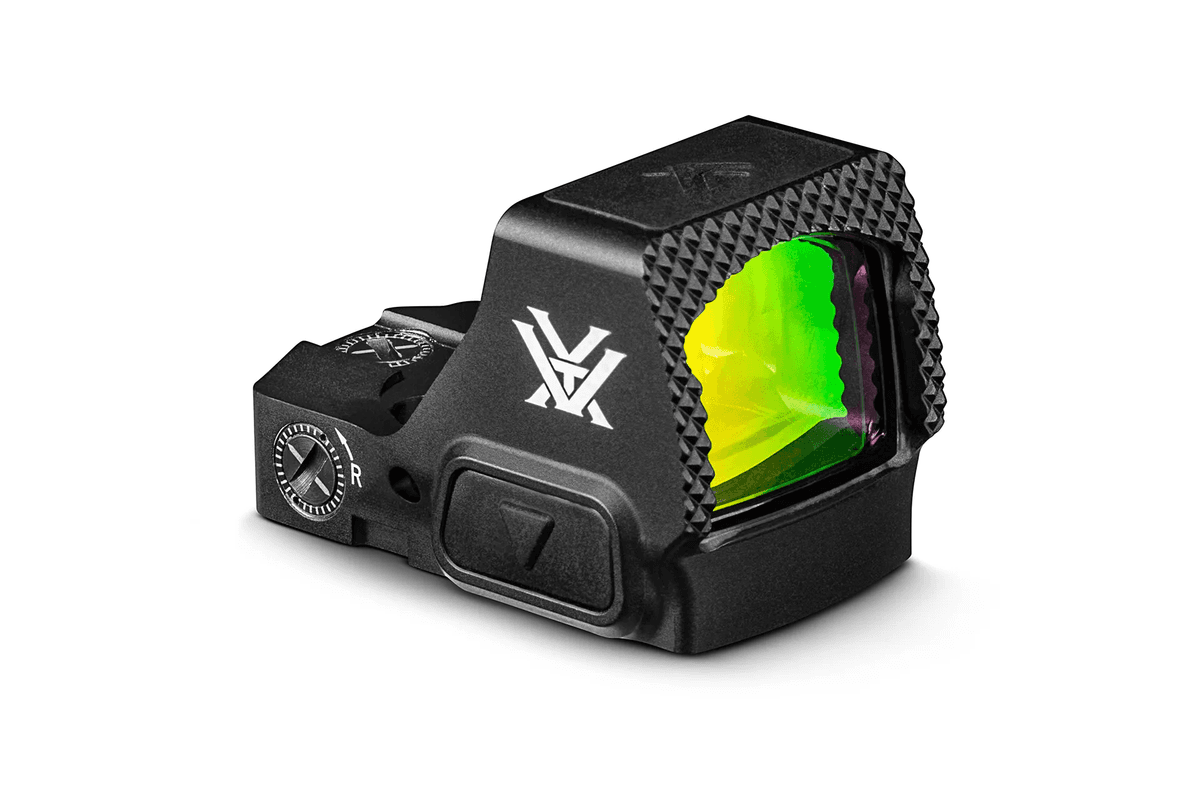
Vortex Defender-XL Micro Red Dot
- 2/5/8 MOA red dot
- DeltaPoint Pro footprint
Vortex Defender-ST Micro Red Dot
- 3 or 6 MOA red dot
- DeltaPoint Pro footprint
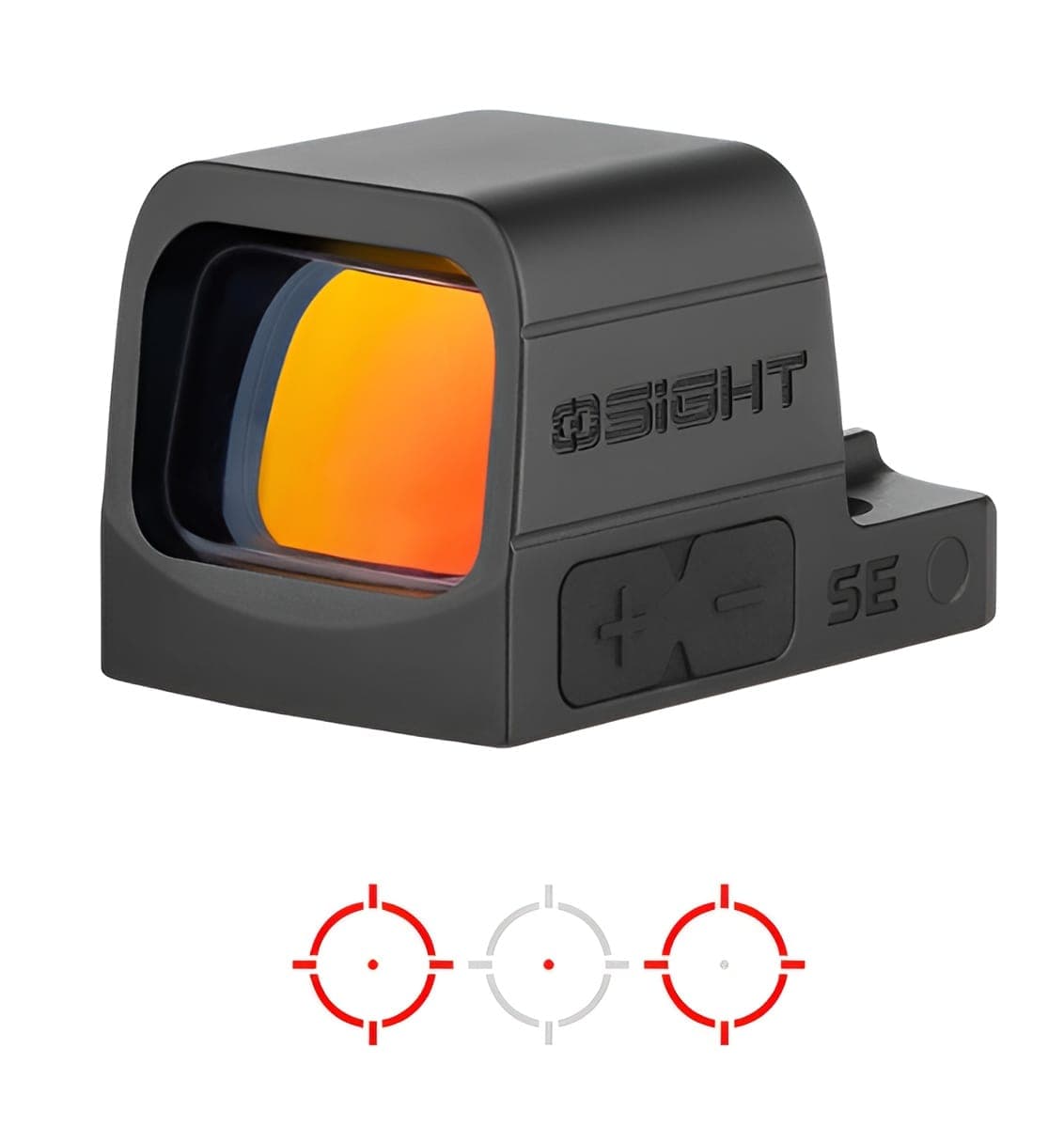
Osight SE Enclosed (2 MOA + 32 MOA Red MRS)
- 2 MOA dot + 32 MOA circle MRS
- Enclosed emitter, RMSc footprint
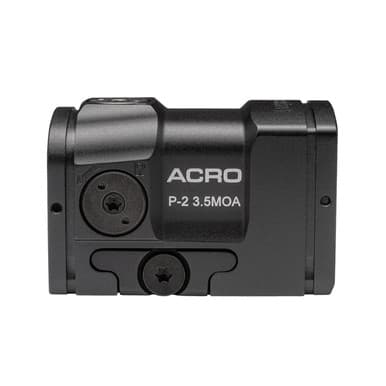
Aimpoint ACRO P-2
- 3.5 MOA dot
- Enclosed emitter
Affiliate links (?)
P14K Compact Variant
The P14K is the compact counterpart with a 4-inch barrel and shortened grip, finished in a subdued grey. It shares every internal upgrade from the full-size P14: the same compensator, ACRO P-2 mount, PDT trigger, and proprietary magazines. The shorter grip profile is designed for concealed carry and specific operational roles where a smaller footprint matters.
Walther designed the P14 system for modularity. Special forces operators can swap the upper assembly between full-size and compact frames depending on mission requirements. The procurement contract reflects this dual approach: 3,200 P14 full-size units and 3,300 P14K compact units, plus 5,734 illumination modules rated for 300+ lumens with IR capability.
Bundeswehr Procurement
The German Bundeswehr awarded the "Special Forces Pistol System" contract to Carl Walther under a framework agreement spanning 7 years. The initial order covers 3,200 P14 and 3,300 P14K pistols, equipping the KSK (Kommando Spezialkrafte), KSM (Kampfschwimmer), and specialized military police units.
This is the second major German military pistol contract announced in recent months. In a separate procurement, CZ won the standard Bundeswehr sidearm contract with the P13 (CZ P-10 C). The P14 serves special forces with higher-end features, while the CZ P13 equips the broader military. Both replace aging P8 (USP) pistols.
The accompanying B&T Impuls-XM suppressor is included in the system contract, making the P14 a suppressor-ready platform out of the box. The 5,734 illumination modules (visible and IR, 300+ lumens minimum) round out the package. For context on how pistol weapon lights factor into duty setups, see our best pistol lights guide.
Civilian Availability
Walther confirmed at Enforce Tac that a civilian version of the P14 is planned after primary military deliveries are completed. No specific date or pricing has been announced. The civilian Walther PDP remains the closest available equivalent, sharing the same ergonomic platform and trigger family. The PDP is already ranked among the best 9mm pistols for its trigger quality and ergonomics.
Whether the civilian P14 will include the compensator, ACRO mount, or proprietary magazines is unknown. The CZ P-10 C Ported COA offers a comparable concept that is already available: a factory ported barrel with a factory-mounted enclosed red dot. Use our catalog to explore current duty pistol options while waiting for the P14 civilian release.
Stay Updated on the Walther P14
Get notified when Walther releases civilian pricing and availability for the P14. We'll also send you coverage of new product launches, hands-on reviews, and industry news.
Frequently Asked Questions
▶What is the Walther P14?
▶What is the difference between the Walther P14 and P14K?
▶Is the Walther P14 the same as the Walther PDP?
▶Will the Walther P14 be available for civilians?
▶What optic does the Walther P14 use?
Analysis
The P14 is significant for two reasons. First, it is one of the first military sidearm contracts to require a factory compensator and factory-integrated red dot. These features have been standard in competitive shooting and gaining traction in law enforcement, but military procurement moves slowly. The Bundeswehr special forces specification signals that compensated, optic-equipped pistols are the direction for Western military sidearms.
Second, the P14 validates the Walther PDP platform at the highest operational tier. The PDP has been well-received in the civilian market for its trigger and ergonomics, but military adoption by elite units carries different weight. The extreme environment testing, proprietary magazine design, and B&T suppressor integration demonstrate that the PDP's underlying architecture can handle conditions that go well beyond civilian use.
For the US civilian market, the P14's competition-derived features on a duty platform will likely pressure other manufacturers. SIG, Glock, and CZ all offer optic-ready duty pistols, but none ship with a factory compensator from the factory as standard. If Walther brings even a partial P14 feature set to the civilian PDP line, it could shift expectations for what a stock duty pistol includes.