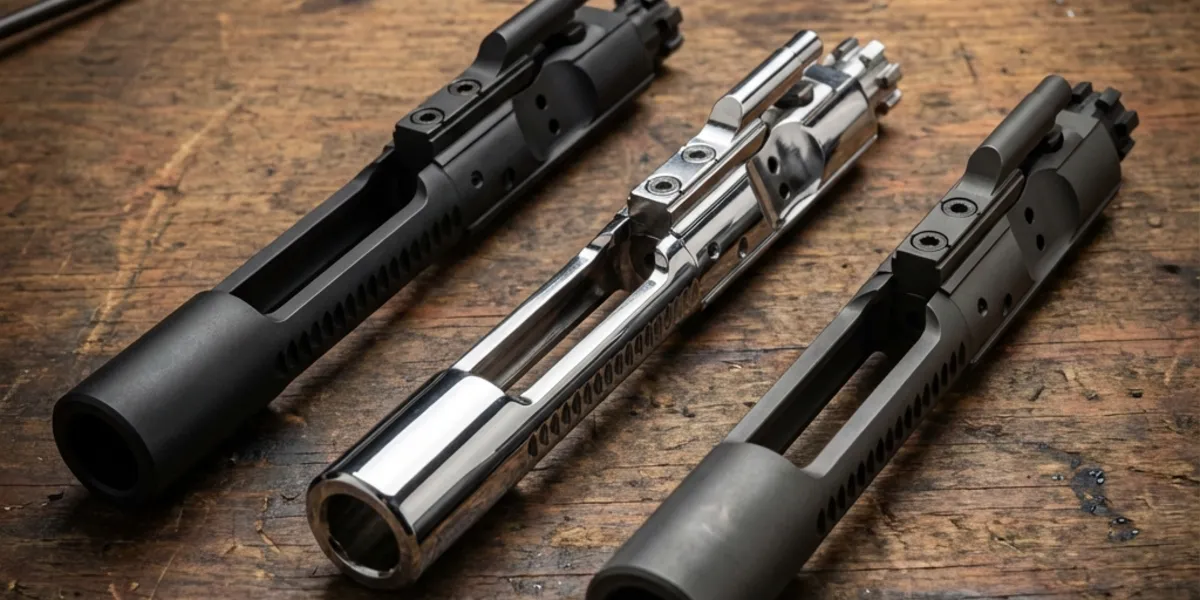
AR-15 BCG Coatings 2026: DLC vs Nitride vs NiB Tested & Evaluated header image
[ < Back to guides ]
Component AnalysisReliabilityQC Critical

AR-15 BCG Coatings 2026: DLC vs Nitride vs NiB Tested & Evaluated

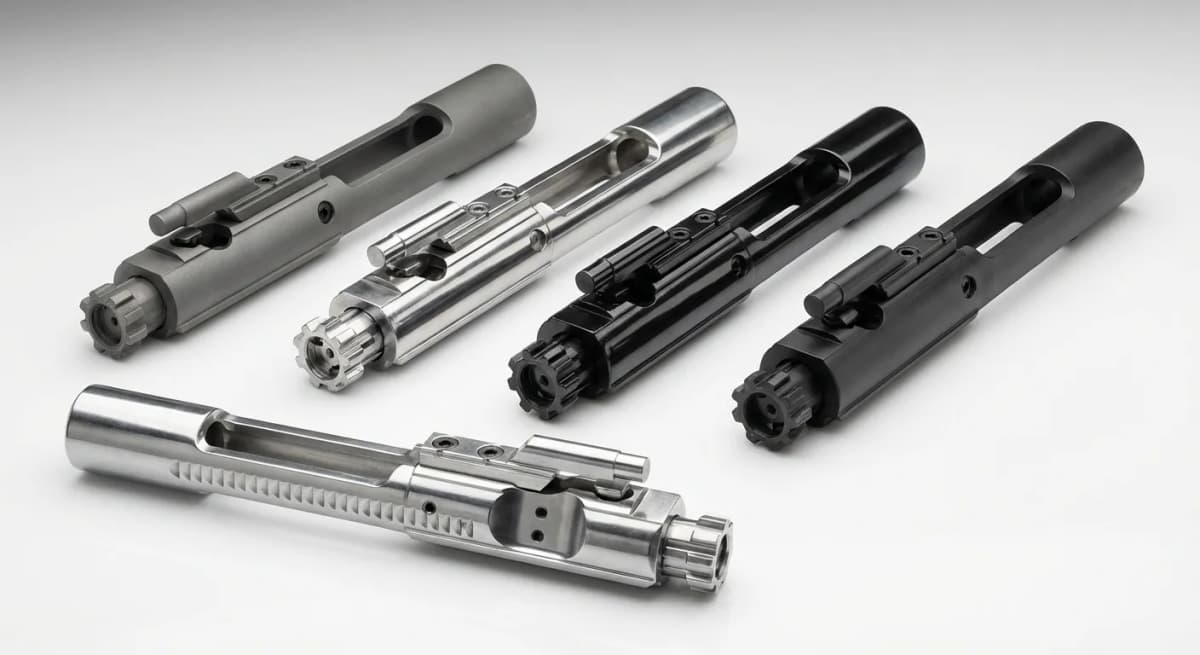
Not all shiny coatings are created equal. We break down the metallurgy and hype behind Diamond-Like Carbon (DLC), Nitride, Nickel Boron, Hard Chrome, and classic Phosphate. Understand why some "upgrades" might actually reduce your reliability, and which coatings are worth the premium price tag for a smoother, easier-to-clean rifle.

By AB|Last reviewed February 2024
Assumes knowledge of
How to Build an AR-15->Best AR-15 Lower Parts Kit 2026->

Quick Answer: Which BCG coating should you buy?

Best value: Ion-bond Nitride or Nitride-QPQ. Durable, affordable, industry standard. Avoid no-name budget brands.

Premium upgrade: Diamond-Like Carbon (DLC) or PVD coatings offer superior lubricity and easier cleaning at higher cost.

Avoid: Nickel Boron (NiB) has a history of flaking and causing failures. Stick with reputable brands using Carpenter 158 or 9310 steel.

The Contenders: Coating Profiles

Detailed analysis of the most common finishes on the market today.

Hard Chrome

Process: Electrolytic PlatingVerdict: Premium
$$

Used on early AR-15s before being dropped in the mid-1960s, full hard chrome exterior plating is making a comeback. Chrome-lined interiors (gas key and carrier bore) have been military standard for decades. Chrome is incredibly easy to clean, forgiving of neglect, and has proven reliability. It is arguably the most practical finish for a duty rifle.

Pros

  • Easiest to clean (carbon wipes off effortlessly).
  • Extremely durable bond to the steel.
  • High natural lubricity.
  • Bright finish makes inspecting for fouling easy.
  • Impervious to rust if done correctly.

Cons

  • Can have hydrogen embrittlement if not properly stress-relieved (rare in modern quality parts).
  • Flashier (silver) than black coatings.
Hardness
Very High (65-70 HRC)
Lubricity
High
Best For
Duty rifles, suppressed builds, and anyone who wants maximum reliability with minimal maintenance.
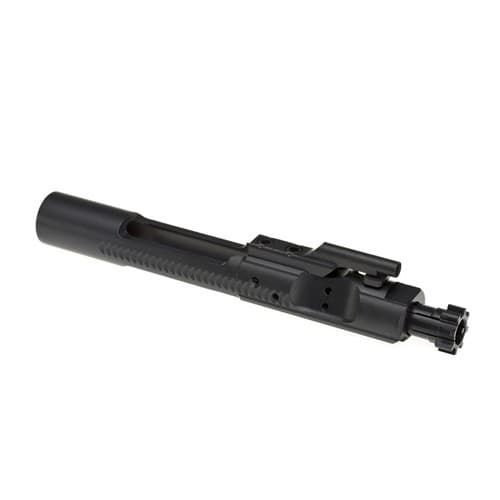
DLC (Diamond-Like Carbon)

Process: PVD (Physical Vapor Deposition) / PACVDVerdict: Premium
$$$

The gold standard for modern BCGs. DLC is an incredibly hard, thin coating that provides extreme scratch resistance and natural lubricity without adding meaningful thickness.

Pros

  • Extremely hard and virtually scratch-proof.
  • Very low coefficient of friction (slick).
  • Chemical and corrosion resistant.
  • Doesn't flake or chip like NiB can.
  • Thin application preserves dimensional tolerances.

Cons

  • Expensive compared to Nitride.
  • Requires proper surface prep for best adhesion.
Hardness
Extreme (90+ HRC)
Lubricity
Exceptional (0.1 CoF)
Best For
High-end duty builds, suppressed rifles, and users who hate cleaning.

Black Nitride (QPQ / Melonite)

Process: Thermochemical Case HardeningVerdict: Standard
$

The best value for money. Nitride is a surface treatment, not a coating, meaning it won't chip or flake. It case-hardens the steel and adds corrosion resistance.

Pros

  • Zero dimensional change (it treats the metal itself).
  • Extremely durable and corrosion resistant.
  • Cost-effective.
  • Slicker than phosphate.

Cons

  • Not as slick as DLC or NiB.
  • Can result in brittle parts if heat treat is done poorly (avoid cheap brands).
Hardness
High (60-70 HRC)
Lubricity
Good
Best For
General purpose builds, budget-conscious duty rifles, and high-volume training.

Nickel Boron (NiB)

Process: Electroless PlatingVerdict: Avoid
$$

Once the top upgrade, NiB has fallen out of favor due to quality control issues. While very slick initially, it can flake, tarnish, and cause tolerance stacking issues.

Pros

  • Extremely slick to the touch.
  • Easy to identify fouling (silver color).
  • High initial lubricity.

Cons

  • Prone to flaking and shipping over time.
  • Can cause hydrogen embrittlement in the steel.
  • Added thickness can cause tight tolerance issues.
  • Stains and tarnishes permanently with use.
Hardness
High (70+ HRC)
Lubricity
Very High
Best For
Those who prioritize initial slickness over long-term reliability (Not Recommended).

Phosphate (Mil-Spec)

Process: Conversion CoatingVerdict: Legacy
$

The military standard. It absorbs oil like a sponge, keeping the BCG lubricated even when dirty. Ideally paired with a Chrome-lined bore and gas key.

Pros

  • Holds oil exceptionally well (porous).
  • Standard and proven for decades.
  • Cheap and readily available.

Cons

  • High friction if run dry.
  • Hardest to clean (fouling sticks).
  • Technically less advanced than Nitride/DLC.
Hardness
Standard
Lubricity
Low (Requires Oil)
Best For
Clone builds, strict mil-spec requirements, and 'if it ain't broke' purists.

Titanium Nitride (TiN)

Process: PVDVerdict: Standard
$$$

Recognizable by its gold color. TiN is hard and slick but often chosen for aesthetics. It is a PVD coating but typically softer than DLC.

Pros

  • Very hard and wear resistant.
  • Good lubricity and corrosion resistance.
  • Distinctive gold aesthetic.

Cons

  • Costly.
  • Can be flashy for duty use.
  • Not as hard as DLC.
Hardness
High (80+ HRC)
Lubricity
Good
Best For
Competition guns and showpiece builds.

Head-to-Head Comparison

Quick reference for how these finishes stack up in key performance areas.

Hardness (Wear Resistance)
DLC

DLC offers the highest surface hardness, resisting scratches and wear better than any other option.

Lubricity (Slickness)
DLC / NiB

NiB feels slickest to the touch, but DLC offers comparable low friction without the risk of flaking.

Corrosion Resistance
Nitride / DLC

Both offer exceptional protection against rust and elements.

Ease of Cleaning
Chrome / DLC

Carbon wipes right off Chrome and DLC. Phosphate requires scrubbing.

Value
Nitride

Nitride offers 90% of the performance of DLC for 50% of the price.

The "Just as Good" Trap

Avoid unbranded "Nitrided" BCGs from budget bin websites. Nitriding is a precise heat treatment. If done poorly, it makes the steel brittle, leading to bolt lugs snapping off at low round counts.

Rule of thumb: Only buy Nitride or DLC BCGs from reputable manufacturers (Toolcraft, Microbest, BCM, Sons of Liberty, etc.) who use Carpenter 158 or 9310 steel with proper heat treat protocols.

Duty Grade (DLC)

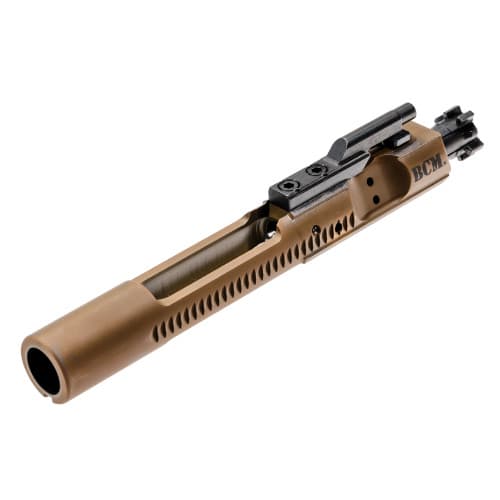
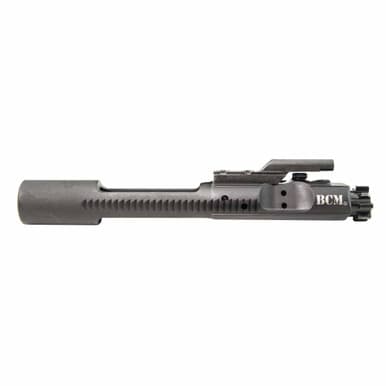
BCM Bolt Carrier Group (IonBond/DLC)

  • HP/MPI Tested
  • Properly staked gas key
  • Industry leader
Check Price at OpticsPlanet
Reviewer's Choice (DLC)

Toolcraft DLC 5.56 BCG

  • Carpenter 158 Bolt
  • Extreme hardness
  • Easy cleaning
Check Price at OpticsPlanet
Duty Grade (DLC)

BCM Bolt Carrier Group

  • HP/MPI Tested
  • Properly staked gas key
  • Industry leader
$203.99
Check Price at OpticsPlanet
The New Standard (Chrome)

Microbest Hard Chrome BCG

  • Extreme durability
  • Wipes clean instantly
  • Mil-spec reliability
Shop at AR15 Discounts
Premium Pick (NP3)

SIONICS NP3 BCG

  • Unmatched lubricity
  • Impervious to corrosion
  • Rare but worth it
Check Price at OpticsPlanet
Legacy Pick (NiB)

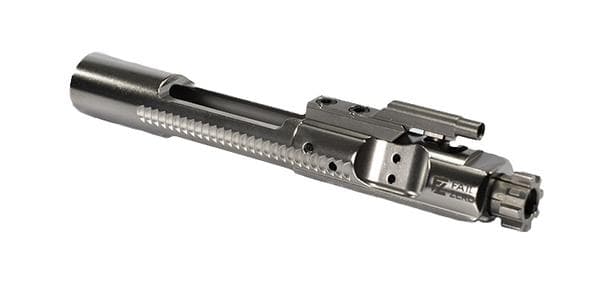
FailZero Nickel Boron BCG

  • EXO Nickel Boron technology
  • High initial slickness
$185.99
Check Price at OpticsPlanet

Related Guide

AR-15 Cleaning Kit Buying Guide - Recommended cleaning solvents and tools that work across all BCG coating types, from phosphate to DLC.

Frequently Asked Questions

What is the best BCG coating?
DLC (Diamond-Like Carbon) is the best BCG coating for most users. It offers excellent lubricity, hardness (80+ Rockwell), and corrosion resistance. Nitride is the best value option, nearly as good as DLC at half the price. Avoid NiB (Nickel Boron) as it can flake under high round counts.
Is DLC BCG worth it?
Yes, DLC is worth the $50-100 premium over phosphate or nitride. DLC BCGs run smoother, clean easier, and maintain their finish for 50,000+ rounds. The coating is harder than the base steel, so scratches don't expose bare metal. For duty or high-volume shooting, DLC pays for itself.
Why do Nickel Boron BCGs flake?
NiB coatings flake because the electroless nickel base layer can delaminate under the repeated impact of cycling. The bright, slick finish hides developing issues until chunks come off. Modern DLC and nitride coatings bond directly to steel and don't have this failure mode.
What is the difference between Nitride and Phosphate BCG?
Nitride penetrates the steel surface (case hardening) while phosphate is a surface conversion coating. Nitride is harder, smoother, and more corrosion resistant. Phosphate holds oil better but wears faster. For modern builds, nitride is the minimum standard, phosphate is only for clone builds.
Is Titanium Nitride (TiN) BCG good?
TiN BCGs are mostly cosmetic. The gold color looks cool but TiN is softer than DLC and can wear through on high-contact surfaces. It's fine for low-volume shooters who want the gold look, but DLC outperforms it for serious use. The coating quality varies wildly between manufacturers.
What BCG coating for suppressed shooting?
DLC or nitride with a properly staked gas key. Suppressed guns run dirtier and hotter, DLC's self-lubricating properties shine here. Avoid NiB as the increased carbon buildup accelerates flaking. Chrome-lined carrier interiors help with cleaning but aren't required.
Is Nickel Boron BCG better than nitride?
No, nitride is better than Nickel Boron (NiB) for reliability and longevity. While NiB offers initial slickness, it's prone to flaking under sustained use. Nitride penetrates the steel surface, making it more durable and corrosion-resistant. Nitride requires more lubrication than NiB but won't fail catastrophically like NiB can at high round counts.
Is DLC coating better than phosphate?
Yes, DLC vastly outperforms phosphate in hardness, corrosion resistance, smoothness, and ease of cleaning. DLC offers 80+ Rockwell hardness and self-lubricating properties that phosphate cannot match. Phosphate's only advantages are nostalgia and lower cost, it's suitable for clone builds but obsolete for modern performance-oriented rifles.
What is the difference between BCG C158 and 9310?
C158 is mil-spec steel for AR-platform rifles, while 9310 is mil-spec for other military full-auto rifles. Both are high-quality bolt steels when properly heat-treated. C158 is harder to heat-treat correctly, making quality control critical. 9310 is easier to process consistently and increasingly popular with premium BCG manufacturers for its reliable performance.