Best AR-15 BCG 2026: Top 10 Bolt Carrier Groups Ranked header image
Best AR-15 BCG 2026 Rankings
RankModelBrandMaterialPriceCoatingBest For
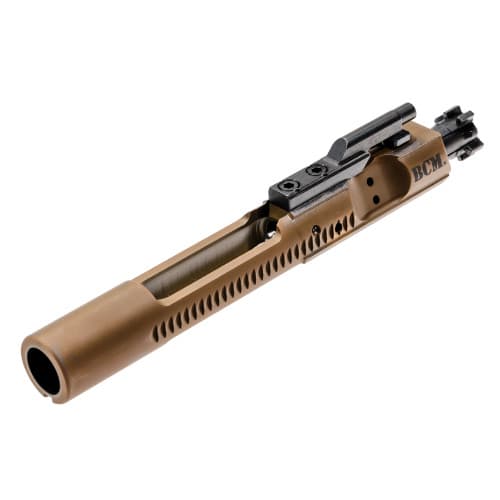
1M16 Bolt Carrier GroupBCMCarpenter 158$190-$210PhosphateBest Overall - The benchmark every other BCG is measured against
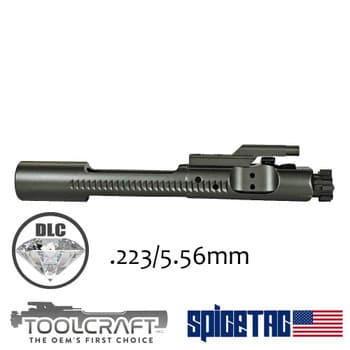
2Phosphate 5.56 BCGToolcraftCarpenter 158 or 9310$80-$100PhosphateBest Value - OEM quality at budget prices
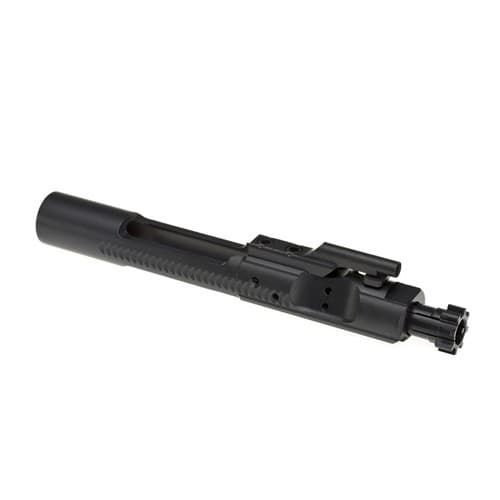
3Enhanced Bolt Carrier GroupLMTAerMet 100$350-$400Hard ChromeBest for Suppressed SBRs - But buy just the E-Bolt for unsuppressed builds
4Mystic Black DLC BCGCryptic CoatingsCarpenter 158$280-$320DLC (Mystic Black)Best Coating - Ultra-slick DLC that cleans with a paper towel
5M16 Bolt Carrier GroupDaniel DefenseCarpenter 158$200-$240PhosphateBest Factory Upgrade - Same BCG in DD factory rifles
6Black Nitride 5.56 BCGToolcraft9310 Steel$90-$120Black NitrideBest Budget Nitride - Slicker finish at value pricing
7Liberty Fighting BCGSOLGWCarpenter 158$170-$190PhosphateBest Agency Choice - Extra QC layer from a trusted brand
8Full Hard Chrome BCGMicrobestCarpenter 158$160-$200Hard ChromeBest Chrome - Wipes clean instantly, extremely durable
9Hard Chrome Sandcutter Bolt Carrier GroupCenturion ArmsHP/MPI tested (Centurion V2/E4)$300-$350Hard ChromeBest Premium Hard-Use - Runs filthy and cleans easily
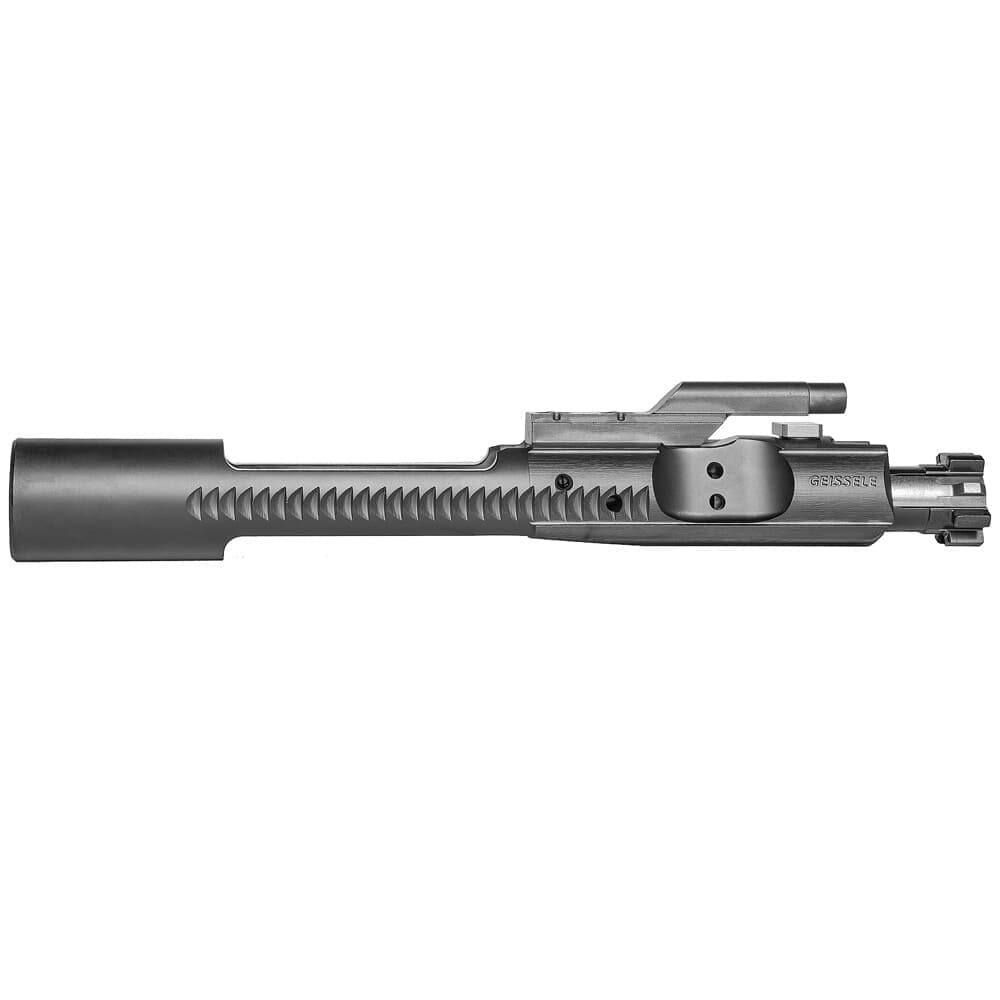
10LMOS Carrier with Enhanced BoltJP Enterprises9310 Enhanced$280-$350QPQSkip It - Buy a standard BCG and spend the savings on ammo
[ < Back to guides ]
ComponentsBCGReliability

Best AR-15 BCG 2026: Top 10 Bolt Carrier Groups Ranked

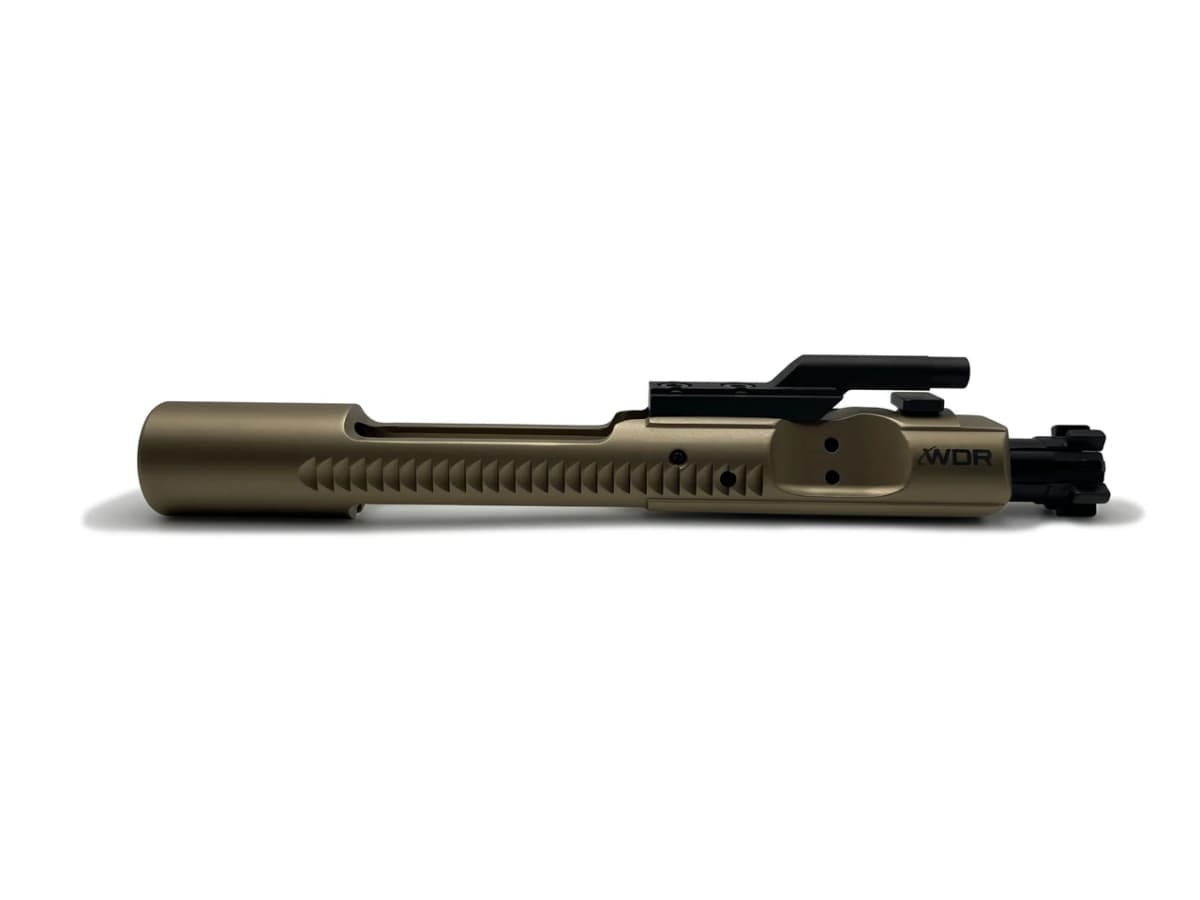
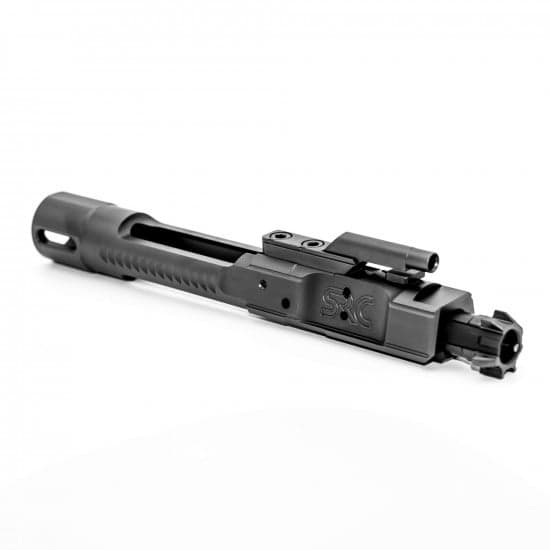
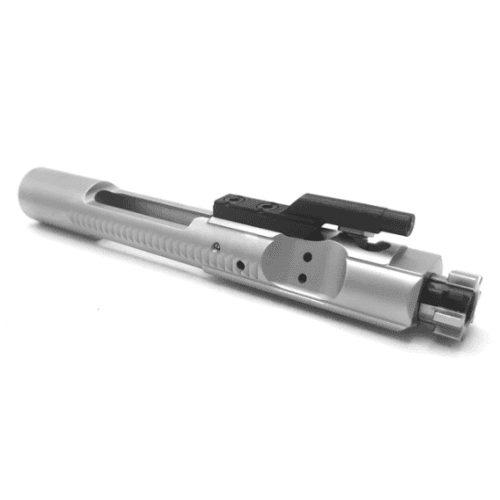
The bolt carrier group is the heart of your AR-15. It extracts, ejects, and chambers rounds under extreme pressure thousands of times. A quality BCGBCG[Components]Bolt Carrier Group. The heart of the rifle, housing the bolt, firing pin, extractor, and ejector. It cycles back and forth to chamber, fire, and eject rounds. is non-negotiable for reliability. After testing BCGs across price points from $80 to $400+, we've ranked the top 10. We cover MPI/HPT testing, Carpenter 158 vs 9310 steel, gas key stakingStaking[Components]Deforming metal screw threads (usually on the gas key) to prevent them from vibrating loose under recoil. Essential for reliability., and why enhanced BCGs matter for suppressed builds.

Updated January 2026Tested on BCM, DD, Geissele, and PSA uppersRound counts from 500 to 50,000+

Quick Answer: Best AR-15 BCG in 2026

Best Overall: BCM M16 BCG ($190-$210) - MPI/HPT tested, properly staked, chrome-lined. The industry standard for duty-grade reliability.

Best Value: Toolcraft Phosphate BCG ($80-$100) - Same OEM quality as many $200+ BCGs at half the price. The budget king.

Best Premium: LMT Enhanced BCG ($350-$400) - AerMet steel, delayed unlocking cam path. The best BCG for suppressed SBRs.

Best Coating: Cryptic Coatings Mystic Black DLC ($280-$320) - Slickest coating on the market. Cleans with a paper towel.

Pro tip: For most shooters, the Toolcraft or BCM BCG is all you need. Only pay for enhanced BCGs if running suppressed SBRs or need extended bolt life past 20k+ rounds.

📋

Before You Read

This guide assumes familiarity with these topics:

What is a Bolt Carrier Group (BCG)?

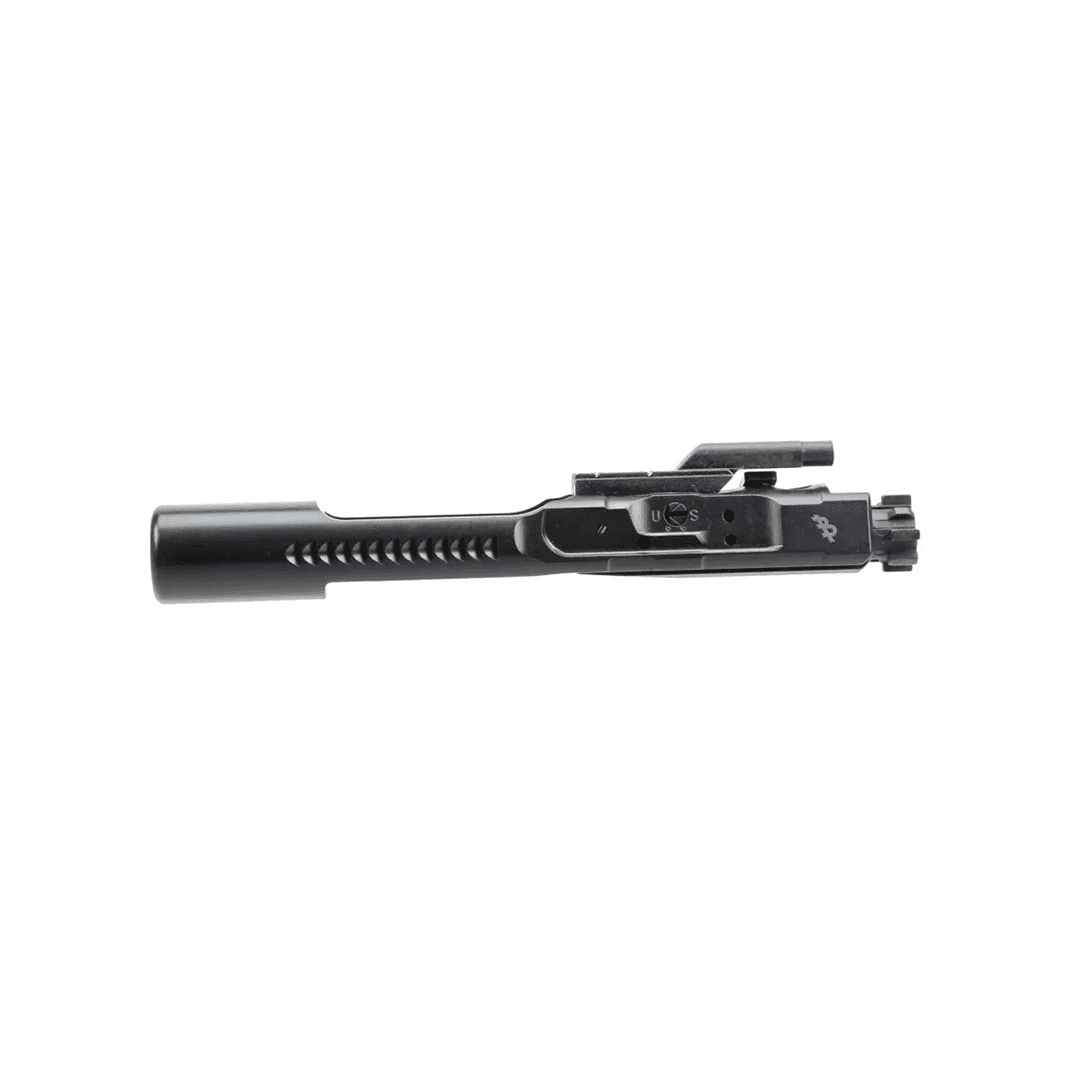
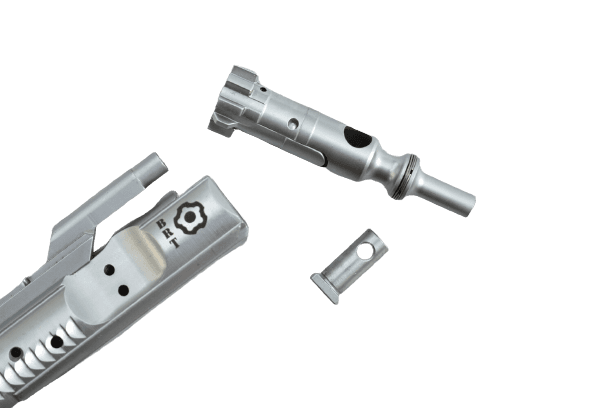
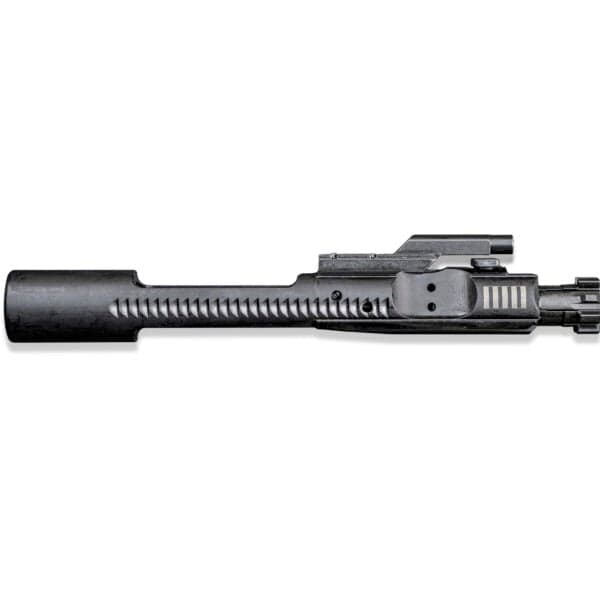
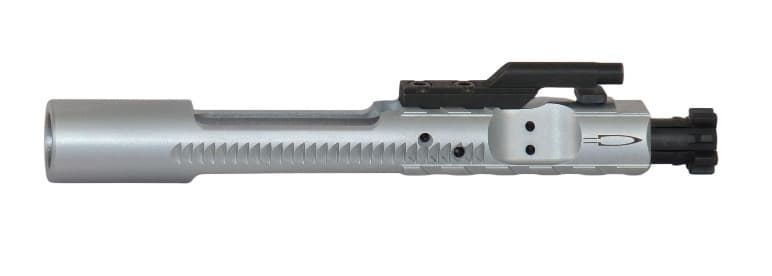
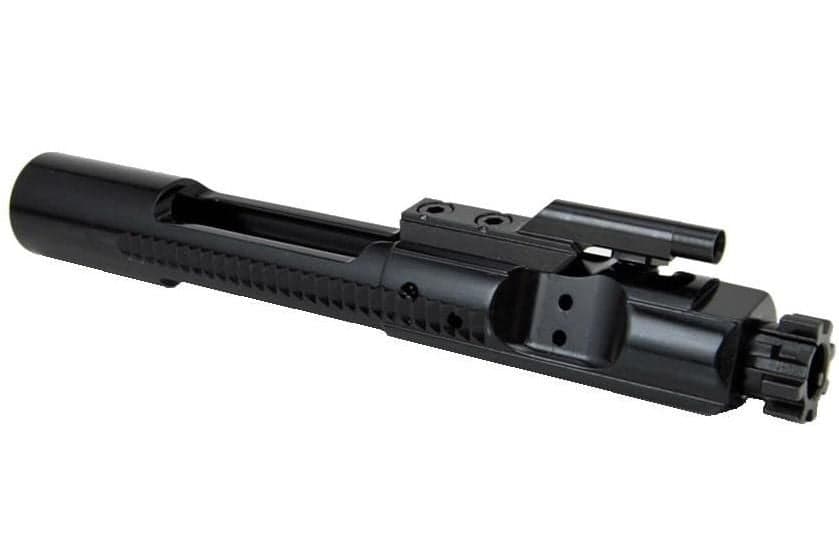
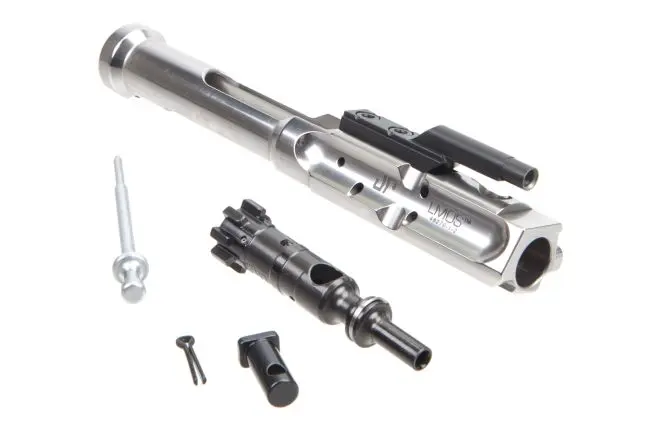
The BCGBCG[Components]Bolt Carrier Group. The heart of the rifle, housing the bolt, firing pin, extractor, and ejector. It cycles back and forth to chamber, fire, and eject rounds. is the moving assembly that makes your AR-15 work. When you fire, gas travels through the gas tube and pushes the bolt carrier rearward. The bolt unlocks from the barrel extension, extracts the spent case, ejects it, picks up a new round from the magazine, and chambers it. This happens in a fraction of a second, thousands of times over the life of your rifle.

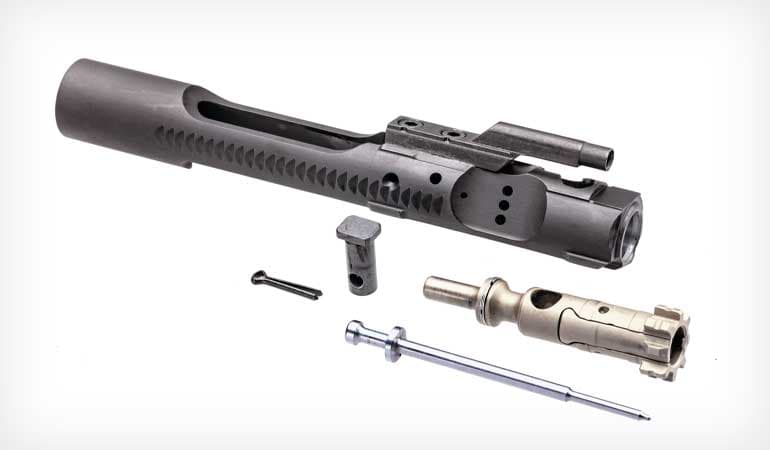
BCG Components

  • Bolt: Locks into barrel extension, contains extractor and ejector
  • Carrier: Houses the bolt, rides on buffer tube
  • Gas Key: Receives gas from gas tube
  • Cam Pin: Controls bolt rotation during lock/unlock
  • Firing Pin: Strikes primer to ignite cartridge

Carrier Types

  • Full-Auto (M16): Full-length shroud, heavier, required for auto sears but works fine in semi-auto
  • Semi-Auto: Lightened rear, slightly lighter, no auto sear compatibility
  • Most quality BCGs are M16 profile. There's no downside to M16 in a semi-auto rifle.

Quality Markers: What to Look For

Not all BCGs are created equal. Here's what separates a reliable BCG from a ticking time bomb.

MPI Testing (Magnetic Particle Inspection)

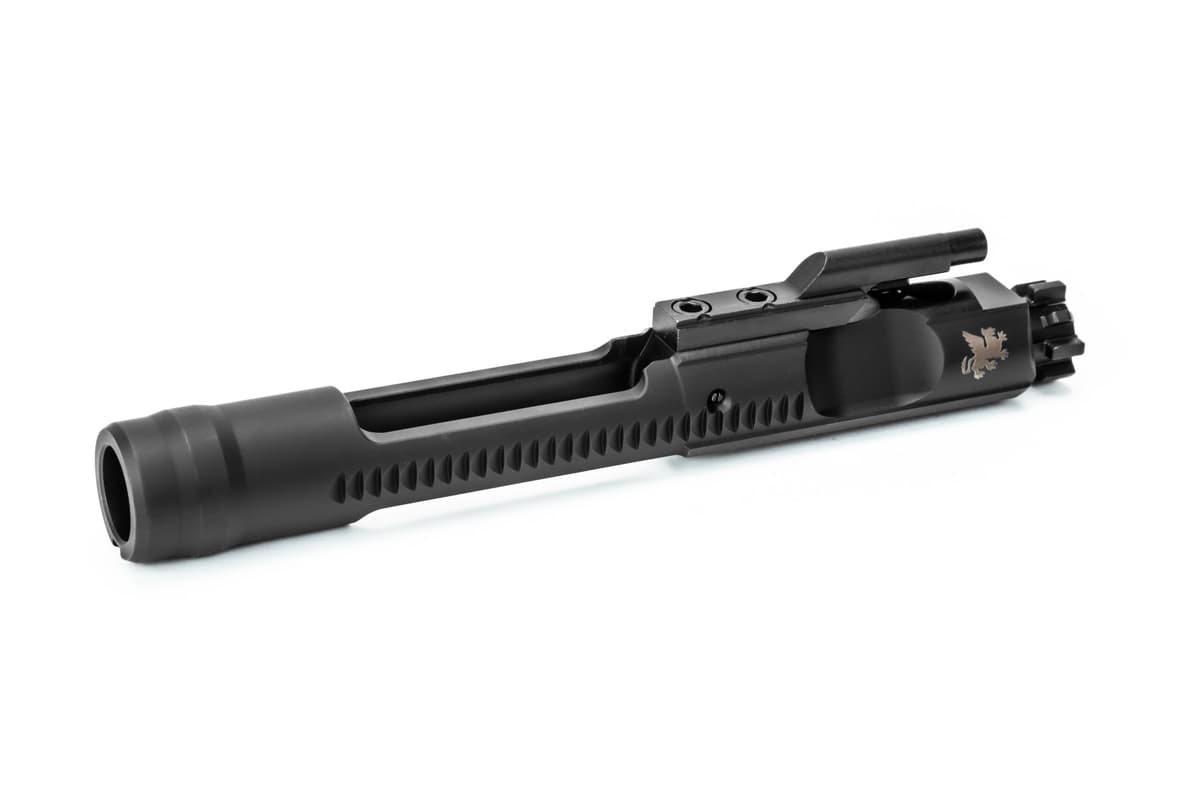
Each bolt is individually inspected for internal cracks using magnetic particles and UV light. Defective bolts are caught and discarded. Look for "MPI" or "MP" stamped on the bolt. If not listed, assume it's only batch tested.
HPT Testing (High Pressure Testing)

Each bolt is proof-tested at pressures well above normal operating loads. Think of it as a stress test. Bolts that fail crack immediately rather than in your hands. Essential for duty/defense guns.

Proper Gas Key Staking

The gas key must be secured to the carrier with Grade 8 fasteners and properly staked (metal displaced into screw heads). Poor staking causes the gas key to loosen, leading to cycling failures. Use a go/no-go gauge to verify.

Shot Peening

The bolt is bombarded with small steel shot to create compressive surface stress, increasing fatigue resistance and bolt life. Most quality BCGs are shot peened.

Bolt Steel: Carpenter 158 vs 9310 vs AerMet

The bolt is the highest-stress component. Material choice matters, but proper heat treatment matters more.

Carpenter 158 (Mil-Spec)

The original military specification steel. Case-hardened for a wear-resistant surface with a softer core that absorbs shock. Used in genuine mil-spec bolts for decades. Made exclusively by Carpenter Technology.

+ Proven military track record- Premium pricing due to sole supplier

9310 Steel

An AISI aerospace-grade steel that's approximately 7-8% stronger than Carpenter 158 when properly heat treated. More readily available and cheaper to source. Used by many quality manufacturers including JP Enterprises.

+ Stronger than C158 when heat treated correctly- Requires proper heat treatment (QC dependent)

AerMet 100 (Premium)

Ultra-high strength steel used by LMT and KAC for their enhanced bolts. Significantly stronger than C158 or 9310 with exceptional toughness. Used in aerospace applications where failure is not an option. LMT Enhanced bolts using AerMet have logged 50,000+ rounds with no reported failures.

+ Exceptional strength and toughness- Expensive, only in premium enhanced BCGs

Bottom Line: Properly heat-treated 9310 performs as well as or better than C158. The manufacturer's QC matters more than the steel grade. Both Toolcraft and BCM make excellent BCGs with both materials.

Enhanced BCGs: LMT & KAC

When standard mil-spec isn't enough. These redesigned BCGs address known failure points and excel in suppressed SBR applications.

LMT Enhanced BCG

  • AerMet steel bolt (50,000+ round life)
  • Delayed unlocking cam path (reduces backpressure)
  • Enhanced extractor geometry
  • Full E-BCG changes gas system timing
  • Requires retuning buffer/gas for your setup

Best for: Suppressed SBRs (11.5" and under) where the delayed cam path dramatically reduces gas in the face.

Pro tip: For unsuppressed rifles or longer barrels (14.5"+), buy just the LMT Enhanced Bolt and drop it in a standard carrier. You get the 50,000+ round AerMet bolt life without changing your gas system timing. Best of both worlds.

KAC E3 Bolt

  • Enlarged bolt face for positive engagement
  • Rounded lugs (less prone to chipping)
  • Thicker bolt web (strengthened failure point)
  • Dual extractor springs
  • Requires KAC barrel extension (NOT drop-in)

Arguably the best bolt design ever made, but requires a KAC barrel extension. Not practical for most builders.

Lightweight BCGs: Don't Bother

Titanium and skeletonized carriers save 3-4 ounces of reciprocating mass. Sounds great on paper. In practice, they're a solution looking for a problem that creates new problems in the process.

Why Lightweight BCGs Are a Bad Idea

  • Requires an adjustable gas block - Without one, the lighter carrier cycles too fast, battering your receiver extension and buffer retainer. You're now dependent on a tiny set screw for reliability.
  • Unreliable without perfect tuning - Change ammo, add a suppressor, get the gas block bumped? Now you have malfunctions. A standard BCG runs everything.
  • Accelerated parts wear - Higher bolt velocity = more stress on the bolt lugs, cam pin, and barrel extension. You're trading durability for marginal speed gains.
  • Expensive for no real benefit - $300-$400 for a titanium carrier that makes your rifle pickier and less reliable. That money buys ammo and training.
  • The "faster splits" myth - Top competitive shooters use standard BCGs. Your split times are limited by your skill, not 3 ounces of reciprocating mass.

The only legitimate use case: Dedicated competition guns with fixed ammo loads, adjustable gas, tuned buffer systems, and a backup rifle for when it inevitably goes down. If this isn't you, skip it.

Our recommendation: Buy a standard BCG and spend the $200+ savings on ammo and training. Your reliability and skills will improve far more than shaving 3 ounces ever will.

Best AR-15 Bolt Carrier Groups Ranked

Our tested and ranked picks for the best AR-15 BCGs in 2026. Quality matters - these are the BCGs we trust for duty and defense.

1

BCM M16 Bolt Carrier Group

Best Overall - The benchmark every other BCG is measured against

$190-$210
Editor's ChoiceDuty GradeMPI/HPT
Pros
  • +MPI and HPT tested individually
  • +Properly staked Grade 8 gas key screws
  • +Chrome-lined carrier interior
  • +Shot peened Carpenter 158 bolt
  • +BCM's legendary quality control
Cons
  • Phosphate finish harder to clean than DLC
  • Premium price over budget options
  • Nothing fancy, just reliable
Bolt Material: Carpenter 158Coating: PhosphateCarrier: M16 Full-Auto
2

Toolcraft Phosphate 5.56 BCG

Best Value - OEM quality at budget prices

$80-$100
Best ValueOEM QualityMPI/HPT
Pros
  • +OEM manufacturer for premium brands
  • +MPI and HPT tested
  • +Properly staked gas key
  • +Incredible value at $80-$100
  • +Both C158 and 9310 options available
Cons
  • Phosphate finish not as slick as nitride/DLC
  • Less brand cachet than BCM
  • Some QC variation between batches
Bolt Material: Carpenter 158 or 9310Coating: PhosphateCarrier: M16 Full-Auto
3

LMT Enhanced Bolt Carrier Group

Best for Suppressed SBRs - But buy just the E-Bolt for unsuppressed builds

$350-$400
PremiumSuppressor OptimizedRequires Tuning
Pros
  • +AerMet steel bolt (50,000+ round life)
  • +Delayed unlocking cam path reduces gas face
  • +Enhanced extractor geometry
  • +No reported bolt failures ever
  • +E-Bolt alone works in standard carriers
Cons
  • Full E-BCG changes gas system timing
  • Requires retuning buffer/gas for your setup
  • Expensive at $350-$400 for full BCG
  • Overkill for unsuppressed or 14.5"+ barrels
  • Sometimes hard to find in stock
Bolt Material: AerMet 100Coating: Hard ChromeCarrier: Enhanced Cam Path
4

Cryptic Coatings Mystic Black DLC BCG

Best Coating - Ultra-slick DLC that cleans with a paper towel

$280-$320
PremiumDLC CoatingEasy Clean
Pros
  • +Extremely slick DLC coating
  • +Carbon wipes off with paper towel
  • +Runs with minimal lubrication
  • +MPI/HPT tested
  • +Multiple color options available
Cons
  • Premium price for the coating
  • Coating is the main value add
  • Base BCG is standard mil-spec
Bolt Material: Carpenter 158Coating: DLC (Mystic Black)Carrier: M16 Full-Auto
5

Daniel Defense M16 Bolt Carrier Group

Best Factory Upgrade - Same BCG in DD factory rifles

$200-$240
Duty GradeFactory SpecMPI/HPT
Pros
  • +Daniel Defense quality control
  • +Chrome-lined bolt carrier and gas key
  • +Shot peened and MPI tested
  • +Properly staked per mil-spec
  • +Great for DD rifle replacements
Cons
  • More expensive than BCM
  • Similar performance to BCM
  • Phosphate finish only
Bolt Material: Carpenter 158Coating: PhosphateCarrier: M16 Full-Auto
6

Toolcraft Black Nitride 5.56 BCG

Best Budget Nitride - Slicker finish at value pricing

$90-$120
ValueNitrideEasy Clean
Pros
  • +Slicker than phosphate
  • +Easier to clean than phosphate
  • +Same Toolcraft OEM quality
  • +Corrosion resistant
  • +Excellent value proposition
Cons
  • 9310 steel (not C158)
  • Nitride can be brittle if poorly done
  • Slightly higher price than phosphate
Bolt Material: 9310 SteelCoating: Black NitrideCarrier: M16 Full-Auto
7

SOLGW Liberty Fighting BCG

Best Agency Choice - Extra QC layer from a trusted brand

$170-$190
Agency GradeQC VerifiedMPI/HPT
Pros
  • +Additional SOLGW QC inspection
  • +Carpenter 158 bolt standard
  • +Properly staked gas key
  • +Great brand reputation
  • +Agency and LE trusted
Cons
  • Similar to BCM at similar price
  • Nothing unique vs other duty BCGs
  • Availability can be spotty
Bolt Material: Carpenter 158Coating: PhosphateCarrier: M16 Full-Auto
8

Microbest Full Hard Chrome BCG

Best Chrome - Wipes clean instantly, extremely durable

$160-$200
OEM QualityHard ChromeExtreme Durability
Pros
  • +Full hard chrome coating
  • +Wipes completely clean
  • +OEM for many premium brands
  • +Extreme durability
  • +Great for high round counts
Cons
  • Chrome can chip at edges
  • Harder to find than other options
  • Not as slick as DLC
Bolt Material: Carpenter 158Coating: Hard ChromeCarrier: M16 Full-Auto
9

Centurion Arms Hard Chrome Sandcutter Bolt Carrier Group

Best Premium Hard-Use - Runs filthy and cleans easily

$300-$350
PremiumHard ChromeSand Cutter
Pros
  • +Hard chrome cleans easily and resists corrosion
  • +Sand rail cuts help keep running when dirty
  • +High-end machining and consistent QC
  • +Great choice for hard-use rifles
  • +Made in USA
Cons
  • Expensive compared to standard duty BCGs
  • Not necessary for most range-only rifles
  • Availability can be limited
Bolt Material: HP/MPI tested (Centurion V2/E4)Coating: Hard ChromeCarrier: Sand rail cuts
10

JP Enterprises LMOS Carrier with Enhanced Bolt

Skip It - Buy a standard BCG and spend the savings on ammo

$280-$350
Not RecommendedRequires TuningCompetition Only
Pros
  • +JP's quality manufacturing
  • +Enhanced bolt design is solid
  • +If you MUST have lightweight, this is well-made
Cons
  • Requires adjustable gas block to function
  • Unreliable without perfect tuning
  • Change ammo or add suppressor = malfunctions
  • Accelerates wear on bolt lugs and receiver
  • $300+ for something that makes your rifle pickier
  • Top competitors use standard BCGs anyway
  • The money is better spent on training
Bolt Material: 9310 EnhancedCoating: QPQCarrier: Low Mass

Purchasing through these links may generate a commission at no extra cost to you. Prices and availability may change.

BCG Comparison Table: Top 5 at a Glance

RankModelPriceMaterialCoatingTesting
1BCM M16 Bolt Carrier Group$190-$210Carpenter 158PhosphateMPI/HPT
2Toolcraft Phosphate 5.56 BCG$80-$100Carpenter 158 or 9310PhosphateMPI/HPT
3LMT Enhanced Bolt Carrier Group$350-$400AerMet 100Hard ChromeMPI/HPT
4Cryptic Coatings Mystic Black DLC BCG$280-$320Carpenter 158DLC (Mystic Black)MPI/HPT
5Daniel Defense M16 Bolt Carrier Group$200-$240Carpenter 158PhosphateMPI/HPT

BCG Coatings: Quick Reference

For a deep dive into coatings, see our Advanced Coatings & BCG Guide. Here's the quick summary:

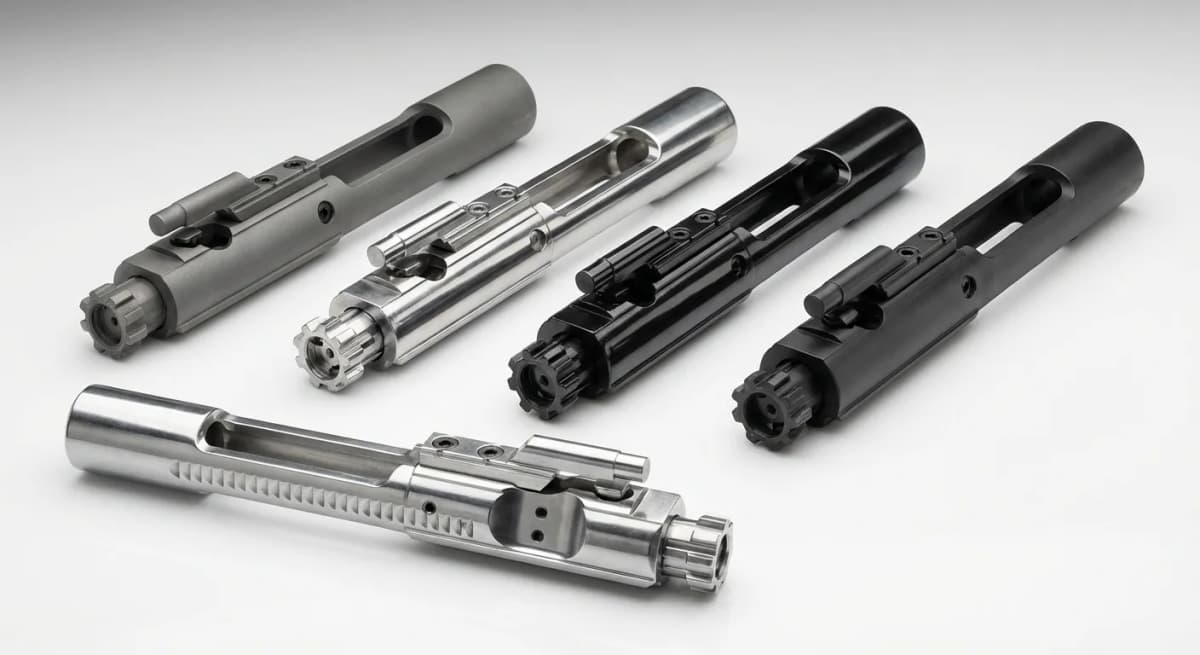
Phosphate

Mil-spec standard. Holds oil well, proven reliable. Not slick, harder to clean.

$80-$120

Nitride

Surface hardening treatment. Slicker than phosphate, easier to clean. Our pick for value.

$90-$150

DLC

Diamond-Like Carbon. Ultra-slick, extremely hard. Premium choice.

$250-$350

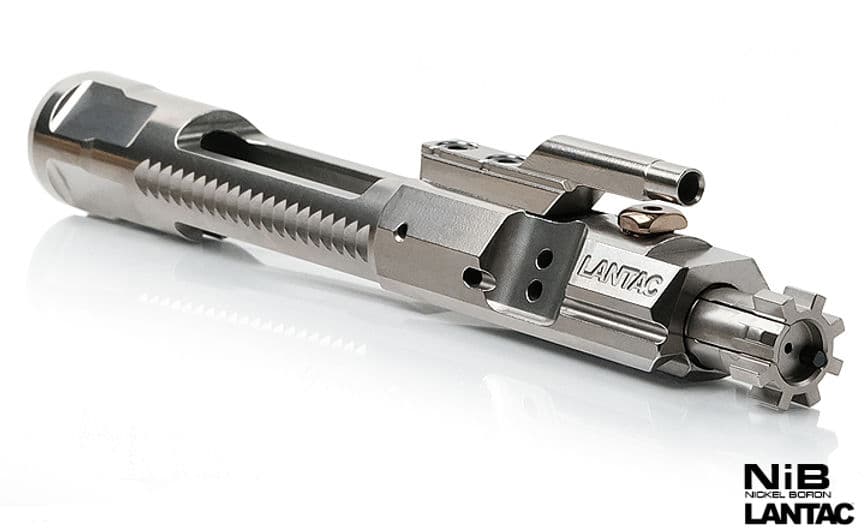
Nickel Boron

Avoid. Prone to flaking under stress, causing malfunctions. NiB hype is dead.

Not recommended

Avoid: The $50 BCG Trap

Unbranded BCGs from eBay, AliExpress, and sketchy budget websites are a gamble. They may use inferior steel, skip MPI/HPT testing, have improper heat treatment, or poor gas key stakingStaking[Components]Deforming metal screw threads (usually on the gas key) to prevent them from vibrating loose under recoil. Essential for reliability.. A cracked bolt lug or loose gas key during a critical moment is not worth the $30 you saved.

Minimum standard: Only buy BCGs from manufacturers who use Carpenter 158 or 9310 steel with proper MPI/HPT testing. Toolcraft at $80-$100 is the floor for duty-grade reliability.

Avoid: Aero Precision BCGs. They are known for very poor quality control—often worse than PSA. If you see one bundled with an upper, swap it for a Toolcraft or BCM immediately.

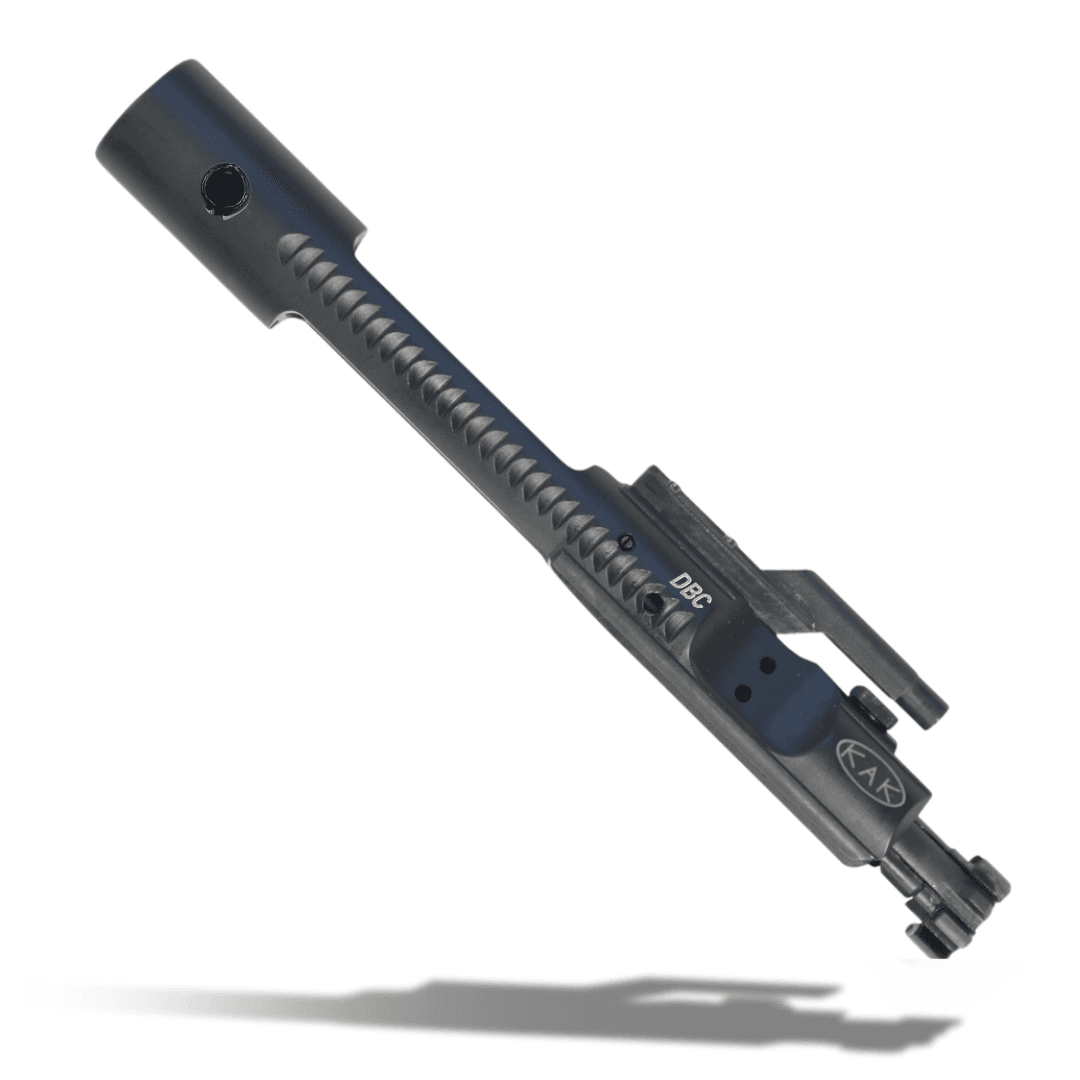
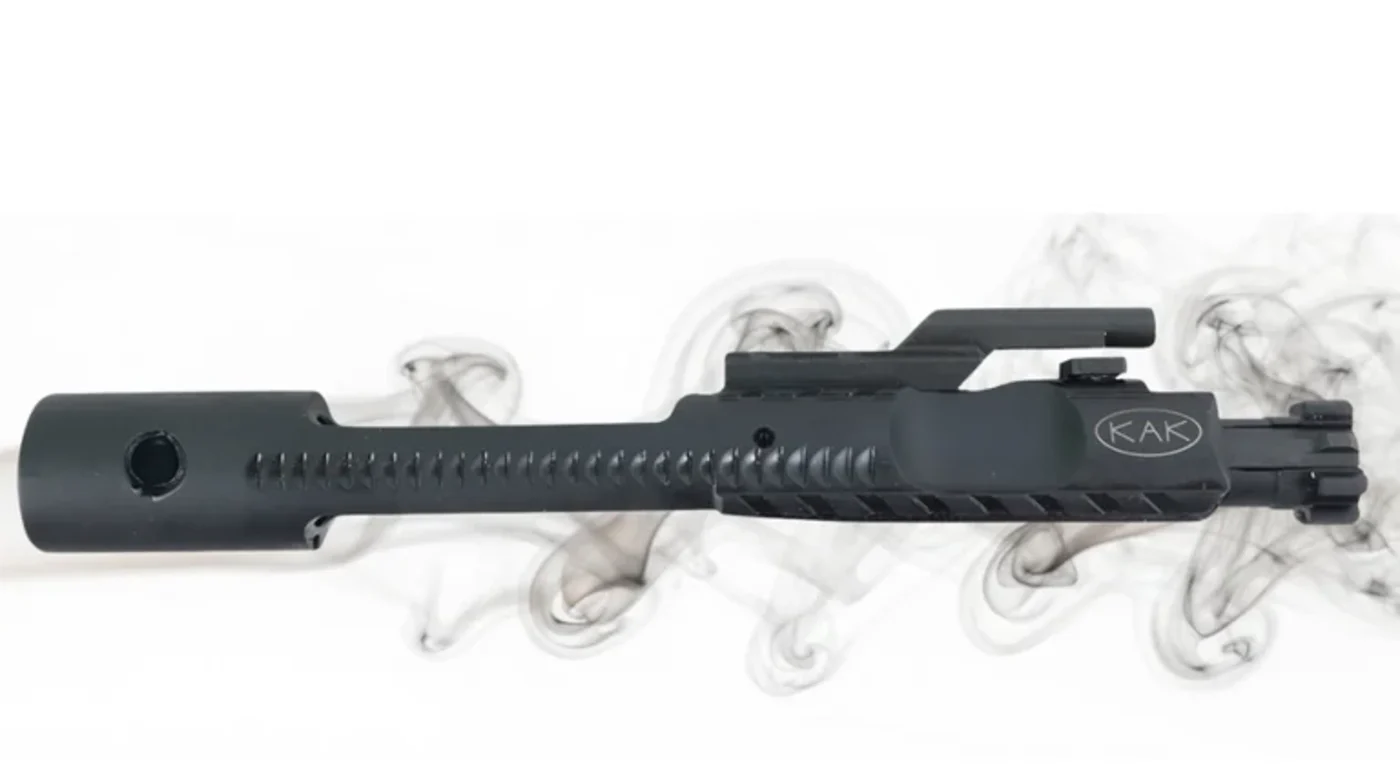
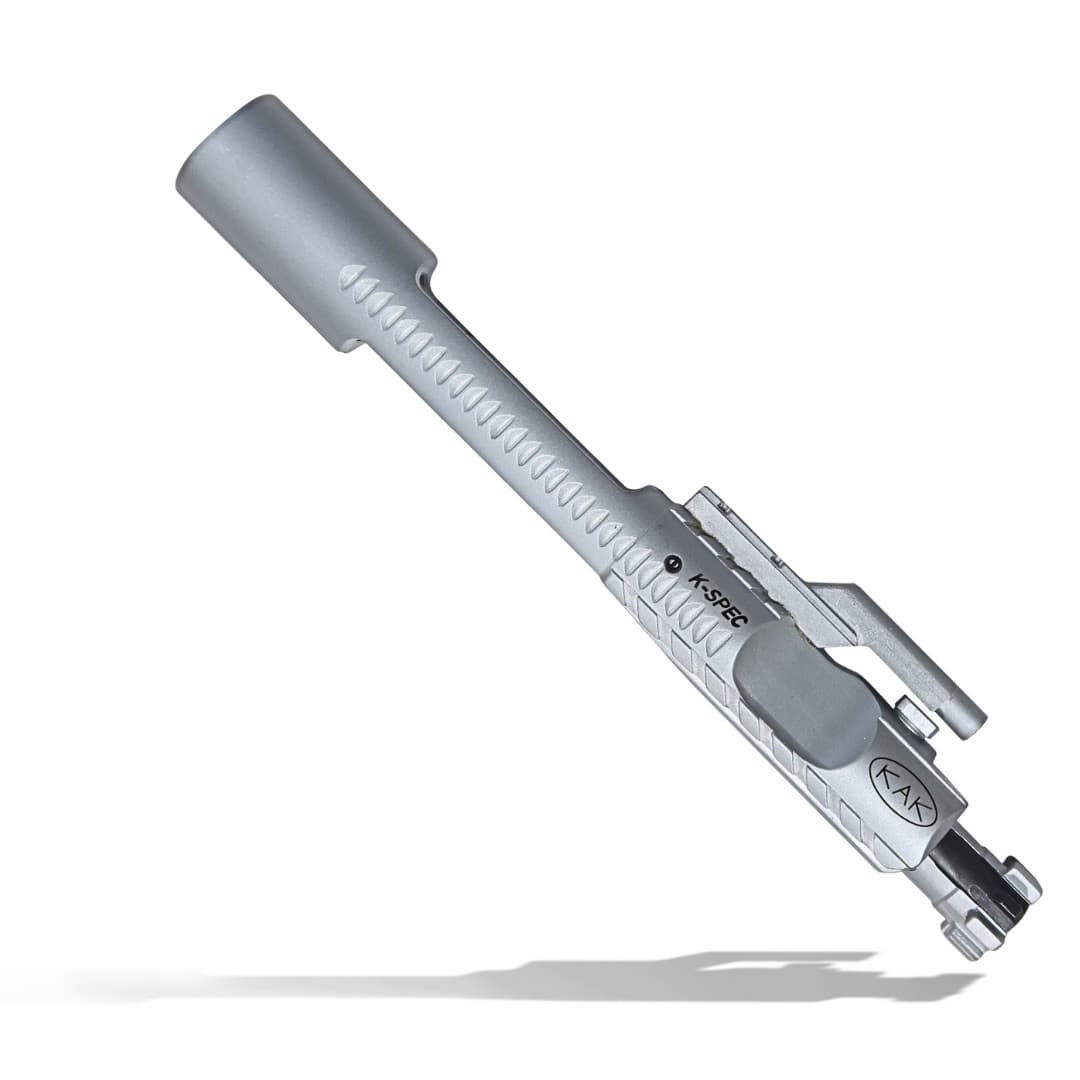
Avoid: KAK Industries “Sand Cutter” BCGs. We've seen too many reports of poor finishing and rough carrier rails—best case they feel gritty, worst case they can accelerate wear and scratch up your receiver.

Frequently Asked Questions

What is the best BCG for AR-15 in 2026?

The BCM M16 BCGBCG[Components]Bolt Carrier Group. The heart of the rifle, housing the bolt, firing pin, extractor, and ejector. It cycles back and forth to chamber, fire, and eject rounds. ($190-$210) is the best overall choice for most shooters. It's MPI/HPT tested, properly staked, chrome-lined, and comes from a manufacturer with a bulletproof reputation. For budget builds, Toolcraft ($80-$100) offers the same OEM quality. For suppressed SBRs, the LMT Enhanced BCGBCG[Components]Bolt Carrier Group. The heart of the rifle, housing the bolt, firing pin, extractor, and ejector. It cycles back and forth to chamber, fire, and eject rounds. ($350-$400) is worth the premium.

Is Carpenter 158 or 9310 steel better?

When properly heat-treated, 9310 is actually 7-8% stronger than Carpenter 158. The material matters less than the manufacturer's heat treatment and QC process. Both Toolcraft and BCM make excellent BCGs with both materials. Don't pay extra just for "C158" branding.

What does MPI and HPT tested mean?

MPI (Magnetic Particle Inspection) uses magnetic fields and UV-fluorescent particles to detect internal cracks in the bolt. HPT (High Pressure Testing) proof-fires each bolt at pressures above normal operating loads. Together, these tests catch defective bolts before they fail in your hands. Essential for duty/defense rifles.

Do I need an enhanced BCG for my suppressed AR-15?

It depends on barrel length. The full LMT Enhanced BCGBCG[Components]Bolt Carrier Group. The heart of the rifle, housing the bolt, firing pin, extractor, and ejector. It cycles back and forth to chamber, fire, and eject rounds. shines in suppressed SBRs (11.5" and under) where the delayed cam path dramatically reduces gas in the face. However, the enhanced carrier changes your gas system timing and requires retuning your buffer/spring setup. For 14.5"+ barrels or unsuppressed rifles, buy just the LMT Enhanced Bolt and drop it in a standard carrier. You get the 50,000+ round AerMet bolt life without messing with your gas timing. A standard BCGBCG[Components]Bolt Carrier Group. The heart of the rifle, housing the bolt, firing pin, extractor, and ejector. It cycles back and forth to chamber, fire, and eject rounds. with adjustable gas or heavier buffer works fine for most suppressed builds.

How often should I replace my BCG?

A quality BCGBCG[Components]Bolt Carrier Group. The heart of the rifle, housing the bolt, firing pin, extractor, and ejector. It cycles back and forth to chamber, fire, and eject rounds. should last 10,000-20,000+ rounds before showing wear. Check bolt lugs, cam pin hole, and gas rings every 5,000 rounds. Replace gas rings when they no longer hold the bolt vertical. The bolt is the wear item - carriers last much longer. Enhanced bolts like LMT can exceed 50,000 rounds.

Related guides

Continue exploring with these related resources

Next Step

Ready to continue? Here's the recommended next guide:

Recommended Next

Advanced Coatings & BCG Guide: DLC vs Nitride vs NiB Evaluated

Compare modern Bolt Carrier Group (BCG) coatings. Deep dive into Diamond-Like Carbon (DLC), Physical Vapor Deposition (PVD), Nitride, and Nickel Boron (NiB). Learn which offer reliable lubricity vs which flake and cause failures.

Or explore a related topic:

AR-15 Gas System & Buffer Tuning->

Found this guide helpful?

Share it with other builders on your favorite platform.

Was this helpful?

Quick feedback helps us prioritize guide updates.

Feedback is anonymous. Comments help us decide what to update next.