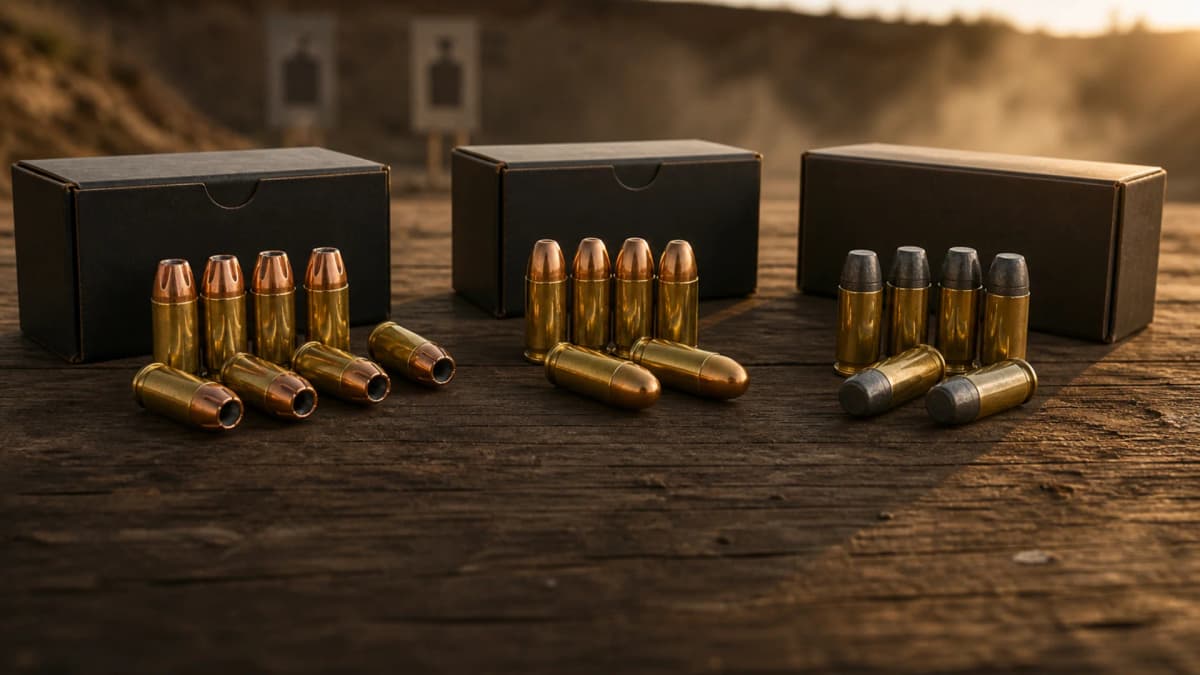
Best 9mm Self-Defense Ammo 2026: Top 7 Hollow Points Ranked (Federal HST, Speer Gold Dot, Hornady) header image

Best 9mm Self-Defense Ammo 2026: Top 7 Hollow Points Ranked (Federal HST, Speer Gold Dot, Hornady)

Choosing the right 9mm self-defense ammo is a life-safety decision. We've ranked the top 7 defensive hollow point loads using published ballistic gel test data from Lucky Gunner Labs, real-world law enforcement adoption records, and FBI protocol performance. This guide covers Federal HST, Speer Gold Dot, Hornady Critical Duty and Critical Defense, Federal Punch, SIG V-Crown, and Winchester Ranger T-Series — with hard numbers on penetration depth, expansion diameter, velocity, and price per round. We also break down grain weight differences (115gr vs 124gr vs 147gr), +P vs standard pressure, and what actually makes ammunition effective for self-defense.

By AB|Last reviewed February 2026

Quick Answer: Best 9mm Self-Defense Ammo in 2026

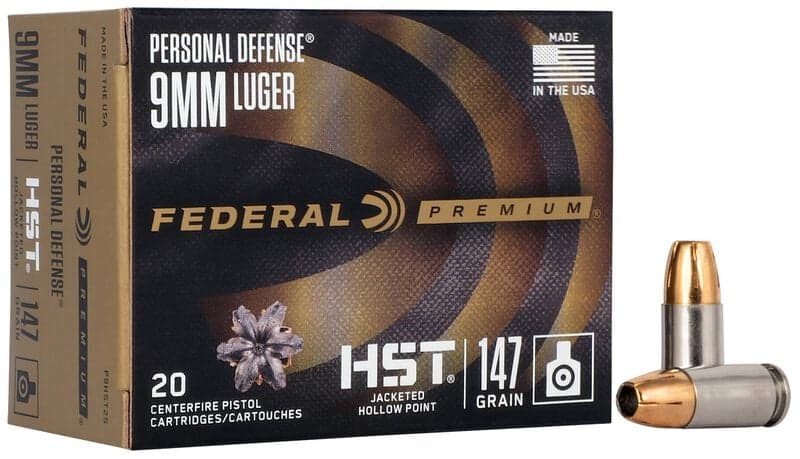
Best Overall: Federal HST 147gr ($1.40-1.80/rd) — 15.24" penetration (center of FBI window), 0.606" expansion, subsonic. The most recommended defensive load by firearms instructors.

Best Budget: Federal Punch 124gr ($0.75-1.00/rd) — Near-HST expansion (~0.60") at 60-70% of the price. Affordable enough to practice with.

Best +P / FBI Issue: Hornady Critical Duty 135gr +P ($1.00-1.30/rd) — The FBI's current duty load. FlexLock bullet prevents jacket separation through all barriers.

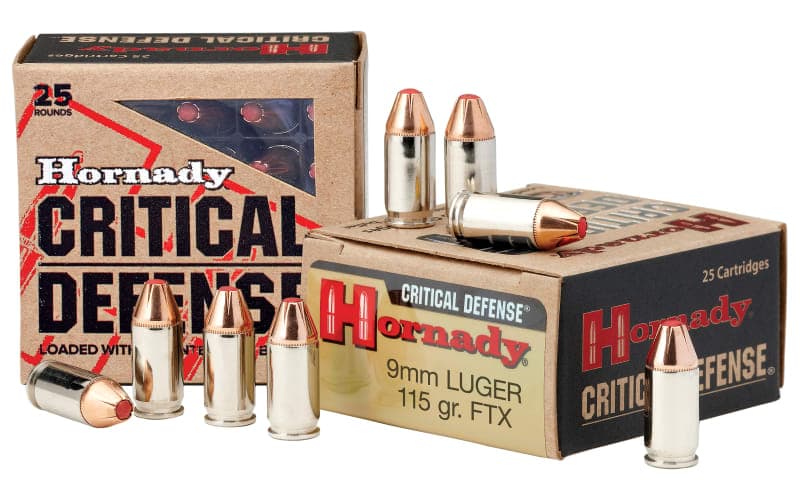
Best for Subcompacts: Hornady Critical Defense 115gr ($0.90-1.10/rd) — Lightest recoil, reliable expansion from 3" barrels, FTX tip prevents clogging.

Looking for the right pistol? See our best 9mm pistols and best concealed carry pistols guides.

Top 7 Best 9mm Self-Defense Ammo (2026 Rankings)

Ranked by FBI protocol performance, real-world track record, expansion consistency, and value. Every load here has been tested in calibrated ballistic gel with documented penetration and expansion data.

1

Federal Federal HST 147gr

Best Overall - Ideal penetration depth with excellent expansion

$1.40-1.80/rd
147grSubsonic15.24" Penetration
Pros
  • +15.24" penetration is perfectly centered in FBI 12-18" window
  • +0.606" expansion matches the 124gr HST
  • +Subsonic: reduced muzzle flash and recoil
  • +Suppressor compatible
  • +Trusted by LE agencies nationwide
Cons
  • Premium pricing at ~$1.40-1.80/rd
  • Lower energy than 124gr loads
  • May not cycle in all subcompact pistols
Grain Weight: 147grVelocity: 972 fpsPenetration: 15.24"Expansion: 0.606"
2

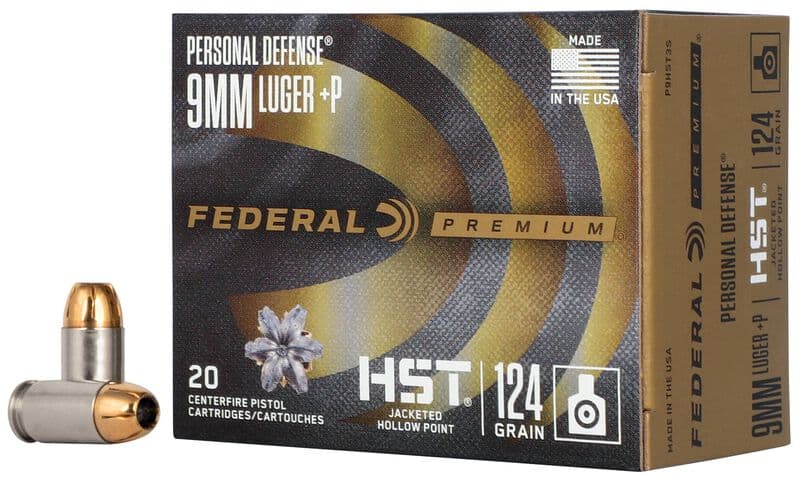
Federal Federal HST 124gr

Best LE Standard - Maximum terminal performance in standard pressure

$1.40-1.80/rd
124grStandard Pressure18.28" Penetration
Pros
  • +0.606" expansion — best in class for 124gr
  • +Higher velocity (1,135 fps) and energy than 147gr
  • +Standard pressure cycles in all 9mm platforms
  • +Most widely adopted LE duty load
  • +Barrier-blind performance through all FBI barriers
Cons
  • 18.28" penetration is at the FBI upper limit
  • More muzzle flash than subsonic loads
  • Premium pricing
Grain Weight: 124grVelocity: 1,135 fpsPenetration: 18.28"Expansion: 0.606"
3

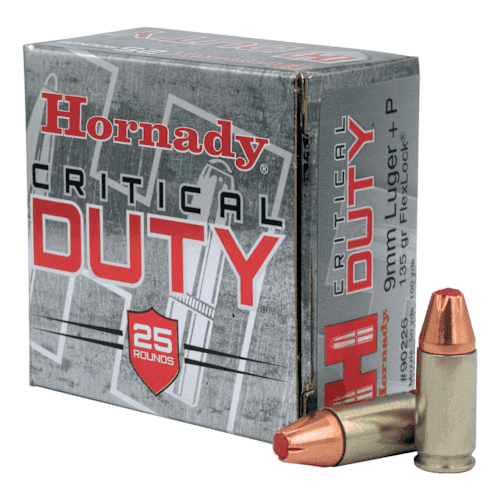
Hornady Hornady Critical Duty 135gr +P

Best Barrier Performer - FBI-issued with FlexLock anti-clog design

$1.00-1.30/rd
135gr +PFBI IssueFlexLock
Pros
  • +FBI's current issued duty ammunition
  • +FlexLock + InterLock prevents jacket/core separation
  • +Flex Tip prevents hollow point clogging
  • +135gr weight optimized for barrier penetration
  • +More affordable than Federal HST
Cons
  • +P recoil is noticeably snappier
  • Less expansion than HST (0.468" vs 0.606")
  • Not recommended for subcompact pistols
  • +P may accelerate barrel wear
Grain Weight: 135gr +PVelocity: 1,118 fpsPenetration: 18.08"Expansion: 0.468"
4

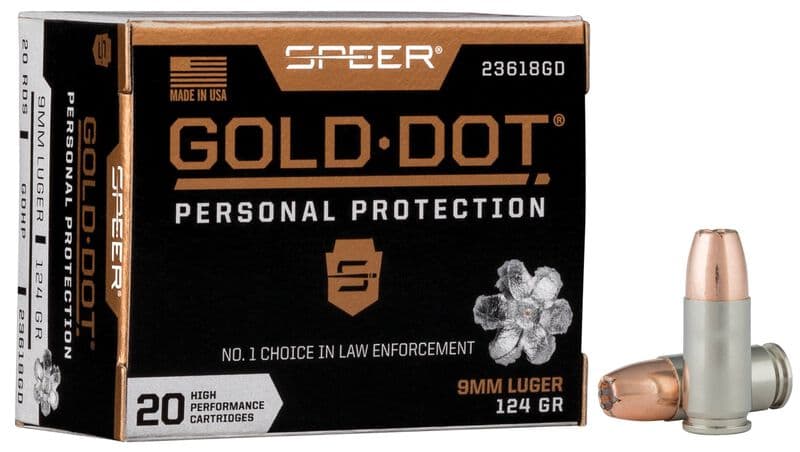
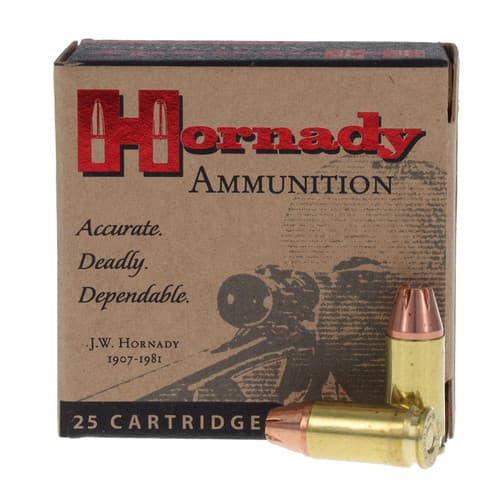
Speer Speer Gold Dot 124gr

Best Bonded - Near 100% weight retention through all barriers

$0.90-1.20/rd
124grBonded CoreUni-Cor
Pros
  • +Uni-Cor bonded jacket prevents separation
  • +Decades of LE street-proven performance
  • +Near 100% weight retention through barriers
  • +More affordable than HST at most retailers
Cons
  • Less expansion than HST (0.538" vs 0.606")
  • 18.14" penetration is near the FBI upper limit
  • Standard pressure version has lower velocity
Grain Weight: 124grVelocity: 1,067 fpsPenetration: 18.14"Expansion: 0.538"
5

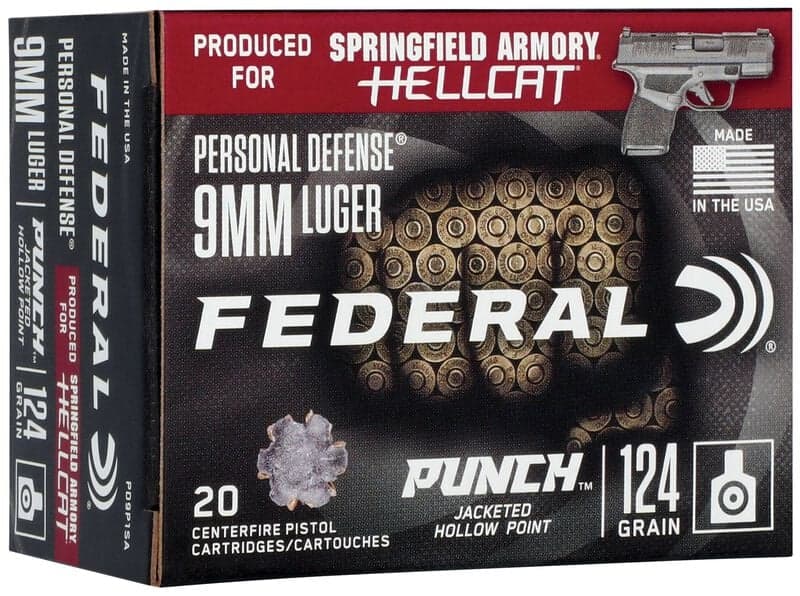
Federal Federal Punch 124gr

Best Budget - Premium-level performance at accessible pricing

$0.75-1.00/rd
124grBudget PickCivilian-Focused
Pros
  • +Significantly cheaper than HST and Gold Dot
  • +Near-HST expansion at ~0.60"
  • +Affordable enough to practice with
  • +Federal quality control and consistency
Cons
  • Less extensively barrier-tested than HST
  • Not bonded — may separate through hard barriers
  • Newer product with less proven track record
  • Not LE adopted
Grain Weight: 124grVelocity: 1,150 fpsPenetration: ~17.5"Expansion: ~0.60"
6

Hornady Hornady Critical Defense 115gr

Best for Micro Pistols - Lightest recoil with reliable short-barrel expansion

$0.90-1.10/rd
115grFTX TipLow Recoil
Pros
  • +Lightest recoil of any premium defensive 9mm
  • +FTX tip prevents hollow point clogging
  • +Reliable expansion from 3" barrels
  • +Widely available at good prices
Cons
  • 13.06" penetration barely meets FBI minimum
  • Not designed for barrier penetration
  • Lower energy than heavier loads
  • Not appropriate for duty-size guns
Grain Weight: 115grVelocity: 1,142 fpsPenetration: 13.06"Expansion: 0.504"
7

Winchester Winchester Ranger T-Series 147gr

Most Expansion - Widest-expanding 9mm load at 0.745"

$1.20-1.60/rd
147gr0.745" ExpansionLE Legacy
Pros
  • +Largest expansion of any 9mm at 0.745"
  • +Excellent penetration at 16.46"
  • +Subsonic for suppressed use
  • +Black Talon lineage with decades of LE use
Cons
  • LE-designated product, harder to source
  • Taloned expansion affected by heavy denim
  • Not bonded — petals may separate through hard barriers
  • Premium pricing when available
Grain Weight: 147grVelocity: 941 fpsPenetration: 16.46"Expansion: 0.745"

Rankings are based on published ballistic gel test data and documented law enforcement adoption. Individual firearm performance may vary — always function-test your defensive ammo in your specific pistol.

What Makes Good Defensive Ammo: FBI Protocol Explained

After the 1986 Miami FBI shootout — where agents with superior numbers and training lost two killed and five wounded partly due to ammunition failure — the FBI developed a standardized ammunition testing protocol. This protocol remains the gold standard for evaluating defensive handgun ammunition.

The FBI Protocol Tests

To pass the FBI protocol, a bullet must be fired through six different barrier types and achieve consistent performance through each: bare ballistic gelatin, heavy winter clothing (4 layers of denim, fleece, cotton), 20-gauge sheet steel (simulating a car door), standard interior wallboard, 3/4" plywood, and laminated automotive windshield glass.

What the FBI Measures

  • Penetration (70% weight): Must achieve 12-18 inches in calibrated 10% ballistic gelatin. Under 12" risks failing to reach vital organs. Over 18" risks overpenetration through the target.
  • Expansion (20% weight): The bullet must reliably expand (mushroom) to create a larger wound channel. Measured as expanded diameter — a 9mm bullet starts at 0.355".
  • Weight retention (10% weight): How much of the bullet's original mass it retains after expansion and barrier penetration. Higher is better — lost jacket fragments reduce the bullet's effectiveness.

Why FMJ (Ball Ammo) Is Wrong for Defense

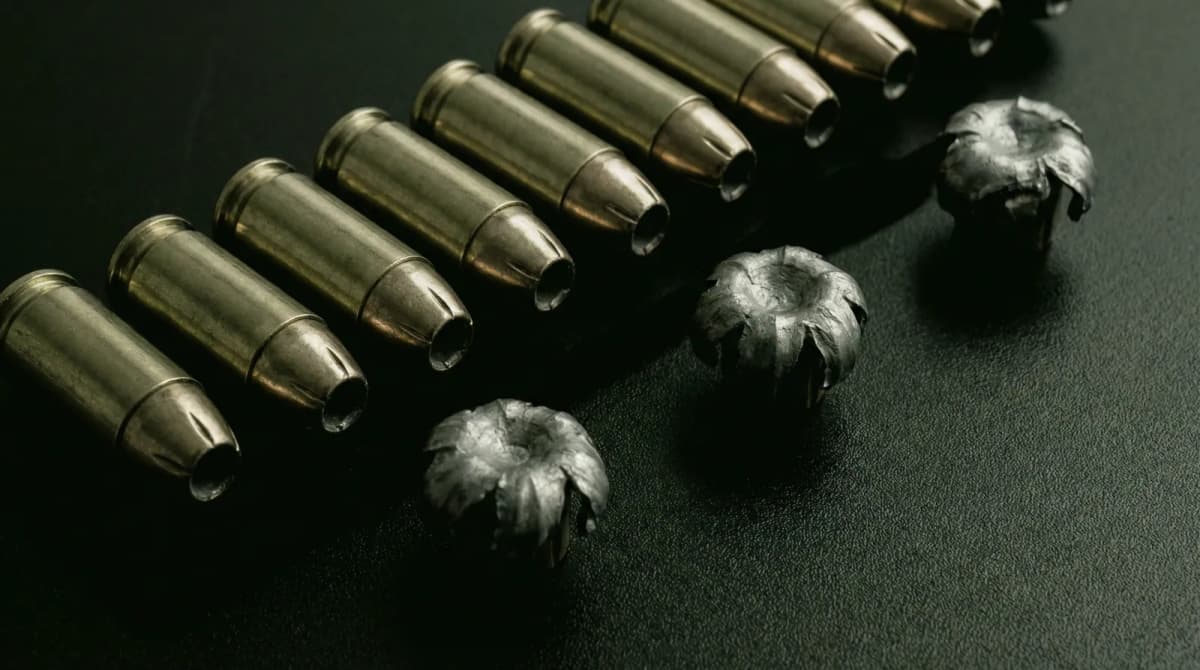
Full metal jacket (FMJ) ammunition does not expand. A 9mm FMJ punches a 0.355"-diameter hole through tissue and keeps going — often penetrating 24-30+ inches, which means exiting the target and endangering bystanders. Hollow point ammunition expands to 0.50-0.75", creating a larger wound channel while stopping inside the target within the 12-18" FBI window. Every round of defensive ammunition on this list is a jacketed hollow point (JHP) designed to expand reliably.

9mm Grain Weight Explained: 115gr vs 124gr vs 147gr

"Grain" measures bullet weight (1 grain = 1/7000 of a pound). The three common 9mm bullet weights each have distinct characteristics that affect recoil, velocity, penetration, and suitability for different pistol sizes.

WeightVelocityRecoilBest ForSupersonic?
115gr1,100-1,200 fpsLightestSubcompact carry, recoil-sensitive shootersYes
124gr1,050-1,150 fpsModerateAll-around defensive use, barrier penetrationYes
147gr940-1,000 fpsLow (heavy push)Suppressed use, home defense, recoil managementNo (subsonic)

115 Grain

The lightest common 9mm weight. Fast and flat-shooting with the least felt recoil. Popular for range ammo and subcompact carry guns where recoil management matters most. The Hornady Critical Defense 115gr FTX is the standout defensive load in this weight class. Downside: some 115gr hollow points can underexpand from short barrels due to inconsistent velocity.

124 Grain (NATO Standard)

The 9mm was designed around the 124-125gr bullet (the NATO M882 ball round is 124gr). This weight offers the best balance of velocity, energy, and penetration for defensive use. Federal HST 124gr, Speer Gold Dot 124gr, and Federal Punch 124gr all deliver excellent performance. Most versatile weight class — works well from any barrel length.

147 Grain

Heavy and subsonic. The recoil impulse is a slower "push" rather than a sharp "snap," which many shooters find easier to manage for fast follow-up shots. Subsonic velocity means no supersonic crack — essential for suppressed pistols. Federal HST 147gr delivers identical 0.606" expansion to the 124gr at lower velocity, making it our #1 pick. Best for home defense and suppressed use.

Ballistic Gel Performance: All 7 Loads Compared

All data from Lucky Gunner Labs calibrated 10% ballistic gel tests through 4-layer heavy denim barrier, fired from full-size pistol barrels. These are averages across 5 shots per load.

LoadGrainVelocityPenetrationExpansionPrice/Rd
Federal HST 147gr147972 fps15.24"0.606"$1.40-1.80
Federal HST 124gr1241,135 fps18.28"0.606"$1.40-1.80
Critical Duty 135gr +P1351,118 fps18.08"0.468"$1.00-1.30
Gold Dot 124gr1241,067 fps18.14"0.538"$0.90-1.20
Federal Punch 124gr1241,150 fps~17.5"~0.60"$0.75-1.00
Critical Defense 115gr1151,142 fps13.06"0.504"$0.90-1.10
Ranger T 147gr147941 fps16.46"0.745"$1.20-1.60

Reading the table: Penetration should fall between 12-18" (FBI protocol). Expansion should exceed 1.5x original diameter (0.355" for 9mm = minimum 0.53" expanded). The HST 147gr combines ideal penetration depth with excellent expansion. The Ranger T-Series achieves the widest expansion at 0.745" but is harder to source. Data source: Lucky Gunner Labs.

+P vs Standard Pressure: When to Use Each

+P ammunition is loaded to higher pressure than SAAMI standard, producing ~5-10% more muzzle velocity. In 9mm, standard pressure is 35,000 PSI; +P is 38,500 PSI. This translates to real-world differences in recoil, terminal performance, and wear.

Standard Pressure

  • +Lower recoil for faster follow-up shots
  • +Less muzzle flash in low light
  • +Safe in all 9mm pistols
  • +Less barrel and slide wear
  • -Slightly lower velocity

Best for: concealed carry, home defense, all pistol sizes

+P (Overpressure)

  • +Higher velocity for barrier penetration
  • +More energy on target
  • +Better expansion from short barrels
  • -Noticeably snappier recoil
  • -Increased muzzle flash
  • -Not recommended for subcompacts

Best for: duty-size pistols, barrier scenarios, LE use

Verdict: For most civilian concealed carry, standard pressure is the better choice. Federal HST in both 124gr and 147gr achieves excellent expansion without +P. The only load on our list that uses +P is Hornady Critical Duty 135gr, which needs the extra velocity for its barrier-focused design. If your primary concern is barrier penetration (shooting through car doors, windshields), +P has merit. For most defensive scenarios involving light clothing, standard pressure delivers equivalent terminal results with better shootability.

Carry Ammo Best Practices

1. Function Test in Your Gun

Before trusting any ammunition with your life, fire at least 50-100 rounds of your chosen defensive load through your specific pistol. Defensive hollow points have different feeding profiles than range FMJ. Some pistols are picky about bullet geometry — better to find out at the range than in an emergency. If you can't afford to function-test premium ammo, Federal Punch ($0.75-1.00/rd) makes this financially realistic.

2. Rotate Carry Ammo Every 6-12 Months

Ammunition carried daily is exposed to body heat, humidity, sweat, and repeated chambering/unchambering. Rotate your carry ammo at least annually. When you rotate, shoot the old ammo at the range — this doubles as function testing and practice with your carry load. Modern premium ammo will remain reliable for years in storage, but carried ammo degrades faster.

3. Avoid Repeated Chambering

Each time you chamber a round, the bullet gets pushed slightly deeper into the case (bullet setback). After 3-5 chambering cycles, the reduced case volume can spike pressure dangerously. Mark your top carry round and track how many times it's been chambered. After 3 cycles, rotate it to the bottom of the magazine and chamber a fresh round.

4. Match Ammo to Your Pistol Size

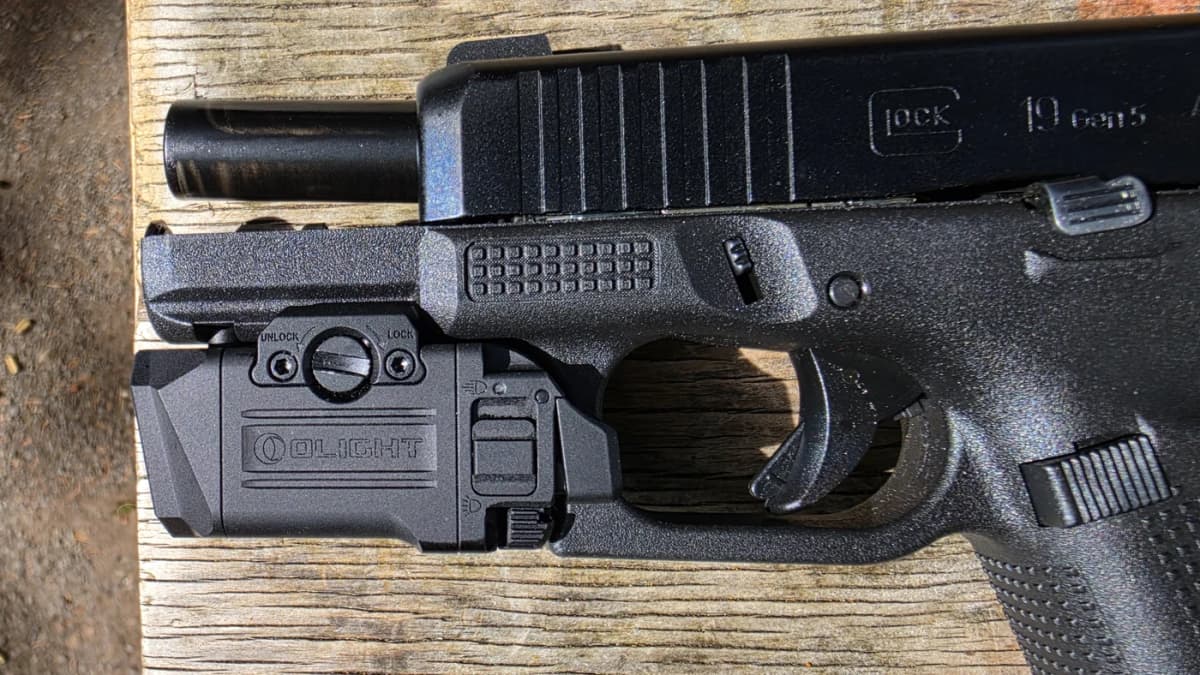
Full-size / compact pistols (Glock 19, SIG P320, CZ P-10 C): 124gr or 147gr loads — Federal HST, Speer Gold Dot, Hornady Critical Duty. These guns have enough barrel length (3.9-4.5") to generate full velocity from any load.

Subcompact / micro pistols (SIG P365, Glock 43/43X, Hellcat): 115gr or 124gr loads — Hornady Critical Defense 115gr, Federal HST 124gr. Shorter barrels (3.0-3.5") lose 50-100 fps, so lighter bullets that need less velocity to expand are preferred. Avoid +P in subcompacts unless the manufacturer explicitly approves it.

Related Guides

Now that you've chosen your defensive ammo, make sure the rest of your setup is dialed in:

Frequently Asked Questions

What is the best self-defense ammo for a 9mm?
Federal HST 147gr is the best overall 9mm self-defense ammo. It delivers 15.24 inches of penetration (perfectly centered in the FBI's 12-18" window) with 0.606 inches of expansion — matching the 124gr HST's expansion at subsonic velocity with reduced recoil and muzzle flash. For budget-conscious shooters, Federal Punch 124gr ($0.75-1.00/rd) delivers near-HST performance at 60-70% of the price. For subcompact carry guns, Hornady Critical Defense 115gr provides reliable expansion from short barrels with minimal recoil.
What ammo does the FBI use for 9mm?
The FBI currently issues Hornady Critical Duty 135gr +P FlexLock as its 9mm duty ammunition. This load was selected after rigorous testing across all six FBI protocol barriers (bare gel, heavy clothing, sheet steel, wallboard, plywood, and auto glass). The FlexLock bullet with InterLock band prevents jacket/core separation, and the Flex Tip polymer insert prevents hollow point clogging through clothing. The 135gr weight at +P velocity optimizes barrier penetration. However, the FBI's choice prioritizes barrier performance for law enforcement scenarios — for civilian concealed carry, the Federal HST is generally preferred for its superior expansion.
What is the difference between 124 grain and 147 grain 9mm?
124gr 9mm runs faster (~1,070-1,150 fps) with more kinetic energy (~314-364 ft-lbs) and slightly more felt recoil. 147gr runs slower (~940-970 fps, subsonic) with less energy (~289-308 ft-lbs) but deeper, more controlled penetration and reduced muzzle flash. The 147gr is subsonic, making it ideal for suppressed pistols. For defensive use, both weights are effective — the 147gr Federal HST actually produces the same 0.606" expansion as the 124gr at its lower velocity. Choose 124gr for maximum energy and barrier performance, or 147gr for suppressed use, reduced recoil, and more controlled penetration depth.
Is Federal HST better than Speer Gold Dot?
Federal HST generally produces wider expansion (0.606" vs 0.538" for 124gr loads), which is its primary advantage. Speer Gold Dot's advantage is its Uni-Cor bonded construction, which prevents jacket/core separation through intermediate barriers like auto glass and sheet metal — the Gold Dot retains near 100% of its weight through barriers. For concealed carry where the most likely defensive scenario involves shooting through light clothing, HST's larger expansion makes it the better choice. For law enforcement or scenarios involving vehicle-based threats, Gold Dot's bonded construction provides more consistent barrier performance.
Are hollow points legal to carry?
Hollow point ammunition is legal for civilian carry in 49 out of 50 US states. New Jersey is the only state with significant restrictions — hollow points are legal to possess at home and at the range, but carrying them in public requires a concealed carry permit (which NJ now issues after the Bruen decision). There are no federal restrictions on hollow point ammunition for civilian use. Despite common myths, hollow points are not "banned by the Geneva Convention" for civilian use — the Hague Convention of 1899 restricts expanding ammunition in warfare between signatory nations, which has no bearing on civilian self-defense. Always check your specific state and local laws.
Should I use +P ammo for self-defense?
+P ammunition generates higher chamber pressure, producing ~5-10% more velocity for improved expansion and penetration through barriers. The tradeoff is increased recoil, muzzle flash, and accelerated barrel/slide wear. For duty-size pistols (Glock 19, P320, etc.), +P loads like Hornady Critical Duty 135gr +P are fine for carry but shouldn't be used as exclusive range ammo. For subcompact pistols (P365, G43, Hellcat), avoid +P — the snappy recoil is harder to control, and standard-pressure loads like Federal HST or Hornady Critical Defense expand reliably from short barrels. Always verify your pistol is rated for +P by the manufacturer.

Complete Your Build

Essential accessories to round out your setup

Scroll
Illumination • $119

Streamlight ProTac HL-X

  • 1,000 lumens
  • 50,000 candela
View on Amazon
Slings & Retention • $75

Magpul MS4 Dual QD Sling

  • Dual QD swivels
  • Convertible design
View on Amazon
Backup Iron Sights • $99

Magpul MBUS Gen 2

  • Polymer construction
  • Spring-loaded flip-up
Check Price at OpticsPlanet
Slings & Retention • $22

Magpul QD Sling Swivel

  • QD swivel
  • Manganese phosphate
Check Price at OpticsPlanet
Slings & Retention • $69

Blue Force Gear Vickers Sling

  • Padded
  • Quick-adjust
View on Amazon
Slings & Retention • $25

BCM M-LOK QD Sling Mount

  • M-LOK
  • QD socket
Check Price at OpticsPlanet

Related guides

Continue exploring with these related resources

View all guides →

Next Step

Ready to continue? Here's the recommended next guide:

Recommended Next

Best 9mm Pistols 2026: Top 8 Handguns Ranked (Glock 19, P365, Walther PDP, CZ)

The best 9mm pistols ranked for 2026: Glock 19 Gen5 MOS, SIG P365 XL, Glock 17, Walther PDP, CZ P-10 C, Springfield Hellcat Pro, and more. Covers concealed carry, duty, home defense with honest pros/cons.

Or explore a related topic:

Best Concealed Carry Pistols 2026->