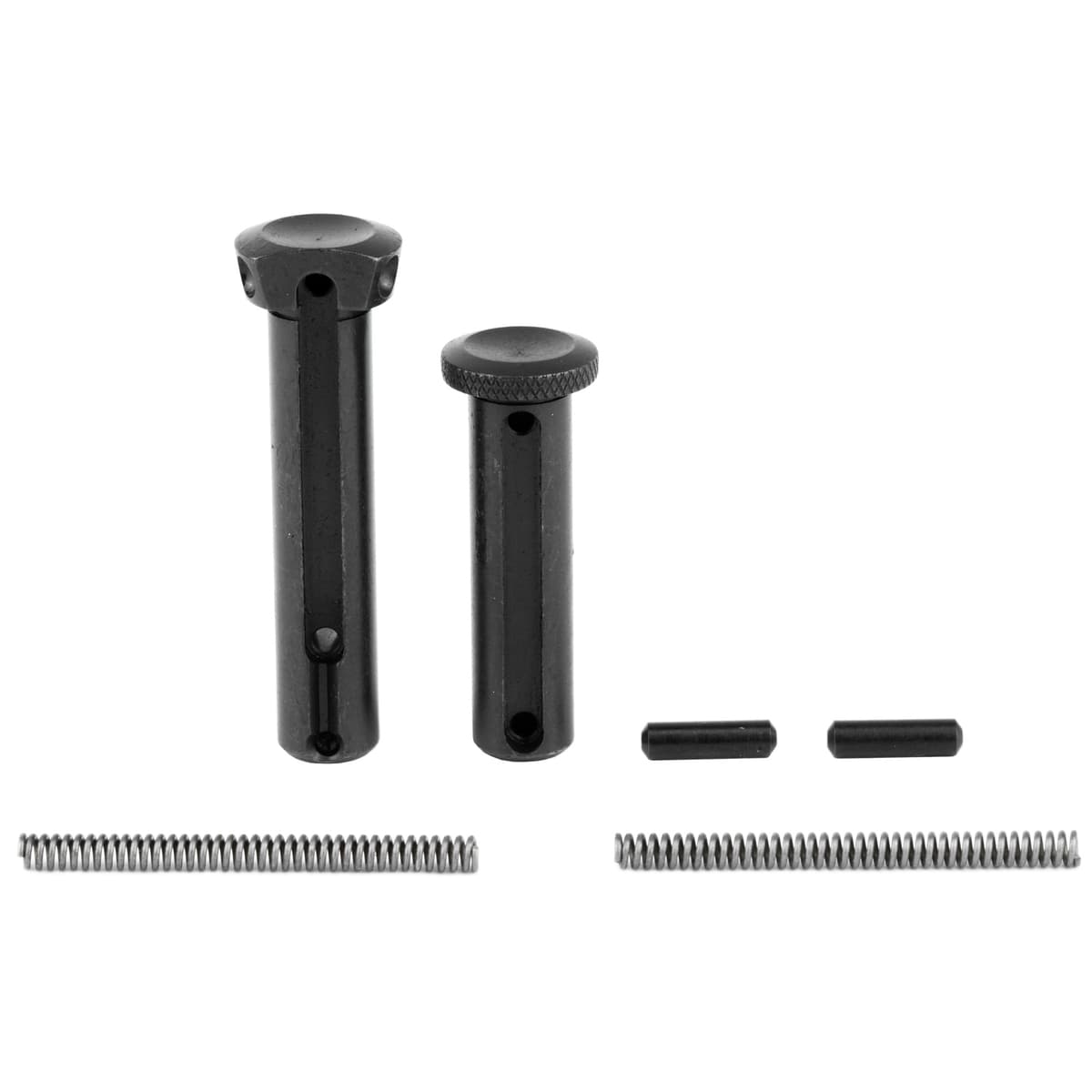
Best AR-15 Takedown & Pivot Pins 2026: Extended & Titanium header image
Gear
June 10, 2026
Best AR-15 Takedown & Pivot Pins 2026: Extended & Titanium

The AR-15's factory takedown and pivot pins sit nearly flush, so most shooters fight them with a punch every time. Ranked extended, easy-install, and titanium sets from Battle Arms, Strike Industries, V Seven and more.

[ < Back to guides ]

Best AR-15 Takedown & Pivot Pins 2026: Extended & Titanium

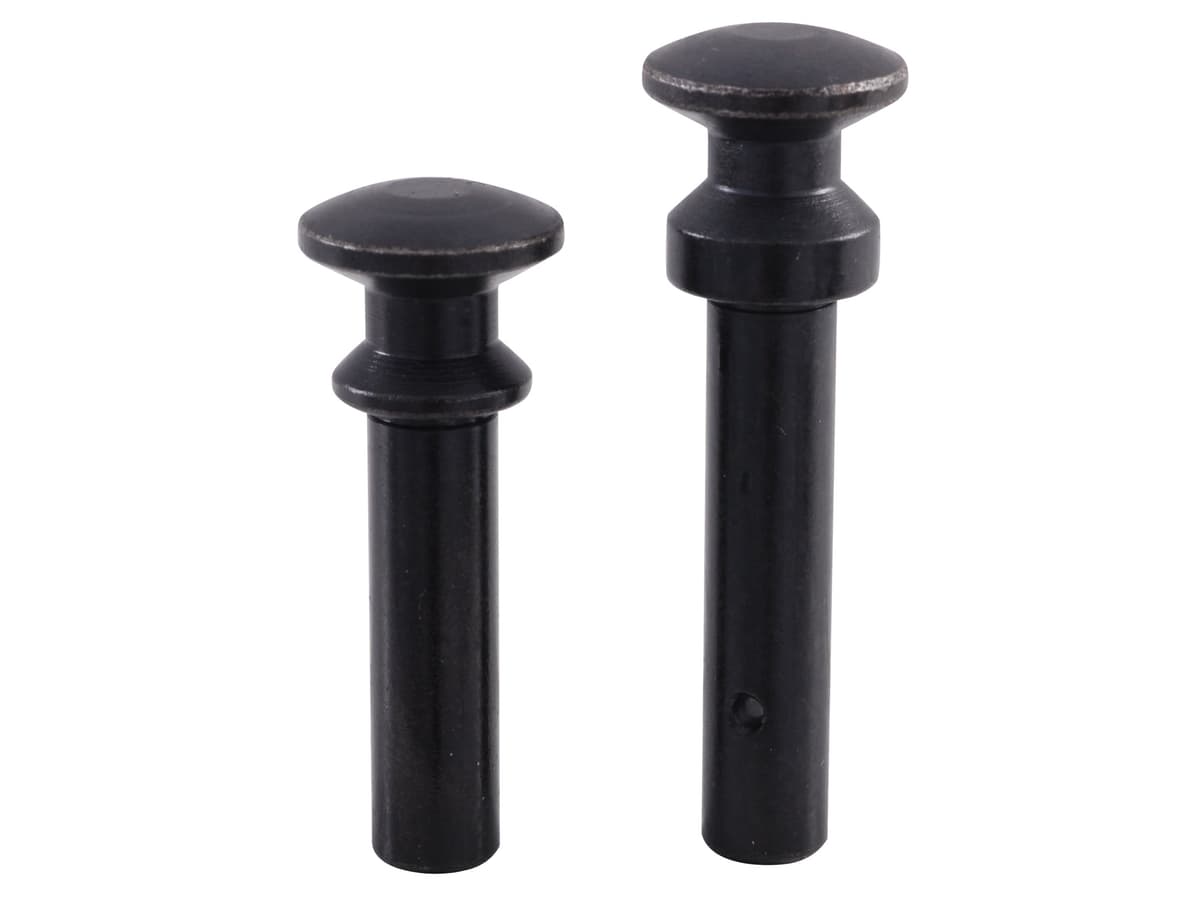
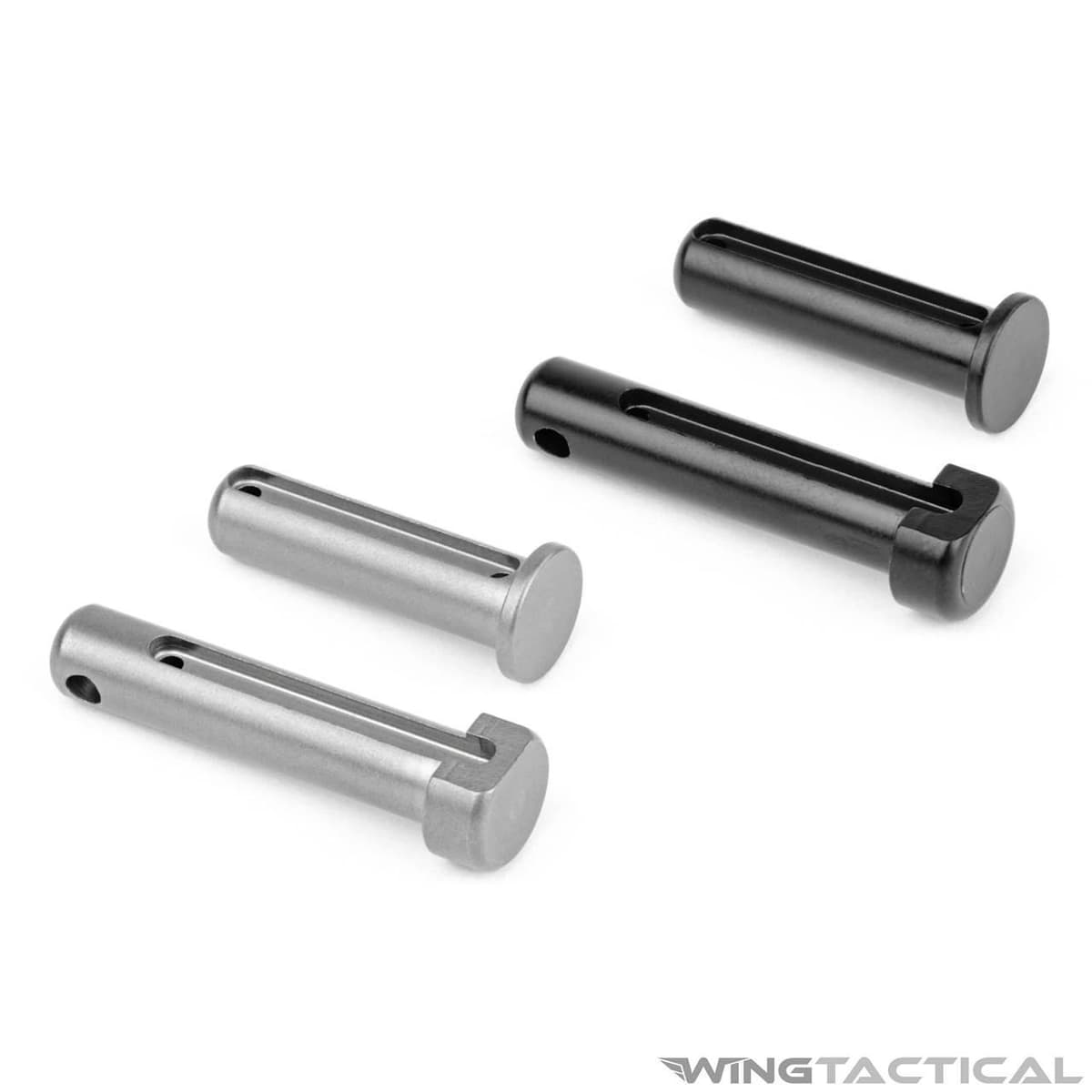
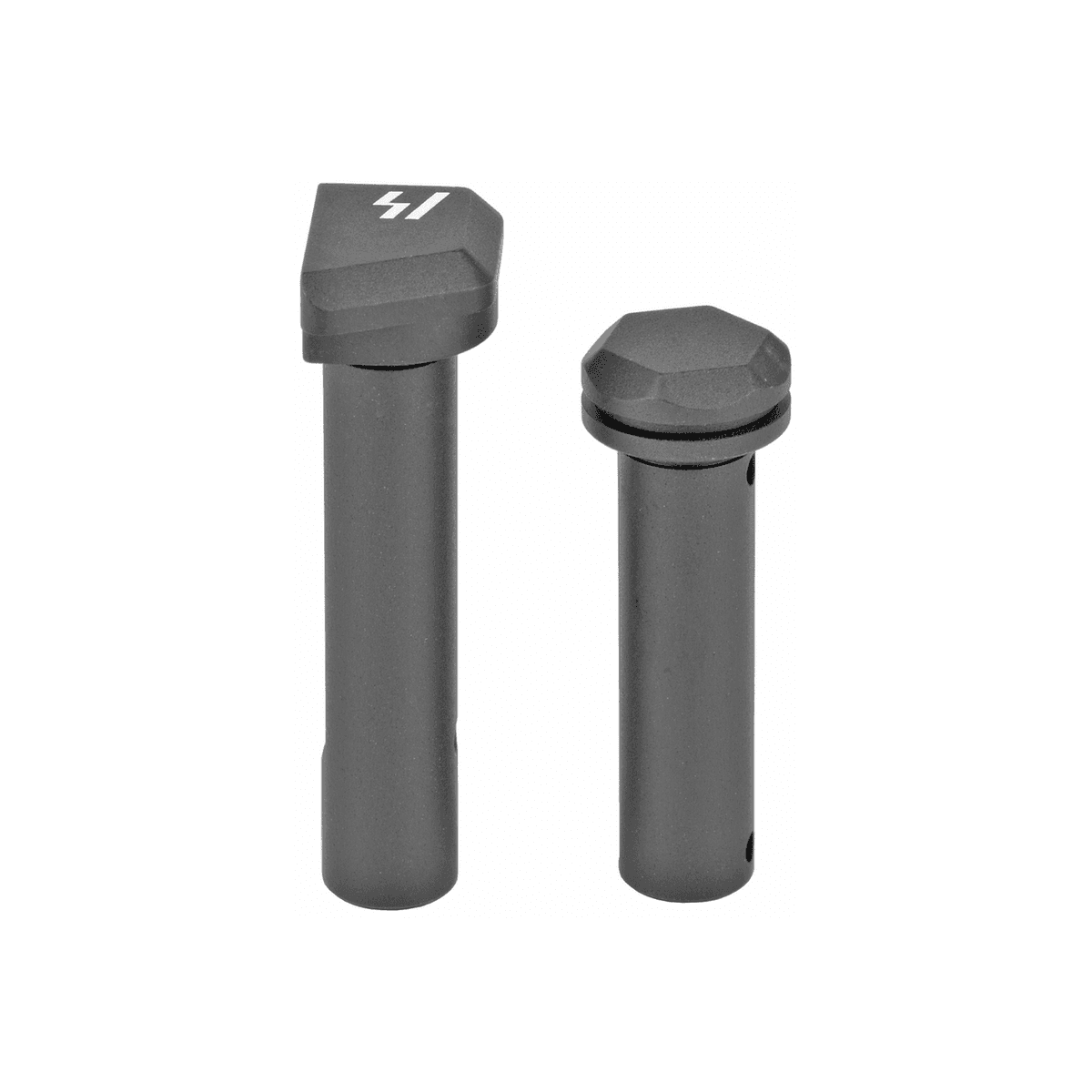
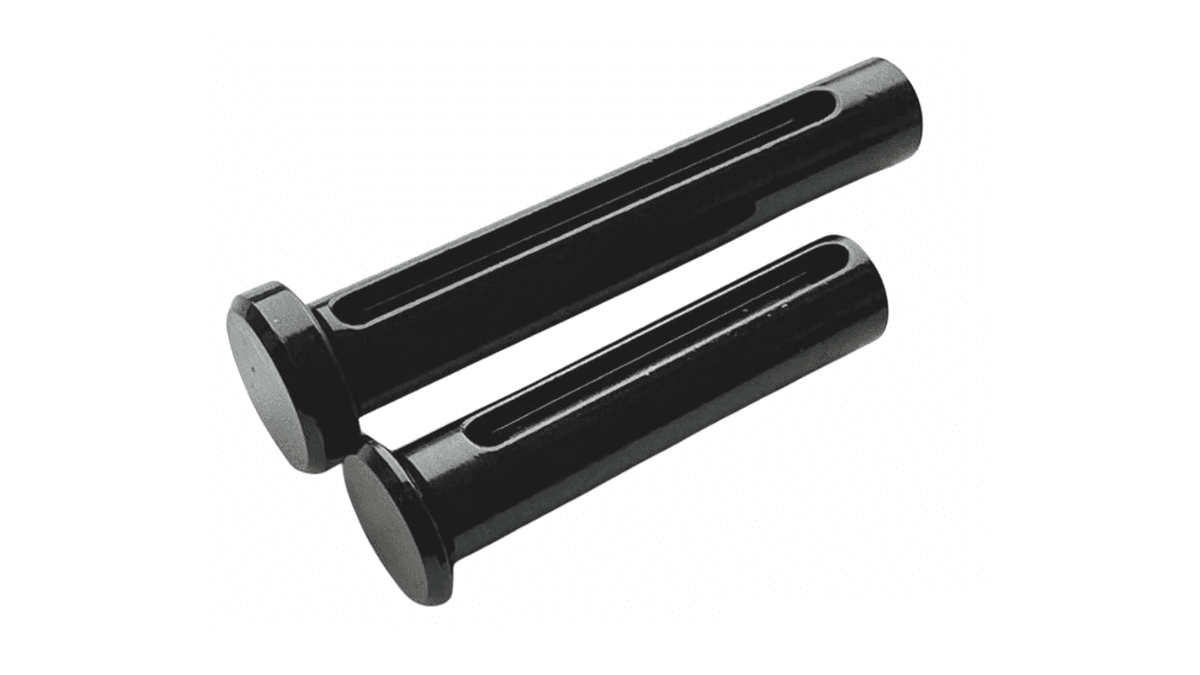
The AR-15’s factory takedown and pivot pins sit nearly flush with the receiver, so most shooters fight them with a punch or a bullet tip every time they break the rifle down. The pivot pin in particular is the single worst part to install on the whole rifle: a spring-loaded detent fires across the bench the moment you lose control of it. This guide ranks eleven upgrade sets, from a sub-$16 extended steel set that turns takedown into a tool-free push-pull job to push-button release pins, magnetic install-assist heads, ultralight aluminum, and Grade 5 titanium that fix the dropped-detent problem for good. It also covers fitment so you buy the right .250-inch set the first time.

By AB|Last reviewed June 2026

The Best AR-15 Takedown & Pivot Pins

Ranked from the cheapest extended steel set worth buying through push-button, magnetic install-assist, ultralight aluminum, and Grade 5 titanium pins. Every set here is .250-inch mil-spec and drops into a standard forged AR-15 lower unless noted.

1

Battle Arms Development BAD-EPS Enhanced Pin Set

Best overall

$31.49
View at OpticsPlanet
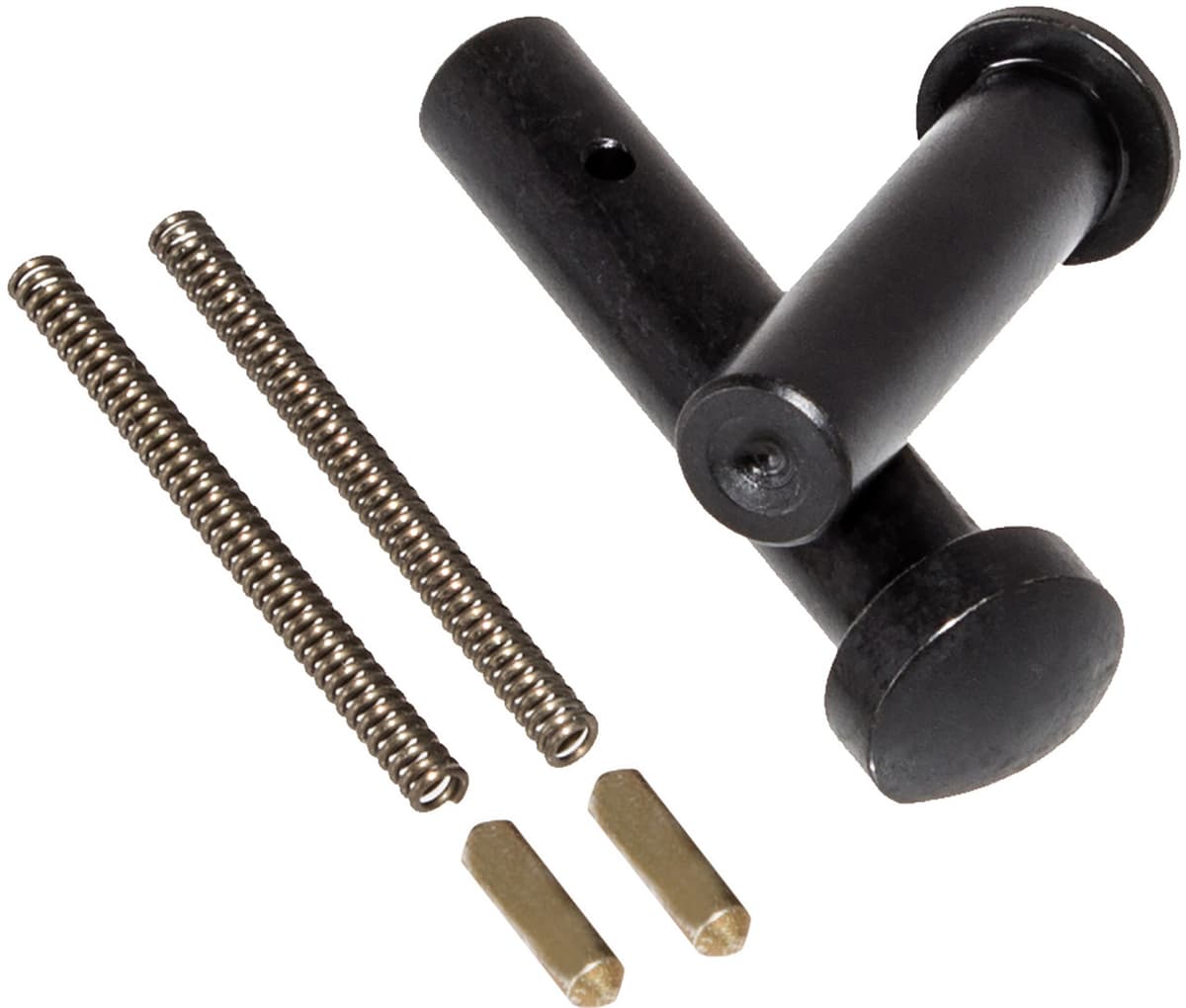
  • +Magnetic EZ Guide Channel solves the dropped-detent problem during install
  • +Low-profile heads with a patent-pending high-grip pattern, no snag-prone knob
  • +Bullet-tip cone recess at both tips protects the receiver finish
  • Enhanced pivot pin does not fit the Radian AX556 receiver (takedown pin works)
  • Costs roughly twice a basic extended set, more again for the titanium version
2

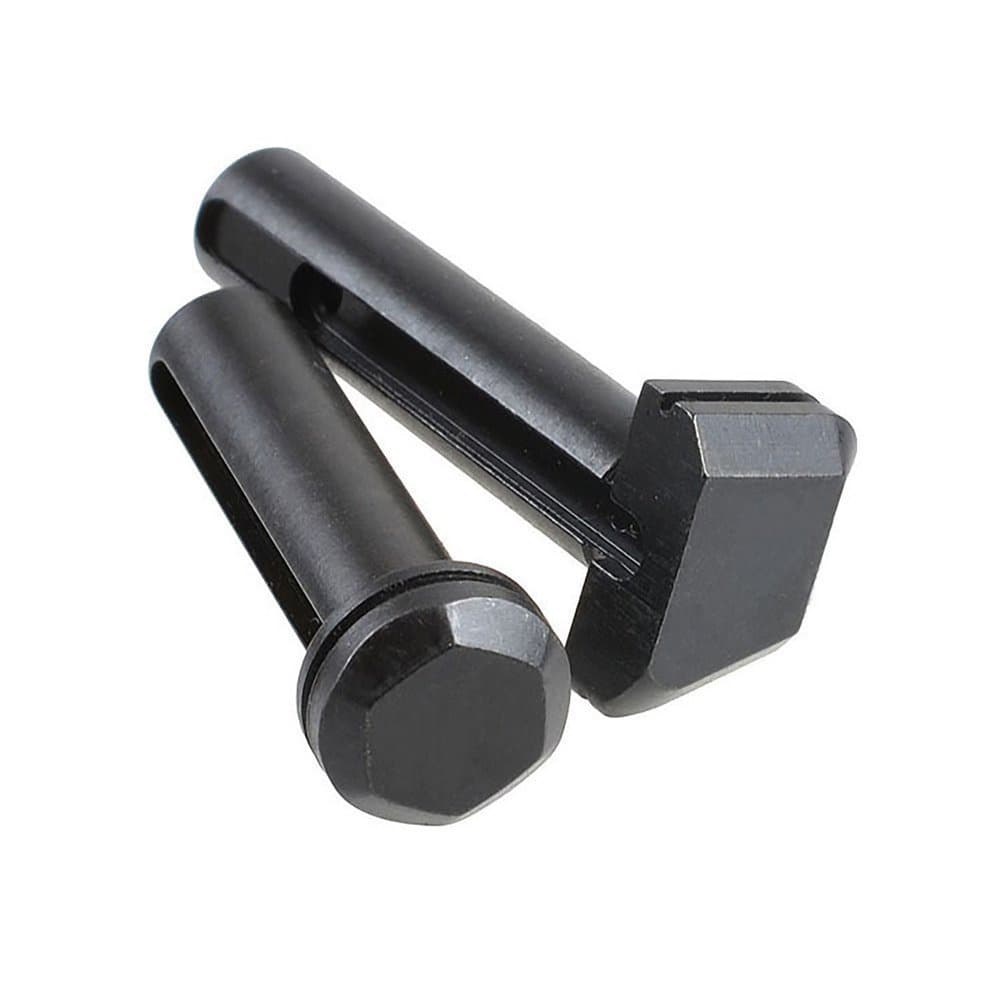
Strike Industries Extended Pivot/Takedown Pins

Best value

$15.99
View at OpticsPlanet
  • +Cheapest extended pin set worth buying at under $16
  • +Extended heads give true tool-free push-and-pull takedown
  • +Drop-in fit on standard forged AR-15 lowers
  • Steel, not the lightest option
  • May not seat in some tight billet receivers (e.g., early AREA53 Mod 0)
  • No anti-rotation or captured-detent feature
3

KNS Precision Enhanced .250 Push-Button Takedown Pin

Best push-button release

$25.99
View at OpticsPlanet
  • +Locks positively without relying on a receiver detent or spring
  • +One-finger push-button removal, no tools
  • +Enhanced cap keeps grit out of the mechanism
  • Removes fully, so it is not captive and can still be misplaced
  • Single takedown pin, not a takedown-plus-pivot set
  • Pricier than a plain enhanced pin
4

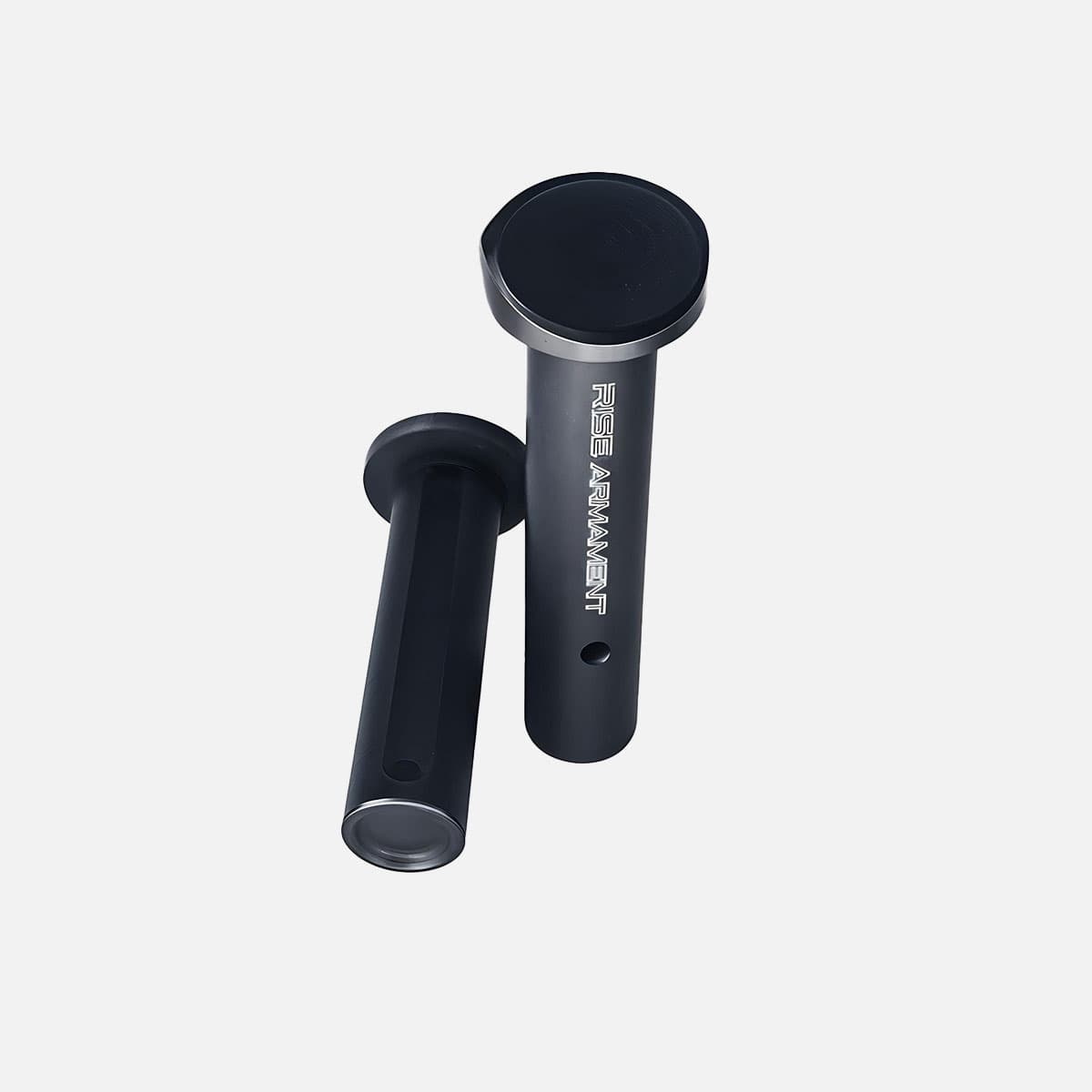
RISE Armament Enhanced Takedown & Pivot Pins

Best snag-free / corrosion-resistant

$25.99
View at OpticsPlanet
  • +316 stainless resists corrosion better than carbon steel
  • +Concave contoured faces are easy to push with gloves
  • +Low-profile design will not snag on gear (no extended head)
  • No extended head for pulling the pin out
  • Costs more than basic extended pins
  • No captured or anti-rotation feature
5

Aero Precision EZ Install Pivot/Takedown Pin Set

Best for first builds (easiest install)

$31.99
View at OpticsPlanet
  • +Built-in installation channel removes the pivot-pin install fight
  • +No specialty tools needed to seat the pivot pin
  • +Ships complete with its own detents and springs
  • Heads are less aggressive than a true extended pin
  • Steel, not titanium
6

Armaspec Enhanced Takedown/Pivot Pins

Best for first-time builders on a budget

$14.99
View at OpticsPlanet
  • +Lowest price on the list with strong reviews
  • +EZ-Set hole simplifies the worst part of detent installation
  • +Convex head taps cleanly from any angle
  • Flush convex head needs a tip or punch, no hand leverage
  • No push-button or captive mechanism
7

Yankee Hill Machine EZ Pull Takedown Pins

Best for stiff receivers & gloved hands

$29.99
View at OpticsPlanet
  • +Tallest grab-heads for the easiest takedown
  • +Great for gloved, cold, or weaker hands
  • +Complete two-pin set
  • Heads protrude well beyond the receiver
  • Snag risk on tight gear and bags
  • Least low-profile option on the list
8

V Seven Titanium Takedown & Pivot Pin Set

Best lightweight (titanium)

$35.99
View at OpticsPlanet
  • +Lightest set on the list, around 8 grams for the pair
  • +Roughly 45 percent lighter than mil-spec steel
  • +Grade 5 titanium will not corrode
  • Weight savings are small in absolute terms for the price
  • No install-assist or extended-grip feature
9

Strike Industries Ultra Light Pivot/Takedown Pins

Best lightweight & color-match value

$15.99
View at OpticsPlanet
  • +Lightest pin set on the list short of titanium
  • +Extended heads keep tool-free takedown
  • +Four colors for build matching
  • Aluminum is less durable than steel for hard use
  • No detents or springs included
  • Better for range/competition than duty rifles
10

Forward Controls Design PF-040 Takedown/Pivot Pins

Best for ambidextrous-safety builds

$33
Buy Direct from Forward Controls Design
  • +Reverse-extended on the LEFT side so the grip never fouls an ambi safety
  • +More grasping area on the right side for the pull
  • +17-4 PH stainless with a hard QPQ finish
  • May not clear PDW-style stocks whose bars overlap the takedown pin
  • Sold direct from Forward Controls Design only
  • Periodically out of stock
11

CMMG HD Pivot & Takedown Pins

Best from a complete-rifle maker (heavy duty)

$28.99
View at OpticsPlanet
  • +Backed by a complete-rifle manufacturer
  • +Bullet-tip relief divots make tool removal clean
  • +Longer than mil-spec for easier grip and takedown
  • No extended grip heads like the Strike or V Seven sets
  • Heavier steel rather than titanium

Purchasing through these links may generate a commission that supports the site at no extra cost to you.

Affiliate links - purchases support this site at no extra cost to you. (?)

Takedown Pin vs Pivot Pin: What They Do

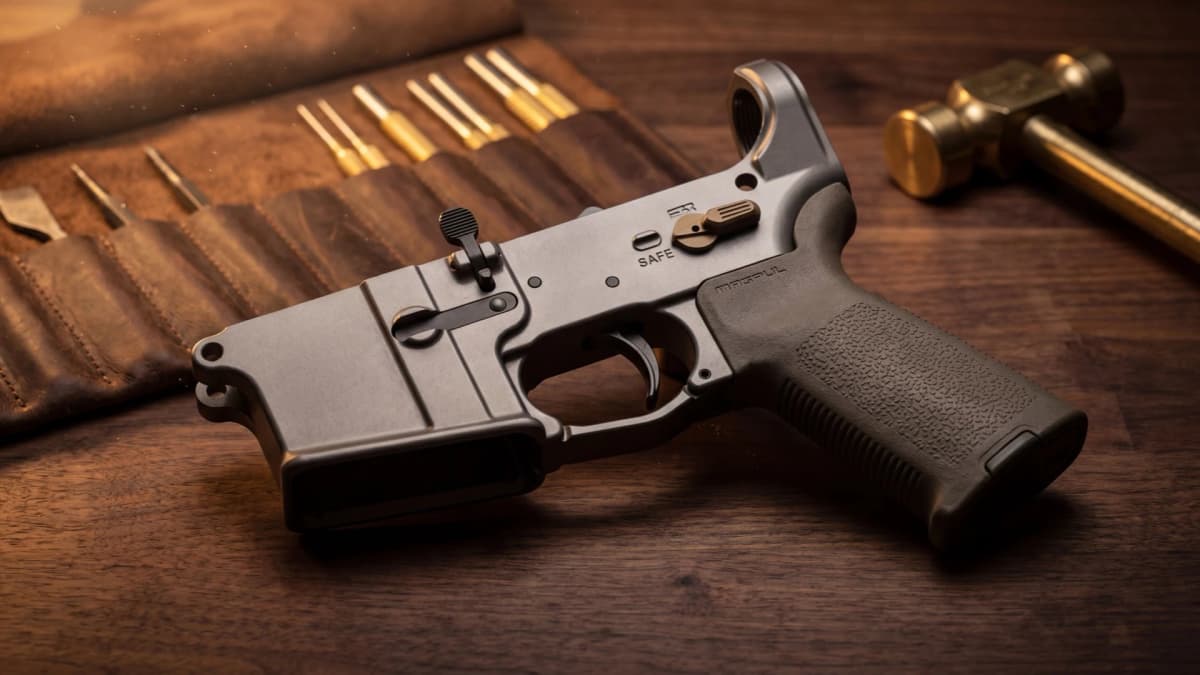
The takedown pin and the pivot pin are the two 0.250-inch pins that hold an AR-15 upper and lower together, and they are not the same part. The pivot pin lives at the front of the lower, ahead of the magazine well, and lets the upper hinge open. The takedown pin lives at the rear, above the grip, and is the one you pull to swing the upper free and separate the receivers. The pivot pin is the longer of the two at roughly 1.13 inches; the takedown pin is shorter at roughly 0.92 inches. They seat in different-length holes and are not interchangeable with each other.

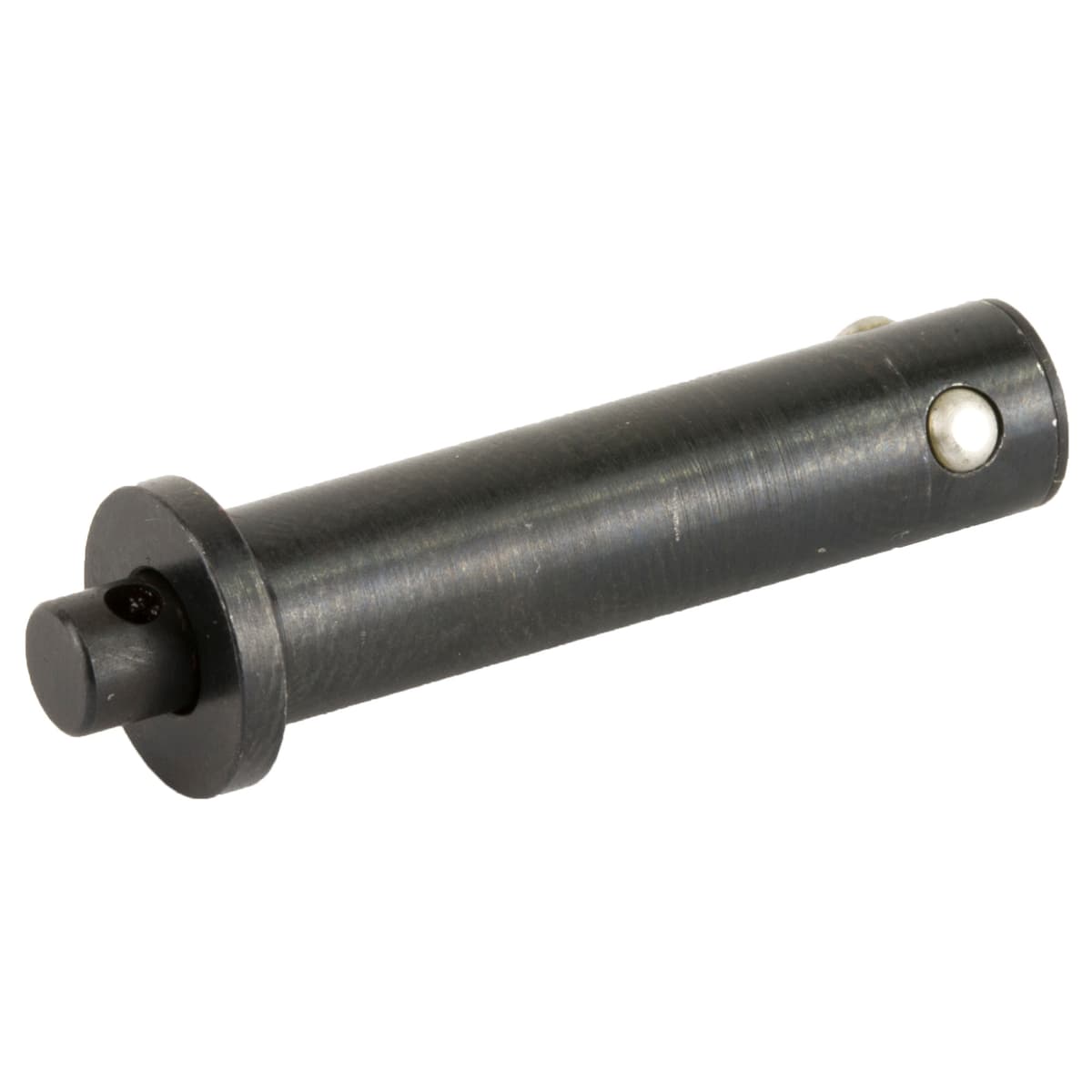
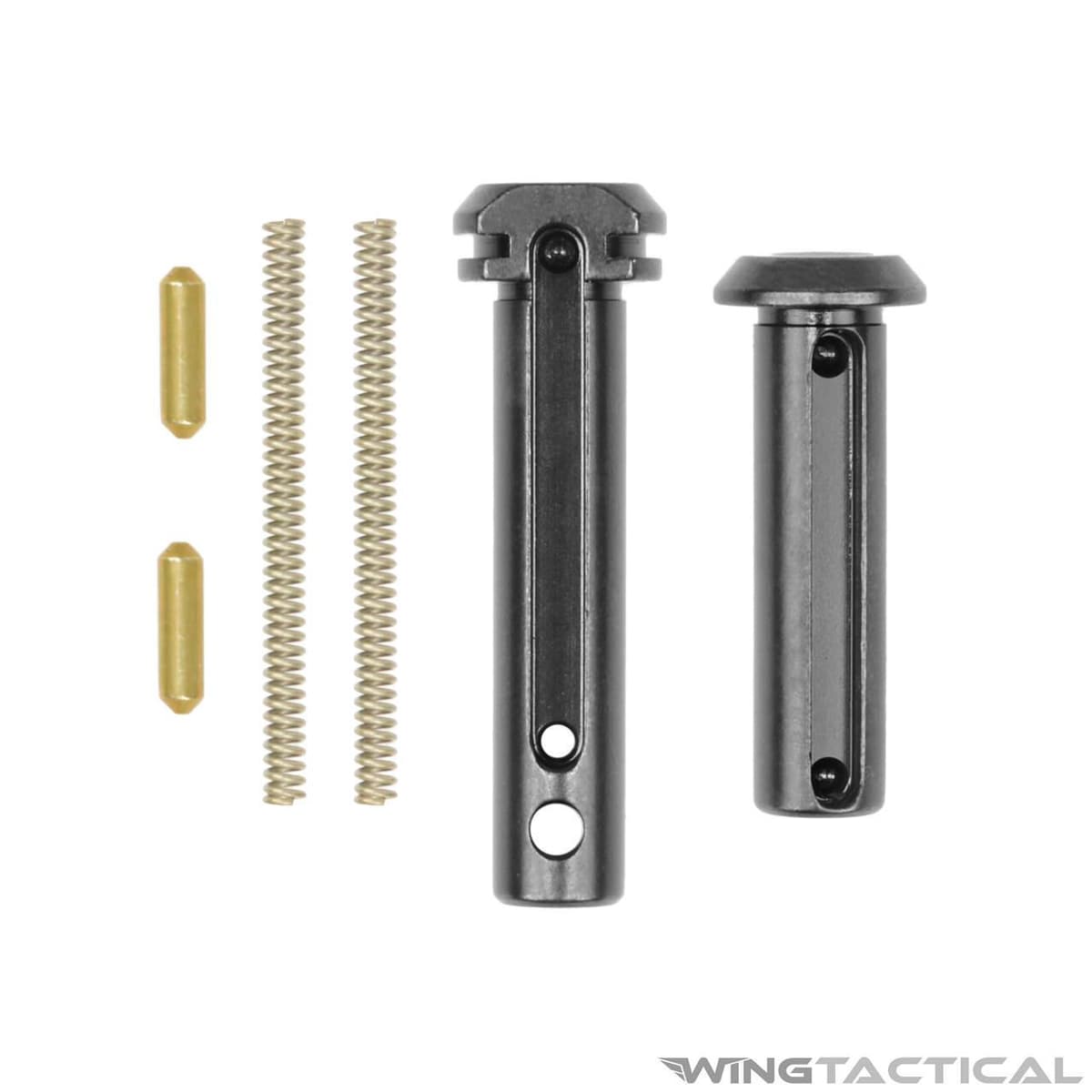
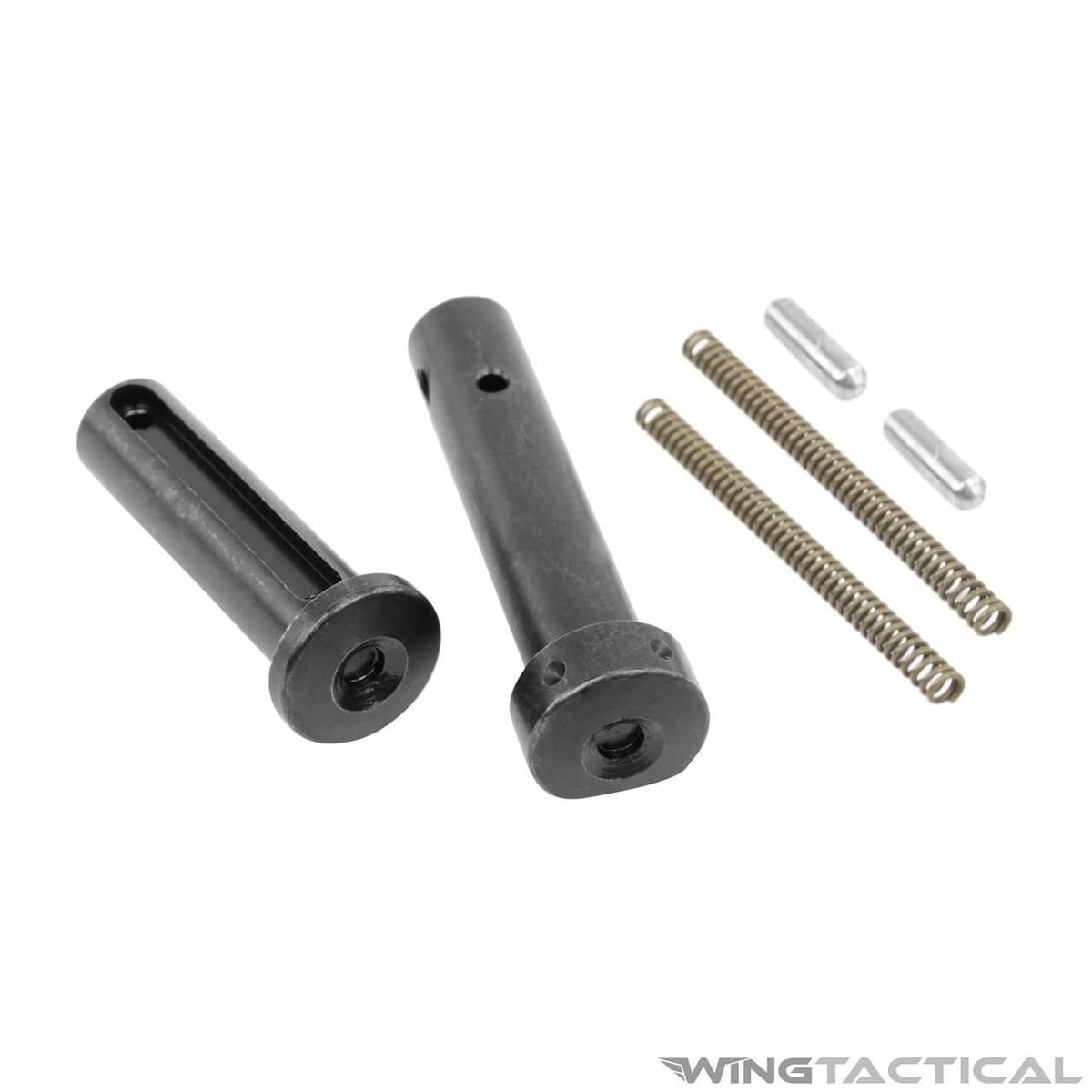
Both pins are held against their spring-loaded detents and need a push to start moving, and that is where the factory parts fail you. A mil-spec pin head sits almost flush with the receiver wall, so there is nothing to grab; you end up pressing it with a punch, a bullet tip, or a fingernail you would rather keep. Every upgrade in this guide attacks that problem from a different angle. Extended heads give you a surface to push and pull by hand. Install-assist pins like the Aero Precision EZ Install set add a channel that holds the pivot-pin detent so it cannot launch during a build. Titanium pins from V Seven cut weight without changing the interface. Whichever route you take, all of these are .250 mil-spec pins that drop into a standard forged lower.

One disambiguation up front, because buyers conflate them constantly: takedown and pivot pins are not the same as anti-walk pins. Anti-walk pins are the smaller 0.154-inch trigger and hammer pins inside the fire-control group, and nothing in this guide touches those. If you are after non-rotating trigger and hammer pins for a drop-in trigger, that is a separate part. These pins slot into the broader lower assembly alongside your other controls, so it is worth reading our best AR-15 lower parts kits guide if you are sourcing the whole lower at once.

Extended vs Easy-Install vs Titanium vs Captured

Pick by how you use the rifle, not by price. There are four buyer profiles here, and the right pin set is decided by whether you swap uppers, whether you build lowers yourself, and whether your build runs an ambidextrous safety. Every set below is .250-inch mil-spec and drops into a standard forged lower with the factory detents and springs unless the kit ships its own.

Extended head
Yes
Representative PickStrike Industries ($15.99)
Best ForUpper swaps, tool-free push-pull takedown
Easy-install
Partial
Representative PickAero Precision EZ Install ($31.99)
Best ForFirst builds, captures the pivot detent
Magnetic install + grip
Yes
Representative PickBattle Arms BAD-EPS ($31.49)
Best ForBuilders who want install ease and grip both
Push-button release
Yes
Representative PickKNS PBTD250-EN ($25.99)
Best ForFrequent takedowns, one-finger removal with no detent
Titanium
No
Representative PickV Seven ($35.99)
Best ForLightweight builds, corrosion resistance
Ultralight aluminum
Yes
Representative PickStrike Industries Ultra Light ($15.99)
Best ForColor-matched range and competition builds
Ambi-safety clearance
Yes
Representative PickFCD PF-040 ($33.25)
Best ForBuilds running an ambidextrous safety

If you run more than one upper on a single lower or field strip often, the Strike Industries extended set ($15.99) is the obvious value play: extended heads on both pins turn takedown into a hand-only push-pull, and it is the cheapest set on the list worth buying. If this is your first build and you have never lost a detent across the room, step up to the Aero Precision EZ Install set ($31.99), which adds a built-in channel that holds the pivot-pin detent during assembly and ships with its own detents and springs. The V Seven Grade 5 titanium set ($35.99) is for weight-conscious builds; it is the lightest pair here at around 8 grams, roughly 45 percent lighter than mil-spec steel, and it will not corrode. The titanium savings are real but small in absolute terms, so buy it as part of a broader weight-cutting build rather than a standalone fix.

Two more profiles deserve their own pick. If you break the rifle down constantly, the KNS Precision PBTD250-EN ($25.99) push-button takedown pin trades the receiver detent for internal stainless keeper pins: press the button, the keepers retract, and the pin slides free with one finger; release it and it locks positively without a detent so it cannot walk loose under recoil. It is a single takedown pin rather than a set, and it still removes fully, so it is push-button self-retaining, not captive to the receiver. If a tight new build or a stiff anti-rotation link makes the receivers hard to separate, the Yankee Hill Machine EZ Pull set ($29.99) runs the tallest grab-heads here, around .480 inch wide, for maximum leverage with cold or gloved hands. Building a lower from a stripped receiver on a budget? The Armaspec set ($14.99) is the cheapest pick on the list and adds an EZ-Set hole that holds the detent captive during install, while the hard-anodized aluminum Strike Industries Ultra Light set ($15.99) shaves grams and comes in black, FDE, blue, and red for a color-matched range or competition lower.

One profile gets its own pin: if your lower runs an ambidextrous safety, the standard extended pivot-pin head can foul the right-side safety lever. The Forward Controls Design PF-040 ($33.25) solves it by reverse-extending on the LEFT side, keeping the grip clear of the safety while still giving you more grasping area on the right. That left-side geometry is the entire reason the part exists, and it is the right pick for anyone following our AR-15 ambidextrous controls conversion guide. Pair the pin upgrade with the matching enhanced bolt catch and extended magazine release from the same lower-parts cluster to finish the control set.

Installing the Pivot Pin Without Losing the Detent

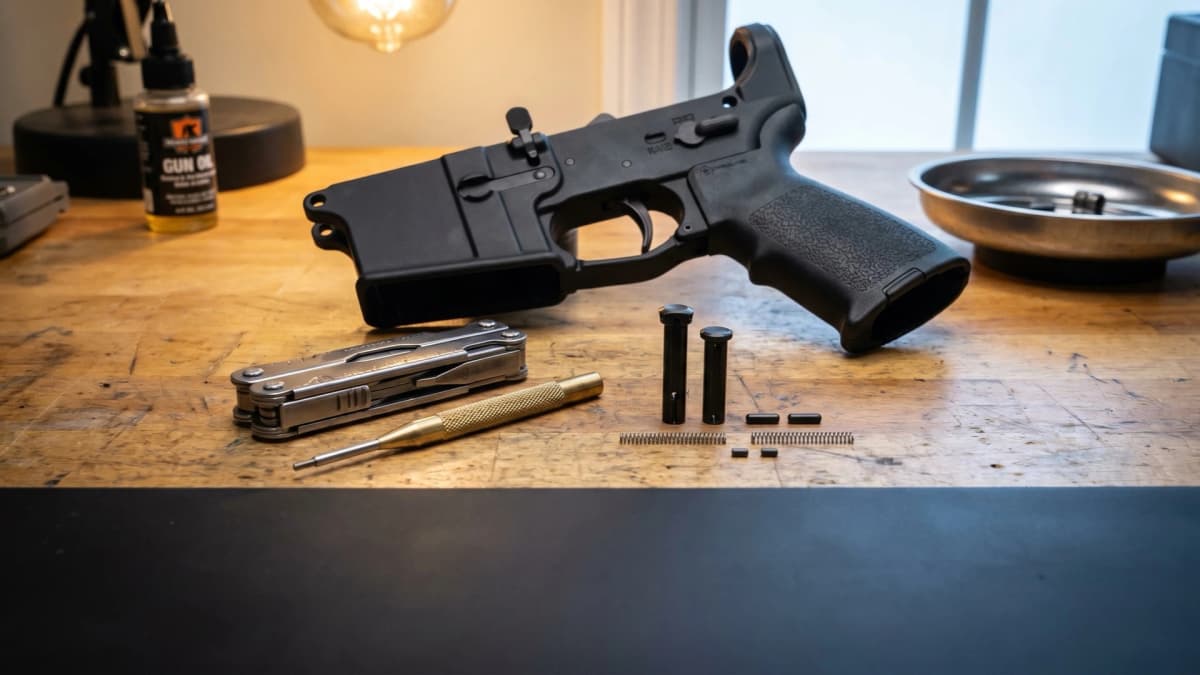
The reliable way to install the pivot pin without losing the detent is to use an install-assist set that captures it for you: a magnetic pin like the Battle Arms BAD-EPS or a channel-style set like the Aero Precision EZ Install. Without one, you compress the detent with a tapered pivot-pin tool or the masking-tape trick. The whole fight is over one tiny spring-loaded detent: it sits in a hole at the front of the receiver, pushed out by a spring, and you have to hold it flush while sliding the pivot pin past it. The instant your tool slips, the detent and spring rocket across the room, usually never to be found. The takedown pin at the rear is far easier; its detent is captured by the buffer-retainer area and the stock, so it rarely escapes.

Two of the sets on this list are built specifically to neutralize that problem. The Battle Arms BAD-EPS ($31.49) uses a magnetic EZ Guide Channel: the pin head holds the detent magnetically as you slide it in, so it cannot launch even if your hand slips. The Aero Precision EZ Install ($31.99) takes a mechanical approach with a built-in installation channel that guides the detent into place without a specialty tool, and it ships with its own detents and springs so you are not robbing them from a kit. Either one turns the worst job on the bench into a thirty-second task, which is exactly why they are the picks for a first-time builder.

If you go with a non-assisted set, the old-school method still works: a dedicated pivot-pin install tool (a tapered punch that holds the detent down while you slide the pin over it), or the masking-tape-and-needle trick, plus a dab of grease on the detent to keep it from skating. Tape the receiver around the detent hole first so a slipped tool does not gouge the anodizing. If you are building a fresh lower from parts rather than upgrading an existing rifle, the rifle builder lets you stage a takedown and pivot pin set alongside the rest of your lower-parts selection so the whole control group is planned before you start driving pins.

Frequently Asked Questions

Are all AR-15 takedown pins the same?
No. All standard AR-15 takedown and pivot pins share the same 0.250-inch diameter and drop into mil-spec forged lowers, but they differ in head design, material, and install features. Mil-spec pins sit nearly flush and need a punch or bullet tip to start; extended pins like the Strike Industries set ($15.99) add heads you can push by hand; install-assist pins like the Aero Precision EZ Install ($31.99) and Battle Arms BAD-EPS ($31.49) add a channel or magnet so the detent does not launch during assembly; and titanium pins like the V Seven set ($35.99) cut weight. They are not all the same beyond the basic .250 fitment.
What are the best AR-15 takedown pins?
The best overall AR-15 takedown and pivot pin set is the Battle Arms Development BAD-EPS ($31.49), which combines high-grip low-profile heads with a magnetic install channel that holds the detent during the notoriously frustrating pivot-pin install. The best value is the Strike Industries Extended set ($15.99) for true tool-free takedown, the best for ambidextrous-safety builds is the Forward Controls Design PF-040 ($33.25) because it extends on the left side to clear the safety, and the lightest is the V Seven Grade 5 titanium set ($35.99).
What size are AR-15 takedown pins?
AR-15 takedown and pivot pins are 0.250 inches in diameter (TDP tolerance is 0.2485 inch). The pivot pin is the longer of the two at roughly 1.13 inches and the takedown pin is shorter at roughly 0.92 inches; they are not interchangeable with each other because they seat in different-length holes. Any pin advertised as a mil-spec AR-15 or .250 set will drop into a standard forged lower, though some tight billet receivers can need a specific fit.
Are AR-15 and AR-10 takedown pins the same?
No. AR-15 takedown and pivot pins are 0.250 inches in diameter, while AR-10 and LR-308 pins are larger at 0.2765 inches and longer overall, so they are not interchangeable. AR-10 receivers also split between ArmaLite AR-10 and DPMS LR-308 patterns, which do not share pin dimensions with each other either. Always match the pin set to the exact platform; brands like Battle Arms, Strike Industries, and V Seven sell separate large-frame versions (for example the BAD-EPS-308 and V Seven DPMS/SR25 sets).
What is the difference between takedown pins and anti-walk pins?
They are different parts. Takedown and pivot pins are the two 0.250-inch receiver pins that hold the upper and lower together, and the products in this guide upgrade those. Anti-walk pins are smaller 0.154-inch pins that replace the trigger and hammer pins inside the fire-control group to keep them from rotating or walking, which matters mainly with cassette/drop-in triggers and high-round-count rifles. If you want non-rotating trigger and hammer pins, look at a set like the KNS Precision NRTHP-154 rather than a takedown pin set.
Do I need extended or captured takedown pins?
You benefit most from extended or captured pins if you run more than one upper on a single lower, field strip often, or build lowers yourself. Extended pins like the Strike Industries set ($15.99) let you push and pull without a tool, which speeds up upper swaps. Install-assist pins like the Battle Arms BAD-EPS ($31.49) and Aero Precision EZ Install ($31.99) hold the detent during assembly so it does not fly across the room. If you almost never separate your rifle, a quality mil-spec pin is fine and the upgrade is convenience rather than function.