Best Budget AR-15 Optics 2026: Red Dots, Prisms & LPVOs
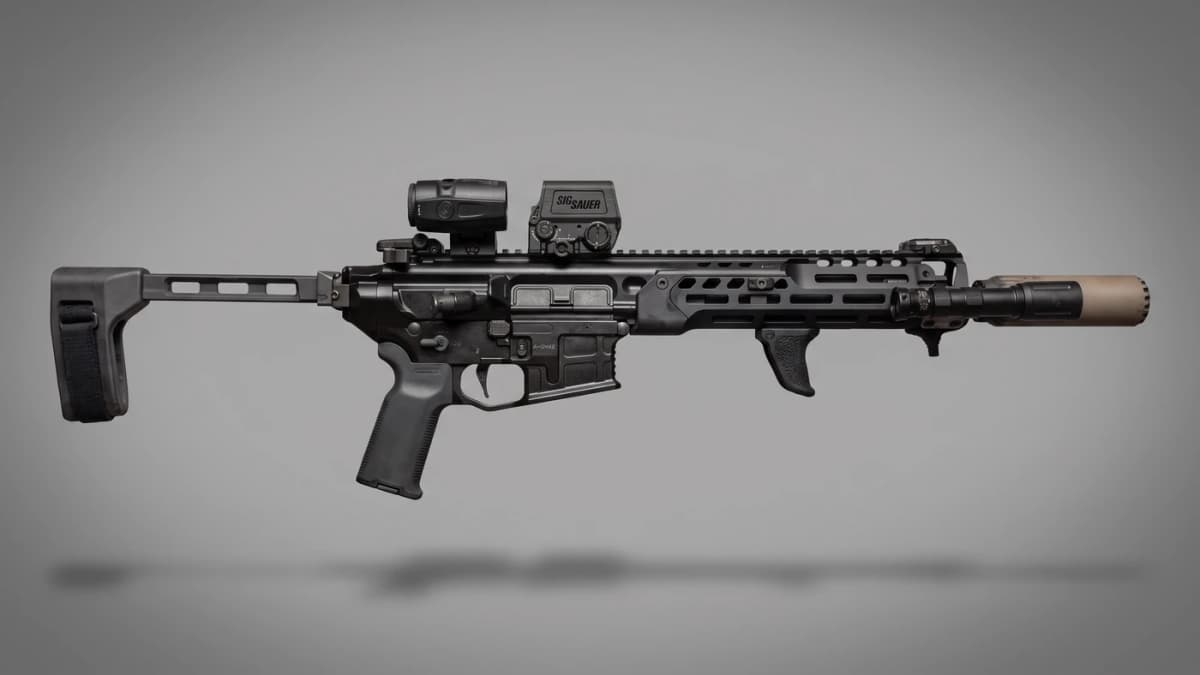
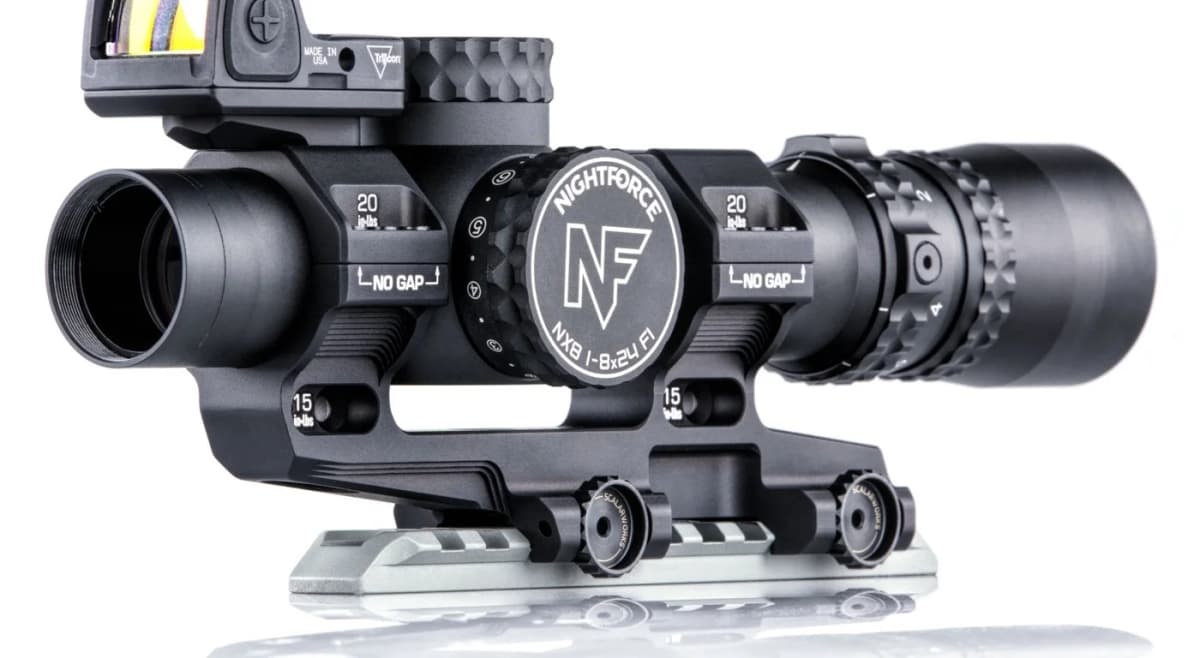
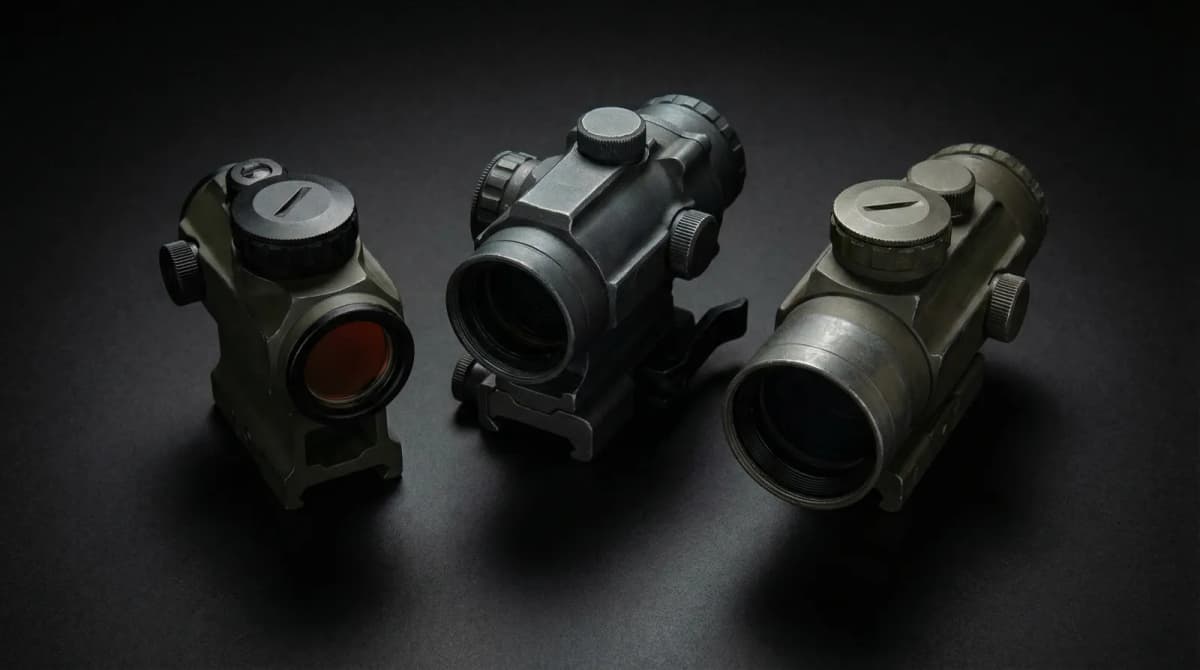
At the entry-level budget tier, start with a red dot or a complete LPVO package. This guide compares those AR-15 optics by durability, reticle, and included-mount value. The prism and LPVO step-up choices show where saving longer buys a real capability gain. The SIG Romeo5 at $139.99 sets the red-dot baseline, while the Primary Arms SLx 1-6x at $349.99 shows the first meaningful variable-optic step-up. For red dots across the market, use our AR-15 red dot ranking. For value-tier variable optics, use the budget LPVO guide.
Best Budget AR-15 Optics (2026 Rankings)
Ranked by value, durability, and real-world performance for budget-conscious AR-15 builders.
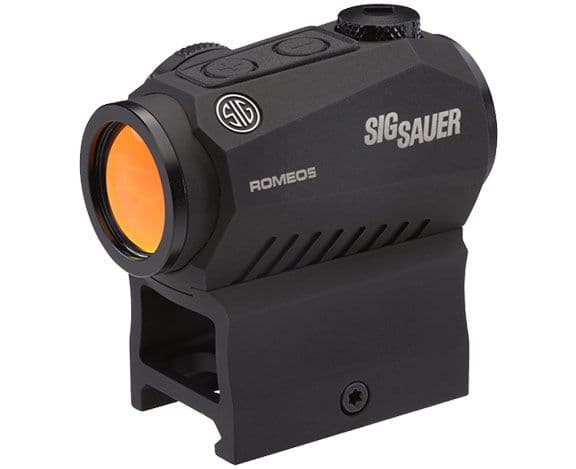
Sig Sauer Romeo5
Best Budget Overall
- +Best red dot under $150 for years running
- +MOTAC auto-on/off eliminates dead battery anxiety
- +Aimpoint Micro footprint for easy mount upgrades
- −Glass shows slight blue tint in certain lighting
- −Included mounts are functional but basic
- −Gen 2 addresses most shortcomings for $10-$30 more

Holosun AEMS Core X2
Best Enclosed Budget Red Dot
- +Enclosed emitter keeps lens clear in mud, rain, and snow
- +50,000 hour battery life matches optics costing 3x more
- +50% parallax reduction vs original AEMS
- −Heavier than open-emitter micro red dots at 9.8 oz with mount
- −Proprietary mount pattern limits aftermarket options
- −Some users report slight blue tint near top of lens
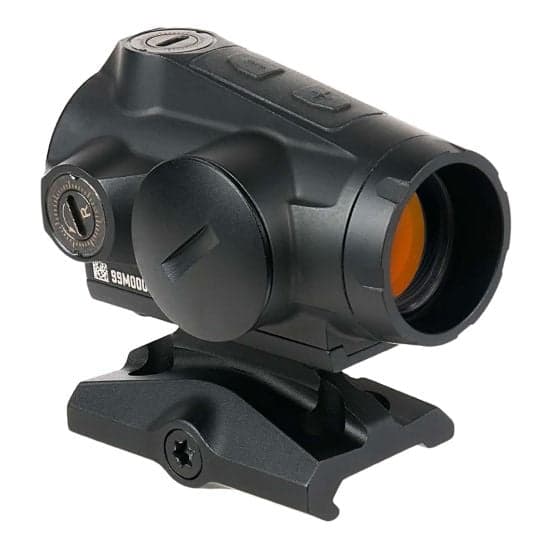
Sig Sauer Romeo 5 Gen 2
Best Updated Classic
- +Improved glass clarity approaches optics costing 2-3x more
- +40,000 hour battery life on a single CR2032
- +Enhanced MOTAC with faster wake times
- −Still shows slight blue tint (though reduced from Gen 1)
- −Included mounts remain basic quality
- −Price overlap with Gen 1 creates confusion
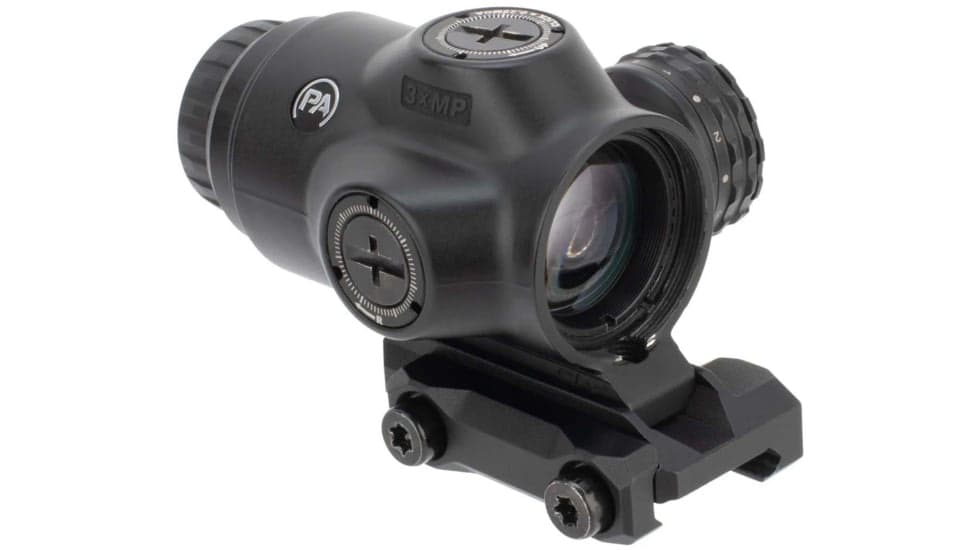
Primary Arms SLx 3x MicroPrism
Best Budget Prism Optic
- +Etched reticle works without battery power
- +Best option for shooters with astigmatism
- +ACSS Raptor provides BDC holdovers for 5.56/.300BLK
- −Fixed 3x can feel too much for close quarters work
- −Over $200, stretching the strict budget definition
- −Prism design creates slight tunnel vision effect
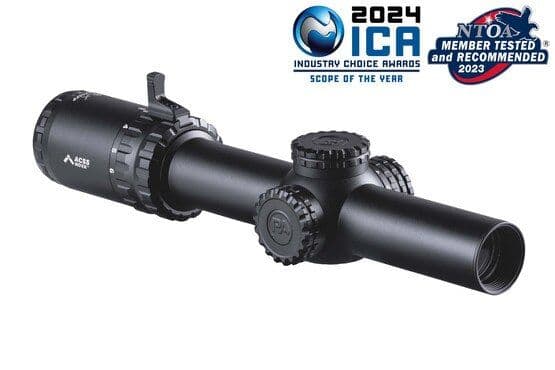
Primary Arms SLx 1-6x24 Gen IV
Best Budget LPVO
- +True 1x allows both-eyes-open shooting like a red dot
- +ACSS reticle with calibrated BDC holdovers
- +Integrated throw lever for fast magnification changes
- −Adds significant weight vs a red dot (17.9 oz)
- −Illumination not as bright as premium LPVOs
- −Over $200, requires a mount purchase on top
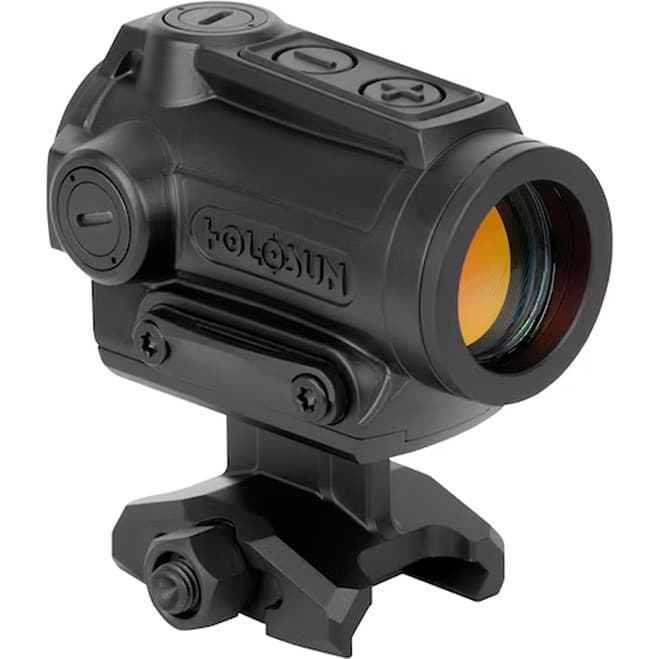
Holosun ARO
Best Under-$400 Enclosed Dot
- +Enclosed emitter at a fraction of Aimpoint Duty RDS pricing
- +50,000 hour battery life matches premium competitors
- +Aimpoint Micro footprint for universal mount compatibility
- −Above the $200 budget threshold
- −No solar failsafe (ARO EVO adds this)
- −Newer model with less long-term field data
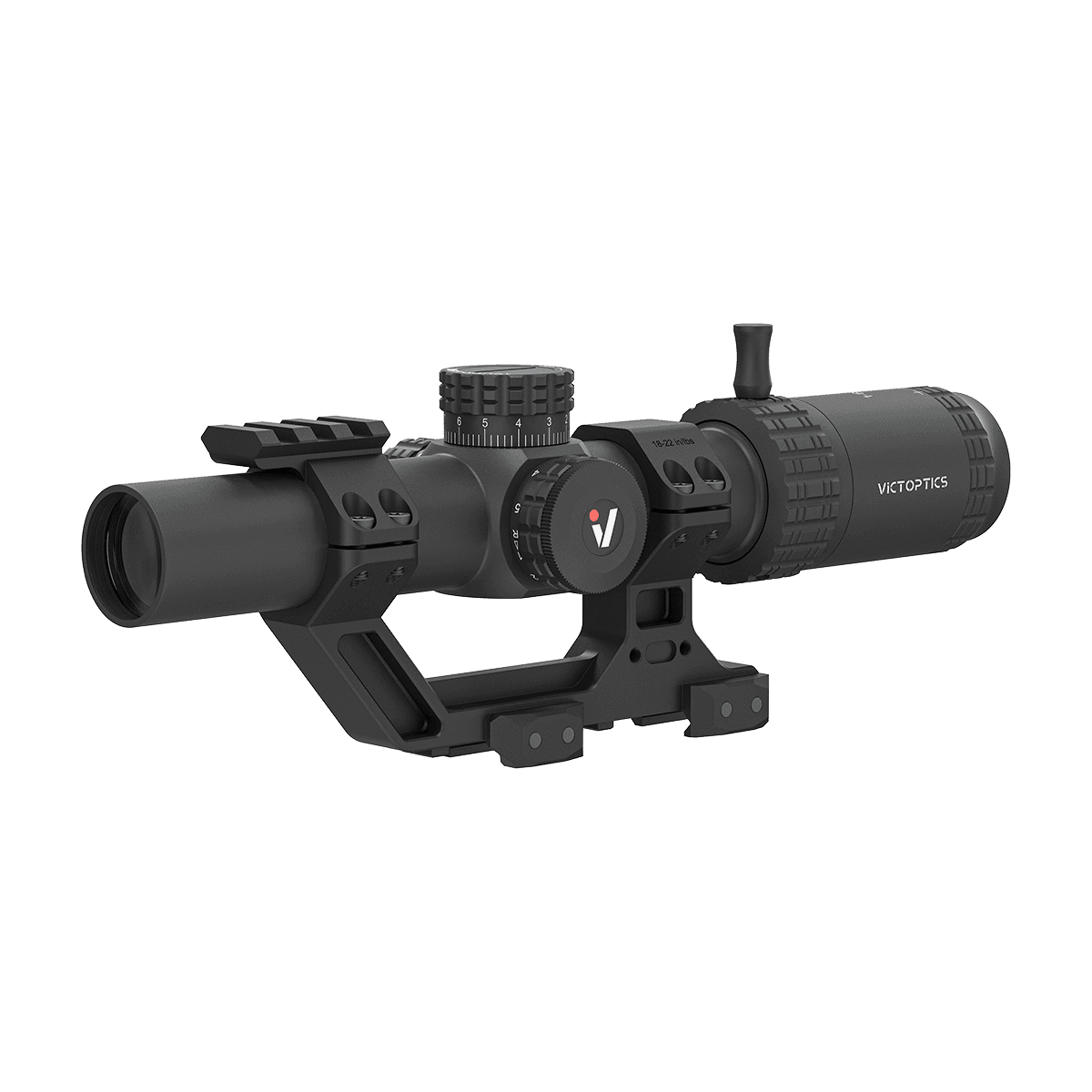
Vector Optics S6 1-6x24i LPVO Mount Kit
Best Complete LPVO and Mount Package Under $200
- +Scope and 1.93 inch one-piece AR mount together stay under $200
- +Fiber-optic collector keeps the reticle visible in bright daylight without the battery
- +Over 50 MIL of adjustment range with a turret lock and zero reset
- −1.93 inch mount height does not co-witness with standard iron sights
- −IPX4 rating covers rain but not submersion
- −SFP reticle: subtensions only true at 6x
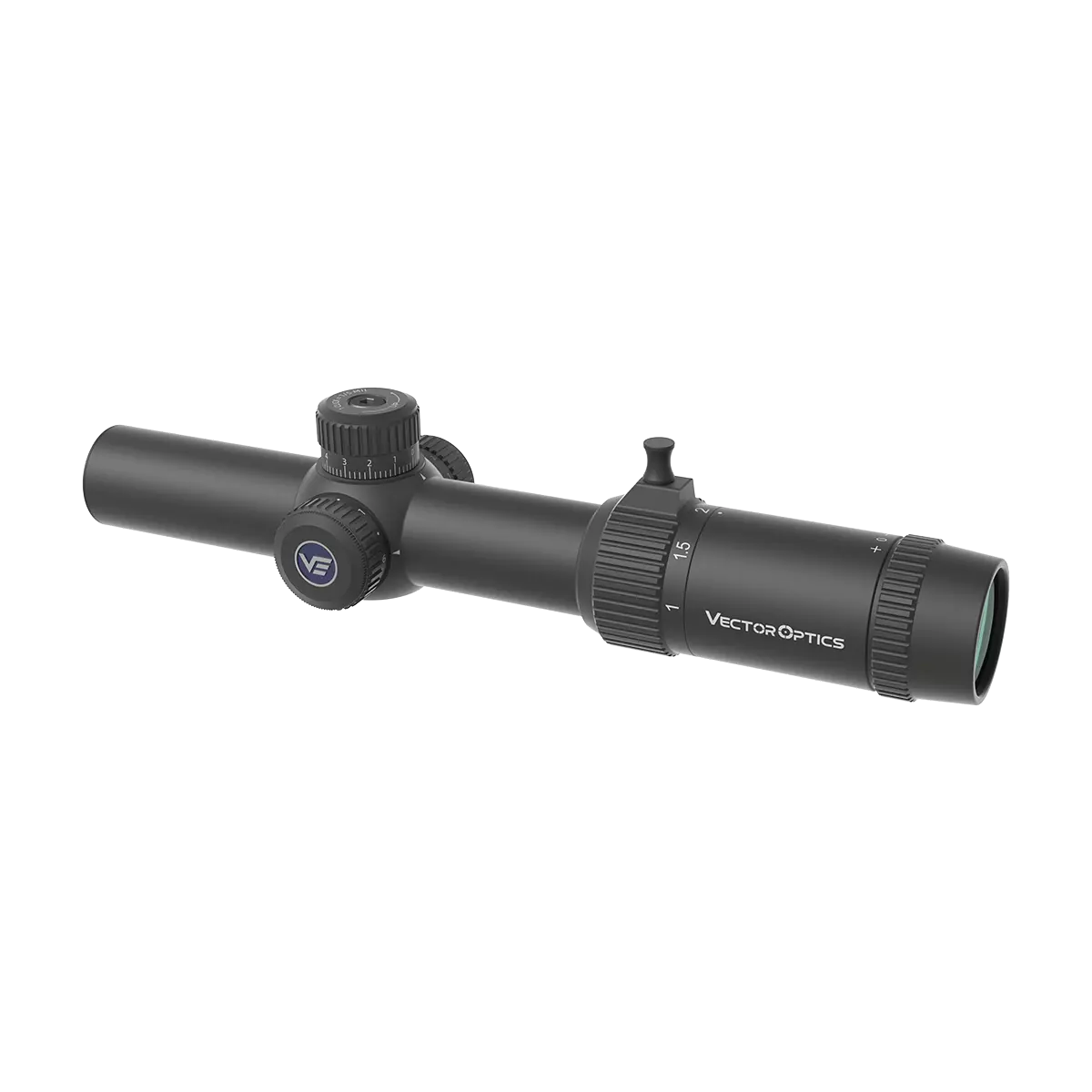
Vector Optics Forester 1-5x24i Fiber SFP
Cheapest True 1x Variable Here
- +True 1x variable magnification under $150
- +Fiber-optic center dot stays visible in bright daylight
- +Locking turrets and a 3-minute motion-sensor auto sleep at an entry price
- −5x top end falls short of the 1-6x class standard
- −Center-dot reticle gives no holdover subtensions, so drops must be dialed
- −Parallax fixed at 50 yards limits precision at distance
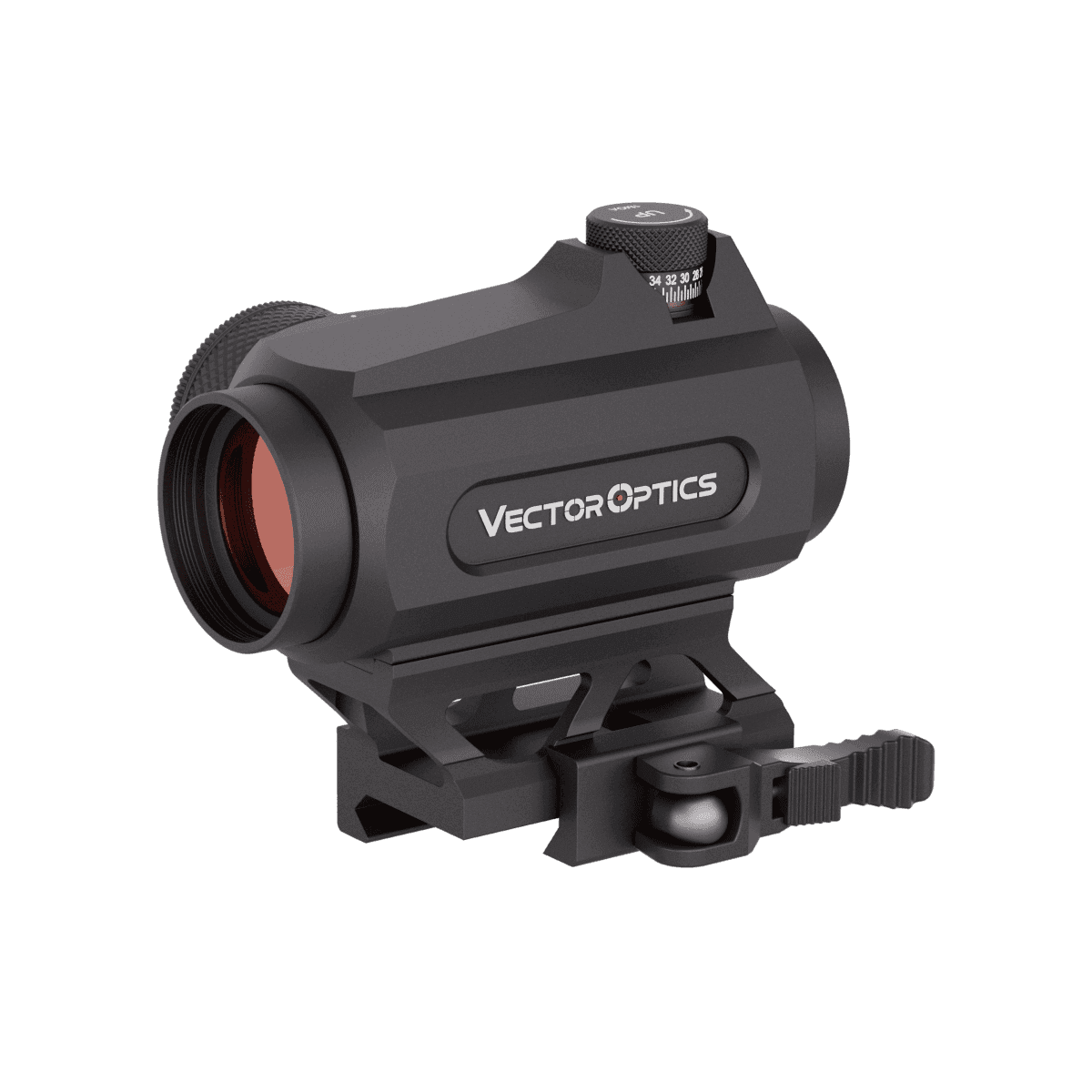
Vector Optics Maverick-II 1x25 GenII
Best Red Dot Under $100
- +Quick-release Picatinny mount included, so there is no separate mount purchase
- +25mm window is wider than most sub-$100 micro dots
- +Motion sensor removes manual on/off discipline
- −IPX4 covers rain and splashing but not submersion
- −No published battery-life hours rating for the CR2032
- −Six brightness settings with no dedicated night vision level
Prices and availability can change.
Affiliate links - purchases support this site at no extra cost to you. (?)
Red Dot vs Prism vs LPVO: Which Budget Optic Type for AR-15?
Before picking a specific model, you need to decide which type of optic fits your shooting. This is the most common mistake beginners make: buying the wrong category, not the wrong brand. Here is what each type does well and where it falls short.
- Red DotMagnification1x (no magnification)Weight3-6 ozBattery40,000-50,000 hrsBest ForCQB, home defense, general use under 200 yds
- PrismMagnificationFixed (1x, 3x, or 5x)Weight7-10 ozBattery1,500+ hrs (works without battery)Best ForAstigmatism, mid-range, compact magnification
- LPVOMagnificationVariable (1-6x, 1-8x)Weight17-22 ozBattery2,000-3,000 hrsBest ForVersatile 0-400+ yd use, precision + speed
| Type | Magnification | Weight | Battery | Best For |
|---|---|---|---|---|
| Red Dot | 1x (no magnification) | 3-6 oz | 40,000-50,000 hrs | CQB, home defense, general use under 200 yds |
| Prism | Fixed (1x, 3x, or 5x) | 7-10 oz | 1,500+ hrs (works without battery) | Astigmatism, mid-range, compact magnification |
| LPVO | Variable (1-6x, 1-8x) | 17-22 oz | 2,000-3,000 hrs | Versatile 0-400+ yd use, precision + speed |
Our recommendation for beginners: Start with a red dot. It is the lightest, simplest, and most forgiving optic type. You can always add a 3x magnifier later for extended range. If you already know you have astigmatism, skip directly to the Primary Arms SLx 3x MicroPrism (or the newer CLx 3x Prism at $219.99 if you want to save the SLx premium). For the full prism lineup from 1x to 5x and the ACOG and ELCAN tier, see our best AR-15 prism scope guide, or the Optic Selection Matrix for a deeper decision framework.
What to Look for in a Budget AR-15 Optic
The difference between a good budget red dot sight and a bad one comes down to a few measurable specs. Ignore marketing language like “military-grade” on a $50 Amazon optic. Focus on these four factors.
Battery Life
Minimum 30,000 hours. Both the Sig Romeo5 (40K) and Romeo 5 Gen 2 (40K) hit this. Under 10,000 hours means you are replacing batteries multiple times per year. Shake-awake or MOTAC extends runtime dramatically by powering down when the rifle is stationary. Solar-assisted dots push it further: the new Vortex Crossfire II Solar claims up to 150,000 hours at a $169.99 street price.
Durability and Waterproofing
Look for IPX-7 minimum (survives 1 meter submersion for 30 minutes). IP67 is even better. Aluminum construction (not polymer) with nitrogen purging to prevent internal fogging. Every optic in this guide meets these standards.
Reticle and Dot Size
2 MOA is the standard for AR-15 red dots. Small enough for precision at 100-200 yards, large enough for fast acquisition in close quarters. Avoid dots larger than 4 MOA for rifles. If you have astigmatism, the dot will look like a starburst: consider a prism optic with an etched reticle instead.
Mount Compatibility
Aimpoint Micro (T-1/T-2) footprint is the most universal mount pattern. The Sig Romeo5 and Holosun ARO both use this footprint, so you can upgrade to premium T1/T2 mounts later without replacing the optic. The Romeo 5 Gen 2 uses SIG's redesigned I-BEAM mount instead. Check whether mounts are included: some budget optics ship without one.
Get Budget AR-15 Optic Reviews and Deal Guides
Sig Romeo5 flash sales, Holosun AEMS price drops, and new sub-$200 entries. Get the deals before they sell out.
Budget AR-15 Optic Comparison: All Picks at a Glance
| Model | Type | Price | Battery | Weight | Enclosed |
|---|---|---|---|---|---|
| Sig Romeo5 | Red Dot | $139.99 | 40,000 hrs | 5.1 oz | No |
| AEMS Core X2 | Red Dot | $189-$219 | 50,000 hrs | 9.8 oz | Yes |
| Romeo 5 Gen 2 | Red Dot | $128.79 | 40,000 hrs | 5.5 oz | No |
| SLx 3x MicroPrism | Prism | $249-$289 | 1,500+ hrs* | 7.95 oz | N/A |
| SLx 1-6x24 Gen IV | LPVO | $289-$339 | 2,500 hrs | 17.9 oz | N/A |
| Holosun ARO | Red Dot | $120-$190 | 50,000 hrs | 4.2 oz | Yes |
*SLx 3x MicroPrism has an etched reticle that works without battery power. Battery life listed is for illumination only.
Budget AR-15 Optics to Avoid
Not every cheap red dot is a good deal. Here is what to watch out for when shopping for a budget red dot sight in 2026.
- Amazon no-name red dots ($30-$60): These fail under recoil, lose zero after a few range trips, and have battery life measured in weeks, not years. The Sig Romeo5 costs $139.99 and will outlast five of these.
- Airsoft-grade optics rebranded for real firearms: If the listing mentions “airsoft compatible” or has no waterproof rating, walk away. Real AR-15 recoil destroys airsoft optics quickly.
- Tube-style red dots under $80: Budget tube red dots with 1x magnification offer no advantage over micro red dots and add unnecessary weight and rail length. Get a proper micro red dot instead.
- Holographic sights at budget prices: Genuine holographic sights start at $500+ (EOTech). Anything claiming “holographic” at budget prices is a reflex sight with misleading marketing.
When to Spend More on Your AR-15 Optic
Budget optics are genuinely excellent for most shooters. But there are specific use cases where spending more makes a measurable difference. If any of these apply to you, consider stepping up.
- Night vision use: Budget optics have NVD settings, but premium optics like the Aimpoint T2 have decades of proven NVG compatibility. If you run night vision, check our best red dot guide for premium picks.
- Duty or defensive carry: If the rifle is your primary defensive tool, the Holosun ARO ($120-$190) or the Holosun ARO EVO give you enclosed emitter reliability worth the extra cost.
- Precision beyond 300 yards: Budget LPVOs work, but glass clarity at high magnification improves noticeably in that next tier up. A first focal plane scope like the Vector Optics Continental 2-12x44 trades the 1x low end for glass and turrets that hold up at distance. For budget and value 1-6x and 1-8x picks, see our best budget LPVO guide, or step up to our best LPVO guide for mid-tier and premium options.
Sig Sauer Romeo5
- Best red dot under $150 for any AR-15
- MOTAC shake-awake and 40K hour battery
- Includes high and low mount risers
Primary Arms SLx 3x MicroPrism
- Best option if you have astigmatism
- Etched reticle works without battery
- Fixed 3x in a red-dot-sized package
Holosun ARO
- Enclosed emitter at mid-tier pricing
- Aimpoint Micro mount compatibility
- 50,000 hour battery with Shake Awake
Prices and availability can change.
Affiliate links - purchases support this site at no extra cost to you. (?)
Head-to-Head Comparison
Can't decide between the top two budget picks? Our Holosun ARO vs Sig Romeo 5 Gen 2 guide breaks down enclosed vs open emitter, glass quality, and value with an interactive picker tool.