Best PCC Optics: Red Dots and Prisms for 50 Yards and In
A pistol-caliber carbine is not a short AR-15, and the PCC optics that suit it are chosen on different grounds. The gun cycles a heavy reciprocating mass rather than a gas system, most of the shooting happens inside 50 yards, the receiver rail and stock comb rarely sit where an AR's do, and the match division you enter may not permit an optical sight at all. This guide ranks seven 1x sights, four reflex and three prism, on the three things that actually change the decision: whether the reticle was drawn for 9mm or for a 5.56 rifle, the sight height the included mount delivers, and how much glass you get for the money. Pick the host first with our modern PCC guide, then buy the sight that fits its rail and its rulebook.
Key Takeaways
- →Best overall: the Holosun AEMS Core X2 at $299.99, an enclosed-emitter sight with a 1.1 x 0.87 inch window, published IP67 sealing and 1,000G vibration resistance, and an included four-post mount at a 1.63-inch lower 1/3 height.
- →Step up for solar: the Holosun AEMS Pro X2 Green at $429.99 adds a solar failsafe, and a switchable 65 MOA circle at the same 1.63-inch sight line and the same window.
- →Only one reticle here is a 9mm reticle. The Primary Arms ACSS Gemini ($279.99) is calibrated for 9mm PCCs with 7.5 to 16 inch barrels. The Swampfox BRC uses a .223/5.56 50/200 framework.
- →Sight height is a property of the package, not the footprint. Among the packages quoted on a rail-height basis, the boxes run from 1.1 inches on the Swampfox to 2.26 inches on the Gemini riser, and Aimpoint's standard mount sits lower than any of them on its own measuring basis. Two optics that share a footprint do not share an optical axis.
- →Check your division before you buy. USPSA's PCC division permits optical and electronic sights under the March 2026 rules. Steel Challenge splits PCCI, where optical sights are not allowed, from PCCO, where they are.
Best Optics for Pistol-Caliber Carbines
Seven 1x sights ranked for pistol-caliber carbines by window size, emitter type, published durability documentation, and the sight height the included mount actually delivers. Every height figure below is the maker's own published number for that exact package.

Holosun AEMS Core X2
Best overall PCC optic: widest window at a usable height
- +The enclosed housing keeps rain, dust, and range debris off the LED
- +The included four-post mount clamps straight to Picatinny at a 1.63-inch height for lower 1/3 co-witness, so no separate mount purchase is needed
- +Holosun publishes IP67 sealing, 1,000G vibration resistance, and 50,000 hours at setting 6 on a single CR2032
- −There is no solar panel and no solar failsafe; that is the feature the AEMS Pro X2 adds
- −The 1.63-inch mount height can sit too tall for a PCC with a low traditional comb
- −The AEMS mounting interface has fewer mount choices than the Aimpoint Micro footprint
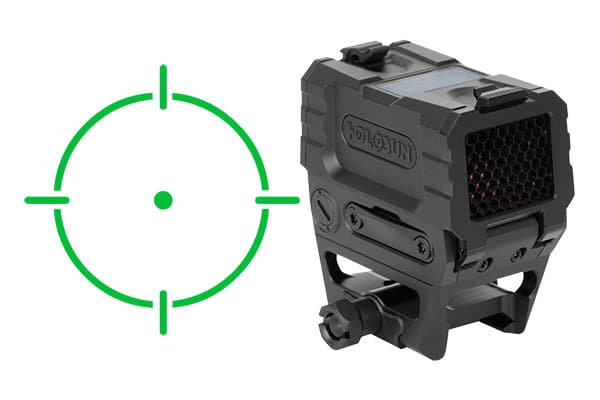
Holosun AEMS Pro X2 Green
Best enclosed PCC red dot with solar failsafe
- +The enclosed housing protects the emitter from rain, dust, and loose range debris
- +The 1.1 x 0.87 inch window is large for a compact enclosed rifle sight
- +The included mount places the optic at a published 1.63-inch centerline for a heads-up AR-pattern cheek position
- −The 1.63-inch centerline can be too tall for traditional low-comb PCC stocks
- −Its proprietary AEMS mounting interface has fewer mount choices than the Aimpoint Micro footprint
- −The mounted system weighs 6.1 ounces, more than the published 4.3-ounce body figure
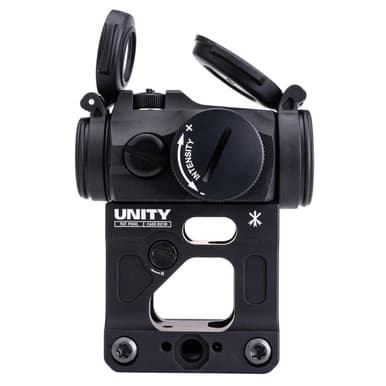
Aimpoint Micro T-2 with Standard Mount (200170)
Best published shock and vibration documentation
- +Aimpoint publishes axis-specific shock limits and a 10-150 Hz three-axis vibration test instead of only a single G number
- +The exact 200170 package weighs 4.6 ounces with its Picatinny mount
- +The standard mount places the optical axis 20 mm above the mechanical interface and accepts Aimpoint spacers when a taller line is needed
- −The 18 mm aperture is smaller than either AEMS X2 window
- −The rotary control has no motion-activation feature
- −The standard low mount will usually need a spacer or replacement mount on an AR-height PCC stock
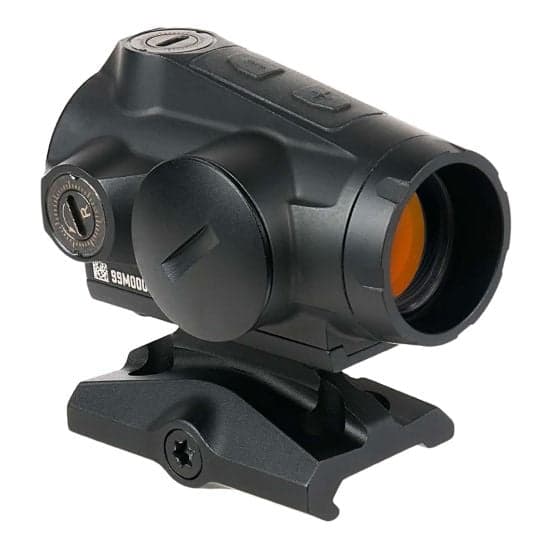
Sig Sauer ROMEO5 Gen II (SOR5101)
Best budget PCC red dot
- +The included I-BEAM mount provides a ready-to-use M1913 setup without another mount purchase
- +MOTAC motion activation and a stated 40,000-hour runtime support an always-ready setup
- +The 2 MOA dot and 0.5 MOA adjustments are simple to confirm with the actual PCC load
- −The 20 mm objective gives a narrower window than the large-window Holosun picks
- −The 5.5-ounce weight is not especially light for a microdot with mount
- −SIG does not publish a directly comparable G-rated vibration figure on the current product page
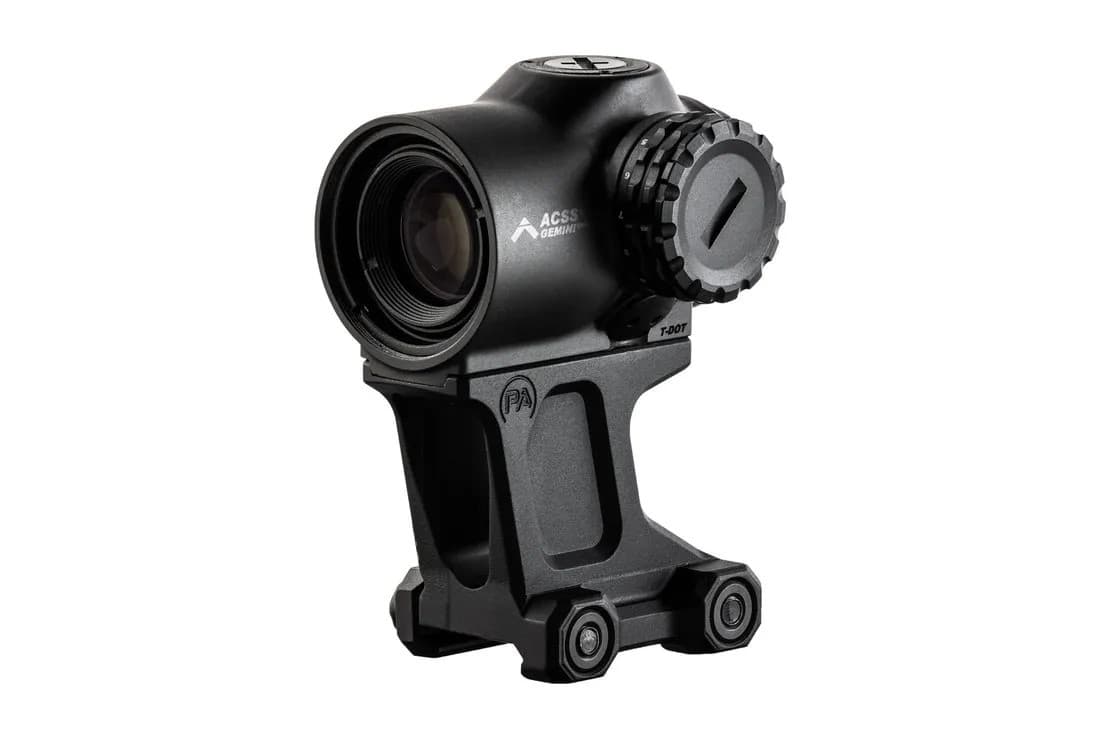
Primary Arms SLx 1X MicroPrismT ACSS Gemini 9mm (Red)
Best 9mm-calibrated PCC prism
- +The ACSS Gemini is explicitly calibrated for 9mm PCCs with 7.5-16 inch barrels rather than a 5.56 rifle trajectory
- +The etched reticle remains visible with illumination off and can be focused with the diopter
- +The Aimpoint Micro H1/T1 footprint opens a broad replacement-mount ecosystem
- −The BDC still requires confirmation with the actual ammunition, barrel, zero, and sight height
- −Prism eye relief is less forgiving than a reflex sight during awkward competition positions
- −The current package ships with only the 2.26-inch riser even though older packaging and manual material reference a low mount
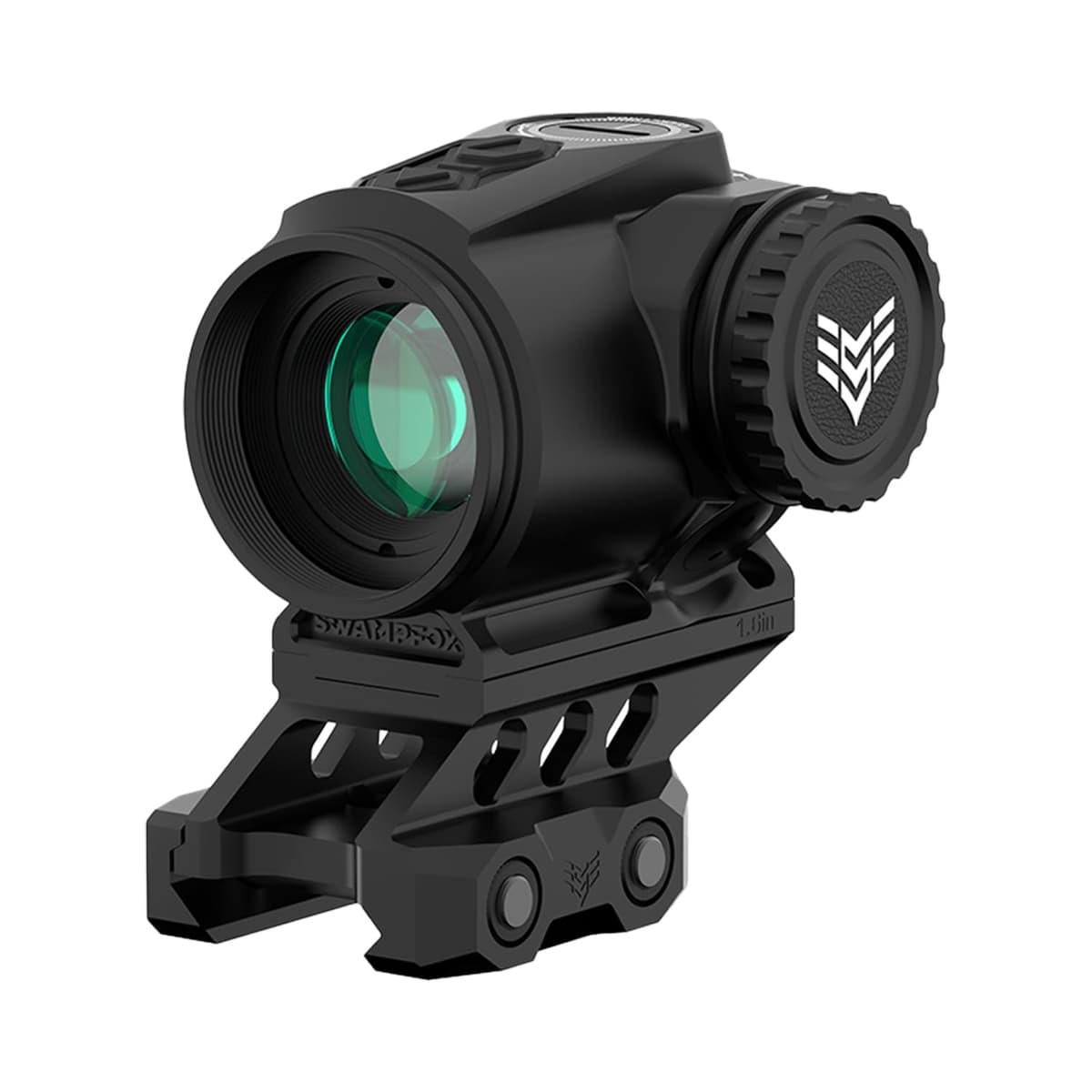
Swampfox Raider 1x20 Green BRC (RMPS120-GB)
Best prism for close-range offset practice
- +The etched BRC reticle gives explicit 5, 10, and 15 yard mechanical-offset references
- +The package includes both 1.1-inch and 1.6-inch Picatinny mount heights for different PCC combs and receiver rails
- +Swampfox publishes a 1,200G shock rating and IPX7 protection
- −The BRC 50/200 framework is designed around .223/5.56 rather than 9mm
- −Swampfox warns that the 5, 10, and 15 yard references change with optic height and firearm platform
- −At 7.69 ounces, it is the heaviest 1x optic in this field
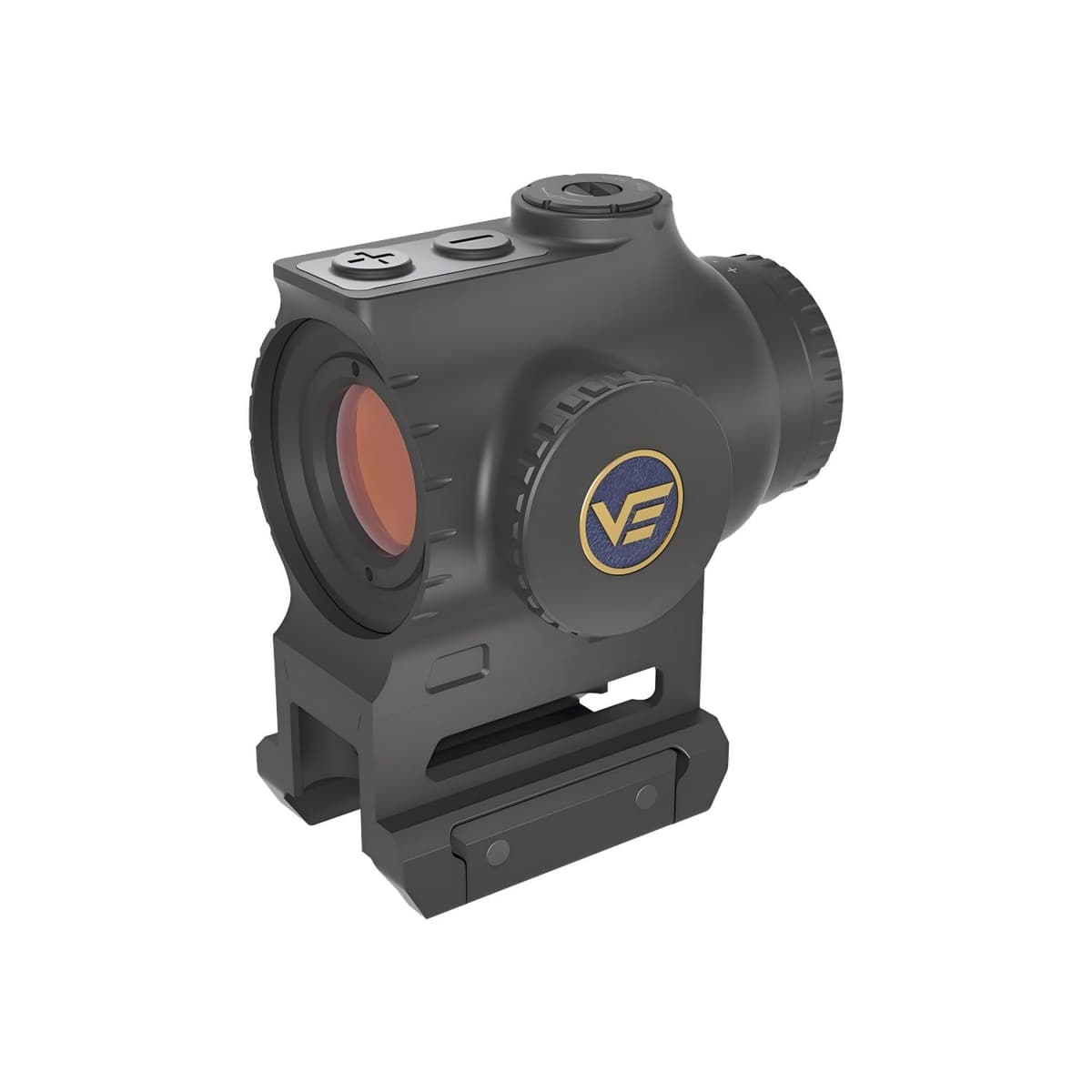
Vector Optics Paragon 1x18 Mini Prism
Best budget 1x prism for an etched reticle
- +The 2 MOA dot and 68 MOA ring are etched into the glass rather than projected, which is what makes a prism worth considering over a reflex sight in the first place
- +Red and green illumination gives you a second color when one washes out against the background you are shooting into
- +3.74 inches of eye relief, in line with the other two prisms ranked here
- −The 68 MOA ring is a rough ranging reference, not the 9mm-calibrated holdovers the ACSS Gemini above charges more to give you
- −A prism eye box still asks more of your head position than any of the four reflex sights ranked here
- −Value-tier construction rather than a duty-grade equal of the Aimpoint or Holosun sights above
Prices and availability can change.
Affiliate links - purchases support this site at no extra cost to you. (?)
How to Choose a PCC Optic: Emitter, Window, and Reticle
Decide three things in order: whether the emitter is sealed, how much glass you want to look through, and whether the reticle is doing arithmetic for you. Everything else on a spec sheet is downstream of those three answers. At 1x and inside 50 yards, no optic here is going to out-resolve another; what separates them is how fast you find the aiming reference and how little the sight asks of your head position.
Emitter protection is worth settling first, and on this field it settles immediately: every sight here already protects its emitter. The two AEMS X2 sights are enclosed by design, the Aimpoint Micro T-2 and the SIG ROMEO5 Gen II are sealed tubes with glass at the front and rear, and the three prisms have no exposed emitter to occlude at all. Rain, mud, and lint cannot land on the LED of any of them. That takes the open-versus-enclosed argument off the table before the ranking starts, which is why the order below turns on reticle, height, and glass instead. If you are shopping outside this field, the place to avoid an open emitter is a suppressed PCC, where gas driven back out the ejection port and the charging handle gap fouls the gun far faster than an unsuppressed one does.
Window size is the second fork, and it is what you feel on hard transitions and awkward start positions: a broad window forgives a head that is not quite where it was in dry fire. Both AEMS X2 sights publish a 1.1 x 0.87 inch window, which is large for a compact enclosed sight and the widest published view in this field. The SIG ROMEO5 Gen II's 20 mm objective is narrower than either of them, and the Aimpoint Micro T-2 sits at the far end with an 18 mm aperture, the smallest here.
The third fork is the reticle, and it is where PCC selection genuinely diverges from rifle selection. A 2 MOA dot, which is what the T-2, the ROMEO5 Gen II, and both AEMS X2 sights put in front of you, does no ranging for you and asks nothing of your eye position. The Pro X2 can also switch to a 65 MOA circle when you want a larger, faster reference; the Core X2 gives you the dot and nothing else to cycle through. An etched prism reticle gives you drawn references and survives a dead battery, at the cost of eye relief that is less forgiving than a reflex sight when you are shooting from a compromised position. For the broader framework of when each optic class earns its place, our optic selection matrix covers the decision one level up from this page.
PCC Optic Mount Height: Match the Rail and the Comb
Buy the height the gun needs, not the height your AR-15 uses. Every optic here ships with its own mounting solution, and those solutions land at very different places above the rail. The maker publishes an exact figure for each package, and those figures are the only heights this guide will quote, because a same-footprint optic is not a same-height optic.
- AEMS Core X2
- 1.63inIncluded four-post mount, lower 1/3
- AEMS Pro X2
- 1.63inCenterline, included mount
- Raider BRC
- 1.1 / 1.6inBoth mounts in the package
- Gemini 9mm
- 2.26inOnly riser in the current package
The two AEMS X2 sights land on the same number, and that is worth knowing before you agonize over the choice: both put the sight line at 1.63 inches with the mount in the box, so picking between them is a question of solar failsafe and reticle options, not of head position. Neither changes where your cheek goes. The Aimpoint 200170 is quoted differently on purpose. Aimpoint publishes an optical axis 20 mm above the mechanical interface with the standard mount, and sells spacers separately when a taller line is wanted. That standard low mount will usually need a spacer or a replacement mount on an AR-height PCC stock, so budget for one if the carbine has an AR-pattern comb. The SIG ROMEO5 Gen II is the one package where the number is genuinely unsettled: SIG's current manual lists a 1.47-inch sight axis for standard models while its exact-SKU 2025 product material labels the SOR5101 at 1.41 inches. If height drives your decision, confirm the mount in hand rather than building a cheek weld around either figure.
The comb is the constraint most buyers skip. An AR-pattern PCC with a carbine stock supports a 1.63-inch sight line without the shooter craning, which is why the two AEMS X2 packages are the easy fits there. A carbine with a low traditional comb wants something lower, and that is where the Swampfox Raider's 1.1-inch mount earns its place in the box. Apply the same measurement to a low-comb host with our Ruger PC Carbine upgrades guide, which works through receiver height on that platform specifically. The 2.26-inch riser in the current Gemini package is a specialized heads-up height, not a general upgrade; it is the tallest line here and it buys nothing on a stock you already index cleanly. Run the mount you are considering through the rifle red dot height checker to see where it puts the sight line on the carbine you actually own.
Red Dot or 1x Prism on a Pistol-Caliber Carbine?
Take the red dot unless you specifically want an etched reticle. A reflex sight asks less of your head position, which matters on a carbine you shoot from unusual positions, and the four dots here all run a 2 MOA aiming point that is small enough to shoot precisely at 50 yards and large enough to find quickly at seven. The prisms trade that forgiveness for a drawn reticle that stays visible with the illumination off and can be focused to your eye with a diopter.
The reason to take a prism anyway is the reticle content. The Primary Arms SLx 1X MicroPrismT with the ACSS Gemini 9mm reticle is the only sight in this field whose pattern was drawn for the cartridge: Primary Arms calibrates it for 9mm PCCs with 7.5 to 16 inch barrels rather than a 5.56 rifle trajectory. That is a genuinely different product from a rifle prism wearing a 9mm sticker. The Swampfox Raider 1x20 with the green BRC reticle is built on a 50/200 framework designed around .223/5.56, so its distance references are not 9mm holds; what it does give you is explicit 5, 10, and 15 yard mechanical-offset marks, which is a close-range teaching tool rather than a trajectory solution. The Vector Optics Paragon 1x18 is the third prism here and the plainest of them: a 2 MOA dot inside a 68 MOA ring, which Vector offers as a rough ranging reference rather than a set of holds. Take it when an etched reticle at the lowest price of the three is what you are after, and take the Gemini instead when the 9mm calibration is the actual reason you wanted a prism.
Weight is the quiet cost of the prism route. The Gemini body is 5.5 ounces, close to microdot territory, while the Raider is 7.69 ounces. The comparison needs care, because the makers do not all measure the same thing: Aimpoint publishes the 200170 package at 4.6 ounces with its Picatinny mount, while Holosun publishes the Pro X2 as a 4.3-ounce body and a separate 6.1-ounce mount weight. Read the label attached to the number before you weigh one sight against another.
Zeroing a PCC and Confirming Your Close-Range Holds
There is no universal PCC zero and no universal 9mm holdover chart, so do not go looking for one. Where the bullet lands relative to the reticle depends on the actual load, the barrel length, the sight height you just bolted on, the distance you zeroed at, and how much point-of-impact shift you are willing to accept across your working distances. Two shooters running identical optics on identical carbines get different numbers the moment their ammunition or their mount height differs.
Height over bore is the part that bites at contact distance, and it scales with the mount you chose in the section above. A 2.26-inch riser puts the sight line further from the bore axis than a 1.1-inch mount does, so the same reticle held on the same spot produces a different close-range impact on the two setups. This is exactly what the Raider's 5, 10, and 15 yard marks are for: they make the offset visible instead of leaving it as a rule you half-remember. Whatever you mount, reconfirm after any change to the system, including a can, because our PCC suppressor pairing guide covers a configuration change that warrants walking the zero and the close holds again.
What Published Shock and Vibration Ratings Actually Tell You
They tell you what each manufacturer chose to test and publish, and nothing more. Read them as documentation quality rather than as a leaderboard. Holosun publishes 1,000G vibration resistance for both AEMS X2 sights and IP67 sealing on the Core X2, Swampfox publishes 1,200G for the Raider, and SIG does not publish a directly comparable G-rated figure for the ROMEO5 Gen II on its current product page. Those numbers were not produced under one shared protocol, so ranking the brands against each other on the digits alone is not a comparison you can defend.
Aimpoint takes a different approach with the Micro T-2, publishing axis-specific shock limits and a 10-150 Hz three-axis vibration test rather than a single headline G number. That is why the 200170 sits at rank three here despite the smallest window in the field: the disclosure is more complete, which is the most useful thing a specification sheet can be. The trade is a rotary control with no motion-activation feature, so it does not manage its own power the way MOTAC on the ROMEO5 Gen II and Shake Awake on the AEMS X2 sights do.
What none of these numbers cover is a controlled straight-blowback PCC test. A blowback carbine moves a heavy bolt or carrier against a heavy buffer and stiff spring, and that impulse is not the same thing a lab shaker table applies. Treat published ratings and mount retention as selection evidence, then verify the only way that counts: torque the mount to the maker's spec, mark the screws, and check zero after a few hundred rounds of the load you actually shoot.
Get PCC Gear Data and Optic Price Drops First
New PCC optic releases, verified height and durability figures, and price movement on the sights in this guide, sent straight to your inbox.
PCC Competition Divisions: Check the Rulebook Before the Optic
USPSA's PCC division permits optical and electronic sights under the March 2026 competition rules, so a dot or a prism is a legal choice there. Steel Challenge splits the equipment into two divisions instead: PCCO allows optical sights, and PCCI does not. Never assume the two organizations treat a PCC the same way, and never assume a division you shot last season carries the same equipment rules today.
The practical consequence is that the division decision comes before the optic decision. If you are shooting PCCI, no sight on this page is the answer and no amount of window size helps you. If you are shooting USPSA PCC or Steel Challenge PCCO, the two large-window AEMS X2 sights are the ones built for the job, and our USPSA red dot guide goes deeper on competition-focused window shapes and control layouts once the division question is settled. Confirm the current rulebook for the organization and division you have entered before you buy; equipment appendices are revised, and the rulebook is the authority, not this page. Our USPSA division checker will place a described carbine and cite the March 2026 Appendix D8 item behind each verdict.
PCC Optic Spec Comparison
Sort by type, weight, or price to narrow the field. Weight is stated as each maker publishes it, so a cell reading “body” excludes the mount and a cell reading “with mount” includes it, while Holosun’s split figures are shown under its own “mount weight” label. Mount interface tells you which replacement mounts fit, which is a separate question from what height the included mount delivers.
- Sig Sauer Romeo 5 Gen 2TypeSealed tubeReticle2 MOA dotWeight5.5 ozPrice$128.79
- Vector Optics Paragon 1x18 Mini PrismType1x prismReticle2 MOA dot / 68 MOA ring, etchedWeight -Price$129
- Swampfox Raider 1x20 Micro Prism BRCType1x prismReticleBRC, etched greenWeight7.69 ozPrice$239
- Primary Arms SLx 1X MicroPrismT ACSS Gemini 9mmType1x prismReticleACSS Gemini 9mm, etchedWeight5.5 oz bodyPrice$279.99
- Holosun AEMS Core X2TypeEnclosed reflexReticle2 MOA dotWeight4.1 oz body / 5.7 oz mount weightPrice$299.99
- Holosun AEMS Pro X2TypeEnclosed reflexReticle2 MOA dot / 65 MOA circle, greenWeight4.3 oz body / 6.1 oz mount weightPrice$429.99
- Aimpoint Micro T-2TypeSealed tubeReticle2 MOA dotWeight4.6 oz with mountPrice$986
| Product | Type | Reticle | Mount interface | Buy | ||
|---|---|---|---|---|---|---|
| Sig Sauer Romeo 5 Gen 2 | Sealed tube | 2 MOA dot | I-BEAM M1913 mount | 5.5 oz | $128.79 | Buy |
| Vector Optics Paragon 1x18 Mini Prism | 1x prism | 2 MOA dot / 68 MOA ring, etched | - | - | $129 | Buy |
| Swampfox Raider 1x20 Micro Prism BRC | 1x prism | BRC, etched green | Aimpoint Micro T2 | 7.69 oz | $239 | Buy |
| Primary Arms SLx 1X MicroPrismT ACSS Gemini 9mm | 1x prism | ACSS Gemini 9mm, etched | Aimpoint Micro H1/T1 | 5.5 oz body | $279.99 | Buy |
| Holosun AEMS Core X2 | Enclosed reflex | 2 MOA dot | Included four-post Picatinny mount | 4.1 oz body / 5.7 oz mount weight | $299.99 | Buy |
| Holosun AEMS Pro X2 | Enclosed reflex | 2 MOA dot / 65 MOA circle, green | Proprietary AEMS interface | 4.3 oz body / 6.1 oz mount weight | $429.99 | Buy |
| Aimpoint Micro T-2 | Sealed tube | 2 MOA dot | Aimpoint standard Picatinny mount | 4.6 oz with mount | $986 | Buy |
Affiliate links - purchases support this site at no extra cost to you. (?)
Frequently Asked Questions
▶What optic for a PCC?
▶Can I use a red dot in PCC competition?
▶What distance to zero a PCC?
▶What optic height works best on a PCC?
▶Is an LPVO worth using on a PCC?
Bottom Line
Buy the reticle the cartridge needs, then the height the carbine needs. The Holosun AEMS Core X2 is the right default PCC optic; step to the AEMS Pro X2 for solar and a switchable circle, and to the Gemini for a reticle drawn for 9mm.
The AEMS Core X2 at $299.99 pairs the widest window in this field with published IP67 sealing and 1,000G vibration resistance, and ships with a four-post mount that lands the sight line at 1.63 inches without a second purchase. Step to the AEMS Pro X2 ($429.99) when the solar failsafe and the switchable 65 MOA circle are worth the premium at the same height, take the Aimpoint 200170 when you want the most complete published durability documentation, and take the SLx ACSS Gemini 9mm ($279.99) when an etched, cartridge-specific reticle is worth tighter eye relief. Whichever you pick, confirm the zero and the close holds on paper before the first match.