Best Shooting Glasses 2026: Top 10 Ballistic Eye Pro Ranked
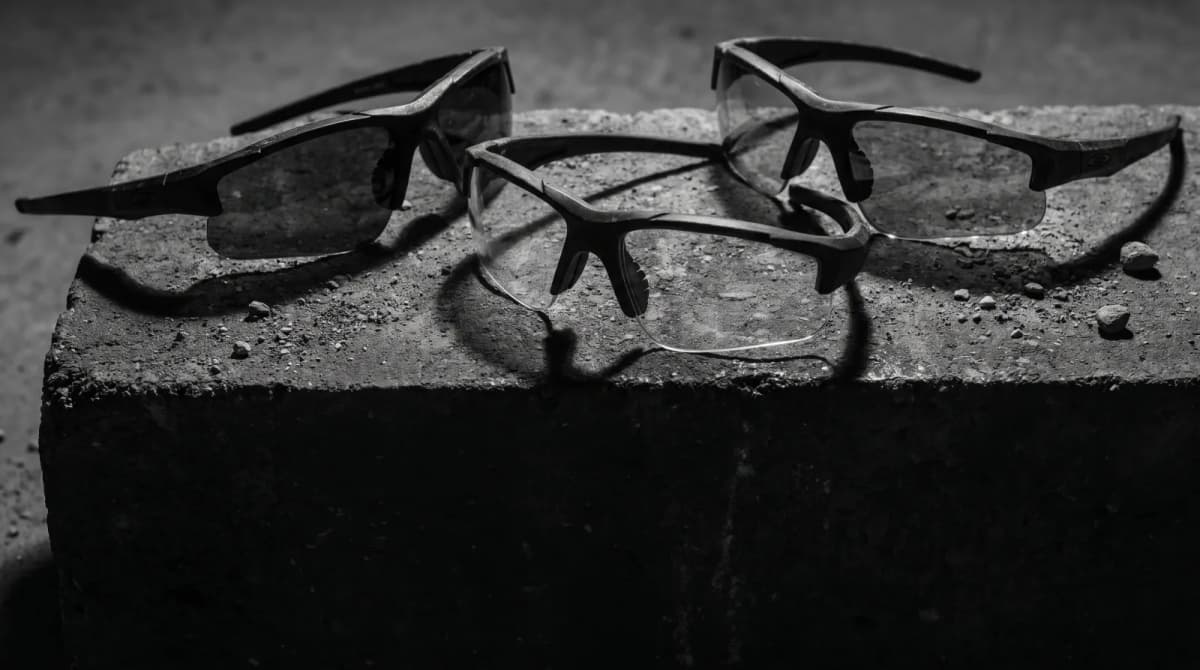
We ranked the best shooting glasses across every certification tier: civilian ANSI Z87.1+ value picks, MIL-PRF-32432 mil-spec ballistic spectacles, and the helmet and NVG-compatible platforms used by SOF and competition shooters. Every product on this list is verified against the manufacturer's current spec sheet for ballistic rating, lens substrate, and fit. Whether you need one $40 backup pair or a $220 helmet-integrated system, this guide covers the right ballistic eye pro for your use case.
Top 10 Best Shooting Glasses for 2026
Ballistic eye protection ranked by ANSI Z87.1 and MIL-PRF-32432 ratings, lens swap systems, ear-pro and helmet integration, and per-dollar value.
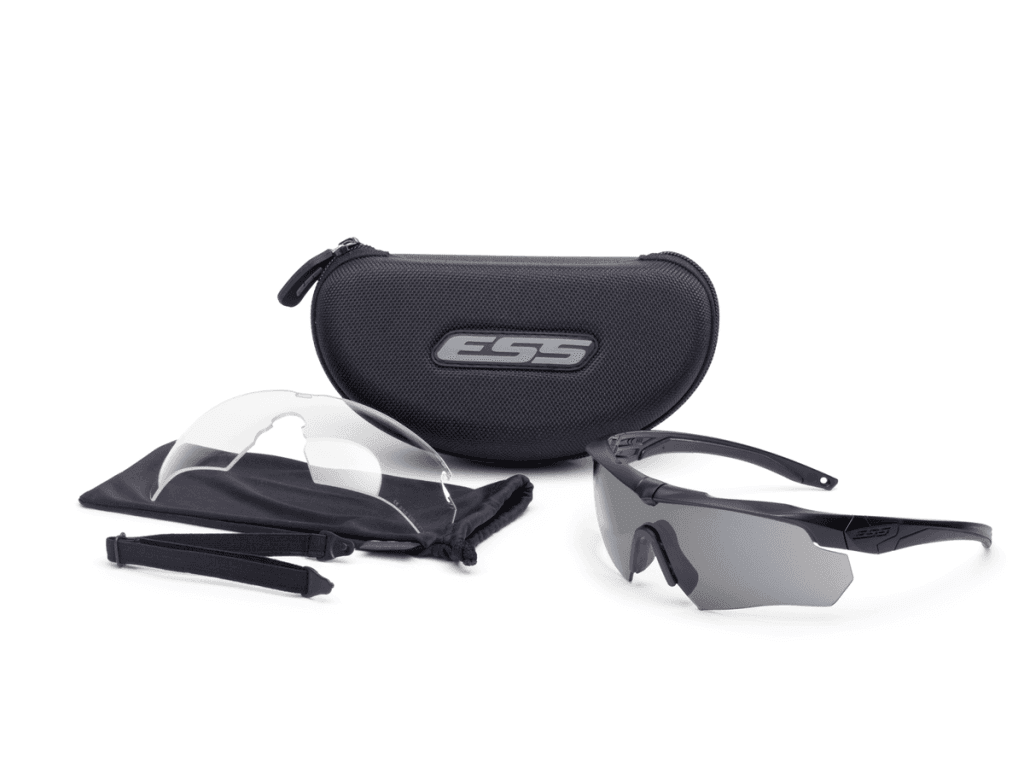
ESS Crossbow 2LS Kit
Best Overall
- +MIL-PRF-32432 rated, the relevant ballistic standard for shooting
- +2-lens kit covers bright and low-light conditions out of the box
- +Anti-fog coating outlasts most competitors
- −Universal fit can sit loose on narrow faces
- −No prescription insert in this kit (sold separately)
- −Smoke gray is darker than ideal for overcast days
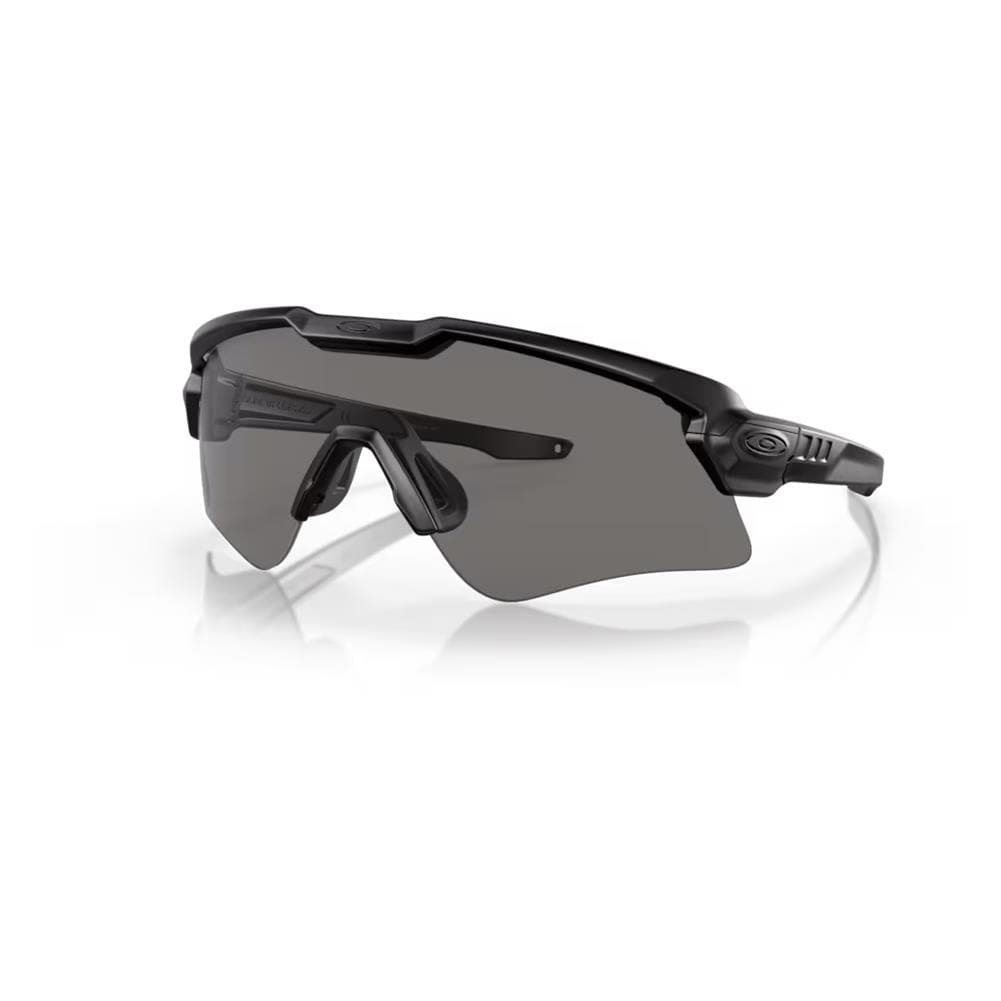
Oakley SI Ballistic M Frame Alpha
Best Tactical / NVG Compatible
- +Only platform on this list that converts from spectacle to goggle
- +High Definition Optics geometry minimizes distortion
- +Designed for helmet-mounted NVG and high-cut helmet integration
- −Premium price, $220+ for array kits
- −Overbuilt for casual range and recreational shooting
- −Dust frame and goggle accessories sold separately to scale up
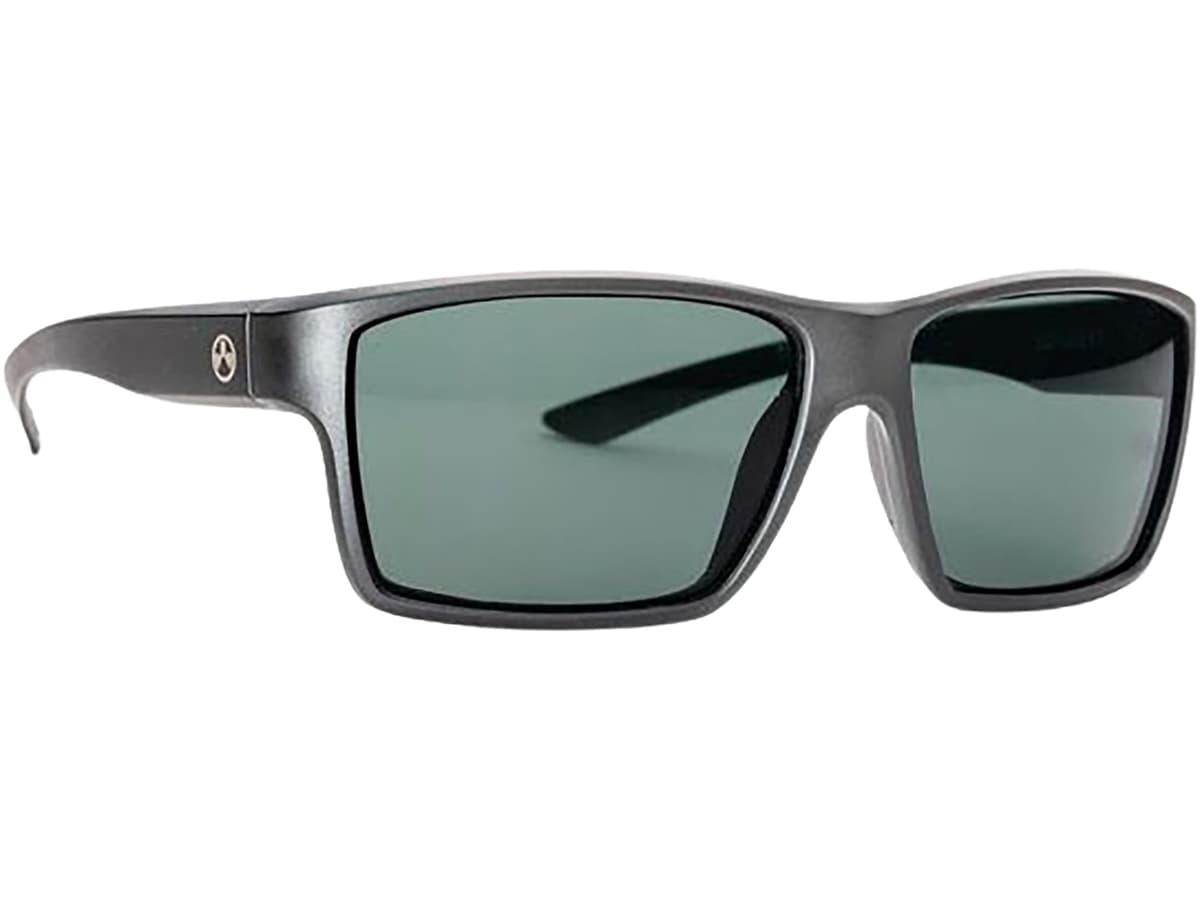
Magpul Explorer Eyewear
Best Value Z87+ Glass
- +ANSI Z87.1+ rated at value-tier pricing
- +Padded temples integrate cleanly with ear pro and helmets
- +Polarized lens option for outdoor rifle and shotgun shooting
- −Explorer XL variant is NOT Z87.1 rated, easy to buy the wrong one
- −Polarized lens can interfere with red dot and holo reticles
- −No MIL-PRF-32432 ballistic fragmentation rating
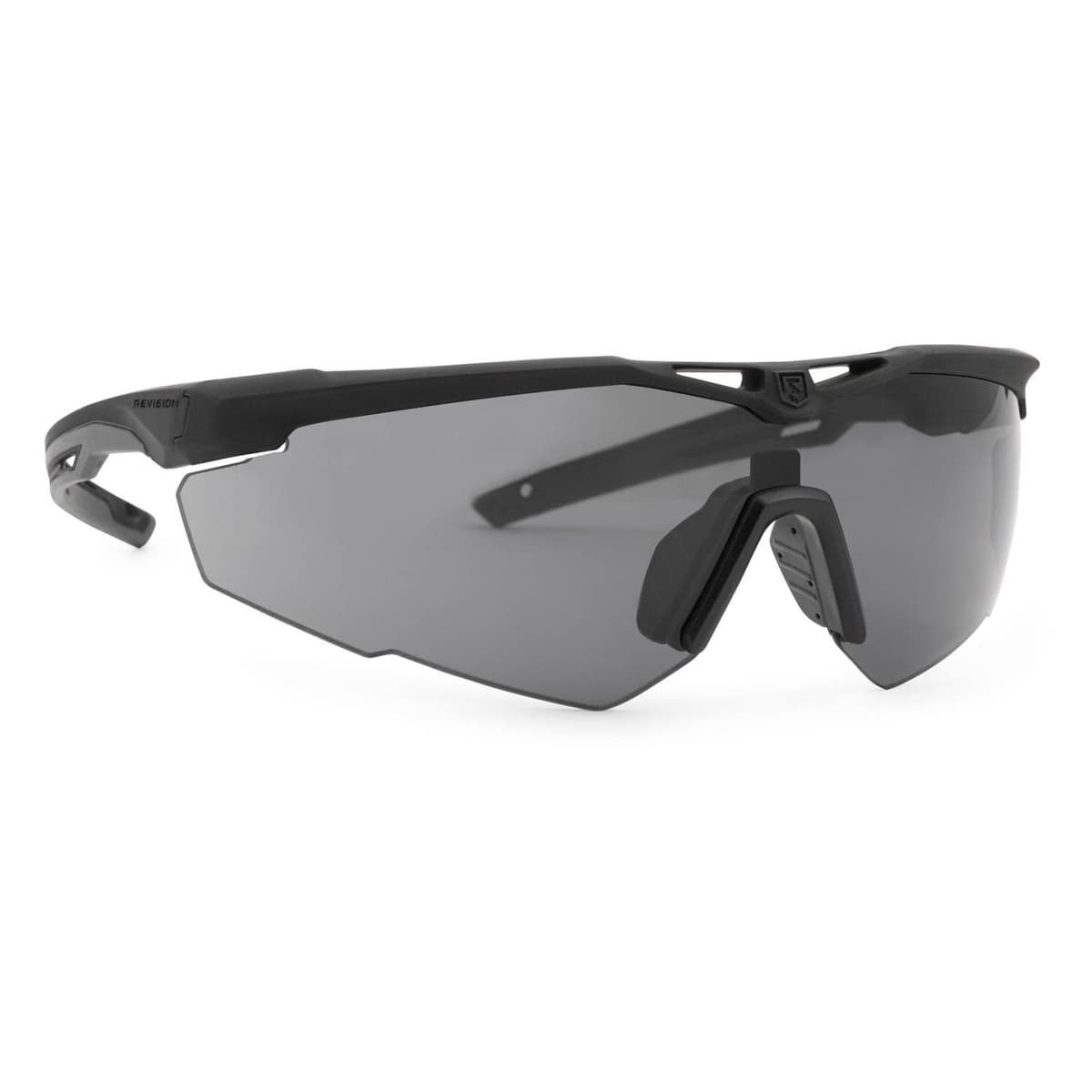
Revision StingerHawk Eyewear
Best Premium / STANAG V50
- +Highest ballistic threshold on this list (STANAG V50 at 807 ft/s)
- +Two frame sizes solve universal-fit issues
- +Ocumax anti-fog is the most durable coating in the category
- −Premium pricing, $138 to $265 depending on kit
- −Lens swap is fiddlier than ESS or Oakley
- −Less brand recognition than Oakley among casual shooters
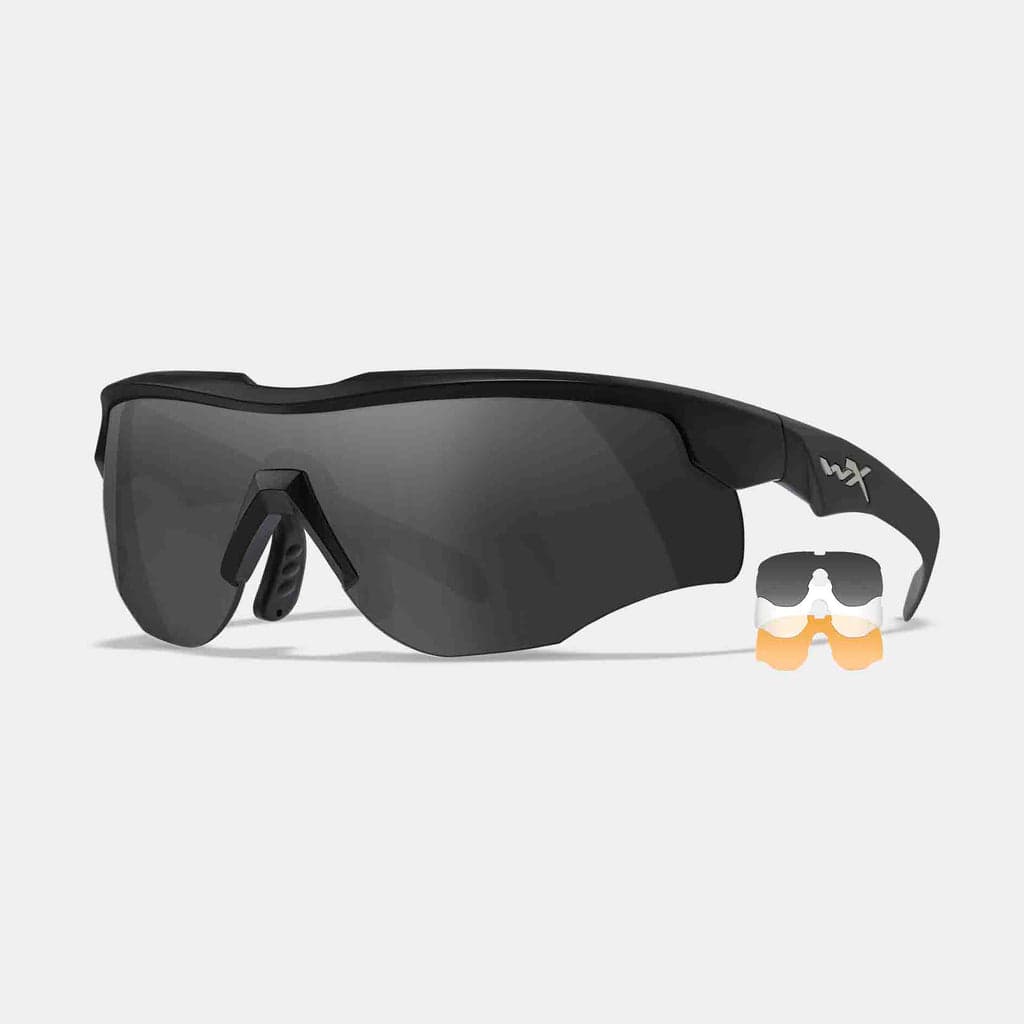
Wiley X WX Rogue Comm 3-Lens Kit
Best for Comms Headsets and Helmets
- +Thinnest temples on this list, won't break ear pro or comms seal
- +3-lens kit covers every condition (bright, dim, overcast)
- +ANSI Z87.1 plus MIL-PRF-32432 dual rating
- −More sport-glass aesthetic than tactical look
- −Smaller lens area than Crossbow or Sawfly
- −Light rust lens divides opinion (love or hate the tint)
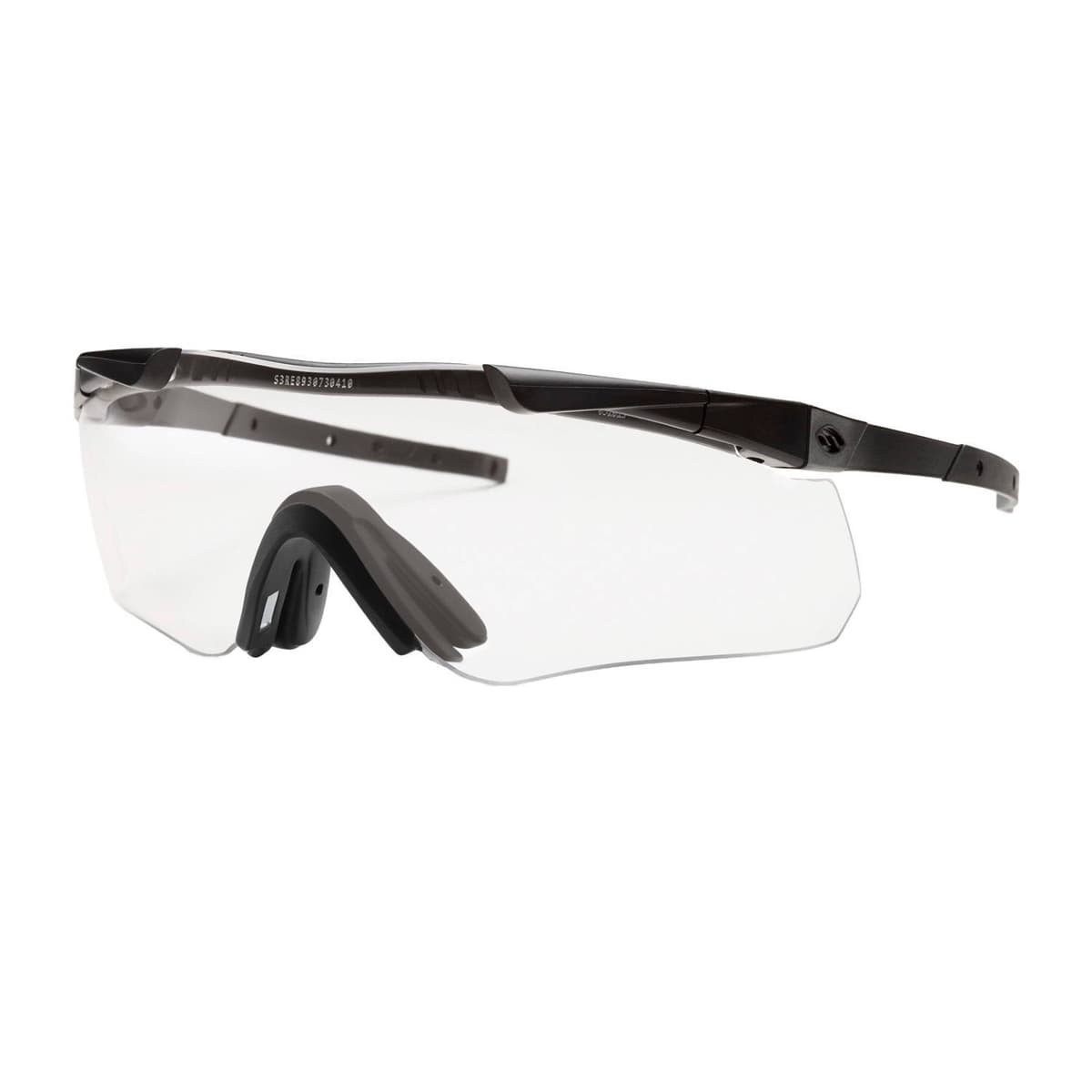
Smith Optics Aegis Echo II
Best Lens Swap System
- +PivLock lens swap is faster and more positive than any competitor
- +Sport-sunglass profile works as daily wear
- +MIL-PRF-32432 plus ANSI Z87.1 dual rating
- −Smaller lens coverage than Crossbow or Sawfly
- −Less common in tactical retail than ESS or Oakley
- −Frame profile may look out of place on a duty kit
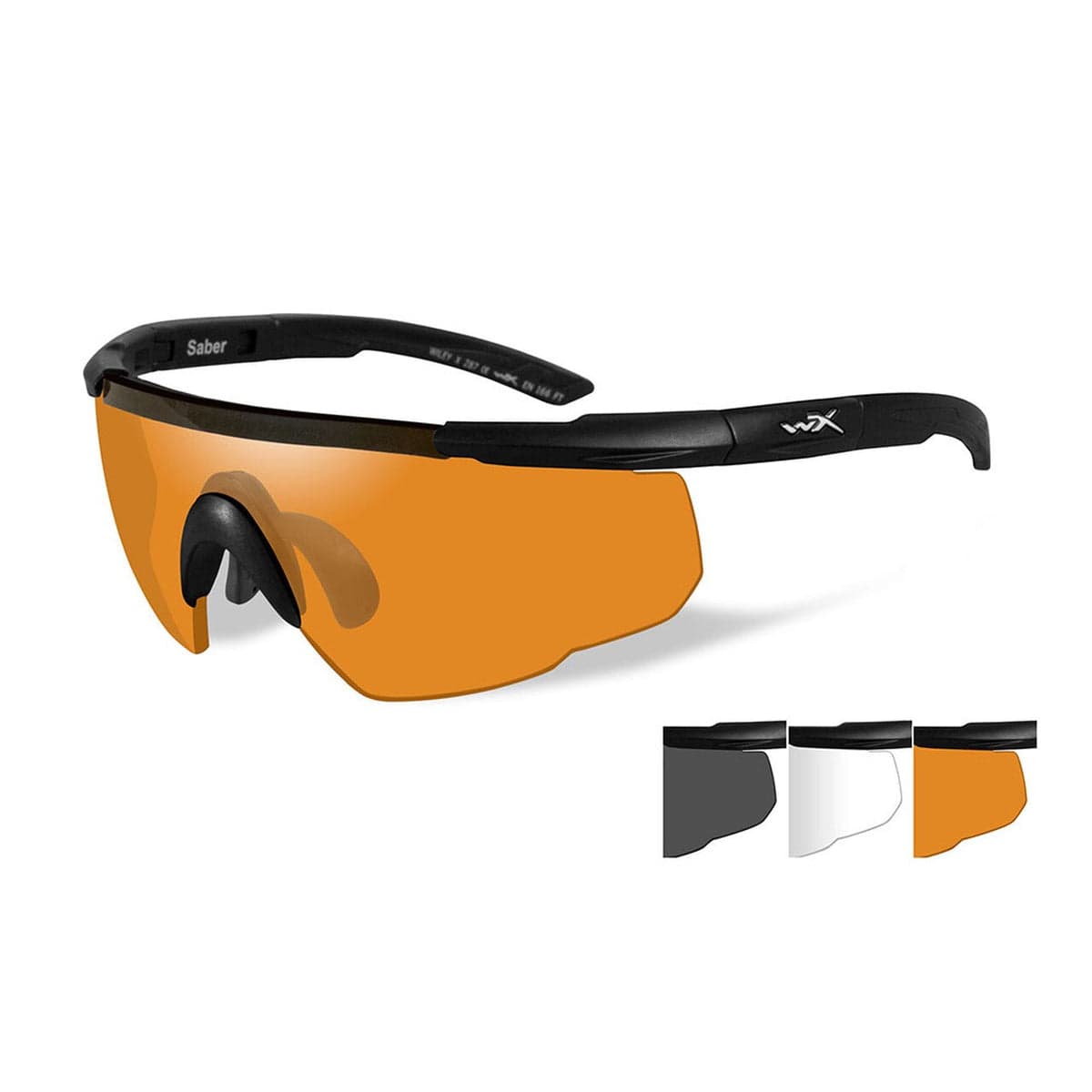
Wiley X Saber Advanced 3-Lens Kit
Best for Dust, Wind, and Outdoor Work
- +Removable foam gasket bridges glasses to goggle protection
- +Larger lens coverage than most ballistic spectacles
- +ANSI Z87.1+ plus MIL-PRF-32432 dual rating
- −Older, more squared-off frame profile
- −Foam gasket adds bulk under ear pro
- −Heavier than the Rogue Comm at 0.95 oz
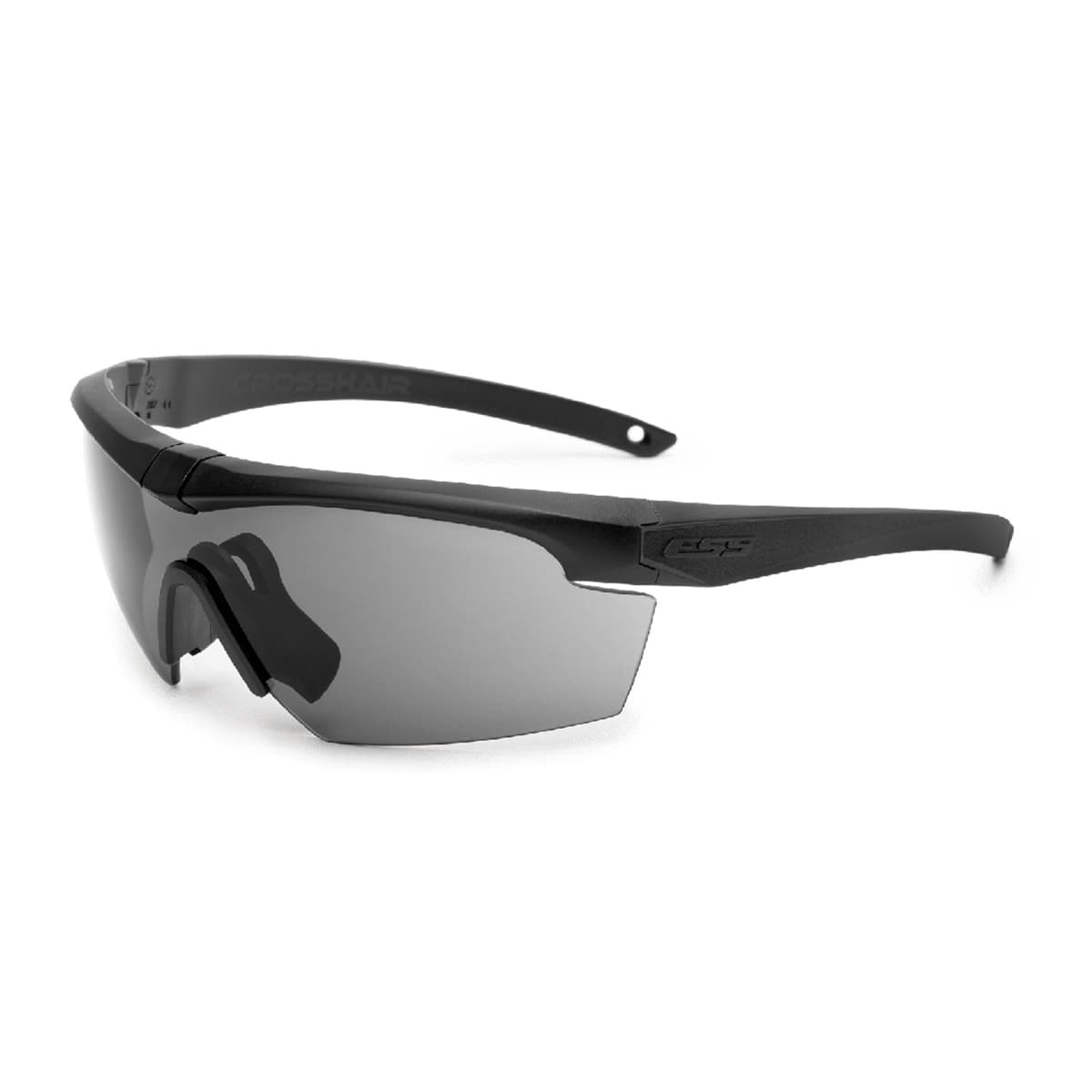
ESS Crosshair One
Best Budget Mil-Spec
- +Cheapest dual-rated (ANSI Z87.1 + MIL-PRF-32432) glass on this list
- +Same lens platform as Crossbow, infinite lens options
- +Same fit and ear-pro compatibility as Crossbow
- −Single lens in the box (no clear/dark swap kit)
- −No soft case in some retail SKUs
- −Add a second lens and you're in Crossbow 2-Lens Kit territory
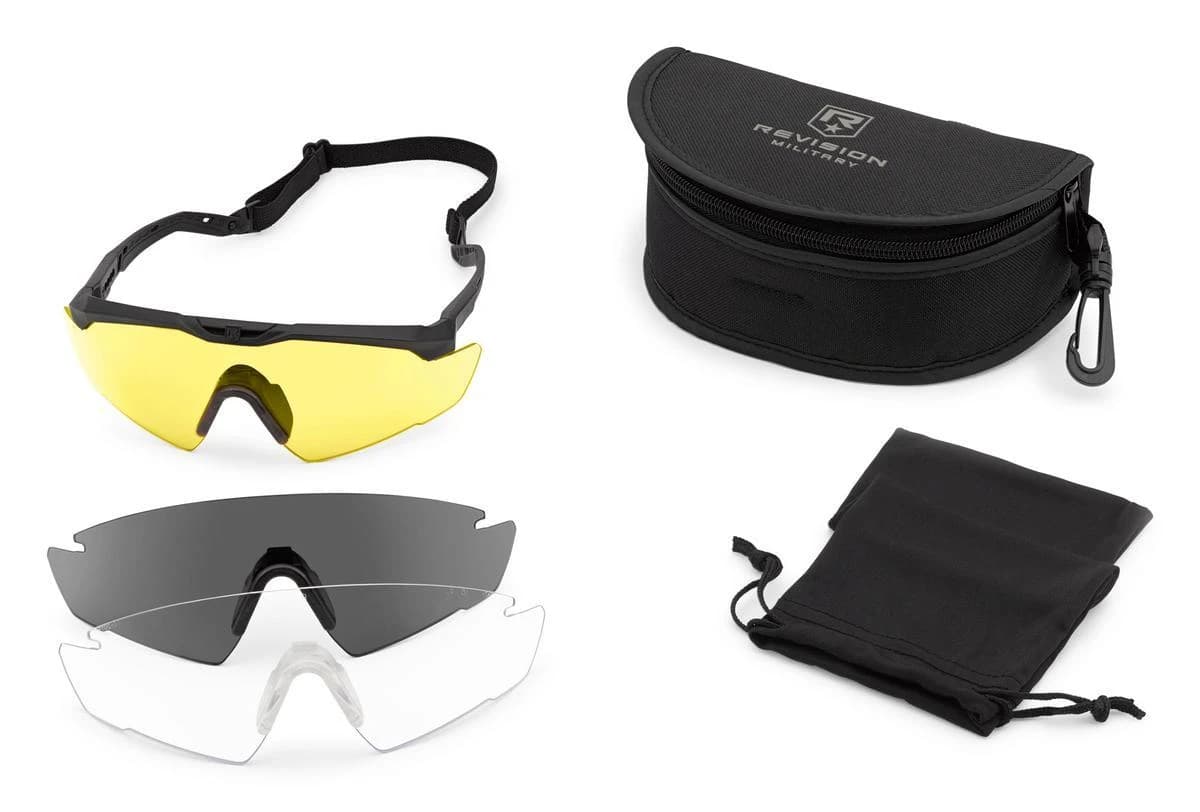
Revision Sawfly Eyewear
Best Classic APEL Spectacle
- +The original APEL spectacle with documented issue history
- +OcuMax Plus anti-fog is a long-proven coating
- +Multiple kit and lens configurations
- −Heavier and more conservative profile than StingerHawk
- −ANSI rating is older 2015 spec, not the 2020 spec on StingerHawk
- −Lens swap fiddlier than Smith PivLock or Oakley Trapdoor
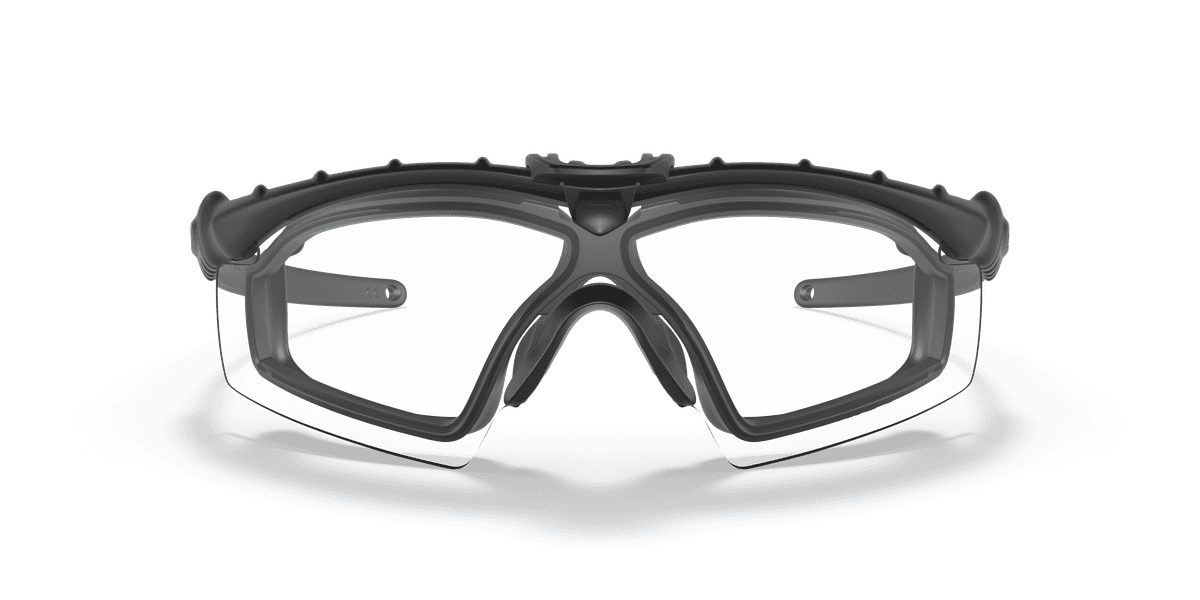
Oakley SI M Frame 3.0 with Gasket PPE
Best Budget Oakley
- +Oakley brand quality and fit at value-tier pricing
- +Plutonite lens substrate matches the higher-tier SI Alpha
- +ANSI Z87.1 PPE rating is sufficient for range and recreational shooting
- −NOT MIL-PRF-32432 rated, no ballistic fragmentation cert
- −Older two-piece lens design, less seamless than newer competitors
- −Less wraparound coverage than ESS Crossbow or Wiley X Saber
Affiliate links - purchases support this site at no extra cost to you. (?)
ANSI Z87.1 vs MIL-PRF-32432: Which Standard Do You Need?
ANSI Z87.1+ is the civilian high-velocity impact standard. Lenses must withstand a 1/4 inch steel ball at 150 ft/s without fracturing. This is the floor for any range or recreational shooting glass. MIL-PRF-32432 is the military ballistic fragmentation standard, requiring lenses to stop a T37 fragment-simulating projectile at roughly 640 ft/s for spectacles, more than four times the impact energy of Z87.1+. The Revision StingerHawk adds STANAG V50 testing at 807 ft/s, another 25% above the MIL-PRF threshold.
For range, classes, and recreational rifle work outdoors, ANSI Z87.1+ is enough. The Magpul Explorer ($120) and Oakley Industrial M Frame 3.0 ($175) sit at this tier. For indoor ranges with adjacent shooters running compensated SBRs, gas-heavy pistol shooting in close proximity, force-on-force training, or any duty/professional work, step up to MIL-PRF-32432 rated glasses. The ESS Crossbow ($108), ESS Crosshair One ($40), Smith Optics Aegis Echo II ($90), Wiley X Rogue Comm ($105), Wiley X Saber Advanced ($84), Revision Sawfly ($121), Revision StingerHawk ($138), and Oakley SI Ballistic M Frame Alpha ($220) all carry the MIL-PRF rating.
- ANSI Z87.1 (basic)Drop testTest Round1 in. steel ball, 11 oz dropUse CaseIndustrial PPE only
- ANSI Z87.1+ (high-velocity)150 ft/sTest Round1/4 in. steel ballUse CaseRange floor; recreational shooting
- MIL-PRF-32432 (spectacle)~640 ft/sTest RoundT37 fragment simulantUse CaseMil-spec; rifle/competition; APEL
- STANAG V50 (StingerHawk)807 ft/sTest RoundNATO fragment simulantUse CaseNATO duty; high-threat work
| Standard | Test Round | Velocity | Use Case |
|---|---|---|---|
| ANSI Z87.1 (basic) | 1 in. steel ball, 11 oz drop | Drop test | Industrial PPE only |
| ANSI Z87.1+ (high-velocity) | 1/4 in. steel ball | 150 ft/s | Range floor; recreational shooting |
| MIL-PRF-32432 (spectacle) | T37 fragment simulant | ~640 ft/s | Mil-spec; rifle/competition; APEL |
| STANAG V50 (StingerHawk) | NATO fragment simulant | 807 ft/s | NATO duty; high-threat work |
Lens Color Selection: Clear, Smoke, Yellow, and Rust
Clear is the right default for indoor ranges, low-light shooting, and dawn or dusk training. Most ballistic spectacles deliver 89-91% visible light transmission with the clear lens. Smoke gray is the all-purpose outdoor lens, equivalent to standard sunglasses at roughly 15-20% transmission, and the right pick for bright sun on the range or open hunting.
Yellow or vermillion lenses enhance contrast in overcast and low-light conditions and are popular with shotgun and trap shooters because they make orange and pink clays pop against gray skies. Light rust (Wiley X exclusive) and copper (Smith Optics) sit between yellow and gray for transitional light, and many users keep them as the default lens because they handle more conditions than any single color. Laser-protective lenses (available in the Oakley M Frame Alpha and Revision StingerHawk kits) are a specialty option only relevant if you train with visible-laser aiming systems.
The 2-lens and 3-lens kits from ESS Crossbow, Wiley X Rogue Comm, and Wiley X Saber Advanced cover every condition with one frame. Lens swaps take under thirty seconds with the Smith Optics PivLock and Oakley Trapdoor systems, and roughly two minutes with the ESS and Revision platforms.
Prescription Inserts and Rx Options
Every major ballistic platform on this list supports prescription inserts: a small wire frame with prescription lenses that snaps behind the ballistic lens. The insert preserves the ANSI Z87.1+ and MIL-PRF-32432 rating because the ballistic lens still takes the impact. ESS, Oakley SI, Revision, Wiley X, and Smith Optics all sell brand-specific inserts, typically $40 to $80 for the frame plus your prescription cost ($50 to $200 depending on lens type and provider).
Fully prescribed ballistic glasses, where the prescription is ground directly into the polycarbonate ballistic lens, run $300 to $600 and are worth it only if you wear shooting glasses daily and find the insert uncomfortable. For occasional range use, the insert path is significantly cheaper and lets you keep your daily prescription glasses for everyday wear. Rx-Safety, Hilton Vision, and the manufacturer Rx programs (Oakley Custom Authentic, Wiley X Rx) are the most common providers.
Get Shooting Glasses Reviews and Eye Protection Guides
New ballistic glasses reviews, APEL updates, and helmet-integrated eye pro picks delivered monthly.
Anti-Fog Coatings: What Actually Works
The premium factory coatings, Revision Ocumax and ESS ClearZone FlowCoat, last years and work consistently across temperature and humidity changes. Both use a hydrophilic surface treatment that absorbs moisture rather than letting it bead, eliminating the visual fog. Cheaper coatings on $20 to $40 glasses fog within minutes during cold-weather training or after sustained exertion.
When the factory coating eventually wears (usually 2-4 years of heavy use), aftermarket anti-fog sprays like Cat Crap Lens Cleaner and Z-Clear extend lens life by years. Apply with a microfiber cloth, buff dry, and re-apply every 2-3 weeks of regular range use. Avoid alcohol wipes and harsh cleaners on coated lenses, since they strip the anti-fog treatment in a single pass. For dedicated range and field use, the Revision StingerHawk's Ocumax coating is the longest- lasting in this guide.
Helmet, NVG, and Comms Headset Compatibility
Standard ballistic spectacles work with most over-the-ear hearing protection but can break the seal on tightly fit comms headsets like the Peltor ComTac V, Ops-Core AMP, and 3M PELTOR LiteCom, costing 5-10 dB of attenuation every time you mount a rifle. The Wiley X WX Rogue Comm solves this with 0.9 mm temples (the thinnest in the category) that slide cleanly under comms cups without compromising the seal.
For helmet-mounted NVG users, the Oakley SI Ballistic M Frame Alpha is the platform of choice. Its three-part system (frame, dust gasket, strapped goggle) shares one lens, so you can transition from spectacle to goggle without changing optics. The Revision StingerHawk and Sawfly platforms also work with most high-cut helmets thanks to their slim arms, but neither converts to a goggle. If you run a Crye AirFrame, Ops-Core FAST, or Team Wendy EXFIL with helmet-mounted ear pro, the M Frame Alpha is worth the price premium.
Pair your eye pro with the right ear pro for the build: Best Ear Protection for Shooting 2026 covers electronic muffs, in-ear buds, and passive plugs ranked for indoor and outdoor use. For complete kit planning, the First 1000 Rounds training plan ties eye pro, ear pro, ammo, and range gear together.
Polarized Shooting Glasses: Yes for Iron Sights, No for Red Dots
Polarized lenses are excellent for outdoor rifle and shotgun work in bright conditions because they cut horizontal glare from water, asphalt, and metallic surfaces. The trade-off: polarization can interact with red dot, prism, and holographic reticle illumination, creating uneven brightness across the dot or chevron. EOTech holographic reticles are particularly susceptible because of how they generate the holographic image, and many shooters report rainbow patterns or dimmed reticles when running polarized glasses with an EXPS3.
If you shoot exclusively with iron sights, scopes, or non-illuminated optics, polarized lenses are fine and can noticeably improve target visibility. If you run a red dot, holographic, or prism optic, choose non-polarized lenses or use anti-glare coatings instead. The Magpul Explorer ships in both polarized and non-polarized configurations, so verify the lens type before ordering. The ESS Crossbow, Revision StingerHawk, Wiley X Saber Advanced, and Wiley X Rogue Comm kits ship with non-polarized lenses by default, which is the safer choice for general-purpose shooting.
Building a complete training kit?
Best Ear Protection for Shooting 2026 covers the matching electronic muffs and in-ear buds. Our best tactical gloves guide covers dexterity and hard-knuckle hand protection. Best Rifle Range Bags 2026 covers transport, and the rifle builder ties optics, lights, and accessories to your platform of choice.
Shooting Glasses FAQ
▶What is the difference between ANSI Z87.1 and MIL-PRF-32432 for shooting glasses?
▶What lens color should I use for shooting glasses?
▶Are prescription inserts worth it for ballistic shooting glasses?
▶Do anti-fog coatings actually work on shooting glasses?
▶Can I wear shooting glasses with a tactical helmet?
▶Are polarized shooting glasses a good idea?
▶What shooting glasses do the US military and SOF use?
Bottom Line
The best shooting glasses for most shooters is the ESS Crossbow 2-Lens Kit ($108), MIL-PRF-32432 rated with two lenses out of the box and the most durable anti-fog coating in the mid tier.
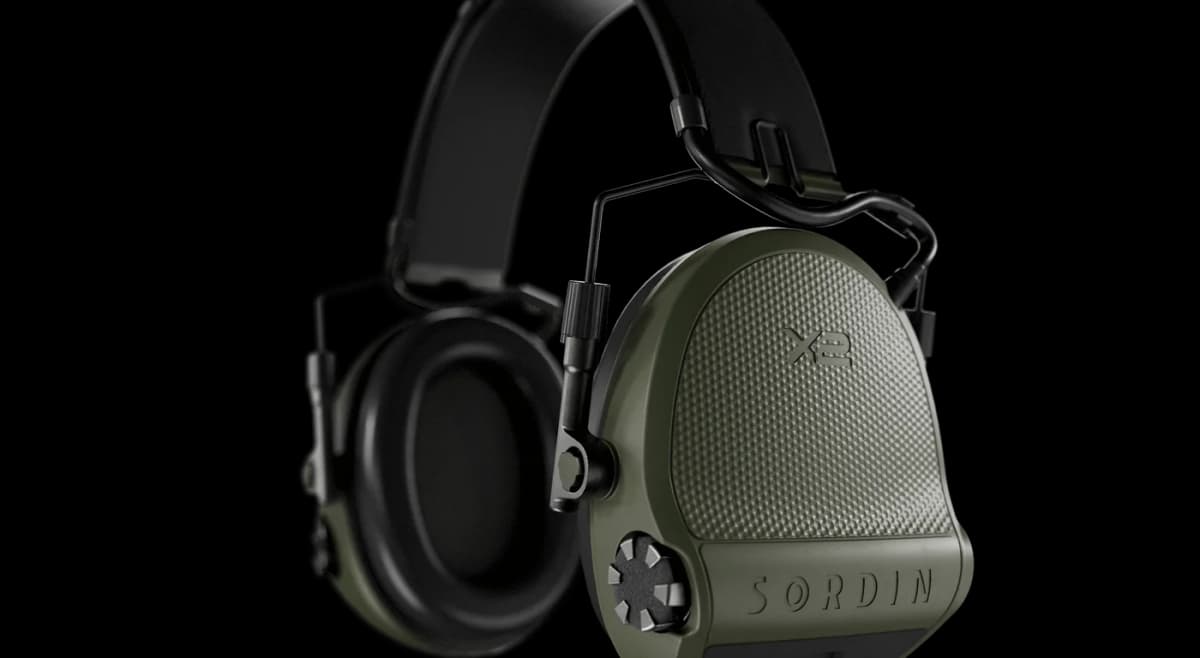
Step up to the Oakley SI Ballistic M Frame Alpha ($220) if you run helmet-mounted NVGs or comms. The Revision StingerHawk ($138) is the right pick for two frame sizes and STANAG V50 ballistic threshold. The Wiley X Rogue Comm ($105) solves the comms-headset seal-break problem with 0.9 mm temples. On a budget, the ESS Crosshair One ($40) is the cheapest fully MIL-PRF-32432 rated spectacle, and the Magpul Explorer ($120) covers ANSI Z87.1+ with Magpul fit and finish. Browse the full eye protection catalog for detailed specs, and pair your glasses with the right ear protection for indoor and outdoor ranges. Sordin announced the Supreme X2 on October 30, 2025, and its slim cup geometry is built specifically to accommodate eyeglasses and slim-temple comms eyewear without breaking the seal.