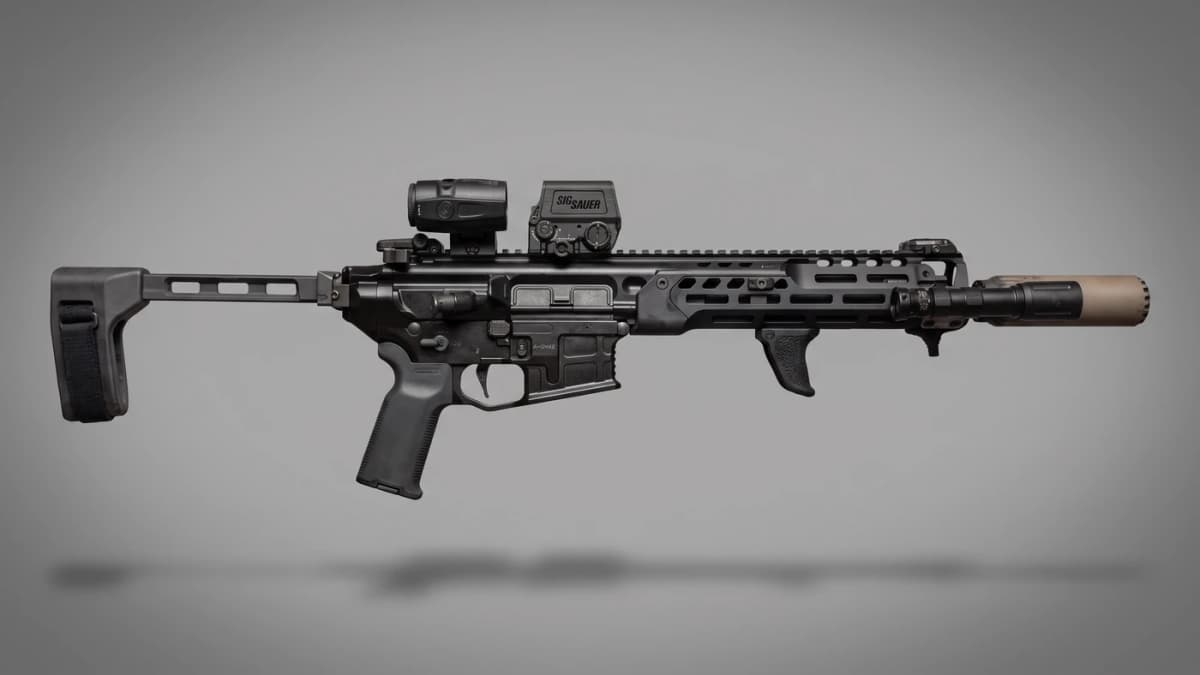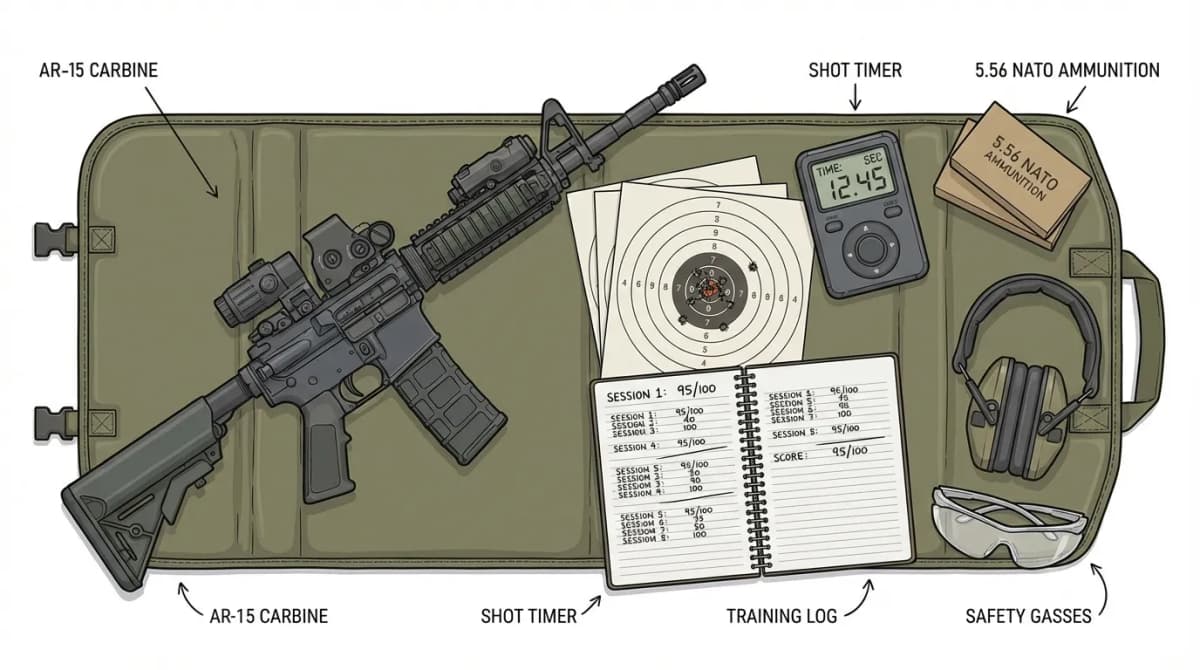
First 1000 Rounds: New AR-15 Owner Training Plan header image
[ < Back to guides ]
Training guideNew ownersSkills > Gear

First 1000 Rounds: New AR Owner Training Plan

Reddit's favorite advice is "$500 AR + $1000 training beats a $1500 AR." They're right. This guide gives you a structured plan to make those first 1000 rounds count, building real skills instead of just making noise.

All drills tested with standard 5.56 carbines.Dry fire saves money and builds skill.Track your progress, what gets measured gets improved.

The Philosophy

Training > Gear

A $500 rifle with excellent fundamentals will outshoot a $1500 rifle with bad habits. Skills are the force multiplier, invest accordingly.

Dry Fire Is Free

80% of shooting skills can be practiced without ammunition. Every hour of quality dry fire saves hundreds in ammo costs while building real capability.

Measure Progress

Shot timers don't lie. Keep a training log. Track your splits, your groups, your par times. You can't improve what you don't measure.

Round Allocation Overview

Your first 1000 rounds should follow a progression. Resist the urge to dump magazines, every round should have purpose.

PhaseRoundsFocus
Phase 0Dry FireBuild muscle memory and safe handling habits before spending money on ammunition
Phase 11–250Establish a confirmed zero and build consistent marksmanship fundamentals
Phase 2251–600Integrate efficient reloads and malfunction clearing into your shooting
Phase 3601–850Develop proficiency shooting from various positions and engaging multiple targets
Phase 4851–1000Validate skills with timed drills and identify areas for continued improvement

Training Phases

Don't skip phases. Each builds on the previous one. Shortcuts now mean bad habits later.

Phase 0: Dry Fire Foundation

0 live rounds (2–4 weeks)

Dry Fire
20 min/session
Goal

Build muscle memory and safe handling habits before spending money on ammunition.

Most new shooters skip this phase and waste their first 200 rounds developing bad habits. Dry fire costs nothing, builds real skill, and exposes manipulation issues before they cause problems under stress.

Prerequisites

  • Snap caps or dummy rounds for your caliber
  • Understanding of the 4 safety rules
  • Cleared and verified unloaded rifle

Skills to Develop

  • Safe handling and muzzle discipline
  • Loading/unloading procedure
  • Safety selector manipulation
  • Charging handle operation
  • Magazine insertion and release
  • Bolt release/bolt catch operation
  • Trigger control without live fire
  • Proper cheek weld and stock fit
Phase 1: Fundamentals & Zero

Rounds 1–250

Dry Fire
15 min/session
Goal

Establish a confirmed zero and build consistent marksmanship fundamentals.

This phase is about slow, deliberate shooting. Resist the urge to dump magazines. Every round should have purpose: confirming zero, refining positions, or diagnosing trigger control issues.

Prerequisites

  • Completed Phase 0 dry fire training
  • Rifle properly assembled and function checked
  • Quality ammunition (no steel case for zeroing)
  • Appropriate hearing/eye protection

Skills to Develop

  • Rifle zeroing (50-yard or 36-yard method)
  • Stance and natural point of aim
  • Proper grip and stock placement
  • Breathing and trigger control
  • Sight picture and alignment
  • Slow fire accuracy (1 shot per 3–5 seconds)

Drills for Phase 1

Zero Confirmation

accuracy
Rounds
15
Target
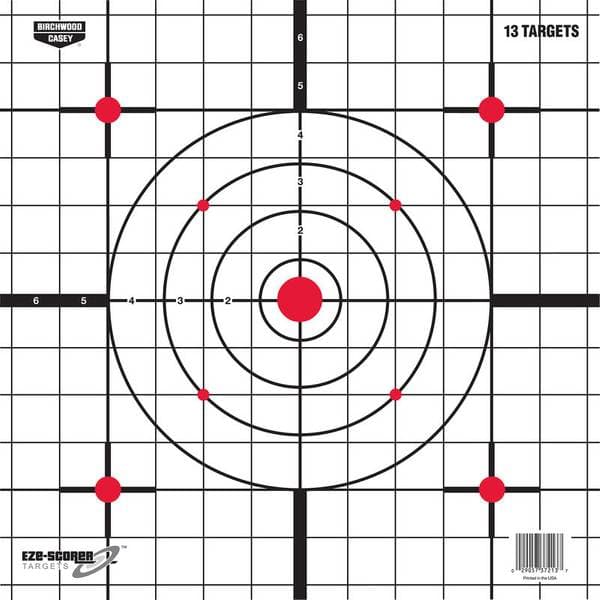
1-inch grid target or zeroing target
Distance
25 yards (for 50-yard zero) or 36 yards
Par Time
N/A

Confirm your rifle's zero by shooting groups from a stable position. Focus on tight groups first, then adjust sights to center the group on your aim point.

Show Setup & Execution
Setup
  1. Set target at 25 yards (for 50-yard zero, shots should hit 1.2" low)
  2. Establish a stable shooting position using bench rest or sandbags
  3. Load 5 rounds in magazine
Execution
  1. Fire a 5-round group, focusing on consistent aim point and trigger press
  2. Walk downrange and mark/photograph group
  3. Measure group center to point of aim (windage and elevation)
  4. Calculate adjustments based on your optic/sight MOA clicks
  5. Fire second 5-round group to confirm adjustments
  6. Repeat until point of aim equals point of impact
Passing Standard

All shots within 2" at 25 yards, centered on aim point

Common Errors
  • Moving between shots, rifle should be stationary
  • Flinching at trigger break
  • Not letting barrel cool between groups
  • Chasing individual shots instead of group center

Single Shot Focus

accuracyDry Fire OK
Rounds
20
Target
3-inch circles or NRA B-8 center
Distance
25 yards
Par Time
N/A

Slow, deliberate single shots to build trigger control and shot calling. Each shot should be called before looking at the target.

Show Setup & Execution
Setup
  1. Set up 4 targets with 3" circles at 25 yards
  2. Load 5 rounds per magazine
  3. Have a buddy or camera to record shot placement
Execution
  1. Take aim at circle center, pause at natural respiratory pause
  2. Press trigger smoothly until shot breaks
  3. Call your shot (predict where it hit based on sight picture)
  4. Maintain sight picture through recoil (follow through)
  5. Wait 5 seconds before next shot
  6. After 5 shots, verify group matches your calls
Passing Standard

18/20 shots within 3" circle, 80% accurate shot calls

Common Errors
  • Rushing trigger press
  • Not calling shots before checking target
  • Breaking cheek weld to look at target
  • Anticipating recoil (shots go low-left for right-handed shooters)

Phase 2: Weapon Manipulation

Rounds 251–600

Dry Fire
15 min/session
Goal

Integrate efficient reloads and malfunction clearing into your shooting.

Now that you can hit what you aim at, start adding complexity. This phase introduces time pressure and the mechanics of running the gun, reloads, malfunctions, and controlled speed.

Prerequisites

  • Confirmed 50-yard or 36-yard zero
  • Minimum 3 magazines
  • Snap caps for malfunction drills
  • Shot timer (phone app works)

Skills to Develop

  • Emergency reload (slide lock)
  • Tactical reload (retention)
  • Tap-Rack-Bang immediate action
  • SPORTS drill for Type 2/3 malfunctions
  • Controlled pairs / double taps
  • Cadence and rhythm shooting

Drills for Phase 2

Controlled Pairs

speedDry Fire OK
Rounds
20
Target
8-inch paper plate or USPSA A-zone
Distance
7 yards
Par Time
Under 2.0 seconds from ready

Two shots to the same target with a verified sight picture between shots. This is not a double-tap, you see the sights on target before the second shot.

Show Setup & Execution
Setup
  1. Set 8" plate at 7 yards
  2. Load 2 rounds per magazine (forces deliberate practice)
  3. Start from low ready position
  4. Have shot timer running
Execution
  1. On buzzer, raise rifle and acquire sights on target
  2. Fire first shot when aligned
  3. Allow recoil to settle, verify sight picture
  4. Fire second shot when confirmed on target
  5. Return to low ready
  6. Record split time (time between shots)
Passing Standard

Both hits on 8" plate, pair under 2.0 seconds

Common Errors
  • Spraying second shot without confirming sights
  • Over-gripping and inducing wobble
  • Not allowing natural recoil arc
  • Trigger slapping instead of smooth reset

Emergency Reload (Slide Lock)

manipulationDry Fire OK
Rounds
10
Target
Any silhouette target
Distance
10 yards
Par Time
Reload under 3.0 seconds

When the bolt locks back on an empty magazine, reload as fast as possible while maintaining eyes on target. This is the most common reload you'll perform.

Show Setup & Execution
Setup
  1. Load 1 round in first magazine, full second magazine
  2. Set target at 10 yards
  3. Stage second mag in preferred pouch or belt
  4. Start from ready with round chambered
Execution
  1. Fire the single round until bolt locks back
  2. Hit magazine release while bringing fresh mag up
  3. Insert fresh magazine with authority (seat it firmly)
  4. Hit bolt release or rack charging handle
  5. Fire one round to confirm gun is back in the fight
  6. Record total time from last shot to first shot on fresh mag
Passing Standard

Reload under 3.0 seconds with confirmed hit

Common Errors
  • Looking at the magwell to guide magazine
  • Not seating magazine firmly (causes failures to feed)
  • Fumbling magazine from pouch
  • Over-indexing magazine (too much friction)

Tap, Rack, Bang

malfunctionDry Fire OK
Rounds
10
Target
Any silhouette target
Distance
5 yards
Par Time
Malfunction cleared under 2.5 seconds

Immediate action for a Type 1 malfunction (failure to fire). This should become pure reflex.

Show Setup & Execution
Setup
  1. Load magazines with random dummy rounds (snap caps) mixed with live rounds
  2. Do NOT look at magazine while loading, randomizes when malfunction occurs
  3. Set target at 5 yards
  4. Have partner load magazines if possible for true surprise
Execution
  1. Begin engaging target normally
  2. When click instead of bang occurs, immediately:
  3. TAP: Slap the bottom of the magazine firmly
  4. RACK: Pull charging handle fully rearward and release (don't ride it)
  5. BANG: Reacquire target and fire
Passing Standard

Cleared and hit on target in under 2.5 seconds

Common Errors
  • Looking at ejection port (diagnose with hands, not eyes)
  • Riding the charging handle forward (short stroke)
  • Weak magazine tap (mag not fully seated)
  • Rushing shot after clearance (miss target)

SPORTS Drill (Type 2/3 Malfunction)

malfunctionDry Fire OK
Rounds
0
Target
N/A (practice with snap caps only)
Distance
N/A
Par Time
N/A

When Tap-Rack-Bang doesn't clear the malfunction, SPORTS is your remedial action. Slap, Pull, Observe, Release, Tap, Shoot.

Show Setup & Execution
Setup
  1. Create induced malfunctions: double feeds, stovepipes
  2. Use only snap caps, never induce malfunctions with live ammo
  3. Work at a bench with clear work surface
Execution
  1. SLAP: Ensure magazine is fully seated
  2. PULL: Rack charging handle fully to the rear
  3. OBSERVE: Look into ejection port for obstruction
  4. RELEASE: Let charging handle fly forward (don't ride)
  5. TAP: Hit forward assist to ensure bolt is seated
  6. SHOOT: Verify function by pressing trigger (or continue engagement)
Passing Standard

Complete SPORTS in logical sequence, identify malfunction type

Common Errors
  • Skipping Observe step (can't clear a double feed blind)
  • Panicking and repeating Tap-Rack endlessly
  • Not locking bolt back if needed to strip double feed

Phase 3: Positions & Transitions

Rounds 601–850

Dry Fire
10 min/session
Goal

Develop proficiency shooting from various positions and engaging multiple targets.

Real-world shooting rarely happens from a perfect bench rest. This phase gets you off the bench and into positions that simulate practical shooting scenarios.

Prerequisites

  • Strong reload and malfunction clearing skills
  • Multiple targets or target stands
  • Open bay or outdoor range for movement

Skills to Develop

  • Standing offhand shooting
  • Kneeling positions (California, speed, supported)
  • Prone position
  • Sitting positions
  • Target transitions (left to right, near to far)
  • Ready positions (high ready, low ready, indoor ready)

Drills for Phase 3

Position Transition Drill

speedDry Fire OK
Rounds
15
Target
8-inch plates at varied heights
Distance
15 yards
Par Time
15 seconds for all positions

Engage a target from standing, kneeling, and prone in sequence. Tests your ability to get stable quickly in each position.

Show Setup & Execution
Setup
  1. Set single 8" plate at 15 yards, chest height
  2. Clear area behind you for prone position
  3. Load 15 rounds (5 per position)
  4. Timer running with 15-second par
Execution
  1. On buzzer, fire 5 rounds from standing
  2. Transition to kneeling, fire 5 rounds
  3. Transition to prone, fire 5 rounds
  4. All rounds should be on target
Passing Standard

12/15 hits in under 15 seconds

Common Errors
  • Rushing shots before getting stable
  • Poor kneeling position (unstable base)
  • Taking too long to get into prone
  • Not using support hand correctly in each position

Two-Target Transition

speedDry Fire OK
Rounds
20
Target
Two 8-inch plates, 3 feet apart
Distance
10 yards
Par Time
Under 3.0 seconds for 4 shots

Engage two targets with two shots each, working on smooth rifle movement and quick sight acquisition.

Show Setup & Execution
Setup
  1. Set two 8" plates at 10 yards, 3 feet of lateral separation
  2. Load 4 rounds per run
  3. Start from low ready
Execution
  1. On buzzer, engage left target with 2 rounds
  2. Transition to right target (move rifle with body, not arms only)
  3. Engage right target with 2 rounds
  4. Alternate: start on right, go left (both directions)
Passing Standard

4 hits in under 3.0 seconds

Common Errors
  • Leading with eyes, rifle follows late
  • Over-swinging past target and correcting back
  • Stopping rifle movement and then shooting (should be fluid)
  • Missing second target due to rushing

Ready-Up Drill

speedDry Fire OK
Rounds
10
Target
8-inch plate
Distance
7 yards
Par Time
Under 1.5 seconds

Starting from low ready, mount rifle and fire one accurate shot as quickly as possible. Tests your presentation speed.

Show Setup & Execution
Setup
  1. Single 8" plate at 7 yards
  2. Start with rifle at low ready (muzzle below target line)
  3. Round chambered, safety on
Execution
  1. On buzzer, disengage safety while mounting rifle
  2. Acquire sights on target
  3. Fire one shot
  4. Return to low ready
  5. Record time from buzzer to shot
Passing Standard

Hit on 8" plate in under 1.5 seconds

Common Errors
  • Shooting before sights are on target (miss)
  • Fumbling safety selector
  • Not driving rifle straight to target (wasted motion)
  • Over-tightening grip during presentation

Phase 4: Skill Assessment & Refinement

Rounds 851–1000

Dry Fire
10 min/session
Goal

Validate skills with timed drills and identify areas for continued improvement.

Use your final 150 rounds to run standardized drills that measure your progress. Record your times, save your targets, and identify which skills need more work.

Prerequisites

  • Shot timer
  • Standardized drill targets (irons qualification, etc.)
  • Training log or notebook

Skills to Develop

  • Timed drill execution
  • Consistent sight acquisition from ready
  • Shooting on the move (if range permits)
  • Stress inoculation basics
  • Identifying personal weak points

Drills for Phase 4

3x5 Card Drill

assessmentDry Fire OK
Rounds
15
Target
3x5 index card
Distance
Varies: 3, 5, 7, 10, and 15 yards
Par Time
5 seconds per string

A precision drill that combines speed and accuracy. Three shots into a 3x5 card in 5 seconds at increasing distances.

Show Setup & Execution
Setup
  1. Tape 3x5 index cards at 3, 5, 7, 10, and 15 yards
  2. Load 3 rounds per string
  3. 5 strings total (one at each distance)
Execution
  1. Start at 3 yards, low ready
  2. On buzzer, fire 3 rounds into the card in under 5 seconds
  3. All 3 must be inside the card to pass that string
  4. Move to next distance and repeat
  5. Track which distances you pass/fail
Passing Standard

Pass at 3, 5, and 7 yards minimum; expert passes all 5

Common Errors
  • Going too fast for accuracy at close range
  • Going too slow and running out of time at distance
  • Not adjusting cadence based on difficulty

Bill Drill

assessment
Rounds
12
Target
USPSA A-zone or 8-inch circle
Distance
7 yards
Par Time
Under 3.0 seconds (good), under 2.0 (excellent)

Six shots as fast as you can get accurate hits. Tests recoil control, split times, and transitions between shots.

Show Setup & Execution
Setup
  1. Single USPSA target or 8" plate at 7 yards
  2. Load exactly 6 rounds
  3. Start from low ready
Execution
  1. On buzzer, fire all 6 rounds as fast as you can hit the target
  2. All 6 must be in the A-zone/plate
  3. Record total time
  4. Repeat twice and average your times
Passing Standard

6/6 hits under 3.0 seconds = competent, under 2.0 = fast

Common Errors
  • Outrunning your sights (misses)
  • Losing grip after 3-4 shots
  • Not allowing sights to settle between shots
  • Trigger freeze or slapping

El Presidente (Modified for AR)

assessmentDry Fire OK
Rounds
12
Target
Three USPSA targets, 1 yard apart
Distance
10 yards
Par Time
Under 10 seconds (good), under 7 (excellent)

The classic all-around shooting assessment. Tests presentation, target transitions, reloads, and accuracy under time pressure.

Show Setup & Execution
Setup
  1. Three USPSA or silhouette targets, 1 yard between centers
  2. Two magazines: 6 rounds each
  3. Start facing away from targets, rifle at low ready
Execution
  1. On buzzer, turn 180 degrees to face targets
  2. Fire 2 rounds on each target (left to right or right to left)
  3. Perform emergency reload
  4. Fire 2 more rounds on each target
  5. All 12 shots should be A-zone hits
Passing Standard

12/12 A-zone hits under 10 seconds; expert under 7

Common Errors
  • Slow turn / wasted motion on start
  • Forgetting which target you're on
  • Slow reload (practice emergency reloads more)
  • Rushing second pass and missing

Zeroing Your Rifle

Before starting any live-fire drills, your rifle must have a confirmed zero. This is the foundation of all marksmanship. We recommend the 50-yard zero for most general-purpose rifles.

View Zeroing Guide →

Malfunction Clearing

Malfunctions will happen. Knowing how to clear them quickly and safely is a core skill. Practice with snap caps until these become reflex.

Type 1: Failure to Fire

aka: Click, no bang, Dead trigger

Trigger is pressed but no round fires. Can be caused by no round in chamber, bad primer, or firing pin issue.

Clearing Procedure

Tap, Rack, Bang, Slap magazine, rack charging handle, reengage

Common Causes
  • Empty chamber (forgot to charge)
  • Magazine not fully seated
  • Defective primer (bad ammo)
  • Broken firing pin (rare, equipment issue)
Prevention
  • Always perform a chamber check after loading
  • Use quality ammunition
  • Seat magazines firmly with authority

Type 2: Failure to Eject (Stovepipe)

aka: Stovepipe, Smokestack

Spent case fails to fully eject and gets caught in the ejection port, often standing vertically like a stovepipe.

Clearing Procedure

Tap, Rack, Bang usually clears it. Vigorous rack.

Common Causes
  • Weak extractor
  • Underpowered ammunition (weak ejection)
  • Limp wristing (not applicable to rifle)
  • Short stroking (riding bolt forward)
  • Dirty chamber/extractor
Prevention
  • Keep extractor and ejector clean
  • Use quality ammunition
  • Replace weak extractor spring
  • Don't ride the charging handle forward

Type 3: Double Feed

aka: Bolt over base, Catastrophic jam

Two rounds trying to enter the chamber simultaneously, or a spent case failing to eject while a new round tries to feed.

Clearing Procedure

Lock bolt back, strip magazine, rack 3x to clear chamber, reinsert mag, rack, reengage

Common Causes
  • Failed extraction of previous round
  • Magazine feeding issues
  • Damaged magazine feed lips
  • Short stroking the action
Prevention
  • Use quality magazines (Magpul, Okay Industries)
  • Replace worn magazines
  • Keep chamber and bolt clean
  • Full charging handle strokes

Squib Load (DANGER)

aka: Squib, Barrel obstruction

DANGER

A round fires but the bullet does not exit the barrel, it gets stuck. Firing another round will destroy the gun and potentially injure the shooter.

Clearing Procedure

STOP SHOOTING IMMEDIATELY. Clear and safe the rifle. Check bore with cleaning rod. Barrel is ruined if another round is fired behind it.

Common Causes
  • Reloaded ammunition with insufficient powder
  • Severely degraded factory ammunition
  • Manufacturing defect
Prevention
  • Pay attention to recoil and sound, squibs feel/sound 'off'
  • Use quality factory ammunition
  • Inspect reloads carefully if you handload
  • When in doubt, stop and check

Immediate Action: Decision Tree

CLICK→ No bang when you expected one
1.TAP – Slap the magazine bottom firmly
2.RACK – Pull charging handle fully back, release (don't ride)
3.BANG – Reengage target
STILL STUCK?→ Tap-Rack-Bang didn't work

Escalate to SPORTS:

Slap the magazinePull charging handle backObserve the chamber (look for obstruction)Release the charging handleTap the forward assistShoot / reassess

Range Day Checklist

Don't waste range time realizing you forgot something. Check this list before you leave.

Safety Equipment

  • Eye protection*ANSI Z87.1 rated, wrap-around preferred
  • Ear protection*Electronic muffs recommended for instruction
  • First aid kit*Tourniquet, packing gauze, chest seal minimum

Rifle Equipment

  • AR-15 rifle (zeroed)*Function checked before range day
  • Magazines (3+ minimum)*Labeled if multiple calibers
  • Sling (2-point preferred)Allows hands-free transitions
  • Rifle case or bag*Padded case for transport

Ammunition

  • Training ammo (brass case)*Minimum 150-200 rounds per session
  • Snap caps / dummy rounds*For malfunction drills

Support Equipment

  • Shot timerPhone app works for beginners
  • Targets (variety)*Paper silhouettes, steel if range permits
  • Staple gun / tape*For target changes
  • Cleaning kit (basic)BoreSnake minimum for range maintenance
  • Notebook / training logTrack progress and drills
  • Water / snacks*Stay hydrated, take breaks

* Required items

The 4 Rules of Firearm Safety

These are inviolable. Memorize them. Live them. There are no excuses for negligent discharges.

1

Treat every firearm as if it's loaded. Always. Even when you just cleared it.

2

Never point the muzzle at anything you're not willing to destroy. Muzzle discipline is non-negotiable.

3

Keep your finger off the trigger until sights are on target. Finger rides on the frame, not the trigger guard.

4

Be sure of your target and what's beyond it. Bullets don't stop on command.

Training vs. Gear: The Math

Option A: All Gear

Premium AR-15$1,500
Ammo (500 rounds)$175
Training$0
Total$1,675

Result: Nice rifle, no idea how to run it effectively.

Option B: Training First

Quality entry AR-15$600
Ammo (1000 rounds)$350
2-day carbine course$300
Shot timer + targets$50
Total$1,300

Result: Competent shooter with money left over for more training.

Training essentials for new AR owners

Invest in skills, not just gear. These tools help you get the most out of your range time and track your progress.

Shot timer

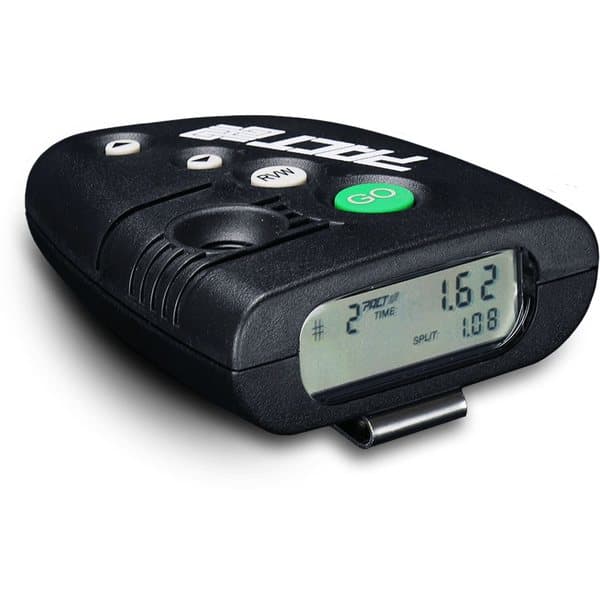
PACT Club Timer III

A reliable shot timer is the single best training investment. Phone apps work, but dedicated timers are faster and more reliable for serious practice.

  • Par time programming for self-paced drills
  • Sensitive enough for suppressed shooting
Verified Retailer
Check Price at OpticsPlanet
Magazines

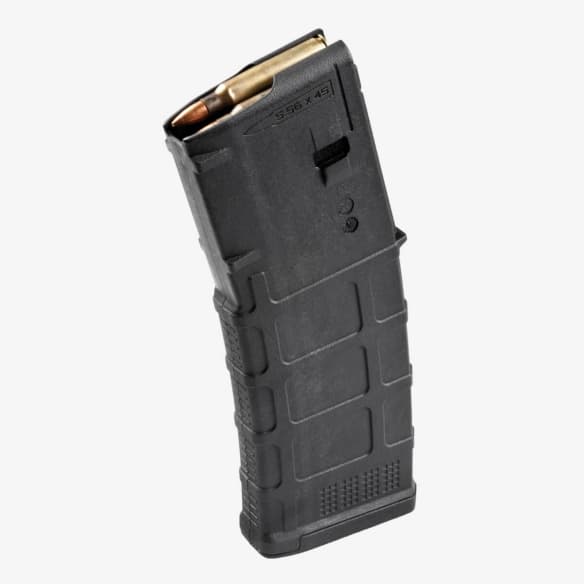
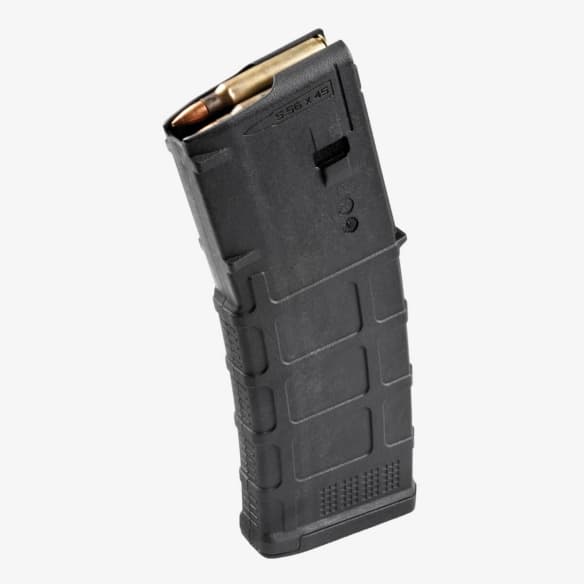
Magpul PMAG Gen M3 (3-Pack)

You need at least 3 magazines to run reload drills properly. PMAGs are the standard for reliability and feed consistency.

  • Over-insertion stop prevents seating issues
  • Clear window versions available for round count
Verified Retailer
Check Price at OpticsPlanet
Dummy rounds

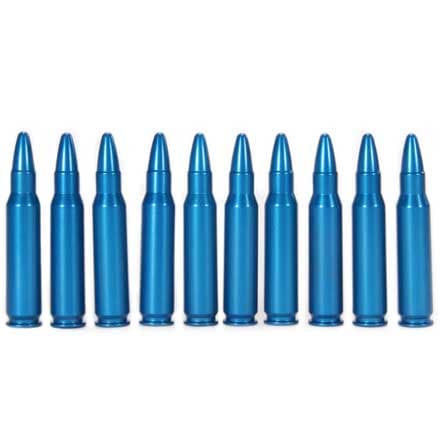
A-Zoom 5.56 Snap Caps (10-Pack)

Essential for dry fire practice and malfunction drills. Mix with live rounds to diagnose flinching and practice immediate action.

  • Aluminum construction survives repeated strikes
  • Dead cap prevents firing pin damage
Verified Retailer
Check Price at OpticsPlanet
Sling

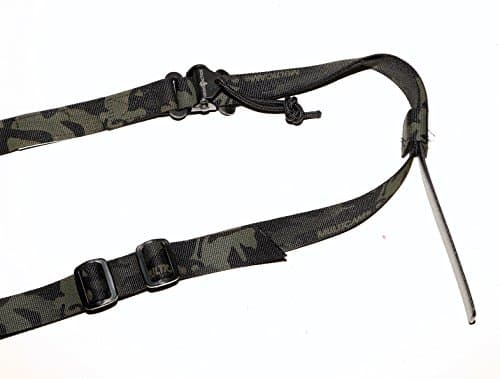
VTAC Two-Point Sling

A quality sling is essential for positional shooting and transitions. The VTAC design allows quick adjustment between carry and shooting positions.

  • Quick adjustment for different positions
  • Padded option available for extended carry
Verified Retailer
Check Price at OpticsPlanet
Targets

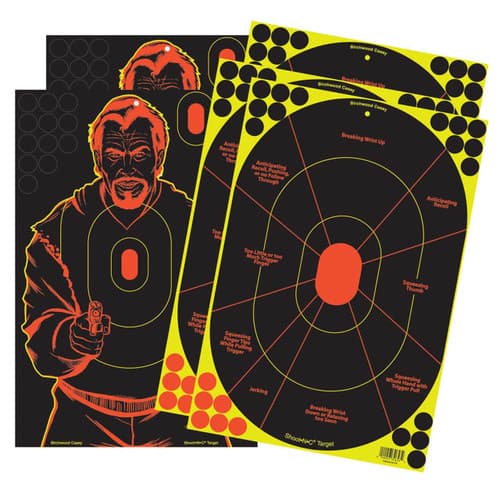
Birchwood Casey Shoot-N-C Targets

High-visibility targets that show impacts clearly. Essential for seeing your groups at distance without walking downrange constantly.

  • Bright splatter halos visible at 100+ yards
  • Self-adhesive for easy setup
Verified Retailer
Check Price at OpticsPlanet
Ear protection

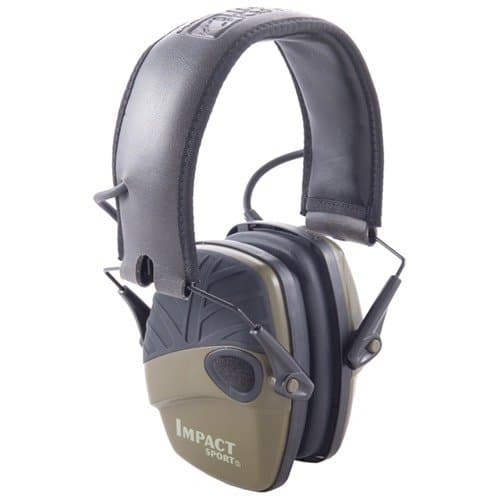
Howard Leight Impact Sport

Electronic ear pro lets you hear range commands and instruction while protecting your hearing. Essential for learning.

  • Amplifies speech, cuts harmful noise
  • Low-profile fits under rifle stocks
Verified Retailer
Check Price at OpticsPlanet

Purchasing through these links may generate a commission at no extra cost to you. Training with quality equipment accelerates skill development.

Next Step

Ready to continue? Here's the recommended next guide:

Recommended Next

How to Zero AR-15 Optics: Red Dots, Irons & LPVOs

Master optic zeroing with step-by-step process for iron sights, red dots, and LPVOs. Includes range prep checklists, mechanical offset tips, and confirmation drills.

Or explore a related topic:

AR-15 Maintenance Schedule->

Related guides

Continue exploring with these related resources

Found this guide helpful?

Share it with other builders on your favorite platform.

Was this helpful?

Quick feedback helps us prioritize guide updates.

Feedback is anonymous. Comments help us decide what to update next.