Best Ear Protection for Shooting 2026: Top 8 Ranked (Howard Leight, Peltor, Walker's, Axil)
We ranked the best ear protection for shooting across electronic over-ear muffs, in-ear electronic buds, and passive plugs. Every product was evaluated on NRR rating, sound amplification quality, comfort, stock clearance for rifle shooters, and price. Whether you shoot at outdoor ranges, indoor facilities, or competitions, this guide covers the best hearing protection for shooting with specific recommendations by use case and budget.
Top 8 Best Ear Protection for Shooting
Electronic ear muffs, in-ear electronic buds, and passive plugs ranked by NRR rating, sound quality, and value.
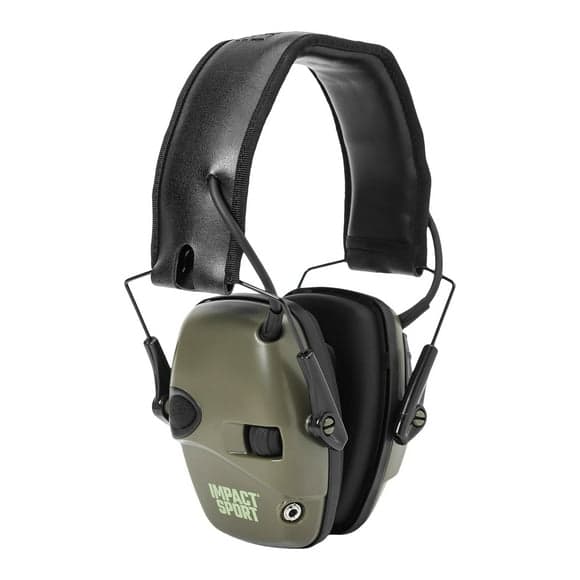
Howard Leight Impact Sport Electronic Earmuff
Best Overall Value
- +Best price-to-performance ratio in electronic ear pro
- +Slim profile clears most rifle stocks
- +350-hour battery life with auto-shutoff
- −NRR 22 marginal for indoor ranges without doubling up
- −Sound amplification quality below premium options
- −Ear cushions wear out after 1-2 years of heavy use
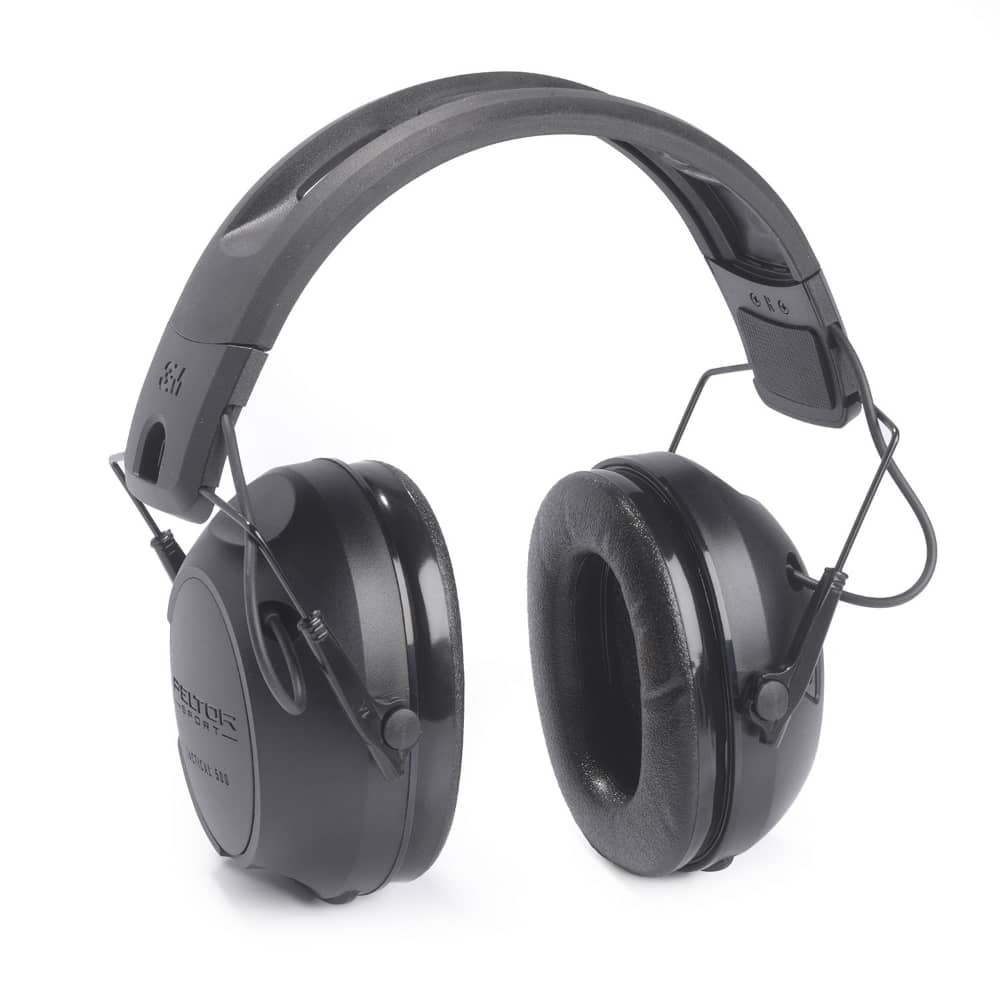
3M Peltor Sport Tactical 500 Electronic
Best Mid-Range / Indoor
- +NRR 25 makes it viable for indoor ranges without doubling up
- +Clear Voice Tracking for noticeably better speech clarity
- +Bluetooth for phone and music integration
- −Bulkier cup than Walker's Razor Slim
- −Bluetooth pairing can be finicky
- −40-hour battery life shorter than Impact Sport
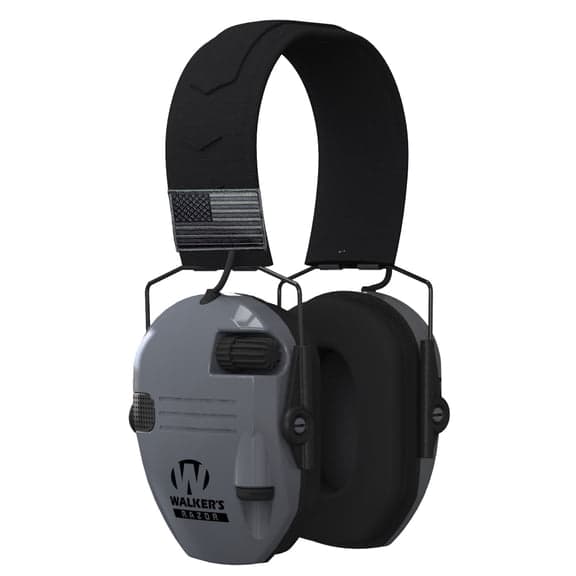
Walker's Razor Slim Electronic Muff
Best for Rifle Shooters
- +Slimmest profile, best for shouldering rifles
- +Lightest option at 8 oz
- +NRR 23 slightly better than Impact Sport
- −89 dB compression threshold higher than competition
- −Omni-directional mics less spatial than stereo
- −Ear cushion quality below Howard Leight
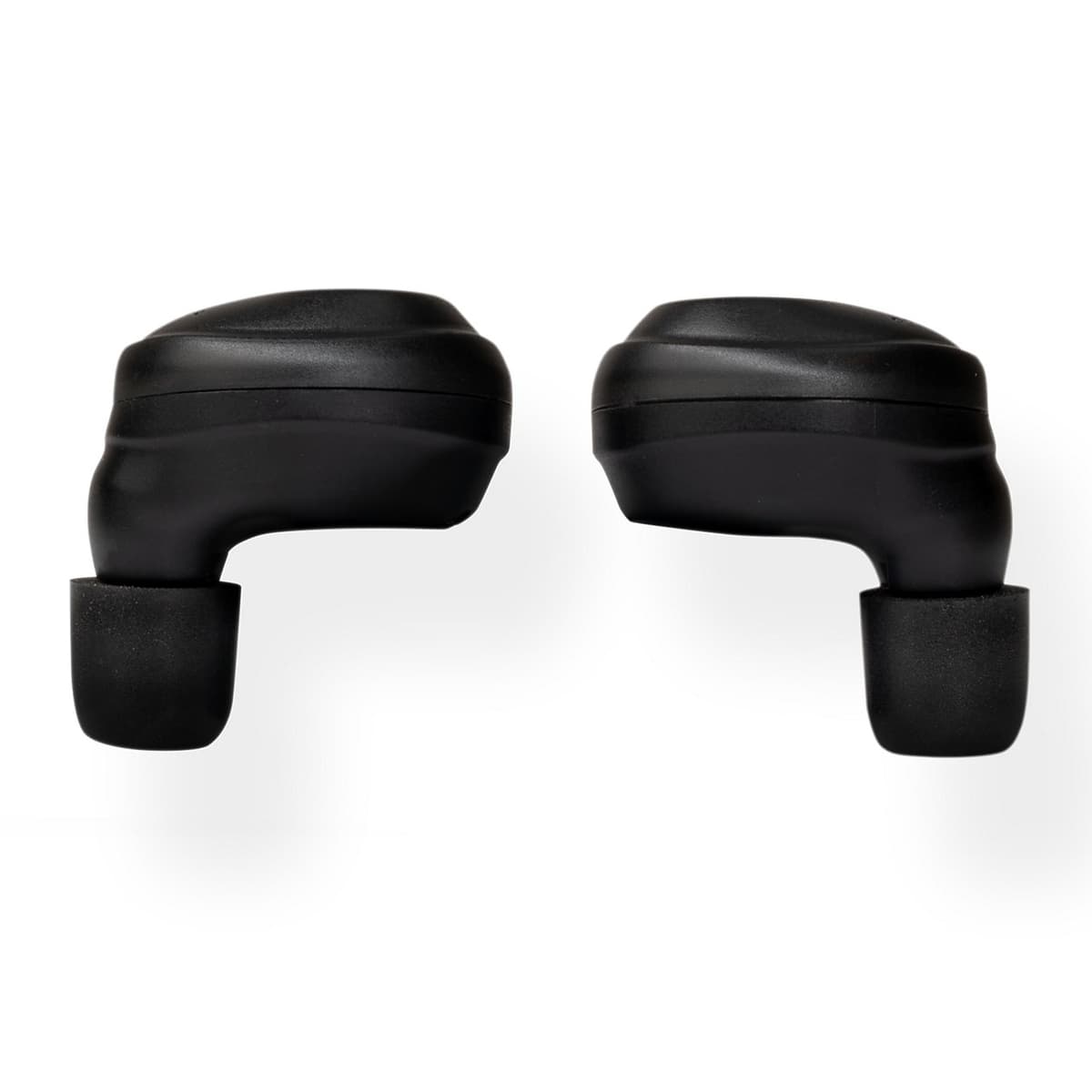
Axil XCOR Pro Electronic Earbuds
Best Electronic Earbuds
- +29 dB noise reduction, highest electronic option
- +Stackable under muffs for 40+ dB combined protection
- +No helmet or stock clearance issues
- −Premium price at $300
- −In-ear fit not comfortable for all ear canals
- −Easier to lose than over-ear muffs
Walker's XCEL 500BT Digital Electronic Muff
Best Bluetooth Muff
- +Four listening modes for customizable sound
- +Bluetooth integration for calls and music
- +Voice clarity enhancement in noisy environments
- −NRR 24 below Peltor 500's NRR 25
- −Heavier than Razor Slim at 13.4 oz
- −Listening modes have a learning curve
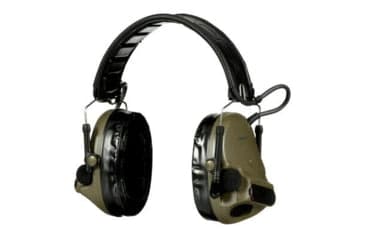
3M Peltor ComTac V Hearing Defender
Best Military-Grade
- +Best sound processing quality in any electronic muff
- +Gel cushions seal over eyewear comfortably
- +Helmet-mountable for tactical and NVG setups
- −Premium price above $500
- −Bulkier cup than consumer options
- −No Bluetooth without separate adapter
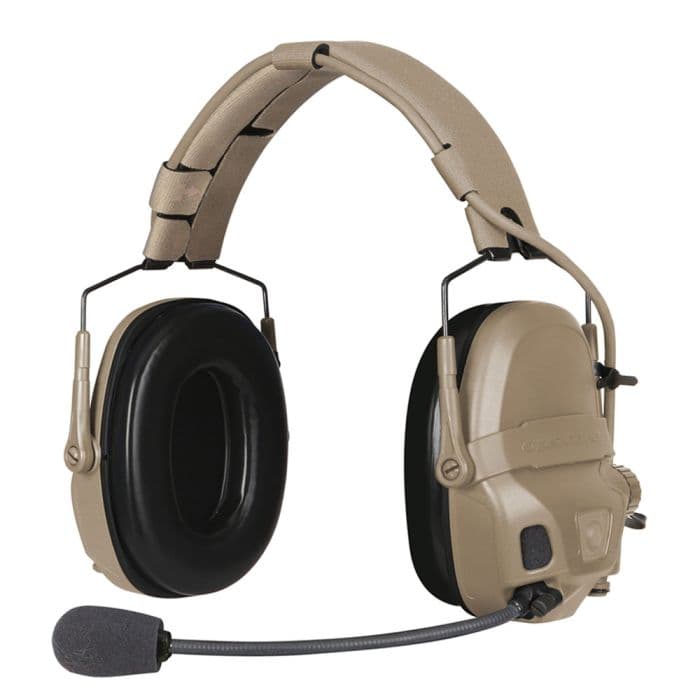
Ops-Core AMP Communication Headset
Best for Serious Shooters - Clearest Audio on the Market
- +Best audio clarity via NFMI technology
- +Seamless helmet integration with swing-up cups
- +Connectorized comms for any radio system
- −Extremely expensive at $1,000+
- −Questionable durability under heavy use
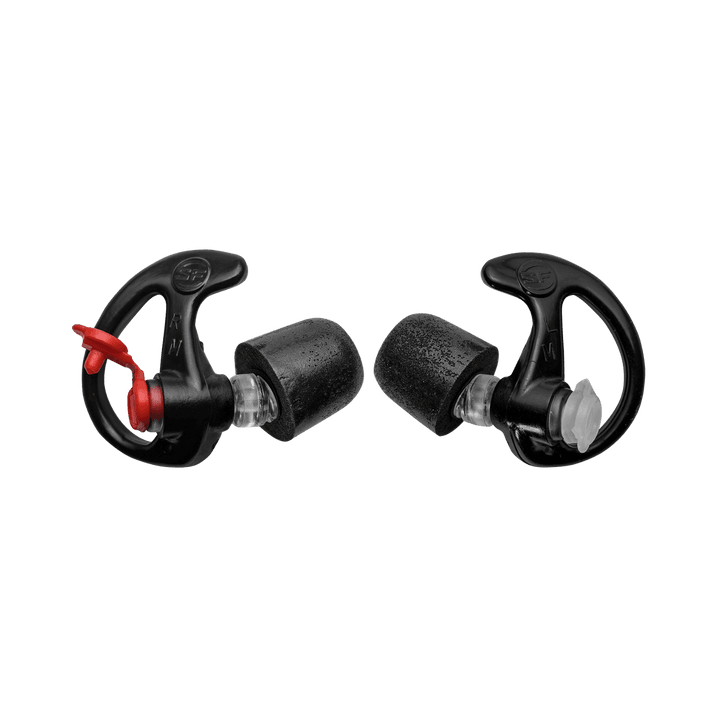
SureFire EP7 Sonic Defenders Ultra
Best Passive Ear Plugs
- +NRR 28, highest protection on this list
- +Filtered mode allows conversation without removing
- +Secure EarLock fit stays in place
- −No electronic amplification
- −Sizing must be correct for proper seal
- −Less comfortable than foam for very long sessions
Affiliate links - purchases support this site at no extra cost to you. (?)
Electronic vs Passive: Which Ear Protection Do You Need?
Electronic muffs amplify ambient sound (conversation, range commands) and instantly compress when gunfire exceeds the threshold. Passive muffs and plugs block everything equally. Electronic costs more ($45-850 vs $5-20 passive) but provides situational awareness that passive cannot match. For recreational shooters, electronic at $45-55 is the single best upgrade you can make at the range.
For doubling up, use passive foam plugs as the inner layer under electronic muffs as the outer layer. This gives you combined NRR 36-39 plus full environmental awareness through the electronic amplification circuit.
Doubling up controls noise, not airborne contaminants. An indoor firing line still needs maintained airflow toward the target and dedicated exhaust. The shooting lead exposure checklist covers ventilation warning signs, hand cleaning, range clothes, and the trip home.
NRR Rating Guide: How Much Protection Do You Need?
The real-world formula for NRR is (NRR - 7) / 2. An NRR 22 muff gives roughly 7.5 dB actual reduction; NRR 25 gives 9 dB; NRR 32 foam plugs give 12.5 dB. A .223 rifle produces roughly 165 dB. OSHA requires impulse noise below 140 dB.
- Outdoor HandgunNRR 22+RecommendationHoward Leight Impact Sport or Walker's Razor Slim
- Outdoor RifleNRR 23+RecommendationWalker's Razor Slim (best stock clearance) or Peltor 500
- Indoor RangeNRR 25+RecommendationPeltor Sport Tactical 500 or double up
- Indoor Rifle / MagnumNRR 30+ (double up)RecommendationSureFire EP7 plugs under electronic muffs
| Shooting Environment | Minimum NRR | Recommendation |
|---|---|---|
| Outdoor Handgun | NRR 22+ | Howard Leight Impact Sport or Walker's Razor Slim |
| Outdoor Rifle | NRR 23+ | Walker's Razor Slim (best stock clearance) or Peltor 500 |
| Indoor Range | NRR 25+ | Peltor Sport Tactical 500 or double up |
| Indoor Rifle / Magnum | NRR 30+ (double up) | SureFire EP7 plugs under electronic muffs |
Get Hearing Protection Reviews and Range Gear Guides
Hearing protection rankings, NRR guides, and electronic muff picks for indoor and outdoor ranges.
Doubling Up: The Indoor Range Standard
For indoor ranges, doubling up is not optional for serious shooters. Foam plugs (NRR 32) under electronic muffs (NRR 22-26) yields roughly NRR 36-39 combined. The combined NRR equals the higher value plus about 5 dB, not both values added. Insert foam plugs first, then put electronic muffs over them. The electronics handle situational awareness; the foam handles the heavy attenuation. There is also a practical reason: your rifle stock can bump the outer muff out of position when you mount the gun, breaking the seal momentarily. With plugs underneath, you still have protection even if the cup shifts.
SureFire EP7 filtered plugs also work well as the inner layer since they are low-profile enough to sit under muff cups. If you are new to shooting, start with the Howard Leight Impact Sport ($55) and a pack of foam plugs ($8) for indoor sessions. That combination covers every scenario for under $65 total. For a full range equipment checklist, see our First 1000 Rounds training plan.
Peltor vs Sordin vs Earmor: Which Should You Buy?
For most shooters the 3M Peltor Sport Tactical 500 (around $190) is the one to buy: NRR 25, Clear Voice Tracking that isolates speech from gunfire, and Bluetooth. Buy the Earmor M31 PLUS ($70) instead if you want gel cushions and real electronic hearing protection on the tightest budget, and step up to the Sordin Supreme X2 ($349) if you want a do-everything headset that swaps between headband, neckband, and helmet.
These are the three brands people actually cross-shop, and they sit at three different price points for a reason. Peltor is the proven mid-tier standard: 3M's sound processing is a clear step above budget muffs, and the Sport Tactical 500 backs it with the highest passive rating in its class at NRR 25. Sordin is the Swedish premium option built around the SordinFLEX modular system, so the same cups run on a headband at the range, a neckband under a hat, or a helmet rail without tools. Earmor is the value disruptor: the M31 PLUS undercuts the Howard Leight Impact Sport while shipping with the gel cushions and IPX-5 water resistance the Howard Leight charges extra for.
The split by use case is clean. Indoor and mixed range shooters want the Peltor 500's NRR 25 and speech clarity. Hunters and shooters who also run a helmet or want one headset for everything want the Sordin X2. Budget buyers, high-volume trainers who destroy cushions, and anyone kitting out multiple family members want the Earmor M31 at $70, or the M32 at $100 if they run a two-way radio. If you shoot indoor rifle, none of the three is enough alone; double up with foam plugs regardless of which brand you pick. For a wider field including the Walker's Razor Slim and Axil XCOR, see the full ranking above.
- 3M Peltor Sport Tactical 500~$190NRR / SNRNRR 25 dBBattery2x AAStandout FeatureClear Voice Tracking + Bluetooth
- Sordin Supreme X2~$349NRR / SNRSNR 29BatterySingle battery, 4-hr auto-offStandout FeatureSordinFLEX headband/neckband/helmet swap
- Earmor M31 PLUS~$70NRR / SNRNRR 22 dBBattery2x AAA (~350 hr)Standout FeatureGel cushions + IPX-5 at budget price
| Model | NRR / SNR | Battery | Standout Feature | Price |
|---|---|---|---|---|
| 3M Peltor Sport Tactical 500 | NRR 25 dB | 2x AA | Clear Voice Tracking + Bluetooth | ~$190 |
| Sordin Supreme X2 | SNR 29 | Single battery, 4-hr auto-off | SordinFLEX headband/neckband/helmet swap | ~$349 |
| Earmor M31 PLUS | NRR 22 dB | 2x AAA (~350 hr) | Gel cushions + IPX-5 at budget price | ~$70 |
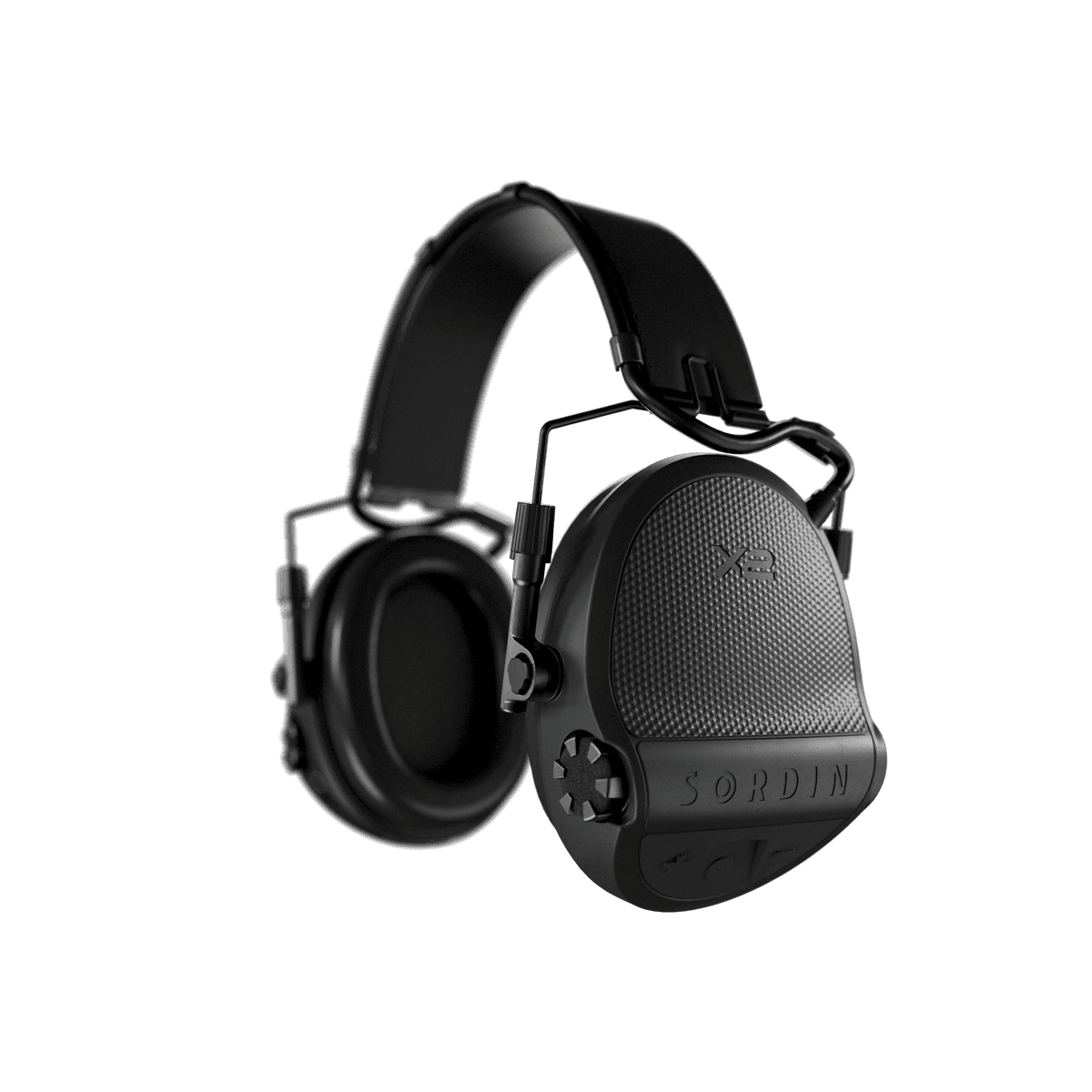
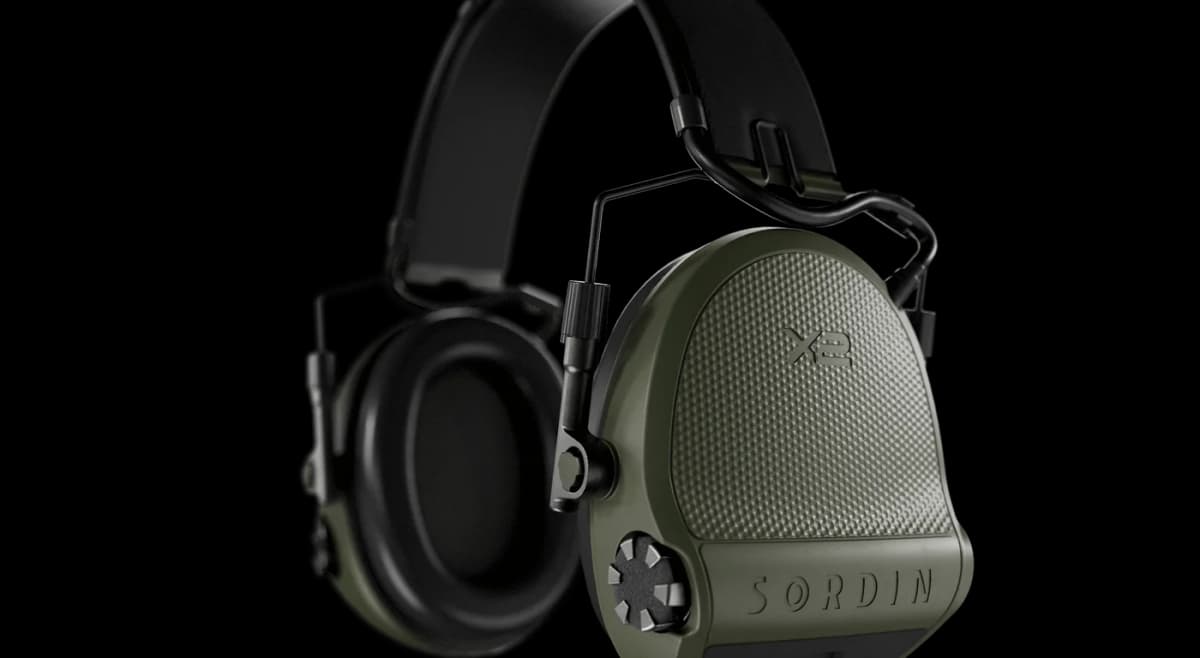
Sordin Supreme X2 Electronic Headset
- SordinFLEX bayonet swap between headband, neckband, and helmet
- HEAR2 audio with Hunter, Focus, Shooter, and Ambient-off profiles
- SNR 29 with an 82 dB(A) sound limit
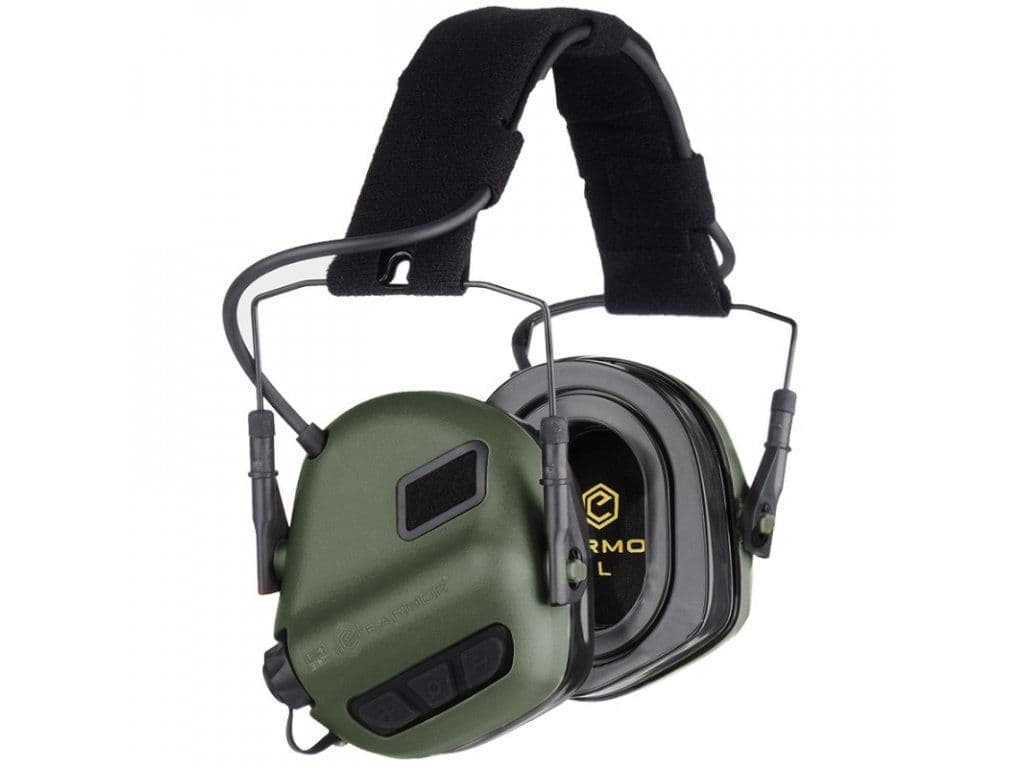
Earmor M31 PLUS Electronic Ear Muff
- Undercuts the Howard Leight Impact Sport and includes gel cushions
- Five ambient volume levels plus three enhancement levels
- IPX-5 water resistance and 2x AAA batteries
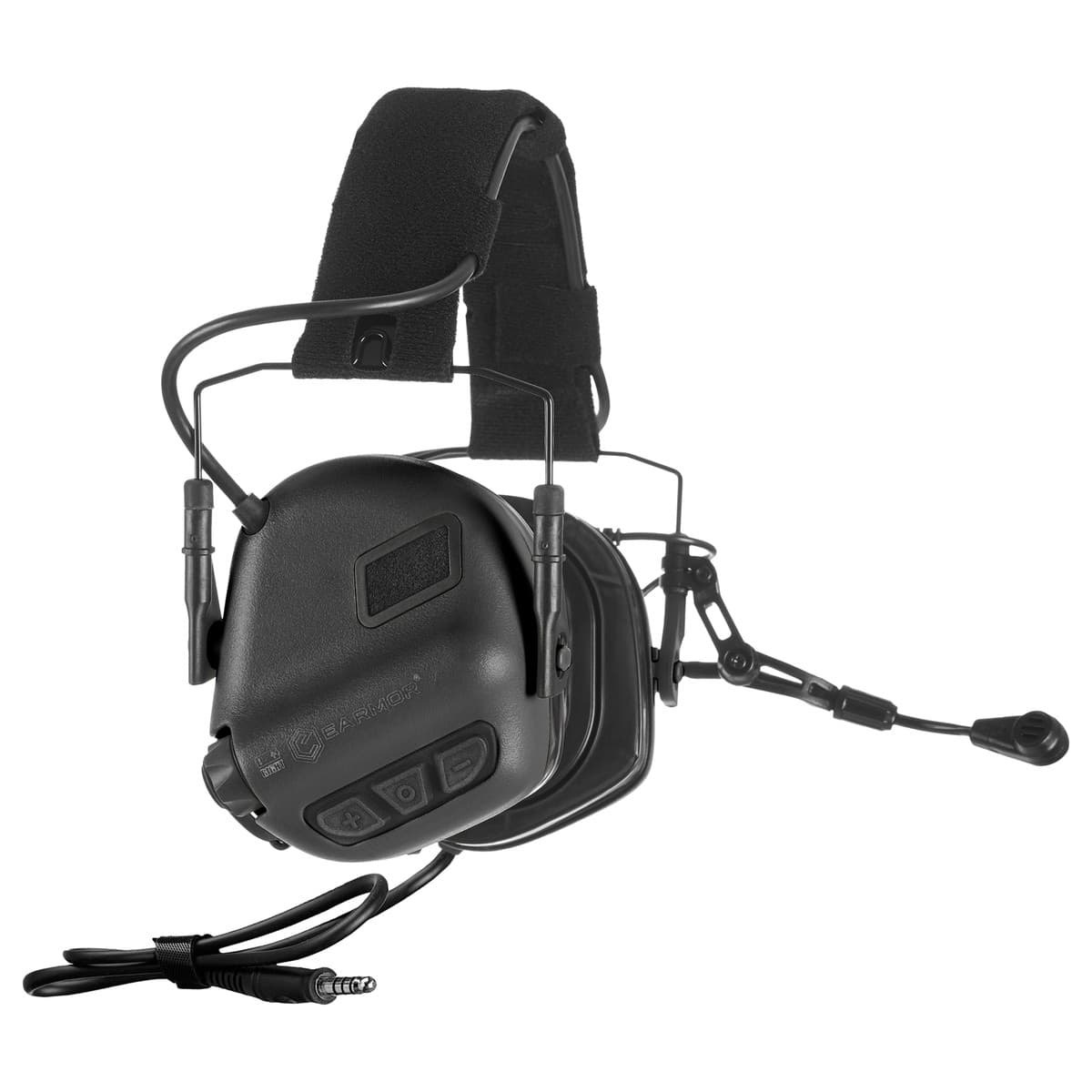
Earmor M32 PLUS Communications Headset
- Adds a detachable boom mic and Nexus TP-120 radio downlead to the M31
- NATO-standard Nexus wiring drops into common radios and PTT adapters
- Cheapest radio-capable electronic headset by a wide margin
Affiliate links - purchases support this site at no extra cost to you. (?)
Building a complete range kit?
Best Shooting Glasses 2026 covers ANSI Z87.1 and MIL-PRF-32432 rated ballistic eye pro to pair with your hearing protection. The Wiley X Rogue Comm has the thinnest temples in the category specifically so it does not break the seal on comms ear muffs. A pair of tactical gloves rounds out the kit for recoil control and protection from hot brass.
Best Rifle Range Bags 2026 covers the top range bags for hauling your ear pro, ammo, tools, and cleaning supplies to the range.
First 1000 Rounds: New AR-15 Owner Training Plan includes the full range equipment checklist for new shooters.
Ear Protection FAQ
▶What NRR rating do I need for shooting?
▶Are electronic ear muffs worth it for shooting?
▶Can you wear ear muffs and ear plugs together?
▶What is the best ear protection for indoor shooting ranges?
▶Howard Leight vs Walker's: which is better?
▶Peltor ComTac vs Sordin Supreme: which is better?
▶Are Earmor headsets any good?
▶Do I need hearing protection for .22 LR?
Bottom Line
Howard Leight Impact Sport ($55) is the right starting point for most shooters.
The best ear protection for shooting depends on where and how you shoot. Step up to the Peltor Sport Tactical 500 ($190) if you shoot indoors regularly. Add SureFire EP7 plugs ($16) for doubling up. Premium options like the Axil XCOR and Peltor ComTac V are for competition, helmet, and professional use cases. Browse our full hearing protection catalog for detailed specs and additional options. Sordin launched the Supreme X2 on October 30, 2025 as the new flagship of the Supreme line: SNR 29 with the HEAR2 audio system and the new SordinFLEX bayonet swap between headband, neckband, and helmet. Walker's also recently launched the ShotSync wearable shot timer ($60), which pairs with the same Walker's Link app as their Bluetooth earmuffs.