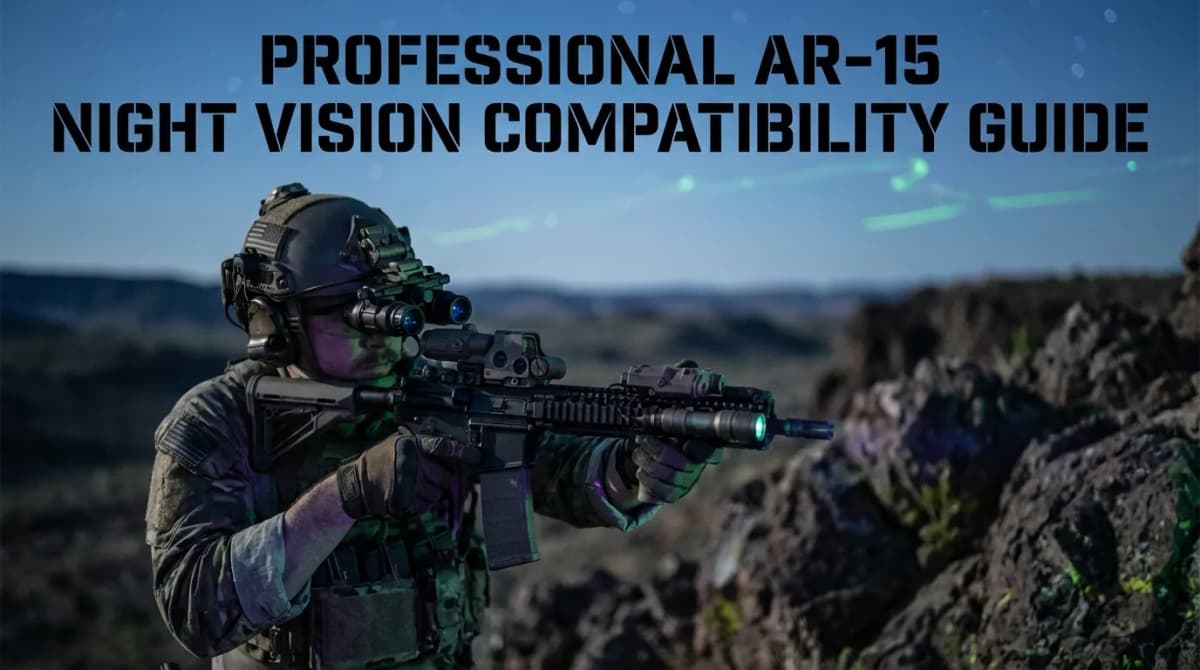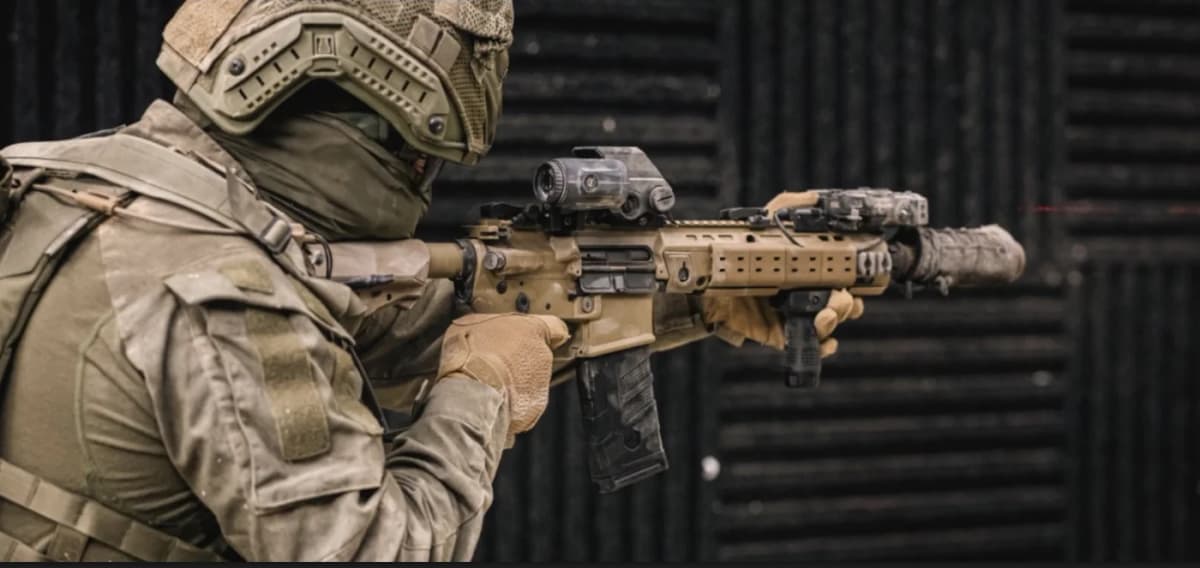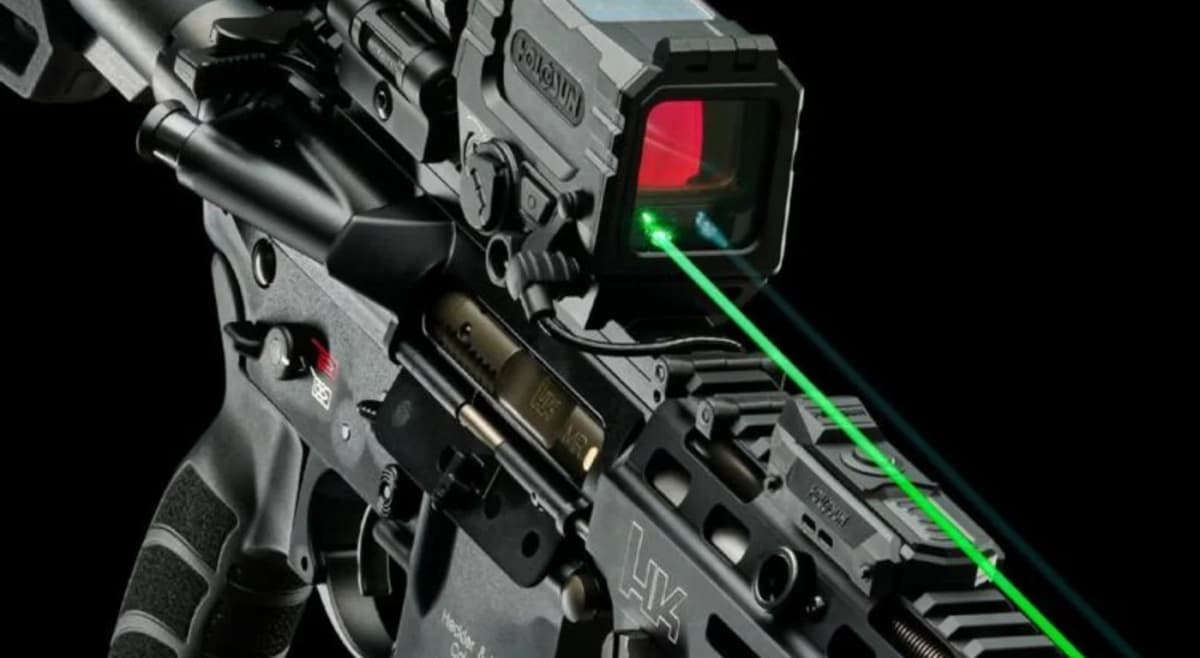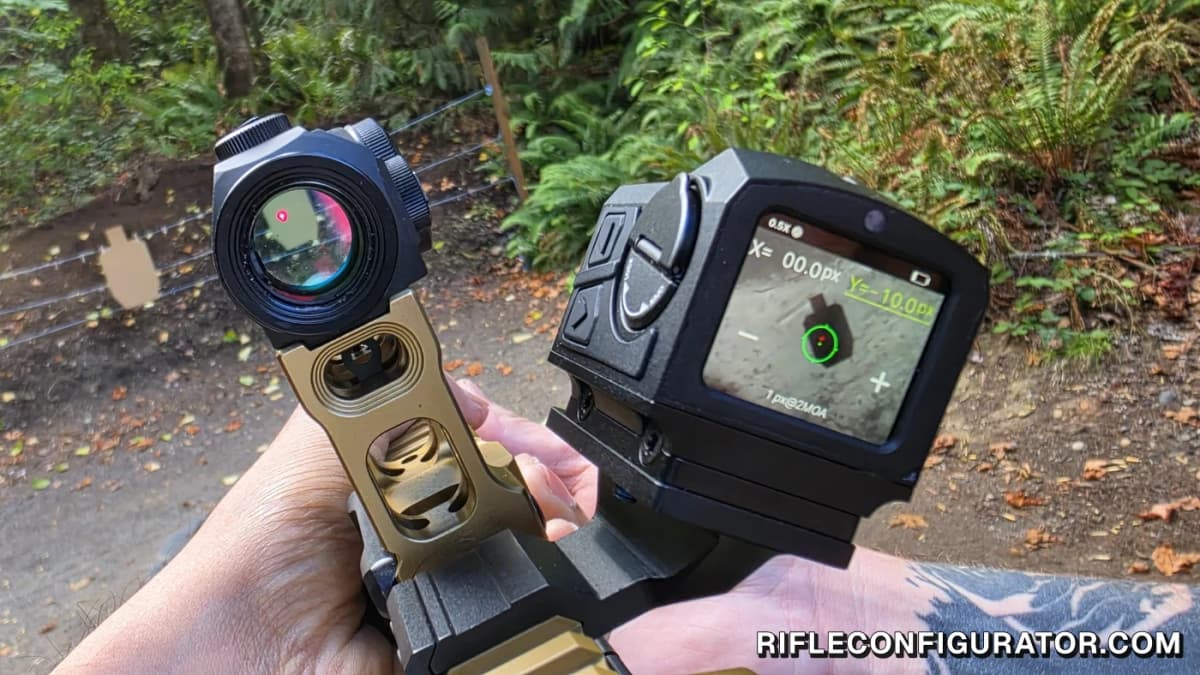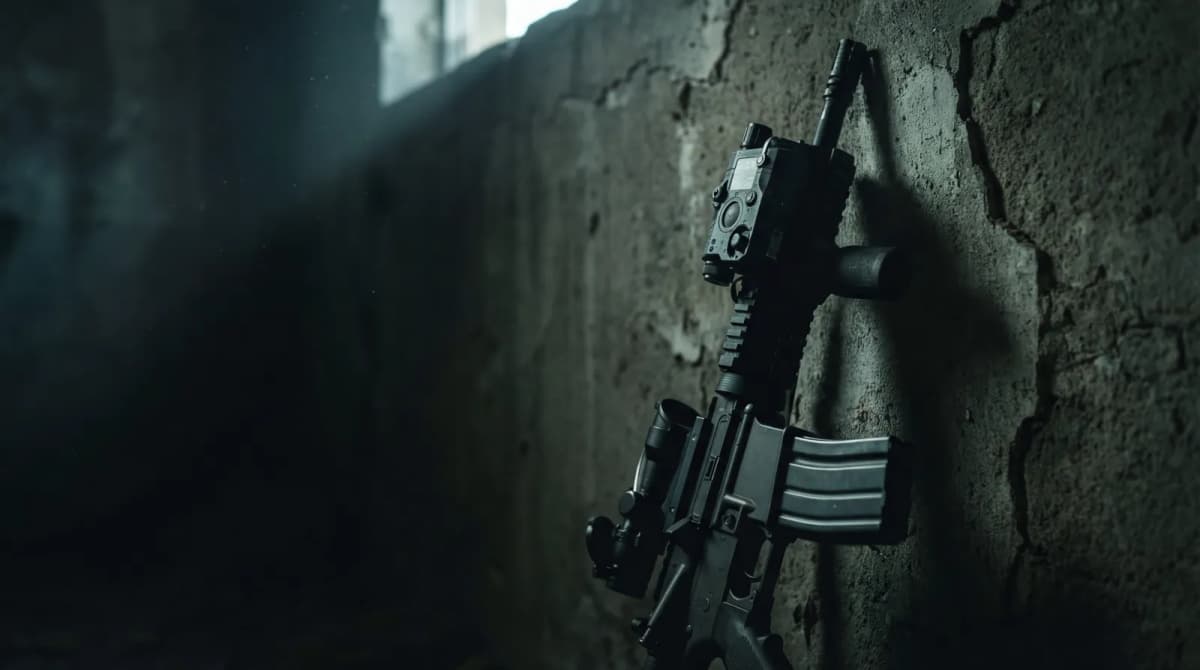
IR Illuminator Guide 2025: MAWL vs RAID Xe vs Holosun IRIS vs SMS Trinity header image
IR Illuminator Comparison: MAWL, RAID Xe, Holosun IRIS, SMS Trinity, DBAL
DeviceManufacturerPriceIlluminator TypeIR PowerCivilian Legal
MAWL-C1+B.E. Meyers$2,995 – $3,600LED850nm LED, adjustableYes
RAID XeWilcox Industries$2,999 – $3,600VCSEL25mW (civilian) / 50mW+ (LE/MIL)Yes
IRIS-3 (GR/RD)Holosun$799 – $999VCSEL60mW VCSELYes
TrinitySMS Laser$350VCSEL100mW VCSELYes
DBAL-A3 CivilianSteiner$1,299 – $1,725Laser<4mW laser-based, focusableYes
DBAL-D2Steiner$1,400 – $1,900LED600mW LEDYes
[ < Back to guides ]
Buying guideNVG systemsPremium gear

IR Illuminator & Laser Guide: Picking and Using IR Devices with NVGs

A comprehensive guide to selecting and using IR illuminators and lasers with night vision devices. We compare the MAWL-C1+, Wilcox RAID Xe, Holosun IRIS-3, SMS Trinity, and Steiner DBAL series—covering technology differences, wavelengths, zeroing methods, and mission-specific recommendations.

IR Illuminator = Floods light for NVG viewing. IR Laser = Precise aiming point.Class 1 = Eye-safe, civilian-legal. Class 3+ = Restricted to LE/MIL.VCSEL technology offers cleaner beams than older LED/laser designs.
📋

Before You Read

This guide assumes familiarity with these topics:

Why IR Illumination?

Night vision amplifies available light, but in total darkness, you need IR illumination to see. IR illuminators flood an area with invisible light your NVGs can detect—think of it as an invisible flashlight.

IR Laser vs Illuminator

IR lasers provide a precise aiming point visible only through NVGs—essential when you can't use traditional optics. Most modern units combine both laser and illuminator in one device for complete capability.

Civilian vs Military

Civilian-legal devices are limited to Class 1 laser output (eye-safe). Military/LE units use Class 3B+ with dramatically higher power. This guide focuses on civilian-legal options that still deliver excellent performance.

IR Illuminator Technology: VCSEL vs LED vs Laser

Modern IR illuminators use three main technologies. VCSEL has emerged as the premium choice for its beam quality and adjustability.

VCSEL (Vertical-Cavity Surface-Emitting Laser)

VCSEL technology uses semiconductor lasers that emit perpendicular to the chip surface. This produces a highly uniform beam with minimal speckle and excellent range. VCSELs can be adjusted from tight spot to wide flood and offer superior beam quality compared to LEDs.

Pros

  • Cleanest, most uniform illumination with minimal speckle
  • Excellent range with focused beams
  • Adjustable from spot to flood
  • Temperature stable wavelength

Cons

  • Generally more expensive than LED
  • Can cause overexposure at close range
  • Higher power consumption than some LEDs

Best for: Users who want the best beam quality and adjustability. Ideal for mixed close/long-range use.
LED (Light Emitting Diode)

LED illuminators produce a wide, diffuse beam that covers large areas uniformly. They're energy-efficient and very safe. Modern high-power LEDs like the DBAL-D2's 600mW unit can reach extreme distances but are typically larger than VCSEL alternatives.

Pros

  • Wide, even beam distribution
  • Very energy efficient
  • Lower cost than VCSEL
  • Longest lifespan

Cons

  • Less focused throw than VCSEL/laser
  • Bulkier for equivalent output
  • Can cause whiteout at close range with high power
  • Less adjustability than VCSEL

Best for: Users prioritizing wide-area illumination, surveillance, and observation applications.

Laser-Based Illuminator

Traditional laser illuminators use edge-emitting laser diodes (EEL) to produce a focused beam. They provide excellent throw but narrower coverage than VCSELs. Some produce more speckle than modern VCSEL technology.

Pros

  • Excellent throw/range
  • Compact emitter size
  • Precise beam characteristics
  • Proven technology

Cons

  • More speckle than VCSEL
  • Narrower beam width
  • Less uniform coverage
  • Older technology in most applications

Best for: Long-range target designation and observation. Being replaced by VCSEL in most modern applications.

850nm vs 940nm: Wavelength Selection

IR wavelength affects covertness, NVG compatibility, and effective range. Most civilian devices use 850nm for maximum performance; 940nm is fully covert but sacrifices range.

WavelengthVisibilityCovertnessNVG CompatBest For
850nmFaint red glow visible at emitterSemi-covert (glow detectable by trained observers)Excellent with all Gen 2+ and Gen 3 NVGsMost civilian applications, hunting, home defense. Best balance of performance and NVG compatibility.
940nmCompletely invisible to naked eyeFully covert (undetectable without NVGs)Requires more sensitive NVGs (reduced sensitivity ~40-50%)Tactical applications requiring maximum covertness. Military/LE operations where detection is critical.

Bottom Line: For most civilian users, 850nm is the right choice. You get maximum range and NVG compatibility. The faint red glow at the emitter is only visible if someone looks directly at your device—not the beam itself. Choose 940nm only if absolute covertness is mission-critical.

FDA Regulations: Why VCSEL Illuminators Can Be Powerful (And Civilian Legal)

Understanding why your 100mW illuminator is legal while your IR laser is limited to 0.7mW—and what separates civilian devices from restricted LE/MIL units.

Laser vs Illuminator: The FDA Distinction

The FDA's Center for Devices and Radiological Health (CDRH) regulates laser products based on their potential eye hazard. The critical distinction is between focused lasers (aiming devices) and diffuse illuminators. This is why your VCSEL illuminator can pump out 60-100mW while your IR laser is limited to 0.7mW.

Key Points

  • IR aiming lasers are classified by their peak irradiance (power per area) at the eye
  • IR illuminators are evaluated differently because their beam is diffused/divergent
  • A 100mW illuminator spread over a wide area has lower irradiance than a 0.7mW focused laser
  • This allows civilian-legal illuminators to have much higher total output than the aiming laser

Class 1 Laser Classification

Class 1 lasers are considered 'eye-safe' under normal conditions because their output is low enough that the maximum permissible exposure (MPE) cannot be exceeded. This is the civilian-legal threshold. Most civilian IR lasers are limited to 0.7mW or less to meet Class 1.

Key Points

  • Class 1: Eye-safe under all conditions of normal use (<0.7mW for most IR wavelengths)
  • Class 1+ (MAWL designation): Exceeds typical Class 1 but still civilian-legal through design controls
  • Class 3R: Low-risk but can cause eye damage with direct long-duration exposure (1-5mW)
  • Class 3B: Medium-power, can cause immediate eye damage—restricted to LE/MIL (5-500mW)

Why VCSEL Illuminators Can Be Powerful (It's Not a Loophole)

VCSEL illuminators can legally output 60-100mW+ because of physics, not loopholes. The beam is designed to diverge rapidly, reducing irradiance at the eye. This is fundamentally different from a laser pointer that maintains a tight beam. The risk profile is genuinely lower, which is why the FDA classifies them differently.

Key Points

  • VCSELs emit from arrays of many small emitters, not a single point source
  • The divergent beam pattern is inherent to the design, not an add-on diffuser
  • Power is spread across a wide angle (e.g., 5-150 mRad), dramatically reducing eye hazard
  • A 100mW illuminator at 100 mRad divergence may have lower irradiance than a 1mW focused laser
  • This is why civilian illuminators can be powerful while aiming lasers are restricted

Full-Power (LE/MIL) Restrictions

Military and law enforcement units like the AN/PEQ-15, full-power MAWL, and NGAL use Class 3B IR lasers (typically 30-50mW+) that can cause immediate, permanent eye damage. These are restricted by the FDA and legally require an end-user certificate proving LE/MIL status for purchase.

Key Points

  • Full-power IR lasers are 30-70x more powerful than civilian versions
  • They can cause instant, permanent retinal damage from even brief exposure
  • ITAR (International Traffic in Arms Regulations) also restricts export of these devices
  • Civilian units with identical housings (e.g., DBAL-A3) have drastically reduced laser output
  • Claiming LE/MIL status falsely to purchase restricted devices is a federal crime

Civilian Capability: Better Than You Think

Don't let the 'civilian' label fool you—modern civilian IR devices are remarkably capable. The illuminator (not the aiming laser) does the heavy lifting for target identification, and those outputs are not significantly restricted. A MAWL-C1+ or Holosun IRIS-3 with a 60mW+ VCSEL illuminator provides more than enough capability for home defense, hunting, and most practical applications.

Key Points

  • Civilian illuminators often match or exceed LE/MIL illuminator output
  • The aiming laser power difference matters less at ranges under 100 yards
  • Modern VCSEL technology closed much of the historical civilian/military gap
  • For 90% of users, civilian-legal output is more than sufficient
  • The $350 SMS Trinity's 100mW illuminator matches the output of units costing 10x more

Legal Warning: Purchasing restricted (Class 3B+) IR devices without valid LE/MIL credentials is a federal crime. The devices in this guide are all civilian-legal Class 1 units. Never attempt to purchase full-power units by falsely claiming LE/MIL status—vendors verify credentials and violations are prosecuted.

IR Illuminator Comparison: MAWL, RAID Xe, Holosun IRIS, SMS Trinity, DBAL

Detailed profiles of the top IR laser/illuminator units available to civilians. We cover specifications, pros/cons, and ideal use cases for each.

B.E. Meyers MAWL-C1+

Premium Tier

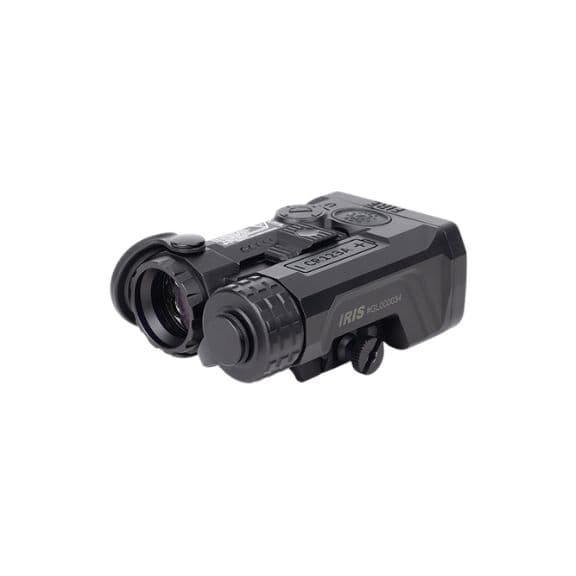
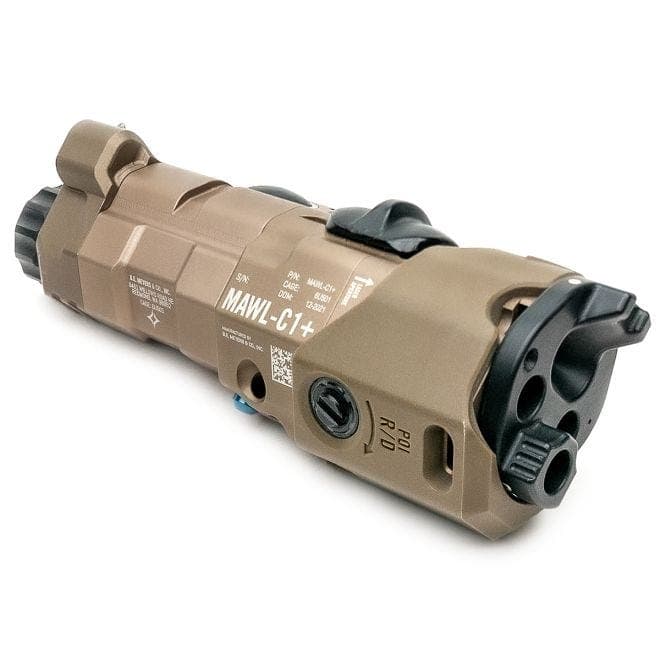
The MAWL-C1+ is the gold standard for civilian IR laser/illuminators. Its Class 1+ designation means it delivers more IR output than any other commercially available Class 1 or 3R laser while remaining eye-safe. Three preset range modes (Close, Mid, Long) simplify operation under stress.

$2,995 – $3,600

✓ Civilian Legal

Specifications

Illuminator TypeLED
IR Illuminator850nm LED, adjustable
IR Laser ClassClass 1+
Visible Laser520nm Green (5mW)
Wavelength850nm / 852nm
AdjustableYes (5–115 mRad (flood to spot))
Battery1x CR123A
Battery Life~3 hours continuous
Weight10.0–11.1 oz with battery
WaterproofIPX8 (20m for 2 hours)

Pros

  • +Most powerful civilian-legal IR illuminator on the market
  • +Intuitive 3-position slider for instant range adjustment
  • +Ambidextrous design with reversible head/endcap
  • +MIL-STD 810G compliant, built like military hardware
  • +Wide adjustable illuminator from flood to spot
  • +Excellent beam clarity with minimal speckle

Cons

  • Premium pricing above $3,000
  • 850nm wavelength has faint visible glow
  • Heavier than some alternatives
  • May be overkill for casual users

Best For

  • Serious NVG operators who want the best civilian IR capability
  • Home defense with NVGs
  • Night hunting requiring maximum illumination range
  • Users who prioritize rugged military-grade construction

Wilcox Industries RAID Xe

Premium Tier

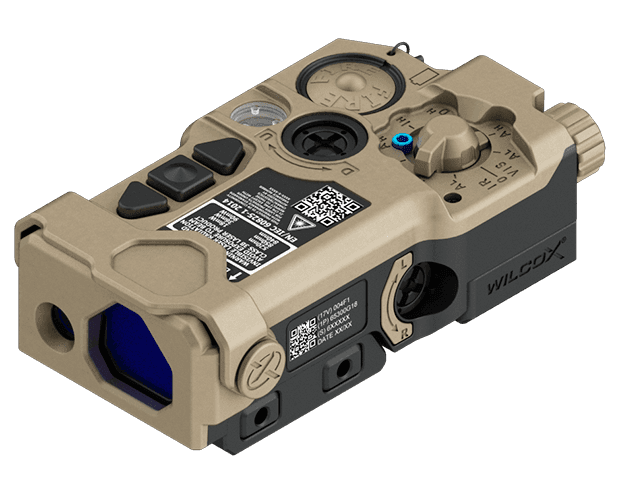
The RAID Xe uses VCSEL (Vertical-Cavity Surface-Emitting Laser) technology that produces exceptionally clean, uniform illumination with minimal speckle. Its standout feature is a dedicated 40° room illuminator for CQB, separate from the adjustable variable illuminator. Co-aligned optical bench means one zero adjusts all lasers.

$2,999 – $3,600

✓ Civilian Legal

Specifications

Illuminator TypeVCSEL
IR Illuminator25mW (civilian) / 50mW+ (LE/MIL)
IR Laser ClassClass 1 (Civilian) / Class 3 (LE/MIL)
Visible LaserRed (640nm) or Green (520nm)
Wavelength840nm / 850nm
AdjustableYes (Variable + 40° fixed room illuminator)
Battery1x CR123A
Battery Life~8 hours at max
Weight~7 oz with battery
Waterproof1m for 60 minutes

Pros

  • +VCSEL technology provides cleaner illumination than traditional LED
  • +Dedicated 40° room illuminator is unique and excellent for CQB
  • +Single windage/elevation adjustment zeros all lasers at once
  • +Compact and lightweight compared to MAWL
  • +Very long battery life (~8 hours)
  • +Programmable custom settings

Cons

  • Premium pricing similar to MAWL
  • Civilian version has reduced output compared to LE/MIL
  • Less weatherproof than MAWL (1m vs 20m depth rating)
  • Learning curve for programming features

Best For

  • CQB-focused users who need dedicated room illumination
  • Users who value VCSEL beam quality
  • Operators who switch between close and long-range frequently
  • Weight-conscious builds

Holosun IRIS-3 (GR/RD)

Mid-Tier

The Holosun IRIS-3 delivers "MAWL-like performance" at roughly 1/3 the price. Its 60mW VCSEL illuminator produces a clean, powerful beam, and the ergonomic slider adjustment is faster than dial-based systems. Co-aligned visible and IR lasers simplify zeroing. Released in early 2024, it immediately became the value leader.

$799 – $999

✓ Civilian Legal

Specifications

Illuminator TypeVCSEL
IR Illuminator60mW VCSEL
IR Laser ClassClass 1
Visible LaserGreen (520nm, 5mW) or Red
Wavelength850nm
AdjustableYes (15–150 mRad (ergonomic slider))
Battery1x CR123A
Battery LifeVaries by mode
Weight6.4 oz
WaterproofIPX8

Pros

  • +Best value in the IR illuminator market
  • +Powerful 60mW VCSEL illuminator rivals premium units
  • +Intuitive slider for fast flood-to-spot adjustment
  • +Co-aligned lasers for simplified zeroing
  • +Compact 7075 aluminum construction
  • +0.5 MOA/click adjustment precision
  • +IPX8 rated and 1000G vibration resistance

Cons

  • Fire button could be more tactile in cold weather
  • Widest illuminator setting not as wide as some competitors
  • Relatively new product (less field time than MAWL/DBAL)
  • Visible laser glow from 850nm wavelength

Best For

  • Budget-conscious buyers who want premium performance
  • First-time NVG users building a capable setup
  • Hunters who need good illumination without $3,000 price tags
  • Training and practice builds

SMS Laser Trinity

Budget Tier

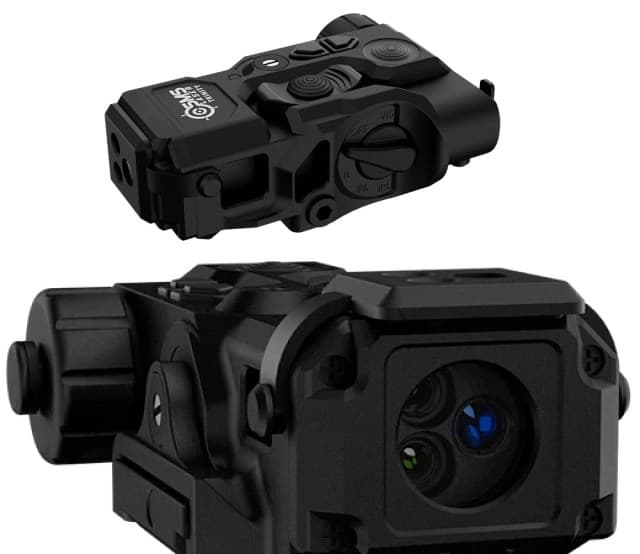
The SMS Trinity offers a 100mW VCSEL illuminator at an unbeatable $350 price point—the best watt-per-dollar value in night vision. All three lasers (IR illuminator, IR pointer, visible laser) are coaxially aligned, eliminating separate calibration. The adjustable power levels for both IR laser and illuminator help reduce halo effects. A disruptive option for budget-focused night vision enthusiasts.

$350

✓ Civilian Legal

Specifications

Illuminator TypeVCSEL
IR Illuminator100mW VCSEL
IR Laser ClassClass 1
Visible LaserGreen (520nm, <5mW)
Wavelength850nm
AdjustableYes (25–165 mRad (or 45–180 mRad))
BatteryCR123 or 16340
Battery LifeVaries by mode
Weight6.7 oz
WaterproofIPX8

Pros

  • +Incredible $350 price point—unmatched value
  • +Highest IR illuminator power (100mW) for the money
  • +Coaxially aligned lasers eliminate multi-device zeroing
  • +Adjustable power levels for both IR laser and illuminator
  • +VCSEL technology for clean beam quality
  • +Crane plug compatible for existing switch setups

Cons

  • Illuminator slider can be stiff, especially in cold weather
  • May require re-zeroing after significant impacts
  • High-power laser mode can be excessively bright
  • Adjustment complexity between diffuser, beam, and power levels
  • Less proven track record than established brands

Best For

  • Budget builds where value is paramount
  • First-time NVG users who want maximum illuminator power
  • Users comfortable with more complex adjustment interfaces
  • Night hunting on a budget

Steiner DBAL-A3 Civilian

Mid-Tier

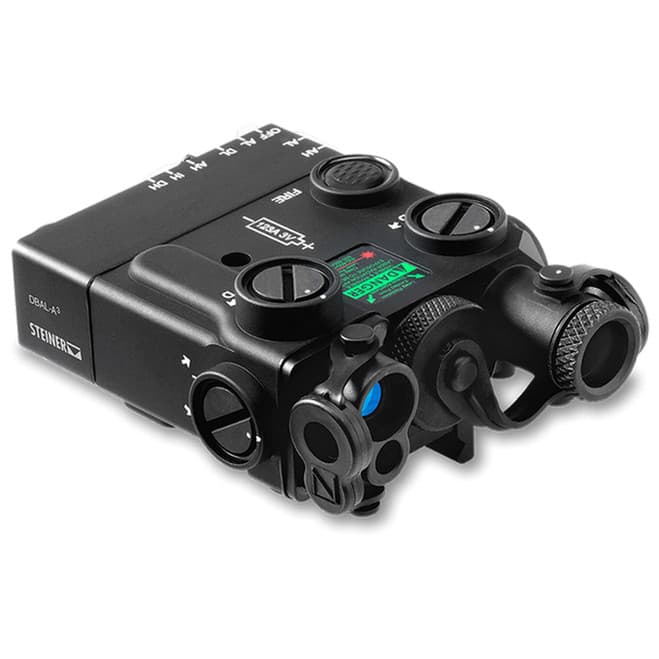
The DBAL-A3 is the civilian version of the military-proven DBAL platform. It uses a laser-based illuminator rather than LED/VCSEL, which provides longer throw but narrower usable beam. The green visible laser works well in daylight for zeroing. Rugged military heritage with excellent QC.

$1,299 – $1,725

✓ Civilian Legal

Specifications

Illuminator TypeLaser
IR Illuminator<4mW laser-based, focusable
IR Laser ClassClass 1
Visible LaserGreen (520nm, Class IIIa)
Wavelength850nm
AdjustableYes (Focusable spot to flood)
Battery1x CR123A
Battery LifeVaries by mode
Weight~8.5 oz
WaterproofSubmersible 10m for 2 hours

Pros

  • +Proven military heritage and ruggedized construction
  • +Co-aligned visible and IR lasers for simplified zeroing
  • +Excellent visible green laser for daylight zeroing
  • +Focusable illuminator (spot to flood)
  • +Cold weather operation down to -20°C
  • +Wide availability and dealer support

Cons

  • Laser-based illuminator less powerful than modern VCSEL units
  • Narrower effective illumination than MAWL or IRIS
  • Price doesn't match illuminator performance vs newer options
  • Heavier than compact alternatives

Best For

  • Users who value proven military heritage
  • Operators familiar with DBAL platforms
  • Those who prioritize visible laser quality
  • Moderate illumination needs

Steiner DBAL-D2

Mid-Tier

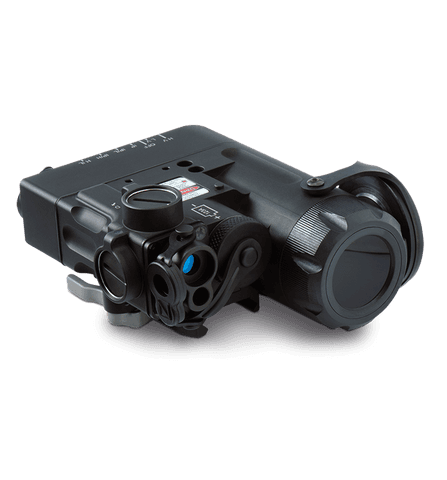
The DBAL-D2 stands out for its incredibly powerful 600mW LED illuminator capable of 800-yard illumination range. The LED provides a wider, more uniform beam than laser illuminators. It's larger and heavier than alternatives but offers unmatched raw illumination power for civilian units.

$1,400 – $1,900

✓ Civilian Legal

Specifications

Illuminator TypeLED
IR Illuminator600mW LED
IR Laser ClassClass 1
Visible LaserGreen (532nm, Class IIIa)
Wavelength850nm
AdjustableYes (2° (spot) to 30° (flood))
Battery2x CR123A
Battery LifeVaries by mode
Weight~11 oz
WaterproofIP67 (1m for 30 minutes)

Pros

  • +Massive 600mW LED illuminator (800 yards effective)
  • +LED provides wider, more uniform beam than lasers
  • +Eye-safe across all functions
  • +Co-aligned visible and IR lasers
  • +Very wide adjustment range (2° to 30°)
  • +Robust military-grade construction

Cons

  • Larger and heavier than modern compact units
  • Requires two CR123A batteries
  • LED can cause overexposure at close range if not adjusted
  • IP67 waterproofing less robust than some competitors

Best For

  • Long-range observation and hunting
  • Users who prioritize raw illumination power
  • Rural properties with large distances to cover
  • Users willing to accept size/weight for capability

Quick Comparison: Which IR Device Should You Buy?

DevicePriceIR TechBest ValueVerdict
MAWL-C1+$3,000+LEDBest OverallKing of civilian IR. Maximum output, military build quality.
RAID Xe$3,000+VCSELBest for CQBUnique room illuminator. Cleanest beam quality.
Holosun IRIS-3$800–$1,000VCSELBest ValueBest bang for buck. Premium performance, mid-tier price.
SMS Trinity$350VCSELBudget King100mW VCSEL at $350. Best watt-per-dollar in night vision.
DBAL-A3$1,300–$1,700LaserLegacy PickProven platform. Illuminator outdated vs modern VCSEL.
DBAL-D2$1,400–$1,900LEDMax Flood600mW LED for max range. Larger/heavier form factor.

Recommendations by Use Case

Match your primary mission to the right IR device. Budget and capability requirements vary significantly between applications.

Home Defense

$800-$3,000+

Holosun IRIS-3 or MAWL-C1+

Home defense ranges are typically under 25 yards where even civilian-power illuminators excel. The IRIS-3 provides excellent value; upgrade to MAWL-C1+ if budget allows. Pair with a passive-aimable red dot for backup.

Night Hunting (Coyotes, Hogs)

$1,500-$3,500

MAWL-C1+ or DBAL-D2

Hunting requires longer illumination range for target ID and shot placement. The MAWL-C1+ offers the best civilian IR output; the DBAL-D2's 600mW LED provides maximum flood coverage for scanning fields.

Budget NVG Build

$350-$1,000

SMS Trinity or Holosun IRIS-3

The SMS Trinity at $350 offers 100mW VCSEL illumination—the best watt-per-dollar in the market. The IRIS-3 has better ergonomics at ~$800. Either pairs well with PVS-14 or similar entry NVGs.

Law Enforcement Patrol

$3,000+

MAWL-C1+ or RAID Xe

LE requires proven reliability and maximum capability. The MAWL-C1+ provides the best civilian-legal output. The RAID Xe's room illuminator is excellent for building entries. Both meet MIL-STD requirements.

CQB / Room Clearing Practice

$3,000+

Wilcox RAID Xe

The RAID Xe's dedicated 40° room illuminator is specifically designed for CQB, providing instant wide-area illumination without adjusting the main illuminator. This is a unique advantage for building work.

Long-Range Observation

$1,500-$1,900

Steiner DBAL-D2

The DBAL-D2's 600mW LED illuminator provides 800+ yard effective range, making it ideal for large rural properties, agricultural settings, or surveillance applications where sheer coverage matters.

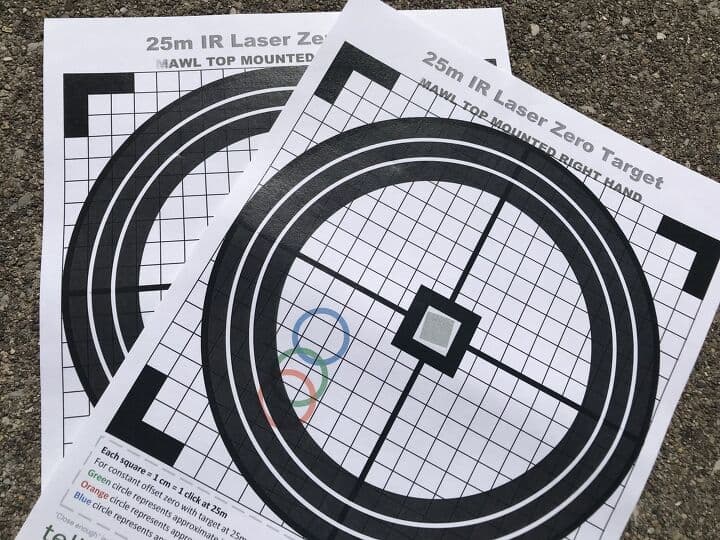
How to Zero Your IR Laser

Proper zeroing is critical for accurate night-time aiming. Most modern devices offer multiple methods depending on your equipment and environment.

Zeroing with Slaved Visible Laser

Most IR devices include a visible laser (usually green) that is co-aligned or 'slaved' to the IR laser. Zero the visible laser during daylight using your day optic, and the IR laser will automatically be zeroed.

Steps

  1. Mount your IR device securely with correct torque
  2. Zero your day optic first (red dot, LPVO, etc.)
  3. Set up at your preferred zero distance (25-50 yards for rough, 100 yards for confirm)
  4. Aim with your day optic at precise center
  5. Activate only the visible laser and note its position
  6. Adjust windage and elevation until visible laser overlays with optic's POA
  7. Confirm IR laser alignment through NVGs at night

Pros

  • Can be done in daylight
  • Simple and intuitive
  • No special equipment needed
  • Fastest method for most users

Cons

  • Relies on factory co-alignment of lasers
  • Should still be confirmed with IR under NVGs
  • Visible laser must be bright enough to see in daylight

Direct IR Zeroing with NVGs

For devices without slaved visible lasers, or to confirm absolute IR accuracy, zero the IR laser directly while viewing through NVGs. This requires night conditions or an indoor range.

Steps

  1. Ensure day optic is already zeroed
  2. Set up at zero distance with NVG-visible targets
  3. Mount NVGs and rifle in stable position
  4. Aim at target with day optic visible through NVGs
  5. Activate IR laser and observe offset from POA
  6. Make small adjustments and confirm with shot groups if possible
  7. Document zero settings for future reference

Pros

  • Most accurate method for IR laser
  • Confirms actual IR performance
  • Works with any IR device

Cons

  • Requires darkness or covered range
  • Need to be wearing NVGs throughout
  • More time-consuming
  • Safety considerations for IR laser eye hazards

Converging Zero

The IR laser is adjusted so its beam intersects the bullet's path at a specific distance (e.g., 50, 100, or 200 yards). At that distance, the laser dot matches POI. Beyond that distance, laser and bullet path diverge.

Steps

  1. Choose your preferred zero distance based on expected engagement range
  2. Zero day optic for the same distance
  3. Align IR laser to match day optic POA at chosen distance
  4. Understand that offset will exist at other distances

Pros

  • Simple concept matching traditional optic zeroing
  • Laser matches POI at one specific distance
  • Intuitive for users familiar with optic zeros

Cons

  • Increasing offset at distances other than zero distance
  • Must know engagement distance to be effective
  • Can be confusing at distances far from zero

Parallel (Constant Offset) Zero

The IR laser beam is set parallel to the bore axis, maintaining a constant offset at all distances. This offset remains predictable, which some operators prefer for variable-distance engagements.

Steps

  1. Measure the physical offset between IR laser emitter and bore axis
  2. Set laser to maintain that constant offset at all distances
  3. Practice with the known offset for holdovers

Pros

  • Consistent, predictable offset at all distances
  • Easier to compensate when range is unknown
  • No convergence/divergence confusion

Cons

  • Laser never matches exact POI
  • Requires mental holdover adjustment
  • Specialized targets may be needed

IR Illuminator Best Practices

Mount Properly

Use correct torque specs on Picatinny mounts. IR devices take significant recoil forces. Position for ambidextrous activation and keep clear of optic line-of-sight.

Zero Before Use

Always zero both visible (if slaved) and IR lasers. Confirm IR zero with NVGs at night. Document your zero distance and verify after any impact or transportation.

Manage Illumination

Adjust illuminator width for your environment. Tight spot for long range; wide flood for CQB. Avoid over-illuminating at close range which causes NVG whiteout.

Train Regularly

NVG shooting with IR aiming requires dedicated practice. Take formal training before relying on IR devices for defense. Dry-fire drills build muscle memory for controls.

Safety Note: Even Class 1 IR lasers are invisible and can cause eye damage at close range with prolonged exposure. Never look directly into any IR laser emitter. Treat IR lasers with the same muzzle discipline as firearms. Anyone in the area should be wearing NVGs that will auto-gate against bright IR sources.

Recommended IR illuminators and lasers

Top IR laser/illuminator units for civilian NVG use. These are the devices we recommend for home defense, hunting, and training applications.

Premium · Class 1+ · 850nm

B.E. Meyers MAWL-C1+

The gold standard for civilian IR capability. More IR output than any other Class 1 or 3R device. Three preset range modes with intuitive controls. MIL-STD 810G construction.

  • Most powerful civilian-legal IR illuminator
  • Ambidextrous design, reversible head/endcap
  • Wide adjustable illuminator (5–115 mRad)
Technology
850nm LED illuminator, 852nm IR laser
Best for
Serious NVG operators, home defense, night hunting
Verified Retailer
Check Price at OpticsPlanet
Premium · VCSEL · 840nm

Wilcox RAID Xe (Civilian)

VCSEL technology provides the cleanest beam quality on the market. Unique dedicated 40° room illuminator for CQB. Co-aligned optical bench means one zero adjusts all lasers.

  • VCSEL provides cleaner illumination than traditional LED
  • Dedicated 40° room illuminator for CQB
  • Single adjustment zeros all lasers simultaneously
Technology
840nm VCSEL illuminator, variable + 40° fixed
Best for
CQB-focused users, building searches, weight-conscious builds
Verified Retailer
Check Price at OpticsPlanet
Best Value · VCSEL · 850nm

Holosun IRIS-GR3

The value king. 60mW VCSEL illuminator rivals premium units at 1/3 the price. Ergonomic slider adjustment from flood to spot. Co-aligned visible and IR lasers for easy zeroing.

  • Best performance-to-price ratio in the market
  • Intuitive slider for fast flood-to-spot adjustment
  • 0.5 MOA/click adjustment precision
Technology
60mW 850nm VCSEL illuminator, 0.7mW IR laser
Best for
Budget builds, first NVG setups, training
Verified Retailer
Check Price at OpticsPlanet
Budget King · VCSEL · $350

SMS Laser Trinity

The best watt-per-dollar in night vision—100mW VCSEL illuminator for just $350. Coaxially aligned lasers eliminate multi-device zeroing. Adjustable power levels for both IR laser and illuminator.

  • 100mW VCSEL at only $350—unmatched value
  • Coaxially aligned for simplified zeroing
  • Crane plug compatible for existing switches
Technology
100mW 850nm VCSEL illuminator, adjustable power
Best for
Budget builds, first-time NVG users, night hunting
Verified Retailer
Check Price at OpticsPlanet
Max Flood · LED · 850nm

Steiner DBAL-D2

Massive 600mW LED illuminator provides 800+ yard effective range. LED offers wider, more uniform coverage than laser-based illuminators. Larger form factor but unmatched flood capability.

  • 600mW LED for maximum flood coverage
  • 800+ yard effective illumination range
  • Wide adjustment range (2° to 30°)
Technology
600mW 850nm LED illuminator, 0.7mW IR laser
Best for
Long-range observation, large properties, rural surveillance
Verified Retailer
Check Price at OpticsPlanet
Legacy · Laser-Based · 850nm

Steiner DBAL-A3 Civilian

The civilian version of the military-proven DBAL platform. Focusable laser-based illuminator with excellent visible green laser for daylight zeroing. Proven heritage.

  • Proven military heritage
  • Excellent visible green laser for zeroing
  • Focusable illuminator (spot to flood)
Technology
<4mW laser-based illuminator, focusable
Best for
Users familiar with DBAL platform, moderate illumination needs
Verified Retailer
Check Price at OpticsPlanet

Purchasing through these links may generate a commission at no extra cost to you. Full-power IR devices (Class 3B+) are restricted to LE/MIL—all links go to civilian-legal Class 1 units.

Next Step

Ready to continue? Here's the recommended next guide:

Recommended Next

AR-15 Night Vision Setup: IR Lasers, Optic Heights & NVG Guide

Complete AR-15 night vision compatibility guide. Setup IR lasers (PEQ-15, DBAL), passive aiming, optic mounting heights (1.93", 2.26"), and NVG training requirements for low-light operations.

Or explore a related topic:

Clip-On Thermal AR-15 Setup->

Related guides

Continue exploring with these related resources

Found this guide helpful?

Share it with other builders on your favorite platform.

Was this helpful?

Quick feedback helps us prioritize guide updates.

Feedback is anonymous. Comments help us decide what to update next.