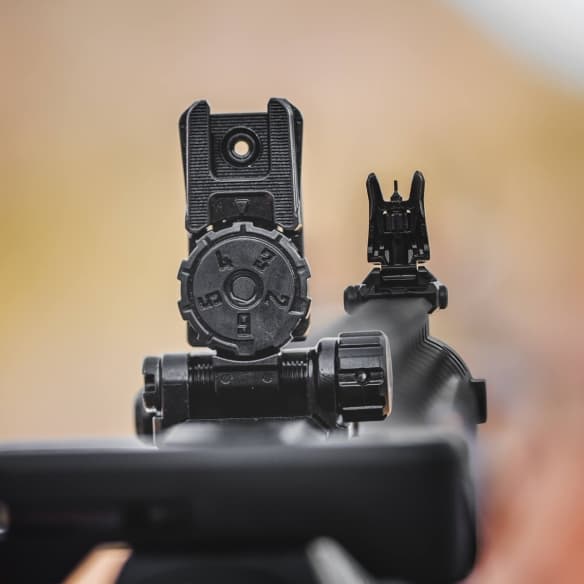
Folding irons
Magpul MBUS Pro Steel Sights
- Tool-free windage on the rear sight
- Slim enough to co-witness with most optics
$209.90 Catalog
View at OpticsPlanet
How to zero an AR-15 red dot, LPVO, or iron sights. Step-by-step with 50/200 zero chart, printable targets, 25-yard confirmation method, clicks calculator, and mechanical offset explained.
Affiliate links (?)
A repeatable zero is more than twisting turrets. This walkthrough covers how to prep your rifle, align backup irons, dial in red dots, and confirm LPVO zeros with minimal ammo waste.
Best zero distance: 50/200 yard zero for most uses. Bullet crosses line of sight at 50 yards and again near 200 yards, staying within about 2" of your aim point in between.
Quick method: Boresight to get on paper → fire 3-round group at 25-50 yards → adjust turrets (1 click = 1/4 MOA typically) → confirm with another group.
Close range offset: Your optic sits ~2.6" above bore. At 10 yards the bullet lands about 2" low, so hold that much high. See the hold at every distance →
Ammo matters: Zero with the ammo you'll actually use. Different loads shift POI. 15-25 rounds is enough with proper technique.
Repeatable zeros start with a controlled setup.
AR-15 optic height (~2.6" over bore) means your projectile climbs to meet line of sight, crosses it, rises, then drops back through it. Choosing a plan tells you where those intersections happen so holds stay simple.
Slightly longer near-zero keeps the arc flatter in the 100–200 yard window while still reconciling with BDC markings calibrated for carbine ranges out to 300 yards.
Expect roughly 4.5 to 5 inches high near 175 yards with typical 14.5" to 16" carbines.
Near zero at 50 yards, far zero near 200. Inside 200 you hold center mass within about 2", and you only need to hold high inside 25 yards for mechanical offset. Works across barrel lengths and bullet weights.
Most agencies and scoped carbine programs default to this for simplicity.
One intersection at 100; trajectory stays below the line of sight beyond that point. Ideal for LPVOs with MOA/MIL turrets because drop data is referenced from a known 100-yard datum.
Pair with turret dope cards or reticle holds for distance shooting.
No matter which curve you choose, record it in your log book and zero card. That way holds for head/low-probability targets become instinctive instead of guesswork. To see exact drop numbers for your specific load, barrel length, and zero, run it through the ballistics calculator and copy the DOPE card straight to your phone, or print a pocket version with the DOPE card generator, which rounds every dial value to your turret's click value.
Switch the zero and read the side profile. The bullet leaves 2.6 inches under the sight line, climbs through it at the near zero, rides above it, then falls back through at the far zero. A 36 yard zero peaks around 4.8 inches high near 175 yards, a 50 yard zero around 2 inches near 145, and a 100 yard zero never gets above the line at all. Set the distance to a range you actually shoot and the readouts give the hold and the clicks to center.
Illustrative field of view. Illustrative housing.
The rifle view measures the seated optic and sets this for you.
Shots land where the solved trajectory puts them, with a group's worth of spread. Dial to walk the reticle onto the group; the next shot re-aims at the target.
Velocity at target
2,040 fps
Muzzle 3,150 fps
Mach
1.83Supersonic
Path vs. line of sight
5.5 in low
1.7 MOA · 0.51 MRAD
Time of flight
356 ms
Energy
508 ft-lb
55 gr
Hold to center
Hold 1.7 MOA over
or dial 7 clicks up at 1/4 MOA
Where the bullet slows
From 16 in, this load stays supersonic to 552 yd and drops below the speed of sound at 676 yd.
Barrel length at 300 yd
| Barrel | Muzzle velocity | Drop | Transonic from | Subsonic from |
|---|---|---|---|---|
| 10.5 in | 2,700 fps | -12.8 in | 440 yd | 564 yd |
| 11.5 in | 2,800 fps | -10.8 in | 466 yd | 590 yd |
| 12.5 in | 2,900 fps | -9.1 in | 491 yd | 615 yd |
| 14.5 in | 3,050 fps | -6.8 in | 528 yd | 652 yd |
| 16 in | 3,150 fps | -5.5 in | 552 yd | 676 yd |
| 18 in | 3,200 fps | -4.9 in | 564 yd | 688 yd |
| 20 in | 3,240 fps | -4.4 in | 573 yd | 697 yd |
Trajectory from the point-mass engine with G1/G7 drag; barrel velocities from the load's published table.
Open the full range simulatorWhere the bullet lands relative to your aim point, and the hold that puts it back on. Solved for M193 55gr FMJ from a 16" barrel with the optic 2.6" over the bore.
| Distance | Point of impact | Hold |
|---|---|---|
| 5 yd | 2.3 in low | Hold 2.3 in high |
| 7 yd | 2.2 in low | Hold 2.2 in high |
| 10 yd | 2.0 in low | Hold 2.0 in high |
| 15 yd | 1.7 in low | Hold 1.7 in high |
| 25 yd | 1.2 in low | Hold 1.2 in high |
| 50 yd(zero) | On the aim point | Hold center |
| 75 yd | 0.9 in high | Hold 0.9 in low |
| 100 yd | 1.6 in high | Hold 1.6 in low |
| 150 yd | 2.0 in high | Hold 2.0 in low |
| 200 yd | 1.1 in high | Hold 1.1 in low |
| 250 yd | 1.3 in low | Hold 1.3 in high |
| 300 yd | 5.5 in low | Hold 5.5 in high |
The path crosses back through the line of sight near 228 yards, peaking 2.0 inches high around 143 yards.
Change the load, the barrel length or the optic height and every number moves. Your own rifle is the only authority; use this to know what to expect before the first group.
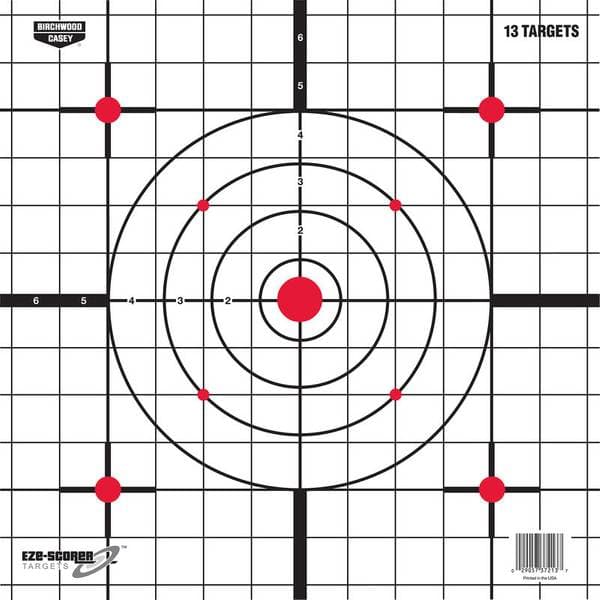
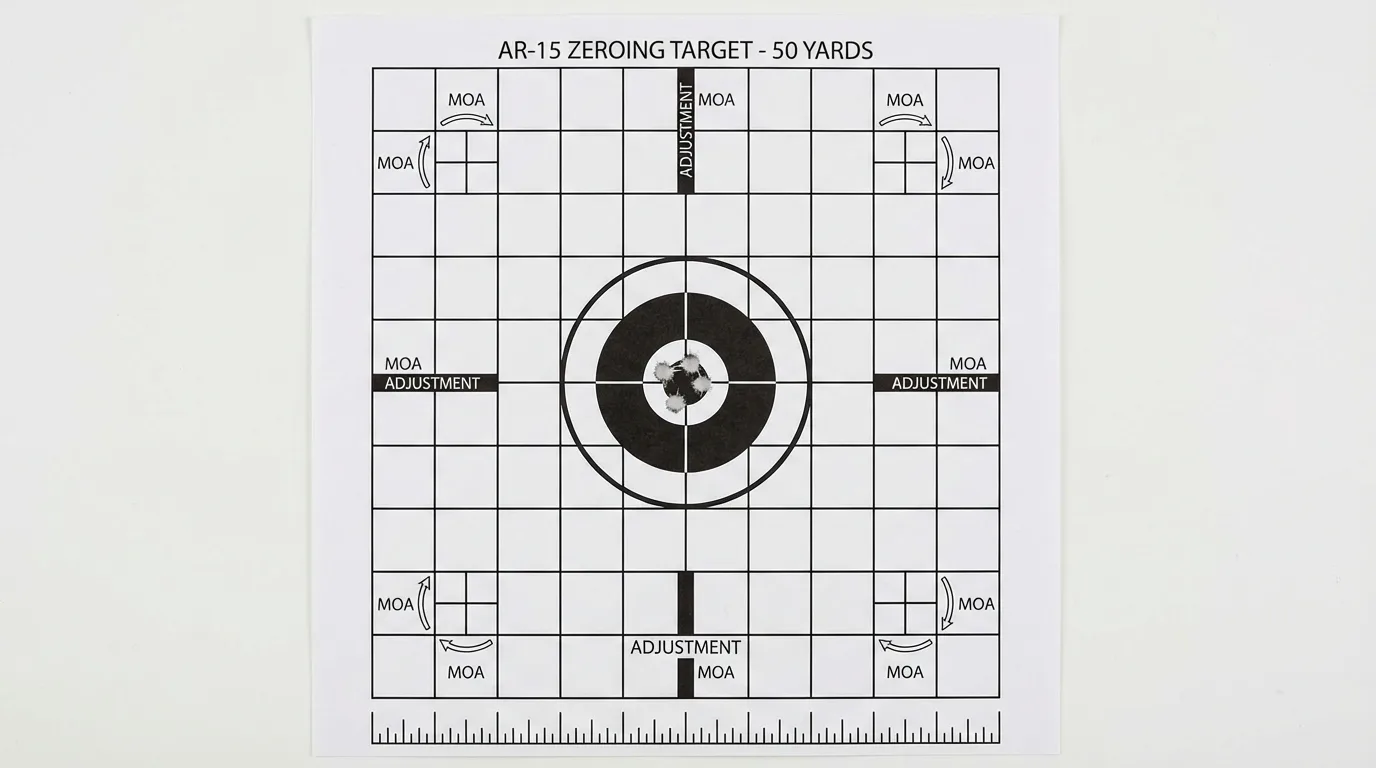
Print at 100% scale for an accurate 1" grid. Letter-size paper (8.5" x 11").
Preview
Aim at the center crosshair. The group should sit 1.2" LOW at 25 yards to confirm a 50 yard zero.
The viewer above answers where the bullet goes. This bench is the other half of the job: measure how far the group sits from your aim point, turn that into clicks at your optic's click value, dial it, and preview the confirmation group before you spend the ammo.
Look through the optic, turn the same two adjustments you use at the range, then re-aim and preview the next group. Choose Range to view the selected distance, Explain for the enlarged diagram, or Inspect target for a close-up.
Measured group
The reticle is centered on the aiming point. The five-hole group shows the measured miss.
Original group: 2 in low, 1 in right
After applied clicks: 2 in low, 1 in right
This predicts correction from one measured group. Calculator holes are illustrative, and range-session spread is a plausible mid-range value for each optic class; shooter error, ammunition, cant, parallax, loose hardware, and trajectory at another distance are not modeled.
Start with irons even if you run an optic. They confirm the bore-to-rail relationship and give you a fallback sighting system. For the BUIS picks themselves, see the best AR-15 iron sights guide for folding, fixed, and offset options ranked by build type.
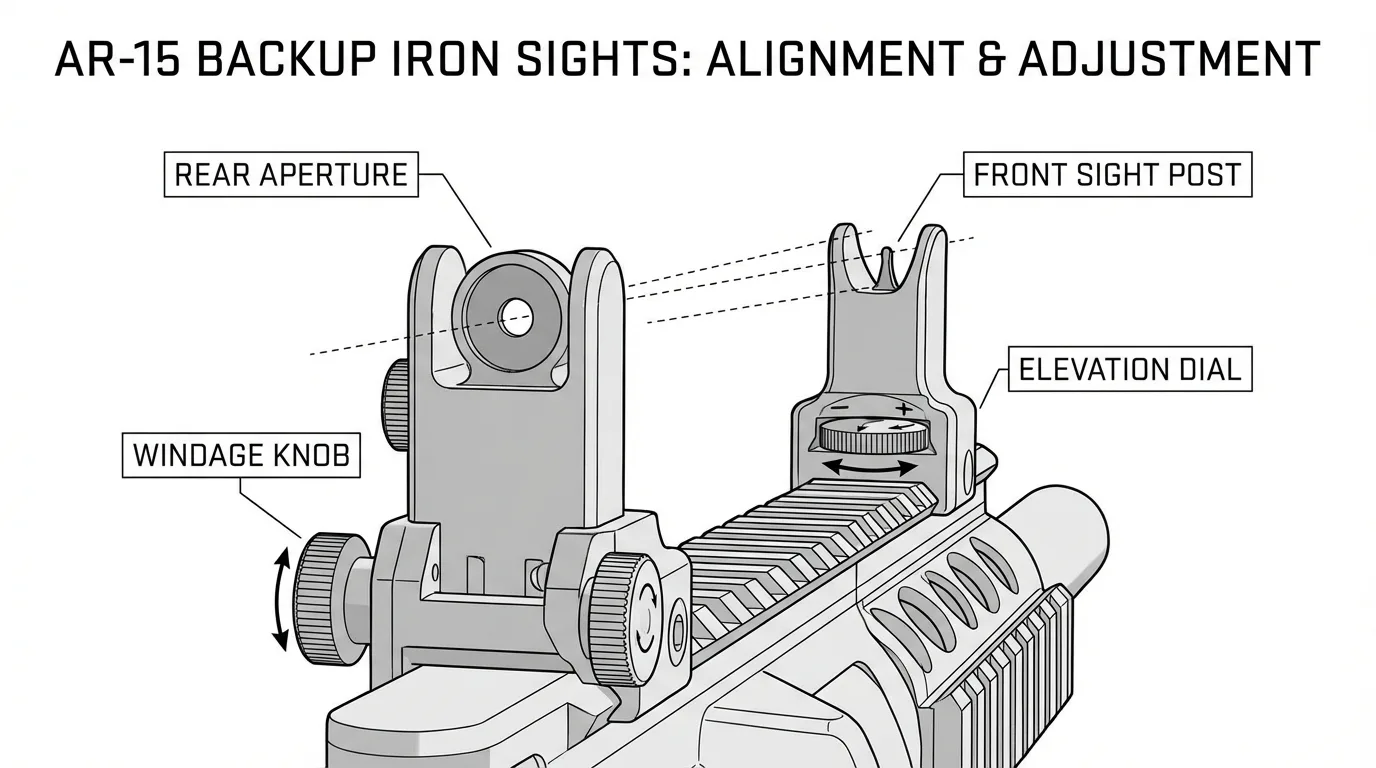
If impacts string vertically, check your front sight for wobble or loose gas block screws before burning more ammo. Heat shifts usually mean hardware movement, not bad fundamentals.
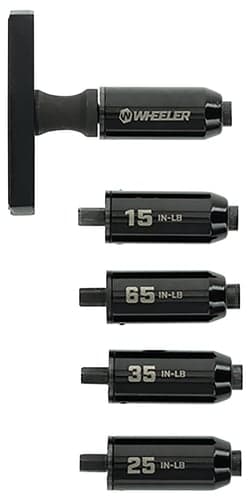
Always confirm torque specs and follow your department or range safety zeroing policies.
Affiliate links - purchases support this site at no extra cost to you. (?)
New zeroing tools, distance calculators, and sight picks for AR-15 and pistol builds.
Mechanical offset is the only magic trick with red dots. Build a process that accounts for the bore being ~2.6 inches below the optic.
Keep zero cards taped inside your dust cover or stock: list the distance, ammo, and date so troubleshooting later is easy.
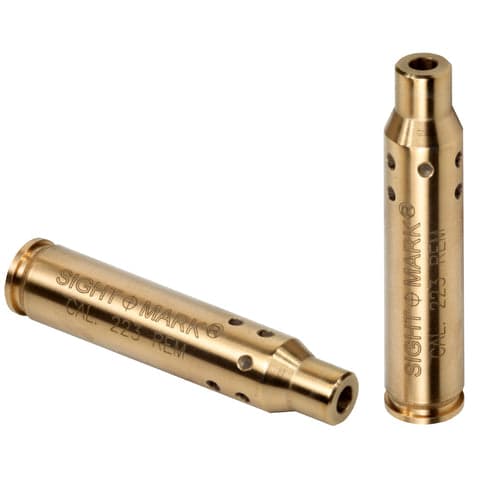
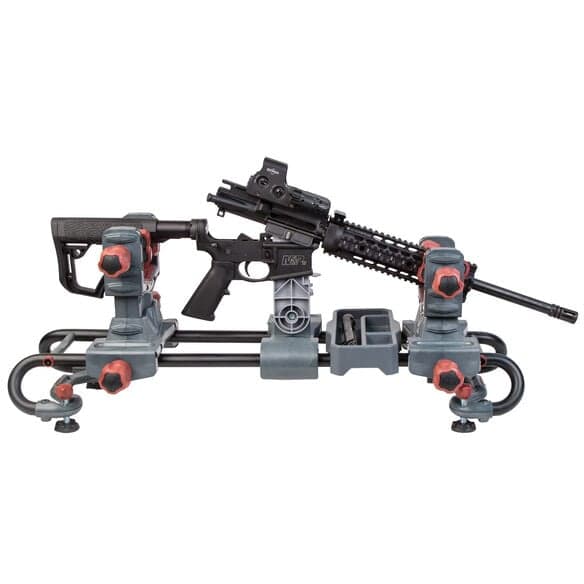
Affiliate links - purchases support this site at no extra cost to you. (?)
Magnified optics demand more time on leveling and parallax. Get those right and dialing turrets becomes a data entry exercise. A zero only holds if the mount holds; if you are still choosing one, our best LPVO and AR-15 scope mounts guide ranks cantilever and QD mounts by return to zero.
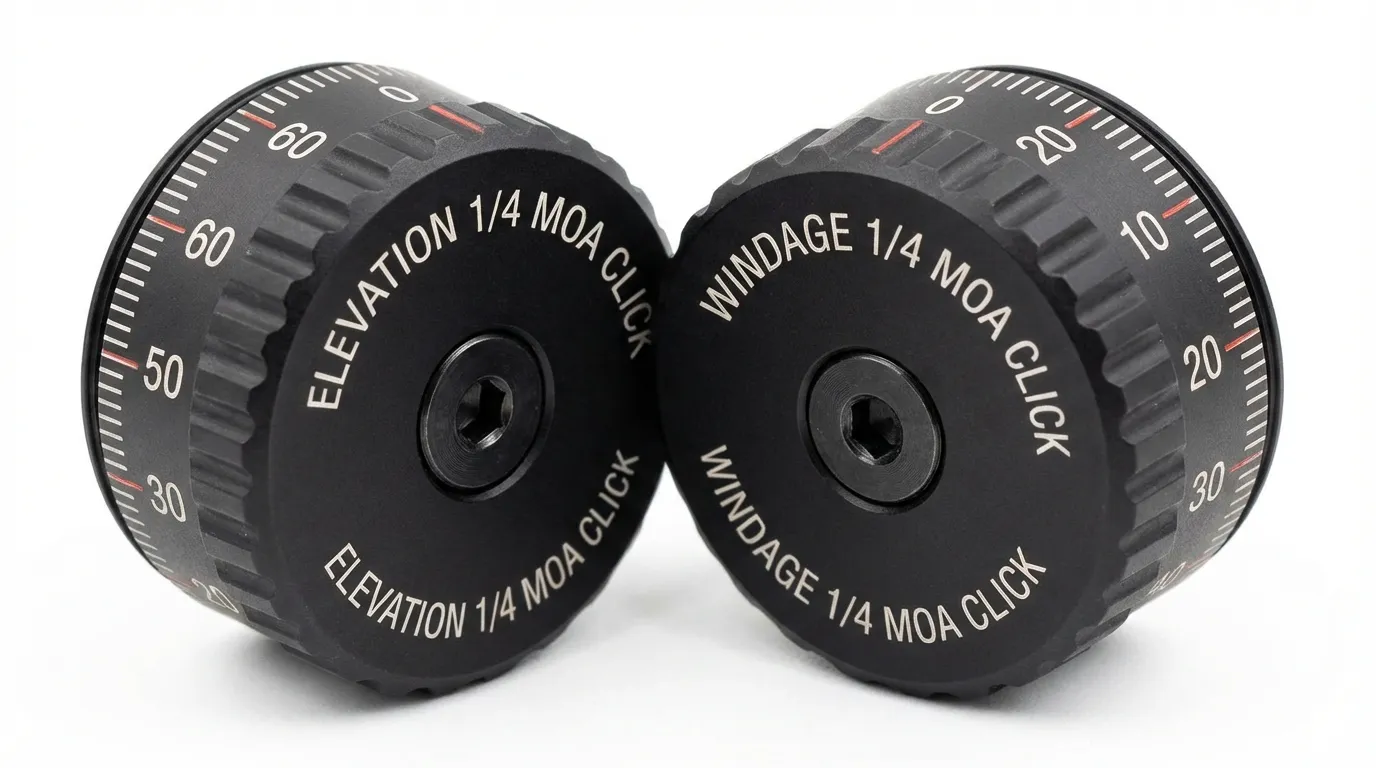
After zeroing, confirm holds at 300–400 yards using reduced steel or paper. Dial or hold according to your BDC, and document the results so you trust the data later.
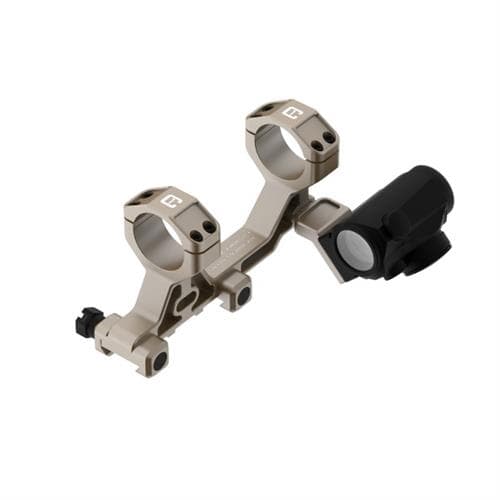
Affiliate links - purchases support this site at no extra cost to you. (?)
Most zero problems come from setup, not shooting fundamentals. Fix these first before blaming your trigger press.
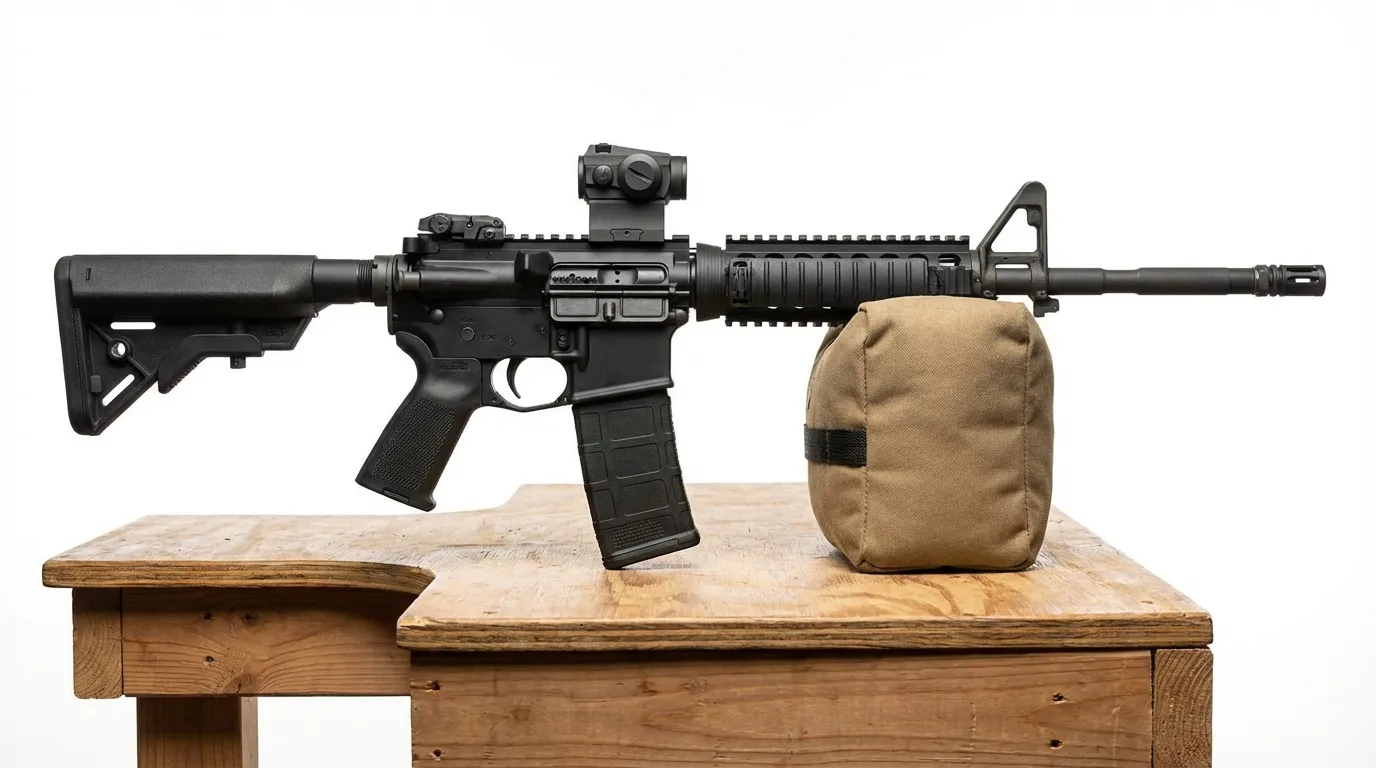
A wobbly bench or improperly bagged rifle adds 2-4 MOA of group spread. Use sandbags under both the stock and handguard, not just the front.
Never adjust based on one round. Fire 3-5 shot groups and adjust from the center of the group, not the last impact.
Different loads have different POI. Zero with the exact ammo you'll use. A 55gr vs 77gr can shift impact 3-4 inches at 100 yards.
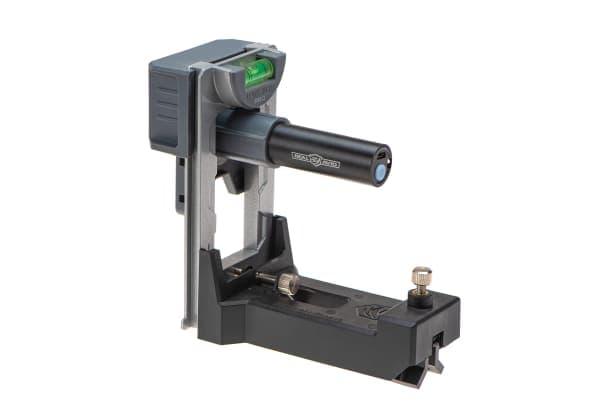
Check torque before every zero session. A loose optic mount can shift zero by several MOA and waste an entire range trip.
At 5-10 yards, your bullet hits about 2 to 2.3" below your aim point. This isn't a zero problem, it's physics. Train your close-range holdovers.
A hot barrel shifts POI. Let the barrel cool between groups or your zero will only be accurate when the gun is hot.

Avid shooter with 10+ years of experience including competition shooting, an associate member of the Professional Outdoor Media Association (POMA), and a member of the National Shooting Sports Foundation (NSSF) and Safari Club International (SCI). Built 10+ AR-pattern rifles and several handgun platforms for home defense, competition, and suppressed night shooting.
This page contains affiliate links. Purchases through these links support the site at no extra cost to you. Read the affiliate disclosure
Ready to continue? Here's the recommended next guide:
The best 5.56 ammo depends on the job: 62gr M855 or 55gr XM193 for training, 77gr Mk262 for accuracy, and bonded 62-64gr loads like Federal Fusion for home defense. Match bullet weight to your barrel twist, then run the barrel-length simulator to see what a short barrel costs in velocity and drop.
Or explore a related topic:
AR-15 Night Vision Setup 2026->Continue exploring with these related resources
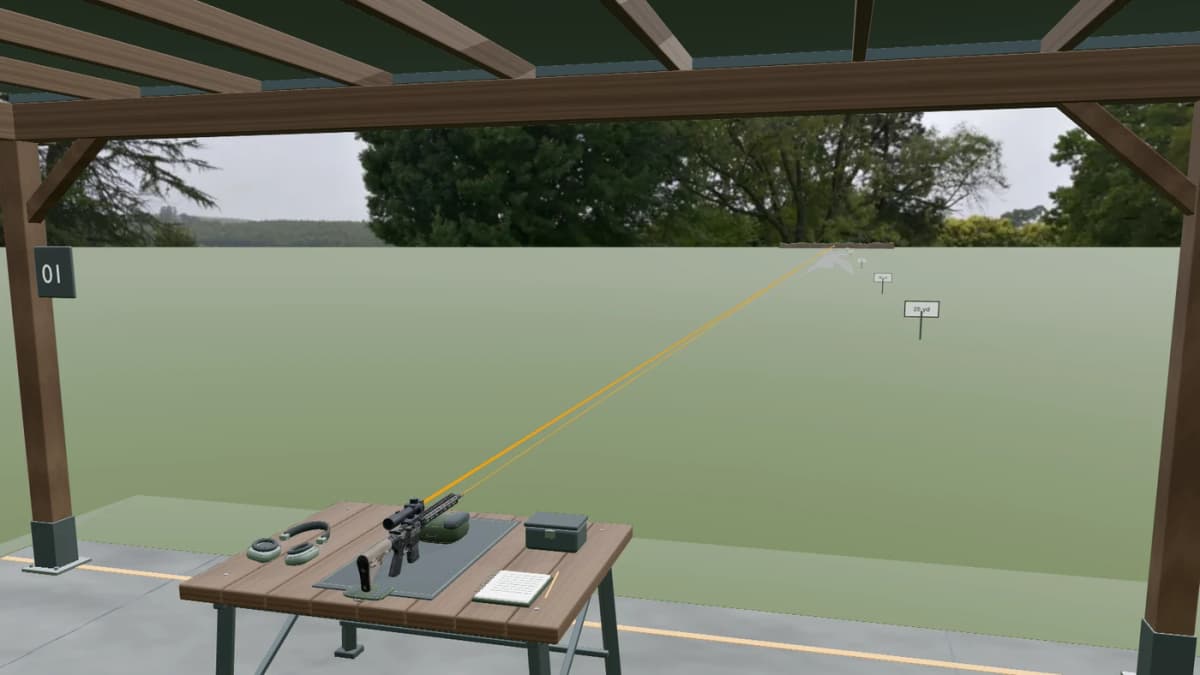
Pick a load, barrel and zero, place a USPSA target out to 1,000 yards, fire through the optic, and read drop, transonic range and where each BDC mark really lands. Step by step, with real numbers for 5.56 from a 16 inch barrel.
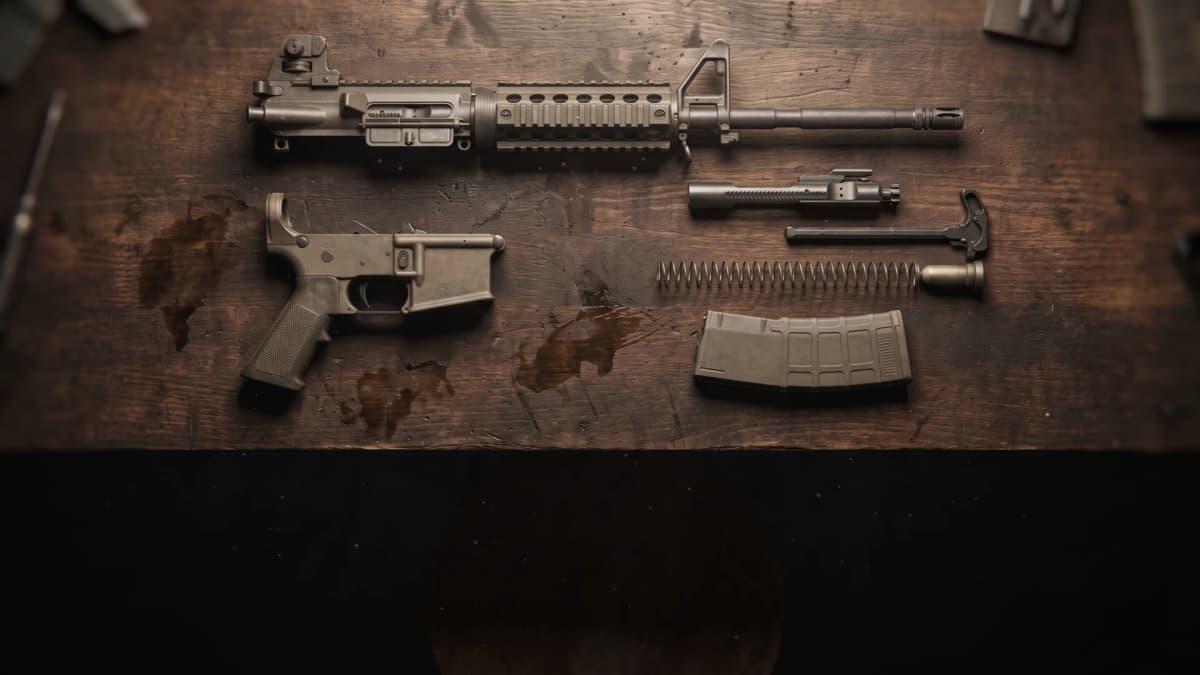
A clickable AR-15 parts diagram covering all 22 parts, from bolt carrier group to buffer tube, with an exploded view, a controls walkthrough for loading and reloading, and a first-time setup checklist.
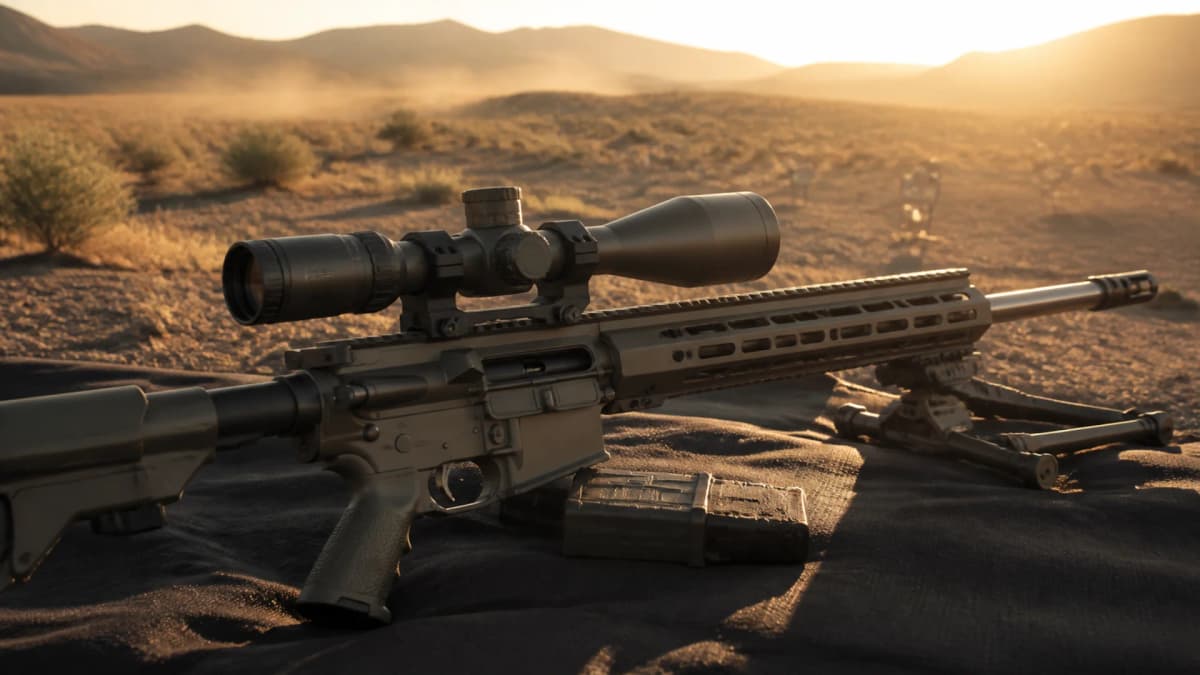
A ranked guide to the variable-power scopes that sit between true-1x LPVOs and full-size precision optics, with compact, hunting, value, and premium picks.
Related articles and industry updates
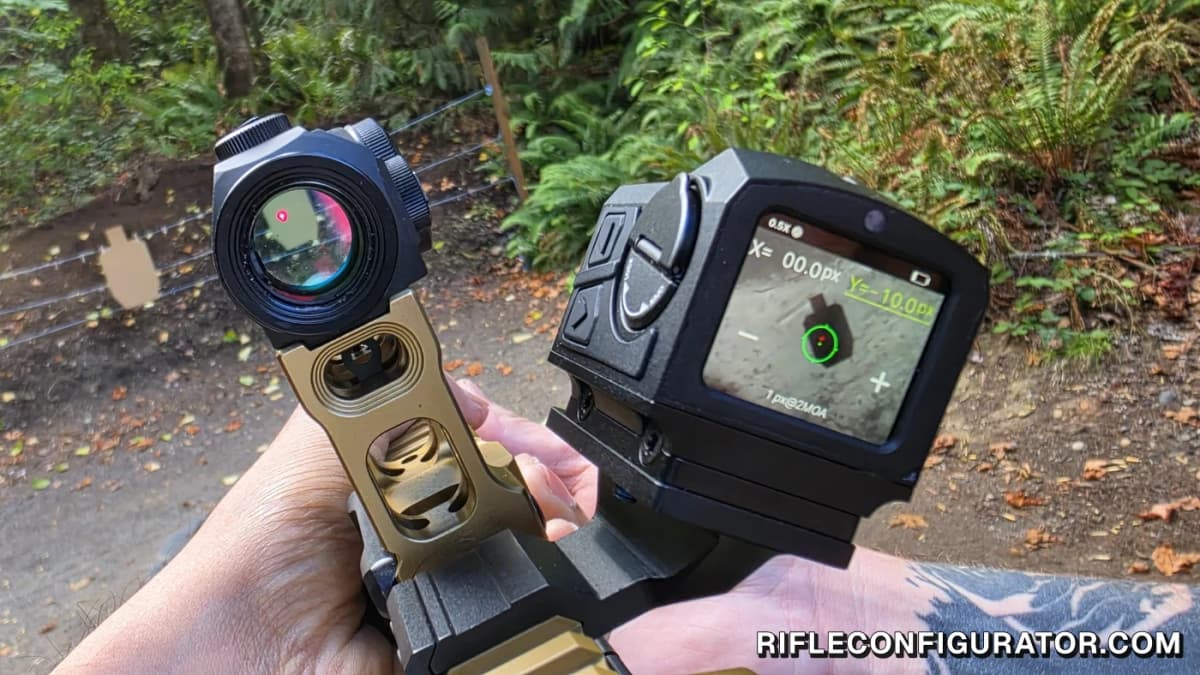
We ran the InfiTac FMP13 on a 45-degree offset beside a Holosun on a Unity FAST mount. The 256x192 mini thermal has an intuitive touchscreen and zeroed on plain cardboard, but the CR2 ran short of its 5-hour rating, so it belongs on an offset, not a pistol.
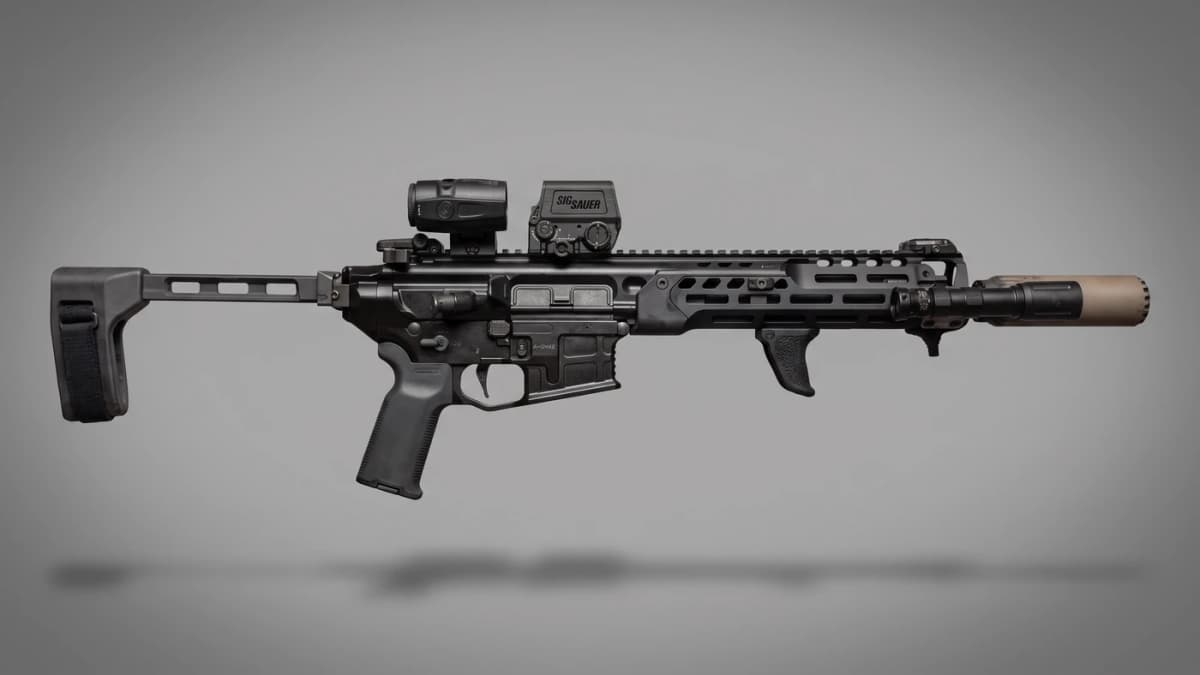
A magnet in the magnifier swaps the reticle for you. After 1,500 rounds on a suppressed SIG MCX SPEAR LT across several 2-gun matches: how AMR actually works, the 40mm Mangin objective nobody talks about, and why the feature is dead without SIG's own magnifier.
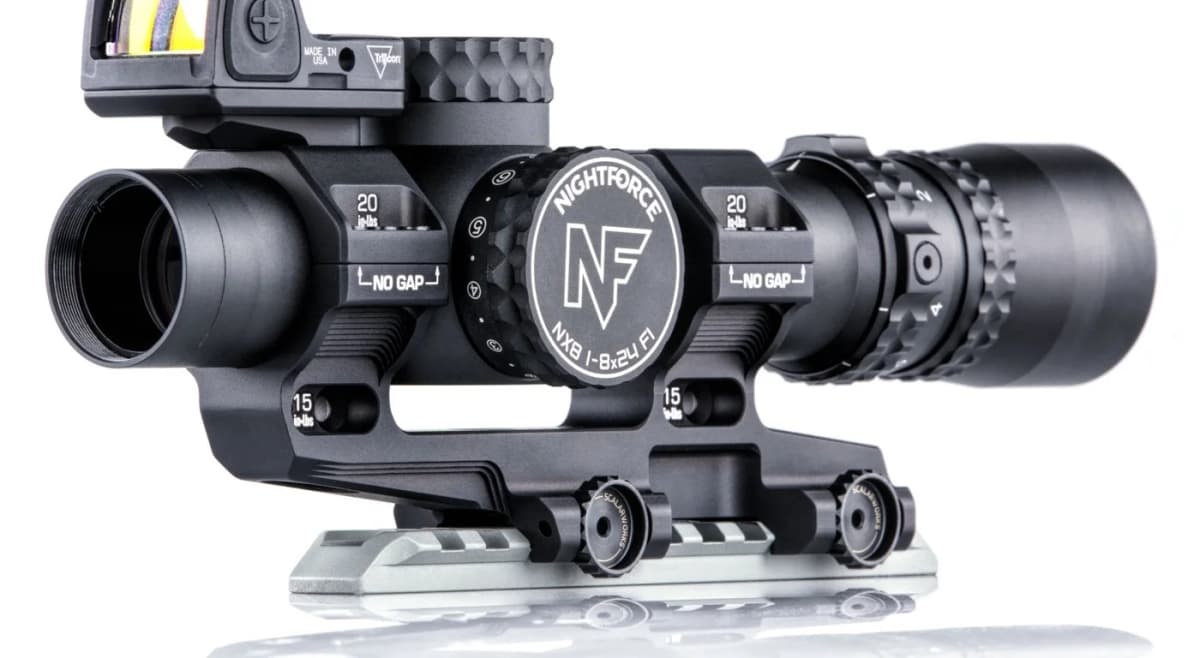
Scalarworks rebuilt the LEAP/08 30mm quick-detach scope mount with two ClickDrive clamps, No-Gap rings, LevelDrive, and KICK accessory support. SW0815 sits at 1.57 inches and 5.68 ounces; SW0825 rises to 1.93 inches and 6.28 ounces.