
Optics & Sighting • $349.99
Primary Arms SLx 1-6x24 Gen IV
- 1-6x magnification
- Second focal plane
$349.99
Shop at Primary Arms
A holdover trainer that grades you against the real trajectory. Pick a scope whose reticle is drawn from the manufacturer's sheet, a load, a barrel length and a zero. A target appears at a random distance; tap the mark you would hold and fire. The shot lands where that mark puts the solved trajectory, the target scores it, and you see the mark you should have used and the error in MOA or MRAD and inches. Ten targets, a running score, and a replay link for the same course.
The correct answer is the mark whose angle is closest to the hold the trajectory needs at that distance: the bullet's drop below the line of sight, converted to an angle, for the load, barrel length, zero and 2.6 in sight height. A BDC mark labeled 400 yd only matches 400 yd for the load and zero the manufacturer cut it for; with a different load the same mark is simply an angle, and the trainer treats it that way. Your shot lands where your chosen mark really sends it, plus a group's worth of spread, and the USPSA, IPSC or steel zones decide whether it counts.
Most LPVO BDC reticles sit in the second focal plane and are true only at maximum power. Turn a 1-6x down to 3x and every mark is worth twice its printed angle, which is why the trainer lets you pick the power and scales the marks to it. First focal plane reticles such as the EBR-7C, TMR and PR2-MIL stay true at any power. The range simulator shows the same reticles with a BDC alignment table for any distance, and the zeroing simulator covers the zero those holds depend on.
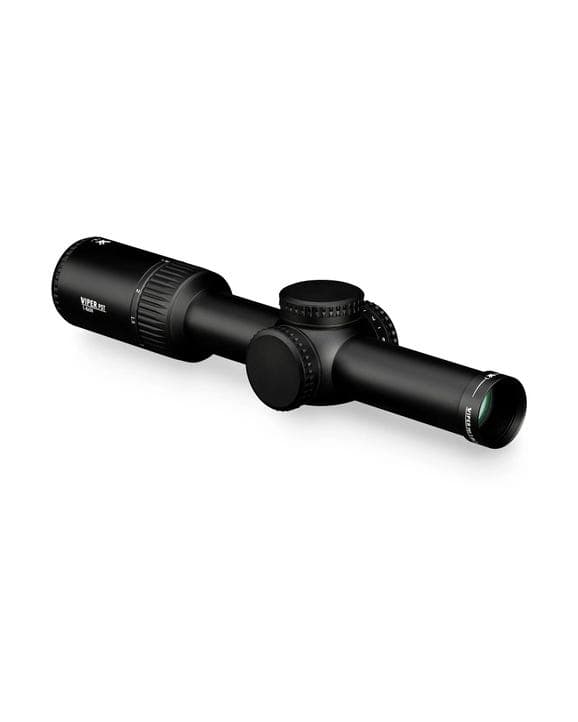
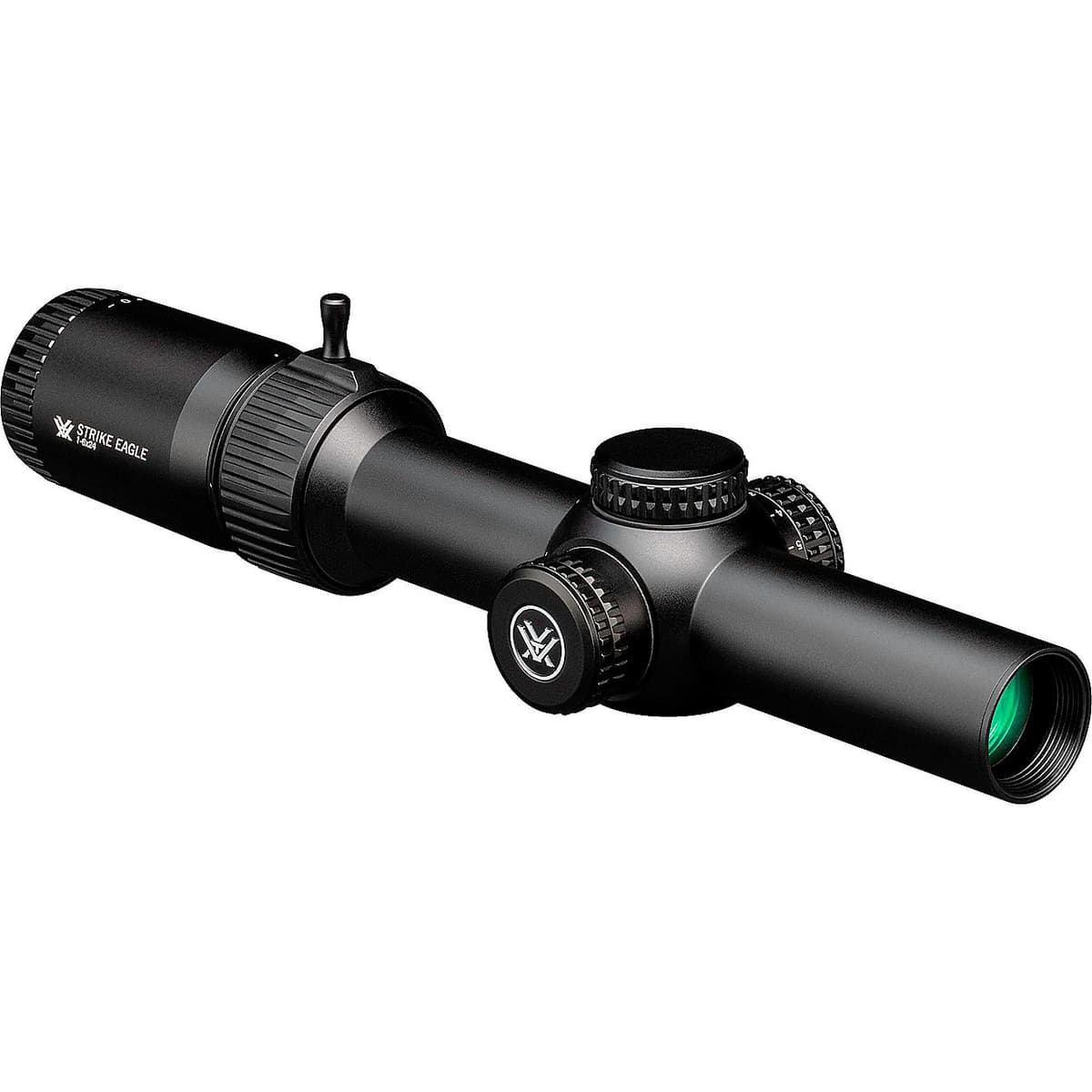
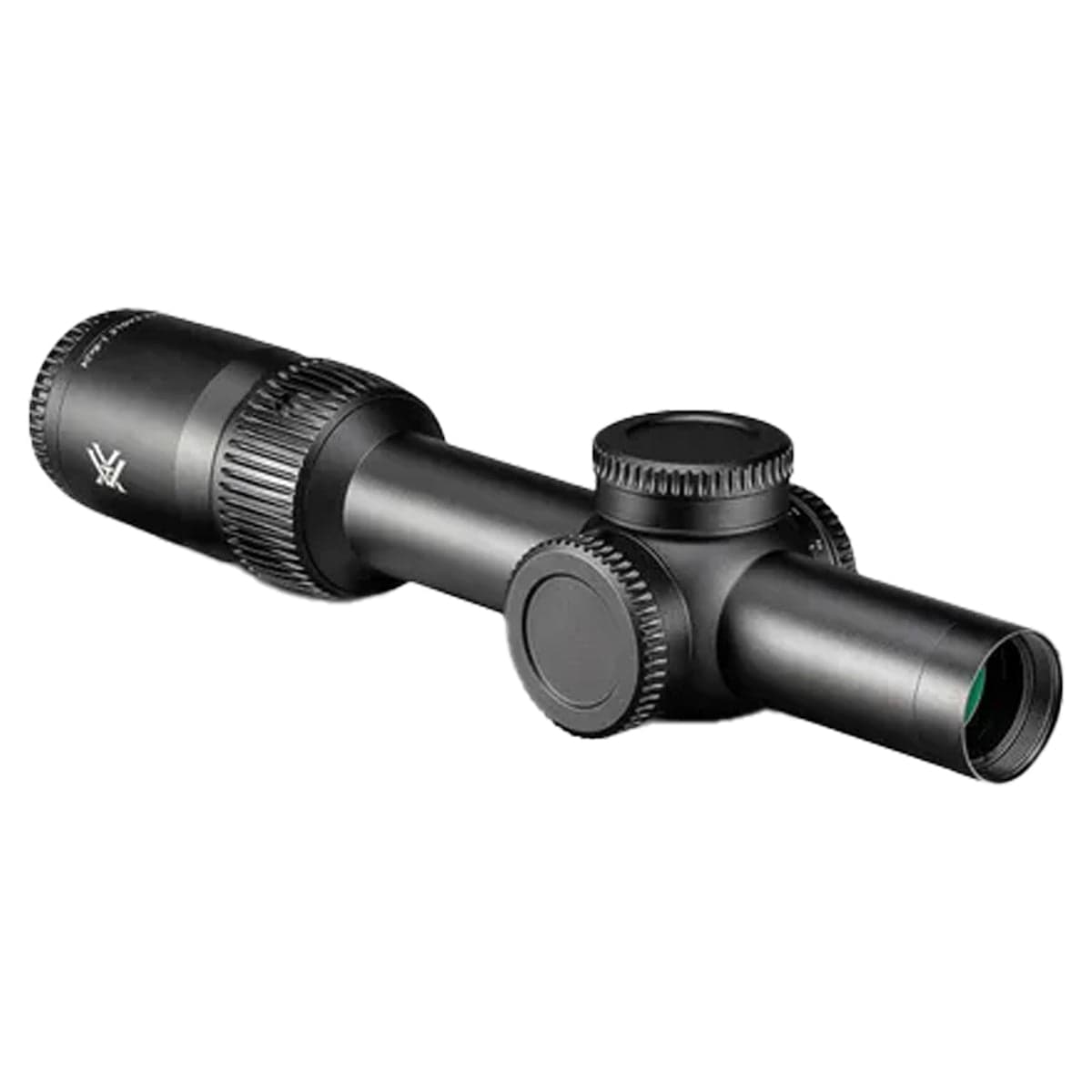
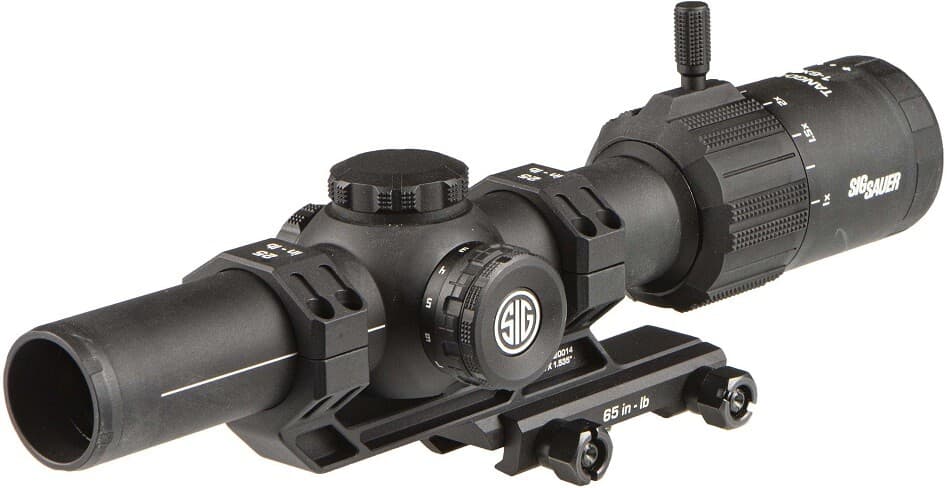
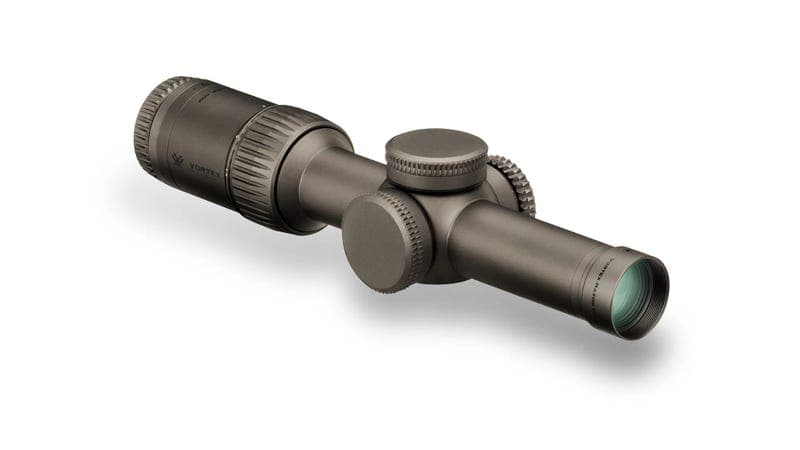
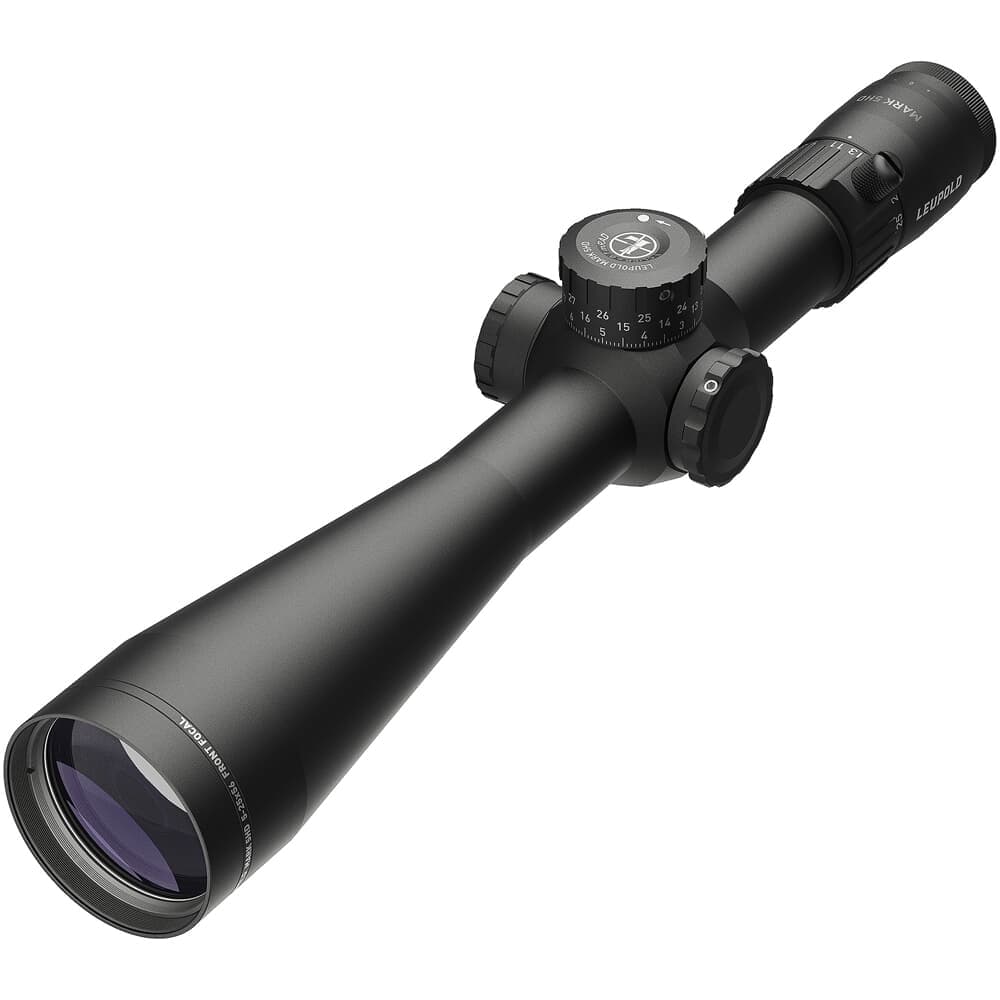
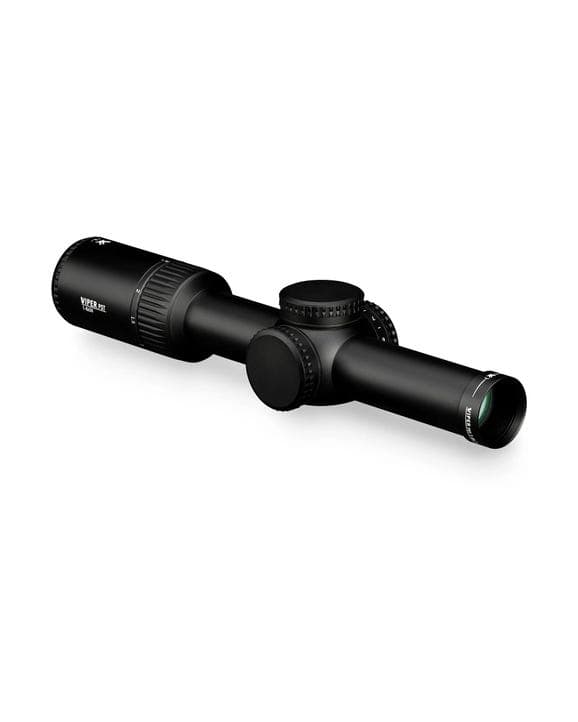
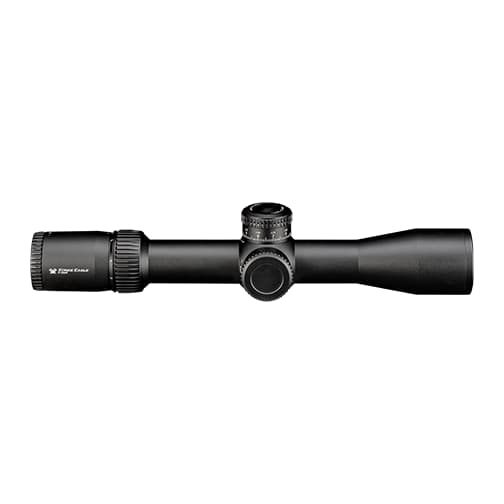
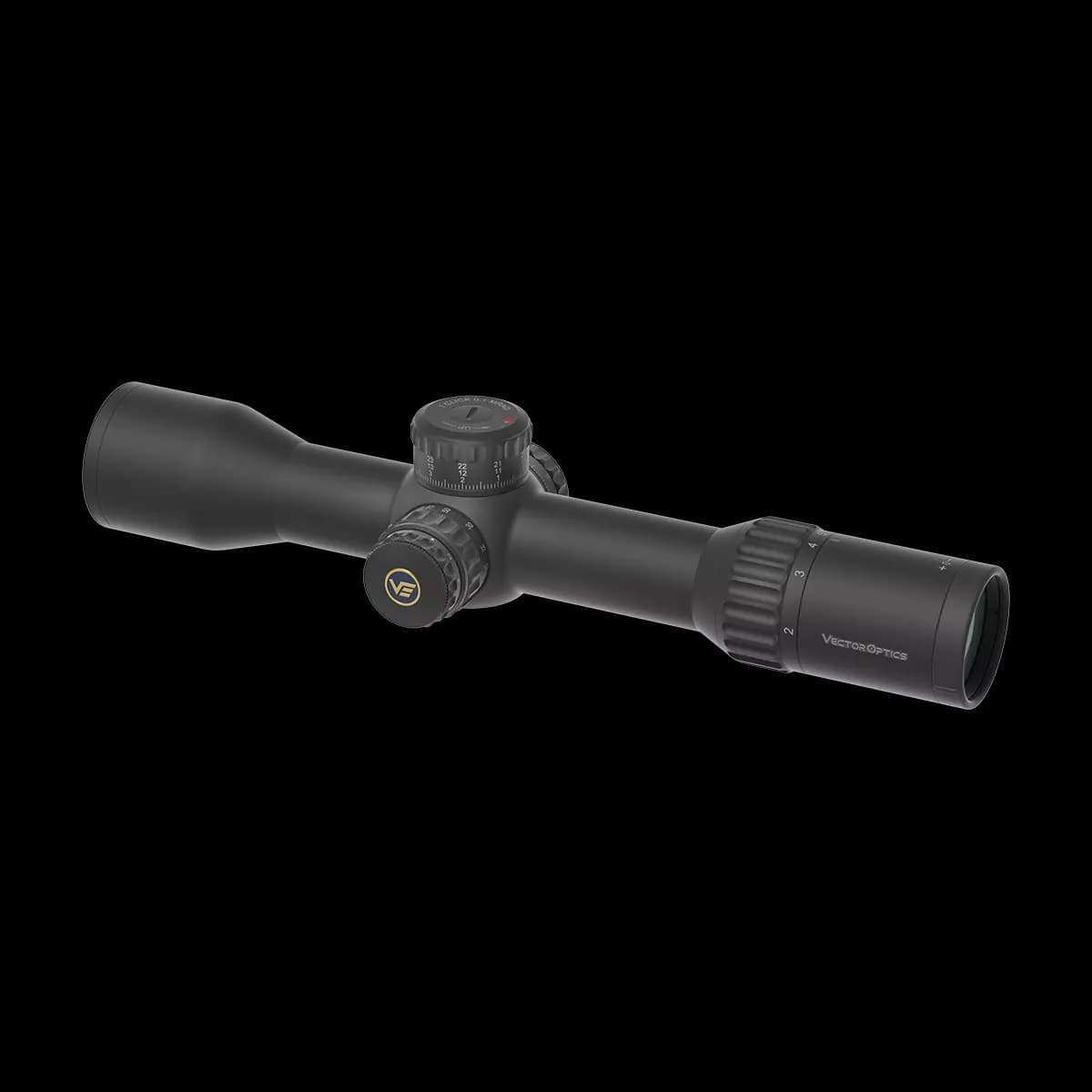
Only scopes whose reticle geometry is verified against the manufacturer's sheet and prints holdover marks are playable. Each one below is drawn in the trainer at its published subtensions.
Affiliate links (?)
A holdover is aiming with a reticle mark below the center instead of dialing the turret. Past the zero distance the bullet falls below the line of sight, so placing a lower mark on the target lifts the barrel by that mark's angle and puts the bullet back on it. BDC reticles label the marks by range; MIL and MOA reticles label them by angle.
A BDC reticle is cut for one trajectory, usually a named load at a stated velocity and zero. A heavier bullet, a shorter barrel or a different zero changes the drop at every range, so the mark labeled 400 may really match 370 or 430 yards. The trainer solves the trajectory for the load, barrel length and zero you pick, then grades the mark you held against that solution.
In a second focal plane scope the reticle keeps its size on screen while the target shrinks as you zoom out, so each mark covers more angle at lower power. At half of maximum magnification every mark is worth twice its printed value. First focal plane reticles scale with the target, so their marks read true at every power. The trainer scales the marks by max power divided by the selected power for second focal plane scopes.
The distance is hidden and the target is drawn at its true size for the range. Bracket it with the reticle: the trainer states the target's real width and height, and where the manufacturer prints ranging stadia for an 18 inch target, which hash brackets which range. Estimate the distance, hold the matching mark, and the reveal shows the true range.
No. When random crosswind is on, each target draws a 2 to 10 mph wind and shows it. You choose elevation only, so the drift appears in where the shot lands and in the reveal. Windage holds vary by reticle and are not published as marks in the same way, so they are left to the reader.
Every playable reticle is drawn from the manufacturer's reticle sheet or manual, with the sheet linked in the range simulator. Subtensions the sheet does not print are approximated for the drawing and are called out there; the holds the trainer grades against are always the printed values.
Yes. Every session draws its distances, winds and group scatter from a seed, and the page address updates to include it. Copy the replay link from the summary card and anyone who opens it gets the same ten targets with the same setup.