Best AR-15 Scope 2026: LPVO, Prism, Red Dot + Magnifier, and 2-10x Compared header image
Gear
June 4, 2026
Best AR-15 Scope 2026: LPVO, Prism, Red Dot + Magnifier, and 2-10x Compared

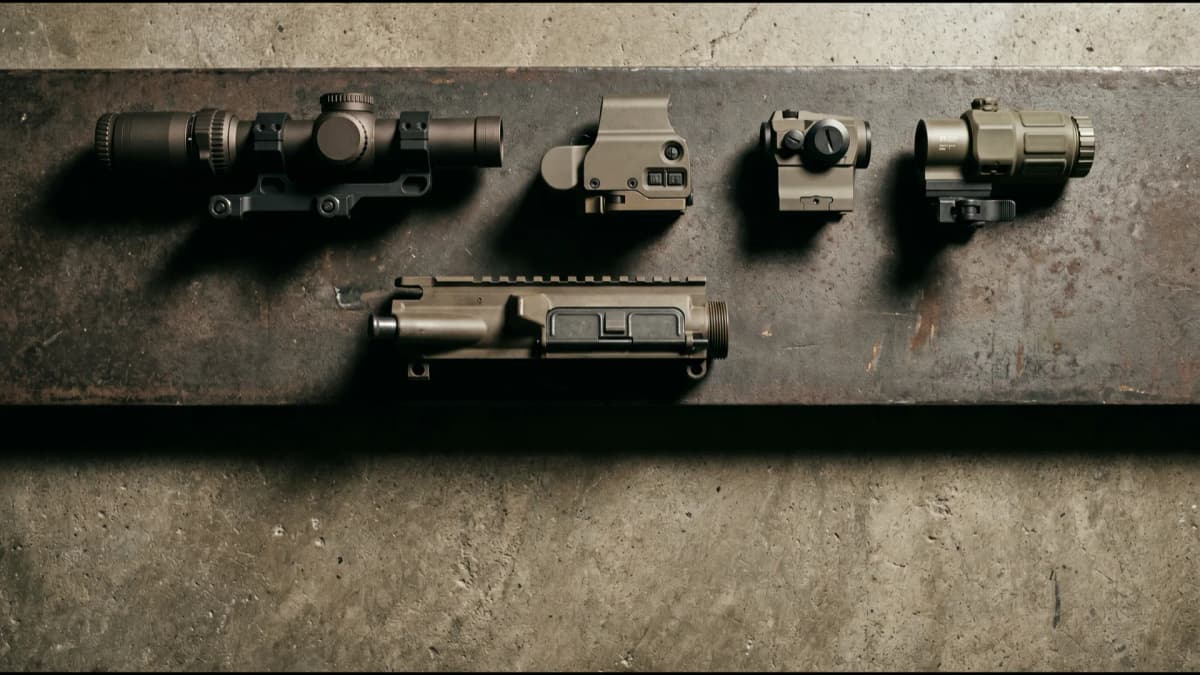
There is no single best scope for an AR-15, only the best optic class for your range and role. This buyer hub compares LPVOs, prisms, enclosed red dots, and red-dot-plus-magnifier setups by use case: home defense, general-purpose 0-400 yards, hunting and varmint, SPR/recce, astigmatism, and budget. Each pick links to its deeper category guide.

Ops // Dossier OPTIC.26--:--:--Z

Index 06.04.26/Dossier OPTIC.26/Buyer Hub

AR-15 ScopesLPVO · Prism · Red Dot · Magnifier · 2026

Range and role pick the optic, not the brand

There is no single best scope for an AR-15, only the best optic class for your range and role. This hub compares LPVOs, prisms, enclosed red dots, and red dot plus magnifier setups by use case: home defense, general-purpose 0 to 400 yards, hunting and varmint, SPR/recce, astigmatism, and budget.

// Where to start · 01

How to Pick an AR-15 Scope

03 steps
// Step 0101/03

Set your range and role

The optic follows the mission. Inside 100 yards and a home gun points you at a red dot; 0 to 400 yards general-purpose points you at a 1-6x LPVO; identification past 400 yards points you at a 1-8x or 1-10x. The optic selection matrix lays out the full decision framework if you are still weighing classes.

// Step 0202/03

Pick the class, then the pick

Use the class grid and the role matcher below to land on red dot, prism, LPVO, or red dot plus magnifier. The top picks ladder names the specific optic for each role. Sort the full optics catalog by weight, reticle, or price if you want to compare beyond the eight picks here.

// Step 0303/03

Mount it and zero it

Buy a quality cantilever or QD mount, torque to spec, and run a 50/200 zero. The mounting basics guide covers eye relief, height, and co-witness before your first round downrange.

// By class · 02

Browse by Optic Class

6 classes

Settle the class first, then the specific optic. Each card opens the dedicated ranking for that class. If you cannot decide between a dot, a prism, and an LPVO at all, start with the optic selection matrix, which breaks the trade-offs down by weight, mounting height, and use case.

// Magnification · 04

Match Magnification to Range

6 classes

Magnification is the first spec that matters. A 1x red dot owns the close fight, a fixed 3x prism is the battery-independent middle, and 1-6x through 1-10x LPVOs scale from general-purpose work to 750-plus yards. Past 10x is wasted on a 5.56 carbine: the cartridge runs out of effective range before the optic runs out of zoom. For a red dot owner who wants reach without buying an LPVO, the AR-15 magnifier guide covers the flip-to-side route.

// Best in class · 05

Best AR-15 Scopes by Role

8 picks

Eight picks, eight roles, no contradictions. The budget end starts with the Vortex Strike Eagle 1-8x24 at $294.49; if you want sub-$200 territory, the budget LPVO guide and the budget optics roundup go lower.

// Interactive · 06

Not Sure Which Class?

3 inputs · 1 pick
// Match finder · interactive3 inputs · 1 pick

Find your optic.

// Role
// Range
// Budget
// Recommend // Home defense · Inside 100 yd
Holosun AEMS Core X2

Enclosed dot stays clear in a stored home gun, 50k-hour battery, large fast window inside the house.

Street$299.99Weight4.1 oz
// Feed · 07

Latest Across Optics

6 reads
// Setup · 08

Mounting & Zeroing Fundamentals

Do this after you buy
// FAQ · 09

Frequently Asked

6 questions

Frequently Asked

What scope should I put on my AR-15?
For most AR-15 owners the best single scope is a 1-6x LPVO like the Primary Arms SLx 1-6x24 Gen IV ($349.99), which gives you a true 1x for close-quarters work and 6x magnification for identifying and hitting targets out to 400 yards. If you mostly defend a home and shoot inside 50 yards, an enclosed red dot such as the Holosun AEMS Core X2 ($299.99) is faster and simpler. The right answer depends on your range and role, not on one universal pick.
What magnification is best for an AR-15?
A 1-6x or 1-8x variable covers the widest range of AR-15 uses, giving you 1x for close quarters and 6-8x for 400-650 yard work. A 1x red dot is best inside 100 yards where speed matters most. A fixed 3x prism like the Primary Arms SLx 3x MicroPrism splits the difference for general-purpose carbines and works for shooters with astigmatism. Magnification past 10x is rarely useful on a 5.56 carbine because the cartridge runs out of effective range before the optic runs out of zoom.
What is the best scope for an AR-15 with astigmatism?
The Primary Arms SLx 3x MicroPrism ($231.99) is the best AR-15 optic for astigmatism. Prism sights use an etched glass reticle rather than a projected LED dot, so the reticle stays crisp instead of appearing as a smeared starburst the way a red dot does to an astigmatic eye. The MicroPrism also keeps its reticle visible with a dead battery. An LPVO at magnification is another good astigmatism-friendly option because the magnified reticle is etched glass, not an emitter.
Is a red dot or LPVO better for an AR-15?
A red dot is better for speed inside 100 yards and for a lighter, simpler home-defense or close-range carbine; the Aimpoint Micro T-2 ($986) or Holosun AEMS Core X2 ($299.99) are top choices. An LPVO is better when you need to identify and hit targets past 100 yards, because magnification lets you confirm what you are shooting at. Many owners run a red dot plus a flip-to-side magnifier like the Holosun HM3X ($199.99) to get both, though a single 1-6x LPVO is often lighter and less expensive than a dot-plus-magnifier stack.
Should an AR-15 have a scope?
Yes. An AR-15 in 5.56 NATO is capable out to 400-600 yards, and an optic dramatically improves how precisely and quickly you can aim at any distance. The choice is which type of optic, not whether to mount one. A red dot suits close-range and home-defense use, an LPVO suits general-purpose and longer shooting, and a prism is a battery-independent middle ground that also helps shooters with astigmatism.
What scope magnification do you need to reach 600 yards on an AR-15?
An 8x to 10x top-end LPVO covers 5.56 to its practical ceiling. The Vortex Strike Eagle 1-8x24 ($294.49) stretches calibrated holdovers to roughly 650 yards under $300, and the Vortex Razor HD Gen III 1-10x24 ($2,189) reaches 750-plus yards while keeping a usable 1x. A 1-6x like the Primary Arms SLx 1-6x24 ($349.99) tops out around 400 yards of confident identification, which covers the vast majority of AR-15 shooting.
// Next step

Mount up.

Pick the class your range and role demand, then read the deep-dive guide for that class. Most AR-15 owners land on the 1-6x LPVO for do-everything use or an enclosed red dot for a home gun. Use the role matcher above if you are still on the fence, or drop your optic into the rifle builder to see how it fits the rest of your build.

SYS · Dossier OPTIC.26 · 06.04.26rifleconfigurator.com / guides / best-ar15-scope© 2026 / For informational use only