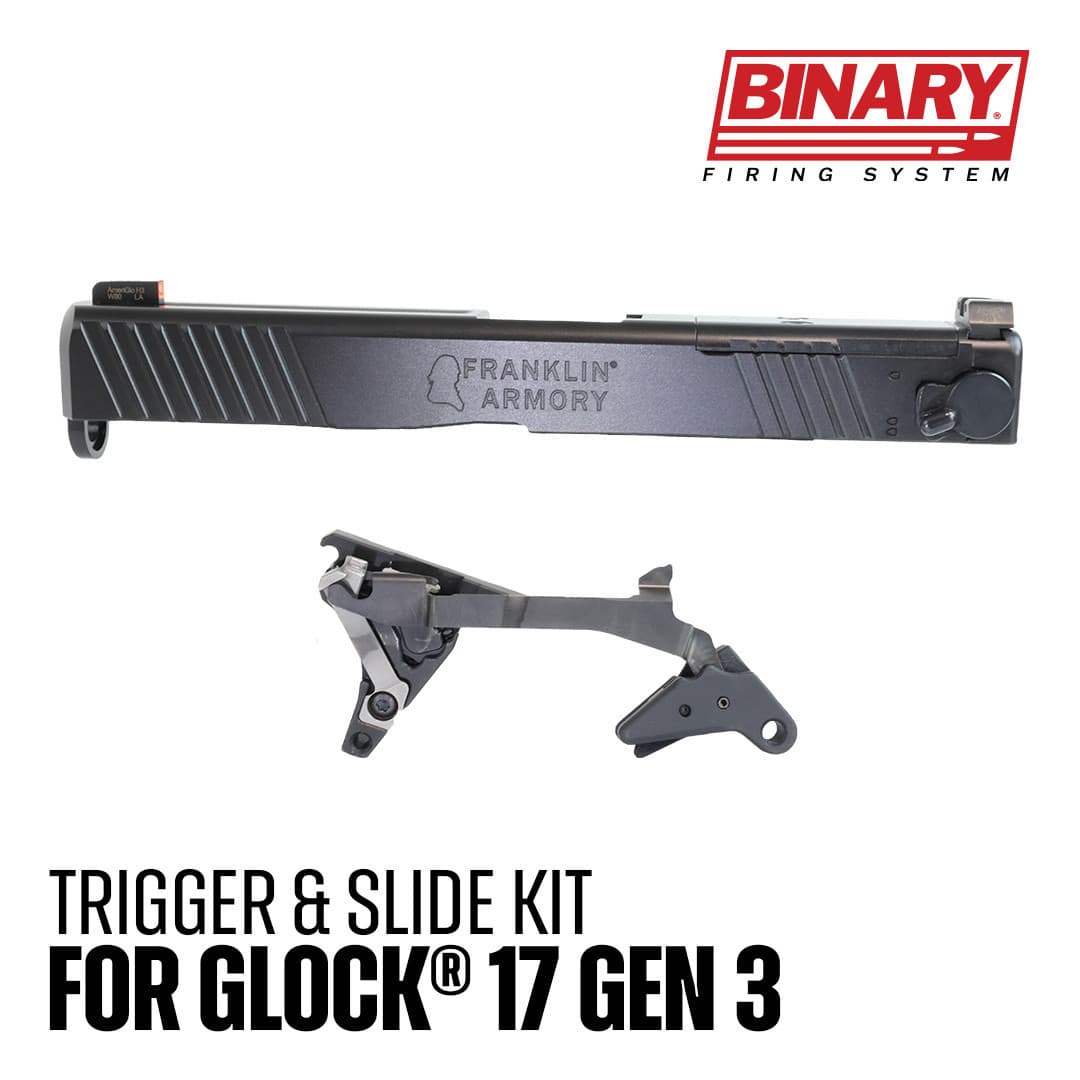
Pistol Triggers • $729.99
G-S173 Binary Trigger + Slide
- Glock 17 Gen 3 only
- Selectable semi-auto and Binary firing modes
$656.99$729.99Save 10%
View at OpticsPlanet
State Legality MatrixClass Breakdown
Statute-cited, last verified 2026-07-31
Binary triggers are banned in 12 states and legally ambiguous in Florida and Washington, D.C., which leaves them legal in the other 37 states. The 12 ban states are California, Connecticut, Delaware, Hawaii, Illinois, Maryland, Massachusetts, New Jersey, New York, Oregon, Rhode Island, and Washington. Texas, Arizona, Georgia, Ohio, and the rest of the country have no statute that reaches a device firing one round on pull and one on release.
Binary Triggers
Binary triggers are legal under federal law and are not machine guns under 26 U.S.C. § 5845(b); ATF treats the trigger pull and the trigger release as two separate functions of the trigger, so one round fires per function. Cargill v. Garland (2024) concerned bump stocks, not binary triggers, and does not change that. State bans reach binaries through broader machine-gun or rate-of-fire definitions that count the release-fired round.
Binary and forced reset triggers do not track together, so check the right class. Washington bans binary triggers but not FRTs, while Nevada bans FRTs but not binaries; the release-fired second round is what pulls a binary into Washington's and New Jersey's machine-gun definitions. Minnesota's binary-trigger ban was struck down and severed in May 2026, so binaries are currently lawful there, though the legislature could re-enact a standalone ban. Florida's coverage rests on a broad bump-stock definition that no court has applied to binaries, so it is treated as ambiguous rather than a clear ban.
Where it is restricted
These jurisdictions restrict binary triggers, whether by an express statutory name, a rate-of-fire catch-all, or a machine-gun definition that captures the release-fired round. Florida and Washington, D.C. are marked as legally unsettled rather than clearly banned.
| State | Status | Rule | Statute / Case |
|---|---|---|---|
| California | Banned | Prohibited as a multiburst trigger activator; possession and sale are barred. Effective 2019-01-01. | Cal. Penal Code §§ 16930 & 32900 |
| Connecticut | Banned | Prohibited as a rate of fire enhancement that fires more than one round per operation of the trigger. Effective 2018-10-01. | Conn. Gen. Stat. § 53-206g |
| Delaware | Banned | Prohibited as a rapid fire device; manufacture, sale, transfer, purchase, and possession are barred. | 11 Del. C. § 1444 |
| Florida | Restricted | Likely prohibited under the broad bump-fire-stock rate-of-fire definition, but untested as applied to binary triggers. Effective 2018-03-09. | Fla. Stat. § 790.222 |
| Hawaii | Banned | Expressly prohibits a device that fires multiple shots with the pull and release of the trigger. | Haw. Rev. Stat. § 134-8.5 |
| Illinois | Banned | Prohibited under PICA's ban on devices that increase a semiautomatic firearm's rate of fire. Effective 2023-01-10. | 720 ILCS 5/24-1.9 |
| Maryland | Banned | Expressly prohibited: the rapid fire trigger activator definition names binary trigger systems. Effective 2018-10-01. | Md. Code, Crim. Law § 4-301 (definition) & § 4-305.1 |
| Massachusetts | Banned | Prohibited as a rapid-fire trigger activator; the 2024 firearms law names binary triggers. Effective 2024-10-02. | Mass. Gen. Laws ch. 140, § 121 (definitions); ch. 269, § 10(c); St. 2024, c. 135 |
| New Jersey | Banned | Falls within the machine-gun definition covering mechanisms not requiring that the trigger be pressed for each shot. | N.J. Stat. § 2C:39-1 |
| New York | Banned | Expressly prohibited: the rapid-fire modification device definition includes binary trigger systems. | N.Y. Penal Law § 265.00(26), (29) & § 265.01-c |
| Oregon | Banned | Expressly prohibited as a binary trigger system under the 2025 rapid fire activator ban. Effective 2025-09-26. | Or. Rev. Stat. § 166.352 (SB 243, 2025) |
| Rhode Island | Banned | Expressly prohibits possession of a binary trigger. | R.I. Gen. Laws § 11-47-8(d) |
| Washington | Banned | Falls within Washington's machine-gun definition covering mechanisms not requiring that the trigger be pressed for each shot. | RCW 9.41.010; RCW 9.41.190 |
| District of Columbia | Restricted | No District statute names binary triggers, but the registration and assault-weapon regime leaves no clear lawful path; treat as unsettled. | D.C. Code §§ 7-2501.01 & 7-2502.02 |
Contested entries
Courts stay, revive, and sever these laws mid-year, and grandfather clauses change what a ban means in practice. This is where each contested entry stands.
The 2018 amendment (Stats. 2018, ch. 795) expanded § 16930 to reach aftermarket trigger systems that allow more than one round to be fired per activation cycle; the California DOJ and retailers treat binary triggers as prohibited.
Section 53-206g bans manufacture, sale, and possession of rate-of-fire enhancements; the definition (trigger pull and reset as a single operation) captures binary trigger systems.
Delaware's rapid fire device definition (a device that increases the rate of fire beyond what is possible unassisted) reaches binary triggers; classed with destructive weapons (class E felony).
Section 790.222 defines a prohibited bump-fire stock expansively as any conversion kit, tool, accessory, or device used to increase the rate of fire faster than possible unassisted. No Florida court has ruled on whether a binary trigger qualifies; makers do not ship binaries to Florida, so this is treated as legally ambiguous rather than a clear statutory ban.
The multiburst trigger activator prohibition reaches a device that fires multiple shots with the pull and release of the trigger, which describes a binary trigger directly.
PICA bars any device, part, kit, tool, accessory, or combination of parts designed and functioning to increase the rate of fire of a semiautomatic firearm above its standard rate; binary triggers fall within this. Illinois' machine-gun definition (single function of the trigger) does not independently reach binaries, so the PICA rate-of-fire provision is the operative hook.
Section 4-301 defines rapid fire trigger activator to include a bump stock, trigger crank, hellfire trigger, binary trigger system, and burst trigger system. The ban was upheld by the Fourth Circuit (Maryland Shall Issue).
Massachusetts banned bump stocks and trigger cranks in 2018; Chapter 135 of the Acts of 2024 added rapid-fire trigger activator coverage that expressly includes binary triggers and hellfire triggers, effective October 2, 2024 under the emergency preamble. No licensing exception permits possession.
The release-fired round means a binary trigger fires a shot without a trigger press, bringing it within New Jersey's broad machine-gun definition. New Jersey does not defer to federal classifications.
Penal Law § 265.00(26) defines rapid-fire modification device to expressly include a binary trigger system, separately defined at § 265.00(29) as a device causing the weapon to fire once on pull and again on release; both were added by Chapter 130 of the Laws of 2019. Possession is a crime under § 265.01-c. A 2022 amendment added pistol converters, not binary coverage.
SB 243 (Community Safety Firearms Act) defines binary trigger system as a device that allows the firearm to fire both when the trigger is pulled and when released; possession is a class A misdemeanor and manufacture, sale, or transfer a class B felony, with no grandfather clause.
Section 11-47-8(d) makes it unlawful to possess a bump-fire device, binary trigger, or trigger crank; enacted 2018, penalties up to 10 years.
The release-fired round places a binary trigger within RCW 9.41.010's machine-gun definition, effectively banning it. Note the asymmetry: Washington does NOT ban forced reset triggers, which fire one round per pull.
The District's machine-gun definition (§ 7-2501.01(10)) was narrowed to automatic-only in 2008 and does not reach a one-round-per-function binary trigger, and no District statute names binary triggers. Device-level legality is unsettled; the host firearm must still clear the District's registration and assault-weapon rules, which most binary-capable rifles do not. Makers do not ship to the District.
Iowa Code § 724.1 defines a machine gun as firing more than one shot by a single function of the trigger; a binary fires one round per function.
The 2024 binary-trigger prong of Minn. Stat. § 609.67 (added by 2024 c 127) was struck down and severed as violating the state single-subject clause in Minnesota Gun Owners Caucus v. Walz (Minn. Ct. App., affirmed May 26, 2026). The ruling is procedural, not a Second Amendment holding; the legislature could re-enact a standalone ban. The FRT-reaching 2023 prong of the same statute survives. Watch this cell.
NRS 202.274 (AB 291, 2019) bans devices that eliminate the need for a separate movement for each function of the trigger. A binary trigger requires the operator to release the trigger for the second shot, so it is not covered. Note the asymmetry: NV DOES ban FRTs under the same statute.
13 V.S.A. § 4022 prohibits only a bump-fire stock (a butt stock using recoil energy to facilitate repeated trigger activation); it does not define or reach binary triggers.
Va. Code § 18.2-308.5:1 defines trigger activator as a device allowing more than one shot with a single pull by harnessing recoil energy (a bump-stock mechanic); a binary trigger requires a deliberate release for the second shot and is not covered. The statute was amended in 2024 to add auto sears and still does not name binary triggers. Pending forced-reset bills could change the landscape.
Where it is legal
Binary triggers are legal in 37 states, including Texas, Arizona, Georgia, Ohio, Pennsylvania, Nevada, Vermont, Virginia, and Iowa. Iowa's machine-gun definition turns on a single function of the trigger and does not reach a binary.
What to buy
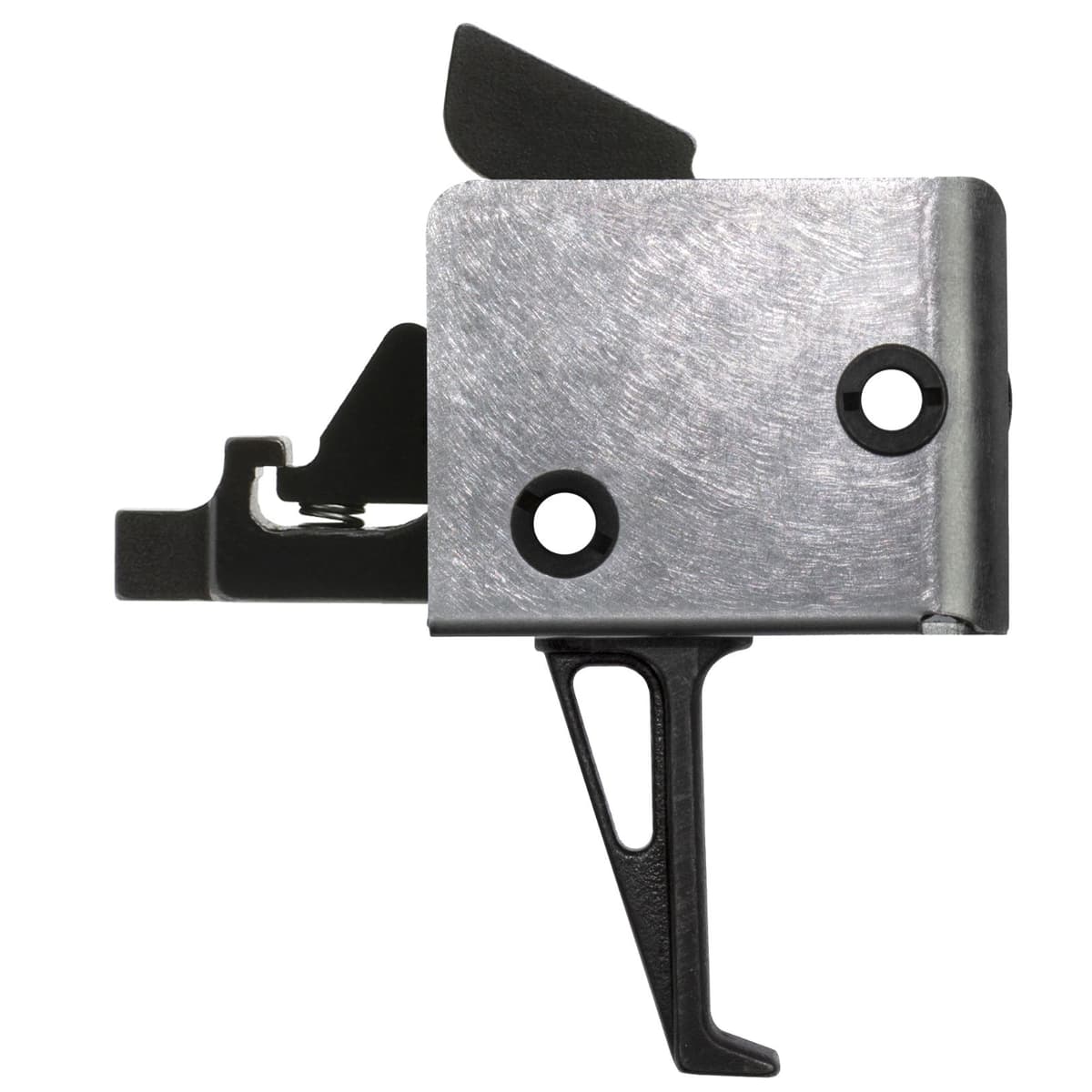
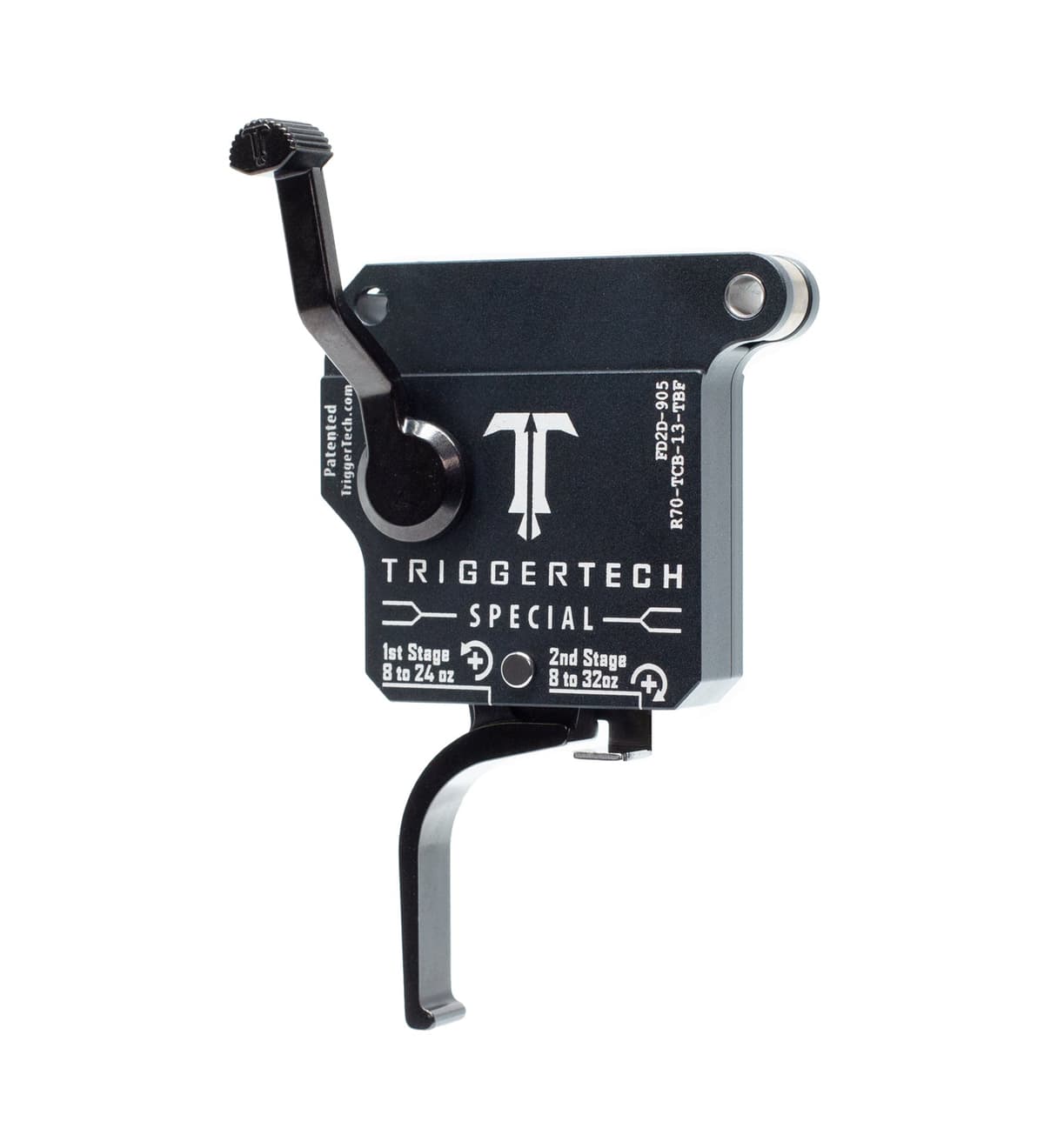
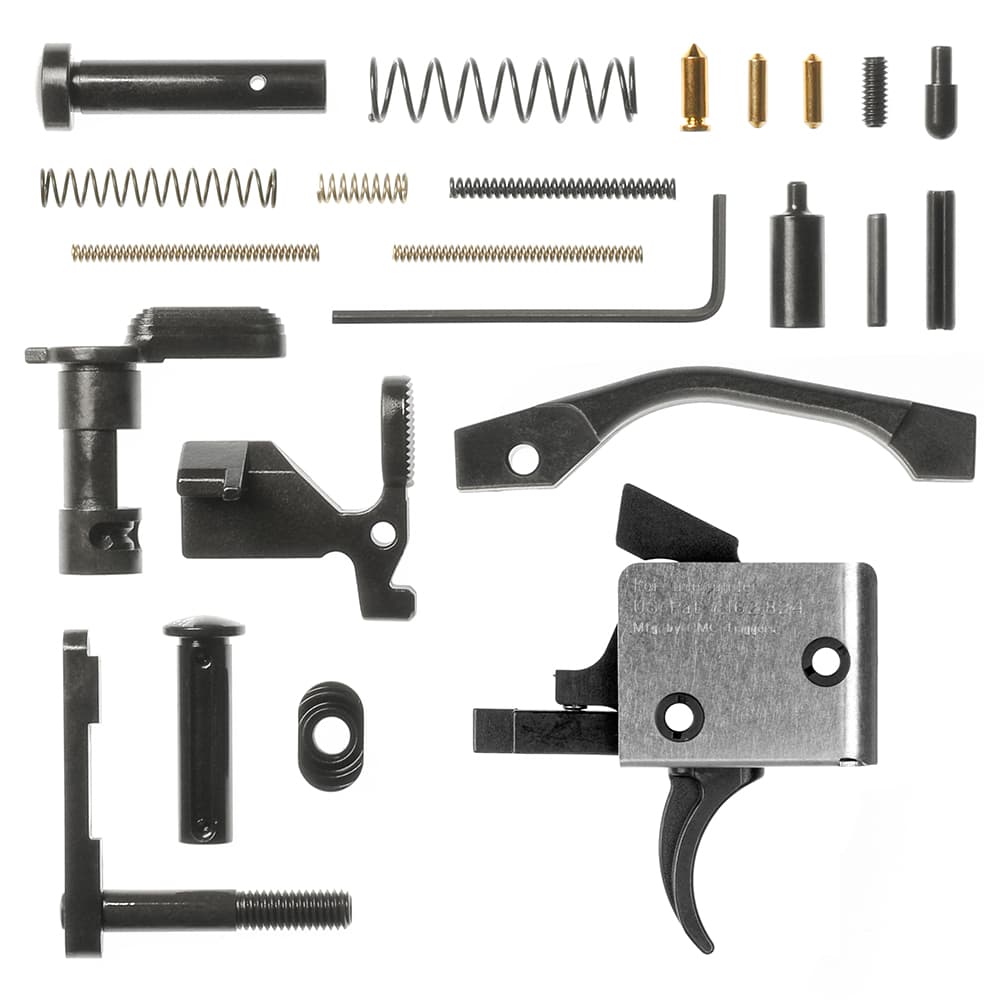
In a green state, these are the binaries that matter. Franklin Armory's BFSIII line covers AR, Scorpion, Stribog, and B&T hosts, and the Fostech Echo AR-II is the drop-in AR alternative.
Affiliate links (?)
Federal law
Binary triggers are legal under federal law and are not machine guns under 26 U.S.C. § 5845(b); ATF treats the trigger pull and the trigger release as two separate functions of the trigger, so one round is fired per function. Cargill v. Garland (2024) concerned bump stocks, not binary triggers, and does not change this.
Federal baseline verified 2026-07-31.
Common questions
Yes. Texas has no statute restricting binary triggers, and a binary is legal under federal law because ATF treats the pull and the release as two separate functions of the trigger. The Franklin Armory BFSIII and similar binary triggers are legal to own in Texas.
It is legally ambiguous, not clearly legal. Florida Statute § 790.222 defines a prohibited bump-fire stock expansively as any device used to increase the rate of fire, but no Florida court has ruled whether a binary trigger qualifies, and makers do not ship binaries to Florida. Treat a binary trigger as legally risky in Florida until a court or the legislature settles the question.
Yes. The release-fired round places a binary trigger within Washington's machine-gun definition (RCW 9.41.010), which effectively bans it. Note the asymmetry: Washington does not ban forced reset triggers, which fire one round per trigger pull.
Yes, as of 2026. Minnesota's 2024 binary-trigger prong of § 609.67 was struck down and severed for violating the state single-subject clause in Minnesota Gun Owners Caucus v. Walz, affirmed May 26, 2026. The ruling was procedural, not a Second Amendment holding, so the legislature could pass a standalone ban later. Binary triggers are currently lawful in Minnesota.
Yes. A binary trigger fires one round on the pull and one on the release, and ATF treats those as two separate functions of the trigger, so it is not a machine gun under 26 U.S.C. § 5845(b). Federal legality does not override state bans; 12 states plus two ambiguous jurisdictions restrict binaries regardless.
A binary trigger fires one round when you pull the trigger and a second when you release it; a forced reset trigger fires one round per pull and mechanically resets faster. States often reach one and not the other: Washington bans binaries but not FRTs, Nevada bans FRTs but not binaries, and Rhode Island expressly names binaries while its FRT coverage is contested. Always check the specific class before buying.