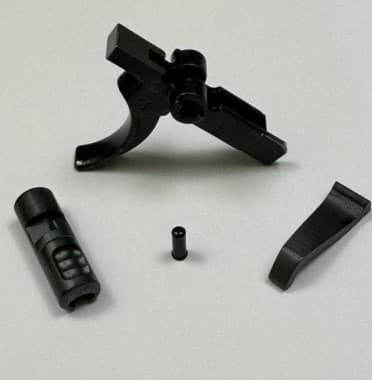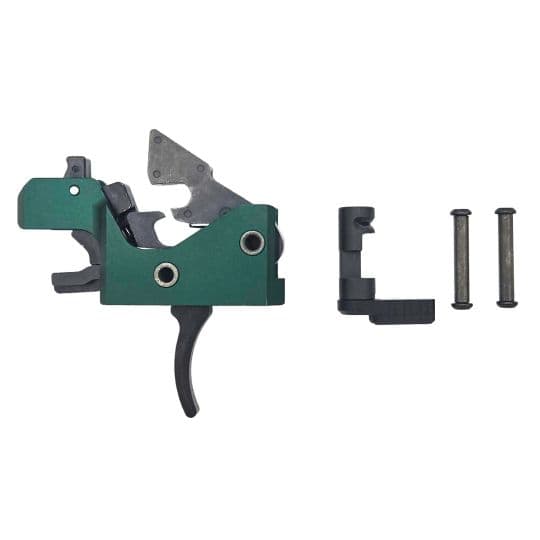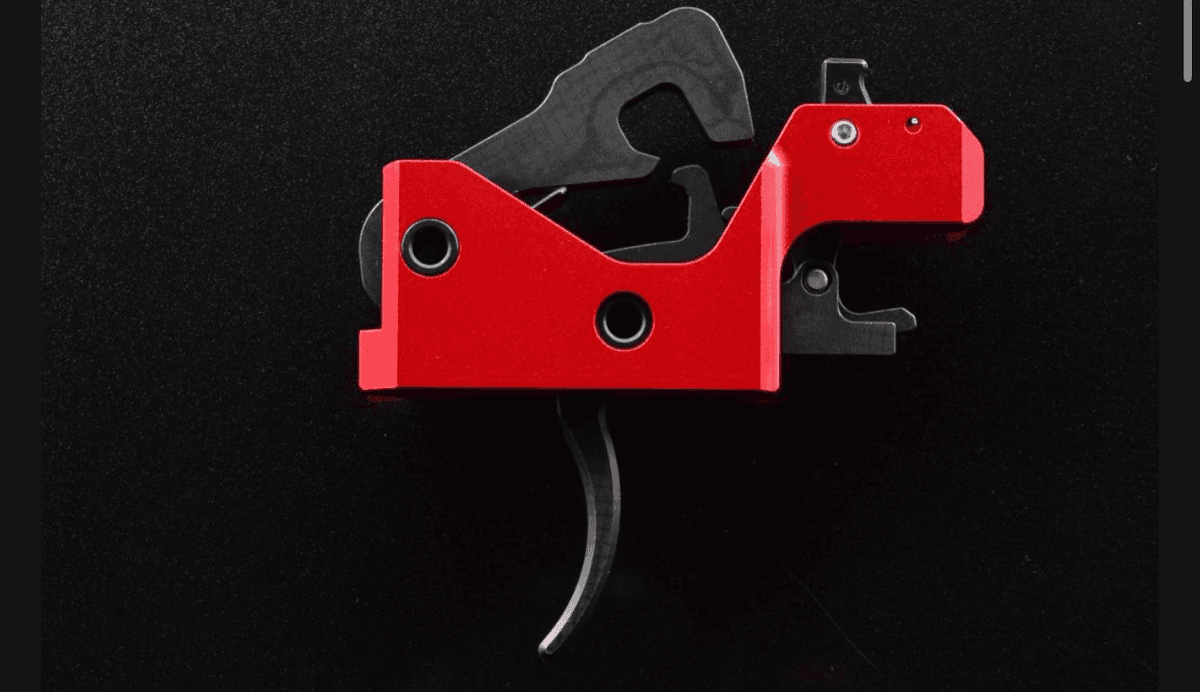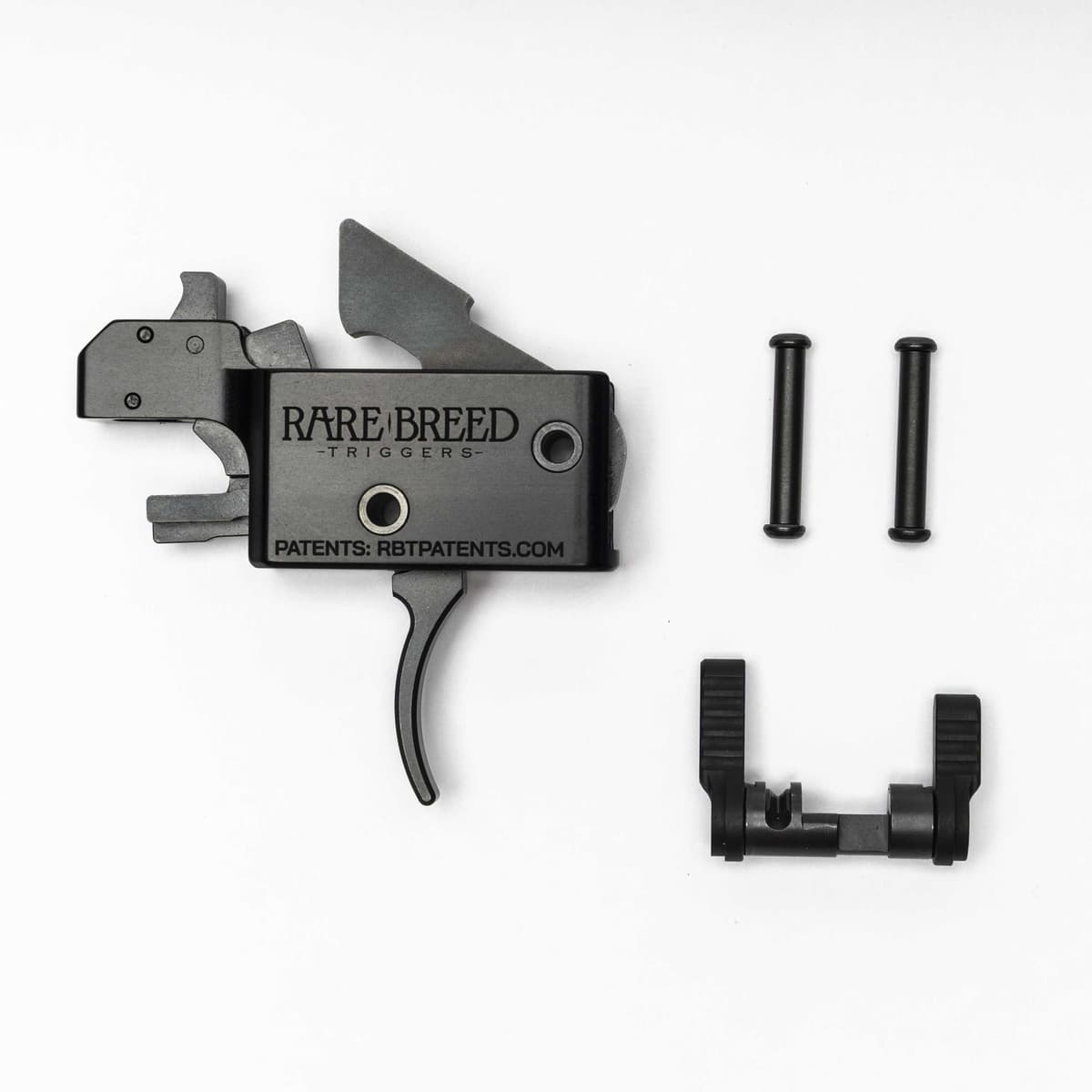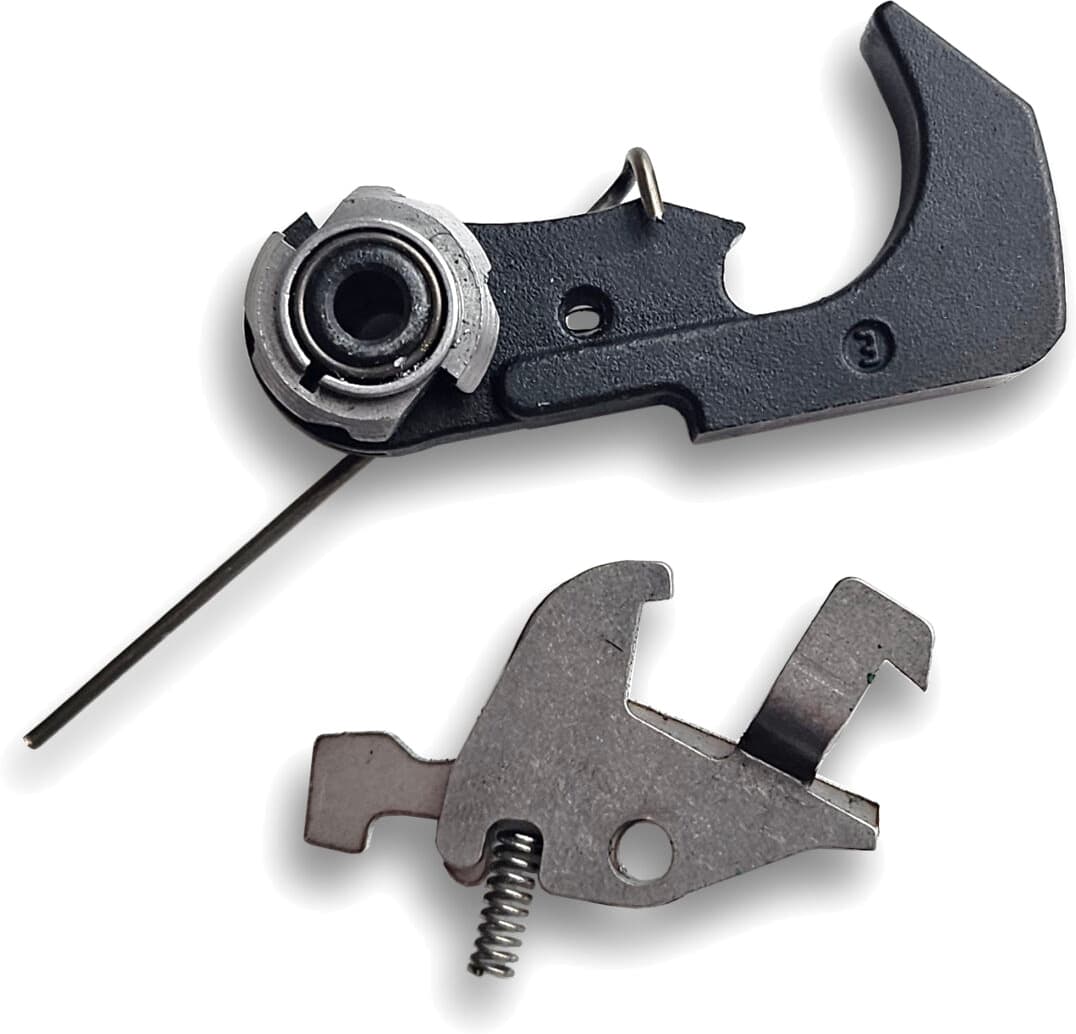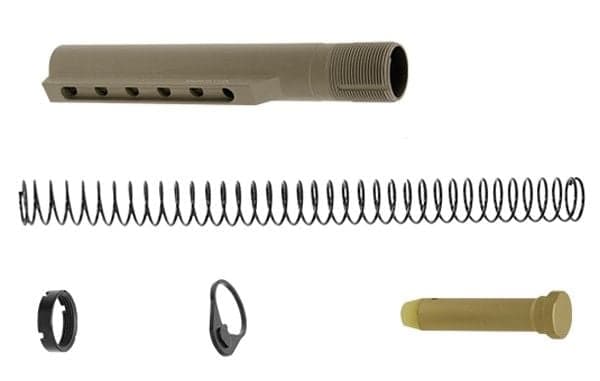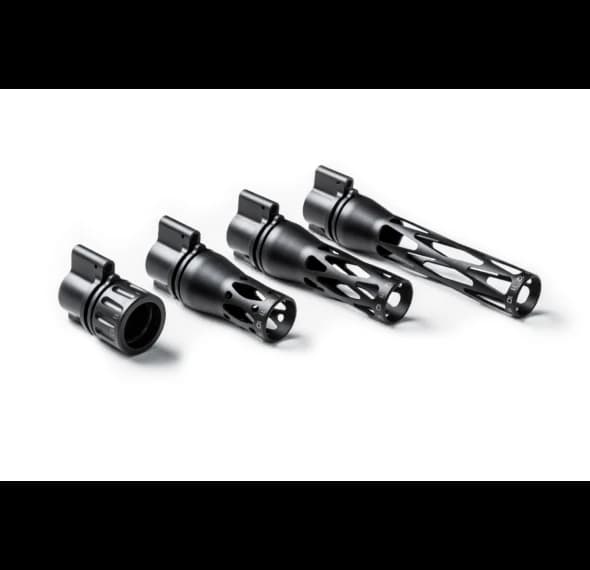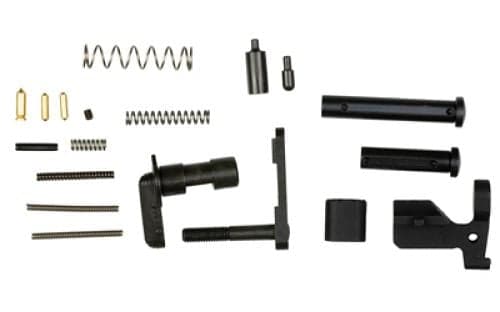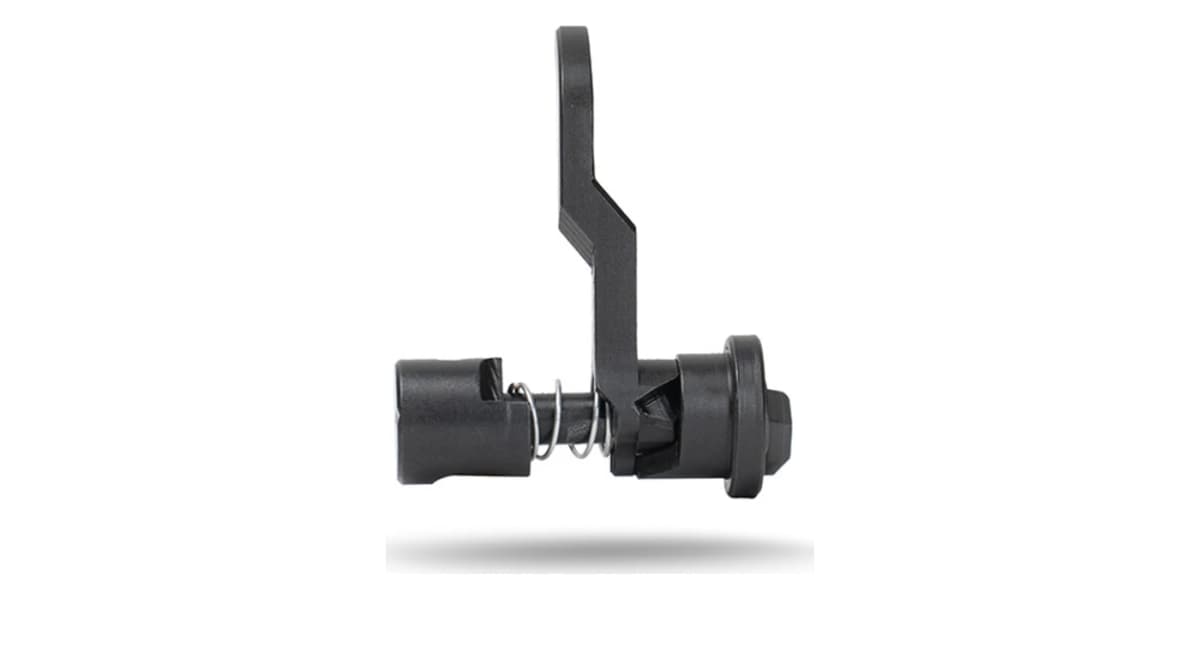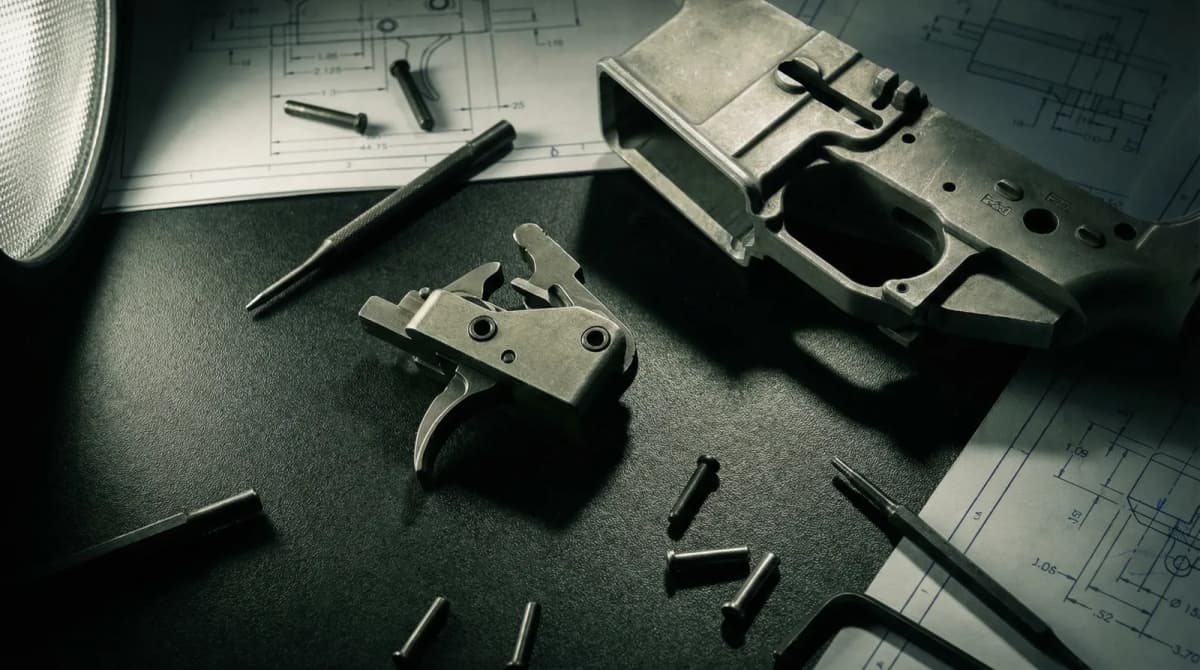
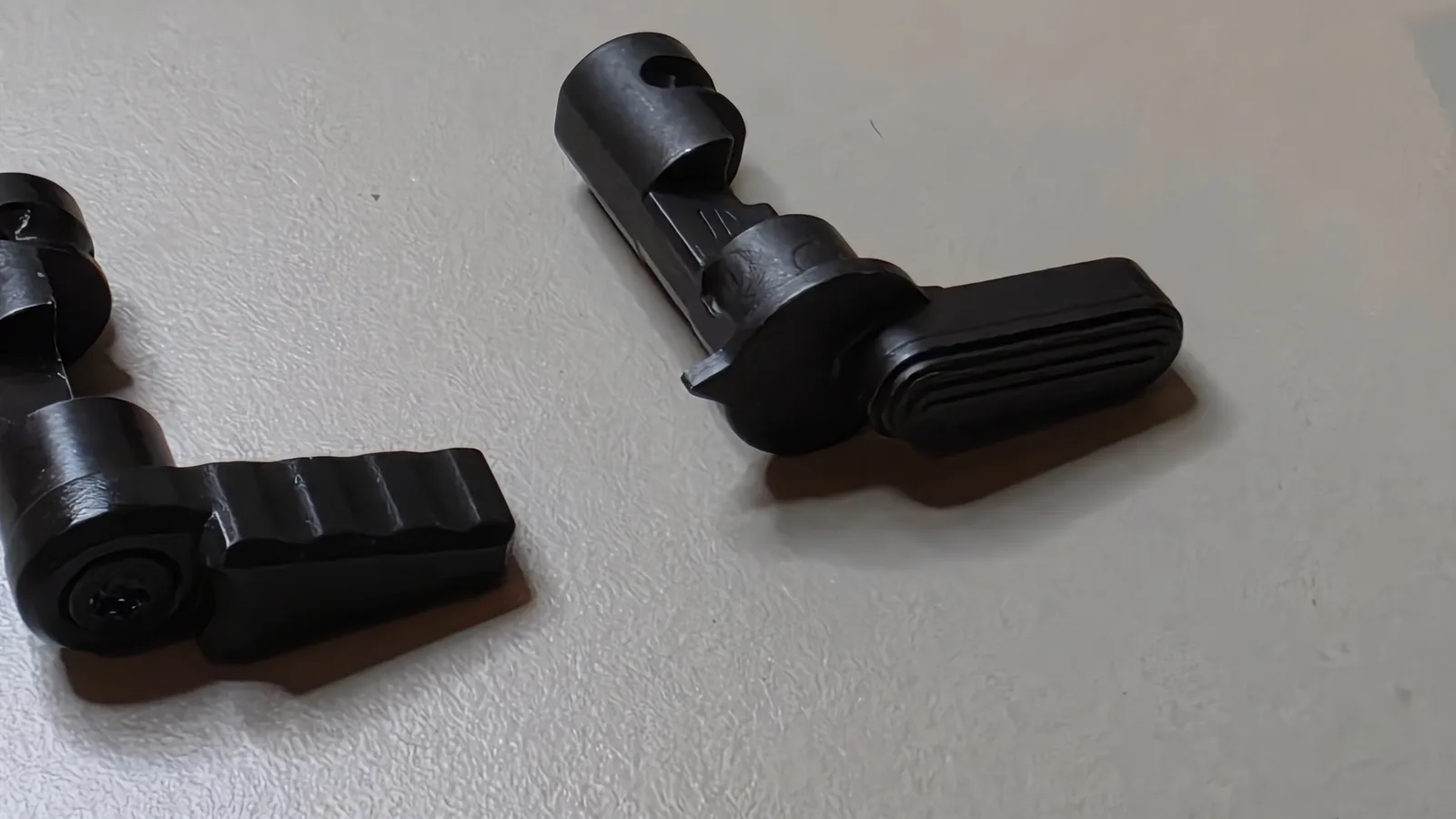
Understanding the Super Safety: Forced Reset Selectors for AR-15 header image
Super Safety vs FRT vs Binary Trigger Comparison
FeatureTraditional FRTBinary TriggerSuper Safety / FRS
How it worksReplaces entire trigger group; hammer forces resetReplaces trigger group; fires on pull AND releaseModifies safety selector; BCG cycling forces reset
Trigger compatibilityMust use included triggerMust use included triggerWorks with mil-spec and quality triggers (Geissele, LaRue, etc.)
Wear patternAccelerated hammer/trigger wearStandard wear on included triggerMinimal wear, leverages selector mechanism
Safety considerationRequires trigger discipline for rapid resetRisk of unintended discharge on trigger releaseDeliberate trigger pull required for each shot
Lower receiver requirementWorks with most lowersWorks with most lowersM16 pocket or low shelf preferred; high shelf may need modification
InstallationReplace entire fire control groupReplace entire fire control groupReplace safety selector only (minutes)
[ < Back to guides ]
Component focusFire controlLegal check required

Understanding the Super Safety: FRT, Binary Trigger Alternatives & Forced Reset Selectors for AR-15

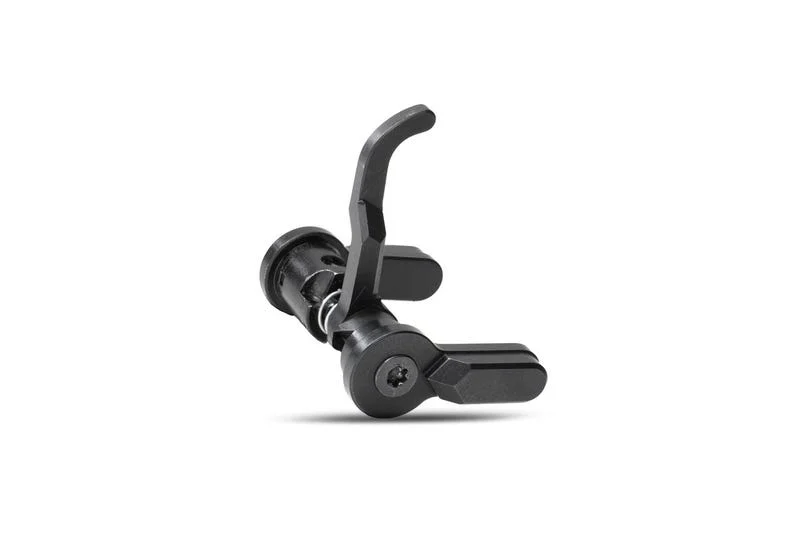
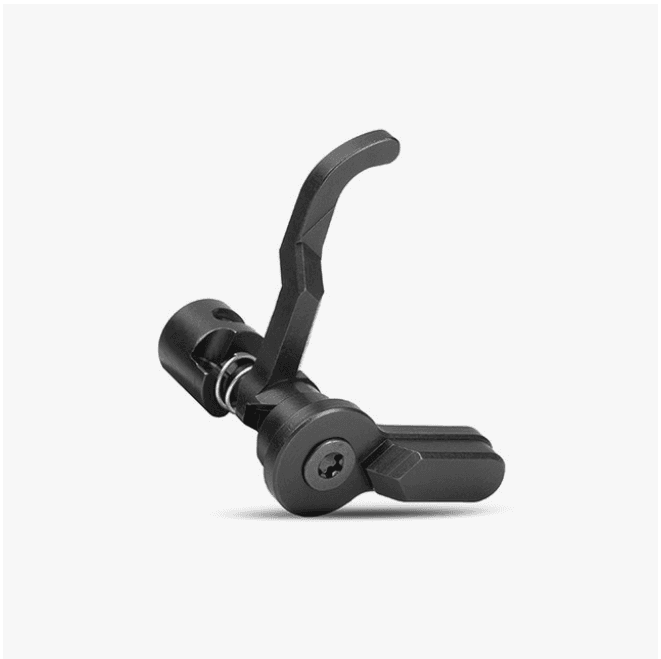
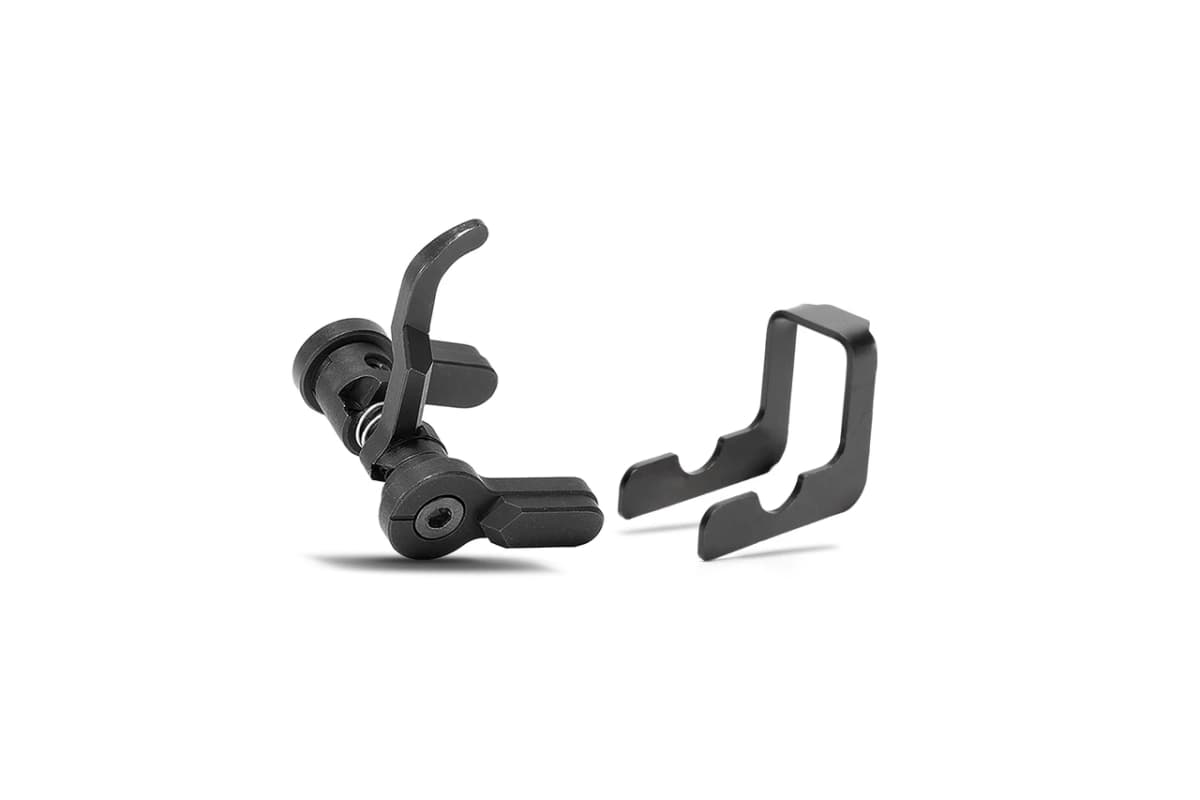
Looking for an FRT (Forced Reset Trigger) or binary trigger alternative? The Super Safety (also called a Forced Reset Selector or FRS) offers a smarter approach to rapid-fire capability for AR-15s. Unlike traditional FRTs or binary triggers that replace your entire trigger group, a Super Safety modifies only the safety selector—letting you keep your premium trigger (like a Geissele SSA-E or LaRue MBT) while adding forced reset functionality. This guide covers everything: how they work, the critical advantage over FRTs and binary triggers, lower receiver compatibility, installation, tuning, and includes a ROF calculator for measuring your burst RPM.

Always verify federal, state, and local compliance before purchasing.Requires H2 or heavier buffer for reliable operation.Works with quality aftermarket triggers—a major advantage over original FRTs.

Important Legal Note

As of late 2025, forced reset devices, including Super Safeties, are generally considered legal under federal law following court rulings against ATF classifications of similar devices as machine guns (e.g., the Rare Breed FRT case and bump stock precedents). However, laws vary by state and can change. Always verify compliance with federal, state, and local regulations before purchasing or installing. Some states restrict rapid-fire devices.

📋

Before You Read

This guide assumes familiarity with these topics:

Super Safety vs Traditional FRT & Binary Triggers: Why It Matters

If you're coming from research on FRTs (Forced Reset Triggers) like the Rare Breed FRT-15, WOT (Wide Open Trigger), or binary triggers, here's why the Super Safety approach is worth considering.

Traditional FRTs

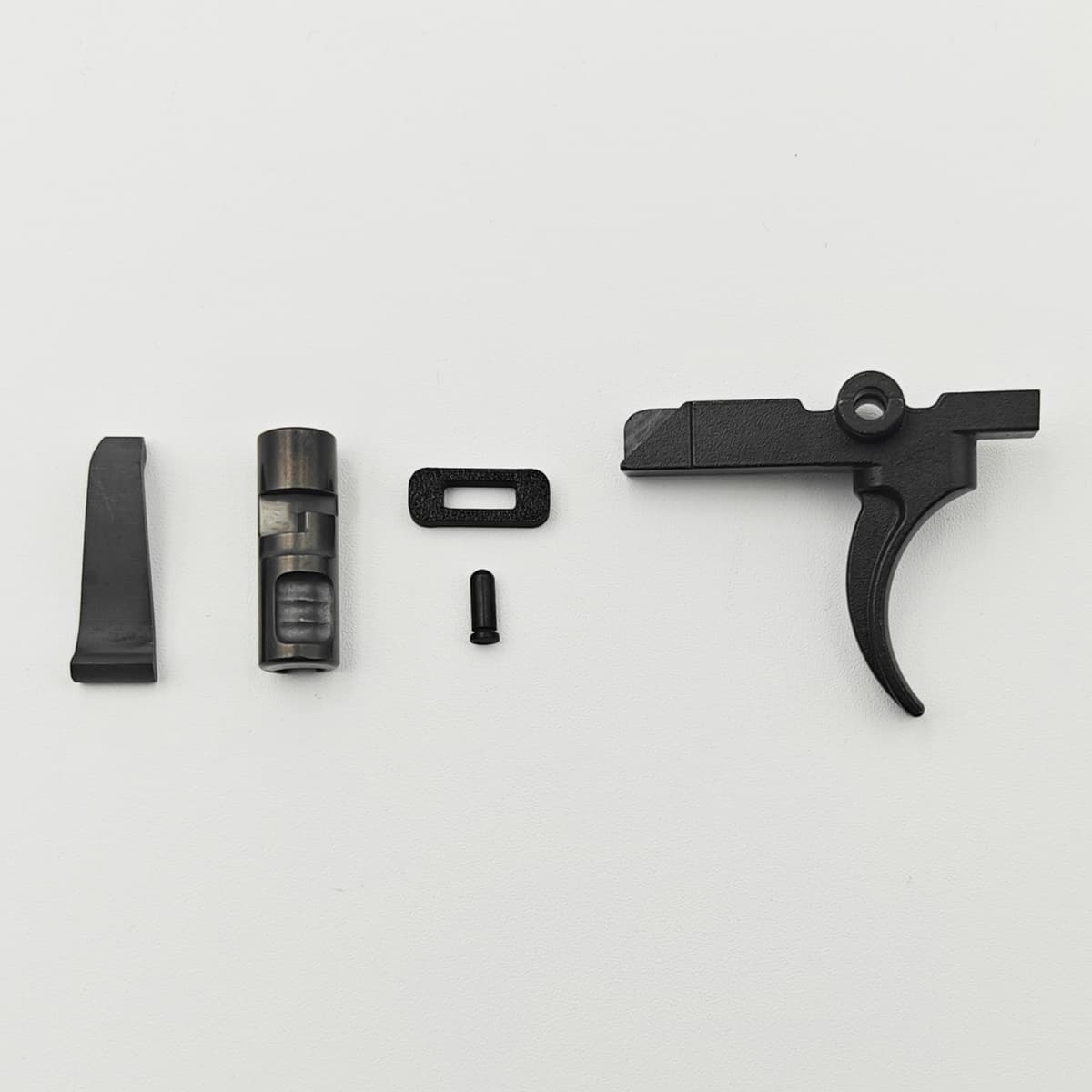
  • Replaces your entire fire control group—you're stuck with their trigger
  • Uses hammer energy to force reset, accelerating wear on trigger components
  • Trigger quality is typically mil-spec or worse—gritty, heavy pulls
  • Can't run premium triggers like Geissele, LaRue, or Timney
Binary Triggers

  • Replaces your entire trigger group—no aftermarket trigger compatibility
  • Fires on pull AND release, doubling rounds per trigger cycle
  • Requires training to avoid unintended shots on trigger release
  • Can't use quality aftermarket triggers—stuck with included trigger pack

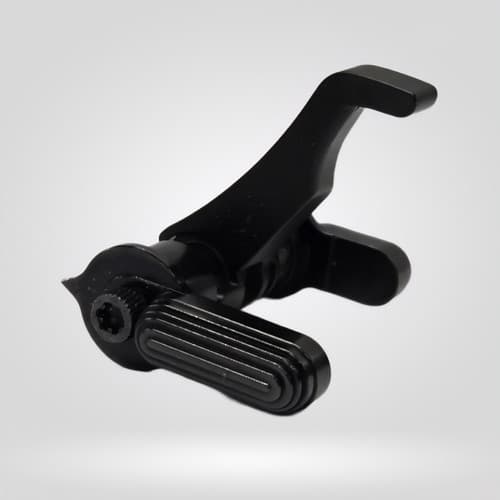
Super Safety / FRS

  • Only replaces the safety selector—keep your trigger
  • Uses BCG cycling to force reset, preserving trigger longevity
  • Run any quality trigger—Geissele SSA/SSA-E, LaRue MBT, etc.
  • Get both rapid fire AND a premium trigger pull
The Big Advantage

With a Super Safety, you can run a Geissele SSA-E, LaRue MBT-2S, or any quality mil-spec trigger in normal semi-auto mode with all the benefits of a crisp, light pull—then flip to the forced reset position when you want rapid fire. Traditional FRTs and binary triggers lock you into their included trigger with no option for a premium fire control experience. Plus, super safeties avoid the unintended discharge risk that comes with binary triggers firing on release.

How a Super Safety Works

In standard semi-auto mode, you must fully release the trigger for it to reset after each shot. A Super Safety changes this in its forced reset position.

  • 1.When the selector is set to the forced reset ("Super" or "Full-Semi") mode, a cam or lever on the selector interacts with the bolt carrier group (BCG) during cycling.
  • 2.As the BCG moves rearward, it pushes the lever, momentarily blocking the trigger (similar to engaging "safe") and forcing the trigger forward to reset.
  • 3.The BCG then returns forward, rotating the lever back, allowing the trigger to be pulled again immediately.
  • 4.This results in very rapid semi-automatic fire, with each round requiring an individual trigger pull—but the reset happens mechanically, not manually.
Design Advantage

This differs from traditional FRTs, which often use the hammer to force the reset and can accelerate wear. Super Safeties leverage mechanical advantage from the selector, preserving rifle longevity and allowing use with quality triggers.

Benefits of a Super Safety

Super Safeties offer several advantages over traditional forced reset triggers and provide unique benefits for rapid-fire applications.

Premium Trigger Compatibility

Run Geissele, LaRue, ALG, or any quality trigger—get the best of both worlds: precision when needed, rapid fire when wanted.

Faster Follow-Up Shots

Enables high rates of fire for competition, training, or recreational shooting.

Reduced Wear

Unlike FRTs that stress the hammer/trigger interface, the super safety design minimizes wear on fire control parts.

Versatility

Many models offer true 3-position selectors (Safe/Semi/Forced Reset), allowing easy switching between normal and rapid-fire modes.

Simple Installation

Works with your existing mil-spec or aftermarket trigger—no need to replace the entire fire control group.

Ambidextrous Options

Models like the Atrius provide levers on both sides for left- or right-handed use.

Recommended Super Safety / FRS Products

High-quality forced reset selectors that enhance rapid-fire capability while maintaining semi-automatic functionality.

Ambidextrous · 3-Position

Atrius Development Ambidextrous Forced Reset Selector

A robust, drop-in ambidextrous selector made from heat-treated 4140 steel. Features crisp 90-degree throws, ergonomic levers, and compatibility with mil-spec AR-15s in .223/5.56/.300 BLK.

  • Heat-treated 4140 steel construction for durability
  • Smooth operation with minimal fitment issues
  • Ambidextrous levers for left- or right-handed use
Verified Retailer
Check Price at OpticsPlanet
3-Position · Mil-Spec Compatible

MARS 3-Position AR FRT Super Safety

A durable 3-position selector offering Safe, Semi, and Forced Reset modes. Engineered for reliability and rapid performance with standard mil-spec components.

  • Three-position functionality: Safe/Semi/Forced Reset
  • Works with mil-spec fire control groups
  • Engineered for consistent cycling and reset timing
Verified Retailer
Check Price at OpticsPlanet

Purchasing through these links may generate a commission at no extra cost to you. Always verify compliance with federal, state, and local regulations before purchasing or installing. Some states restrict rapid-fire devices.

Installation Basics

Installation is similar to replacing a standard safety selector and typically takes minutes for those familiar with AR-15 disassembly. Always unload the firearm and ensure it's clear before working.

  1. 1.
    Disassemble the Lower: Remove the grip to access the safety detent/spring, then push out the old safety selector.
  2. 2.
    Prepare Components: Some kits include a modified trigger or detent—install as per manufacturer instructions.
  3. 3.
    Insert the New Selector: Align and insert the Super Safety assembly. Secure with the detent and spring.
  4. 4.
    Function Check: Dry-fire and cycle the action to verify smooth operation in all positions.
Fitment Notes

M16 pocket and low shelf lowers are drop-in compatible with most super safeties. High shelf receivers (e.g., some Colt, LMT MARS L, Springfield) may require minor material removal for the cam lever to move freely. Use a Dremel cautiously if needed. Consult manufacturer videos or guides for your specific model. Professional installation is recommended if you're unsure.

Tuning and Optimization

To achieve reliable performance with your Super Safety, proper tuning is essential.

Buffer System

Use at least an H2 (or heavier) buffer to ensure consistent cycling. Heavier buffers help with reset timing.

Spring Strength

Some users clip 1-2 coils from the safety detent spring for smoother selector feel.

Trigger Modification

Certain kits need a small angle filed on the trigger tail for optimal cam engagement—follow kit instructions precisely.

Testing

Start with slow fire to tune. Charge the rifle manually while holding the trigger to feel the reset action.

Lubrication

Apply quality lube to moving parts for smoothness.

Trigger Pairing

Quality two-stage triggers (Geissele SSA, LaRue MBT-2S) pair exceptionally well—the defined wall helps control rapid fire.

Pro tip

Common issues like binding often stem from fitment or light buffers—address these for "sewing machine" reliability. If running a premium trigger like an SSA-E, the improved reset feel can actually make controlling rapid fire easier.

ROF Calculator

Measure your burst RPM, shot spacing, and timing from audio or video clips. Great for analyzing your super safety performance or comparing different setups.

ROF Calculator: Rate of Fire Analyzer

This ROF calculator estimates shot timing, burst structure, and rounds per minute. Processing stays local to your browser.

Local-only processing

Media input

WAV, MP3, M4A, or MP4 with a readable audio track.

Detection parameters

Current spacing cap supports roughly 1091 RPM. Tighten spacing for slower firing, loosen for faster.
Analysis summary
Upload an audio clip to see ROF stats and burst analysis.
Waveform + burst timeline
Waveform visualization appears after analysis.
How it works + parameter notes

Processing pipeline

  • 1. Decode to mono audio using the Web Audio API.
  • 2. Build an amplitude envelope with a short smoothing window.
  • 3. Detect peaks above an adaptive threshold (mean + N std).
  • 4. Cluster peaks into bursts and compute RPM per burst and overall.

Detection parameters

  • Peak threshold: higher values reduce false positives.
  • Min shot spacing: prevents double-counting close peaks.
  • Burst gap: max pause between shots in the same burst.
  • Envelope window: smaller windows preserve sharp transients.
  • Min prominence: filters out low-amplitude peaks.
  • Min burst count: hides short sequences from stats.
ROF formula: RPM = (shots - 1) / duration * 60.
Video decoding depends on browser support. If a video fails to analyze, export its audio to WAV or MP3 first.

Buffer System Tuning for Optimal Performance

Achieve reliable forced reset operation with the right buffer weight and tuning components. Heavier buffers ensure consistent cycling.

Buffer upgrade

H2 Buffer Weight

An H2 or heavier buffer helps ensure consistent cycling and proper reset timing with forced reset selectors.

  • Heavier mass improves reset reliability
  • Reduces overgassing and recoil
Verified Retailer
Check Price at OpticsPlanet
Gas tuning

Adjustable Gas Block

Fine-tune your gas system for consistent bolt carrier cycling, especially important for forced reset devices.

  • Dial in proper gas pressure
  • Essential for suppressed operation
Verified Retailer
Check Price at OpticsPlanet

Purchasing through these links may generate a commission at no extra cost to you. Follow manufacturer tuning recommendations for best results.

Safety and Usage Tips

A Super Safety can transform your AR-15 into a high-performance platform for fun and skill-building, but requires responsible handling.

  • Trigger Discipline is Critical: The rapid reset demands excellent control to avoid unintended discharges.
  • Practice Gradually: Start in semi mode, then transition to forced reset.
  • Maintenance: Inspect for wear regularly, especially the cam lever.
  • Ammo Sensitivity: High-quality ammo ensures reliable cycling.
  • Premium Trigger Advantage: Quality triggers like the Geissele SSA-E provide better feedback and control than mil-spec during rapid fire.
Safety First

The rapid-fire capability of forced reset devices requires exceptional trigger discipline and safe handling practices at all times. Only use at appropriate ranges with proper backstops and supervision.

Frequently Asked Questions

Common questions about super safeties and FRT alternatives.

Is a Super Safety the same as an FRT?

No. While both enable rapid semi-automatic fire, they work differently. An FRT (Forced Reset Trigger) replaces your entire trigger group and uses hammer energy to force the reset. A Super Safety (Forced Reset Selector) only replaces the safety selector and uses BCG cycling to force reset—letting you keep your existing trigger.

What's the difference between a Super Safety and a binary trigger?

Binary triggers fire one round on trigger pull AND one on trigger release, doubling your rate of fire. However, they replace your entire trigger group and can cause unintended discharges if you release the trigger when you don't mean to fire. Super safeties only replace the safety selector, work with premium triggers like Geissele, and require deliberate trigger pulls for each shot—making them safer and more controllable while still enabling rapid fire.

Can I use a Geissele trigger with a Super Safety?

Yes! This is one of the biggest advantages over traditional FRTs. Super safeties work with quality mil-spec triggers like the Geissele SSA, SSA-E, LaRue MBT-2S, ALG ACT, and others. You get the premium trigger experience in semi-auto mode and rapid fire when you flip to the forced reset position.

What lower receiver do I need?

M16 pocket lowers are ideal (no modification needed). Low shelf lowers work with most super safeties with little to no fitting. High shelf lowers may require material removal or may not work at all. Use our compatibility checker above to see if your brand is likely compatible.

Are Super Safeties legal?

As of late 2025, forced reset devices including super safeties are generally considered legal under federal law following court rulings. However, state and local laws vary. Always verify compliance in your jurisdiction before purchasing.

What buffer weight should I use?

Most super safeties require at least an H2 buffer for reliable operation. Heavier buffers (H3, Sprinco) can improve timing and reliability. Check our gas system and buffer tuning guide for more details.

Understanding Receiver Pocket Types

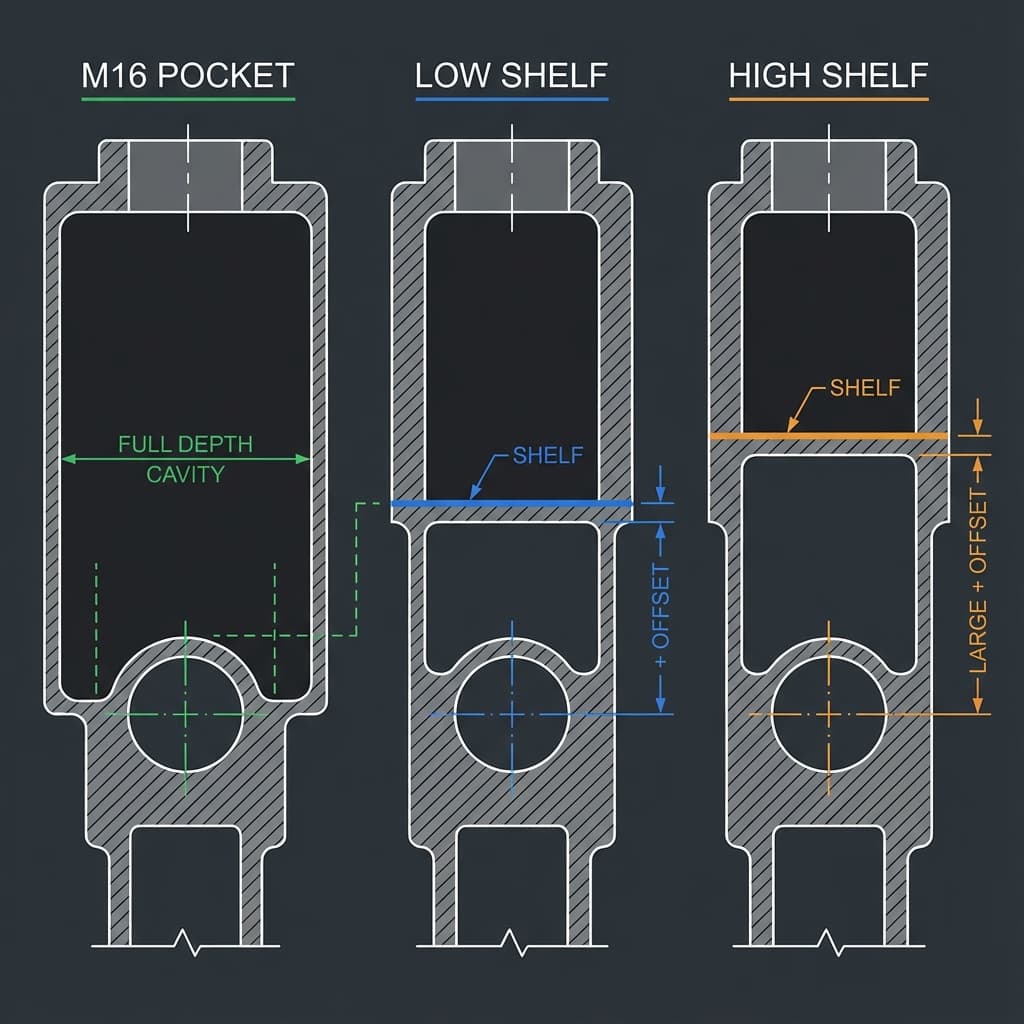
The fire control pocket shape determines super safety compatibility. The diagram below shows a cross-section view looking into the pocket from the rear.

AR-15 lower receiver pocket types comparison: M16 pocket (no shelf, full clearance), Low Shelf (shelf just above safety hole center), and High Shelf (shelf above safety hole, may need modification)
M16 Pocket

Best compatibility. Thin walls all the way up—no shelf. Full clearance for super safety cam lever.

Low Shelf

Usually compatible. Shelf sits just above safety hole centerline. Most super safeties work with minimal fitting.

High Shelf

May need modification. Shelf sits above safety hole. Material removal often required—may not fit at all.

How to Check Your Lower
  1. 1.Remove your fire control group (trigger, hammer, disconnector, pins).
  2. 2.Look into the fire control pocket from the rear with good lighting.
  3. 3.Find the safety selector hole on the left side. Check if there's a step/shelf above it.
  4. 4.No shelf = M16 pocket. Shelf just above center = low shelf. Shelf clearly above hole = high shelf.

Next Step

Ready to continue? Here's the recommended next guide:

Recommended Next

AR-15 Trigger Guide: Single-Stage, Two-Stage & Match Triggers

Select the best AR-15 trigger for your build. Compare single-stage, two-stage, match, and competition triggers with pull-weight guidance, reliability notes, and brand recommendations.

Or explore a related topic:

AR-15 Gas System & Buffer Tuning->

Related guides

Continue exploring with these related resources

Found this guide helpful?

Share it with other builders on your favorite platform.

Was this helpful?

Quick feedback helps us prioritize guide updates.

Feedback is anonymous. Comments help us decide what to update next.