Tools & Cleaning • $329.99
Shooters Global SG Timer 2
- Bluetooth + free mobile app
- PractiScore 2 integration
$329.99
Shop at IntelGoons
Score a practical shooting stage the way the match does. Build the stage from paper and steel, tap in your hits per target, enter the time off your shot timer, and get stage points, penalties, points percentage, and hit factor under current 2026 USPSA Comstock rules. Optionally photograph each paper target and let local hit detection pre-fill the marks for you to zone.
0 of 2 required hits entered (A+C+D+M). Unfilled hits score as misses.
Enter your shot timer's final time to get a hit factor.
Penalties exceed points; the stage scores zero (rule 9.5.6).
Comstock scoring per the USPSA Competition Rules, March 2026 edition: the best stipulated hits count, misses and no-shoots and procedurals are -10 each, steel is 5 points down, and hit factor is stage points divided by time. Virginia Count and Fixed Time stages are not modeled. Your stage is saved in this browser automatically.
A USPSA stage score is your points divided by your time, called hit factor. Points come from the best stipulated hits on each cardboard target (usually two) plus 5 points for every popper or plate you knock down; misses, no-shoot hits, and procedural penalties each subtract 10 points, and the stage floor is zero. The shooter with the highest hit factor takes 100% of the stage's match points and everyone else is scored as a percentage of that run, which is why a blazing run with two mikes can still lose to a half-second-slower run that kept its points. Whether your C and D hits cost you 1 point or 2 depends on power factor; chrono your load with the power factor calculator before declaring Major.
The scoring values are fixed by the rulebook: A hits are 5 points at any power factor, C hits are 4 Major or 3 Minor, D hits are 2 Major or 1 Minor, and steel is 5 points down. That spread is the whole strategic argument for Major in Limited and Open, and it is also why Minor divisions like Carry Optics reward aggressive A-zone shooting; a Minor C costs you 2 points against the shooter who broke the same shot into the A-zone. If you are picking a gun for a division, our competition pistol guide ranks the field by USPSA division and the Carry Optics pistol guide covers the most popular one.
Every value below comes from the USPSA Competition Rules, March 2026 edition: zone points from Appendix B1, steel from Appendices B2 and B3, and penalties from rules 9.4.2, 9.4.4, and 10.1.2. The tool scores Comstock stages, which covers the large majority of USPSA courses of fire; Virginia Count and Fixed Time stages use different penalty mechanics and are not modeled here.
| Hit / Event | Major PF | Minor PF |
|---|---|---|
| A-zone | 5 | 5 |
| C-zone (and legacy B) | 4 | 3 |
| D-zone | 2 | 1 |
| Popper or plate down | 5 | 5 |
| Miss | -10 | -10 |
| No-shoot hit (each) | -10 | -10 |
| Procedural (each) | -10 | -10 |
Manual tap entry is the primary path because it is what actually holds up at the range: reading each target and tapping A/C/D/M/NS takes a few seconds and matches how ROs score. The photo assist exists for practice sessions where you want a record: photograph the target before pasting, and the same local detection engine that powers our target photo scorer marks probable hits on the image. You then tap each mark to assign its zone and apply the counts to the target. Zone assignment stays manual on purpose: a phone photo of brown cardboard taken at an angle cannot reliably tell an A from a close C, and a scorer that guesses zones would be worse than no scorer.
The time input expects your final time from the shot timer. If your practice runs are on video instead, pull split-accurate times with the shot timer video annotator, then feed the final shot time in here. For structured practice that produces scoreable runs in the first place, work from the drill library; several drills there are scored on hit factor, so this tool doubles as the scorekeeper. A 130-point field course shot clean in 16.25 seconds is an 8.0000 hit factor; the same run with one popper standing drops to 115 points and 7.0769, which is the kind of tradeoff worth knowing cold before you decide to make up a shot in a match.
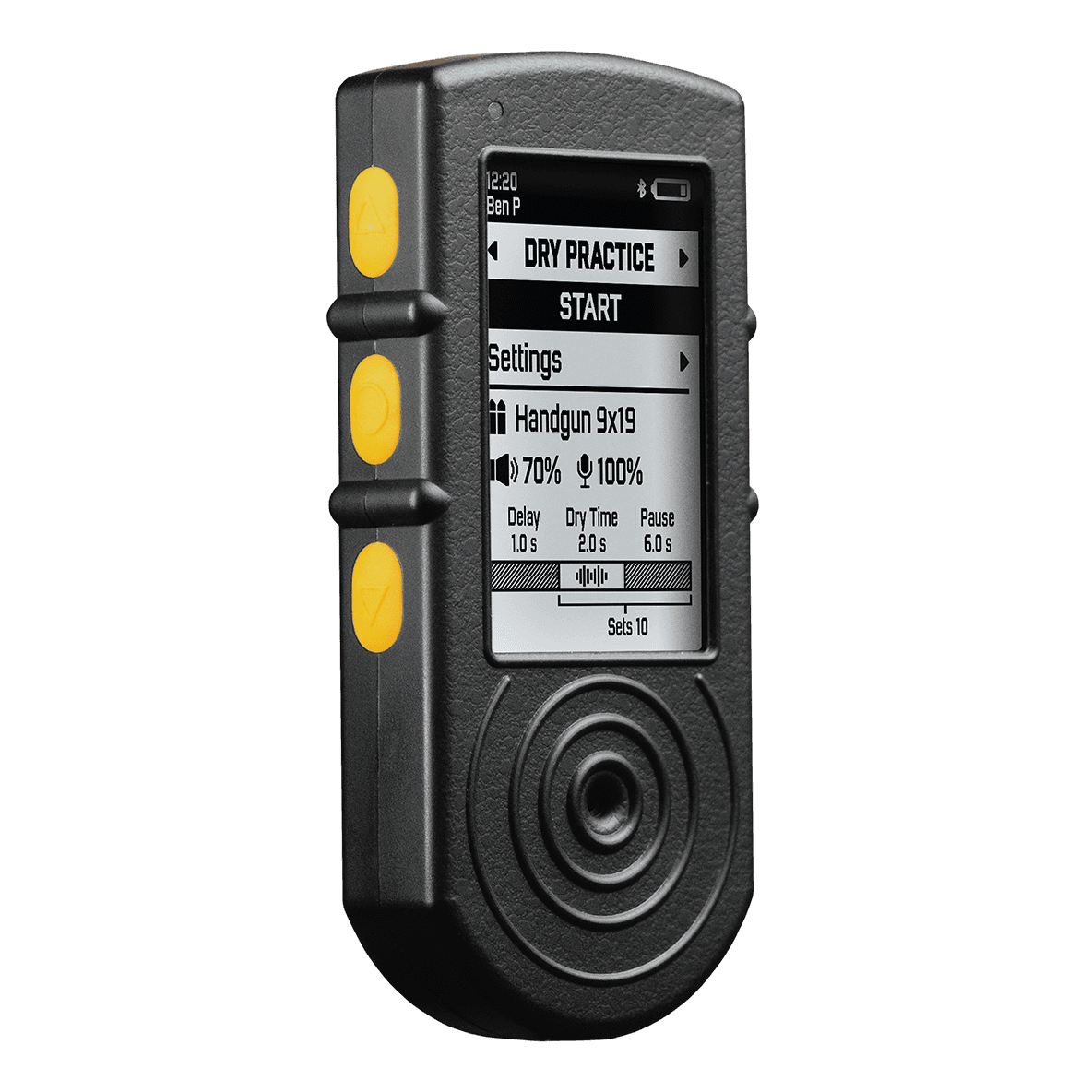
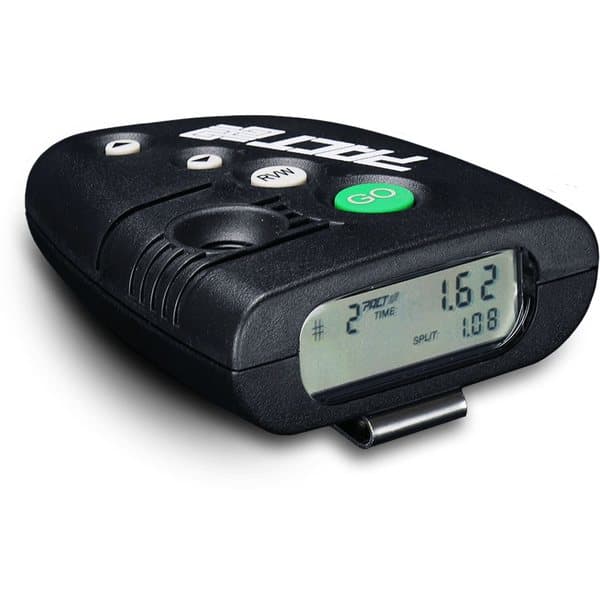
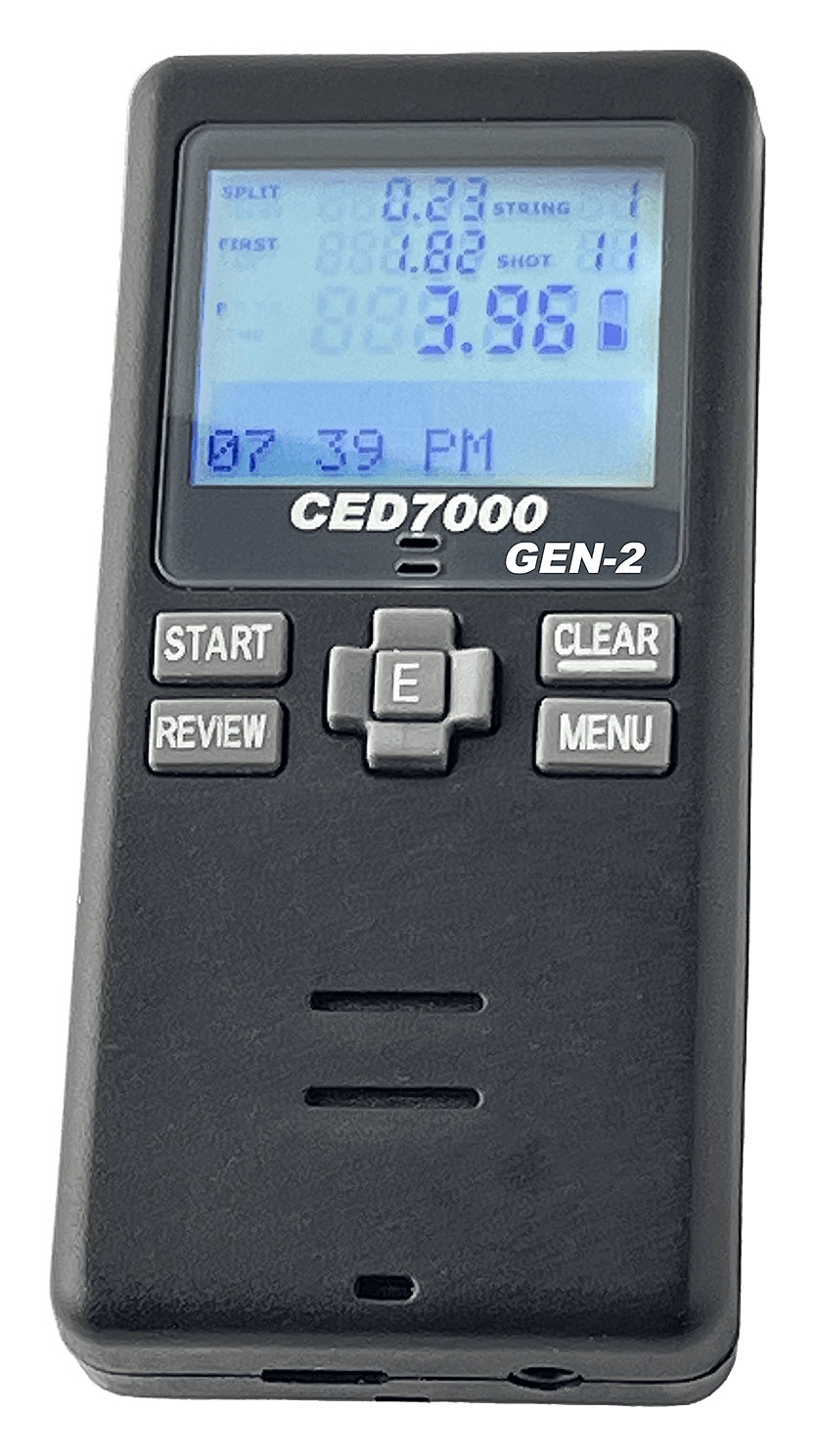
Any shot timer's final time works here, but the units below are the ones that hold up in match use: the SG Timer 2 for app-logged practice data, the PACT Club Timer III as the reliable budget standalone, and the CED7000 that most range officers run. Full breakdown in the shot timer guide.
Affiliate links (?)
USPSA stages are scored on hit factor: your total points divided by your time in seconds. Points come from your hits (an A-zone hit is 5 points, C is 4 Major or 3 Minor, D is 2 Major or 1 Minor, steel is 5 points down), then misses, no-shoot hits, and procedural penalties each subtract 10 points. The shooter with the highest hit factor wins the stage and everyone else earns stage points as a percentage of that score.
Hit factor is points per second: stage points after penalties divided by your stage time from the shot timer. Shooting 90 points in 15.00 seconds is a 6.0000 hit factor. It is the core USPSA metric because it rewards both accuracy and speed at once; a fast run full of D hits and a slow run full of A hits can produce the same number.
Per Appendix B1 of the 2026 USPSA rulebook, the A-zone is 5 points at both power factors. The C-zone is 4 points for Major and 3 for Minor. The D-zone is 2 points for Major and 1 for Minor. Legacy targets with a B-zone score B hits as C hits. Poppers and plates are 5 points at either power factor.
A miss is minus 10 points, twice the value of the maximum 5-point scoring hit (rule 9.4.4). Each hit on a no-shoot is also minus 10 (rule 9.4.2), and each procedural penalty is minus 10 (rule 10.1.2). A miss on a 2-hit paper target that also strikes a no-shoot costs 20 points plus the points you failed to earn, which is why one bad target can sink a stage.
Major power factor (165+ in divisions that recognize it) upgrades C hits from 3 to 4 points and D hits from 1 to 2; A hits are 5 points either way. Minor is everything from the 125 floor up to Major. Production, Carry Optics, Limited Optics, and PCC are always scored Minor. The gap only matters when you drop points: a run of all A hits scores identically at both power factors.
Poppers and plates are worth 5 points at both Major and Minor, and they must fall or overturn to score (rule 4.3.1.5). Steel left standing when you finish is a miss: zero points plus a 10-point penalty. There are no partial hits on steel; a popper that takes three rounds to fall scores the same 5 points as one that drops on the first shot.
Comstock (rule 9.2.2) means unlimited time and unlimited shots, with a stipulated number of hits per target counting for score, usually the best two on paper. It is how the large majority of USPSA stages are scored. Virginia Count limits the number of shots and penalizes extra shots and extra hits, and Fixed Time limits time and ranks by raw points with no hit factor. This tool scores Comstock stages only.
Partially. This scorer's photo assist runs local hit detection on a photo of each paper target and marks probable hits, then you assign each detected mark a zone (A, C, D, or no-shoot) and apply the counts. Fully automatic zone reading is not reliable on field photos of brown cardboard shot at an angle with pasted and greased holes, so treat detection as a pre-fill that you correct, not a replacement for reading the target.
Add your hit points, subtract 10 for every miss, no-shoot hit, and procedural, then divide by your time. Example: a 32-round stage shot Minor with 26 A hits, 5 C hits, and 1 D hit is 130 + 15 + 1 = 146 points; one miss instead of that D would make it 145 minus 10 = 135. At 18.50 seconds, 146 points is a 7.8919 hit factor. A stage score can never go below zero (rule 9.5.6).
Hit factor is stage-dependent, so there is no universal number: close hoser stages produce hit factors in the 8 to 12 range for strong shooters, while long courses with distance and movement can be won in the 4 to 6 range. The useful comparison is against the winner of your squad or match on the same stage; match results published on PractiScore show the high hit factor per stage, and your percentage of it is your stage score.
Yes, locally. The stage you build (targets, hits, time, power factor, penalties) is saved in your browser automatically and restored when you come back. Nothing is uploaded; photo assist runs entirely on your device. Use the CSV or JSON export or the copy-summary button to keep a permanent record or share a run.