Key Takeaways
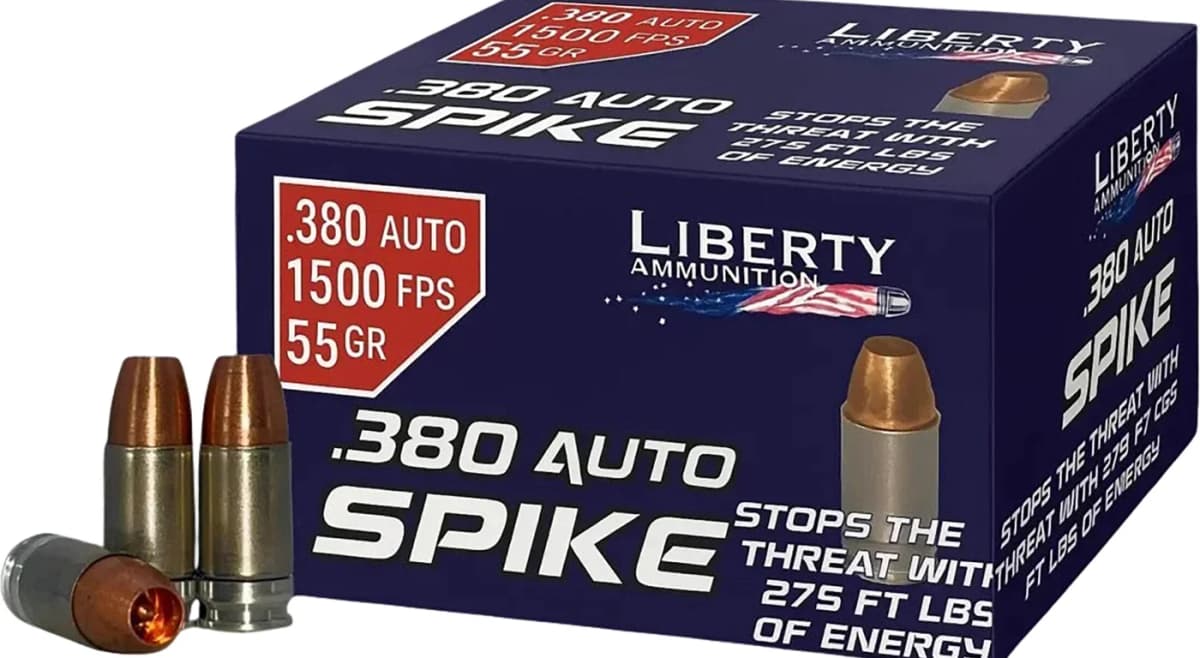
- Liberty Ammunition launched SPIKE 2.0 on June 11, 2026, in .380 ACP and 9mm, rebuilt around a one-piece brass case for pocket pistols with unsupported chambers.
- 55-grain monolithic copper hollow point. 1,500 fps muzzle velocity, 275 ft-lbs of energy in .380 ACP, the fastest commercial pocket-pistol load on the market.
- Liberty claims 13 inches of penetration through 12 layers of denim, with a 3-inch copper-petal fragmentation cone to a depth of 5 inches.
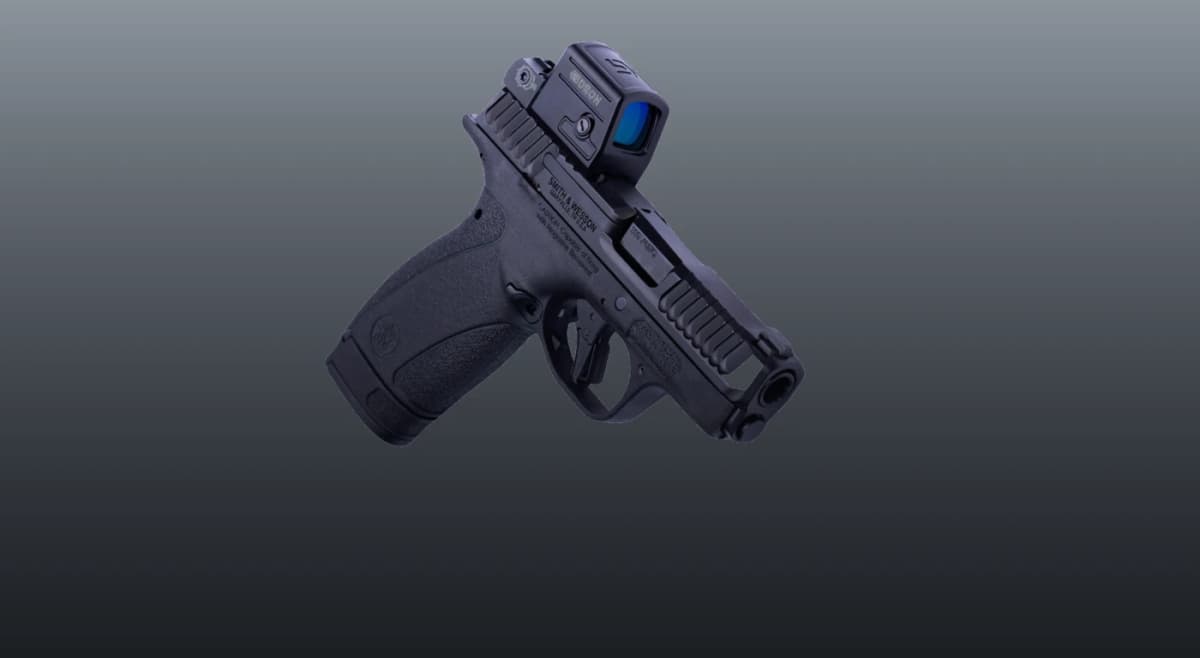
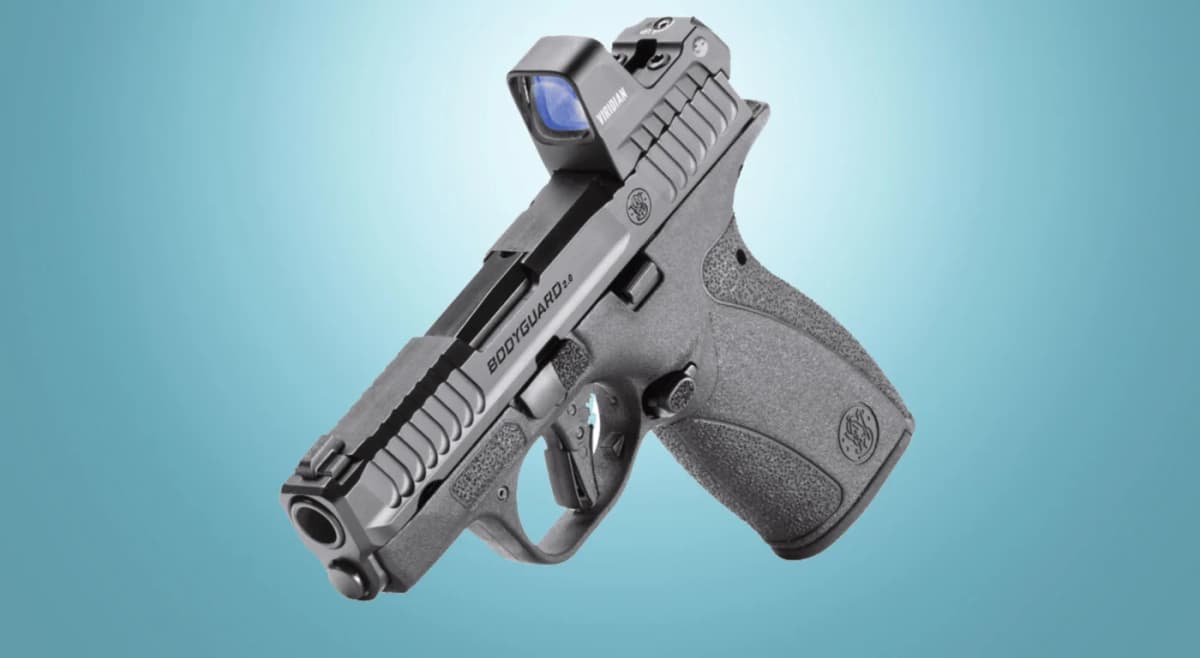
- Fixes the original SPIKE's NAS3 two-piece case feeding issues in the Ruger LCP family, S&W Bodyguard 380 and Bodyguard 2.0, Glock 42, and Sig P238.
- MSRP $45.99 per 20-round box direct from Liberty, with distributor stock rolling in across Brownells, MidwayUSA, Range USA, and OpticsPlanet.
A Brass Case Built for Unsupported Chambers
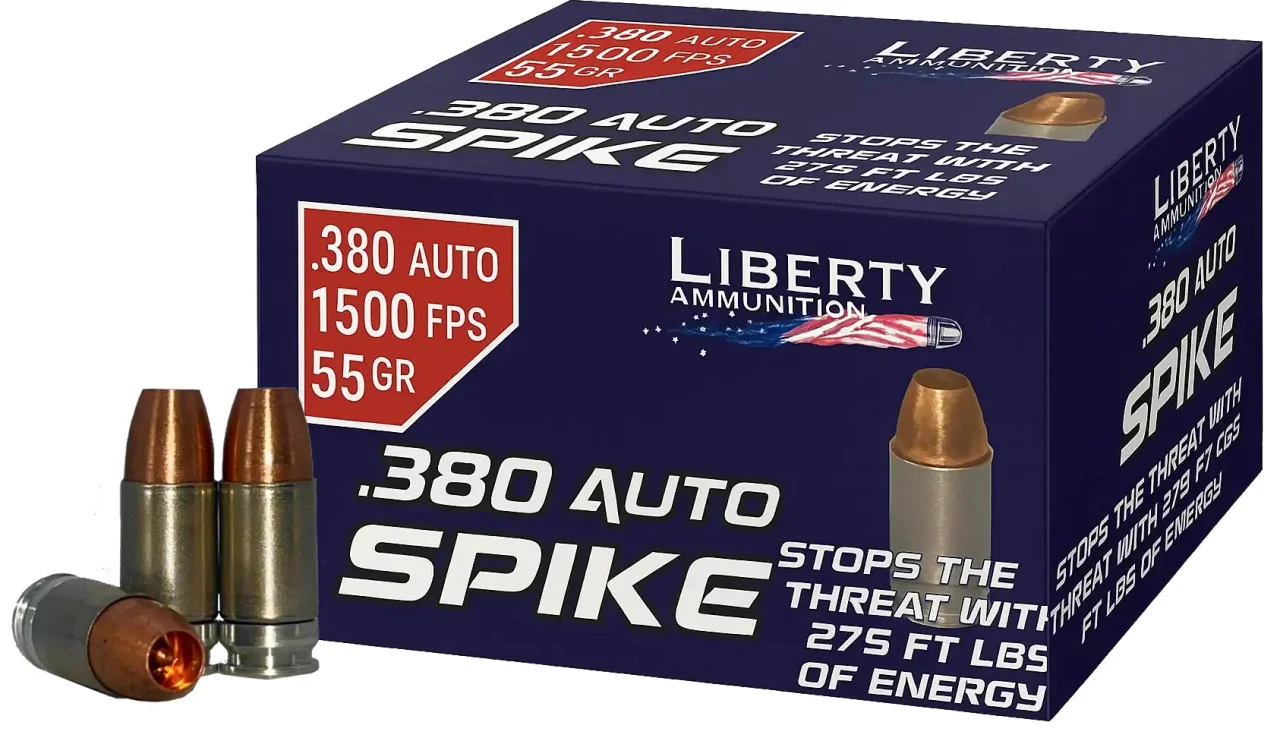
Liberty Ammunition launched SPIKE 2.0 in .380 ACP and 9mm on June 11, 2026, with one purpose: fix the feeding issues the original SPIKE had in pocket .380 pistols. The projectile is unchanged. SPIKE 2.0 carries the same 55-grain monolithic copper hollow point with a center spike that drives expansion, runs at 1,500 fps from a short barrel, and carries 275 ft-lbs of muzzle energy. What changed is the case. Liberty replaced the original SPIKE's patented NAS3 nickel-aluminum-steel two-piece case with a conventional one-piece brass case sized to feed and seal reliably in pocket .380 pistols with unsupported chambers.
That fix matters. The Ruger LCP, LCP Max, S&W Bodyguard 380, Bodyguard 2.0 in .380, Glock 42, and Sig P238 all use unsupported or partially supported chambers, a design choice that keeps frames slim and slides short. Two-piece cases under full-velocity loads can swell or short-stroke in those guns, and Liberty's own product page on the original SPIKE now reads, “not recommended for un-supported chambers. Buy 2.0 for those.” SPIKE 2.0 is the version that belongs in a carry pistol. For a head-to-head ranked comparison against Federal HST, Hornady Critical Defense, Speer Gold Dot, and the rest of the defensive .380 market, see our best 380 ACP ammo guide.
Liberty SPIKE 2.0 Full Specifications
Specs below reflect manufacturer numbers as of June 17, 2026. Independent gel testing of SPIKE 2.0 specifically has not yet been published; numbers for the original SPIKE projectile transfer because the bullet is unchanged.
| Spec | .380 ACP | 9mm |
|---|---|---|
| Bullet weight | 55 grain | 55 grain |
| Bullet construction | Monolithic copper HP | Monolithic copper HP |
| Case material | Brass, one-piece | Brass, one-piece |
| Muzzle velocity | 1,500 fps | Liberty rates SPIKE family at 1,500 fps class |
| Muzzle energy | 275 ft-lbs | Comparable to Overwatch 9mm |
| Penetration (denim, manufacturer) | 13 in through 12 layers | Pending independent testing |
| Pressure rating | Standard .380 ACP | Standard 9mm Luger |
| Round count per box | 20 | 20 |
| MSRP (direct from Liberty) | $45.99 | $45.99 |
| Launched | June 11, 2026 | June 11, 2026 |
Why the Brass Case Matters for Pocket .380s
Pocket .380 pistols use unsupported chambers because that geometry keeps the slide short and the frame slim. A fully supported chamber wraps the case head in steel; an unsupported chamber leaves a portion of the case web exposed above the feed ramp. Brass flows under pressure and seals against the chamber walls without issue. Liberty's original NAS3 case was a two-piece design with a steel head, aluminum body, and nickel finish, engineered for weight savings and consistent ignition. That two-piece interface, paired with a 1,500 fps load and an unsupported chamber head, was the failure mode.
Switching to a one-piece brass case eliminates the seam, lets the case obturate normally against the chamber wall, and brings the cartridge back into the operating envelope every other major .380 defensive load works inside. The trade-off is weight. Brass-cased SPIKE 2.0 is slightly heavier per round than the NAS3-cased original, which matters for full magazines in a 9.4-ounce LCP Max but not for the physics of the bullet itself.
The result is a .380 load that runs in the pistols people actually carry .380 ACP in. The Bodyguard 2.0 and LCP Max dominate the modern pocket .380 segment, and both use unsupported chambers. Putting SPIKE 2.0 in either of those guns does what the original SPIKE could not.
What 1,500 fps Buys You in .380
Liberty's wound-mechanism story on SPIKE has two parts. The first is fragmentation. The hollow point petals open and shear off in a 3-inch-wide cone to roughly 5 inches of depth, cutting multiple parallel wound channels in soft tissue. The second is the core. The central spike and remaining bullet base continue forward to a stated 13 inches through 12 layers of denim, keeping the round inside the FBI 12 to 18 inch penetration window through heavy clothing. That is the same window Federal HST 99gr lives in at 1,030 fps from a longer, slower load.
Liberty's own comparison numbers: SPIKE hits 43 percent harder than Sig V-Crown Elite and 37 percent harder than Hornady Critical Defense in head-to-head .380 testing, on a kinetic-energy basis. That math is straightforward at 275 ft-lbs versus 200 and 199 ft-lbs respectively. Whether that translates to better real-world terminal performance depends on how the bullet behaves through heavy clothing, into bone, and against intermediate barriers. Independent gel testing of SPIKE 2.0 specifically has not yet been published. The original SPIKE projectile has, and early ballistic gel tests showed the fragmentation cone and core penetration Liberty advertises.
The realistic comparison: SPIKE 2.0 in .380 will hit harder and faster than every conventional jacketed hollow point in the category. It will penetrate as deep as Federal HST through clothing, by Liberty's numbers, but the wound-channel geometry is different. Fragmenting copper petals spread shallow energy in a wider cone; bonded JHPs concentrate energy on the bullet's expanded mushroom at the end of a deeper, narrower channel. Pick the load that runs reliably in your gun first, then optimize on terminal preference. For the full bullet-construction comparison across calibers, see our .380 vs 9mm vs .45 ACP guide.
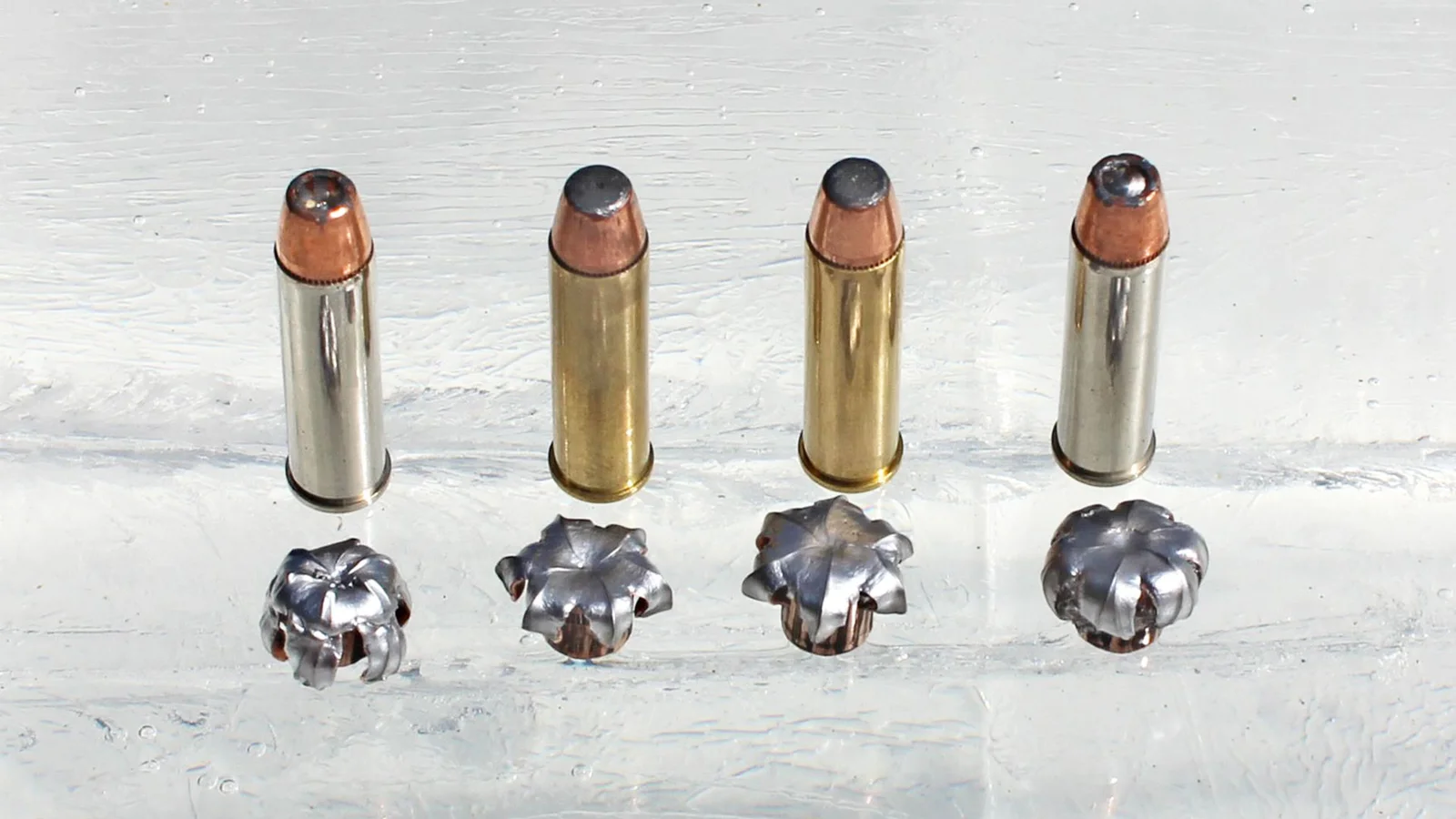
Alternative .380 ACP Defensive Loads
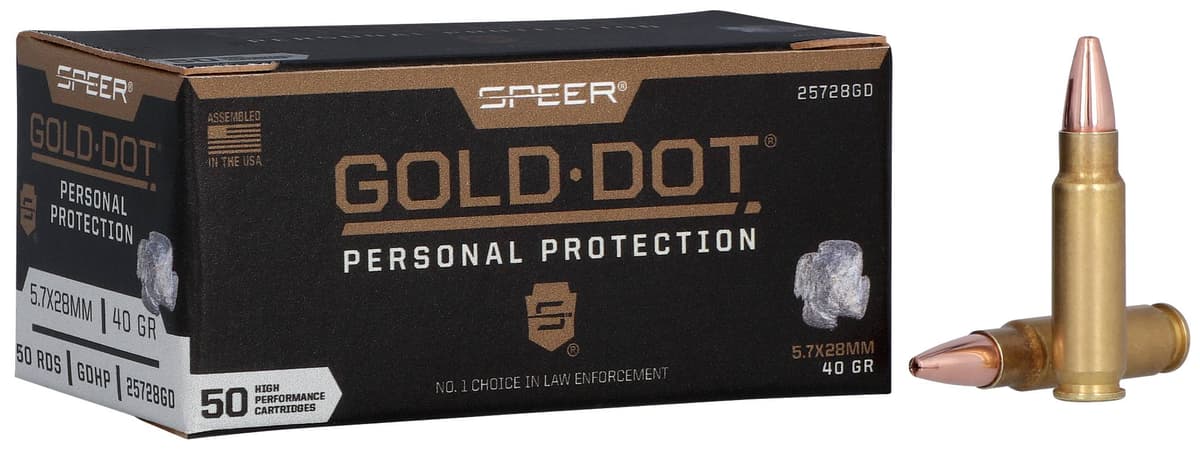
Speer Gold Dot 5.7x28mm 40gr GDHP
- 40 grain Gold Dot HP (bonded)
- 5.7x28mm
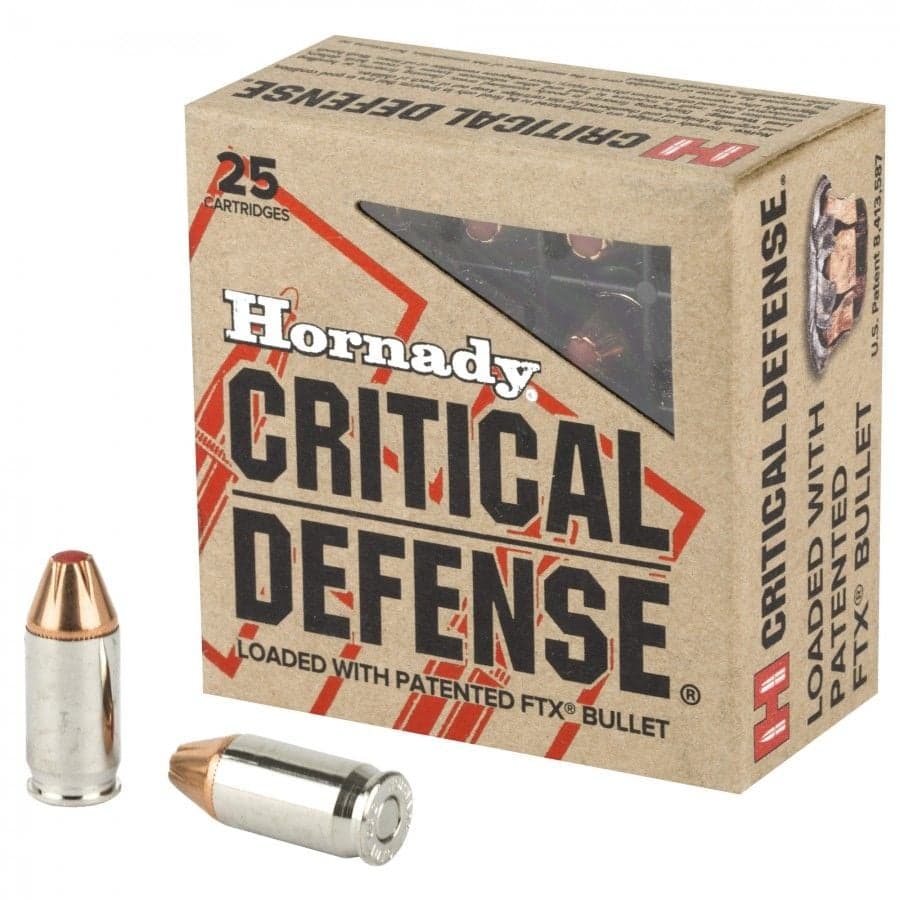
Hornady Critical Defense 380 Auto 90gr FTX
- 90 grain FTX
- .380 ACP / 380 Auto
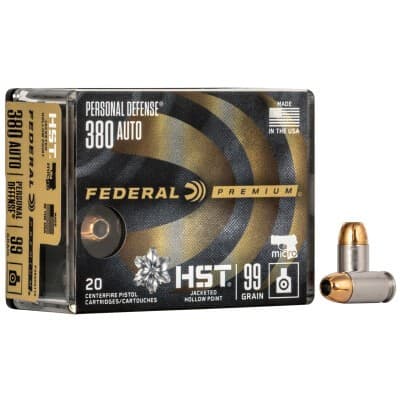
Federal Premium HST 380 Auto 99gr JHP
- 99 grain JHP
- .380 ACP / 380 Auto
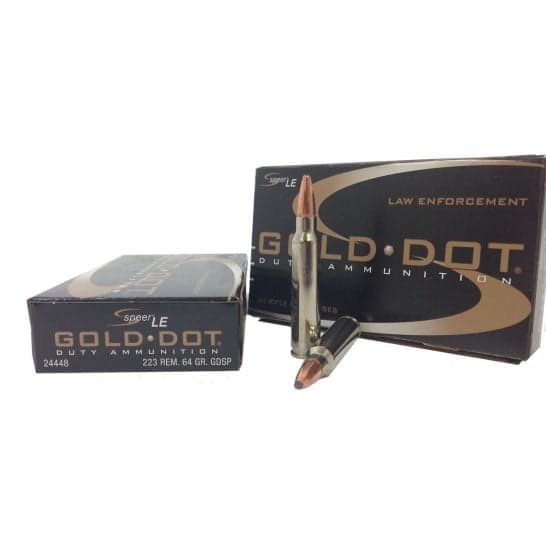
Speer Gold Dot .223 Rem 62gr GDSP
- 62 grain GDSP
- .223 Remington
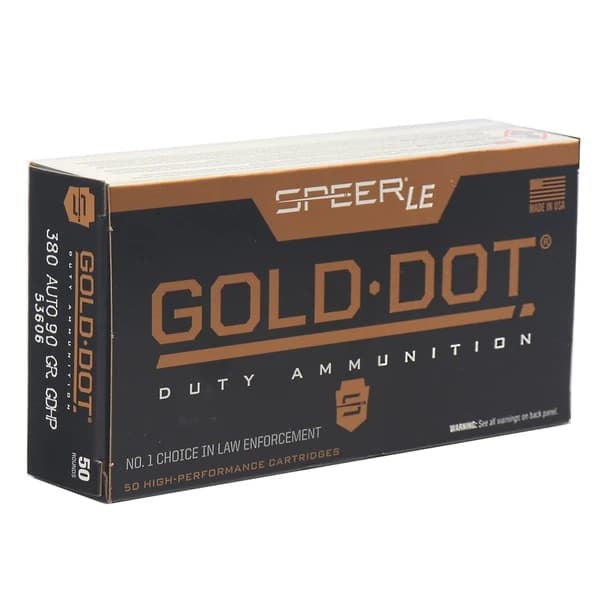
Speer Gold Dot 380 Auto 90gr JHP
- 90 grain JHP
- .380 ACP / 380 Auto
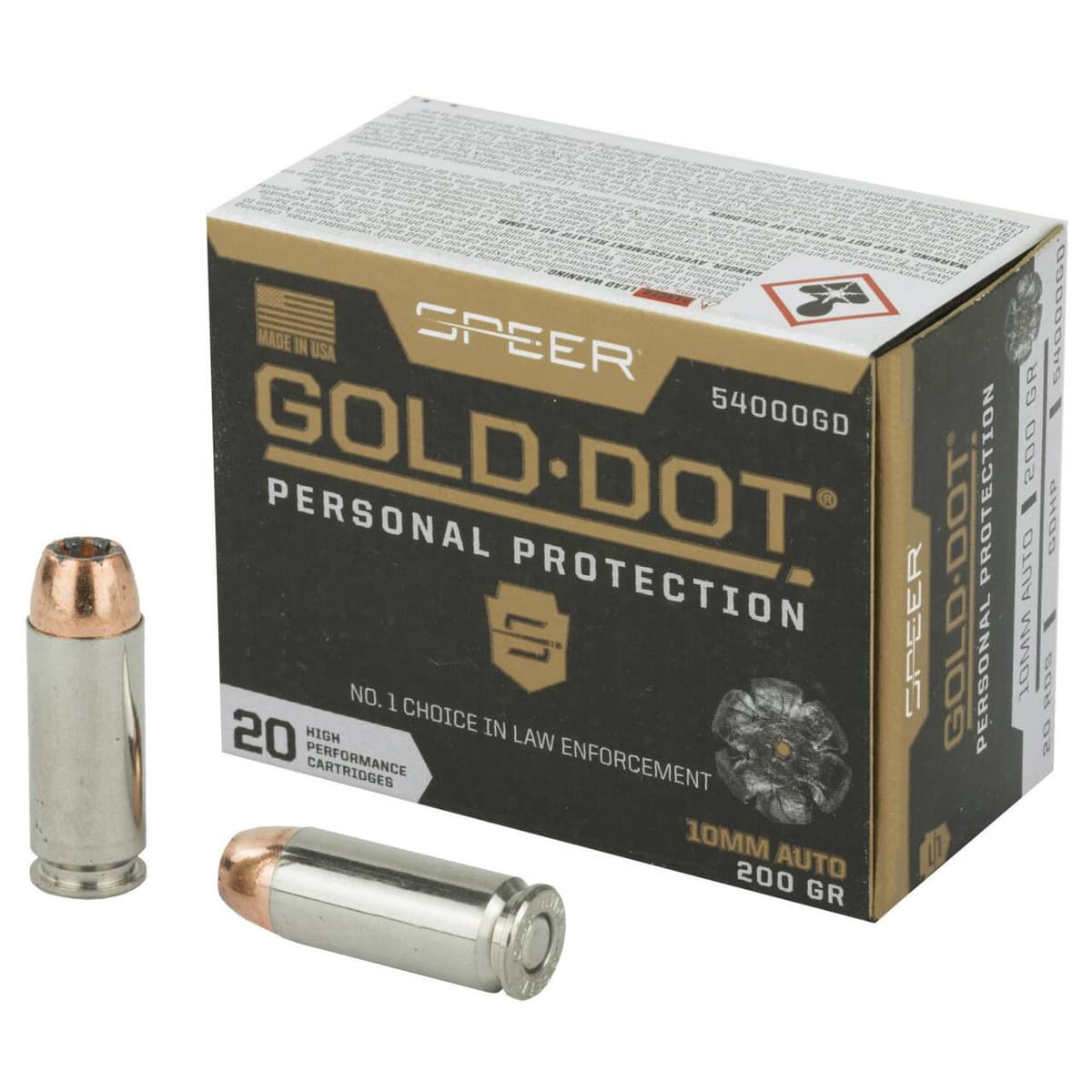
Speer Gold Dot 10mm 200gr JHP
- 200 grain Gold Dot JHP
- 10mm Auto
Affiliate links (?)
How SPIKE 2.0 Compares to the Defensive .380 Market
The defensive .380 market settled into a small group of dominant loads over the last decade: Federal HST 99gr, Hornady Critical Defense 90gr FTX, Speer Gold Dot 90gr, Federal Hydra-Shok Deep, and Underwood Xtreme Defender. SPIKE 2.0 enters this bracket as the velocity outlier. Every other load on that list runs between 950 and 1,050 fps. SPIKE 2.0 runs 50 percent faster.
Velocity is not free. Faster, lighter bullets generally penetrate less than slower, heavier ones on a sectional-density basis, which is why most defensive .380 loads push 90 to 99 grain. Liberty's answer is the copper construction. The monolithic spike-tipped bullet retains its base through deep tissue while the petals expand and shed early, and the 13-inch published penetration through 12 layers of denim is at the upper end of the FBI window.
The realistic pick order for a carry .380 in 2026 if your pistol has an unsupported chamber:
| Load | Bullet | Velocity | Energy | Case |
|---|---|---|---|---|
| Liberty SPIKE 2.0 | 55gr copper HP | 1,500 fps | 275 ft-lbs | Brass |
| Federal HST | 99gr JHP | 1,030 fps | 233 ft-lbs | Nickel-plated brass |
| Hornady Critical Defense FTX | 90gr FTX | 1,000 fps | 200 ft-lbs | Nickel-plated brass |
| Speer Gold Dot | 90gr GDHP | 990 fps | 196 ft-lbs | Nickel-plated brass |
| Underwood Xtreme Defender | 68gr solid copper | 1,200 fps | 218 ft-lbs | Brass |
If reliable feeding is the priority, Federal HST is still the gold standard with the longest documented track record across pocket pistols. If maximum kinetic energy and fragmentation is the priority, SPIKE 2.0 is now the load to compare. If you want a non-expanding solid-copper option that sidesteps hollow point clogging entirely, Underwood Xtreme Defender is the closest peer. Match the load to the gun and function-test 100 rounds minimum before carrying it. To plan a complete pistol package around the load you choose, browse our catalog of pocket pistols and concealed-carry components.
The 9mm SPIKE 2.0 Version
The 9mm SPIKE 2.0 carries the same brass case and 55-grain monolithic copper projectile, sized for 9mm Luger. Liberty has not published .380-style ballistic comparison numbers for the 9mm yet, and independent gel tests have not yet appeared for the 2.0 variant in 9mm specifically. The original 9mm SPIKE projectile is positioned by Liberty alongside the company's Overwatch line as a high-velocity fragmenting defensive load.
For 9mm carry pistols, the brass case fix is less critical because most modern 9mm concealed-carry guns use fully supported or near-supported chambers. The Sig P365, Glock 43X, Hellcat, and S&W Shield Plus all support the case head adequately for conventional brass-cased loads. The 9mm SPIKE 2.0 is a parallel SKU more than a fix for a known issue. If you are choosing a 9mm defensive load for an EDC pistol, our ranked best 9mm self-defense ammo guide covers the dominant duty and carry options.
Defensive Ammo Launches, Straight to Your Inbox
Get notified when Liberty, Federal, Hornady, and Speer announce new defensive loads. We cover ammo launches, distributor availability, and independent gel testing as soon as it drops.
Frequently Asked Questions
▶What is Liberty SPIKE 2.0 ammunition?
▶What is the difference between Liberty SPIKE and SPIKE 2.0?
▶Will Liberty SPIKE 2.0 run in my Ruger LCP, S&W Bodyguard 2.0, or Glock 42?
▶How does SPIKE 2.0 compare to Federal HST and Hornady Critical Defense in .380?
▶How much does Liberty SPIKE 2.0 cost?
▶Is Liberty SPIKE 2.0 a fragmenting round?
▶Where can I buy Liberty SPIKE 2.0?
Bottom Line
SPIKE 2.0 is the version of Liberty's flagship pocket-pistol load that actually fits the gun most people carry .380 in. The brass case fixes the only legitimate criticism of the original NAS3-cased SPIKE, the 55-grain copper projectile still hits faster and harder than anything else in the category, and Liberty's published penetration depth keeps it inside the FBI 12-18 inch window through heavy clothing. At $45.99 for a 20-round box it sits in the same price tier as Federal HST.
For Ruger LCP Max, Bodyguard 2.0, Glock 42, and Sig P238 carriers who tried the original SPIKE and ran into feeding problems, 2.0 is the answer. For new buyers shopping defensive .380 for the first time, SPIKE 2.0 belongs on the function-test shortlist alongside Federal HST and Hornady Critical Defense. If you want to spec a full pocket-carry setup including holster, light, and backup magazine, build it out in the rifle and pistol builder or browse our complete coverage of the Ruger LCP Max ReadyDot and S&W Bodyguard 2.0 review for current pocket-pistol picks.