Key Takeaways
- →9 oz at $149.99: a skeletonized aluminum I-beam buttstock in Cerakote Black or FDE, released on August 28, 2026.
- →XTN interface only: MDT lists the ACC Elite, ACC Premier GEN2, HNT26, and LSS GEN3 chassis families. An AR-interface chassis needs a different stock.
- →Two new single-hinge folders: XTN-to-XTN adds 1.13 in of length of pull, XTN-Picatinny adds 1.14 in, both at $199.99.
- →Adjustment is a later purchase: the stock is fixed-comb out of the box, with the Stalker Core cheek riser and the length-of-pull spacer pair sold separately.
- →Short length of pull: 10.43 in minimum on an LSS GEN3 Remington 700 with the Short XTN interface, which is shorter than most chassis rifles reach.
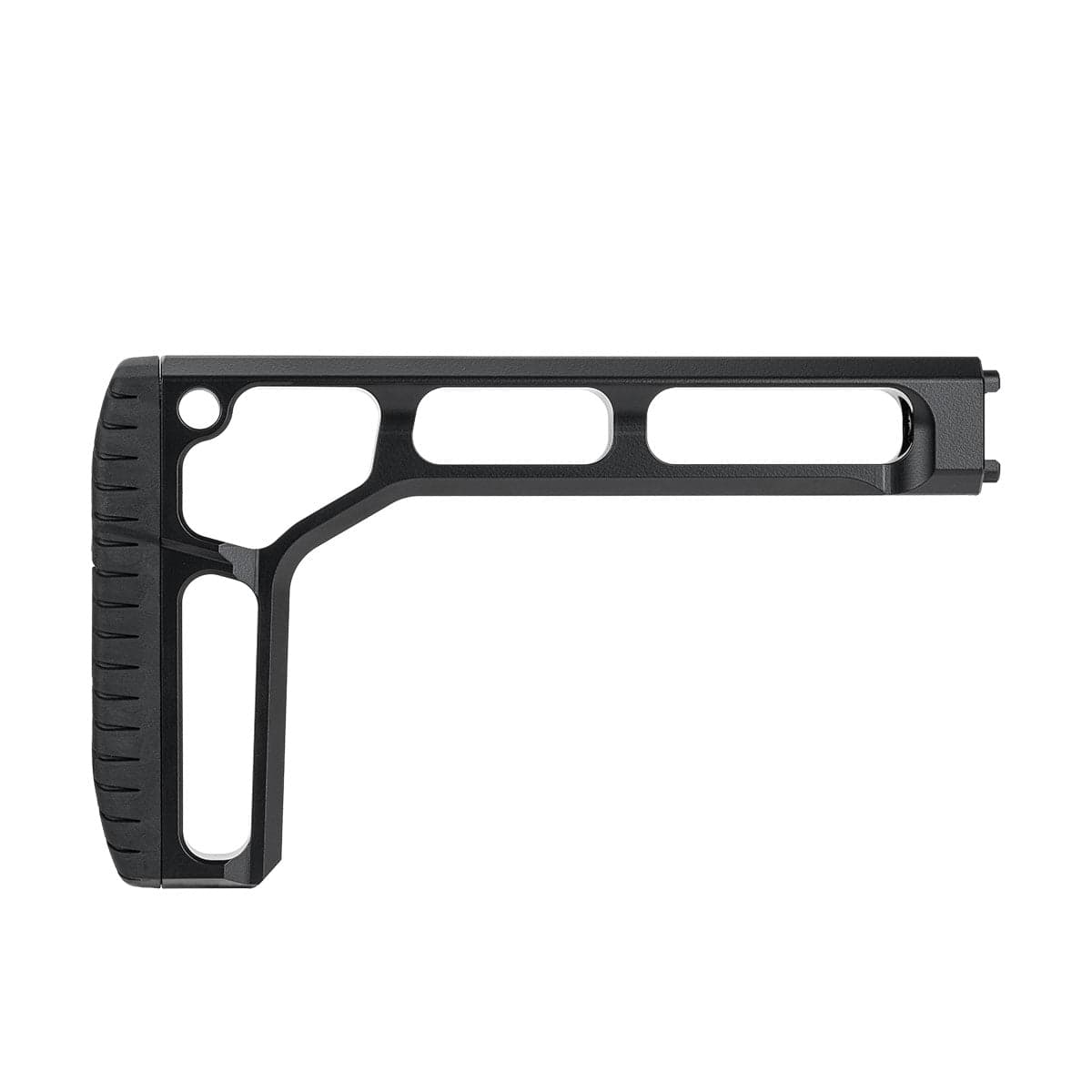
MDT Stalker Core Buttstock
Cutting weight off an XTN chassis without giving up a QD socket or upgrade path
Nine-ounce skeletonized aluminum buttstock for MDT XTN chassis interfaces, upgradeable with a cheek riser and length-of-pull spacers.
- +9 oz skeletonized body
- +Reaches a 10.43 in minimum length of pull on a Short XTN interface
- +Works with the XTN folding adapters
- −Cheek riser and length-of-pull spacers cost extra
- −XTN interface only, so it does not fit AR-interface chassis
- −No tool-free comb or length-of-pull adjustment
Affiliate links (?)
What MDT Launched
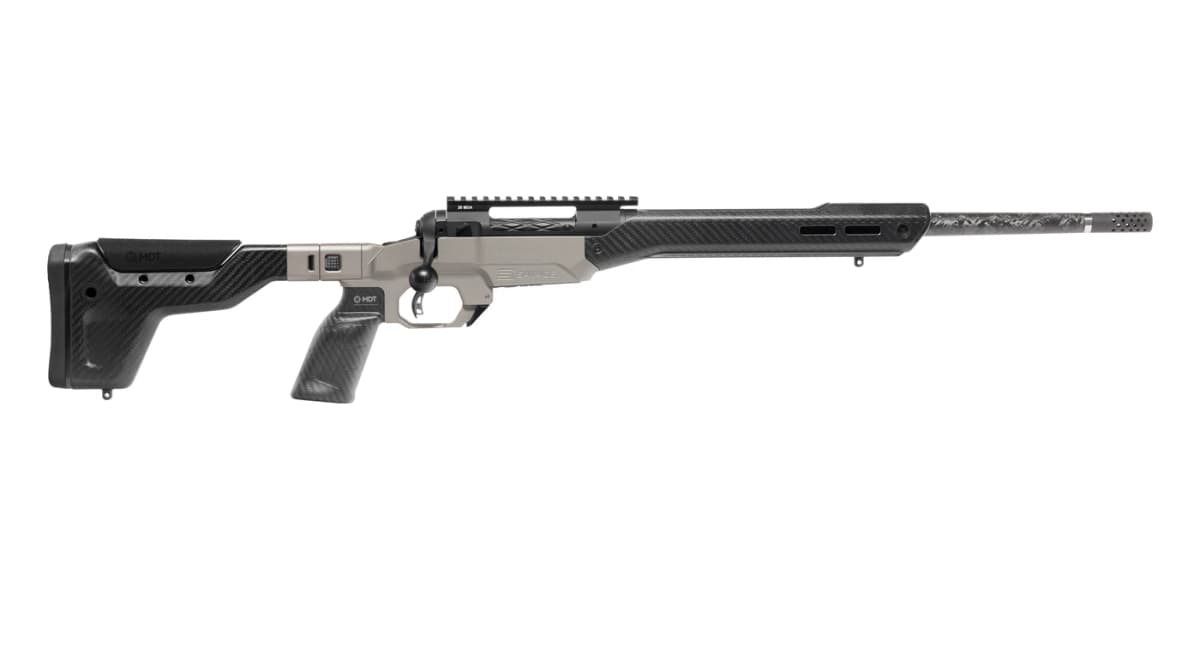
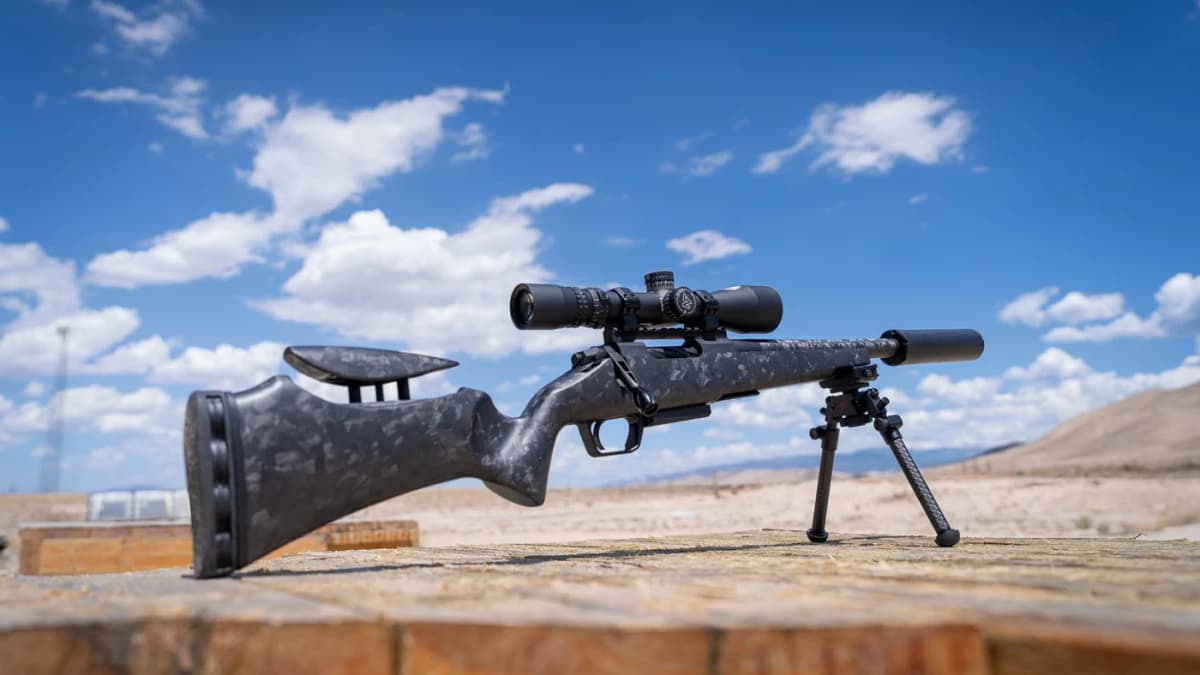
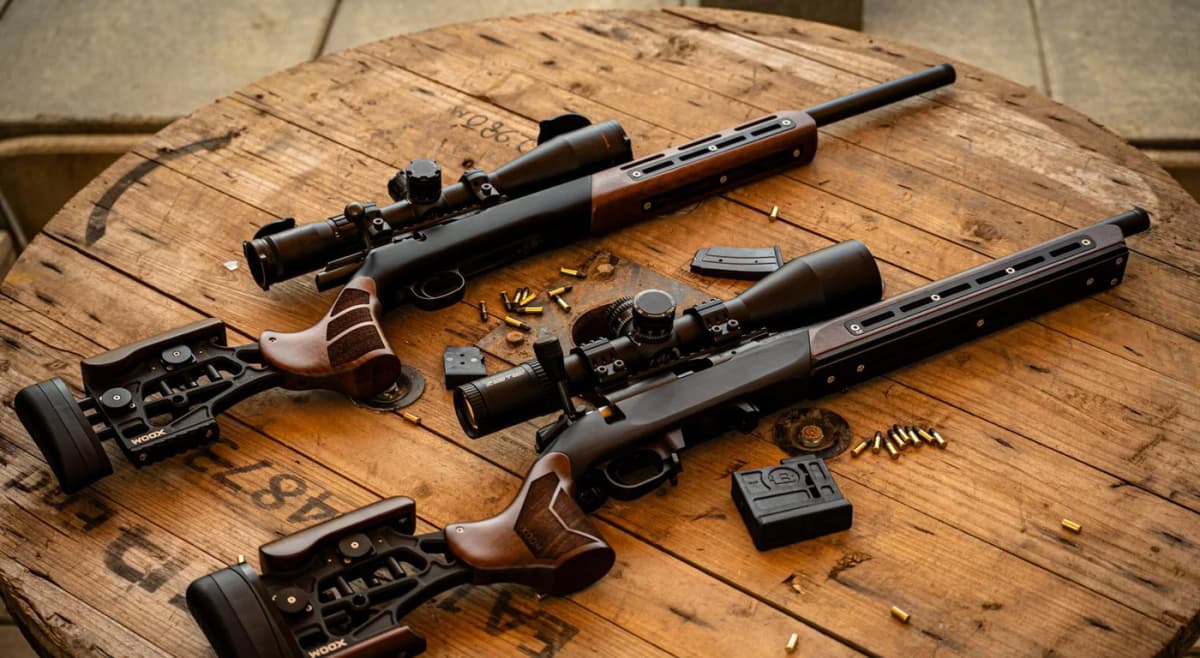
MDT released the Stalker Core buttstock on August 28, 2026, along with two single-hinge folding adapters, a matching cheek riser, and a pair of length-of-pull spacers. The buttstock is the headline part: 9 oz of skeletonized Cerakote aluminum on MDT's XTN interface, 8.5 by 1 by 5 inches, in Black or FDE at $149.99.
The design is an I-beam with the web cut away, which is where the weight goes. What survives the cutting is the part that matters on a bag: a narrow convex buttpad that slides into the shoulder without catching a sling or a plate carrier cummerbund, plus an integrated QD socket. MDT includes the hex L-key that the install calls for.
This is a base-model stock in a lineup that has been drifting upmarket. MDT's recent releases have been actions and competition hardware, including the Fuzion and Razor actions it now sells under its own name and the Rifle Control Points thumb shelf. The Stalker Core points the other way, at a builder who wants a working XTN stock without paying for adjustment hardware they are not going to turn.
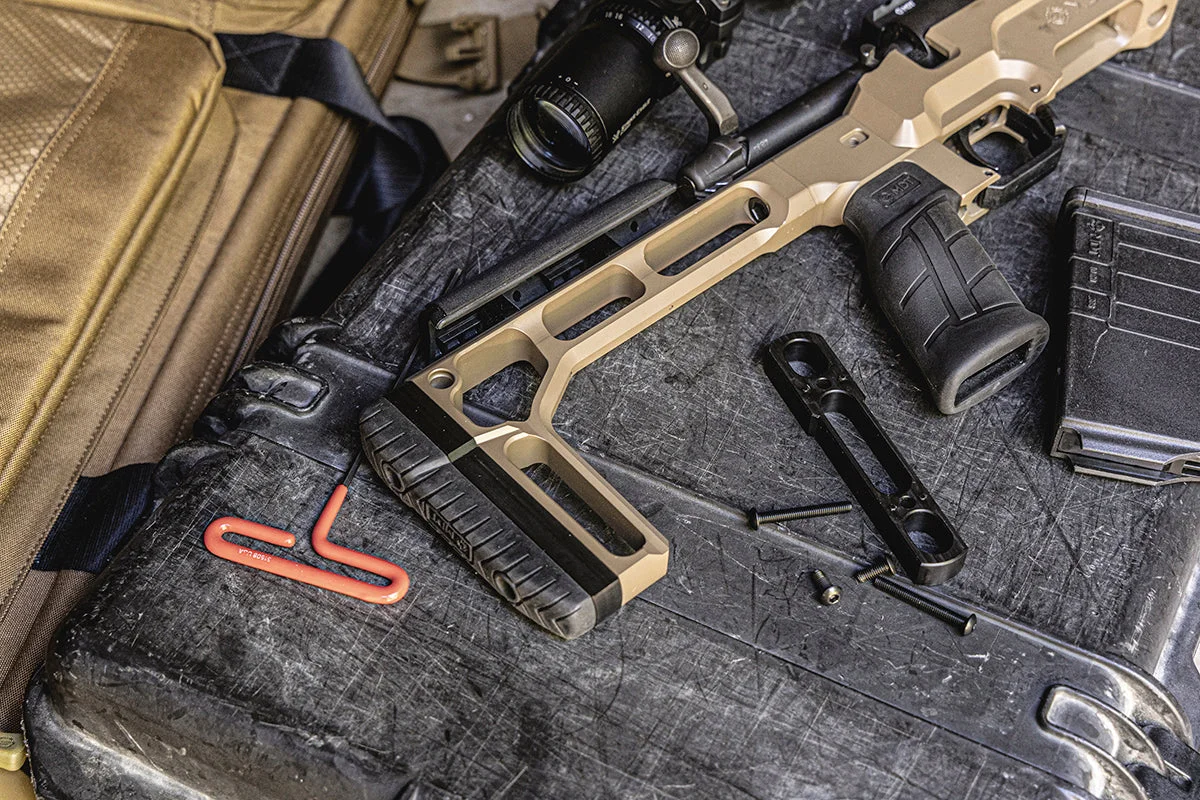
MDT Stalker Core Buttstock
| Price | $149.99 |
| Weight | 9 oz, 11.8 oz with the L-key |
| Dimensions | 8.5 x 1 x 5 in |
| Interface | MDT XTN |
| Minimum length of pull | 10.43 in (LSS GEN3 R700, Short XTN) |
| Material and finish | Aluminum, Cerakote |
| Colors | Black, FDE |
| Sling mount | Integrated QD socket |
| Included | Hex L-key |
Which Chassis Actually Take This Stock
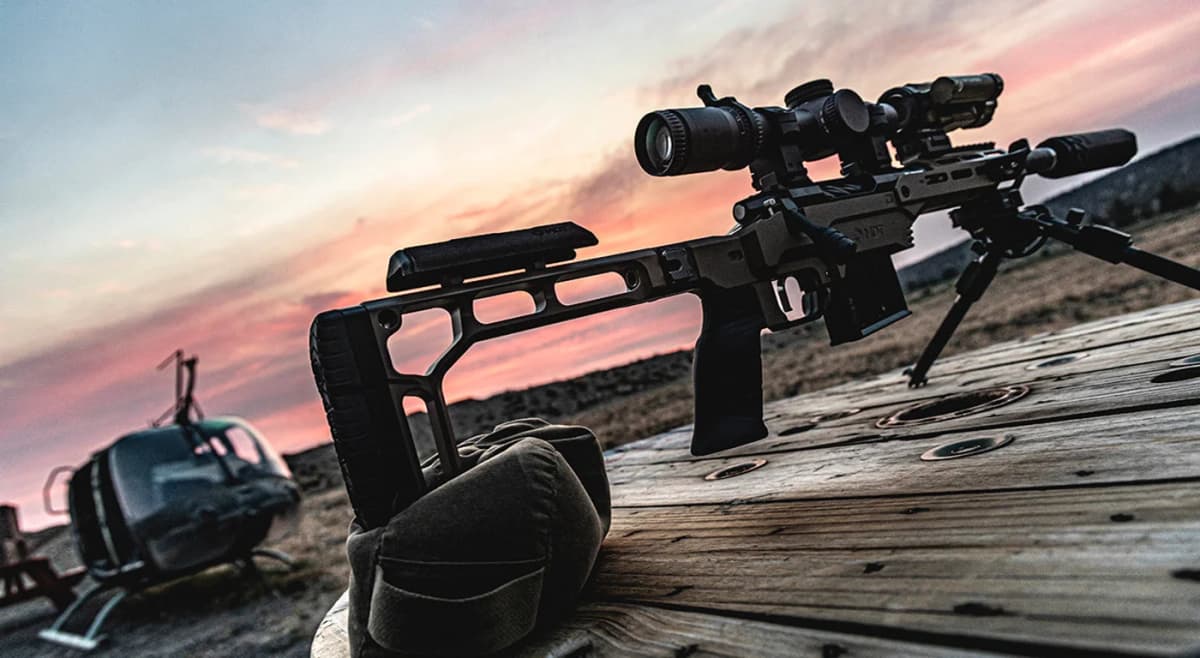
The Stalker Core mounts on XTN-interface chassis, and MDT names the ACC Elite, ACC Premier GEN2, HNT26, and LSS GEN3 families. Check the back of the chassis before ordering: XTN is MDT's own male-and-female buttstock interface, not the round receiver extension an AR-pattern stock slides over.
That distinction decides most of the buying question. A chassis with an AR-style buttstock interface has a much larger stock market open to it and gets nothing from this release, while an XTN chassis has a short list of stocks and just gained a cheaper one. MDT also sells an XTN to Carbine Stock Adapter for going the other direction, putting an AR buttstock on an XTN chassis, which is the path if a build already owns a carbine stock worth keeping.
If the host chassis is still an open question, our bolt-action chassis guide ranks the ORYX, XRS, HNT26, and ACC systems by what the inlet and the rear interface buy you, and the component catalog lists the current MDT inlets by action footprint.
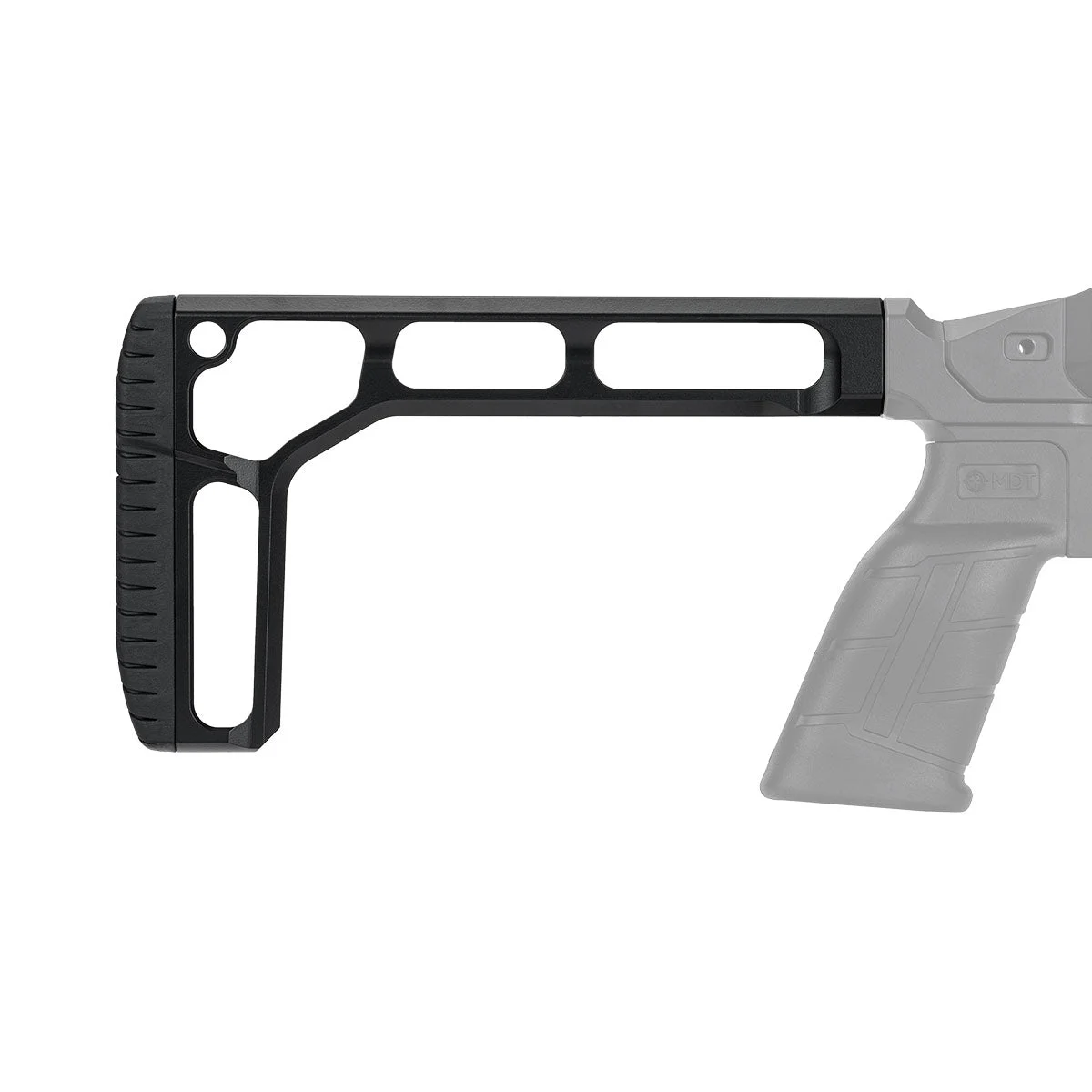
The Folding Adapters Cost Less Length of Pull Than the Old Hinge
The two new XTN folding adapters add 1.13 and 1.14 inches of length of pull, against 1.75 inches for the AR-interface MDT Folding Stock Adapter at $169.99. Six tenths of an inch is a real number on a chassis rifle: it is more than a single spacer step, and it lands on the side of the trade that shooters usually pay to fix.
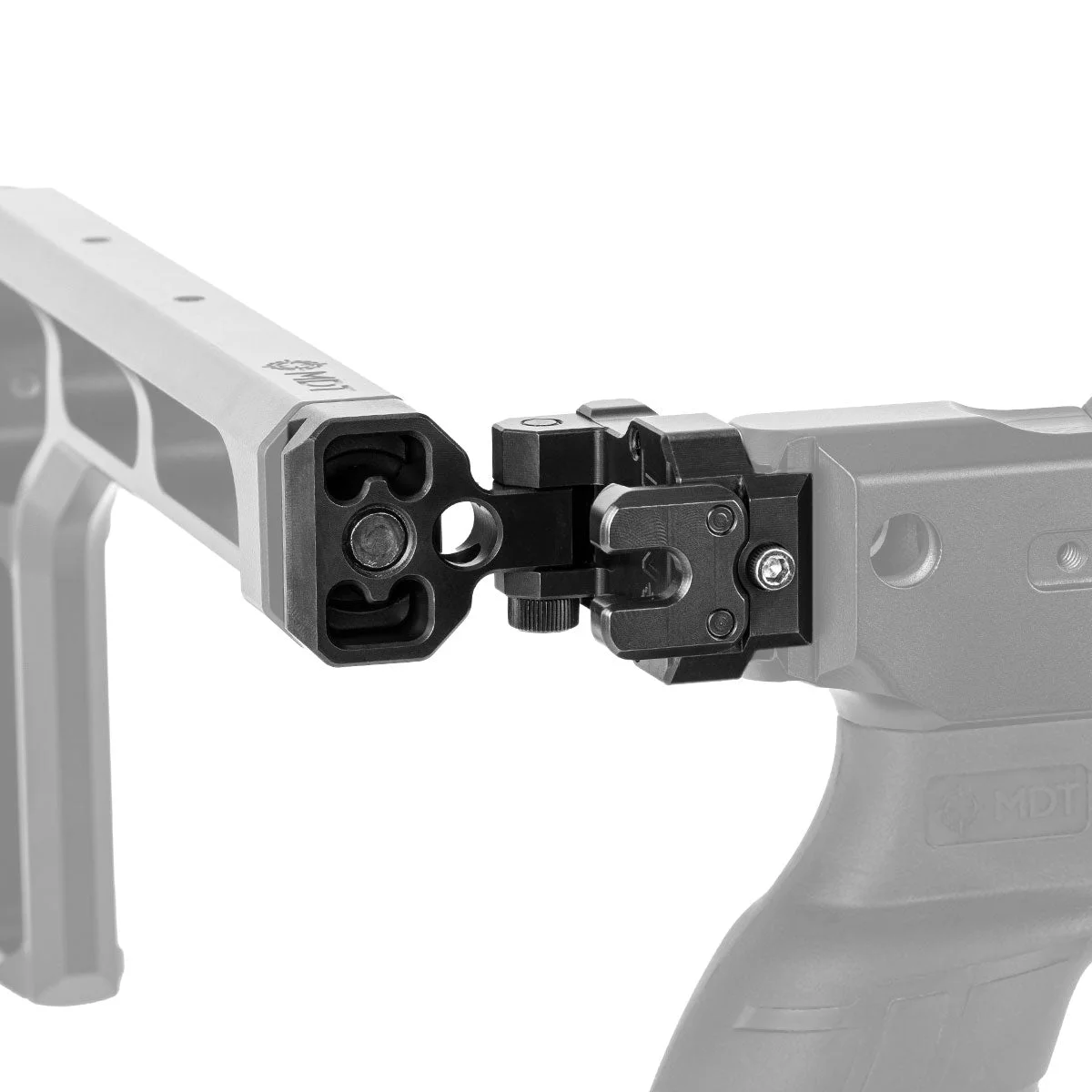
Both versions are A36 cold-rolled steel in a black liquid-nitride finish, fold through 180 degrees on a single button press, and carry an adjustable retention screw so the hinge can be locked down tight rather than left with play. They install on either side of the action. The difference is the input: XTN-to-XTN bolts to a female XTN chassis interface, and XTN-Picatinny clamps to a NATO/1913 rail, which reaches chassis and AR receivers that never had an XTN interface to begin with.
The older hinge also excludes MDT's TAC21, ESS, and ACC chassis, so an ACC owner who wanted a folder previously had to use the chassis system's own. The XTN-to-XTN adapter is the direct answer for an XTN-interface chassis, and it does not force the build onto an AR buttstock to get there.
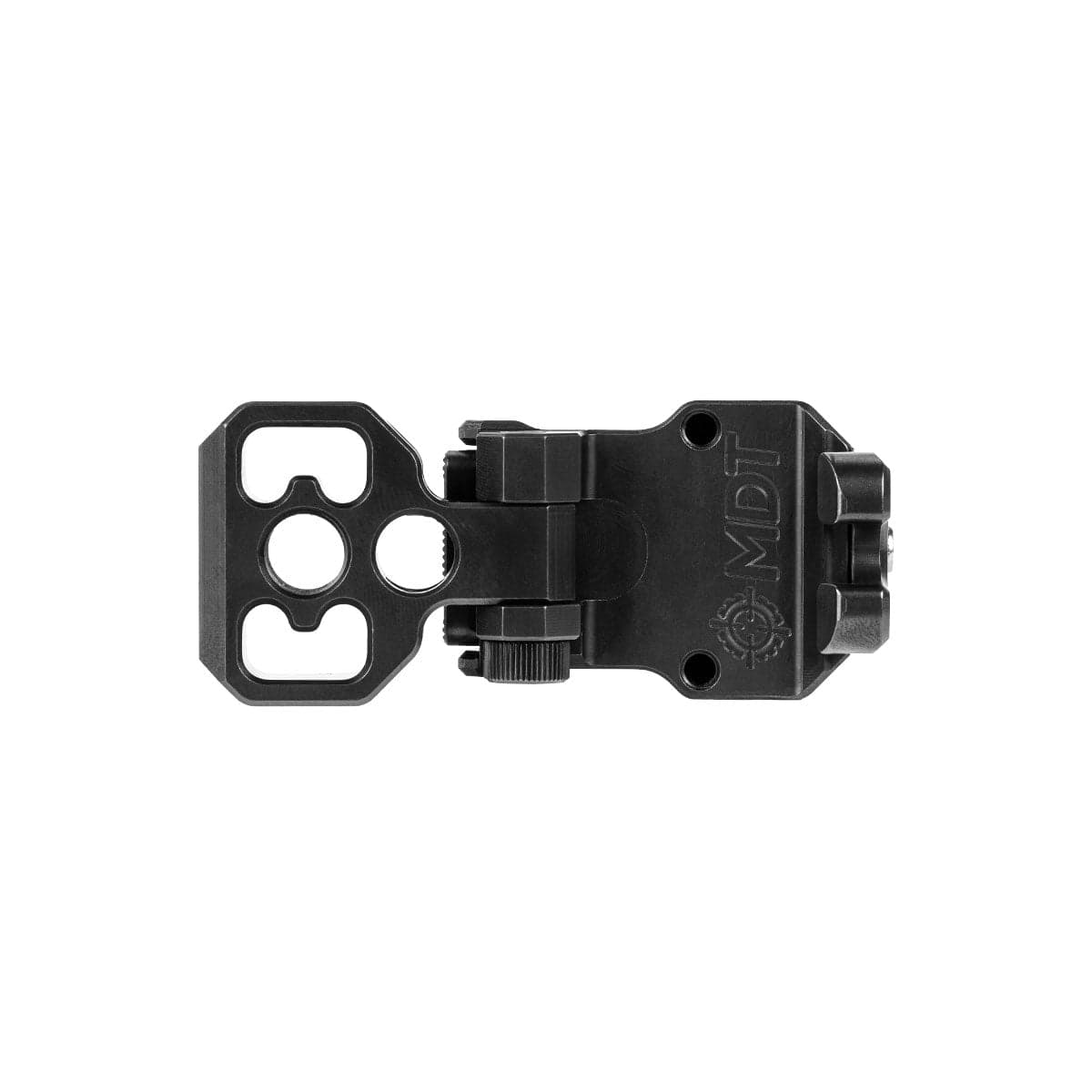
MDT XTN Folding Adapter
Folding an XTN chassis or a 1913 rail without moving to an AR buttstock
Single-hinge steel folding adapter in XTN-to-XTN and Picatinny-to-XTN interfaces, adding roughly 1.13 in of length of pull.
- +Adds less length of pull than MDT's older AR-interface hinge
- +Picatinny version reaches hosts without an XTN interface
- +Steel construction with adjustable hinge retention
- −Costs more than the buttstock it folds
- −Output interface is XTN only, so it needs an MDT XTN buttstock
- −Still adds over an inch of length of pull
Affiliate links (?)
MDT Chassis Systems
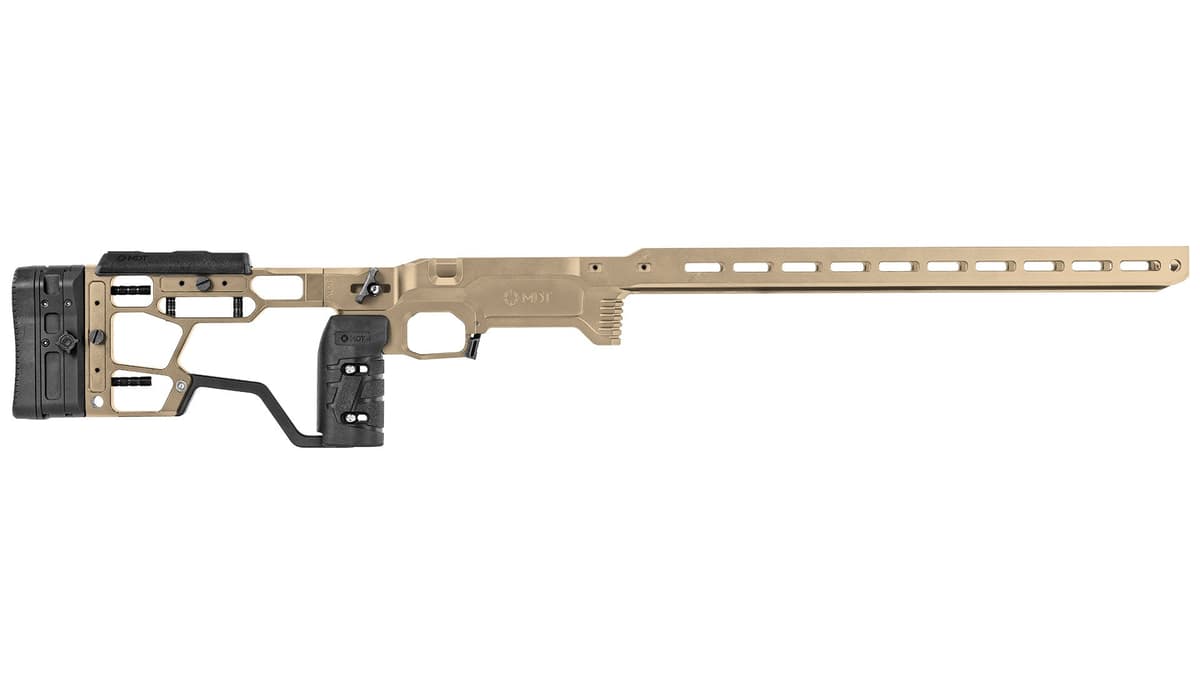
MDT ACC Elite Chassis System
- Remington 700 SA and LA CIP options
- Integrated ARCA fore-end
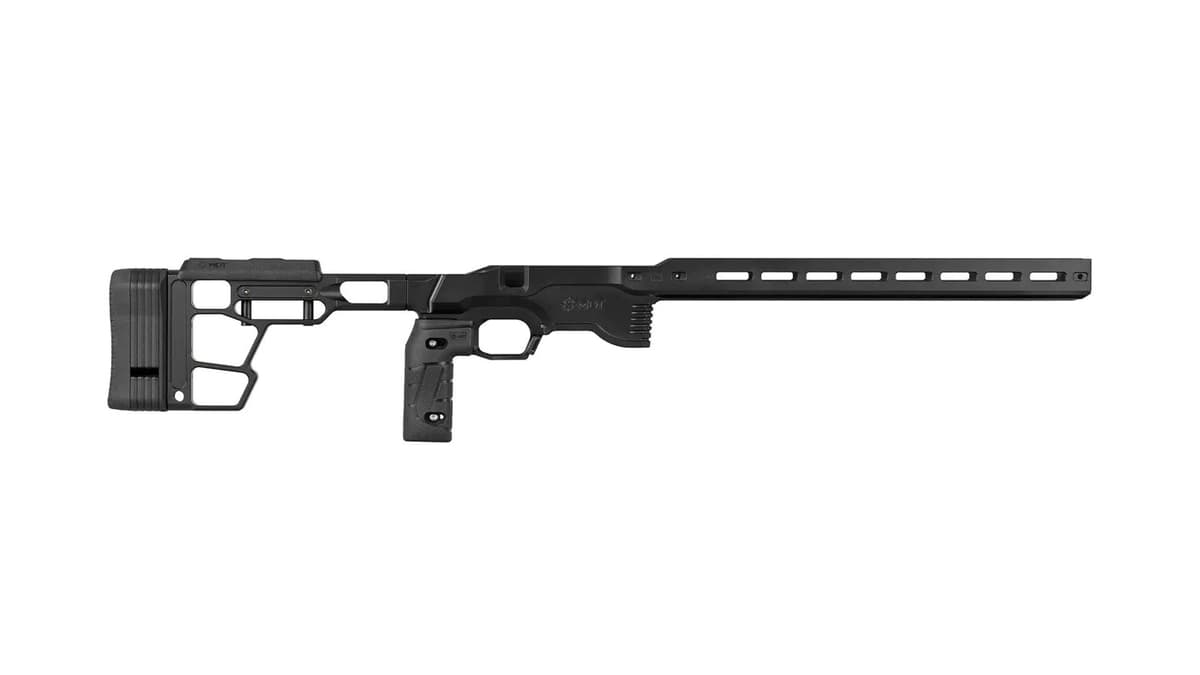
MDT ACC Premier GEN2 Chassis System (Remington 700 SA)
- Remington 700 short-action inlet
- 15 in forend
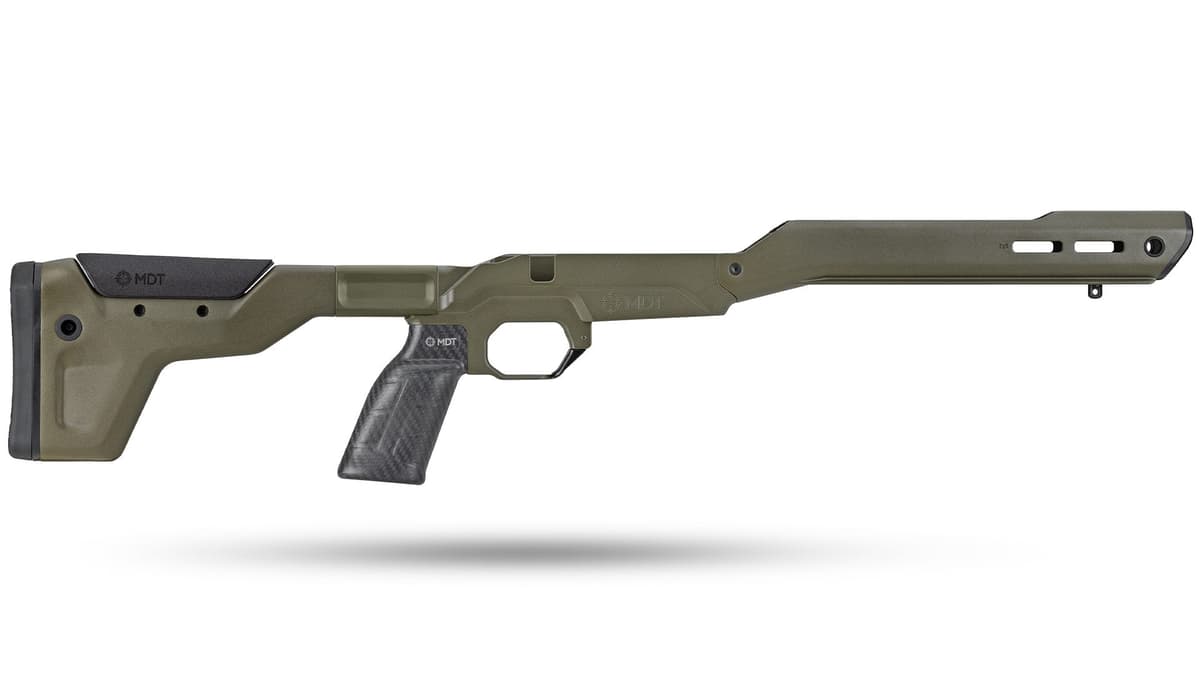
MDT HNT26 Chassis System (Remington 700 SA)
- Remington 700 short-action inlet
- From 26 oz
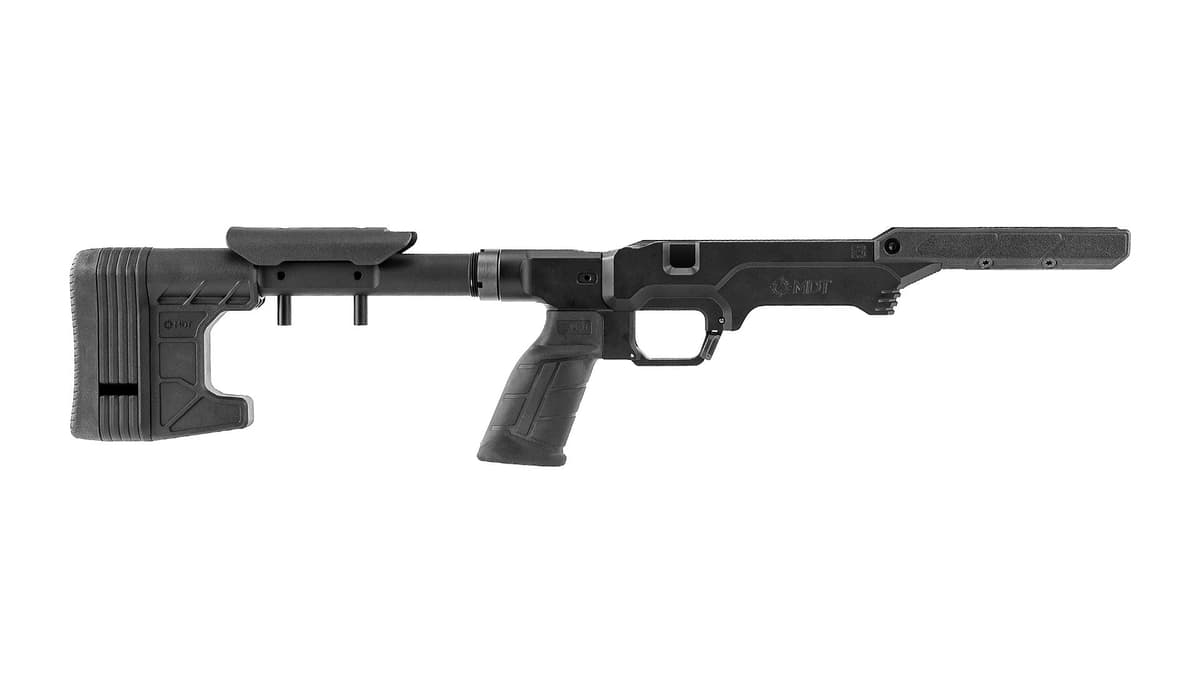
MDT The Worker LSS Gen3 Kit (Tikka T3/T3x SA)
- Tikka T3/T3x short action
- Compact chassis kit
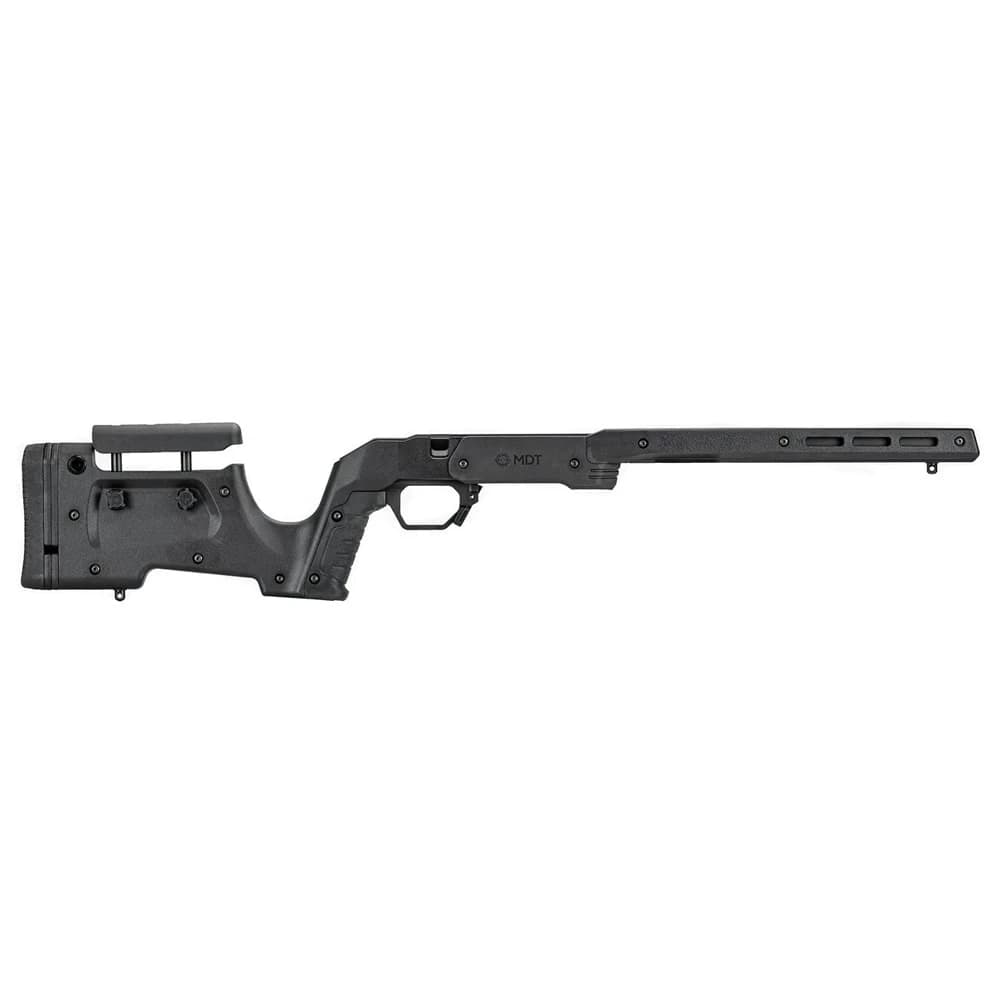
MDT XRS Chassis System (Remington 700 SA)
- Remington 700 short-action inlet
- 3.9 lb
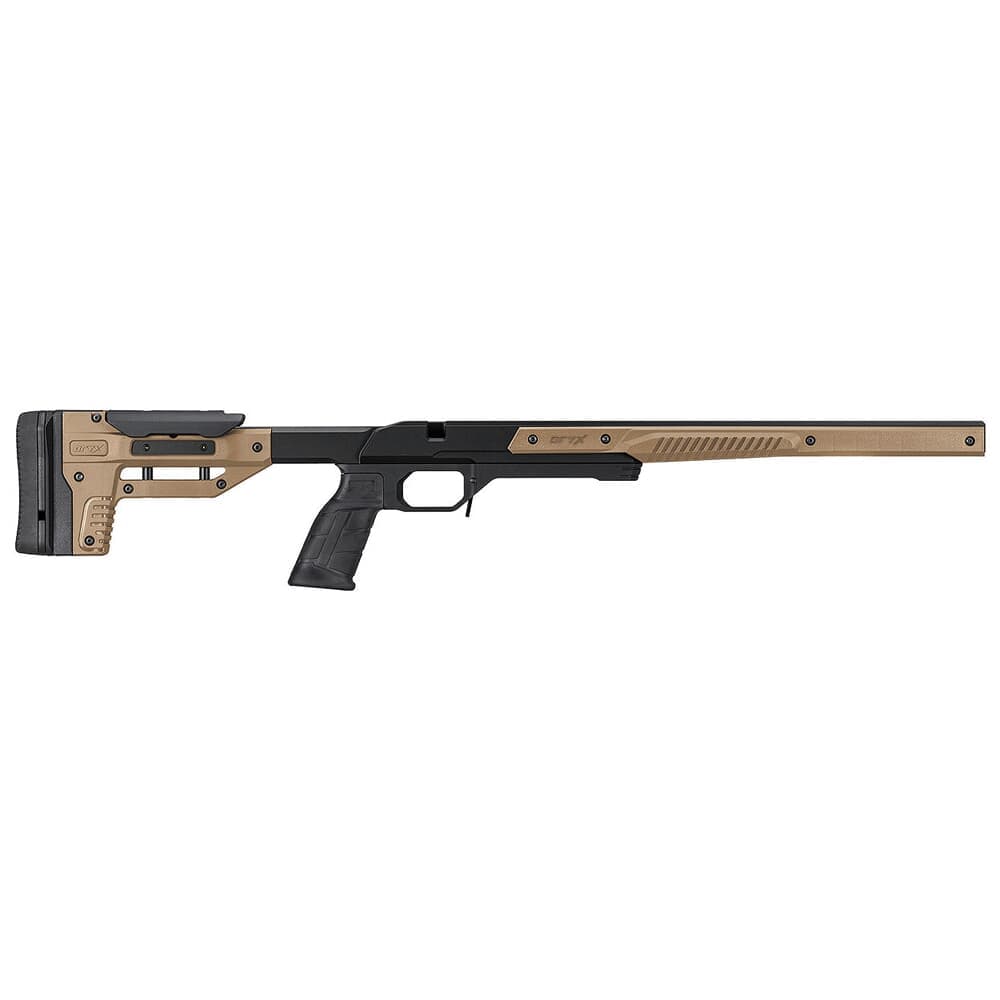
MDT ORYX Chassis System (Remington 700 SA)
- Remington 700 short-action inlet
- 4.2 lb
Affiliate links (?)
Where It Sits in MDT's Buttstock Ladder
As of August 2026 the Stalker Core is the second-cheapest buttstock MDT lists, with only the CCS below it. Everything else sits above: the SCS-Lite, the SCS, the SRS and SRS-X families, and the folding SRS-XF, up to the SRS-X Elite at roughly four times the Stalker Core. The next stock up the ladder costs about half again as much.
What the money buys further up that ladder is adjustment: tool-free comb height, tool-free length of pull, and more mass at the rear of the rifle. The Stalker Core spends nothing on any of that. Cheek height comes from a riser with 0.5 to 1 inch of travel, length of pull comes from a spacer pair in half-inch steps, and neither one puts a thumbwheel on the stock.
The 10.43-inch minimum length of pull is the specification that stands out against the rest of the lineup. On an LSS GEN3 Remington 700 with the Short XTN interface, that is short enough for a small-framed shooter, a shooter in heavy winter layers, or a rifle that spends its life on a bipod with the shooter stacked well forward.
Stay Updated on Precision Rifle Hardware
Get new chassis, action, and buttstock releases as they ship, with the specs that decide fitment.
Who Should Buy the Stalker Core
Three builds benefit. A hunting chassis rifle that already runs an HNT26 or an LSS GEN3 gains a stock that keeps the weight budget intact instead of putting 20 oz back on the rear of a rifle bought to be light. A field or NRL Hunter rifle that folds for pack carry gets the XTN-to-XTN hinge with the smaller length-of-pull penalty. A first-chassis build gets a working rear end for a fraction of the SRS money, with the riser and spacers available later if the scope height or the shooter changes.
The build that should not buy it is the one that adjusts its comb between positional stages. PRS shooters who move the cheek piece for a barricade run want a tool-free stock, and paying twice, once for the Stalker Core and again for the SCS or SRS later, costs more than starting there. The same goes for anyone who wants weight at the rear of the rifle to balance a heavy barrel and a suppressor.
To see how a chassis, an action, and a rear end price out together before committing, run the parts list through the rifle builder. For the rest of the rear-end decision, the folding stock adapter guide covers what a hinge costs in length of pull and rigidity across AR, AK, and chassis hosts.