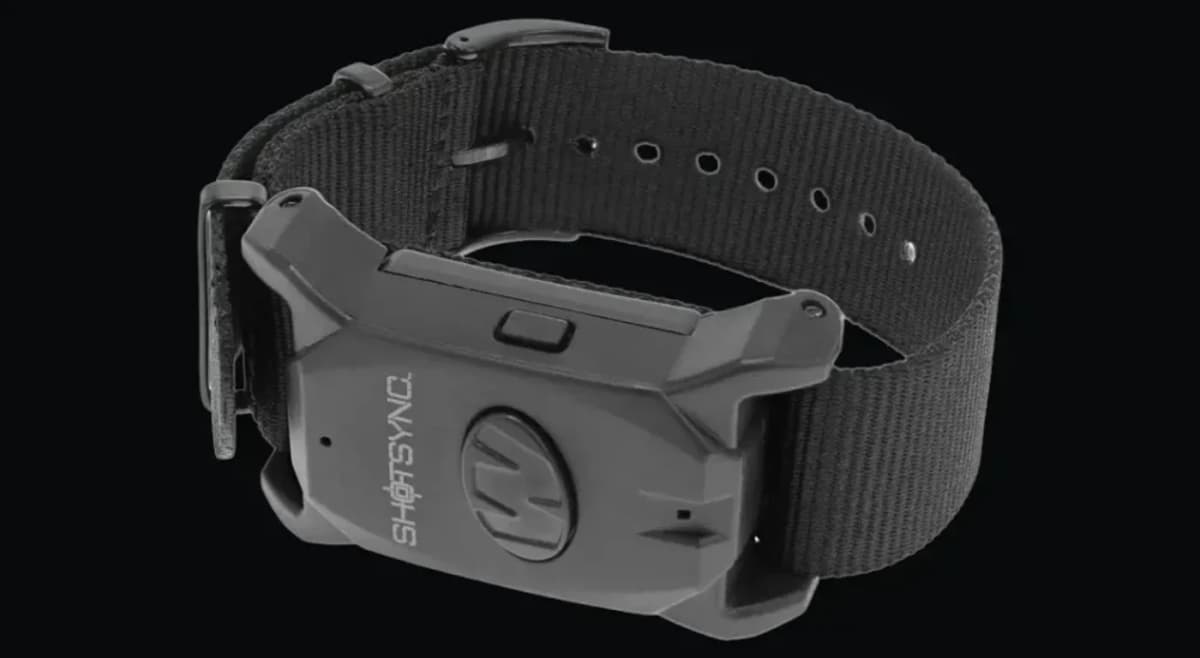
Walker's ShotSync: $60 Wrist-Worn Shot Timer with Dual-Sensor Detection
Walker's enters the shot timer market with a $59.99 wrist-worn device that pairs dual sensors with Bluetooth app connectivity. The ShotSync tracks draw times, split times, and builds a searchable training history, all for less than half the price of a traditional handheld timer.
Key Takeaways
- →Dual Detection: Integrated microphone and accelerometer sample at 1.6 kHz, cross-referencing sound and recoil to accurately count shots and measure split times.
- →App-Connected: Bluetooth 5.2 pairs with the free Walker's Link app (iOS/Android) for drill setup, par times, start delays, and automatic session logging.
- →Adjustable Profiles: Configurable sensitivity supports .22 LR, pellet guns, and full-power competition calibers without swapping hardware.
- →5.5-Hour Battery: Active recording with Bluetooth lasts up to 5.5 hours on a single charge, with a 60-minute recharge time.
- →$59.99 MSRP: Undercuts traditional handheld shot timers by $70-110, making dedicated timing hardware accessible to casual and competitive shooters alike.
What the ShotSync Is
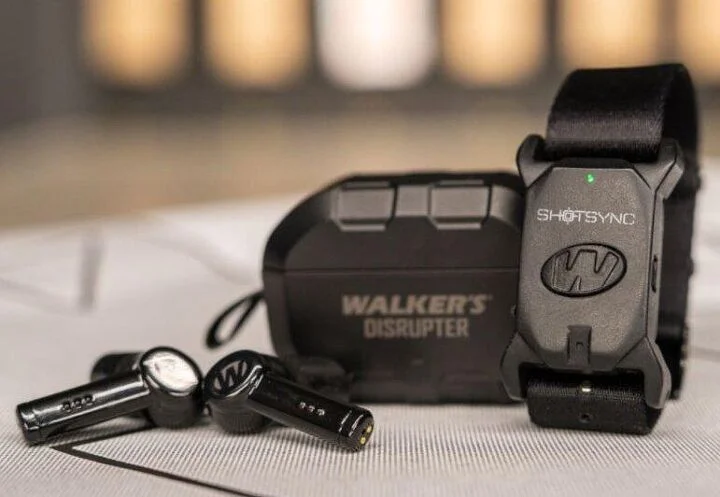
The Walker's ShotSync is a wrist-worn shot timer that straps on like a watch and records your shooting performance through dual-sensor detection. An onboard microphone listens for the report of each shot while an accelerometer registers the recoil impulse. Both channels sample at 1.6 kHz, fast enough to align sound and motion data and accurately identify draw-to-first-shot time, every subsequent shot, and the split times between them.
Walker's debuted the ShotSync at SHOT Show 2026 and made it available nationwide in March 2026 at an MSRP of $59.99. For a brand that has spent 30+ years building hearing protection, this is a calculated move into performance analytics. The ShotSync slots into the same Walker's Link app ecosystem that already connects their Bluetooth-enabled earmuffs, creating a unified training platform rather than a standalone gadget.
Stay Updated on Training Gear
Get notified when we publish hands-on reviews of new training tools, shooting accessories, and competition gear. We also cover product launches, drills, and range equipment.
How the Dual-Sensor System Works
Traditional shot timers rely on a microphone alone to detect gunfire. That works fine in a quiet bay, but on a busy range with multiple shooters, ambient noise can trigger false reads or miss shots entirely. The ShotSync addresses this by pairing its microphone with an accelerometer that reads recoil motion directly from the shooter's wrist. A shot only registers when both sensors agree, filtering out noise from neighboring lanes.
The 1.6 kHz sampling rate is fast enough to distinguish individual shots in rapid strings. For competitive shooters running Bill Drills or El Presidente variations, that resolution matters. The device tracks draw-to-first-shot time using the recoil impulse as the trigger event, then logs every subsequent shot with split times between them. All of this data syncs to the Walker's Link app automatically. If you are building a structured training plan for a new rifle or pistol, the ShotSync provides the feedback loop to measure progress across sessions. For measuring cadence from recorded footage instead of a live timer, our rate of fire video overlay tool detects shot markers straight from a video clip and calculates RPM automatically.
App Features and Drill Configuration
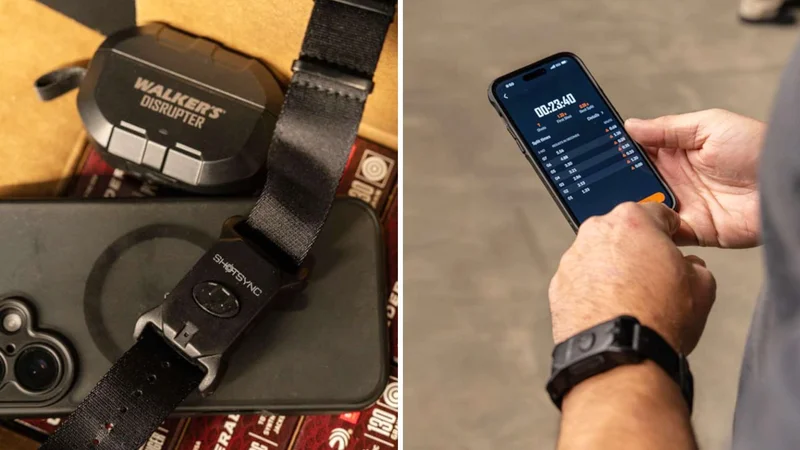
The Walker's Link app handles everything the wrist device does not. Shooters configure par times, start delays, and audible cue preferences through the app before beginning a drill. When the drill starts, the phone emits an audio signal while the ShotSync delivers a simultaneous vibration to the wrist, giving the shooter both audible and tactile start cues. That vibration start signal is useful for shooters wearing electronic hearing protection that may attenuate the phone's speaker output.
Firearm profiles are adjustable within the app. The sensitivity can be tuned from pellet guns and .22 LR up through full-power 9mm, .45 ACP, and rifle cartridges. This is where the accelerometer proves its value: low-recoil .22 LR shots that microphone-only phone apps routinely miss get picked up by the motion sensor on the wrist. Each session is logged automatically, building a searchable performance history that lets shooters track improvement over weeks and months. For those running structured shooting drills, the automatic logging eliminates the need to manually record times between strings.
Walker's Hearing Protection
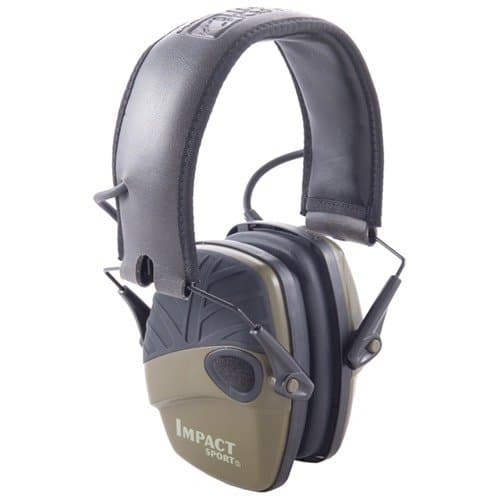
Walker's Razor Slim Electronic Ear Muffs
- 23 dB NRR
- Two omnidirectional microphones
XCEL 500BT Digital Electronic Muff
- NRR 26 dB
- Bluetooth wireless
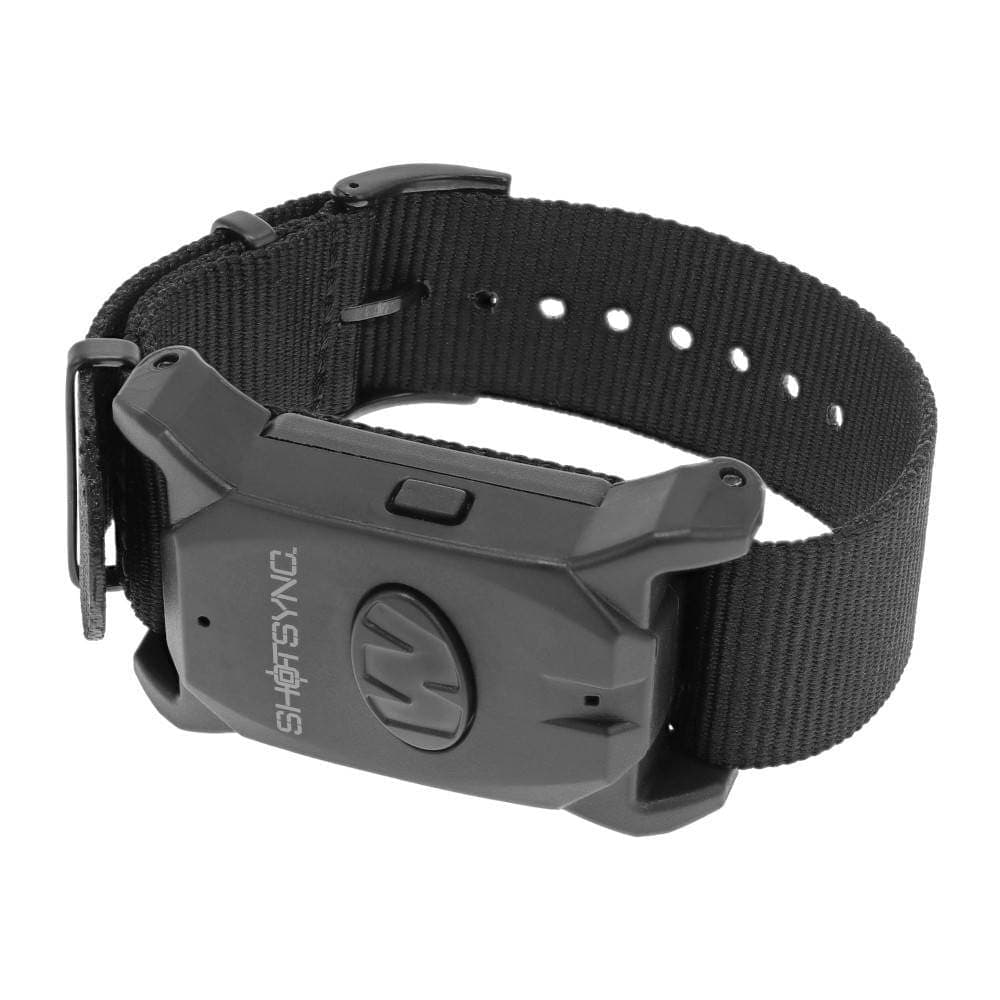
Walker's ShotSync Wearable Shot Timer
- Wrist-worn watch form factor
- Dual-sensor shot detection
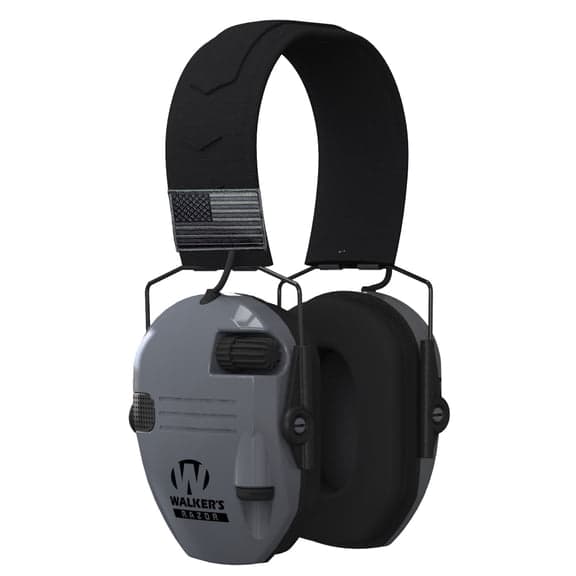
Razor Slim Electronic Muff
- NRR 23 dB
- Sound Activated Compression
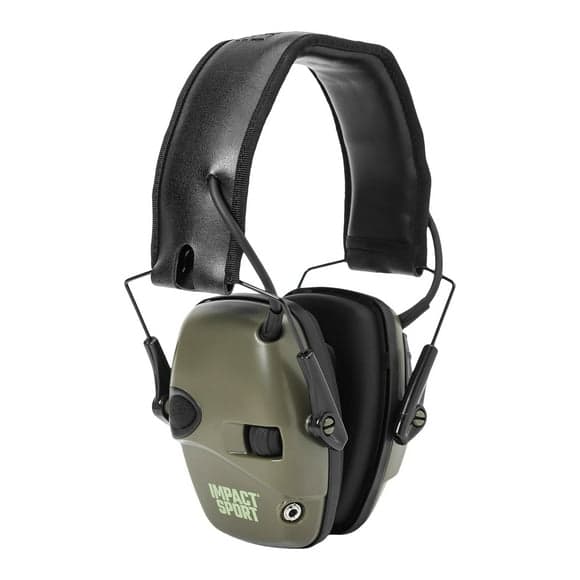
Impact Sport Electronic Earmuff
- NRR 22 dB
- Sound amplification to 82 dB
ComTac V Hearing Defender
- NRR 23 dB
- Environmental listening (talk-through)
Affiliate links (?)
ShotSync Specifications
- TypeWrist-worn shot timer
- SensorsMicrophone + accelerometer
- Sampling Rate1.6 kHz
- ConnectivityBluetooth 5.2 Low Energy
- Companion AppWalker's Link (iOS / Android)
- Caliber Support.22 LR through full-power competition calibers
- Battery LifeUp to 5.5 hours (BT on, recording)
- Recharge Time~60 minutes
- Start SignalAudio (phone) + vibration (wrist)
- TrackingDraw-to-first-shot, splits, par times, shot count
- MSRP$59.99
- ManufacturerWalker's (GSM Outdoors)
Where the ShotSync Fits in the Market
The shot timer market has been dominated by handheld devices for decades. The CED7000 ($130+), Competition Electronics Pocket Pro II ($130+), and Kestrel KST1000 ($170+) are the established standards for competitive shooters. Phone apps like the Shooters Global SG Timer offer a free alternative but rely solely on the phone's microphone, which introduces latency, noise sensitivity issues, and placement constraints. The phone has to be positioned close to the shooter, ideally on the belt, which limits how natural the draw feels.
The ShotSync occupies a middle ground. At $59.99, it costs a fraction of a dedicated handheld timer while solving the core reliability problem of phone-based apps with its wrist-mounted accelerometer. The trade-off is that it lacks the loud external speaker needed to run stages at sanctioned matches, so it is a training tool, not a replacement for a range officer's timer. For the majority of shooters who use a shot timer for solo practice, dry fire par time drills, and tracking personal performance over time, the ShotSync delivers the data that matters at a price point that removes the excuse not to train with measurable feedback. See our best shot timer guide for the full ranked comparison against the SG Timer 2, PACT Club Timer III, CED7000 Gen 2, and AMG Lab Commander.
Frequently Asked Questions
▶How much does the Walker's ShotSync cost?
▶How does the Walker's ShotSync detect shots?
▶What calibers does the ShotSync work with?
▶What app does the Walker's ShotSync use?
▶How long does the ShotSync battery last?
▶Can the ShotSync replace a traditional shot timer?
Bottom Line
The Walker's ShotSync is a smart entry into a market that has not seen meaningful innovation at the budget end in years. The dual-sensor approach solves the biggest problem with phone-based shot timer apps (noise sensitivity and false triggers) while the $59.99 price point undercuts every dedicated handheld timer on the market. For solo practice, dry fire drills, and tracking long-term improvement, it delivers the core data competitive and recreational shooters need.
The main limitation is that it is a training device, not a match timer. It cannot replace a CED7000 or Pocket Pro II for running stages at sanctioned competitions. But for the overwhelming majority of shooters who train alone and want measurable feedback without spending $130-170, the ShotSync is the most practical option Walker's could have built. The fact that it plugs into their existing hearing protection ecosystem through the Walker's Link app is a bonus that competitors in the shot timer space cannot match. Check our best ear protection guide for Walker's electronic earmuffs that pair with the same app, or the new Sordin Supreme X2 launch coverage for the premium-tier electronic muff Sordin released on May 27, 2026.