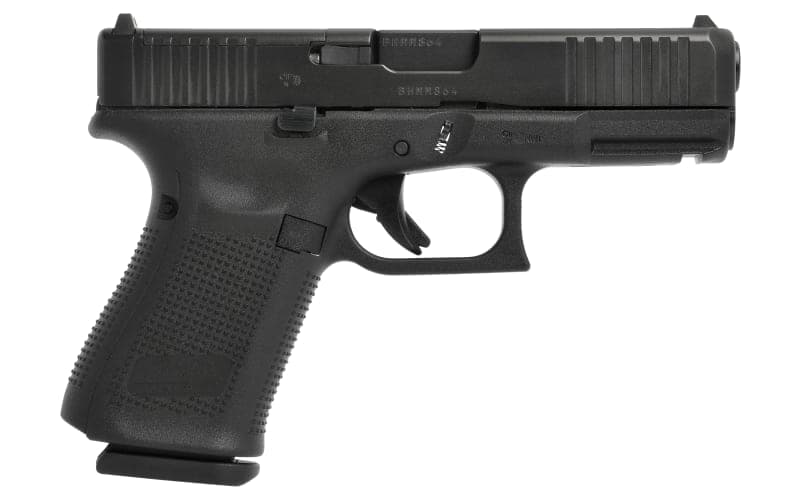
 1
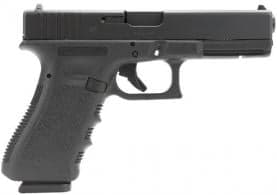
1Compact · 15+1 · MOS
Glock G19 Gen5 MOS
Best Overall 9mm
- Best balance of capacity and concealability
- Deepest aftermarket in the handgun industry
- Factory optic-ready via MOS plate system
$745.00 Catalog
Shop at GrabAGun
10mm vs 9mm compared head-to-head: ballistics, terminal performance, recoil, platform size, magazine capacity, ammo cost, hunting and bear defense, and self-defense effectiveness. FBI protocol gel test data, full-power load comparison, and decision framework for picking between the two.
Affiliate links (?)
The 10mm vs 9mm debate is the cleanest power-versus-capacity trade-off in the handgun world. The 9mm dominates self-defense, training, and concealed carry through low recoil, deep capacity, cheap ammunition, and modern hollow points that meet every FBI protocol standard. The 10mm earns its place in hunting and bear country with nearly double the muzzle energy and the heaviest bullets that fit a magazine-fed semi-auto. This guide breaks down ballistics, terminal performance, recoil, platform size, capacity, ammo cost, and real-world use cases backed by gel test data.
The 9x19mm Parabellum was designed by Georg Luger in 1901 for the German Navy and later standardized as 9mm NATO. Today it is the most widely produced handgun cartridge in the world, the dominant U.S. law enforcement duty caliber, and standard issue across NATO forces. The cartridge runs at 35,000 psi from a 19.15mm case, prioritizing controllable recoil and high capacity in compact platforms.
The 10mm Auto was developed in 1983 by Jeff Cooper and the team at Dornaus & Dixon, who built the original Bren Ten pistol around it. Cooper wanted a semi-auto cartridge that matched .357 Magnum performance without the bulk and recoil curve of a wheel gun. The 10mm answered with a 200gr bullet at 1,200 fps from a 5-inch barrel, producing 640 ft-lbs of muzzle energy at 37,500 psi from a 25.2mm case.
The FBI adopted 10mm in 1990 after the 1986 Miami shootout exposed the weakness of 9mm 115gr ball and .38 Special service loads against determined attackers. The Bureau spec called for a downloaded 180gr at 980 fps, which Smith & Wesson and Winchester realized could fit in a shorter case. That spec became the .40 S&W in 1990, and within five years the .40 had eclipsed full-power 10mm in law enforcement and civilian sales. The original 10mm survived as a niche hunting and outdoor cartridge until Glock revived it in mainstream production with the G20 in 1991 and the G29 in 1997.
The modern hollow point revolution did to 9mm what no cartridge redesign could. Federal HST, Speer Gold Dot, and Hornady Critical Duty loads engineered for 9mm meet the FBI's 12-18 inch penetration window with 0.55-0.65 inch expansion, closing the defensive performance gap that originally drove the 10mm program. The 10mm's surviving advantages, momentum, deep penetration, and raw energy reserve, are the exact characteristics hunters and wilderness carriers want, which is where the cartridge has settled in 2026.
The 10mm Auto produces roughly 1.7-2x the muzzle energy of 9mm Luger at every common bullet weight. A standard 9mm 124gr load produces 332-364 ft-lbs from a 4-inch barrel. A standard 10mm 180gr load produces 600-650 ft-lbs from a 4.6-inch barrel. Full-power hunting 10mm loads (Buffalo Bore, Underwood) push 200gr hard cast bullets to 1,200 fps for 640+ ft-lbs, putting the cartridge into .357 Magnum territory.
Bullet diameter is the other major difference. The 10mm fires a 0.400 inch bullet, 12.7% larger than the 9mm's 0.355 inch bullet. Combined with heavier projectiles (155-220gr vs 115-147gr), the 10mm produces a wider, deeper wound channel before any expansion. After expansion, premium hollow points reduce that gap: a 9mm HST 147gr expands to 0.606 inches, well past the 10mm's unfired 0.400 inch diameter, while 10mm hollow points open even wider from their larger starting bore.
Velocity, energy, and momentum all favor 10mm. Momentum (mass x velocity) tells the story for barrier penetration: a 10mm 180gr load produces 33 lb-ft/s of momentum versus 20 lb-ft/s for a 9mm 124gr load, a 65% advantage. This is why 10mm dominates barrier penetration tests through auto glass, sheet steel, and heavy clothing layered over gel.
Cartridge Spec Sheet
9mm Luger
10mm Auto
Weekly coverage of new pistol releases, ammunition testing, carry gear reviews, and caliber comparisons.
In the FBI protocol's 12-18 inch penetration window, both cartridges meet the standard with margin. Premium 9mm loads cluster around 14-16 inches with 0.55-0.65 inch expansion. Premium 10mm self-defense loads (Federal HST 200gr, Hornady Critical Duty 175gr) run 15-18 inches with robust, uniform expansion. The terminal difference for two-legged threats is real but smaller than the energy gap suggests, because expansion reduces 10mm's diameter advantage from 13% (unfired) to roughly 10% (expanded).
The 10mm's edge widens dramatically once heavier bullets enter the picture. Full-power 200gr hard-cast loads (Buffalo Bore Heavy 220gr, Underwood Xtreme Penetrator 200gr) penetrate 28-36 inches in bare gel and break through heavy bone, which is the hunting and bear-defense use case. No 9mm load in production comes close to that performance because the cartridge cannot physically push a 200gr bullet at hunting velocities.
For typical defensive distances (3-7 yards) against unarmored human threats, the practical terminal advantage of 10mm over premium 9mm is marginal. For our complete ranking of 9mm defensive loads, see the Best 9mm Self-Defense Ammo guide. For 10mm load selection, the Best 10mm Pistols guide breaks down which platforms handle which load classes.
| Load | Velocity | Penetration | Expansion | Energy |
|---|---|---|---|---|
| 9mm Loads | ||||
| Federal HST 147gr | 970 fps | 15.24" | 0.606" | 308 ft-lbs |
| Speer Gold Dot 124gr +P | 1,220 fps | 14.50" | 0.560" | 410 ft-lbs |
| Hornady Critical Duty 135gr +P | 1,110 fps | 14.80" | 0.530" | 370 ft-lbs |
| 10mm Auto Loads | ||||
| Federal HST 200gr | 1,130 fps | ~18" | Uniform | 567 ft-lbs |
| Hornady Critical Duty 175gr | 1,160 fps | 16.40" | 0.680" | 523 ft-lbs |
| Underwood Gold Dot 155gr | 1,425 fps | 14.80" | 0.760" | 699 ft-lbs |
| Buffalo Bore Heavy 220gr Hard Cast | 1,200 fps | 32.00"+ | 0.400" (no exp) | 703 ft-lbs |
Sources: Lucky Gunner Labs FBI protocol testing, manufacturer published specifications. Hard-cast loads are not designed to expand and are the correct choice for hunting and bear defense, not human-threat self-defense.
The 9mm produces roughly 5.5 ft-lbs of free recoil energy from a 25 oz pistol like the Glock 17. The 10mm with full-power loads produces 11-12 ft-lbs of free recoil energy from a 30 oz pistol like the Glock 20, more than double. With moderate 10mm defensive loads (Federal HST 200gr at 1,130 fps), recoil drops to roughly 8-9 ft-lbs, still 50-65% above 9mm.
The recoil impulse profile is also different. The 9mm is sharp and snappy, returning the sights quickly. The 10mm is a slower push with significant muzzle rise, more like a .45 ACP than a .357 Sig. Split times tell the practical story: typical 9mm splits run 0.18-0.22 seconds for trained shooters, while full-power 10mm splits stretch to 0.28-0.35 seconds. That gap compounds across a defensive sequence: a competent shooter who fires a Mozambique drill with 9mm in 1.2 seconds will need 1.6-1.8 seconds with full-power 10mm.
For shooters with smaller hands, wrist injuries, or limited range time, 10mm is harder to shoot accurately. New shooters who start with full-power 10mm typically develop a flinch within 100 rounds. For training volume and follow-up shot accuracy, the 9mm advantage is decisive.
| Metric | 9mm (G17) | 10mm Defensive (G20) | 10mm Full-Power (G20) |
|---|---|---|---|
| Free Recoil Energy | 5.5 ft-lbs | 8.5 ft-lbs | 11.5 ft-lbs |
| Typical Split Times | 0.18-0.22s | 0.24-0.28s | 0.28-0.35s |
| Recoil Impulse | Sharp, snappy | Heavy push | Authoritative shove |
| Muzzle Rise | Moderate | Significant | Severe |
| New Shooter Friendly | Good | Challenging | Not recommended |
Every 10mm pistol is bigger and heavier than its 9mm equivalent. The 25.2mm 10mm case forces a longer slide, taller grip, and wider magazine well. The Glock 20 measures 8.07 inches long and 30.71 ounces empty, versus the Glock 17 at 7.95 inches and 25.06 ounces. The G20 is 23% heavier and uses a magazine that prints noticeably wider through cover garments.
For concealed carry, the size penalty is real but manageable with the right holster. A G20 conceals only marginally worse than a G17 in an OWB holster under a jacket. Inside the waistband, the longer slide and heavier weight make a meaningful difference during extended carry. There is no true micro-compact 10mm: the smallest production 10mm is the Glock 29 at 26.81 ounces with 10+1 capacity, comparable in size to a Glock 19 but with a brutal recoil curve from the shorter barrel.
For deep concealment, athletic wear, or pocket carry, no 10mm option exists. The cartridge dimensions preclude micro-compact designs. If your carry environment requires anything smaller than a Glock 19-class pistol, 9mm is the only viable choice. See our best subcompact 9mm pistols guide for deep-concealment options and the holster guide for carry rigs.
| Pistol | Caliber | Weight | Length | Width | Capacity |
|---|---|---|---|---|---|
| SIG P365 | 9mm | 17.8 oz | 5.80" | 1.06" | 10-15+1 |
| Glock 19 | 9mm | 24.0 oz | 7.36" | 1.26" | 15+1 |
| Glock 17 | 9mm | 25.06 oz | 7.95" | 1.34" | 17+1 |
| Glock 29 (subcompact) | 10mm | 26.81 oz | 6.97" | 1.27" | 10+1 |
| Glock 20 | 10mm | 30.71 oz | 8.07" | 1.34" | 15+1 |
| Glock 40 MOS | 10mm | 35.45 oz | 9.49" | 1.34" | 15+1 |
The 9mm holds more rounds than the 10mm at every comparable platform size. A full-size 9mm Glock 17 carries 17+1 rounds. The full-size 10mm Glock 20, despite a larger frame, holds 15+1. Compact Glock 19 (9mm) holds 15+1, while the closest compact 10mm, the Glock 29, drops to 10+1. Subcompact 9mm (Glock 26, 10+1) and micro-compact 9mm (SIG P365, 10-15+1) have no 10mm equivalent.
In high-capacity 9mm platforms, the gap widens. The Glock 17 with extended baseplate runs 19+1 in the same form factor as the G20's 15+1. Aftermarket 9mm magazines from Magpul, Shield Arms, and Wilson Combat reach 21-24 rounds in full-size frames. No equivalent capacity ladder exists for 10mm; a 22-round 10mm magazine would be physically too long to fit a standard pistol grip.
For range training, the cost-per-magazine difference compounds with the ammo price gap (covered next). Spare magazines themselves are also cheaper for 9mm: factory Glock 17 mags run $25-30 versus $35-40 for Glock 20 mags, with a deeper aftermarket of cheap magazines for 9mm (Magpul PMAG GL9 at $14, Korean SGM Tactical at $18) that has no 10mm equivalent.
The ammunition cost gap is the single largest factor in real-world training volume. As of April 2026, bulk 9mm 115gr FMJ runs $0.22-0.27 per round in 1,000-round case quantities (CCI Blazer Brass on sale dips to $0.23/rd). Bulk 10mm 180gr FMJ runs $0.40-0.55 per round (Magtech and CCI Blazer aluminum at the low end, brass-cased PMC Bronze and Federal Champion at the high end), roughly 1.8-2.3x more expensive. Premium defensive ammunition shows a wider ratio: 9mm Federal HST runs $1.20-1.50 per round versus 10mm HST 200gr at $1.80-2.40 per round.
Availability is also asymmetric. 9mm is on every gun store shelf in every chambering and bullet weight, with case-quantity bulk available from every major manufacturer. 10mm shelves are thinner: many local shops stock only one or two SKUs, and full-power hunting loads (Buffalo Bore, Underwood, Grizzly) are usually online-only. During the 2020-2022 ammunition shortage, 9mm returned to shelves 6-12 months before 10mm did.
For a shooter putting 200 rounds per week through a pistol, the annual ammunition cost gap runs $1,500-2,500 between 9mm and 10mm. For a casual carrier shooting 50 rounds per month, the gap is still $100-200 per year. This is why nearly every serious 10mm owner also runs a 9mm pistol for volume training.
| Category | 9mm | 10mm Auto | 10mm Premium |
|---|---|---|---|
| Bulk FMJ (per round) | $0.22-0.27 | $0.40-0.55 | $0.65-0.95 |
| Defensive HP (per round) | $1.20-1.50 | $1.80-2.40 | $2.50-3.50 |
| Hunting / Hard Cast | N/A | $1.80-2.40 | $2.50-3.50 |
| Annual cost (200 rd/week, FMJ) | $2,300-2,800 | $4,200-5,700 | - |
| Shelf availability | Universal | Limited | Online only |
The 10mm dominates this category cleanly. Hard-cast 200-220gr loads from Buffalo Bore, Underwood, and Grizzly Cartridge produce 32+ inches of penetration in ballistic gel and break through heavy bone, which is the standard for ethical handgun hunting on hogs, deer, and black bear at 50-75 yards. Documented kills exist on grizzly and brown bear with 10mm hard-cast loads. The cartridge fits the niche where you want semi-auto magazine capacity (12-15 rounds) and the lightest platform that can do the job, between revolver options like .44 Magnum and rifle-class power.
The 9mm cannot do this job. Even with +P loads pushing 124gr bullets at 1,250 fps, the cartridge produces less than half the energy needed to break heavy bone reliably or penetrate the dense fat layer on a charging brown bear. Documented successful 9mm bear shots exist, but they are statistical outliers. Wilderness carry experts (Ammoland, Outdoor Life) consistently recommend 10mm as the floor for bear country carry, with .44 Magnum or larger as the better choice when recoil is acceptable. How you actually carry that gun on a trail, and where bear spray fits alongside it, is covered in our hiking and fishing carry guide.
For hog hunting at 25-50 yards, 10mm hard-cast or solid copper loads handle the largest boars. For deer hunting at handgun ranges (under 50 yards with iron sights, 100 yards with optic), 10mm in a Glock 40 MOS with a red dot is a viable setup. The 9mm is not legal for deer hunting in most states because it fails minimum energy requirements.
The 9mm wins for civilian self-defense and law enforcement duty. The FBI's 2014 protocol testing confirmed that modern 9mm hollow points meet every penetration and expansion standard previously held only by .40 S&W and .45 ACP, at substantially lower recoil with higher capacity. The 9mm is now the dominant U.S. law enforcement duty caliber, issued by the FBI, NYPD, LAPD, and most state agencies. The defensive ammunition market reflects this: every premium ammunition manufacturer offers more 9mm SKUs than any other caliber, and the engineering investment continues to deepen.
For concealed carry specifically, the 9mm advantage compounds. Smaller platforms (Sig P365, Glock 43X, S&W Shield Plus), cheaper training ammo for skill maintenance, and faster follow-up shots all favor 9mm. Modern carry loads like Federal HST 124gr +P and Speer Gold Dot 124gr +P deliver the terminal performance most defensive scenarios require, in platforms that conceal under typical clothing.
The 10mm has a narrow self-defense niche: rural and wilderness carry where two-legged threats and four-legged threats overlap. A G20 or G29 with HST 200gr provides defensive capability against humans and barrier penetration through auto glass and heavy clothing, while a swap to hard-cast loads addresses bear country. Outside this dual-threat profile, 10mm for defensive carry is a stylistic choice rather than an objective performance choice.
1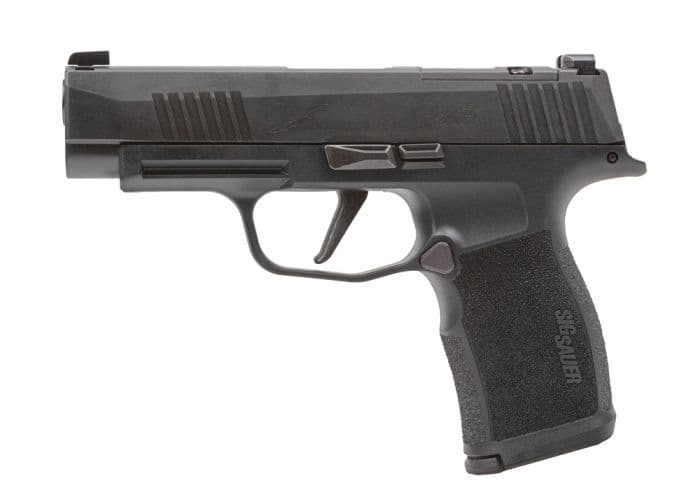 2
2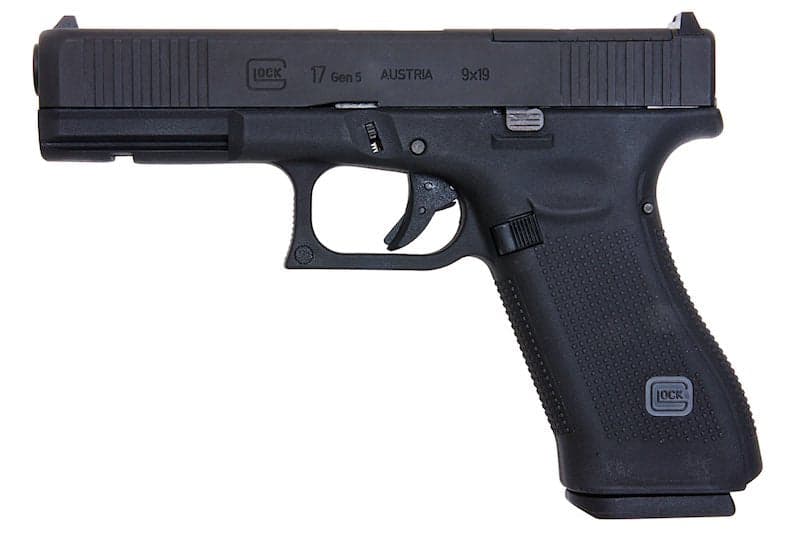 3
3Affiliate links - purchases support this site at no extra cost to you. (?)
 1
1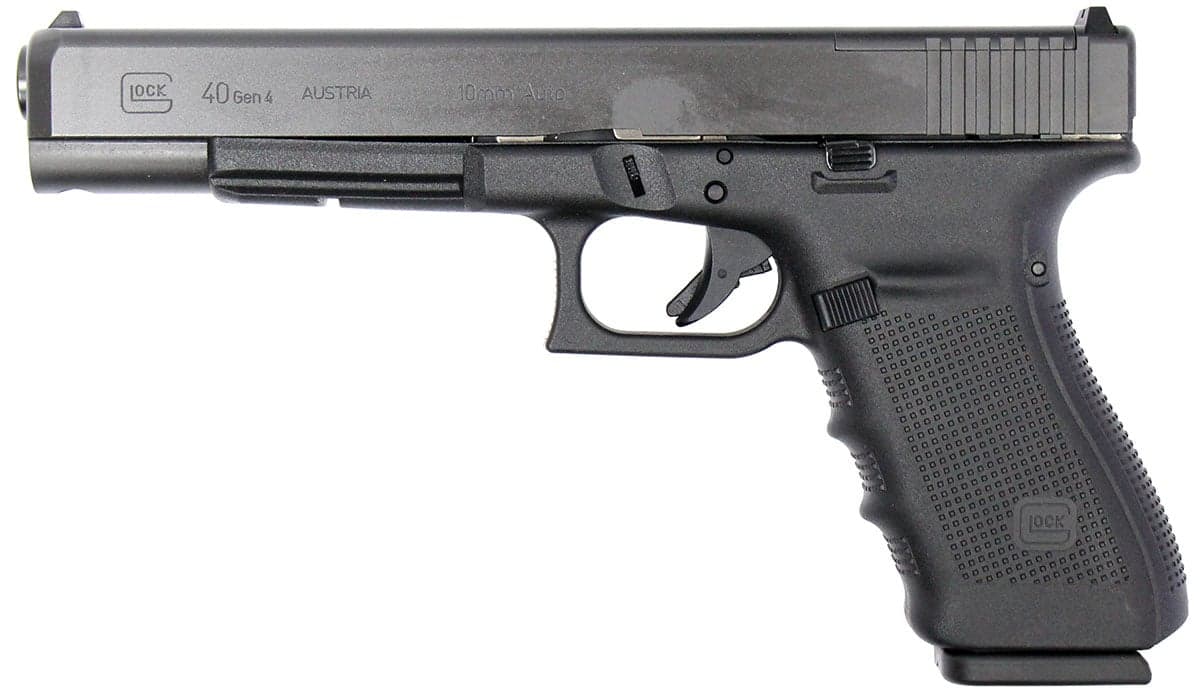 2
2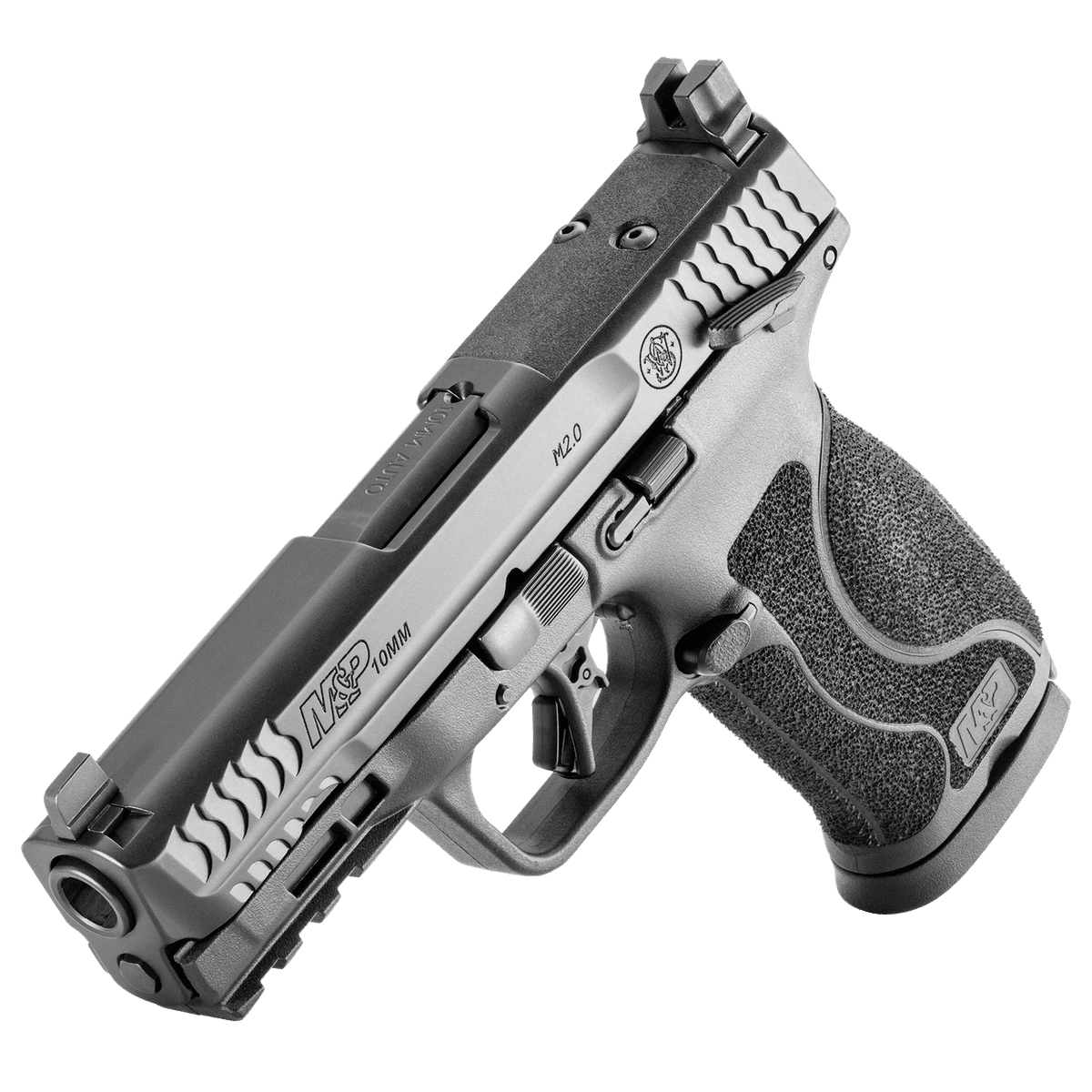 3
3Affiliate links - purchases support this site at no extra cost to you. (?)
The decision matrix between 9mm and 10mm is unusually clean because the calibers do not really compete; they cover different missions. 9mm is the right answer for nearly every defensive and training use case. 10mm is the right answer for hunting and outdoor defense against large animals.
| Mission | Best Choice | Reasoning |
|---|---|---|
| Concealed Carry (Urban) | 9mm | Smaller platforms, lower recoil, premium HP performance |
| Home Defense | 9mm | 17+1 capacity, faster splits, less overpenetration risk |
| Range / Training Volume | 9mm | 1/3 the ammo cost, lower fatigue across long sessions |
| First Pistol | 9mm | Easier to learn fundamentals, no flinch development |
| Wilderness Carry (Bear Country) | 10mm | Hard-cast 200gr+ loads break heavy bone, 9mm cannot |
| Handgun Hunting | 10mm | Legal for deer in most states; 9mm is not |
| Rural / Dual-Threat Carry | 10mm | Covers human + animal threats with load swap |
| Suppressor Host | 9mm | 147gr subsonic 9mm hits 950 fps; 10mm subsonic is rare |
| Competition (USPSA/IDPA) | 9mm | Faster splits, higher capacity, lower per-stage cost |
Building a 9mm or 10mm setup? Use our rifle and pistol builder to spec a complete platform with optics, lights, and holsters, or browse the full catalog for compatible components. The caliber selection guide covers rifle and shotgun caliber decisions if you are building out a complete defensive battery.
Related Guides
Best 10mm Pistols 2026 - Glock 20, Glock 40 MOS, S&W M&P 10mm M2.0, and the rest of the top 10mm options ranked for hunting, bear defense, and CCW.
Best Glock 20 & 21 Accessories 2026 - Once you have picked the 10mm Glock 20, this guide covers the chest holster, threaded barrel, optic, light, and trigger that build it out for the backcountry.
Best 9mm Pistols 2026 - Glock 19 MOS, SIG P365 XL, Staccato HD P4, and 7 more 9mm pistols ranked across full-size, compact, and micro-compact categories.
380 vs 9mm vs 45 ACP - The companion comparison covering the three most popular defensive pistol cartridges if you are deciding between concealed-carry options instead of stepping up to 10mm power.
9mm vs .38 Special - The semi-auto vs revolver comparison if you are weighing a compact 9mm against a snub-nose .38 carry revolver instead of stepping up to 10mm. Capacity, recoil, and pocket carry compared.
Ammunition Selection
Best 10mm Ammo 2026 - The 10mm-side companion to this comparison. 11 loads ranked by use case: Buffalo Bore 220gr Outdoorsman and Underwood 200gr Hard Cast for bear country, Federal HST 200gr for defense, Hornady XTP 180gr for hunting, CCI Blazer Brass 5221 for full-power range training. Plus the 10mm vs 10mm Lite velocity test that catches downloaded loads marketed as full-power.
Best 9mm Self-Defense Ammo 2026 - 9 premium 9mm hollow points ranked by gel test penetration, expansion, and barrier performance. Federal HST, Speer Gold Dot, Hornady Critical Duty compared.
Best 9mm Range Ammo - Bulk training ammo ranked by per-round cost, reliability, and recoil consistency. The cost-per-round gap with 10mm is the single biggest factor in training volume.
Buy 9mm first. Add the 10mm when the mission includes four-legged threats.
For nearly every shooter, nearly every mission, the 9mm is the correct answer. Modern hollow point ammunition meets every FBI protocol standard, smaller platforms enable deeper concealment, recoil supports faster follow-up shots, and the ammunition cost gap funds 1.8-2.3x more training volume per dollar. The best 9mm pistols are the most refined, best-supported handguns in production.
The 10mm Auto earns its place as the right tool for a specific job: hunting, wilderness defense, and rural carry where four-legged threats are part of the threat profile. A Glock 20 with hard-cast 220gr loads handles black bear, hogs, and the edge case of brown bear country in a platform you can carry all day. No 9mm load can replicate that capability. For these missions, 10mm is not an over-caliber choice; it is the minimum credible answer.
Buy 9mm first. Learn the fundamentals, build training volume, and run a quality carry pistol. If your environment includes bear country, hog hunting, or rural dual-threat carry, add a Glock 20 or Glock 40 MOS to the safe and run hard-cast loads in it. Pair both with a quality holster and a pistol red dot for a complete carry and field setup.

Avid shooter with 10+ years of experience including competition shooting, an associate member of the Professional Outdoor Media Association (POMA), and a member of the National Shooting Sports Foundation (NSSF) and Safari Club International (SCI). Built 10+ AR-pattern rifles and several handgun platforms for home defense, competition, and suppressed night shooting.
This page contains affiliate links. Purchases through these links support the site at no extra cost to you. Read the affiliate disclosure
Ready to continue? Here's the recommended next guide:
The best 10mm pistols ranked for 2026. Glock 20 Gen5 MOS, Glock 40 MOS, S&W M&P 10mm M2.0, Dan Wesson Razorback, Colt Delta Elite, and SIG P220 Legion compared for hunting, bear defense, and concealed carry.
Continue exploring with these related resources
Seventeen verified .45 ACP loads for carry, compact pistols, range training, and heavy penetration-focused work, with standard-pressure, +P, barrel-length, and cost-per-round comparisons.
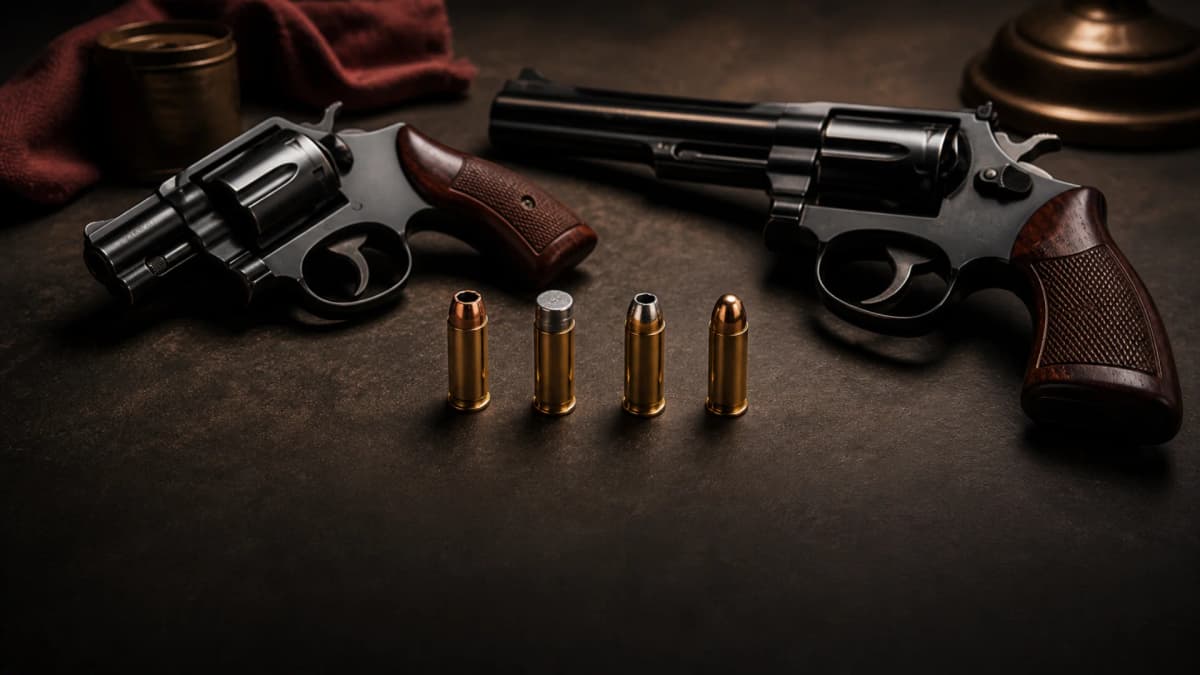
.38 Special ammunition sorted by barrel length and pressure rating: 2-inch snubs, standard-pressure revolvers, +P-rated service guns, wadcutter carry, and range practice, with maker-published short-barrel velocity data.
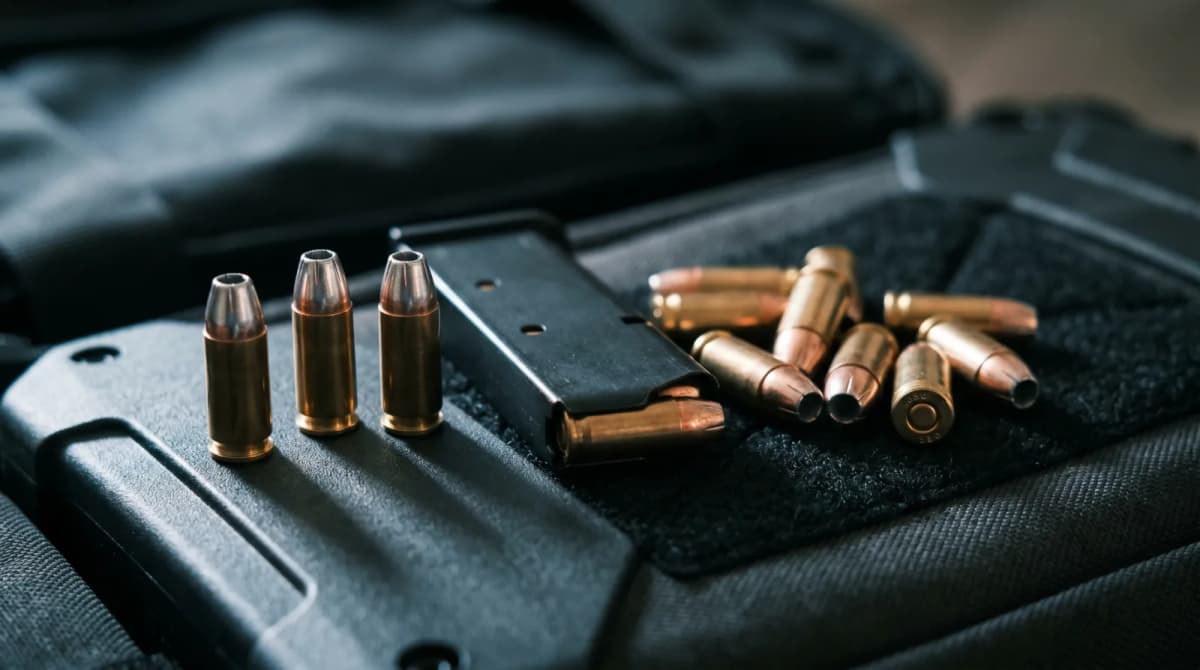
Best 380 ACP ammo for self-defense ranked with ballistic gel data. Federal HST 99gr (#1), Hornady Critical Defense FTX, Speer Gold Dot. FBI protocol penetration analysis, grain weight guide, and pocket pistol carry tips for LCP Max, Bodyguard 380, and P238.
Related articles and industry updates
Judge Dana M. Sabraw denied the August 4, 2026 motion by SAF, the NRA, FPC and San Diego County dealers to enjoin California's AB 1127 Glock ban. His August 24 order in Renna v. Bonta rejected adding the claim to the roster case and did not reach the Second Amendment question.

The Justice Department and the Los Angeles County Sheriff's Department settled the DOJ's first affirmative lawsuit in support of gun owners on August 13, 2026. LASD must publish its CCW processing times for four years, file a compliance declaration, and stay within California's 90-day statutory deadline under federal court jurisdiction.
The DOJ Office of Legal Counsel concluded on August 12, 2026 that the lawful purposes exception in 18 U.S.C. 930(d)(3) protects self-defense carry in post offices open to the public, and that neither the statute nor the USPS carry regulation may be enforced against law-abiding carriers at roughly 31,000 retail locations.