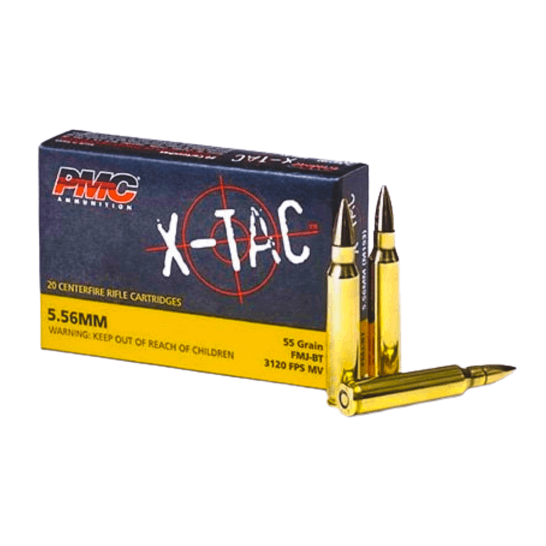
Ammunition • $11.99
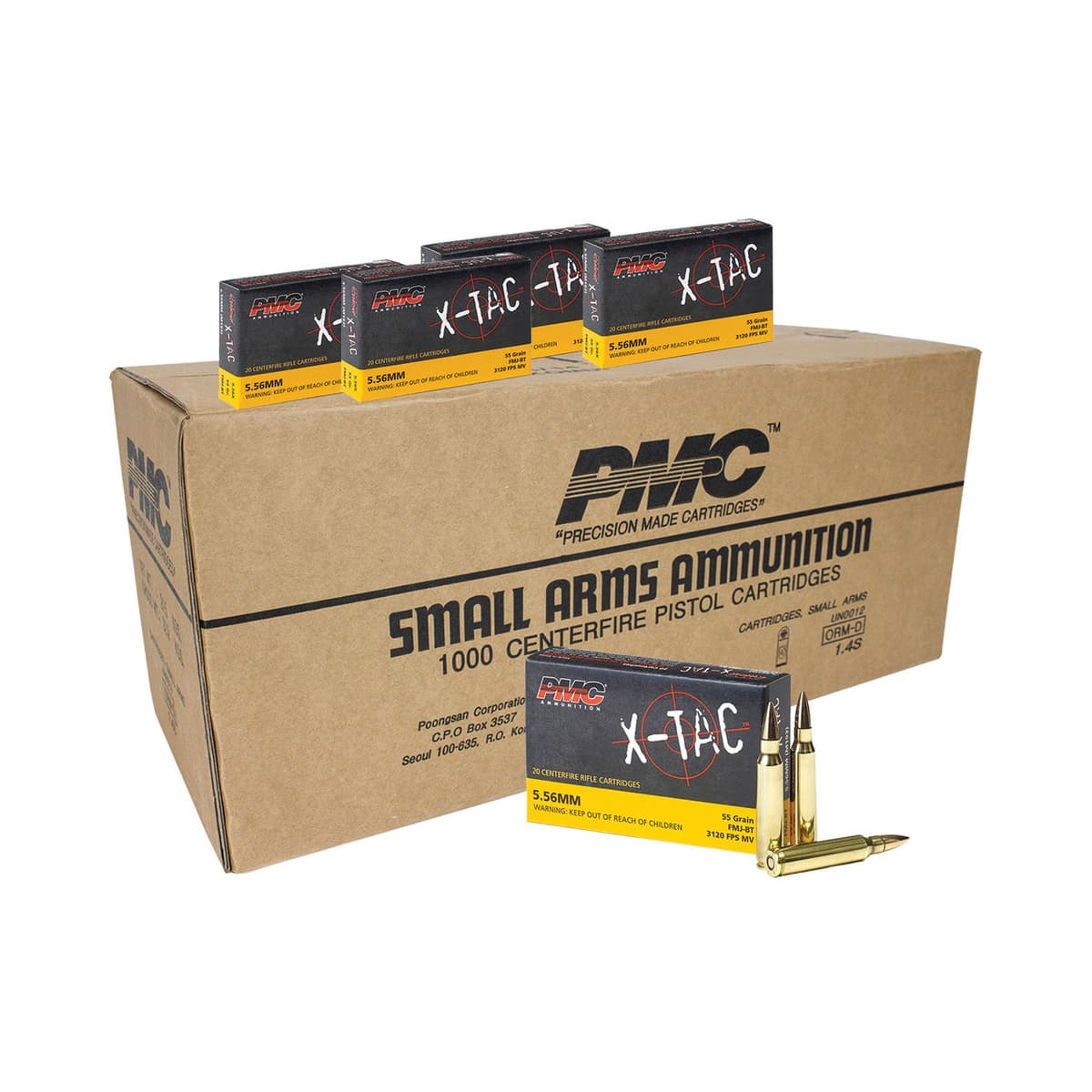
PMC X-TAC 5.56 NATO 55gr FMJ
- 55 grain FMJ-BT
- 5.56 NATO
$10.49$11.99Save 13%
Shop at MidwayUSA
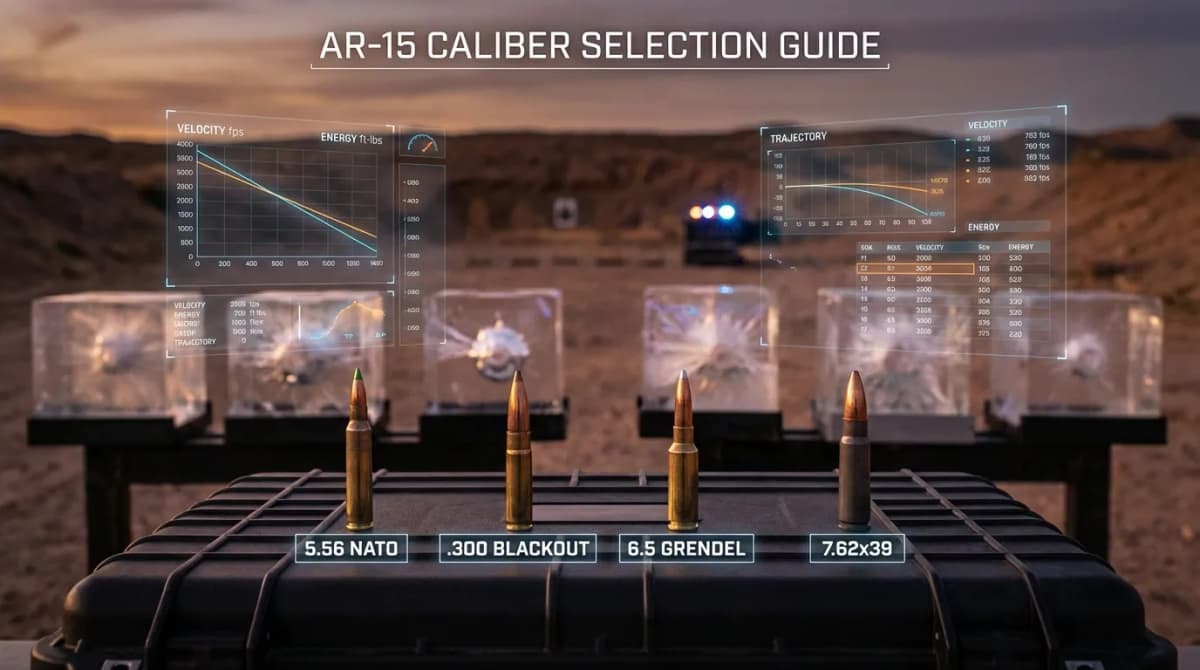
Which AR-15 caliber should you buy? 5.56 vs 300 Blackout vs 6.5 Grendel compared on cost per round, ballistics, recoil, and availability. Data-driven buying guide with ammo recommendations for every use case.
Affiliate links (?)
5.56 NATO is the right answer for 90% of buyers. This guide covers the 10% of cases where something else makes sense, with real cost data, ballistic comparisons, and specific ammo recommendations so you can buy with confidence.
Start here. Find your use case, buy the recommended caliber, then scroll down for ammo picks and detailed data if you want to go deeper.
5.56 NATO
$0.35/round. Available everywhere. Universal parts compatibility. Proven defensive performance with quality ammo. This is the caliber the platform was designed around.
See 5.56 ammo buying guide →.300 Blackout
$0.85-1.50/round. Purpose-built for short barrels and suppressors. Subsonic loads are much quieter through a can. Same bolt and magazines as 5.56, just swap the barrel. It also runs in factory bolt guns like the CZ 600+ Carbine. For a bigger-bore subsonic option on the same lower, Hornady's .338 ARC pushes a 307gr bullet for roughly 1.5x the subsonic energy, using a 6.5 Grendel bolt and its own magazine. For the direct two-caliber head-to-head, see 300 Blackout vs 5.56. Our 22-year cartridge trend study tracks how demand for each of these chamberings has actually moved since 2004.
See 300 BLK ammo buying guide →6.5 Grendel
$1.00-1.50/round. Stretches the AR-15 past 800 yards with ethical hunting energy at 400+. Requires dedicated bolt and magazines. Not a training round. For factory-complete hunting builds, see our best AR-15 for hunting guide, and for straight-wall-state deer hunters, the best .350 Legend rifle guide.
Ammunition cost is the single biggest factor in how much you actually train. A caliber you cannot afford to shoot is a caliber you will never master.
| Caliber | Cost/Round | 500-Round Session | Recoil | Effective Range | Availability |
|---|---|---|---|---|---|
| 5.56 NATO | $0.35 | $175 | Low | 500 yds | 10/10 |
| .300 BLK (super) | $0.85 | $425 | Moderate | 300 yds | 7/10 |
| .300 BLK (sub) | $1.00 | $500 | Low | 100 yds | 5/10 |
| 6.5 Grendel | $1.00 | $500 | Moderate | 800 yds | 5/10 |
| 7.62x39 | $0.35 | $175 | Moderate | 350 yds | 8/10 |
| 6mm ARC | $1.25 | $625 | Low-Mod | 700 yds | 4/10 |
Prices reflect brass-case ammunition from major retailers, early 2026. Steel-case 5.56 runs $0.28-0.32/round. Ammo prices fluctuate with supply; 7.62x39 is particularly volatile due to import restrictions. Compare current training-ammo prices across calibers in the Ammo Price Index.
Choosing the right caliber is half the equation. The specific load you run determines terminal performance, accuracy, and reliability. These are our top picks for each caliber and use case.
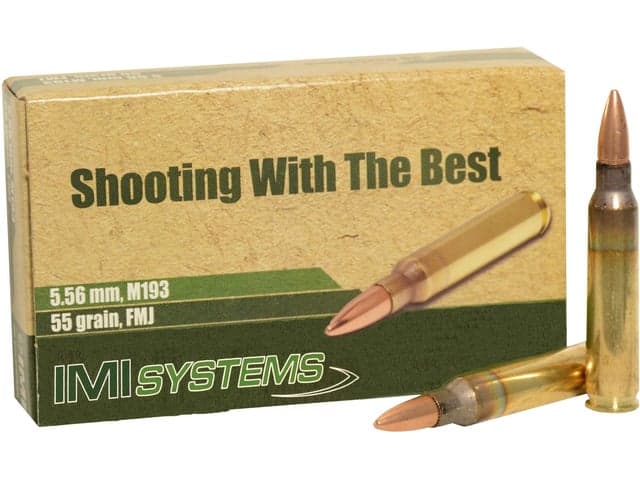
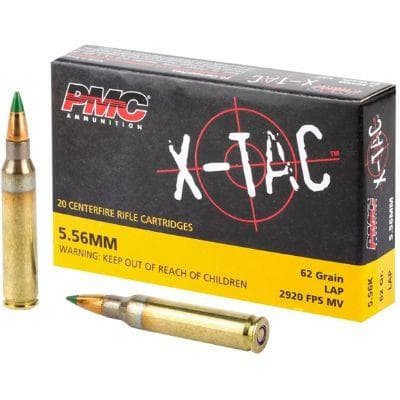
For range training, PMC Bronze 55gr or Federal American Eagle 55gr at $0.35/round. For home defense, Speer Gold Dot 64gr provides FBI-standard penetration with controlled expansion. For precision, Black Hills 77gr OTM is the gold standard. See our complete 5.56 ammo selection guide for barrel-length-matched load recommendations.
Affiliate links (?)
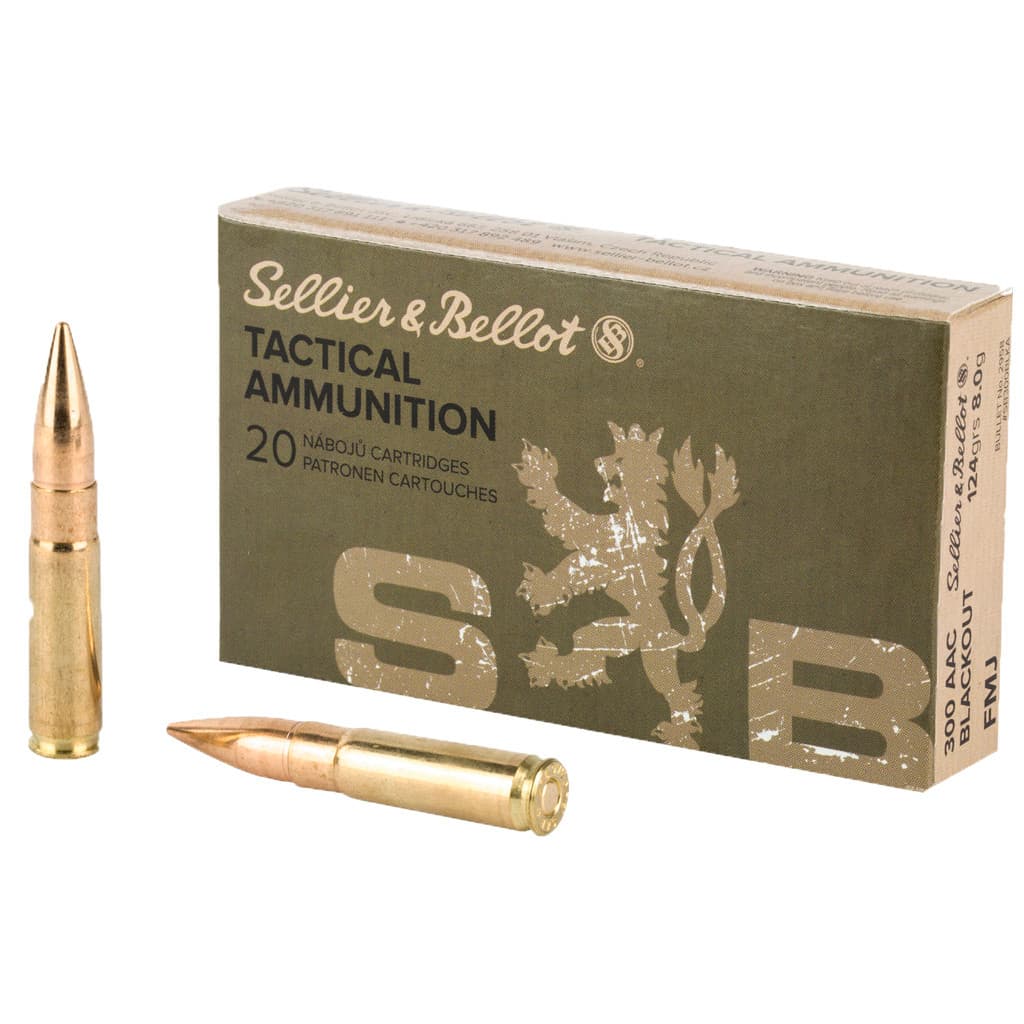
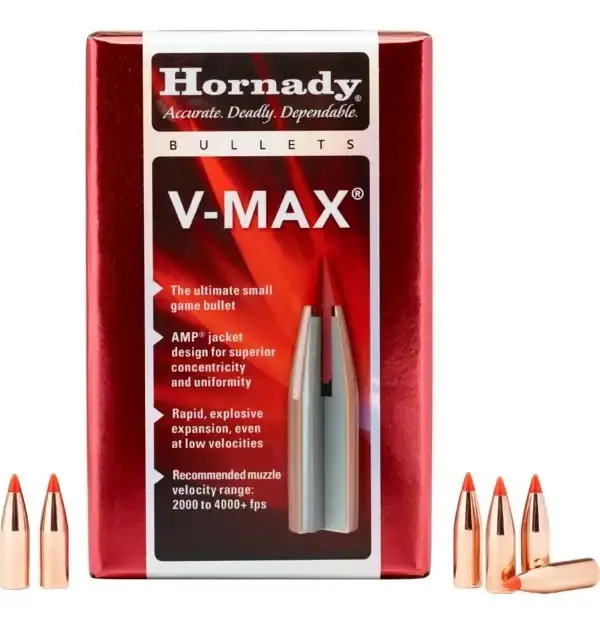
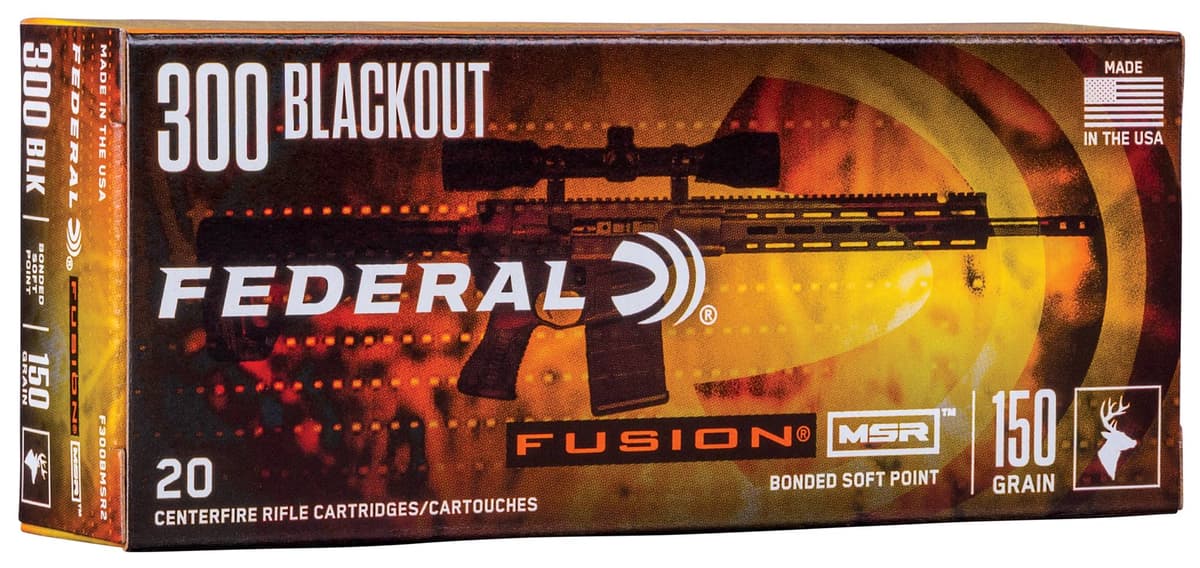
For suppressed subsonic use, the Lehigh 194gr Maximum Expansion and Hornady 190gr Sub-X are the top defensive picks. For supersonic hunting, Barnes 110gr TAC-TX delivers reliable expansion on game. Budget training with supersonic FMJ runs around $0.85/round. Check our full 300 Blackout ammo guide for detailed subsonic vs supersonic rankings.
Affiliate links (?)
New 5.56 load tests, suppressor-rated .300 BLK releases, and 6.5 Grendel developments reviewed as they land.
Both fit standard AR-15 lowers, share bolts and magazines, and the only swap is the barrel. The difference is cost and mission. 5.56 maximizes velocity and range from longer barrels at $0.35/round. .300 BLK maximizes suppressor performance and short-barrel efficiency at $0.85+/round. For the full head-to-head, see the 300 Blackout vs 5.56 breakdown.
The expensive mistake: Buying .300 BLK without owning a suppressor. Supersonic .300 BLK is ballistically inferior to 5.56 at every distance past 150 yards while costing 2.5x more per round. If you are not running a can, you are paying a premium for worse performance.
The smart path: 5.56 for your first AR. .300 BLK as a dedicated suppressor host upper. 6.5 Grendel for a precision upper. Different tools for different jobs. See our 300 Blackout complete guide for full build and ammo recommendations, or read about the AAC MPW Series suppressor-optimized .300 BLK rifles. If you need true long-range performance past 800 yards, step outside the AR-15 platform entirely. The 6.5 Creedmoor complete guide covers the bolt-action and AR-10 options that make sense at that distance.
Select up to 3 calibers to compare their ballistics, cost, and mission suitability. Filter by your intended use to see recommendations.
General purpose / baseline
“If you only own one AR, this is the caliber. Anyone who tells you 5.56 is "obsolete" is selling something. The military hasn't replaced it because nothing else does the job better across all mission sets.”
Suppressed SBR / subsonic specialist
“This is THE suppressor cartridge for AR-15s. If you're not running a can, you're paying more for less performance than 5.56. But suppressed with subs? Nothing else comes close for an AR-pattern rifle.”
Your intended use eliminates most options immediately. Find your primary mission below and buy the recommended caliber.
Indoor / close-quarters defensive use
5.56 fragments reliably at indoor distances, reducing over-penetration risk. .300 BLK is the upgrade if you're running suppressed and want far quieter subsonic capability.
Do-everything rifle for mixed use cases
Nothing beats 5.56 for general purpose—cheap ammo, universal parts, proven performance. Grendel if you need more range and are willing to pay the parts/ammo premium.
Short barrel with suppressor, maximum stealth
.300 BLK was designed for exactly this mission. Subsonic performance is unmatched. 5.56 works suppressed but remains loud and loses significant velocity in short barrels.
Designated marksman or precision rifle role
6mm ARC has the best ballistics for precision work if you can source ammo. 6.5 Grendel is the proven fallback with better ammunition availability.
Ethical game harvesting at typical hunting distances
6.5 Grendel offers ethical killing power on deer-sized game to 400+ yards. .300 BLK is excellent for hogs and whitetail inside 150 yards, especially suppressed.
High-volume practice without breaking the bank
5.56 steel-case runs around $0.30/round. 7.62x39 can be cheaper when imports flow, but magazine reliability issues make it less enjoyable for high-volume days.
Practical rifle matches and timed shooting
Most practical rifle matches are built around 5.56 distances and power factors. 6mm ARC shines in PRS-style precision matches with longer range requirements.
Each cartridge has a specific role where it excels. Understanding the tradeoffs helps you avoid buying a solution to a problem you don't have.
The baseline. Decades of refinement, massive aftermarket, and proven terminal performance when velocity stays above threshold. The cartridge the AR-15 was designed around.
“If you only own one AR, this is the caliber. Anyone who tells you 5.56 is "obsolete" is selling something. The military hasn't replaced it because nothing else does the job better across all mission sets.”
For barrels under 14.5", consider mid-length gas for reliability. Match barrel twist to bullet weight: 1:7 for 77gr, 1:8 for general purpose, 1:9 for 55gr varmint loads.
Purpose-built for suppressed short barrels. Swaps only the barrel—same bolt, same mags. The only AR cartridge where subsonic is genuinely effective.
“This is THE suppressor cartridge for AR-15s. If you're not running a can, you're paying more for less performance than 5.56. But suppressed with subs? Nothing else comes close for an AR-pattern rifle.”
Color-code all .300 BLK mags and uppers to prevent mixing with 5.56. A .300 BLK round chambers in a 5.56 barrel and will detonate on firing. Use pistol-length gas for 8-9" barrels, carbine for 10.5"+.
The long-range AR-15 cartridge. High BC bullets maintain velocity downrange where 5.56 falls apart. Requires dedicated bolt and magazines.
“The Grendel exists for one reason: to stretch the AR-15 to ranges it was never designed for. If you're not shooting past 500 yards regularly, you're paying a premium for capability you'll never use. But for DMR and hunting builds? It's the best option that fits an AR-15 lower.”
18"+ barrel is mandatory. Use type II 6.5 Grendel bolt (type I is obsolete). Stick with proven magazines (C Products Defense, E-Lander). Pairs well with 1-8x or higher magnification optics.
The AK round in AR clothing. Cheap ammo, proven terminal effects, but reliability requires attention to magazines and bolt life.
“If you want 7.62x39, buy an AK. The AR-15 platform fights this cartridge at every turn—magazines suck, bolts break, and accuracy suffers. The only reason to run it is cheap steel-case ammo, and that advantage disappears with every import ban.”
Use quality magazines (C Products Defense, ASC, Duramag). Expect to replace bolts more frequently than 5.56. Enhanced firing pins help with hard Soviet primers. Consider an AK instead.
Hornady's modern answer to long-range AR performance. Better ballistics than Grendel with less recoil, adopted by SOCOM for DMR use.
“The 6mm ARC is what the Grendel should have been from the start. But it's a victim of timing—arriving when ammo supply chains are already strained. If Hornady can keep up production and others get licensed, this becomes the AR-15 DMR standard. Until then, it's for early adopters with deep pockets.”
Shares bolt with 6.5 Grendel (verify manufacturer). 16" minimum, 18"+ preferred. Requires dedicated magazines. Wait for ammo availability to improve before committing to this platform.
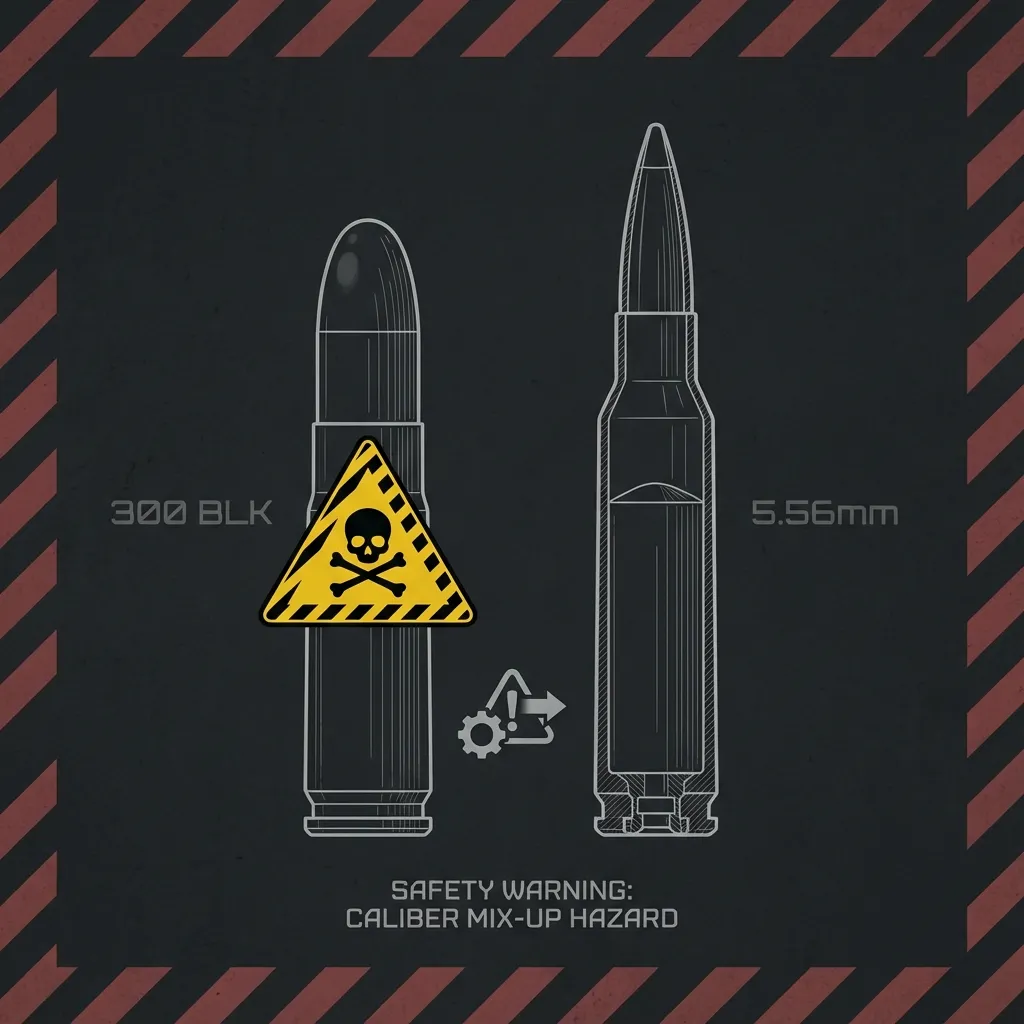
A .300 Blackout round will chamber in a 5.56 barrel. When fired, the larger .308 bullet cannot exit the .224 bore. The result is catastrophic failure: destroyed rifle, potential injury or death.
This happens because both cartridges use the same parent case (.223 Rem). The .300 BLK is simply necked up to accept larger bullets. Standard AR-15 magazines feed both calibers without modification.
Prevention: Color-code all .300 BLK magazines and uppers. Use distinct mag colors (FDE for .300, black for 5.56). Engrave or paint uppers. Never store mixed ammunition. Consider dedicated range bags per caliber.
Home defense, hunting, competition, suppressed SBR, or general purpose? Your answer eliminates most options immediately. Use our rifle quiz if you are unsure.
A $1,500 rifle in .300 BLK that you feed 200 rounds/year will never outperform a $800 rifle in 5.56 that you feed 2,000 rounds/year. Plan for at least 2,000 rounds annually to maintain proficiency.
If you cannot articulate a specific reason to go elsewhere, build in 5.56. It does everything adequately and nothing terribly. Other calibers are specialists, useful only if you have a specific need. Then pick the right barrel length for your 5.56 build.
Once you choose a caliber, check our mission build playbooks for complete parts lists or open the guided builder to configure a platform matched to your caliber choice. For home defense builds, see our best AR-15 for home defense guide.
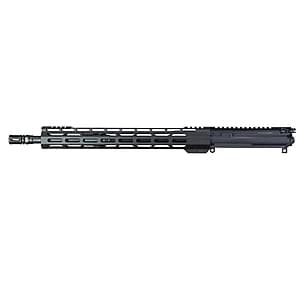
Always verify local compliance before ordering.
Affiliate links - purchases support this site at no extra cost to you. (?)

Avid shooter with 10+ years of experience including competition shooting, an associate member of the Professional Outdoor Media Association (POMA), and a member of the National Shooting Sports Foundation (NSSF) and Safari Club International (SCI). Built 10+ AR-pattern rifles and several handgun platforms for home defense, competition, and suppressed night shooting.
This page contains affiliate links. Purchases through these links support the site at no extra cost to you. Read the affiliate disclosure
Ready to continue? Here's the recommended next guide:
Complete AR-15 5.56 barrel length comparison from 10.5" to 20". Compare muzzle velocity, effective range, overall length, dwell time, and gas system compatibility to match your mission.
Or explore a related topic:
Best 5.56 Ammo 2026->Continue exploring with these related resources
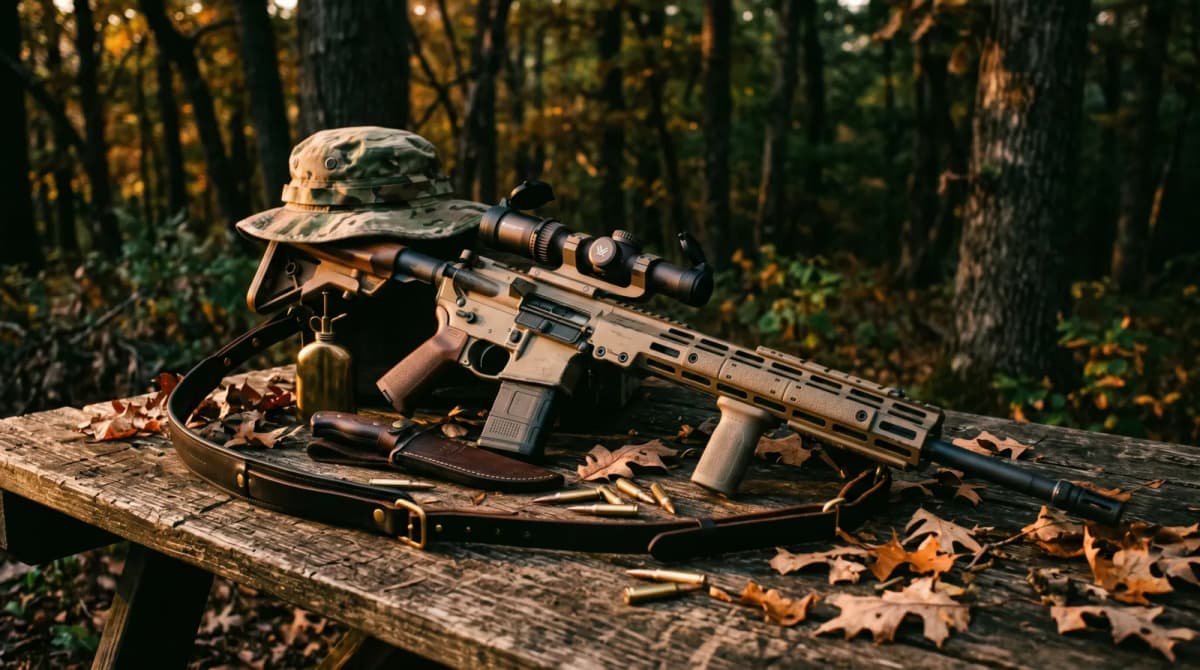
Top 5 AR-15 hunting rifles ranked by cartridge terminal performance and factory accuracy. Wilson Combat .300 HAM'R, Springfield 6.5 Grendel, Ruger .450 Bushmaster, CMMG .350 Legend, and BCA 6.5 Grendel compared for deer, hog, and predator hunting.
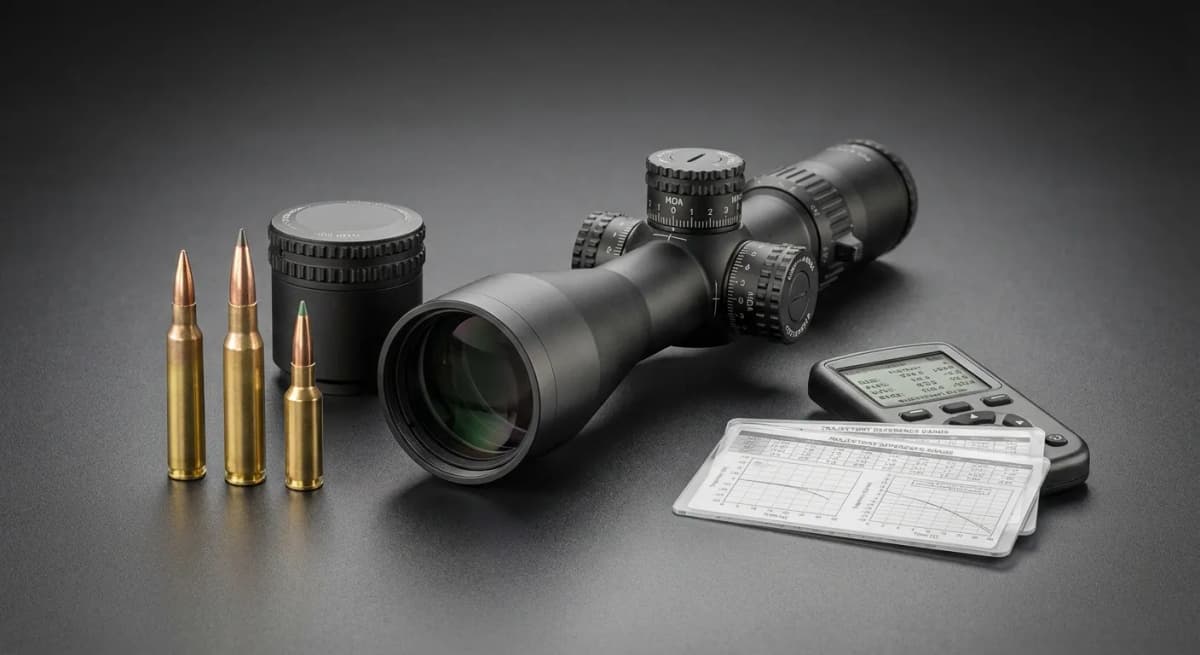
Ballistics chart for 5.56, .300 Blackout, and .308: bullet drop, velocity, and energy at 100/200/300/500/800 yards. Includes a free trajectory calculator for custom loads, zero distances, and wind.
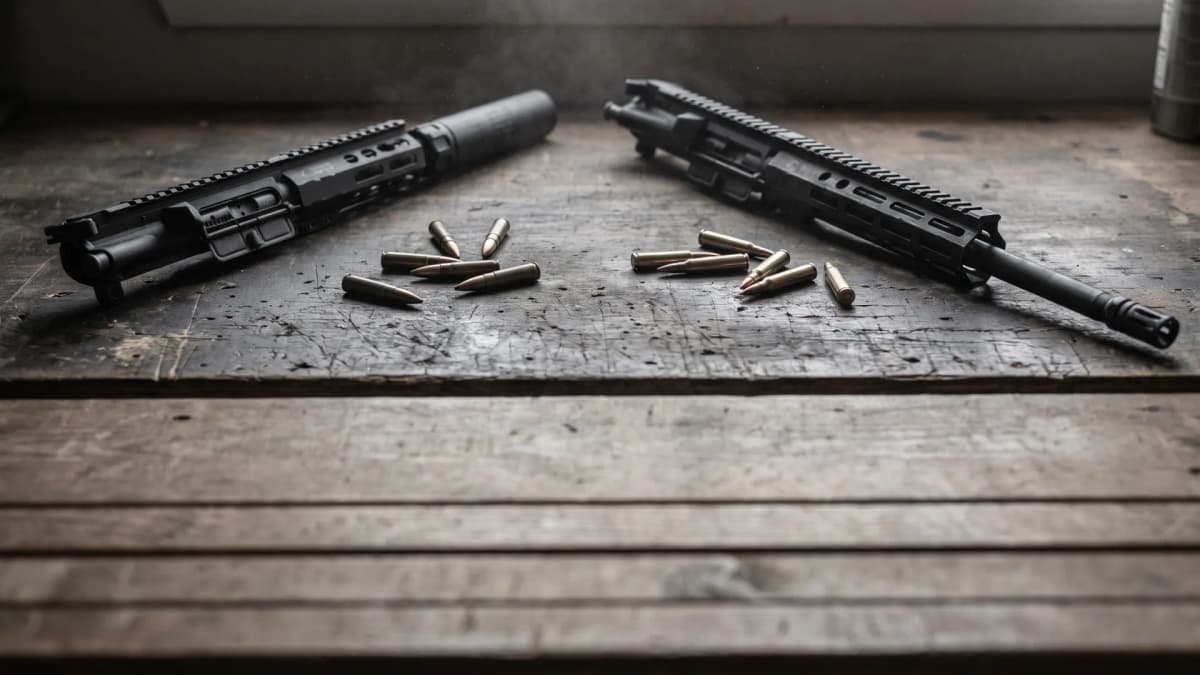
300 Blackout and 5.56 share the same AR-15 lower, bolt, and magazines. The barrel is the only difference, and it drives every trade: cost, range, recoil, and how well each runs suppressed or short. Here is the decision framework.
Related articles and industry updates
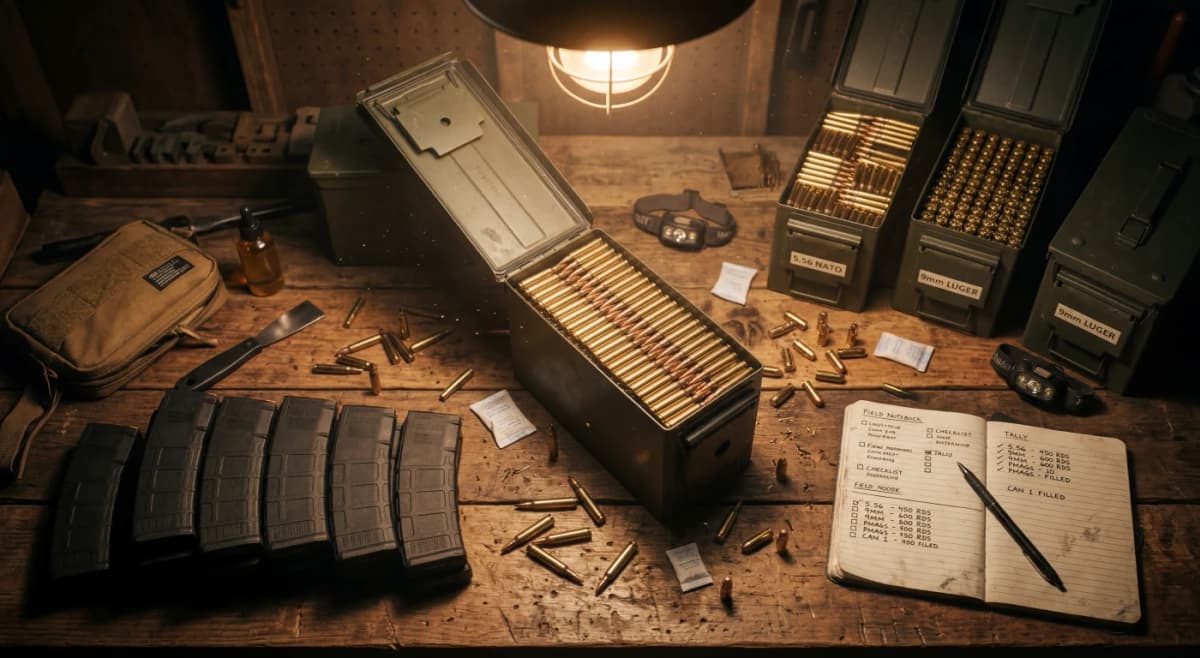
Oil infrastructure attacks, AI-driven semiconductor demand, and geopolitical instability are creating supply chain pressure on ammunition, optics, and emergency gear. Prioritized buying checklist: ammunition, magazines, optics, spare parts, and general emergency preparedness.
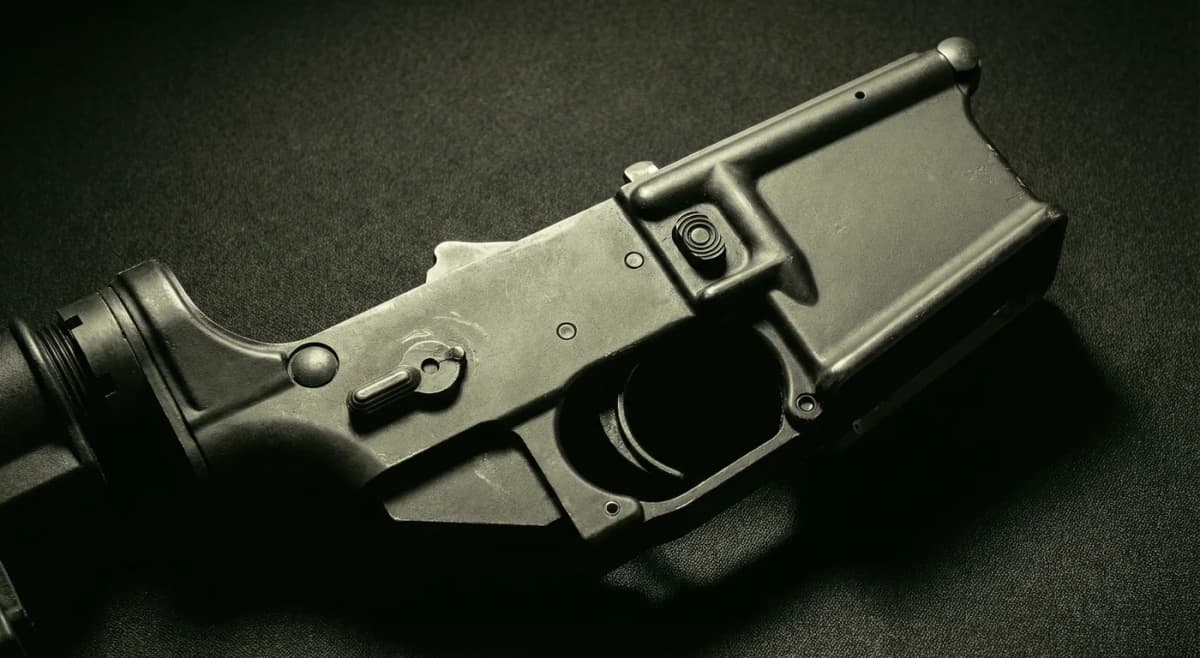
Which forced reset trigger fits your platform: a cross-platform router covering the AR-15, AK, MP5, Ruger PC and 10/22, FN PS90, Glock, Canik, and Taurus TX22, plus ranked AR-15 picks (Triggered Company Disruptor, Rare Breed FRT-15L3, Arc-Fire V2, Atrius FRS, Mars Super Safety). Pricing, legality, and which device fits your gun.
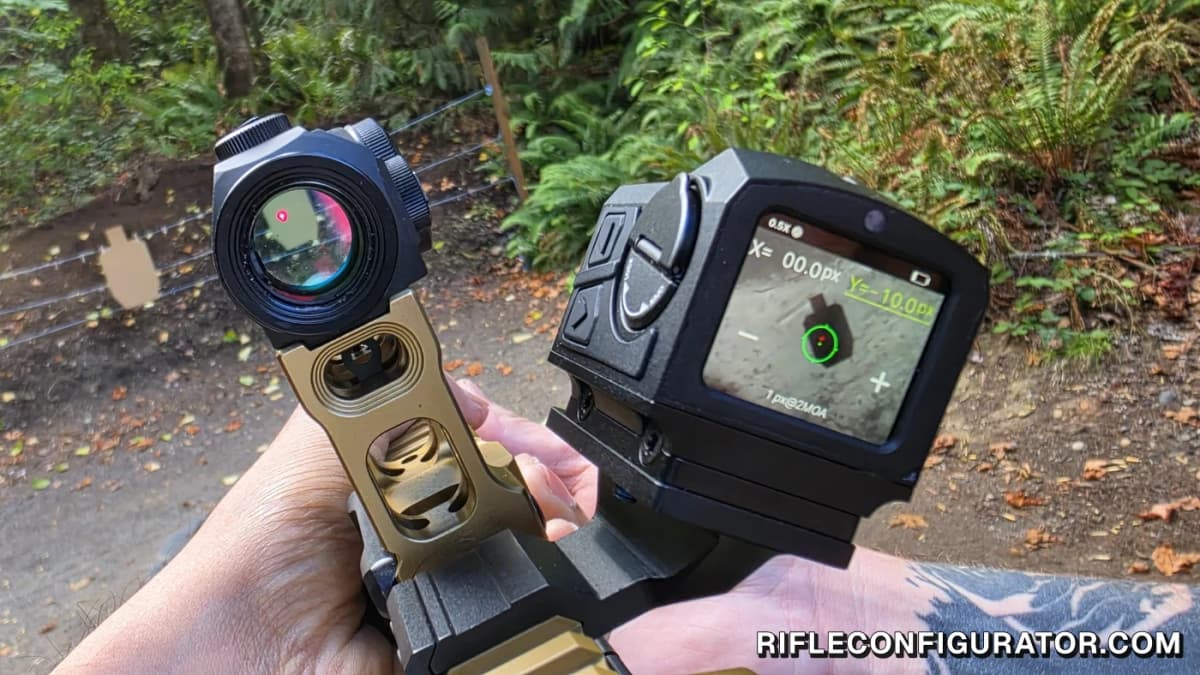
We ran the InfiTac FMP13 on a 45-degree offset beside a Holosun on a Unity FAST mount. The 256x192 mini thermal has an intuitive touchscreen and zeroed on plain cardboard, but the CR2 ran short of its 5-hour rating, so it belongs on an offset, not a pistol.