 1
1Compact · 15+1 · 9mm benchmark
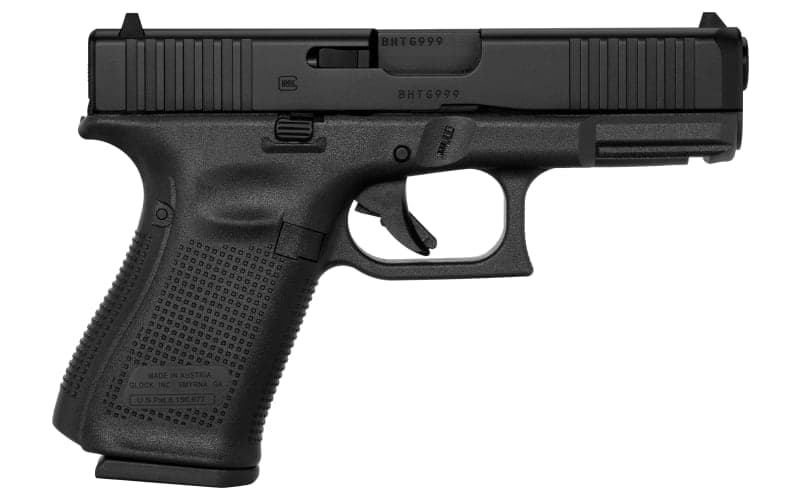
Glock 19 Gen5
Best all-around 9mm
- 15+1 capacity, triple a J-frame snub
- Best aftermarket support in the industry
- Optic-ready via MOS variants
$647.00Catalog
Shop at KYGUNCO
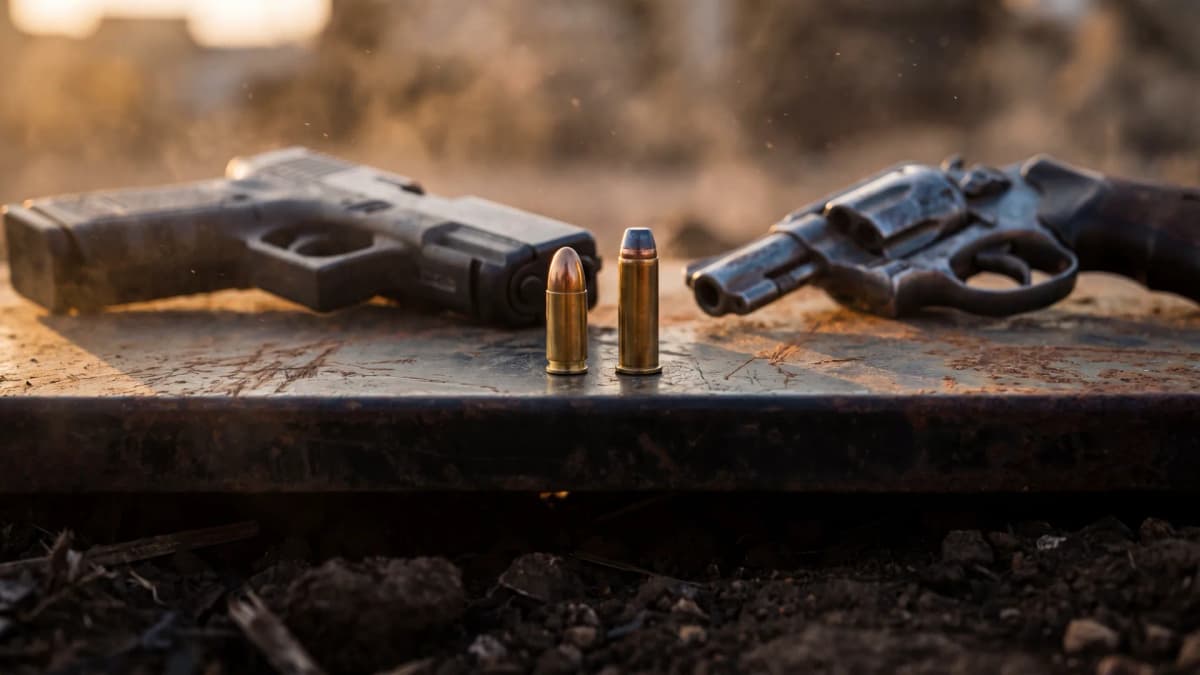
9mm vs .38 Special compared on ballistics, recoil, capacity, gun availability, and ammo cost. Where +P .38 closes the gap, and which caliber wins for concealed carry and home defense.
Affiliate links (?)
9mm and .38 Special are the two cartridges most new carriers weigh against each other, and the choice is really a choice between a semi-auto and a revolver. The 9mm delivers more energy, triple the capacity, cheaper ammunition, and faster reloads. The .38 Special lives in the J-frame snub that wins on simplicity, pocket-carry reliability, and forgiveness for low training time. This guide breaks down ballistics from a 4-inch barrel, recoil, capacity, gun availability, ammo cost, and the +P loads that close part of the gap, then tells you which to pick for concealed carry and home defense.
For most shooters, a 9mm semi-auto is the better defensive choice: it carries more energy, holds roughly three times the rounds, recoils less per shot, costs less to feed, and reloads in seconds. The .38 Special wins in one specific lane, the lightweight snub-nose revolver, where mechanical simplicity and pocket-carry reliability matter more than raw numbers. If you shoot regularly and can conceal a compact, buy 9mm. If you want a point-and-pull backup gun you will rarely train with, the .38 snub still earns its keep.
The comparison is not really cartridge against cartridge. It is a striker-fired semi-auto against a double-action revolver, because that is how each round is fielded for carry. 9mm lives in pistols like the Glock 19 and SIG P365 XL; .38 Special lives in J-frame snubs like the S&W 642, Ruger LCR, and Taurus 856. The cartridge difference and the platform difference compound. If you are also weighing the semi-auto options against each other, the .380 vs 9mm vs .45 ACP comparison covers where each sits on the same energy ladder.
At a Glance
9mm Luger
.38 Special
The 9mm produces 30 to 50 percent more muzzle energy than .38 Special at comparable bullet weights. A standard 9mm 124gr load runs about 1,150 fps for 364 ft-lbs; a standard .38 Special 130gr load runs roughly 800 to 850 fps for 200 to 230 ft-lbs. The two cartridges fire nearly identical bullet diameters, 0.355 inch for 9mm and 0.357 inch for .38 Special, so the gap is almost entirely velocity and the pressure each cartridge runs at. 9mm is a 35,000 psi cartridge in a rimless case built for autoloaders; .38 Special is a roughly 17,000 psi cartridge in a rimmed case designed in 1898 for revolvers.
Barrel length punishes .38 Special more than 9mm. Most defensive .38 revolvers are 2-inch snubs, and that short barrel bleeds velocity badly: a load advertised at 850 fps from a 4-inch test barrel can drop into the 700s from a 1.875-inch J-frame. A compact 9mm runs a 3.1 to 4-inch barrel and loses far less. The practical result is that the .38 snub the average carrier actually owns performs below the catalog numbers, while the compact 9mm performs near them.
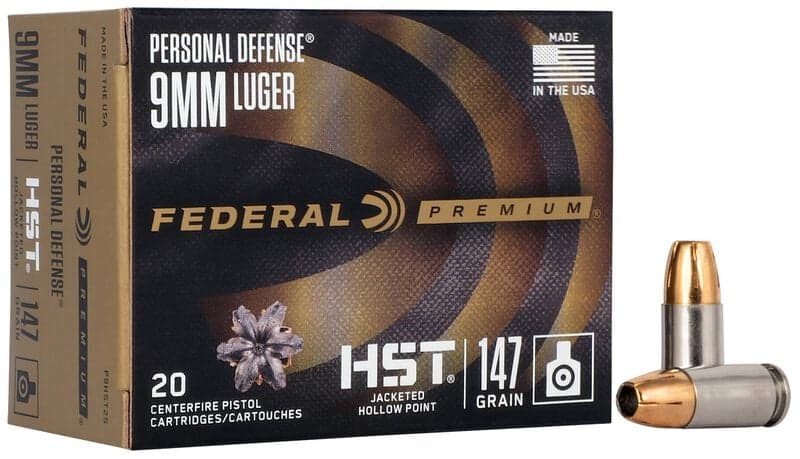
Stopping power between the two is closer in practice than the energy numbers suggest, because both are pistol cartridges that work by making holes, not by transferring shock. A defensive 9mm like Federal HST or Speer Gold Dot penetrates 14 to 18 inches with reliable expansion. A good .38 snub load penetrates adequately but expands less consistently because of the velocity deficit. The 9mm holds the terminal advantage; it is real but narrower than 30-to-50-percent-more-energy implies.
| Load | Velocity | Energy | Penetration | Expansion |
|---|---|---|---|---|
| 9mm Loads (4" test barrel) | ||||
| Speer Gold Dot 124gr | 1,150 fps | 364 ft-lbs | 18.14" | 0.54" |
| Federal HST 147gr | 1,000 fps | 326 ft-lbs | 15.24" | 0.606" |
| .38 Special Load (2" snub) | ||||
| Speer Gold Dot SB 135gr +P | 860 fps | 222 ft-lbs | ~13-14" | ~0.44" |
Sources: Speer and Federal published ballistics; independent FBI-protocol gel testing of the .38 +P snub load from a 2-inch Kimber K6s (LuckyGunner Labs). The 9mm figures are manufacturer 4-inch test-barrel specs; a 3 to 4-inch compact pistol gives up roughly 50-90 fps versus those numbers. All three loads land inside or just above the FBI 12-18 inch penetration window; the 9mm loads carry 100-140 ft-lbs more energy than the +P snub load.
Weekly coverage of new carry pistol releases, ammunition testing, and caliber comparisons.
+P .38 Special narrows the energy gap with 9mm but does not close it. The +P designation raises chamber pressure from about 17,000 to roughly 20,000 psi, which buys 50 to 100 fps and pushes a good defensive load from a 2-inch snub from the low 200s into the 240 to 260 ft-lbs range. From a 4-inch revolver the same +P loads reach 280 to 380 ft-lbs, with heavy boutique loads from Buffalo Bore and Double Tap topping 450, but few carry guns wear that much barrel. From the snub most people actually pocket, a standard 9mm still carries 100 to 140 ft-lbs more, and 9mm has its own +P loads that pull further ahead.
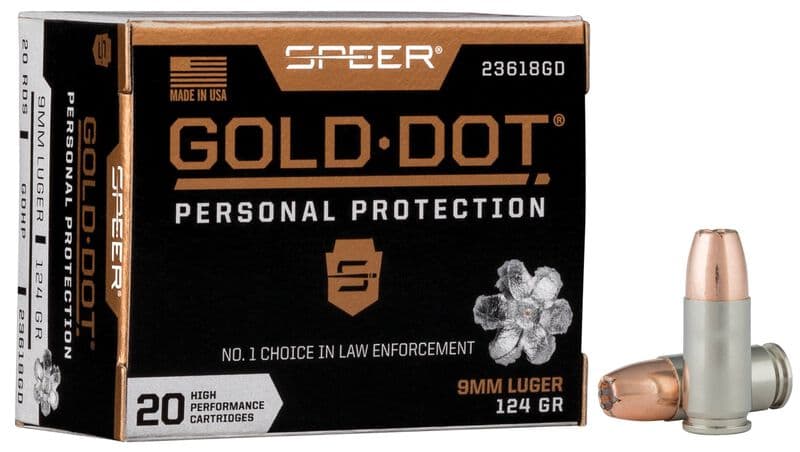
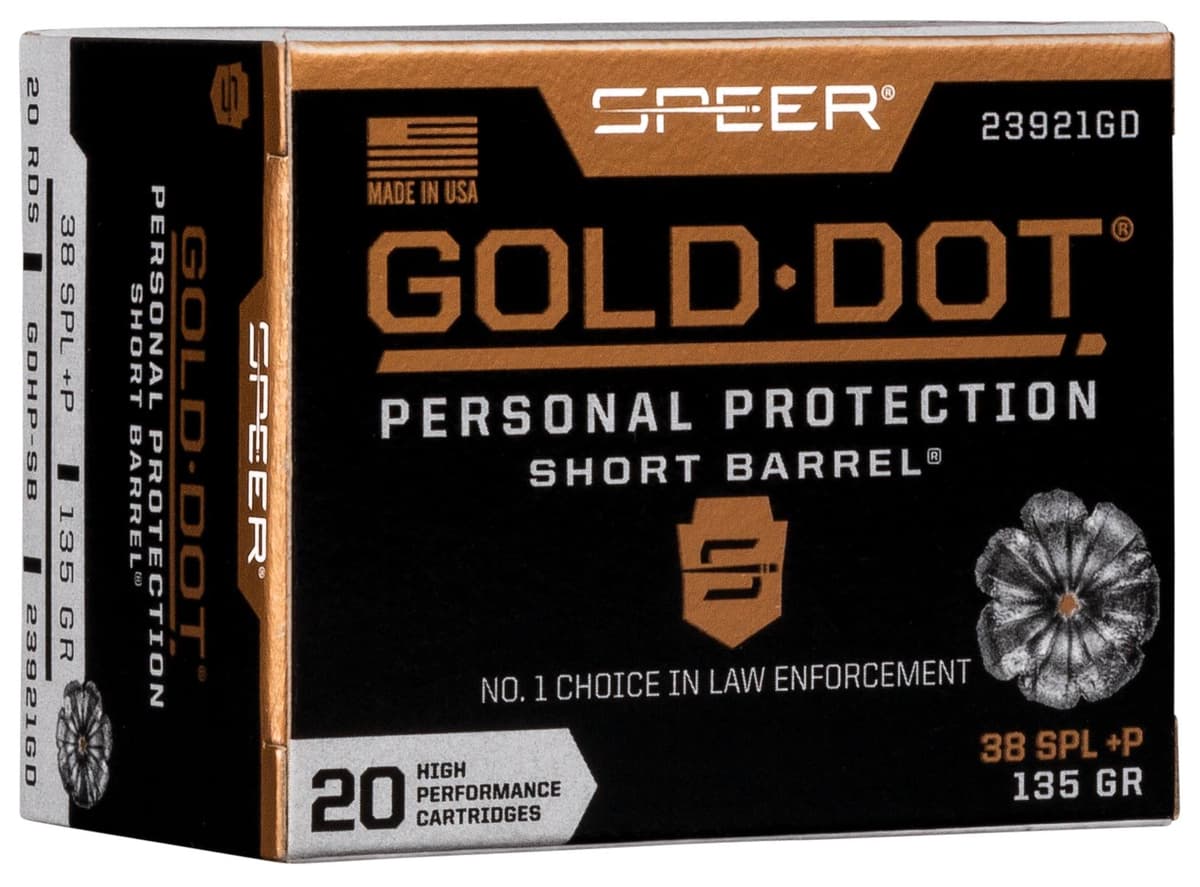
The more important thing +P does in a snub is make expansion reliable. The real problem with .38 from a 2-inch barrel is not energy, it is that standard hollow points lose enough velocity that the bullet often fails to open and behaves like ball ammo. The Speer Gold Dot Short Barrel 135gr +P was engineered specifically for this envelope: Speer softened the bonded jacket and tuned the cavity so the bullet expands at the roughly 850 fps a snub actually produces. From a 2-inch barrel it delivers about 13 to 14 inches of penetration and roughly 0.44 inch of median expansion through heavy clothing, squarely inside the FBI window. That is the load that makes a .38 snub credible as a defensive tool, and it takes the top spot in our .38 Special ammo ranking for exactly that reason.
Felt recoil depends far more on the gun than the cartridge, and this is where the .38 snub stumbles. A .38 Special +P round is a mild cartridge on paper, but fired from a 13 to 15 ounce alloy J-frame it punishes the shooter, because there is almost no mass to absorb the impulse. The same .38 +P load in a steel 4-inch revolver is gentle. A 9mm fired from a 24-ounce compact like the Glock 19 recoils less than .38 +P from a lightweight snub, despite carrying more energy, because the heavier pistol and lower bore axis tame the impulse.
The follow-up shot tells the practical story. A 9mm compact returns to target quickly and lets a trained shooter put fast, accurate pairs on target. A lightweight .38 snub with +P loads rises sharply and resets slowly under a heavy double-action trigger, so split times stretch and groups open up. Many new shooters who buy a light snub for its simplicity end up flinching after a box or two of +P because the recoil is sharper than they expected.
The Ruger LCR is the partial fix on the revolver side. Its friction-reducing cam gives the smoothest double-action trigger in the snub class, which makes the gun far easier to shoot well than a gritty J-frame, even though the recoil impulse is similar. For recoil-sensitive shooters choosing a revolver, the trigger is the lever that matters most. For a broader look at low-recoil carry options across both platforms, the best handguns for seniors guide covers easy-rack semi-autos and shootable revolvers for limited hand strength.
Two 9mm platforms that beat the .38 snub on capacity and energy: a compact benchmark and a micro-compact that carries close to a J-frame footprint.
1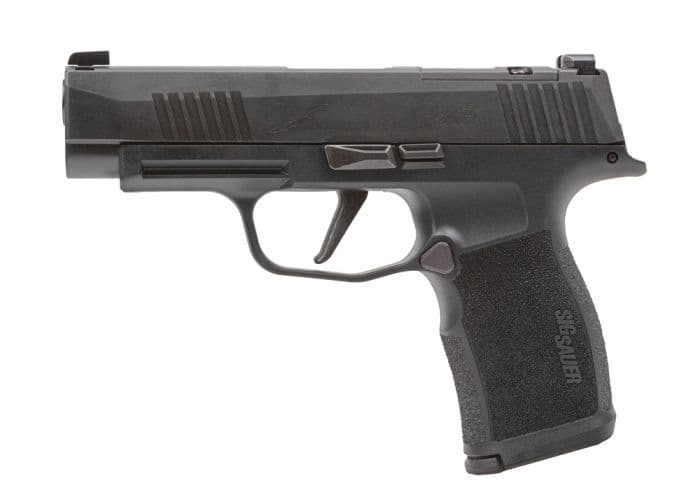 2
2Affiliate links - purchases support this site at no extra cost to you. (?)
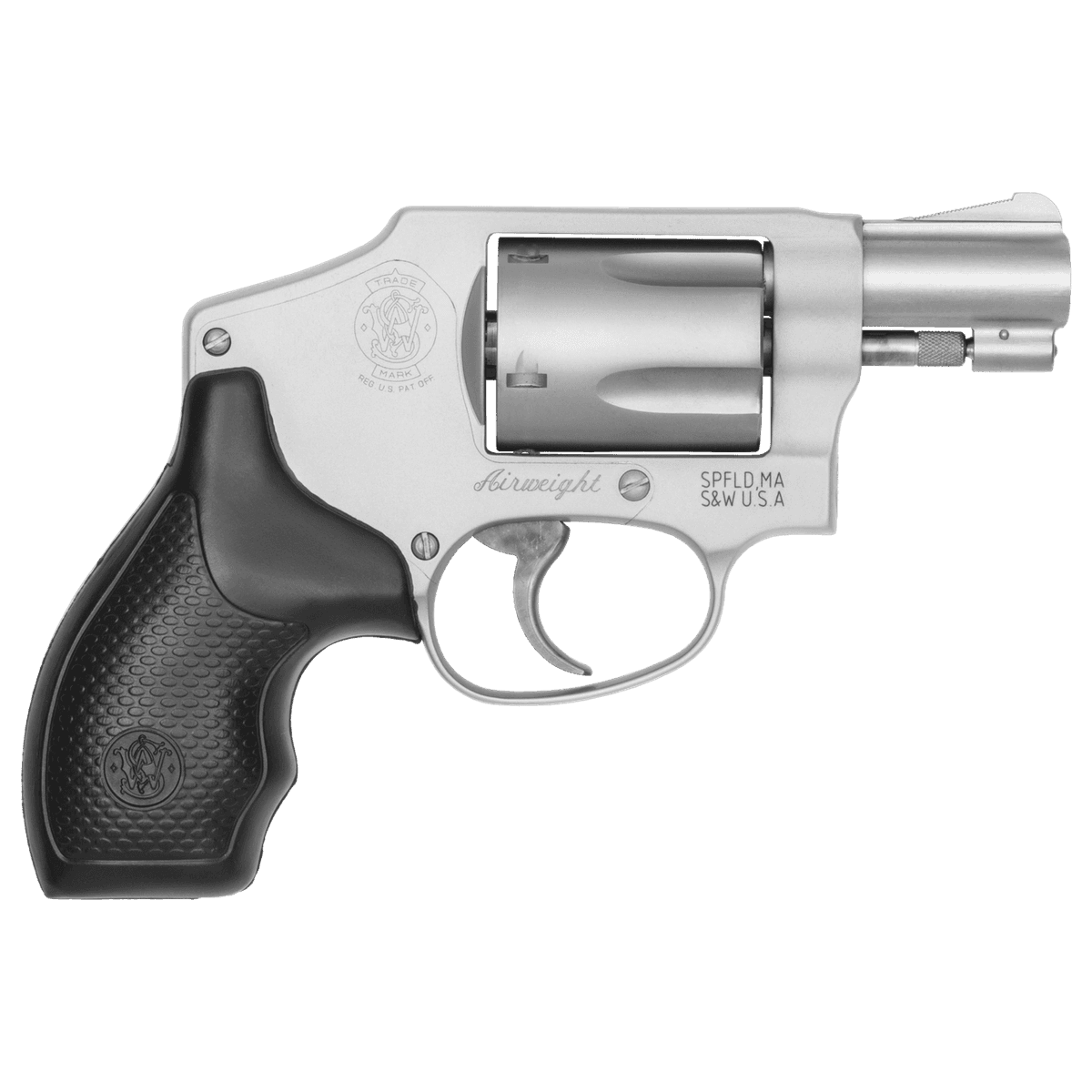
Three snub-nose .38 revolvers covering the pocket-carry benchmark, the smoothest trigger in class, and the value six-shooter.
 1
1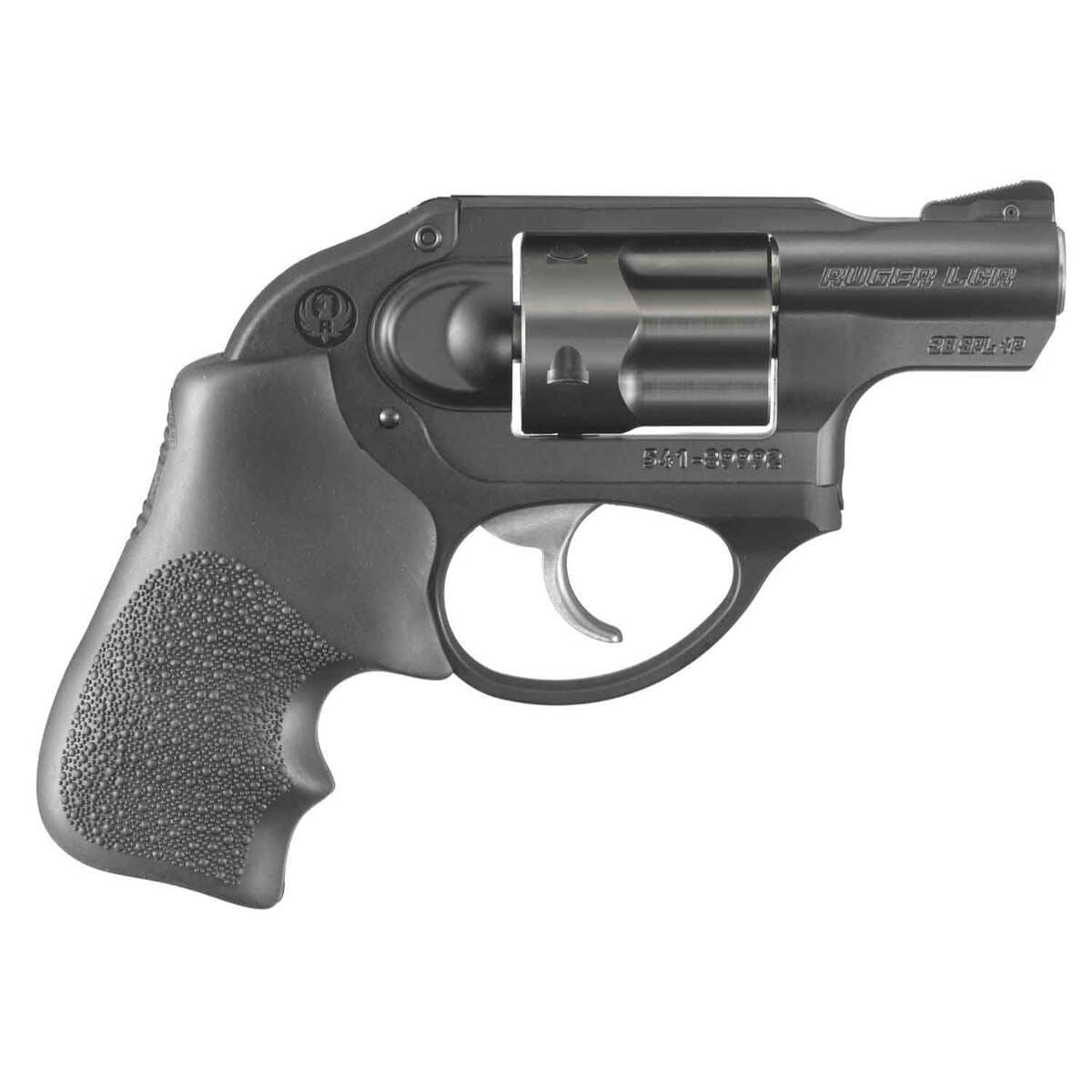 2
2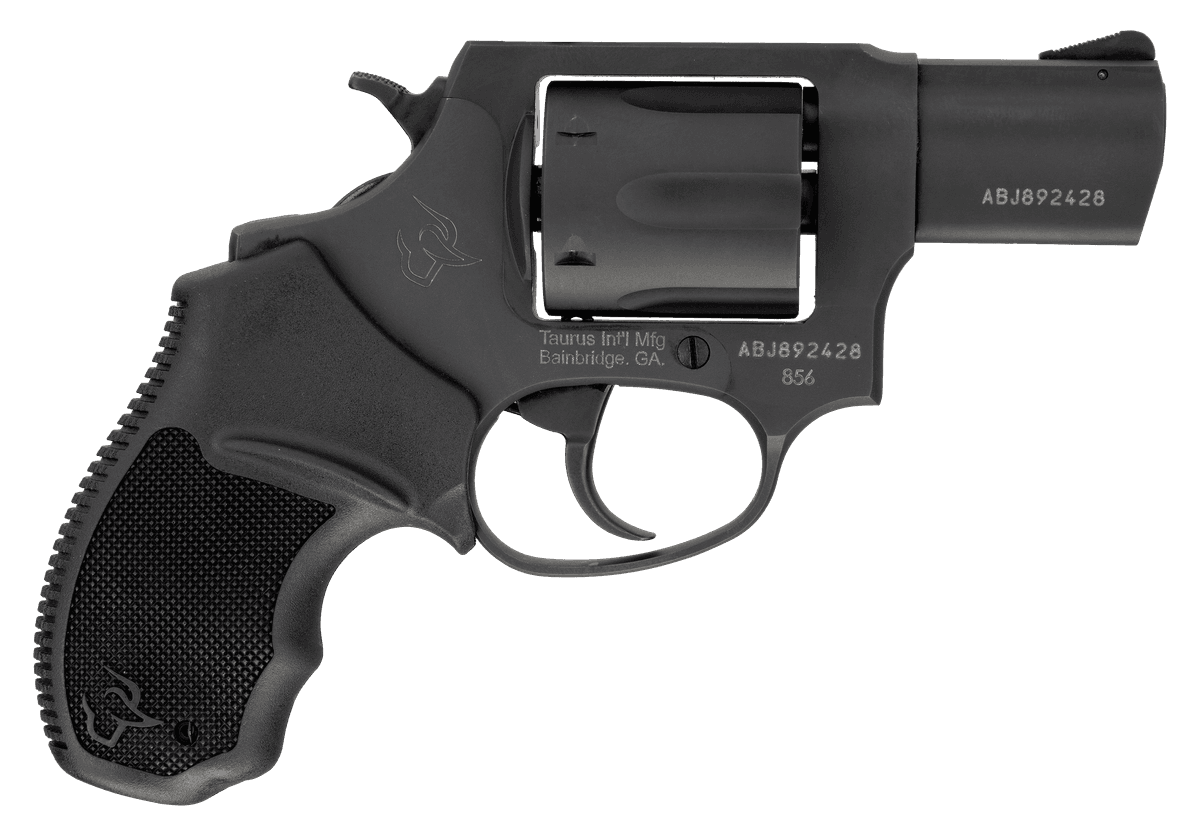 3
3Affiliate links - purchases support this site at no extra cost to you. (?)
The 9mm holds roughly three times the rounds of a .38 revolver and reloads far faster. A typical .38 carry revolver holds 5 rounds in a J-frame like the S&W 642 or Ruger LCR, or 6 in a Taurus 856. A compact 9mm Glock 19 holds 15+1, and a micro-compact SIG P365 XL holds 12+1. That is the single largest practical difference between the two: a 9mm carrier starts a fight with 12 to 16 rounds, a .38 carrier with 5 or 6.
Reloads widen the gap further. A semi-auto reload is a dropped magazine and a fresh one seated, which a trained shooter performs in under two seconds. A revolver reload requires opening the cylinder, ejecting spent cases, aligning a speedloader or speed strip, and closing up, which is slower and far harder under stress. The five-round snub is a gun you commit to making count, not one you plan to reload mid-incident.
For most defensive scenarios, which statistically end in three to five rounds or fewer, the .38 snub's capacity is adequate. The capacity advantage matters most for home defense, where you may face more than one threat and are not size-constrained, and for anyone who values the margin. If capacity is your priority, the 9mm is the unambiguous answer.
The .38 snub's classic advantage was deep concealment, but the micro-compact 9mm has erased most of it. A J-frame snub is short and rounded with an enclosed hammer, which makes it genuinely excellent for pocket and ankle carry: it has no slide corners to print and disappears in a pocket holster. That is a real edge for the lightest, most casual carry, and it is why the snub survives.
But a micro-compact 9mm like the SIG P365 XL now carries in nearly the same footprint while holding more than double the rounds. The cylinder is the snub's width problem: a revolver is thick through the middle even when it is short, and a flat micro-compact slide often conceals better inside the waistband than a round cylinder does. For pocket carry the snub still wins; for belt and appendix carry the micro-compact 9mm wins on both concealment and capacity.
Grip length is the other variable. The snub's short grip is what makes it pocketable, but it also gives you only a two-finger hold that worsens the felt recoil. The P365 XL's extended grip fills the hand for better control at a small printing cost. For new shooters and smaller hands deciding between the two, the best handguns for women guide covers grip fit and carry options across both platforms.
| Trait | 9mm (P365 XL / G19) | .38 Snub (642 / LCR) |
|---|---|---|
| Width | Flat slide, ~1.1″ | Round cylinder, ~1.3″ |
| Pocket Carry | Marginal (P365 size) | Excellent, enclosed hammer |
| IWB / Appendix | Conceals flat, comfortable | Cylinder bulge prints |
| Grip | Full hand, better control | Two-finger, worsens recoil |
| Weight (carry config) | ~17-24 oz | ~13-15 oz |
9mm is cheaper to shoot and easier to find than .38 Special. Bulk 9mm FMJ runs about $0.22 to $0.30 per round in case quantities, while .38 Special practice ammo runs $0.40 to $0.55 because it is a lower-volume cartridge produced by fewer lines. That price gap compounds across training: a shooter putting 200 rounds a month through a 9mm pays roughly half what the same volume costs in .38, and training volume is the single biggest driver of defensive skill.
Availability favors 9mm just as strongly. 9mm is the most produced handgun cartridge in the world and sits on every shelf in every bullet weight; .38 Special is steady but thinner, and during the 2020 to 2022 ammunition crunch it was harder to find than 9mm and slower to return. Defensive .38 loads are also a smaller market, so you will find fewer premium options than the deep bench of 9mm hollow points.
For the carrier who shoots a few boxes a year, the cost difference is minor. For anyone building real proficiency, the 9mm's cheaper, more available ammunition is a decisive practical advantage, because the gun you can afford to train with is the gun you will actually be able to use.
The loads referenced in the ballistics section: two proven 9mm hollow points and the purpose-built .38 snub load that anchors the +P comparison.
Affiliate links - purchases support this site at no extra cost to you. (?)
The decision comes down to how much you will train and what you prioritize. 9mm is the right answer for the carrier who shoots regularly, values capacity and energy, and can conceal a compact or micro-compact pistol. .38 Special in a snub is the right answer for the carrier who wants maximum simplicity, plans to pocket-carry a backup, or has limited hand strength that makes a slide hard to run. Both are legitimate; the wrong one is the gun you will not carry or cannot run.
| Carrier / Use | Best Choice | Why |
|---|---|---|
| Trains regularly | 9mm | Cheaper ammo, faster splits, more capacity to practice with |
| First defensive gun | 9mm | More forgiving recoil in a compact, deep training-ammo supply |
| Home defense | 9mm | 12-16 rounds, fast reloads, no size constraint |
| Pocket / backup carry | .38 snub | Enclosed hammer, snag-free, point-and-pull simplicity |
| Limited hand strength | .38 snub | No slide to rack; smooth-trigger LCR is easiest to shoot |
| Lowest training time | .38 snub | Tolerates limp-wristing and pocket lint that jam a semi-auto |
Comparing the heavier end of the semi-auto ladder instead? The 9mm vs 10mm comparison covers where 9mm sits against the most powerful common semi-auto cartridge. To spec a complete carry setup with a holster and light, use the builder or browse the full catalog for compatible gear.
Buy 9mm if you can train and conceal it. Keep the .38 snub for the pocket and the carrier who wants no-thought simplicity.
For most shooters, the 9mm is the better choice. It carries 30 to 50 percent more energy, holds roughly three times the rounds, recoils less from a compact, costs about half as much to feed, and reloads in seconds. A Glock 19 or SIG P365 XL gives a trained carrier capability the five-shot snub cannot match.
The .38 Special earns its place in the lightweight revolver, where simplicity and pocket-carry reliability outweigh raw numbers. A S&W 642 or Ruger LCR loaded with a short-barrel load like the Speer Gold Dot Short Barrel 135gr +P is a point-and-pull gun that works when a semi-auto might not, which is exactly what a low-training carrier or a backup gun needs. Pick the platform that matches how you will actually carry and train, then feed it a defensive load built for its barrel length.

Avid shooter with 10+ years of experience including competition shooting, an associate member of the Professional Outdoor Media Association (POMA), and a member of the National Shooting Sports Foundation (NSSF) and Safari Club International (SCI). Built 10+ AR-pattern rifles and several handgun platforms for home defense, competition, and suppressed night shooting.
This page contains affiliate links. Purchases through these links support the site at no extra cost to you. Read the affiliate disclosure
Continue exploring with these related resources
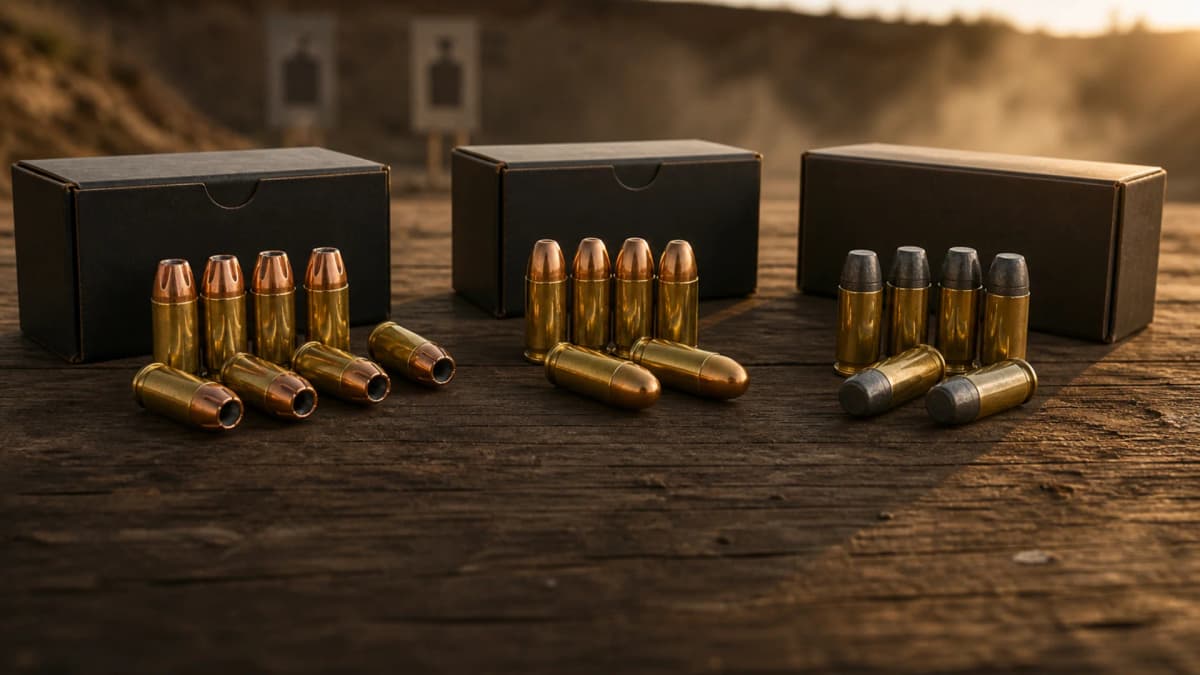
Seventeen verified .45 ACP loads for carry, compact pistols, range training, and heavy penetration-focused work, with standard-pressure, +P, barrel-length, and cost-per-round comparisons.
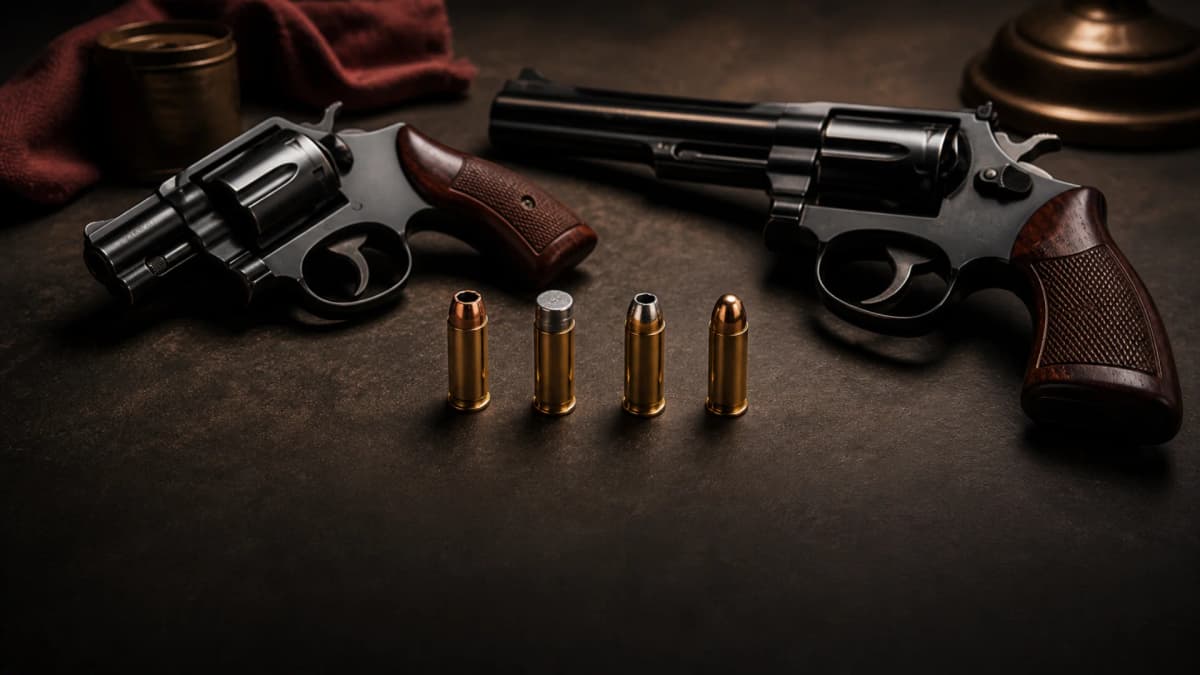
.38 Special ammunition sorted by barrel length and pressure rating: 2-inch snubs, standard-pressure revolvers, +P-rated service guns, wadcutter carry, and range practice, with maker-published short-barrel velocity data.
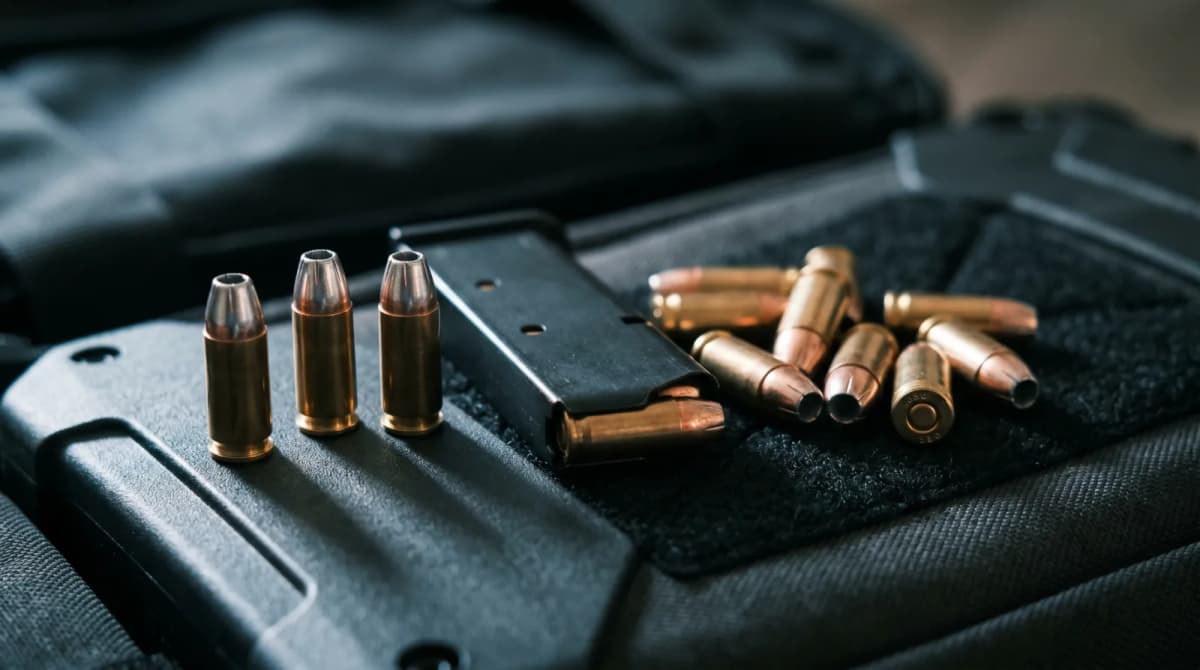
Best 380 ACP ammo for self-defense ranked with ballistic gel data. Federal HST 99gr (#1), Hornady Critical Defense FTX, Speer Gold Dot. FBI protocol penetration analysis, grain weight guide, and pocket pistol carry tips for LCP Max, Bodyguard 380, and P238.
Related articles and industry updates
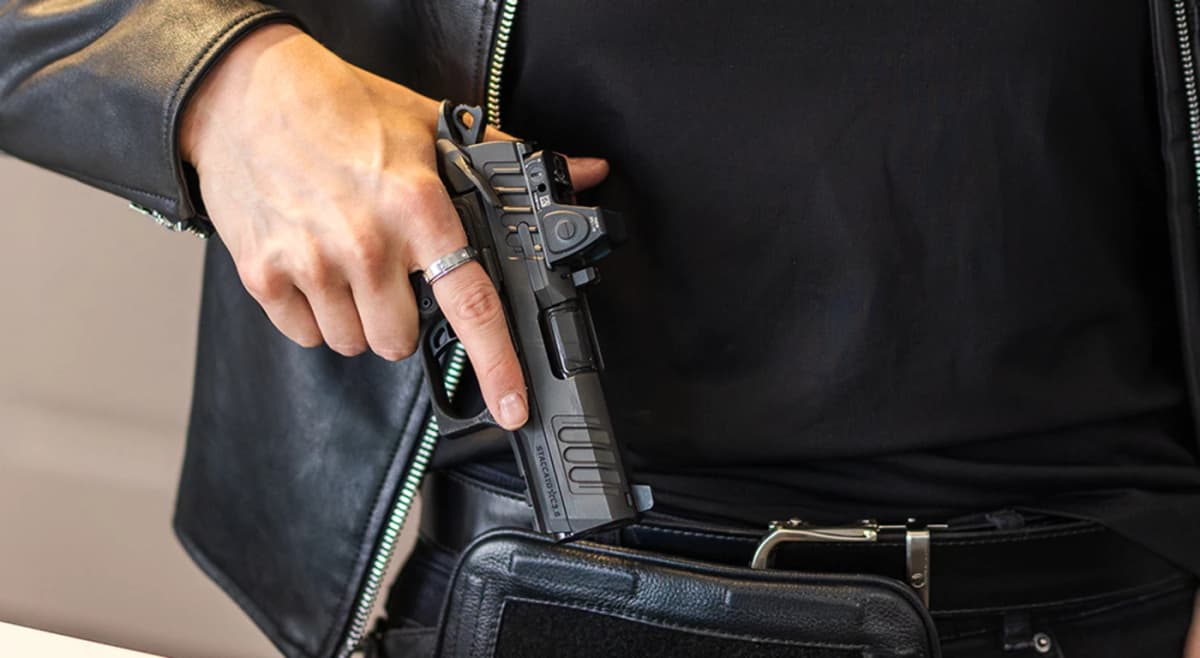
DOE awarded Staccato a sole-source purchase order on September 11, 2026 for the executive-protection pistol system its August notice named: the HD C3.6 Preferred Package with a Trijicon RMR mounting kit.
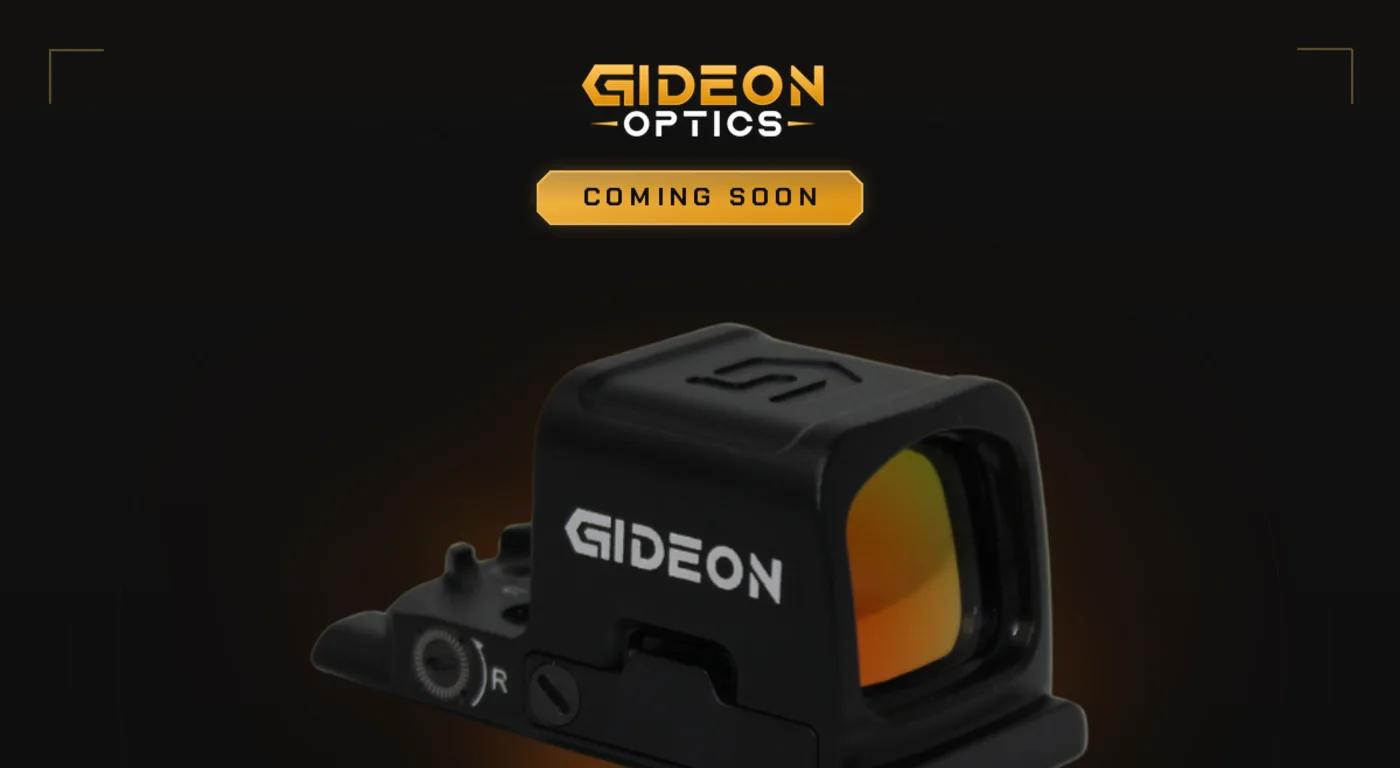
Gideon Optics is launching a direct-mount enclosed 3 MOA red dot for Glock 17, 19, and 45 Gen 6 ORS pistols on September 4, 2026. It skips the factory polymer adapter plate and sits on a 3.2mm deck.
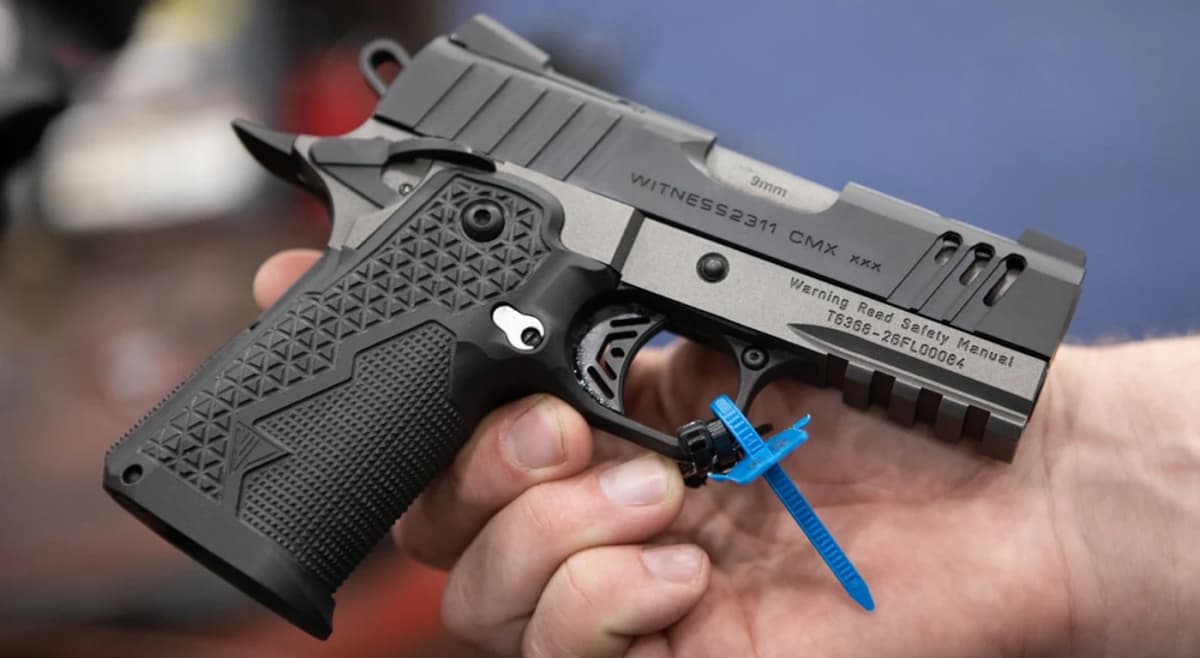
EAA's Witness2311 XXX series is two 3.4-inch double-stack 1911s in 9mm with a grip module about 25 percent smaller than the standard Witness2311, holding 16+1 on a slim Check-Mate magazine developed for the series. The SC9 XXX lists at $599 and the optic-cut CMX XXX at $899.