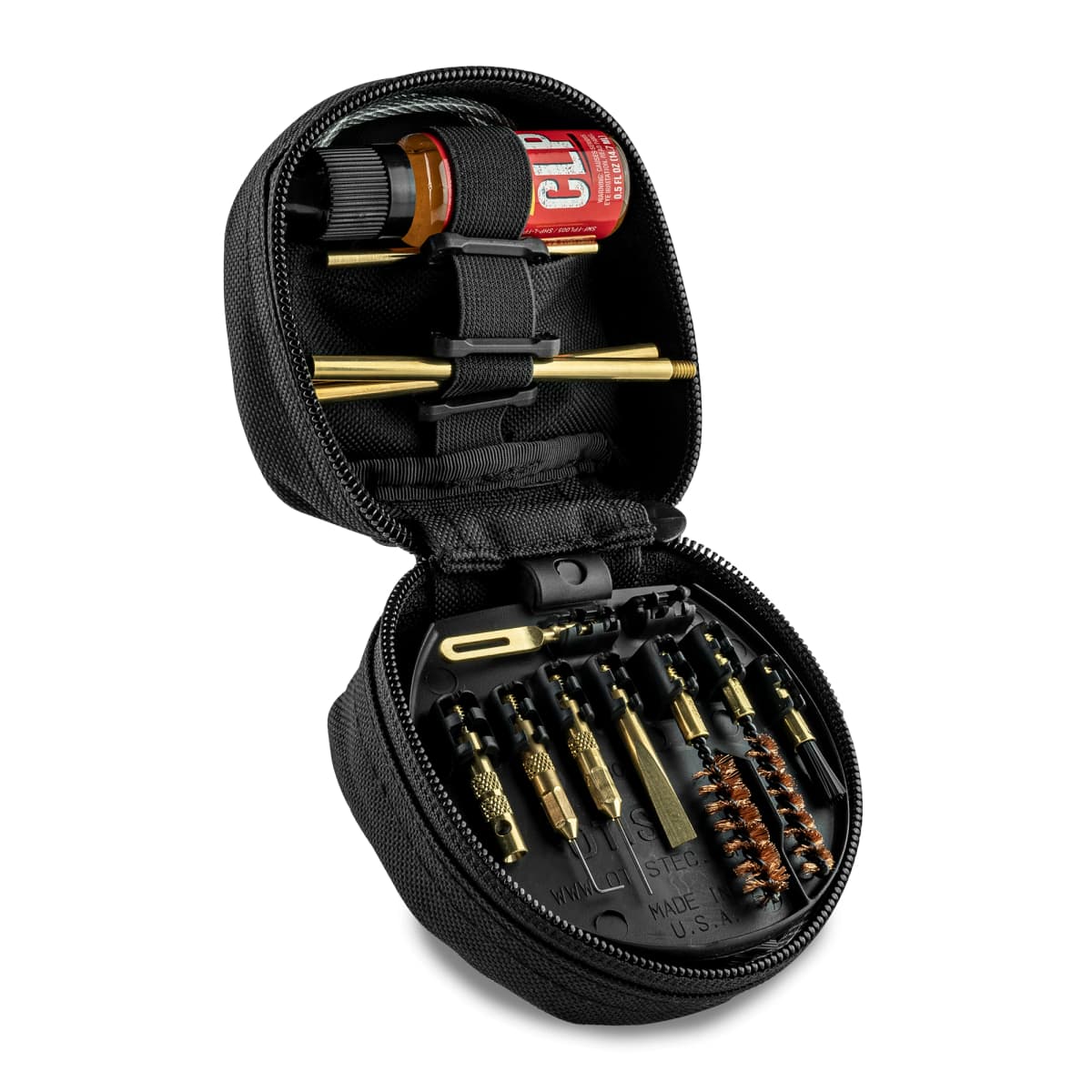
Chamber & Gas System Cleaning Kit
Specialized cleaning kit for AR chamber and gas system. Includes chamber brush and gas tube tools.
- ✓Chamber brush
- ✓Gas tube cleaner
- ✓Star chamber tool

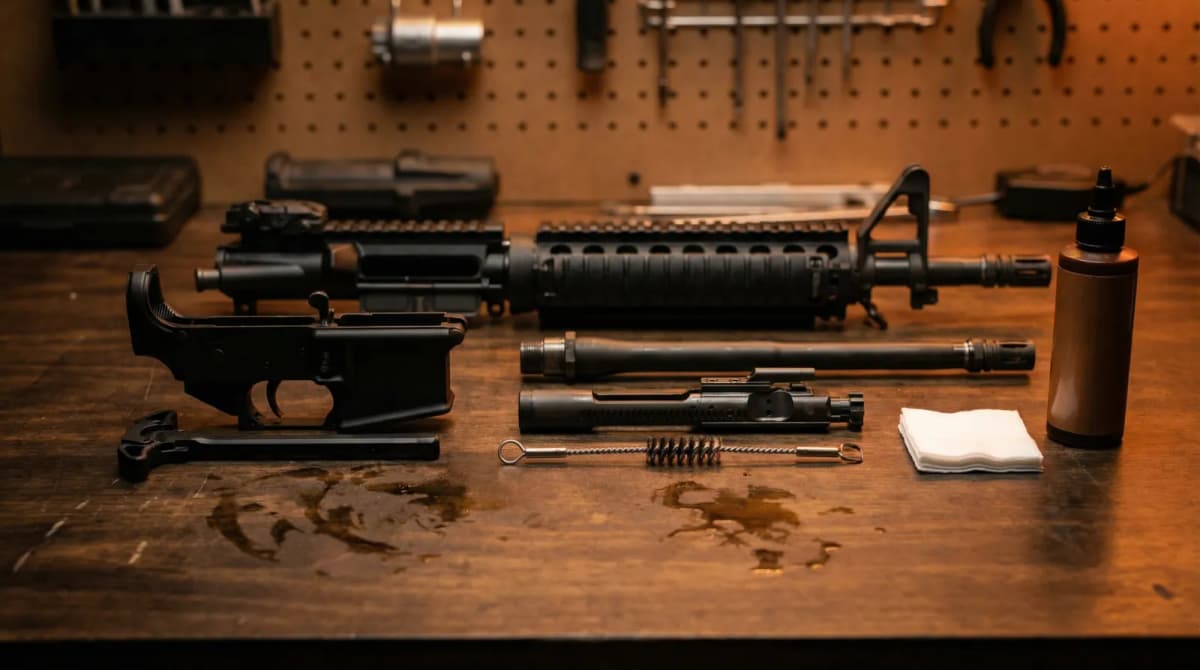
A dirty AR-15 is an unreliable AR-15. Carbon fouling in the bolt carrier group causes sluggish cycling, light primer strikes, and failures to extract. This guide walks you through the complete cleaning process, from field strip to reassembly, with the exact supplies, technique, and schedule you need to keep your rifle running.
This guide assumes familiarity with these topics:
After every range trip: Field strip, run a bore snake through the barrel, wipe and re-oil the BCG. Takes 10 minutes.
Every 500-1,000 rounds: Full cleaning with bore brush and solvent, BCG disassembly and carbon scraping, receiver wipe-down. Takes 30-45 minutes.
Every 3,000-5,000 rounds: Deep clean including trigger group, gas tube inspection, and spring/buffer check. Replace gas rings if needed.
You do not need a $100 cleaning kit. A basic set of quality supplies covers everything. Here is what you need and why.
All-in-one cleaner, lubricant, and protectant for general use
Examples: Break Free CLP, Slip 2000 EWL, Lucas Gun Oil CLP
Dissolves copper and carbon fouling from the barrel
Examples: Hoppe's No. 9, M-Pro 7, Bore Tech Eliminator
Scrubs fouling from the bore rifling
Examples: Tipton carbon fiber rod, Dewey coated rod, bronze bore brush (.223/5.56)
Quick field cleaning of the bore without a rod
Examples: Hoppe's BoreSnake, Otis Ripcord
Absorb solvent and wipe residue from bore and surfaces
Examples: Hoppe's cotton patches, Pro-Shot patches (1.75" for .223)
Scrub carbon from BCG, upper receiver, and trigger group
Examples: AP brush, dental pick set, nylon detail brushes
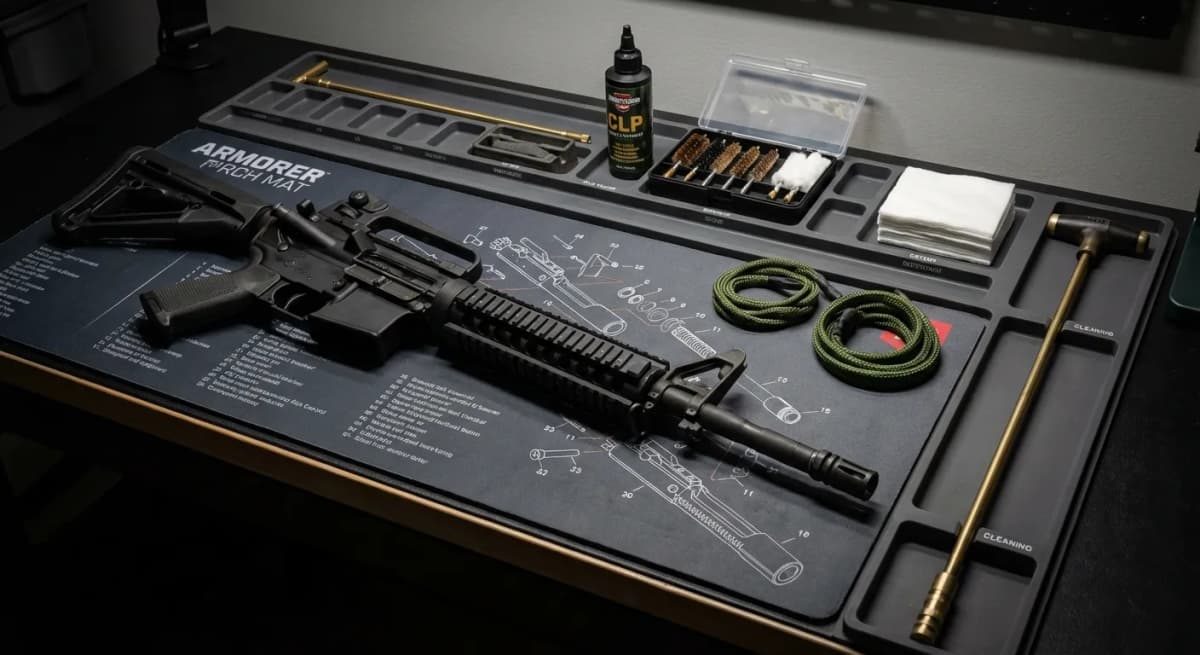
Protects work surface, organizes parts, absorbs solvent
Examples: TekMat AR-15 mat, Real Avid Smart Mat
Final wipe-down of exterior surfaces
Examples: Any lint-free microfiber cloth
Specialized cleaning kit for AR chamber and gas system. Includes chamber brush and gas tube tools.
Budget-friendly AR-15 tool kit with essential armorer tools. Good starter kit for basic maintenance.
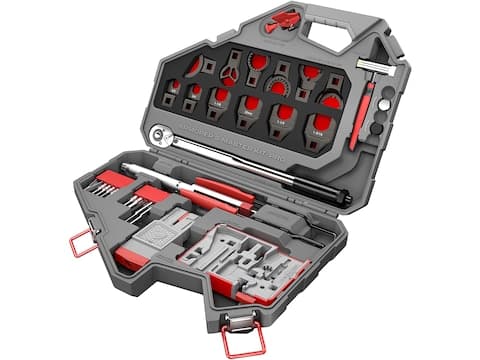
Comprehensive kit with upgraded punches, universal wrench heads, torque tools, and storage case. Covers serious builds and fleet maintenance.
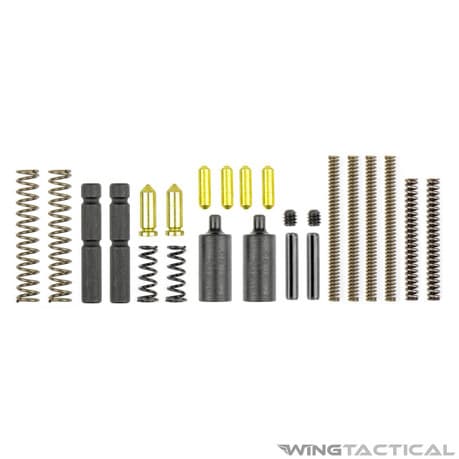
Spare detents and springs for AR-15 builds. Includes takedown, pivot, safety, and buffer retainer parts.
Safety first: Verify the rifle is completely unloaded before cleaning.
The bore is where accuracy lives. Carbon and copper fouling degrade accuracy and can cause pressure issues. Always clean from the chamber end to protect the crown.
Tip: Always clean from chamber to muzzle when possible. This avoids damaging the crown at the muzzle, which affects accuracy.
Tip: Do not fire with a heavily oiled bore. Excess oil can cause a pressure spike on the first shot.
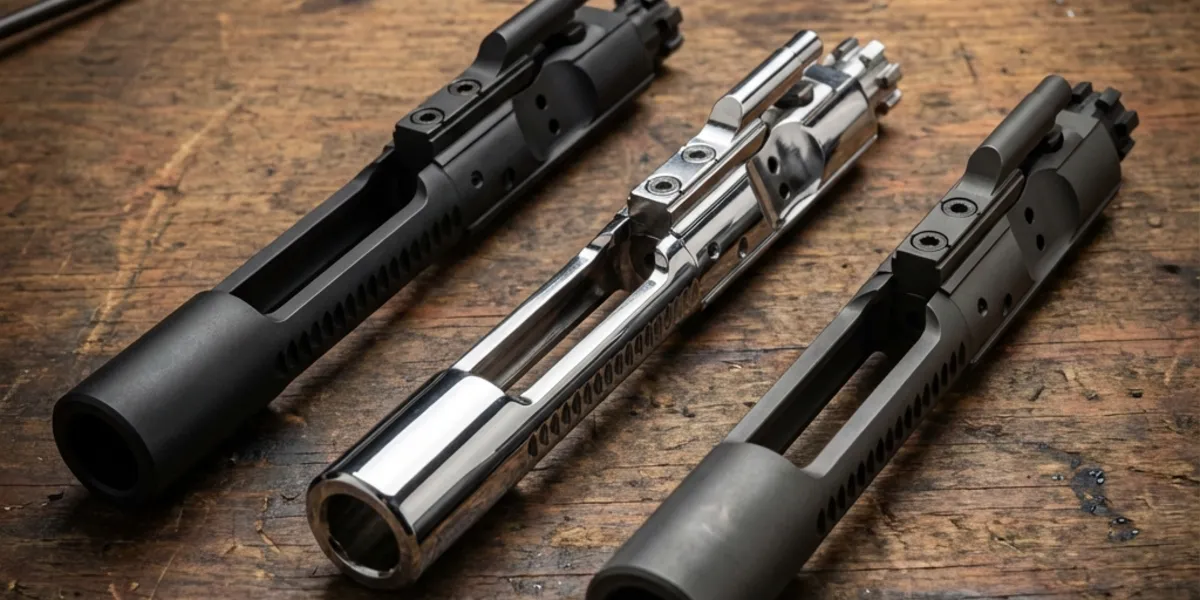
The BCGBCG[Components]Bolt Carrier Group. The heart of the rifle, housing the bolt, firing pin, extractor, and ejector. It cycles back and forth to chamber, fire, and eject rounds. is the heart of the AR-15 and takes the most abuse. Carbon buildup on the carrier tail and bolt face is the primary cause of malfunctions. This is the most important part of cleaning.
Tip: A dedicated BCG carbon scraper tool makes this significantly easier. The carbon buildup on the carrier tail is the hardest fouling to remove.
Tip: Never lubricate the firing pin. Oil on the firing pin can slow its strike and cause light primer strikes in cold weather.
The AR-15 runs best wet. Under-lubrication causes more failures than over-lubrication. Focus oil on metal-to-metal contact points.
How often you clean depends on round count, ammunition type, and whether you shoot suppressed. Here is a practical schedule.
| Interval | Tasks | Time |
|---|---|---|
| After every range trip | Bore snake, wipe BCG, re-oil | 10 min |
| Every 500-1,000 rounds | Full bore cleaning, BCG disassembly and scrape, receiver wipe-down | 30-45 min |
| Every 3,000-5,000 rounds | Deep clean: trigger group, gas tube inspection, spring check, gas ring replacement if needed | 60-90 min |
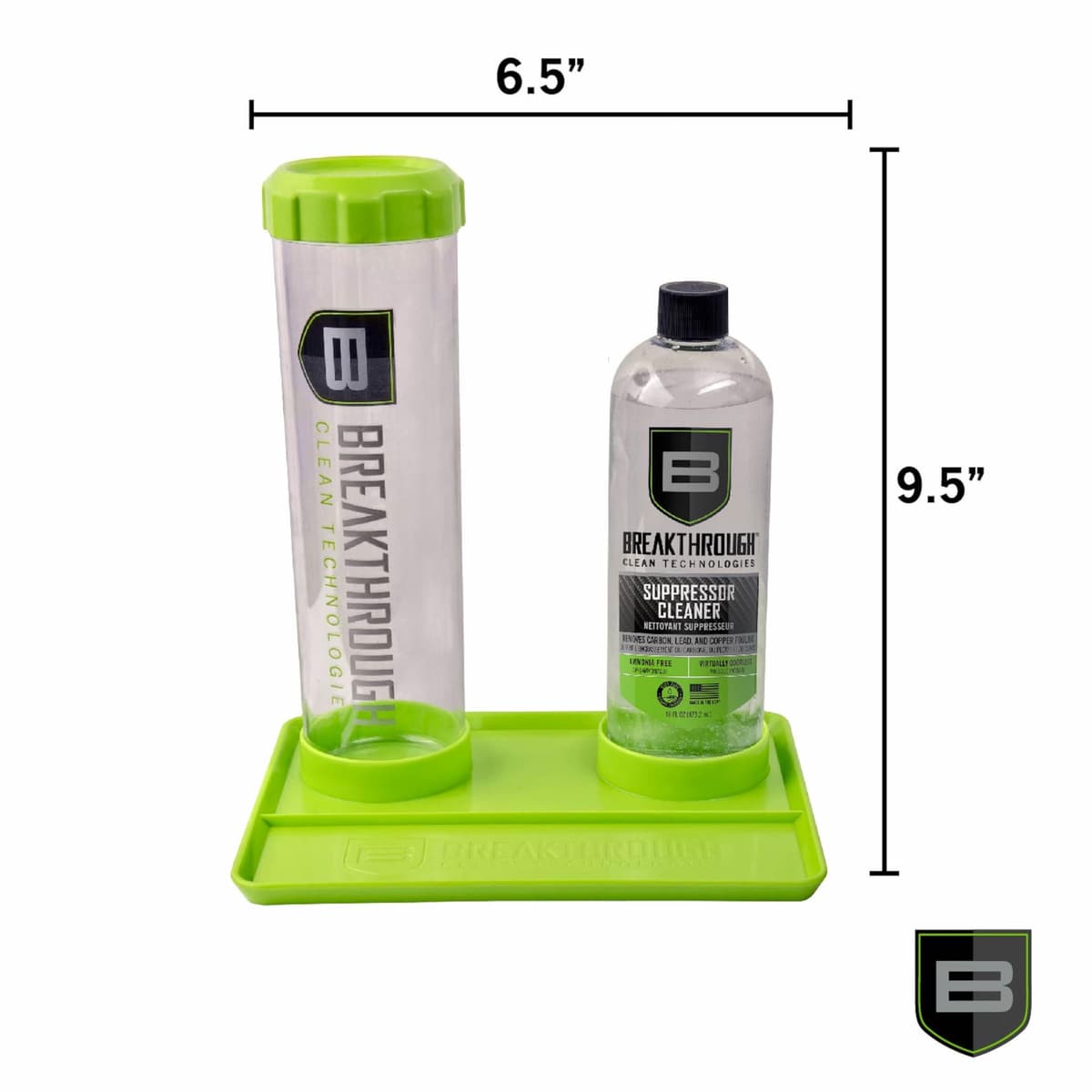
| Suppressed or steel-case | Clean at half the intervals above. Suppressors and steel-case ammo increase carbon and fouling significantly | Varies |
Always clean from the chamber end. A cleaning rod entering from the muzzle can damage the crown, which directly affects accuracy. Use a bore guide if cleaning from the rear is not possible.
The firing pin should be dry. Oil slows the firing pin strike, which can cause light primer strikes, especially in cold temperatures.
Steel screwdrivers and picks will scratch the anodized finish on aluminum receivers. Use nylon or brass tools for scrubbing.
A dirty chamber causes failures to go into battery. Dirty feed ramps cause failures to feed. Both are often overlooked when people focus only on the bore and BCGBCG[Components]Bolt Carrier Group. The heart of the rifle, housing the bolt, firing pin, extractor, and ejector. It cycles back and forth to chamber, fire, and eject rounds..
A thin film of oil is sufficient. Excess oil attracts dirt and dust, which creates an abrasive paste that accelerates wear. In cold weather, excess oil thickens and can slow the action.
Essential accessories to round out your setup
Continue exploring with these related resources

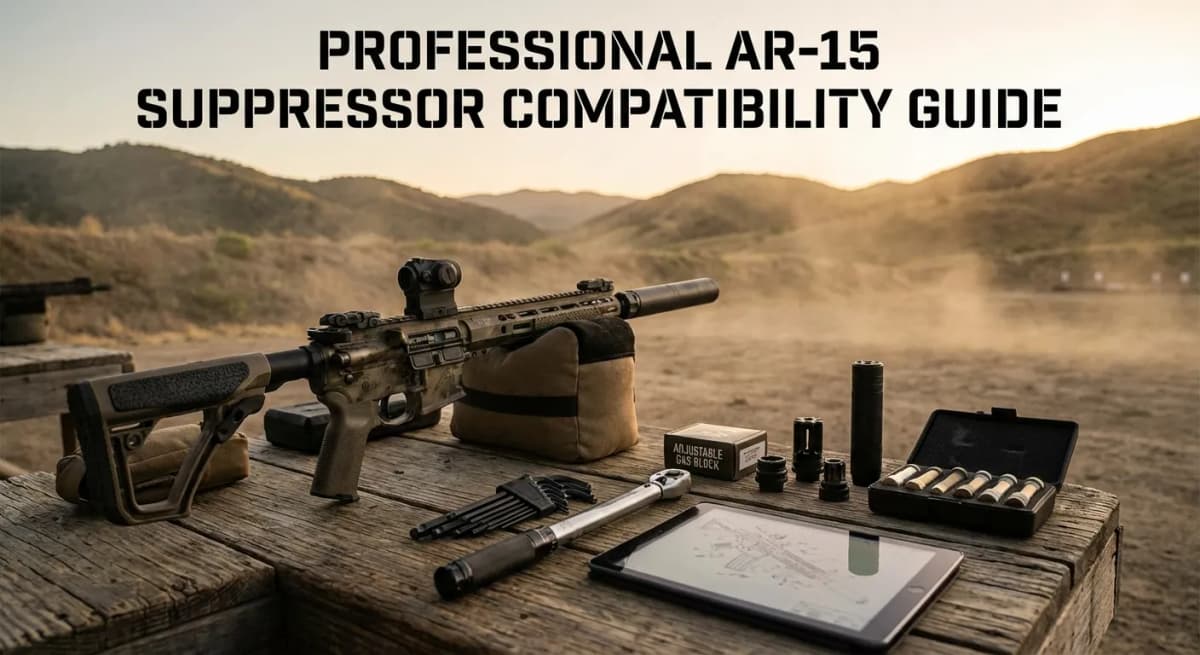
Set up AR-15 suppressors correctly. Learn host preparation, backpressure management, POI shift tracking, mount selection, and overgassing fixes for reliable suppressed operation.

AR-15 maintenance and armorer schedule with round-count checkpoints. Inspect bolts, gas rings, springs, extractors, and barrels with printable service log templates for fleet readiness.

Compare modern Bolt Carrier Group (BCG) coatings. Deep dive into Diamond-Like Carbon (DLC), Physical Vapor Deposition (PVD), Nitride, and Nickel Boron (NiB). Learn which offer reliable lubricity vs which flake and cause failures.
Ready to continue? Here's the recommended next guide:
AR-15 maintenance and armorer schedule with round-count checkpoints. Inspect bolts, gas rings, springs, extractors, and barrels with printable service log templates for fleet readiness.
Or explore a related topic:
Best AR-15 BCG 2026->Related articles and industry updates

Complete comparison of forced reset triggers and super safeties for AR-15: Partisan Disruptor FRT, Arc Fire, Atrius FRS, and Mars Super Safety. Performance, pricing, legality, and which system fits your build.

The Atrius FRS is a drop-in forced reset selector that delivers rapid semi-auto fire at $249. Unlike FRT triggers, it works with your existing mil-spec FCG and reduces rifle wear.

Everything that matters from SHOT Show 2026: computational optics from Maztech and Revic, the suppressor boom, rifles from Geissele and Noveske, PSA's modular AXR ecosystem, and 30+ product announcements.
This page contains affiliate links. Purchases through these links support the site at no extra cost to you. Learn more