The best current 6.5 Creedmoor factory loads for deer, elk, long-range matches, gas guns, and higher-volume training.
Affiliate links (?)
The best 6.5 Creedmoor ammo is Hornady Precision Hunter 143gr ELD-X for deer, Federal Terminal Ascent 130gr for elk, and Hornady ELD Match 140gr as the first target load to try in a new rifle. Those three cover most of what the cartridge is asked to do. The rest of this guide covers the loads that fill the gaps: a bonded deer load, a traditional soft point, a heavier bonded bullet for elk, two more factory match options, and the only fifty-round box in the group. Every figure below comes from what the manufacturer publishes for the loaded cartridge rather than for a component bullet, and where a maker publishes no ballistic coefficient for the loaded round, this guide says so instead of borrowing one.
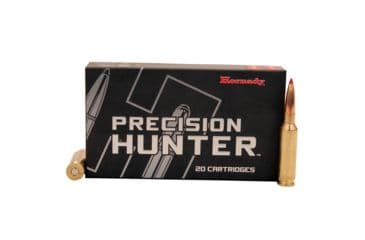
Hornady Precision Hunter 143gr ELD-X is the best 6.5 Creedmoor deer load, at $43.28 for twenty rounds. Hornady lists item 81499 at 2,700 fps from a 24-inch test barrel with a 0.623 G1 ballistic coefficient, which is the highest published coefficient of any hunting load in this guide. The bullet pairs a Heat Shield polymer tip with a mechanical InterLock ring, so it holds its nose profile in flight and resists jacket and core separation on impact.

Hornady Precision Hunter 143gr ELD-X 6.5 Creedmoor
$43.28
Affiliate links (?)
Grain weight is the wrong first question for deer. Every load in this section, from 129gr to 143gr, carries enough bullet for whitetail and mule deer at ordinary hunting distances. Construction and group size are what separate them. A 143gr ELD-X, a 140gr bonded soft point, and a 129gr InterLock are all appropriate deer bullets inside a range you have actually confirmed, with the shot placed where it belongs; what changes is how the bullet behaves when it hits heavy bone and how flat it shoots at the far end of that range. For the cartridge-level background on why the 6.5 Creedmoor shoots the way it does, the 6.5 Creedmoor cartridge guide covers twist rates, barrel life, and the ballistic case in depth.
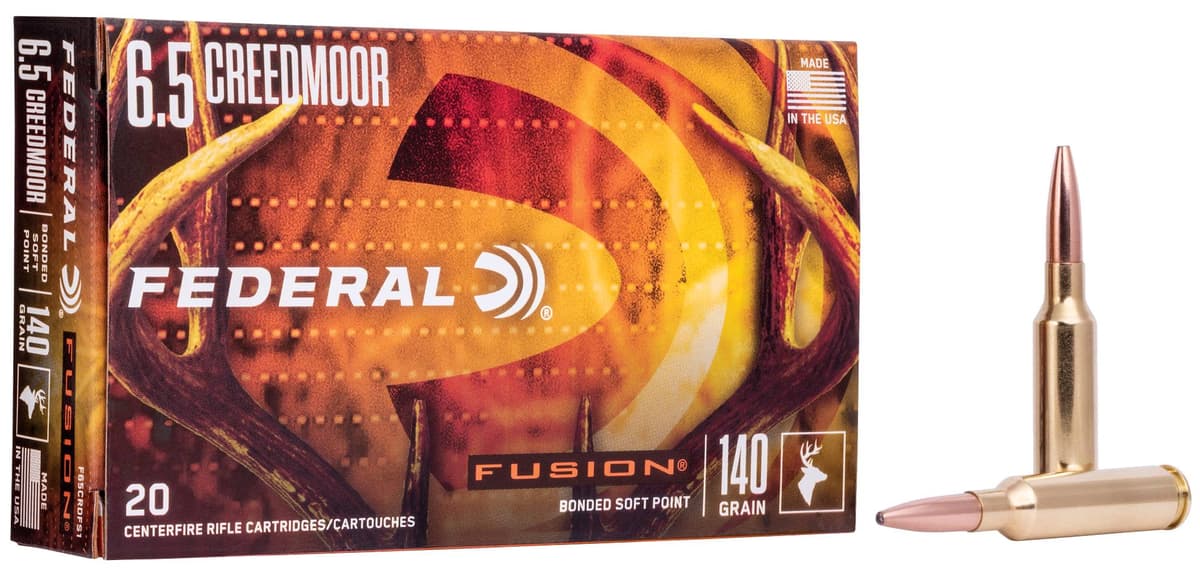
Federal Fusion 140gr is the bonded pick at $45.99. Federal forms the jacket around the lead core and electrochemically bonds the two, then uses a soft point to start expansion. Federal lists F65CRDFS1 at 2,725 fps with a 0.439 G1 coefficient. That coefficient is the lowest in this guide, so the trajectory curves harder past 300 yards than the ELD-X does, and the trade is bonded construction at a mid-tier price. If most of your shots land inside 300 yards and you want the jacket and core to stay together through a shoulder, Fusion is the straightforward answer.
Federal Fusion 140gr 6.5 Creedmoor
$45.99
Affiliate links (?)
Hornady American Whitetail 129gr is the traditional soft point and the fastest hunting load here at 2,820 fps from Hornady's 24-inch test barrel. It costs $42.99 for twenty rounds and uses the same mechanical InterLock ring as the ELD-X without the polymer tip. Hornady does not publish a ballistic coefficient for item 81489, so this is a load to zero and shoot at known distances rather than one to build a long-range dope card around. Rifles that do not group the 140-class loads well are worth trying with the lighter 129.
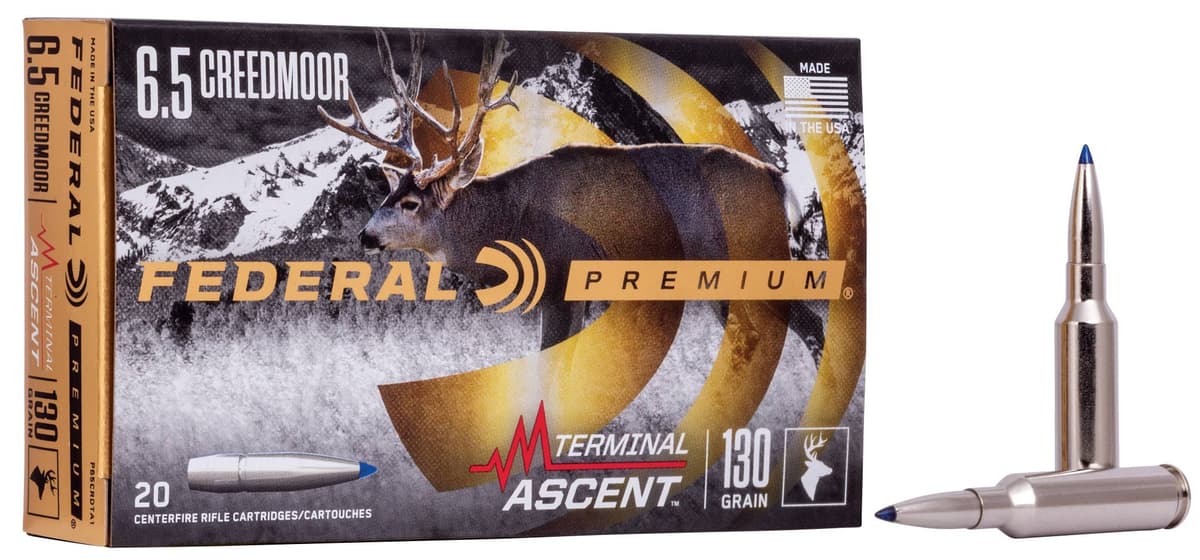
Federal Terminal Ascent 130gr is the best 6.5 Creedmoor elk load, at $64.99 for twenty rounds. Federal bonds the lead core to the jacket and puts a solid copper shank behind it, which is the construction that keeps a bullet in one piece when it meets a shoulder blade instead of ribs. Federal lists P65CRDTA1 at 2,800 fps with a 0.532 G1 and a 0.263 G7 coefficient, and adds a Slipstream polymer tip and an AccuChannel groove to the loaded round.
Federal Terminal Ascent 130gr 6.5 Creedmoor
$64.99
Affiliate links (?)
A 0.532 G1 is high for a 130-grain hunting bullet. That matters more on elk than on deer because western elk shots are often taken across a canyon rather than across a food plot, and a bullet that sheds less velocity arrives with more of the impact speed its expansion window depends on. Federal publishes both a G1 and a G7 coefficient for this load, so a ballistic solver can run either drag model against your own chronographed velocity.
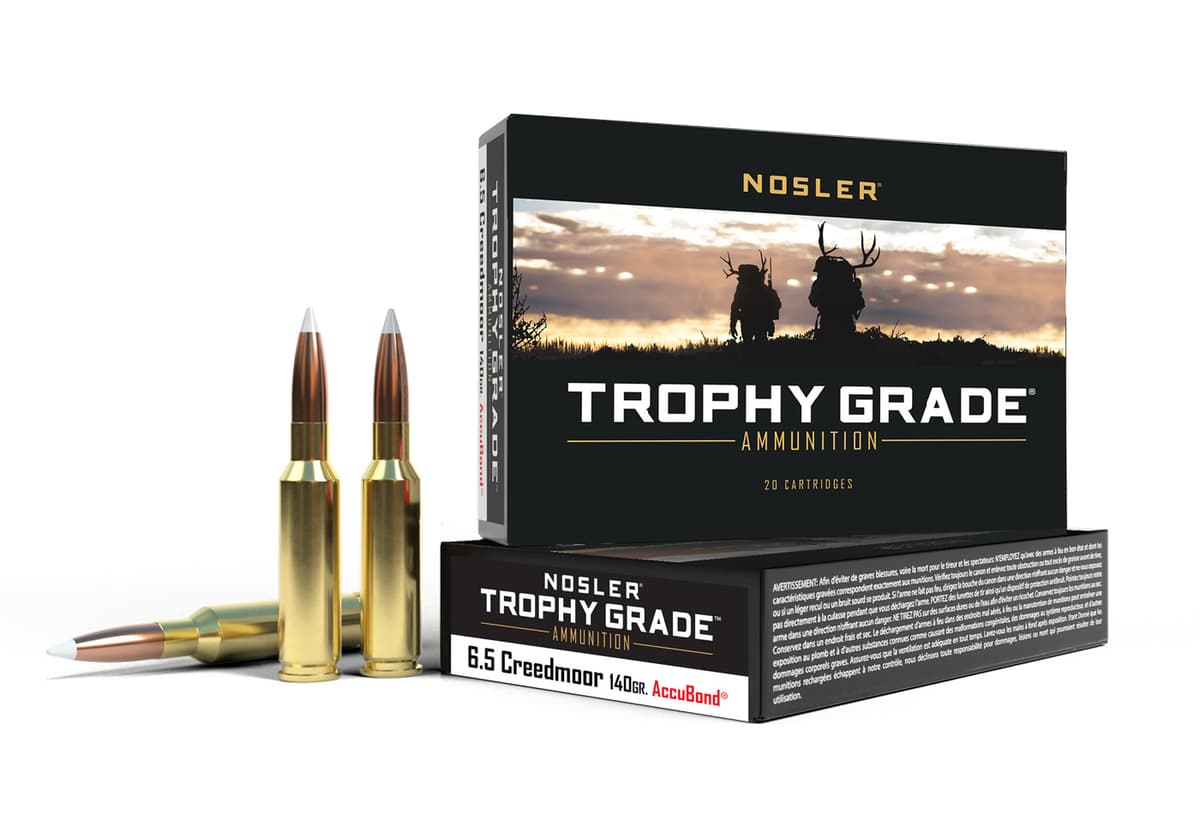
Nosler Trophy Grade 140gr AccuBond is the heavier bonded alternative at $53.39. Nosler builds the AccuBond with a copper-alloy jacket chemically bonded to a lead-alloy core under a polymer tip, and the 2026 Product Guide lists SKU 60080 at 2,650 fps and 2,183 ft-lbs, rated for deer- and elk-sized game rather than deer alone. The gap is the ballistic coefficient: Nosler publishes none for the loaded round, so building trajectory data for this one takes a chronograph and measured drops at distance instead of a number off the box.
Nosler Trophy Grade 140gr AccuBond 6.5 Creedmoor
$53.39
Affiliate links (?)
Both loads use a lead core, which rules them out where lead ammunition is prohibited for hunting. Check the regulations for the unit you are hunting before the season rather than at the trailhead. Neither of these is a load to buy by the case untested either, because a rifle that stacks 143gr match bullets will not necessarily do the same with a 130gr bonded hunting bullet.
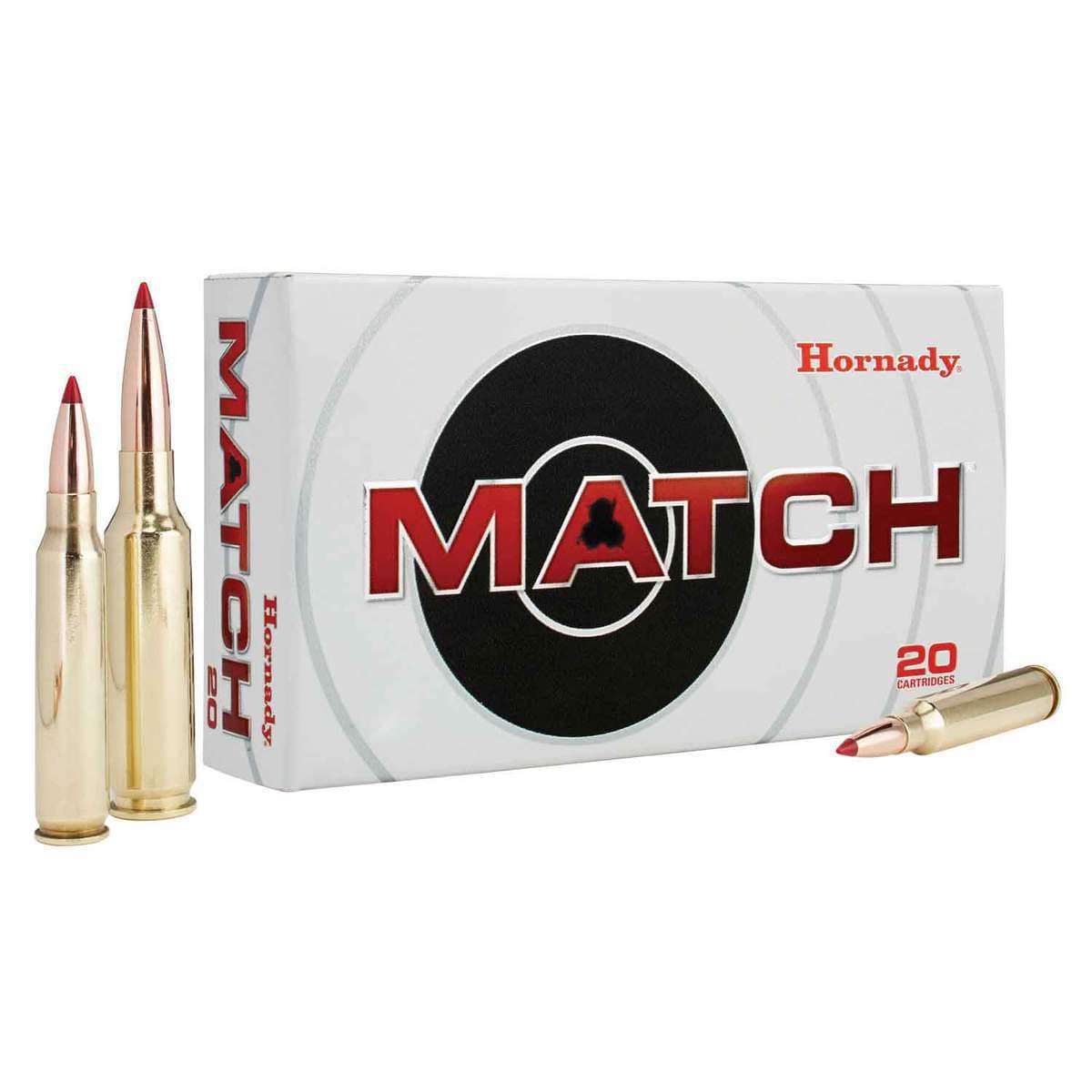
Hornady ELD Match 140gr is the factory match load to test first, at $34.25 for twenty rounds. Hornady lists the loaded twenty-round item 81500 at 2,710 fps from a 24-inch test barrel with a 0.610 G1 ballistic coefficient for the cartridge as loaded. Hornady loads the ELD Match line in 120gr, 140gr, and 147gr for this cartridge, so a rifle that does not like the 140 has two in-family weights to try before you go looking at another brand.
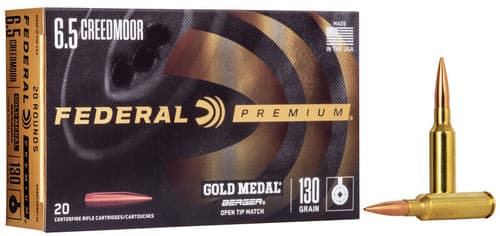
Federal Gold Medal 130gr Berger AR Hybrid OTM is the load to reach for when a rifle does not shoot the Hornady well, priced at $43.49 for twenty. It is the fastest load in the guide at 2,875 fps, with a 0.560 G1 and 0.287 G7 coefficient. The lighter bullet trades some coefficient for velocity, which flattens the near and middle part of the curve. Federal publishing a G7 alongside the G1 is genuinely useful here, because G7 is the drag model most solvers prefer for long boat-tail bullets and having the manufacturer's own figure removes a conversion step. If you are still choosing the rifle these loads will feed, the best 6.5 Creedmoor rifle guide ranks bolt guns, hunting rifles, and semi-autos against the jobs each one is built for.

Federal Gold Medal 130gr Berger AR Hybrid OTM 6.5 Creedmoor
$43.49
Affiliate links (?)
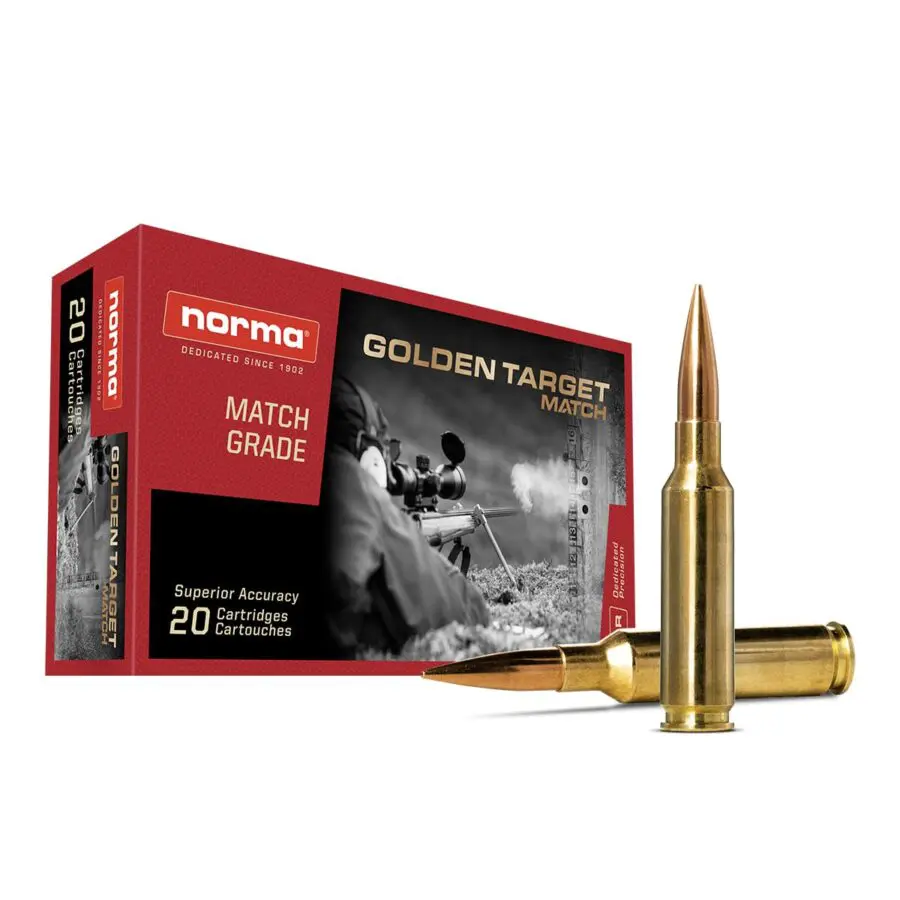
Norma Golden Target 143gr HPBT carries the highest published coefficient of the three at 0.635 G1, and at $26.99 for twenty it for twenty. Norma lists product 10166522 at 2,723 fps from a 24-inch barrel. On paper that combination of a heavier bullet, a higher coefficient, and a lower price is the best wind performance per dollar in this section. The catch is that availability on this one swings by retailer more than the Hornady and Federal loads do, so check that your retailer has it before you plan a season around it, and buy a matched lot deep when you do rather than counting on a resupply between matches.

Norma Golden Target 143gr HPBT 6.5 Creedmoor
$26.99
Affiliate links (?)
All three are target bullets built to punch clean holes in paper and ring steel. None is a controlled-expansion hunting design, so keep them off game and use the hunting loads above instead.
Federal Gold Medal 130gr is the first match load to try in a 6.5 Creedmoor AR-10, because Federal names the projectile a Berger AR Hybrid OTM on its own product page. That is the manufacturer pointing at gas guns, not an inference drawn from the bullet shape. At 2,875 fps it is also the fastest of the nine loads here, and it costs $43.49 for twenty rounds.
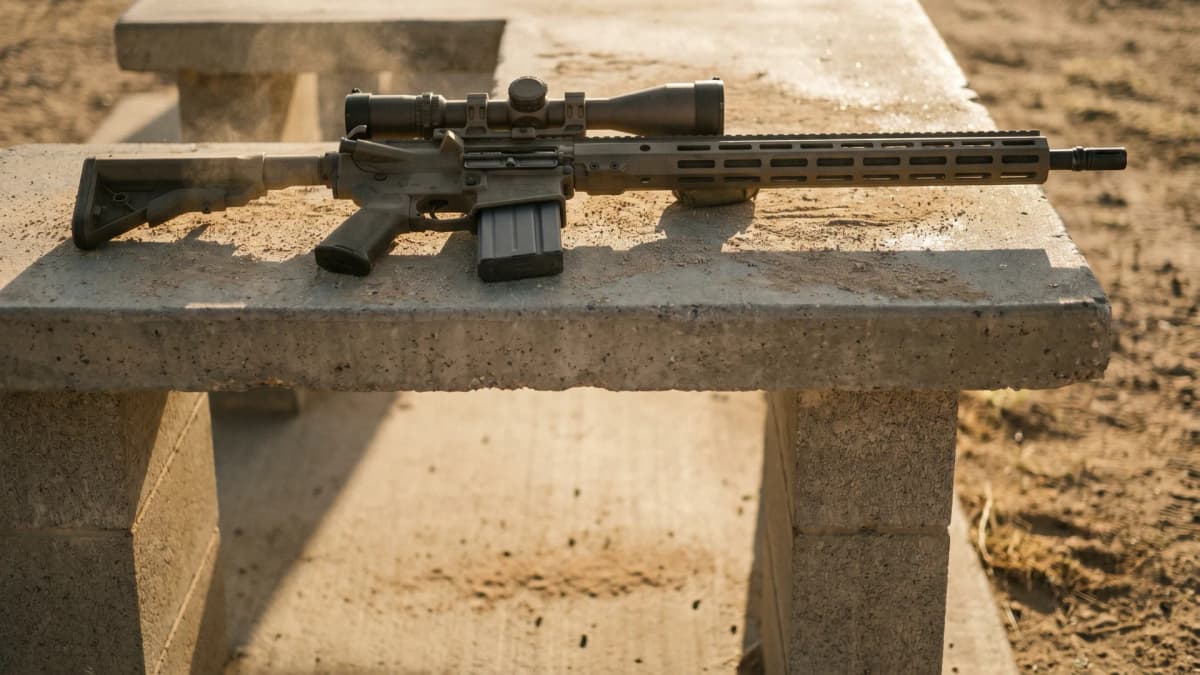
Everything else about feeding a large-frame semi-auto is rifle-specific and has to be checked rather than looked up. Three things are worth confirming with a box of any new load before you buy more of it. First, magazine fit: load a full magazine and confirm the rounds seat and strip cleanly, since large-frame magazines vary between patterns and makers. Second, feeding and cycling: shoot the magazine and watch for short stroking, failures to feed, and failures to extract, which is a gas-system and load interaction rather than a property of the ammunition alone. Third, brass condition: collect the cases, look at the case mouths and primer pockets, and see how they come out of your specific gun before you plan on reloading them. None of the three is a spec you can look up; they are all answers your own rifle gives you at the range.
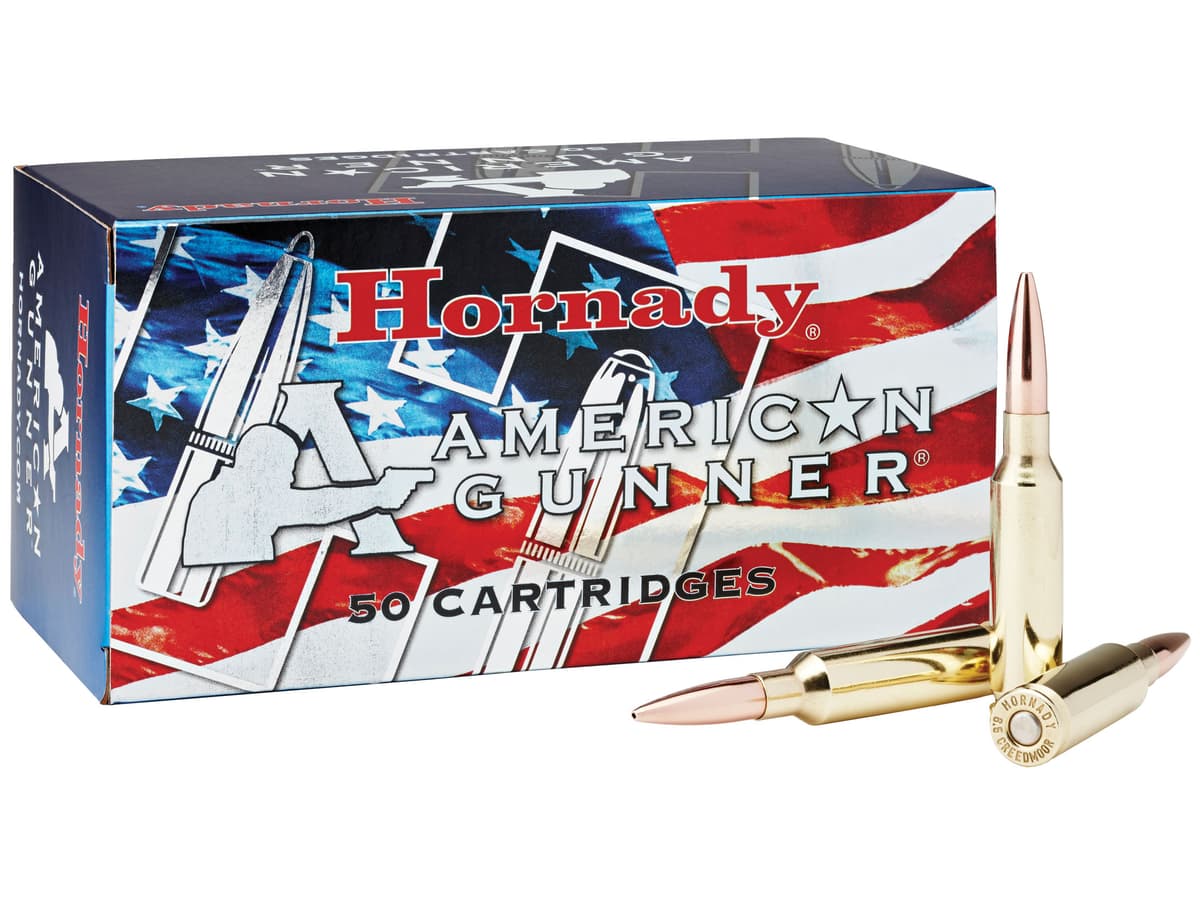
Hornady American Gunner 140gr BTHP is the load to do that testing with. Hornady lists item 81482 at 2,690 fps from a 24-inch test barrel, and it ships fifty rounds to a box at $76.49, so a function-test session does not consume match ammunition. Run the fifty-round box for cycling and zero confirmation, then confirm your match or hunting load separately. For the gas guns themselves, the best AR-10 buyer's guide ranks the 6.5 Creedmoor and .308 options side by side, and the best .308 ammo guide covers the same load-selection problem for the other common large-frame chambering.
Hornady American Gunner 140gr is the practice load, at $76.49 for fifty rounds. It is the only fifty-round box in this guide, so a single purchase covers a practice session rather than half of one. The 140gr BTHP Match bullet is built for paper and steel, Hornady lists 2,690 fps from a 24-inch test barrel, and the brass is reloadable. Use it for position drills, wind practice, zero confirmation after a scope change, and cycling tests.
Hornady American Gunner 140gr 6.5 Creedmoor
$76.49
Affiliate links (?)
Hornady ELD Match 140gr is the other load worth shooting in volume, at $34.25 for twenty. It costs more per round than American Gunner, and it buys something specific: practicing with the same load you compete with means one dope card, one velocity, and no translation between your range data and your match data. If you shoot a monthly club match, that consistency is usually worth more than the price difference. If you are burning a hundred rounds a week on fundamentals, it is not.
Neither of these is hunting ammunition. Both use match bullets without a controlled-expansion design, so keep a box of your chosen hunting load for the season and confirm its zero separately; a match load and a hunting load rarely print to the same point of impact out of the same rifle.
Every figure in this table is what the manufacturer publishes for the loaded cartridge. Where a cell reads "Not published," the maker does not list that value for that item, so treat that load as one to chronograph rather than one to model off the box. Most of these velocities come from 24-inch test barrels; a 22-inch gas gun or a 20-inch mountain rifle will read lower, which is why the chronograph matters more than the box. The American Gunner price is for fifty rounds while every other box holds twenty.
Two things stand out. Among the hunting loads the published coefficients run from 0.439 for the 140gr Fusion to 0.623 for the 143gr ELD-X, a wide enough spread to show up in both retained velocity and wind drift well before the far plates. And the velocity spread across the whole field runs from 2,650 fps for the Nosler AccuBond to 2,875 fps for the Federal Gold Medal, a 225 fps range that is more than enough to need its own zero. Federal is also developing a higher-pressure 6.5 Creedmoor line under the +Peak banner, which is not a shelf item yet.
Load comparisons, hunting bullet breakdowns, and new factory ammunition coverage, sent when it publishes.
Pick the load by the job first, then let the rifle veto it. The job narrows nine loads to two or three: deer means an expanding bullet, elk means a bonded one, matches mean an open-tip match bullet, and practice means the biggest box you can buy. From there, buy one box of each finalist, shoot groups at 100 yards from the same position on the same day, and chronograph all of them. The rifle picks the winner, and it does not care which one has the better marketing.
If the rifle itself is still open, the barrel decides more about which of these loads shoots than the box does. Twist rate sets which bullet weights stabilize, and barrel length is what moves you off the 24-inch test-barrel velocities every figure here is quoted from. The rifle builder lets you spec a 6.5 Creedmoor bolt gun or AR-10 barrel, twist, and optic together before you commit to a load to feed it.
Two habits save the most trouble. Chronograph before you build a dope card, because published velocities come from test barrels that are usually longer than yours, and a 60 to 100 fps error in your inputs puts a meaningful point-of-impact error on the target past 600 yards. And buy hunting ammunition early enough to confirm zero before the season instead of the week of the hunt, since the hunting load almost never shares a point of impact with the match load you have been practicing with. For the wider cartridge context, including barrel twist and how the 6.5 Creedmoor compares with the other large-frame options, start with the 6.5 Creedmoor guide.
Buy Hornady Precision Hunter 143gr ELD-X for deer, Federal Terminal Ascent 130gr when the tag says elk, and Hornady ELD Match 140gr for everything on paper and steel.
Those three cover the cartridge as most people shoot it, and each one publishes the loaded-round data a ballistic solver needs. Add Hornady American Gunner 140gr at $76.49 for fifty rounds when the practice volume goes up, and step up to Federal Gold Medal 130gr Berger AR Hybrid OTM if your barrel does not shoot the ELD Match well. Pair the load with the right rifle using the best 6.5 Creedmoor rifle guide for bolt guns, or the best AR-10 guide if the host is a gas gun.

Avid shooter with 10+ years of experience including competition shooting, an associate member of the Professional Outdoor Media Association (POMA), and a member of the National Shooting Sports Foundation (NSSF) and Safari Club International (SCI). Built 10+ AR-pattern rifles and several handgun platforms for home defense, competition, and suppressed night shooting.
This page contains affiliate links. Purchases through these links support the site at no extra cost to you. Read the affiliate disclosure
Continue exploring with these related resources

Eleven .308 and 6.5 Creedmoor AR-10s ranked from budget to precision, with the DPMS Gen 1 / Gen 2 / SR-25 / Armalite pattern confusion finally cleared up.

Tactical 6.5 Creedmoor guide built around the SOCOM MRGG program. Covers the LMT MRGG-A and Geissele MRGG-S reference rifles, plus DD5 V5, LMT MWS, and POF Revolution. Ballistics, DMR build decisions, optic pairing, match ammunition, and 6.5 CM vs .308 Win comparison. Hunting covered as secondary use case.

Ten 6.5 Creedmoor rifles ranked across three jobs the cartridge actually does: precision and PRS bolt guns, lightweight hunting rifles, and semi-auto AR-10 DMRs. Verified specs, magazine standards, suppressor threading, and a decision matrix for picking the right action.
Related articles and industry updates

Savage revamped the Ultralite family with four carbon-barreled rifles: the 110 Ultralite Pro, the 110 Ultralite Predator, the straight-pull Impulse Ultralite Pro, and the 5.8 to 6.2 pound 110 Ultralite Elite V2 in an MDT HNT26 chassis.

Fierce Firearms launched the Wingman SBR on August 10, 2026: a 5.3-pound factory short-barreled bolt rifle on a 12.5-inch hand-lapped C3 carbon barrel and a 6AL-4V titanium action, in .22, .25, and 6.5 Creedmoor at $2,995. The federal SBR transfer tax is now $0.

RIX is preparing to bring its NANO N6 thermal clip-on to the U.S. An FCC filing reveals a 640×512 sensor, ≤15 mK NETD, 50 mm lens and integrated 1,500-meter laser rangefinder.