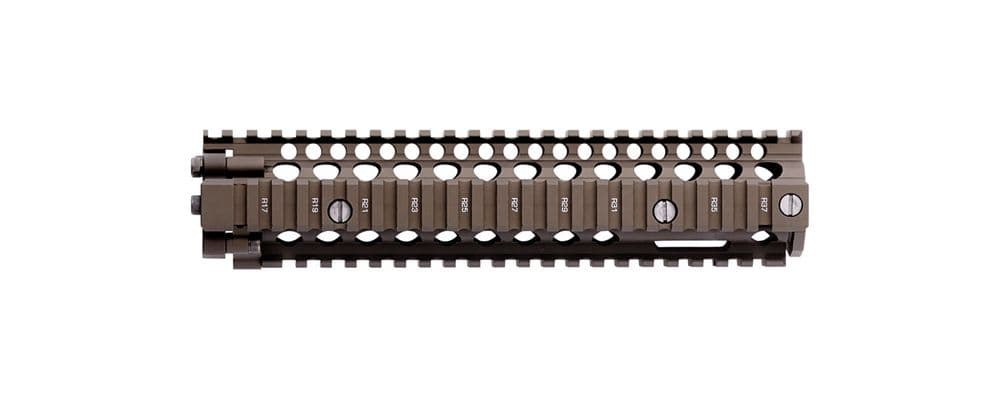
Free-Float Benefits
- Barrel harmonics unaffected by grip or accessories
- Consistent POI regardless of shooting position
- More rail space for accessories
- Better heat dissipation (often)
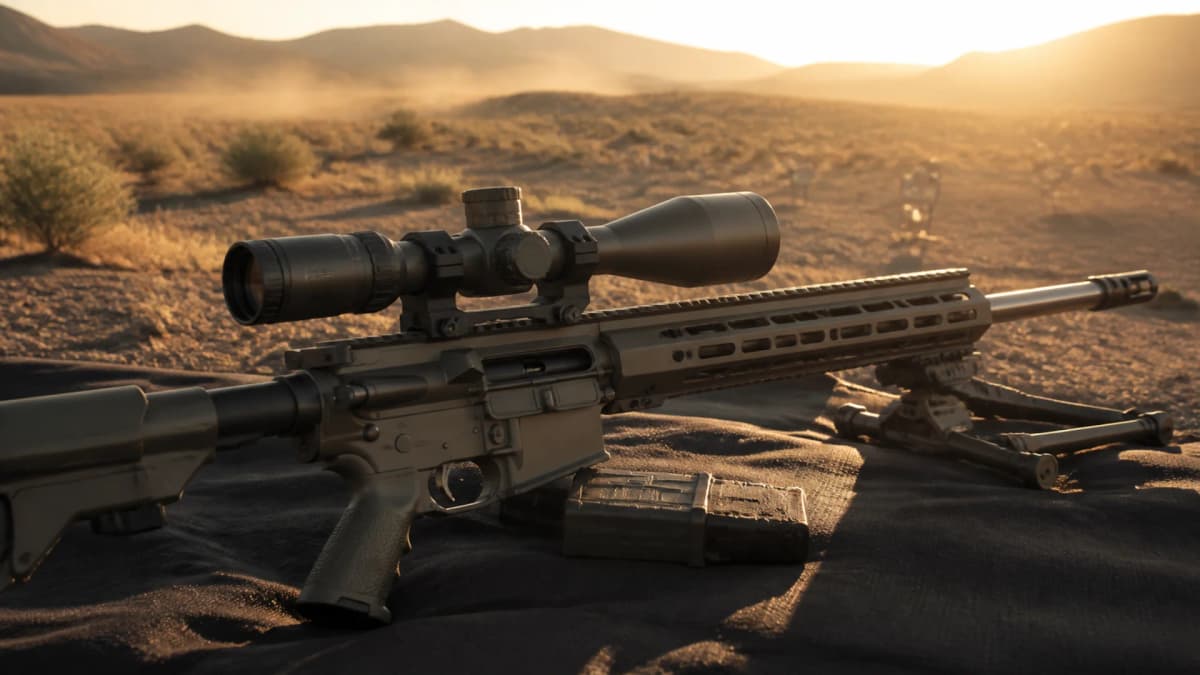
- Required for precision work

The handguard is where you interface with your rifle, mount your accessories, and manage barrel heat. Get this wrong and you'll fight your rifle every time you shoulder it. Get it right and the rifle disappears in your hands. Here's everything you need to know to make the smart choice.
Attachment System: M-LOK. KeyMod is dead—SOCOM testing killed it in 2017.
Mount Type: Free-float only. Drop-in handguards are for Fudds and poors.
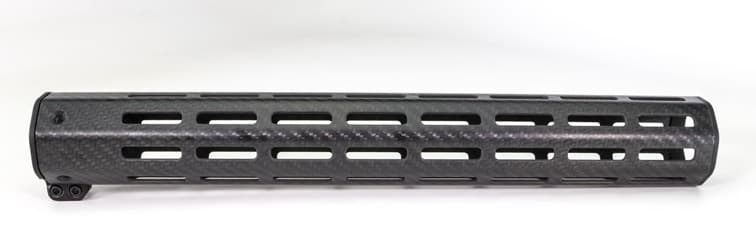
Material: Aluminum for most builds. Carbon fiber for weight weenies willing to accept tradeoffs.
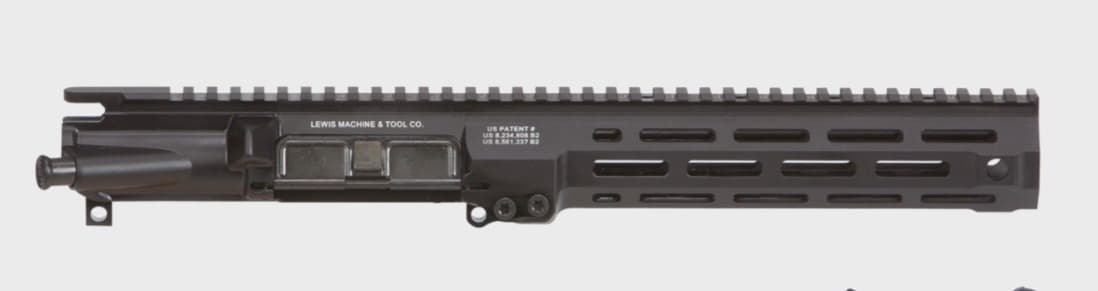
The Elite Choice: LMT Monolithic Upper—no separate handguard, maximum rigidity, quick-change barrels.
Drop-in handguards attach to both the barrel nut and the front sight base/gas block. This means pressure on the handguard transfers directly to the barrel, affecting harmonics and point of impact. Bipod? Shift. C-clamp grip? Shift. Sling tension? Shift.
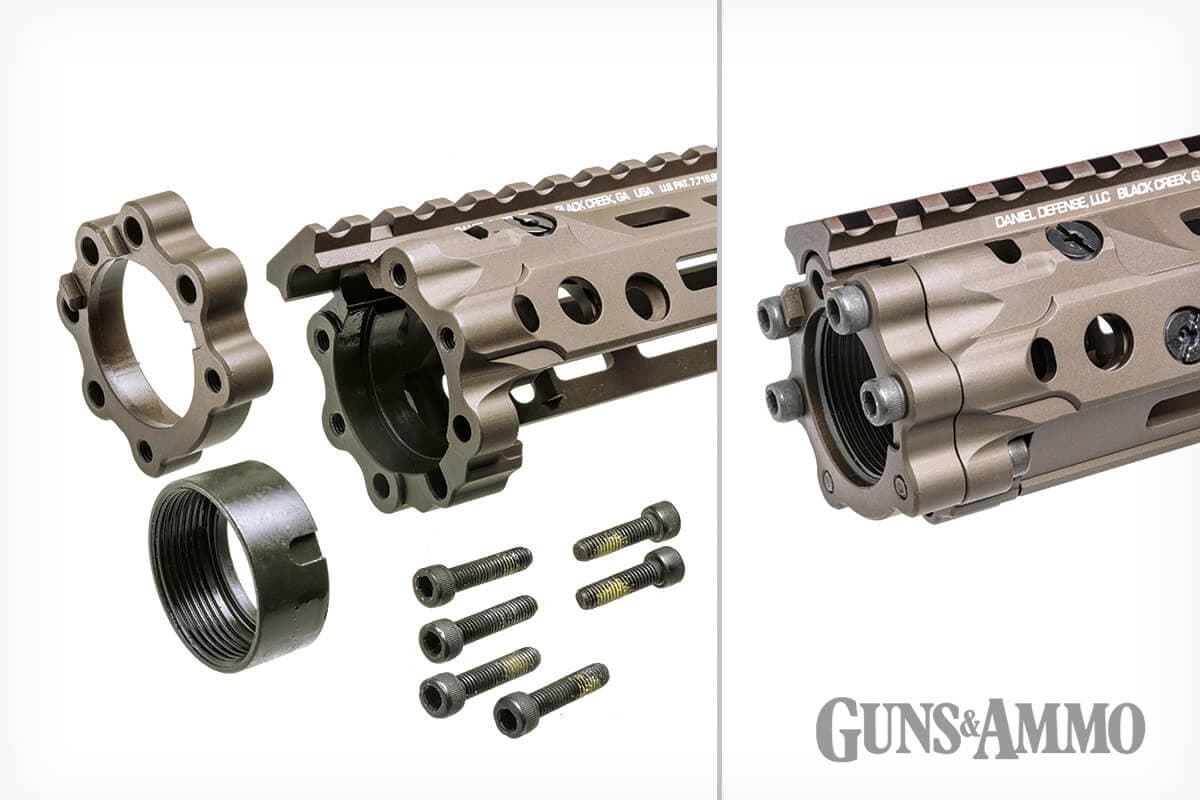
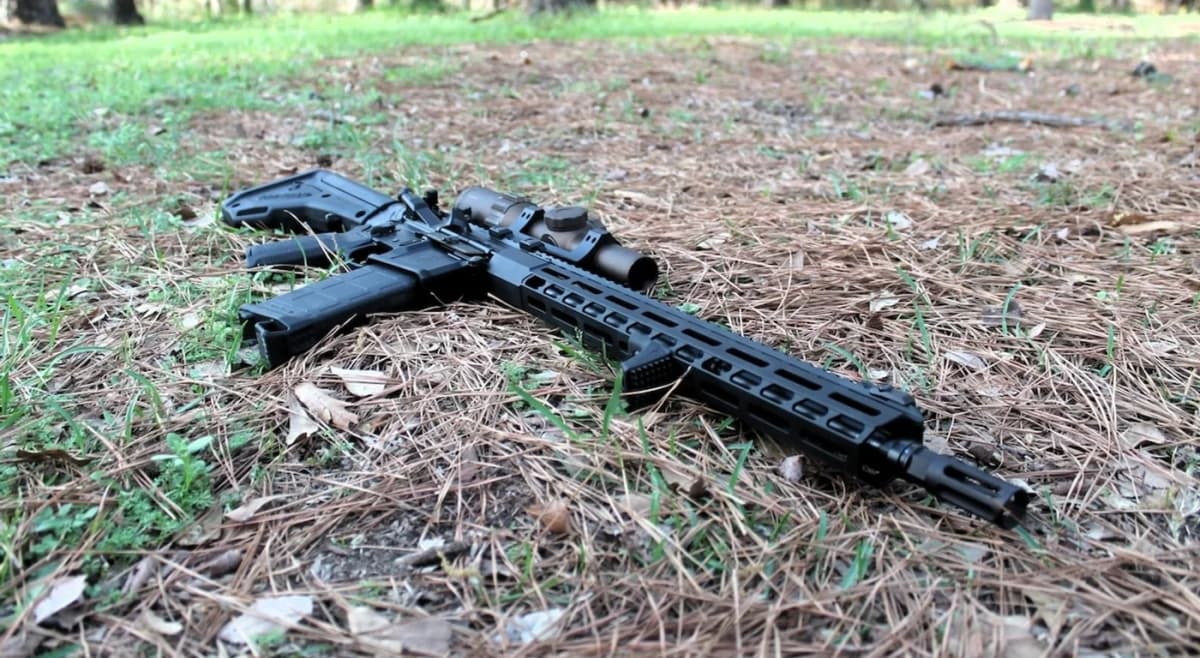
Modern free-float handguards attach only to the barrel nut on the receiver. The barrel floats freely inside, completely isolated from external pressure. This is why every serious manufacturer—BCM, DD, Geissele, LMT—only makes free-float rails.
In 2017, U.S. Special Operations Command (SOCOM) ran extensive testing comparing M-LOK and KeyMod. The results were decisive: M-LOK accessories maintained attachment 100% of the time in drop tests, while KeyMod failed 67% of the time. The defense industry voted with their contracts.
| System | Drop Retention | SOCOM Adoption | Status |
|---|---|---|---|
| M-LOK | 100% | 2017 SOCOM | Industry Standard |
| KeyMod | 33% | None | Declining/Legacy |
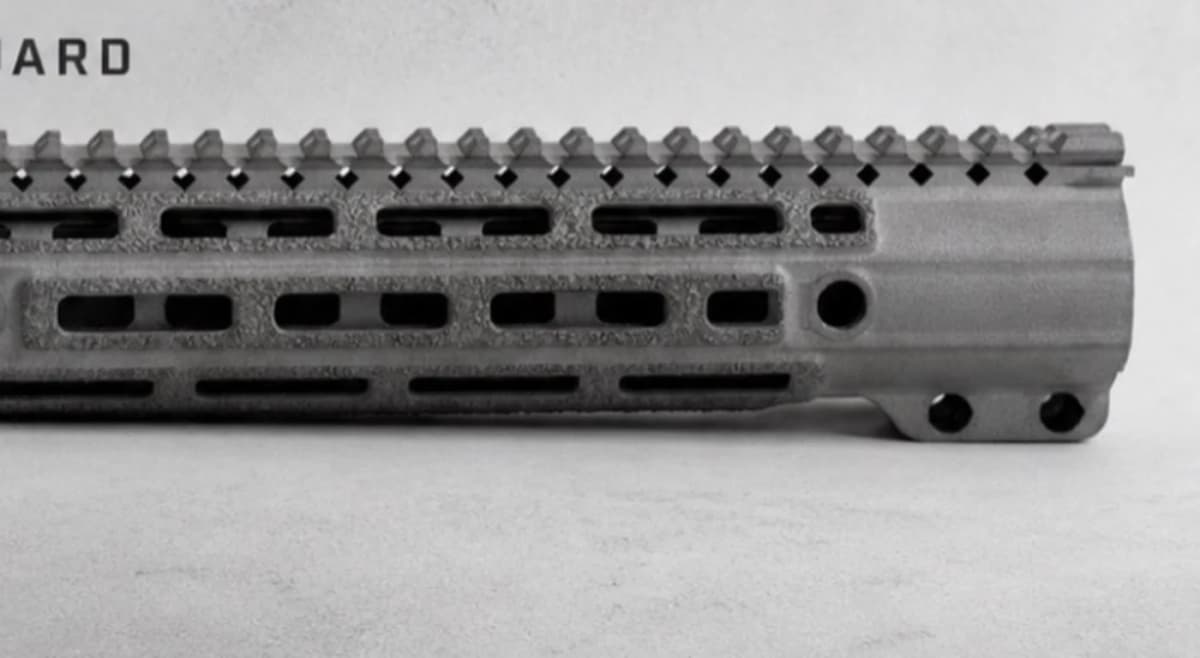
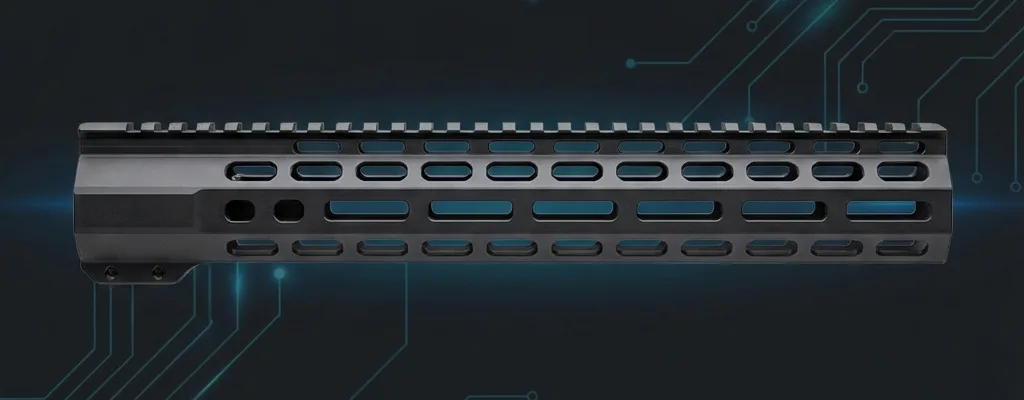
Rectangular slots with a T-nut system. The nut rotates 90° to lock, creating a strong mechanical connection. Free-licensed by Magpul, ensuring consistent specs across manufacturers. This is what you buy.
Keyhole-shaped slots. Open-source but failed real-world testing. Accessory market is shrinking. The Betamax of attachment systems. Only buy if you find an insane deal on older stock.
6061-T6 is the most common—adequate strength at lower cost. 7075-T6 is stronger and used in premium rails like the Geissele MK16. Both conduct heat efficiently (good for cooling, bad for your hands without gloves).
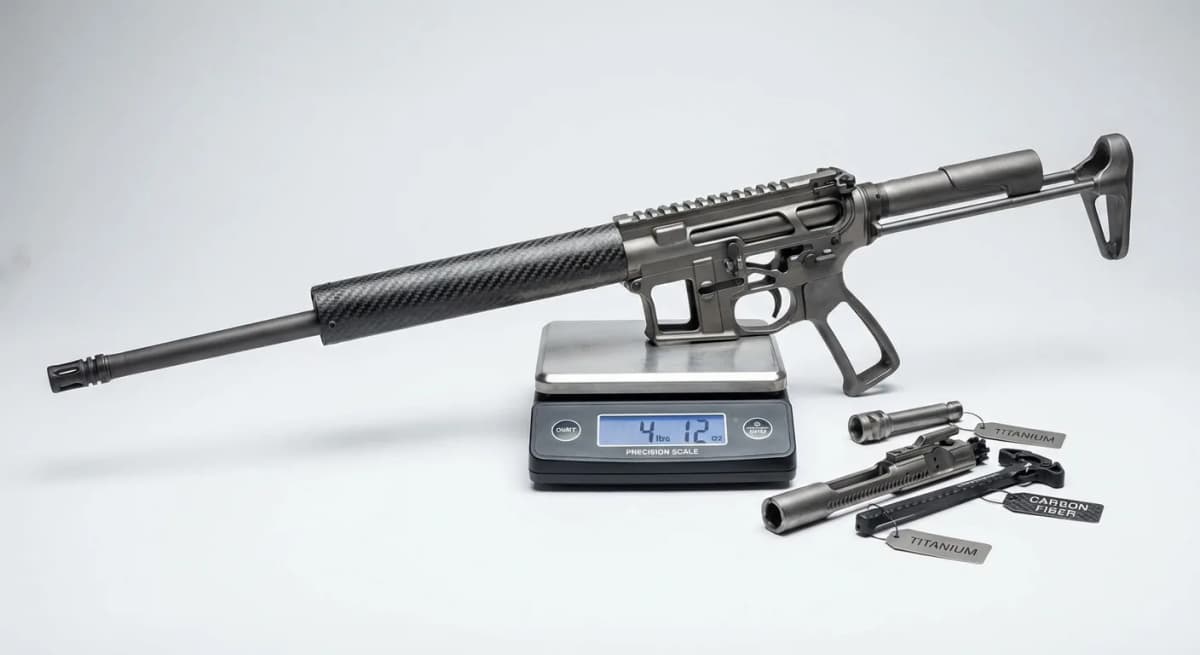
Exceptional strength-to-weight ratio. A 15" carbon fiber rail can weigh under 8 oz. Doesn't transfer heat like aluminum—stays comfortable during high-volume shooting. But less rigid and some concerns about impact durability.
| Handguard | Length | Weight (oz) | Material |
|---|---|---|---|
| Faxon Carbon Fiber 15 | 15" | 7.99 | Carbon Fiber |
| Midwest SLH 14 | 14" | 8.2 | Aluminum |
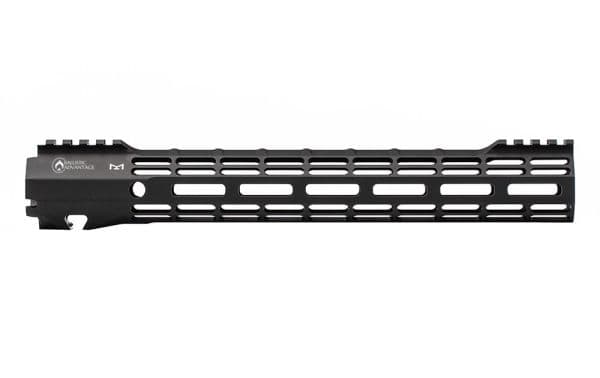
| Aero ATLAS S-ONE 15 | 15" | 9.2 | Aluminum |
| BCM MCMR-13 | 13" | 9.9 | Aluminum |
| SOLGW M76 Wedgelock 13.7 | 13.7" | 10.1 | Aluminum |
| Aero Enhanced 15 | 15" | 10.5 | Aluminum |
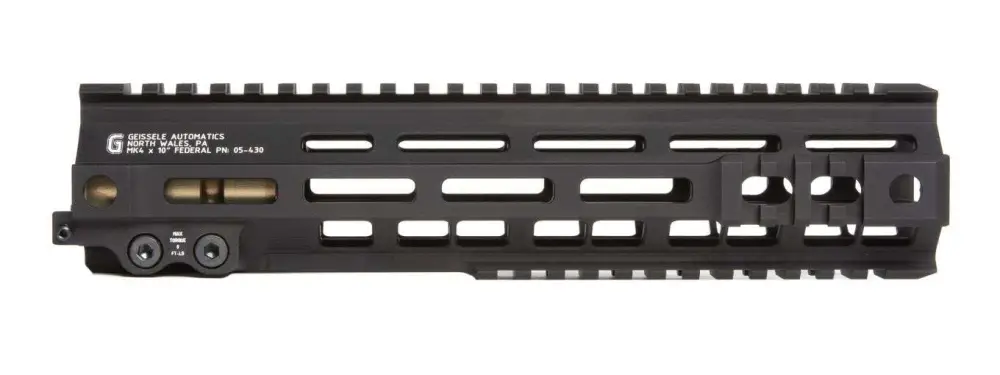
| Geissele MK4 Federal 10 | 10" | 10.8 | Aluminum |
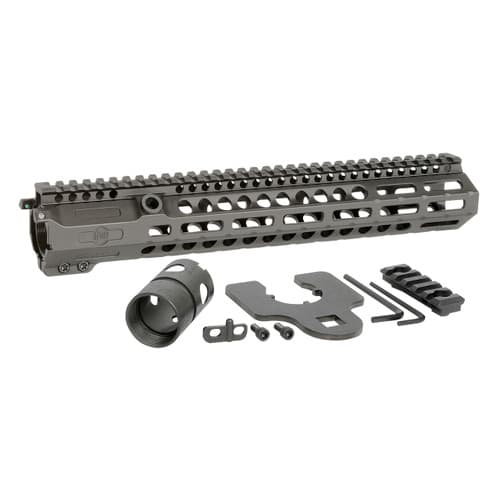
| Midwest Combat Rail 15 | 15" | 10.8 | Aluminum |
| Geissele MK16 13.5 | 13.5" | 11.2 | Aluminum |
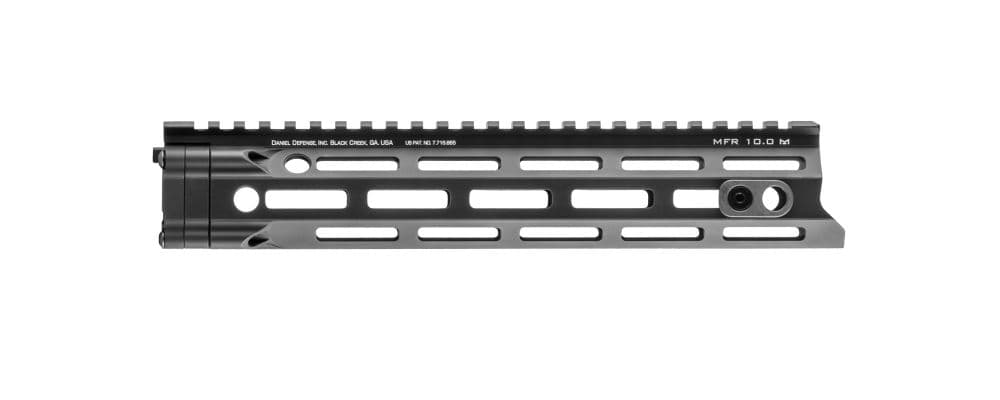
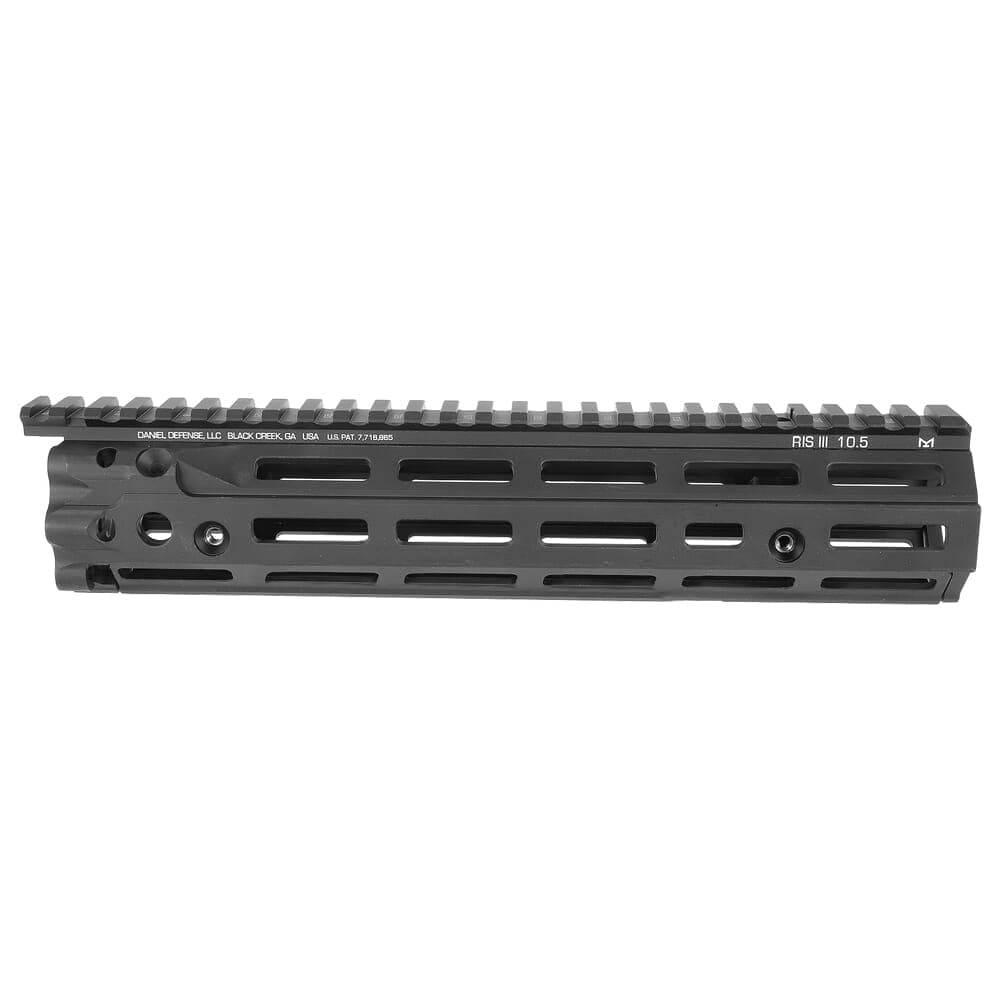
| Daniel Defense MFR XS 15 | 15" | 11.5 | Aluminum |
Your handguard length is dictated by barrel length and your intended use. Here's the general rule: the longer the handguard, the more rail space for accessories, but you need to ensure clearance for your muzzle device or suppressor.
9" - 10.5" handguard. Leave ~1" of barrel exposed minimum. Consider suppressor tucking if running a can.
13" - 13.7" handguard. Sweet spot for most builds. Enough space for everything without being unwieldy.
15" handguard typical. Extended rail space for bipods, lights pushed forward, and maximum accessory options.
LMT's Monolithic Rail Platform (MRP) eliminates the concept of a "handguard" entirely. The upper receiver and rail are machined from a single forging of 7075-T6 aluminum. There is no barrel nut interface to flex. There is no bridge gap for optics. Accessories mounted to the rail maintain zero even after barrel changes.
The quick-change barrel system lets you swap barrels—and even calibers—with two bolts and a T-30 Torx bit. Five minutes, no special tools, and the zero comes back. This is what professionals run on night vision builds where IR laser zero retention is critical.
Bridge gaps
Bolts for barrel swap
Zero retention
When rail rigidity, laser zero retention, and overall build quality matter most. These are the handguards used in professional and night vision builds.
The ultimate. The handguard and upper are machined from a single forging—no barrel nut, no flex, no POI shift. Quick-change barrels with two bolts. This is what professionals run on night vision builds.
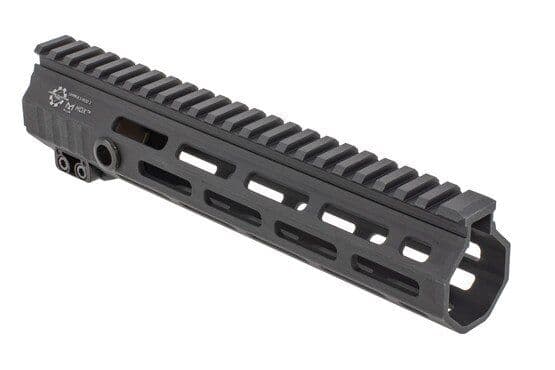
The DOD's choice. Extended barrel nut provides maximum rigidity for lasers and IR devices. Premium fit and finish, though heavier than competitors.
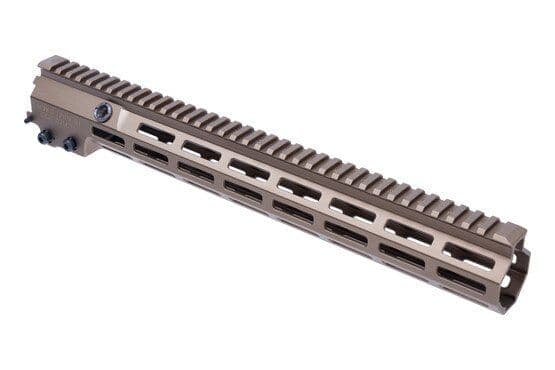
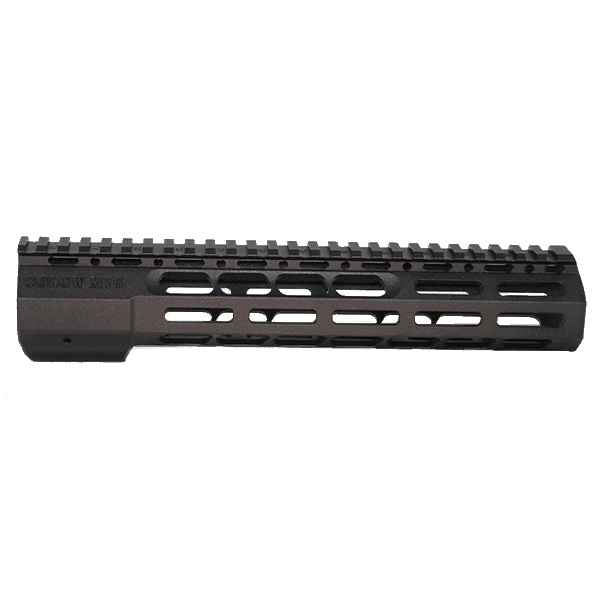
The Wedgelock mounting system is rock solid—a two-piece wedge distributes locking force evenly. Narrow cross-section for comfort, M-LOK everywhere. A serious contender at a fair price.
Purchasing through these links may generate a commission at no extra cost to you.
If you're not going full monolithic but want serious mounting rigidity, look at the Sons of Liberty Gun Works Wedgelock system. The two-piece wedge design distributes locking force evenly around the barrel nut—it's rock solid after install and stays that way.
The M76 has an anti-rotation pin that indexes with compatible uppers for perfect rail alignment. Combined with a slim cross-section that's comfortable for extended shooting, this is an underrated option that deserves more attention.
Excellent quality without the top-shelf price. These handguards work and they last.
The BCM MCMR nails the balance of weight, durability, and aesthetics. Steel barrel nut, anti-rotation lockup, M-LOK everywhere. The smart choice for most builds.
Daniel Defense's modular float rail. Sleek bolt-up system, integrated QD points, and 7-position M-LOK. Excellent if you're already in the DD ecosystem.
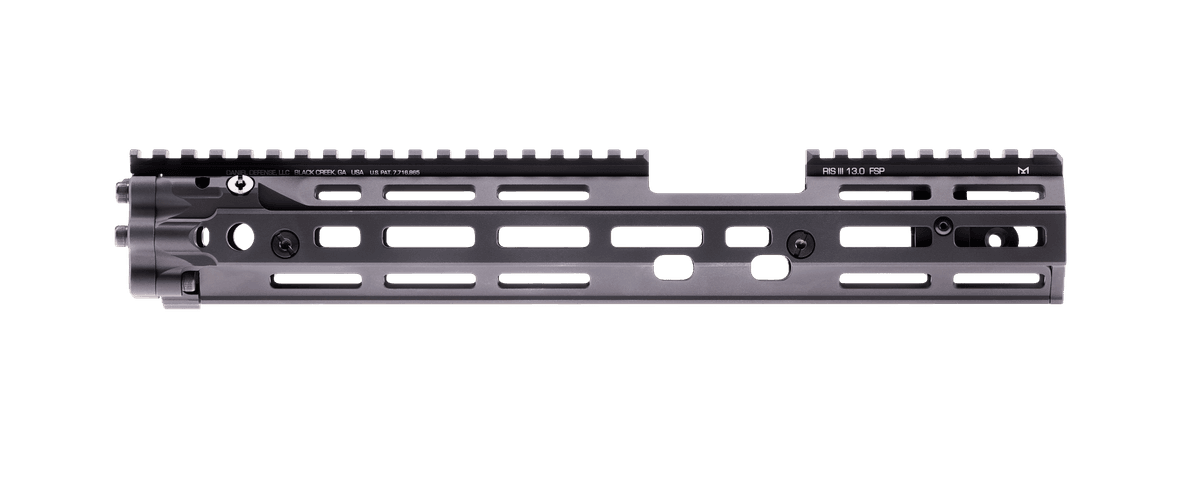
Unique hybrid: M-LOK sides with a short Picatinny section up front for lights. Trusted by federal agencies. Bombproof but heavier.
Not everyone can drop $300+ on a handguard, and that's fine. These rails won't win any Instagram clout, but they'll work reliably. Midwest Industries and Aero Precision both make legitimately good handguards at prices that won't hurt.
If you're buying an Aero Enhanced Upper anyway, their Enhanced Handguard mounts directly to it—no barrel nut required. The handguard slides over the integrated BAR barrel nut and locks in place. It's a slick system that gives you a clean receiver-to-rail transition on a budget.
Important: The Enhanced Handguard ONLY works with Aero Enhanced Uppers. Standard uppers won't work. If you're on a standard upper, look at their ATLAS S-ONE instead.
Great handguards that won't break the bank. These are legitimate options for builders watching their budget without sacrificing core reliability.
Midwest Industries makes solid rails at fair prices. The Combat Rail is their flagship M-LOK option—good lockup, decent weight, and MI's reputation for QC at this price point is hard to beat.
Aero's slim-line M-LOK handguard. Lightweight, comfortable, and works with standard barrel nuts. A solid choice for Aero builds or anyone wanting more rail for less money.
Aero's Enhanced Handguard mounts directly to their Enhanced Upper—no barrel nut needed. The handguard indexes off the upper's integrated BAR barrel nut. Slick system if you're already buying an Aero Enhanced Upper.
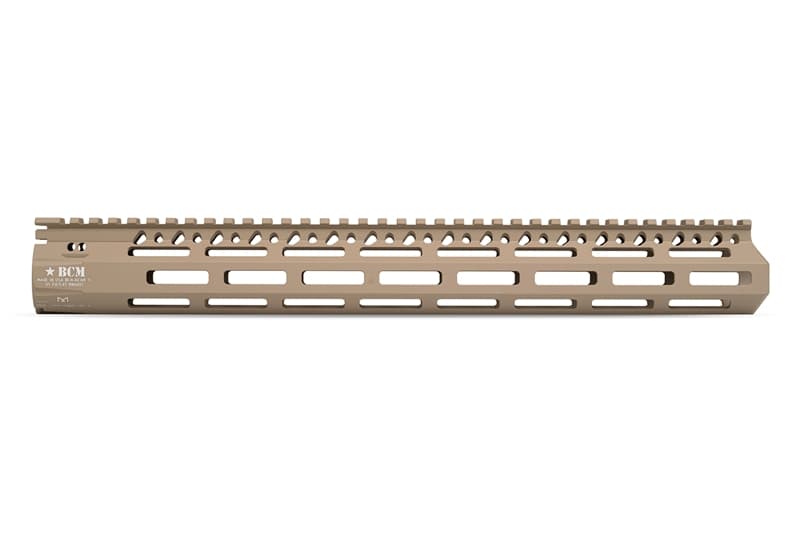
The MCMR (M-LOK Compatible Modular Rail) is BCM's flagship and arguably the best value in quality handguards. Steel barrel nut with a robust anti-rotation system. Lightweight, great heat mitigation, and that BCM fit and finish. Ships with M-LOK QD and Picatinny mounts included.
The Modular Float Rail uses DD's patented bolt-up system with anti-rotation tabs. Seven-position M-LOK, continuous top rail, integrated QD points. Premium quality and excellent suppressor compatibility. If you're building a DD rifle, this matches the aesthetic perfectly.
Geissele rails are built to survive abuse. The extended barrel nut provides maximum rigidity—critical for IR laser zero retention. The MK16 won the USSOCOM contract. The MK4 Federal (with short front Picatinny) is FBI HRT's choice. Premium price, premium performance.
For builds where every ounce matters. Carbon fiber offers the best weight savings but with tradeoffs.
A 15" handguard under 8 ounces. Carbon fiber doesn't transfer heat like aluminum. Perfect for lightweight recce builds.
Ultra-slim aluminum handguard with a comfortable grip profile. Great for shooters who prefer a narrow handguard.
Essential tools and accessories for proper handguard installation and use.
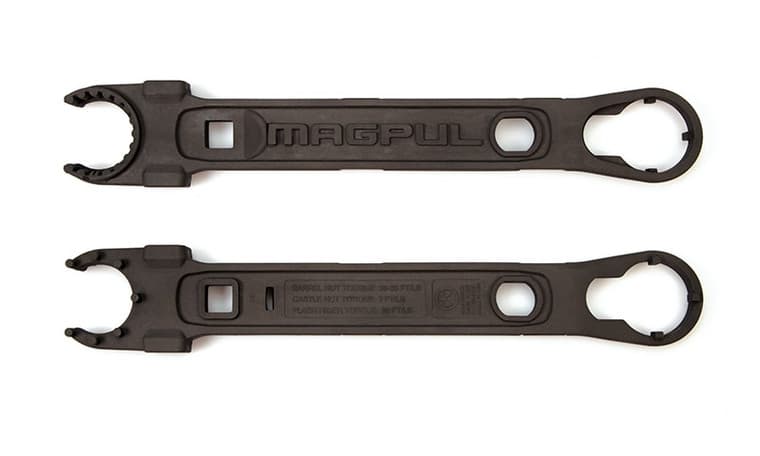
Multi-purpose wrench for barrel nuts, castle nuts, and muzzle devices. Essential for handguard installation.
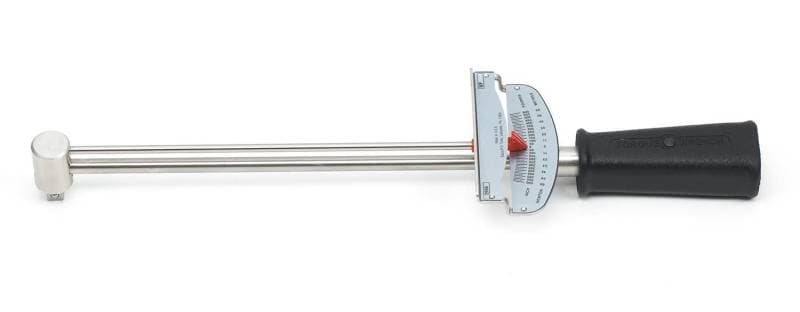
Proper torque on barrel nuts and mounting screws prevents both loosening and stripped hardware.
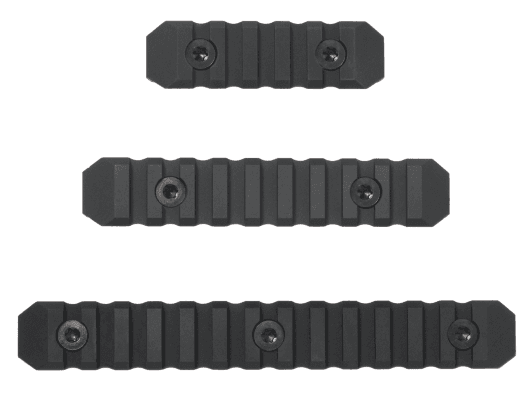
Add Picatinny rail sections where you need them for lights, lasers, or bipods without the weight of a quad rail.
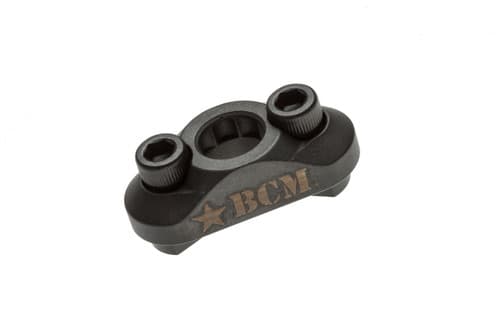
Low-profile QD point that mounts anywhere on your handguard. Essential for sling setup.
Before diving into handguard selection, make sure you understand:
Ready to continue? Here's the recommended next guide:
Set up AR-15 suppressors correctly. Learn host preparation, backpressure management, POI shift tracking, mount selection, and overgassing fixes for reliable suppressed operation.
Or explore a related topic:
AR-15 Weight Management->Continue exploring with these related resources
Direct Impingement vs. Piston AR-15s: A no-nonsense comparison covering weight balance, OTB capability, flow-through suppressors, and reliability records of SIG, LWRC, and LMT.
Choose the right AR-15 muzzle device: compare flash hiders, compensators, muzzle brakes, and hybrid designs with mission-driven selection matrices and performance metrics.
Trim AR-15 weight where it matters. Choose lighter barrels, rails, and stocks (including KP-15 polymer lowers), then set up optics, lasers, lights, and suppressors to avoid front-heaviness.
Was this helpful?
Quick feedback helps us prioritize guide updates.
Feedback is anonymous. Comments help us decide what to update next.