Long Range Shooting for Beginners: Skills, Ballistics & Gear
Long range shooting for beginners comes down to three things: a rifle system that can hold one MOA, verified data on how your bullet drops, and the skill to call wind. The rifle is the easy part. How to start long range shooting is mostly a question of learning the skills in the right order and buying the gear stack once instead of three times. This guide covers what long range actually means, the fundamentals, MOA vs MIL, wind reading, and the exact scopes, rangefinders, bipods, and support gear that get a new shooter to 800 yards without wasted money.
Key Takeaways
- →Long range starts around 300 yards and runs past 1,000; beginners should build skills at 300 to 600 before stretching further.
- →Pick MIL over MOA unless you already think in inches; PRS and most modern instruction run milliradians.
- →The scope is the system: a first focal plane optic with exposed turrets and a zero stop, like the Arken EP-5 at $499.98, matters more than another rifle upgrade.
- →Wind is the limiting skill. Drop is solved math; drift is a judgment call, and a Kestrel 5700 Elite ($769) turns conditions into a firing solution.
- →6.5 Creedmoor is the default cartridge for a first precision rifle; .308 Win trades trajectory for cheaper ammo, and 6mm ARC covers the AR-15 platform.
Long Range Shooting for Beginners: Where It Starts
Long range shooting starts around 300 yards, where bullet drop and wind drift become large enough that you must correct for them, and runs out past 1,000 yards, where even small errors in your data turn into misses. Inside 300 yards a centerfire rifle zeroed at 100 shoots flat enough to hold center mass; past 300, a 6.5 Creedmoor match load has already dropped roughly a foot and a 10 mph crosswind moves it several inches. That is the threshold where the discipline changes from marksmanship to applied ballistics.
- Learn fundamentals
- 300-600ydDrop and wind are real but forgiving
- Graduate to wind
- 600-1,000ydWind calls decide hits
- First-season goal
- 800ydFirst-round steel hits are realistic
Cartridge choice sets how forgiving the learning curve is. 6.5 Creedmoor is the default first choice: flat trajectory, low recoil so you can spot your own impacts, and factory match ammo on every shelf. .308 Winchester is the budget path, with the cheapest training ammo and the widest rifle selection, but it drops and drifts noticeably more past 800 yards and most match loads go transonic around 900 to 1,000 yards. 6mm ARC brings long range ballistics to an AR-15-sized platform with the lightest recoil of the three.
- 6.5 CreedmoorBest ForThe default first precision rifle; best wind performance per dollarRecoilMildSupersonic To1,200+ yd
- .308 WinBest ForCheapest ammo, largest rifle selection, hunting crossoverRecoilModerateSupersonic To900-1,000 yd
- 6mm ARCBest ForAR-15 platform long range with the lightest recoilRecoilLightSupersonic To1,000+ yd
| Cartridge | Best For | Recoil | Supersonic To |
|---|---|---|---|
| 6.5 Creedmoor | The default first precision rifle; best wind performance per dollar | Mild | 1,200+ yd |
| .308 Win | Cheapest ammo, largest rifle selection, hunting crossover | Moderate | 900-1,000 yd |
| 6mm ARC | AR-15 platform long range with the lightest recoil | Light | 1,000+ yd |
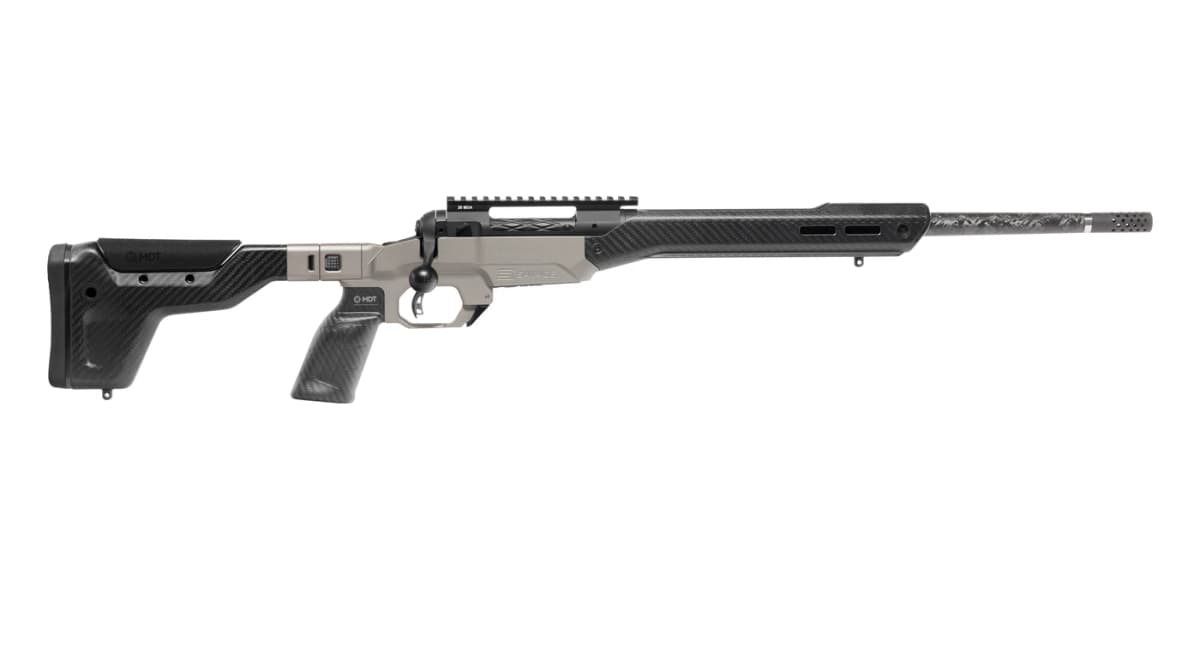
The rifle itself is covered in our best precision rifle under $2,000 guide, which ranks the factory bolt guns worth learning on. This guide covers everything that goes on and around that rifle. To see drop, transonic range and BDC alignment for your load before you buy glass, follow the range simulator walkthrough.
See 300, 500, and 1,000 yards through a scope
Keep the detail board full size while distance and magnification change around it.
Letters are 36, 24, 18, 12 and 8 cm tall. Compare how much detail fits in the view as you zoom.
Each optic at its own highest setting: compare the detail you can see.
First focal plane · product specification
17.4 ft across the view
Published field of view
Reticle drawn from the subtensions on this sheet; holds and the BDC table come from it.
How much fits in the view?
Top-down · fits the selected distanceAlong the range and across it use the same scale. The short center mark shows the object’s width.
A · 18× · 17.4 ft wide
Published field of view
B · 25× · 14.7 ft wide
Published field of view
A covers 18% more width at this distance. The narrower view makes the object fill more of an equal-size lens window.
Reticle drawn from the manufacturer's published subtensions. Housing, glass, brightness and eyebox are simulated.
Open the full range simulatorCore Skills Before You Buy More Gear
The first skill is a verified zero, because every correction you ever dial is measured from it. Zero at 100 yards, confirm with five-shot groups rather than a single hole, and record the exact load you zeroed with; a different bullet weight is a different zero. Our optic zeroing guide walks the full procedure.
Behind the zero sit the fundamentals that decide whether the rifle shoots to its potential: natural point of aim, so the crosshair rests on target without muscle input; a straight-back trigger press that breaks without disturbing the sight picture; breathing, firing at the natural respiratory pause instead of holding air; and follow-through, staying in the scope after the shot to spot your own impact or miss. Spotting your own trace and splash is the skill that makes every later wind lesson stick, and it is the reason low-recoil cartridges teach faster.
None of these require distance. A beginner who can shoot a one-inch five-shot group at 100 yards on demand has the fundamentals to hit at 600; a beginner who cannot will chase gear instead of the actual problem.
MOA vs MIL and Ballistics Basics
Pick MIL unless you already think in inches. Neither system is more precise in practice; both are angular units that scale with distance. MIL wins for a beginner because PRS matches, modern instruction, and most shooting partners run milliradians, so every correction you hear on the line translates directly to your turrets. Whichever you choose, the reticle and the turrets must speak the same language; a MIL reticle over MOA turrets means your holds and your dials never agree.
Angular Units at 100 Yards
MOA
MIL
- One unit at 100 yd
- 1.047 in
- 3.6 in
- Typical click
- 1/4 MOA (0.26 in)
- 0.1 MIL (0.36 in)
- Mental math
- Inches per 100 yd
- Base-10 decimals
- Community
- Hunting, benchrest
- PRS, tactical training (advantage)
The other half of ballistics basics is DOPE, Data On Previous Engagements: the logged record of what your rifle and load actually did at each distance. A ballistic solver predicts your drop from muzzle velocity, bullet, and atmospherics; DOPE is the truth you confirm on steel and paper. Build it in one session: zero at 100, then shoot 200, 300, 400, and record the real correction that centered each target. Gravity makes drop predictable; the atmosphere makes it drift day to day, which is why density altitude matters once you shoot far. The ballistics guide covers the drop and drift math with a live calculator.
Reading Wind: The Skill That Decides Hits
Wind is the skill that separates shooters who hit at 800 yards from shooters who own gear that could. Drop is solved by math and confirmed by DOPE; wind changes between the trigger press and the impact, and no solver can read it for you downrange. Start with direction: a full-value wind blows at 90 degrees to the bullet's path and pushes it hardest, a half-value wind at 45 degrees pushes roughly half as much, and a headwind or tailwind barely moves it at all.
Then learn the field indicators. Mirage, the shimmer you see through the scope at high magnification, leans in the direction the air is moving and lies flat in winds much past 10 mph. Grass, dust, and the behavior of vegetation at the target give the downrange picture your position cannot. The discipline of calling a number before the shot, firing, and grading the call against the splash is how wind reading actually gets built.
A weather meter closes the loop. It measures the wind at your position, plus the temperature, pressure, and density altitude that shift your drop between seasons and elevations. The Kestrel 5700 Elite is the standard because it does not stop at measurement: the onboard Applied Ballistics Elite solver takes your rifle profile and returns the actual elevation and windage correction to dial.
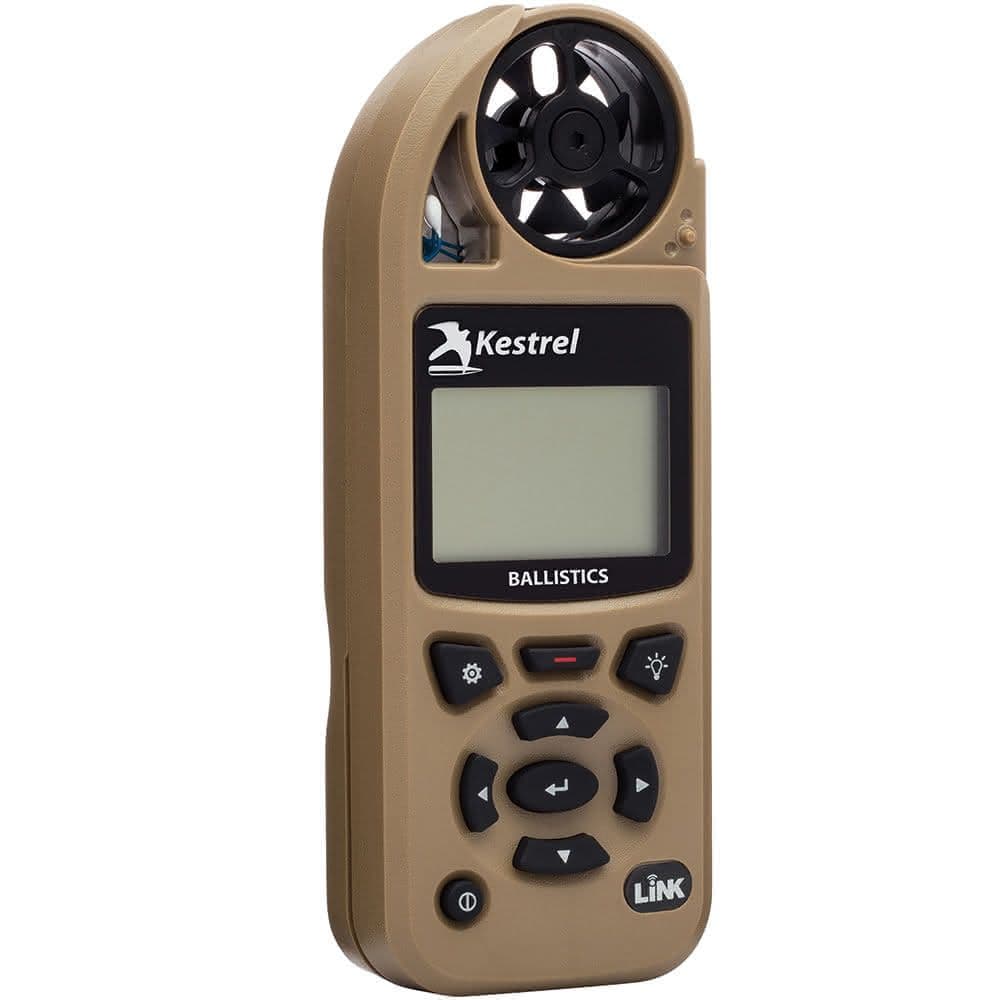
Kestrel 5700 Elite Weather Meter (Applied Ballistics + LiNK)
The wind and atmospherics meter that solves the shot
Handheld weather meter with the full Applied Ballistics Elite solver and Bluetooth LiNK, measuring wind, density altitude, and atmospherics to build a firing solution at the firing line.
- +Full Applied Ballistics Elite corrections, not a stripped G1/G7 solver
- +One device reads the environment and returns a firing solution
- +Rugged, waterproof, and runs on a common AA battery
- −Premium price over the non-Elite 5700 Ballistics
- −Profile and load setup has a real learning curve
- −Wind-direction reading is more accurate with the optional vane mount
Affiliate links (?)
What Gear Do You Need for Long Range Shooting?
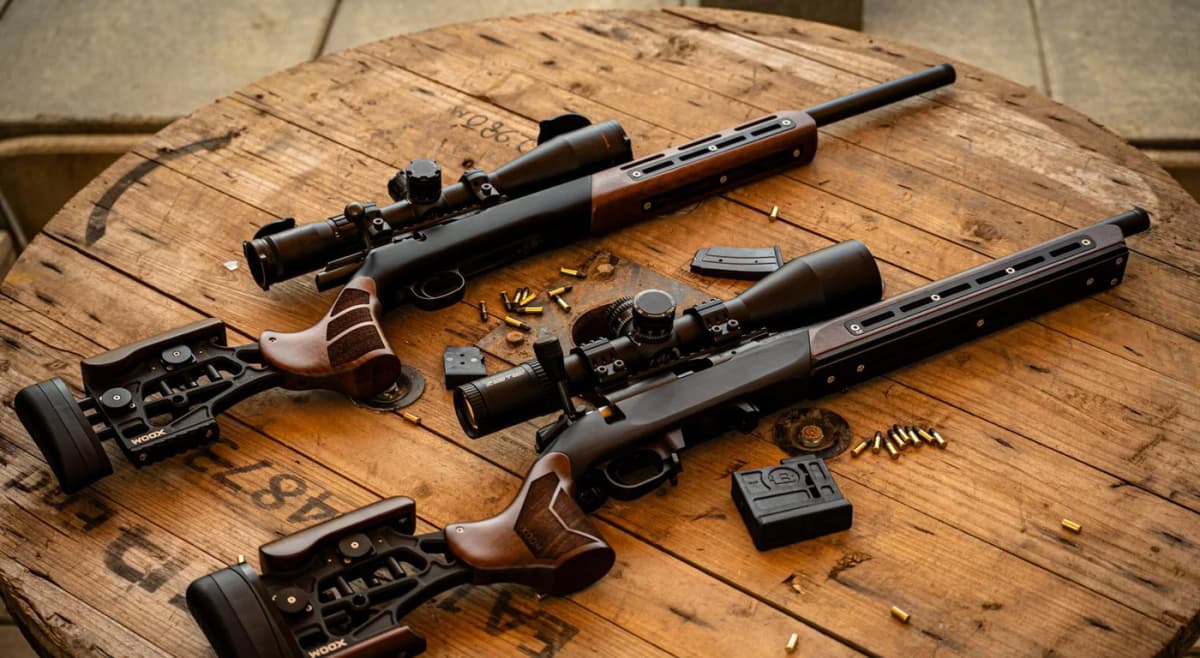
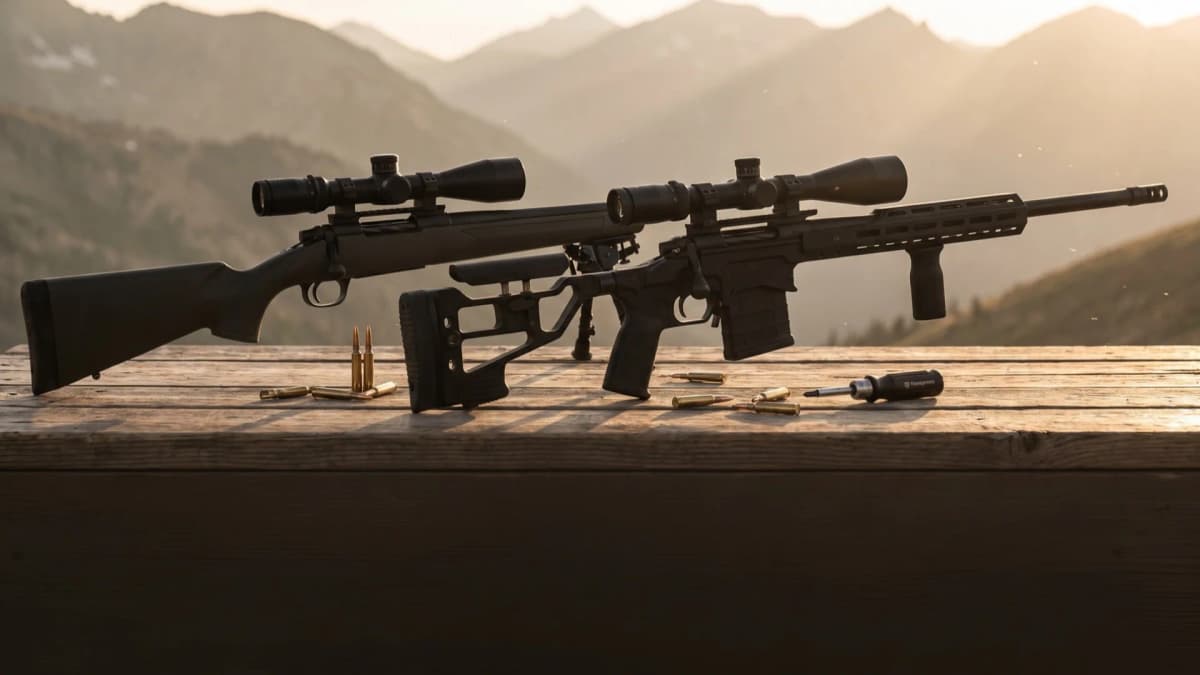
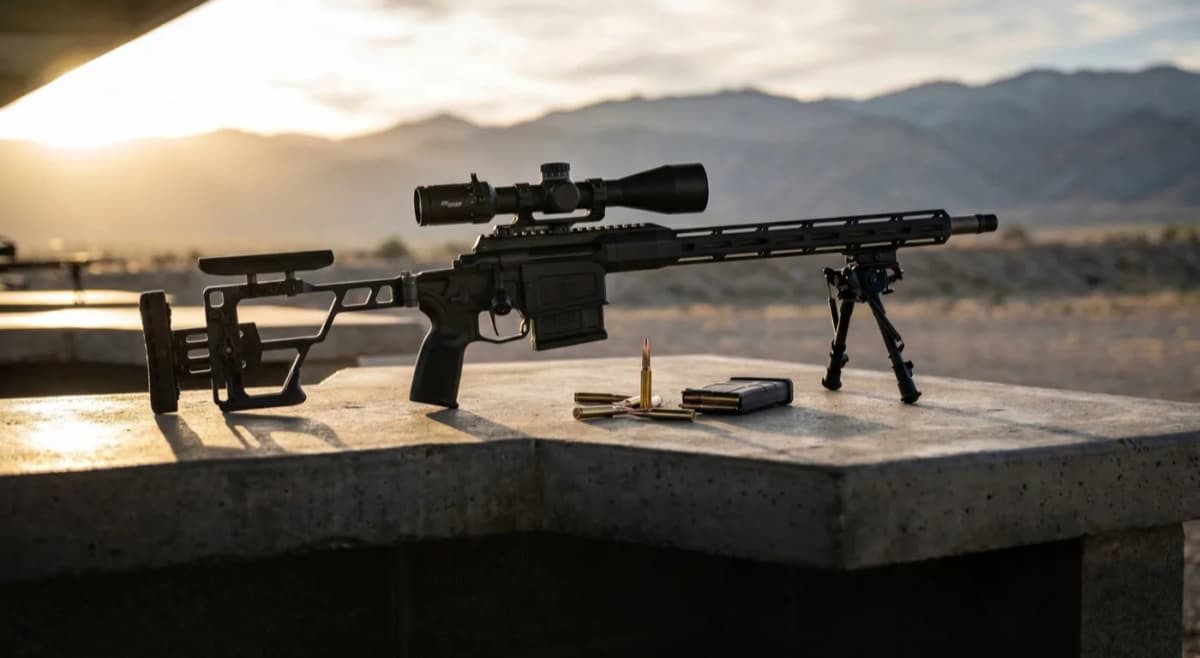
The starter stack is a precision rifle, an FFP scope with exposed turrets, rings, a bipod, a rear bag, a rangefinder, and a ballistic solver, with a wind meter as the first upgrade once you shoot past 600 yards. Buy it as a system: the classic beginner mistake is spending the whole budget on the rifle and strangling it with a scope that will not track. Plan the allocation before the first purchase.
- Rifle$769 - $1,849What It DoesFactory bolt gun in 6.5 Creedmoor or .308; see the precision rifle guide
- FFP scope$395.49 - $899.95What It DoesFirst focal plane, exposed elevation turret, zero stop
- Rings$149What It DoesPrecision-machined rings; the wrong ones ruin a good scope
- Bipod$108.75 - $229.95What It DoesFront support for prone and bench work
- Rear bag$110.20What It DoesStabilizes the rear of the stock; the cheapest hit-rate upgrade
- Rangefinder$249.95 - $399.99What It DoesExact distance to target; guessing range past 400 yards means missing
- Wind meter$769What It DoesWind, atmospherics, and an onboard ballistic solver
| Gear | Budget | What It Does |
|---|---|---|
| Rifle | $769 - $1,849 | Factory bolt gun in 6.5 Creedmoor or .308; see the precision rifle guide |
| FFP scope | $395.49 - $899.95 | First focal plane, exposed elevation turret, zero stop |
| Rings | $149 | Precision-machined rings; the wrong ones ruin a good scope |
| Bipod | $108.75 - $229.95 | Front support for prone and bench work |
| Rear bag | $110.20 | Stabilizes the rear of the stock; the cheapest hit-rate upgrade |
| Rangefinder | $249.95 - $399.99 | Exact distance to target; guessing range past 400 yards means missing |
| Wind meter | $769 | Wind, atmospherics, and an onboard ballistic solver |
Use the rifle builder to assemble the rifle, optic, and bipod together and watch the system total, instead of discovering the budget hole after the rifle ships.
Best First FFP Precision Scopes
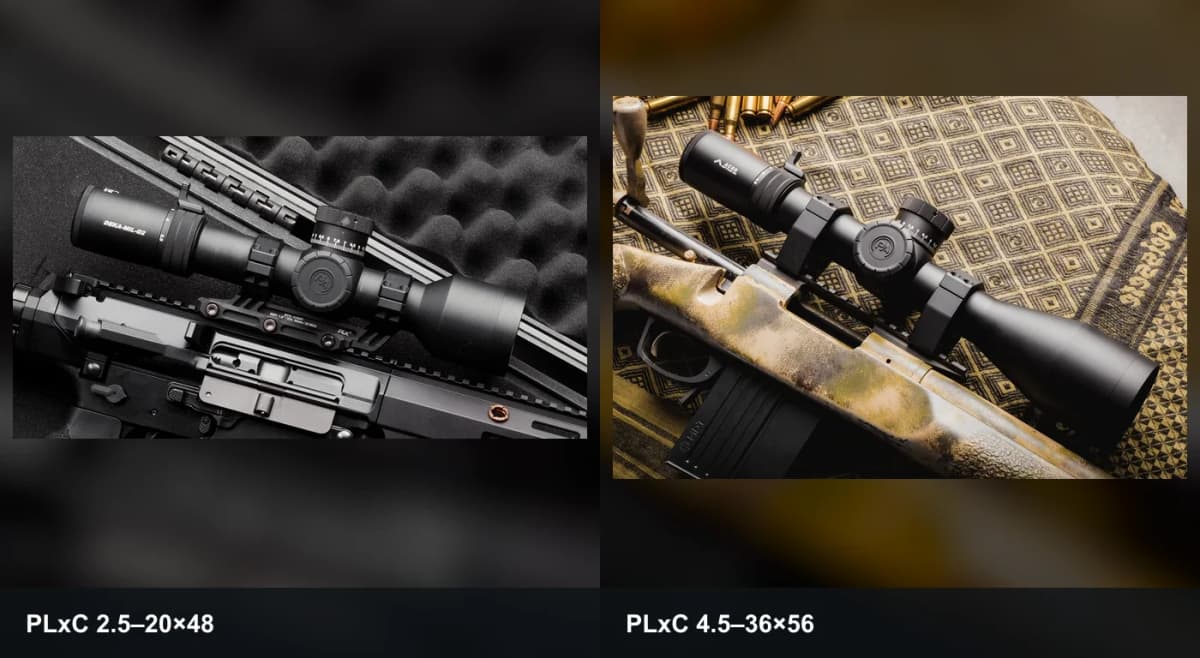
The best first precision scope is the Arken EP-5 5-25x56 at $499.98: a 34mm tube, 32 MIL of elevation, and a real zero stop at a price that leaves budget for ammo. Every scope here is first focal plane, so the reticle measures correctly at any magnification, and every one has exposed, resettable elevation turrets, the two features a long range scope cannot skip. The rankings weight tracking reliability and feature set over glass, because a beginner misses from bad data, not from image quality. For the full deep-dive from $400 to $3,000, see the best long range rifle scope guide.
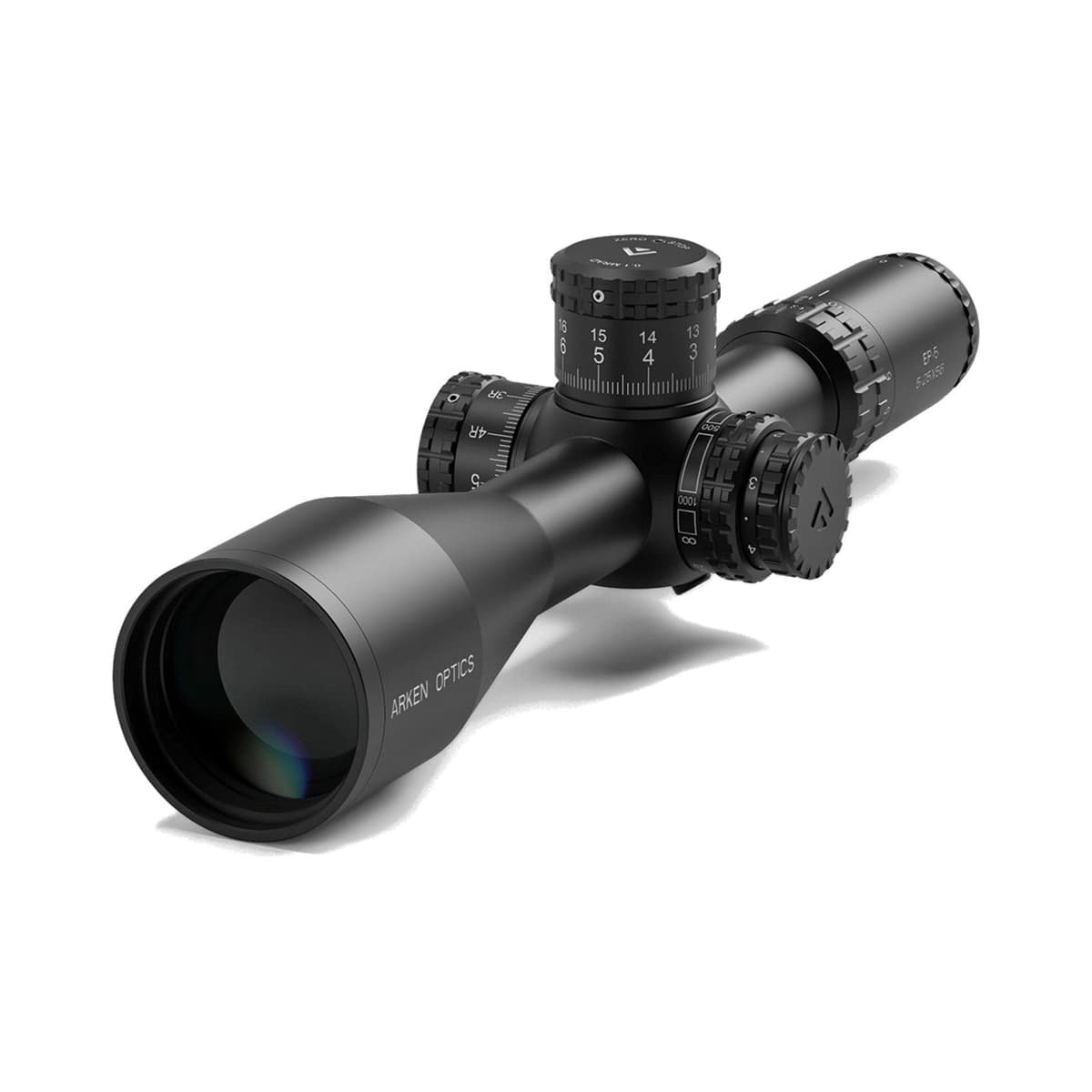
Arken EP-5 5-25x56 FFP
Best value first precision scope
- +Best feature-per-dollar in the sub-$600 precision scope class
- +FFP VPR reticle accurate at any magnification
- +32 MIL elevation handles .308 / 6.5 Creedmoor well past 1,000 yards
- −Heavy at 39.2 oz
- −Glass clarity and turret feel trail premium scopes over $1,500
- −QC consistency varies between units more than premium brands
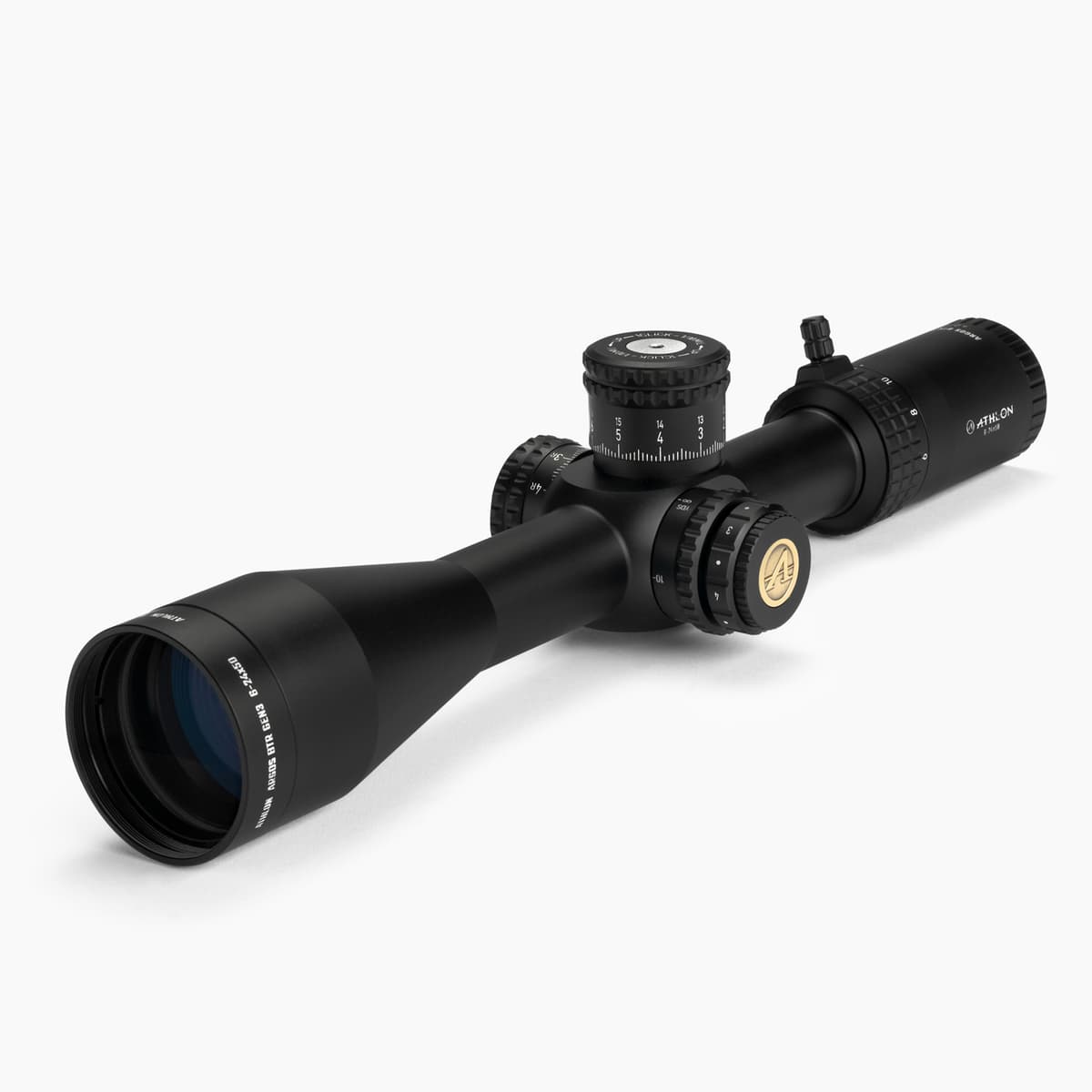
Athlon Argos BTR Gen3 6-24x50 FFP
Cheapest legit entry FFP scope
- +Established entry FFP scope with strong dealer support
- +Lifetime transferable warranty, best in the price class
- +Precision zero stop works as advertised
- −30mm tube limits elevation travel compared to 34mm budget peers
- −Glass clarity at 24x trails the Arken EP-5
- −Heavy at 30.3 oz for the magnification range
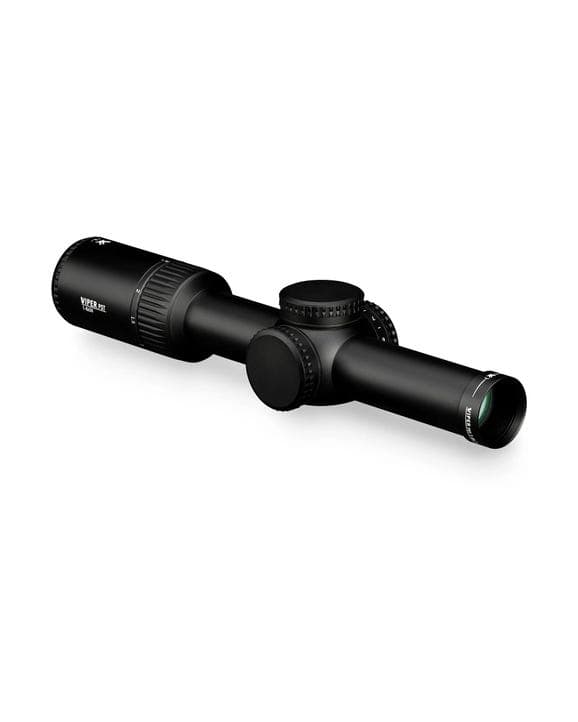
Vortex Viper PST Gen II 5-25x50
Best proven mid-tier with no-fault warranty
- +Exceptional optical clarity up to 800 yards with minimal edge distortion
- +First focal plane EBR-7C reticle accurate at any magnification
- +Zero-stop elevation turret ensures reliable return to zero
- −Heavy at 31.2 oz and needs a sturdy mount
- −Clarity drops slightly beyond 1,000 yards versus premium options
- −FFP reticle appears small at 5x low magnification
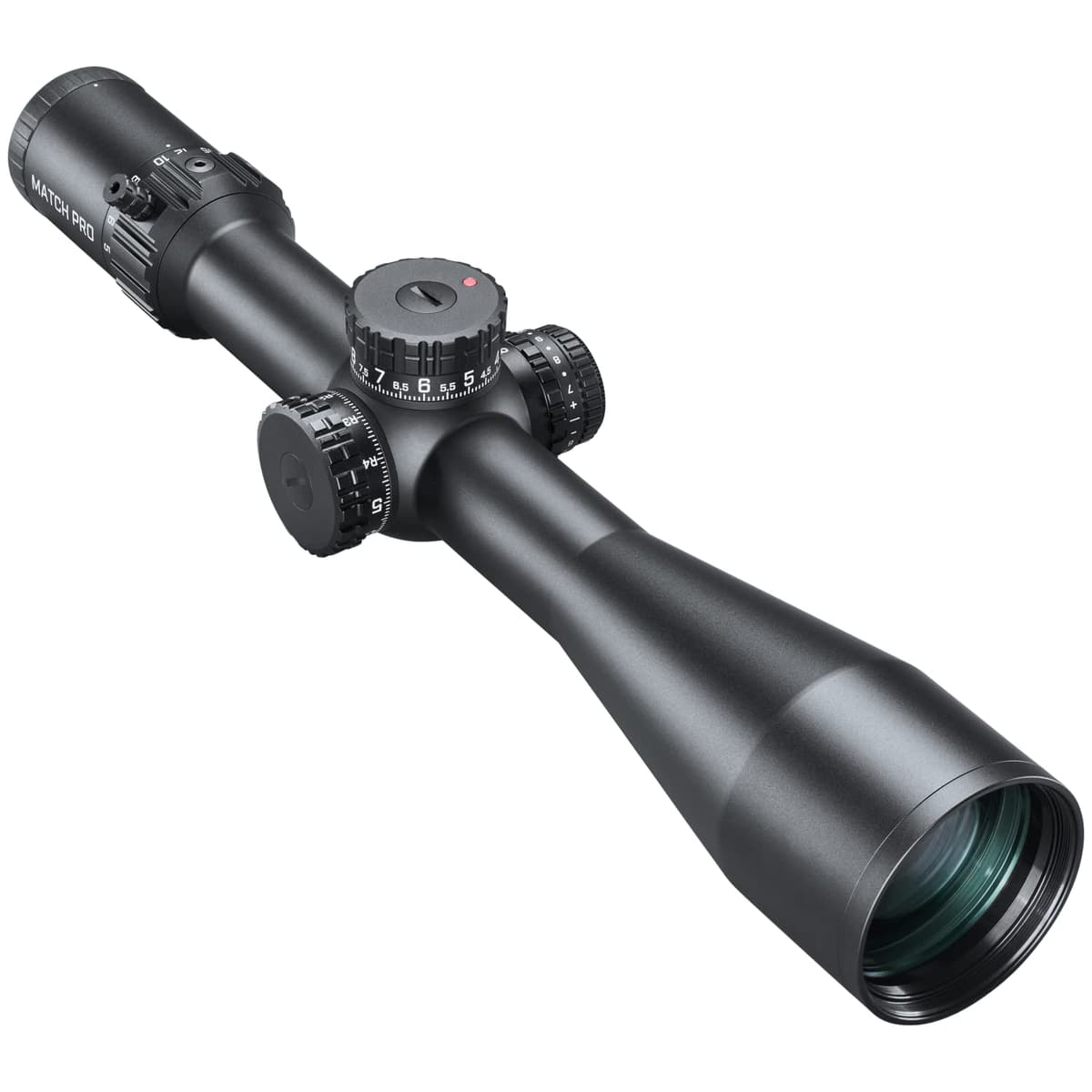
Bushnell Match Pro ED 5-30x56 FFP
Best glass and locking turrets under $1,000
- +Best feature set in the sub-$1,000 FFP precision scope class
- +Locking elevation and windage turrets on a 34mm tube at this price
- +100 MOA elevation handles long-range cartridges well past 1,000 yards
- −32 oz is heavy for a 5-30x scope
- −ED Prime glass trails Razor HD or Mark 5HD tier optics
- −Bushnell warranty is shorter than Vortex VIP
Affiliate links - purchases support this site at no extra cost to you. (?)
Rings and Mounting
Match the ring diameter to the scope tube, 34mm for the Arken EP-5 and Bushnell Match Pro ED, 30mm for the Athlon Argos and Vortex Viper PST, and torque to the manufacturer's spec. A loose or misaligned mount shows up as a zero that wanders between range trips, which gets blamed on the scope and wastes a season. Seekins rings are the buy-once answer at $149.
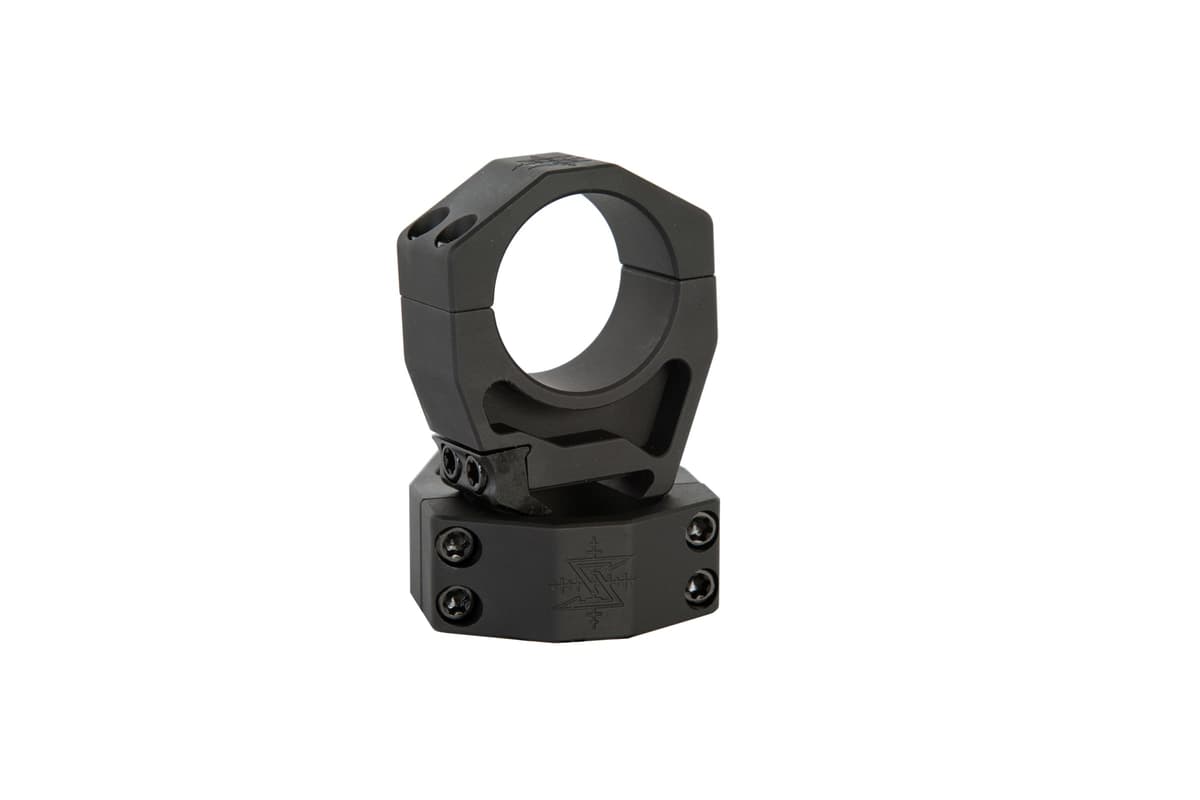
Seekins Precision Scope Rings
Serialized 7075 billet precision rings with four- or six-screw caps for heavy-recoil and competition rifles.
- Precision-machined rings
- Common 30mm/34mm tube sizes
Affiliate links - purchases support this site at no extra cost to you. (?)
Rangefinders
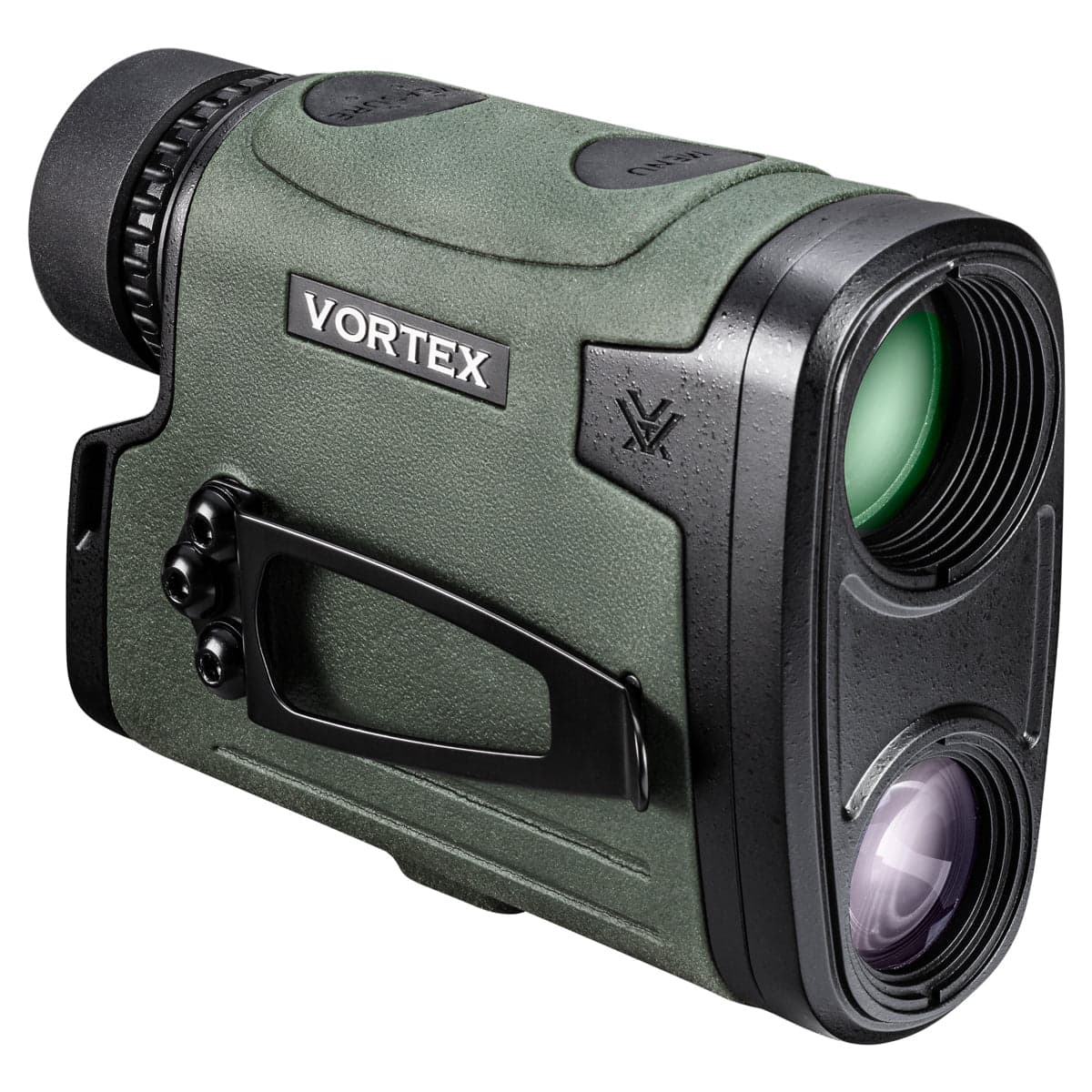
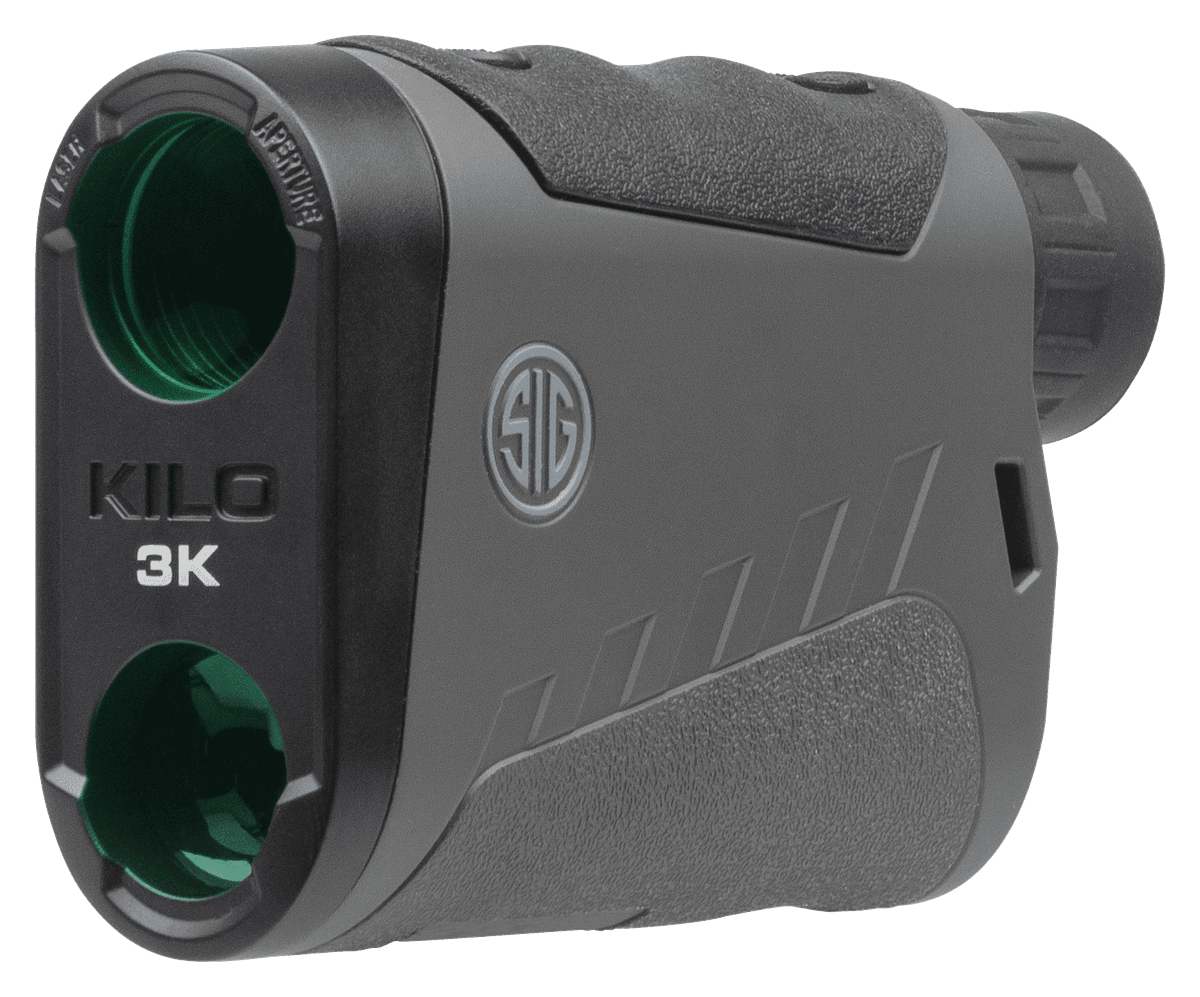
A laser rangefinder is mandatory past 400 yards, because a 25 yard error in estimated range at 600 is the difference between a hit and a clean miss over the target's back. The Vortex Viper HD 3000 is the premium handheld pick, the SIG KILO3K is the value pick with a fast ranging engine, and the Bushnell R5 2000 AB is the budget pick that bundles an Applied Ballistics solver into the unit itself.
 1
1Vortex Viper HD 3000 Laser Rangefinder
- 3000-yard reflective range
- HCD angle-compensated readout
 2
2SIG Sauer KILO3K 6x22 Laser Rangefinder
- 6x22 optic
- Fast ranging on the mid-tier budget
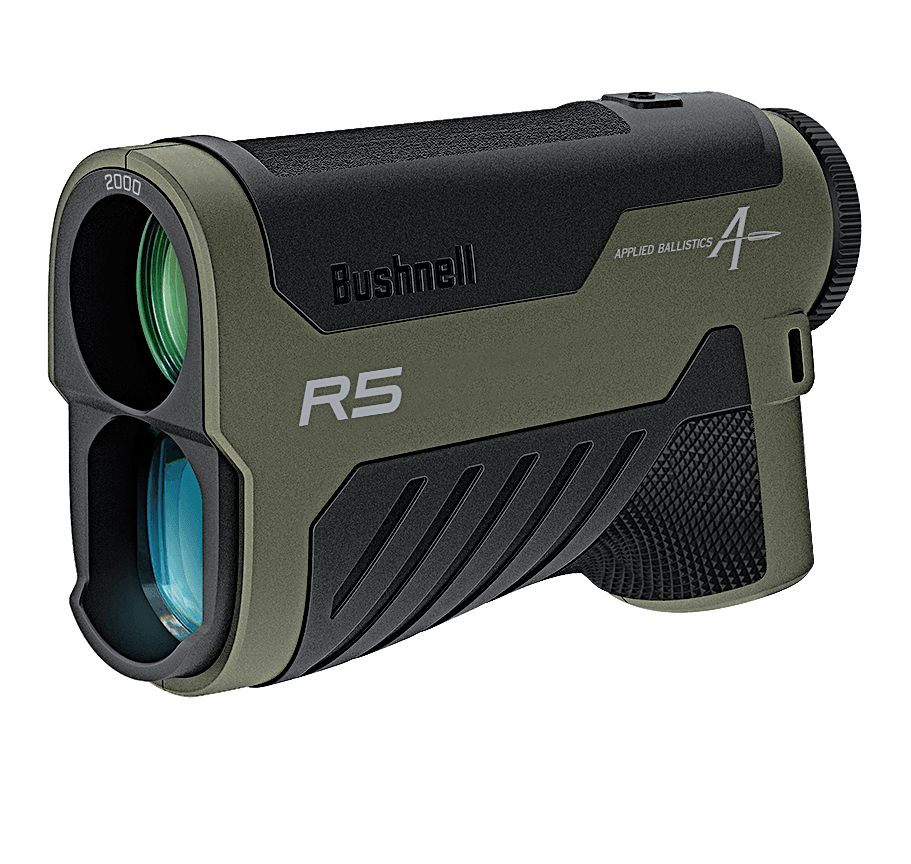 3
3Bushnell R5 2000 AB Laser Rangefinder
- Applied Ballistics onboard
- Value-tier entry point
Affiliate links - purchases support this site at no extra cost to you. (?)
Bipod and Rear Bag
The bipod carries the front of the rifle and the rear bag carries the stock; together they let the crosshair sit still while you work the trigger. The Atlas BT10 V8 is the precision standard with pan and cant control for prone and barricade work, the Magpul M-LOK bipod is the value pick for a first rifle, and the Harris S-BRM is the proven sling-stud option for rifles without M-LOK or Picatinny up front.
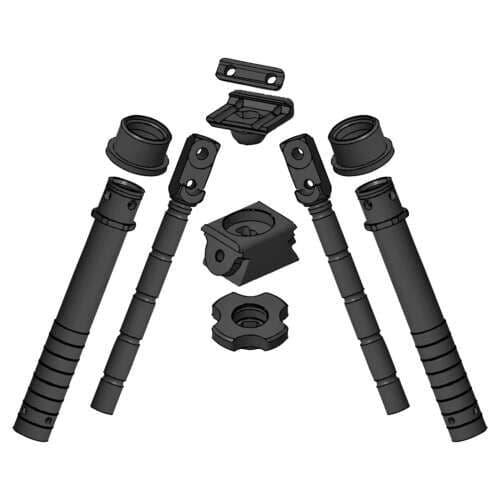 1
1Atlas BT10 V8 Bipod
- Legs deploy to multiple angles
- Pan and cant control
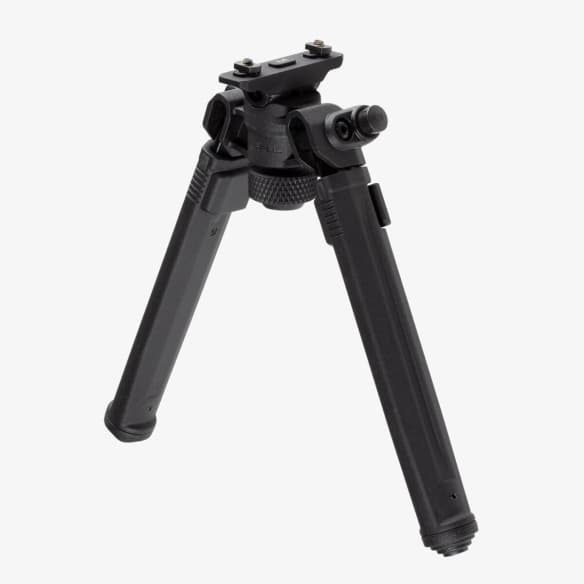 2
2Magpul Bipod (M-LOK)
- M-LOK direct mount
- Adjustable legs, tension knob
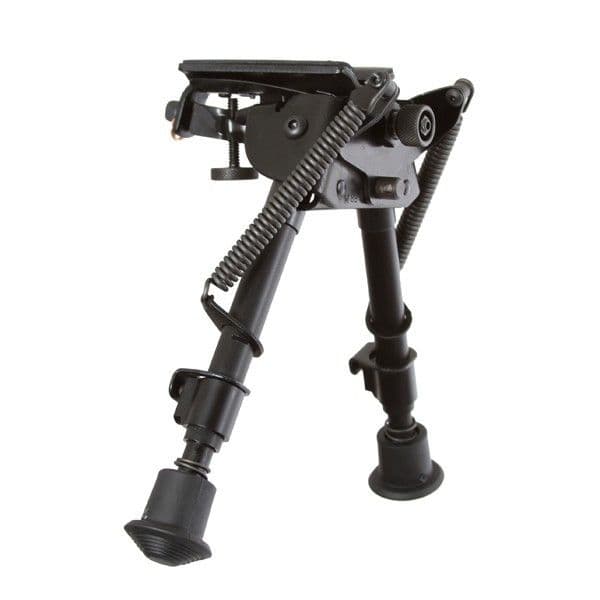 3
3Harris S-BRM 6-9" Sling Stud Bipod
- 6-9 inch legs
- Sling-stud mount, notched legs
Affiliate links - purchases support this site at no extra cost to you. (?)
The rear bag is the cheapest hit-rate upgrade in the entire stack. The Armageddon Gear Shmedium Game Changer at $110.20 squeezes under the toe of the stock for fine elevation control prone and doubles as the barricade bag for positional shooting.
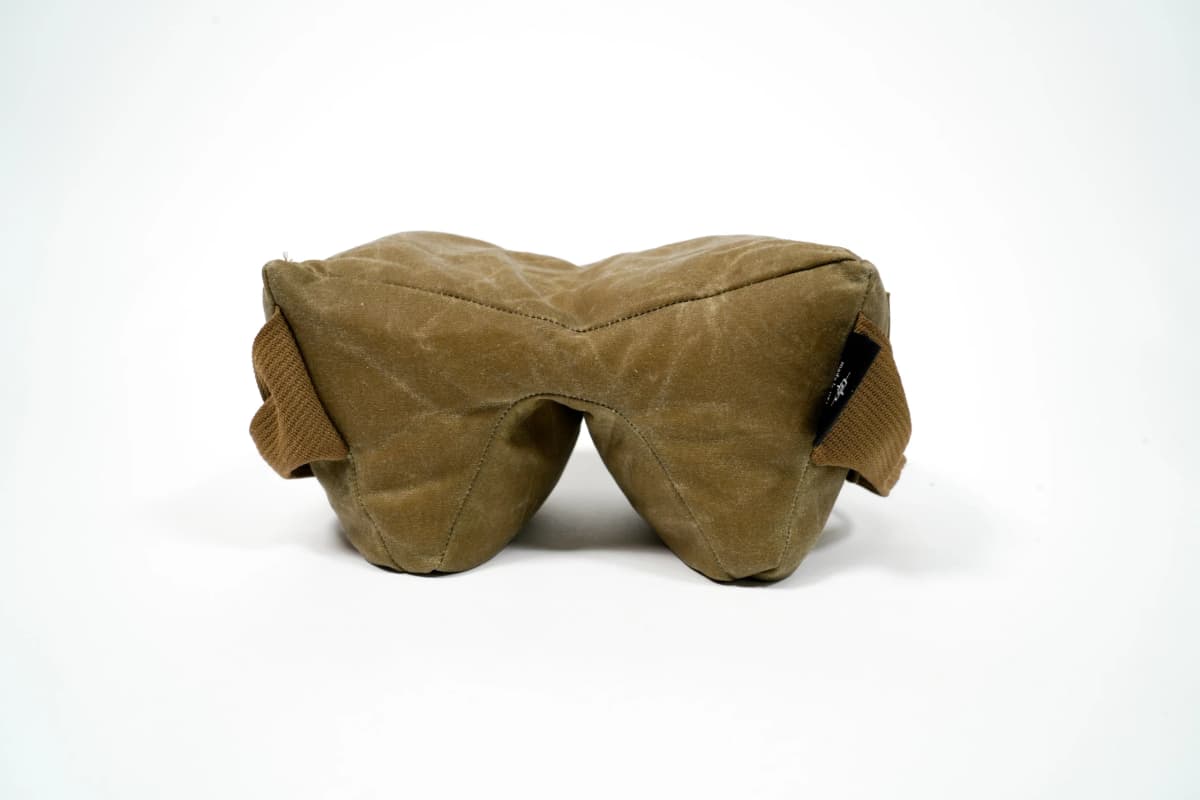
Armageddon Gear Shmedium Game Changer
Mid-size positional shooting bag with Game Changer geometry, 8" × 5" × 5" dimensions, and Heavy, Standard Beads, or SpexLite fill options.
- 8x5x5 Game Changer shape
- Stabilizes prone and barricade positions
Affiliate links - purchases support this site at no extra cost to you. (?)
Drills and the Progression Path
Progress by gate, not by distance envy. Gate one: a one-inch five-shot group at 100 yards on demand, which proves zero and fundamentals. Gate two: first-round hits at 300 and 600 using your own DOPE, which proves your data. Gate three: called wind corrections at 600 to 800, graded shot by shot against the splash. Structured dry-fire and live-fire progressions for each gate live on the drills page.
Grading gates two and three needs to see each hit. A downrange target camera sits near the target and streams it to a phone or receiver at the firing line, so every group and wind call can be checked shot by shot without walking downrange; the shooting target camera guide compares systems rated from 100 yards to two miles.
When all three gates are passed, local club matches are the fastest teacher; shooting on the clock against unknown distances exposes every soft spot in your process. When the factory rifle becomes the limitation rather than the shooter, the PRS rifle build guide covers the competition path.
Get Precision Rifle and Optic Deal Guides
New FFP scope reviews, rangefinder and Kestrel deals, and long range skill guides delivered to your inbox.
Long Range Shooting for Beginners FAQ
▶What is considered long range shooting for a beginner?
▶Is MOA or MIL better for beginners?
▶What gear do you actually need to start long range shooting?
▶Do I need a Kestrel to shoot long range?
▶What is the best cartridge for beginner long range shooting?
▶How far can a beginner realistically hit targets?
Bottom Line
Buy the FFP scope, bipod, and rear bag first, build DOPE at 300 to 600 yards, and add the Kestrel when wind becomes the thing that makes you miss.
The gear stack in this guide is deliberately boring: proven scopes that track, the standard bipod, the standard bag, and a wind meter the whole discipline runs on. Spend the saved decision energy on range time. A shooter with a $499.98 Arken EP-5, verified DOPE, and two hundred graded wind calls will beat a shooter with twice the gear and no data every single time.