Best Long Range Rifle Scope 2026: 10 FFP Picks From $400 to $3,000
The Leupold Mark 5HD 5-25x56 PR2-MIL is the best overall long range rifle scope for 2026. The Vortex Viper PST Gen II 5-25x50 FFP is the best mid-tier pick. The Arken EP-5 5-25x56 is the best budget scope here; our hands-on Arken EP5 review covers how it shoots. The Vortex Razor HD Gen III 6-36x56 is the right pick for PRS competition. The rest of this guide ranks 11 FFP scopes across budget, mid-tier, hunting, and competition choices, breaks down FFP vs SFP and reticle tree choice, and explains which magnification range fits each cartridge and use case.
Best Long Range Rifle Scopes Ranked
Ranked across budget FFP precision, mid-tier $1,000 scopes, hunter-precision crossovers, and premium PRS optics.
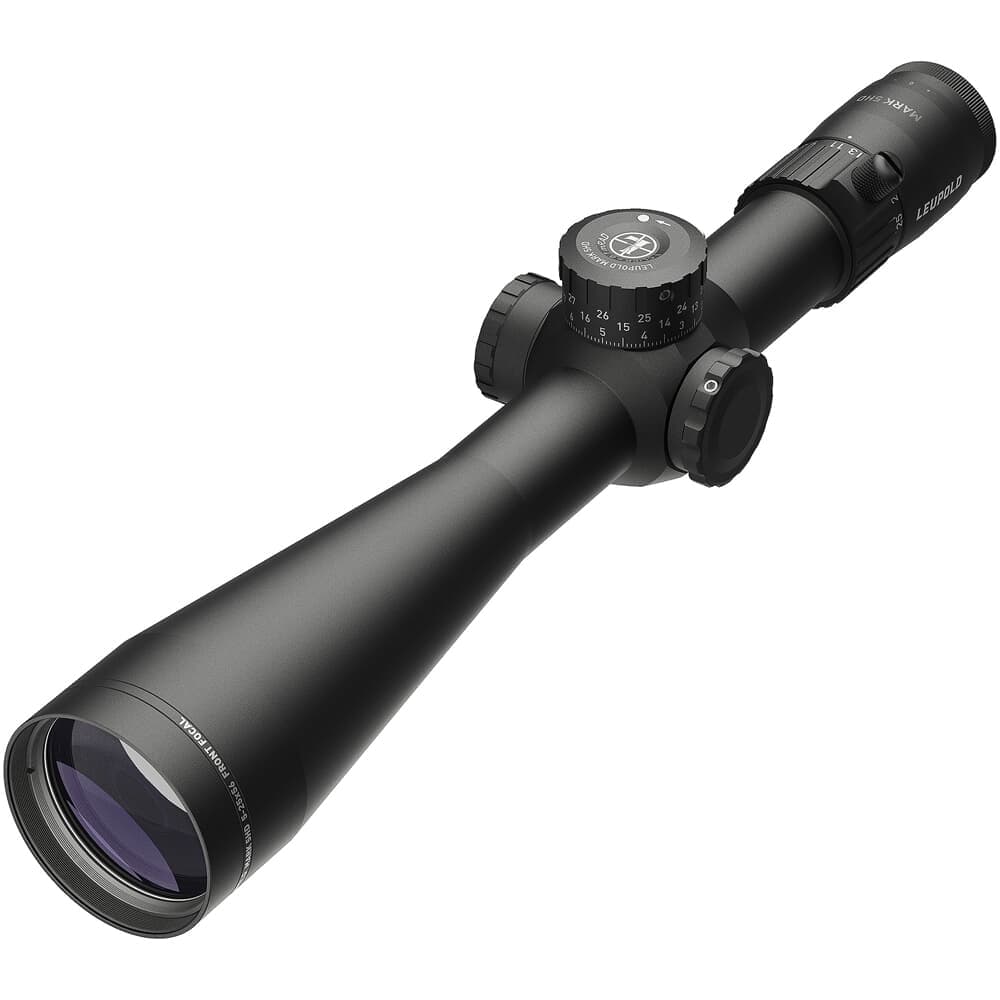
Leupold Mark 5HD 5-25x56 PR2-MIL
Best Overall Long Range Scope
- +Premium glass, turret feel, and ZeroLock dial at a sub-$2,500 price
- +PR2-MIL FFP tree reticle covers match and hunting holds
- +Made in the USA with Leupold service network
- −35mm tube narrows the mount selection compared to 30mm scopes
- −25x top end is light for benchrest or sub-MOA group work
- −Premium pricing if 18x or less is all you actually need
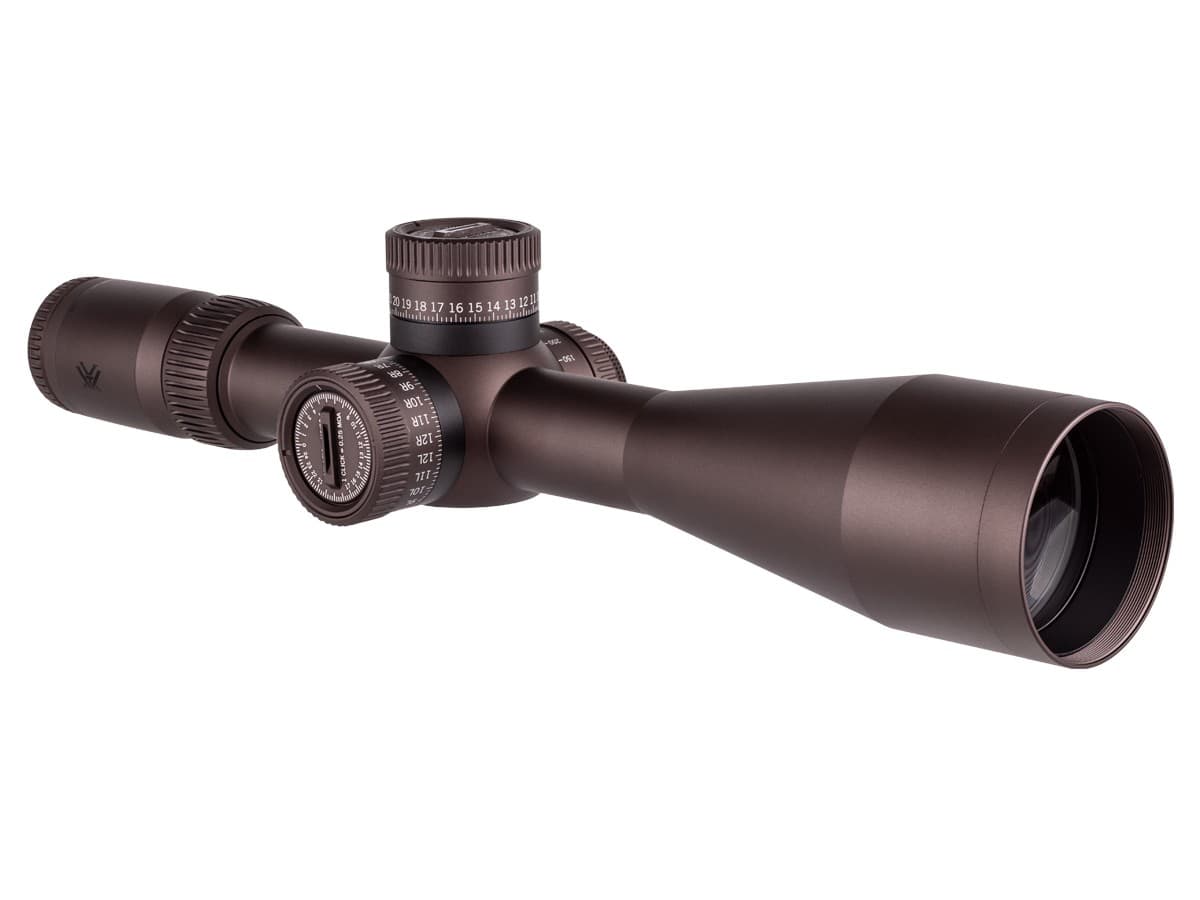
Vortex Razor HD Gen III 6-36x56
Best PRS Competition Scope
- +Top-tier glass and mechanicals for serious PRS competition
- +6-36x range is the most versatile in this guide
- +Vortex VIP lifetime warranty
- −Heavy at 45.1 oz
- −Overkill on a hunting rifle or a sub-1,000 yard setup
- −Big objective and 34mm tube force taller rings
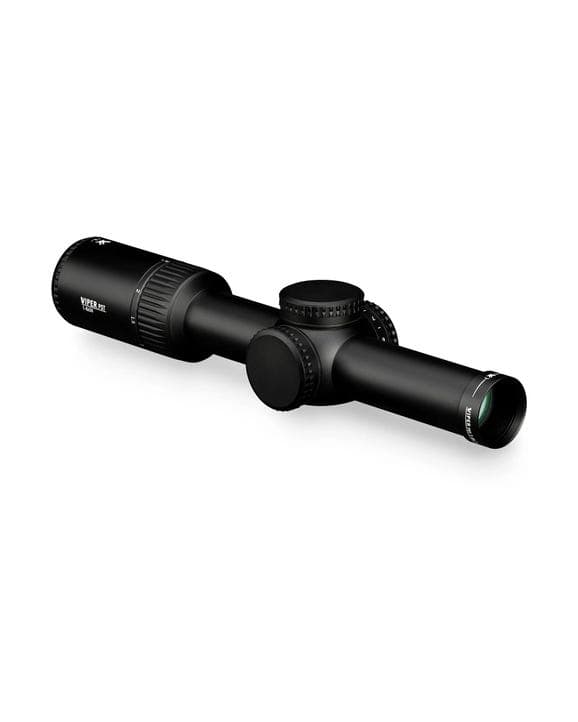
Vortex Viper PST Gen II 5-25x50 FFP
Best Mid-Tier Value Under $1,000
- +Best name-brand mid-tier value with VIP lifetime warranty
- +EBR-7C tree reticle has good subtensions for match holds
- +Zero-stop elevation tracks reliably
- −30mm tube and 20 MRAD elevation are tight for 1,500-yard work
- −Glass clarity at 25x trails 34mm tube scopes
- −Heavy at 31.2 oz for the magnification range
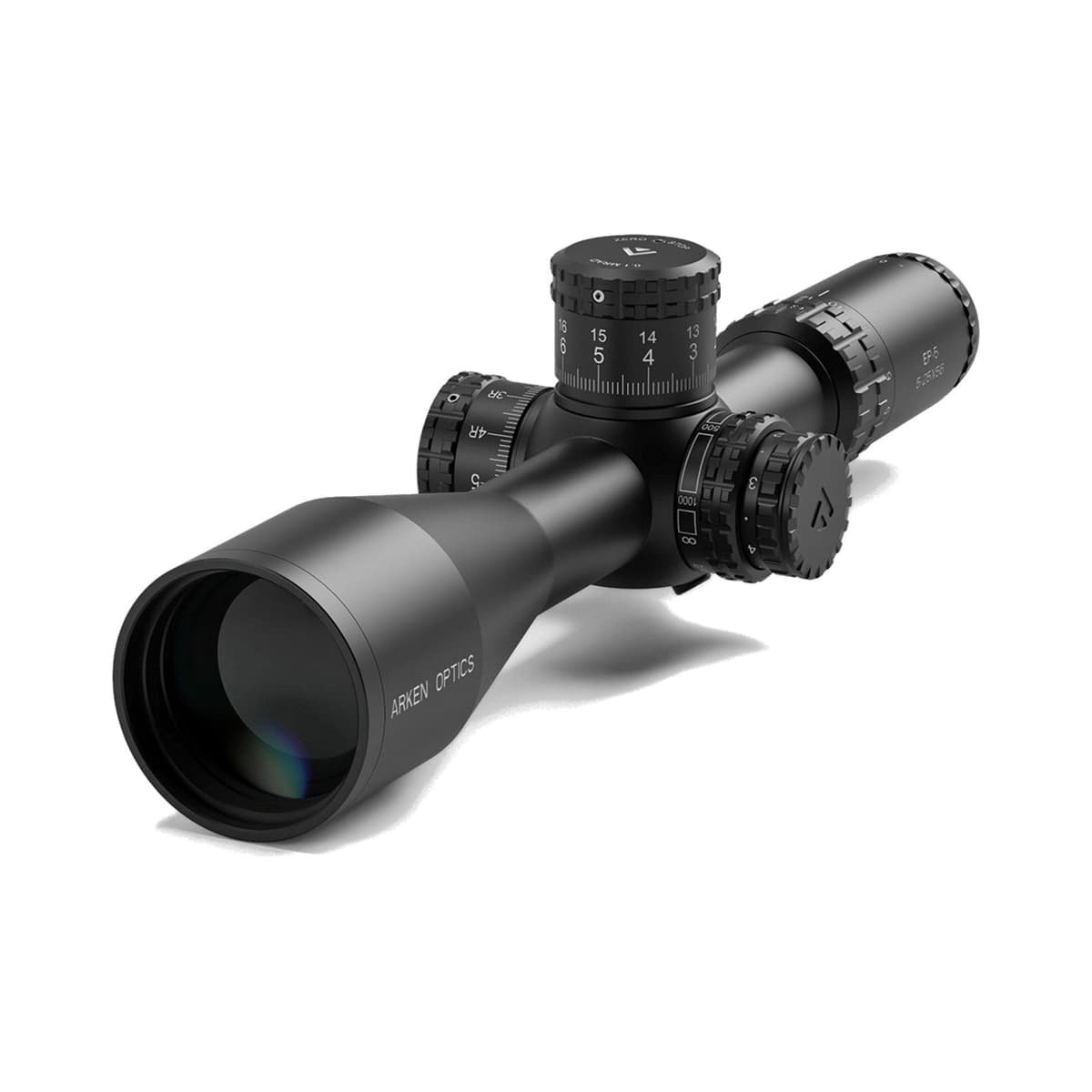
Arken EP-5 5-25x56 FFP
Best Budget Long Range Scope Under $600
- +Best feature-per-dollar in the sub-$600 FFP class
- +32 MIL elevation handles 6.5 Creedmoor and .308 past 1,200 yards
- +AZS tactile zero stop returns reliably
- −Heavy at 39.2 oz
- −QC consistency varies more than premium brands
- −Limited dealer network
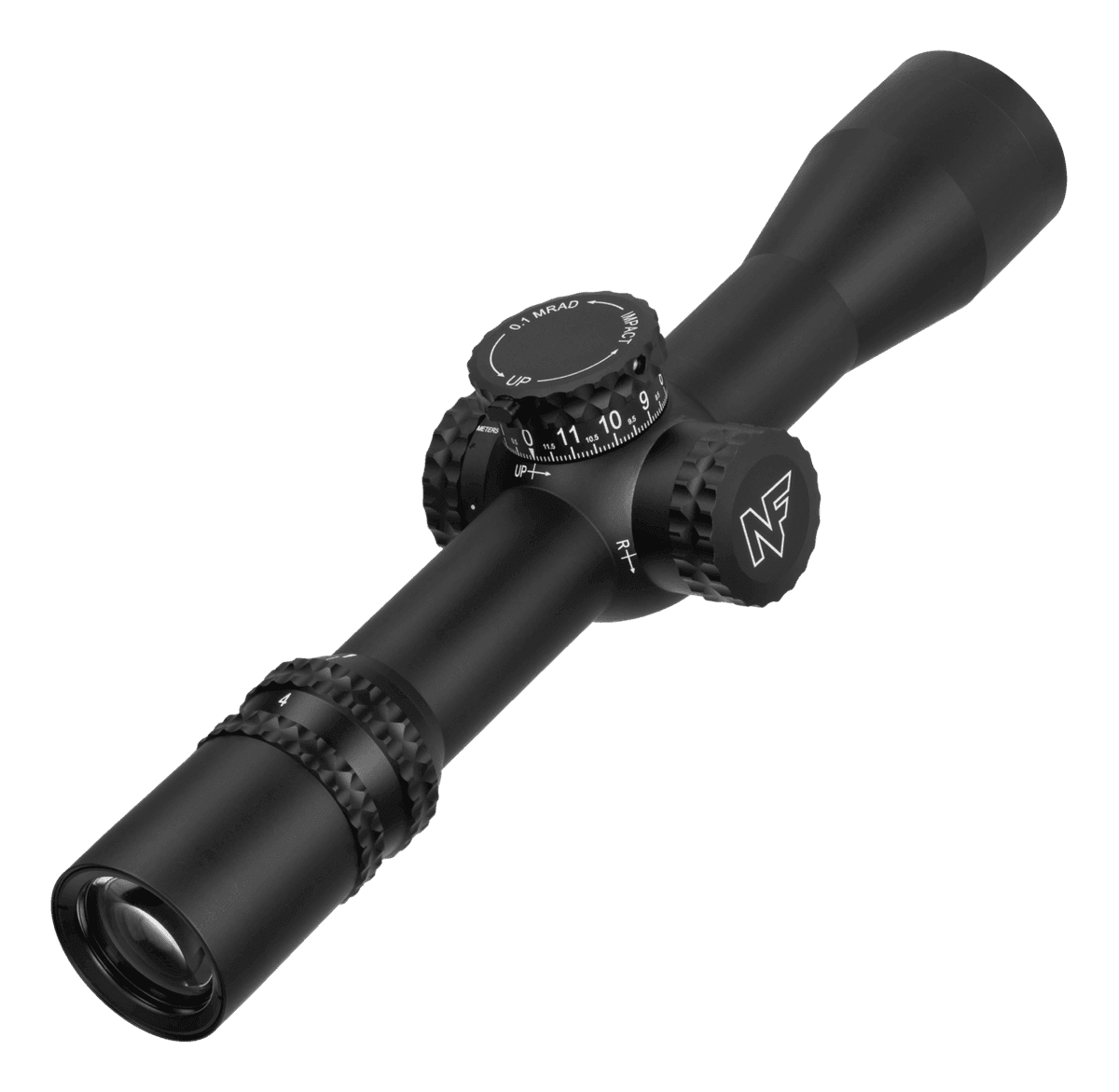
Nightforce ATACR 4-16x42 F1
Best Long Range Hunting Scope
- +ATACR mechanicals and FFP reticle library at 30 oz
- +26 MRAD elevation handles common cartridges past 1,200 yards
- +Compact 12.6 inch length fits hunting rifle profiles
- −16x top end is light for benchrest or ELR work
- −42mm objective trails 50mm and 56mm scopes in low light
- −Premium price for the magnification range
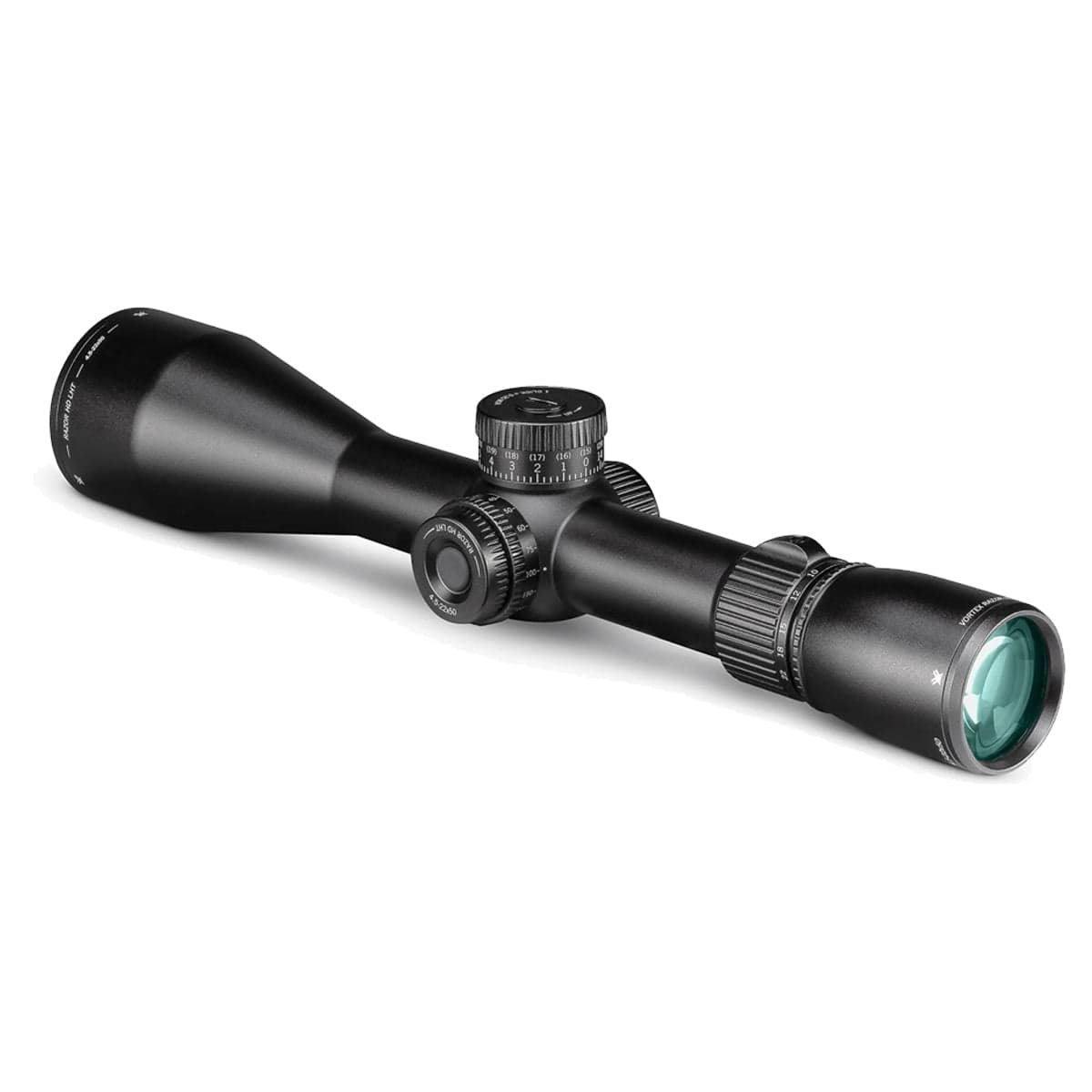
Vortex Razor HD LHT 4.5-22x50 FFP
Best Lightweight Hunting Precision Scope
- +10 oz lighter than a Razor HD Gen III, 8 oz lighter than a Viper PST
- +Locking elevation turret resists pack-strap dial movement
- +FFP XLR-2 reticle works for hunting and field precision
- −30mm tube and 22.4 MRAD elevation trail 34mm precision scopes
- −50mm objective is smaller than competition norms
- −Premium price for a hunting-weight optic
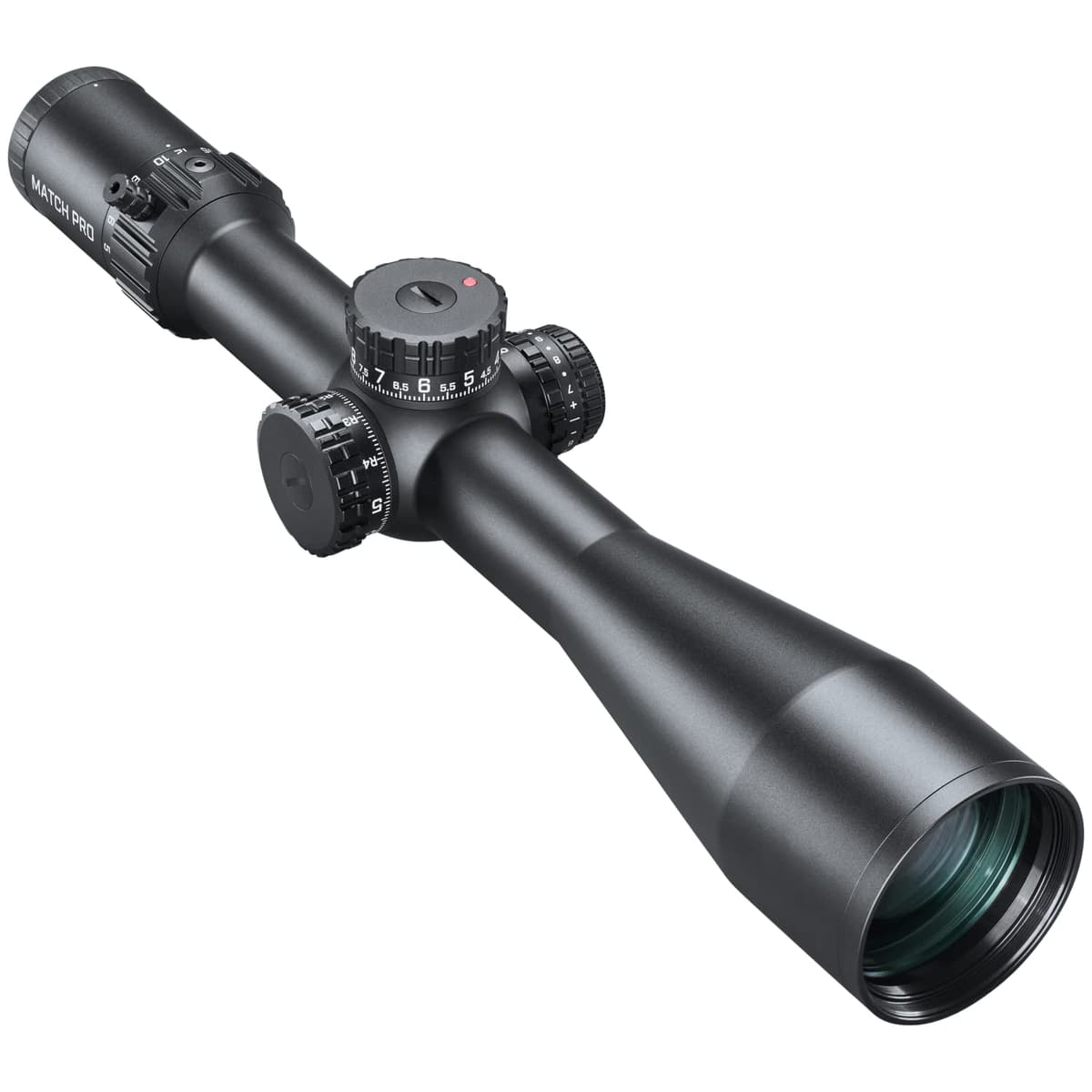
Bushnell Match Pro ED 5-30x56 FFP
Best Sub-$1,000 Precision Scope
- +Best feature set in sub-$1,000 FFP class
- +Locking elevation and windage turrets
- +ED Prime glass on a 34mm tube at this price
- −32 oz is heavy for a 5-30x scope
- −Glass trails Razor HD or Mark 5HD
- −Bushnell warranty is shorter than Vortex VIP
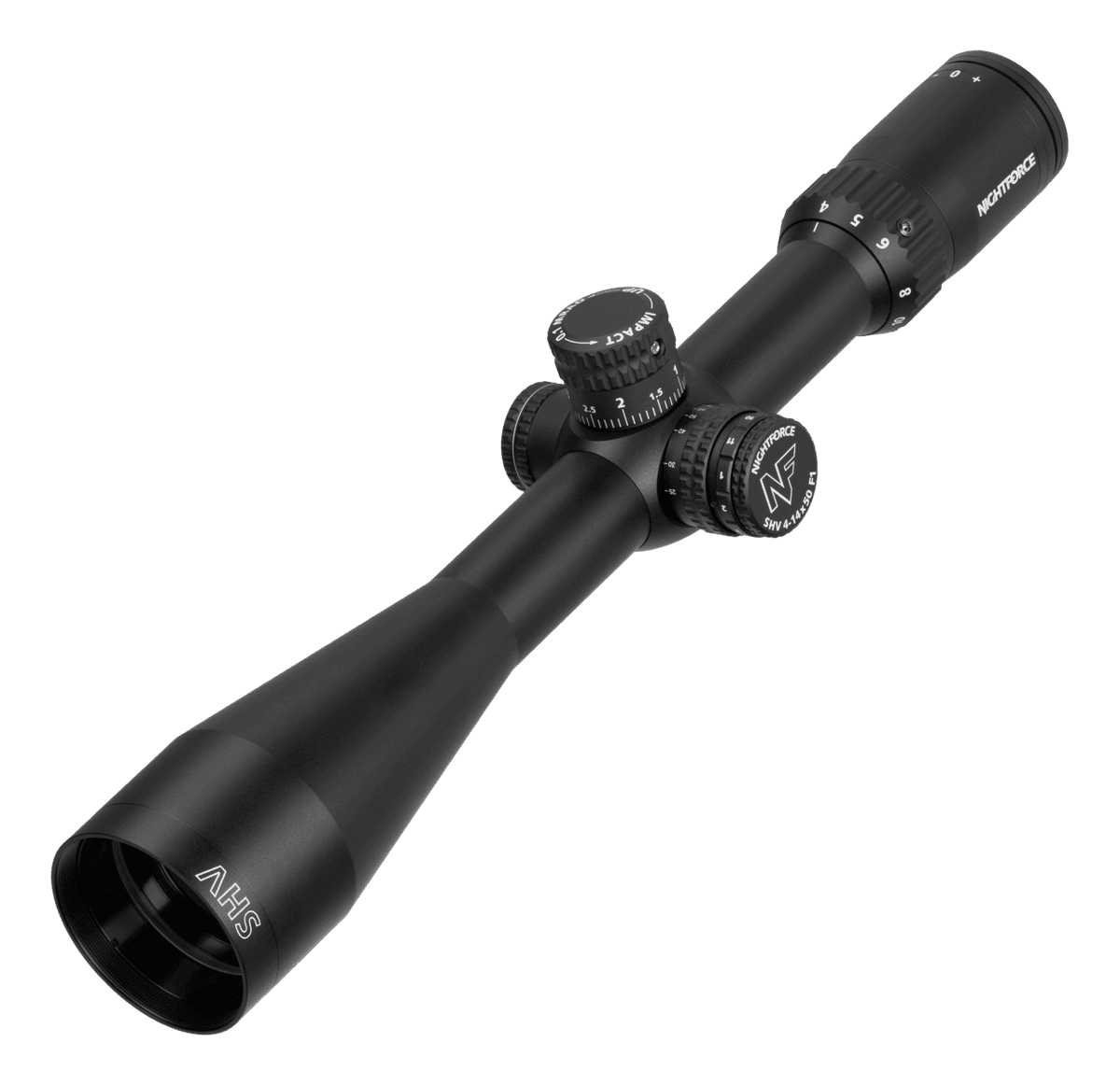
Nightforce SHV 4-14x50 F1
Best Nightforce Hunter FFP
- +Nightforce mechanicals and FFP at roughly half the ATACR 4-16 price
- +26 MRAD elevation supports .308 / 6.5 Creedmoor past 1,000 yards
- +30 oz weight is reasonable for a 50mm objective optic
- −30mm tube and 14x top end limit competition use
- −Pricier than mid-tier 5-25x scopes with more magnification range
- −Glass quality is good but trails ATACR and Schmidt & Bender
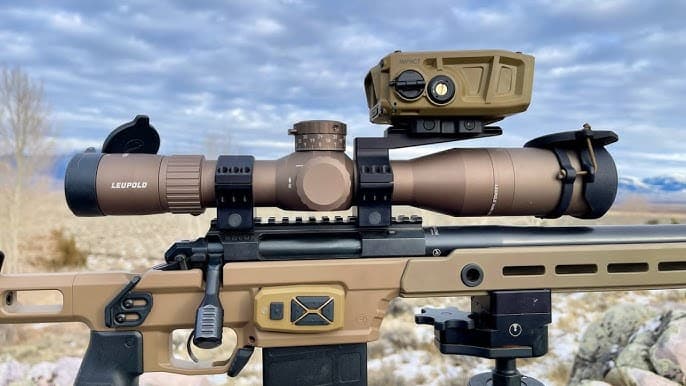
Leupold Mark 5HD 3.6-18x44 FFP
Best Lightweight Premium Precision Scope
- +26 oz weight is class-leading for a premium 18x precision scope
- +M5C3 turrets with visual and tactile revolution indicators
- +Made in the USA
- −18x top end is light for steel past 1,000 yards
- −35mm tube limits mount options
- −Illumination adds $500 on illuminated variants
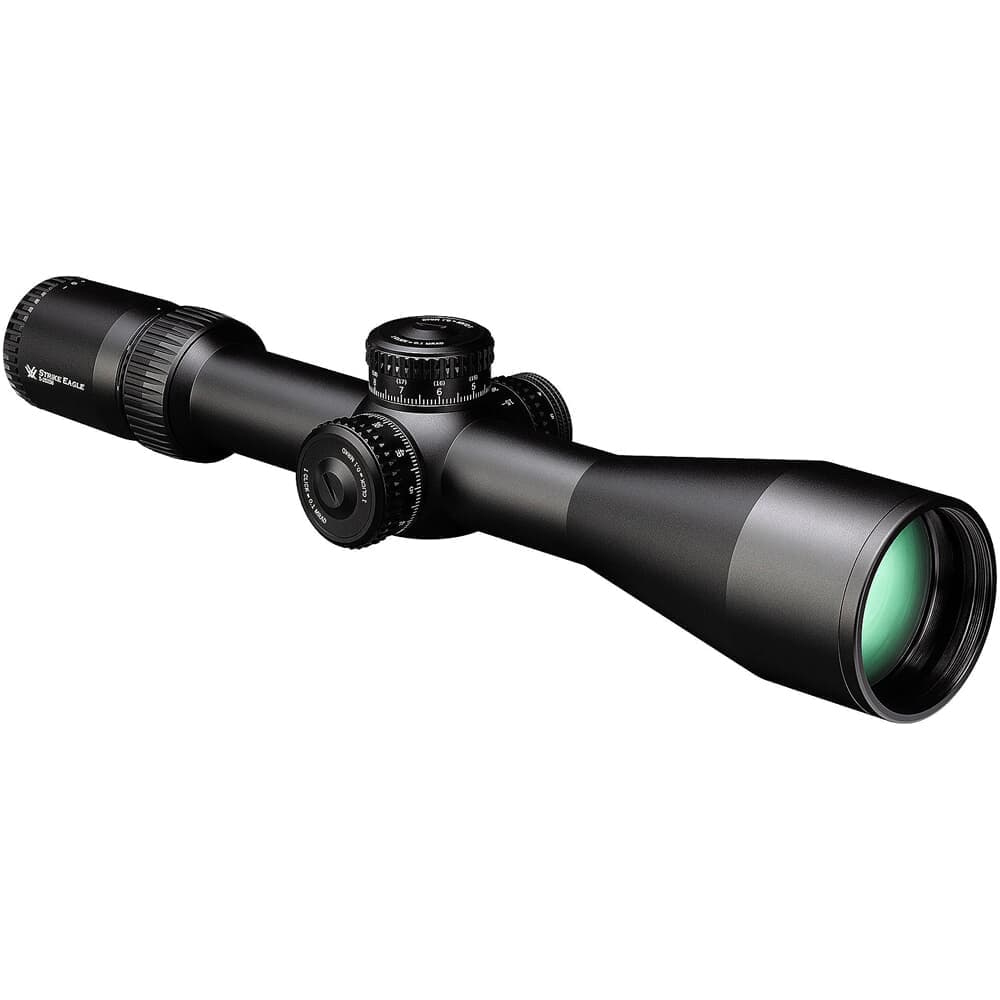
Vortex Strike Eagle 5-25x56 FFP
Best Value FFP Under $800
- +First focal plane 25x glass under $800
- +Locking RevStop elevation turret with 110 MOA of travel
- +Illuminated EBR-7C MOA reticle usable at any magnification
- −Heavy at 30.4 oz
- −Edge clarity softens at 25x versus premium glass
- −Illumination is not daylight bright at the top setting
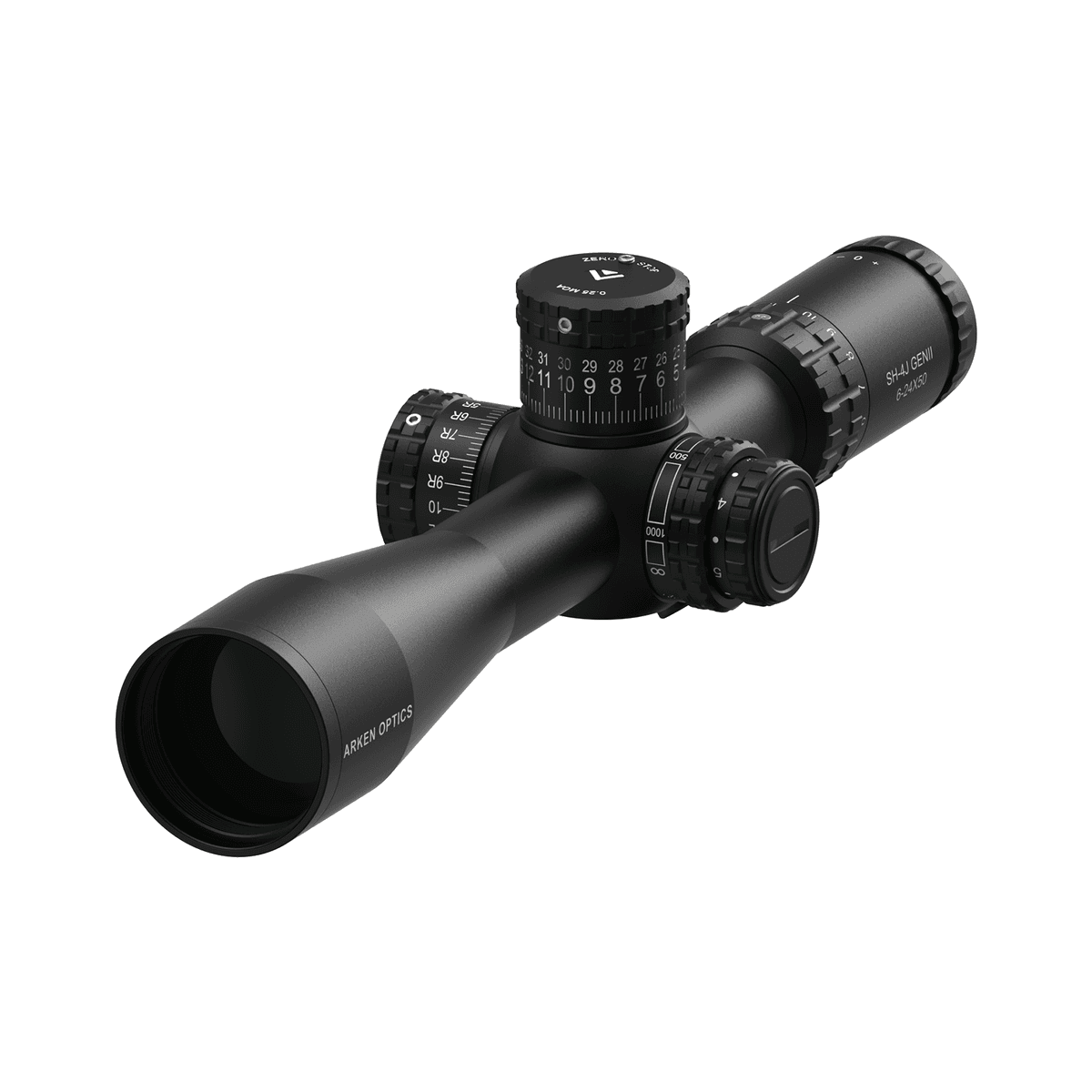
Arken SH-4J GENII 6-24x50 FFP
Best Entry Budget Precision Scope
- +Cheapest serious FFP precision scope with a real zero stop
- +34mm tube and 32 MIL travel on par with much pricier optics
- +VHR or VPR reticle choice in MIL or MOA
- −Heavy at 36.6 oz
- −Windage travel only 10 MIL (vs 16 MIL on EP-5)
- −Glass trails the EP-5 despite Japanese ELD spec
Magnification range, elevation travel, and reticle choice matter more than headline glass quality. Pick the scope that fits the cartridge, the rifle weight, and the longest realistic distance you actually shoot.
Affiliate links - purchases support this site at no extra cost to you. (?)
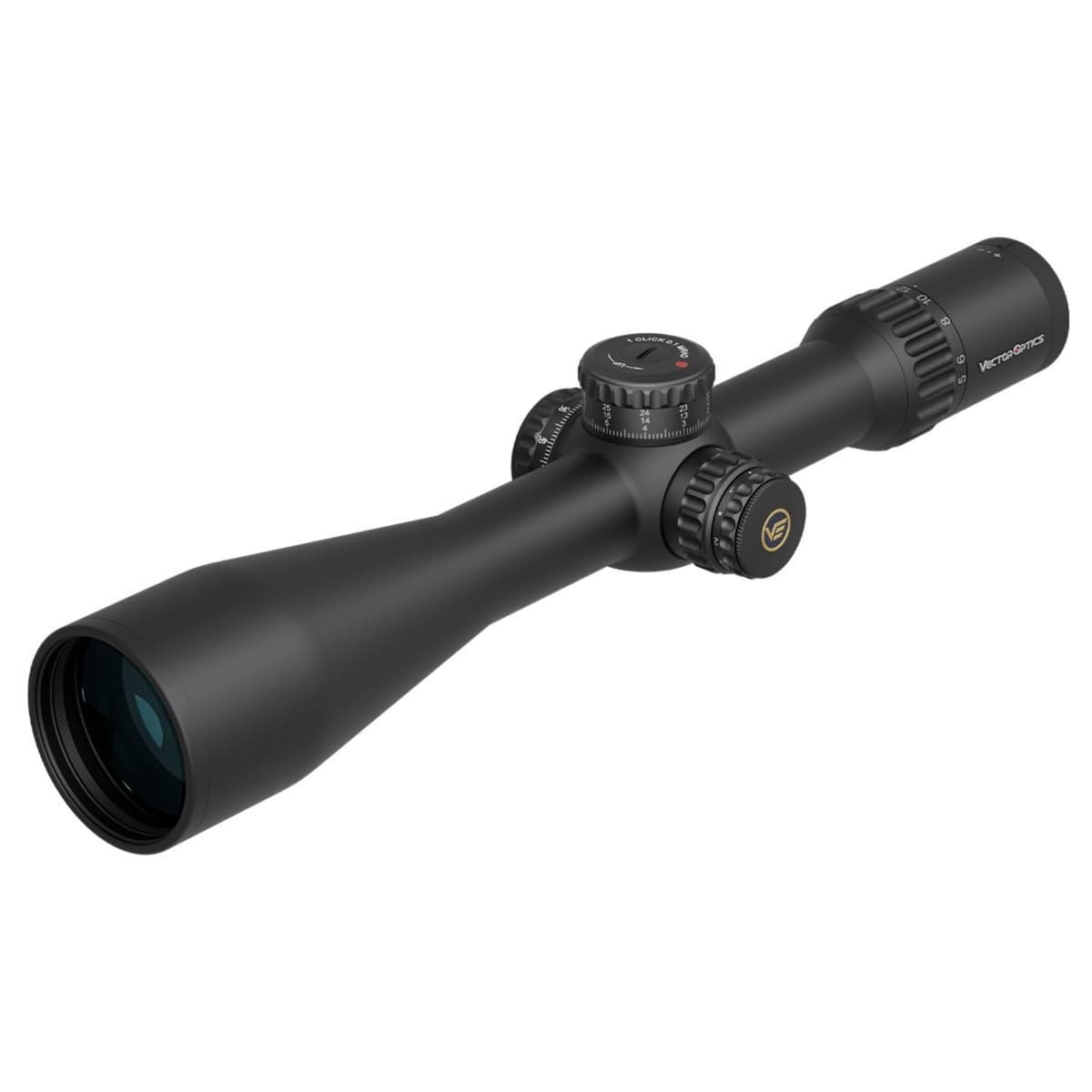
Vector Optics Continental 5-30x56 FFP
- 34mm tube with a VCT-34FFP MIL tree reticle
- Zero stop and locking turrets
- 34mm rings currently included
- T-VIP lifetime warranty, electronics excluded
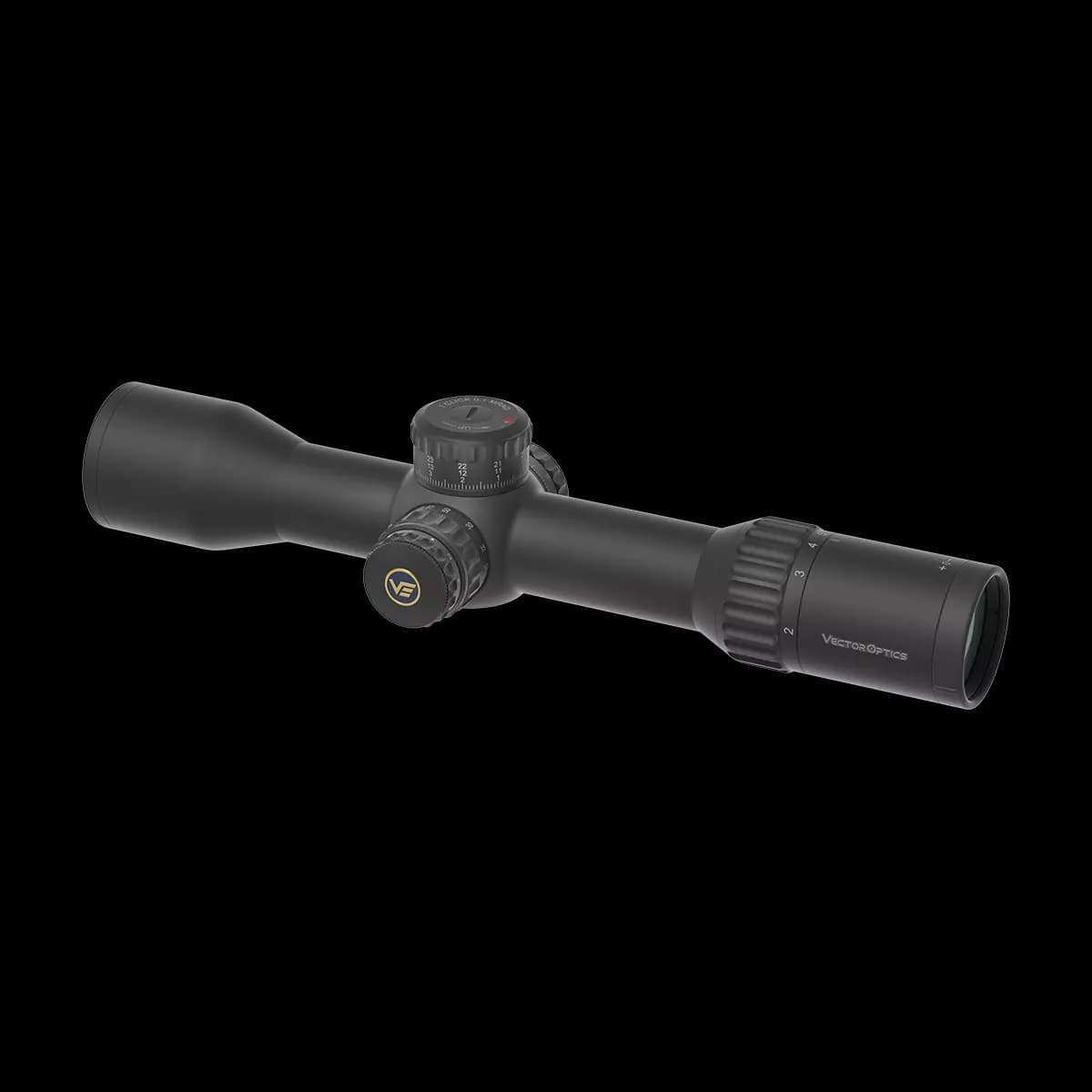
Vector Optics Continental 2-12x44 RAR FFP
- 2-12x covers CQB-adjacent distance through DMR range
- Illuminated VET-RAR2 rapid-ring tree reticle
- 63 MIL elevation on a 34mm tube
- IP67 sealed
- T-VIP lifetime warranty, electronics excluded
Affiliate links - purchases support this site at no extra cost to you. (?)
How These Long Range Scopes Were Ranked
Magnification range, elevation travel, focal plane, reticle subtension density, turret feel, and weight matter more than glass clarity past a certain price tier. The rankings weight what shooters actually use on the rifle: usable MIL or MOA elevation past the zero, a zero stop you can return to by feel, a reticle tree that supports both dialing and holdover, and a tube diameter that lets you mount the scope without buying exotic rings. Every pick is FFP, every pick has a zero stop, and every pick can reach 1,000 yards on a 6.5 Creedmoor profile without running out of elevation. New to the discipline entirely? Start with the intro to long range shooting guide for the skills, MOA vs MIL decision, and full gear stack that sit around the scope choice.
Match the Long Range Scope to the Rifle and Use Case
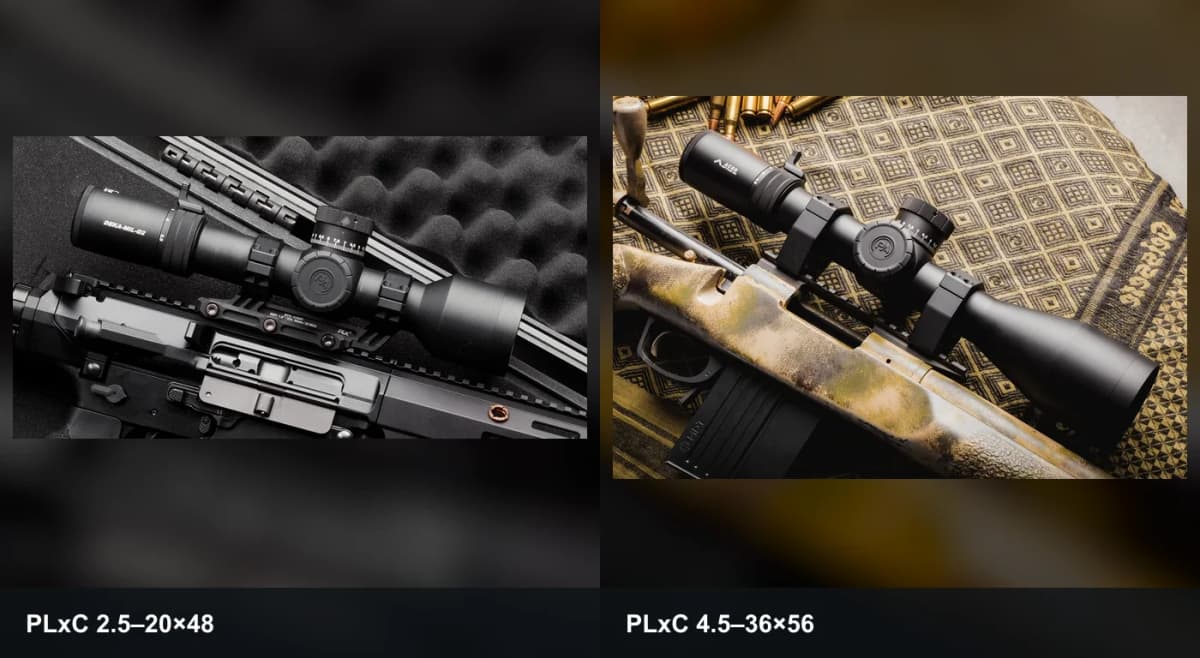
Primary Arms has added 2.5-20x48 and 4.5-36x56 scopes to its PLxC line. Their low-end view and weight separate a flexible rifle from a supported long-range setup; the PLxC launch comparison lays out those differences.
First serious precision rifle on a budget: pick the Arken SH-4J 6-24x50 for the least expensive serious FFP scope with a real zero stop, or the Arken EP-5 5-25x56 for 6 MIL of additional windage travel and better glass. The Athlon Argos BTR Gen3 is the alternative if you want a more established brand with a wider dealer network.
Mid-tier do-it-all: the Vortex Viper PST Gen II 5-25x50 is the right pick for a name brand, EBR-7C tree reticle, zero-stop turret, and VIP lifetime warranty. The Bushnell Match Pro ED 5-30x56 is the spec-per-dollar winner if you want a 34mm tube, locking turrets, and 100 MOA elevation in the same tier.
Premium long range hunting rifle: the Leupold Mark 5HD 3.6-18x44 at 26 oz is the lightest premium 18x FFP scope on the market and the best pick for a rifle that gets carried. The Vortex Razor HD LHT 4.5-22x50 weighs only 21.7 oz and adds the locking elevation turret hunters want. The Nightforce ATACR 4-16x42 F1 is the right pick if Nightforce mechanicals and ATACR durability matter more than weight or price.
PRS competition and ELR: the Vortex Razor HD Gen III 6-36x56 is the most common high-end PRS competition scope for a reason: 6-36x magnification, EBR-7D FFP tree, and Vortex's VIP warranty. The Leupold Mark 5HD 5-25x56 PR2-MIL is the lighter, lower-magnification option for shooters who do not need the 36x top end. Leupold also just added illuminated PR2 and PR3 reticles to the Mark 4HD 6-24x52 and 8-32x56, which lands below the Mark 5HD price band with the same first-focal-plane PR reticle system. Colt Optics also entered this class in July 2026 with the VMR 4.5-27x56, a first focal plane 34mm tube with SCHOTT glass, MIL-STD .338 Lapua recoil rating, and a Canadian military design win.
One scope, multiple rifles: the Nightforce SHV 4-14x50 F1 is the most versatile scope in the guide. 4x bottom magnification handles timber and 100-yard stands, 14x top end reaches 1,000 yards, the 50mm objective handles dawn and dusk, and the FFP reticle library covers hunting and match holds.
Get Long-Range Rifle Scope Reviews and PRS Coverage
New FFP scope reviews, Leupold, Vortex, and Nightforce picks, and PRS competition coverage. Covers budget Arken EP-5, mid-tier Viper PST Gen II, and premium Mark 5HD rankings.
Compare long-range scope views at 500 yards
Hold the target and distance constant while you compare published field of view, magnification, and the selected reticles.
Letters are 36, 24, 18, 12 and 8 cm tall. Compare how much detail fits in the view as you zoom.
Each optic at its own highest setting: compare the detail you can see.
First focal plane · product specification
24.0 ft across the view
Published field of view
Reticle drawn from the subtensions on this sheet; holds and the BDC table come from it.
How much fits in the view?
Top-down · fits the selected distanceAlong the range and across it use the same scale. The short center mark shows the object’s width.
A · 25× · 24 ft wide
Published field of view
B · 25× · 21 ft wide
Published field of view
A covers 14% more width at this distance. The narrower view makes the object fill more of an equal-size lens window.
Reticle drawn from the manufacturer's published subtensions. Housing, glass, brightness and eyebox are simulated.
Open the full range simulatorFFP vs SFP for Long Range Rifle Scopes
Use a first focal plane scope for any rifle that will see real long range work past 400 yards. FFP reticle subtensions stay accurate at every magnification, so a 1 MIL hash is always 1 MIL whether the scope is on 6x or 25x. That single trait makes ranging, holdover, and wind correction work the same at any power setting, which is the difference between getting hits cold and missing while the wind shifts.
Second focal plane scopes only show correct reticle subtensions at one magnification, usually the maximum. That works for LPVOs, hunting scopes under 400 yards, and fixed power optics. It does not work when you are dialing 8 MIL of elevation and trying to hold 1 MIL of wind on a 6mm Creedmoor at 1,200 yards. Every scope in this guide is FFP because SFP makes no sense for serious long range shooting.
The one real drawback of FFP is that the reticle gets small at low magnification. On the Mark 5HD 5-25x56, the tree reticle at 5x is hard to use for a fast snapshot. That matters less than you think on a 24-pound PRS rifle that lives on a bipod; it matters more on a 9-pound hunting rifle where you might take a 100-yard offhand shot. For more on the magnification tradeoff, see our optic selection matrix and best LPVO guide.
Magnification Range: 3-18x, 4-24x, 5-25x, or 6-36x
Pick magnification based on the longest realistic shot you will actually take and the bottom-end versatility you want. The four common ranges each fit a specific use case.
- 3-18x or 3.6-18x: the right call for a precision hunting rifle that will see shots from 50 to 1,000 yards. The 3-4x bottom end opens up cover and close stands, the 18x top is plenty for steel at 1,000 yards in field conditions. Leupold Mark 5HD 3.6-18x44 is the pick.
- 4-16x or 4.5-22x: the do-anything hunter-precision crossover band. Enough zoom ratio (3.5:1 to 5:1) to be useful in close cover and at distance, weight is reasonable, glass tradeoffs are minimal. Nightforce ATACR 4-16x42 F1 and Vortex Razor HD LHT 4.5-22x50 fit here. If the rifle is a semi-auto DMR or a carried hunting rifle rather than a staged precision gun, the lighter 1.5-12x to 4-16x field in our best MPVO scopes guide is the better place to shop.
- 5-25x: the standard precision rifle range. 5x bottom is workable for most of what a precision rifle does, 25x is plenty for any small target at any distance a normal cartridge will reach. Leupold Mark 5HD 5-25x56, Vortex Viper PST Gen II 5-25x50, Arken EP-5 5-25x56, Primary Arms SLx 5-25x56 all live here.
- 5-30x or 6-36x: competition and ELR magnification. Useful when shooting tiny targets at known distances and pulling wind reads off mirage. Heavy, expensive, and overkill on any rifle that isn't a dedicated competition or benchrest gun. Vortex Razor HD Gen III 6-36x56 and Bushnell Match Pro ED 5-30x56 fit here.
Reticle Choice: Christmas Tree vs Mil-Hash vs MOA
Christmas tree reticles with dense subtensions (EBR-7D, MIL-XT, PR2-MIL, VPR, DM2) are the right pick for match shooting and any workflow that holds rather than dials. They give you a fast wind hold and an instant elevation correction at the cost of a busy sight picture.
Simple mil-hash or MOA reticles (XLR-2, TMR, MOAR F1) are the right pick for hunting and any workflow that dials the elevation and holds only for wind. The sight picture stays clean, the eye finds the target faster, and you give up nothing on a stage prop or a deer at 600 yards. For shooters trained on MOA, MOA reticles with matching MOA turrets keep the math simple. For everyone else, MIL is the modern default and matches most ballistic apps and rangefinders out of the box.
Avoid Horus-style ultra-dense reticles (TReMoR3, H59) unless you already know you want them. They are powerful tools for advanced shooters but the busy sight picture and steep learning curve hurt new precision shooters more than they help.
Turrets, Zero Stops, and Tube Diameter
A long range scope needs three turret features: exposed and tactile elevation, a real zero stop, and clicks that track consistently against the dial markings. Every scope in this guide has all three. Locking turrets (Bushnell Match Pro ED, Vortex Razor HD LHT) prevent accidental dial movement when the rifle gets bumped or carried, which matters on hunting rigs more than on bench guns.
Tube diameter: 30mm tubes (Vortex Viper PST, Razor HD LHT, Nightforce SHV F1, Athlon Argos Gen3) give you roughly 20 to 26 MIL of usable elevation. 34mm tubes (Vortex Razor HD Gen III, Nightforce ATACR, Bushnell Match Pro ED, Arken EP-5 and SH-4J) give you 26 to 32 MIL. 35mm tubes (Leupold Mark 5HD line) give you 29 MIL but narrow your mount selection compared to the more common 30mm and 34mm. For cartridges that need more than 25 MIL of elevation to reach target distance, a 34mm or 35mm tube is the right call. For anything inside 1,000 yards on common cartridges, a 30mm tube with 20+ MIL of travel is enough.
Canted bases recover travel: a 20 MOA Picatinny base adds roughly 6 MIL of usable elevation by tilting the scope forward and shifting the zero into the lower half of the turret range. A 30 MOA base adds about 9 MIL. If your scope is short on elevation, a canted base is cheaper than buying a bigger tube. The optic mounting guide covers ring and base selection in depth, and our best scope rings and mounts guide ranks the 30mm and 34mm rings and 20 MOA one-piece mounts that hold these scopes.
Long Range Scope Spec Comparison
Sort by magnification, focal plane, tube, elevation travel, weight, or price to match the scope to your cartridge and rifle build.
- Arken SH-4J GENII 6-24x50 FFPMag Range6-24xFocal PlaneFFPWeight36 ozPrice$329.99
- Arken EP-5 5-25x56 FFPMag Range5-25xFocal PlaneFFPWeight39.2 ozPrice$499.98
- Vortex Strike Eagle 5-25x56 FFPMag Range5-25xFocal PlaneFFPWeight30.4 ozPrice$799.99
- Bushnell Match Pro ED 5-30x56 FFPMag Range5-30xFocal PlaneFFPWeight32 ozPrice$899.95
- Vortex Viper PST Gen II 5-25x50Mag Range5-25xFocal PlaneFFPWeight31.2 ozPrice$1099.99
- Vortex Razor HD LHT 4.5-22x50 FFPMag Range4.5-22xFocal PlaneFFPWeight21.7 ozPrice$1189
- Nightforce SHV 4-14x50 F1Mag Range4-14xFocal PlaneFFPWeight30 ozPrice$1290
- Leupold Mark 5HD 3.6-18x44Mag Range3.6-18xFocal PlaneFFPWeight26 ozPrice$1699.99
- Leupold Mark 5HD 5-25x56 PR2-MILMag Range5-25xFocal PlaneFFPWeight -Price$1899.99
- Nightforce ATACR 4-16x42 F1Mag Range4-16xFocal PlaneSFPWeight30 ozPrice$2900
- Vortex Razor HD Gen III 6-36x56 FFPMag Range6-36xFocal PlaneFFPWeight45.1 ozPrice$2999
| Product | Focal Plane | Buy | |||||
|---|---|---|---|---|---|---|---|
| Arken SH-4J GENII 6-24x50 FFP | 6-24x | FFP | 34mm | 30 MIL (100 MOA) elevation / 16 MIL (60 MOA) windage | 36 oz | $329.99 | Buy |
| Arken EP-5 5-25x56 FFP | 5-25x | FFP | 34mm | 32 MIL (110 MOA) elevation / 16 MIL (55 MOA) windage | 39.2 oz | $499.98 | Buy |
| Vortex Strike Eagle 5-25x56 FFP | 5-25x | FFP | 34mm | 110 MOA elevation | 30.4 oz | $799.99 | Buy |
| Bushnell Match Pro ED 5-30x56 FFP | 5-30x | FFP | 34mm | 100 MOA elevation / 50 MOA windage | 32 oz | $899.95 | Buy |
| Vortex Viper PST Gen II 5-25x50 | 5-25x | FFP | - | 20 MRAD (70 MOA) elevation / 10 MRAD (35 MOA) windage | 31.2 oz | $1099.99 | Buy |
| Vortex Razor HD LHT 4.5-22x50 FFP | 4.5-22x | FFP | 30mm | 75 MOA (22.4 MRAD) elevation / 45 MOA (12.7 MRAD) windage | 21.7 oz | $1189 | Buy |
| Nightforce SHV 4-14x50 F1 | 4-14x | FFP | 30mm | 90 MOA / 27 MRAD elevation / 70 MOA / 19 MRAD windage | 30 oz | $1290 | Buy |
| Leupold Mark 5HD 3.6-18x44 | 3.6-18x | FFP | - | 29 MIL (100 MOA) elevation / 23 MIL (80 MOA) windage | 26 oz | $1699.99 | Buy |
| Leupold Mark 5HD 5-25x56 PR2-MIL | 5-25x | FFP | 35mm | - | - | $1899.99 | Buy |
| Nightforce ATACR 4-16x42 F1 | 4-16x | SFP | 34mm | 89 MOA (26 MRAD) elevation / 60 MOA (18 MRAD) windage | 30 oz | $2900 | Buy |
| Vortex Razor HD Gen III 6-36x56 FFP | 6-36x | FFP | 34mm | - | 45.1 oz | $2999 | Buy |
Affiliate links - purchases support this site at no extra cost to you. (?)
Pair the Scope with the Rifle and Cartridge
The scope is half the system. The other half is a rifle that shoots consistent groups, a cartridge with enough downrange energy and BC, and a rangefinder that gives you accurate distance to target. For full build guidance, see our best precision rifle under $2,000 guide for the bolt action options that pair well with these scopes, the best PRS rifle build guide for competition rigs, and the 6.5 Creedmoor guide for cartridge selection.
You also need a rangefinder. A 1,000-yard scope cannot fix a bad range estimate; a 200-yard misread on a 6.5 Creedmoor turns into a 2.5 MIL elevation error. The rangefinder guide covers ballistic handhelds and rangefinding binoculars in depth. Hunters glassing open country for target ID should also read the best hunting spotting scope guide. Once the rifle, scope, and rangefinder are sorted, use the zeroing guide to validate your zero and turret tracking before trusting any long-range hold. For hunters putting a long range scope on a hunting rifle rather than a precision gun, the deer hunting rifle guide covers the platforms that pair well with the 18x and 22x hunter scopes in this list.
Building the rifle from parts or pairing components? Use the rifle builder to see which scopes pair with which precision platforms in the catalog, and the compare tool to put two scopes side by side on spec.
Setup Checklist Before You Trust the Scope
- Lap the rings and torque to spec: A precision scope on un-lapped rings will hold zero badly and develop tracking errors over time. Use a torque wrench (Wheeler FAT or equivalent) and match the manufacturer's spec on ring screws and base screws.
- Level the reticle to the bore: A canted reticle introduces horizontal error that grows with distance. Use a scope level or a plumb line and a barrel-level reference to set the reticle dead level before tightening rings.
- Confirm the zero on paper at 100 yards: Confirm a clean 100-yard zero with at least three 5-shot groups before dialing any elevation past zero. The zeroing guide covers the workflow.
- Tracking test (tall target test): Dial 10 MIL or 30 MOA on a tall target at 100 yards and measure actual point of impact movement. A scope that tracks truly will move exactly 1 milliradian (3.6 inches) per MIL, or exactly 1.047 inches per MOA, at that distance. Any meaningful deviation means the turret is not tracking and the scope needs warranty service.
- Build a real DOPE card: Use a chronograph and a ballistic app to build a drop chart for your specific load. Validate the chart at 300, 500, 800, and 1,000 yards with steel impacts before trusting it on game or in a match.