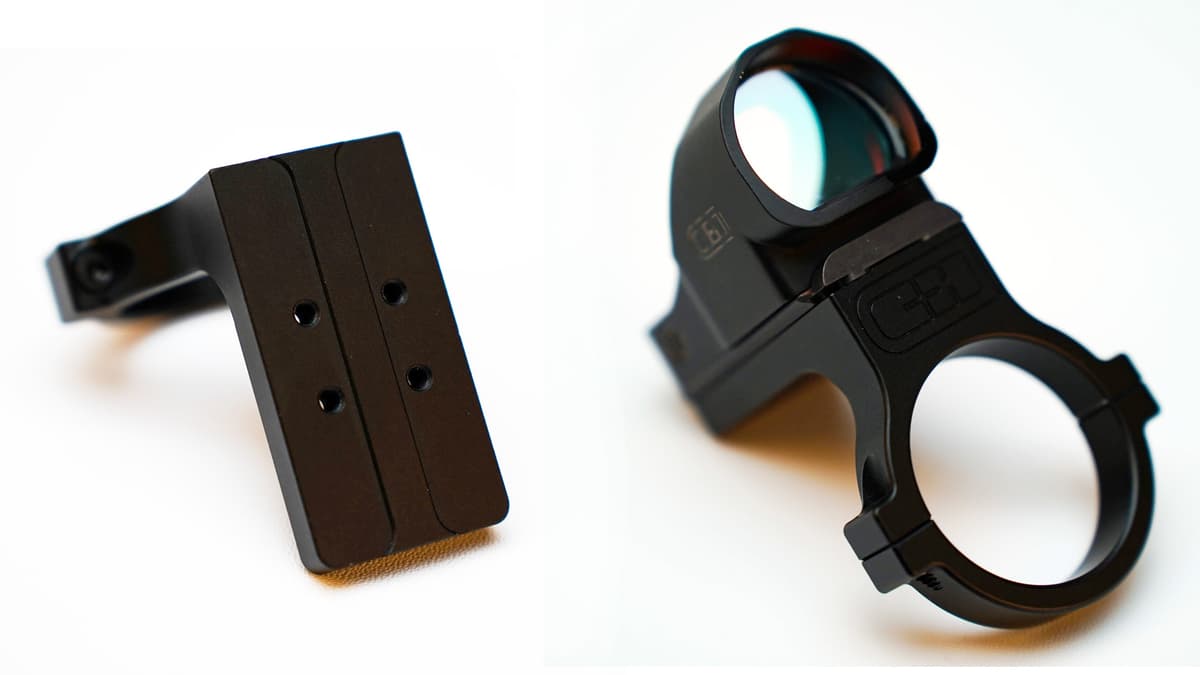
Secondary Optic Mounts & Rails • $77.99
C&H Precision 30mm / 34mm Scope Tube RMR Mount
- 30mm and 34mm scope tube fit
- RMR / Holosun C footprint
$77.99 Catalog
Shop at C&H Precision
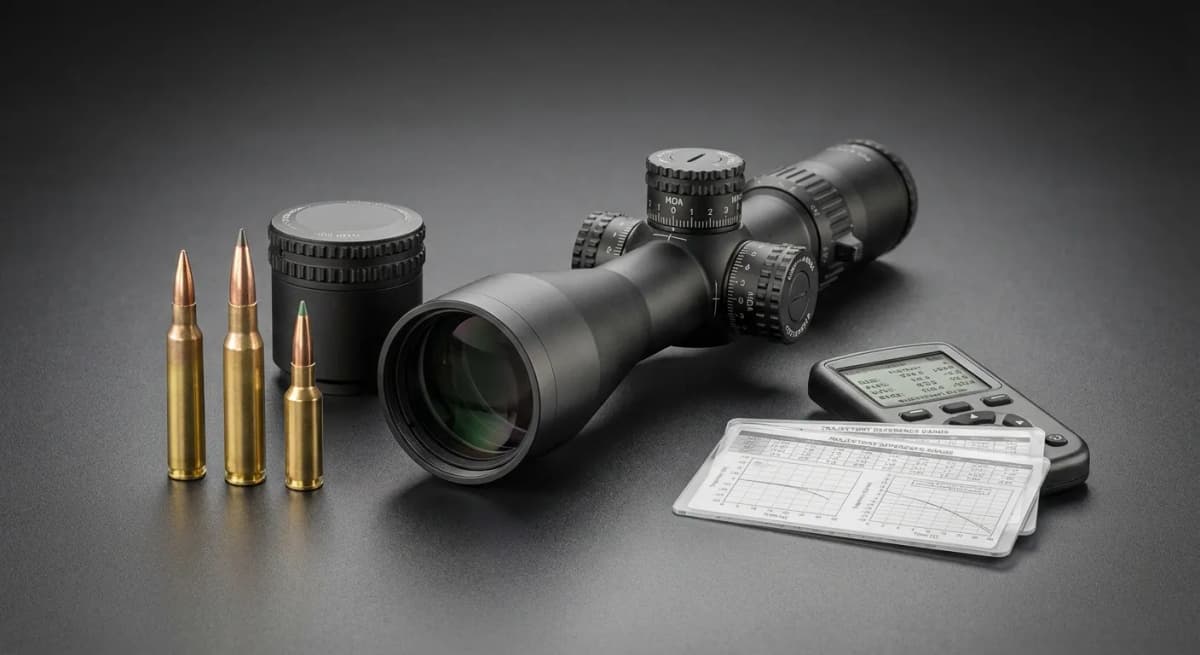
Ballistics chart for 5.56, .300 Blackout, and .308: bullet drop, velocity, and energy at 100/200/300/500/800 yards. Includes a free trajectory calculator for custom loads, zero distances, and wind.
Affiliate links (?)
The ballistics chart below compares bullet drop, velocity, and energy for 5.56 M193, .300 BLK 125gr supersonic, and .308 168gr Match from 100 to 800 yards. Below the chart, a physics-based calculator lets you generate a custom dope card for your barrel length, zero distance, wind, and altitude.
Drop figures use a 50-yard zero for 5.56 and .300 BLK, a 100-yard zero for .308, and a 2.5-inch sight height. Velocities and energies are from common factory loads at typical chronographed muzzle velocities; your specific barrel and lot will vary by 50-100 fps. For exact numbers, use the calculator below.
| Range | 5.56 M193 (16") | .300 BLK 125gr (16") | .308 168gr Match (20") |
|---|---|---|---|
| Muzzle | 3,130 fps / 1,196 ft-lbs | 2,215 fps / 1,360 ft-lbs | 2,650 fps / 2,620 ft-lbs |
| 100 yd | +1.5" / 2,730 fps / 910 ft-lbs | +0.5" / 1,935 fps / 1,040 ft-lbs | 0" / 2,455 fps / 2,250 ft-lbs |
| 200 yd | +0.8" / 2,365 fps / 683 ft-lbs | -5.9" / 1,680 fps / 782 ft-lbs | -3.3" / 2,275 fps / 1,925 ft-lbs |
| 300 yd | -6.2" / 2,030 fps / 503 ft-lbs | -25" / 1,450 fps / 585 ft-lbs | -13" / 2,095 fps / 1,640 ft-lbs |
| 500 yd | -49" / 1,455 fps / 258 ft-lbs | -117" / 1,115 fps / 346 ft-lbs | -59" / 1,770 fps / 1,165 ft-lbs |
| 800 yd | -256" / ~985 fps (subsonic) / 118 ft-lbs | -478" / ~895 fps (subsonic) / 223 ft-lbs | -216" / 1,355 fps / 685 ft-lbs |
Takeaway: 5.56 stays supersonic to ~650 yards from a 16" barrel; .300 BLK supersonic loads run out of energy past 300 yards; .308 Match carries nearly 1,000 ft-lbs to 600 yards and stays supersonic to roughly 1,000.
Ballistic Coefficient (BC): Higher BC means less drop and wind drift. Use G1 for most shooting under 600 yards, G7 for precision beyond 600.
Environmental Factors: Higher altitude and temperature reduce air density, making bullets drop less. Humidity has minimal effect.
Practical Use: Use the calculator below to generate dope cards. Holdovers work for dynamic shooting inside 400 yards; dial turrets for precision beyond that.
New ballistic charts, environmental correction data, and match ammo rankings go to subscribers before the guide refreshes.
External ballistics is the study of bullet behavior after leaving the barrel. Once the projectile exits the muzzle, it's subject to gravity, air resistance, and wind. These forces cause the bullet to drop below your line of sight and drift laterally in crosswinds.
Understanding these forces lets you predict where your bullet will impact at any distance. This knowledge is essential for making accurate shots beyond close range, whether you're shooting steel at 300 yards or hunting at 400. If you are starting from zero, the intro to long range shooting guide puts this math in context with the skills and gear stack a new precision shooter builds first.
The ballistic coefficient measures how well a bullet resists air drag. A higher BC means the bullet retains velocity better, drops less, and drifts less in wind. BC depends on bullet weight, diameter, and shape.
Bullets are compared against standard projectile shapes. G1 is the traditional reference based on a flat-base bullet from the 1800s. G7 is based on a modern boat-tail bullet and is more accurate for today's projectiles.
For practical purposes under 600 yards with quality ammunition, G1 data works fine. For precision work beyond 600 yards, G7 values provide better accuracy. High-BC match bullets are where this matters most: the 6.5 Creedmoor 140gr ELD Match (0.646 G1) stays supersonic past 1,400 yards, while a typical 5.56 62gr load (0.304 G1) goes transonic around 800.
Air density affects how much drag the bullet experiences. Lower air density means less drag, so the bullet retains velocity better and drops less.
Higher altitude means lower air pressure and density. At 5,000 feet, air density is about 85% of sea level. This reduces drag and can change your drop by several inches at long range. Shooters in Denver or Salt Lake City will notice their rifles shoot flatter than at sea level.
Hot air is less dense than cold air. A 40-degree temperature swing can change point of impact by 1-2 inches at 300 yards. If you zero at 70F, expect to shoot slightly high on a 100F summer day and low in 30F winter conditions.
Water vapor is lighter than the nitrogen and oxygen it displaces, so humid air is actually less dense. However, the effect is small, typically less than 1% change in air density. You can usually ignore humidity unless you're doing precision work at extreme range.
Calculate bullet drop, wind drift, and trajectory from 0-1000 yards. Select a preset ammunition profile or enter custom ballistic data.
BC: 0.243 (G1)
Velocity: 3240 fps
Weight: 55 gr
Standard military ball ammunition. High velocity, velocity-dependent fragmentation.
Sets the point-blank range: hold center and stay inside it.
Right Crosswind at 10 mph
Flight to 600 yards, colored by speed. Line of sight is level.
You are here at 0. The orange marker follows the object.
Velocity at target
1,282 fps
Muzzle 3,240 fps
Mach
1.15Transonic
Path vs. line of sight
93.4 in low
14.9 MOA · 4.33 MRAD
Wind drift · 10 mph
60.1 in
9.6 MOA · 2.78 MRAD
Time of flight
897 ms
Energy
201 ft-lb
55 gr
Hold to center
Hold 14.9 MOA over
or dial 59 clicks up at 1/4 MOA
Where the bullet slows
This load stays supersonic to 573 yd and drops below the speed of sound at 697 yd.
Barrel length at 600 yd
| Barrel | Muzzle velocity | Drop | Transonic from | Subsonic from |
|---|---|---|---|---|
| 10.5 in | 2,700 fps | -149.1 in | 440 yd | 564 yd |
| 11.5 in | 2,800 fps | -136.2 in | 466 yd | 590 yd |
| 12.5 in | 2,900 fps | -124.6 in | 491 yd | 615 yd |
| 14.5 in | 3,050 fps | -109.4 in | 528 yd | 652 yd |
| 16 in | 3,150 fps | -100.6 in | 552 yd | 676 yd |
| 18 in | 3,200 fps | -96.5 in | 564 yd | 688 yd |
| 20 in | 3,240 fps | -93.4 in | 573 yd | 697 yd |
Trajectory from the point-mass engine with G1/G7 drag; barrel velocities from the load's published table.
Open the range simulator| Range | Vel | Energy | TOF | Drop | MOA | Drift | MOA |
|---|---|---|---|---|---|---|---|
| 0 yd | 3240 | 1282 | 0.000s | -2.5" | 0.0 | 0.0" | 0.0 |
| 50 yd | 3030 | 1121 | 0.048s | -0.8" | 1.5 | +0.3" | +0.5 |
| 100 yd | 2829 | 977 | 0.099s | 0.0" | 0.0 | +1.2" | +1.1 |
| 150 yd | 2638 | 850 | 0.154s | -0.3" | 0.2 | +2.7" | +1.7 |
| 200 yd | 2454 | 736 | 0.213s | -1.9" | 0.9 | +4.9" | +2.3 |
| 250 yd | 2278 | 634 | 0.276s | -4.9" | 1.9 | +7.9" | +3.0 |
| 300 yd | 2109 | 543 | 0.345s | -9.6" | 3.0 | +11.8" | +3.8 |
| 350 yd | 1948 | 463 | 0.419s | -16.2" | 4.4 | +16.7" | +4.6 |
| 400 yd | 1794 | 393 | 0.499s | -25.2" | 6.0 | +22.7" | +5.4 |
| 450 yd | 1649 | 332 | 0.586s | -36.8" | 7.8 | +29.9" | +6.3 |
| 500 yd | 1515 | 280 | 0.681s | -51.7" | 9.9 | +38.4" | +7.3 |
| 550 yd | 1392 | 237 | 0.785s | -70.3" | 12.2 | +48.5" | +8.4 |
| 600 yd | 1282 | 201 | 0.897s | -93.4" | 14.9 | +60.1" | +9.6 |
Prefer a dedicated workspace? The standalone ballistics calculator is the same solver on its own page, built for saving DOPE cards and running load comparisons back to back. To put that output on a physical card, the DOPE card generator prints a 4x6 range card with dial values rounded to your turret clicks.
There are two ways to compensate for bullet drop: hold over the target with your reticle, or dial your turret to move the point of impact up.
Both are angular measurements used to quantify adjustments. Neither is inherently better: choose based on your optic.
A "dope card" is a quick-reference chart of your drop and drift corrections at various distances. Use the calculator above to generate your data, then record it on a card taped to your stock or stored in a scope cover.
Verify your calculated dope at the range. Real-world performance may vary slightly from calculated values due to lot-to-lot ammo variation, chronograph accuracy, and shooting conditions. A real muzzle velocity from a shooting chronograph is the single biggest accuracy unlock for the calculator above; box-velocity numbers routinely miss true MV by 50-100 fps.
This calculator uses a point-mass trajectory model with atmospheric corrections. It provides accurate predictions for most shooting scenarios but has limitations:
For practical rifle shooting to 600 yards, these limitations are negligible. Always verify your data at the range before relying on it in the field.
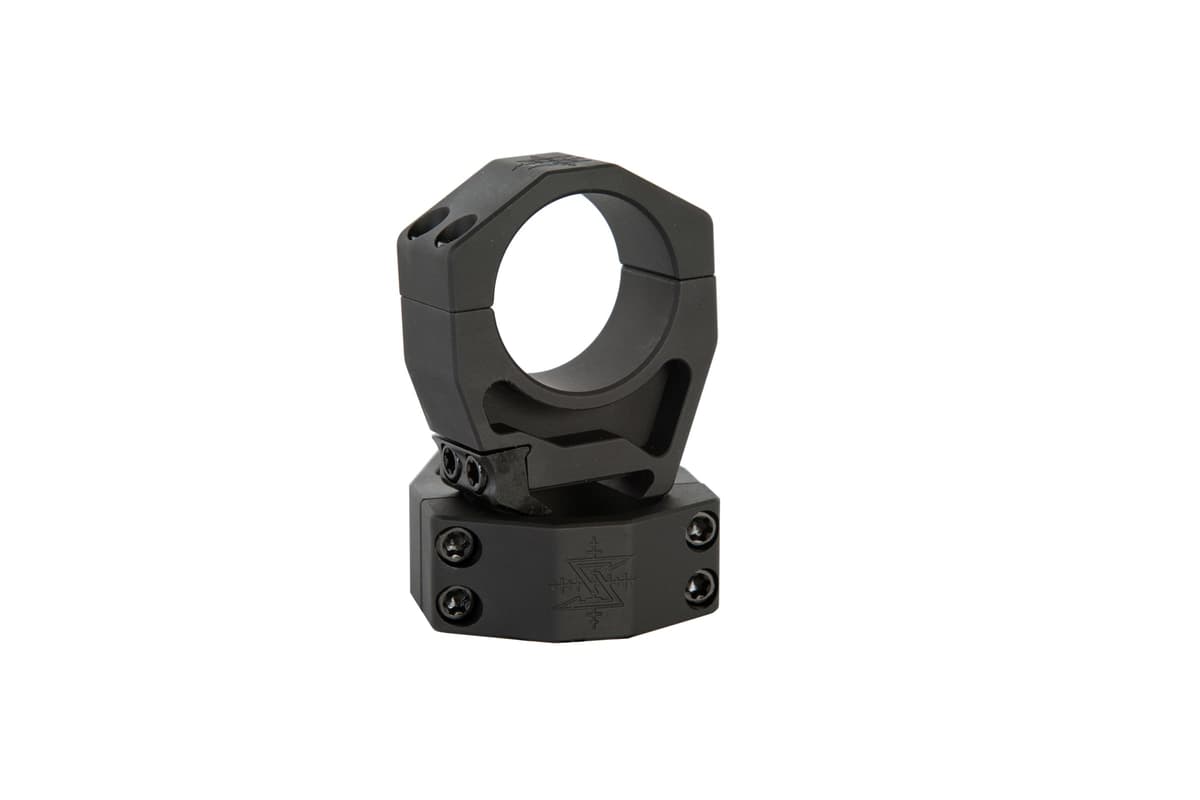
Precision at distance requires quality glass. These optics offer the turret tracking and reticle systems discussed above. For a broader comparison, see our best LPVO guide or the zeroing guide to dial in your new optic.
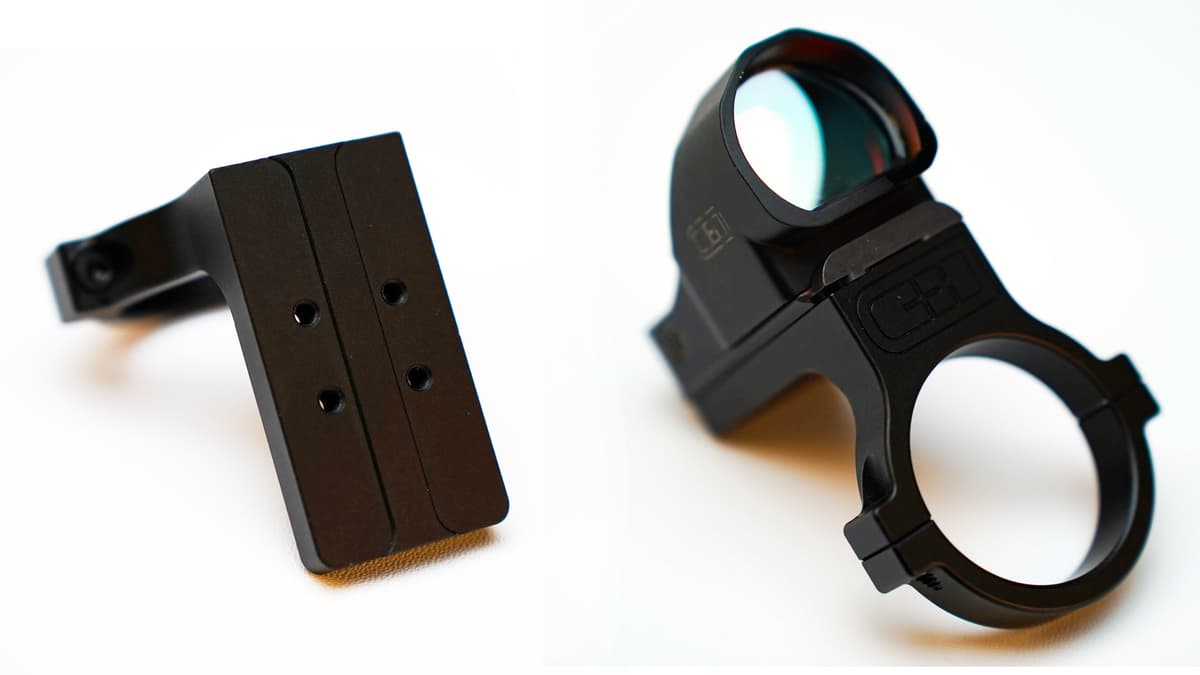
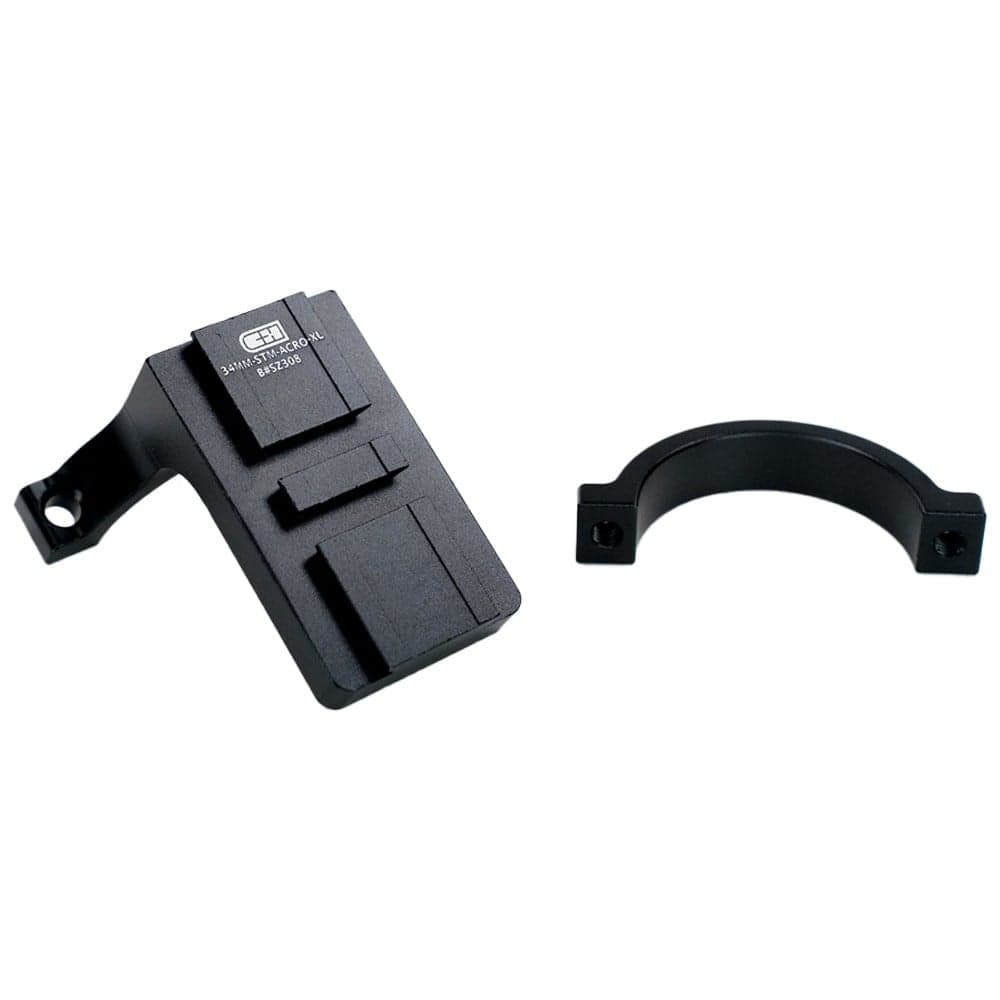
Affiliate links (?)
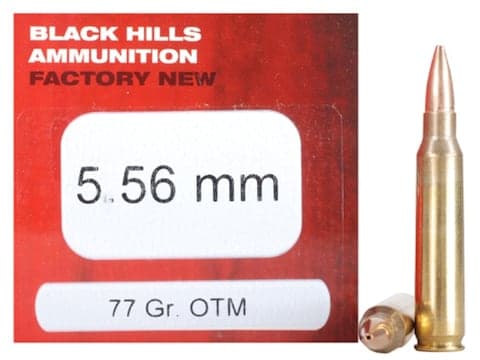
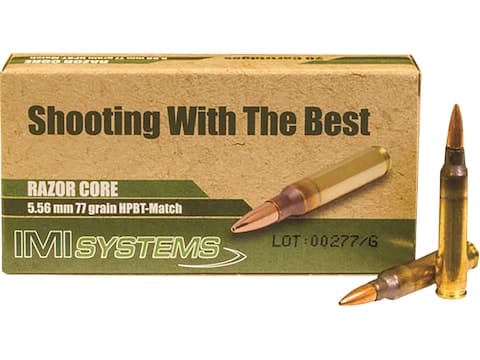
Ballistic calculations are only as good as your ammo consistency. Match-grade loads minimize lot-to-lot velocity variation. See our 5.56 ammo selection guide and best .308 ammo guide for detailed load comparisons. The .30-06 vs .308 comparison breaks down how the two .30-caliber loads differ on velocity, energy, and recoil.
Affiliate links (?)

Avid shooter with 10+ years of experience including competition shooting, an associate member of the Professional Outdoor Media Association (POMA), and a member of the National Shooting Sports Foundation (NSSF) and Safari Club International (SCI). Built 10+ AR-pattern rifles and several handgun platforms for home defense, competition, and suppressed night shooting.
This page contains affiliate links. Purchases through these links support the site at no extra cost to you. Read the affiliate disclosure
Ready to continue? Here's the recommended next guide:
How to zero an AR-15 red dot, LPVO, or iron sights. Step-by-step with 50/200 zero chart, printable targets, 25-yard confirmation method, clicks calculator, and mechanical offset explained.
Continue exploring with these related resources
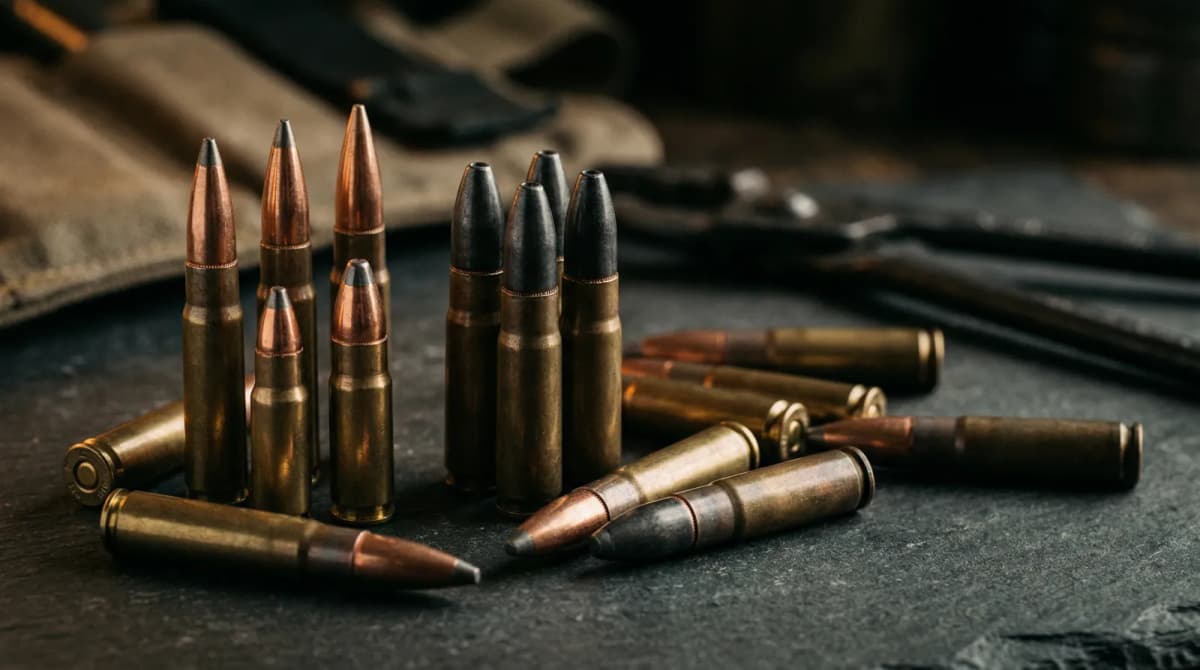
Best 300 blackout ammo ranked for 2026. Barnes TAC-TX 110gr (#1 supersonic), Hornady Sub-X 190gr (#1 subsonic), Hornady V-MAX, SIG Elite Copper, Lehigh Maximum Expansion. Suppressed vs unsuppressed, home defense, hunting, and training loads with ballistic data.
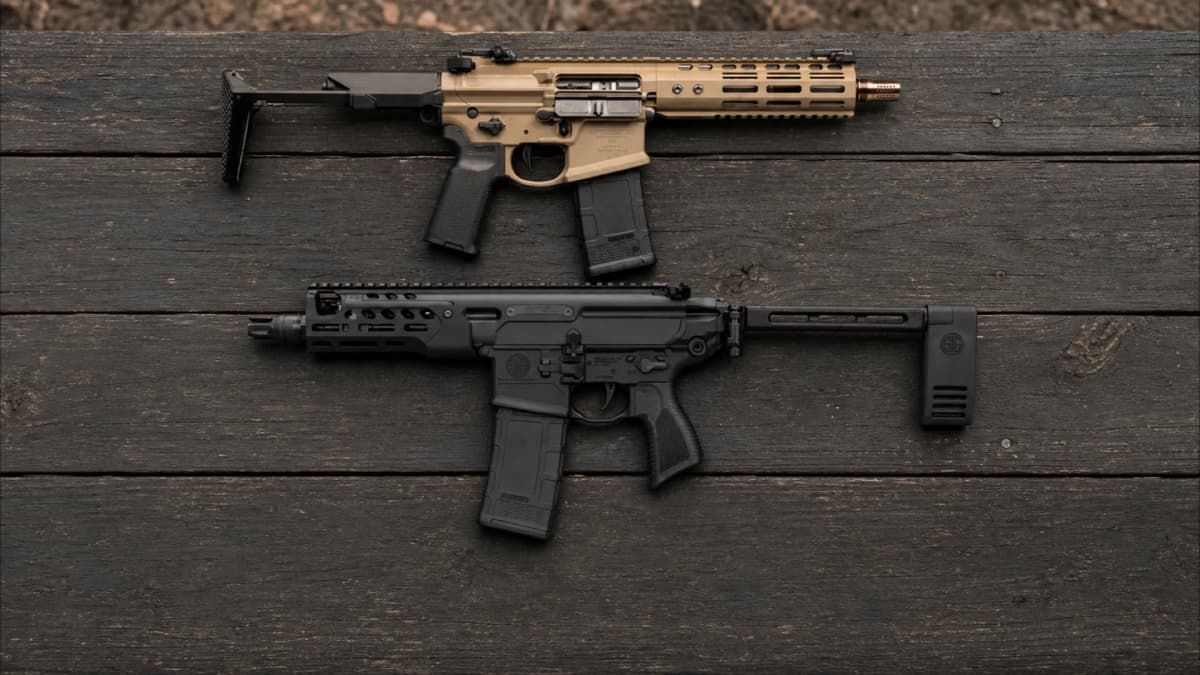
Ten current .300 Blackout firearms ranked across standard rifles, braced pistols, factory SBRs, suppressed packages, and bolt actions for distinct buyer needs.
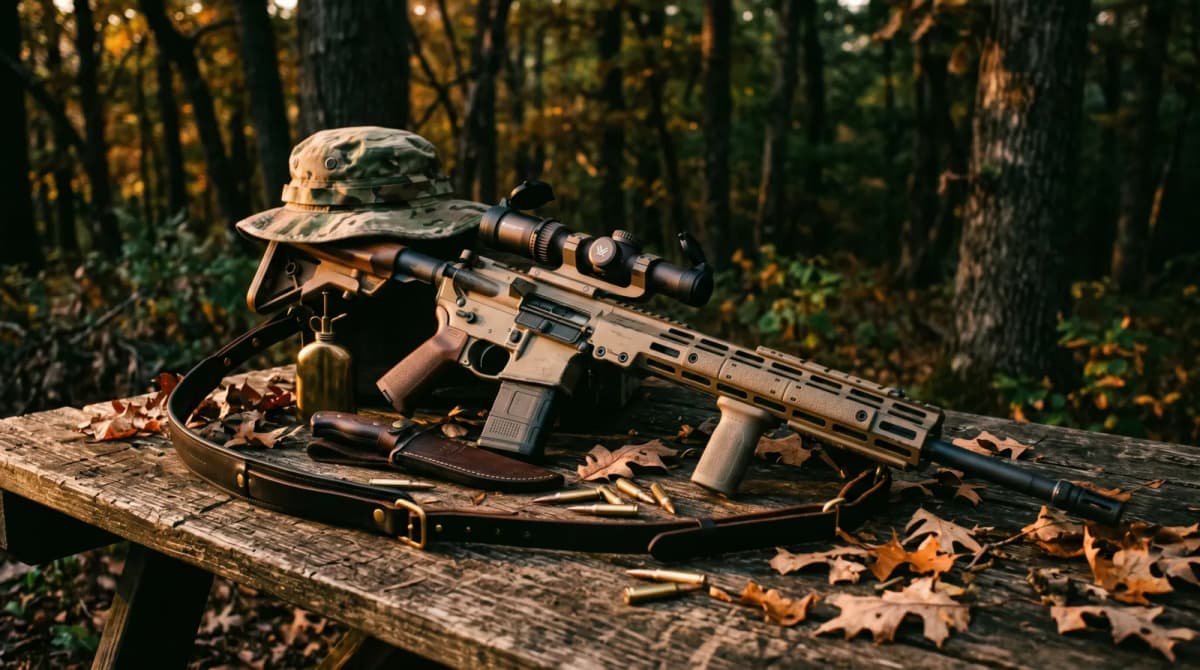
Top 5 AR-15 hunting rifles ranked by cartridge terminal performance and factory accuracy. Wilson Combat .300 HAM'R, Springfield 6.5 Grendel, Ruger .450 Bushmaster, CMMG .350 Legend, and BCA 6.5 Grendel compared for deer, hog, and predator hunting.
Related articles and industry updates
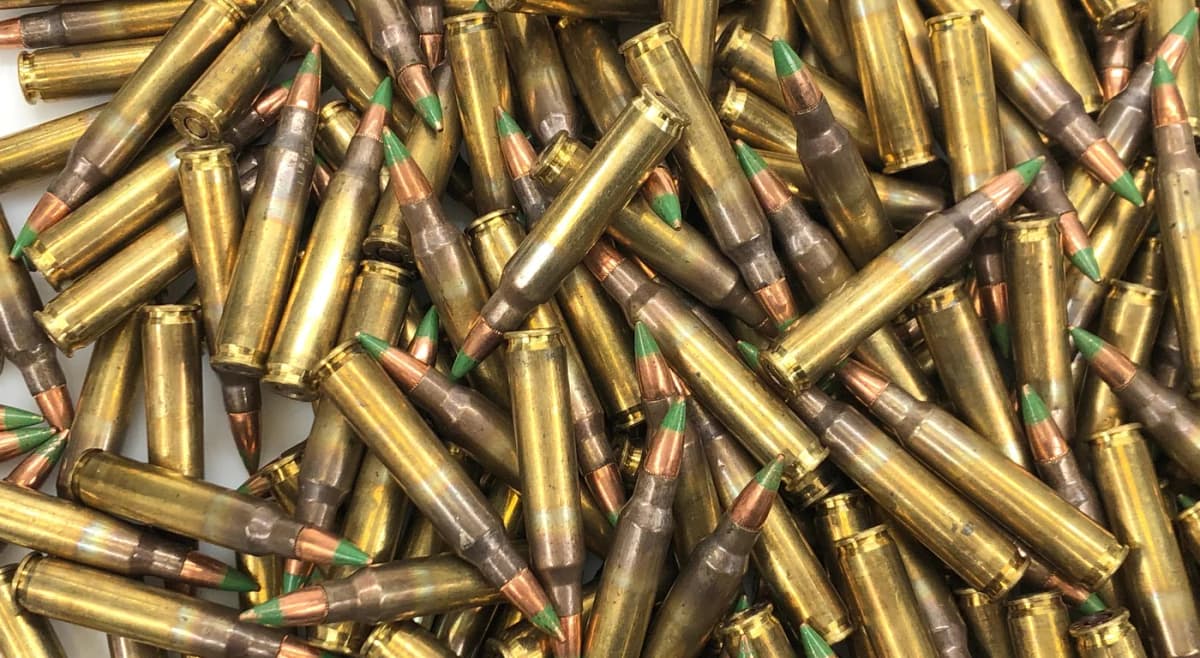
M193 is a 55gr lead-core FMJ, M855 green tip is a 62gr load with a hardened steel penetrator over lead, and M855A1 is the Army's lead-free replacement, a military-contract load rather than a normal commercial offering. M193 falls outside the federal armor-piercing definition and M855 is covered by ATF's sporting-purposes exemption, extended to loose projectiles in July 2026; state and range rules are a separate question. Velocity, twist rate, fragmentation, barrier performance, and which one belongs in your rifle.
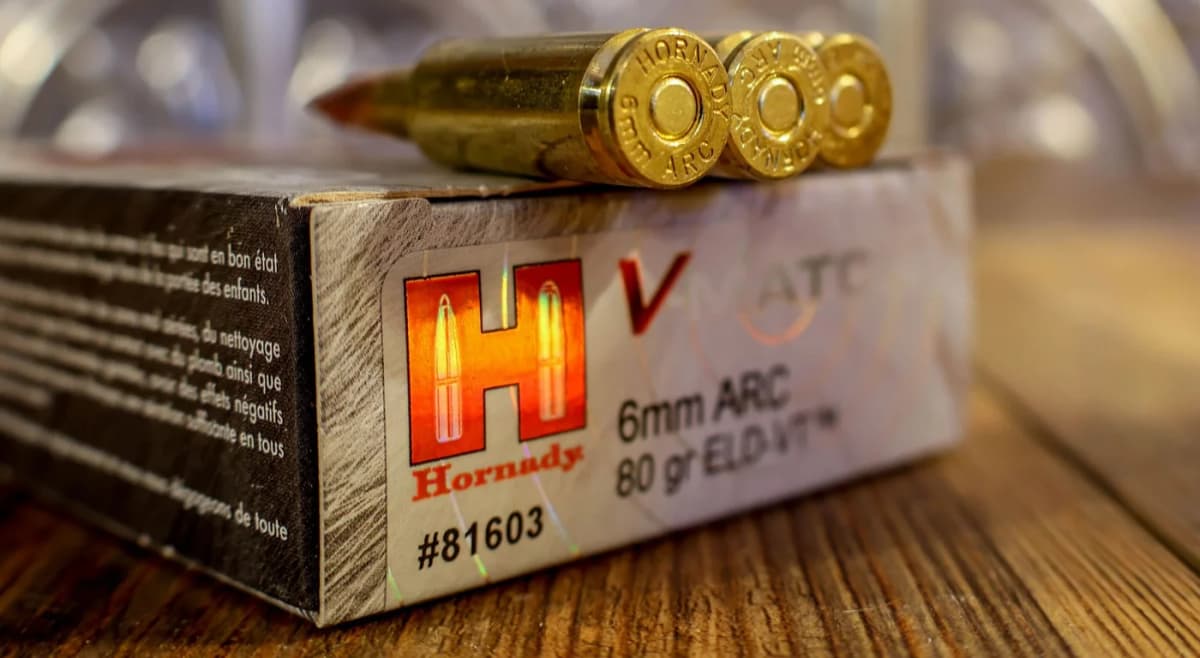
A trend study of five AR-15 cartridges beyond 5.56. .300 Blackout peaked at 100 in June 2020 and is climbing again in 2026, 6.5 Grendel has fallen every year since its 2020 peak, .224 Valkyrie went from launch to irrelevance in four years, and 6mm ARC is the only one with uninterrupted year-over-year growth since 2021.
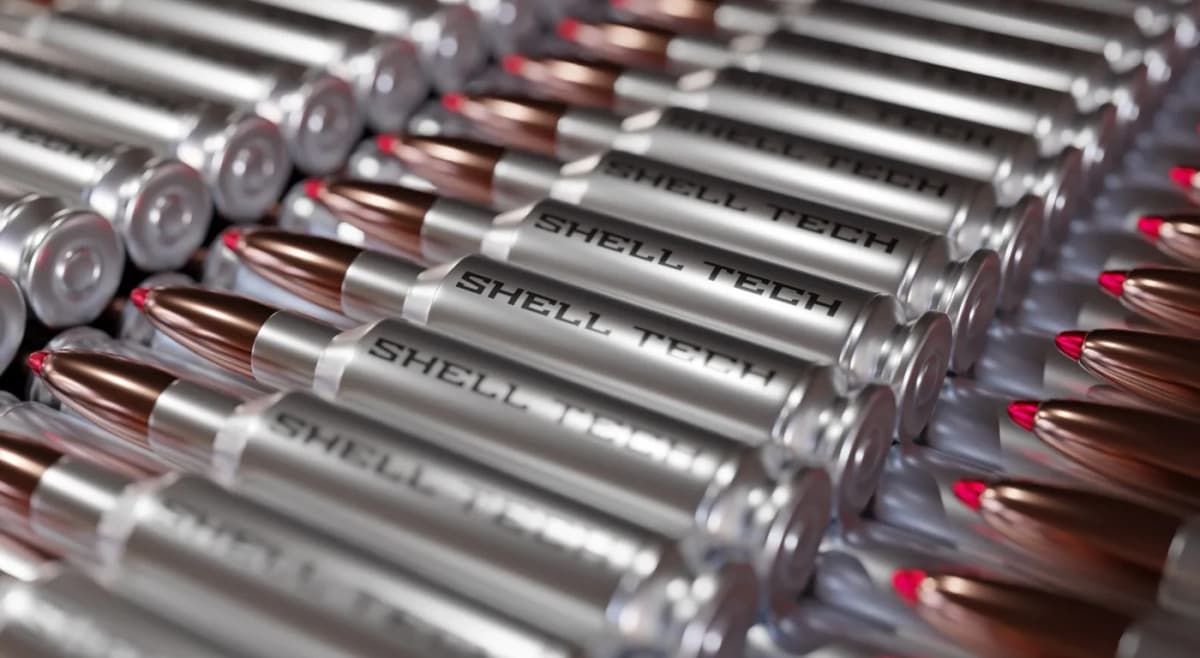
Shell Shock Technologies launched factory-primed NAS3 cases in .308 Winchester/7.62x51mm and 5.56 NATO/.223 Remington on July 30, 2026. The two-piece nickel-alloy body and stainless-steel head are rated up to 50% lighter than brass with about twice the tensile strength. Pricing starts at $220 per 250 in .308 and $135 per 250 in 5.56, with packs to 5,000, roughly 8 to 9 cents a case over the unprimed equivalents.