Streamlight ProTac HL-X
- ✓1,000 lumens
- ✓50,000 candela

Best Ruger Mini-14 upgrades ranked for 2026: Amega scout mount, Samson A-TM folding stock, Archangel AAMINI precision stock, M*CARBO trigger spring kit, Tech Sights MINI200 aperture, low-profile red dots, and factory magazine recommendations.
Affiliate links (?)
Mini-14 Buying Guide / Updated 2026
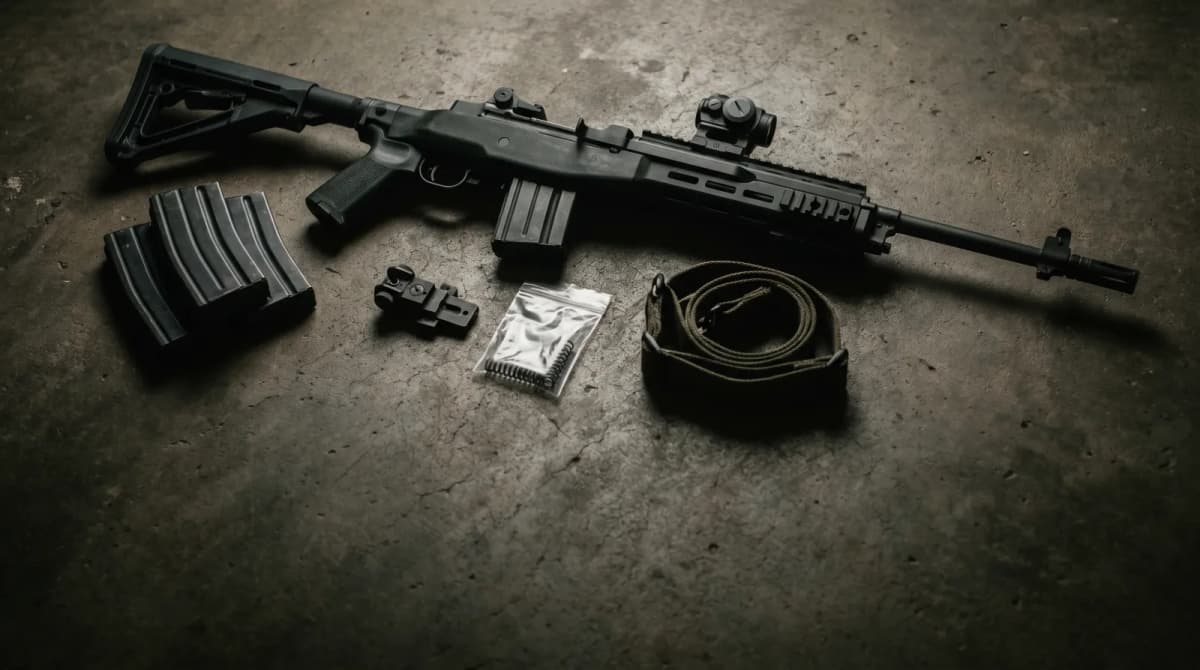
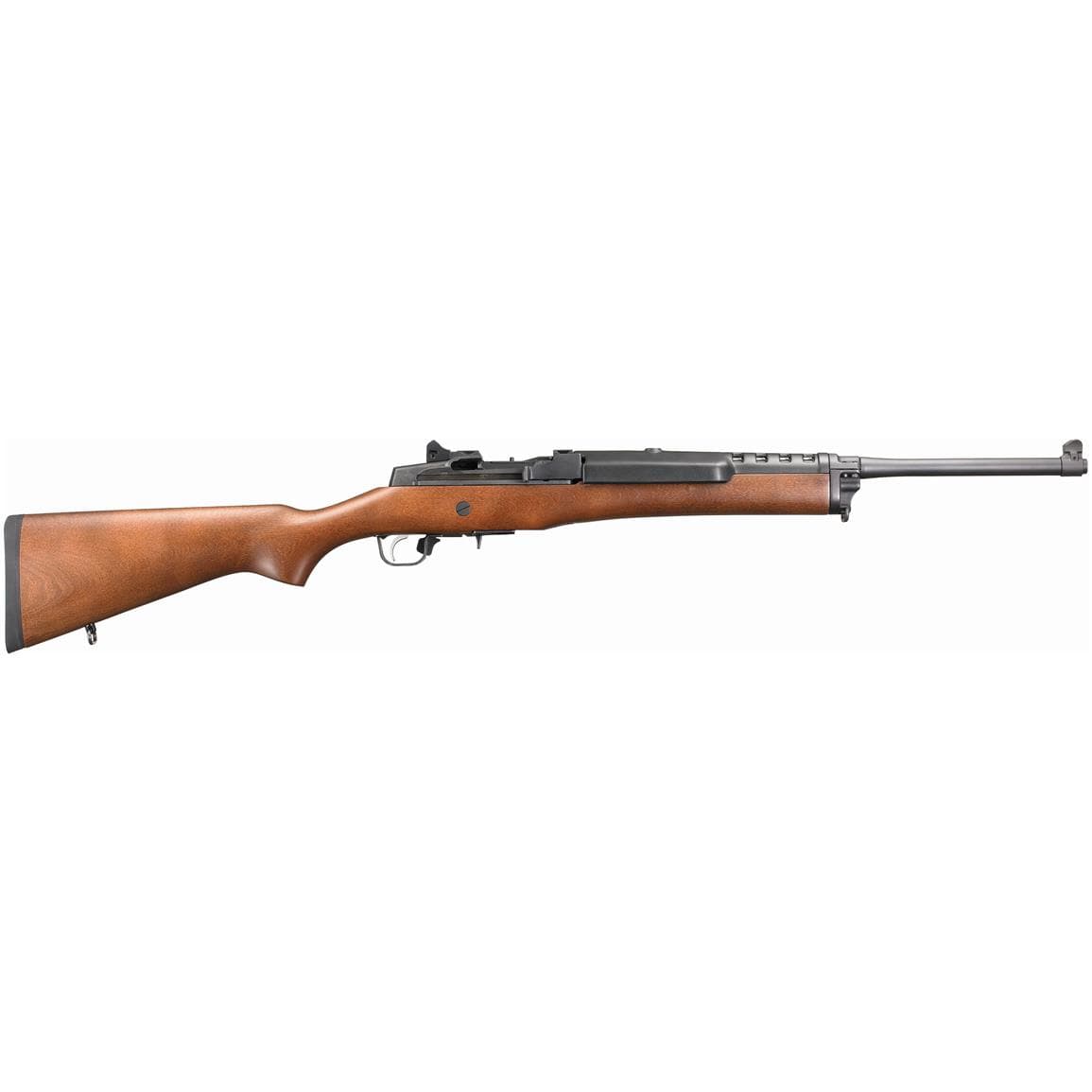
Mini-14 owners do not buy this rifle to chase the AR-15. They buy it for the same reasons it has stayed in the Ruger catalog since 1973: a non-AR semi-auto in 5.56 that ships in restrictive states where AR-pattern rifles are feature-locked, a soft-recoil ranch and patrol gun, or a 7.62x39 Mini-30 in a more shootable package than an AK. The platform has three real weaknesses: the factory drop stock fights modern optics, the receiver does not have a forward optic-mounting surface, and the factory trigger breaks heavy. The Amega scout mount, a Samson or Archangel stock, and an M*CARBO spring kit fix all three for less than the cost of a budget AR. This guide covers every meaningful Mini-14 upgrade and accessory in the order experienced owners install them. Magazines come first.
Buy magazines before you buy any other upgrade. After mags, fix the optic geometry with the Amega Mini-Scout-Mount or a Samson Hannibal Rail; the Mini-14's drop stock makes receiver-mounted optics unusable without one. Then a stock conversion based on use case, an M*CARBO trigger spring kit, and a low-profile red dot. Skip the muzzle device unless you own the threaded Tactical variant.
Amega scout mount, Aimpoint T-2, Samson A-TM stock, factory 20-rd mags
Tech Sights MINI200, M*CARBO spring kit, factory 10-rd mags, ATI Strikeforce stock
Archangel AAMINI stock, GG&G picatinny rail, LPVO or scout scope, M*CARBO spring kit
Sling, light, backup sights, and QD mounts, the upgrades most builders add first.
Affiliate links (?)

Base Platform
Ruger / $1299.00 base
Garand-action 5.56 ranch rifle with an 18.5-inch barrel, fixed-piston gas system, and integral scope mounts.
Upgrade Builder
Open any slot to add an upgrade; the total updates in place and every part keeps its tracked retailer link.
Red dots, LPVOs, and magnified optics for target acquisition.
No upgrade selected for this slot.
Illuminate targets and identify threats in low light.
No upgrade selected for this slot.
Dial in length of pull, cheek weld, and balance.
No upgrade selected for this slot.
Feed reliability and capacity, especially with duty mags.
No upgrade selected for this slot.
Solve the platform's three biggest weaknesses first: the factory drop stock that fights modern optics, the lack of a forward optic-mounting surface, and the heavy factory trigger. Magazines come before everything else.
Best optic-mounting solution
Best premium stock upgrade
Best budget trigger upgrade
Affiliate links - purchases support this site at no extra cost to you. (?)
The Mini-14 is not a Ruger 10/22 and it is not an AR-15. It sits in its own niche: a 5.56 semi-auto that runs in California, New York, New Jersey, Massachusetts, Hawaii, Illinois (see the IL-legal tactical firearms guide), and Washington (see the WA-legal tactical firearms guide) without the feature-locked configurations AR rifles need to stay legal in those states. It is also the cheapest way into a 7.62x39 semi-auto rifle that does not require AK-pattern controls or import-era magwell tuning, since the Mini-30 shares the same chassis. Owners who buy this rifle keep it for decades, which is why a $375 Samson stock and a $210 Amega mount are both reasonable buys against a $1,379 MSRP rifle that streets around $1,099. The aftermarket assumes a long ownership horizon.
Two cross-references worth opening before committing to upgrades. The optic mounting basics guide covers the cheek-weld and parallax geometry that drives the Amega scout-mount recommendation below. The optic selection matrix compares red dot, prism, and LPVO options against use case if you are not sure whether a 1x or 1-6x belongs on the rifle. For shooters scaling sideways into other Ruger semi-autos, the Ruger 10/22 upgrades guide covers the rimfire trainer that pairs naturally with a Mini-14 range setup, and the Ruger PC Carbine upgrades guide covers the 9mm takedown sibling for owners building a Ruger family of rifles. For the .308 battle-rifle equivalent of the same scope-mounting and trigger problems, the Springfield M1A upgrades guide ranks mounts, chassis, and National Match triggers for the M1A.
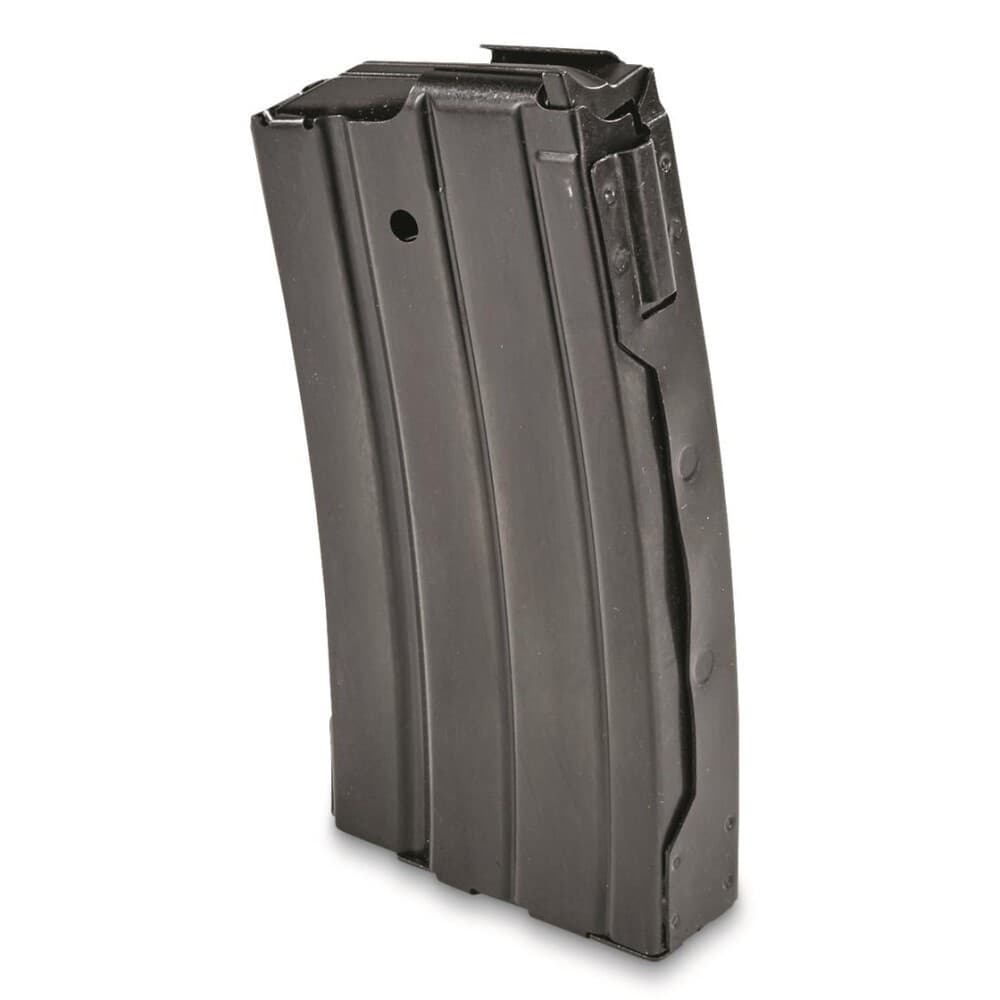
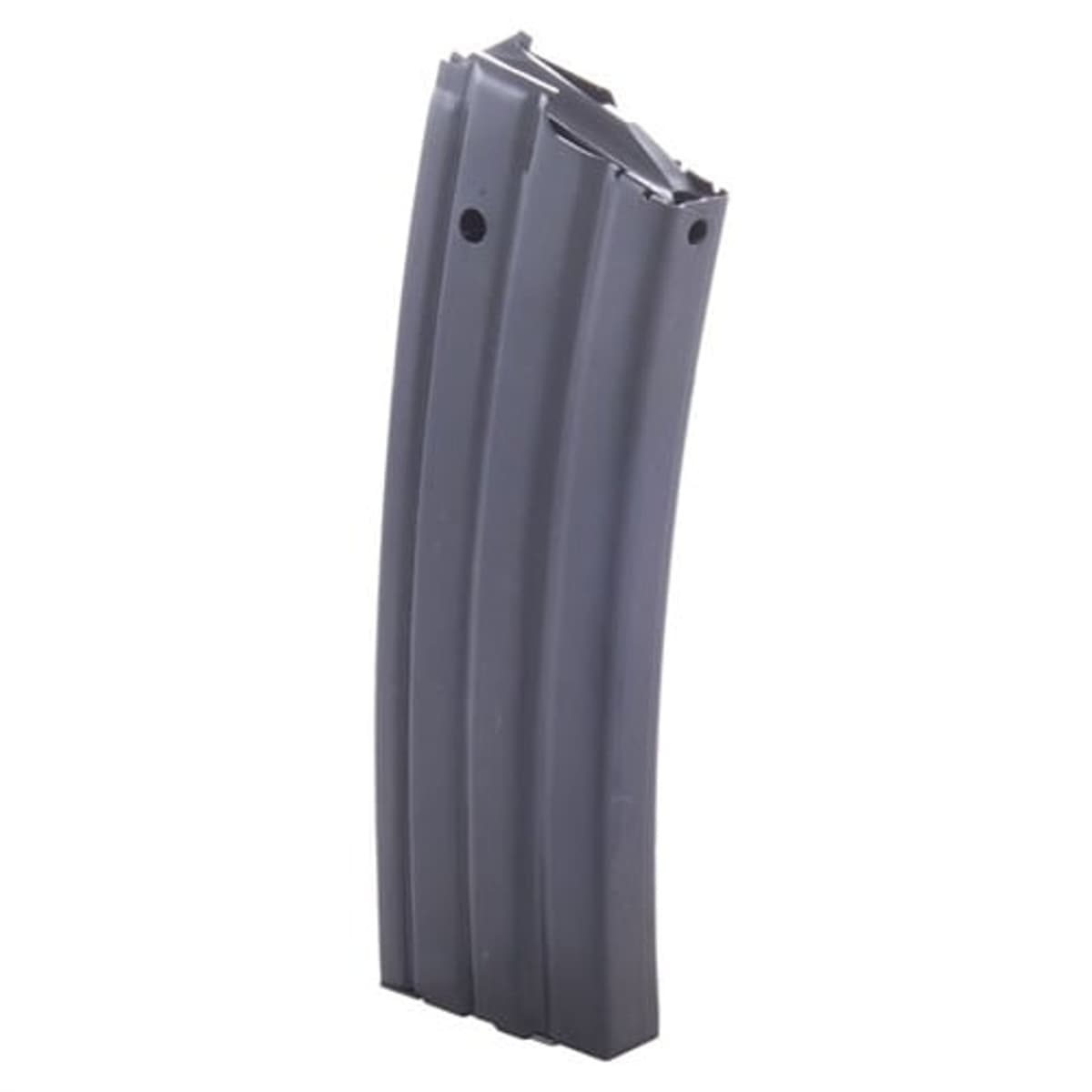
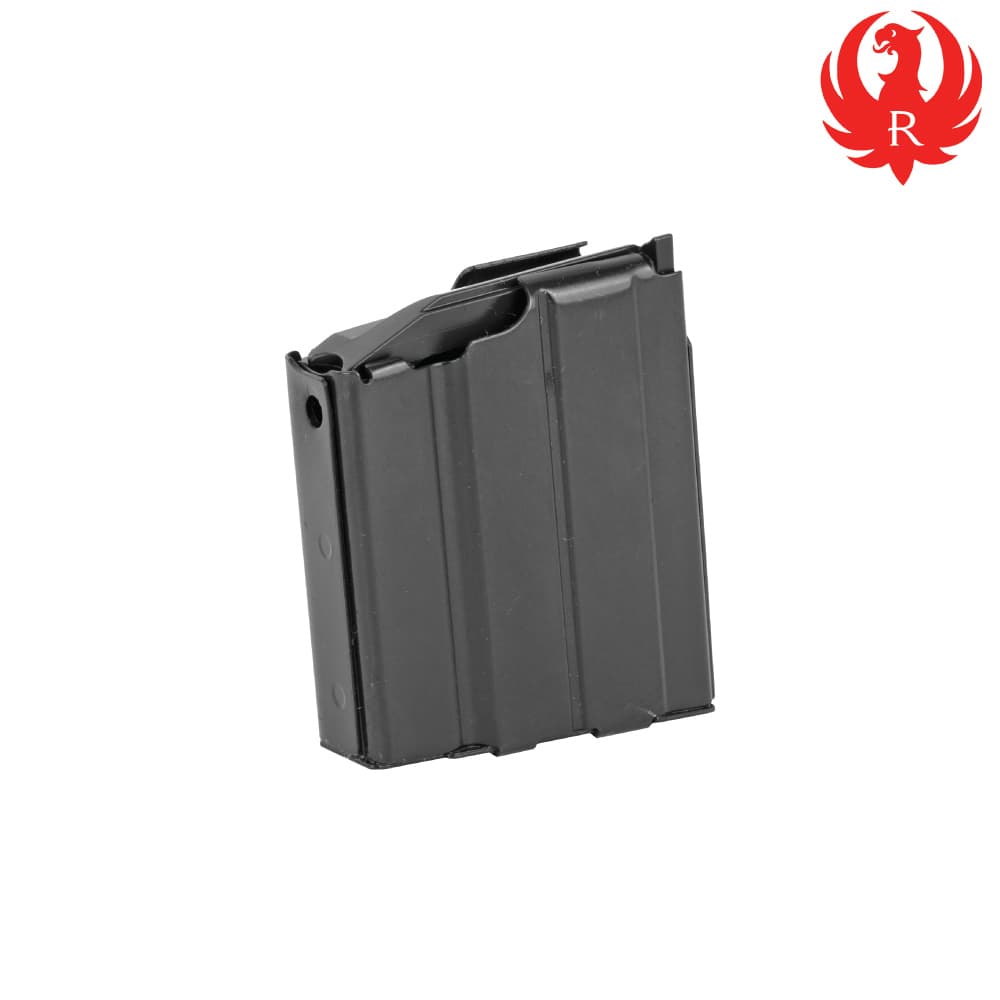
Magazines are the cheapest upgrade and the one that decides whether the rifle runs. The Mini-14 ships with one factory magazine. That is not enough for any serious use case. Stock factory Ruger 20 or 30-round magazines for unrestricted-state owners and factory Ruger 10-round magazines for compliance states. The Mini-14 uses proprietary magazines, not STANAG, so AR-pattern PMAGs and aluminum mil-spec mags do not fit the rifle.
Minimum mag count by use: Ranch and patrol: 4 to 6 mixed 20 and 30-rounders. Range and training: 6 to 8 mags to run two-mag drills without stopping to reload. Defensive or home defense: 4 mags loaded with the same ammo the rifle is zeroed on. Compliance states: 4 to 6 factory 10-round magazines, never Pro Mag or Tapco aftermarket.
Reliability warning: Pro Mag and Tapco 10, 20, and 30-round Mini-14 magazines are widely reported to feed-lip spread, bind in the magwell, and fail to lock the bolt back on the last round. The price gap versus factory Ruger is roughly $13. The reliability gap is large enough that experienced Mini-14 owners run factory mags exclusively. The only ProMag products worth buying for the platform are the Archangel AAMINI and AA1430 stocks, which are not magazines.
Mini-30 note: Mini-30 rifles in 7.62x39 use a different proprietary magazine that is not interchangeable with Mini-14 5.56 mags even though the magwell engagement style is identical. Stock factory Ruger 5-, 10-, or 20-round Mini-30 magazines for 7.62x39 builds.
Affiliate links (?)
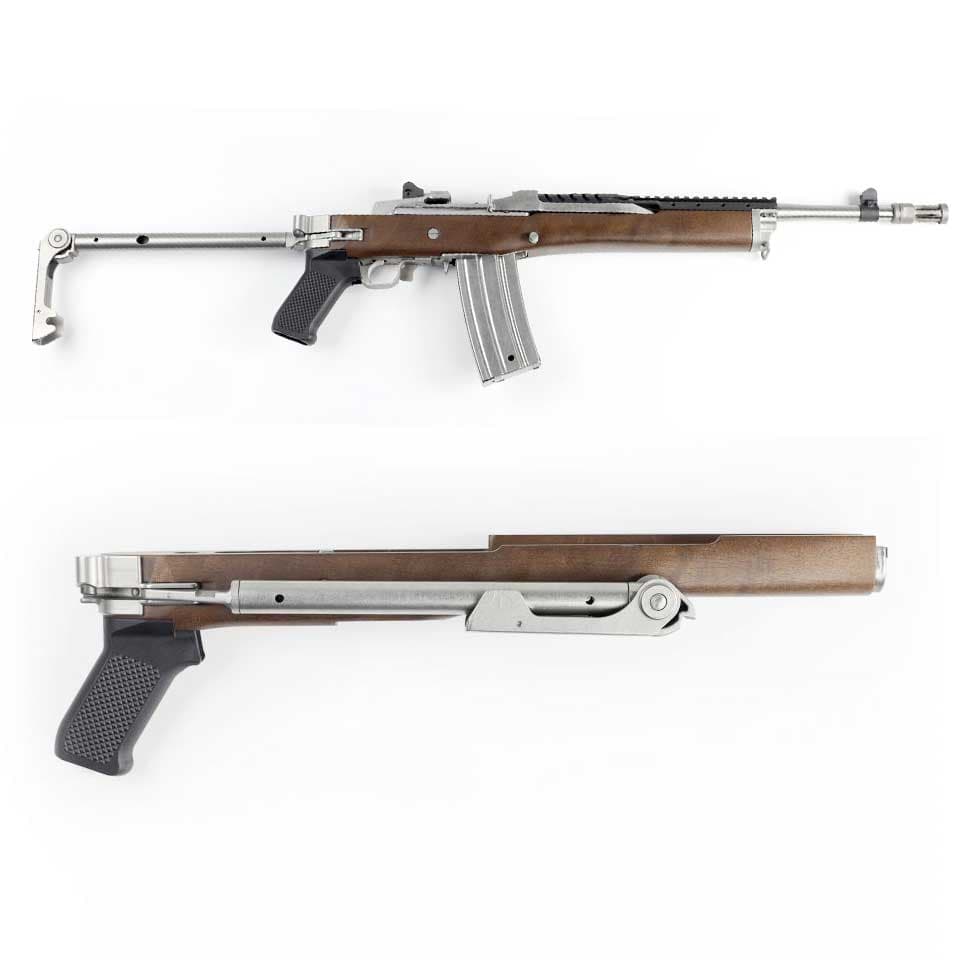
The Mini-14's factory drop stock was designed around the M14-style irons, which sit lower than modern AR-pattern sight heights. When an optic mounts to the receiver scope-ring cuts or the factory rear sight rail, the optical centerline ends up roughly 1.5 inches above the comb instead of the 0.7 inches an AR-pattern stock provides. Most shooters end up with a chin weld instead of a cheek weld, which is fast at close range and slow past 50 yards. Three valid solutions exist, and they pick by mount position rather than by optic.
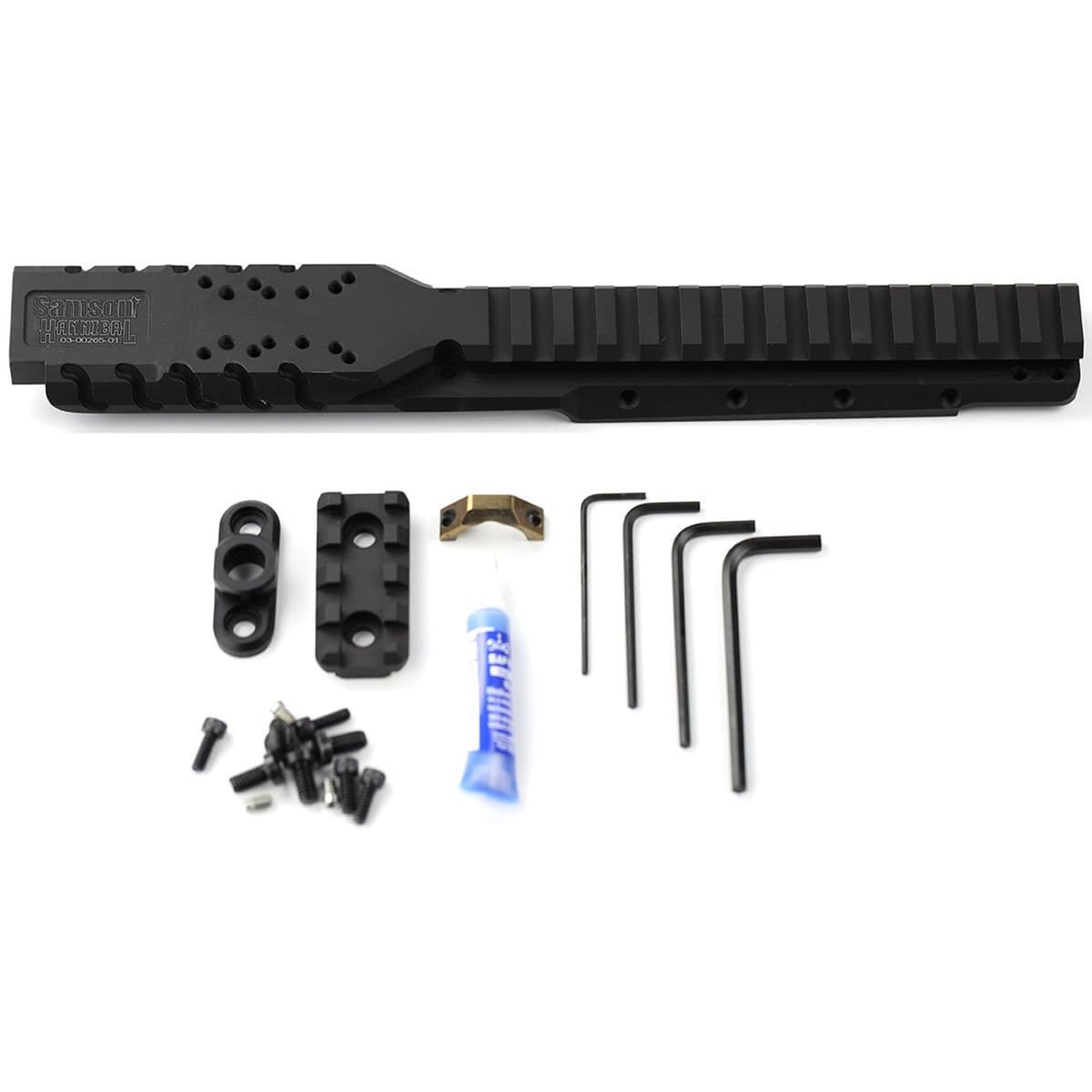
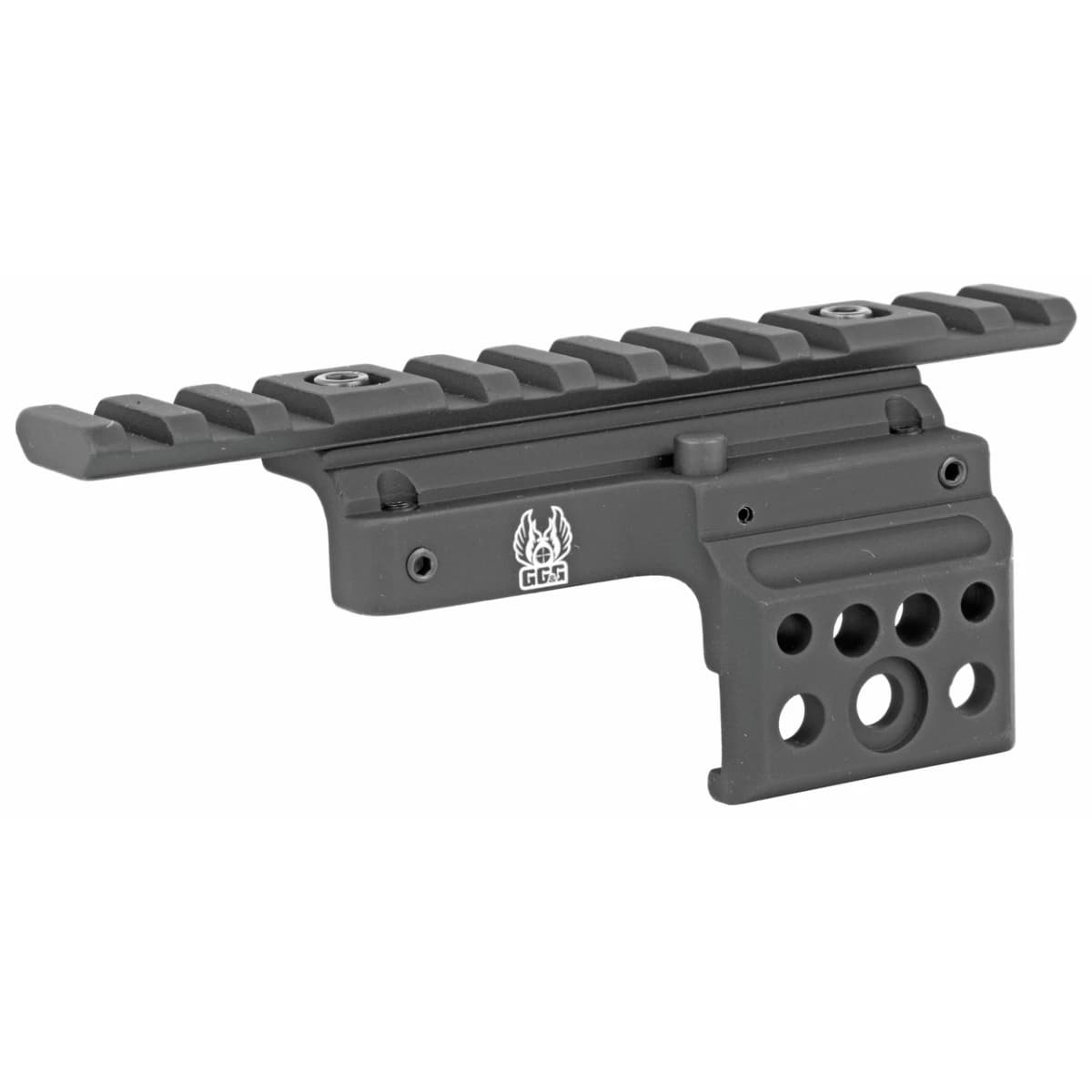
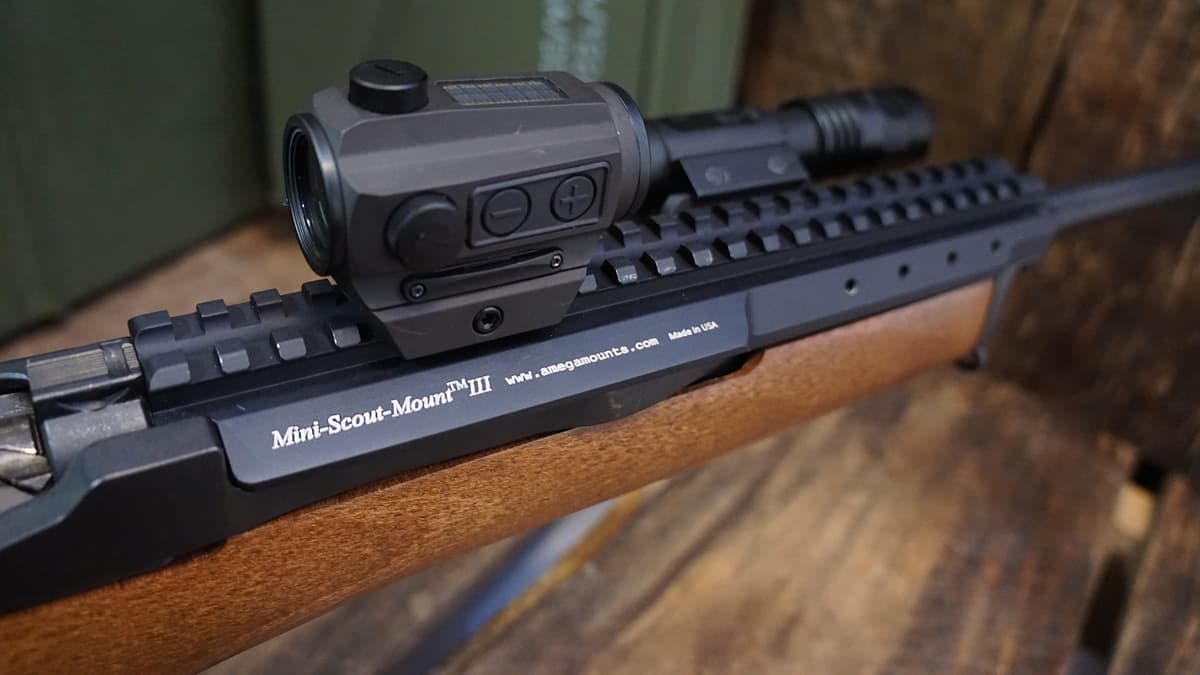
The Amega Ranges Mini-Scout-Mount III is the cleanest fix. It replaces the factory upper handguard with a heat-shielded 6061-T6 housing that carries a full-length picatinny rail forward of the receiver. A red dot or long-eye-relief scout scope mounted forward of the gas system lines up with the shooter's natural cheek weld on the factory or aftermarket stock. The Samson Hannibal Rail and GG&G picatinny mount stay at the receiver position. They preserve the chin-weld geometry but offer the lowest possible mounting height for an Aimpoint Micro footprint optic on the Mini-14, which is the right choice for shooters who already have a stock conversion solving the comb height. See the optic mounting basics guide for cheek-weld geometry first principles.
The Mini-14's drop stock fights conventional receiver-mount optics. Pick by mount position: forward (Amega) for cheek-weld geometry, receiver-position (Hannibal/GG&G) for conventional optic placement.
Best scout-mount rail
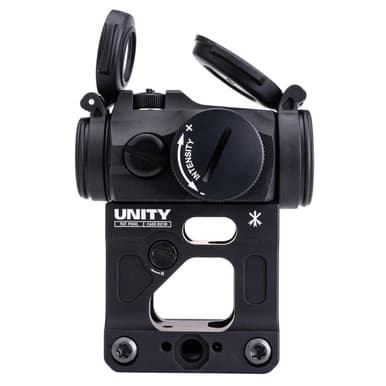
Best low-profile micro red dot mount
Best conventional picatinny rail
Affiliate links - purchases support this site at no extra cost to you. (?)
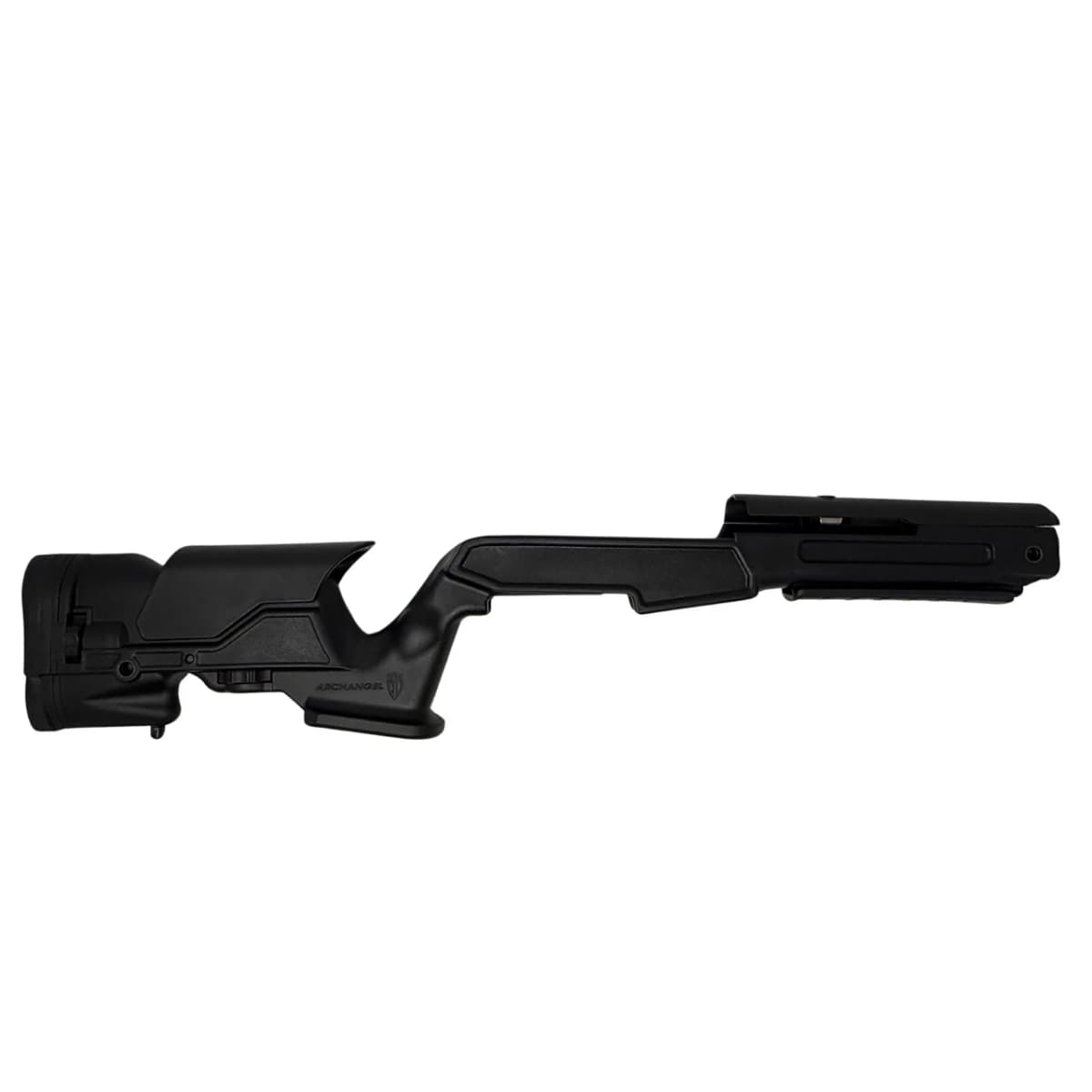
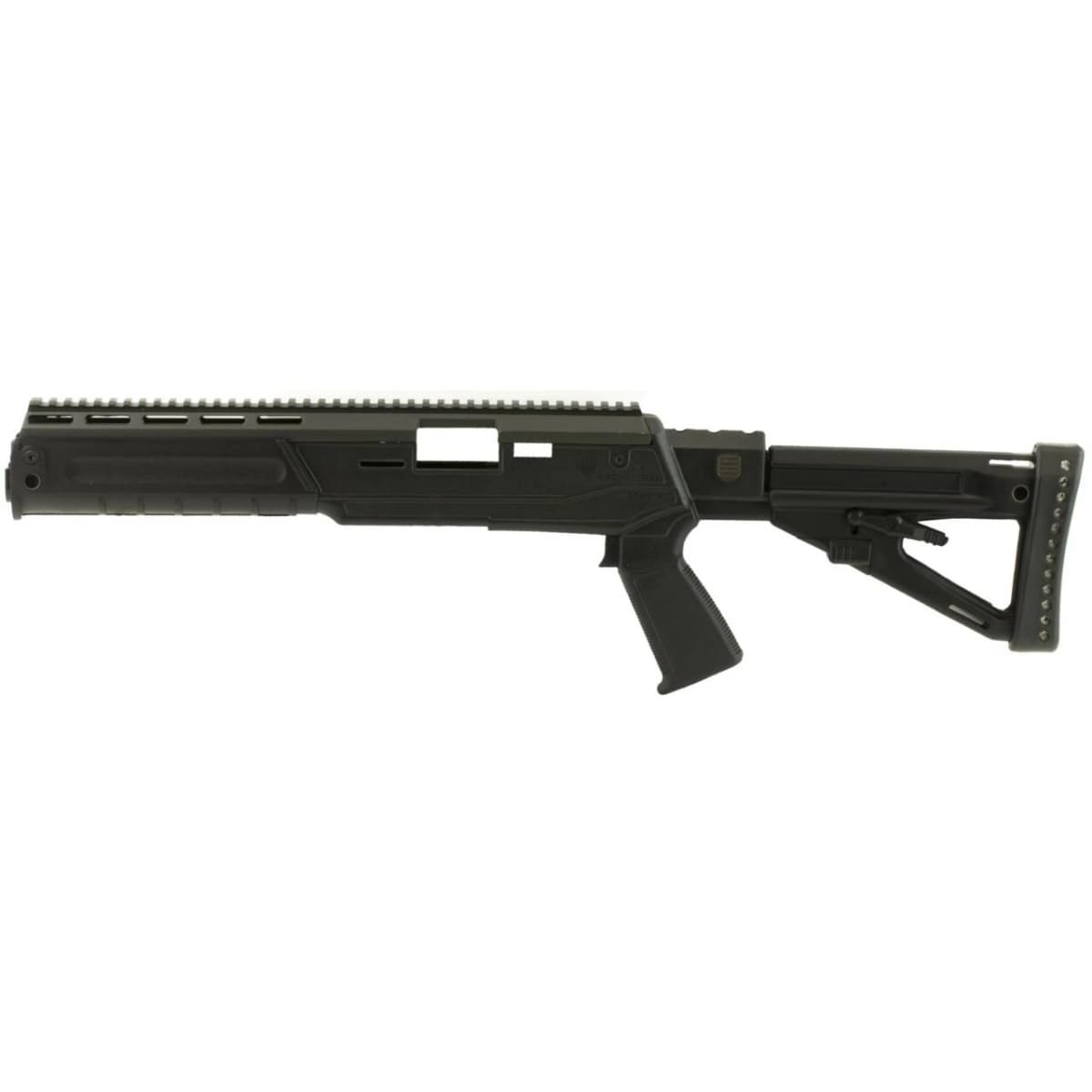
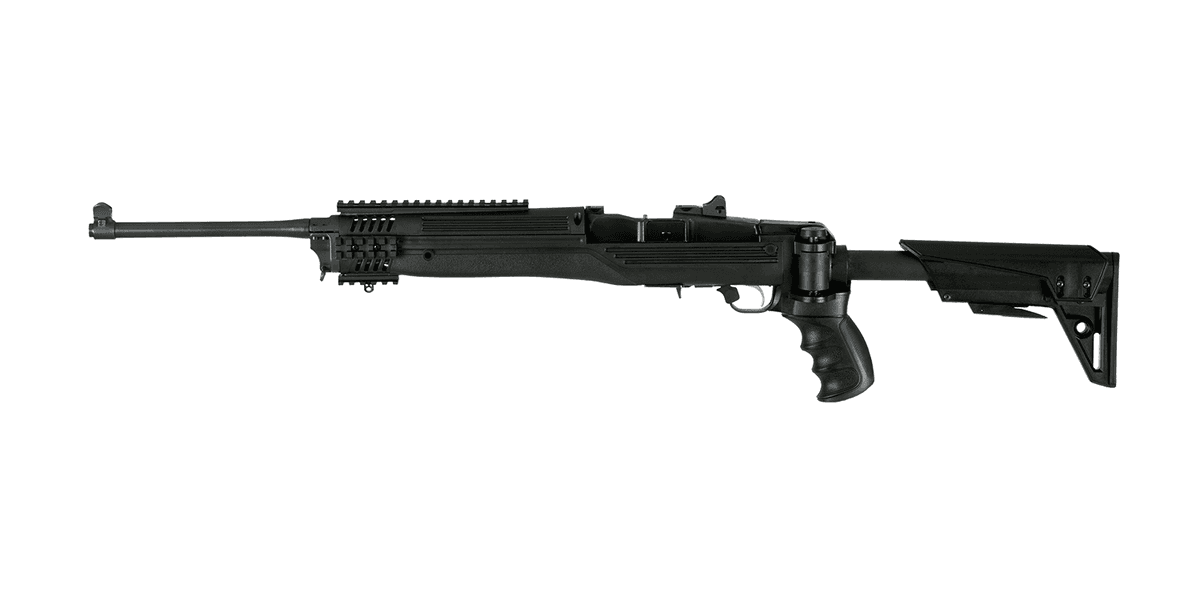
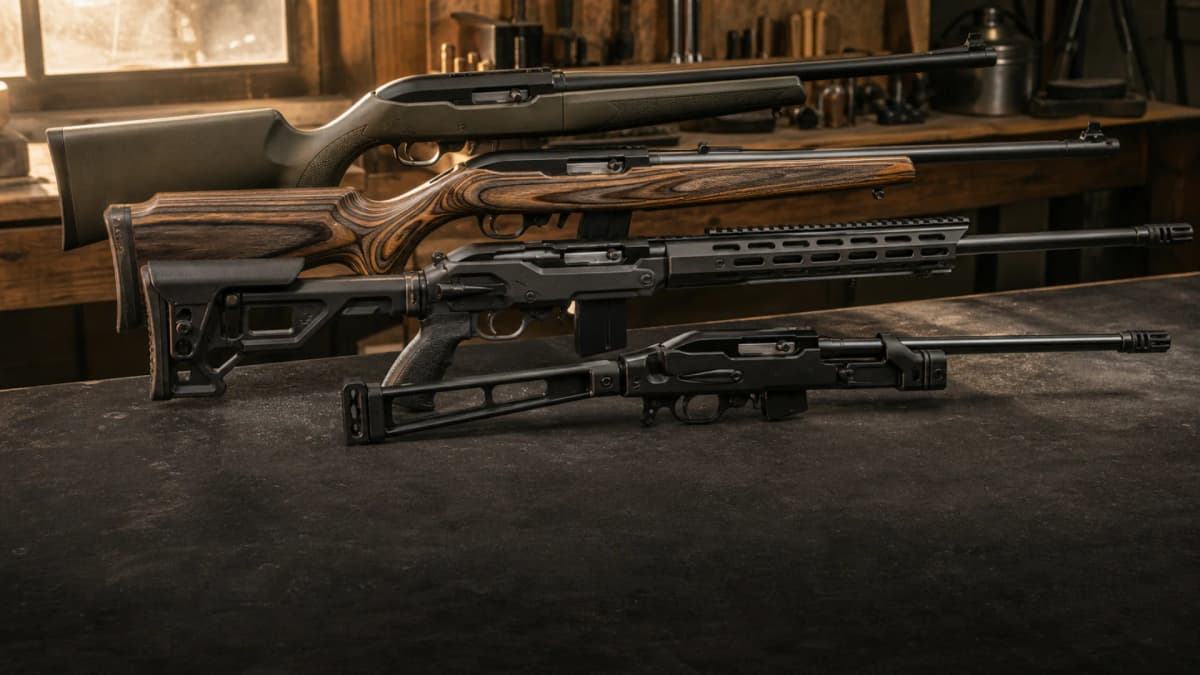
Four valid Mini-14 stocks cover four different owner profiles. The Samson A-TM is the premium aluminum folding chassis for owners who keep the rifle long-term and want machined-aluminum rigidity with a forward picatinny rail. The Archangel AAMINI is the precision-rifle answer with a bedded receiver pocket and seven-position cheek riser; it solves the optic-height problem on a fixed stock without the buffer-tube hardware of a folding design. The Archangel AA1430 Sparta is the AAMINI with adjustable LOP for shooters who share the rifle or wear body armor. The ATI Strikeforce Gen 2 is the cheapest path to folding tactical ergonomics, with a Scorpion recoil pad that meaningfully reduces felt 5.56 recoil for the price.
The factory wood stock stays the right answer for owners who run the rifle as a ranch tool with irons, who shoot it infrequently, or who care about the original aesthetic. None of the upgrades below restore wood-stock looks; they all push the rifle into a tactical or precision profile. Pick a stock once and commit, since trigger-guard screw torque cycles add wear to the receiver pocket over many swaps.
Four valid paths off the factory wood stock. Pick by use case, not aesthetics. Polymer for budget; reinforced polymer chassis for precision; aluminum for premium folding.
Best premium folding stock
Best precision stock
Best collapsible precision stock
Best budget folding stock
Affiliate links - purchases support this site at no extra cost to you. (?)
A 1x red dot is the right answer for almost every Mini-14 because the rifle's practical accuracy ceiling is 2 to 3 MOA out of a clean factory barrel and most owners shoot it inside 100 yards. Battery life and recoil-tested housings matter more than reticle complexity. Sustained 5.56 strings on a Mini-14 cook the gas system enough that receiver-mount optics with thin-housing designs can heat-soak; pick a tube design like the Aimpoint T-2 for serious use, or pair an open emitter like the Holosun AEMS Core with the Amega scout mount to keep it forward of the heat.
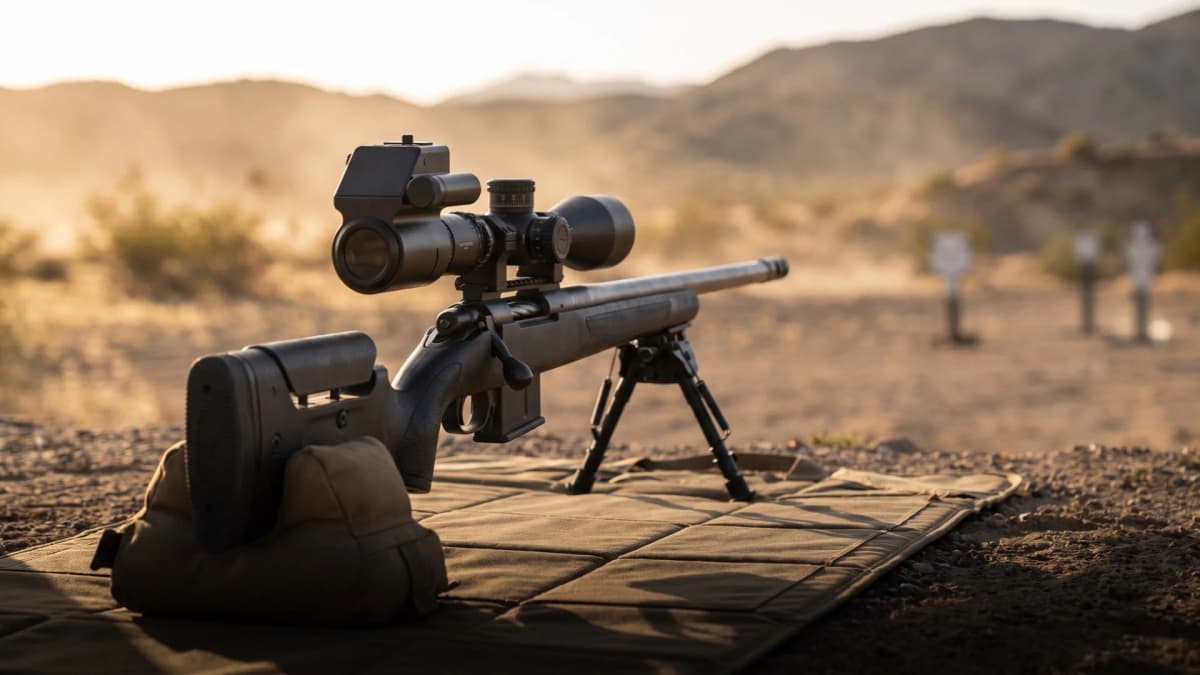
For shooters running the Mini-14 as a varmint or precision rifle, an LPVO or scout scope earns its weight, but the mounting solution matters more than the optic. A Samson Hannibal or GG&G picatinny rail accepts any picatinny-mount LPVO. A scout-mount LPVO requires long eye relief and is harder to find in current production. The best LPVO guide covers magnified options, and the best AR-15 red dots guide covers reflex options that share the Mini-14's Aimpoint Micro footprint.
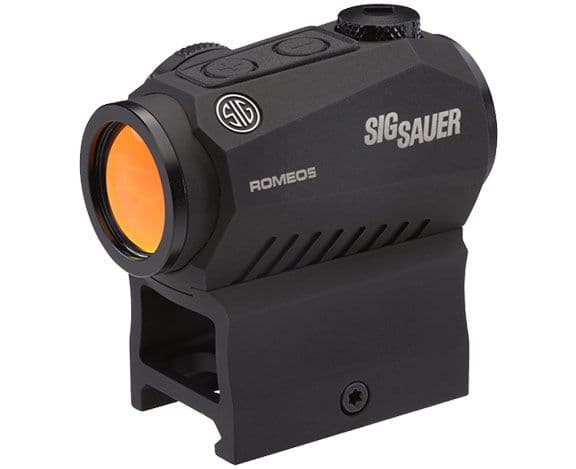
Low-profile red dots are the right answer for almost every Mini-14 build. Sustained strings cook receiver-mount optics, so prioritize battery life and recoil-tested housings over reticle complexity.
Best premium red dot
Best mid-tier red dot
Best value red dot
Affiliate links - purchases support this site at no extra cost to you. (?)
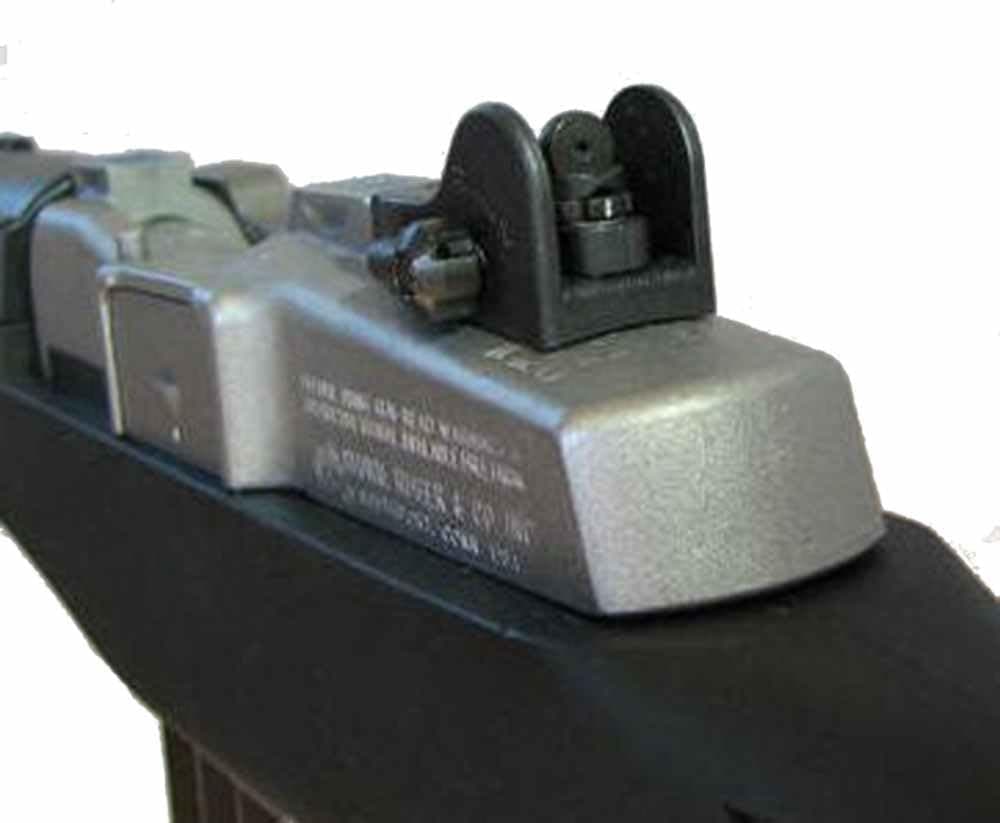
The factory Mini-14 rear sight is a coarse ghost ring that offers no precision adjustment and a sight picture different from anything else most shooters train on. Owners who run AR-15 sights at the range and want the same sight picture on their Mini-14 should install the Tech Sights MINI200, an adjustable aperture rear sight calibrated for 5.56 trajectory with audible-click drums. Drop-in fit for 5800-series 2005+ rifles; pre-2005 rifles need a separate adapter kit available from Tech Sights.
The longer sight radius the MINI200 provides over the factory ghost ring is meaningful for accuracy at 100+ yards, and the adjustable aperture gives precision shooters a smaller target picture without sacrificing speed at close range. Pair it with the factory front blade; the MINI200 does not require a front sight upgrade.
The factory ghost ring is coarse and offers no precision adjustment. The Tech Sights MINI200 is the answer for shooters who train AR-15 sights and want carryover.
Best iron sight upgrade
Affiliate links - purchases support this site at no extra cost to you. (?)
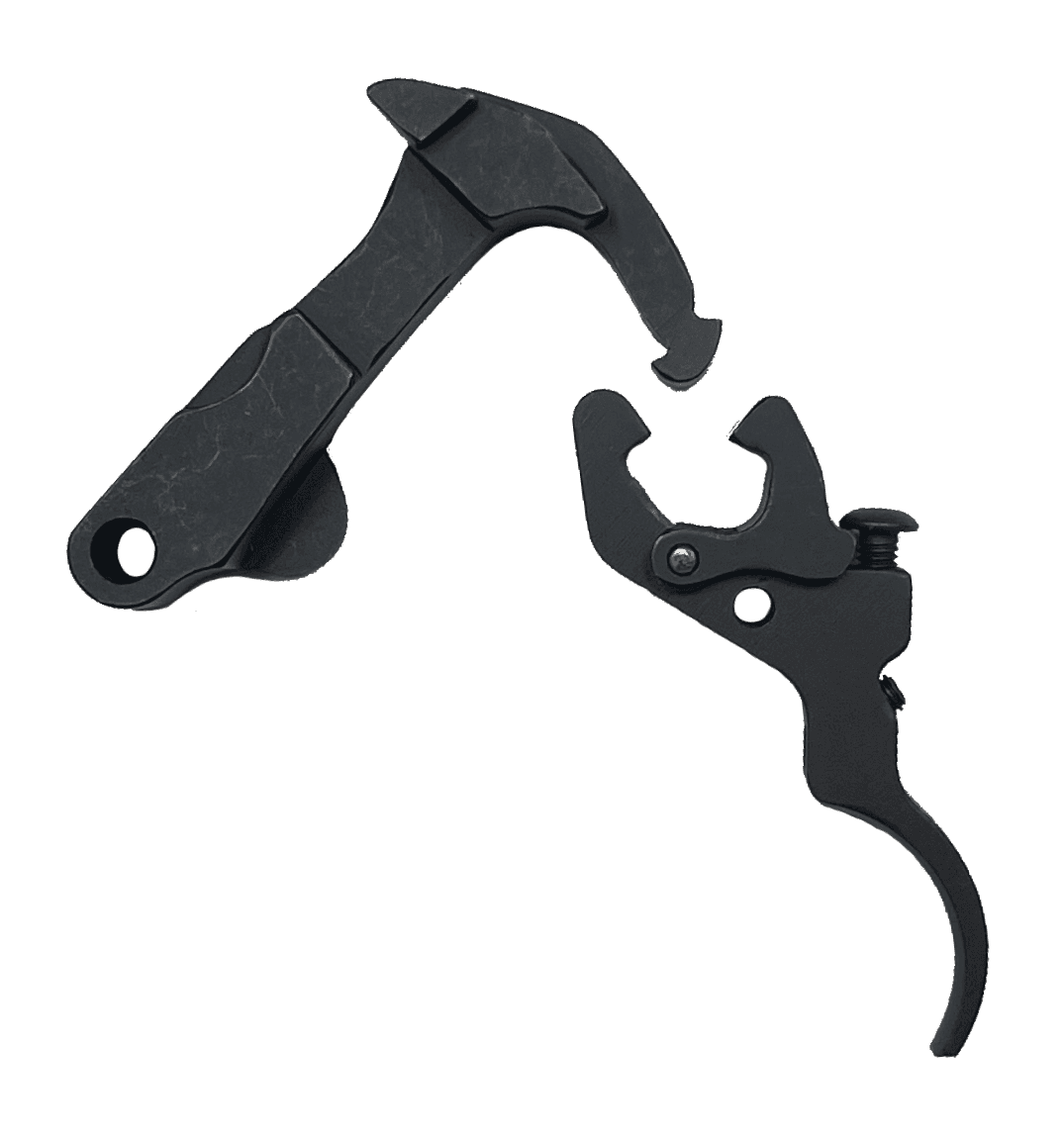
No drop-in trigger group exists for the Mini-14 the way Geissele and LaRue groups exist for AR-15s. The two real options are a spring kit at home or a custom trigger job by a smith. The M*CARBO Trigger Spring Kit is the closest thing to a drop-in trigger upgrade the platform offers: reduced-power trigger and hammer springs plus a polished plunger spring that cut factory pull weight by approximately 30%, dropping a typical 7 lb factory pull to roughly 5 lb. Install is a 15-minute bench job. The kit does not change trigger geometry, sear engagement, or reset distance, so factory creep and reset characteristics remain.
For shooters who want a true bench-tuned trigger, Accuracy Systems Inc. offers a custom trigger job at $150 plus shipping that delivers a 3.5 to 4 lb pull. The rifle has to leave the owner's possession for the work, which is the main barrier. For most owners, the M*CARBO kit is the right call. Galloway Precision does not currently make a Mini-14 trigger product; their lineup focuses on Ruger LCP, Max-9, and similar carry pistols.
No drop-in trigger groups exist for the Mini-14 the way Geissele and LaRue groups exist for AR-15s. The two real options are a spring kit at home or a custom trigger job by a smith.
Best DIY trigger upgrade
Affiliate links - purchases support this site at no extra cost to you. (?)
Only the Mini-14 Tactical variant ships with a factory 1/2x28 threaded muzzle. The Ranch variant is unthreaded and would require a $150 gunsmith threading job before any aftermarket muzzle device fits. On the Tactical, a flash hider like the Smith Enterprise Vortex or a generic Phantom is worth $40-80 if you shoot in low light or the rifle is stored as a defensive tool. The factory bird cage is functional and does not need replacement unless going suppressed. A muzzle brake is mostly cosmetic on a 5.56 rifle this light; the factory 6.75 lb weight absorbs most of the recoil that a brake would mitigate.
For owners running the Mini-14 suppressed, install a direct-thread or QD suppressor mount instead of a brake. Confirm the suppressor is rated for sustained 5.56 fire from a 16-inch barrel; the Mini-14 gas system runs warmer than a comparable AR-15 and not all 5.56 cans handle long strings well off this host. The suppressor compatibility guide covers the bore-diameter and mount specifics.
The Mini-30 is the 7.62x39 sibling of the Mini-14 and shares roughly 90% of the aftermarket. All four stocks above (Samson A-TM, Archangel AAMINI, AA1430 Sparta, ATI Strikeforce) fit the Mini-30 receiver. The Amega scout mount, Samson Hannibal Rail, and GG&G picatinny rail all fit the Mini-30. The M*CARBO trigger spring kit fits Mini-30 trigger groups. The Tech Sights MINI200 iron sight fits Mini-30 receivers manufactured after 2005.
What does not transfer is magazines. Mini-30 magazines are 7.62x39-specific and proprietary. They use the same rock-and-lock engagement as Mini-14 mags but the bodies are not interchangeable because the cartridge dimensions differ. Stock factory Ruger Mini-30 5, 10, or 20-round magazines. The Mini-30 also benefits more from a flash hider than the Mini-14 because 7.62x39 muzzle flash from a 16-inch barrel is more pronounced than 5.56. Threaded Mini-30 Tactical variants exist; unthreaded Mini-30 Ranch rifles need the same gunsmith threading work as the unthreaded Mini-14 Ranch.

Avid shooter with 10+ years of experience including competition shooting, and an associate member of the Professional Outdoor Media Association (POMA). Built 10+ AR-pattern rifles and several handgun platforms for home defense, competition, and suppressed night shooting.
This page contains affiliate links. Purchases through these links support the site at no extra cost to you. Read the affiliate disclosure
Continue exploring with these related resources

Best rangefinder picks for hunting and long-range shooting in 2026: Vortex Razor HD 4000 GB, SIG KILO3K, Vortex Viper HD 3000, Maven RF.1, Bushnell R5 2000 AB, Leupold RX-5000 TBR/W, Revic BR4, Leica Geovid Pro, Vortex Fury HD 5000 AB, Leupold RX-FullDraw 5, Vortex Crossfire HD 1400, and Athlon Midas 1 Mile. Covers best rangefinder under $500, ballistic rangefinders, Leica vs Vortex, and the Bushnell Forge reality check.

Best SIG Cross accessories and upgrades ranked for 2026: Cross-specific PMAGs, the Anarchy Outdoors M6x1 bolt knob, ODIN Works Tangent X handguard, Leupold Mark 5HD optics, ARCA bipods, suppressors, and Cross-finished muzzle brake.

Solve the M1A's scope-mounting problem first, then pick wood-stock or chassis. Ranked picks for mounts, stocks, triggers, gas, muzzle devices and magazines.
Related articles and industry updates

Prime Day 2026 gun deals are really red dot deals, ammo deals, and suppressor deals at firearm retailers, not Amazon. Here are the best picks and where to buy.

Hawke debuts the refreshed Vantage HD 30 line on June 16, 2026: three 30mm SFP scopes (1-8x24, 2.5-10x50, 3-12x56) with 11-layer System H2 coatings, Zero-Stop locking elevation, exposed locking windage, and illuminated reticles. MSRP $389-$469.

Osight launched the XE AMRS, its first five-reticle enclosed red dot on the RMR footprint with a 105,000-hour side-loading CR1632 battery and a collapsible backup rear sight, alongside a 6 MOA red version of the SE for slim carry guns. Here is how the XE compares to the rechargeable XR and where each optic fits.