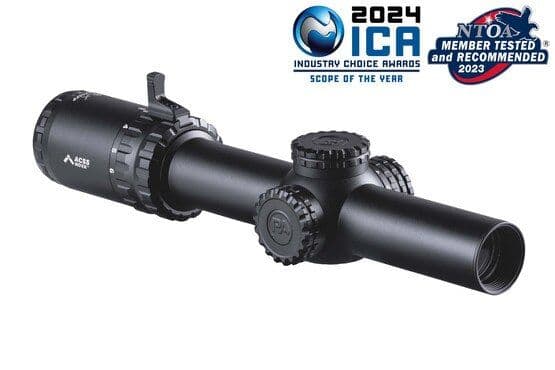
Optics & Sighting • $349.99
Primary Arms SLx 1-6x24 Gen IV
- 1-6x magnification
- Second focal plane
$349.99
Shop at Primary Arms
Enter a target size and distance to get its angular size in MOA and MRAD, a recommended magnification range for identifying versus precisely engaging it, and a plain-language read on what the target looks like through the glass.
The commonly cited heart-lung zone on a broadside whitetail.
Recommendations use the 1x per 100 yards rule as the identification floor and 2x to 3x per 100 yards for precise fire, scaled up when the target subtends less than 2 MOA so the aiming point stays well above a 20/20 eye's 1 MOA resolution limit.
Identify: 3x minimum
Precise engagement: 6x to 9x
At 1x: like 8" at 300 yd to the naked eye (2.5 MOA apparent)
At 3x: like 8" at 100 yd to the naked eye (7.6 MOA apparent)
At 6x: like 8" at 50 yd to the naked eye (15.3 MOA apparent)
1x of magnification per 100 yards of distance is the long-standing floor for identifying and hitting full-size targets: a 6x scope covers 600 yards, a 10x covers 1,000. For precise fire, common guidance doubles or triples that to 2-3x per 100 yards, which is the band this calculator recommends. The physical basis is simple: a 20/20 eye resolves detail down to roughly 1 arcminute (1 MOA), so magnification's real job is lifting your aiming point comfortably above that resolution limit. When a target subtends less than 2 MOA, the calculator scales the precision band up proportionally, which is why a 1" dot at 100 yards calls for more power than "1x per 100" alone would suggest.
Treat the output as a minimum, not a target ceiling. More magnification narrows field of view, dims the image through a smaller exit pupil, and magnifies wobble and mirage, so the practical answer is a variable scope whose top end meets the math for your longest shot and whose bottom end stays usable up close. That trade is exactly what the LPVO guide and the red dot vs LPVO vs prism matrix work through in detail. For dedicated distance work, start with the AR-15 scope guide and the long-range scope catalog.
A target's angular size is what your optic actually sees, and it scales inversely with distance: 1 MOA is 1.047" at 100 yards, so an 8" deer vital zone subtends 7.6 MOA at 100 yards but only 2.5 MOA at 300. 1 MRAD equals 3.4377 MOA, or 3.6" at 100 yards. Magnification multiplies apparent angular size directly: the same vital zone at 300 yards viewed through a 6x scope appears as large as it would at 50 yards with the naked eye. That equivalence is the fastest gut check this tool gives you. To convert between angular units and turret clicks, use the MOA calculator; to confirm your chosen scope physically fits the rifle, run the scope ring height calculator; and to check whether your cartridge holds enough energy at the distance you can see, chart it in the ballistics calculator.
A 1-6x LPVO covers everything from room distance to 600-yard silhouettes by the 1x rule; a 4-16x class scope covers precision work on small targets past 400 yards. Budget-minded builds should start with the budget LPVO guide and browse the full optics catalog.
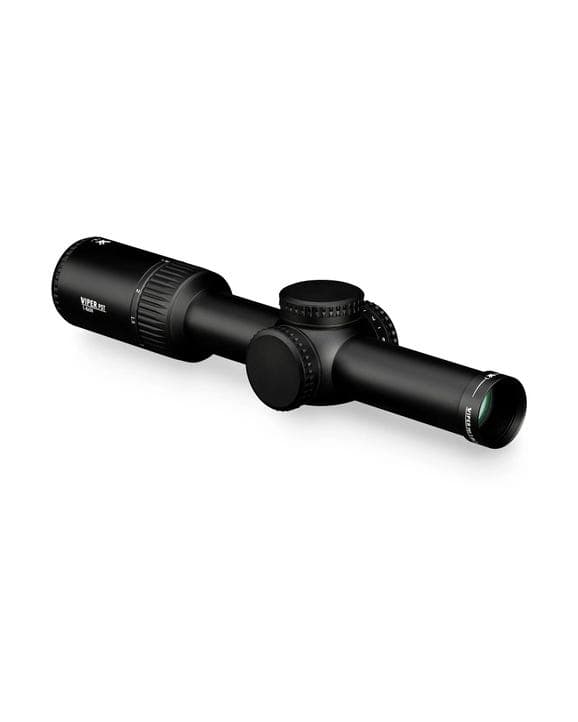
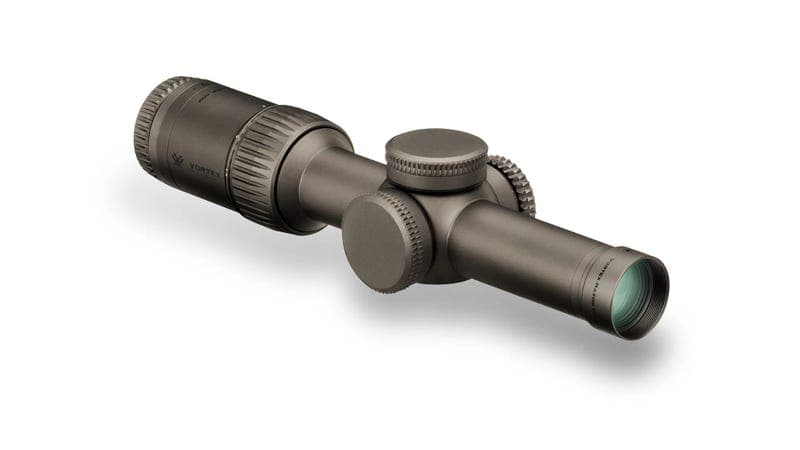
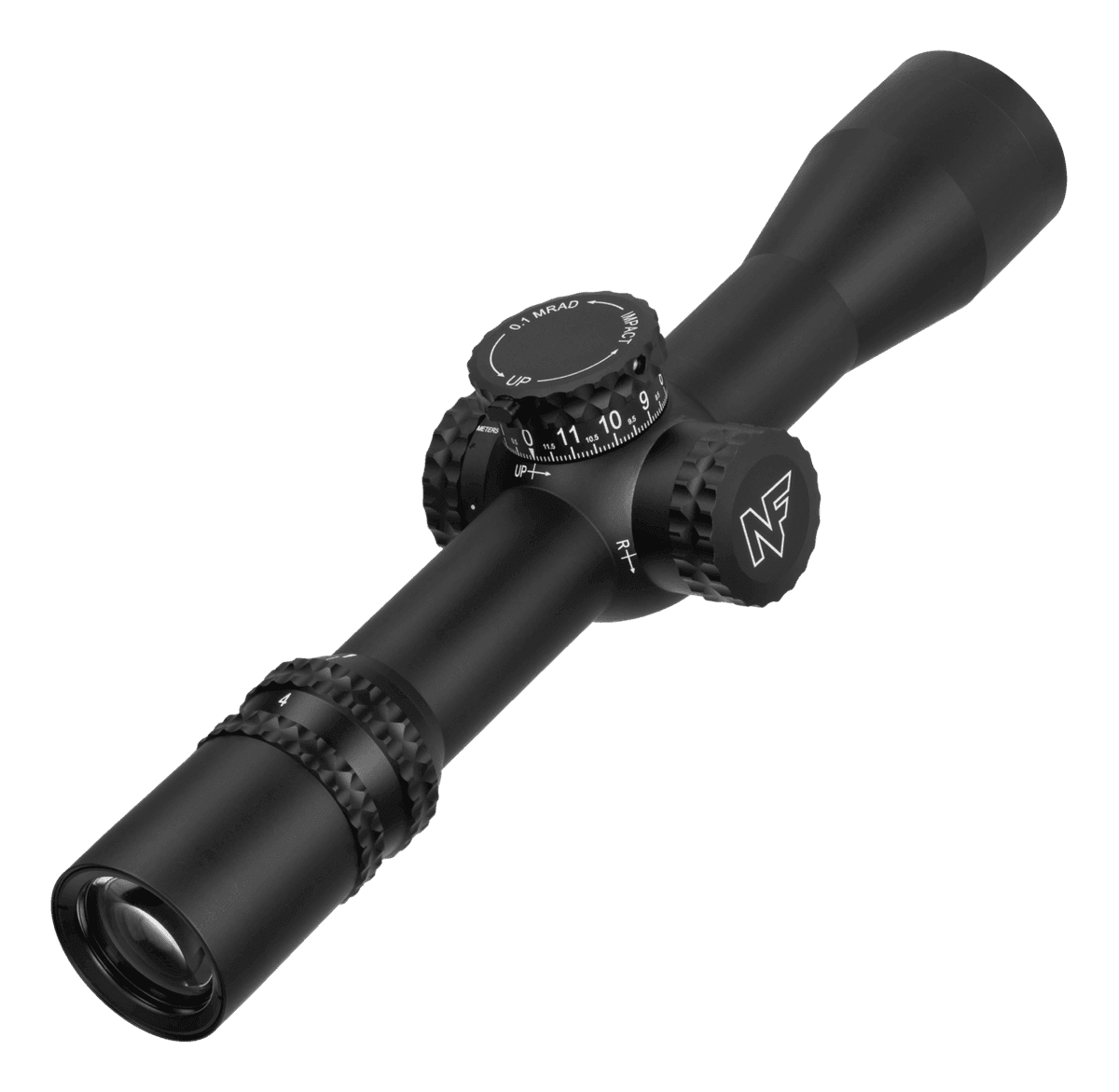
Affiliate links (?)
The long-standing rule of thumb is 1x of magnification per 100 yards of distance as a floor for identifying and hitting full-size targets, so a 6x scope covers 600 yards. For precise shots, or small targets like a 1 MOA dot or a prairie dog, run 2x to 3x per 100 yards. A 4-16x scope comfortably covers precision work to 500+ yards by that standard.
1 MOA (minute of angle) is 1.047 inches at 100 yards, and it scales linearly: about 2.09 inches at 200 yards and 10.47 inches at 1,000 yards. Most shooters round it to 1 inch per 100 yards for field math, which stays within 5 percent out to any practical distance.
Divide MOA by 3.4377 to get milliradians. 1 MRAD equals 3.4377 MOA, or 3.6 inches at 100 yards and 36 inches at 1,000 yards. A target that subtends 2 MOA subtends 0.58 MRAD.
An 8 inch deer vital zone at 200 yards subtends about 3.8 MOA, which is a generous target. By the 1x per 100 yards rule, 2x identifies it and 4x to 6x supports a precise shot, which is exactly why the classic 3-9x40 hunting scope covers whitetail hunting so well. Dial down to 3-4x for shots inside 100 yards to keep field of view.
No. Higher magnification narrows field of view, shrinks exit pupil (a dimmer image), magnifies your wobble and mirage, and slows target transitions. Buy the magnification the math says you need for your longest realistic shot, then prioritize glass quality and a usable low end over a bigger top number.
Magnification divides apparent distance. A deer at 400 yards viewed through a 4x scope looks the same size as a deer at 100 yards with the naked eye; at 8x it looks like 50 yards. That equivalence is the fastest intuition check: if you could make the shot with irons at the equivalent distance, the magnification is enough.
Use the Configurator to pair an optic with your platform, then add the mount, backup irons, and magnifier that fit it.
Launch Configurator