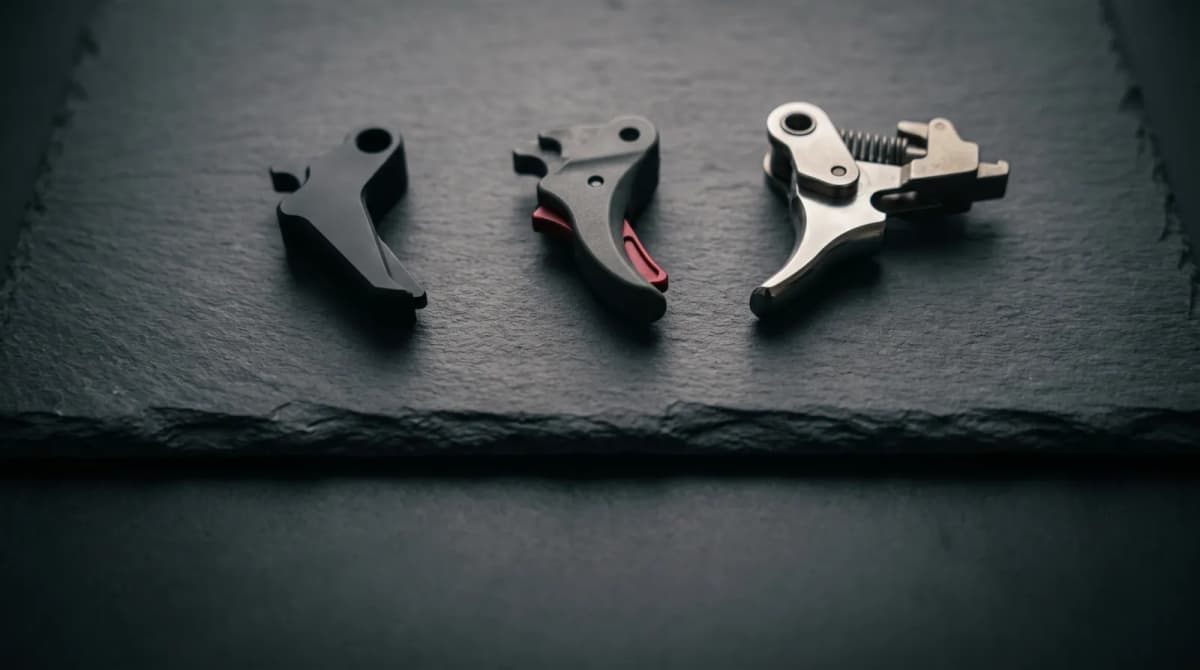
Key Takeaways
- →Three parts, not one: The kit replaces the factory trigger, trigger bar, and connector, and adds an Apex Competition Striker Spring. The CMC Combat Curve kit, by contrast, changes the shoe and bar and leaves the factory connector in place.
- →3.8 to 4.8 lb: Pull weight depends entirely on which striker spring is installed. Factory spring sits at the heavy end, the included Apex Competition spring at the light end.
- →Gen 6 G17, G19, G45 only: Apex excludes Gen 1 through Gen 5 and Slim Frame Glocks, and states clone frames do not count as a Glock frame.
- →Linear rolling break: Apex says outright that the kit will not give a defined wall at the striker release point. That is a design decision, not a tolerance issue.
- →$145 under SKU 102-306-C: Classic or Type 3 shoe styling, multiple anodized colors, made in Phoenix, Arizona.

Apex Tactical Evo 6 Trigger Kit for Glock Gen6 (102-306-C)
A three-part Gen 6 fire control swap for G17, G19, and G45 that shortens pre-travel and reset without touching the factory trigger safety
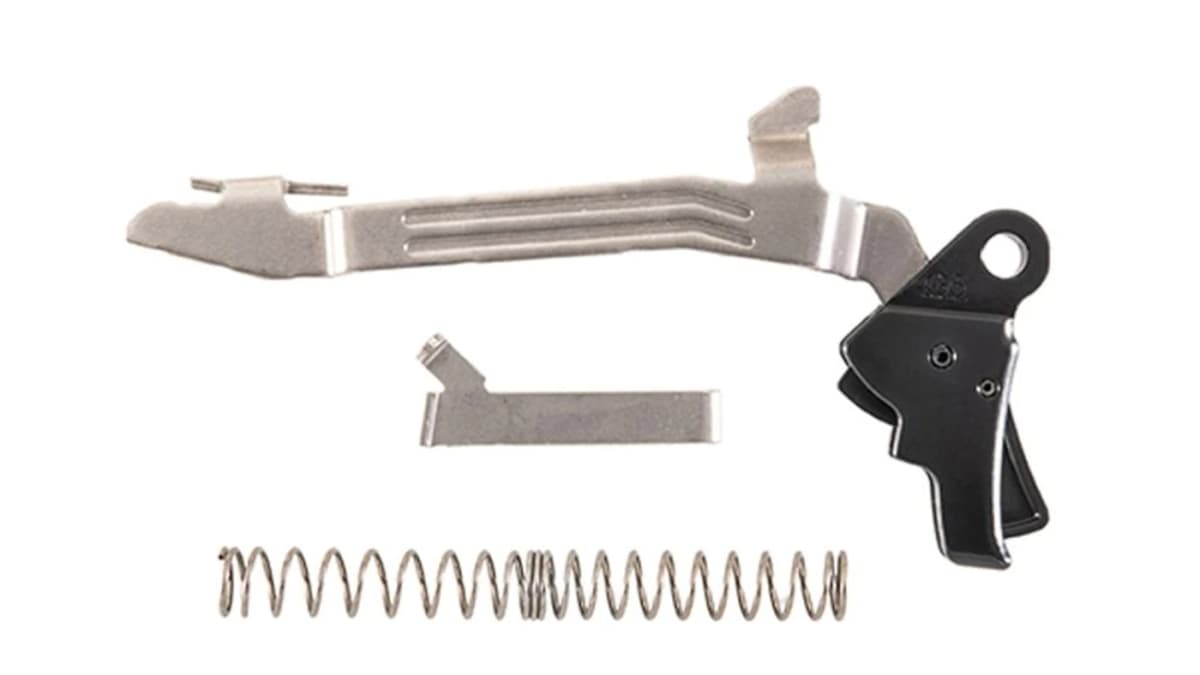
Apex's Gen 6-specific drop-in kit: trigger and Evo 6 bar assembly, Performance Connector, and Competition Striker Spring. Shortens pre-travel and reset and lands between 3.8 and 4.8 lb depending on which striker spring you run.
- +Replaces shoe, bar, and connector rather than the shoe alone
- +Confirmed Gen 6 fitment for G17, G19, and G45
- +Center-mounted pivoting safety keeps the factory trigger safety
- −Linear rolling break with no defined wall, which some shooters dislike
- −Included competition striker spring is range use only, not for carry
- −Gen 6 only, does not fit Gen 3/4, Gen 5, or Slim Frame Glocks
Affiliate links (?)
What Apex Actually Put in the Box
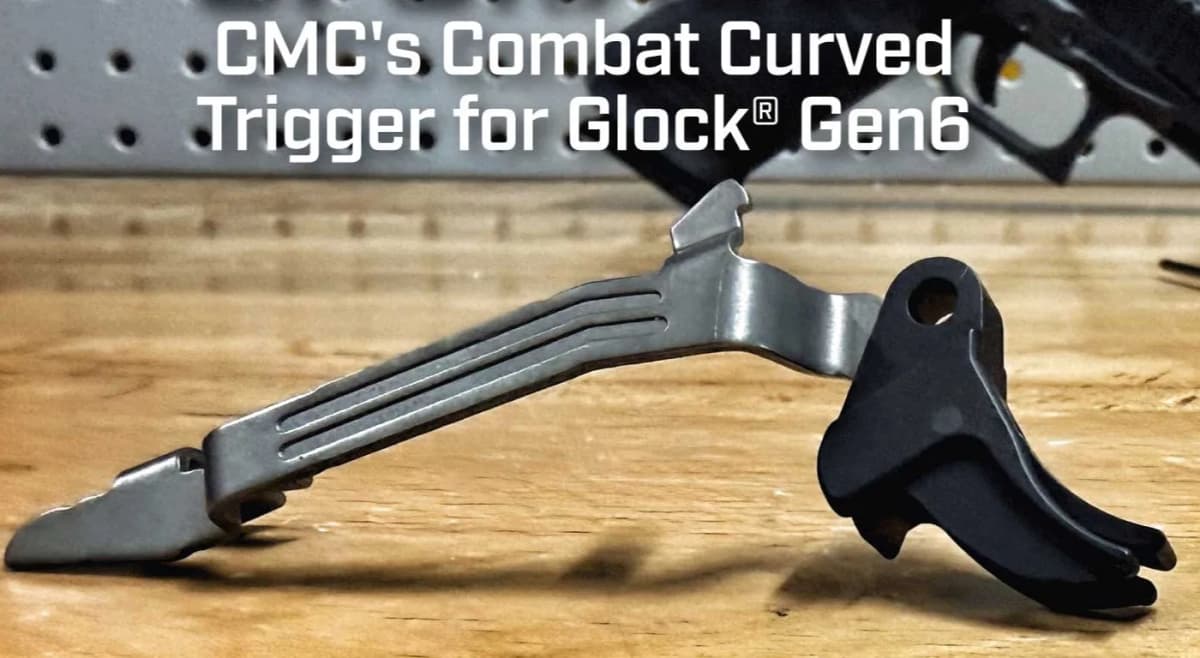
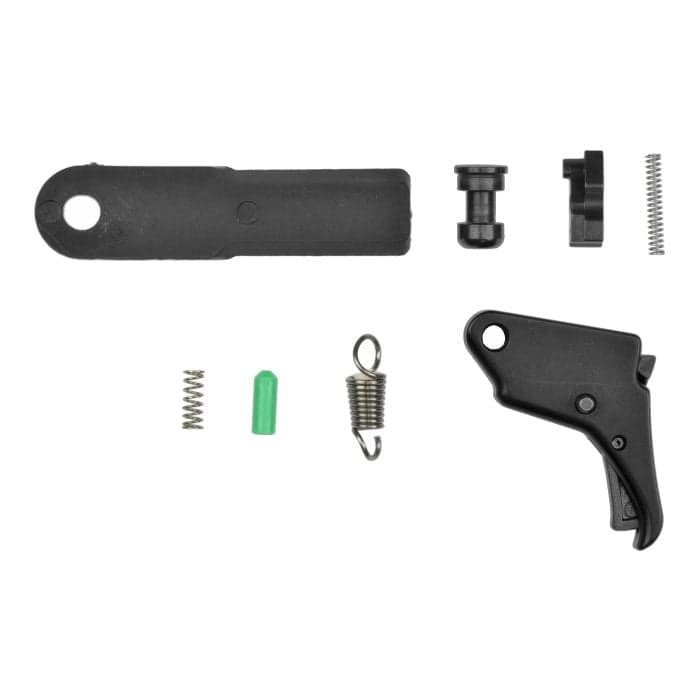
The Evo 6 kit is a three-part fire control swap: an Apex Action Enhancement trigger shoe pre-assembled to a Gen 6-specific Evo 6 trigger bar, an Apex full-size Performance Connector similar in function to Glock's minus connector, and an Apex Competition Striker Spring. That is a wider swap than the CMC Combat Curve kit, which changes the shoe and bar and reuses the factory connector and housing. The Johnny Glocks VEX 6 also ships with a connector, so Apex is not alone in going past the shoe and bar.
Replacing the connector is what lets Apex move the pull weight meaningfully rather than just changing the shape of the face. The connector sets the angle the trigger bar cams off as it releases the striker, so a connector change alters weight and the character of the break in a way a new shoe cannot. Apex claims the kit smooths uptake and reset and reduces pre-travel, overall travel, and reset distance.
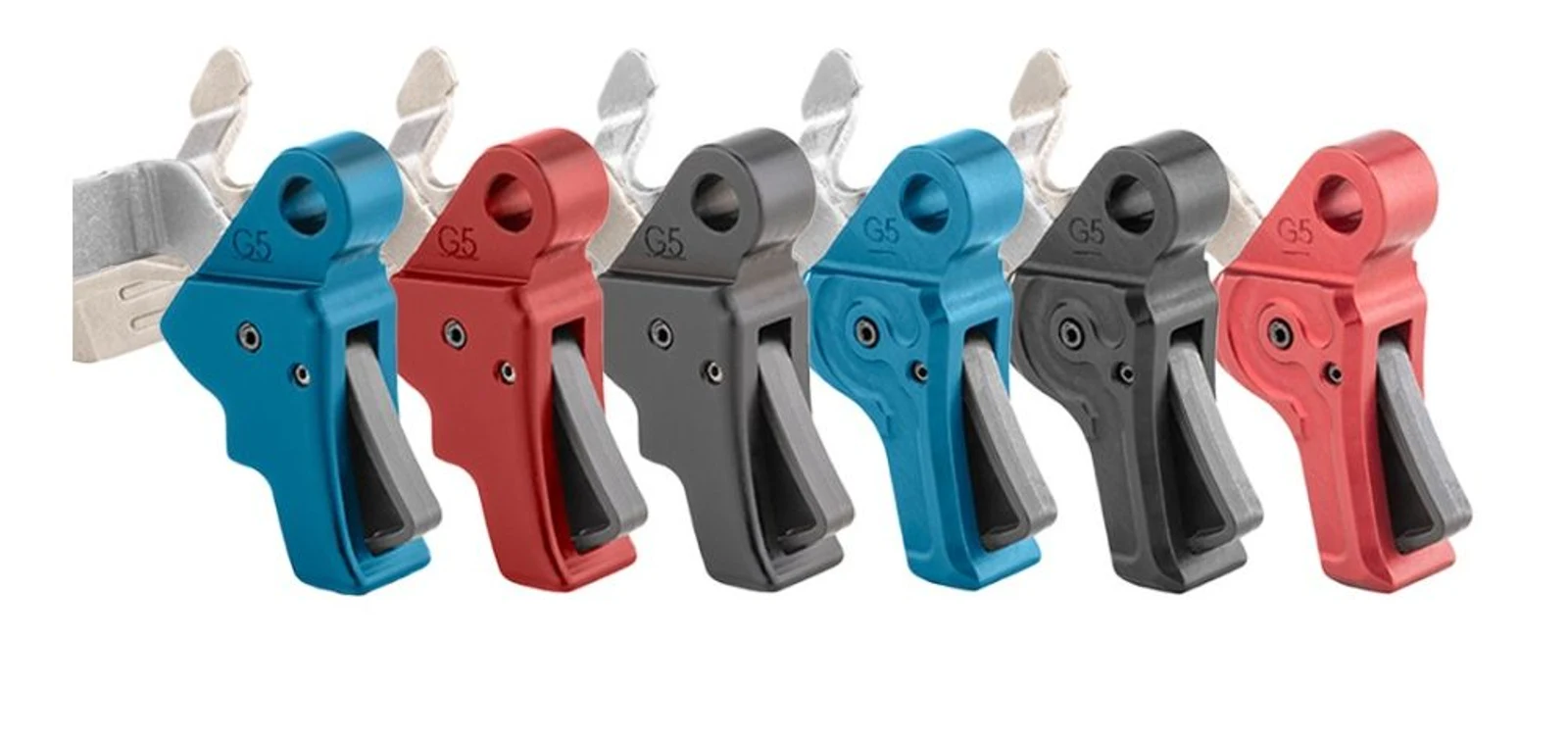
The shoe comes two ways. Classic keeps radiused front edges meant to match the clean lines of a factory Glock and maximize the surface area under the trigger finger. Type 3 chamfers those front corners instead and adds decorative cuts to the visible sides. Apex is explicit that the two are cosmetic siblings with the same performance, so pick on looks alone.
Why Gen 6 Needed Its Own Trigger
Gen 6 changed the trigger housing and trigger bar geometry, which broke compatibility with the enormous existing library of Gen 5 trigger parts. That is the whole reason a company with a mature Glock trigger line had to tool a new part rather than ship what it already had on the shelf.
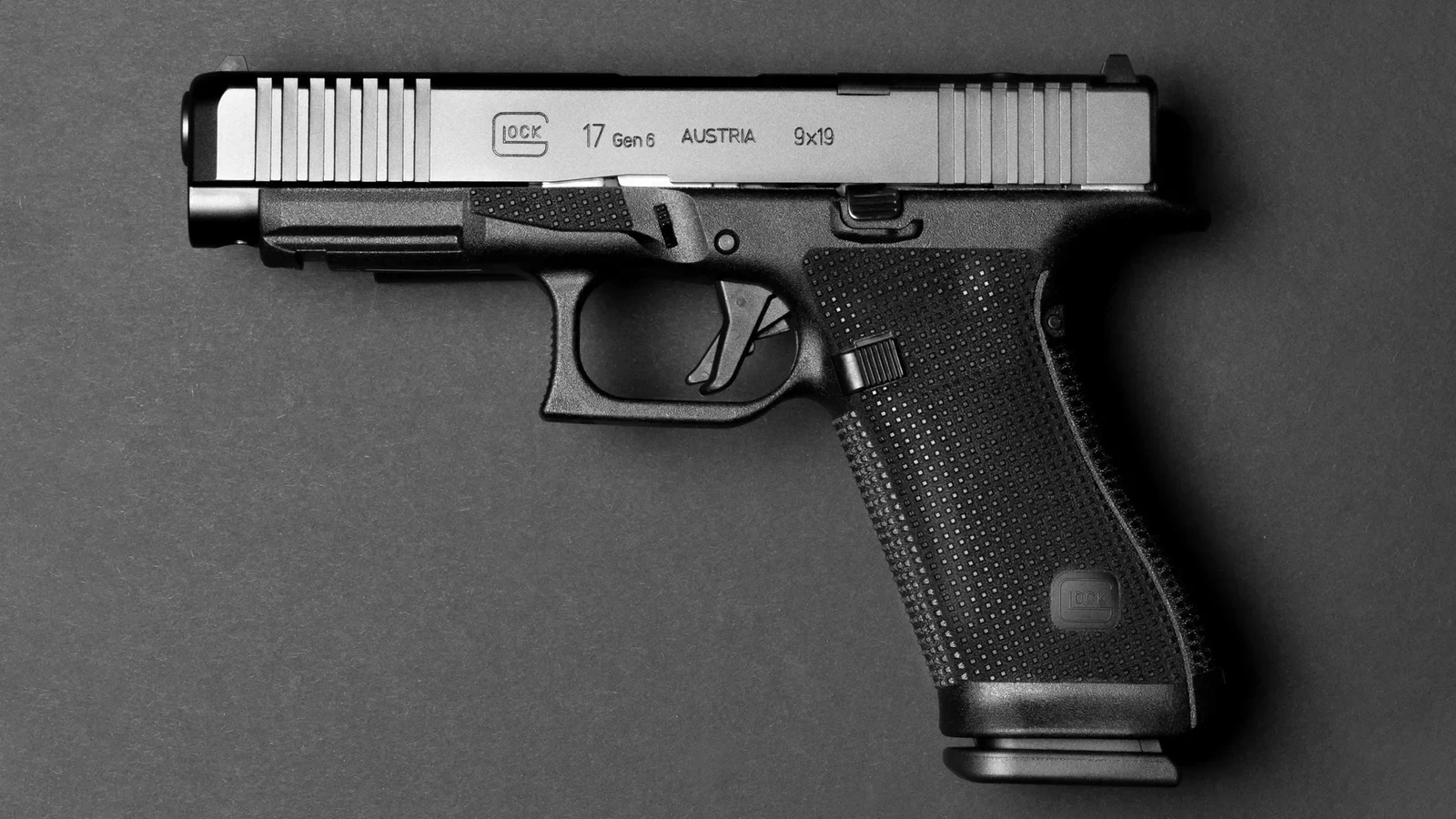
Apex's own parts make the point precisely. The trigger shoe in the Gen 5 kit and the shoe in the Gen 6 kit are the same component; the trigger bar is the only difference between them. One part changed, and that was enough to make a complete Gen 5 assembly useless in a Gen 6 pistol. If you are still deciding between generations, our Gen 5 versus Gen 6 breakdown covers what else moved.
Fitment is narrow and Apex states it bluntly: Gen 6 G17, G19, and G45, and nothing else. Gen 1, Gen 2, Gen 3, Gen 4, Gen 5, and Slim Frame guns are excluded, and Apex adds that clone frames do not count as a Glock frame for the purposes of this kit.
Shop Current Apex Pistol Triggers
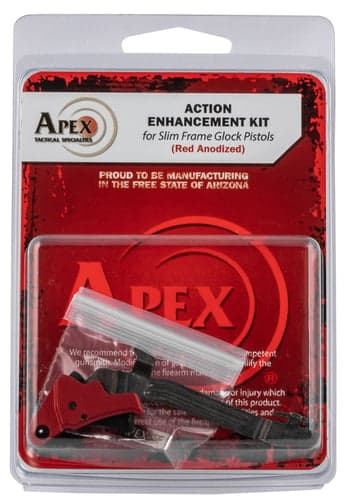
Action Enhancement Kit
- Drop-in installation
- Reduced pre-travel
Evo 6 Trigger Kit for Glock Gen6 (102-306-C)
- Gen 6-specific Evo 6 trigger bar, pre-assembled to the shoe
- Includes Apex Performance Connector and Competition Striker Spring
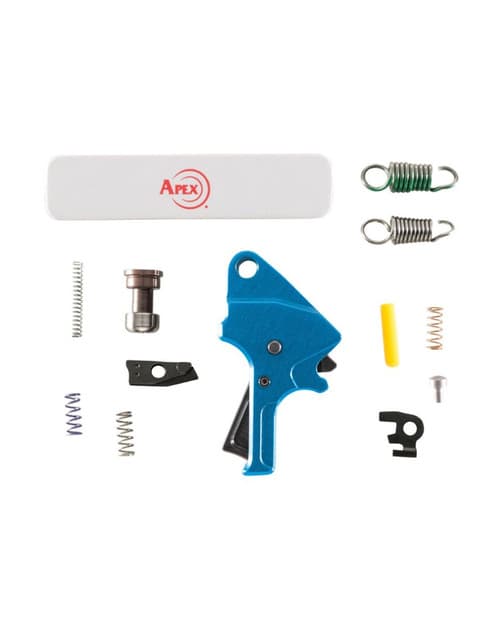
Curved Forward Set Trigger Kit
- Curved forward-set trigger
- Black 112-032 SKU
Action Enhancement Trigger for Hellcat (115112)
- Polymer flat-face trigger shoe
- Drop-in
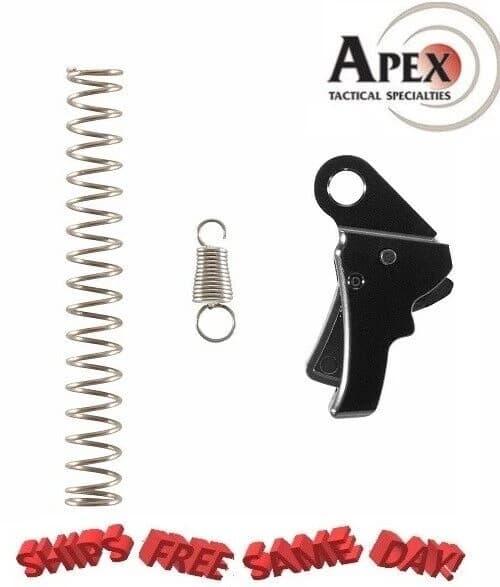
Action Enhancement Kit for Hellcat (115-152)
- Flat-face polymer trigger + spring kit
- Reduced pre-travel
Action Enhancement Trigger & Duty/Carry Kit for M&P Shield / Shield Plus
- Flat-faced polymer trigger shoe
- Duty/carry sear and sear spring
Affiliate links (?)
The Break: A Roll, Not a Wall
Apex engineered the Evo 6 for a linear, rolling break and says directly that it will not have a defined wall at the striker release point. That single sentence is the most useful thing on the product page, and it should decide the purchase for most shooters.
A rolling break means pressure builds continuously through the press until the striker releases, with no distinct stacking point telling your finger the shot is next. Shooters who came up on two-stage rifle triggers or tuned 1911s tend to want that wall and read its absence as vagueness. Shooters who run a Glock hard through a draw and a fast string often prefer the roll, because there is nothing to hesitate against. Neither preference is wrong, but they are opposite, and Apex has picked a side.
Pull weight lands between 3.8 and 4.8 lb, and the striker spring is the variable. Leave the factory spring in and the pull sits at the heavy end of the range. Install the Apex Competition Striker Spring that ships in the box and it moves toward 3.8 lb.
The Striker Spring Is Not a Carry Part
The Apex Competition Striker Spring included in the kit is a reduced-force spring intended for competition and range use only. Apex states it is not for duty, carry, or self-defense use. Lighter striker springs reduce primer strike energy, and the failure mode is a light strike on a hard primer at the worst possible moment.
The practical read: the competition spring is the one part Apex restricts, and it is easy to leave in the bag. Running the rest of the kit on the factory striker spring keeps factory ignition energy and puts the pull at the heavier end of the range. On a range or competition gun, install the competition spring and take the 3.8 lb break. Apex makes the spring identifiable after the fact by a pair of closed coils near the middle of its length, which is worth knowing if you ever buy a used Gen 6 with an unknown parts history.
Installation and Tools
A Glock armorer's tool or a 3/32 inch pin punch is the only tool required, and the job runs roughly 15 to 20 minutes for someone comfortable inside a Glock frame. Apex COO Scott Folk walks the full procedure in the company's official install video, which covers the frame teardown, the trigger pack swap, the striker spring change, and the function checks.
Two details from that video are worth carrying to the bench. First, grease the contact point between the trigger bar and the connector; Folk calls it the most important part of fire control lubrication on a Glock. Second, the striker itself gets the opposite treatment and stays clean and dry, never lubricated, never oiled. Finish with the standard checks: trigger safety function, reset, and the drop safety test on the cruciform with the slide off.
Do not skip the connector seating check. Apex notes it is normal for its connector to sit at a slight outward angle rather than flush against the housing, which reads like an error to anyone installing one for the first time.
How It Compares to the Rest of the Gen 6 Field
The Gen 6 trigger market went from empty to genuinely competitive inside a year, and the Evo 6 slots in as the mid-priced option. At $145, it costs more than the two shoe-and-bar kits and far less than a full custom system.
The CMC Combat Curve 76001-NH at $124.99 is the conservative pick, reusing the factory housing and connector and keeping the pull close to factory weight. The Timney Alpha Competition at $114.99 targets competition shooters with a lighter pull. The Johnny Glocks VEX 6 at $270 is the premium end, sold in Defensive and Competitive tunes with adjustable weight and a hand-tuned wall. Our Glock trigger guide ranks the wider field across carry, duty, and competition use, and the CMC 76001-NH launch coverage has the detail on that kit specifically.
The decision mostly comes down to the break. If you want a defined wall, the VEX 6 is the one that advertises it and the Evo 6 is the one that explicitly does not have it. If you want the shortest reset and a continuous roll for a fast Glock, and you are willing to swap a connector to get it, the Evo 6 is the better-matched part. Owners building out a full Gen 6 can work through the rest of the parts list in our Glock 17 upgrade guide.
Stay Updated on Glock Gen 6 Parts
Gen 6 aftermarket support is still filling in. We cover new triggers, optic plates, barrels, and slides as they land, with fitment confirmed against the actual product pages.