Key Takeaways
- →$650 Base, $750 with Hannibal Rail: Direct from Samson Manufacturing in Keene, NH, released July 24, 2026 and open for order. The Hannibal option adds an optic rail in either a multi-pattern cut (RMR, DeltaPoint Pro, Venom, C-MORE) or a micro cut (Aimpoint T1/T2, Holosun 403/503/515/530, Romeo 4/5/MSR).
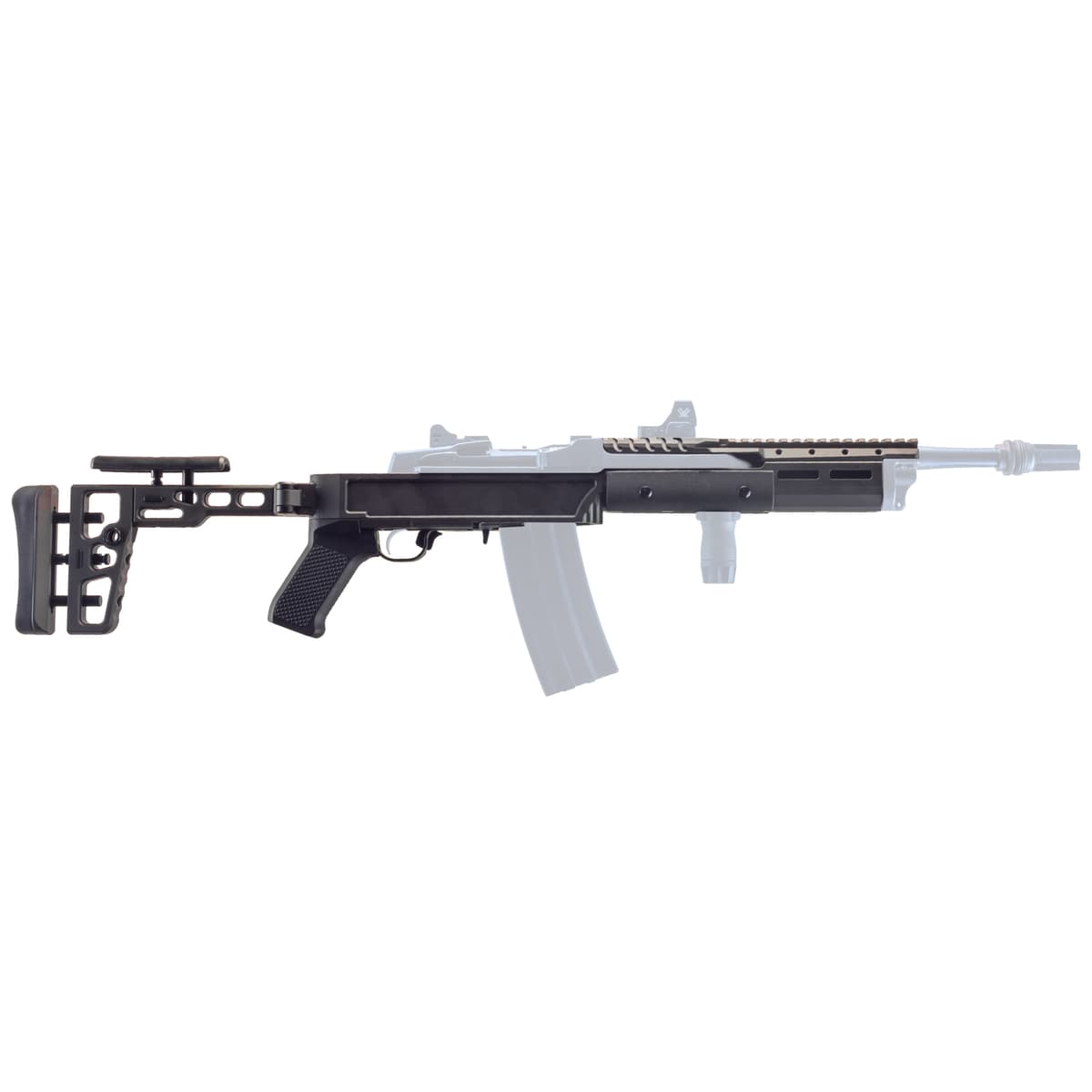
- →6061-T6 Aluminum Chassis: MIL-A-8625 Type III Class 2 hard anodizing. 2.8 pounds base or 3.3 pounds with the Hannibal Rail installed. Full M-LOK handguard replaces the factory wood forend.
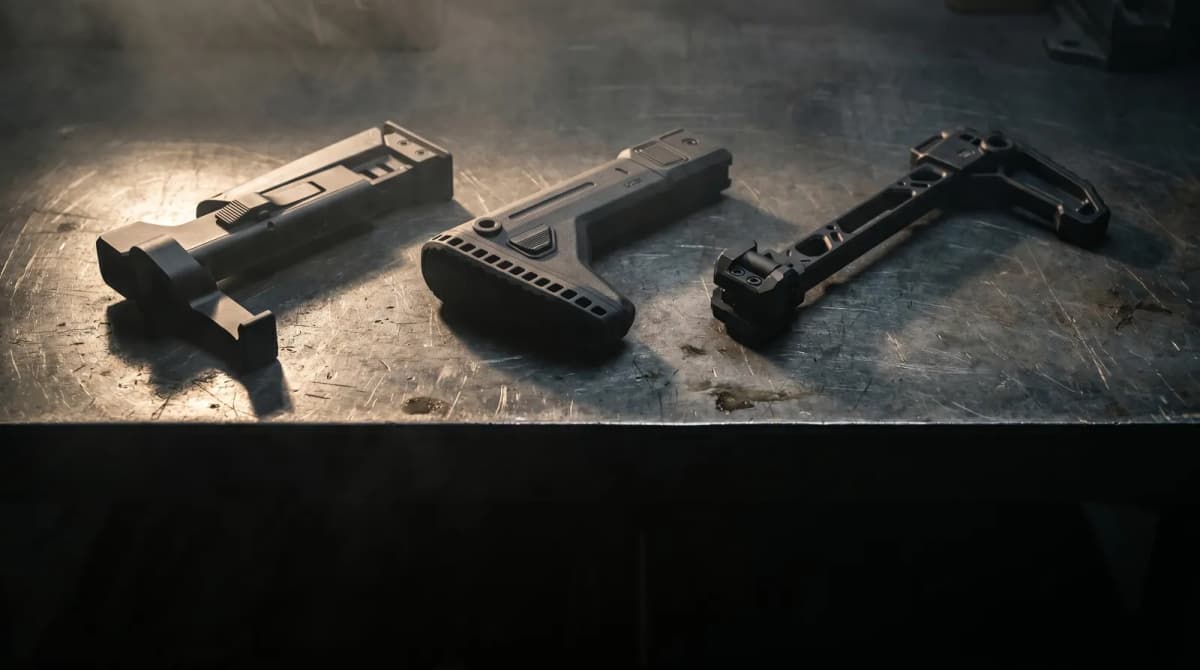
- →SAS-K Folding Stock: Side-folding tactical stock with push-button adjustable cheek riser and 11.25-to-12.25-inch adjustable length of pull. Ambidextrous QD sling points on the stock, single QD point on the chassis.
- →Fits Mini-14 SN 181+ and All Mini Thirty: Pre-181 serial rifles cannot use the folding hinge on any Samson stock. The Hannibal Rail add-on comes in variants tied to barrel type and rifle year within the compatible window.
- →Successor to the A-TM: Samson has ended production of its walnut-and-steel A-TM Folding Stock and names the SAS-14, a fully machined billet aluminum chassis, as its successor.
Samson SAS-14 Folding Chassis for Ruger Mini-14/Mini Thirty
Aluminum folding chassis with an M-LOK handguard for Mini-14 serial 181+ and Mini Thirty rifles
Folding 6061-T6 aluminum chassis with an M-LOK handguard and adjustable SAS-K stock for the Ruger Mini-14 and Mini Thirty.
- +Native M-LOK handguard for lights, hand stops, and sling hardware
- +Push-button length of pull and cheek height adjustment
- +Folds to 26 inches overall with a 16-inch barrel
- −Premium price over polymer Mini-14 stocks such as the ATI Strikeforce and Archangel AAMINI
- −Optic rail is a separate Hannibal Rail configuration
- −Does not fit Mini-14 rifles below serial 181
What the SAS-14 Actually Is
The Samson SAS-14 is the first genuine aluminum M-LOK chassis Samson has built for the Mini-14 platform. Samson released it on July 24, 2026 at $650 base after teasing the design earlier in the month, and the chassis is available for direct order from Keene, New Hampshire. Before this release the Mini-14 stock market offered Samson's walnut-and-steel A-TM folder, the polymer ATI Strikeforce at $130, or the ProMag Archangel precision stocks. None of those are an aluminum chassis with a full M-LOK forend. The SAS-14 is, and Samson has since ended A-TM production and named the SAS-14 its successor.
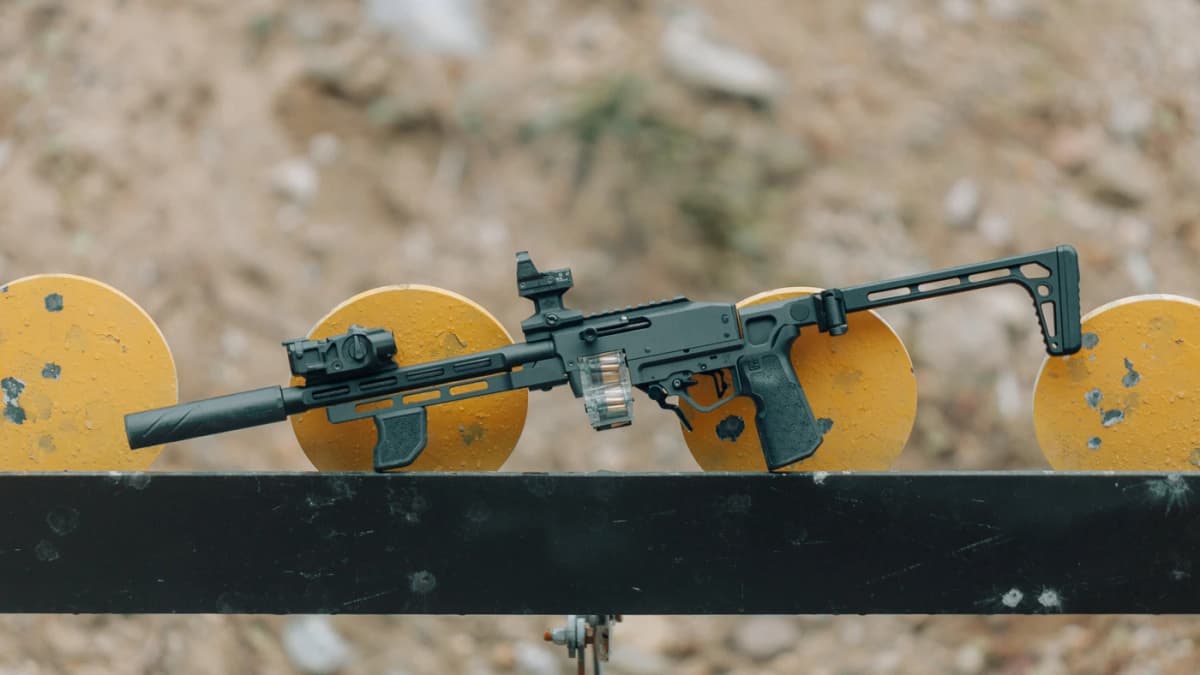
Structurally the SAS-14 uses the SAS-K folding stock, the same mechanism Samson wraps around its SAS/22 and SAS/22 Takedown chassis for the Ruger 10/22. That stock brings push-button cheek and length of pull adjustment, ambidextrous QD points, and a side-fold hinge that locks solid for firing. Wrapping it in a Mini-14-specific 6061-T6 chassis body puts the folding stock behind an M-LOK accessory forend and a receiver cutout that mates to the rifle's own action.
How the Fold Works and Why It Matters on a Mini-14
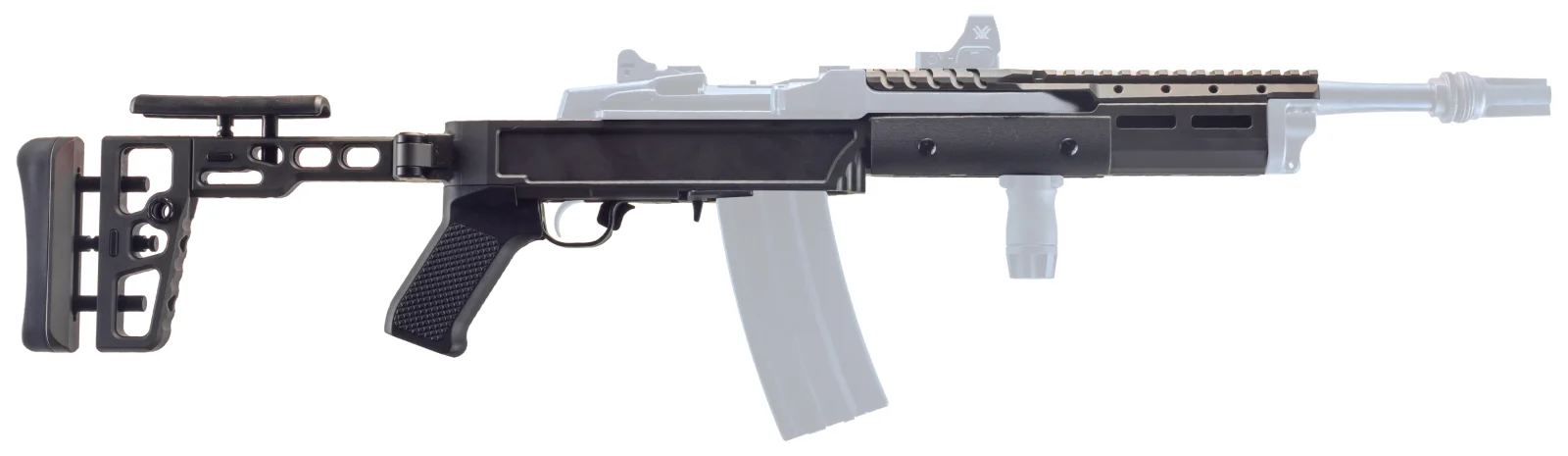
The SAS-K stock folds along the left side of the receiver and locks open with a spring-loaded latch at the hinge. Folded, the SAS-14 is 19 inches from muzzle-cap end of chassis to butt-cap, or 26 inches on a 16-inch-barreled Mini-14 including the barrel that sticks out past the M-LOK forend. Extended, the same rifle measures 27 to 28 inches at the chassis alone or 34 to 35 inches with the 16-inch barrel installed and the length of pull dialed between 11.25 and 12.25 inches. The point is that the Mini-14 finally has a modern folder that carries the same folded length as a folding-stock AK, in a rifle chambered for 5.56 or 7.62x39.
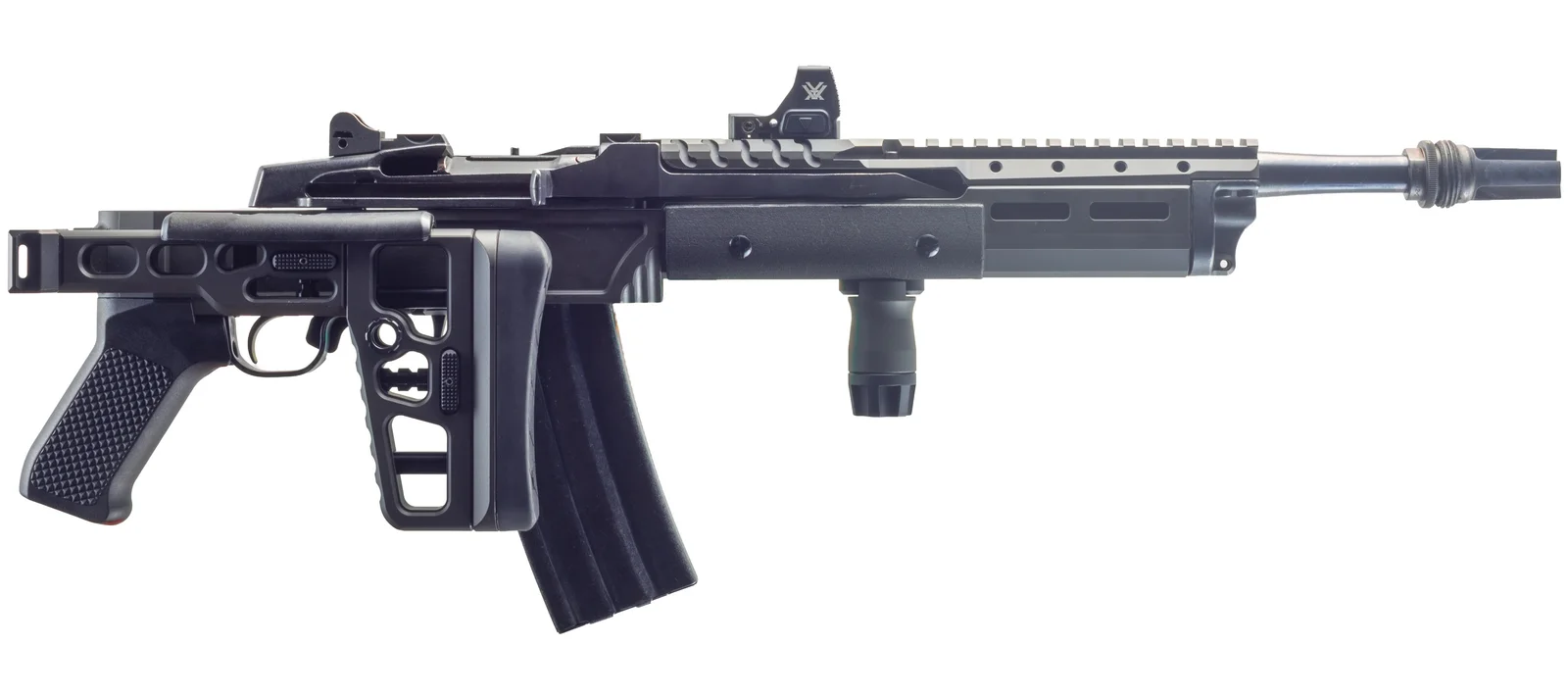
A folded Mini-14 is a genuinely useful truck-gun or patrol-bag configuration in a way the factory wood-stock rifle is not. Ranch and Tactical variants ship at roughly 37 inches overall. Dropping nine inches off the transport length puts the rifle in a discreet rifle bag or a large backpack rather than a full-length case. For the state-legality context around a folding-stock semi-auto rifle, check that your local rules on assault-weapon feature configurations still allow a folder plus a pistol grip stock; a handful of states treat those two features together as a hard stop even when the base rifle is on their roster.
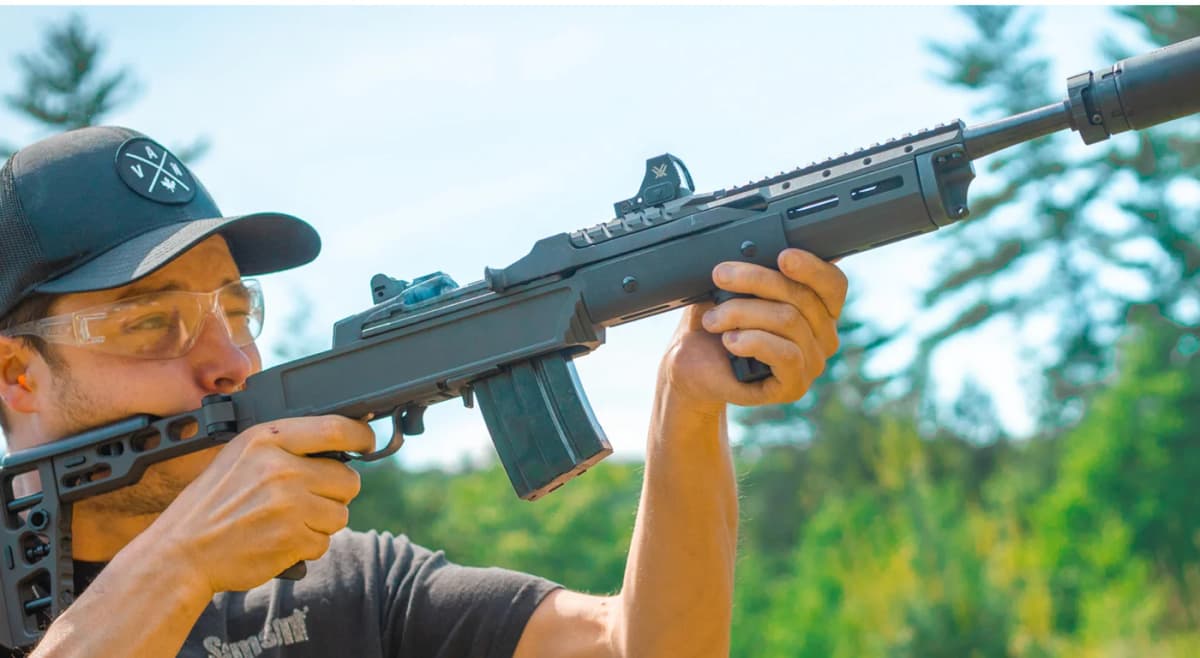
The length-of-pull range matters more than it looks like it should. Factory Mini-14 wood stocks run a fixed 13.5-inch length of pull, which fights a plate carrier, a heavy coat, or short-armed shooters. Push-button LOP from 11.25 to 12.25 inches on the SAS-14 lets the same rifle work behind body armor at the shorter setting and off a bench at the longer. The cheek riser is independently adjustable, which is what makes an optic mounted on the Hannibal Rail actually sit on your cheek instead of forcing a chin-weld.
Track New Mini-14 and Chassis Releases
Get notified when Samson opens SAS-14 order queues, when first hands-on reviews land, and when other Mini-14 platform launches ship in 2026.
What You Get for $650
The chassis body is 6061-T6 aluminum finished in MIL-A-8625 Type III Class 2 hard anodize, not cosmetic anodize. That is the same finish spec you see on service-rifle chassis and premium AR-15 handguards, and it is what separates a chassis that stays black through five years of holster and bag wear from one that goes silver at the contact points. Total chassis weight is 2.8 pounds base, or 3.3 pounds with the Hannibal Rail installed. Both numbers include the stock; the chassis by itself is lighter, but the assembled unit is what matters when you weigh the finished rifle.
The M-LOK handguard runs the length of the barrel-and-forend section, which is what unlocks the accessory ecosystem. Owners gain native M-LOK real estate for lights, hand stops, sling hardware, and QD-adapter clamps, none of which the factory wood stock supports without adapters. Polymer M-LOK rail covers protect the shooter's support hand from the handguard edges. QD sling attachment is ambidextrous on the stock and single-side on the chassis body.
The Hannibal Rail is the optic-mounting answer at the $750 price. It is a picatinny and direct-mount rail sold in two cuts for the same $100 upcharge: a multi-pattern version for RMR, DeltaPoint Pro, Vortex Venom, and C-MORE, and a micro version for Aimpoint T1/T2/H1/H2, Holosun 403/503/515/530, and SIG Romeo 4/5/MSR. Direct mounting a micro dot to the chassis rail is what keeps the optic low enough to sit on the adjustable cheek riser instead of forcing the chin weld the Mini-14 is known for. Pick the cut that matches the dot you already own before you check out.
Samson SAS-14 Specifications
SAS-14 Base
| Platform | Ruger Mini-14 SN 181+ and Mini Thirty |
| Material | 6061-T6 aluminum |
| Finish | MIL-A-8625 Type III Class 2 hard anodize |
| Weight | 2.8 lb |
| Length (Folded) | 19" chassis / 26" with 16" barrel |
| Length (Extended) | 27" to 28" chassis / 34" to 35" with 16" barrel |
| Length of Pull | 11.25" to 12.25", push-button adjustable |
| Cheek Riser | Push-button adjustable |
| Handguard | M-LOK, polymer rail covers included |
| Sling Attachment | QD ambi on stock, single QD on chassis |
| Made In | Keene, New Hampshire, USA |
| Price | $650 direct |
SAS-14 with Hannibal Rail
| Platform | Ruger Mini-14 SN 181+ and Mini Thirty |
| Material | 6061-T6 aluminum |
| Finish | MIL-A-8625 Type III Class 2 hard anodize |
| Weight | 3.3 lb |
| Optic Cut (Multi) | RMR, DeltaPoint Pro, Venom, C-MORE |
| Optic Cut (Micro) | Aimpoint T1/T2/H1/H2, Holosun 403/503/515/530, Romeo 4/5/MSR |
| Rail Variant | Tied to barrel type and rifle year |
| Length of Pull | 11.25" to 12.25", push-button adjustable |
| Cheek Riser | Push-button adjustable |
| Handguard | M-LOK, polymer rail covers included |
| Sling Attachment | QD ambi on stock, single QD on chassis |
| Price | $750 direct |
Specifications published by Samson Manufacturing. Length of pull and folded/extended dimensions come from the SAS-14 product page; chassis weight is quoted with the SAS-K stock installed.
Pair It With: Mini-14 Optics, Mounts, and Slings
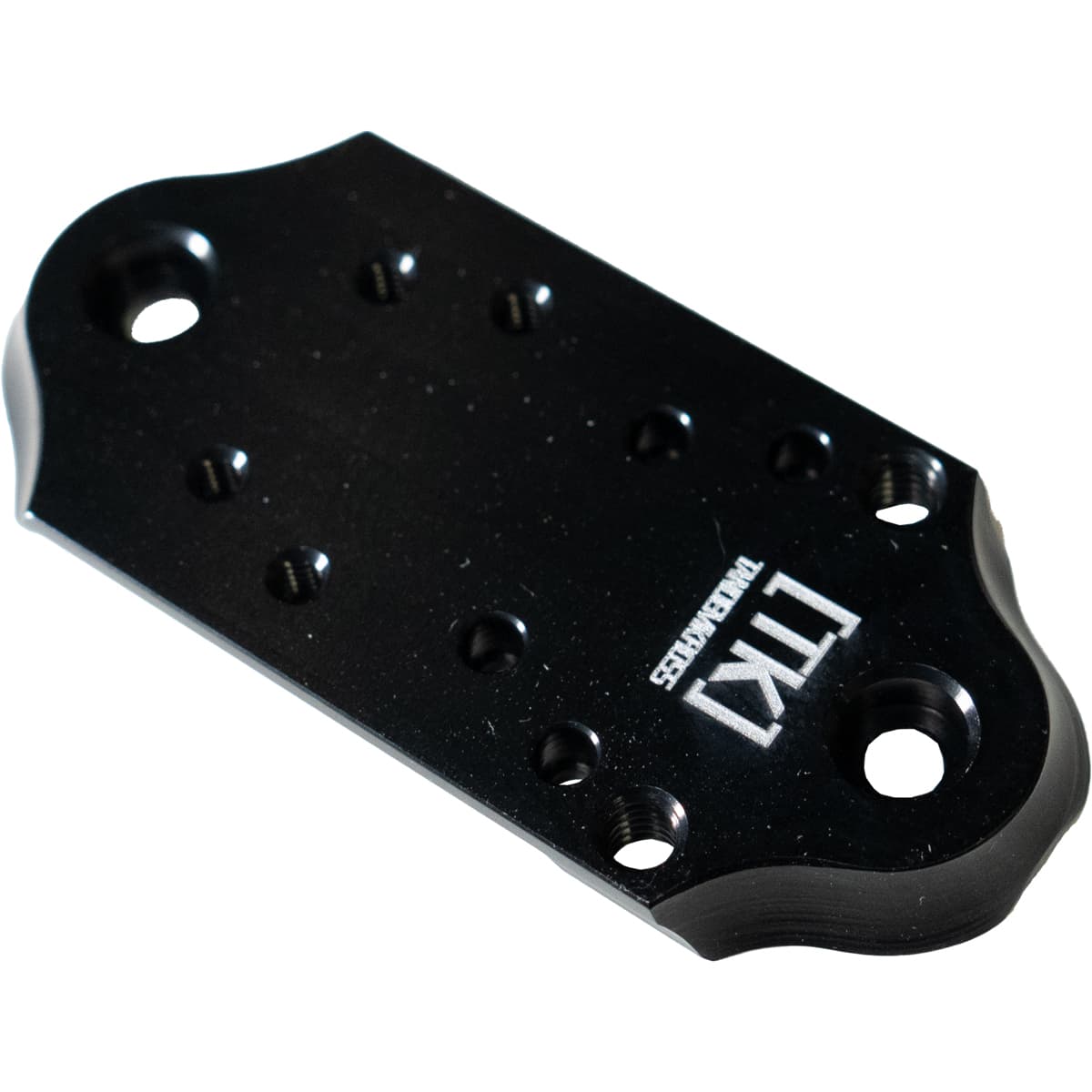
TANDEMKROSS Shadow Mount V3.0 (Ruger Mark Series)
- Mounts directly to the receiver, no Picatinny rail or clamp needed
- Red dot bolts straight to the mount body
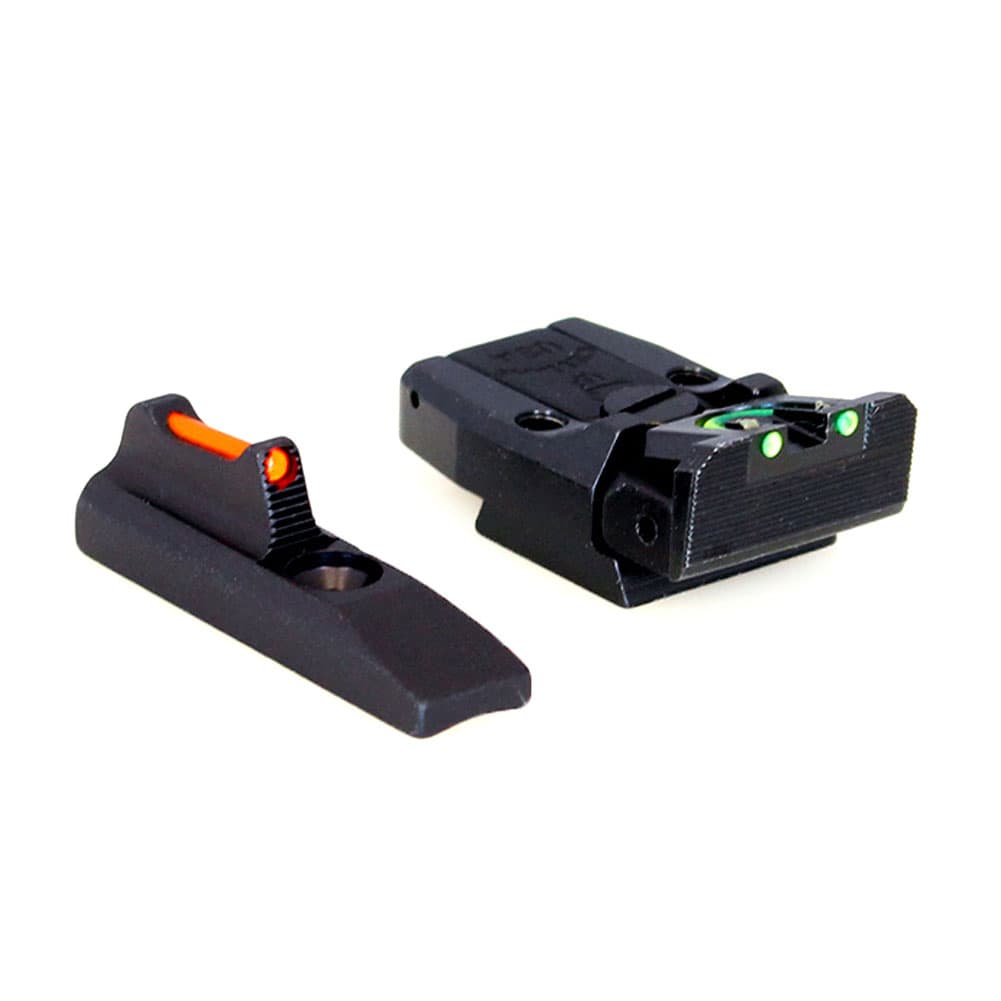
Williams Firesights Adjustable Fiber Optic Sight Set (Ruger Mark Series)
- Red fiber-optic front, two green fiber-optic rear dots
- Click-adjustable windage and elevation
TANDEMKROSS Eagle Eye Fiber Optic Sight Set (Ruger Mark Series)
- Green fiber-optic front, red fiber-optic rear
- Tall sight plane for fast target acquisition
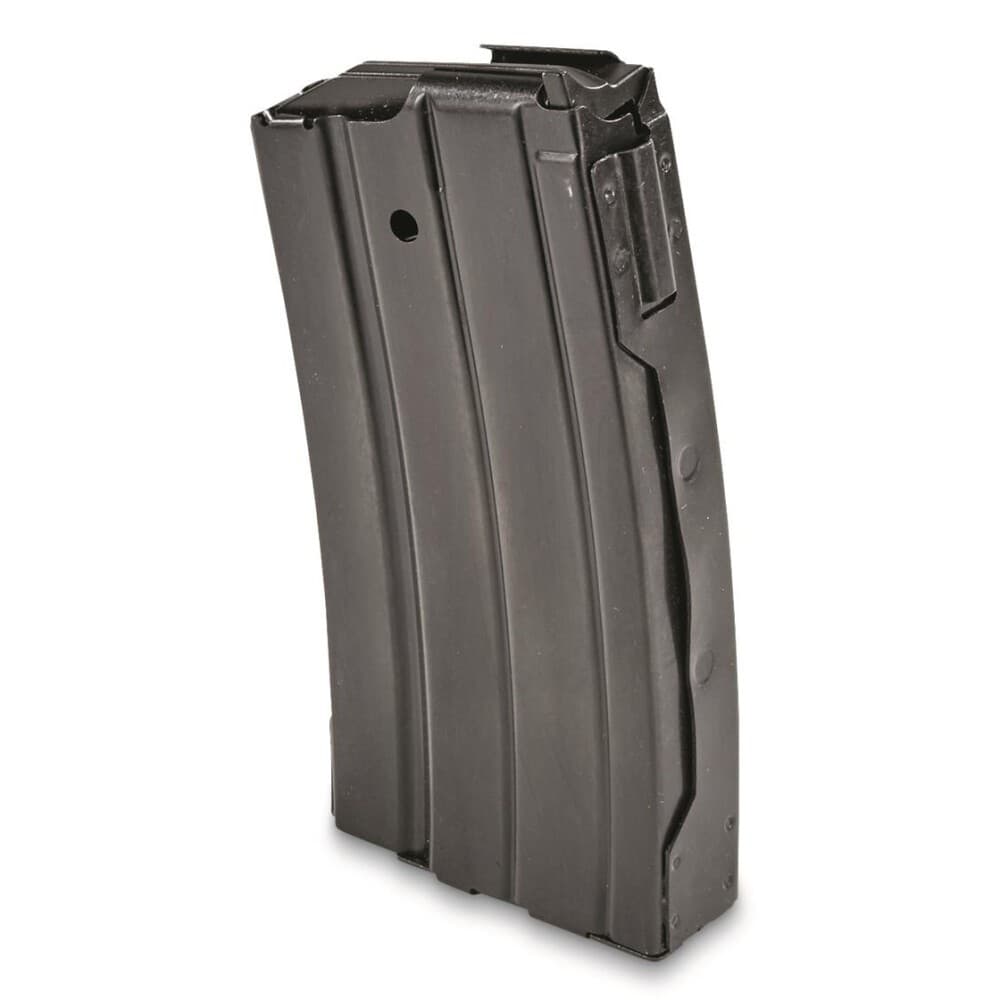
Ruger Mini-14 20-Round Magazine (.223/5.56)
- 20 rounds
- 5.56 NATO/.223 Rem
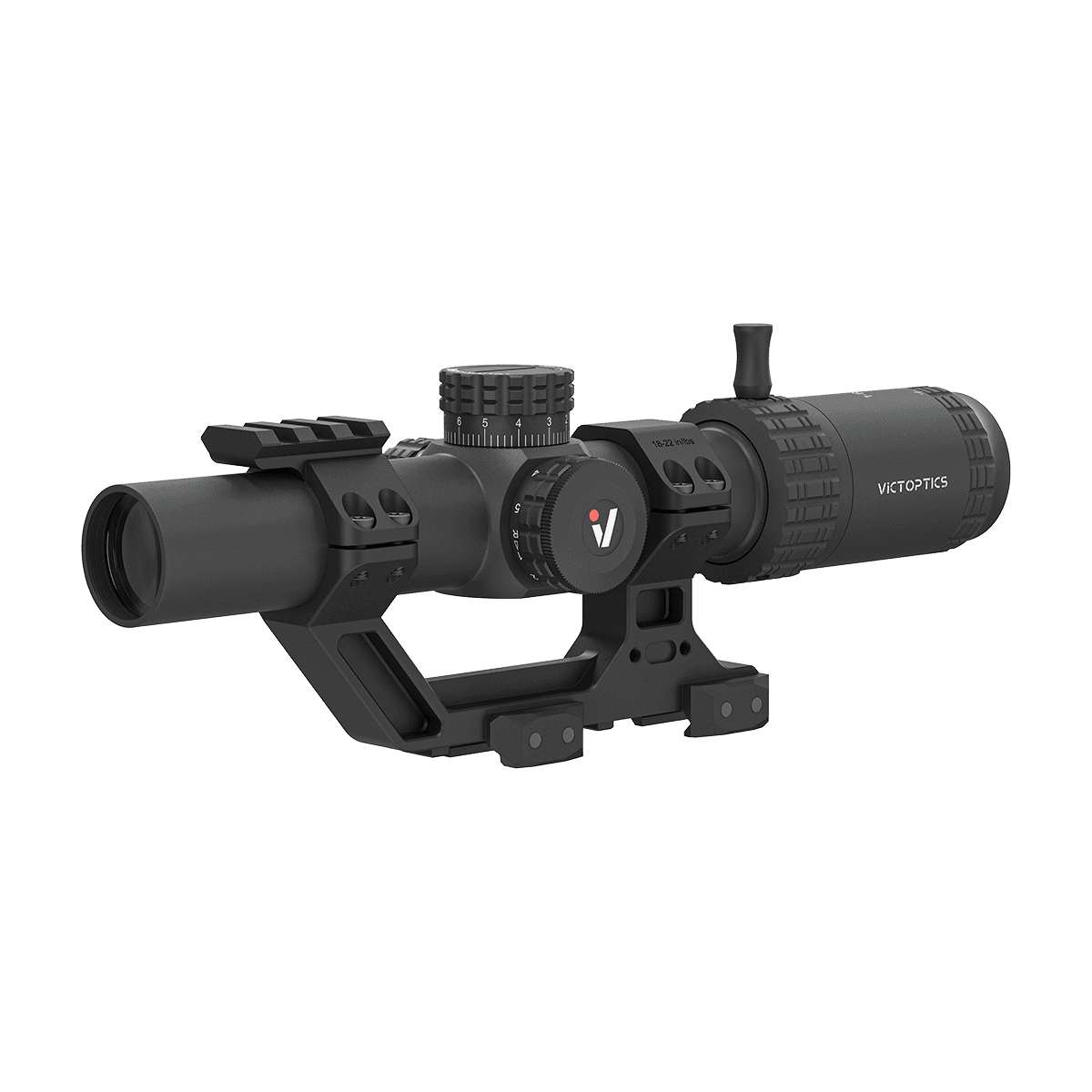
Vector Optics S6 1-6x24i Fiber LPVO Mount Kit
- 1-6x24mm SFP
- VIS-F1 fiber-optic reticle
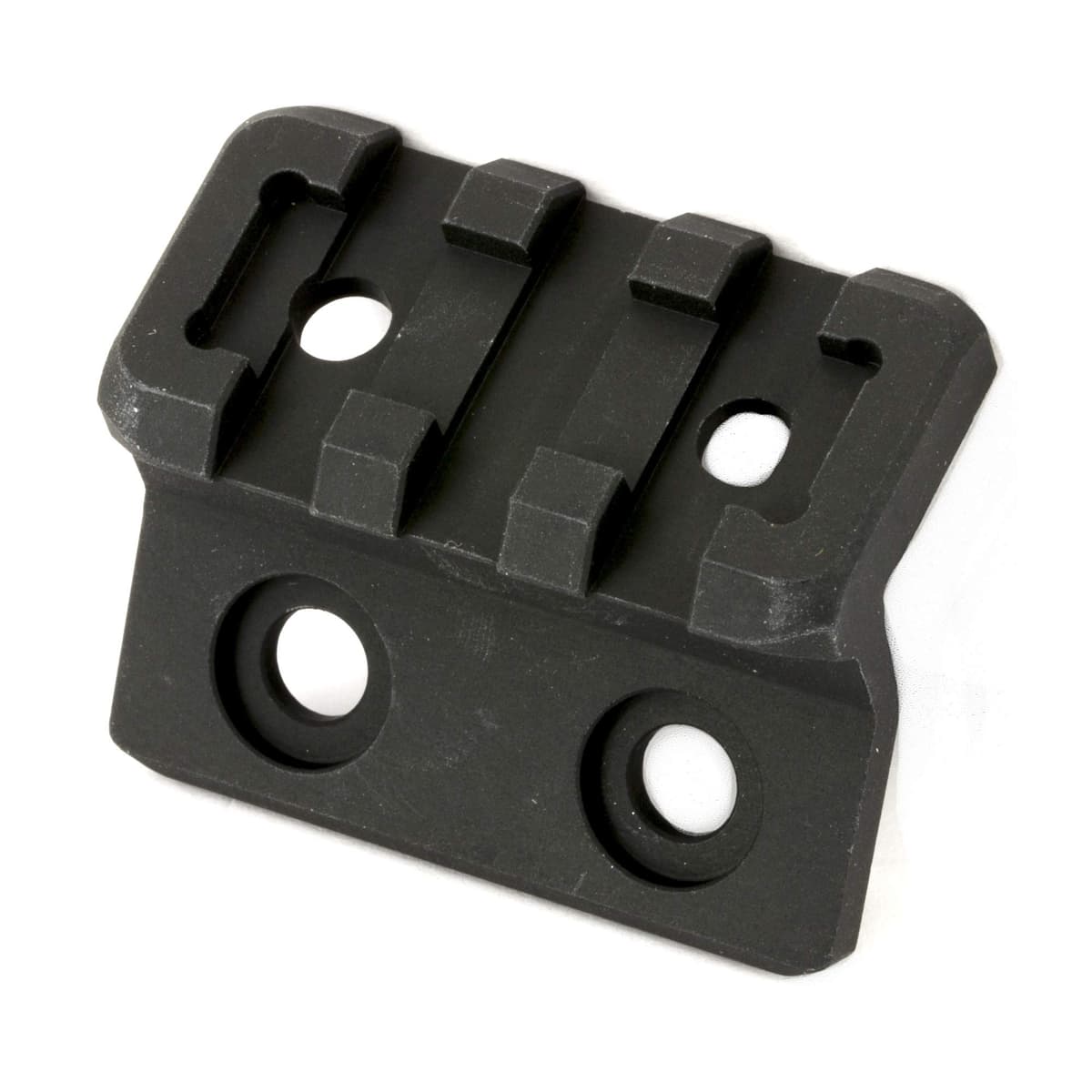
Magpul M-LOK Offset Light/Optic Mount, Aluminum
- MAG604
- Aluminum construction
Affiliate links (?)
SAS-14 vs the A-TM and the ATI Strikeforce
The SAS-14 replaces the Samson A-TM. Samson has ended A-TM production and names the SAS-14 its successor: fully machined billet aluminum, designed, manufactured and finished in Keene, New Hampshire. The A-TM was walnut and steel, kept the AC-556-style side-folder silhouette, and had a fixed 13.5-inch length of pull with no M-LOK forend and no optic rail. The SAS-14 keeps the side fold and changes everything else: an aluminum chassis instead of a wood stock, an M-LOK handguard, push-button length of pull and cheek height, and a Hannibal Rail option for a red dot.
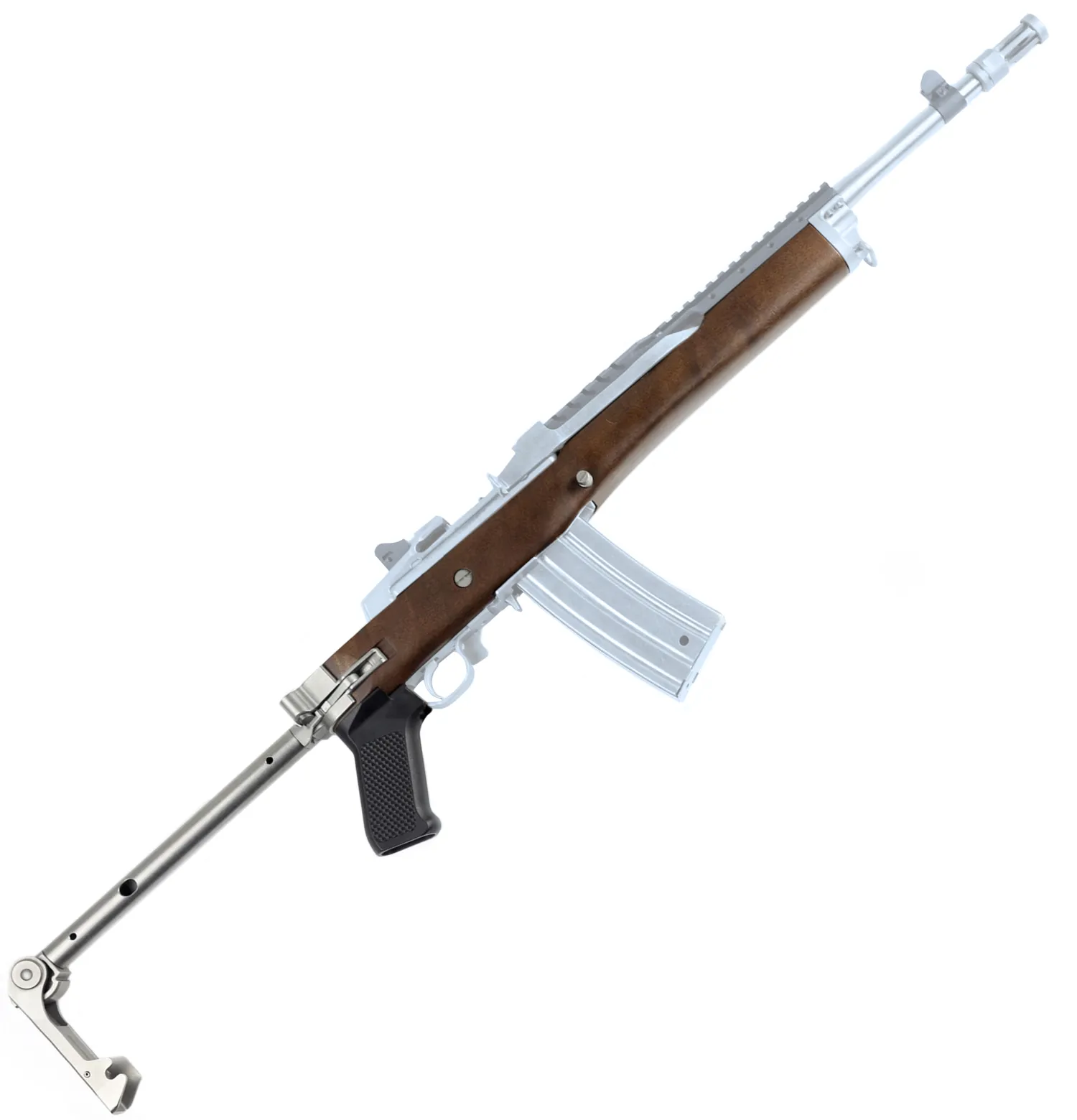
Against the ATI Strikeforce Gen 2 the calculus is entirely different. The Strikeforce runs $130, is polymer over a steel spine, uses a six-position collapsible buffer tube, and gives you a side-fold hinge that fires folded. For a shooter who wants the cheapest path off the factory wood stock into modern ergonomics, the Strikeforce is still the answer, and our Ruger Mini-14 upgrades guide ranks it that way. The SAS-14 sits above the entire polymer tier as the aluminum chassis option: harder finish, no buffer tube, native M-LOK forend, push-button LOP without collapsing on a buffer spring.
Precision-focused owners running the ProMag Archangel AAMINI ($134.99) or the AA1430 Sparta ($225.49) are aiming at a different use case. Those stocks put a bedded receiver pocket and a full-length top rail under a scope for bench-and-bipod work at a fraction of the SAS-14's price, but neither one folds and neither has an M-LOK forend. If the Mini-14 lives on a bench and takes a fixed optic, the Archangels are still the right pick. If the Mini-14 lives in a bag and takes a red dot, the SAS-14 is the upgrade.
Fitment: Serial Number 181, Barrel Type, and the Hannibal Variants
The SAS-14 fits Ruger Mini-14 rifles with serial numbers 181-xxxxx and higher, plus all Mini Thirty rifles. Samson does not list pre-181 Mini-14s as compatible. Ranch, Tactical, and Mini Thirty variants inside the compatible window all take the same chassis body.
The Hannibal Rail add-on has two versions tied to barrel type and serial number. A Mini-14 with the factory flange barrel and a serial beginning with 580 or higher takes the 2008/Later rail, as does every Mini Thirty. A Mini-14 with the factory straight pencil barrel and a serial from 181 through 579 takes the 2007/Earlier rail. If you are ordering the Hannibal Rail configuration, confirm the version against Samson's fitment chart before you check out. The base SAS-14 does not have this constraint because it does not include the optic rail.
Plan the optic around the chassis, not around a receiver clamp. The scout-mount route that leads our Mini-14 upgrades guide works by replacing the factory upper handguard, which is the same real estate the SAS-14's own M-LOK forend occupies, so the two are not a stacked pair. On the SAS-14 the optic goes on the chassis: order the matching Hannibal Rail with the chassis and mount a micro red dot directly to it, then route lights and sling hardware to the M-LOK slots.
Frequently Asked Questions
▶What is the Samson SAS-14?
▶How much does the Samson SAS-14 cost?
▶Which Mini-14 models does the SAS-14 fit?
▶Does the SAS-14 replace the Samson A-TM Folding Stock?
▶How does the SAS-14 compare to the ATI Strikeforce Mini-14 stock?
▶Is the SAS-14 available now?
Bottom Line
The Samson SAS-14 is the first Mini-14 chassis that is genuinely built like a modern rifle chassis: 6061-T6 aluminum body, hard anodize, M-LOK forend, adjustable cheek and length of pull, side folder, ambidextrous QD, and optional receiver-position optic rail cut for the three most common micro red-dot footprints. At $650 base or $750 with the Hannibal, it is a premium purchase against a rifle that starts under $1,300 factory. That ratio is a real consideration.
The Mini-14 buyer who has held the platform for years and who wants a truck-gun or patrol-bag folder without buying an AK or building an AR pistol has not had this option before. The SAS-14 solves the exact problem that keeps a lot of Mini-14 owners on their factory wood stock: no aluminum chassis, no M-LOK forend, no adjustable stock geometry, no path to a low-profile red dot without a chin weld. Samson delivered all four in a single product. For the fuller upgrade roadmap around it, including trigger springs, scope mounts, and iron sights, see our Ruger Mini-14 upgrades guide. If the goal is a compact vehicle setup rather than the chassis alone, our truck-gun guide covers secure storage, corrosion control, and configuration tradeoffs. To spec optics and slings alongside the chassis, use the rifle builder.