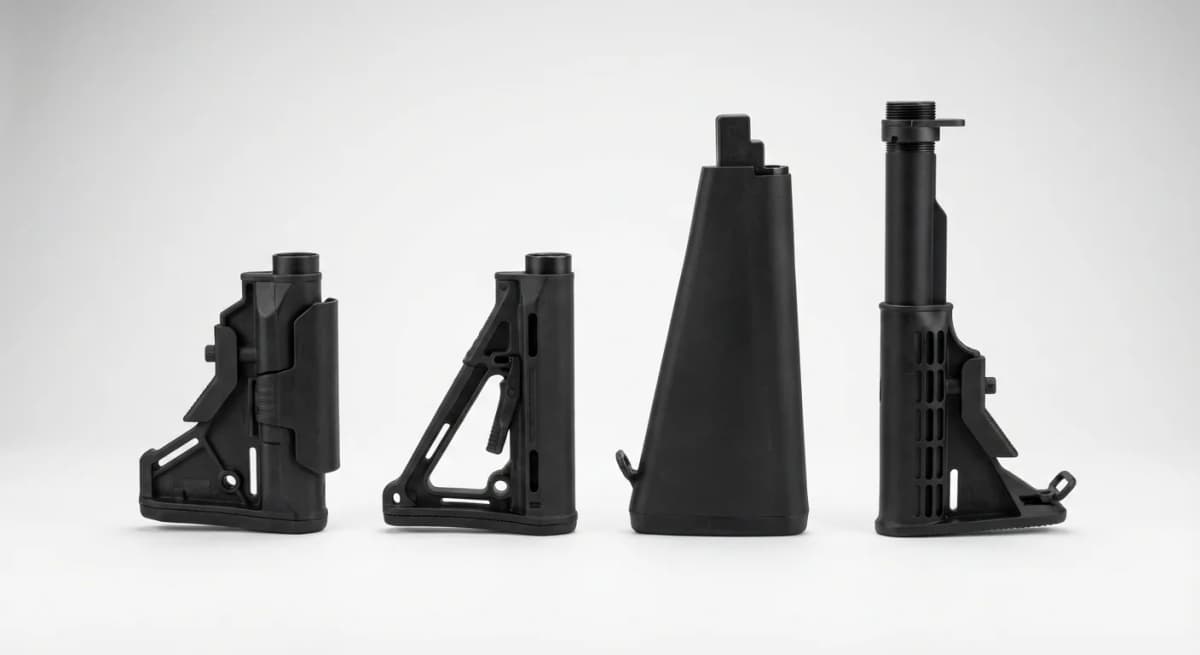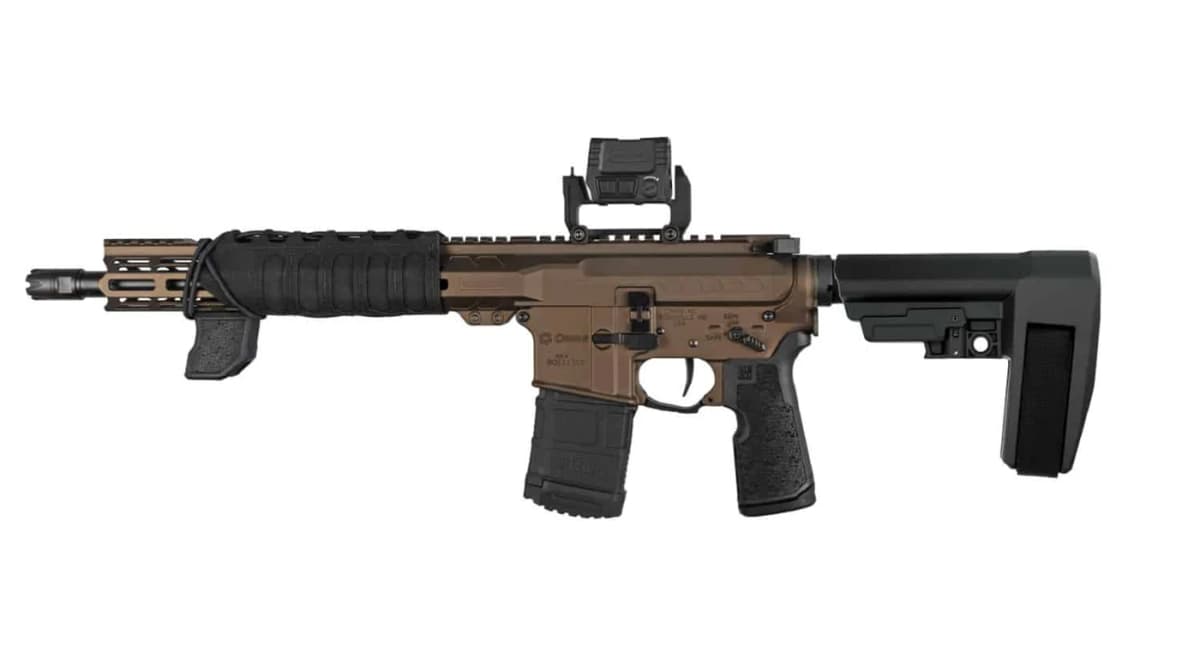
Key Takeaways
- →1.6-inch maximum width: the narrowest figure SB Tactical publishes for the A-Series, against 2 inches for the SBA3, 2.1 for the SBA5, and 2.25 for the SBA4.
- →8.5 oz: it lands between the 6.75 oz SBA3 and the reinforced SBA5 (9.5 oz) and SBA4 (10 oz), so it is not a lightest-in-class play.
- →Full rubber arm cuff: the construction change SB Tactical calls out as what separates the SBA6 from every other A-Series brace.
- →Mil-spec carbine receiver extension only: five adjustment positions, 7.1 inches collapsed and 9.5 inches extended. The receiver extension is not included.
- →$99.99: the same price as the rest of the A-Series. Black, FDE, and OD Green, made in the USA, developed in conjunction with Die Free Co.
What SB Tactical Actually Changed
The SBA6 is an SBA3 that got narrower and grew a rubber cuff. SB Tactical developed it with Die Free Co. as the newest entry in the A-Series adjustable brace lineup, building on the SBA3 design and carrying over the five-position adjustment, the integral ambidextrous QD sling socket, and the adjustable 1-inch nylon strap. What moved is the exterior geometry: maximum width drops to approximately 1.6 inches, and the arm cuff is now full rubber, which SB Tactical names as the construction difference from the rest of the series.
Those two changes are the entire product. The SBA6 does not introduce a proprietary buffer system, a new adjustment mechanism, or a folding interface. It mounts on the same standard mil-spec carbine receiver extension the SBA3, SBA4, and SBA5 use, which means anyone already running an A-Series brace can swap to it without touching the buffer tube, the castle nut, or the end plate.
The weight tells you where it sits. At 8.5 ounces the SBA6 is 1.75 ounces heavier than the SBA3 it descends from, and 1.5 ounces lighter than the SBA4. SB Tactical is not claiming this is the lightest brace it makes, and the spec sheet backs that up. The pitch is a narrower brace with a rubber contact surface, paid for in rear weight.
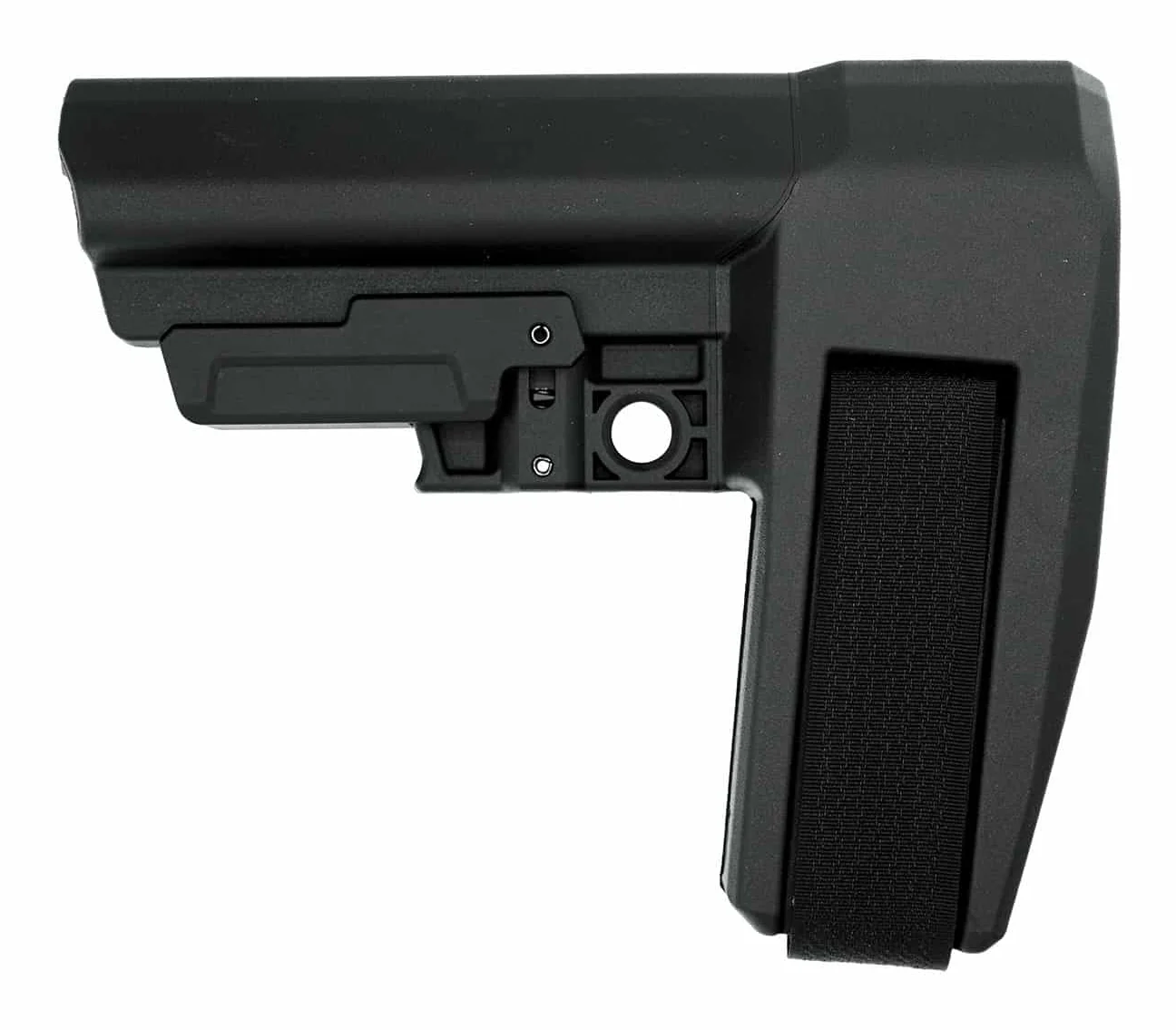
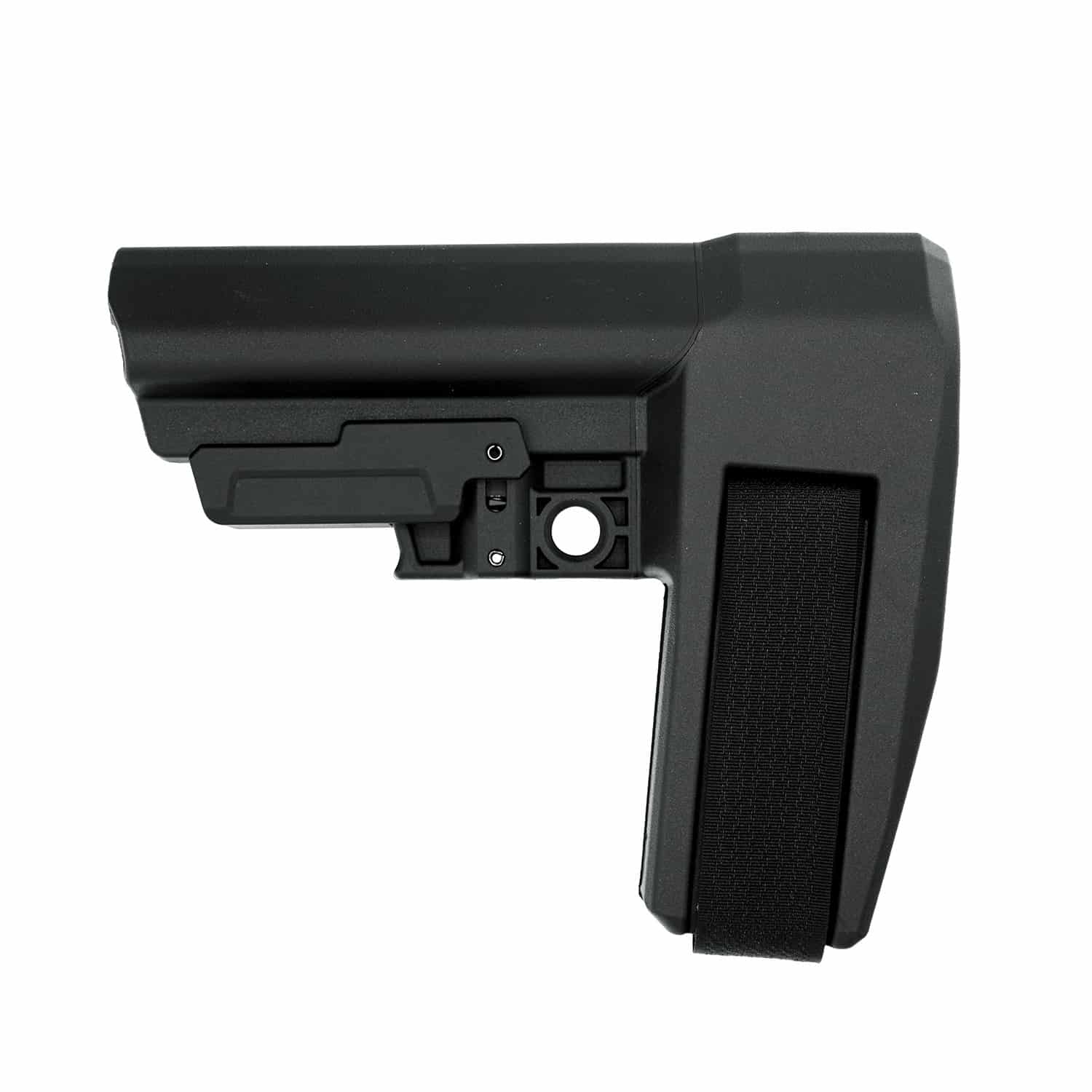
SB Tactical SBA6 Brace
Narrowest A-Series brace for a mil-spec carbine receiver extension
Narrowest A-Series brace at 1.6 in wide, with a full rubber arm cuff and 5-position adjustment
- +Narrowest published A-Series width at 1.6 in
- +Full rubber arm cuff, a flexible contact point the other A-Series cuffs do not use
- +1.5 oz lighter than the SBA4 and 1 oz lighter than the SBA5
- −1.75 oz heavier than the SBA3 it updates
- −Requires a mil-spec carbine receiver extension, not commercial diameter
- −Receiver extension is not included
Affiliate links (?)
Why 1.6 Inches Is the Spec That Matters
Brace width decides whether a braced AR pistol closes in a case, and the SBA6 takes roughly 0.4 inches off the SBA3 and 0.65 inches off the SBA4. On a discreet backpack or a slim rifle case, that is the difference between a zipper that shuts and one that bulges, because the brace is usually the widest point at the rear of the gun once the optic is folded or removed.
The narrower body also changes how the brace sits against a plate carrier or a jacket when you index it on the forearm. A wide cuff catches on gear on the way up; a slimmer one clears. That is a small handling gain rather than a transformative one, and it is the honest reason to pick this brace over the SBA3: you want the A-Series adjustment mechanism in the slimmest package SB Tactical currently publishes.
What the narrower profile does not do is add rigidity. The SBA4 and SBA5 are the reinforced models in the family, and the SBA6 is not positioned against them on structure. If a firmer, larger cuff body is what you are after, those two remain the answer and the SBA6 is a step away from it. Our AR pistol brace guide ranks the buffer-tube, PDW, and folding options against each other if you are still deciding which format fits the build.
Stay Updated on AR Pistol Braces
New brace and stock releases, fitment changes, and pricing, sent when they land.
The Full Rubber Arm Cuff
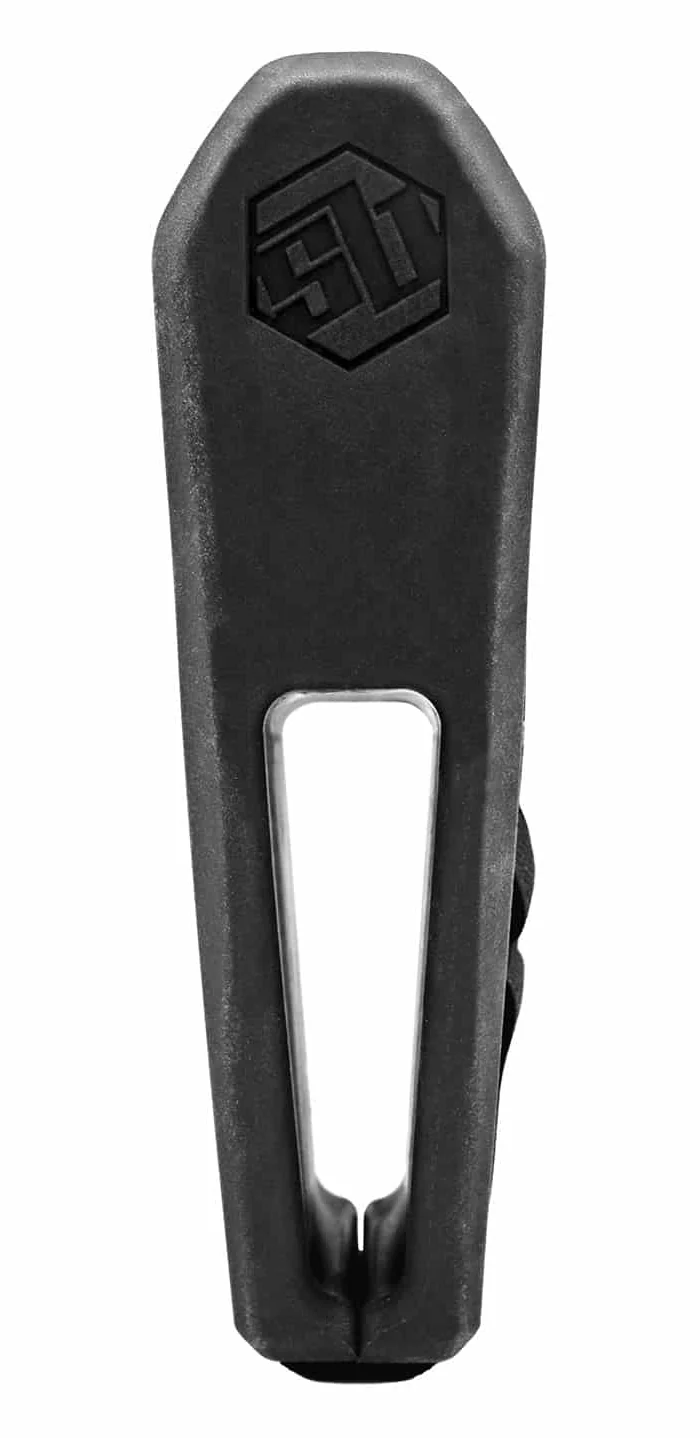
SB Tactical describes the full rubber arm cuff as a flexible point of contact for stabilization, and lists it first among the SBA6 features. It is the one material change in the product, and the company uses it as the primary differentiator from the rest of the A-Series rather than treating it as a finish detail.
A flexible cuff conforms to the forearm rather than bridging across it, which is the mechanism behind SB Tactical's wording. The company has not published a durability, retention, or hardness figure for the rubber, and it has not published cuff materials for the other A-Series braces either, so how the two compare in wear and grip over a few thousand rounds is not something the spec sheets answer.
SBA6 vs SBA3, SBA4, and SBA5
The SBA6 does not replace anything. SB Tactical still lists all four A-Series braces, all four are five-position adjustable, all four mount on a mil-spec carbine receiver extension, and all four carry the same price. The only variables are weight, length, width, and cuff construction.
A-Series: weight / length / maximum width
| SBA3 | 6.75 oz / 6.75 in / 2.0 in |
| SBA4 | 10 oz / 7.5 in / 2.25 in |
| SBA5 | 9.5 oz / 6.125 in / 2.1 in |
| SBA6 | 8.5 oz / 6.5 in / 1.6 in |
Read that table as a decision rather than a spec dump. Pick the SBA3 when rear weight is the binding constraint, because 6.75 ounces is still the lowest number in the family and nothing else comes close. Pick the SBA4 when you want the largest, most reinforced body and can absorb 10 ounces. Pick the SBA5 when you want a reinforced cuff on the shortest body at 6.125 inches. Pick the SBA6 when the profile is what you are optimizing and you will trade 1.75 ounces against the SBA3 to get it.
The threshold worth naming: on a sub-8-inch AR pistol where the whole point is a compact package, 1.75 ounces at the very rear of a short gun is felt, because there is no barrel mass ahead of the receiver to balance it. On a 10.5 or 11.5-inch build the same 1.75 ounces disappears into a gun that already carries weight forward. That is where the SBA6 makes sense and where the SBA3 still wins.
Check the Receiver Extension Before Ordering
The SBA6 fits platforms capable of accepting a standard mil-spec carbine receiver extension, and nothing else. A mil-spec carbine tube runs about 1.148 inches in diameter with a straight profile against about 1.168 inches with a taper on a commercial tube, so a commercial tube will not seat the brace correctly. Smooth AR pistol buffer tubes and proprietary PDW buffer systems are also outside what this brace mounts on.
The receiver extension is not included, which matters if you are building from a stripped lower rather than swapping a brace on a complete pistol. SB Tactical also notes that fitment can vary slightly depending on the manufacturer and dimensions of the receiver extension, so a tube that is nominally mil-spec but loose or tight in tolerance can still fight you. You can spec the rest of a braced AR pistol around it in our rifle builder, and if the endpoint is a short-barreled rifle rather than a braced pistol, the AR pistol to SBR guide covers the conversion and the stock options that replace a brace.
SB Tactical SBA6 Specifications
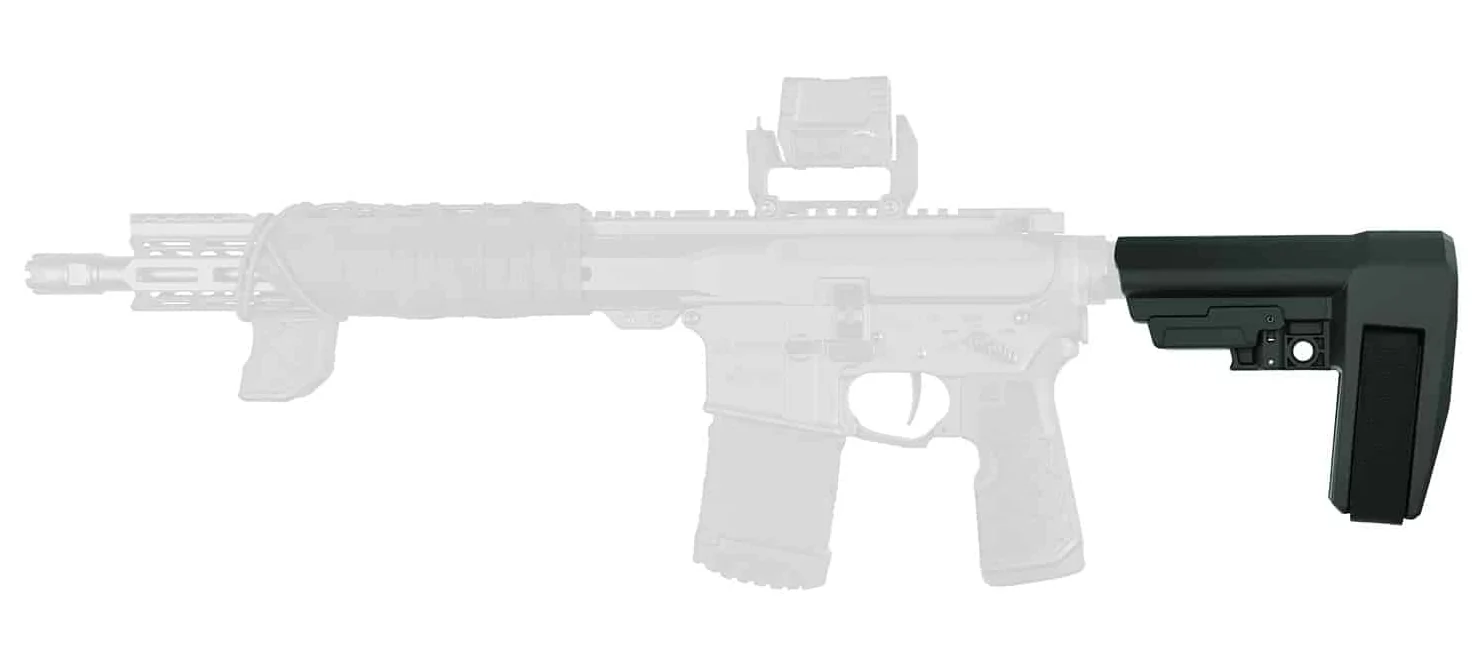
SBA6 published specifications
| Product type | Adjustable Pistol Stabilizing Brace |
| Adjustment | Five positions |
| Weight | 8.5 oz |
| Length (brace only) | Approx. 6.5 in |
| Length collapsed | 7.1 in |
| Length extended | 9.5 in |
| Maximum width | Approx. 1.6 in |
| Arm cuff | Full rubber |
| Strap | 1 in adjustable nylon |
| Sling attachment | Integral ambidextrous QD socket |
| Platform fit | Mil-spec carbine receiver extension |
| Receiver extension | Not included |
| Colors | Black, FDE, OD Green |
| Country of manufacture | USA |
Shop Current SB Tactical Braces
SB Tactical SBA5 Pistol Brace
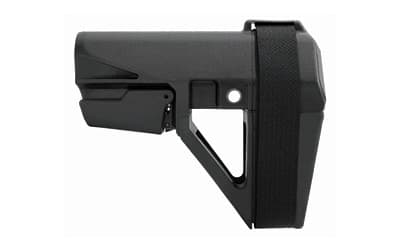
- 5-position adjustable
- Mil-spec compatible
SB Tactical FS1913 Folding Pistol Stabilizing Brace
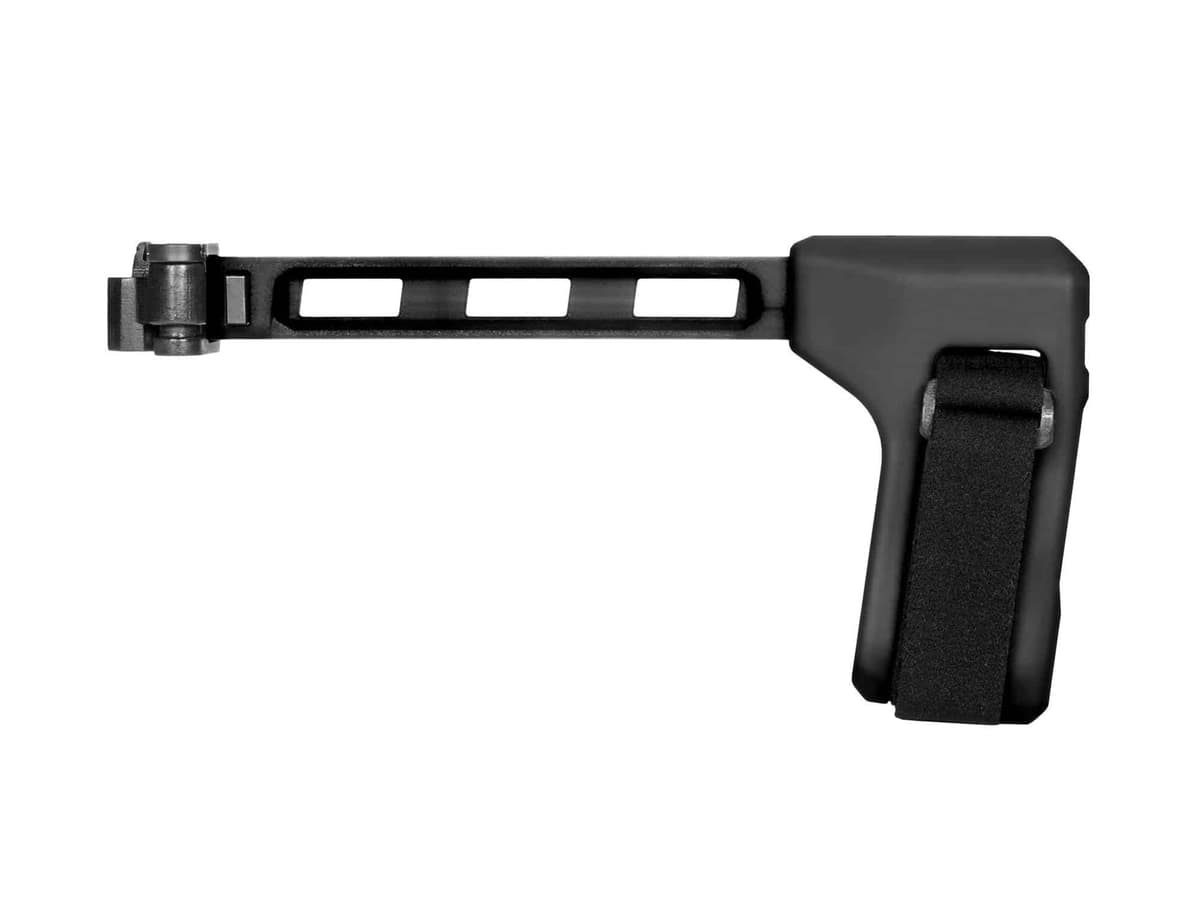
- 1913 Picatinny rear interface, no buffer tube
- Steel hinge, polymer strut
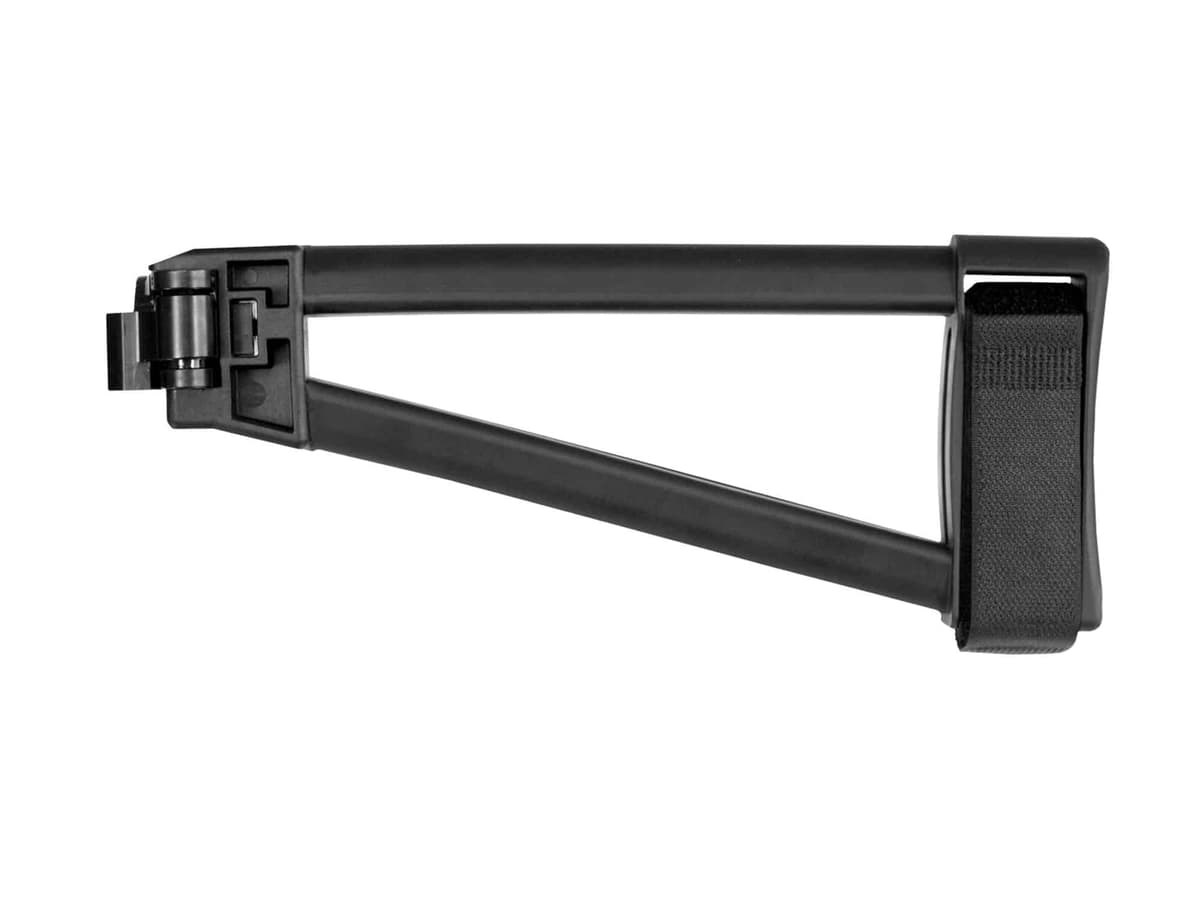
SB Tactical TF1913 Triangle Folding Pistol Stabilizing Brace
- 1913 Picatinny rear interface
- Steel hinge, rigid polymer triangle
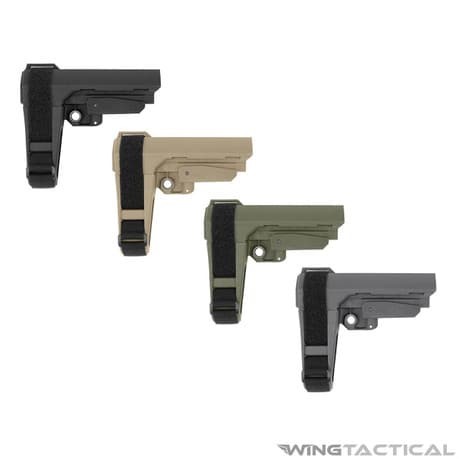
SB Tactical SBA3 Brace
- 5-position adjustable
- Mil-spec tube
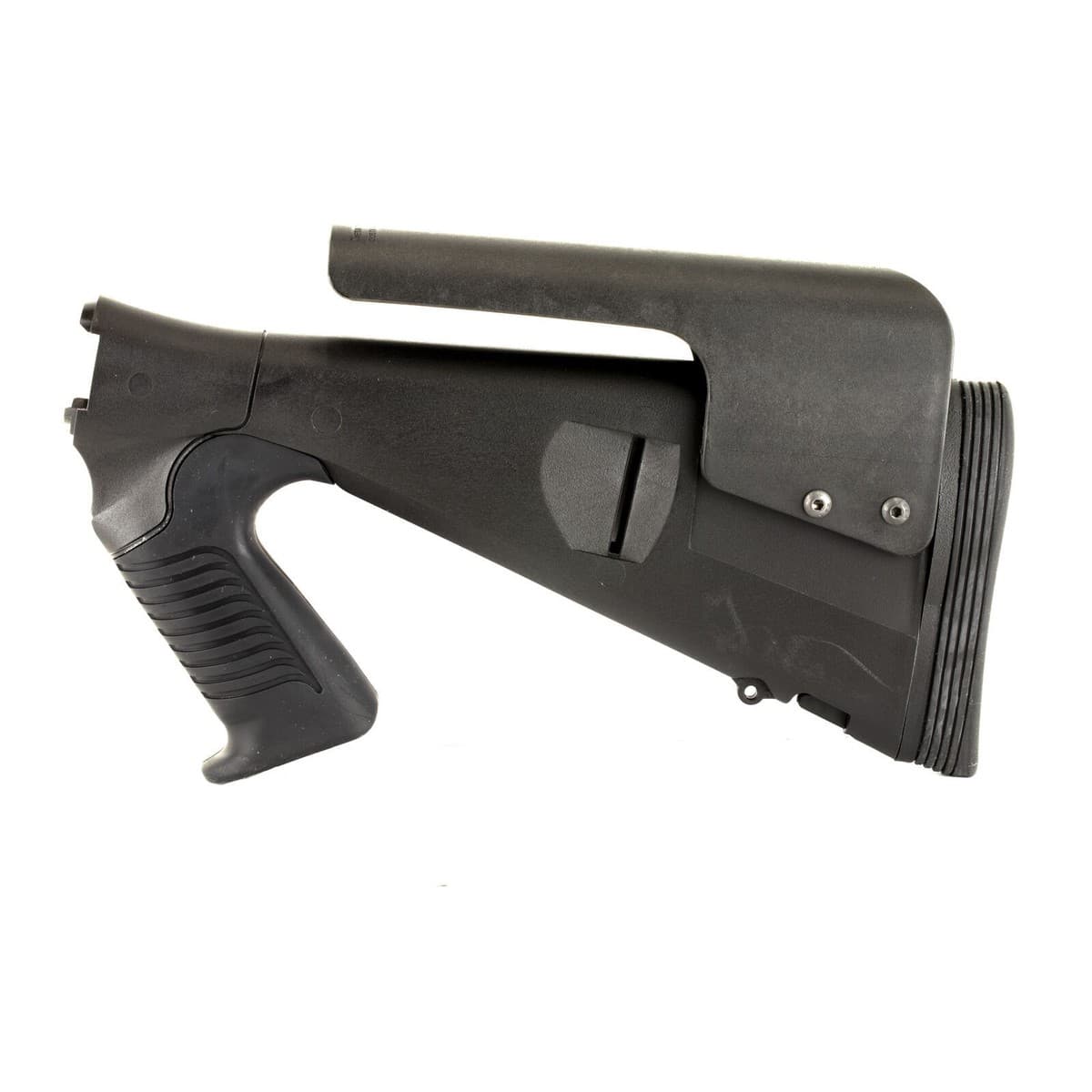
Mesa Tactical Urbino Pistol Grip Stock (Mossberg 500/590)
- Mossberg 500/590/590A1 fitment
- Fixed 12.5" tactical length-of-pull
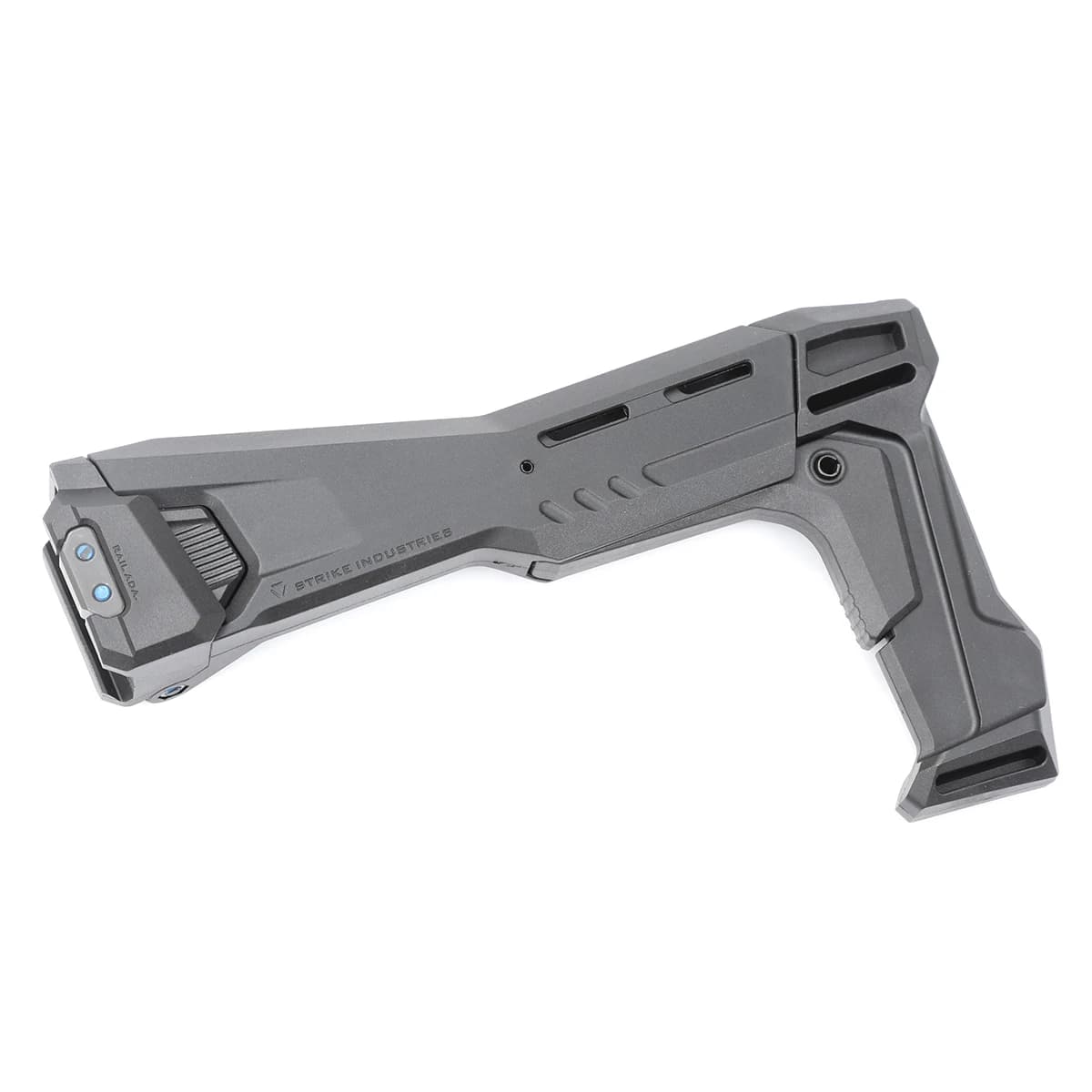
Strike Industries Polymer FSA Folding Stabilizing Brace (1913)
- Fiber-reinforced Polymer Extreme construction
- 1913 Picatinny rear interface
Affiliate links (?)
Who Should Buy the SBA6
Buy the SBA6 if you are building or rebuilding an AR pistol and the brace profile is what you are optimizing. It is the narrowest adjustable brace SB Tactical publishes, it uses the same mounting standard as the rest of the A-Series, and at $99.99 it costs no more than the braces it sits alongside. For a case-carried or pack-carried pistol, 0.4 inches off the widest point at the rear of the gun is a real gain.
Skip it if you already run an SBA3 and are happy. The SBA6 is not a performance upgrade over it; it is a different balance of width, weight, and cuff material, and it costs you 1.75 ounces to get the narrower body. Skip it as well if rigidity is the priority, since SB Tactical positions the SBA4 and SBA5 as the reinforced models and has not claimed the SBA6 improves on them there. For braces that mount on a 1913 rail instead of a buffer tube, our 1913 brace guide covers the folding and PDW options that the A-Series does not address.
Where Braced Pistols Stand Federally
Braced pistols are legal under federal law as of July 2026. The 2023 ATF rule that reclassified braced pistols as short-barreled rifles was vacated by the Fifth Circuit and is not being enforced, so mounting an SBA6 on an AR pistol does not create an NFA item.
Two things still matter. Mounting an actual rifle stock rather than a brace on a pistol is making a short-barreled rifle; since October 9, 2026, ATF does not enforce Form 1 approval or registration for SBRs, but some states tie SBR possession to federal registration. State law also governs independently of the federal position, and several states restrict braced pistols regardless of where the federal rule landed. Confirm your own state before ordering.