.30-06 vs .308: Ballistics, Recoil & Hunting Comparison header image
Ballistics
June 20, 2026
.30-06 vs .308: Ballistics, Recoil & Hunting Comparison

The .30-06 Springfield and .308 Winchester fire the same .308-inch bullet, but the larger .30-06 case runs 100-125 fps faster. Here is what that buys you, what it costs in recoil, and how to choose between them for deer, elk, and the range.

[ < Back to guides ]
BallisticsHuntingComparison

.30-06 vs .308: Ballistics, Recoil & Hunting Comparison

The .30-06 Springfield and .308 Winchester fire the exact same 0.308-inch bullet, which is why the argument between them never ends. The .30-06 runs a longer case and pushes that bullet 100-150 fps faster with access to heavier 200-220gr projectiles. The .308 trades that velocity for roughly 14% less recoil, a shorter and lighter action, cheaper ammunition, and a slight accuracy edge. This guide breaks down the real factory-load ballistics, the recoil math, trajectory at distance, and which cartridge wins for deer, elk, and the range.

By AB|Last reviewed June 2026

.30-06 vs .308: The Short Answer

Pick the .308 Winchester unless you specifically need the .30-06's heavier bullets or extra velocity. For the overwhelming majority of deer hunters and range shooters, the .308 is the smarter buy: about 14% less recoil, a shorter and lighter action, cheaper and more-plentiful ammunition, and a reputation for slightly better inherent accuracy. It gives up only 100-150 fps to the .30-06 in matched bullet weights, and because both fire the same bullet that gap barely changes downrange, holding around 125 fps even at 500 yards.

Pick the .30-06 Springfield if you hunt elk, moose, or larger game, if you want to shoot 200-220gr bullets the .308 cannot stabilize at full velocity, or if you simply want the extra energy reserve at every range. The larger case drives the same bullet faster and the cartridge tops out heavier, which is exactly what matters when the animal gets bigger and the shots get longer. Both fire the same 0.308-inch projectile, so terminal performance comes down to bullet construction, not bore diameter.

The Velocity Gap, Matched 178gr ELD-X
.30-06 Muzzle
2,750fps2,988 ft-lbs
.308 Muzzle
2,600fps2,672 ft-lbs
Gap at 500 yd
~125fps1,993 vs 1,868 fps

Head-to-Head Spec Comparison

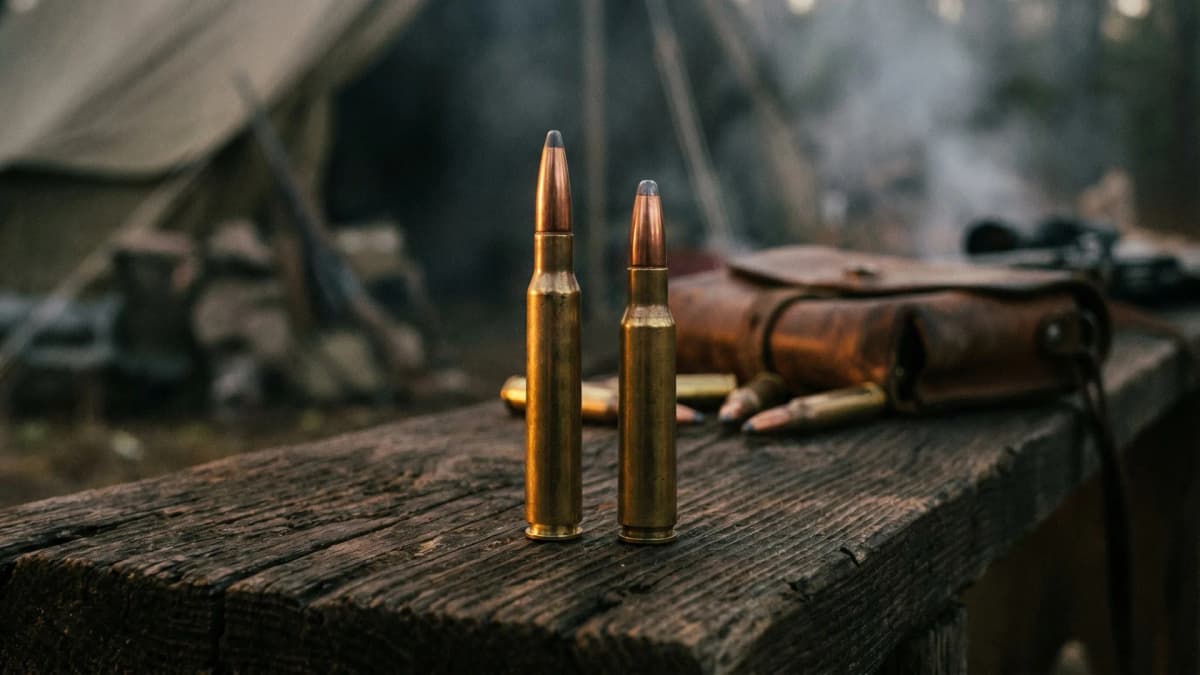
The .30-06 is the larger cartridge in every dimension that matters. Its 2.494-inch case holds more powder than the .308's 2.015-inch case, which is the entire source of the velocity advantage. That longer case also forces a long action, while the .308 runs in a shorter, lighter, stiffer short action that competition and precision shooters prefer. The .30-06's case room lets it load bullets up to 220gr at usable velocities, while common .308 factory hunting loads top out around 180gr; heavier 185-200gr .308 match and load-data options exist but give up velocity the larger case does not.

Neither cartridge is a long-range specialist by modern standards. For pure distance work the 6.5 Creedmoor beats both with higher-BC bullets and less recoil, which is why precision shooters increasingly choose it over the .308. Where the .30-cal pair still wins is heavy-game terminal performance and the century of factory load development behind them.

Cartridge Spec Sheet

.30-06 Springfield

.308 Winchester

Bullet Diameter
0.308″
0.308″
Bullet Weights
150-220 gr (advantage)
150-180 gr
Case Length
2.494″
2.015″
Velocity (178gr)
2,750 fps (advantage)
2,600 fps
Energy (178gr)
2,988 ft-lbs (advantage)
2,672 ft-lbs
Recoil (165gr)
~20 ft-lbs
~17 ft-lbs (advantage)
Action Length
Long
Short (advantage)
Suppressor Thread
5/8x24
5/8x24
Ammo Availability
Excellent
Universal (advantage)
Same 0.308-inch bullet, different case. The .30-06's extra 0.48 inches of case length is the entire velocity story; the .308's short action is the entire weight-and-accuracy story.

Velocity & Energy by Load

In matched factory loads the .30-06 leads the .308 by 80 to 150 fps at the muzzle, and the energy gap runs 150 to 316 ft-lbs depending on the bullet. The widest margin shows up with the 178gr ELD-X, where the .30-06's larger case turns the same bullet into a 150 fps, 316 ft-lbs advantage. The all-copper Barnes loads are the exception: both calibers run their TTSX bullets at 2,700 fps, but the .30-06 carries a heavier 180gr pill to the .308's 168gr, so it still wins on momentum and energy.

The practical takeaway is that the velocity gap is real at the muzzle but shrinks with distance, because both bullets share the same diameter, ballistic coefficient, and drag curve. For exact drop and retained-energy numbers at every range with your specific load and zero, run the figures through our ballistics chart and trajectory calculator.

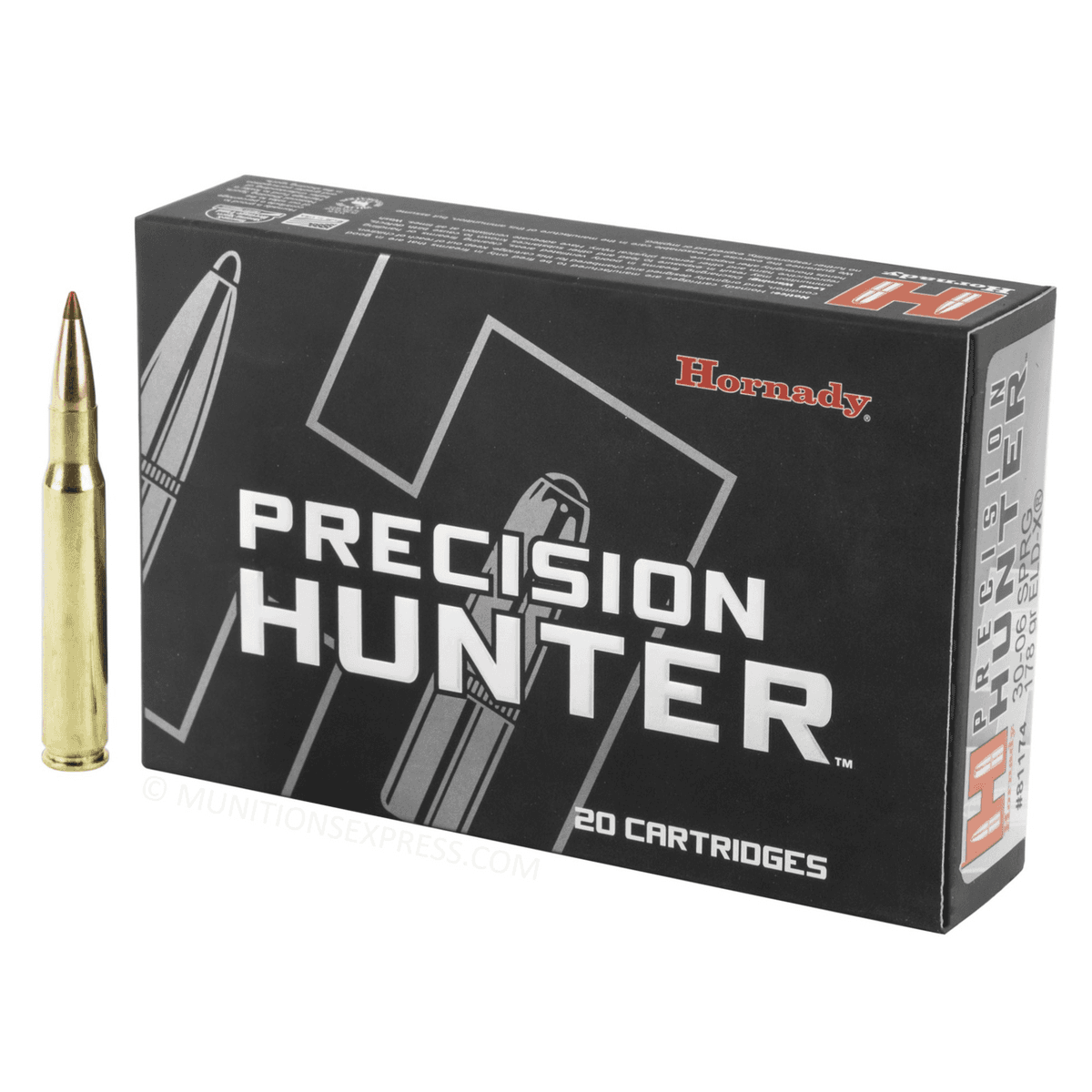
Hornady 178gr ELD-X
2,750 fps
.30-06 Energy2,988 ft-lbs
.308 Velocity2,600 fps
.308 Energy2,672 ft-lbs
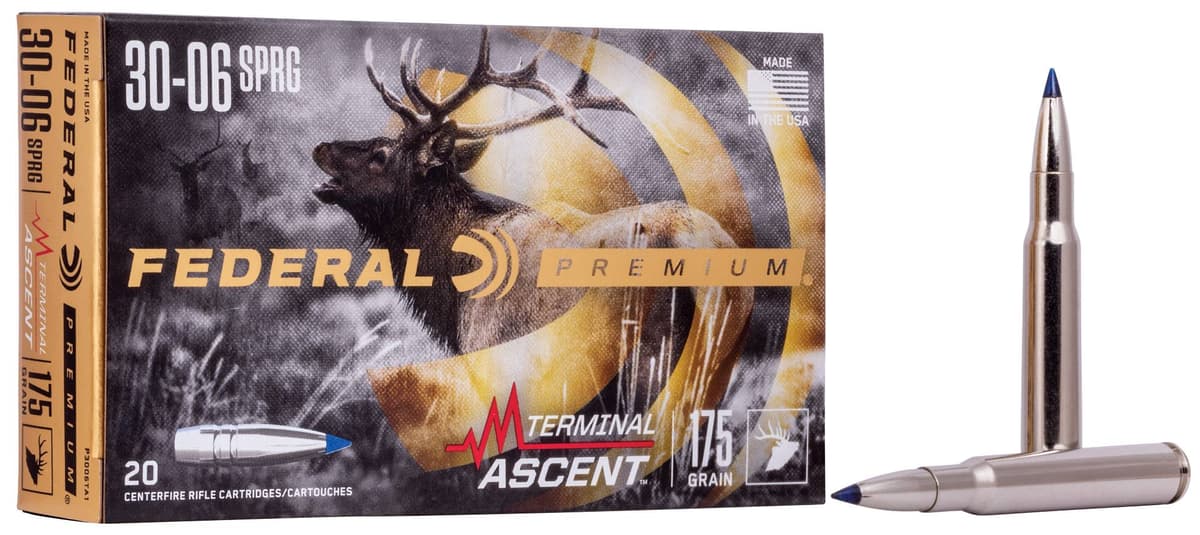
Federal 175gr Terminal Ascent
2,730 fps
.30-06 Energy2,896 ft-lbs
.308 Velocity2,600 fps
.308 Energy2,627 ft-lbs
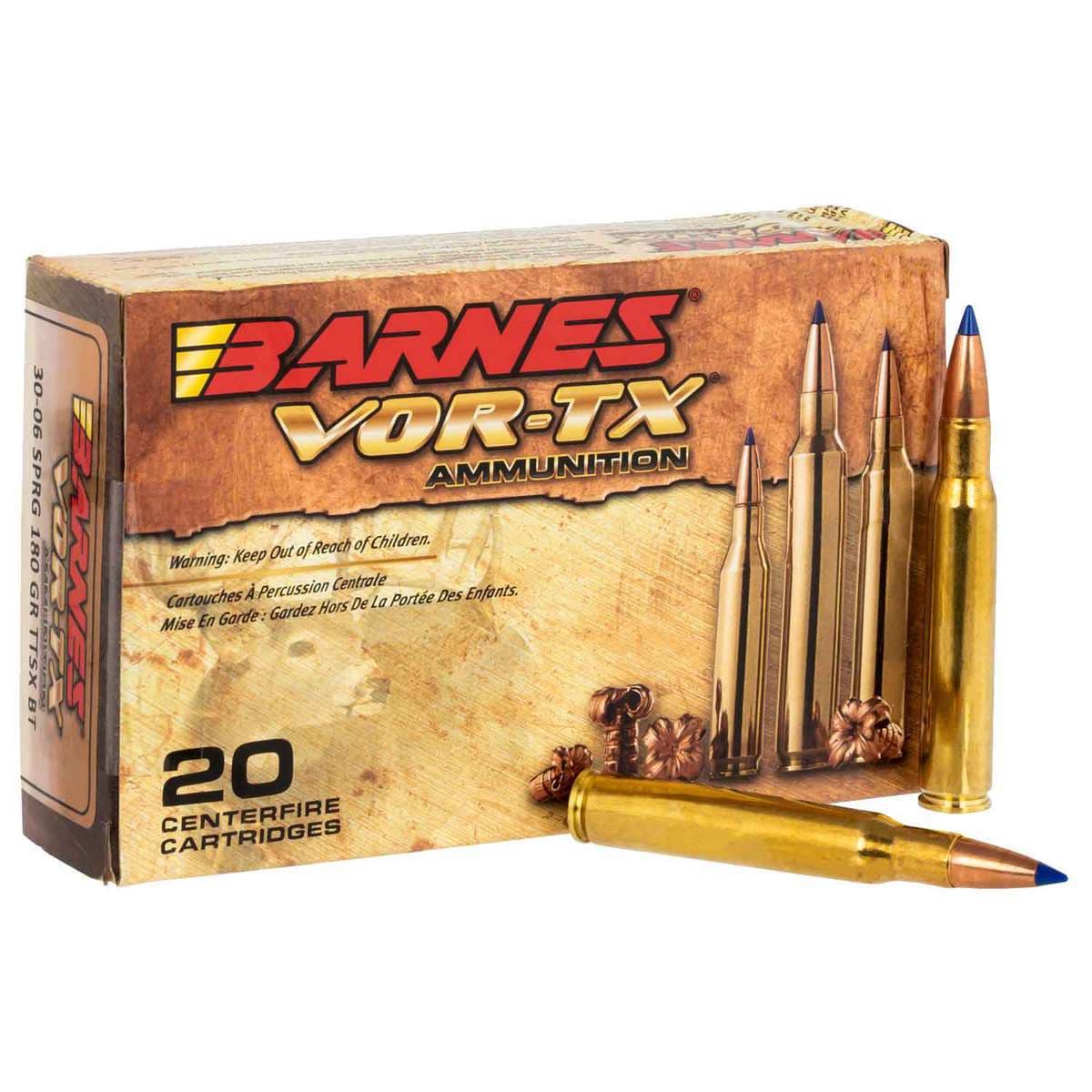
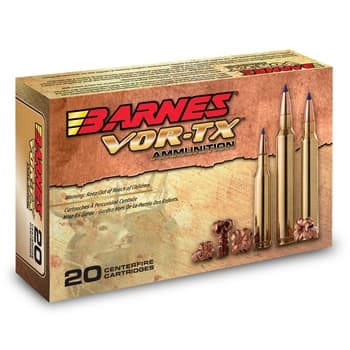
Barnes VOR-TX TTSX
2,700 fps (180gr)
.30-06 Energy2,914 ft-lbs
.308 Velocity2,700 fps (168gr)
.308 Energy2,720 ft-lbs
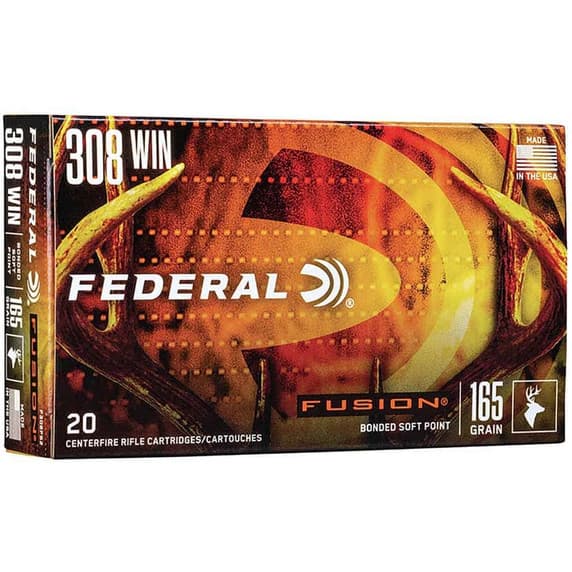
Federal Fusion 150gr
2,900 fps
.30-06 Energy2,801 ft-lbs
.308 Velocity2,820 fps
.308 Energy2,648 ft-lbs
Budget FMJ (150 / 147gr)
2,910 fps
.30-06 Energy2,820 ft-lbs
.308 Velocity2,780 fps
.308 Energy2,522 ft-lbs

All figures are manufacturer-published velocity and energy from Hornady, Federal Premium, and Barnes product pages. Real-world chronographed velocity varies 30-50 fps by barrel length and lot.

Recoil & Shootability

The .308 kicks about 14% less than the .30-06 in comparable rifles, roughly 17 ft-lbs of free recoil versus 20 ft-lbs with 165gr loads in an 8-pound rifle. That difference is the .308's single biggest practical advantage. Less recoil means faster recovery between shots, less flinch development for new shooters, and more comfortable range sessions, all of which translate directly into better hits on game.

The gap widens as bullet weight climbs. A .30-06 launching 200-220gr bullets for elk and big game produces noticeably more recoil than anything the .308 fires, which is the cost of that heavy-bullet capability. If felt recoil is your limiting factor, the .308 with a 165gr load is one of the most shootable big-game cartridges in production. A semi-auto like the Browning BAR also bleeds off a chunk of felt recoil through its gas system, which makes a .30-06 BAR kick more like a bolt-action .308.

Deer, Elk & Big Game

For deer, the two cartridges are functionally identical and the .308 is the smarter choice for most hunters. A 150gr or 165gr load from either caliber kills whitetail and mule deer cleanly at any ethical range, and the .308's lower recoil and cheaper ammo make it the easier rifle to shoot well. There is no deer alive that can tell the difference between a .308 and a .30-06 bullet at impact.

For elk, moose, and larger game, the .30-06 earns its keep. The ability to push 180gr bullets faster and load 200-220gr projectiles gives it a real energy and penetration margin on heavy-boned animals at extended range. A 180gr bonded load like the Federal Terminal Ascent or an all-copper Barnes TTSX in .30-06 is the classic elk setup, and the extra velocity keeps those heavy bullets expanding farther downrange than the .308 can.

Bullet selection matters far more than the caliber stamp. A well-constructed bonded or monolithic bullet in either cartridge outperforms a cheap cup-and-core load in the other. Match the bullet to the game: lead-core ELD-X or Fusion for deer, bonded Terminal Ascent or all-copper TTSX for elk and lead-free zones. For the broader question of how these stack against AR-platform hunting calibers, see the caliber selection guide.

Best Ammo in Both Calibers

The five loads below are matched pairs, the same bullet and construction in each caliber wherever the factory offers it, so the velocity and energy gap is the only variable. The .30-06 ELD-X and Terminal Ascent are the clearest demonstrations of the cartridge's edge; the .308 versions trail by 130-150 fps. The .308's one standalone win is the budget tier, where 147gr FMJ training ammo runs cheaper and more plentiful than any .30-06 equivalent. For a deeper breakdown of the .308 lineup, see the best .308 ammo guide.

Best .30-06 Springfield Ammo

1

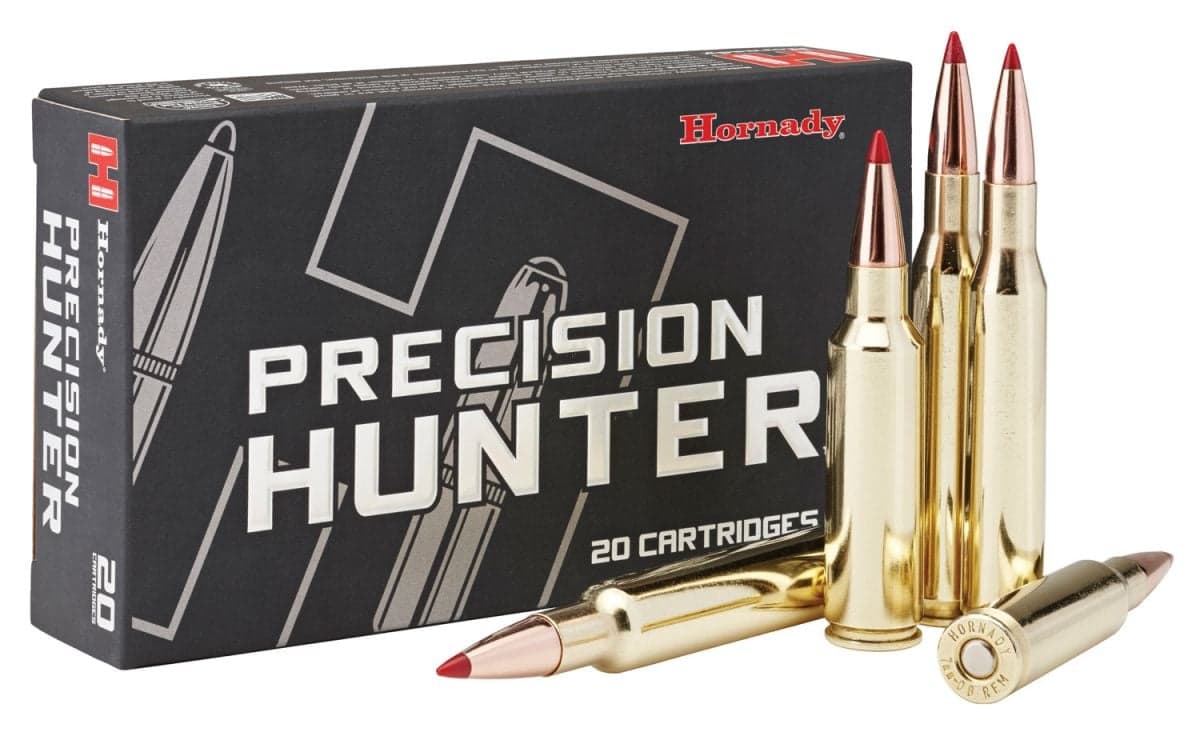
Hornady Precision Hunter 178gr ELD-X .30-06 Springfield

Best all-around .30-06 hunting load

$49
Shop at Brownells
  • +Highest-BC bullet in the .30-06 hunting class (0.552 G1)
  • +Same ELD-X bullet as the .308 load, 150 fps faster
  • +About 315 ft-lbs more muzzle energy than the .308 version
  • Lead-core, banned in lead-free zones
  • More fragmentation than a bonded bullet up close
  • More recoil and blast than the .308 load
2

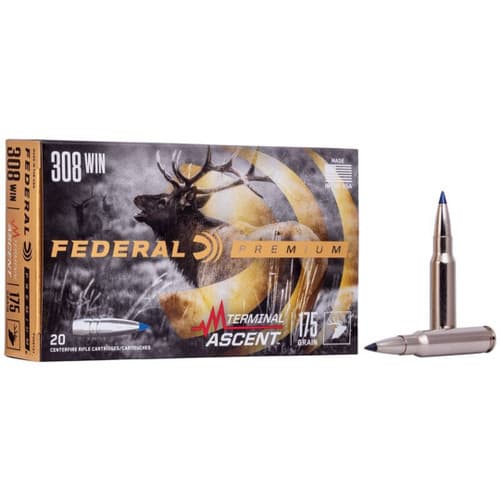
Federal Premium Terminal Ascent 175gr .30-06 Springfield

Best premium bonded elk load

$66
Shop at Brownells
  • +90%+ weight retention on elk-class game
  • +Bonded copper-shanked bullet, match-grade 0.520 BC
  • +Extra .30-06 velocity extends expansion to ~700 yards
  • Premium pricing near $67/box
  • Smaller wound channels than ELD-X on thin-skinned game
  • Lead-core, banned in lead-free zones
3

Barnes VOR-TX 180gr TTSX .30-06 Springfield

Best lead-free option

$59
Shop at Brownells
  • +All-copper TTSX for deep, straight-line penetration
  • +Legal in California condor zones and lead-restricted hunts
  • +Heavier 180gr bullet than the .308 168gr TTSX load
  • Lower BC than ELD-X or Terminal Ascent
  • Copper fouls the bore faster
  • Premium pricing near $60/box
4

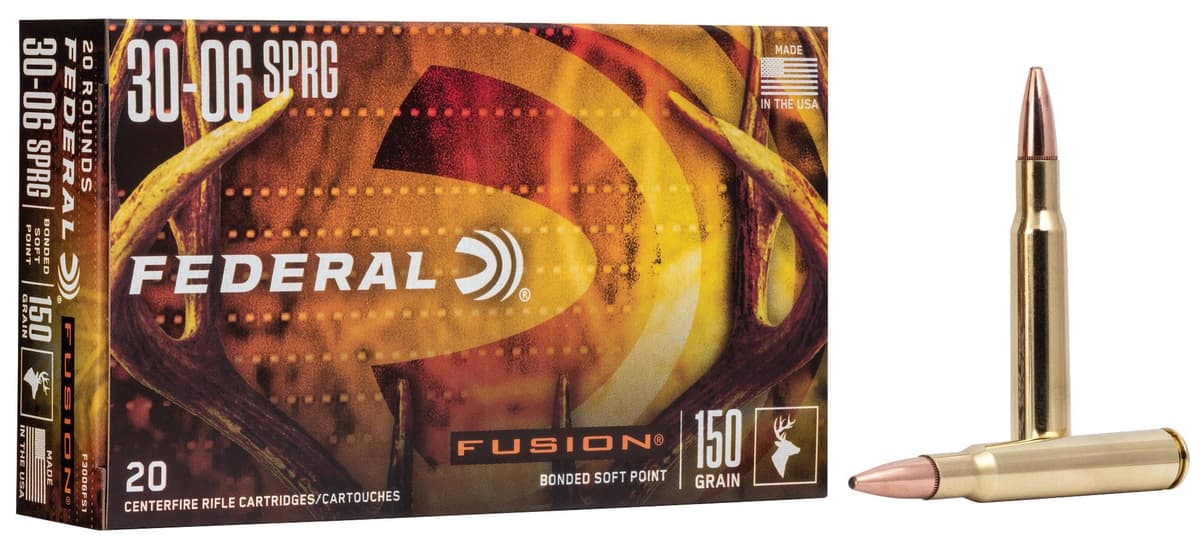
Federal Fusion 150gr .30-06 Springfield

Best value deer load

$52
Shop at Brownells
  • +Bonded soft point at a value price
  • +2,900 fps, flat inside 300 yards
  • +85-95% weight retention
  • 0.410 BC limits range past 400 yards
  • Lead-core, banned in lead-free zones
  • 150gr light for elk, step up to 165/180gr
5

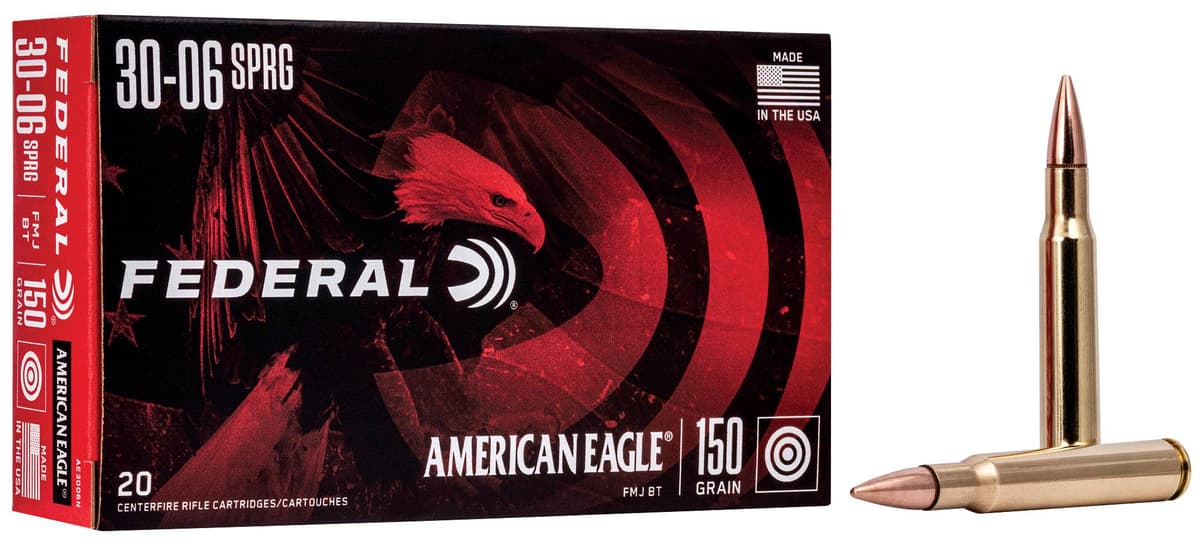
Federal American Eagle 150gr FMJ .30-06 Springfield

Cheapest training ammo

$40
Shop at Brownells
  • +Cheapest reliable brass-cased .30-06 from a major brand
  • +Reloadable brass, Boxer primers
  • +150gr M2 Ball-era weight
  • Range accuracy only
  • FMJ, not for hunting or defense
  • More recoil per pull than .308 training ammo

Affiliate links - purchases support this site at no extra cost to you. (?)

Best .308 Winchester Ammo

1

Hornady Precision Hunter 178gr ELD-X .308 Win

Best all-around .308 hunting load

$49
Shop at Brownells
  • +Same 178gr ELD-X bullet, 0.552 G1 BC
  • +Match-capable accuracy
  • +Effective deer to elk inside 500 yards
  • 150 fps slower than the .30-06 version
  • Lead-core, banned in lead-free zones
2

Federal Premium Terminal Ascent 175gr .308 Win

Best premium bonded .308 elk load

$57
Shop at Brownells
  • +90%+ weight retention
  • +0.520 BC, match-grade
  • +Bonded copper-shanked bullet
  • 130 fps slower than the .30-06 version
  • Premium pricing
3

Barnes VOR-TX 168gr TTSX .308 Win

Best lead-free .308 load

$65.49Save 6%
Shop at Brownells
  • +All-copper TTSX
  • +Lead-free legal
  • +Deep penetration
  • Lower BC
  • Lighter 168gr vs the .30-06 180gr TTSX
4

Federal Fusion 150gr .308 Win

Best value .308 deer load

$42
Shop at Brownells
  • +Bonded soft point, value price
  • +2,820 fps, flat inside 300 yards
  • +Widely stocked
  • 80 fps slower than the .30-06 Fusion
  • 0.395 BC limits range
5

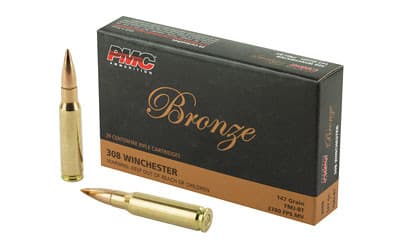
PMC Bronze .308 Win 147gr FMJ-BT

Cheapest .308 training ammo

$22
Shop at Brownells
  • +Cheapest reliable brass-cased .308 training ammo
  • +Reloadable brass
  • +M80-style 147gr FMJ-BT
  • 2-3 MOA, range only
  • FMJ does not expand

Affiliate links - purchases support this site at no extra cost to you. (?)

Rifles Chambered in Both

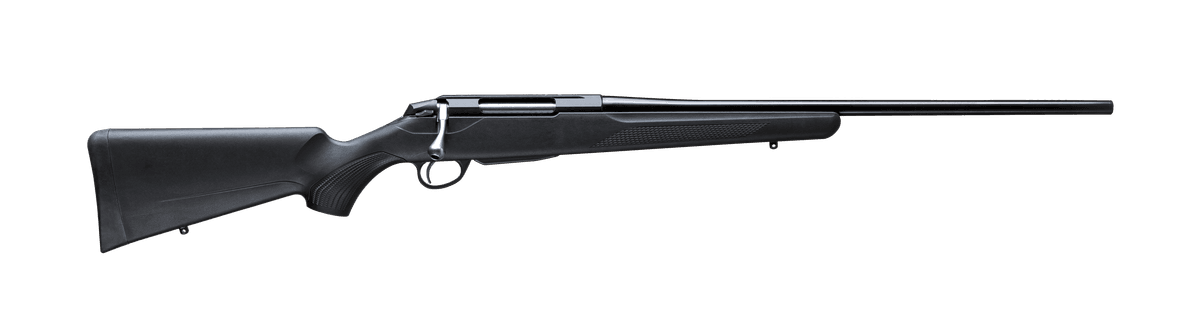
Nearly every popular hunting rifle is offered in both calibers, so the action and stock you want never costs you the chambering you want. The four below cover the full spectrum: the Tikka T3x Lite is the best-shooting mid-tier bolt gun under a grand, the Winchester Model 70 Featherweight is the classic controlled-round-feed walnut rifle, the Savage Axis line is the cheapest ready-to-hunt package with a scope already mounted, and the Browning BAR is the soft-shooting semi-auto for fast follow-ups. If you want a .308-class semi-auto in a modern fighting-rifle layout instead, the best .308 rifle guide covers AR-10s and battle rifles, and the AR-15 vs AR-10 comparison breaks down the large-frame semi-auto platform decision.

1

Tikka T3x Lite

Best mid-tier rifle in either caliber

$729
Shop at Classic Firearms
  • +Sako-built action, smoothest factory bolt under $1,000
  • +Adjustable 2-4 lb single-stage trigger needs no aftermarket fix
  • +6.4-6.6 lb carry weight, genuinely an all-day walking rifle
  • Polymer stock feels cheap relative to the price
  • Proprietary spare mags run $80-100
  • No factory Picatinny rail, base sold separately
2

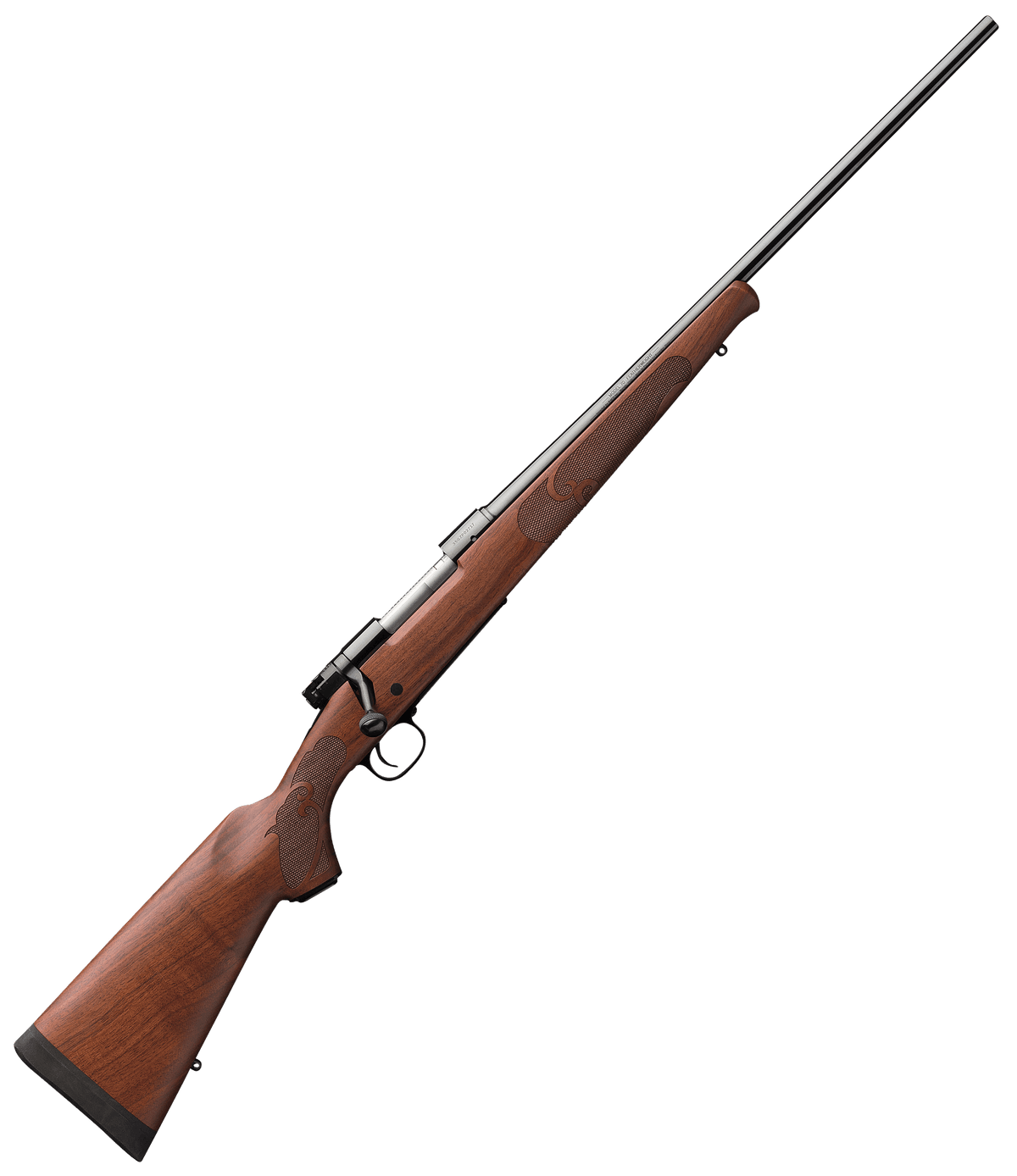
Winchester Model 70 Featherweight

Best classic walnut-stocked hunting rifle

$1,369
Shop at Classic Firearms
  • +Controlled-round-feed action is the most reliable feeding system on a hunting rifle
  • +Three-position safety lets you unload with the rifle on safe
  • +Grade I walnut is a real upgrade over polymer at the price
  • No factory threaded muzzle for a suppressor
  • Hinged floorplate, no detachable magazine
  • Heavier than a Tikka Lite for steep country
3

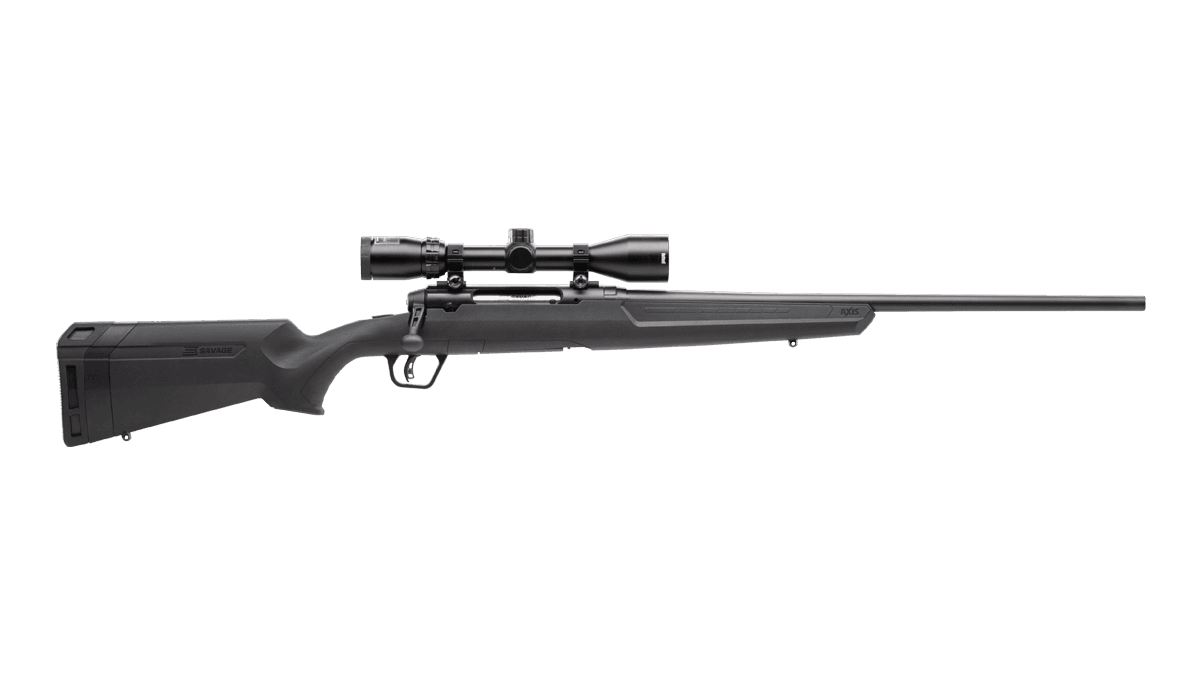
Savage Axis II XP

Best budget ready-to-hunt package

$619
Shop at Classic Firearms
  • +Ships with a mounted, bore-sighted 3-9x40mm scope
  • +User-adjustable AccuTrigger, no gunsmith needed
  • +Detachable box magazine
  • Factory scope is functional, not exceptional
  • Unthreaded barrel
  • Utilitarian synthetic stock
4

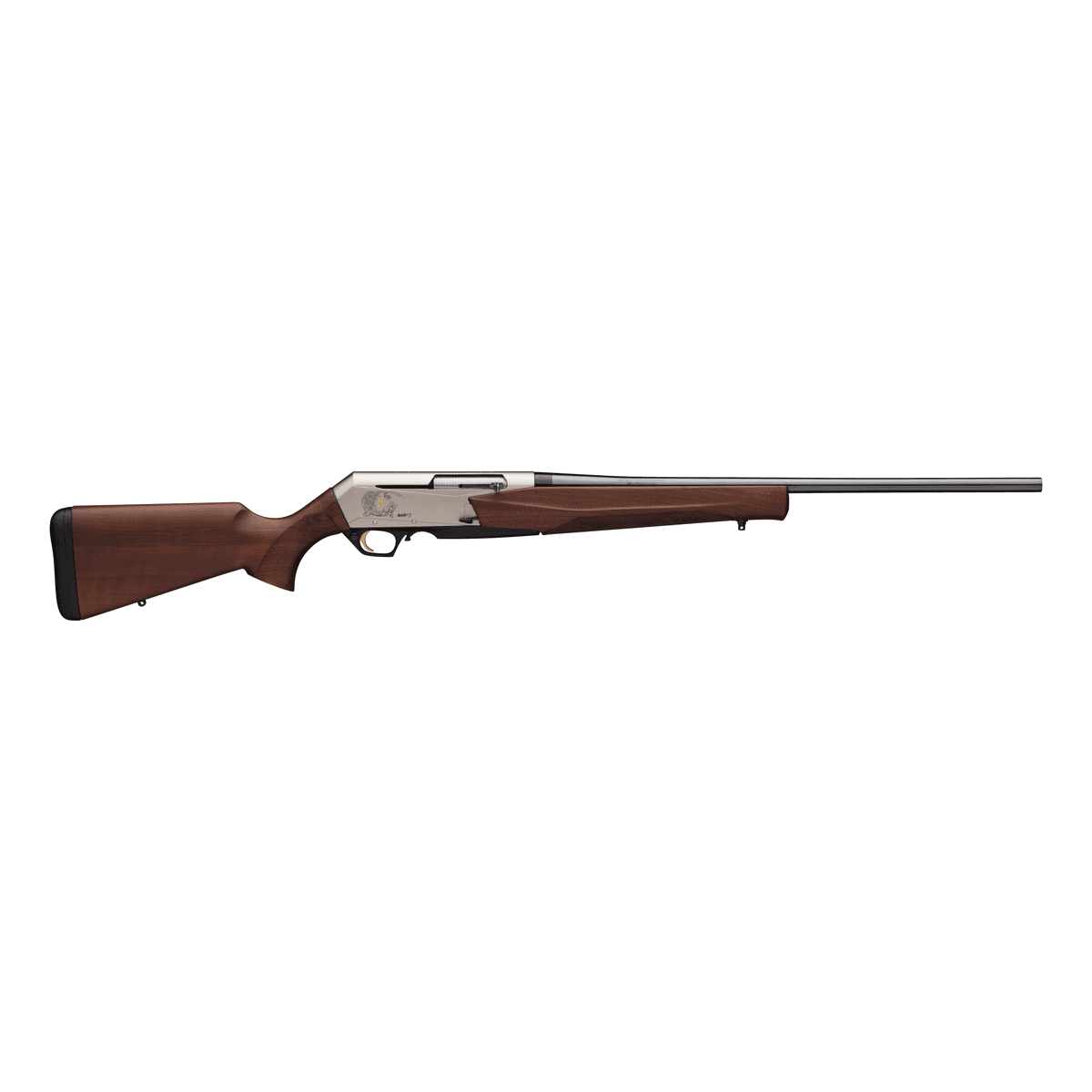
Browning BAR MK 4 Hunter Composite

Best semi-auto for fast follow-up shots

$1,639
Shop at Classic Firearms
  • +Gas-operated seven-lug rotary bolt, reliable and accurate
  • +Gas system noticeably softens felt recoil in .30-06
  • +Available in every common deer and elk cartridge
  • Heavier than a bolt gun for steep country
  • Hunter Composite has no factory threaded muzzle
  • Gas system needs more cleaning than a bolt action

Affiliate links - purchases support this site at no extra cost to you. (?)

Speccing out a complete .30-06 or .308 hunting rig? Use our rifle builder to add a scope, mount, sling, and suppressor to a bolt-action host, or browse the full catalog for compatible glass and accessories. On threaded-barrel variants both calibers use the same 5/8x24 pitch, so a single .30-cal can serves either rifle once you spec a threaded muzzle.

Frequently Asked Questions

Is 30-06 or 308 better for deer?
Both kill deer cleanly inside any realistic distance. The .308 Winchester is the better practical deer choice for most hunters: it generates about 14% less recoil, the ammo is cheaper and more plentiful, and the shorter action makes for a lighter, faster-handling rifle. The .30-06 Springfield is the better pick if you also hunt elk or want to shoot heavier 200-220gr bullets, since its larger case drives the same bullet 100-150 fps faster.
Why is 308 preferred over 30-06?
The .308 Winchester is preferred for its shorter, lighter action, noticeably lower recoil (about 17 ft-lbs vs 20 ft-lbs in 165gr loads), cheaper and more available ammunition, and slightly better inherent accuracy from the more efficient short case. It gives up only 100-150 fps to the .30-06, and because both fire the same bullet that gap holds at roughly 125 fps even at 500 yards, which translates to only a few inches of extra drop.
Why do snipers use the 308 instead of 30-06?
Military and police precision shooters standardized on the 7.62x51mm NATO (.308 Winchester) for its shorter action, which allows a more compact and rigid rifle, its excellent inherent accuracy, and a logistics chain already built around the NATO round. The .30-06&apos;s marginal velocity advantage does not outweigh the .308&apos;s accuracy, action length, and ammunition-supply benefits for precision work.
Does 30-06 have better range than 308?
The .30-06 has a modest velocity and energy advantage that translates to slightly flatter trajectory and more retained energy, but the difference is smaller than most shooters expect. With the same 178gr ELD-X bullet, the .30-06 leaves the muzzle 150 fps faster and still holds about a 125 fps edge at 500 yards (1,993 fps vs 1,868 fps in Hornady's data), worth only a few inches of drop. For practical purposes both are effective to the same ranges; bullet selection matters more than the cartridge.
Is a 30-06 overkill for a deer?
No. The .30-06 is not overkill for deer; it has been the standard American deer cartridge for over a century. With a 150gr or 165gr load it delivers clean kills without excessive meat damage. If recoil or ammo cost is a concern, the .308 covers deer just as well with less of both.
Will a 308 stop a grizzly bear?
A .308 Winchester with a heavy bonded or all-copper bullet (180gr Terminal Ascent or 168-180gr Barnes TTSX) can stop a grizzly with correct shot placement, and it has been used for that purpose. That said, the .30-06 with a 200-220gr bonded bullet gives more penetration and energy margin, and dedicated bear-defense cartridges like the .375 H&H or hard-cast .45-70 are the more conservative choice when a bear may charge.

The Verdict

Buy the .308 for deer and the range. Step up to the .30-06 when the game gets bigger or the bullets get heavier.

For deer hunting, range work, and shooters who value lower recoil and cheaper ammo, the .308 Winchester is the correct answer. It loses almost nothing to the .30-06 at any realistic distance, handles every common deer load, and runs in a lighter, faster-handling rifle. The best .308 rifle guide and best .308 ammo guide cover the full lineup once you have made the call.

The .30-06 Springfield earns the nod when the mission scales up: elk, moose, and big game where the extra velocity and access to 200-220gr bullets give a genuine energy and penetration margin. Both fire the same 0.308-inch bullet, so neither is a wrong answer, and the rifle and load you actually shoot well will always out-hunt the spec sheet. If the .30-06's extra 3 ft-lbs of recoil costs you hits on the range, take the .308 and never look back; it hunts the same fields.

Header image: AI generated. Velocity and energy figures sourced from Hornady, Federal Premium, and Barnes published product specifications. Recoil and case-capacity comparisons cross-referenced across multiple ballistics references.