AR-15 Parts to Avoid 2026: 10 Mistakes New Owners Make (Olight, Amazon Optics, Red Parts) header image
[ < Back to guides ]
Buying guideQCReliability

AR-15 Parts to Avoid 2026: 10 Mistakes New Owners Make (Olight, Amazon Optics, Red Parts)

First-time builders often repeat the same errors. This guide covers the most common pitfalls: cheap parts, cosmetic choices that draw ridicule, barrel length traps, weight-reduction schemes that hurt reliability, and over-engineered solutions to solved problems.

By AB|Last reviewed January 2025
Learn from others' mistakes instead of making them yourself.When in doubt, prioritize function over form and proven designs over innovation.

Quick Answer: TL;DR: Avoid These Red Flags

Parts quality floor: PSA or Aero Precision minimum. No-name kits use soft metal and skip heat treating. You will get failures.

Skip red/blue parts, Olight, Armaspec SCS: Colored anodizing gets you roasted. Olight products explode. Armaspec buffers disintegrate mid-use. Avoid all three entirely.

Barrel length and optic mounting: 5.56 needs 11.5" minimum for velocity. Never bridge optics across receiver and handguard. Mount entirely on upper receiver for zero retention.

Buy optics from authorized dealers: Amazon is flooded with counterfeit Eotech, Aimpoint, Trijicon. Buy direct or from EuroOptic, Primary Arms, Brownells to get genuine products with valid warranties.

Core principle

The AR-15 platform is mature and well-documented. Most "improvements" introduce more problems than they solve. Stick with mil-spec or better, proven parts from reputable manufacturers, and upgrade deliberately based on your mission rather than chasing trends or saving $20 on critical components.

Top 10 AR-15 Mistakes to Avoid (Red Parts, Olight, Amazon)

Cheaping out on parts below PSA tier
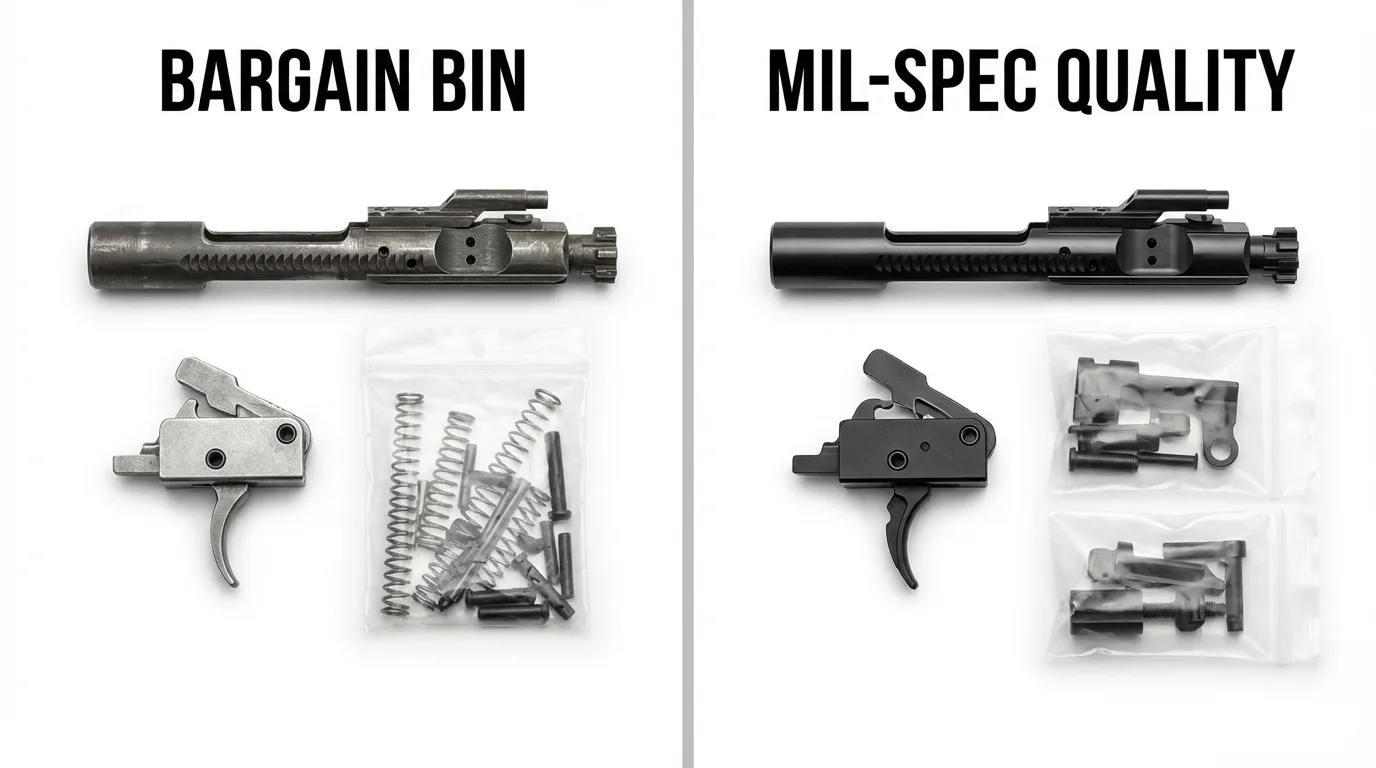
Example of Cheaping out on parts below PSA tier

The problem

Budget ARs from unknown brands (BCA, Anderson with no-name internals, or mystery "build kits") use soft metal, skip heat treating, and have inconsistent QC.

Why it matters

Out-of-spec parts cause failures under stress: soft extractors snap, MIM hammers crack, and poorly finished bolts eat locking lugs. Palmetto State Armory sets the minimum acceptable bar with in-spec parts and backed by volume testing.

Better approach

Start with PSA or Aero Precision if budget constrained. Once you hit 1,000+ rounds, upgrade trigger and BCGBCG[Components]Bolt Carrier Group. The heart of the rifle, housing the bolt, firing pin, extractor, and ejector. It cycles back and forth to chamber, fire, and eject rounds. first: those are the parts that see the most wear and benefit most from quality materials.
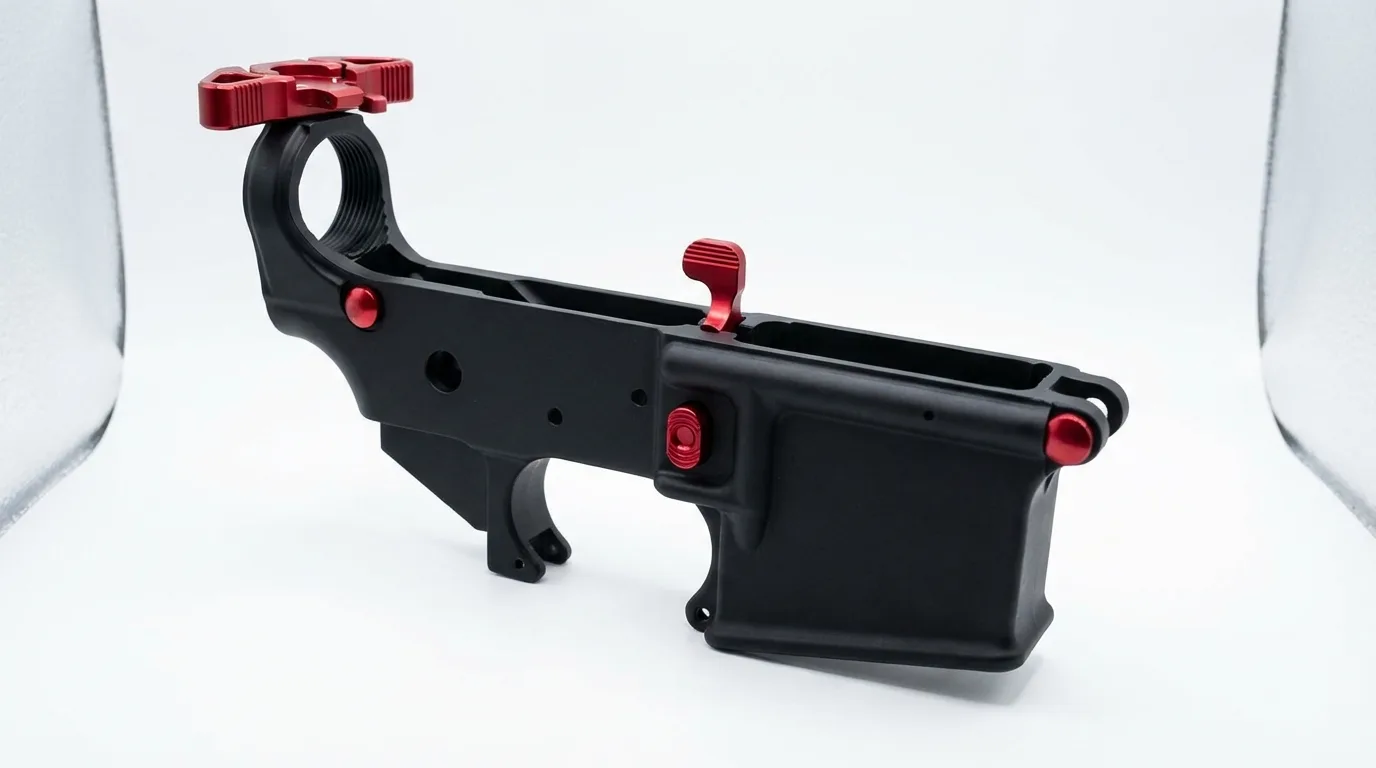
Red and blue anodized parts

Example of Red and blue anodized parts

The problem

Brightly colored charging handles, bolt catches, magazine releases, and takedown pins scream "first build" at the range.

Why it matters

You will get roasted. AR culture values function over form: red parts signal inexperience and draw attention for the wrong reasons. Save the anodizing for race guns if you must, but keep defensive and duty rifles low-profile.

Better approach

Stick with black, FDE, ODG, or other subdued finishes. If you want color, cerakote the entire upper/lower set in a matching duty color (USGI green, coyote tan, etc.) rather than rainbow-accenting small parts.

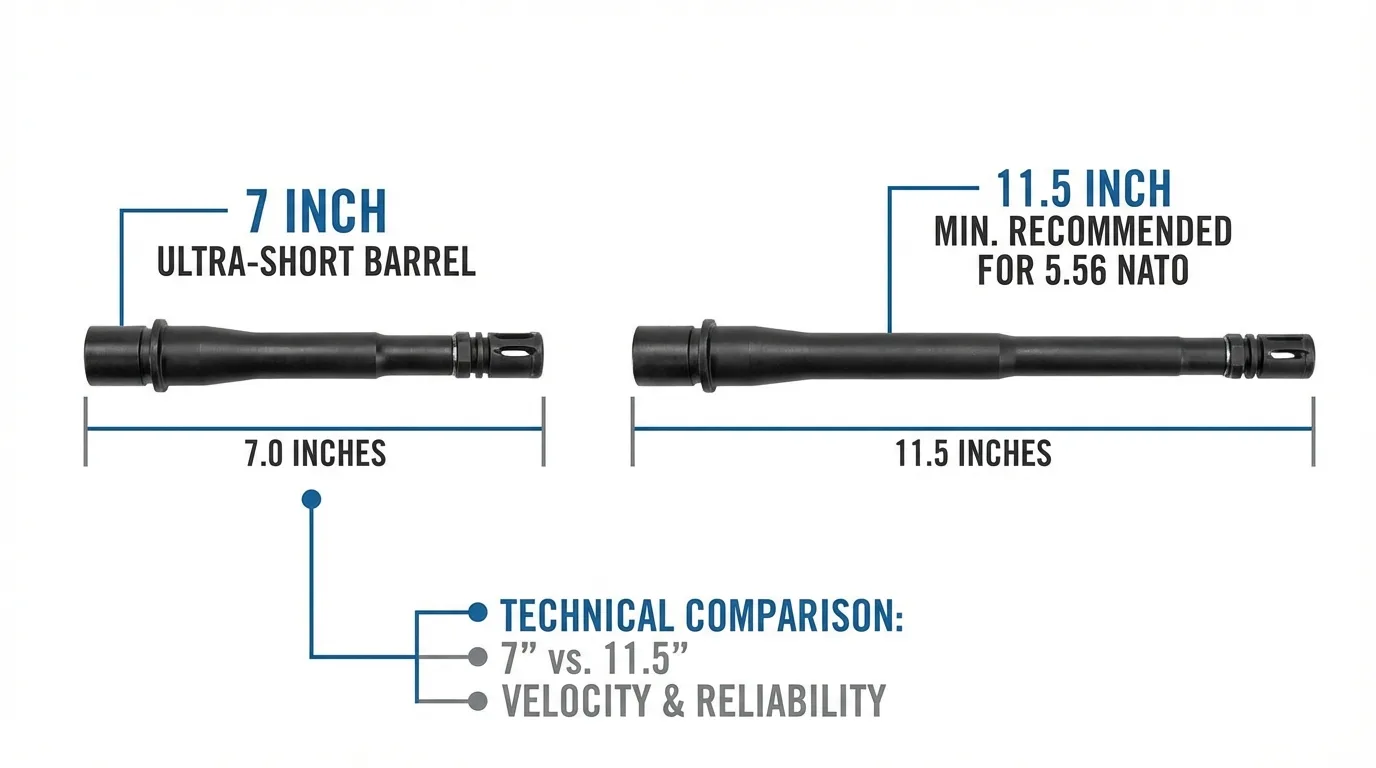
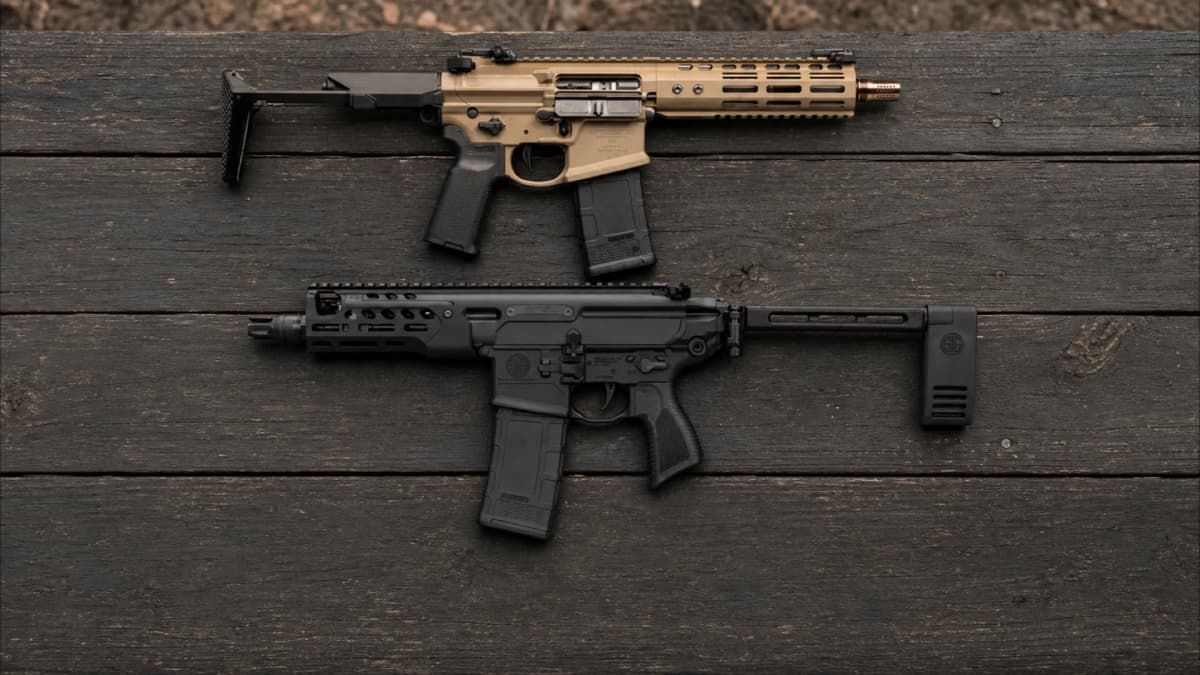
5.56 barrels shorter than 11.5 inches

Example of 5.56 barrels shorter than 11.5 inches

The problem

Ultra-short barrels (7", 8.5", 10.3") in 5.56 NATO sacrifice velocity so severely that terminal ballistics suffer, and the concussion becomes unsafe even outdoors.

Why it matters

5.56 relies on velocity for fragmentation and wounding. Below 11.5", you lose 200–400 fps compared to a 16" gun, turning the round into an overpriced .22 Magnum. Worse, unsuppressed short barrels produce concussive blast that risks traumatic brain injury (TBI) from repeated exposure, especially in confined spaces or vehicle platforms.

Better approach

If you need compact, go 11.5" minimum for 5.56. Better yet, run 300 Blackout in short barrels (it was designed for this) or move to a PCC if you prioritize maneuverability over rifle-caliber energy. Always suppress short 5.56 barrels to manage blast and protect your hearing.

Skeletonized lowers and lightened BCGs

The problem

Weight-reduced components (skeletonized lowers, stripped buffer tubes, titanium firing pins, low-mass carriers) promise better handling but compromise durability and reliability.

Why it matters

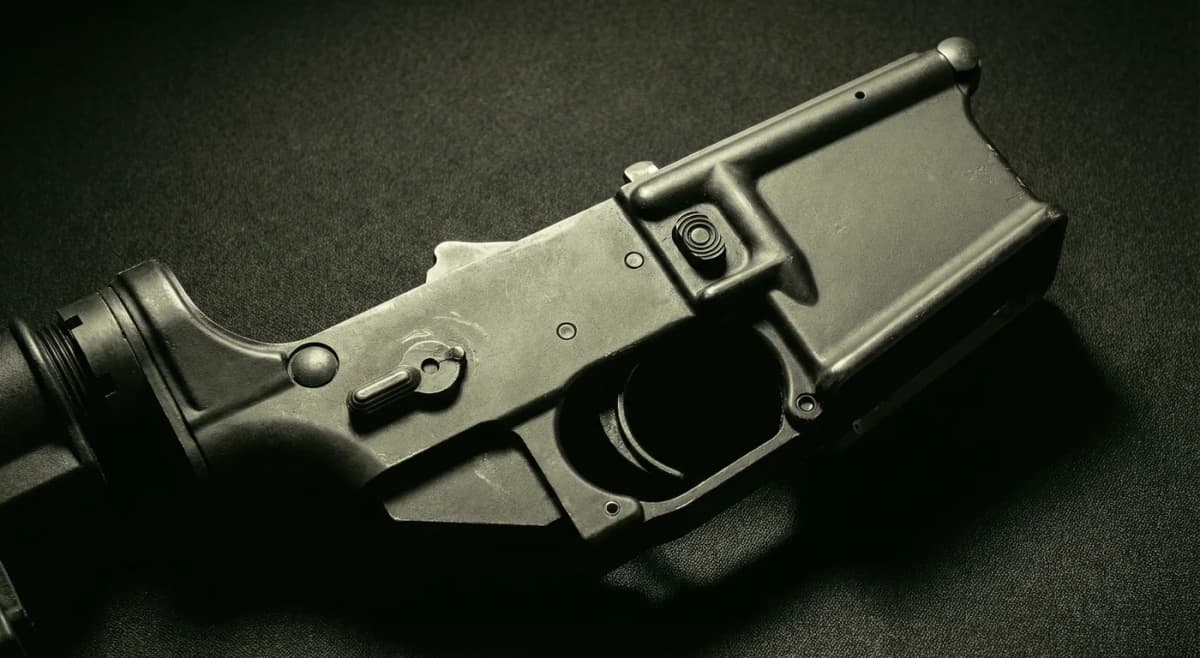
Material removed from lowers weakens stress points around the buffer tube and grip. Polymer lowers should be avoided entirely (except for the KP-15, which uses a reinforced design): they have a known failure point at the buffer tube attachment area where the plastic cracks under recoil stress. Lightened BCGs reduce reciprocating mass, which sounds good until you realize ARs are over-gassed from the factory: light carriers cycle faster, accelerate wear on springs and buffers, and increase felt recoil despite the lower overall weight. Titanium firing pins can also pierce primers if you shoot hard primers or hot loads.

Better approach

Keep your lower and BCGBCG[Components]Bolt Carrier Group. The heart of the rifle, housing the bolt, firing pin, extractor, and ejector. It cycles back and forth to chamber, fire, and eject rounds. stock-weight unless you are chasing competitive splits and accept higher maintenance. Use 7075-T6 aluminum or billet aluminum lowers: avoid polymer unless it's a KP-15. If you want a lighter rifle, shave ounces from the handguard, stock, and barrel profile instead: those changes don't affect timing or durability.

Poorly designed parts like the PWS ratcheting castle nut

The problem

Some "innovations" fix problems that don't exist. The PWS Enhanced Castle Nut uses a ratcheting design that theoretically prevents loosening but adds complexity and failure points.

Why it matters

A properly staked mil-spec castle nut will never rotate. The PWS nut's ratchet mechanism can can and will back off over time. Meanwhile, a $7 end plate staked in two spots lasts the life of the rifle.

Better approach

Avoid boutique solutions for solved problems. Use a standard 7075-T6 castle nut, torque to 38–40 ft-lb, apply blue Loctite if policy allows, and stake it in two places. If you're worried about rotation, use a QD end plate with witness marks so you can visually confirm alignment during inspections.

Armaspec SCS (Silent Capture Spring) buffer systems

The problem

The Armaspec SCS replaces the standard buffer and spring with a captured spring system that promises quieter operation and smoother recoil. In practice, these units have a documented history of catastrophic failure during use.

Why it matters

The Armaspec SCS uses internal captured springs that can separate and come apart under sustained use or hard recoil. When this happens, the buffer system fails completely, rendering the rifle inoperable, often mid-string or during critical use. Multiple documented cases exist of SCS units disintegrating after a few thousand rounds, with internal components rattling loose or the end cap backing off. This is specific to Armaspec: JP Enterprise captured springs are well-regarded and reliable. Meanwhile, a standard carbine buffer and chrome silicon spring costs $15–25, requires zero maintenance, and has proven reliable through millions of military and civilian rifles over decades.

Better approach

Avoid the Armaspec SCS specifically. If you want a captured spring system, JP Enterprise makes proven alternatives that don't fail. For most users, stick with a mil-spec carbine buffer (H, H2, or H3 depending on your gas system and barrel length) and a quality chrome silicon spring from Sprinco or BCM. If you want to reduce spring noise, add a drop of grease to the spring or run a flat-wire spring: both solve the "problem" without introducing failure points.

Olight weapon lights and laser products

The problem

Olight markets budget weapon lights and lasers that seem attractive for their price point, but they have documented safety failures including catastrophic battery explosions, inconsistent QC, and durability issues under recoil.

Why it matters

Multiple documented cases exist of Olight products exploding during use or charging, causing serious injuries including fatalities. Their proprietary batteries can't be sourced elsewhere, creating a single point of failure. Under sustained recoil, Olights fail at much higher rates than proven brands: mounts crack, electronics shake loose, and output degrades rapidly. You will also be mocked at the range by anyone who knows better.

Better approach

Buy once, cry once on weapon lights. Stick with proven brands: Streamlight (budget tier), Modlite or Cloud Defensive (duty tier), or Surefire (gold standard). These companies have decades of torture testing, field validation, and no history of products exploding. A $100 Streamlight ProTac will outlast three Olights and won't risk your fingers.

Buying optics and critical parts from Amazon

The problem

Amazon's marketplace is flooded with counterfeits and cheap Chinese optics. Even listings that appear legitimate, showing brand logos, model numbers, and "sold by [Brand]", often ship cloned products. Eotech, Aimpoint, Holosun, Trijicon, and other optics manufacturers have documented widespread counterfeiting on Amazon.

Why it matters

Counterfeit optics fail zero retention, fog internally, use inferior glass, and lack proper warranty support. When you contact the manufacturer for warranty service, they'll refuse coverage because the serial number is fake or doesn't match their records. Worse, some counterfeits use toxic materials in batteries or housings. Even if the listing says "Ships from and sold by Amazon," commingled inventory means genuine and fake units get mixed in the same bin.

Better approach

Never buy optics, weapon lights, or other critical components from Amazon. Purchase directly from the manufacturer or from authorized dealers with proper distribution agreements (EuroOptic, OpticsPlanet, Primary Arms, Brownells, MidwayUSA). Yes, you might pay 10-15% more, but you get genuine products with valid warranties and customer support. If the "deal" on Amazon seems too good, it's because you're buying a $50 Chinese clone marketed as a $500 optic.

Bridging optics across the upper receiver and handguard

The problem

Mounting an optic so it spans both the upper receiver and the handguard seems like it maximizes rail space, but it destroys zero retention and accuracy.

Why it matters

Handguards are not rigidly attached to the upper receiver: they shift slightly under heat, pressure, and recoil. Even free-float handguards that claim "duty-grade" construction have micro-movement at the barrel nut interface. When your optic mount bridges the receiver-handguard gap, every shift in the handguard changes your point of impact. You'll lose zero over time. This is especially bad with cantilever mounts on LPVOs where half the mount sits on the handguard.

Better approach

Mount all optics entirely on the upper receiver. The rear ring or mount can overhang the charging handle, but the front ring/mount must stay behind the ejection port. If your optic won't fit, you need a longer mount (for LPVOs) or a riser (for red dots). Never let any part of the optic mounting system touch the handguard. This rule applies to red dots, magnifiers, LPVOs, prisms, and rear backup irons: everything stays on the upper receiver for repeatable zero.

Running muzzle brakes on 5.56 rifles

The problem

Muzzle brakes redirect gas to reduce felt recoil and muzzle rise. They're effective on heavy-recoiling calibers but nearly pointless on 5.56 NATO, which already has minimal recoil. Meanwhile, they massively increase concussion for the shooter and everyone nearby.

Why it matters

5.56 produces roughly 4–6 ft-lbs of felt recoil, less than a 20-gauge shotgun. A muzzle brake might cut that to 3 ft-lbs, but you won't notice the difference in practical shooting. What you will notice is the eardrum-rupturing blast redirected back toward your face and the shooters on either side of you. Repeated exposure to brake-amplified concussion contributes to traumatic brain injury (TBI), hearing damage even with protection, and sinus issues. Indoor ranges and competitive shooters on the line will hate you.

Better approach

Use a flash hider (A2 birdcage, Surefire 3-prong, or similar) for general-purpose rifles. If you plan to run a suppressor, install the appropriate suppressor mount (which often doubles as a flash hider or brake). Only use a standalone muzzle brake if you're running a compensator for competitive shooting where you need the last 5% of performance and accept the health trade-offs. For defensive, duty, or recreational rifles, the brake offers no meaningful benefit and significant downsides.

Final checklist before you buy

  • Parts tier: Is every component at least PSA / Aero grade or better?
  • Anodizing: Would you be embarrassed to show this rifle to an instructor or experienced shooter?
  • Barrel length: If running 5.56, is the barrel at least 11.5″ (and do you have a suppressor planned)?
  • Weight reduction: Did you remove material from structural parts or the BCG for marginal weight savings?
  • Proprietary parts: Does the build include non-standard components that require special tools or unobtanium replacement parts?
  • Buffer system: Are you using an Armaspec SCS? (If yes, replace it with a mil-spec buffer, chrome silicon spring, or JP captured spring before it fails.)
  • Weapon light: Is it an Olight? (If yes, throw it away and buy a Streamlight, Modlite, Cloud Defensive, or Surefire.)
  • Source: Are you buying optics, lights, or critical components from Amazon? (If yes, buy from authorized dealers instead to avoid counterfeits.)
  • Optic mounting: Does your optic mount bridge the upper receiver and handguard? (If yes, remount it entirely on the upper receiver for zero retention.)
  • Muzzle device: Are you running a muzzle brake on a 5.56 rifle without a suppressor planned? (If yes, swap to a flash hider to protect your hearing and brain.)

If you answered "yes" to any of the bad flags or "no" to the quality check, revisit your parts list before clicking checkout.

Next steps

Once you've avoided these common traps, check the AR Brand Comparison and Lower Parts Quality Guide to dial in your build. Grab proper ear protection and run at least 500 rounds before declaring the rifle reliable.

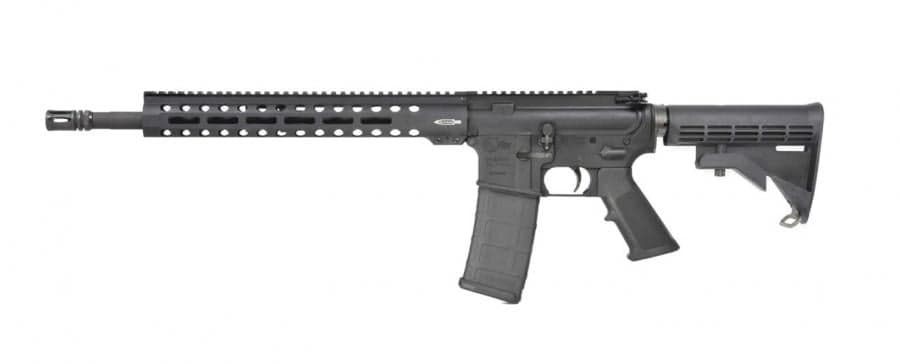
Colt OEM 6920

  • Properly gassed carbine system
  • Great platform for learning assembly
Check Price at OpticsPlanet

SOLGW Patrol Rifle

  • Comes with quality buffer system
  • Lifetime warranty with responsive CS
Check Price at OpticsPlanet

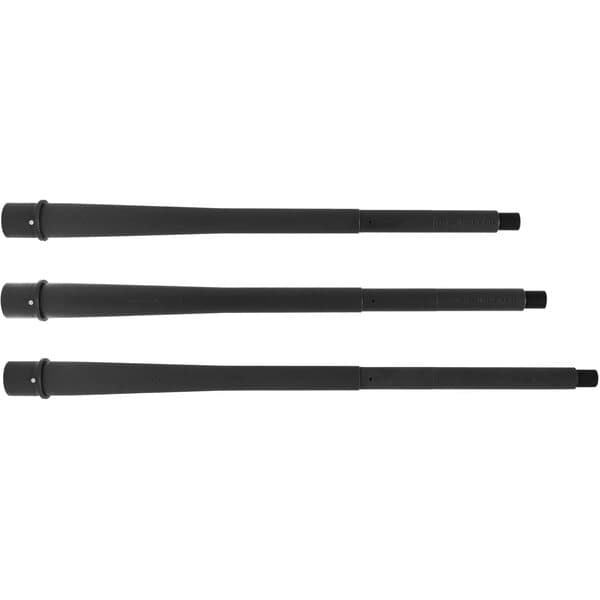
Criterion CORE Barrel + Gas Block Kit

  • Pinned block option
  • Chrome-lined longevity
Check Price at OpticsPlanet

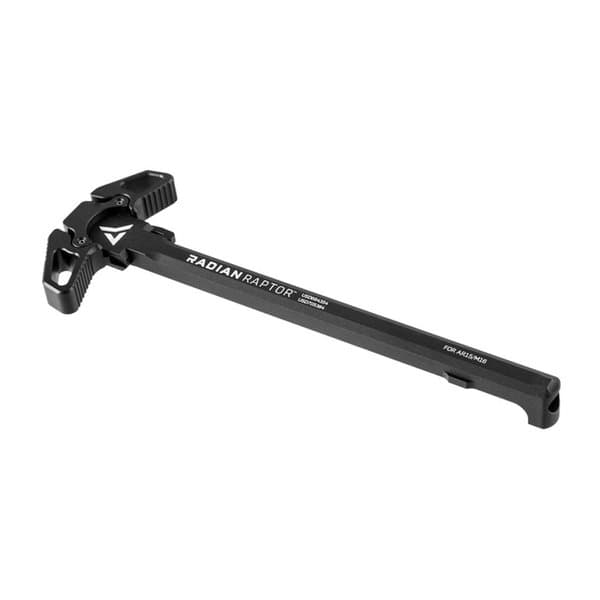
Radian Raptor LT Charging Handle

  • Ambi makes manipulations easier
  • No gas blowback slots to clog
$104.95
Check Price at OpticsPlanet

Affiliate links — purchases support this site at no extra cost to you. (?)

AR-15 Beginner FAQ

Are red anodized AR-15 parts bad?
Functionally, no, they work fine. Socially, yes, you'll be roasted at any range or training class. Red, blue, and other brightly colored parts signal inexperience and draw attention for the wrong reasons. Stick with black, FDE, ODG, or subdued finishes. If you want color, cerakote the entire rifle in a duty color rather than rainbow-accenting small parts.
Is Olight safe to use on an AR-15?
No. Olight has documented safety failures including battery explosions causing serious injuries and fatalities. Their proprietary batteries can't be sourced elsewhere, creating a single point of failure. Under recoil, Olights fail at much higher rates than proven brands. Stick with Streamlight (budget), Modlite/Cloud Defensive (mid), or Surefire (premium).
Why is the Armaspec SCS bad?
The Armaspec Silent Capture Spring has documented catastrophic failures: internal springs separate and come apart under sustained use, rendering the rifle inoperable mid-string. Multiple cases exist of SCS units disintegrating after a few thousand rounds. If you want a captured spring, JP Enterprise makes reliable alternatives. For most users, stick with mil-spec buffer and Sprinco or BCM spring.
What is the minimum barrel length for 5.56?
11.5" minimum for adequate terminal ballistics. Below this, 5.56 loses 200-400 fps compared to 16", turning it into an expensive .22 Magnum. The concussion from ultra-short 5.56 barrels also risks TBI from repeated exposure. If you need compact, use 300 Blackout (designed for short barrels) or go 11.5" minimum and always suppress.
Are Amazon optics counterfeit?
Many are. Amazon's commingled inventory mixes genuine and fake products in the same bin, even 'Ships from and sold by Amazon' listings can ship counterfeits. Eotech, Aimpoint, Holosun, and Trijicon have documented widespread counterfeiting on Amazon. Buy optics from authorized dealers: EuroOptic, Primary Arms, Brownells, MidwayUSA, or direct from manufacturer.
Can I bridge my optic across the receiver and handguard?
No. Never mount any optic spanning both the upper receiver and handguard. Handguards shift under heat, pressure, and recoil, even free-float rails have micro-movement. Bridged mounts lose zero over time. Mount all optics entirely on the upper receiver. If your optic won't fit, get a longer mount or riser rather than bridging.
Is an AR-15 good for beginners?
Yes. The AR-15 is one of the best beginner rifles due to low recoil, modular design, abundant parts/training resources, and proven reliability. Its adjustability accommodates different body types, and the platform scales from basic to advanced without needing a new rifle. Start with a quality entry or mid-tier build (PSA Premium, Aero Precision, BCM) rather than bottom-tier or ultra-budget options.
What should my first AR-15 be?
For most buyers: 16" barrel, mid-length gas, carbine stock, M-LOK handguard, mil-spec trigger, and A2 flash hider. Brands: Budget-conscious buyers choose PSA Premium ($600-700). Best value is Aero Precision complete rifle ($800-900). Buy-once-cry-once buyers go BCM ($1200-1400) or Geissele ($1600+). Avoid ultra-budget ($400-500 range) and unknown brands: reliability matters more than saving $100.