Best Spotting Scope for Hunting 2026: Vortex, Leupold, Zeiss
The best spotting scope for hunting is the Vortex Razor HD 27-60x85, which pairs apochromatic HD glass with a direct Arca-Swiss foot at $1,298.99. The Athlon Ares G2 UHD 85 is the best value at roughly $899.99, the Leupold SX-2 Alpine HD 60mm is the pick for backcountry hunters counting ounces, and the Zeiss Conquest Gavia 85 is the alpha-glass buy when the view matters more than the price. This guide ranks seven scopes across the value, mid, and premium tiers, then covers the glass, objective, and angled-vs-straight decisions that decide which one belongs on your tripod.
Best Spotting Scopes for Hunting
Ranked from the best overall glass down to the budget range-bag pick, across the value, mid, and premium tiers hunters actually shop.
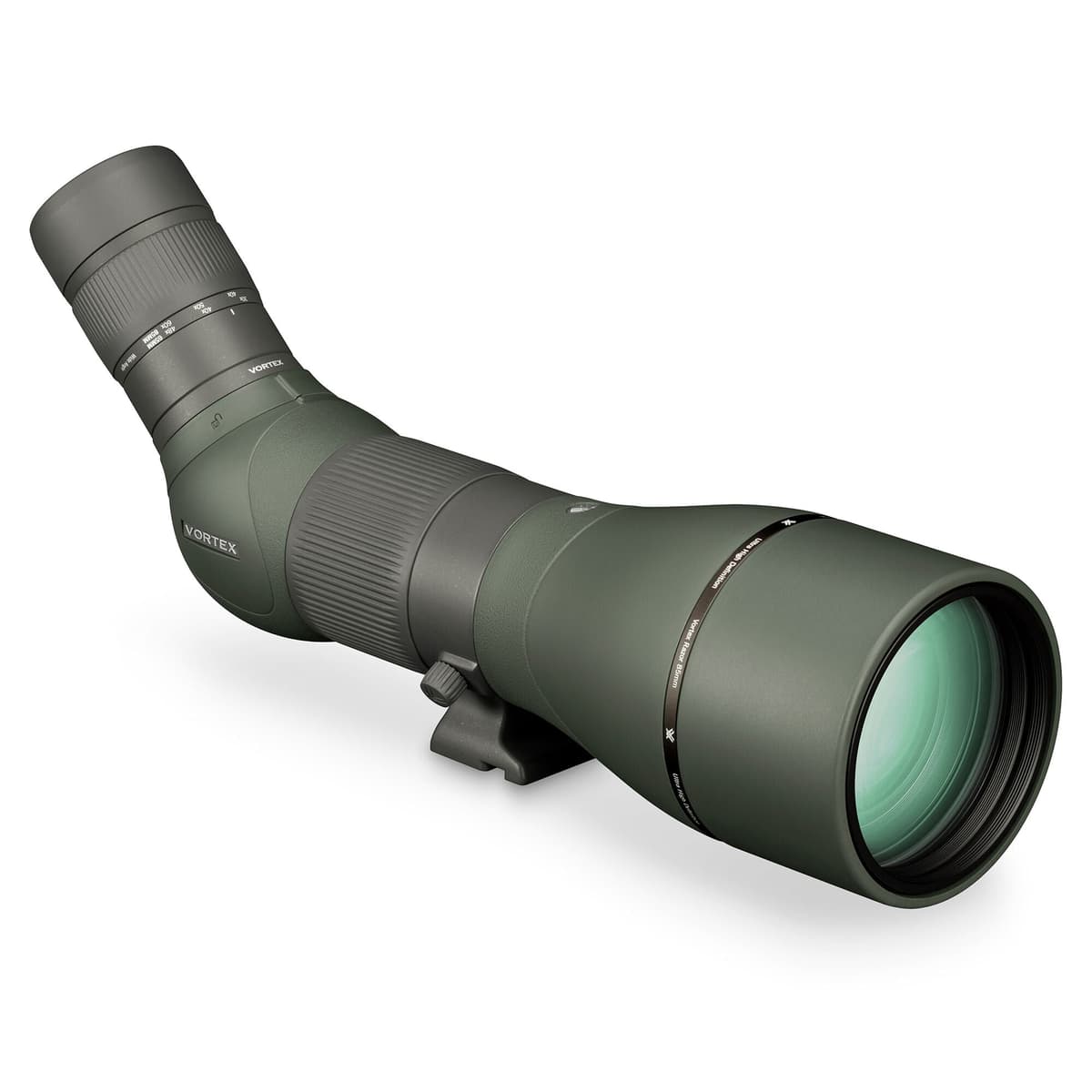
Vortex Razor HD 27-60x85 Spotting Scope (Angled)
Best Overall
- +Apochromatic index-matched HD glass holds detail at 40-60x where cheaper HD scopes fringe
- +85mm objective gathers light for the first and last legal-shooting minutes
- +Direct Arca-Swiss foot clamps to a tripod head with no adapter plate
- −65.6 oz is heavy for long backcountry pack-ins
- −Full-size 85mm body and case take real room in a pack
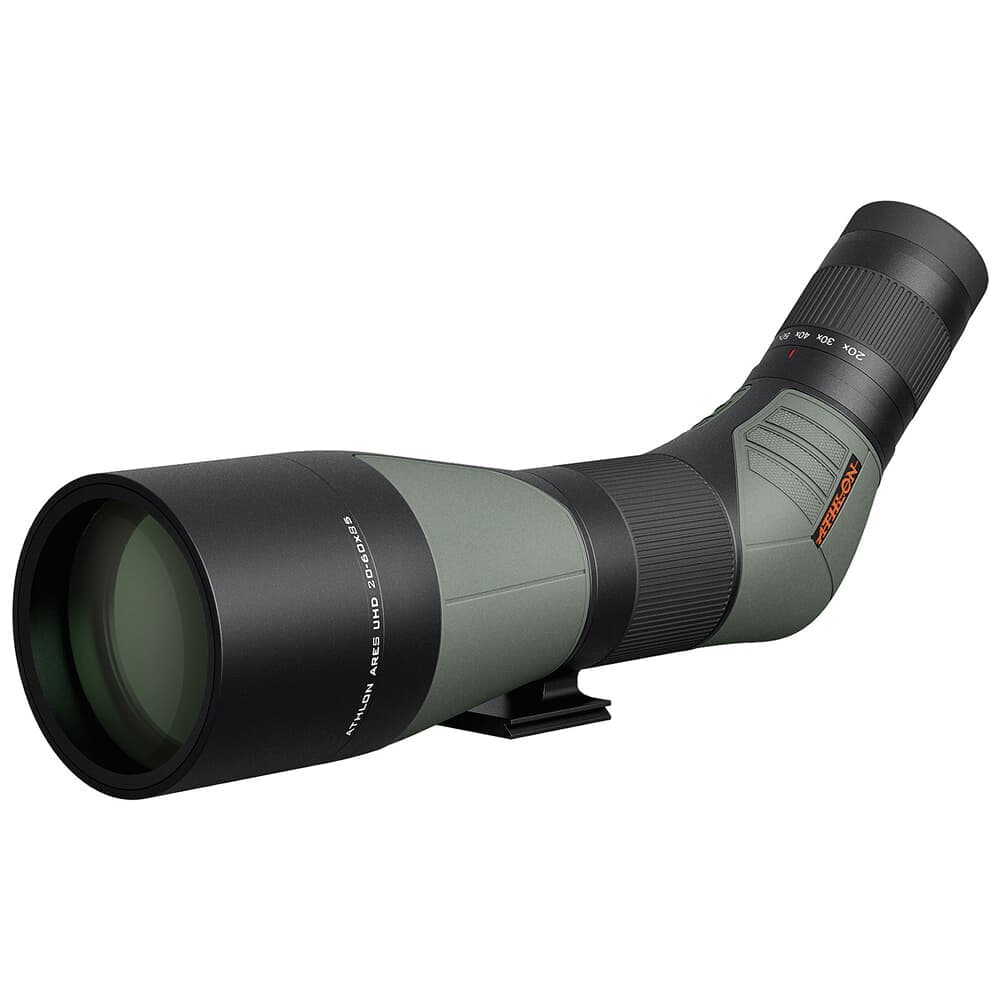
Athlon Ares G2 UHD 20-60x85 Spotting Scope (Angled)
Best Value
- +UHD apochromatic glass trades blows with scopes several hundred dollars more
- +ESP dielectric prism coating rated above 99 percent reflectivity
- +70 oz undercuts the heavier Leupold SX-4 at the same 85mm objective
- −Resale and dealer network are thinner than Vortex or Leupold
- −47 ft field of view at 60x is the tightest top-end field in this guide
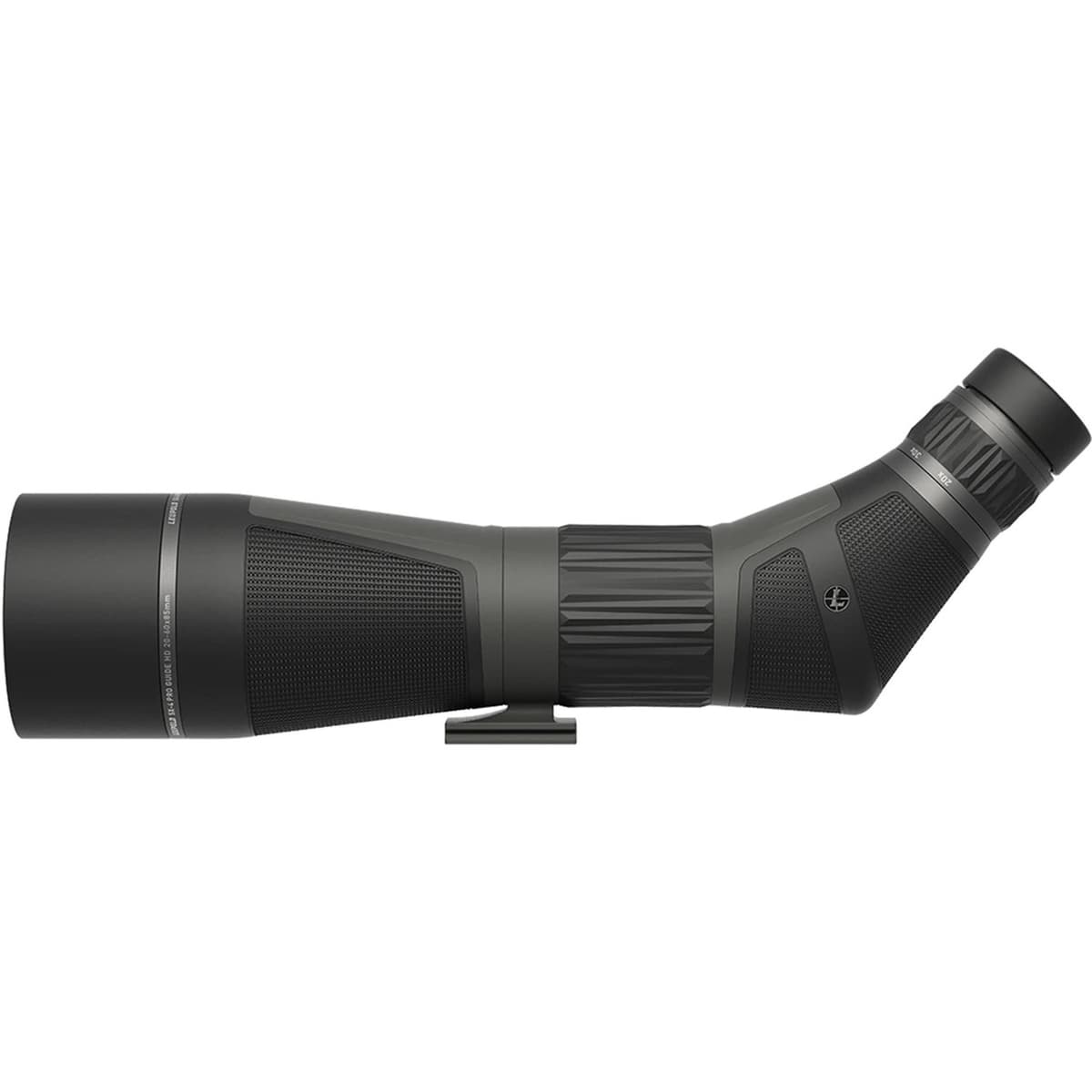
Leupold SX-4 Pro Guide HD Gen 2 20-60x85 Spotting Scope (Angled)
Best Premium Value
- +Premium 85mm HD glass for roughly a thousand dollars
- +Wide 20x low end finds animals faster than a 30x floor
- +Ships with both a 1/4-20 socket and an Arca-Swiss base
- −78.2 oz is the heaviest scope here, a real penalty on long pack-ins
- −35 ft close focus is long, so it is a poor double-duty detail scope
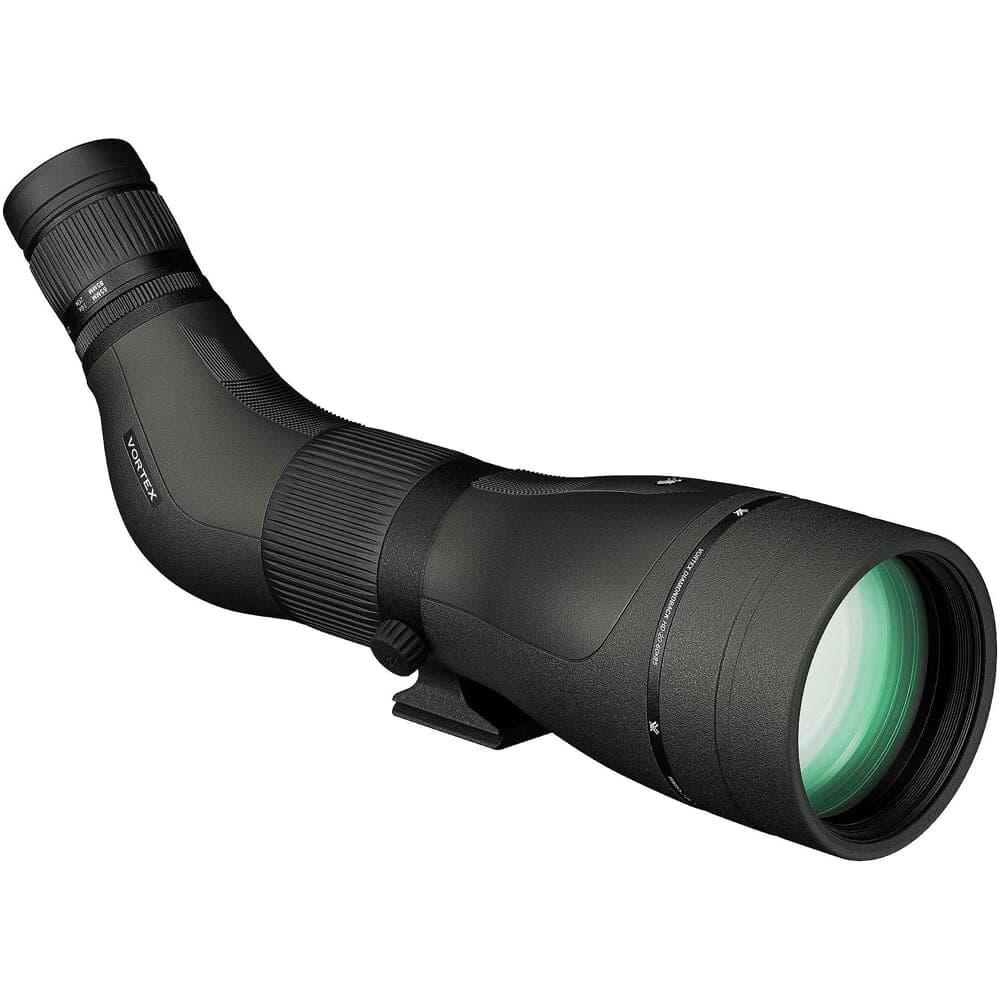
Vortex Diamondback HD 20-60x85 Spotting Scope (Angled)
Best Budget Full-Size
- +Real 85mm objective for less than many 65mm mid-size scopes
- +Same Vortex VIP unconditional warranty as the flagship Razor
- +Wide 108 ft scanning field at 20x
- −HD glass shows color fringing at 60x that apochromatic scopes suppress
- −Not the scope for hard target ID at extreme distance
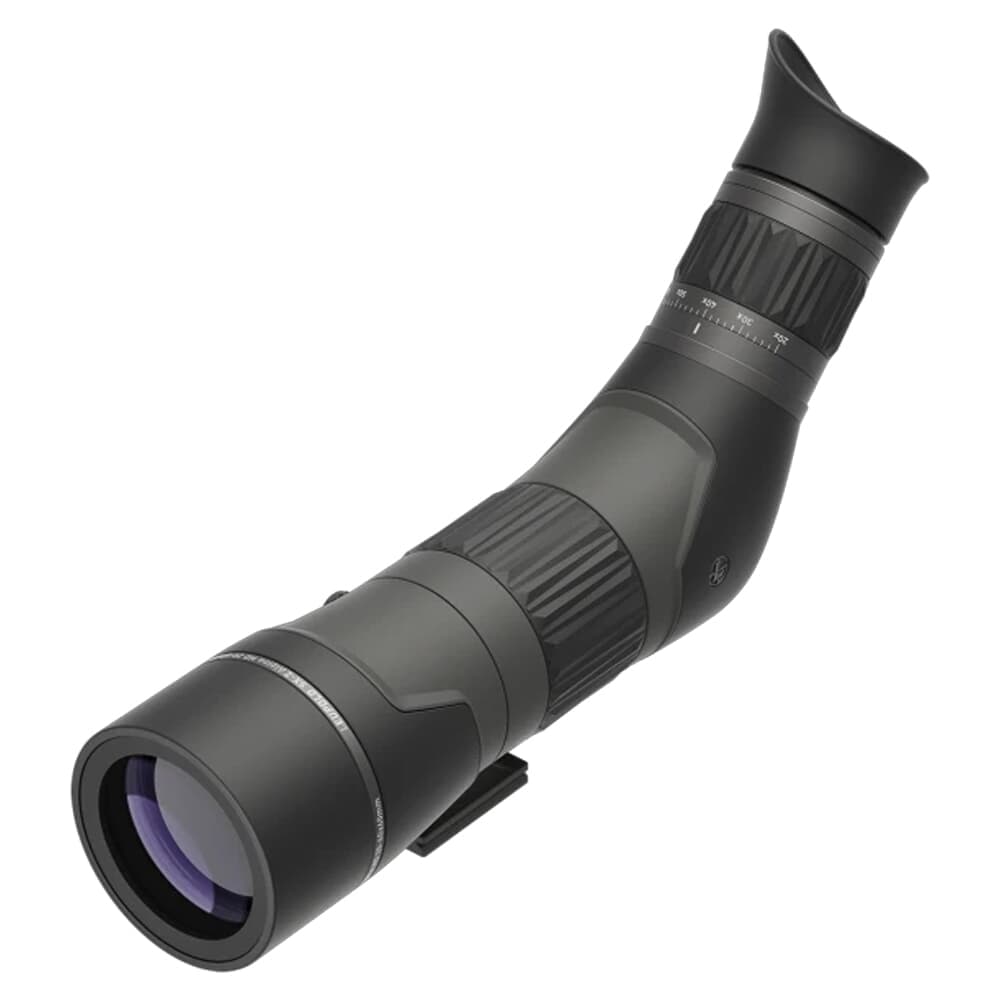
Leupold SX-2 Alpine HD Gen 2 20-60x60 Spotting Scope (Angled)
Best Backcountry Compact
- +60mm objective and 14.4 in body make it a genuine backpack scope
- +HD glass and Leupold coatings above its price class
- +1/4-20 and Arca mounting built in
- −60mm objective gathers less low-light detail than an 85mm scope
- −High magnification in dim conditions is where the small objective struggles
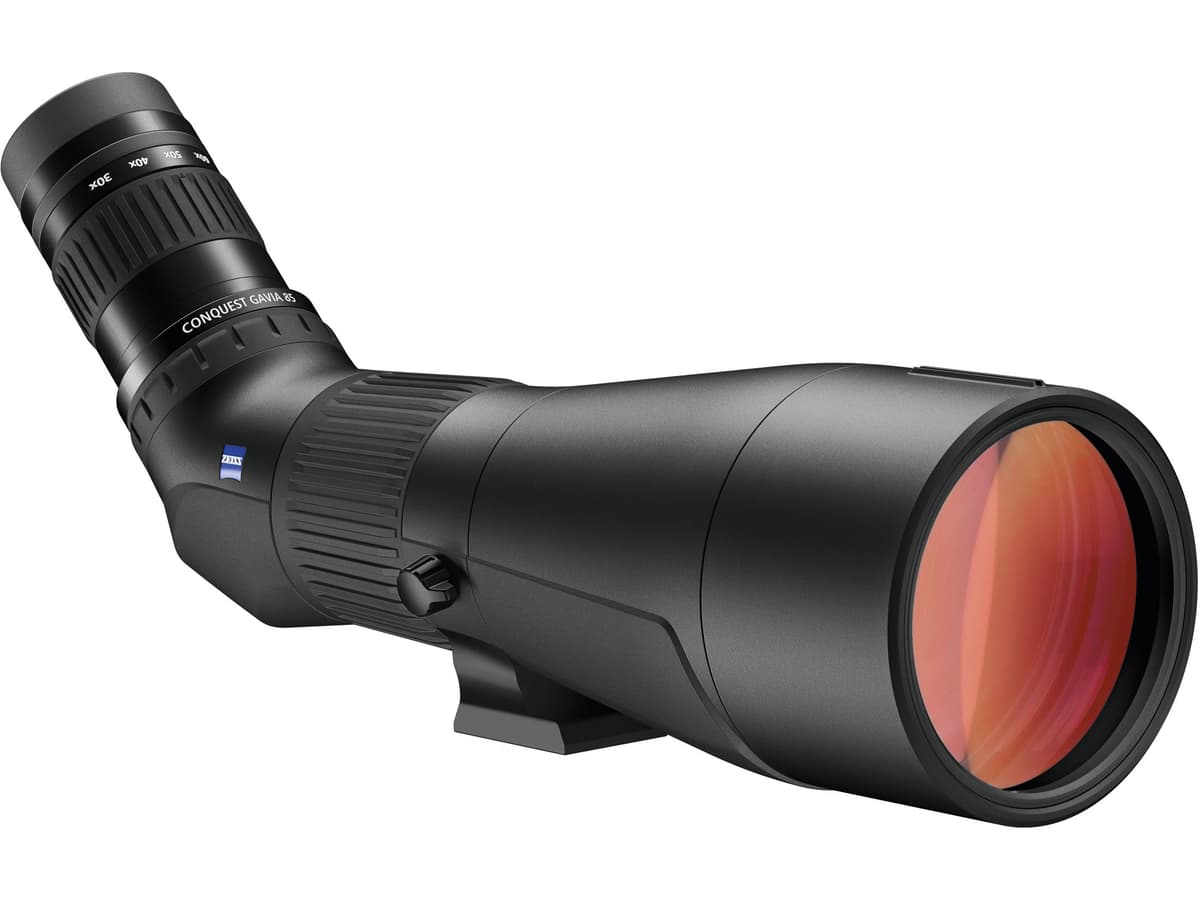
Zeiss Conquest Gavia 85 Spotting Scope (30-60x85, Angled)
Best Glass (Alpha)
- +European-tier color and contrast for well under Swarovski ATX money
- +Class-leading 10.8 ft close focus adds real off-mountain versatility
- +LotuTec hydrophobic coating keeps the objective clear in rain and snow
- −30x magnification floor gives a narrower field than 20x scopes for fast scanning
- −Still a $2,000 buy most hunters will find hard to justify over a Razor
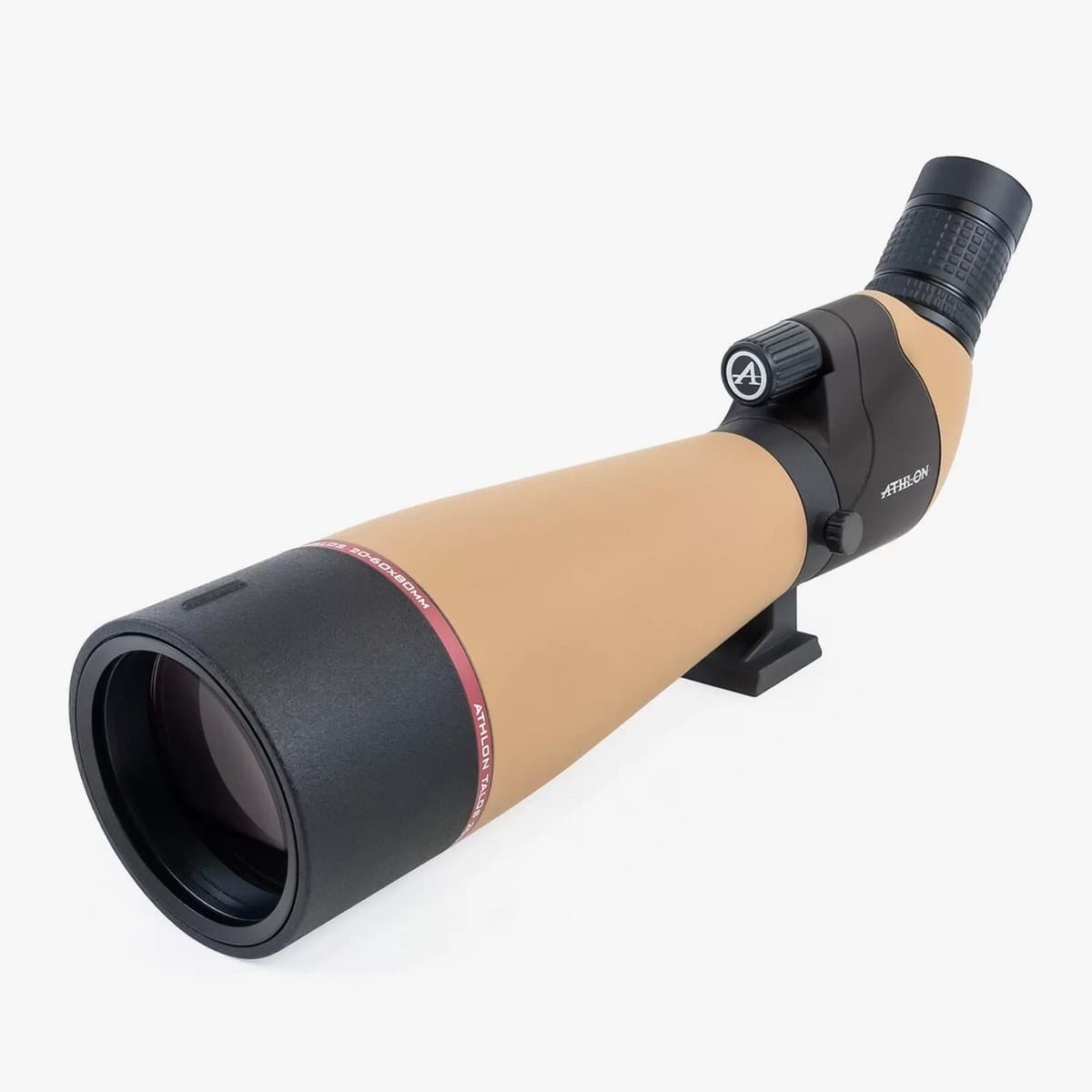
Athlon Talos 20-60x80 Spotting Scope (Angled)
Best Budget Entry
- +Lowest buy-in here with a genuine lifetime warranty
- +80mm objective and full 20-60x range for the money
- +Lightest listed body in this guide at 38.5 oz
- −Non-HD glass shows softness and color fringing at 60x
- −Low-light performance trails the HD and apochromatic scopes
Prices reflect current street pricing and move fast. Objective size and glass quality decide usable detail long before magnification runs out.
Affiliate links - purchases support this site at no extra cost to you. (?)
How We Ranked These Spotting Scopes
Glass quality and objective size win hunts; headline magnification sells scopes. These rankings weight apochromatic color correction, low-light objective performance, and field usability over top-end power, because 60x is rarely usable in real air. Every pick is an angled body, the field spans the value to premium price tiers, and each scope earns its slot against a specific way of hunting rather than a spec sheet. The Vortex Razor HD 85 takes the top spot because its apochromatic glass holds detail at 40-60x where the HD tier below it fringes, and its Arca foot drops onto a tripod head without an adapter.
A spotting scope is one leg of a glassing and shooting kit. Once you have picked the glass, pair it with a precision rifle from the 6.5 Creedmoor rifle guide and plan the whole package, rifle, optic, and accessories, in the rifle builder.
Glass and Magnification: What Actually Matters
Glass quality matters more than magnification, and apochromatic glass is the single biggest jump you can buy. Apochromatic scopes like the Vortex Razor HD 85 and Athlon Ares G2 UHD 85 correct color across three wavelengths, so a bull elk on a far ridge still shows clean antler edges at 40x. Standard HD glass like the Vortex Diamondback HD controls fringing well at 20-40x but starts to show a colored halo at 60x, and non-HD glass like the Athlon Talos goes soft earlier still. You are paying for usable detail at high power, not for the power itself.
The 60x top end on a 20-60x scope is a bonus, not a working setting. On a warm afternoon, atmospheric mirage and heat shimmer wash out fine detail somewhere between 30x and 45x, and pushing to 60x just magnifies the boiling air. You will do most of your glassing between 20x and 40x, where the image is bright and steady, and reach for 60x only in cold, still, low-mirage conditions to confirm a point count or read a legal-target detail. When you do need to range and read hits at distance, the long range rifle scope guide covers the FFP optics that pair with a spotter for target ID and follow-up.
Objective Size: Match It to How You Hunt
Match the objective to how you hunt, because a bigger objective buys light at the cost of weight. An 80-85mm objective like the Vortex Razor HD 85, Athlon Ares G2 UHD 85, or Leupold SX-4 gathers the most light and holds detail at high magnification, which suits truck-and-tripod glassing and open-country hunts where a heavier scope rides in a pack or on a window mount. These are the scopes you want for judging animals in the first and last legal-shooting minutes of the day.
A compact 60mm scope like the Leupold SX-2 Alpine HD at 14.4 inches and 59.9 oz trades some low-light reach for a body that actually fits a backcountry pack. The tradeoff is real: the 60mm gathers less light than an 85mm at the same magnification, so it struggles first in dim conditions at high power. For a spot-and-stalk hunter covering miles on foot, that weight and bulk saving is worth more than the last few minutes of shooting light, which is exactly why the SX-2 Alpine is the backcountry pick here while the Razor and Ares are the truck-and-ridge picks.
Angled vs Straight Eyepiece for Hunting
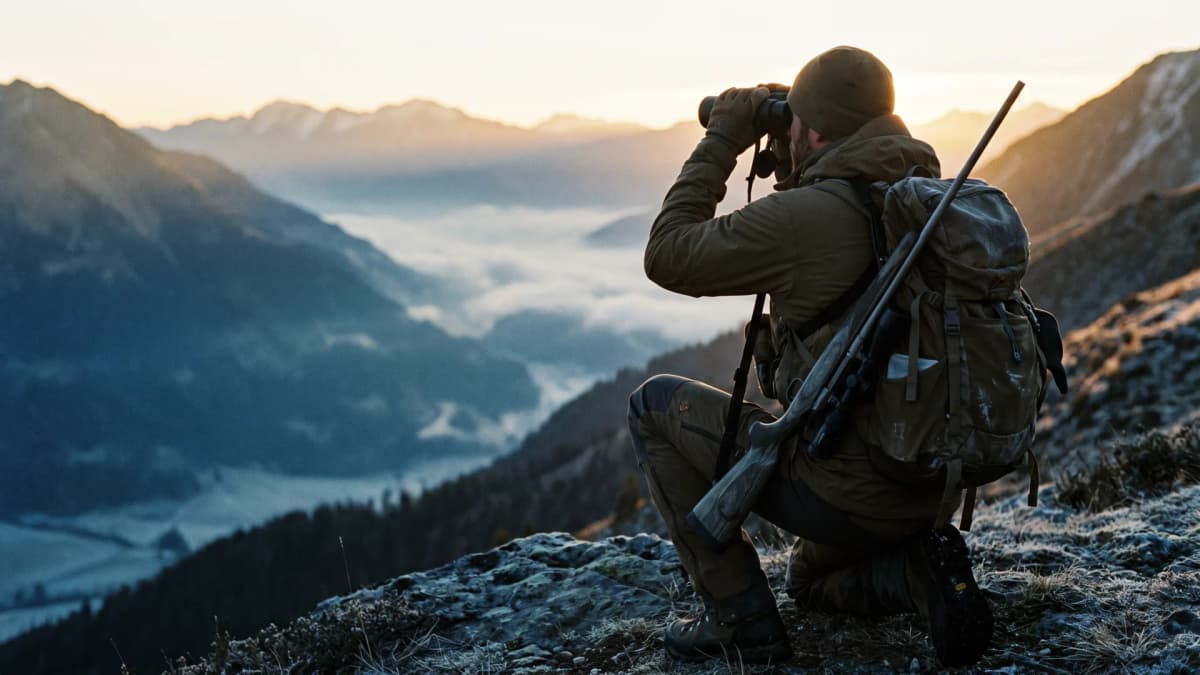
Choose an angled eyepiece for most hunting. Angled scopes let you glass steeply uphill or downhill in comfort, run the tripod lower and more stable in wind, share the eyepiece between two hunters of different heights without re-leveling, and digiscope through a phone adapter more easily. Every pick in this guide is an angled body for those reasons, and for a mountain or open-country hunter working off a tripod, angled is the default answer.
A straight eyepiece still makes sense in two cases: it is faster to point and get on target because you look through it the way you look at the animal, and it fits better when you glass from a truck window, a ground blind port, or a bench where an angled body points the eyepiece straight up. If most of your glassing happens from a vehicle or a seated blind, a straight scope can be the right call. If you glass from a tripod on a ridge, buy angled.
Spotting Scope vs Binoculars for Hunting
Most hunters need both, but binoculars come first. A 10x42 binocular is what you scan with all day, and two eyes on a wide, bright field is faster, lighter, and far easier on your eyes than a single-eyepiece spotting scope. You find animals with binoculars. Buy good glass on a harness before you buy a spotting scope, and if you only ever hunt timber and close cover, quality binoculars alone may be all you need.
The spotting scope earns its place when you have found an animal and need to evaluate it: judging antler width, counting points, or confirming a legal target at a distance where binoculars run out of detail, typically past 600 yards. If you hunt open country and make go or no-go trophy decisions at long range, a scope like the Vortex Razor HD 85 saves miles of stalking on animals that were never legal or mature. Pair it with a rangefinder from the rangefinder guide and the spotter, ranger, and binocular become one workflow: find, judge, range, shoot.
Tripods, Mounts, and the 1/4-20 vs Arca Question
A stable tripod matters as much as the glass once you push past 40x, and every scope here uses the 1/4-20 UNC threaded socket, the same standard as a camera, so a scope and a camera can share a head. The difference at the top of the market is the mounting foot. The Vortex Razor HD 85 integrates a direct Arca-Swiss foot that clamps onto an Arca head with no adapter plate, while the Leupold SX-4 and SX-2 Alpine give you both a 1/4-20 socket and an Arca-compatible base, so they fit whatever head you already run.
Budget for a real tripod and head, not just the scope. A wobbly tripod turns a $1,300 apochromatic scope into a boiling mess at 50x, and no glass can fix a shaking image. An Arca-Swiss quick release is worth chasing because it locks the scope down rigidly and swaps fast between the spotter, a camera, and a rifle-mounted rest. Match the tripod class to the scope weight: a 78 oz Leupold SX-4 needs a sturdier head than a 38.5 oz Athlon Talos.
Get Hunting Optics Reviews and Glassing Guides
New spotting scope, binocular, and rangefinder reviews plus glassing and long-range shooting guides delivered monthly.
Spotting Scope Spec Comparison
Still deciding? Sort by objective, weight, or price to match the scope to your hunt. The heaviest 85mm bodies are the truck-and-ridge glass; the lightest are the backcountry and range-bag picks.
- Zeiss Conquest Gavia 85 Spotting Scope (30-60x85, Angled)Objective85mmMagnification30-60xWeight60 ozPrice$1,999.99
- Vortex Razor HD 27-60x85 Spotting Scope (Angled)Objective85mmMagnification27-60xWeight65.6 ozPrice$1,298.99
- Leupold SX-4 Pro Guide HD Gen 2 20-60x85 Spotting Scope (Angled)Objective85mmMagnification20-60xWeight78.2 ozPrice$999.99
- Athlon Ares G2 UHD 20-60x85 Spotting Scope (Angled)Objective85mmMagnification20-60xWeight70 ozPrice$899.99
- Vortex Diamondback HD 20-60x85 Spotting Scope (Angled)Objective85mmMagnification20-60xWeight60.9 ozPrice$424.49
- Leupold SX-2 Alpine HD Gen 2 20-60x60 Spotting Scope (Angled)Objective60mmMagnification20-60xWeight59.9 ozPrice$399.99
- Athlon Talos 20-60x80 Spotting Scope (Angled)Objective80mmMagnification20-60xWeight38.5 ozPrice$159.99
| Product | Buy | ||||
|---|---|---|---|---|---|
| Zeiss Conquest Gavia 85 Spotting Scope (30-60x85, Angled) | 85mm | 30-60x | 60 oz | $1,999.99 | Buy |
| Vortex Razor HD 27-60x85 Spotting Scope (Angled) | 85mm | 27-60x | 65.6 oz | $1,298.99 | Buy |
| Leupold SX-4 Pro Guide HD Gen 2 20-60x85 Spotting Scope (Angled) | 85mm | 20-60x | 78.2 oz | $999.99 | Buy |
| Athlon Ares G2 UHD 20-60x85 Spotting Scope (Angled) | 85mm | 20-60x | 70 oz | $899.99 | Buy |
| Vortex Diamondback HD 20-60x85 Spotting Scope (Angled) | 85mm | 20-60x | 60.9 oz | $424.49 | Buy |
| Leupold SX-2 Alpine HD Gen 2 20-60x60 Spotting Scope (Angled) | 60mm | 20-60x | 59.9 oz | $399.99 | Buy |
| Athlon Talos 20-60x80 Spotting Scope (Angled) | 80mm | 20-60x | 38.5 oz | $159.99 | Buy |
Affiliate links - purchases support this site at no extra cost to you. (?)